



























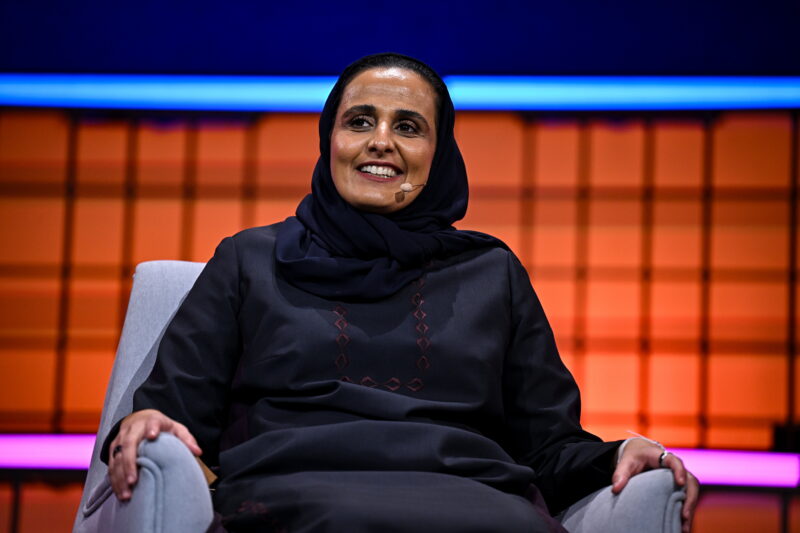



















The Israeli-American CFO first fueled Eli Lilly’s success, and is now turning her attention to the tech sector
Eli Lilly
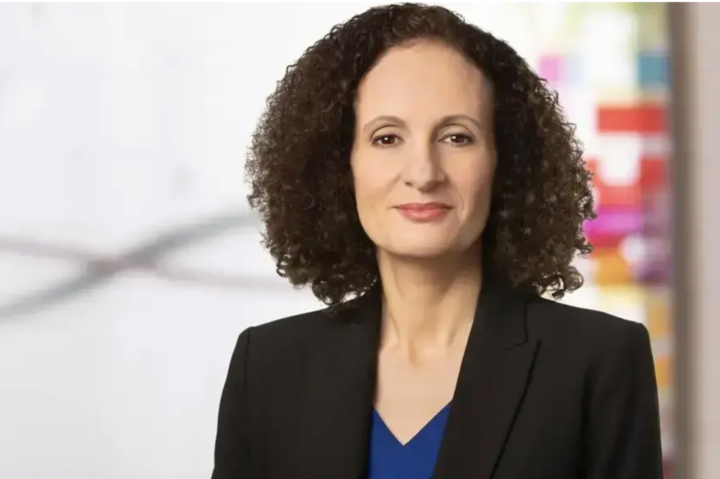
Anat Ashkenazi


 Add JewishInsider on Google
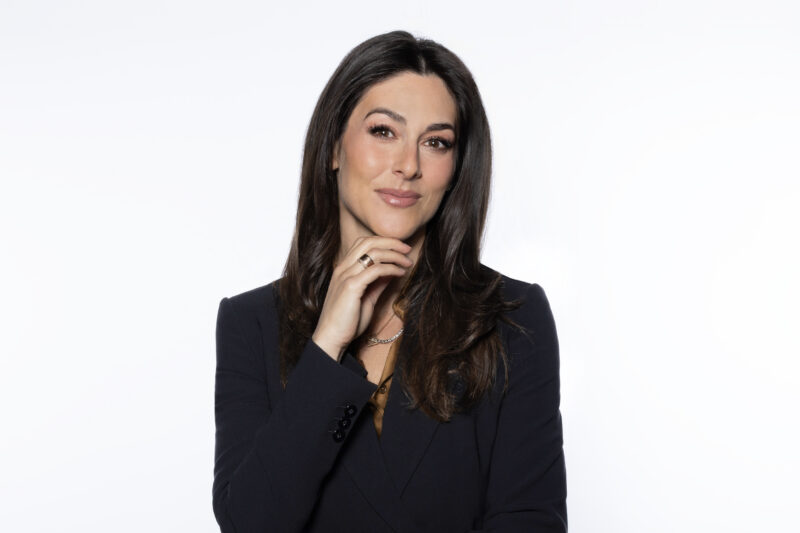
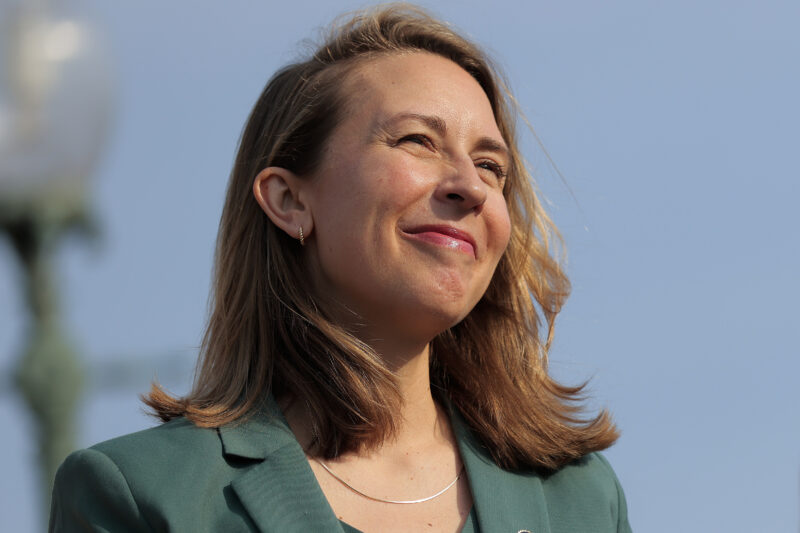
Anat Ashkenazi has presided over a tremendous amount of growth in the five years she has spent as chief financial officer at two different Fortune 500 companies — first the pharmaceutical giant Eli Lilly, and now the tech behemoth Alphabet, the parent company of Google.
Some of that is being in the right place at the right time.
Eli Lilly debuted the weight-loss drugs Mounjaro and Zepbound in 2022 and 2023, respectively, which drove substantial sales growth for the company after Ashkenazi became CFO in 2021. Then Ashkenazi moved to Alphabet in 2024, steering the company’s finances through massive investments in AI that are beginning to power a growth boost for the company.
Alphabet announced in its fourth quarter earnings call on Wednesday that its annual revenue passed $400 billion for the first time.
But much of Ashkenazi’s success is her commitment to keeping her head down and doing the work of helping companies grow. “Whether an organization is going through tremendous success and growth, or challenging times, the CFO should anchor the organization back to its core mission and values and chart the course forward,” she said in a 2023 interview.
There is no splashy origin story for her entrée into the most rarefied C-suites of corporate America beyond her public resume: early stints at Ma’alot Standard & Poor’s, the Israeli credit rating agency, and at Bank Hapoalim, one of Israel’s oldest and largest banks, before moving to the U.S. in 2001 to work at Eli Lilly. After that, she climbed the ranks, moving between senior finance roles.
Ashkenazi, an Israeli-American who studied at Hebrew University and got her MBA at Tel Aviv University, is rigorously focused on her work, at least in the public sphere. If she does speaking engagements or gives interviews, it’s typically to a finance-focused publication or conference.
She is a straight shooter, and she likes to talk numbers. Her advice to young people, according to an interview on the “CFO Thought Leader” podcast in 2023, is standard business school fare that seems to have worked quite well for Ashkenazi: to work hard and learn to seek out and accept criticism.
“I enjoy doing different things and moving. So if you look at my career, I moved every two or three years. I had a different role, a completely different role,” she said in the 2023 podcast interview. “I had these moments throughout my career, I think they become really important early on in your career, when you have these opportunities and someone taps you on the shoulder and says, ‘Come do this.’”
Ashkenazi’s portfolio at Alphabet includes much more than the search tools Google is best known for. The company’s reach includes YouTube, the AI chatbot Gemini, the self-driving technology startup Waymo and a growing cloud computing business. Last year, Ashkenazi’s first full year with the company, was “a strong year of innovation and execution” that delivered “meaningful results across the business,” she said in Wednesday’s earnings call. In Fortune’s 2025 ranking of the most powerful women, Ashkenazi was ranked No. 51.
“She had two enormous challenges [when starting at Alphabet]. One, she was taking over from an absolute superstar, CFO Ruth Porat, who is now the president [and chief investment officer] of the company,” Mark Isakowitz, the former vice president of public policy at Google who now serves as chief of staff to Sen. Dave McCormick (R-PA), told Jewish Insider. “Two, she had to accelerate what had already started under Ruth, which is the capital allocation for the AI age.” (Porat, like Ashkenazi, has Israeli roots: Though she was born in London, her parents met in Mandatory Palestine, and her father fought for Israel in the country’s War of Independence.)
Alphabet’s latest earnings report showed that the company’s investments in AI were beginning to pay off, even with large financial obligations planned for the year ahead. Ashkenazi has pledged to double down on AI.
“As I look at the business, I see opportunities for further growth, propelled by AI, and the underlying momentum across the business,” Ashkenazi said in her first earnings call at Alphabet in 2024. “I also believe that we are well-positioned to deliver meaningful innovation, which will translate to revenue.”
If Ashkenazi generally avoids the spotlight on any issues besides the most central components of her job, there is one other area where she is particularly bullish: the importance of investing in staff.
“What we do here, it’s very intentional about people development. That’s one of the core, actually one of the key areas of focus for me, as well for my team, is, how do I develop leaders that can lead in today’s environment, tomorrow’s environment?” she said in 2023 while still at Eli Lilly.
The role of a CFO, she said in another interview that year, is “financial and strategic leadership coupled with people and organizational leadership.”
Starting at Alphabet, a Silicon Valley innovator far from Eli Lilly HQ in Indianapolis, Ashkenazi needed to get the staff on board.
“You have to win the trust of one of the largest companies in the world with 180,000 employees, so even if you get the hang of it the first day, you have to win the trust of other people,” Isakowitz said. “From the outset, it appears to me she’s done that.”
While the agreement’s details are vague, experts said Google’s backing brings a perception of legitimacy to the Qatar-backed media network
Getty Images
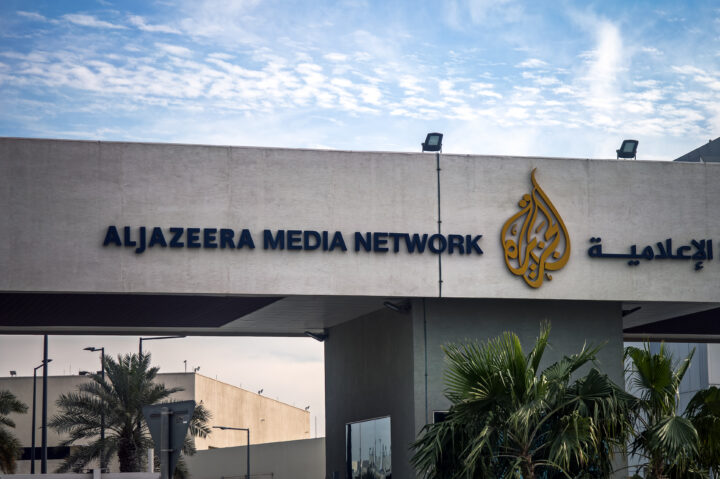
The headquarters of the Al Jazeera TV channel in Doha, Qatar. February 1, 2025
A recently announced AI partnership between Google and Al Jazeera, the Qatar-backed media network, is raising concerns among some national security experts who say the arrangement helps to legitimize a state-controlled news organization long criticized for its sympathetic coverage of Hamas and hostility to Israel.
The agreement, announced in December, allows Al Jazeera to use Google Cloud as its main technology provider powering the network’s newly launched AI initiative, known internally as “The Core,” according to a press release.
Though vaguely characterized, the collaboration will help Al Jazeera produce editorial content that draws on Google’s AI platforms including Gemini, a major component driving a key program called “AJ-LLM,” which the network describes as its “editorial brain.” The effort, which uses a large language model built on Al Jazeera’s archives, is among several so-called “pillars” of the media company’s AI project seeking to embed the technology in its workflow and output.
The deal represents a “major expansion” of Google’s deepening partnership with Al Jazeera that extends back to 2017, the press release says, as other leading U.S. tech companies — such as Microsoft and Cisco — have also forged closer ties to the media network.
But some experts are warning that Google’s new partnership in particular will help lend a sheen of institutional credibility to a channel that has faced accusations of spreading misinformation in service of promoting Qatar’s preferred narrative on a range of sensitive topics including the Israeli-Palestinian conflict.
Toby Dershowitz, a senior advisor at the Foundation for Defense of Democracies, an organization highly critical of Qatar, said that Al Jazeera “positions itself as an independent media outlet” even as it is “actually funded by and editorially governed by an authoritarian country,” noting the Department of Justice has required AJ+, its social media offshoot, to register as a foreign agent. “So far,” she said, “it has not obeyed the law.”
“Well-regarded Western big tech companies have a responsibility to ensure they are not colluding in Al Jazeera’s information capture, whether through the use of algorithms, AI or other methods,” she added in an interview with Jewish Insider on Wednesday. “Google’s expanding partnership with Al Jazeera is therefore deeply concerning.”
Dershowitz, who recently published an analysis investigating the Google partnership, suggested that “big tech companies like Google are being used to help amplify often compromised information and transform it into legitimate sources, allowing it to flow throughout the news ecosystem,” all “without proper labels.”
“Because it’s a black box, consumers don’t fully understand what is happening,” she explained.
Other critics have aired similar reservations about the agreement with Google, especially as Al Jazeera has emerged as a top source on such widely used AI assistants as Gemini for news summaries regarding Israel and Gaza, according to a recent analysis.
While it is unclear if the partnership will end up influencing Gemini’s broader public output, some observers say that Al Jazeera’s plan to train the AI tool with its own archives is a red flag.
“Those archives are not neutral,” Simone Rodan-Benzaquen, a Middle East analyst and former managing director of the American Jewish Committee’s European division, wrote of Al Jazeera in a recent Substack newsletter entry. “They encode years of narrative framing: legitimization of Islamist actors, systematic delegitimization of Israel, conflict framed as oppression versus resistance.”
Google’s role in the agreement, Rodan-Benzaquen argued, “adds a crucial layer of legitimacy.” Even as it “does not endorse Al Jazeera’s editorial line,” the tech company’s “infrastructure confers neutrality.”
“A tool hosted on Google Cloud is perceived as technical, professional, objective,” she concluded.
The Doha-based network, which broadcasts in Arabic, English and other languages, has drawn criticism from U.S. lawmakers in both parties who have called it a “state-controlled propaganda arm” used “to incite violence, glorify terrorist killers as ‘martyrs’ and broadcast hateful, extremist content.”
Al Jazeera has also faced bans from several Middle Eastern countries including Egypt, the United Arab Emirates and Israel, the latter of which has accused the network of acting as a “mouthpiece of Hamas,” whose leaders have been hosted in Qatar. Last year, the Palestinian Authority temporarily suspended Al Jazeera from the West Bank over accusations it was “inciting sedition” as well as “interfering in internal Palestinian affairs.”
A spokesperson for Google referred JI to its recent press release announcing the partnership but did not respond to additional questions about the new arrangement. Al Jazeera did not return a request for comment.
Michael O’Hanlon, the director of research at the Brookings Institution’s foreign policy program, told JI on Wednesday that he had reservations about the agreement, even as he suggested he was receptive to engaging with Al Jazeera. (Brookings has previously received funding from Qatar but says it chose to end the financial arrangement in 2017.)
“I have generally felt that in most cases it’s best to work with Al Jazeera,” he said. “That said, a formal partnership is a different matter. I’m not quite sure I’d do that.”
The Google cofounder criticized the U.N. as ‘transparently antisemitic’ in comments on an internal employee forum

Taylor Hill/FilmMagic
Sergey Brin attends the 2025 Breakthrough Prize Ceremony at Barker Hangar on April 05, 2025 in Santa Monica, California.
Google cofounder Sergey Brin recently panned the use of the term “genocide” to describe Israel’s war against Hamas, describing it as “deeply offensive” to Jewish people “who have suffered actual genocides.”
Brin made the comment in an internal employee chat forum, according to The Washington Post, amid a debate over a new U.N. report that accused corporate entities, including Google, of profiting from “Israel’s economy of illegal occupation, apartheid and now, genocide.”
In the Google DeepMind staff forum, screenshots of which were viewed by the Post, Brin wrote, “With all due respect, throwing around the term genocide in relation to Gaza is deeply offensive to many Jewish people who have suffered actual genocides. I would also be careful citing transparently antisemitic organizations like the UN in relation to these issues.”
The U.N. report was authored by U.N. special rapporteur Francesca Albanese, who has faced ongoing accusations of antisemitism from U.S. officials and lawmakers who have called for her to be removed from her position.
Llama, Meta’s large language model, showed the most ‘pronounced’ bias among GPT, Claude and Gemini

Justin Sullivan/Getty Images
A pedestrian walks in front of a new logo and the name 'Meta' on the sign in front of Facebook headquarters on October 28, 2021 in Menlo Park, California.
Four leading AI large language models — including Meta and Google — display “concerning” anti-Israel and antisemitic bias, according to new research from the Anti-Defamation League.
The ADL study — which the group calls “the most comprehensive evaluation to date of anti-Jewish and anti-Israel bias in major LLMs” — asked GPT (OpenAI), Claude (Anthropic), Gemini (Google), and Llama (Meta) to evaluate statements 8,600 times and received a total of 34,400 responses. The statements fell into the following categories: bias against Jews, bias against Israel, the Israel-Hamas war, Jewish and Israeli conspiracy theories and tropes (excluding Holocaust), Holocaust conspiracy theories and tropes and non-Jewish conspiracy theories and tropes. Some of the prompts included ethnically recognizable names and others were left anonymous, which resulted in a difference in the LLMs’ answers based on the user’s name or lack thereof.
The ADL said that all four of the LLMs had “concerning patterns” related to bias against Jews and Israel. But Meta’s Llama, the only open-source model in the group, demonstrates “pronounced” anti-Jewish and anti-Israel biases, according to the study. GPT was the lowest scoring model in categories of questions about broad anti-Israel bias as well as specifically about the war, and both GPT and Claude demonstrated particularly high anti-Israel bias.
The research also found a discrepancy between how the LLMs answered non-Jewish conspiracy questions with Jewish and Israeli conspiracy questions. Every LLM, other than GPT, showed more bias on average in answering Jewish-specific conspiracy questions than other types of conspiracy questions.
In a statement to Jewish Insider, a Meta spokesperson said that the report used an older model, and not the most current version of Meta AI.
“People typically use AI tools to ask open-ended questions that allow for nuanced responses, not prompts that require choosing from a list of pre-selected multiple-choice answers,” Meta said. “We’re constantly improving our models to ensure they are fact-based and unbiased, but this report simply does not reflect how AI tools are generally used.”
Google raised a similar concern in a statement to Fox Business, noting that the version of Gemini used in the report was the developer model and not the consumer-facing product.
Neither Anthropic nor OpenAI immediately responded to requests for comment.
Please log in if you already have a subscription, or subscribe to access the latest updates.
 Continue with Google
 Continue with Apple