


























Worldwide, 20 people were killed last year in four antisemitic attacks across three continents

Christopher Furlong/Getty Images
Members of the public and congregants seen as Police and other emergency responders attend the Heaton Park Hebrew Congregation Synagogue, where multiple were injured after stabbing and car attack on Yom Kippur, on October 2, 2025 in the Crumpsall suburb of Manchester, England.


 Add JewishInsider on Google
Germany remained the country with the most antisemitic incidents relative to its Jewish population in 2025, among Diaspora countries with major Jewish populations, according to a new report from leading Jewish groups released on Wednesday.
According to the report, nearly 70 antisemitic incidents per 1,000 Jewish residents were recorded in Germany in 2025.
Not since the terror attack on a Jewish community center in Buenos Aires, Argentina, more than 30 years ago has the Jewish Diaspora experienced as deadly a year as 2025.
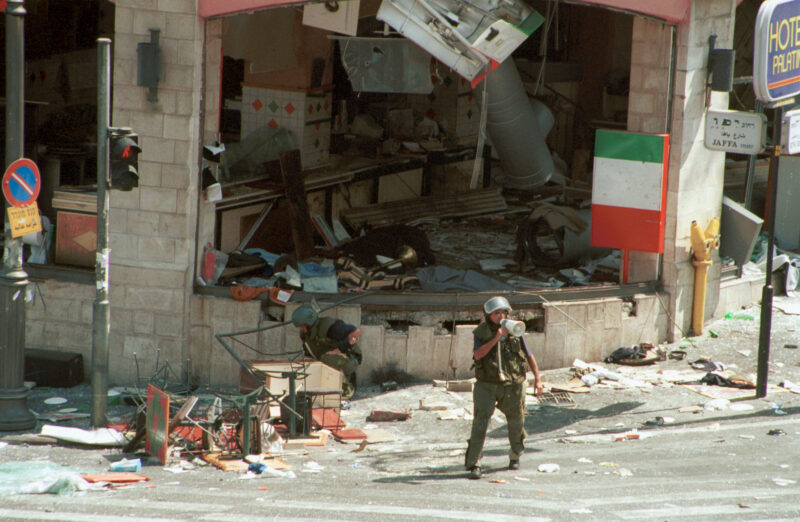
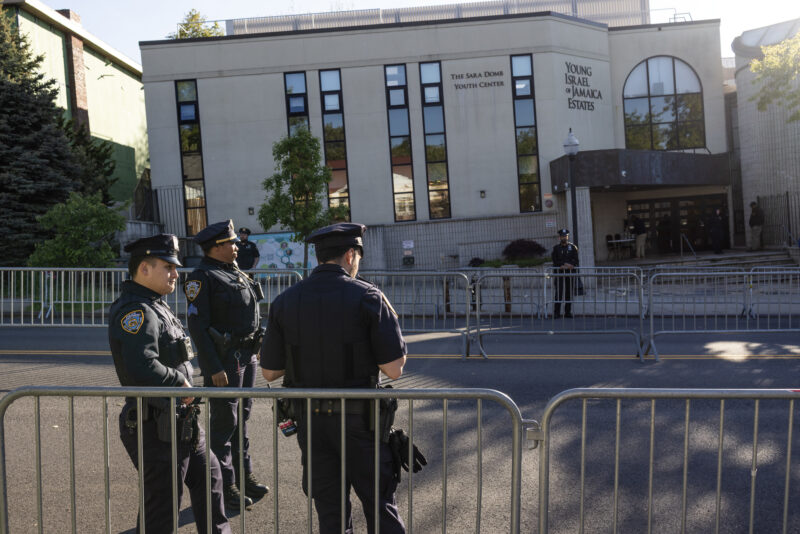
Worldwide, 20 people were killed last year in four antisemitic attacks across three continents — all in “J7” countries, the seven countries with the largest Jewish Diaspora populations — including deadly incidents in Sydney, Australia, and Manchester, England. Eighty-five people were killed in the 1994 AMIA attack in Buenos Aires, which still marks the deadliest terror attack on Jews outside of Israel.
The data comes from the second annual Report on Antisemitism by the J7 — a global alliance formed in July 2023 by major Jewish organizations representing the seven largest diaspora communities outside Israel: the United States, the United Kingdom, France, Germany, Canada, Argentina and Australia.
Tel Aviv University published a study with the same findings in April.
The J7’s 52-page report tracked over 23,000 antisemitic incidents across J7 countries in 2025 — a 136% total increase and a 97% surge in violent acts compared to 2022, prior to the Oct. 7, 2023, Hamas attacks in Israel.
While the number of antisemitic incidents in the U.S. plummeted by a third last year, assaults with a deadly weapon spiked, according to a May report by the Anti-Defamation League. The May 2025 killing of two Israeli Embassy staffers outside the Capital Jewish Museum in Washington marked the first Jews to be killed in antisemitic attacks on U.S. soil since 2019. One month later, a Jewish victim died from her injuries sustained in a firebombing attack in Boulder, Colo., at a march in support of the Israeli hostages.
Every J7 country’s antisemitic incidents remain dramatically above pre-Oct. 7 levels. Australia saw the sharpest rise of antisemitic incidents since 2021 (+270%), followed by Germany (+215%), the U.S. (+131%) and France (124%). Anti-Zionism was a key motivation behind a significant share of incidents: 48% in the U.K., 45% in the U.S. and 23% in Germany.
The report also features a new “in focus” section highlighting Ireland, which saw 143 antisemitic incidents — a rate of 65 per 1,000 Jewish people — while the country lacks a national strategy to combat antisemitism and dedicated security funding for religious institutions.
“The J7 Annual Report makes clear that antisemitism is no longer a temporary surge, but a sustained global crisis affecting Jewish communities across all seven countries,” said William Daroff, CEO of the Conference of Presidents of Major American Jewish Organizations, which represents the U.S. along with the ADL in the J7. Daroff called on governments, institutions and technology companies to “act with urgency, enforce the law, strengthen security and ensure that Jews can live openly and safely.”
Special Envoy Ric Grenell defended the meeting: ‘Talking is a tactic. We are tired of failed diplomacy where you don’t talk to people and think it’s a punishment’
Rep. Anna Paulina Luna/X
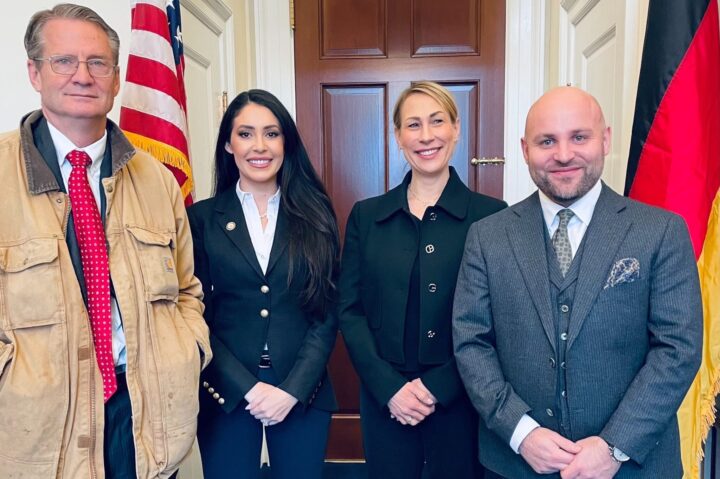
Reps. Anna Paulina Luna (R-FL) and Tim Burchett (R-TN) meet with members of Germany's far-right Alternative for Germany party
A senior State Department official and two GOP members of Congress met Friday with members of Germany’s far-right Alternative for Germany (AfD) party, which has long faced accusations of extremism and pro-Nazi sympathies.
The State Department meeting is in line with the recently released National Security Strategy, which stated that it would be U.S. policy to boost anti-European Union and anti-immigration parties in the European Union.
“My exchange with Under Secretary [of State for Public Diplomacy] Sarah Rogers on the new national security strategy of the Trump Administration has made it clear that Washington is seeking a strong German partner who is willing to take on responsibility,” Bundestag member Markus Frohnmaier posted after the meeting, according to an X translation.
“Germany should act once again as a capable leading power by making a consistent turn in migration policy and independently organizing European security, in order to strengthen the German-American partnership on an equal footing. Only if we do our homework will we secure our relevance on the international stage. To shape this path together, I would like to organize a deepening event in Berlin in February 2026.”
Responding to a critic who noted that leaked Russian documents allegedly described Frohnmaier as a Russian asset, Rogers praised the AfD.
“Unlike the Russian government (and the current German one), AfD took an anti-censorship stance in its meeting with me last week. One reason they’re gaining popularity in Germany,” Rogers said.
She also reposted an X post from Special Envoy Ric Grenell, who said that those criticizing the meeting “don’t understand tough diplomacy.”
“Talking is a tactic. We are tired of failed diplomacy where you don’t talk to people and think it’s a punishment. Your guy [former President] Joe Biden didn’t talk to [Russian President Vladimir] Putin for 4 years while a war raged,” Grenell said. “Our side isn’t afraid to talk, and send clear directives as to what we expect. Your silence is weakness. You are so afraid to defend your ideas — and I get it. Your ideas have failed. The German is an official member of the Bundestag and Sarah’s job is to talk and explain our National Security Strategy.”
U.S. officials have met repeatedly with AfD members during the past year.
On Capitol Hill, Reps. Anna Paulina Luna (R-FL) and Tim Burchett (R-TN) met with the AfD delegation, at Luna’s invitation. They did not share details about that meeting. Luna has met previously with AfD members earlier this year and publicly offered to host them on Capitol Hill.
Luna said last week that she and other lawmakers would be meeting with “dozens of members” of the AfD.
“The Chancellor of Germany is trashing our President and censoring German citizens,” Luna said on X. “The AfD, whom the German uniparty has tried to smear, intimidate, and even de-bank, is actually working to strengthen ties with the United States and restore a healthy relationship between our governments.”
The Florida congresswoman has also recently faced criticism for her dealings with the Russian ambassador in Washington, advocating for restoring U.S.-Russian ties and accepting a dossier of alleged Russian findings on the John F. Kennedy Jr. assassination.
“Rep. Luna’s decision to roll out the red carpet for members of a far-right, Holocaust revisionist, Putin-loving party is grotesque,” said Rep. Dan Goldman (D-NY), a co-chair of the bipartisan House antisemitism task force, said ahead of the meeting. In a separate post, he described the AfD members as “neo-Nazis.”
The New York Young Republican club also hosted around 20 members of the AfD at a gala last week.
“Young Republicans in New York are set to honor a Nazi sympathizing extremist,” the Jewish Democratic Council of America said, in response to the Young Republicans event. “This isn’t happening in a vacuum: [Secretary of State Marco] Rubio, [Vice President JD] Vance, and [Elon] Musk have all defended the extremist AfD party. Antisemitism is a feature of the Republican Party, not a bug.”
To mark the second anniversary of the Oct. 7 attacks in Israel, the Jewish Insider team asked leading thinkers and practitioners to reflect on how that day has changed the world. Here, we look at how Oct. 7 changed Israel’s relations with the world
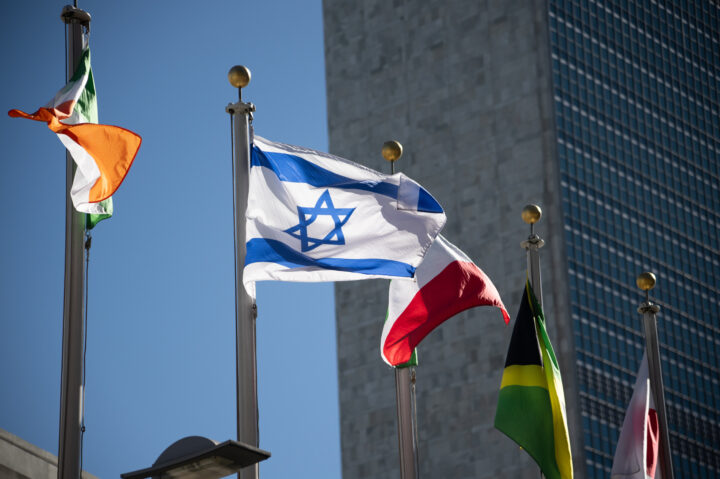
NEW YORK — October 13, 2023: The Israeli flag flies outside the United Nations following Hamas’s deadly attack on Israel (Photo by Noam Galai/Getty Images)
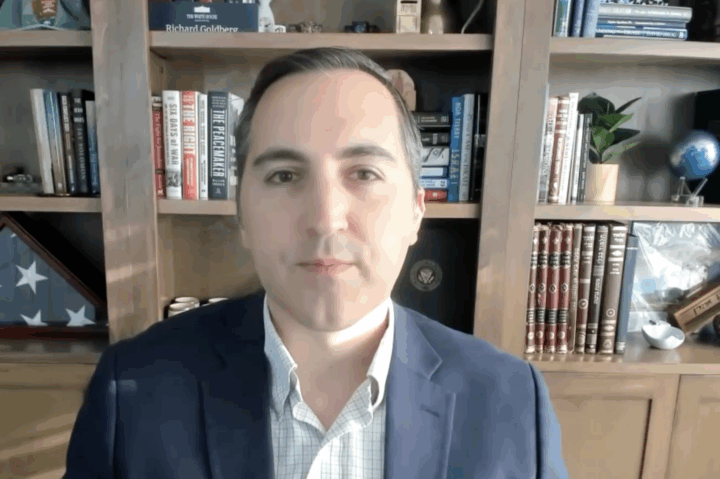
If sanctions return, the Iran nuclear deal ‘is dead, we’re sitting shiva, it is over. That is an unpredictable reality for the regime, for its economy and its financial stability,’ Rich Goldberg said
Screenshot
Foundation for Defense of Democracies senior advisor Richard Goldberg on the Misgav Institute for National Security and Zionist Strategy’s Mideast Horizons podcast, Sept. 2025
The Sept. 27 deadline to snap back United Nations sanctions on Iran’s nuclear and other weapons programs is rapidly approaching.
The E3 — as France, Germany and the U.K. are known — announced last month that they planned to trigger the snapback sanctions mechanism, meaning the likely return of all U.N. sanctions that had been “sunsetted” per the 2015 Iran nuclear deal.
In an interview with Jewish Insider’s Lahav Harkov on an episode of the Misgav Institute for National Security and Zionist Strategy’s Mideast Horizons podcast, Foundation for Defense of Democracies senior advisor Richard Goldberg explained the snapback procedure and how the sanctions are expected to damage Iran’s economy.
Goldberg recently finished a stint as the Trump administration’s National Energy Dominance Council’s senior counselor and was the director for countering Iranian weapons of mass destruction in the first Trump administration.
“The Iran nuclear deal, in 2015, set out all kinds of parameters for the years to come,” Goldberg said. “In 2020, the conventional arms embargo on Iran went away. That was scheduled to happen as one of these sunsets under the deal. That was a [U.N.] Security Council restriction previously on Iran. … The missile embargo goes away.”
Another part of the Iran deal set to sunset was the snapback mechanism itself, which expires at the end of this month.
Snapback “was part of the marketing sell to Congress and the American people by [former Secretary of State] John Kerry and [former President] Barack Obama at the time, saying that if Iran violates the deal at any time, we can just bring back all the sanctions from the U.N.,” Goldberg recounted.
The snapback procedure outlined in the Joint Comprehensive Plan of Action, the formal name for the Iran deal, states that after snapback is invoked, other U.N. Security Council members have 10 days to propose a resolution opposing the return of the sanctions. The council would then have to affirmatively vote not to enact snapback, with the permanent members retaining veto power, Goldberg explained.
Ten days after the E3 triggered the snapback sanctions process, no country had submitted such a resolution, requiring the current president of the UNSC, South Korea, to do so instead, and hold a vote within the 30-day period from the snapback announcement. The vote has not been scheduled yet, and in all likelihood, the U.S., France or the U.K. will veto the resolution, such that snapback will take effect.
“The process does appear to be unfolding by the book,” Goldberg said.
“The onus is on the Iranians or the Russians or the Chinese to try to overcome a U.S. or European veto,” Goldberg said. “We have all the cards.”
If the resolution to cancel snapback does not pass, then the JCPOA “sort of self-destructs,” he said. That means the return of the U.N. missile embargo and conventional arms embargo on Tehran, and Iran will no longer be permitted to enrich any uranium.
“Then, it’s on the secretariat, the U.N. staff, the secretary-general … to actually do the things that need to happen to roll back to the previous sanctions regime,” Goldberg said. “And that will be the next test to see if the Russians or Chinese exert some kind of pressure. … I expect it will occur at this point.”
Goldberg said it is important not to stop the snapback process, even if Iran suddenly agrees to cooperate.
“You don’t stop the snapback, which goes away in just a few weeks,” he said. “You cannot trigger this again after October; it’s done. Iran just wins all these strategic gains forever. … You have to complete the snapback because you don’t get another chance at it.”
The impact of snapback would be significant on several fronts.
“On a strategic level, they will no longer have any claim of legitimacy to transfer weapons to Russia,” Goldberg said. “Technically, the Russians today will tell you that it is fully legal under the Security Council, which is true. … That will be done after the snapback is completed.”
It also sends a message to any other countries who may want to help Iran rebuild its nuclear program or its missile activities that “you are in violation of a Security Council resolution and [the U.S. and Europe] are going to hold you accountable.”
In addition, Goldberg said the sanctions will hurt the regime economically.
“I think that’s one of the reasons why they fought this so hard,” he said.
Throughout the years, as the E3 spoke out against Iran’s violations of the JCPOA, the deal was still in place, Goldberg said, and even as the Iranian economy tanked, the sunsetting of sanctions gave the markets hope that they had not yet reached bottom.
“You have seen the Rial go back into freefall since snapback was triggered. That means there’s instability again. There’s uncertainty again. Once snapback happens and all the international resolutions come back, there is no hope of the JCPOA coming back. …The patient is dead, we’re sitting shiva, it is over. I think that is an unpredictable reality for the regime, for its economy and its financial stability,” he said.
At the same time, the U.N. sanctions are not financial; they are on weapons programs and trade in components, but not on individuals or banks.
Goldberg argued that Iran “value[s] the veneer of legitimacy” from being part of the Nuclear Non-Proliferation Treaty and what the sunsetting of U.N. sanctions permitted — such as selling drones that Russia used in its war against Ukraine.
“It’s a bizarre thing in regimes like Iran, even Russia, China, though they flout international law, conduct illicit activity, make a mockery of the international institutions which we founded and still care about,” he said, “they actually try to use them to create their own sense and source of legitimacy, so a Security Council resolution that has their back … is really valuable to them because it forces the Europeans to contort themselves.”
“They yearn for that legitimacy to insulate themselves from further pressure from good actors,” he added.
Last week, Iran was elected vice-chair of the International Atomic Energy Agency’s annual conference, while refusing to allow the agency to inspect its nuclear sites.
“Only in the United Nations can such a thing occur,” Goldberg said, calling it “a wild, wild thing.”
Iran is supposed to allow basic inspections of its nuclear facilities as a member of the Non-Proliferation Treaty. Under the framework of the JCPOA, they agreed to adopt “additional protocols,” including snap inspections and videotaping of their nuclear facilities. Iran stopped respecting those commitments years ago.
Still, the IAEA was able to release quarterly reports on Iran’s enriched uranium stockpiles, something that Goldberg said is “not going to happen for the foreseeable future, because all those stockpiles and the materials and the facilities are either heavily degraded or destroyed” by the June strikes by Israel and the U.S.
The world, however, “should be worried long-term about reconstitution efforts,” he said.
The question remains how the world will know if Iran tries to reconstitute its nuclear program, given the lack of oversight.
“We will have to rely on Western intelligence between Israel, the U.S., partners and allies, and whatever else the IAEA can glean on its own from visits and tours that the Iranians allow … We should obviously be pushing them to accept inspections, robust verification and dismantlement of anything that is left over. … The nuclear-capable missile program still has infrastructure and could be threatening … and maybe foreign actors come in to help them as well,” Goldberg said.
Plus, Patel probes far-left protest funding
Good Wednesday morning.
In today’s Daily Kickoff, we interview Sen. Steve Daines about his weekend visit to Israel and have the scoop on a letter signed by 50 Senate Republicans urging the foreign ministers of the U.K., France and Germany to hold firm in triggering snapback sanctions on Iran. We report on FBI Director Kash Patel’s comments that federal investigators are probing the funding sources of left-wing protest movements and highlight a call by House Republicans on the White House to probe far-left billionaire Neville Roy Singham’s ties to China. We also cover a press conference held yesterday by Israeli Prime Minister Benjamin Netanyahu to clarify his previous comments that the Jewish state will need to be like “super-Sparta” and adapt to “autarkic characteristics.” Also in today’s Daily Kickoff: Gov. Josh Shapiro, Rep. Josh Gottheimer and Alex Karp.
Today’s Daily Kickoff was curated by Jewish Insider Israel Editor Tamara Zieve and U.S. Editor Danielle Cohen-Kanik, with an assist from Marc Rod. Have a tip? Email us here.
What We’re Watching
- President Donald Trump and First Lady Melania Trump are spending the day in England for a royal visit, where they will be welcomed by King Charles III and Queen Camilla at Windsor Castle.
- This morning, the House Foreign Affairs Committee will hold a markup of bills aimed at reorganizing and reforming the State Department. Read JI’s breakdown of the legislation here.
- The Senate Foreign Relations Committee will vote to advance a series of nominees out of committee, including Michel Issa to be ambassador to Lebanon; Richard Buchan to be ambassador to Morocco; Ben Black to lead the U.S. International Development Finance Corporation; and a second vote on the nomination of Mike Waltz, the former national security advisor, to be U.S. ambassador to the U.N., in order to prevent a procedural challenge from Democrats.
- Also on the Hill, the U.S. Helsinki Commission will hold a briefing on “conspiracy theories, antisemitism and democratic decline.”
- The annual Defense of Freedom-Federalist Society Education, Law & Policy Conference examining the most pressing legal and policy issues in education kicks off today in Washington. Featured speakers include Secretary of Education Linda McMahon and Brandeis Center Chairman Kenneth Marcus. One of the panels will focus on discussing the federal government’s efforts to combat antisemitism.
What You Should Know
A QUICK WORD WITH JI’S JOSH KRAUSHAAR
A new poll of young conservatives between the ages of 18-34 commissioned by the Washington Free Beacon shows that Gen Z Republicans are decidedly more supportive of Israel than their liberal counterparts, but that there is a notable faction of those who take a more critical view towards the Jewish state.
The Echelon Insights poll also found that anti-Israel and antisemitic podcasters like Nick Fuentes, Tucker Carlson and Candace Owens are viewed favorably by this right-wing cohort — even among many of the respondents who say they support Israel and recognize antisemitism is a problem.
Carlson’s favorability rating among these Gen Z conservatives, for instance, is 50%, with only 11% viewing him unfavorably. Owens has a similarly strong 49/14% favorability rating. The Holocaust-denying podcaster Darryl Cooper isn’t nearly as well-known, but is viewed positively by those who listen to him, holding a 26/8% favorability rating.
At the same time, pro-Israel podcasters like Ben Shapiro are also viewed very favorably; Shapiro’s favorability rating with this cohort is 50/16%. Fox News host Mark Levin isn’t quite as well-known, but holds a stellar 29/7% favorability rating. Asked about “Jews” generally, half of respondents hold a favorable view with only 12% holding an unfavorable opinion.
The encouraging news? A number of these podcast listeners are tuning in to these transgressive shows featuring conspiracy theories, anti-Israel views and some antisemitism, but many are not being persuaded by them. For all their vitriolic attacks against the Jewish state, 54% of Carlson’s viewers and 58% of Owens’ audience have a favorable view towards Israel.
But the gloomier finding is that a notable minority on the right holds bigoted views towards Jews and is critical of Israel. Between 20-25% of these Gen Z conservatives consistently express anti-Israel or antisemitic views — while support for Israel is not nearly as widespread as it is among older conservatives. While 40% of respondents said they side with Israel in its current conflict, about one-fifth (22%) said they side with the Palestinians. About the same percentage of Gen Z conservatives said they agree that “Israel is a colonizer built on the suffering of others.”
KARP’S CALL
Palantir’s Alex Karp says Jews need to ‘leave their comfort zone’ to defend community
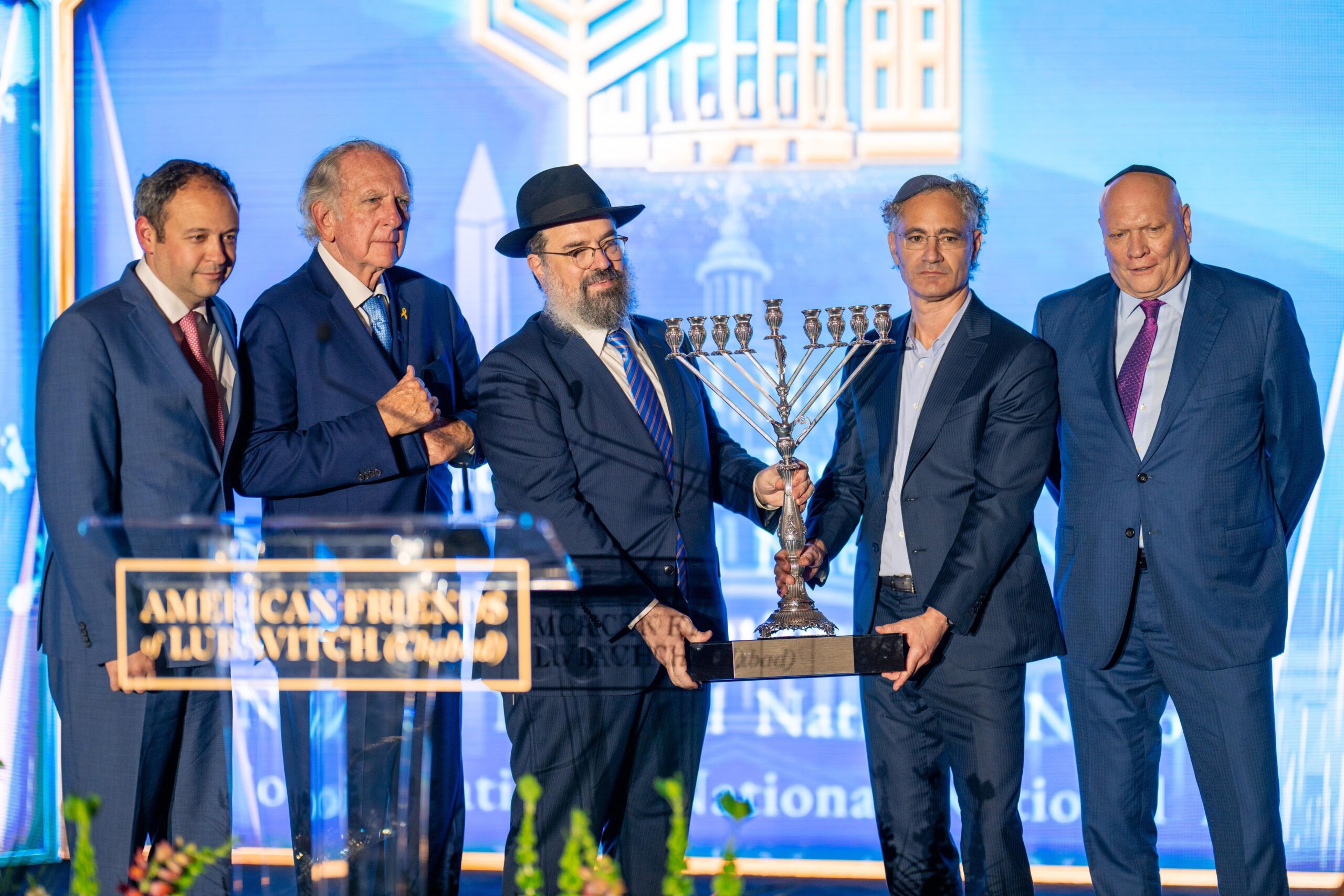
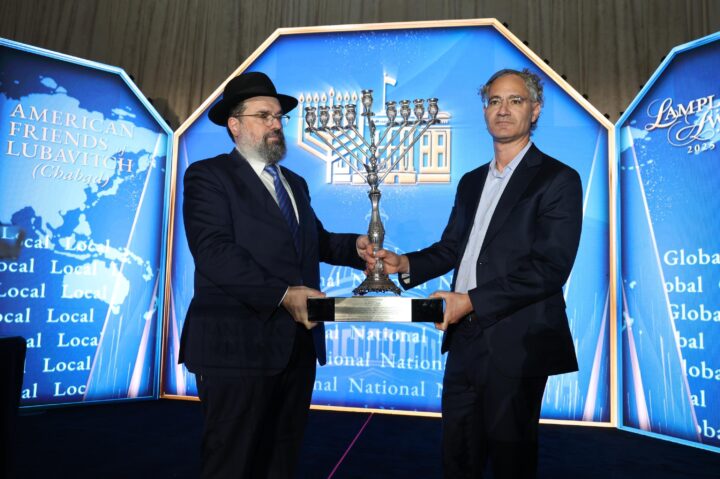
Palantir CEO Alex Karp called for the Jewish community to step outside its “comfort zone” and look for new strategies to defend itself amid rising antisemitism, during a speech on Tuesday at the American Friends of Lubavitch (Chabad) annual Lamplighter Awards in Washington. Karp, who was honored at the Chabad gala, also framed the battle against antisemitism as part of a broader fight for Western civilization and societies, Jewish Insider’s Marc Rod reports.
What he said: “Lessons that we’ve learned at Palantir … might be valuable for defending the West, in this particular case a particular tribe of people that are equally associated with the West, the Jewish people,” Karp said. “Palantir is a metaphor for working when there’s no playbook, and currently there is no playbook because institutions that have historically effectively defended people who’ve been discriminated against, especially Jewish people, are kind of not working.” Karp continued, “If we’re going to have a meaningful chance of fighting, everybody’s going to have to leave their comfort zone a couple times a year. It’s our job and my job to remind people [of] that, especially younger people here.”
trip talk
Following visit to Israel, Sen. Daines reemphasizes the need to ‘eradicate’ Hamas
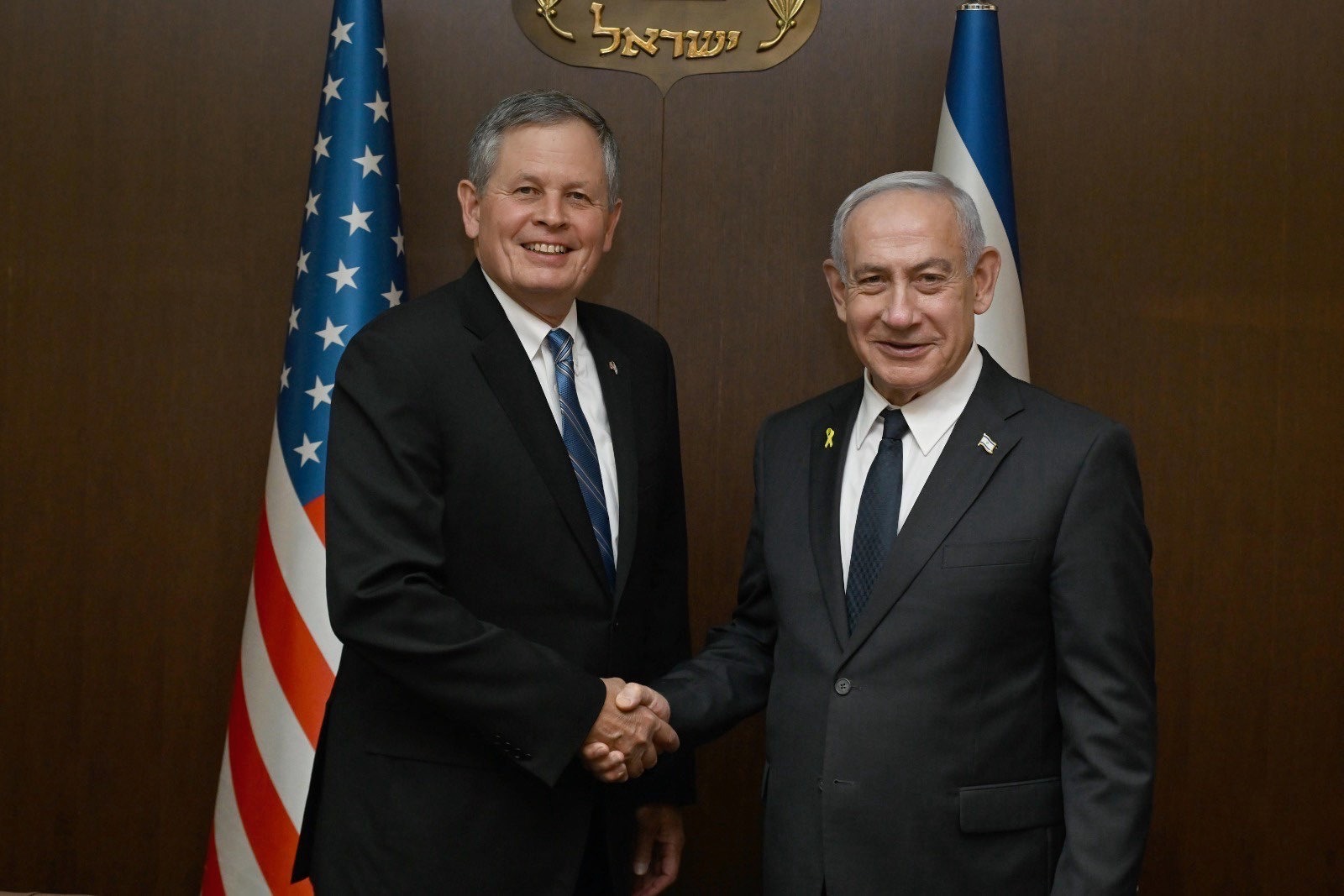
Sen. Steve Daines (R-MT) said he left Israel from a weekend visit with a renewed belief in the U.S.-Israel relationship and the necessity of fully eradicating Hamas, as the IDF begins expanded operations in Gaza City, Jewish Insider’s Marc Rod reports.
Doubling down: “It just reinforced my position of the importance that the United States stands with Israel, and in supporting Israel in their mission to eradicate Hamas in Gaza,” Daines said in an interview with JI this week, reflecting on a meeting with Israeli Prime Minister Benjamin Netanyahu. “There will never be true peace in Gaza and peace with Israel until Hamas is eradicated.” He said that it’s also crucial for innocent Palestinians that Israel be successful in its mission to defeat Hamas. Daines said that he didn’t discuss the postwar vision for Gaza with Netanyahu, “but clearly the important first step will be eradicating Hamas.”
SCOOP
Fifty Senate Republicans call on European foreign ministers to hold firm on snapback, enforce Iran sanctions

Fifty Senate Republicans wrote to the foreign ministers of the U.K., France and Germany on Tuesday urging them to hold firm in triggering snapback sanctions on Iran and requesting their cooperation in sanctions enforcement, Jewish Insider’s Marc Rod reports.
Notable quotable: “While we back diplomatic efforts to restore Iran’s compliance with its International Atomic Energy Agency (IAEA) commitments, the international community should not allow hollow gestures and cynical threats from Tehran to stop the snapback process,” the lawmakers wrote. “The regime has abused diplomatic processes for years to avoid penalties. Sanctions relief should only be negotiated after snapback is fully implemented.”
COMMENT CLEAN-UP
Netanyahu does damage control after saying Israel to be like ‘super-Sparta,’ ‘autarky’
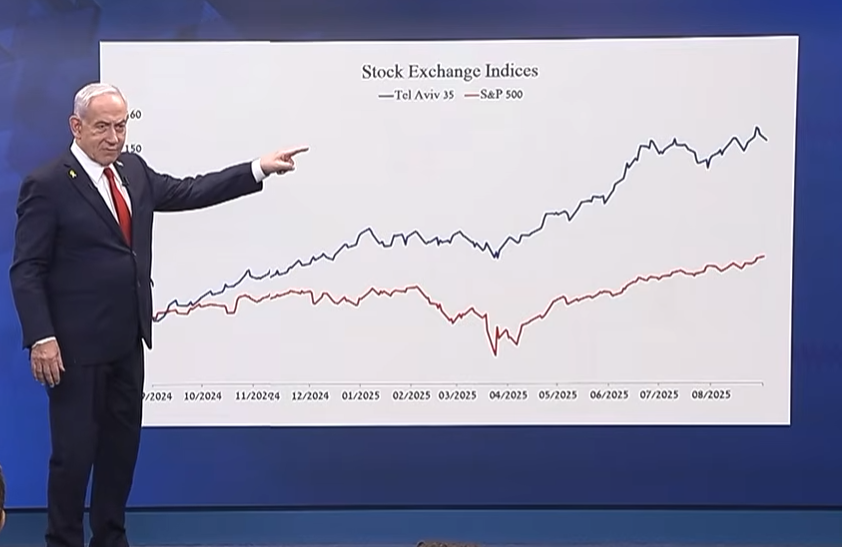
Israeli Prime Minister Benjamin Netanyahu clarified his remarks that Israel’s economy may “need to adapt to … autarkic characteristics” on Tuesday, after a dip in the Tel Aviv Stock Exchange and after business and industry leaders came out against Netanyahu’s remarks, saying that “an autarkic economy will be a disaster for Israel,” and “this vision … will make it hard for us to survive in a developing globalized world,” Jewish Insider’s Lahav Harkov reports.
Damage control: A day later, Netanyahu called a press conference amid widespread concern in Israel, clarifying that his comments were specific to the Israeli defense industry. In the defense industry, he said “there are limitations that are not economic, but political.” He stated, “If there’s one lesson from this war, it is that we want to be in a situation where we are not limited. We want to defend ourselves by ourselves and with our own weapons. We are going to produce an independent arms industry that is very strong that can withstand any political constraints.”
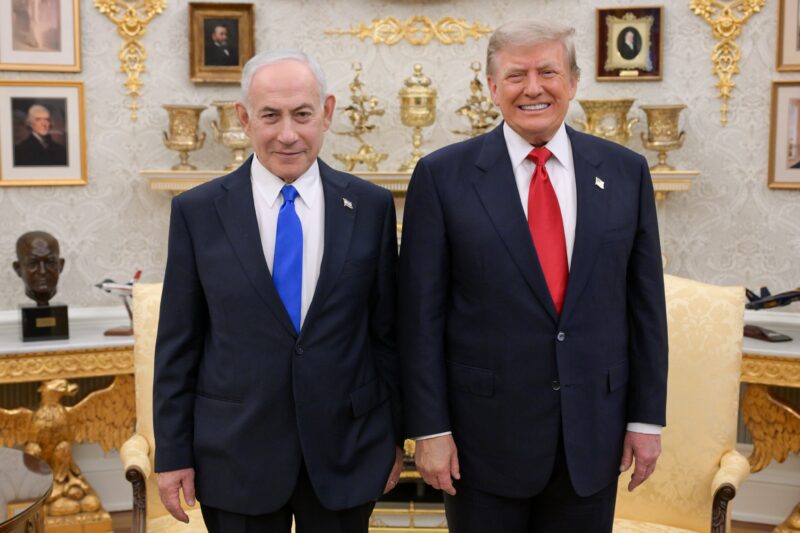
WH invite: In the press conference, Netanyahu also said he had spoken on the phone with President Donald Trump several times since Israel’s strike aimed at Hamas leaders in Qatar last week, including one in which the president invited him to the White House. Netanyahu said he will be meeting with Trump in Washington on Sept. 29.
PROTEST PROBE
Kash Patel vows to investigate funding for left-wing protest movements
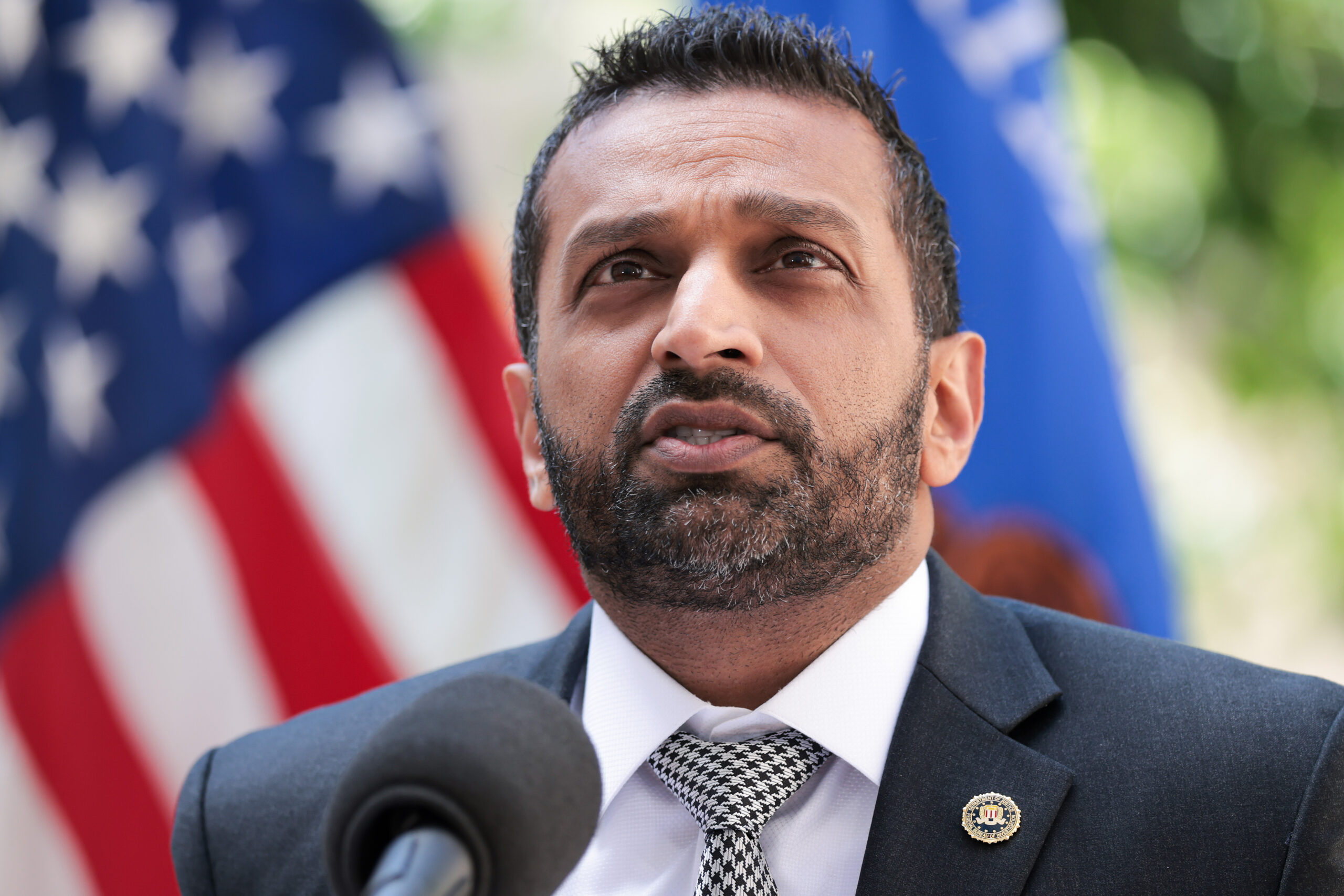
FBI Director Kash Patel said on Tuesday that federal investigators were looking into the funding sources for left-wing groups behind organized protest movements that have resulted in rioting on city streets and civil rights violations on college campuses. Patel made the comments while appearing before the Senate Judiciary Committee for a marathon oversight hearing, where he faced dozens of questions from Democrats and Republicans about the assassination of conservative influencer Charlie Kirk last week, Jewish Insider’s Emily Jacobs reports.
Follow the money: Sen. Ted Cruz (R-TX) urged Patel to investigate the financing of far-left groups that the Texas senator said may have influenced the suspected shooter and supported protests in recent years that saw instances of rioting or other illegal activity. “As I’ve always said, Senator, money doesn’t lie. We’ve been following the money, and that’s what we’re doing, issuing a lawful process to organizations involved with criminal activity because the money has got to come from somewhere,” Patel told Cruz.
Money matters: The House Oversight Committee asked the Trump administration on Monday to investigate if far-left billionaire Neville Roy Singham’s bankrolling of “extremist organizations fueling division and civil unrest across the United States” would qualify him for federal sanctions or make him eligible for criminal or legal penalties.
SHAPIRO’S SERMON
Drawing on Jewish blessing, Shapiro offers ‘words of healing’ to a nation on edge

Amid an alarming rise in political violence, Pennsylvania Gov. Josh Shapiro said Tuesday that the way to combat extremism and division is by bringing people together and restoring their faith in the government — a civic-minded strategy that included some thinly veiled swipes at President Donald Trump and the hard-line rhetoric he has adopted since conservative activist Charlie Kirk was killed in Utah last week, Jewish Insider’s Gabby Deutch reports.
What he said: “I believe we have a responsibility to be clear and unequivocal in calling out all forms of political violence, making clear it is all wrong,” Shapiro, a Democrat, said in a keynote address at the Eradicate Hate Global Summit, a Pittsburgh conference created in the aftermath of the 2018 mass shooting at the Tree of Life synagogue. “Unfortunately some, from the dark corners of the internet all the way to the Oval Office, want to cherry pick which instances of political violence they want to condemn.” Shapiro leaned on Jewish teachings in his speech, referring as he often does to how his faith underpins his public service.
Worthy Reads
Out in Left Field: Former Obama administration official Ken Baer writes in the Washington Post about how DSA-affiliated New York City mayoral nominee Zohran Mamdani is an affront to Democratic Party principles. “It is “spineless politics” to do precisely what [Sen. Chris] Van Hollen, [Gov. Kathy] Hochul and other Democrats have done — and that more Democrats presumably will do in coming days — by casting aside the party’s time-honored liberal principles to back Mamdani. Addressing the affordability crisis is noble. But who’s against affordability? What matters is not just a party’s policy ends, but also its means and its rationale for pursuing them. In the months since President Donald Trump’s victory, Democrats have made no progress in articulating what they are for — and why … At best, this failure presents Democrats as inauthentic as they explain and backpedal when confronted with extreme beliefs from the party’s left but offer nothing in replacement. At worst, it allows the left — within and outside the party — to define the party” [WashPost]
Good Cop, Bad Cop: In The Free Press, Michael Doran, senior fellow and director of the Center for Peace and Security in the Middle East at the Hudson Institute, weighs in on what he describes as President Donald Trump and Israeli Prime Minister Benjamin Netanyahu’s “good cop-bad cop” routine. “Israel’s ability to go on offense places it in a rare category among U.S. allies. Most lack the will or capacity to wage war independently. Critics like Tucker Carlson depict Israel’s independence as a liability, dragging America into fights that don’t serve its interests. Trump sees the reverse: Unilateral Israeli military operations spare American forces and serve U.S. strategic goals. In just two years, Israel has blunted Iran’s nuclear ambitions, hammered Hezbollah, neutered Hamas, and weakened the Houthis—achievements many Americans view as enhancing their own security.” [FreePress]
History Lesson: In The Atlantic, Arash Azizi revisits the history of Zionism amid growing use of the term as a slur. “One summer in Brooklyn, a controversy broke out in my dog-park group chat. Dedicated to the upkeep of the park and welfare of our canines, our chat had never indulged in politics before. But someone was now complaining that a dog-insurance company was ‘Zionist,’ and a passionate debate ensued … To criticize someone for supporting, say, the Israeli government or its war in Gaza is one thing. But this charge is broader and vaguer, uttered sometimes in circumstances with no reference to Israel, and in many cases as little more than an anti-Semitic dog whistle. I’m probably the only Middle Eastern member of that park group chat. I’m also a historian by training. I jumped in to say that I didn’t think Zionist should be used as a term of derision. Zionism is a nationalist movement, I insisted, and like other nationalist movements, it has a story rooted in the 19th century—one that is neither all good nor all bad. To call someone a Zionist as an insult is as strange as attacking someone for being a Ghanaian or Chinese nationalist. I’m not sure how many people I convinced. But to me the history of Zionism bears revisiting as a reminder of its impetus and early diversity.” [Atlantic]
Word on the Street
Israeli and U.S. officials continue to lament the failure of the Israeli strike in Doha, Qatar, both substantively and diplomatically, with one Israeli official telling Axiosthat “none of the top Hamas leaders were killed” and an American official saying they’d advised Israel to take steps to rectify its relationship with the Trump administration…
Rep. Josh Gottheimer (D-NJ) wrote to Kathy Goldenberg, the president of the New Jersey State Board of Education, on Monday urging the state to reject calls from the New Jersey chapter of the Council on American-Islamic Relations for the state’s education boards to cut ties with the Anti-Defamation League, Jewish Insider’s Marc Rod reports…
Advocates with the Anti-Defamation League are set to lobby lawmakers this week on a series of actions related to antisemitism, including a push to jump-start the stalled Antisemitism Awareness Act, Jewish Insider’s Marc Rod reports…
A new plaintiff was added to a lawsuit brought by the Louis D. Brandeis Center for Human Rights under Law against the Massachusetts Institute of Technology. The complaint alleges that a Jewish graduate student was cornered in a campus parking lot by masked individuals calling for death to Israel and Zionists and faced a “campaign of hostility” inside his lab, and the university took no action when it was reported. The original complaint focused on a tenured linguistics professor who publicly harassed an Israeli postdoctoral researcher at the school…
Jerry Greenfield, co-founder of Ben & Jerry’s, has quit the ice cream company, saying that the business has been “silenced” by parent company Unilever on social issues; Unilever and Ben & Jerry’s have clashed in recent years over issues related to the Israeli-Palestinian conflict…
Israel presented Syria with a new security agreement several weeks ago, Axios reports, and Syria is now preparing a counterproposal. Israeli Strategic Affairs Minister Ron Dermer, Syrian Foreign Minister Asaad al-Shaibani and U.S. envoy Tom Barrack are set to meet in London on Wednesday to discuss the proposal…
Israeli strikes in Gaza City have reportedly cut off internet and telephone services in the city…
Iran executed Babal Shahbazi, whom it accused of spying for Israel, Iranian state media reported today…
The U.S. and China are finalizing a deal to transfer 80% of ownership of TikTok’s U.S. business to an investor consortium including Oracle, Silver Lake and Andreessen Horowitz. The new U.S. app will still utilize ByteDance’s algorithm, and Oracle will handle its user data in Texas…
Carl Heastie, the Democratic speaker of the New York State Assembly, is expected to endorse New York City Democratic mayoral nominee Zohran Mamdani this week, The New York Times reports, one of several state leaders in the party who have thus far resisted doing so, while Jay Jacobs, chair of the New York Democratic Party, told several people he does not plan to endorse Mamdani. Rep. Yvette Clarke (D-NY), chair of the Congressional Black Caucus, is reportedly set to endorse him on Monday…
Rep. Elise Stefanik (R-NY) introduced a bill that would “prohibit state and local law enforcement from arresting foreign nationals within the United States” solely based on warrants from the International Criminal Court, as Mamdani has threatened to do to Israeli Prime Minister Benjamin Netanyahu…
Sens. John Fetterman (D-PA) and Dave McCormick (R-PA) appeared on Fox News’ “Special Report” with Bret Baier on Tuesday evening for a discussion on improving political civility, where the duo condemned the use of political rhetoric equating one’s political opponents to Nazis or Adolf Hitler. “When you see dangerous rhetoric like fascist and Nazism and authoritarianism, and the end of democracy, that’s a permission, that takes us down a path where the inevitable next step is violence, and that’s what we see,” McCormick said…
The Democratic PR firm SKDK terminated its contract with the Israeli government, which was meant to run until March 2026. Originally contracted to raise the profile of the Bibas family tragedy, a spokesperson for the firm declined to tell Politico why the deal was cut short…
Gordon Gee, who served as president of five universities, is joining Brownstein as a strategic consulting adviser for the firm’s higher education task force…
Israeli Transportation Minister Miri Regev cleared Uber for entry into Israel’s taxi market, a significant move for the country, which has a strong taxi drivers union…
Ecuadorian President Daniel Noboa signed an executive order on Tuesday designating the Islamic Revolutionary Guard Corps, Hamas and Hezbollah as terrorist organizations…
The Wall Street Journal reviews Yaakov Katz and Amir Bohbot’s new book, While Israel Slept: How Hamas Surprised the Most Powerful Military in the Middle East, calling it “an agonizing litany of might-have-beens” and saying “Katz and Bohbot could have titled their book ‘While Israel Was Busy Doing Other Things.’” Read JI’s Lahav Harkov’s interview with Katz here…
Speaking at The Jerusalem Post Diplomatic Conference yesterday, U.S. Ambassador to Israel Mike Huckabee called out European countries for pushing for a unilateral recognition of a Palestinian state, charging that “it destroyed the negotiations for the hostages.” …
Political commentator, author and former host of “The View,” Meghan McCain accepted the Champion of Israel Award yesterday at the American Friends of Magen David Adom Gala at Cipriani Wall Street in New York City…
The Air Force said it has started upgrading the luxury jet donated by Qatar for use as Air Force One…
The New York Times reports on growing turmoil at Manhattan’s iconic Pierre Hotel, where Commerce Secretary Howard Lutnick, the building’s largest shareholder, now faces backlash from residents over a proposed $2 billion sale involving foreign investors that could force them out…
The Wall Street Journal spotlights the transformation of Manhattan’s 666 Fifth Avenue, once a high-profile real estate debacle under Jared Kushner’s ownership, now rebounding under Brookfield’s leadership with major renovations and new tenants…
TikTok recently removed at least two antisemitic items from TikTok Shop, a spokesperson told Axios, in a sign of the platform’s recent attempts to address antisemitism…
A new Broadway play, “Giant,” will explore the life of children’s author Roald Dahl and his controversial moments around antisemitism and Israel, in particular, including incendiary comments about the First Lebanon War and the Holocaust…
Pic of the Day
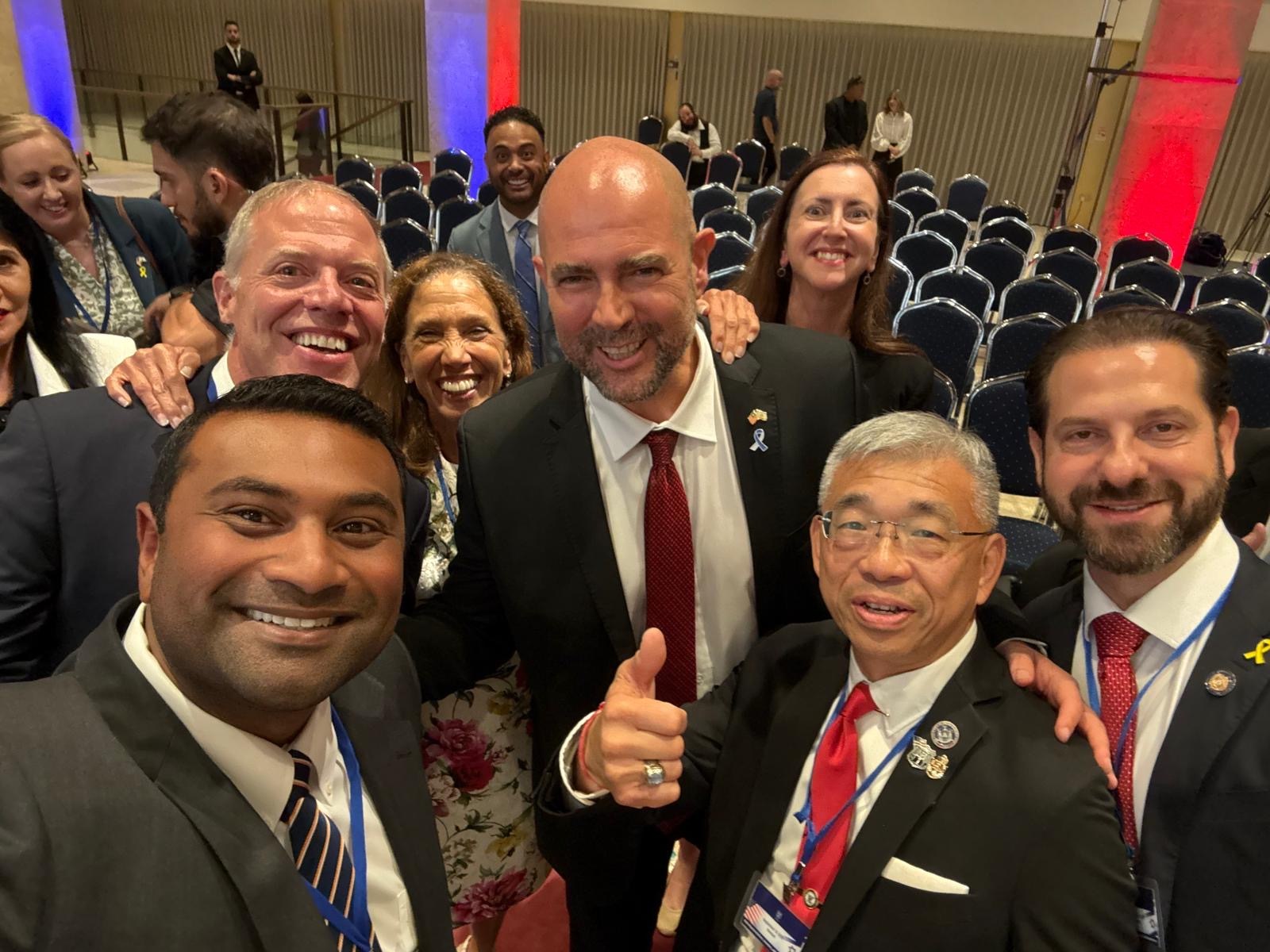
A delegation of New York State legislators met with Knesset Speaker Amir Ohana (center) in Jerusalem on Monday. From left: Assemblyman AJ Beephan, Minority Leader Will Barclay, Assemblywoman Amy Paulin, Assemblywoman Nily Rozic, Assemblyman Lester Chang and Assemblyman Daniel Norber.
Birthdays

Comedian, writer and actress, she was a frequent guest of Johnny Carson on the “Tonight Show,” Rita Rudner turns 72…
Fashion designer, known worldwide for his leading-edge corporate uniforms, Stan M. Herman turns 97… U.S. senator (R-IA) since 1981, Chuck Grassley turns 92… Investment banker who once served as a NYC deputy mayor, Peter J. Solomon turns 87… Newbery Honor-winning author of many young adult books, Gail Carson Levine turns 78… Author of 11 books, Joshua Muravchik turns 78… Former president of the National Technical Institute for the Deaf and then president of Gallaudet University, T. Alan Hurwitz turns 78… Rochester attorney, he has held positions at the UJA-Federation of New York and the Rochester Jewish Federation, Frank Hagelberg… Retired judge on the U.S. District Court for the Northern District of California, Jeremy Don Fogel turns 76… Professional tennis player who achieved a world ranking of No. 5 in 1980, Harold Solomon turns 73… Author, comic book writer and editor, best known as group editor of the Spider-Man books at Marvel Comics, Daniel Fingeroth turns 72… Israeli businessman with real estate holdings in Israel and NYC, Mody Kidon turns 71… Author and graphic designer, Ellen Kahan Zager… Former member of the Knesset for the Yesh Atid party, Rina Frenkel turns 69… Rabbi of the New North London Synagogue with over 3,700 members, Jonathan Wittenberg turns 68… Former consultant at Quick Hits News, Elliott S. Feigenbaum… Journalist, best-selling author including two books on the Obama presidency and Emmy Award-winning executive producer, Richard Wolffe turns 57… Director of the Centers for Disease Control and Prevention (CDC) for the last 18 months of the Biden administration, Mandy Krauthamer Cohen turns 47… Former regional communications director and spokesperson for President Obama, now a partner at Seven Letter, Adam Abrams… Member of the Los Angeles Unified School District’s Board of Education, Nick Melvoin turns 40… Former Obama White House speechwriter who has since written a best-selling comedic memoir, David Litt turns 39… Principal product manager for CathWorks, Adina Shatz… National health-care reporter The Washington Post covering the FDA, Rachel Roubein… Associate at Strand Partners in London, Natalie Edelstein Jarvis… Founder of the Israel Summit at Harvard and board member of the IDF Widows and Orphans Organization, Max August…
The sanctions will be reinstated in 30 days; Iran could come to an agreement with the West before then
Selcuk Acar/Anadolu via Getty Images
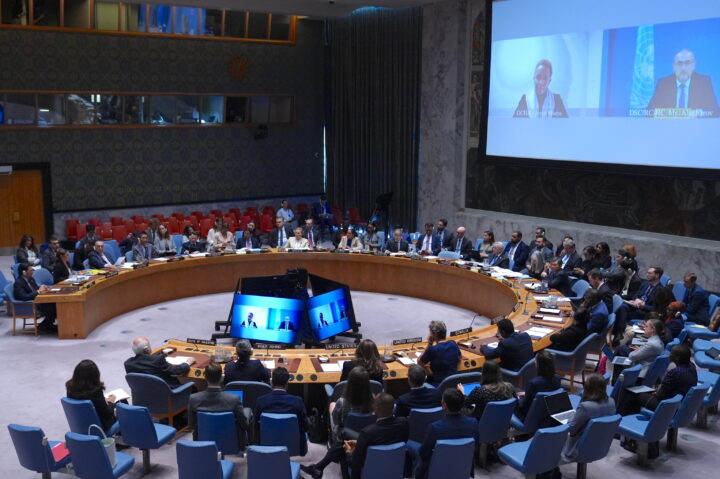
U.N. Security Council meeting New York City on August 27, 2025.
France, Germany and the United Kingdom triggered the snapback sanctions mechanism on Thursday, to reinstate all United Nations Security Council sanctions on Iran that had been lifted since the implementation of the 2015 nuclear deal.
The European parties to the Iran deal, known as the E3, notified the UNSC that they were triggering snapback sanctions due to Iran’s continued noncompliance with its commitments under the Joint Comprehensive Plan of Action, to which they are still parties despite the U.S. withdrawal in 2018.
If the UNSC does not adopt a resolution stopping the process — which is unlikely unless Iran reaches an agreement with the West, because it would be subject to vetoes from the states triggering the sanctions and the U.S. — all of the sanctions sunsetted in the framework of the 2015 deal will be restored in 30 days.
However, the E3 said it is open to continuing negotiations with Iran during those 30 days.
The E3’s move came after its foreign ministers met with their Iranian counterpart Abbas Araghchi in Geneva earlier this week in a last-ditch effort to reach an agreement with the Islamic Republic to scale back its nuclear program. It also comes less than three months after Israel and the U.S. bombed Iranian nuclear facilities, after which U.S.-Iranian negotiations broke down.
“Since 2019,” the E3 foreign ministers’ statement reads, “Iran has exceeded JCPoA limits on enriched uranium, heavy water, and centrifuges, restricted the IAEA’s ability to conduct JCPoA verification and monitoring activities, and has abandoned the implementation and the ratification process of the Additional Protocol to its Comprehensive Safeguards Agreement. These actions contravene Iran’s commitments set out in the JCPoA and have serious implications on the capacity of Iran to progress toward developing a nuclear weapon.”
The E3 noted that it repeatedly negotiated with Iran to return to its 2015 commitments, to no avail.
“Today, Iran’s non-compliance with the JCPoA is clear and deliberate, and sites of major proliferation concern in Iran are outside of IAEA monitoring,” the foreign ministers stated. “Iran has no civilian justification for its high enriched uranium stockpile … Its nuclear program therefore remains a clear threat to international peace and security.”
Among the sanctions that would be restored are an arms embargo, a ban on Iranian uranium enrichment and reprocessing, a ban on transferring ballistic missile technology and technical assistance, a global asset freeze on targeted Iranian individuals and entities and foreign inspections of Iranian cargo planes.
The snapback mechanism was set to expire at the end of October, in accordance with the terms of the JCPOA, but Russia will assume the presidency of the UNSC in October, raising concerns in the West that it would try to delay the 30-day snapback process. As such, the E3 set a deadline for the end of August for Iran to make progress in rolling back its nuclear program.
In 2020, two years after the U.S. left the JCPOA, the first Trump administration attempted to trigger snapback sanctions, but the other parties argued that it was no longer entitled to do so.
Iran’s Foreign Ministry said that it “categorically reject[s] and condemn[s] in strongest terms the unlawful notification by the E3 to the UNSC … This escalation will severely undermine the ongoing process of engagement between Iran and the International Atomic Energy Agency. It will be met with appropriate responses.”
Secretary of State Marco Rubio said the U.S. supports the E3’s move and called it “a direct response to Iran’s continuing defiance of its nuclear commitments.”
“At the same time,” Rubio said in a statement, “the United States remains available for direct engagement with Iran … Snapback does not contradict our earnest readiness for diplomacy, it only enhances it.”
Israeli Foreign Minister Gideon Sa’ar posted on X that “even after Israel and the U.S. operation against Iran’s nuclear program, Iran hasn’t abandoned its desire to acquire a nuclear weapon. This is why the E3’s move to initiate the return of UN sanctions on Iran is inevitable. It is an important step in the diplomatic campaign to counter the Iranian regime’s nuclear ambitions.”
Reports indicate the move could come as soon as Thursday, after talks in Geneva ended with little progress on rolling back the Iranian nuclear program
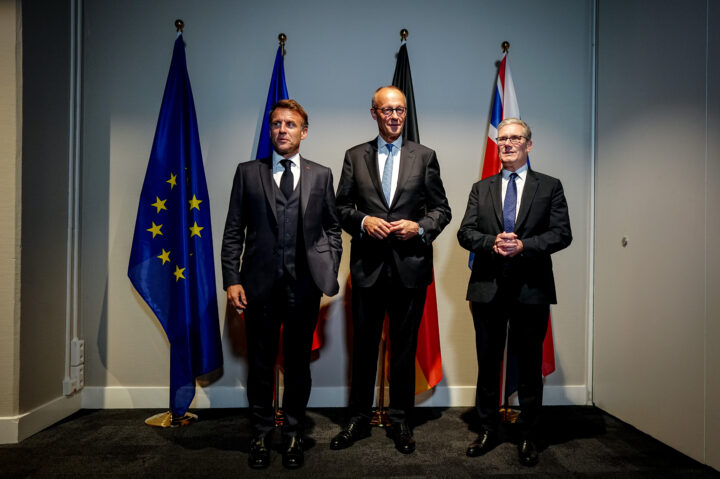
Kay Nietfeld/picture alliance via Getty Images
French President Emmanuel Macron (l-r), German Chancellor Friedrich Merz (CDU) and Keir Starmer, Prime Minister of Great Britain, meet in The Hague at the delegation hotel on the sidelines of the NATO summit for trilateral talks in the E3 format.
France, Germany and the U.K. are poised to reinstate snapback sanctions on Iran in the next several days, after talks held in Geneva this week aimed at scaling back Iran’s nuclear program reportedly concluded with little progress.
The three countries — known as the E3 — sent a letter to the U.N. Security Council earlier this month outlining “ongoing concerns regarding the lack of assurances as to the exclusively peaceful nature of Iran’s nuclear program” and Tehran’s ongoing violations of the 2015 Joint Comprehensive Plan of Action, to which the E3 countries are still parties despite the U.S. withdrawal in 2018.
The countries threatened to reinstate snapback sanctions by the end of August 2025 if “no satisfactory resolution” to the issue was reached before then.
The mechanism to trigger snapback sanctions at the UNSC expires in October, at which point any attempt to adopt new UNSC sanctions could face vetoes from Russia and China. However, the E3 and U.S. are looking to start the process before Russia assumes the UNSC presidency in October, giving it the power to delay the imposition of snapback sanctions — a process that takes 30 days to complete — until its expiration date.
The foreign ministers of the E3 and Iran met in Geneva earlier this week to discuss a diplomatic solution that would see Iran roll back its nuclear program without additional sanctions, which reportedly ended with little progress made.
A senior European diplomat told Axios on Wednesday that it would take a “diplomatic miracle” to prevent the reinstatement of snapback sanctions, with the European nations poised to trigger the mechanism as soon as Thursday.
Secretary of State Marco Rubio held a call with the E3 foreign ministers on Wednesday, during which all of the officials “reiterated their commitment to ensuring that Iran never develops or obtains a nuclear weapon,” State Department Principal Deputy Spokesperson Tommy Pigott said.
U.S. lawmakers have repeatedly pressed for the E3 to trigger the snapback mechanism.
Sen. Ricketts’ resolution intended to urge the U.K., France and Germany to impose snapback ‘as soon as possible’
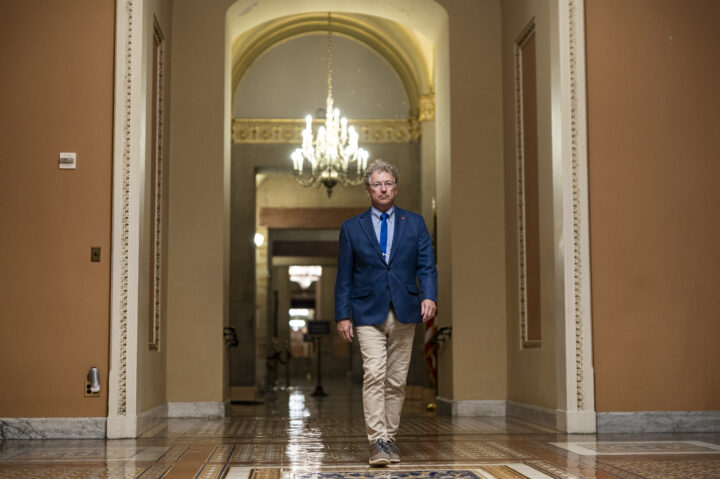
Al Drago/Getty Images
Sen. Rand Paul (R-KY) walks to the Senate floor during overnight votes at the U.S. Capitol on July 1, 2025 in Washington, DC.
Sen. Pete Ricketts (R-NE) attempted to call up and pass by unanimous consent a resolution urging the United Kingdom, France and Germany to trigger the snapback of United Nations sanctions on Iran under the Joint Comprehensive Plan of Action “as soon as possible,” but was blocked by Sen. Rand Paul (R-KY).
“In order to seize this moment,” and capitalize on Iranian weakness, “the U.S. and our allies must impose maximum pressure to the highest extent possible to force Iran to agree to permanently and verifiably end its nuclear program, including its capacity to enrich,” Ricketts said on the Senate floor on Wednesday.
The option to invoke snapback is set to expire in mid-October, but Ricketts emphasized that the process will take at least 30 days to complete, and that Russia is set to assume the presidency of the U.N. Security Council in October, in which role it could delay the proceedings. European allies have reportedly set an August deadline to initiate snapback, but Ricketts argued that “timeline … leaves little room for error.”
“I stand to urge our European friends to hold the line” in upcoming talks with Iran, Ricketts said, warning that Iran is trying to buy time and delay snapback.
Paul warned that the U.S. attack on Iran might make Iran more resistant to U.S. demands and “may turn out to be a disaster” that prompts Iran to sprint to a nuclear weapon.
He argued that sanctions have never changed Iran’s behavior — a notion disputed by leaders on both sides of the aisle — and “are often counterproductive” in general. Paul also suggested that the U.S. is in no position to make any requests related to snapback since President Donald Trump removed the U.S. from the Iran nuclear deal in 2018.
“It is a bit inconsistent for us to be arguing that Europe should apply and adhere to the JCPOA, which we no longer participate in,” Paul said. “If the United States is no longer a member of the JCPOA, what gives Washington the right to advise those who remain in it to invoke certain mechanisms within the agreement?”
He requested the Ricketts resolution be modified to instead call for deescalation and diplomacy.
Ricketts responded that diplomacy without pressure is a failed concept.
Sen. Jim Risch (R-ID), the chairman of the Senate Foreign Relations Committee, also spoke on the Senate floor in support of Ricketts’ resolution.
“Over the last 10 years, Iran has enjoyed unwarranted sanctions relief and time is short before the opportunity expires to snap back sanctions,” Risch said. “We cannot afford to wait until the end of August. Initiating the snapback process would be the right and long overdue move.”
Mechanism to bring back U.N. sanctions expires in October
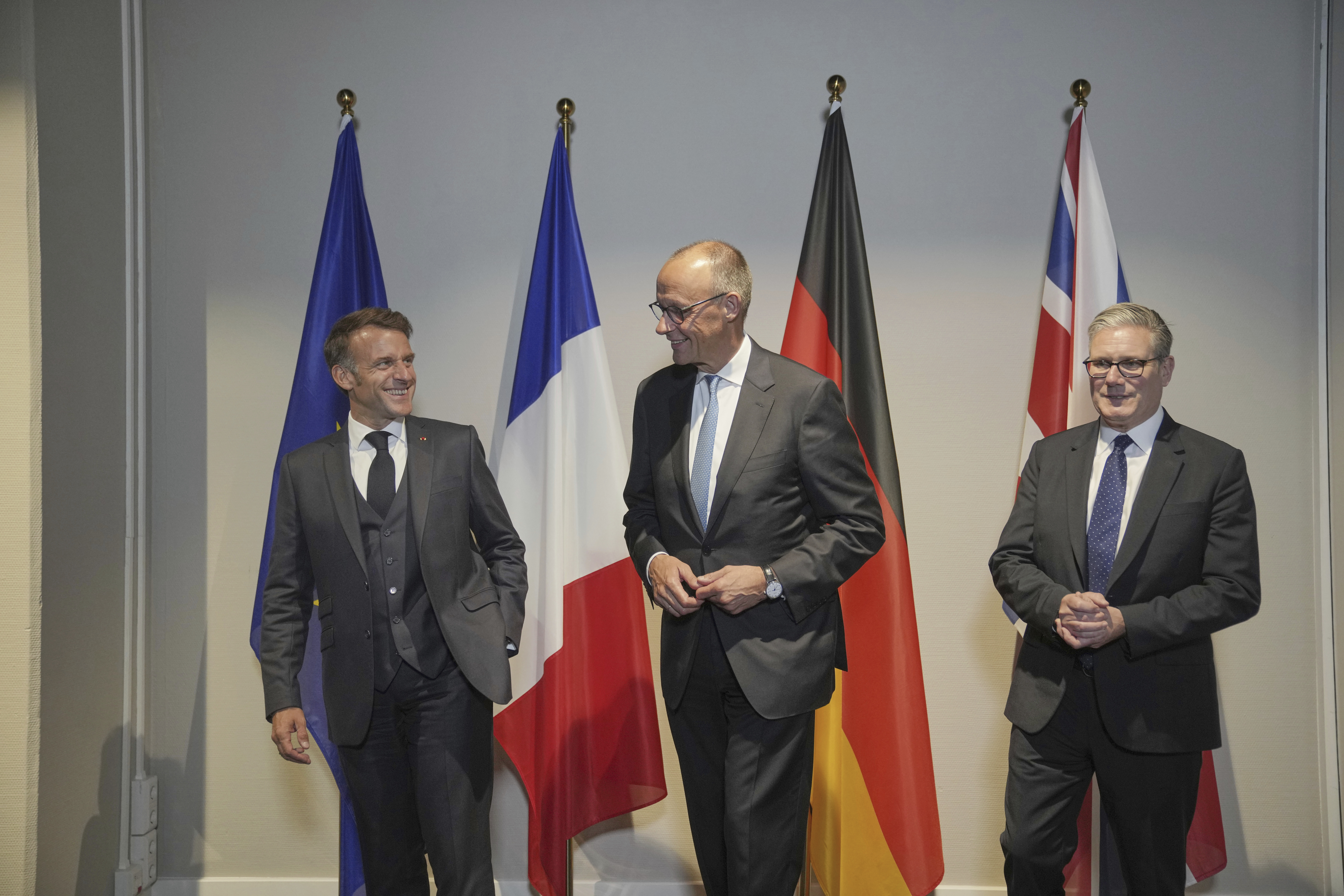
Press Association via AP Images
French President Emmanuel Macron, Germany's Chancellor Friedrich Merz and Prime Minister Sir Keir Starmer at a hotel prior to an E3 meeting on the sidelines of the NATO summit in The Hague, Netherlands, Tuesday June 24, 2025.
France, Germany and the U.K. will bring back sanctions on Iran via the U.N. Security Council if a nuclear deal is not reached by the end of August, French Foreign Minister Jean-Noel Barrot warned on Tuesday.
Barrot said that the E3, the European countries party to the 2015 Iran nuclear deal known as the Joint Comprehensive Plan of Action, will trigger the snapback mechanism, reimposing all U.N. sanctions, if a new agreement is not reached.
The Trump administration hopes to reach an agreement with the Islamic Republic to stop any uranium enrichment in Iran after Israeli and American strikes on Iran’s nuclear sites last month, aiming to prevent Tehran from rebuilding its severely damaged nuclear program.
“France and its partners are … justified in reapplying global embargoes on arms, banks and nuclear equipment that were lifted 10 years ago,” Barrot said on the way to a meeting with EU foreign ministers in Brussels. “Without a firm, tangible and verifiable commitment from Iran, we will do so by the end of August at the latest.”
The snapback mechanism expires in October and takes 30 days to activate, such that the end of August is the last chance to impose U.N. sanctions that cannot be vetoed by Russia and China, Iran’s allies on the Security Council. Moscow is slated to assume the presidency of the U.N. Security Council in October and could try to obstruct the move if it is not completed before then.
The E3 reached the shared policy in a phone call with Secretary of State Marco Rubio on Monday, according to Axios.
Barrot’s statement also came after reports in Arabic and Iranian media that Germany planned to activate snapback sanctions this week, which the German Foreign Ministry denied to Jewish Insider. A German official confirmed that his country shares France’s position.
Earlier this week, Tehran threatened a “proportionate and appropriate response” if the E3 snaps back sanctions, a move Iranian Foreign Ministry Spokesman Esmaeil Baqaei claimed “lacks any legal, political or moral justification.”
“European parties are constantly trying to use it as a tool in violation of their fundamental obligations,” he added.
Please log in if you already have a subscription, or subscribe to access the latest updates.
 Continue with Google
 Continue with Apple