


































‘Safeguarding communities at risk of violence is not the responsibility of philanthropic organizations. Rather, it is the government’s responsibility,’ the organization wrote to every member of Congress

Brandon Bell/Getty Images
A law enforcement vehicle sits near the Congregation Beth Israel synagogue on January 16, 2022, in Colleyville, Texas.


 Add JewishInsider on Google
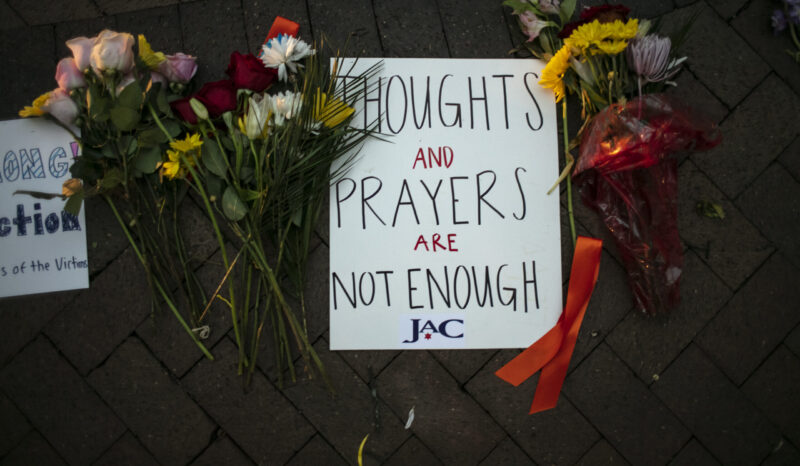
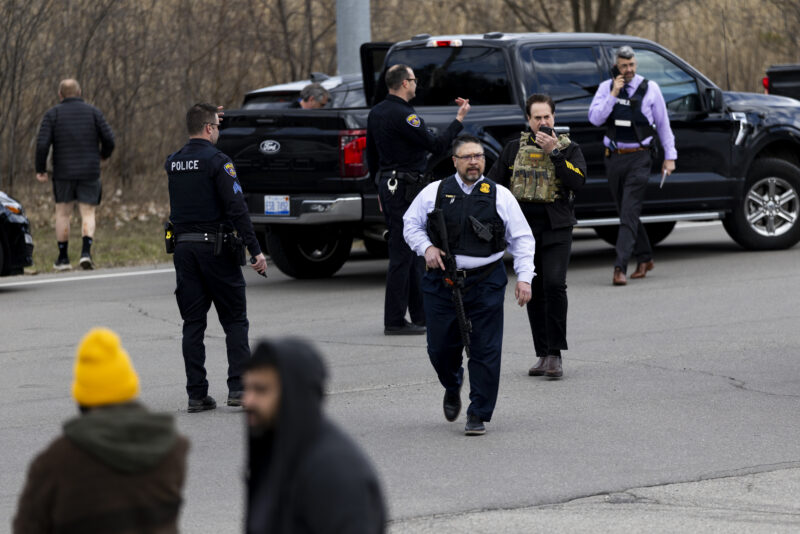
Following an attack last Thursday on Temple Israel and its early learning facility in West Bloomfield Township, Mich., the Jewish Federations of North America is making a renewed push for expanded security funding and resources to protect the Jewish community.
Since the Oct. 7, 2023, Hamas attacks in Israel, antisemitic attacks have repeatedly prompted such efforts from Jewish community groups and advocates on Capitol Hill, but funding has remained stubbornly gridlocked. Currently, funding for community security under the Nonprofit Security Grant Program remains in limbo during the Department of Homeland Security shutdown, with no signs of movement in the immediate aftermath of the attack.
In a letter sent to every member of Congress on Friday, JFNA Chair Gary Torgow and President Eric Fingerhut highlighted the significant degree of security support that Temple Israel received from its own membership, from the Jewish Federation of Metropolitan Detroit and JFNA.
“We are grateful that philanthropic funding and security planning played a decisive role in ensuring no harm came to any of the children or staff at Temple Israel,” the letter reads. “However, safeguarding communities at risk of violence is not the responsibility of philanthropic organizations. Rather, it is the government’s responsibility to protect its citizens in their places of worship and communal gathering.”
The letter emphasizes that the “Jewish community is under attack today like no other religious or ethnic group,” as a top target of hate crimes by a significant margin.
The letter urges increased funding for the NSGP at $1 billion and the prompt allocation of funds already appropriated that have not yet been disbursed for 2025. It also requests an end to restrictions on using NSGP funding to pay salaries for security personnel.
“The Jewish Community in Detroit has received important support from the state of Michigan and the Federal Nonprofit Security Grant Program, but the funding levels currently provided across the nation to protect our communities are simply not commensurate with the escalating threat landscape that American Jewish communities face daily,” the letter states.
The letter additionally asks Congress to ensure that NSGP applications are quickly opened and processed and that reimbursements are promptly fulfilled, following significant delays to funding grants and reimbursements last year.
It also calls for additional funding for FBI counterterrorism personnel and field offices that work to protect Jewish communities, and increased federal funding for local law enforcement to protect Jewish institutions, so that those institutions don’t have to pay for such protection themselves.
“Finally, we urge all our political leaders to take action to confront antisemitic-fueled violence in the public discourse and on social media,” the letter concludes. “This virulent ideology surging across the political spectrum utilizes rhetoric that either normalizes or minimizes such hatred, manifesting in dangerous consequences, potentially far worse than what took place today.”
The letter precedes a visit by Torgow, Detroit Federation CEO Steve Ingber, Temple Israel Rabbi Jennifer Lader and Detroit federation security director Gary Sikorski to Capitol Hill on Tuesday. The group is set to meet with both of Michigan’s senators and nearly every member of its House delegation.
Congregation Beth Israel President Zach Shemper spent time in Washington as a grand jury indicted the suspected arsonist
Sophie Bates/AP
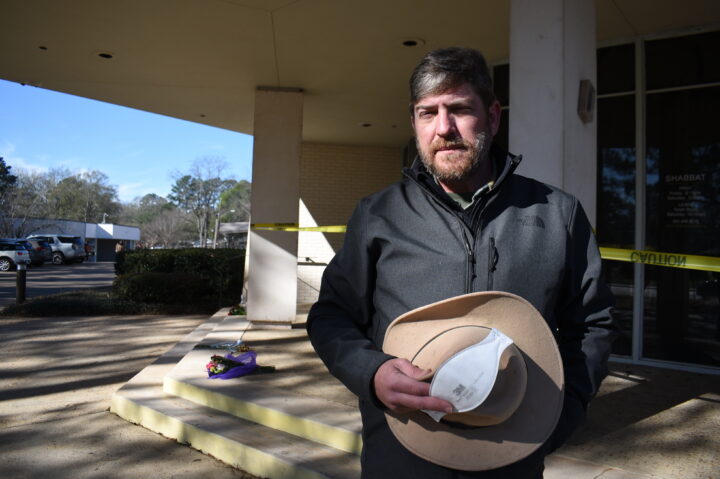
Beth Israel Congregation President Zach Shemper stands for a portrait in front of the synagogue's closed entrance on Tuesday, Jan. 13, 2026, in Jackson, Miss.
Beth Israel Congregation President Zach Shemper wrapped up a week on Capitol Hill Thursday feeling “confident” that sharing the story of the recent arson attack on his synagogue with lawmakers would bring increased security funding for houses of worship nationwide — including his own.
“My message to members of Congress was simple — increasing funding for the Nonprofit Security Grant Program and advancing the Pray Safe Act will make a real difference for houses of worship like ours across the country,” Shemper told Jewish Insider.
It’s been one month since a fire heavily damaged the historic place of worship — the only synagogue in Jackson and the largest one in the state. The suspected arsonist, Stephen Spencer Pittman, 19, admitted to starting the blaze on Jan. 10 due to “the building’s Jewish ties,” and referred to the institution as the “synagogue of Satan.”
Pittman was charged on Thursday with civil rights and arson offenses, which add to an earlier arson indictment. Two Torah scrolls were destroyed in the fire, and five more were damaged. A Torah that survived the Holocaust, which was kept in a glass case, was unharmed. The congregation’s library and administrative office were also destroyed. Synagogue leaders estimate it will take two or three years to rebuild. The 140 families that belong to Beth Israel are indefinitely holding services in a nearby church.
Less than two weeks after the attack, Congress put forward a budget of $300 million for NSGP for 2026. While that figure is a small increase from the funding provided in 2024 and 2025, it is lower than the allocations initially proposed by both the House and Senate. That figure is also significantly less than the $500 million to $1 billion for the program requested by congressional advocates and Jewish groups.
New conditions on the program relating to Diversity, Equity and Inclusion programs and immigration have also drawn bipartisan condemnation.
Still, Shemper said he is “feeling confident about increased NSGP funding. At the end of the day, it’s just the right thing to do.”
In meetings facilitated by the Anti-Defamation League, Shemper met with Senate Minority Leader Chuck Schumer (D-NY); the ranking members of the House and Senate Homeland Security committees, Rep. Bennie Thompson (D-MS) and Sen. Gary Peters (D-MI); Rep. Brad Sherman (D-CA); and the co-chairs of the House Bipartisan Task Force to Counter Antisemitism, Reps. Dan Goldman (D-NY), Marc Veasey (D-TX), Grace Meng (D-NY), Steny Hoyer (D-MD), Jerry Nadler (D-NY) and George Latimer (D-NY).
“The arson attack on Beth Israel Congregation in Jackson, Mississippi is a stark reminder that Jewish institutions across the country face serious and persistent security threats. ADL was proud to join Beth Israel Congregation President Zach Shemper on Capitol Hill this week to ensure lawmakers could hear directly from a community leader navigating the aftermath of a targeted attack,” ADL CEO Jonathan Greenblatt said in a statement. “Faith communities deserve to gather and worship without fear, and Congress has a clear opportunity, and responsibility, to help make that possible.”
Shemper told JI that “coming to Washington this week gave me the opportunity to underscore what it takes for synagogues like ours to keep our congregants safe.”
“After the arson attack on our synagogue, security is not an abstract concern,” he continued. “It is immediate, personal and a daily reality for our community. What happened in Jackson was not an isolated incident, it’s part of a dangerous pattern. No community should have to experience what we have, and no congregation should ever have to rebuild after an attack simply for being Jewish.”
Located in a major hub of the Civil Rights Movement, Beth Israel was also the target of a 1967 bombing by the Ku Klux Klan over the rabbi’s support for racial equality — including providing chaplain services to activists incarcerated for challenging segregated bussing in the state.
Shemper said that NSGP “helped pay for security cameras that caught the assailant” of the arson attack.
“I was in Washington advocating for increased NSGP funding — because our grant didn’t cover the full cost of security cameras, and there are certainly more houses of worship who need access to this funding,” he continued.
“Security for houses of worship can’t be optional, and it can’t just come after tragedy.”
‘Now that this decision has been made, I don't think we need to wait 10 years,’ Graham told JI
Amos Ben Gershom via Getty Images
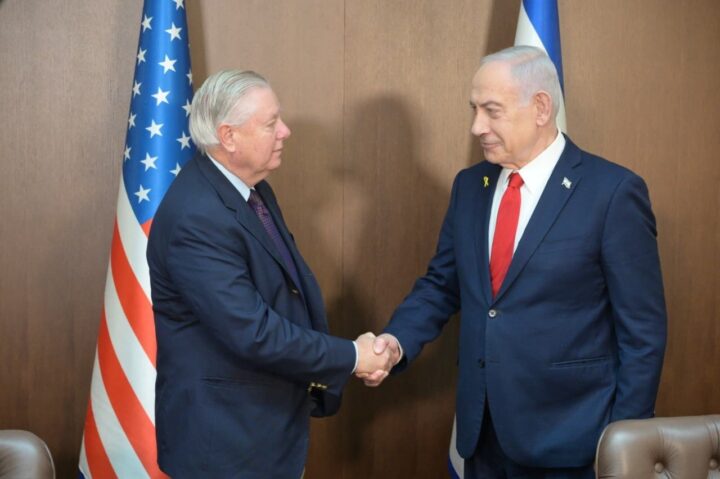
Israeli Prime Minister Benjamin Netanyahu (R) meets with U.S. Senator Lindsey Graham (L) at the Israeli Prime Minister's Office in Jerusalem on December 21, 2025.
Following Israeli Prime Minister Benjamin Netanyahu’s announcement that Israel seeks to wean itself off of U.S. aid within next 10 years, Sen. Lindsey Graham (R-SC) told Jewish Insider he will push forward an effort to end U.S. aid more quickly — a major shift from one of Israel’s closest allies on Capitol Hill.
“From my point of view as an American, now that this decision has been made, I don’t think we need to wait 10 years,” Graham, who chairs the State, Foreign Operations and Related Programs (SFOPs) subcommittee of the Senate Appropriations Committee, said. “I’m going to work on expediting the wind down of the aid and recommend we plow the money back into our own military.”
The majority of direct U.S. military aid to Israel — $3.3 billion annually through the U.S.-Israel memorandum of understanding — comes through the SFOPs budget package. An additional $500 million in cooperative missile defense funding for co-produced systems is provided through the Defense funding tranche, along with funds for other cooperative programs.
The current MOU guaranteeing $3.8 billion per year expires in 2028.
Graham said that he wants to see the funding redirected into the U.S. military, in light of President Donald Trump’s plan, announced this week, to request $1.5 trillion for the Pentagon for 2027, a more than 50% increase over the 2025 budget.
“President Trump’s budget request of $1.5 trillion for [the] Department of War is a major increase, and every dollar we can recoup, from efficiency or allies who don’t need the money anymore, is welcome to go into building up our military,” Graham said. “Israel’s a great friend and a marvelous military, but we’re the only superpower in the world. America and the demands on us are at an all-time high because of the threats. The American military is the best in the world and in great demand. So what I think is best for America, now that Israel has made this decision, is to expedite this money, plowing it back into our own military needs.”
Netanyahu’s announcement came at a time of rising criticism of U.S. aid to Israel on both sides of the aisle.
But Graham argued that — if Israeli leaders believe that winding down U.S. aid will help rebuild support for the Jewish state among those who are critical of Israel — they are likely mistaken. He added that he’d communicated that view to Israeli leaders, but they pushed ahead anyway.
“From a political point of view, if people in Israel think this will get more support in America, I doubt it. I don’t think people who support Israel and understand its vital role object to the aid, which is a small fraction of our budget, and I don’t think you get any credit from people who think Israel is a liability by reducing our military assistance,” Graham said. “I made that position clear, but Israel is a sovereign nation, a great friend. I respect their decision.”
The South Carolina senator said that he “respect[s]” Netanyahu’s decision, adding “As an American, you’re always appreciating allies that can be more self-sufficient.”
Graham described the U.S. funding for Israel as a “great investment” for U.S. national security which has ultimately saved American taxpayer funding and filled capacities the U.S. would otherwise struggle to achieve.
“The investment we’ve made into the IDF has been a great investment for our national security. We have no better ally than Israel. The more capable they are, the safer America [is],” Graham said. “So I’ve always seen this money going to the IDF as investing in a very capable partner being able to do things that we can’t do at a fairly small price. It would be hard for America, if not impossible, to replicate some of the things the Israeli military and intelligence community can do because of location and expertise.”
The Pennsylvania Democrat joins a handful of Republicans in supporting U.S. recognition of Somaliland, but other lawmakers warn it may not be fully aligned with U.S. interests

Lev Radin/Pacific Press/LightRocket via Getty Images
Senator John Fetterman speaks during the grand opening of The Altneu synagogue.
Some Republicans and at least one Democrat on Capitol Hill are voicing their support for the U.S. to follow Israel’s lead in recognizing Somaliland — but many lawmakers, even some who have supported expanded U.S.-Somaliland ties in the past, say such a step would be premature, if not misguided, at this point.
Sen. John Fetterman (D-PA), one of the most vocal pro-Israel Democrats in Congress, said in a statement to Jewish Insider that he’s in favor of U.S. recognition of Somaliland, making him the first member of his party to do so publicly.
“As an unapologetic friend of Israel, I fully support their decision on Somaliland. I support the U.S. doing the same,” Fetterman told JI.
“Recognizing Somaliland isn’t charity — it’s strategy. It aligns with America’s security interests and the ‘America First’ doctrine by strengthening an ally that shares our values in a region vital to global trade and counterterrorism,” Sen. Ted Cruz (R-TX) said in a statement on Monday.
Cruz has been a longtime champion for Somaliland recognition, urging the administration to take such a step last August in a letter to President Donald Trump.
Rep. Chris Smith (R-NJ), the chairman of the House Foreign Affairs Committee subcommittee on Africa, praised Israel in a statement on Tuesday for recognizing Somaliland and urged others, including the U.S., to do the same.
“Somaliland is a functioning democracy, as demonstrated by the peaceful transfer of power more than a year ago following elections — a rare, positive example in the Horn of Africa, and, indeed, in much of Africa,” Smith said. “Somaliland’s strategic location and deep-water port at Berbera also underscore its national security significance to the United States. And Somaliland’s close ties with Taiwan offset Communist China’s malign influence in the region … Above all, official recognition signals to the Somaliland people that their commitment to democracy — and to free and fair elections — is not in vain, and their nation is getting the acknowledgment it deserves.”
Reps. Scott Perry (R-PA), Andy Ogles (R-TN), Pat Harrigan (R-NC) and Tom Tiffany (R-WI) introduced a bill last June to recognize Somaliland’s independence. Reps. Tim Burchett (R-TN) and John Rose (R-TN) have since joined as cosponsors.
Still, lawmakers on both sides of the aisle said that U.S. recognition would be either premature or a mistake entirely.
Sen. James Lankford (R-OK) told JI that he didn’t support the idea “yet,” citing issues the U.S. has had with recognizing still-developing nations. “I’m still deciding on that. I was just in the region not long ago on that. I don’t share their [the Israelis’] recognition of it yet, but it is one I’m actually looking at,” Lankford told JI.
Lankford also pointed to issues that experts have raised around the need for continued positive relations with Somalia, which opposes Somaliland independence, as it pertains to regional stability and counterterrorism efforts.
“We’ve done a lot to try to stabilize Somalia over the years, which has just been a hot mess for a very long time. We need their country to be a stable country. Al-Shabaab has been a major threat of terrorism in the entire region. The work they [Somalia] have done has destabilized Kenya, a close ally of ours,” Lankford said. “There’s a lot that we’re trying to be able to work with the countries in the region on what they’re going to do. You don’t want to see Somalia collapse. You want to see Somalia succeed. We want successful democracies there, and I think Somaliland has struggled with that.”
Sen. Richard Blumenthal (D-CT) said that the U.S. should examine the issue but that it has other considerations to take into account that Israel may not.
“We should take a close look at it, but I don’t know that we should be the second in the world to do it,” Blumenthal said. “I think that Israel’s reasons for recognition, while deserving of respect, probably are different from what ours should be.”
Sen. Mike Rounds (R-SD), a lead sponsor of legislation in 2022 that sought to expand U.S. ties with Somaliland — but explicitly stopped short of recognizing Somaliland’s independence or establishing a relationship with Somaliland as an independent entity — said that U.S. recognition would be premature.
“There are some diplomatic issues that have to play out there yet. I’m not sure how that’s going to look when it’s all done,” Rounds said. “I’m aware of what [Israel has] done, but I’m not exactly sure what the next steps will be, so I really can’t give you a whole lot of information right now, that I can share publicly anyway.”
Parts of that legislation were adopted as part of the 2023 National Defense Authorization Act, directing a report and feasibility study on existing and potential greater collaboration with Somaliland.
Sen. Chris Van Hollen (D-MD), another lead sponsor of the bill with Rounds, said the U.S. should not recognize Somaliland’s independence.
“I think the United States should be engaged with people throughout Somalia, including Somaliland,” Van Hollen said. “It continues to be part of Somalia. And I don’t think that the United States should be essentially getting in the middle of that.”
Sen. Jim Risch (R-ID), the chair of the Senate Foreign Relations Committee, also sponsored the 2022 bill on expanded ties. Risch did not respond to a request for comment.
Multiple other senators indicated to JI that they hadn’t followed the issue closely enough to weigh in.
Other prominent lawmakers on the Hill have also called for steps to deepen the U.S.-Somaliland relationship without endorsing full recognition of its independence.
Smith and Rep. John Moolenaar (R-MI), the chair of the House Select Committee on China, urged the administration in September to distinguish Somaliland from Somalia in its travel advisory report, a step toward expanding relations with Somaliland and incentivizing U.S. investors to enter its market.
That letter also noted that Somaliland is working with U.S. partners including Israel and Taiwan.
Moolenaar in January 2025 urged the State Department to open a representative office in the Somaliland capital, Hargeisa. He did not respond to a request for comment.
Dating back to 2022, bipartisan members of the House Foreign Affairs Committee, including the committee’s former chairman, Rep. Michael McCaul (R-TX), have called for expanded ties with Somaliland.
Beyond Capitol Hill, analysts and former military personnel say the question of U.S. recognition hinges on a complex tradeoff: potential military and geopolitical gains weighed against the risk of destabilizing existing alliances and inflaming regional tensions.
Vice Adm. Kevin Donegan (Ret.), who served as commander of the U.S. Fifth Fleet and the 32-nation Combined Maritime Forces in the Middle East, told JI that an expanded American presence in Somaliland could carry military benefits – from greater access to the Red Sea to deeper cooperation on counterterrorism – in what he described as a “critical choke point” in the world.
“Having options is always good for the military,” Donegan said, pointing to concerns about ISIS and broader counterterrorism efforts in the region. “When you look at the region in general, we are worried about ISIS and doing counterterrorism operations when necessary, or at least collecting information and maybe empowering other nations to help in this anti-terrorism fight.”
He added that “it’s always better to have more places that you have access to and more governments that are going to work with you against counterterrorism.”
Another factor potentially shaping U.S. thinking is growing Chinese influence in Africa, according to Donegan. “We all know that Chinese influence exists in Africa,” he said, adding that expanded engagement in Somaliland could provide Washington with “options” to push back against Beijing’s footprint on the continent.
Edmund Fitton-Brown, a former British diplomat and senior fellow at the Foundation for Defense of Democracies, who supports a U.S. move to recognize Somaliland, said that the east African nation’s capital city and Berbera port “could be very useful.”
“The U.S. would have a great deal of freedom of action in a landmass and coastline with potential strategic significance, close to Yemen, the Gulf of Aden, the Red Sea, and not far from Iran,” said Fitton-Brown. “In my opinion, the U.S. should recognize [Somaliland].”
Donegan, however, stopped short of endorsing formal recognition, instead suggesting that it may not be necessary to “unlock” military and geopolitical benefits in the region.
“Ensuring that what’s in the best interests of the United States for helping to create stability in the region is the number one predominant thing that we should look at, as opposed to adding another issue that’s relatively charged to the plate,” he said. “Some of these things, including access to the port in Berbera and access to helping their forces, potentially can be worked out without declaring Somaliland independent.”
Donegan also warned that recognition risked adding to regional instability. He pointed to the complex regional dynamics involving Saudi Arabia and the United Arab Emirates, two U.S. partners whose growing policy differences include whether to support Somaliland. The UAE has quietly supported Somaliland’s de facto independence, while Saudi Arabia has strongly backed Somalia’s territorial integrity.
“The harder problem is, does [recognition] make [the U.S.] aligned or misaligned with regional allies?” he said. “As a country, the United States is very much supportive of the Emiratis and very much supportive of the work they’re doing, and very much supportive of the Saudis and the work they’re doing, and we wouldn’t want to pick sides between those, and that’s where it starts to get complex.”
Steven Cook, a senior fellow at the Council on Foreign Relations, told JI that geopolitical concerns among Middle East partners are a possible reason that the Trump administration has thus far refrained from formal recognition.
“It is unclear to me exactly why President Trump is opposed to recognition of Somaliland, but I surmise it has to do with Turkey, Qatar, Egypt and Saudi Arabia — four countries that are important to U.S. foreign policy,” said Cook. “The Qataris and Turkey are invested heavily in Somalia and as a result, are likely concerned about an Israeli partner next door and an Israeli presence in the Red Sea.”
Cook added that Egypt is likely “worried that the Israelis will forcibly relocate Gazans [in Somaliland],” despite calling such a move “unlikely.”
As U.S. officials weigh whether to follow in Israel’s lead, Fitton-Brown said there is “talk of other states,” such as Ethiopia, Kenya, Morocco, the UAE and India, moving towards recognition of Somaliland, which could “put the issue more firmly on the U.S. radar screen.”
The backtracking was sufficient for Sens. Jacky Rosen and Tammy Duckworth to announce they would release their holds on the Coast Guard commandant’s confirmation proceedings
Al Drago/Getty Images
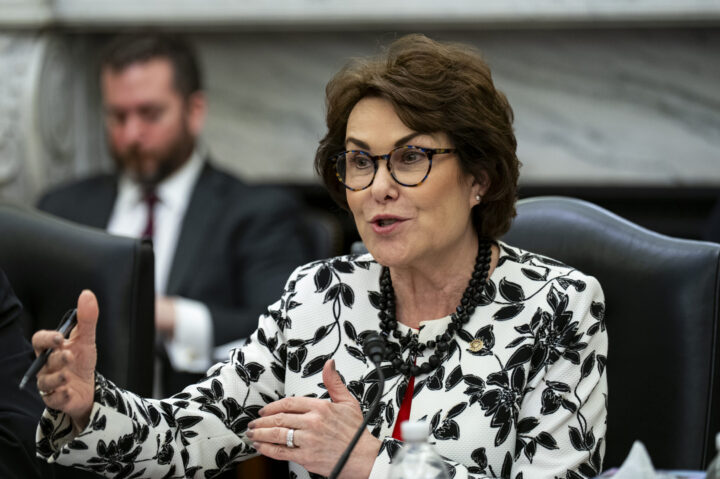
Sen. Jacky Rosen (D-NV), ranking member of the Senate Armed Services Subcomittee on Cybersecurity, speaks during a hearing on Artificial Intelligence cyber capabilities, on Capitol Hill on March 25, 2025 in Washington, DC.
After pressure from Capitol Hill — including a blockade by Democratic senators of the confirmation of the Coast Guard commandant — the Coast Guard struck from its disciplinary policies language describing swastikas and nooses as “potentially divisive,” rather than as explicitly banned hate symbols.
The Washington Post initially reported that the language around displays of such symbols would be changed last month, prompting bipartisan outrage from Capitol Hill. Though Department of Homeland Security officials denied the changes, acting Coast Guard commandant Adm. Kevin Lunday issued new guidance to clarify that such displays were still banned hate symbols and repeatedly reassured lawmakers as such.
Yet, this week, the Post reported that the “potentially divisive” language had gone into effect anyway, prompting another wave of confusion and outrage from Capitol Hill, with some lawmakers accusing Lunday of misleading them. Sens. Jacky Rosen (D-NV) and Tammy Duckworth (D-IL) said they would block Lunday’s confirmation in response to the latest change, and some Republicans expressed frustration at the continued flip-flopping and sought answers from DHS.
Secretary of Homeland Security Kristi Noem denied any wrongdoing and attacked critics, but said Thursday on X, “The pages of superseded and outdated policy will be completely removed from the record so no press outlet, entity or elected official may misrepresent the Coast Guard to politicize their policies and lie about their position on divisive and hate symbols.”
Noem’s description of the “superceded and outdated policy” appears to refer to the “potentially divisive” language, but the language of policy now on the books remains unclear.
The Post reported that the Guard had indeed deleted the language downgrading swastikas and nooses from hate symbols to “potentially divisive,” and that the Coast Guard manual now includes a black bar covering the relevant portion of its table of contents and a reference to a separate civil rights manual.
Noem claimed that new Coast Guard policies, in addition to the Coast Guard’s existing civil rights manual, “strengthens our ability to report, investigate, and prosecute those who violate longstanding policy,” and that the updated policy and order issued by Lunday last month “double[d] down on that language and further clarif[ied] the display of divisive and hate symbols and flags prohibited as a violation of Coast Guard policy and the Uniform Code of Military Justice.”
Lawmakers on both sides of the aisle had raised concerns that the updated policy issued by Lunday weakened investigative and accountability procedures for displays of swastikas as compared to the previous policy.
Noem dismissed critics as promulgating a “demonstrably false story.”
The secretary’s announcement came after Rosen and Duckworth placed holds on Lunday’s confirmation, which was expected to be finalized this week, over the policy. Noem demanded an end to these delays and Lunday’s prompt confirmation.
The latest developments were sufficient reassurance for the two Democrats to announce they would be lifting their holds.
But Rosen said she’ll be placing a hold on another DHS nominee in a bid for accountability going forward.
“While I continue to have reservations about the process by which this happened and the confusion created by leadership at the Department of Homeland Security, I am pleased to see that the policy now directly refers to stronger language against swastikas and nooses,” Rosen said in a statement. “For this reason, I will be lifting my hold on Acting Commandant Kevin Lunday. I appreciate his lifetime of service to our country and look forward to working with him to continue to strengthen anti-harassment policy at the Coast Guard.”
To ensure the “ongoing implementation of the policy,” Rosen said she’d place a hold on Sean Plankey, nominated to lead the Cybersecurity and Infrastructure Security Agency, who is currently overseeing the Coast Guard in a role at DHS.
“I will keep that hold in place until we see that this new policy works to protect our men and women in uniform from racist and antisemitic harassment,” Rosen said.
She also said that some at the Coast Guard and DHS have been “evasive, misleading, and elusive” about the policies being put in place since the scandal first began, and that there was “absolutely no valid reason” to alter existing policy in the first place.
She also highlighted that even after the Coast Guard initially agreed last month to drop the “potentially divisive” language, the new policy included changes that “would’ve weakened the Coast Guard’s standards and potentially allowed swastikas and nooses to be displayed.”
Duckworth said, “Swastikas and nooses are divisive symbols of hate. No gray area. No debate. Admiral Lunday told me he agreed with this statement — so it made absolutely no sense that the Coast Guard policy ever said otherwise. With this policy reversed, I will lift my hold.”
Plus, the Coast Guard quietly walks back anti-swastika policy
(Yuri Gripas/Abaca/Bloomberg via Getty Images)
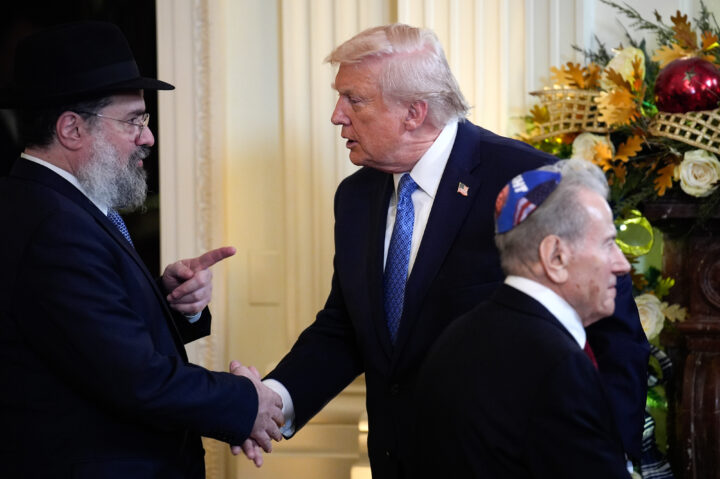
US President Donald Trump greets Rabbi Levi Shemtov and Holocaust survivor Jerry Wartski during a Hanukkah reception in the East Room of the White House in Washington, DC, US, on Tuesday, Dec. 16, 2025.
👋 Good Wednesday morning!
In today’s Daily Kickoff, we report from Hanukkah receptions at the White House, on Capitol Hill and in New York, and cover concerns from U.S. lawmakers over Canberra’s failure to address concerns from Australia’s Jewish community prior to Sunday’s deadly attack in Sydney. We report on the Coast Guard’s quiet moves to reverse its policy on swastikas, and talk to Rep. Zach Nunn about his legislative work aimed at expanding the U.S.-Israel relationship. Also in today’s Daily Kickoff: UAE Foreign Minister Sheikh Abdullah bin Zayed, Mark Zuckerberg and Galia Lahav.
Today’s Daily Kickoff was curated by Jewish Insider Executive Editor Melissa Weiss and Israel Editor Tamara Zieve, with assists from Danielle Cohen-Kanik and Marc Rod. Have a tip? Email us here.
What We’re Watching
- President Donald Trump will give a televised address at 9 p.m. ET.
- The Heritage Foundation is hosting a sit-down this afternoon between Heritage President Kevin Roberts and conservative commentator Ben Shapiro.
- Elsewhere in Washington, Jewish members of Congress are hosting the annual Capitol Hill Hanukkah party. Across town, the Israeli Embassy in Washington is hosting its annual Hanukkah reception tonight.
- Norman Podhoretz, the longtime editor of Commentary magazine and influential conservative thought leader, died on Tuesday. In a remembrance of his father, John Podhoretz wrote: “He bound himself fast to his people, his heritage, and his history. His knowledge extended beyond literature to Jewish history, Jewish thinking, Jewish faith, and the Hebrew Bible, with all of which he was intimately familiar and ever fascinated.”
- Australian police charged Naveed Akram, one of the suspects in the Sunday terror attack in Sydney, with 15 counts of murder in addition to dozens of other offenses, including committing a terrorist act; Akram is in stable condition at a Sydney hospital after spending two days in a coma.
What You Should Know
A QUICK WORD WITH THE JI team
As Jewish communities are marking Hanukkah under the shadow of the deadly terror attack in Sydney that marred the beginning of the Jewish holiday, leaders in Washington and New York addressed growing concerns about antisemitism at several Hanukkah events held yesterday.
President Donald Trump warned that Israel and the “Jewish lobby” have lost their influence in Washington and that Congress is “becoming antisemitic,” in a holiday message delivered to attendees at the White House’s annual Hanukkah party.
Speaking from the East Room to a gathering of lawmakers and prominent Jewish figures ahead of a ceremonial menorah lighting, the president repeatedly cautioned that the Jewish community and its allies “have to be very careful because bad things are happening” to Jewish people and to Israel’s global standing, citing the shooting in Sydney and the ongoing denials of Hamas’ Oct. 7, 2023, attacks on Israel. Read the full story here.
Meanwhile, U.S. Ambassador to the U.N. Mike Waltz, speaking at a Hanukkah reception hosted by Israel’s U.N. mission at The Jewish Museum in Manhattan, said the U.S. “can and will confront antisemitism without apology, without hesitation and will do so everywhere around the world, including right here in the halls of the U.N.” Read the full story here.
On Capitol Hill, Rep. Debbie Wasserman Schultz’s (D-FL) annual Hanukkah party featured remarks by Shira Gvili, sister of Ran Gvili, the last hostage in Gaza, JI’s Marc Rod reports. Gvili highlighted that her brother had always dreamed of being a police officer and ran into the fight on Oct. 7 — when he was killed — despite waiting for surgery for a broken shoulder. She also noted that he volunteered to support Holocaust survivors.
“On this celebration of light, of heroes, as we do on Hanukkah, Ran is not only my hero, he is our hero. For everyone lighting a candle tonight, may the glow of the menorah [brighten] the darkened moments. May the glow of the menorah’s light bring Ran home tonight,” Gvili continued.
House Minority Leader Hakeem Jeffries (D-NY) also delivered remarks, and nearly 40 lawmakers — a majority of them Democrats — stopped through the gathering. These included Reps. Ed Case (D-HI), Lois Frankel (D-FL), Sara Jacobs (D-CA), Daniel Goldman (D-NY), Craig Goldman (R-TX), Steny Hoyer (D-MD), David Kustoff (R-TN), George Latimer (D-NY), Jared Moskowitz (D-FL), April McClain Delaney (D-MD), Brad Schneider (D-IL), Kim Schrier (D-WA), Shri Thanedar (D-MI), Grace Meng (D-NY), Adriano Espaillat (D-NY) and Don Davis (D-NC).
Jeffries said that, after the attack in Australia, “it’s incumbent on all of us as leaders not just to, of course, authentically express our thoughts and prayers on behalf and directed at those families who have suffered from this unconscionable, unthinkable, unspeakable tragedy, but to make it clear that we all have a responsibility to combat antisemitism whenever and wherever it’s found, and make sure that no matter what it takes, we’re committed, not as Democrats or Republicans, but as Americans, to bury antisemitism in the ground never to rise again.”
Jeffries continued, “At the same time, we’ll also make clear that we will continue to stand up for Israel’s right to exist as a Jewish and Democratic state and a homeland for the Jewish people.”
ON THE HILL
Australian Jews’ warnings about rising antisemitism were ignored, U.S. lawmakers say
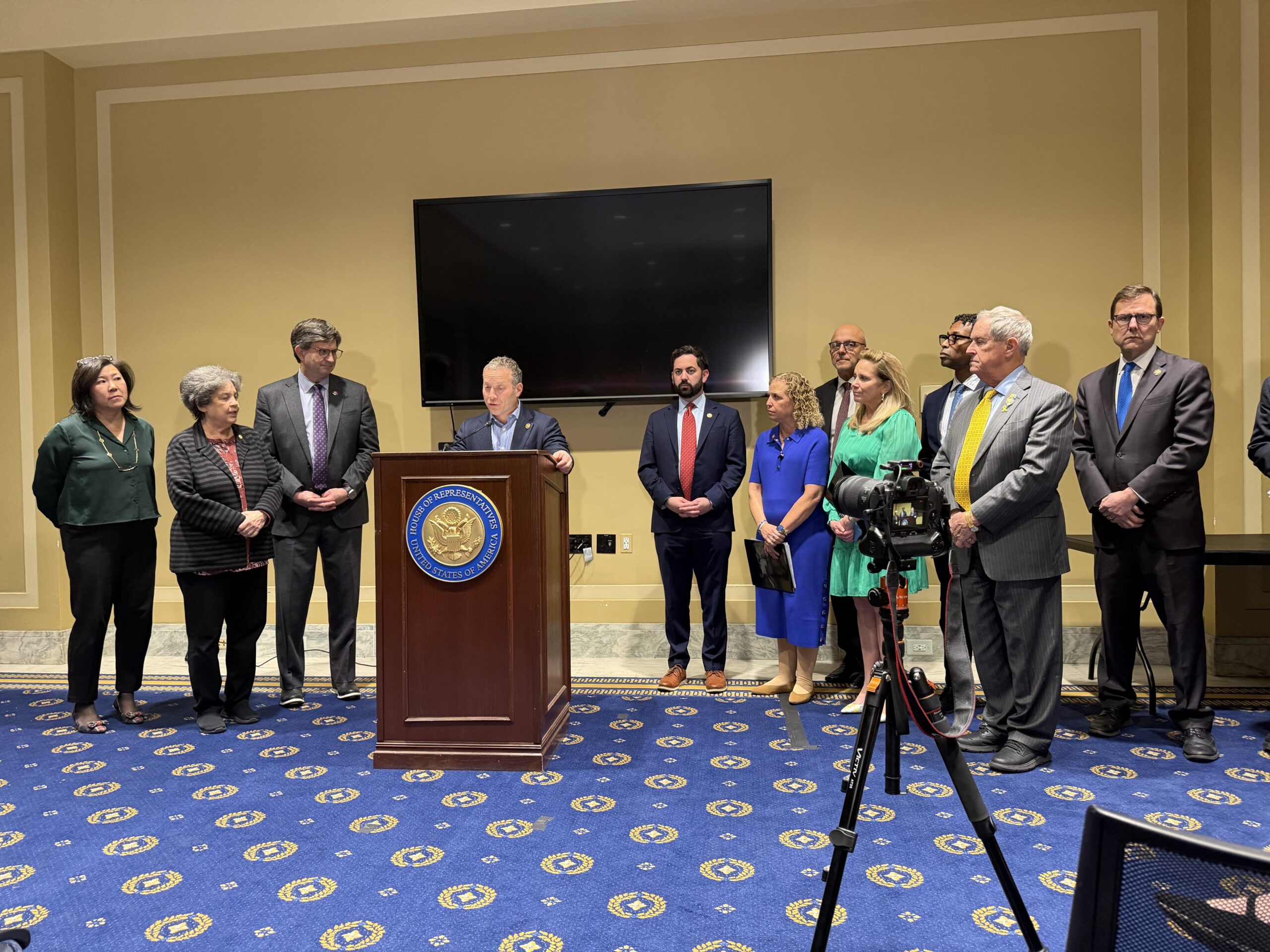
Speaking to reporters on Tuesday, multiple Jewish lawmakers emphasized that the Sunday massacre that killed at least 15 at a Hanukkah celebration in Sydney, Australia, came after many warnings from the Australian Jewish community, and Jewish communities around the world, about the rising violent threats they face — warnings that have often gone ignored, the lawmakers said, Jewish Insider’s Marc Rod reports.
Notable quotable: “That threat, those warnings, have fallen on deaf ears, and we are living with those consequences now,” Rep. Debbie Wasserman Schultz (D-FL) said. “I hope that this tragedy is the wake-up call that world leaders need to truly stand up and protect their Jewish communities from antisemitism, whether that manifests online or in person. … Lives are at stake. This is not pretend. These enemies of the Jewish people are not playing games. They mean to end our existence as a people.” Rep. Brad Schneider (D-IL), a co-chair of the Congressional Jewish Caucus, emphasized that the attack was “not predicted” but “it was predictable,” adding, “For too long, the Jewish community in Australia was saying to the authorities, saying to the government, ‘Antisemitism is a cancer eating away at the soul of the nation, and it’s going to result in the death of Jews in the land,’ and that’s what we saw on Sunday.”
Exclusive: The co-chairs of the House Bipartisan Task Force for Combating Antisemitism urged Australian Prime Minister Anthony Albanese to act more forcefully to protect Australia’s Jewish community and implement months-old recommendations from the country’s antisemitism envoy. They likewise highlighted the string of “warning signs” that preceded the attack.
SANDERS’ STATEMENTS
Bernie Sanders pivots from sympathy toward Sydney shooting victims to criticizing Netanyahu
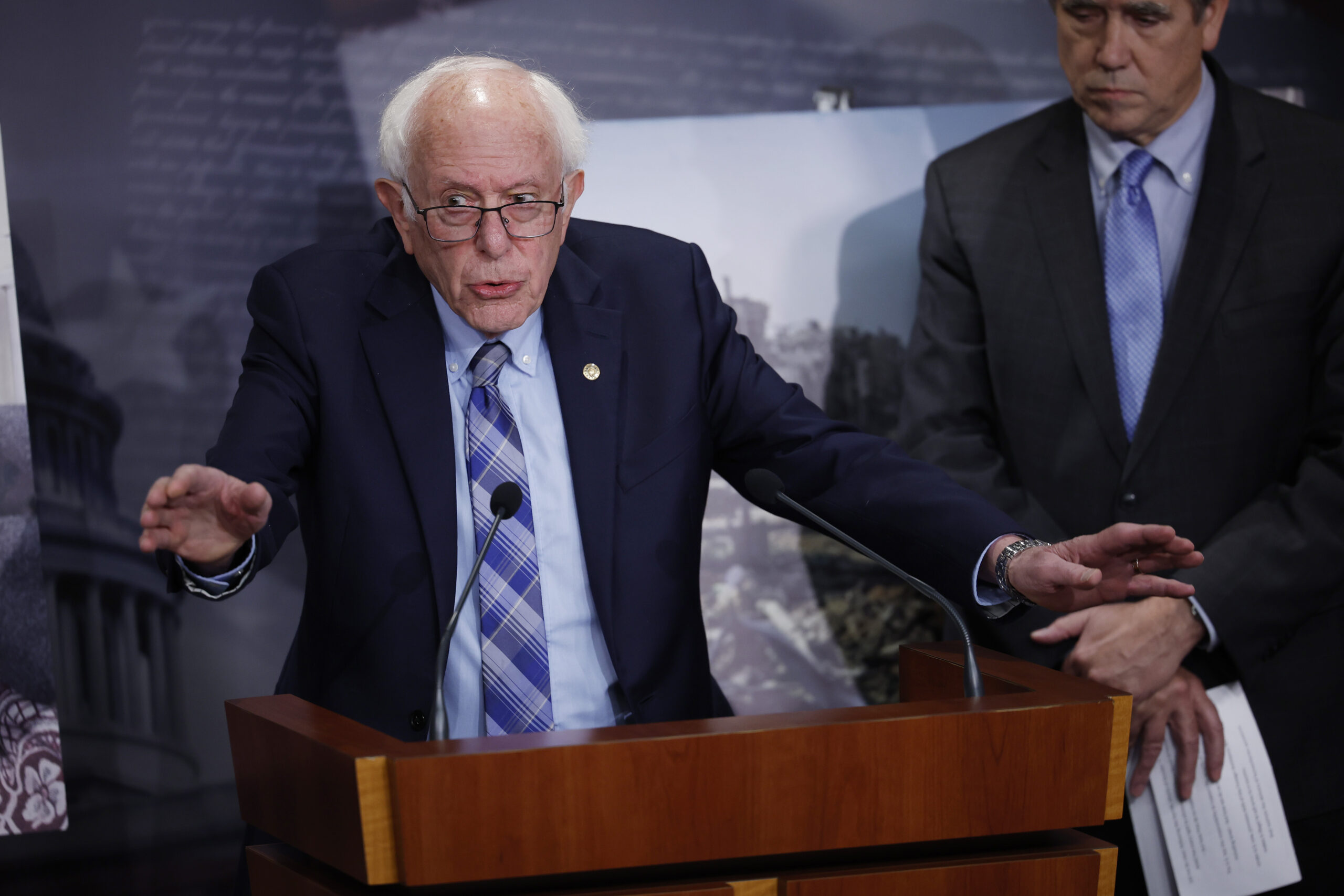
Sen. Bernie Sanders (I-VT) criticized Israeli Prime Minister Benjamin Netanyahu on Tuesday, after Netanyahu linked the terror attack in which 15 people were killed at a Hanukkah celebration in Sydney, Australia, to Canberra’s support for a Palestinian state, Jewish Insider’s Marc Rod reports.
What he said: Sanders issued a statement in response on Tuesday: “No, Mr. Netanyahu. Speaking out on behalf of the Palestinian people is not antisemitic. Opposing the disgraceful policies of your extremist government is not antisemitic. Condemning your genocidal war, which has killed more than 70,000 people — mostly women and children — is not antisemitic. Demanding that your government stop bombing hospitals and starving children is not antisemitic.”
BETRAYAL ON THE HIGH SEAS
Democratic lawmakers outraged by Coast Guard’s reported reversal on swastika policy

Weeks after the Coast Guard commandant personally called lawmakers to reassure them that swastikas and nooses would remain banned hate symbols within the service, the Guard quietly broke its pledge and diminished the severity of such displays as “potentially divisive” instead — the very language that had prompted outrage from lawmakers and the Jewish community, Jewish Insider’s Marc Rod reports.
The latest: Leading Democrats erupted in outrage on the news of the Coast Guard’s policy shift, while Republicans have thus far been silent. Several Republicans who spoke out against the initial policy change did not respond to JI’s requests for comment on the latest development on Tuesday. “The shocking news from the Coast Guard exposes a crisis of conscience enabled by the Trump administration’s stunning lack of moral clarity,” Rep. Ritchie Torres (D-NY) told JI. “The Trump Administration lied right to the American people’s faces when they indicated last month that they weren’t going through with this policy change,” Rep. Haley Stevens (D-MI) said.
BACKING BROOKS
Shapiro joins with progressives to back Dem recruit Bob Brooks in key Pennsylvania swing seat
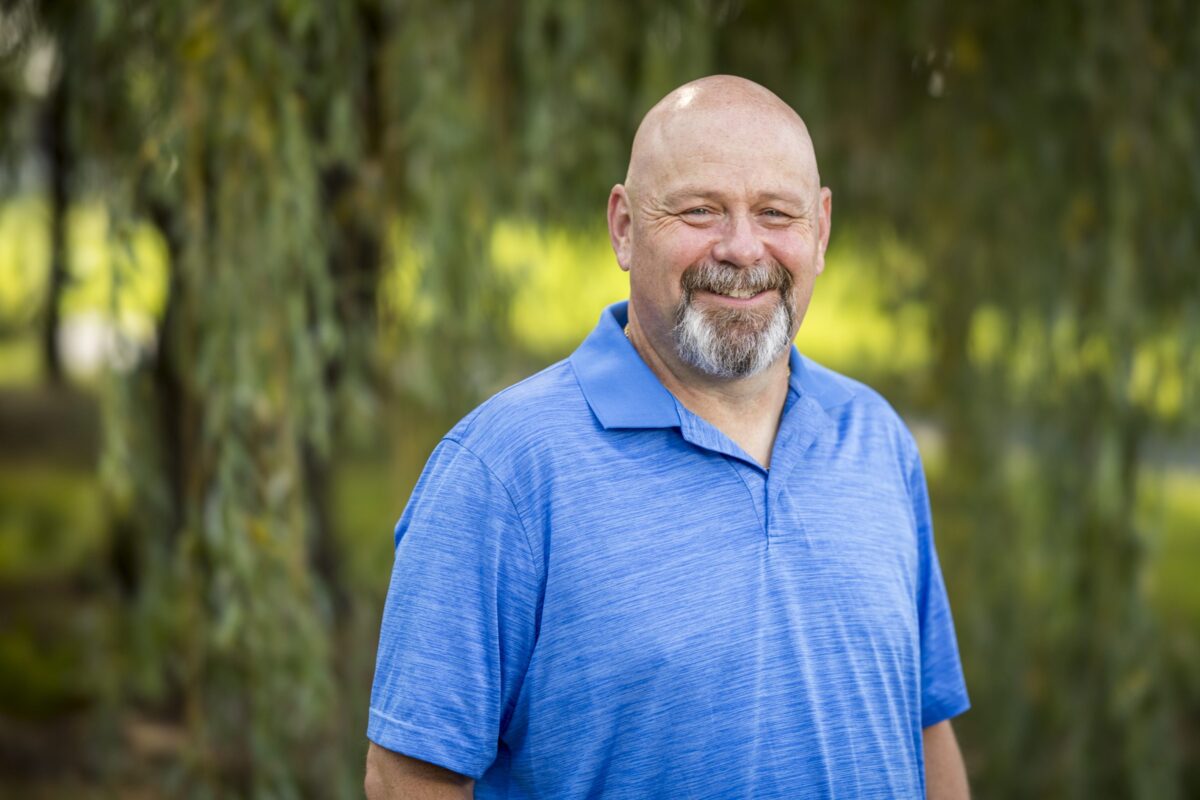
With backing from both moderate Pennsylvania Gov. Josh Shapiro and progressives like Sens. Bernie Sanders (I-VT) and Rep. Ro Khanna (D-CA), firefighter union leader Bob Brooks has emerged as a front-runner in the Democratic primary for Pennsylvania’s 7th Congressional District, a critical swing district that Democrats are aggressively contesting for next year’s midterms, Jewish Insider’s Marc Rod reports.
Endorsement insights: Christopher Borick, a political science professor at Muhlenberg College, said that Brooks’ background brings elements that appeal to various elements of the Democratic coalition, perhaps explaining his support from both sides of the party: his time as a leader in organized labor with a history on workers’ rights issues should resonate with progressive voters, while his “personal narrative fits if you’re trying to win over white working-class voters that might be more moderate or socially conservative.”
PUSHING PARTNERSHIP
Rep. Zach Nunn stands by U.S.-Israel relationship as ‘returning huge dividends’
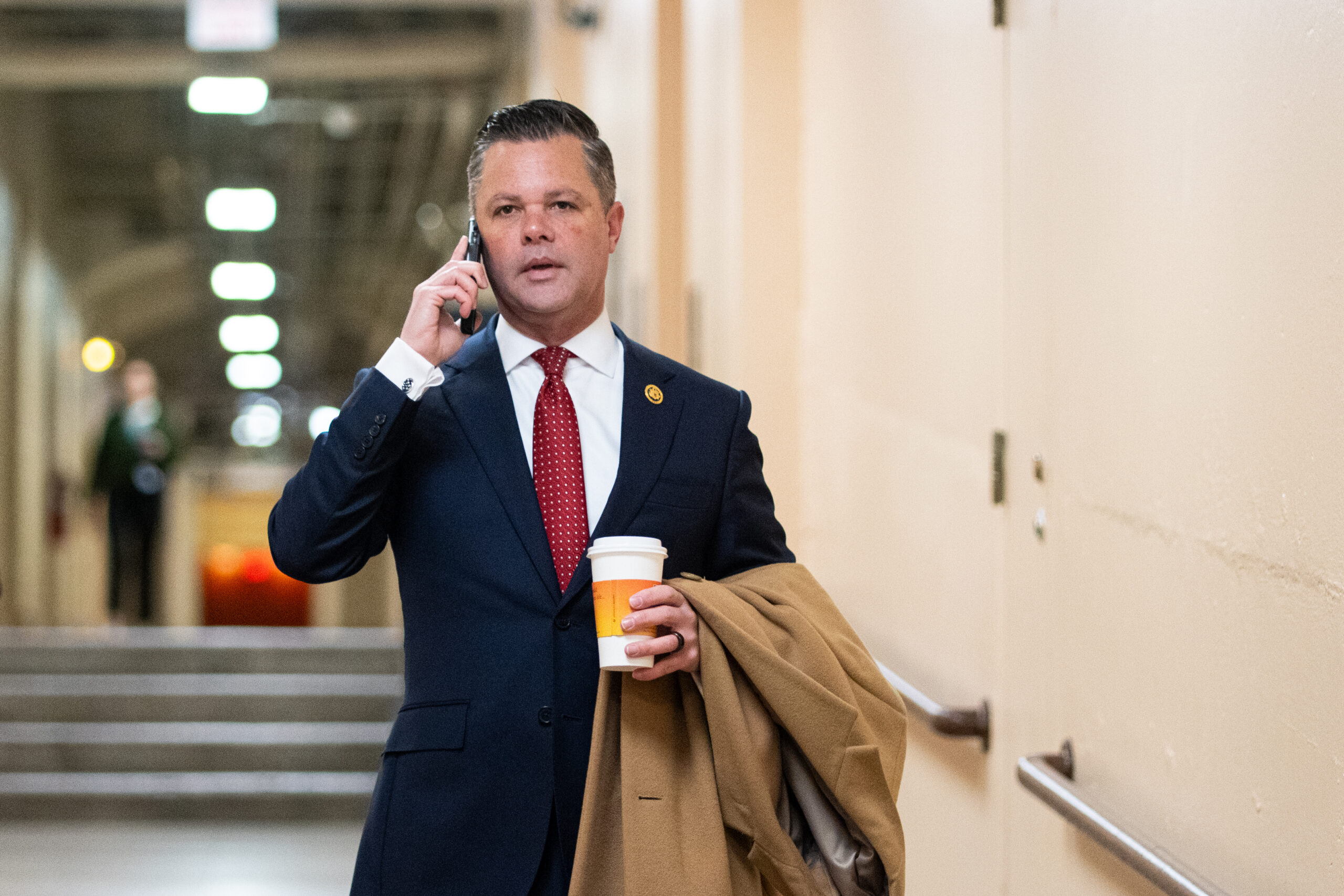
At a time when an increasingly vocal minority on the right is questioning the future and the benefits of the U.S.-Israel relationship, Rep. Zach Nunn (R-IA) led a pair of amendments to the 2026 defense policy bill aiming to expand the relationship, with a particular focus on new technologies. Asked how he responds to those on the right who question the value of the relationship, Nunn, the chair of the Republican Study Committee’s national security task force, said in an interview with Jewish Insider’s Marc Rod, “Israel is the lone bastion of democracy, freedom and Western values in a region where the U.S. has vital national security interests. For decades, Israel has been a strategic partner in kinetic and non-kinetic action against bad actors like Iran.”
Tech talk: Nunn added that programs such as the ones he championed would prepare the U.S. for all manner of challenges. “As our adversaries embrace low-cost options like drones and cyberwarfare, it’s more important than ever that we not only coordinate closely on joint security, but also on the underlying technologies that will define the next generation of conflict,” the Iowa lawmaker continued. “My amendments are about ensuring that partnership continues to evolve. They are strategic investments that strengthen American security, deter our adversaries and deliver real returns for U.S. taxpayers.”
Worthy Reads
⚠️ Shoulder to Shoulder: In The Times of Israel, Israeli President Isaac Herzog reflects on the Sydney terror attack and the meaning of Hanukkah. “Yet as we reflect on the miracle of the return home of our brothers and sisters, we also confront a deeply troubling reality beyond Israel’s borders. As the October 7th massacre in southern Israel was still ongoing, Jewish communities around the world began to experience a vicious wave of hatred. Institutional antisemitism, Holocaust inversion, conspiracies left and right, Jew-hatred platformed on social media, and moral bankruptcy masquerading as social justice have all disturbingly increased across the Western world. The deadly terror attack in Sydney this week demonstrates where these dangerous trends can lead.” [TOI]
👮 ‘Forever Changed’: In The New York Times, Alex Ryvchin, the co-chief executive of the Executive Council of Australian Jewry, mourns those killed in Sunday’s terror attack in Sydney, as well as the sense of communal security that no longer exists for Australian Jews. “Now we have suffered a loss that is impossible to measure or articulate. It is a loss felt nationally for a country that is forever changed. It is a loss felt communally for a way of life defined by pride and open observance that no longer exists. And it is a loss we feel individually for the friends and relatives who died in our arms from hideous wounds inflicted by high-powered shells used for hunting game. … My community will never recover from this, I am sure. My rabbi, my friend, Eli Schlanger lived by a mission of being proud of who he was as a Jew. The annual Hanukkah event he hosted on the beach was the ultimate evidence of our acceptance, the proof that we were safe in our acts of community pride. That is all gone now. And with it, a man who had shown us the way.” [NYTimes]
⚖️ After Bondi: In the wake of the Bondi Beach terror attack, The Atlantic’s Graeme Wood posits that governments need to take serious, tangible actions that go beyond antisemitism education to address threats to the Jewish community. “With an attack like this, the only effective response is the zealous prosecution of anyone who planned or supported it, and the protection of those who might be targeted in similar attacks in the future. Museum education is nice, but if an attack is under way, a police officer with a rifle has more stopping power. Self-study to determine whether Jews are systematically excluded or vilified is worthwhile but will take time. Restrictions on speech are another matter, and a distraction from real police work. It should not be a crime to inquire about the whereabouts of Jews, or even to say you wish to gas them. But if you spray-paint a Jewish school or set a car on fire, a government with its resources properly ordered will find and charge you before you graduate to violent crime.” [TheAtlantic]
Word on the Street
The Sudanese Armed Forces – backed by Saudi Arabia, Qatar, Turkey, Egypt and Iran – are the subject of a new CNN investigation that found them responsible for mass killing of civilians and dumping their bodies into canals…
United Arab Emirates Foreign Minister Sheikh Abdullah bin Zayed re-upped a 2024 Atlantic piece by Palestinian political activist Samer Sinijlawi calling for leadership changes in Israel and the Palestinian Authority…
Turkey was excluded from a CENTCOM-hosted conference in Doha, Qatar, focused on putting together an international stabilization force in the Gaza Strip…
Sen. Thom Tillis (R-NC) said that the Trump administration needs to put forward a new nominee for the post of ambassador for religious freedom as former Rep. Mark Walker’s (R-NC) nomination remains stalled in the Senate…
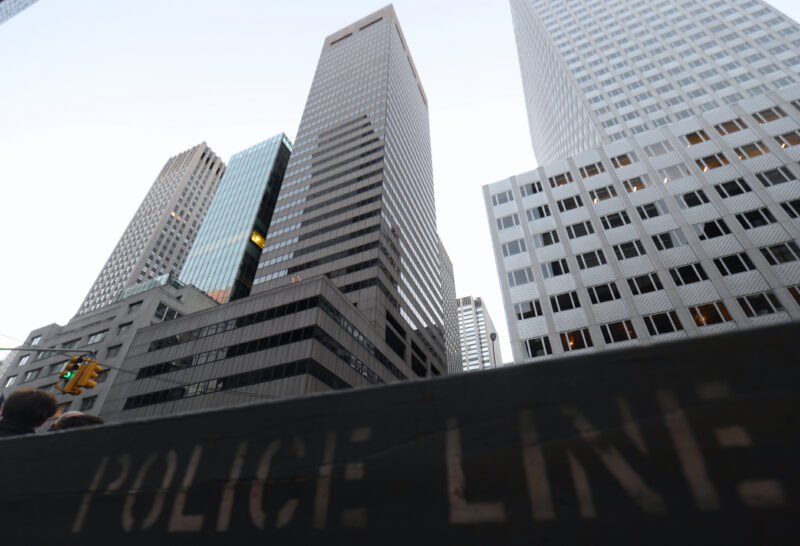
The widow of a security officer who was killed in a mass shooting at the Park Avenue building housing the headquarters of the NFL is suing the league, the real estate firm that owns the building and the building’s security company over their failures to prevent the attack, in which philanthropist Wesley LePatner and two others were also killed…
The NYPD is investigating an incident in which a group of Orthodox Jewish men were harassed and assaulted on a subway car after video of the confrontation was posted to social media; police are also investigating as a hate crime a separate incident, also filmed, in which a visibly Jewish man was attacked while walking down the street in Brooklyn’s Crown Heights neighborhood…
Two members of the Heritage Foundation’s board resigned amid a series of high-profile departures from the think tank over its embrace of Tucker Carlson and failure to denounce extremist views; Abby Spencer Moffat said Heritage was “unwilling or unable to meet this moment with the clarity and courage it requires,” while Shane McCullar said the think tank was “unwilling to confront the lapses in judgment that have harmed its credibility, its culture, and the conservative movement it once helped shape”…
Warner Bros. Discovery is expected to reject Skydance Paramount’s hostile takeover bid due to concerns over financing; Jared Kushner’s Affinity Partners, which had provided some backing to Paramount in its effort, withdrew its support for Paramount’s bid…
The Financial Times reports on Meta CEO Mark Zuckerberg’s efforts to build out AI infrastructure as he looks to compete with OpenAI and Google…
Qatar Sports Investments-owned Paris Saint-Germain was ordered by a French court to pay more than $70 million to former PSG star Kylian Mbappé resulting from unpaid wages and bonuses…
Actress Sydney Sweeney wore a gown by Israeli designer Galia Lahav to the premiere of her new film, “The Housemaid”…
Iranian victims of the Women, Life, Freedom protests that swept through the Islamic Republic in 2022 are suing more than three dozen Iranian officials in an Argentine court, alleging the officials committed or were complicit in crimes against humanity…
PBS reports from Hezbollah’s secretive military installations following their seizure by the Lebanese Armed Forces…
Wall Street investment banker Arthur Carter, who would go on to purchase The Nation and found The New York Observer, died at 93…
Pic of the Day
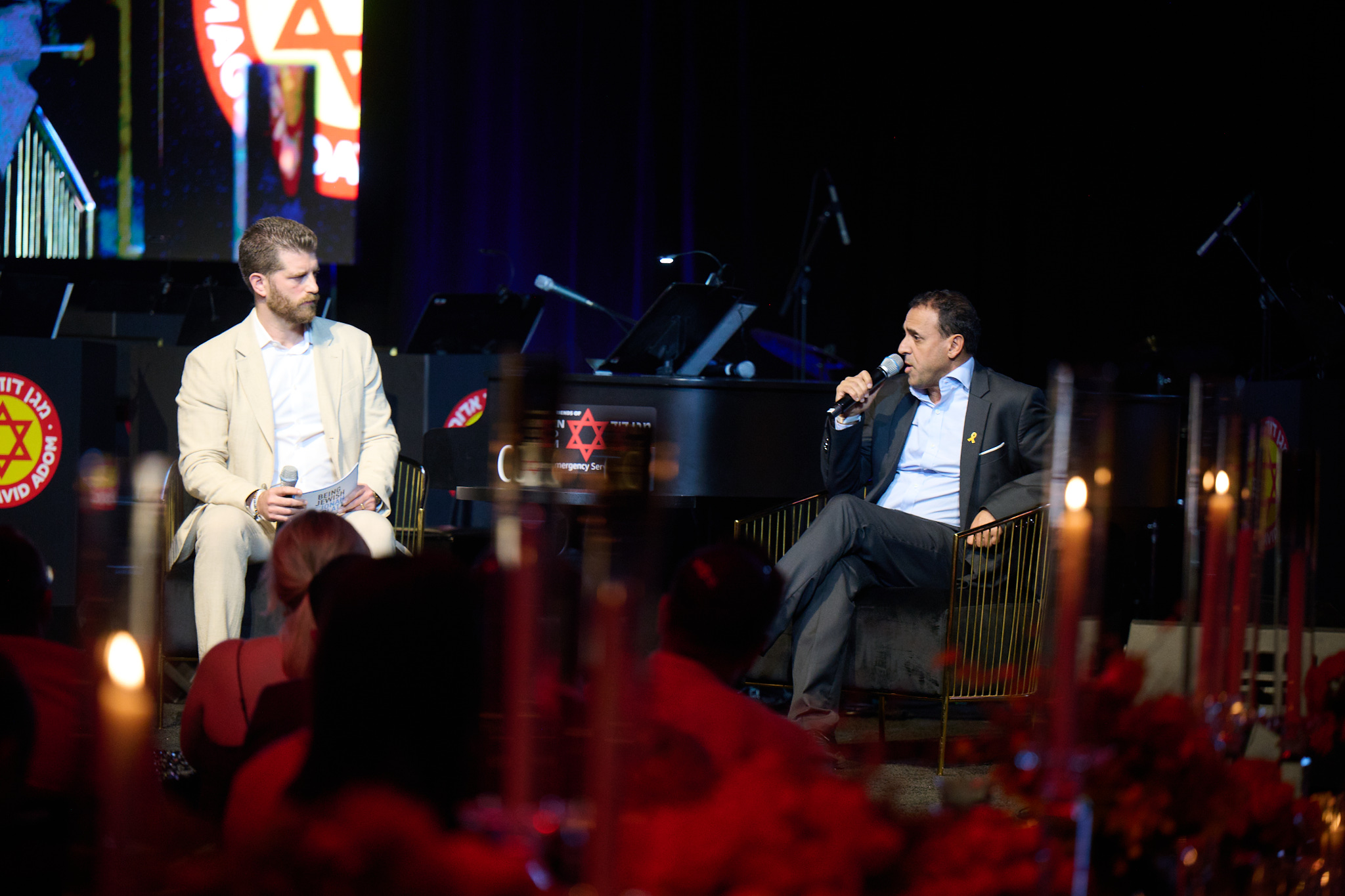
Actor Jonah Platt sat in conversation with former Israeli hostage Eli Sharabi on Monday night at the American Friends of Magen David Adom’s Miami Gala.
Birthdays

Grammy Award-winning songwriter and musician, Benjamin Goldwasser turns 43…
Retired attorney and vice chair of the American Jewish International Relations Institute, Stuart Sloame turns 86… Former CEO of multiple companies including the San Francisco 49ers and FAO Schwarz, Peter L. Harris turns 82… VP of strategic planning and marketing at Queens-based NewInteractions, Paulette Mandelbaum… Professor of Jewish history, culture and society at Columbia University, Elisheva Carlebach Jofen turns 71… Retired chair of the physician assistant studies program at Rutgers, Dr. Jill A. Reichman turns 70… Former Israeli ambassador to the U.S. and senior foreign policy advisor to prime ministers Sharon, Barak and Netanyahu, Danny Ayalon turns 70… Longtime chairman and CEO of HBO, he now heads Eden Productions, Richard Plepler turns 67… Israeli film director, screenwriter, animator and film-score composer, Ari Folman turns 63… Former president of Freedom House, now the director at Voice of America, Michael J. Abramowitz turns 62… Chief of the General Staff of the IDF until this past March, Herzl “Herzi” Halevi turns 58… Founder and CEO of LionTree LLC, Aryeh B. Bourkoff turns 53… Pastry chef, television personality and cookbook author, Jeffrey Adam “Duff” Goldman turns 51… Israeli former soccer goalkeeper, then on the coaching staff for the national team, Nir Davidovich turns 49… CEO of the New Legacy Group of Companies, he is also founder and chair emeritus of Project Sunshine, Joseph Weilgus… Co-director of New Public, Eli Pariser turns 45… Senior writer at National Review and author of Unjust: Social Justice and the Unmaking of America, Noah C. Rothman… Director of foundation partnerships at the UJA-Federation of New York, Julia Sobel… National correspondent for Vanity Fair and author of the 2018 book Born Trump: Inside America’s First Family, Emily Jane Fox… State general manager for Maryland at Entyre Care, Daniel Ensign… Actor, singer-songwriter and musician, he starred in the Nickelodeon television series “The Naked Brothers Band,” Nat Wolff turns 31…
The president accused the right-wing lawmaker of being a traitor and ‘having gone Far Left’
ELIJAH NOUVELAGE/AFP via Getty Images
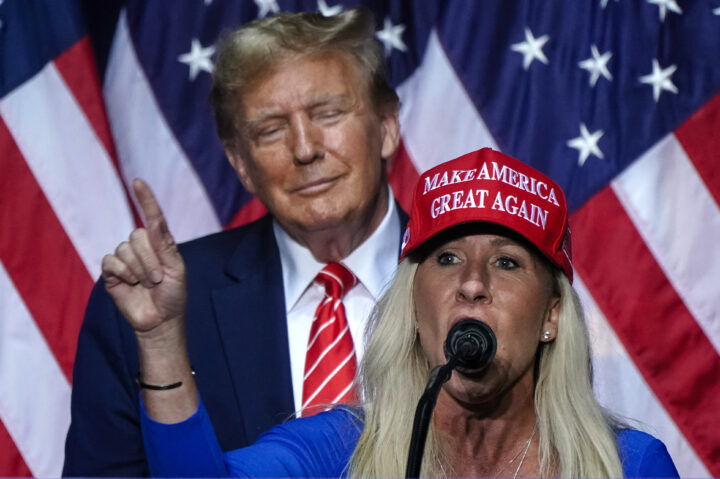
Rep. Marjorie Taylor Greene speaks alongside then-former President Donald Trump at a campaign event in Rome, Georgia, on March 9, 2024.
President Donald Trump on Friday night publicly disavowed Rep. Marjorie Taylor Greene (R-GA), once one of the president’s closest and most committed allies on Capitol Hill, saying he was withdrawing his endorsement of Greene and is prepared to support a primary challenger to the far-right Georgia congresswoman.
Greene, long dogged by controversy for her record of promoting antisemitic and otherwise fringe conspiracy theories, has emerged as one of the most vocal opponents of Israel on the right, accusing the country of genocide and leading efforts attempting to cut off U.S. aid to the Jewish state.
She has also repeatedly publicly criticized Trump’s policies and Republican leadership on Capitol Hill since the start of the government shutdown, earning Trump’s ire. Her breaks with the GOP have made her into a budding star in liberal media circles, where her ongoing promotion of conspiracy theories has increasingly been overlooked.
Trump said on his Truth Social platform that he has heard that “wonderful, Conservative people are thinking about primarying Marjorie” and that “if the right person runs, they will have my Complete and Unyielding Support,” accusing her of having “gone Far Left.”
Greene’s district is among the most heavily Republican in the country, and losing Trump’s support could prove a significant blow to the congresswoman.
“All I see ‘Wacky’ Marjorie do is COMPLAIN, COMPLAIN, COMPLAIN!” Trump wrote, adding that Greene’s criticism began after he showed her statewide polling that placed her at just 12% support and discouraged her from running for Senate or governor, both positions Greene had been eyeing.
According to NOTUS, Greene is discussing a presidential run in 2028, though she denied that to the publication.
“[Greene] has told many people that she is upset that I don’t return her phone calls anymore, but with 219 Congressmen/women, 53 U.S. Senators, 24 Cabinet Members, almost 200 Counties, and an otherwise normal life to lead, I can’t take a ranting Lunatic’s call every day,” Trump continued in his post.
He later called Greene a “Traitor” and a “disgrace to our GREAT REPUBLICAN PARTY!”
Greene responded on X, saying Trump had lied to her and claiming that two recent text messages about files related to child sex trafficker Jeffrey Epstein had “sent him over the edge,” saying it is “astonishing really how hard he’s fighting to stop the Epstein files from coming out.”
Greene is one of a small number of Republicans cosponsoring a measure to force a vote, over Republicans’ objections on files related to Epstein. Trump, an associate of Epstein, has sought to prevent the full release of those files, calling the push for further disclosure “the Epstein hoax.”
“Most Americans wish he would fight this hard to help the forgotten men and women of America who are fed up with foreign wars and foreign causes, are going broke trying to feed their families, and are losing hope of ever achieving the American dream,” Greene said. “I have supported President Trump with too much of my precious time, too much of my own money, and fought harder for him even when almost all other Republicans turned their back and denounced him. But I don’t worship or serve Donald Trump.”
In a subsequent post, Greene shared a graphic showing she has not received support from pro-Israel groups alongside another graphic comparing her “Liberty Score” to that of Trump-backed pro-Israel Sen. Lindsey Graham (R-SC). In the post, she wrote: “This and the Epstein files is why I’m being attacked by President Trump. It really makes you wonder what is in those files and who and what country is putting so much pressure on him?”
She also claimed that Trump’s posts are driving a wave of security threats against her.
Trump has also worked to defeat Rep. Thomas Massie (R-KY), another of the most vocal anti-Israel Republicans The president has endorsed retired Navy SEAL Ed Gallrein, who is challenging Massie in the GOP primary.
On Friday, Trump called Massie a “LOSER!” in a separate Truth Social post, claiming that “the Polls have him at less than an 8% chance of winning the Election” and mocked his recent remarriage.
The Michigan Democrat said that ‘a lot of young people’ who don’t know better are coming to college campuses and hearing and repeating antisemitic narratives

Chip Somodevilla/Sipa USA via AP
Rep. Elissa Slotkin (D-MI) questions witnesses during a hearing in the Rayburn House Office Building on Capitol Hill on September 17, 2020 in Washington, DC.
Sen. Elissa Slotkin (D-MI), speaking to a gathering of Jewish activists on Capitol Hill, highlighted concerns about rising left-wing antisemitism and the ways that antisemitic narratives are being spread to and by college students.
“We’re used to the right-wing side. What is new and what I think has so many in the Jewish community on our heels is that new left-wing antisemitism and how to approach it,” Slotkin said at a pre-High Holidays security briefing organized by several Jewish communal organizations. “How do we counteract it? How do we protect against it? How do we educate?”
“And certainly, we’re watching, on many college campuses, a lot of young people who actually maybe didn’t grow up with the Jewish community at all, get to campus and maybe repeat what they’re hearing, sometimes not even understanding or knowing,” she continued. “I would just say that one of our responsibilities as Jewish leaders and Jewish activists is to try and really parse through how to deal with antisemitism on the left, since antisemitism on the right isn’t good, but it’s more of a well-known threat.”
The freshman Michigan senator, who is working to establish herself as a leader in the chamber on national security issues, recently backed efforts to stop at least some offensive weapons shipments to Israel and emphasized that she hadn’t accepted endorsements from “Jewish group[s],” naming AIPAC and J Street.
Slotkin said at the Wednesday event that she “[doesn’t] think there’s been a more complicated and dicey time to be Jews in America, period, maybe since World War II.”
Speaking in support of the Nonprofit Security Grant Program, Slotkin said that one of the “most powerful moments that I had” during her time as a member of Congress was when a mosque in her district faced threats, and she worked with the local Jewish federation and her synagogue to help the mosque apply for an NSGP grant.
An emotional Sen. Amy Klobuchar (D-MN) referenced the killing of her friend, Minnesota House Speaker Melissa Hortman and her husband Mark, and the mass shooting at the Annunciation Church in Minneapolis as she discussed the rise of violent extremism across the country, including various incidents targeting the Jewish community.
“We have been through this each and every time, but the babies keep dying,” Klobuchar said.
Klobuchar said that in conversations with administration officials immediately after the Annunciation shooting, her top priority was pushing for increased NSGP funding, in addition to gun control measures and action to address extremism and incitement on social media platforms.
She highlighted that the Annunciation Church shooter had left a manifesto spreading hate against a range of targets including Jews, Muslims, Black people and Hispanic people, and emphasized that he and other mass shooters have been “performing for the internet.”
While she noted that data shows that political violence has been coming more from the right than the left, “I don’t want to go tit-for-tat. I care about what we’re doing now and going forward, and words matter right now for bringing America together,” Klobuchar said.
Speaking about threats to the Jewish community specifically, Klobuchar noted the rise in antisemitic hate crimes nationally, saying that “something is seriously wrong in our country.” She said that 25 Jewish facilities had received bomb threats in Minnesota in the past year.
“This has completely shattered people, kids are scared,” Klobuchar said.
Sen. Maggie Hassan (D-NH) said, referring to a string of recent antisemitic attacks, “I don’t care what fringe it comes from. This kind of extremism, hate and violence is unacceptable and needs to be condemned. … Foreign policy debates are complicated. Condemning antisemitism is not.”
She added that, as the generation that survived and witnessed the Holocaust shrinks, “we have to decide as a country if we will let their lessons pass.”
Hassan continued, “We can’t afford inaction. We can’t afford indifference, nor should we feel the need to offer qualification or apology, to simply say that the world’s oldest hate should be denounced as loudly as any other.”
Rep. Don Bacon (R-NE) also delivered remarks at the event, as did Rev. Russ McDougall, a member of the U.S. Conference of Catholic Bishops, who was invited in part to discuss the Annunciation Church attack. Sens. James Lankford (R-OK) and Jacky Rosen (D-NV) delivered video remarks.
The session also featured a panel with Jewish Federations of North America CEO Eric Fingerhut, Conference of Presidents of Major American Jewish Organizations CEO William Daroff, Secure Communities Network CEO Michael Masters, Orthodox Union Executive Vice President Moshe Hauer and Anti-Defamation League director of government relations Carmiel Arbit.
Fingerhut told Jewish Insider there is “a domestic terror crisis” in the country “and we need comprehensive, strong action.”
“[Members of Congress] didn’t create the COVID problem either, but they responded with a crisis-level response, and that’s the level of response we need,” Fingerhut said.
He emphasized the need not only for increased NSGP funding but stronger funding for local law enforcement, the FBI and the Department of Homeland Security to fight domestic terrorism. He said that resourcing and funding at those agencies for the counterterrorism mission isn’t sufficient.
“We’re in an era now of a trillion-dollar defense budget that is aimed at fighting terror and protecting America all over the world,” Fingerhut said. “We have a domestic terror crisis here, and it needs the level of attention and coordinated leadership by the federal government that we get in national defense.”
Please log in if you already have a subscription, or subscribe to access the latest updates.
 Continue with Google
 Continue with Apple