









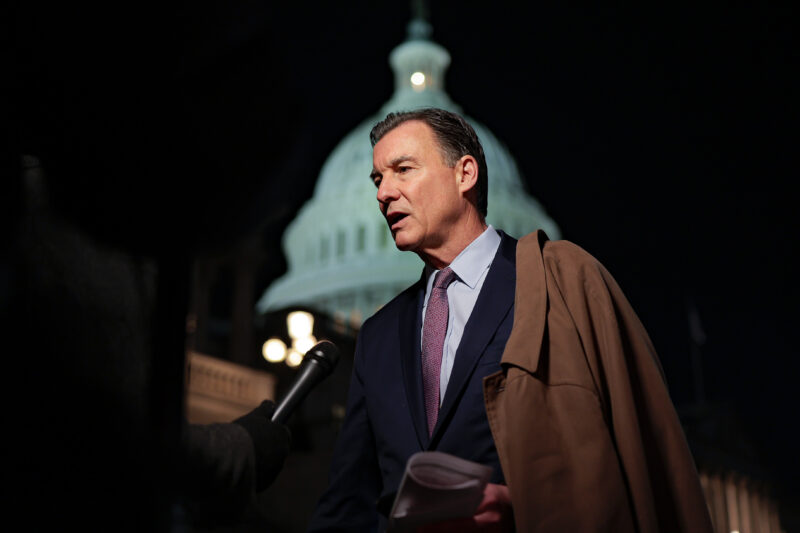


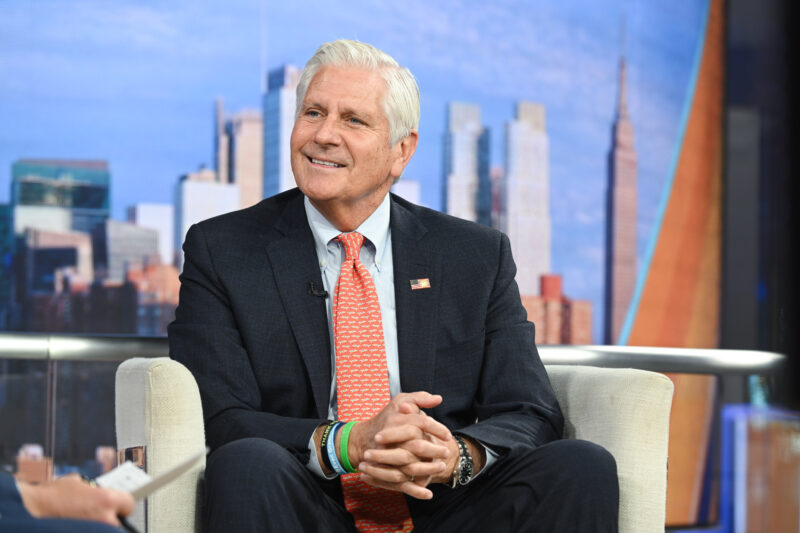

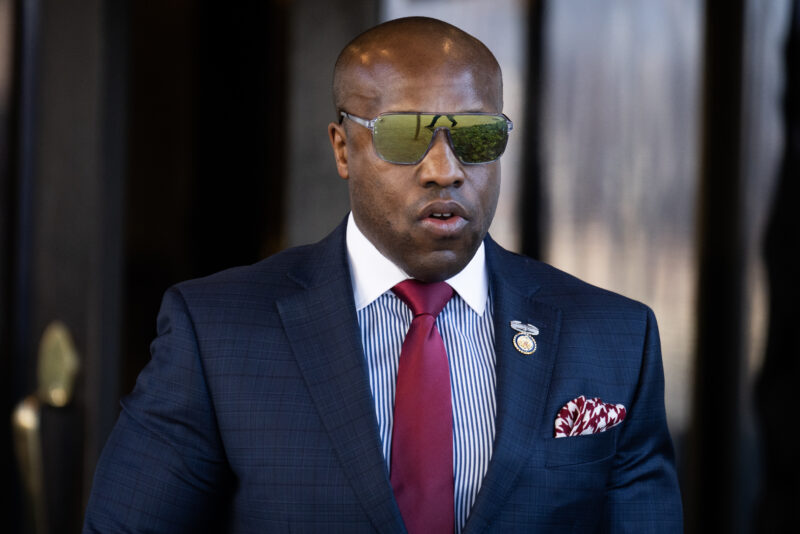
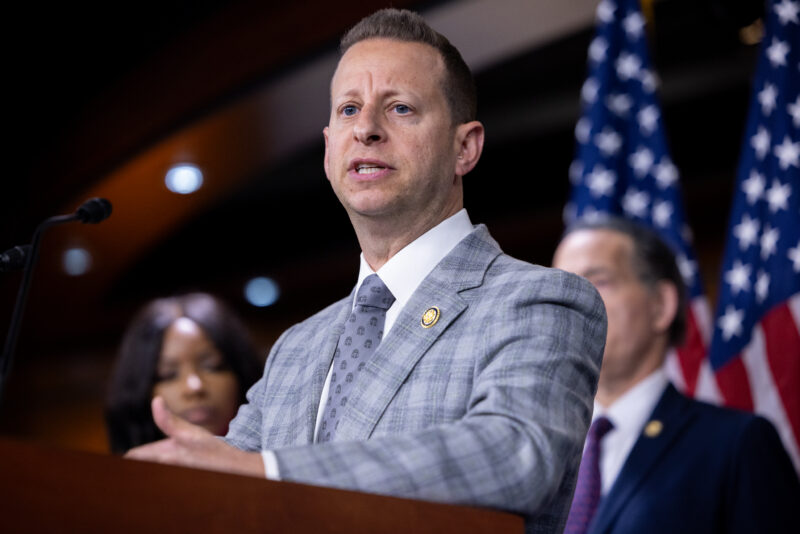





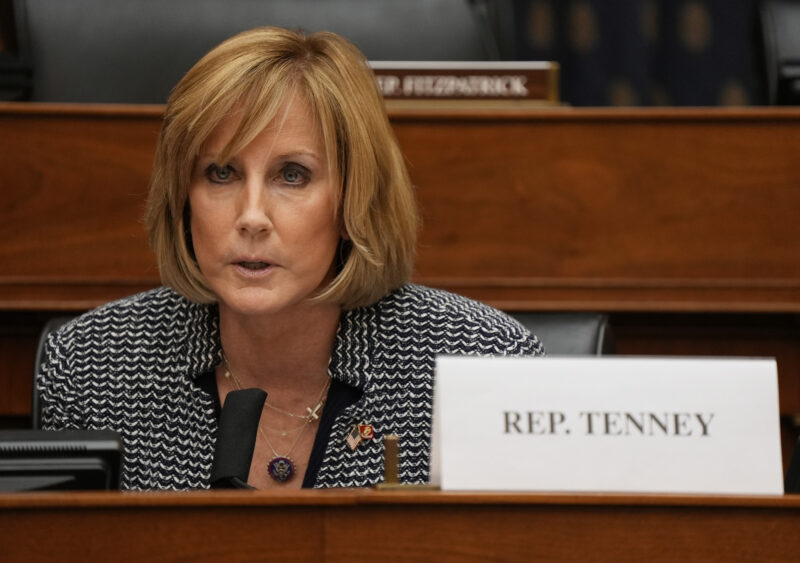
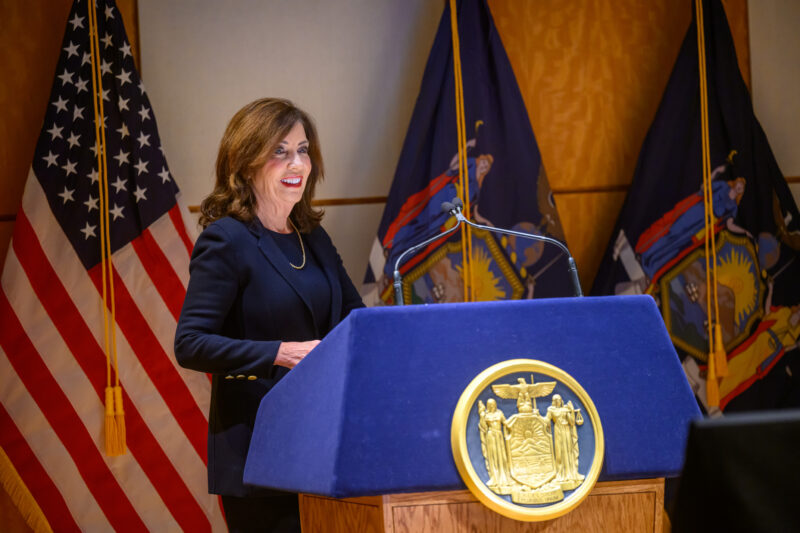
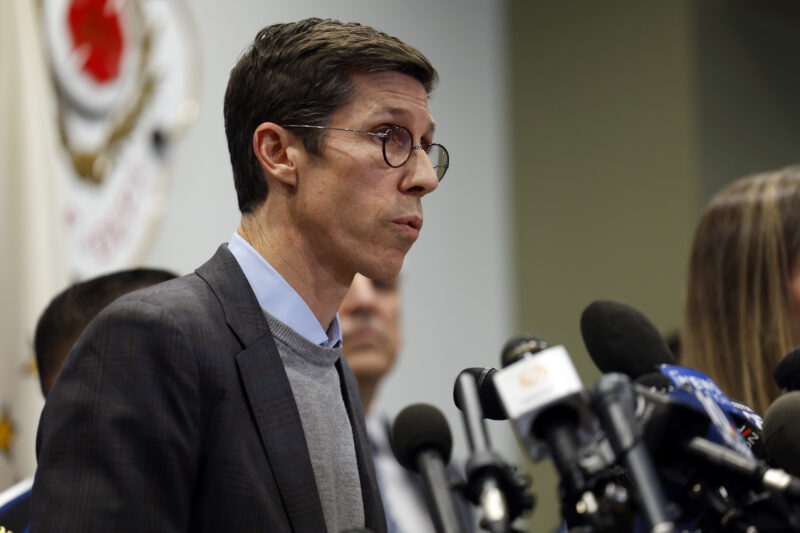
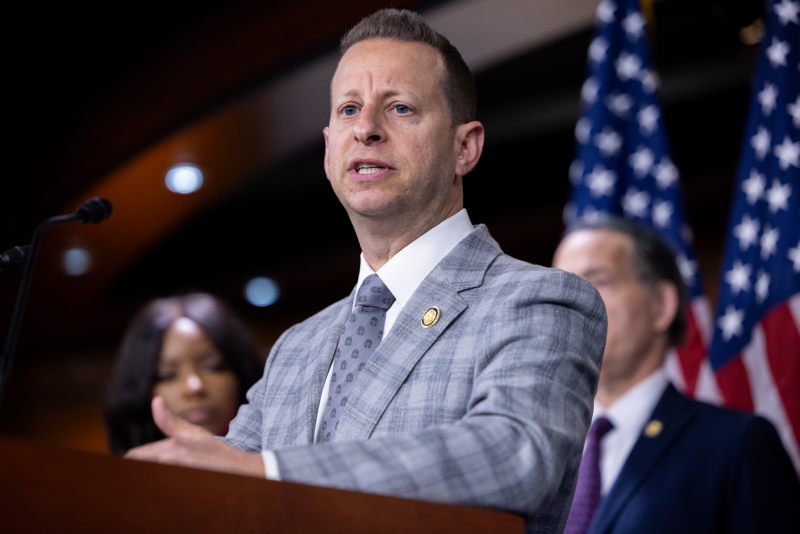
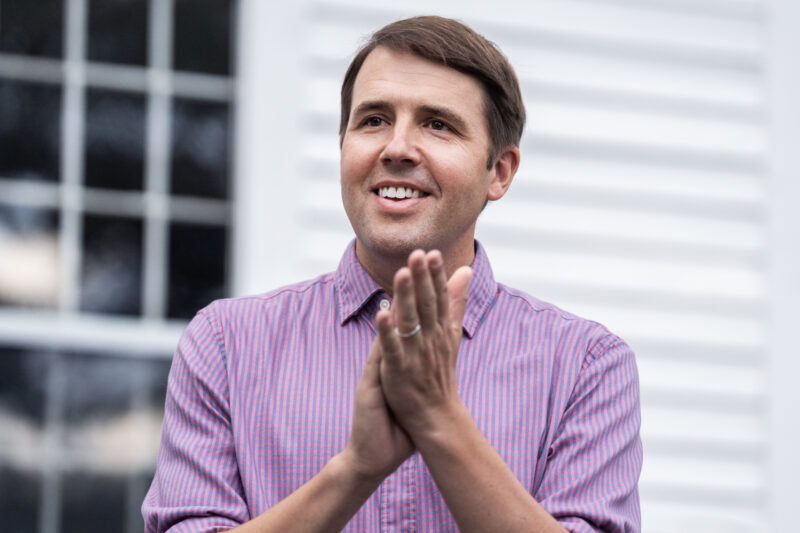



















The bipartisan group led by Reps. Claudia Tenney and Brad Schneider had earlier this year reached out to DHS about conditions tying NSGP funding to ICE cooperation
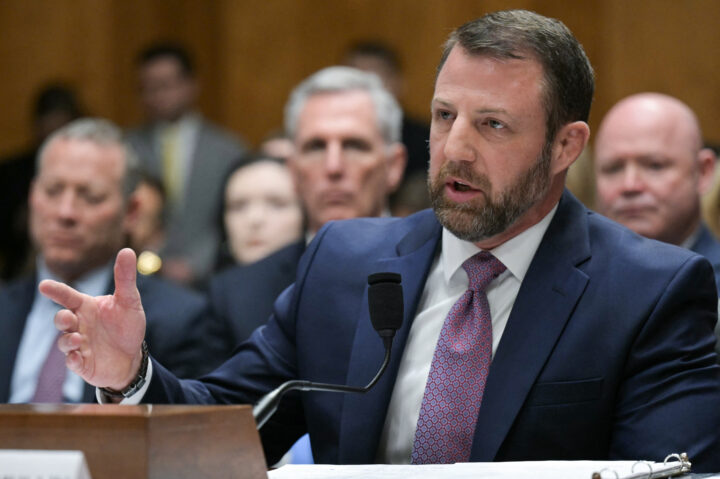
Oliver Contreras/AFP via Getty Images
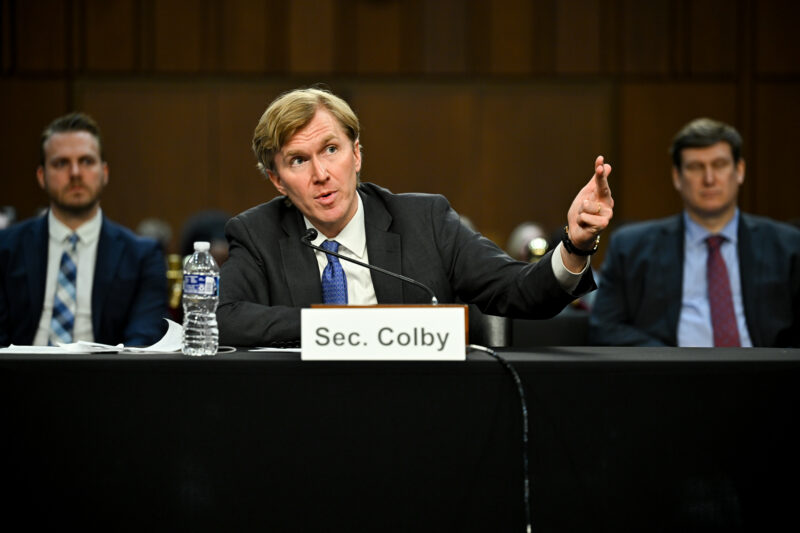
DHS Secretary Markwayne Mullin testifies during a Senate Committee on Homeland Security and Governmental Affairs confirmation hearing on Capitol Hill in Washington, DC


 Add JewishInsider on Google
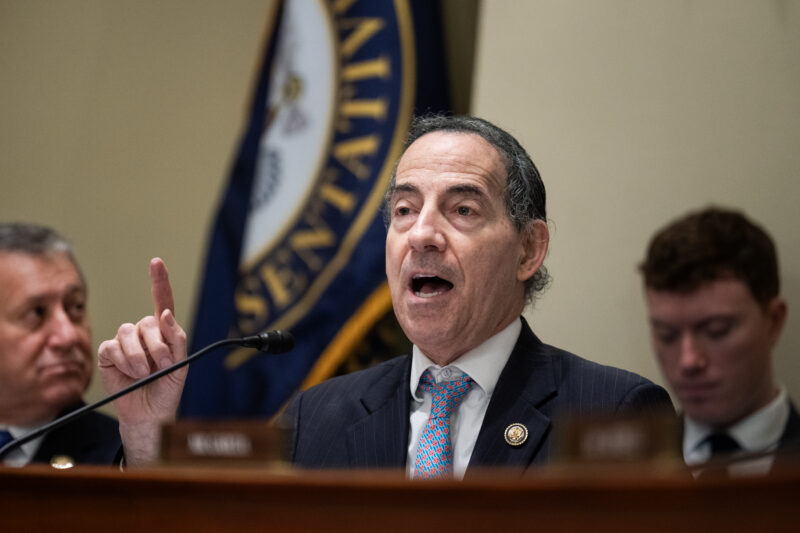
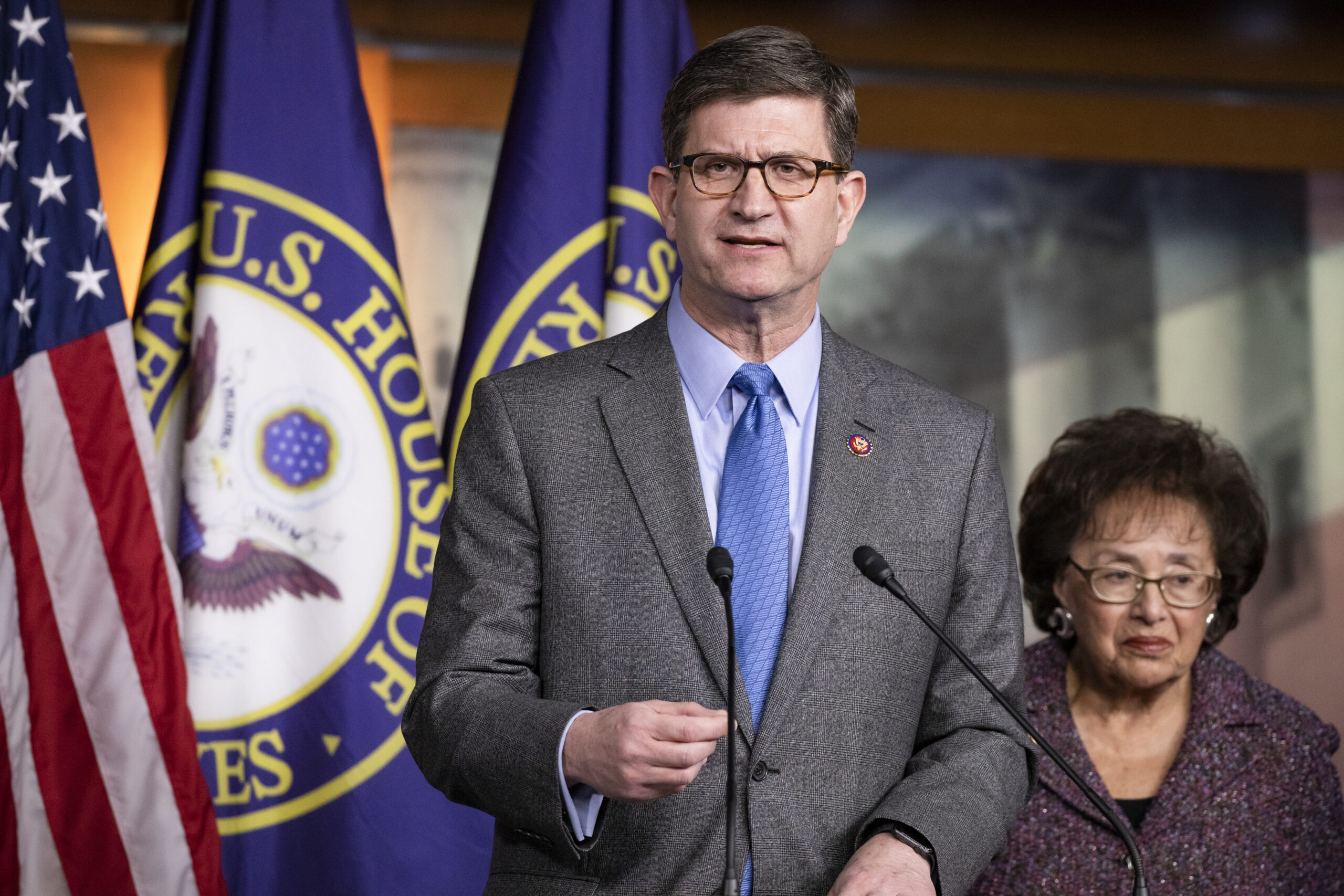
In a letter to Secretary of Homeland Security Markwayne Mullin, a bipartisan group of House members reiterated concerns previously communicated to his predecessor about new conditions attached by the Trump administration to funding for the Nonprofit Security Grant Program.
The lawmakers, led by Reps. Brad Schneider (D-IL) and Claudia Tenney (R-NY), said that the 2026 NSGP application “maintains these concerning new compliance requirements” as well as adds a new provision allowing the Federal Emergency Management Agency to terminate grant awards “for convenience” if it determines that the grants do not advance the “national interest.”
The conditions about which lawmakers had previously raised concerns would have tied grant funding to cooperation with Immigration and Customs Enforcement activity and eliminating diversity, equity and inclusion programs.
“This vague and expansive standard gives applicants little guidance about what is expected of them and raises concerns about mid-project terminations without warning,” the lawmakers wrote. “As NSGP requires organizations to front the costs of their security projects, the possibility of mid-award termination and, therefore, no reimbursement, may deter applicants from accepting the grant, leaving their institution vulnerable to attack.”
They noted that they had raised the issue in February with Mullin’s predecessor, then-DHS Secretary Kristi Noem, urging Noem to clarify or waive the new conditions, which they said would “divert limited funds and burden the institutions the NSGP is meant to protect.”
Noem, they continued, told them the same month that FEMA was working to develop specific guidance for NSGP including particular examples applicable to faith-based nonprofits. But, the lawmakers said, that guidance has yet to be issued.
“We have always believed that NSGP should be as streamlined and effective as possible, with minimal red tape and compliance requirements focused squarely on security,” the lawmakers said. “You rightly expressed this same belief during your confirmation hearing. That is why we urge you to revise the FY 2026 NOFO and issue new guidance that removes or waives terms and conditions unrelated to the security of grant recipients, eliminates the new overly broad termination authority and ensures that the NSGP remains accessible to all eligible faith-based and community organizations.”
The letter highlights the string of attacks on Jewish institutions and Jewish communities in recent years, emphasizing the importance of the funds.
“I’m grateful to partner with Rep. Tenney to push back against onerous new rules that make our synagogues, churches, and mosques less safe. We will continue to root out hate and discrimination in all forms, so everyone can observe their faith safely and without threat of harm,” Schneider said in a statement.
“As threats against houses of worship and community organizations continue to rise, it is important that these institutions have confidence that the program will provide the support they were awarded. Our letter encourages DHS to provide that certainty by ensuring the program remains focused on its core mission of enhancing security for vulnerable communities,” Tenney said in a statement.
The Anti-Defamation League also expressed support for the letter.
“As antisemitism and threats against faith communities remain at historic levels, NSGP is more essential than ever to help at-risk communities protect themselves from threats,” Lauren Wolman, senior director of government relations & strategy at the ADL, said in a statement. “We are grateful to Representatives Schneider and Tenney for their bipartisan leadership in championing this lifesaving program and ensuring organizations can access those resources quickly, with confidence, and without unnecessary delays.”
Reps. Brad Schneider and Craig Goldman raised ideas for how Congress could assist, including diversifying energy routes
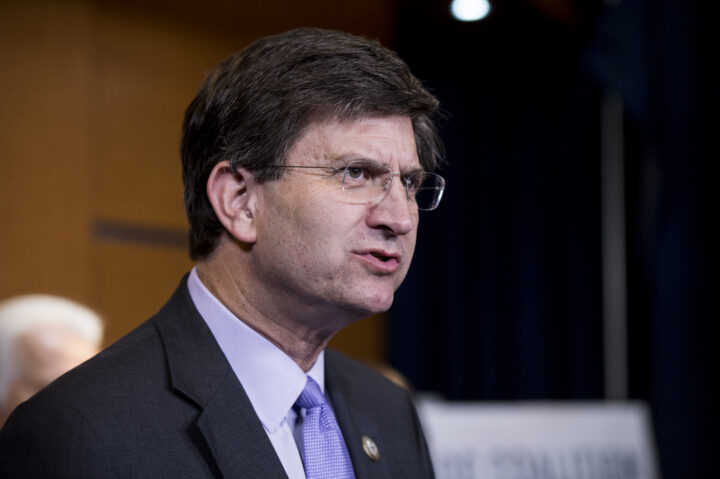
Bill Clark/CQ Roll Call
Rep. Brad Schneider (D-IL)
Reps. Brad Schneider (D-IL) and Craig Goldman (R-TX), co-chairs of the Abraham Accords Caucus, convened on Thursday with former U.S. Ambassador to Jordan Yael Lempert and Karen Young, a senior fellow at the Middle East Institute, to discuss the global energy crisis stemming from the closure of the Strait of Hormuz.
Schneider in a statement after the event, highlighted rising gas prices, utility bills and inflation as a result of the global developments.
“I teamed up with my Republican colleague Rep. Craig Goldman to talk through what Congress can do about it, including diversifying energy routes, deepening regional integration, and building a more interconnected and stable Middle East,” Schneider said.
Goldman told reporters after the event that “no one wants to be in this situation, I think everybody wants this conflict [with Iran] to end sooner rather than later. No one’s happy.” But he said that if the U.S. is able to bring stability and reformed leadership in Iran, it will have transformative effects for the region.
“With this more stabilized Iran, with a regime or leader in there who we can actually have a discussion with, negotiation with, when we see that the Iranian people have the freedoms that we enjoy over here in the United States, I think we will see more nations join the Abraham Accords,” Goldman said.
He said he had been told by representatives of other countries in the region that they would normalize relations with Israel “tomorrow” if they did not think it would produce backlash in the region. “It all starts with a stabilized Iran.”
Goldman acknowledged, however, that there remain competing power centers inside Iran, and that some remain unwilling to compromise.
“I think we’re at the point where no one can predict the future, but we certainly want a leader in Iran that we can negotiate with and deal with to bring stability to the region,” Goldman said.
Asked whether he sees ways for the U.S. and its partners to leverage the Abraham Accords to move products currently impacted by the closure of the Strait of Hormuz to global markets, Goldman deferred to the State Department.
Plus, Brad Schneider calls for Dems to shun Piker
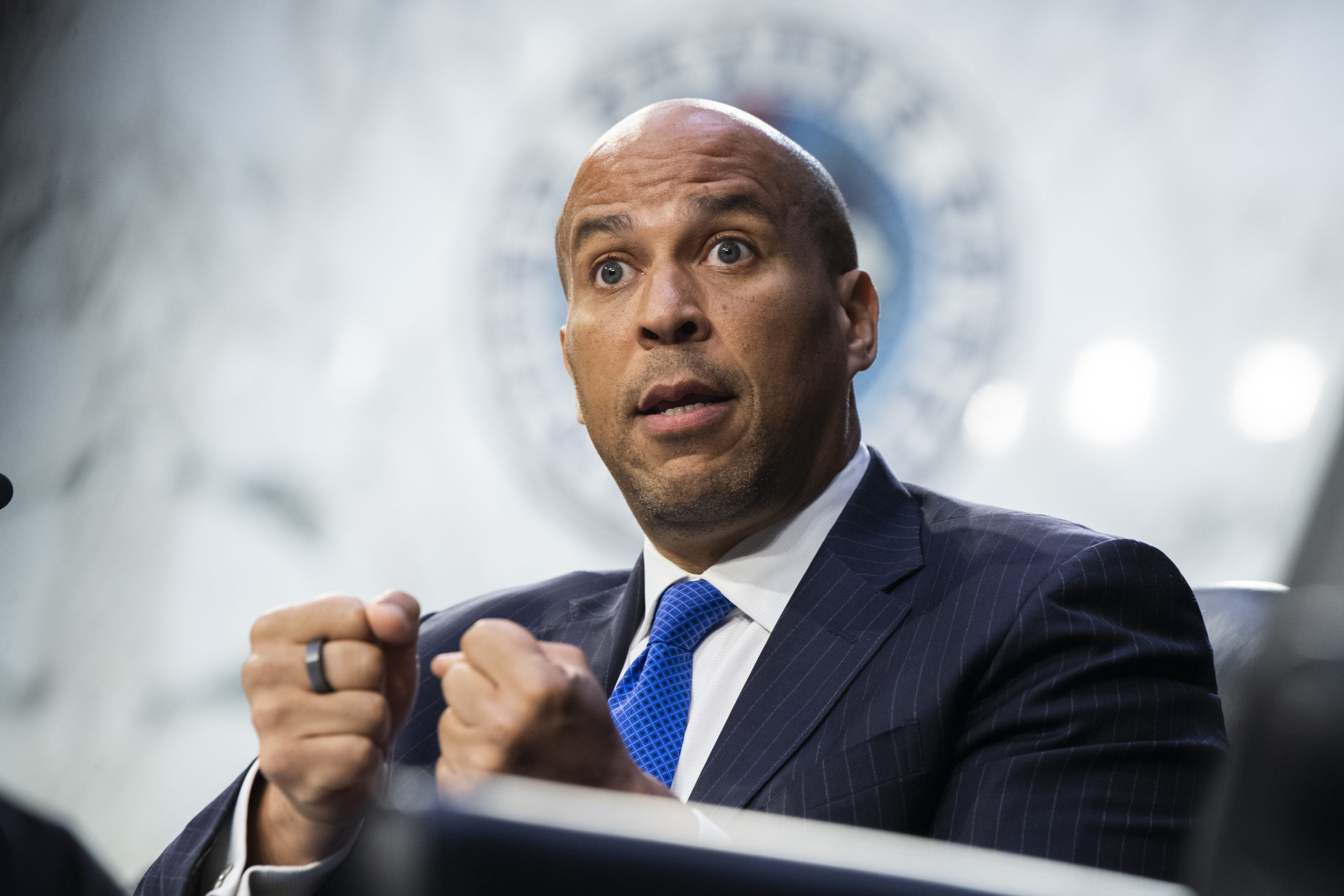
Tom Williams-Pool/Getty Images
Sen. Cory Booker (D-NJ) speaks during the Senate Judiciary Committee hearing examining Texas's abortion law on Capitol Hill in Hart Senate Office Building on September 29, 2021, in Washington, D.C.
👋 Good Wednesday morning!
In today’s Daily Kickoff, we report on a call from Rep. Brad Schneider, the head of the New Dems, for the party to distance itself from far-left streamer Hasan Piker, and cover the criticism from Washington, D.C., mayoral candidate Kenyan McDuffie over a pledge by rival Janeese Lewis George to boycott Zionist events. We report on a call from a senior Department of Homeland Security official for increased vigilance for Jewish communities ahead of Passover and several major summer events, and talk to Senate Republicans about the Trump administration’s efforts to reopen the Strait of Hormuz. Also in today’s Daily Kickoff: King Charles III, Steven Fulop and Nickolay Mladenov.
Today’s Daily Kickoff was curated by JI Executive Editor Melissa Weiss and Israel Editor Tamara Zieve, with assists from Danielle Cohen-Kanik and Marc Rod. Have a tip? Email us here.
What We’re Watching
- President Donald Trump will give the keynote address tonight at the NRCC’s annual President’s Dinner.
- The president’s speech comes amid efforts to secure a meeting in Pakistan tomorrow between senior U.S. and Iranian officials, amid a looming deadline to reach an agreement with Tehran to fully reopen the Strait of Hormuz, and after the U.S. sent Iran a 15-point proposal to wind down the war. Tehran, for its part, has denied talks with the U.S., with an Iranian military spokesman saying the U.S. is “negotiating with itself.”
- The House Homeland Security Committee is holding a hearing this morning on the impact of the Department of Homeland Security’s shutdown.
- FII PRIORITY kicks off in Miami today, with Trump expected to speak on Friday afternoon. Other speakers at the three-day Saudi-organized gathering include White House Special Envoy Steve Witkoff, White House advisors Jared Kushner and Massad Boulos, Saudi Ambassador to the U.S. Princess Reema Bandar Al Saud, Meta’s Dina Powell McCormick, the Inter-American Development Bank’s Ilan Goldfajn, former Treasury Secretary Steve Mnuchin, developer Stephen Ross and FIFA head Gianni Infantino.
- Washington, D.C., mayoral candidate Janeese Lewis George, who last week held a private meeting with local Jewish leaders to apologize for her response to a Democratic Socialist of America questionnaire in which she pledged to boycott Zionist events, is appearing at a Metro DC DSA rally tonight with Rep. Rashida Tlaib (D-MI).
- The Middle East Institute is holding its 80th anniversary gala tonight in Washington, honoring Dr. Sultan Ahmed Al Jaber, the United Arab Emirates’ minister of industry and advanced technology.
- Elsewhere in Washington, Ruth Wisse is slated to deliver the annual Jefferson Lecture in the Humanities tonight at the Kennedy Center.
- Jonah Platt will host tonight’s 75th National Jewish Book Awards Gala in New York City.
- The annual CPAC conference begins today in Dallas.
What You Should Know
A QUICK WORD WITH JI’S JOSH KRAUSHAAR
You would think the media wouldn’t need to twist Democratic candidates’ views on Israel, given the challenges pro-Israel supporters are already facing within the party. But in a Politico story suggesting that Democrats are running away from AIPAC, the publication misrepresented the views of two leading presidential contenders — and ignored the latest pro-Israel comments made in its own pages by a top-tier candidate.
The story leads by noting pro-Israel Sen. Cory Booker (D-NJ) said he’s not taking PAC money from anyone and then twists his comments to suggest that he had shifted his views on AIPAC or his support for Israel. The omission (buried at the end of the story) is particularly egregious because in the same interview, Booker told Politico that he was troubled by the “singling out of AIPAC” compared to other American advocacy groups.
“Somehow, AIPAC seems to be drawing a lot of attention, and that’s problematic to me,” Booker said. That doesn’t sound like an example of someone turning on the pro-Israel advocacy group.
The story then cites Pennsylvania Gov. Josh Shapiro, one of the leading supporters of Israel in the party, as someone who’s flip-flopping on AIPAC for noting that as a governor, he’s never taken or solicited money from AIPAC. (Which is true, as a matter of fact, because AIPAC only spends money in federal races, not statewide campaigns.)
But that narrow, semantic statement was taken as evidence that Shapiro has changed his tune, when in reality he’s been speaking on left-wing podcasts in defense of the Jewish state, testing a measured, pro-Israel message as he mulls over a presidential campaign.
And perhaps most notably, the story avoids referencing Politico’s own interview with California Gov. Gavin Newsom published the same day, where he backtracked from his anti-Israel comments on the “Pod Save America” podcast earlier in the month. In the interview, Newsom said he “revere[s]” Israel and is “proud to support the state.” And he walked back his earlier comments that seemingly called Israel an apartheid state, saying he was only referencing a column by the New York Times’ Tom Friedman.
This latest article appears to fit a pattern of anti-Israel content from Politico that stands in contrast to the pro-Israel stance of its parent company, Axel Springer.
strait talk
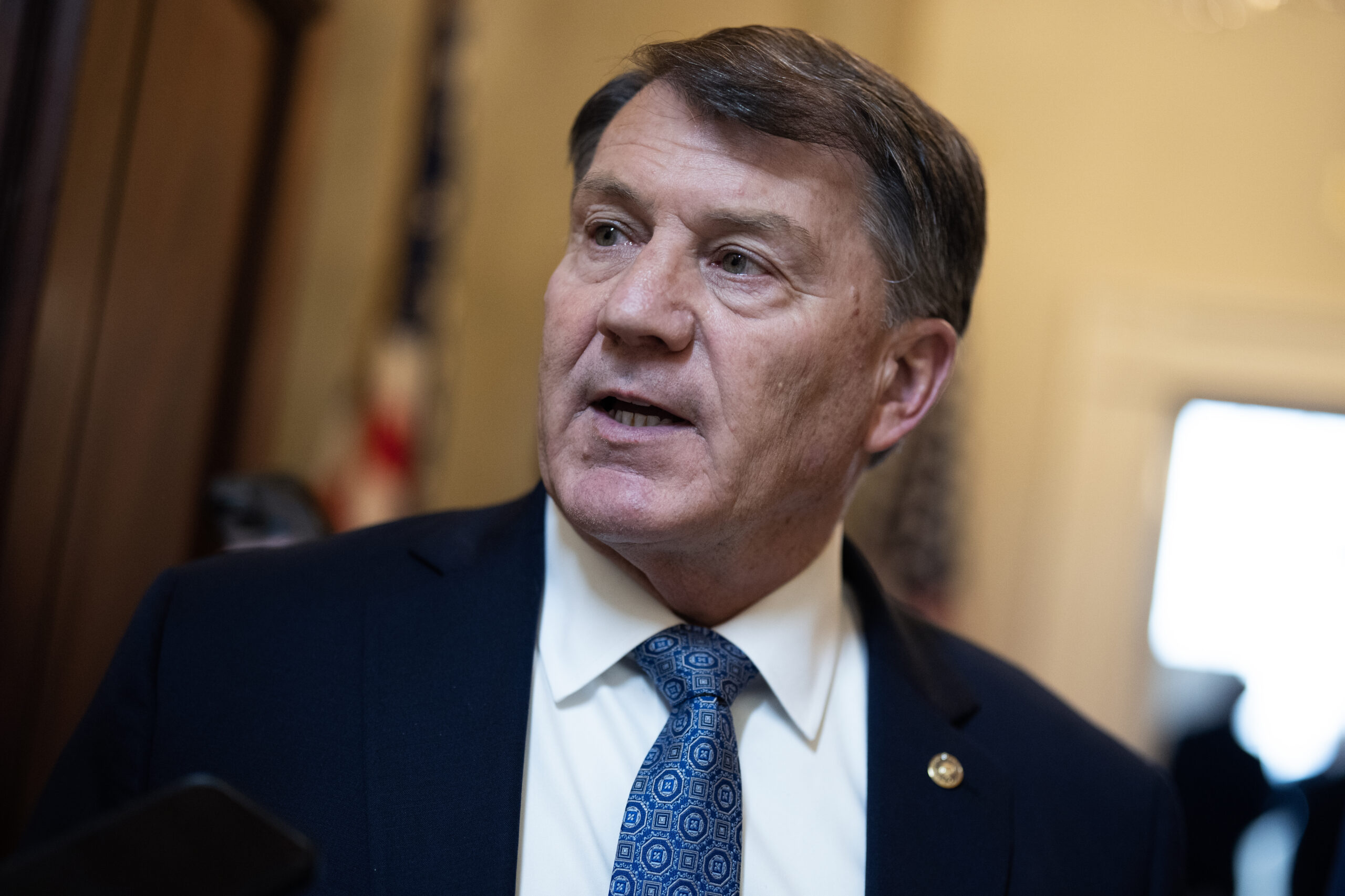
Multiple Senate Republicans said Tuesday that they haven’t heard from the administration specific plans for restoring free trade through the Strait of Hormuz, though most emphasized that doing so is a critical goal, Jewish Insider’s Marc Rod reports.
Diverging views: “I can just tell you, the Pentagon has, for years, been playing out their plans,” Sen. Mike Rounds (R-SD) told JI. “The question is which plan is next, and that’s based on conditions — the same thing with Kharg Island,” he said, referring to potential U.S. military operations against the Iranian regime’s primary petroleum export hub. “I’m sure that when the time comes, we’ll all know.” One Republican, Sen. Rick Scott (R-FL), however, argued that the onus is not on the United States to reopen the strait, despite the closure’s impact on global, and domestic, oil prices, but instead on the countries in the region that rely on it.
Read the full story here with additional comments from Sens. James Lankford (R-OK), John Cornyn (R-TX) and Tim Kaine (D-VA).
War of words: President Donald Trump said on Tuesday that the United States had achieved “regime change” in Iran through the killing of Iranian leaders and teased a “very significant prize” provided by Iran to the U.S. in the course of ongoing negotiations, JI’s Emily Jacobs reports.
GUARDING THE GATES
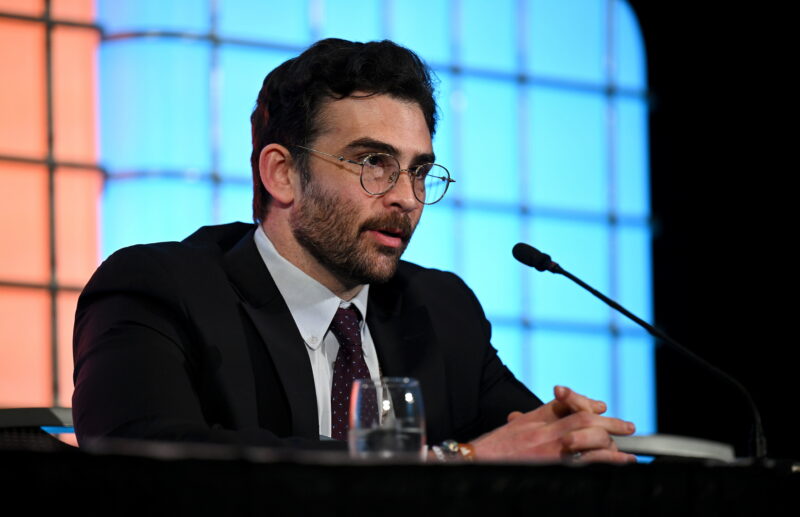
Rep. Brad Schneider (D-IL), who chairs the moderate New Democratic Coalition, called on Democrats on Tuesday to reject and distance themselves from Hasan Piker, the far-left media figure boosted by an increasing number of Democrats and Democratic candidates, Jewish Insider’s Marc Rod reports.
Notable quotable: “Hasan Piker is an unapologetic antisemite,” Schneider said on X on Tuesday. “Democrats risk losing our credibility to condemn those on the right who traffic in bigotry, antisemitism, & hate when our own Members of Congress & candidates are celebrating or, worse yet, platforming those who espouse hate of any kind.”
PARTY RECKONING

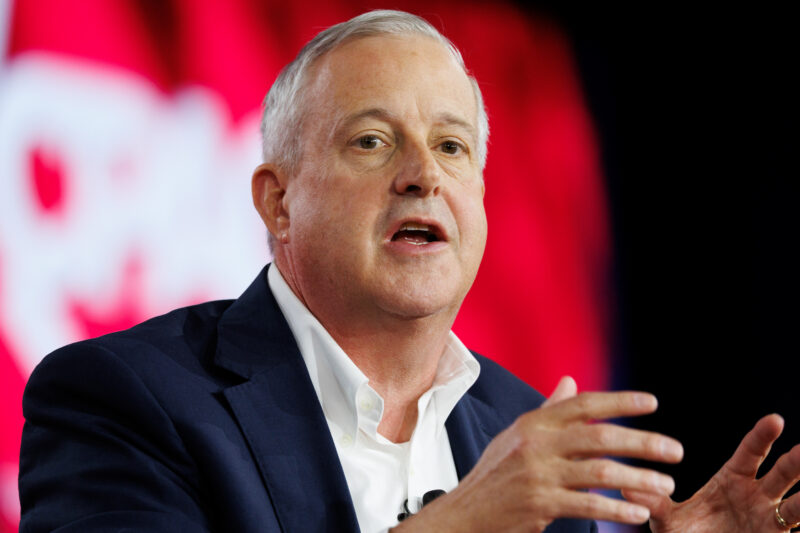
A prominent Jewish Democratic donor in Chicago is raising alarms that growing efforts to demonize AIPAC and its engagement in political campaigns are part of a more sinister effort to make pro-Israel Jews feel unwelcome in a party they have long called home, Jewish Insider’s Matthew Kassel reports.
What he wrote: In an opinion piece published in The Chicago Tribune on Tuesday headlined “Why I support AIPAC and a big tent Democratic Party,” Michael Sacks, an asset manager and longtime ally of former Chicago Mayor Rahm Emanuel, pointed to what he called a “double standard” for AIPAC’s political involvement, and warned of “a coordinated effort to make support for Israel a litmus test for Democratic primary candidates in 2026 and beyond.” He wrote: “Let’s be clear: The campaign against AIPAC is not a policy discussion. It’s a thinly disguised effort to make support for Israel politically toxic in the Democratic Party, to chase Jews and their allies out of our big tent coalition.”
DEM DIVIDE
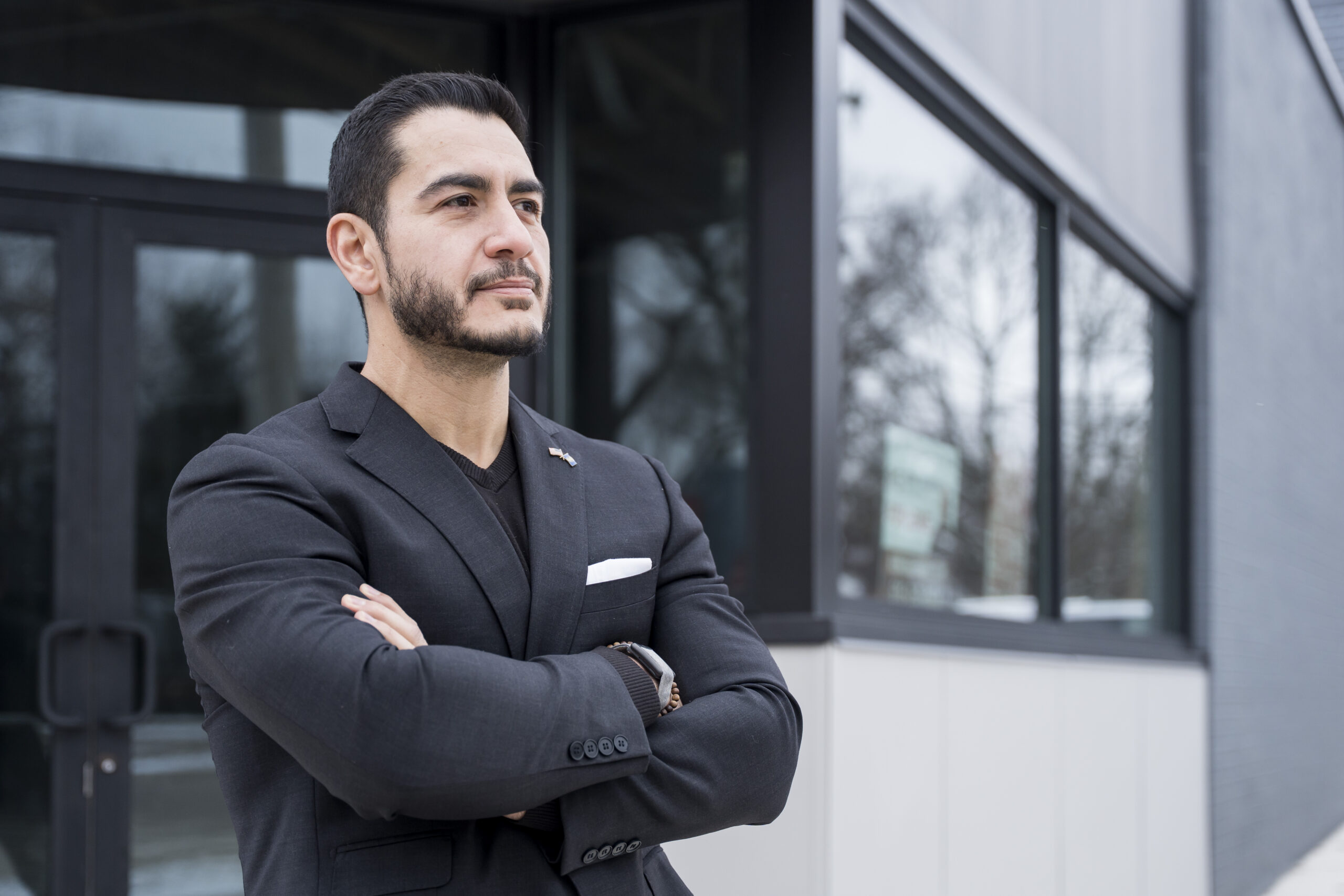
A prominent moderate Democratic think tank is continuing to call out Democratic candidates for being “too cozy” with antisemitic streamer Hasan Piker, who has been embraced by several left-wing Democrats in recent months, Jewish Insider’s Danielle Cohen reports.
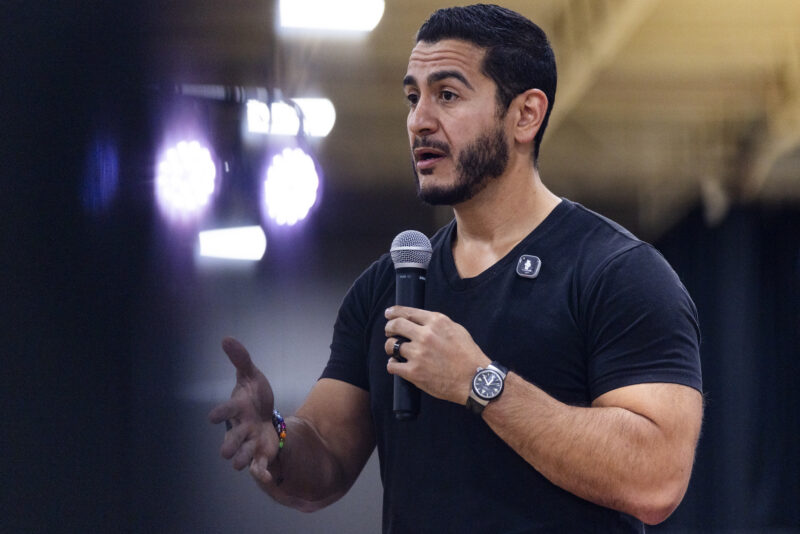
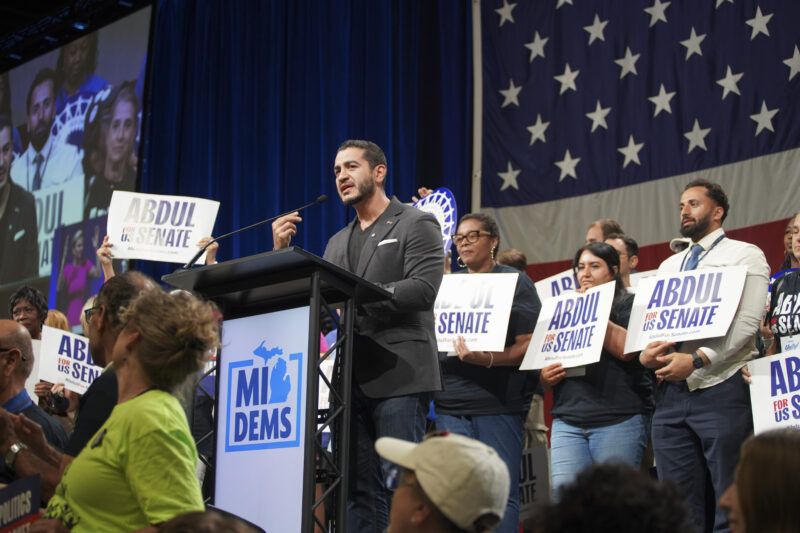
Cozying up: In his latest statement, Jonathan Cowan, president of Third Way, condemned Michigan Senate candidate Abdul El-Sayed for his upcoming rallies with Piker, first reported by Politico, set to take place on April 7 at Michigan State University and the University of Michigan alongside Rep. Summer Lee (D-PA). “It is morally repugnant and strategically self-defeating for Democrats like Abdul El-Sayed and Members of Congress like Summer Lee to cozy up to antisemitic extremists like Hasan Piker,” Cowan said.
Risk management: El-Sayed is taking flak over comments in an internal campaign call that issuing a statement on the attempted terrorist attack on Temple Israel in the Detroit suburbs was a “risk,” Punchbowl News reported Tuesday. In both the original statement and the internal comments, El-Sayed condemned the attack while also suggesting that it ultimately could be blamed on Israel’s operations in Lebanon, JI’s Marc Rod reports.
PRIMARY POLITICS
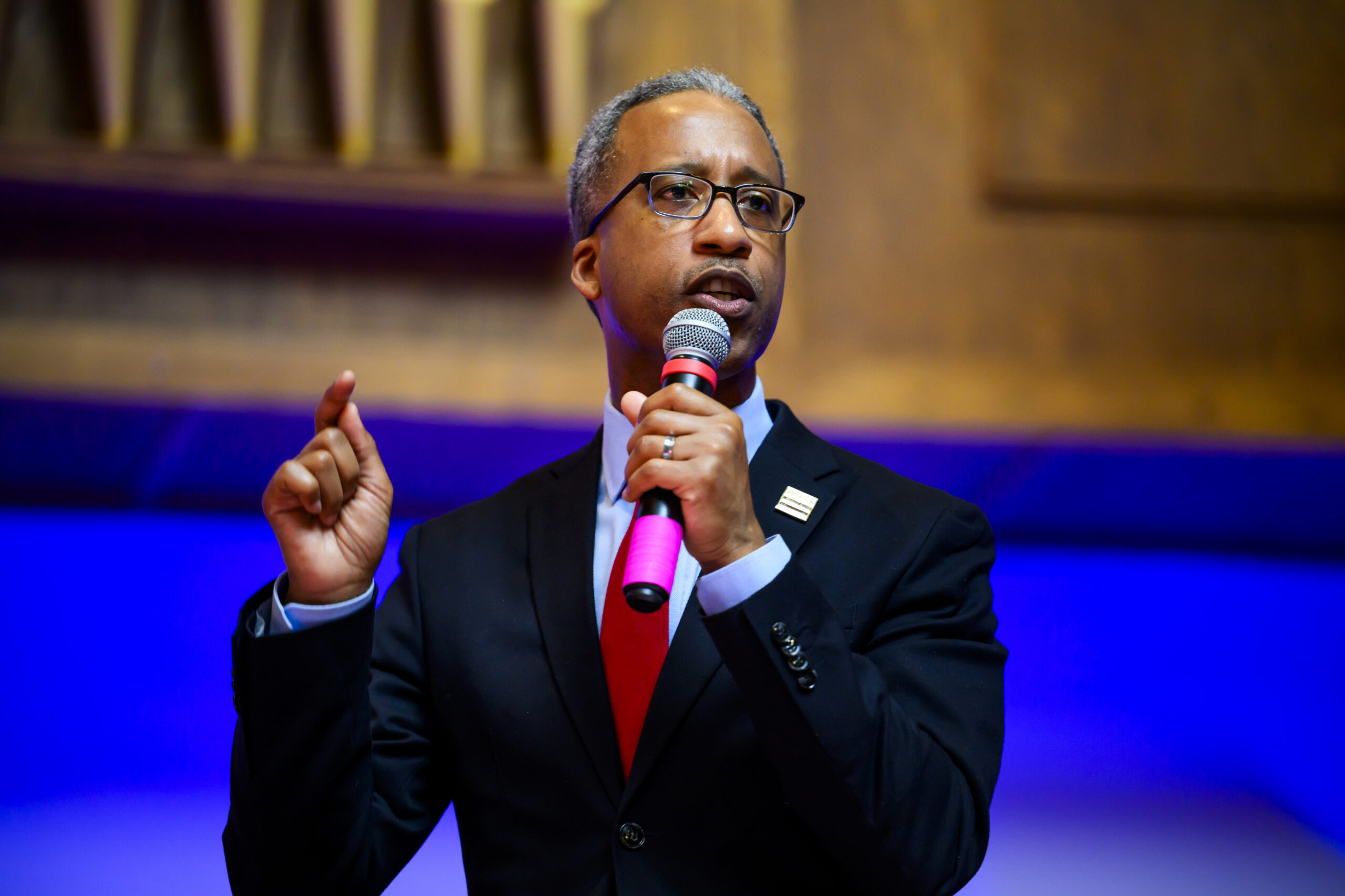
Washington, D.C., mayoral candidate Kenyan McDuffie criticized his Democratic primary opponents for pledging to avoid campaigning with elements of the Jewish community — an apparent jab at Democratic Socialists of America-endorsed rival Janeese Lewis George, who is facing backlash from Jewish leaders over her pledge to boycott events she described as promoting Zionism, Jewish Insider’s Gabby Deutch reports.
What he said: “Recent reporting has raised serious concerns about how some candidates for office in DC have pledged not to engage with the majority of Jewish organizations in exchange for political support,” McDuffie wrote in a campaign email on Tuesday. “That is wrong. Full stop.” McDuffie did not mention Lewis George or any specific candidates in his email.
COMMUNITY CONCERNS

Matthew Kozma, under secretary for intelligence and analysis at the Department of Homeland Security, called on Tuesday for continued vigilance “given the threat that’s stemming from Iran, particularly in the Middle East, but also here at home,” in comments at a security briefing webinar hosted by the Secure Community Network, a leading Jewish security organization, ahead of the Passover holiday, Jewish Insider’s Haley Cohen reports.
High alert: Kozma said that Americans should remain cautious of threats from “malicious actors, particularly ones encouraged by or empathetic to Iran,” as two upcoming events in the country — the 2026 FIFA World Cup and America’s 250th anniversary — bring an influx of visitors into the U.S. The briefing was held during what Michael Masters, CEO of SCN, described as “an elevated threat environment from Iran and its proxies,” ahead of the start of the Passover holiday next week.
Exclusive: A first-of-its kind leaderboard evaluating how major video game companies address antisemitism and extremism in online games was released on Wednesday by the Anti-Defamation League, Jewish Insider’s Haley Cohen has learned.
Worthy Reads
Oy, Canada!: In The Atlantic, Jesse Brown reflects on rising antisemitism in Canada and Ottawa’s reticence to address the issue. “The awkward reality is that a main driver of these incidents is a very Canadian aversion to causing offense: The deference of many politicians and institutions to the views of a rapidly growing minority community is too often leading them to reject another minority community. … Among my Jewish friends and family, these efforts to intimidate and alienate Jews, to exclude them from civil society and from public life, and to close down private Jewish spaces are discussed with far more concern and frequency than the regular reports of graffiti and name-calling.” [TheAtlantic]
Tehran’s Calculus: In Foreign Affairs, The Washington Institute for Near East Policy’s Matthew Levitt posits that Iran could seek to attack soft targets in the West as it feels it has little to lose. “With its leadership badly damaged and its security establishment humiliated by deep Israeli and U.S. intelligence infiltration, Iran sees little downside in greenlighting a wide variety of attacks, from small scale plots to potential mass-casualty events, with little regard for potential repercussions. It is likely wagering that the American public and its politicians lack the stomach to withstand civilian losses, and that, should it successfully carry out a mass casualty event, the political cost of continuing the war will become prohibitive for the Trump administration.” [ForeignAffairs]
Mideast Muscle: The Free Press’ Eli Lake argues that despite Israel’s public image, the Jewish state is on “a generational run” in terms of military and diplomatic hard power. “In the recent past, American presidents have asked Israel to hold fire, fearing its participation in the previous Gulf wars against Iraq would poison cooperation with Arab allies. Under the old rules, Israel was the underdog, surrounded by enemies, protected and subsidized by America. Now Israel’s air force is helping shoot down Iranian missiles aimed at the Gulf States that once refused even to recognize its existence.” [FreePress]
Word on the Street
For the third time in a month, Senate Republicans on Tuesday evening blocked an effort by Democrats to halt U.S. operations in Iran, Jewish Insider’s Marc Rod reports…
The Pentagon ordered the deployment of several thousands paratroopers from the 82nd Airborne Division as the U.S. mulls a possible escalation in the Middle East…
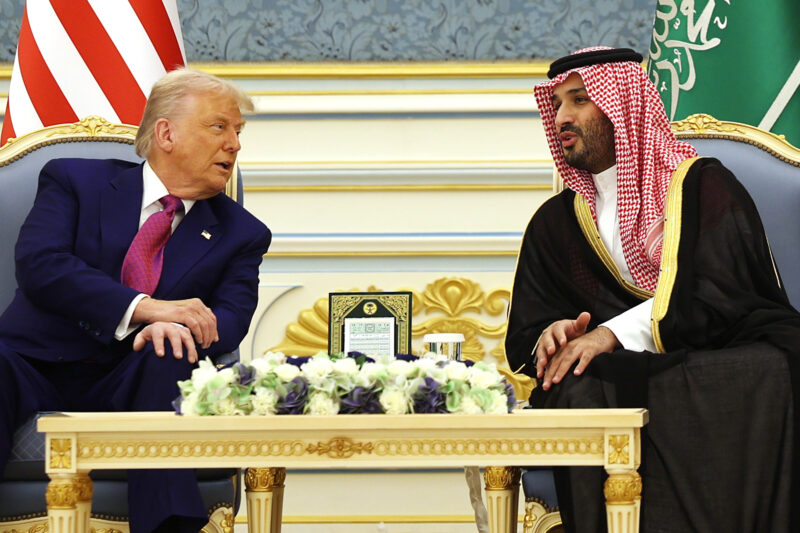
Saudi Crown Prince Mohammed bin Salman has reportedly been pressuring President Donald Trump to continue the war against Iran, amid speculation that Riyadh is considering taking a more active role in the fighting…
The Wall Street Journal reports that Israel struck a naval outpost in the Caspian Sea as part of an effort to disrupt a weapons smuggling route between Russia and Iran…
Lebanon expelled the Iranian ambassador in Beirut amid deteriorating relations between the countries owing to Iran’s backing of Hezbollah in Lebanon…
JPMorgan Chase CEO Jamie Dimon said at the annual Hill & Valley Forum in Washington on Tuesday that the Iran war gives lasting Middle East peace “a better chance in the long run”…
Trump and the Republican National Committee are likely to select Dallas as the location for a midterm convention that will be held sometime after Labor Day and serve as a pre-Election Day rally for the GOP…
Sen. Bill Cassidy (R-LA), the chair of the Senate Health, Education, Labor and Pensions Committee, wrote to New York City Mayor Zohran Mamdani on Tuesday questioning if a city-run health agency was using federal resources in its initiative aimed at responding to the “ongoing genocide in Palestine,” JI’s Emily Jacobs and Marc Rod report…
Cassidy, in a letter to the president of San Jose State University, also raised concerns about threatening graffiti on the campus, saying the school has “done little to allay fears among Jewish students”…
The Wall Street Journal spotlights former Jersey City Mayor Steven Fulop as he takes on a new role as head of the Partnership for New York City, countering Mamdani’s proposed tax hikes…
The Board of Peace’s Nickolay Mladenov presented to the U.N. Security Council a framework agreement for disarming Hamas that has been agreed to by the U.S., Egypt, Turkey and Qatar…
A Justice Department task force announced last year by Attorney General Pam Bondi to investigate Hamas, the group’s Oct. 7, 2023, attacks and antisemitism in the U.S. is struggling to conduct its work following the firing or reassignment of a number of the dozens of staffers initially tapped for the task force…
New Jersey Gov. Mikie Sherrill is facing criticism for visiting a N.J. mosque last week and meeting with an imam who has called for a “new intifada” against Israel and who was convicted by an Israeli court of membership in Hamas…
The New York Times reviews “Giant,” the play about author Roald Dahl that opened on Broadway earlier this week…
The century-old Middletown, N.J., estate built by Macy’s heir Herbert N. Straus was listed for $10 million…
The U.K.’s Department of Health and Social Care is taking initial steps toward significant reform within the country’s General Medical Council, a move that is expected to result in an increase in suspensions of employees who use racist or antisemitic language or share social media posts containing antisemitic content…
Authorities in London arrested two men in connection with the arson attack earlier this week targeting Hatzolah emergency vehicles in the heavily Jewish suburb of Golders Green…
Nigel Farage’s Reform UK party suspended a mayoral candidate who suggested that members of local Jewish security patrols were “cosplayers” who resembled “Islamics on horseback”…
The Community Security Trust, the major British Jewish group advising organizations on security issues, said that King Charles III accepted the group’s invitation to serve as the patron of the organization…
Officials in Antwerp, Belgium, arrested two teenage suspects in connection with the torching of a car that is being investigated as an antisemitic incident…
The arson in Belgium comes as investigators across Europe work to determine whether a string of recent attacks targeting Jewish communities on the continent are isolated incidents or the work of Iran or its proxies after a previously unknown Islamist group claimed responsibility for some of the attacks…
Volkswagen is in talks with Israel’s Rafael Advanced Defense Systems to convert the German car manufacturer’s Osnabrück factory to produce components for Rafael’s missile-defense systems…
Israeli Defense Minister Israel Katz said that Israeli forces planned to continue its hold on territory in southern Lebanon, saying that residents of the area south of the Litani River will not return “until the security of northern [Israel] residents is assured”…
Pic of the Day

As 150 Reform, Conservative and Orthodox rabbis gathered at a luxury Palm Beach, Fla., resort this week for the third annual “Zionism: A New Conversation” conference, several described the event as a pivotal shift from “defense to offense” on Israel-related issues, Jewish Insider’s Haley Cohen reports for eJewish Philanthropy.
Birthdays

Retired film and book critic, with regular appearances on NBC’s “The Today Show” from 1973-2010, Gene Shalit turns 100…
Feminist, journalist and social activist who became nationally recognized as a leader and a spokeswoman for the feminist movement in the late 1960s and early 1970s, Gloria Steinem turns 92… Former mayor of Las Vegas, she was elected in 2011 and reelected in 2015 and 2019, Carolyn Goodman turns 87… Actor and director, best known for his role as Det. David Starsky on the 1970’s television series “Starsky & Hutch,” Paul Michael Glaser turns 83… Senior fellow at the Carnegie Endowment for International Peace, after 24 years at the U.S. Department of State, Aaron David Miller turns 77… Former member of the Knesset for the Yisrael Beiteinu party and then Israel’s ambassador to Belarus, Yosef Shagal turns 77… Chairman of Eastern Savings Bank in Hunt Valley, Md., and board officer at The Associated: Jewish Federation of Baltimore, Beth H. Goldsmith… Internationally recognized Orthodox rabbinic leader, Rabbi Asher Zelig Weiss turns 73… Property manager and CPA in Los Angeles, Glynis Gerber… Founding director of the initiative on communication and sustainability at Columbia University’s Earth Institute, Andrew C. Revkin turns 70… Columbus, Ohio-based consultant in the sleep medicine field, Cynthia S. Levy… Executive director at Plum Community Center in Pittsburgh, Karen Hochberg… CEO and co-chief investment officer of Kintegral Asset Management, Mony Mordehai Rueven turns 69… Film producer, she formerly served as co-chair of Sony Pictures Entertainment, Amy Pascal turns 68… Senior correspondent for Kaiser Health News, Arthur Allen… Retired IDF major general, from 2014-2018 he served as the coordinator of government activities in the territories, Yoav “Poli” Mordechai turns 62… Emmy Award-winning actress, producer and designer, best known for her leading role on the HBO television series “Sex and the City,” reprised in two later films, Sarah Jessica Parker turns 61… Founding director of ATID and its WebYeshiva program, he is the editor of the Rabbinical Council’s journal Tradition, Rabbi Jeffrey Saks turns 57… Former prime minister of Israel, Naftali Bennett turns 54… East Side director and fellowship director at the Manhattan Jewish Experience, Rabbi Avi Heller turns 53… Managing director of ARI Investment Partners, in 2002 he founded Jconnect in Los Angeles devoted to creating Jewish connectivity, continuity and unity, Cheston David Mizel… Partner at D.C.-based Mehlman Consulting, focused on health care policy, Lauren Aronson… VP of public engagement at Oxfam America, Alissa C. Rooney… YouTube personality, filmmaker, co-founder of the multimedia company Beme, and founder of 368, a space for creators to collaborate, Casey Neistat turns 45… Actress, comedian and author, Jenny Slate turns 44… Washington correspondent at the Associated Press, Steven Sloan… Founder and editor of The Free Press and editor-in-chief of CBS News as of October 2025, Bari Weiss turns 42… Iraqi-born Chaldean Catholic, her husband is Jewish, she formerly served as counselor to President Trump and interim U.S. attorney for New Jersey, Alina Habba turns 42… Communications strategist based in Chicago, Meredith Shiner… Chief political officer of Democratic Majority for Israel, Joel Wanger… Legislative director for U.S. Sen. Jacky Rosen (D-NV), Grant Cameron Dubler… Senior manager of pricing strategy at American Express, Jordan Rossman… Winner of the 2025 Academy Award for Best Actress, known professionally as Mikey Madison, Mikaela Madison Rosberg turns 27…
Schneider called Piker ‘an unapologetic antisemite’ and warned ‘Democrats risk losing our credibility to condemn those on the right who traffic in bigotry’ if they continue to embrace him

Tom Williams/CQ-Roll Call, Inc via Getty Images
Chairman Brad Schneider (D-IL) conducts a news conference with members of the New Democrat Coalition during the House Democrats 2025 Issues Conference at the Lansdowne Resort in Leesburg, Va., on Thursday, March 13, 2025.
Rep. Brad Schneider (D-IL), who chairs the moderate New Democratic Coalition, called on Democrats on Tuesday to reject and distance themselves from Hasan Piker, the far-left media figure boosted by an increasing number of Democrats and Democratic candidates.
Piker has faced repeated criticism for antisemitic comments and support for terrorism, in addition to a range of other offensive remarks and activity. Schneider, in addition to his leadership in the New Dems -— one of the largest groups in the House Democratic Caucus — is a co-chair of the Congressional Jewish Caucus.
“Hasan Piker is an unapologetic antisemite,” Schneider said on X on Tuesday. “Democrats risk losing our credibility to condemn those on the right who traffic in bigotry, antisemitism, & hate when our own Members of Congress & candidates are celebrating or, worse yet, platforming those who espouse hate of any kind.”
Schneider said he is proud that the Democratic Party “welcome[s] a broad diversity of opinions and priorities. But we cannot allow those who preach hate & seek division to find safe harbor among us. We must call out hate & reject those who champion ideologies of exclusion and demonization.”
The moderate Democratic leader’s comments come on the same day that Michigan Senate candidate Abdul El-Sayed announced a rally alongside Piker, and after numerous other colleagues have appeared on Piker’s livestream show or defended him.
They also follow similar condemnation from Third Way, a prominent moderate Democratic group.
To mark the second anniversary of the Oct. 7 attacks in Israel, the Jewish Insider team asked leading thinkers and practitioners to reflect on how that day has changed the world. Here, we look at how Oct. 7 changed Israel’s relations with the world

NEW YORK — October 13, 2023: The Israeli flag flies outside the United Nations following Hamas’s deadly attack on Israel (Photo by Noam Galai/Getty Images)
The Anti-Defamation League also voiced ‘significant reservations’ about Netanyahu’s military operation
Samuel Corum/Getty Images
Rep. Brad Schneider (D-IL) speaks about his experiences during a trip to Israel and Auschwitz-Birkenau as part of a bipartisan delegation from the House of Representatives on January 28, 2020 in Washington, DC.
Additional pro-Israel Democrats joined colleagues on Friday in criticizing Israel’s plans to take over Gaza City, which were approved Friday after Israeli Prime Minister Benjamin Netanyahu said Israel intends to take over Gaza City as part of an expanded military operation.
It’s a further sign that Israel’s ongoing war plans are causing growing gaps between the Jewish state and some of the country’s most critical left-of-center allies in Washington.
Rep. Brad Schneider (D-IL), a co-chair of the House Jewish caucus and pro-Israel stalwart who is currently visiting Israel, said in a statement that the plan to take over Gaza City “is tactically questionable and strategically self-defeating.”
“If implemented, the decision is more likely to play into Hamas’s original objectives in starting this war and further unite much of the world against Israel than it is to bring home the last surviving hostages and advance the security needs of the nation,” Schneider continued. “In fighting what is unquestionably an existential war against absolute evil, Israel must also uphold its responsibility to do all it can to protect civilians in Gaza and enable humanitarian aid to reach those in need.”
At the same time, he emphasized that Hamas started the war with the intent of eliminating Israel, and that Israel has the “absolute right” to defend itself and free the hostages. He said that if the world wants the war to end, it must commit to working with Israel, the U.S. and European and Arab states to “open new pathways for relief, recovery and renewal.”
Sen. Adam Schiff (D-CA) warned in a statement that Israeli military officials oppose the Gaza occupation effort and that it “could extend [the war] for years, will only result in further loss of life among the hostages, Palestinian civilians, and the members of the IDF required to undertake such a calamitous task. The situation in Gaza is unendurable; this will make it worse. This war must end, not escalate.”
“To be clear: Hamas must be held to account for its mass murder, torture, and rape of Israelis, and for any diversion of food from those who are hungry. No call upon the Israeli government to act to stop this unendurable suffering by civilians in Gaza can ignore the barbaric acts committed by Hamas that brought this war about, the need to ensure they can never threaten Israel again, and the even more urgent need for the release of all of the hostages,” Schiff continued. “The international community must be persistent in its demand for the immediate release of the hostages and not ignore the casus belli of this terrible war.”
He said that the U.S.-Israel relationship should transcend any particular government on either side, and urged U.S. allies not to abandon Israel, “But that does not mean we can or should ignore or fail to call out continued perilous action — and inaction — by both this Prime Minister and this President — and insist on a dramatic change in the policies of both.”
Schiff added, “I find no shared value in the preventable starvation of the people of Gaza. I see no common principle in the forced displacement of Palestinians from Gaza or plans for settler colonies there, only a moral and legal failing of terrible proportion. I am compelled to speak out, because I believe in an Israel that has been, and can be again, a light unto other nations.”
Sen. Mark Warner (D-VA) called the Gaza City plan “a dangerous and counterproductive move that will not secure the release of the remaining hostages or bring an end to the fighting that has already taken so many lives.”
“This approach will without question worsen the already terrible humanitarian conditions in Gaza, and Israel’s own military leaders have expressed serious concerns about the feasibility and risks of this strategy,” Warner continued. “The priority must be to end this war immediately through diplomatic efforts and coordinated pressure to ensure the safe return of hostages and protect innocent lives. Pursuing this path will only guarantee prolonged conflict and greater suffering.”
Rep. Josh Gottheimer (D-NJ), one of Israel’s most vocal defenders in the House, took a somewhat different tack, saying in a statement and an interview on CNN that Netanyahu had told him in a meeting this week that Israel does not plan to occupy Gaza in the long term.
“I’m opposed to long-term occupation and annexation — but Hamas must go,” Gottheimer said on X. “I strongly support crushing Hamas terrorists and their last strongholds. I fervently back surging humanitarian aid and preventing Hamas from blocking it. We must urgently free the hostages being starved by Hamas, remove Hamas from power, and transition to an Arab-led peacekeeping force to bring lasting peace and safety for both innocent Palestinians and Israelis.”
He said in the CNN interview that Hamas could end the war by agreeing to surrender.
The Anti-Defamation League also voiced “significant reservations about the Israeli Cabinet’s decision to expand operations in Gaza” in a statement on Friday. The group declined to weigh in on the strategy involved but said that the move could further endanger the hostages and worsen the humanitarian situation for Palestinian civilians.
Democratic Majority for Israel said that “Pro-Israel Democrats have questions and concerns about the reported escalation of the conflict,” while emphasizing Hamas’ responsibility for the war and the need for a deal to free the hostages and increase humanitarian aid.
“We call on the Trump Administration to ensure sufficient humanitarian assistance and exert maximum pressure on Arab states such as Qatar to force Hamas to accept a ceasefire and free the hostages,” the DMFI statement continued.
Two bills, which Republicans said would punish schools failing to combat antisemitism by targeting their tax benefits, passed the Ways and Means Committee along party lines; Democrats argued the bills are ill-conceived and ineffective

Bill Clark/CQ-Roll Call, Inc via Getty Images
Rep. Jason Smith (R-MO), chair of the House Ways and Means Committee
The House Ways and Means Committee split along partisan lines on Tuesday over two bills that Republicans said would punish colleges and universities for campus antisemitism by imposing tax penalties and potentially reassessing their tax-exempt statuses.
Both bills, the University Accountability Act and the Protecting American Students Act, passed the committee by party-line votes. Democrats argued that the bills were not serious or effective efforts to combat antisemitism.
The University Accountability Act would impose tax penalties on colleges and universities when a federal court finds that they have violated Title VI of the Civil Rights Act, which bans discrimination based on race, color and national origin. Those penalties, enforced by the Internal Revenue Service, would total $100,000 or 5% of the total of their administrative salaries, whichever is greater.
If a school is found to have violated Title VI on three separate occasions, the Treasury Department would be required to review the school’s tax-exempt status.
Rep. Jason Smith (R-MO), the committee chair, argued that colleges and universities, in failing to protect Jewish students, are not fulfilling the educational purpose for which they receive tax exempt status, and should be subject to penalties.
“It’s time that these universities learn their inaction has consequences,” Rep. Nicole Malliotakis (R-NY), the bill’s lead sponsor, added. “They have a responsibility to keep their students safe.”
Democrats argued that the bill was rushed and ill-conceived, and would largely not address current issues. They said that increased funding for the Department of Education’s Office of Civil Rights, which evaluates and adjudicates Title VI complaints, would be a better approach to the problem.
Rep. Brad Schneider (D-IL) said that the proposal takes an insufficiently tailored approach and emphasized the need for education.
“This bill fails to address the issue head-on and focuses on punishing schools instead of working to improve them,” Schneider said. “I’m concerned about this bill’s unintended consequence: the very real potential for creating a vicious cycle of aggressive and tendentious claims against universities.”
The Orthodox Union supported the bill, arguing in a letter to committee leaders that it would “give strength and meaning to the demands of Title VI and hopefully compel recalcitrant administrators to do what they ought to already.”
The Protecting American Students Act would change the way that taxes on college and university endowments are assessed, with the goal of incentivizing schools to admit more American citizens or permanent residents, and fewer non-citizens. Schools with larger non-citizen populations would be subject to taxes on their endowments. Smith said the bill would expand endowment taxes to around a dozen additional schools.
Smith and other Republicans, suggesting that antisemitic activity is being driven in significant part by non-American students, argued that incentivizing wealthy, elite schools to increase their populations of American students would help protect against antisemitism.
“Universities — many of whom have ever-growing foreign student populations and receive massive amounts of foreign funding — focus more on appeasing those with antisemitic views on their campuses than protecting all students, upholding their institutional values and holding those accountable who violate such policies and values,” Smith said.
Republicans also argued that schools should be incentivized to admit more U.S. students for other reasons as well, and that the change would also align tax policy with Department of Education policy for determining student aid eligibility.
Rep. Judy Chu (D-CA) and other Democrats said that the proposal was both xenophobic and would fail to actually address antisemitism.
“Instead of protecting victims of hate this bill would simply blame campus unrest on supposed foreign agitators and use this as an excuse to punish institutions that enroll international students regardless of where they come from,” Chu said. “Scapegoating these students does not represent a solution to antisemitism or other forms of discrimination. In fact, it does the exact opposite by blaming all foreigners for society’s ills.”
Rep. Drew Ferguson (R-GA), the lead sponsor, acknowledged that the bill alone will not solve campus antisemitism, but said, “I think it’s a matter of fairness to the American taxpayer and to American students.”
Bipartisan letter argued that not removing the presidents from their positions would constitute an ‘endorsement’ and ‘act of complicity’ in the presidents’ ‘antisemitic posture’

Kevin Dietsch/Getty Images
Claudine Gay, president of Harvard University and Liz Magill, president of University of Pennsylvania, testify before the House Education and Workforce Committee at the Rayburn House Office Building on December 05, 2023, in Washington, D.C.
Seventy-four House lawmakers wrote to the boards of Harvard, the Massachusetts Institute of Technology and the University of Pennsylvania on Friday demanding that they immediately fire their presidents in response to widely criticized congressional testimony they delivered on antisemitism on their campuses earlier this week.
The presidents of the three schools have come under increasing scrutiny this week amid growing speculation that their jobs could be on the line following their refusal to say earlier this week that calls for Jewish genocide would violate their schools’ codes of conduct.
“Testimony provided by presidents of your institutions showed a complete absence of moral clarity and illuminated the problematic double standards and dehumanization of the Jewish communities that your university presidents enabled,” the letter reads. “Given this moment of crisis, we demand that your boards immediately remove each of these presidents from their positions and that you provide an actionable plan” to ensure the safety of the Jewish community on campus.
“Anything less,” than the steps they requested, the lawmakers continued, “will be seen as your endorsement… and an act of complicity in their antisemitic posture.”
The letter was led by Rep. Elise Stefanik (R-NY), who questioned the presidents on the genocide issue, and Rep. Jared Moskowitz (D-FL). Rep. Josh Gottheimer (D-NJ) is the only other Democrat who signed the letter; the rest are Republicans.
The lawmakers said that the testimony makes it “hard to imagine” any Jewish or Israeli person feeling safe on their campuses when the presidents “could not say that calls for the genocide of Jews would have clear consequences on your campus.”
It adds that subsequent social media statements seeking to clarify or walk back those comments “offered little clarification on your campus’ true commitment to protecting vulnerable students in this moment of crisis,” describing them instead as “desperate attempts to try and save their jobs” and “too little too late.”
Shortly before the Stefanik-Moskowitz letter was released, a group of thirteen House Democrats wrote to the boards of the three schools urging them to re-examine their codes of conduct to make clear that calls for the genocide of Jews are not acceptable.
This second letter, led by Reps. Kathy Manning (D-NC), Jake Auchincloss (D-MA) and Susan Wild (D-PA), includes similar language to the bipartisan letter regarding the presidents’ testimony and how it would make Jewish campus members feel unsafe, but stops short of directly calling for the presidents to be fired.
The lawmakers wrote that they felt “compelled to ask” if the presidents’ responses “align with the values and policies of your respective institutions.”
“The presidents’ unwillingness to answer questions clearly or fully acknowledge appalling and unacceptable behavior — behavior that would not have been tolerated against other groups — illuminated the problematic double standards and dehumanization of the Jewish communities at your universities,” the letter continues. “The lack of moral clarity these presidents displayed is simply unacceptable.”
The lawmakers requested that the schools update their policies to “ensure that they protect students from hate” and describe their plans for protecting Jewish and Israeli community members.
“There is no context in which calls for the genocide of Jews is acceptable rhetoric,” the letter reads. “While Harvard and Penn subsequently issued clarifying statements which were appreciated, their failure to unequivocally condemn calls for the systematic murder of Jews during the public hearing is deeply alarming and stands in stark contrast to the principles we expect leaders of top academic institutions to uphold.”
The letter notes that federal civil rights law prohibits discrimination against Jews on campus, and that criminal law bans hate crimes, violence and incitement to violence.
“Students and faculty who threaten, harass, or incite violence towards Jews must be held accountable for their actions,” the lawmakers wrote. “If calls for genocide of the Jewish people are not in violation of your universities’ policies, then it is time for you to reexamine your policies and codes of conduct.”
Signatories to the Democratic letter include Manning, Wild, Auchincloss, Debbie Wasserman Schultz (D-FL), Lois Frankel (D-FL), Haley Stevens (D-MI), Greg Landsman (D-OH), Grace Meng (D-NY), Brad Schneider (D-IL), Dan Goldman (D-NY), Donald Norcross (D-NJ), Jerry Nadler (D-NY) and Elissa Slotkin (D-MI).
All of the signatories to the Democratic letter are either Jewish or deeply involved with Jewish community issues on the Hill.
Earlier this week, a third letter by six House Republicans from Pennsylvania — Reps. Guy Reschenthaler (R-PA), alongside Congressmen John Joyce, M.D. (R-PA), Mike Kelly (R-PA), Lloyd Smucker (R-PA), Brian Fitzpatrick (R-PA), and Dan Meuser (R-PA) — called for University of Pennsylvania President Liz Magill specifically to be fired.
Reps. Brad Schneider and David Schweikert ask White House 'to explain’ lack of exemption

Bill Clark/CQ Roll Call/AP
Rep. Brad Schneider (D-IL) walks up the House steps on April 4, 2019.
Congressmen Brad Schneider (D-IL) and David Schweikert (R-AZ) have asked the Trump administration to explain why Israel has not been granted a waiver on new tariffs on steel and aluminum imports.
In a letter sent to U.S. Trade Representative Robert Lighthizer on Wednesday and obtained by Jewish Insider, the two lawmakers — both members of the House Ways and Means Committee — noted that while the administration has granted exemptions to a number of key allies, including South Korea, Australia, Argentina, Brazil, Canada and Mexico, the tariffs remain on imports from Israel, an ally and reliable strategic partner.
Last year, Israeli Prime Minister Benjamin Netanyahu reportedly failed to secure an exemption from the 25% steel and 10% aluminum tariffs imposed by the Trump administration in 2017.
“The United States and Israel have long enjoyed cooperation on a wide range of issues that enhance, not threaten, U.S. national security, such as development of the Iron Dome missile defense system and countering subterranean terrorist tunnels. This cooperation demonstrates the deep trust and mutual respect that encompasses this vital relationship,” the congressmen wrote.
The letter concluded, “We do not believe imports of steel and aluminum from Israel are a threat to U.S. national security and are asking you to explain why Israel has not been granted an exemption.”
Please log in if you already have a subscription, or subscribe to access the latest updates.
 Continue with Google
 Continue with Apple