





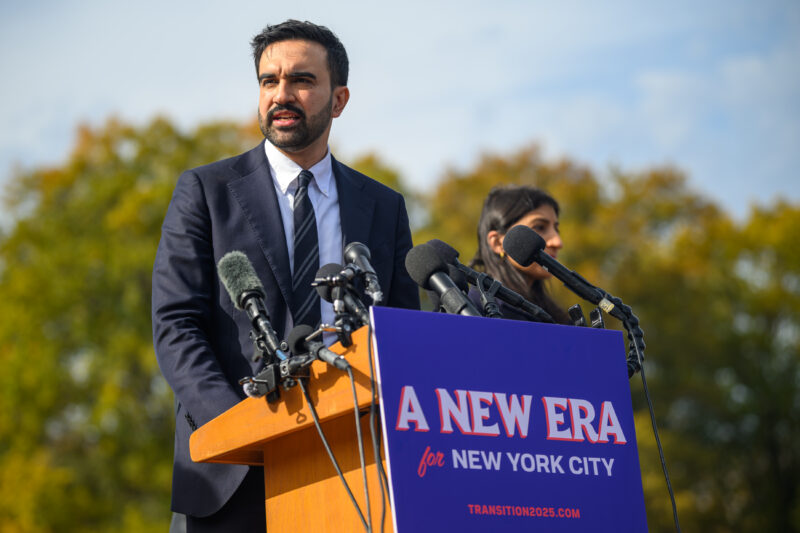

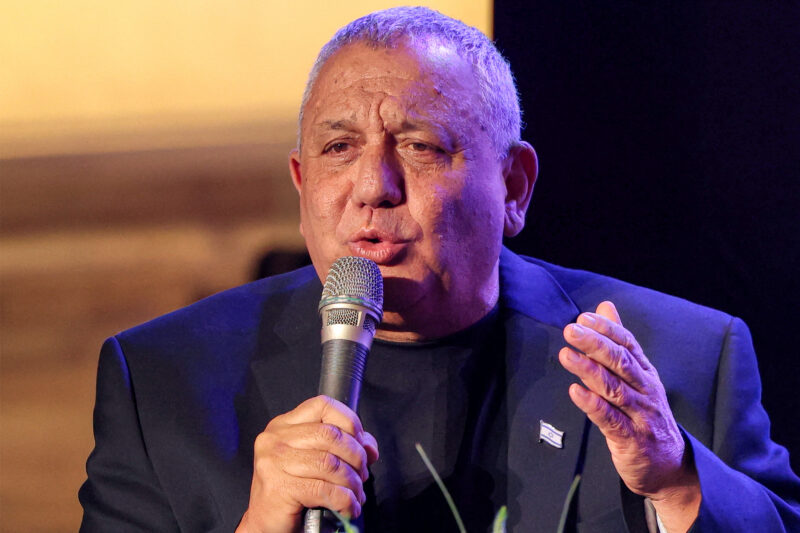

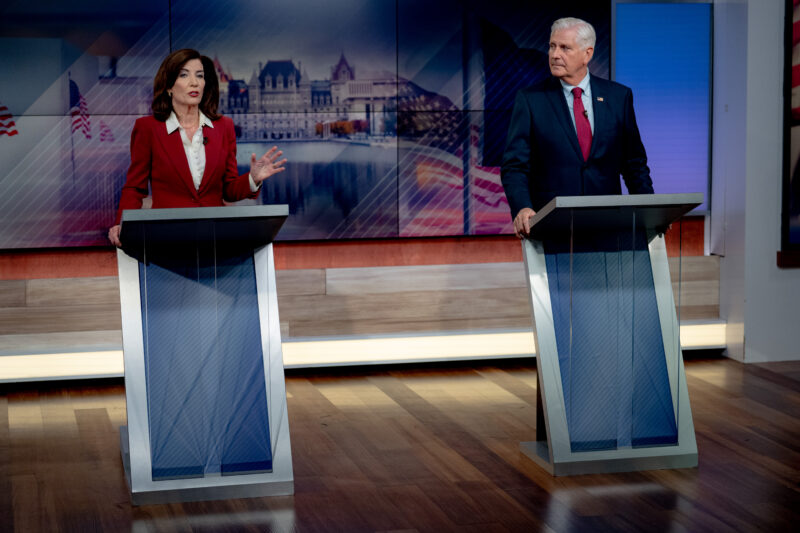


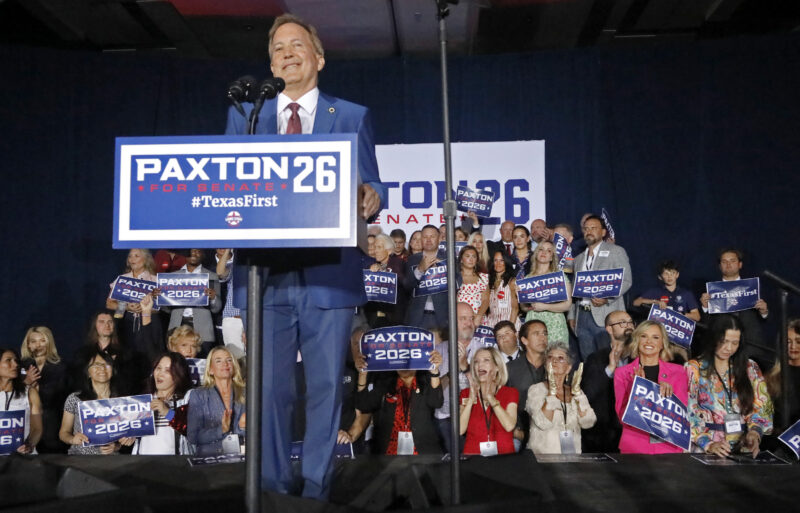
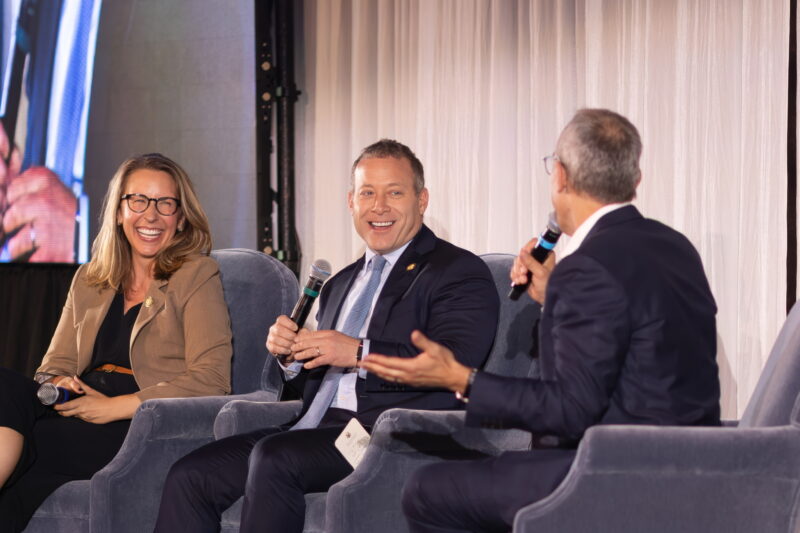
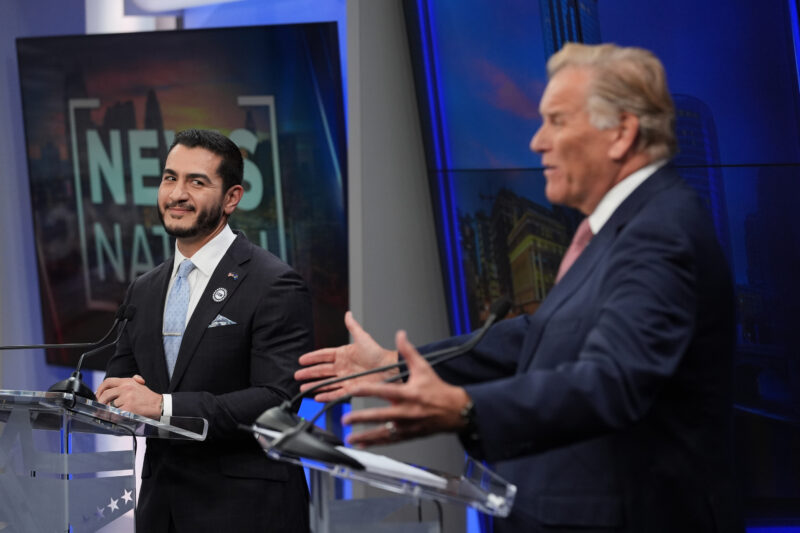


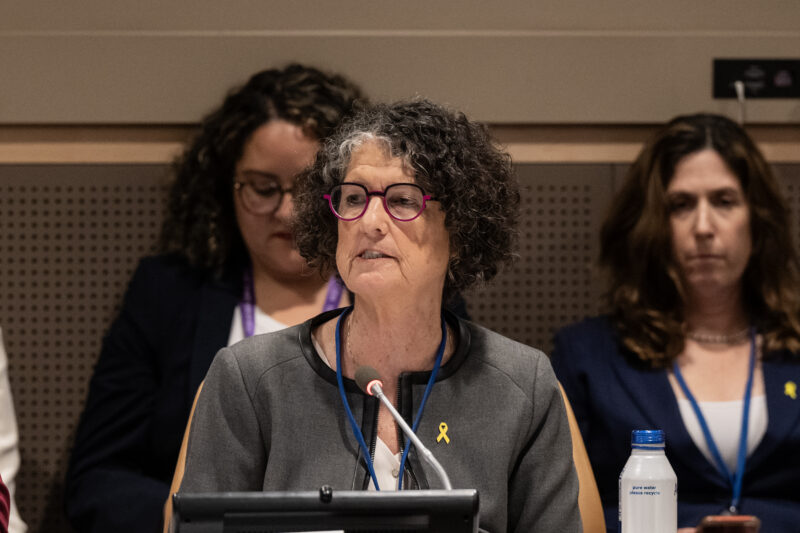


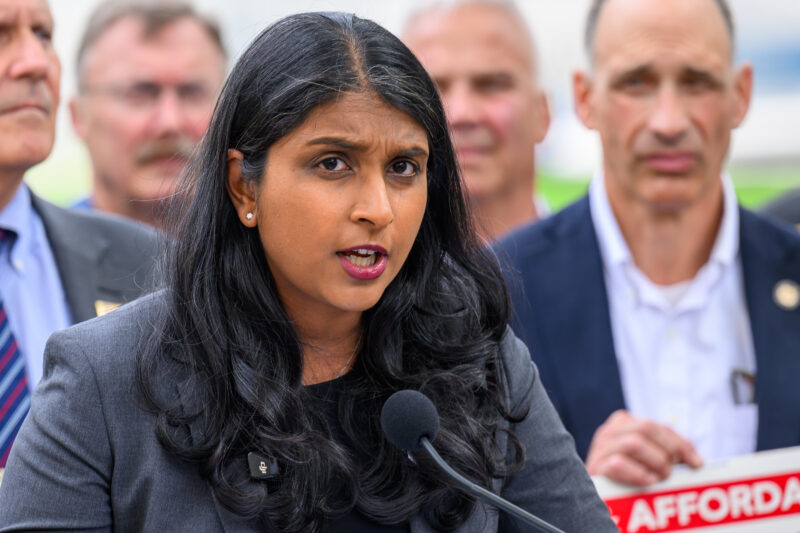
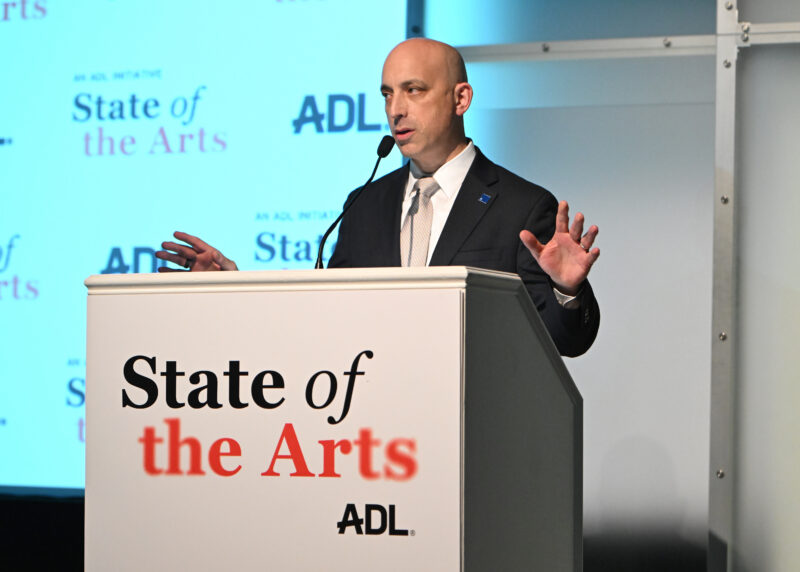






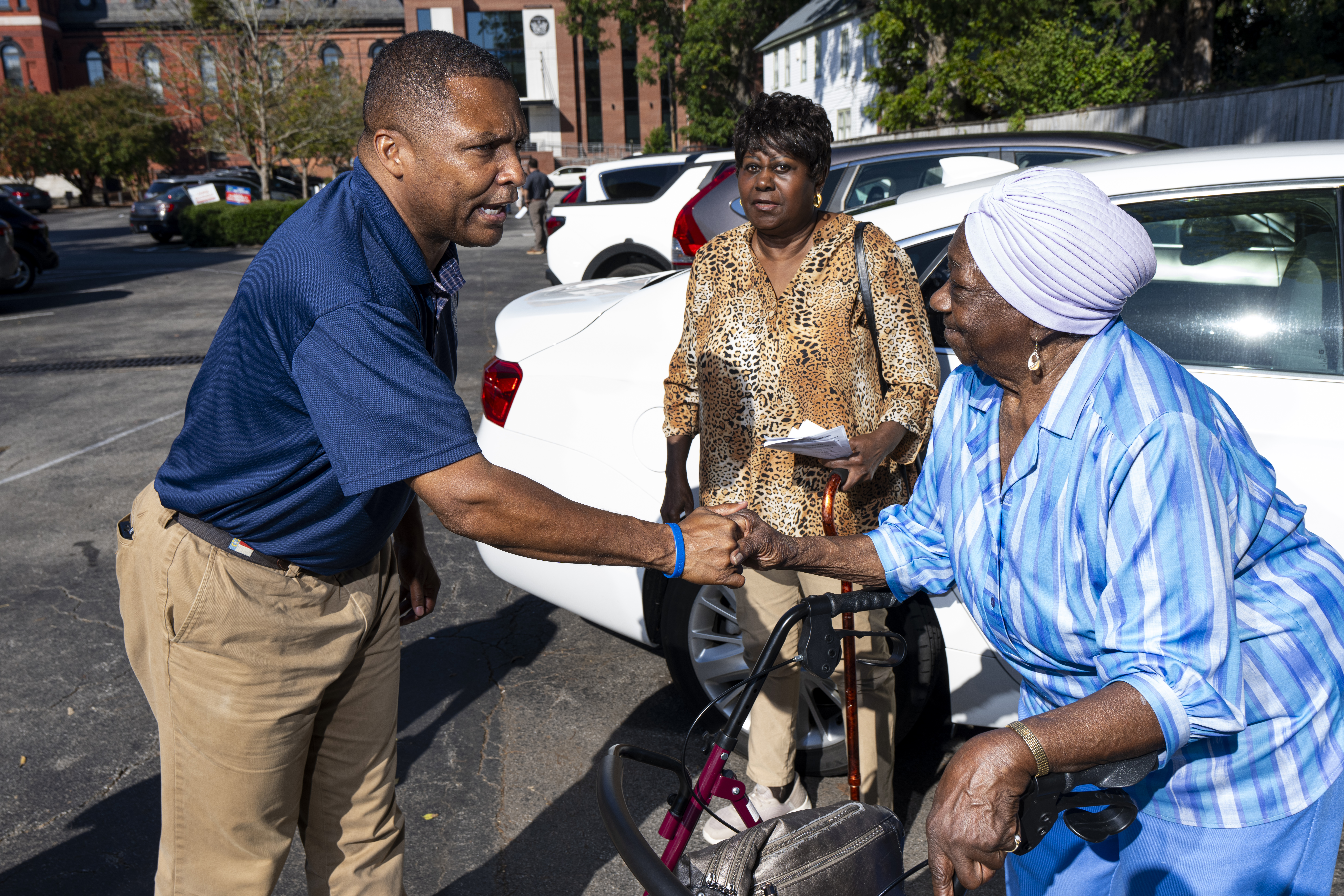

The GOP candidate for New York attorney general, Saritha Komatireddy, posed for photos with the group, which has called Jews ‘imposters’ and the ‘Synagogue of Satan’
(Jim Franco/Times Union via Getty Images)
Saritha Komatireddy, the Republican candidate for state attorney general, speaks during a press conference announcing an endorsement by the New York State Correctional Officers & Police Benevolent Association on Tuesday, Sept. 22, 2026, outside the Capitol in Albany, NY.


 Add JewishInsider on Google
A long-shot contender for New York attorney general met with members of a Black Hebrew Israelite sect that the Simon Wiesenthal Center identified as “one of the most extreme” groups pushing antisemitic myths that modern Jews are demonic imposters.
Republican former prosecutor Saritha Komatireddy — running against incumbent Attorney General Letitia James — on Monday posted photos on X of herself in what she indicated was an impromptu meeting with members of the group Israel United in Christ. She deleted the post on her account shortly afterward, but it remained up on the candidate’s webpage as of this writing.
“Some of the best conversations happen along the way,” she wrote. “Enjoyed stopping to speak with the men of Israel United in Christ and hearing their perspectives.”
The perspectives of Israel United in Christ, as documented by the Wiesenthal Center, include that Black, indigenous and Spanish-speaking peoples of the Americas are the true descendants of the biblical Hebrews and that modern Jews are “fake” and “imposters” whose identification with the land of Israel is based on “fables.” The sect’s leaders have also referred to Judaism as a “synagogue of Satan,” and spread conspiracy theories about Jewish world domination and Jews’ role in the transatlantic slave trade.
The Anti-Defamation League, meanwhile, catalogued a 2020 sermon in which the fringe group’s founder and other high-ranking members referred to Jews as “the devil” and “the house of demons,” and singled out Hasidim as “evil despots.”
Komatireddy’s campaign did not respond to repeated requests for comment.
The Republican has otherwise aggressively pursued Jewish voters, vowing to declare a “state of emergency” over rising antisemitic hate crimes and picking up an endorsement from Elisha Wiesel, the son of Holocaust survivor and Nobel Prize laureate Elie Wiesel.
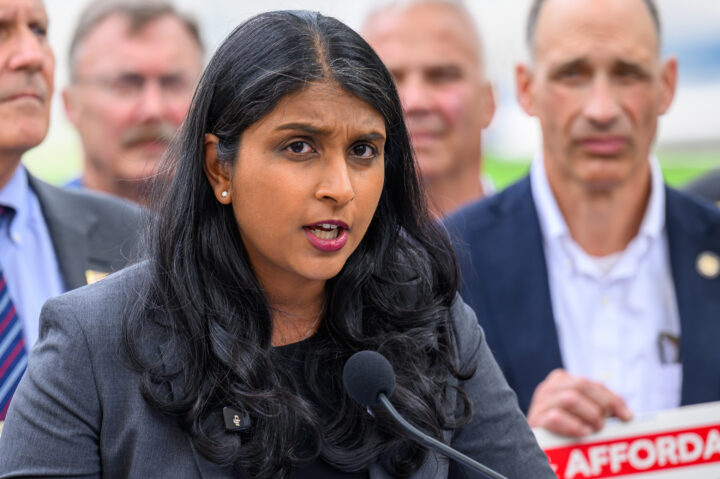
The congressman alleged that Linden, N.J., may be engaged in rampant violations of law and the U.S. and New Jersey state constitutions
Leigh Vogel/Getty Images
Rep. Josh Gottheimer (D-NJ)
Rep. Josh Gottheimer (D-NJ) wrote to Attorney General Todd Blanche and New Jersey Attorney General Jennifer Davenport on Wednesday urging them to investigate alleged antisemitic zoning discrimination against Hasidic Jews by the city of Linden, N.J.
The letter highlights zoning changes allegedly enacted with what the letter says is the discriminatory goal of limiting the Hasidic community’s religious and family lives since the Hasidic community began settling in the city seven years ago.
“This situation merits an immediate and thorough investigation by both the Department of Justice and the State of New Jersey into possible violations of the U.S. Constitution, New Jersey State Constitution, as well as various federal and state anti-discrimination statutes,” Gottheimer said, adding that he had learned of the situation through public reporting and personal conversations with community members.
“The cumulative impact of restrictive ordinances — limiting religious assembly, housing, and essential facilities — combined with selective enforcement of municipal policies, appears to violate the First and Fourteenth Amendments of the U.S. Constitution, as well as Article I, Section 3 of the New Jersey State Constitution,” Gottheimer continued.
He said that the city’s actions also potentially violated a slew of federal and state laws, and noted that the Department of Justice and New Jersey have opened other investigations into similar allegations of discrimination.
The letter highlights allegations that the city used zoning regulations in an attempt to effectively prevent the Hasidic community from constructing a synagogue — despite previously approving the construction of that synagogue, and using residential zoning laws to target large Hasidic families by limiting allowable living space and potential renovations to accommodate religious practices.
“The cumulative effect of the recent zoning changes has made it increasingly difficult — if not impossible — for the Hasidic community in Linden to fully observe their religion,” Gottheimer said. “Beyond housing and religious facilities, the City has reportedly engaged in targeted enforcement actions against community services essential to Hasidic life.”
Gottheimer said that city officials have also targeted trash services and school buses for the Hasidic community, attempted to prevent community members from attending relevant public meetings and illegally revoked a zoning permit for a kosher restaurant.
He also alleged that the city deliberately carried out a sweep of Hasidic-owned properties during Sukkot and on the second anniversary of the Oct. 7, 2023 Hamas attacks on Israel last year, with evidence suggesting that targeted addresses were pulled from a Yiddish-language community publication.
Though Gottheimer’s letter does not mention the issue, the city’s mayor was also recorded in 2024 making antisemitic comments.
The letter comes ahead of Supreme Court arguments later this year in a case brought by an Orthodox Jewish man over alleged zoning discrimination by his home city in Ohio.
The Jewish Democratic AG said she ‘couldn’t be true to [her] values’ in voting for the GOP nominee, despite having voiced reservations over El-Sayed’s views on Israel and antisemitism
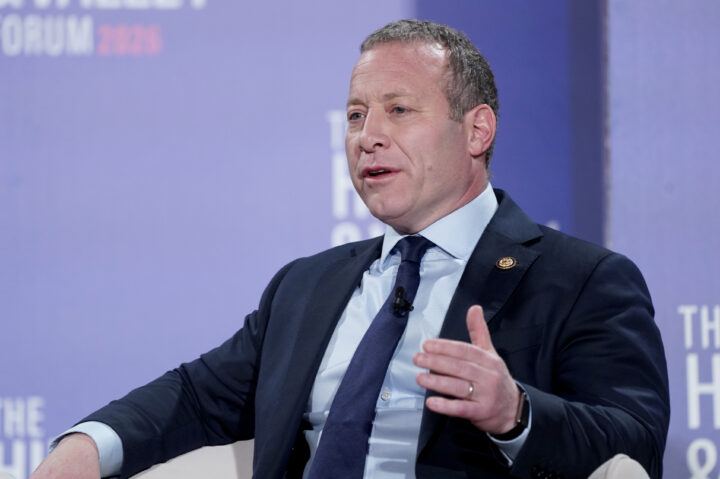
Screenshot
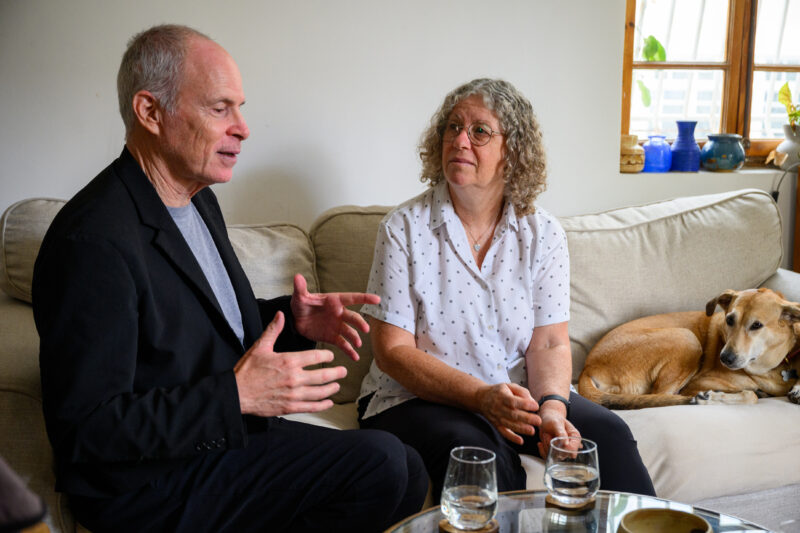
Michigan Attorney General Dana Nessel and Senate nominee Abdul El-Sayed appear on the "“For the Sake of the Argument with Lori Goldman” podcast.
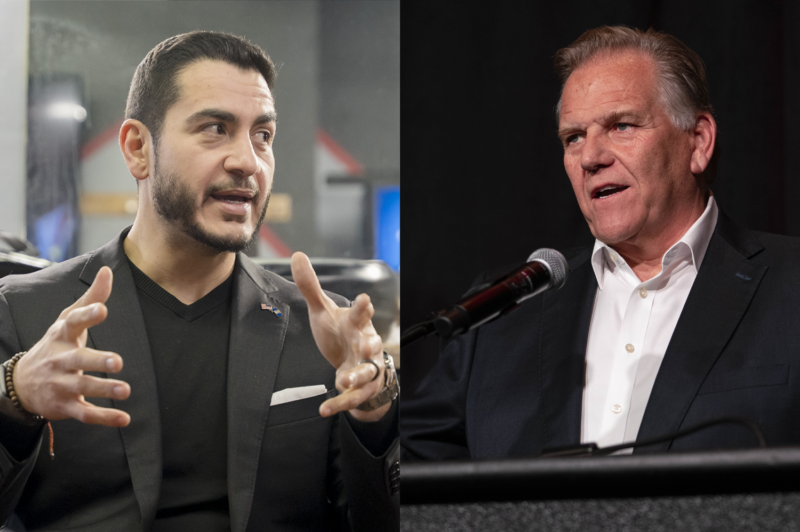
Michigan Attorney General Dana Nessel announced that she is endorsing Abdul El-Sayed, the Democratic nominee in Michigan’s high-profile Senate contest, after having previously voiced reservations over his views on Israel and antisemitism.
Nessel, a Jewish Democrat whose eight years in office will conclude at the end of December, made the announcement while appearing with El-Sayed in an episode of the “For the Sake of the Argument with Lori Goldman” podcast released on Tuesday.
“For me, I don’t want to say the choice is easy, but I am going to say that there is no choice, and that’s why I’m supporting Abdul for the United States Senate,” Nessel said.
Asked if she would personally be voting for El-Sayed, Nessel replied: “I can’t be true to my values if I even consider voting for [GOP nominee] Mike Rogers. Yes, I’ll be voting for Abdul.”
Michigan AG Dana Nessel said she will vote for Abdul El-Sayed, the Democratic Senate nominee in Michigan, after she previously withheld her support amid concerns over his positions on Israel and his response to the attack on Temple Israel. pic.twitter.com/GQ6m4LXuqh
— Jewish Insider (@jewishinsider) September 22, 2026
Nessel predicted that she would “get attacked” by “right-wing media” for failing to “hold whatever is, I guess, the party line of the day when it comes to the Jewish community,” though she defended her decision to support El-Sayed by arguing that, “it is a tremendous disservice not to look at all of the issues” that he and Rogers are respectively campaigning on.
“I care deeply about [the Jewish] community. I’ve been a member of it, obviously, my entire life, and we’re talking about my family. … I know that just by sitting together today, people are going to call me a traitor to my people. People are going to call me a kapo. People are going to call me much worse things than that,” Nessel said. “But at the end of the day, when we talk about protecting our children, protecting generations to come, when we talk about protecting the people that we serve, I think it is a tremendous disservice not to look at all of the issues.”
Asked about their differences on the issue of support for Israel and whether pro-Israel Jews were welcome the Democratic “big tent,” Nessel said that while she did not “want to minimize my interest in the state of Israel” or her belief that “we need to have those conversations” about achieving peace for Israelis and Palestinians, she suggested there are more pressing policy questions to address first.
“How can we expect that Israel or its people will have any future at all whatsoever if we are not tackling AI? If we’re not looking at real solutions to climate change? If we’re not forward-facing in terms of fighting against whatever the next global pandemic is going to be?” Nessel asked. “These issues absolutely need to be addressed. Mike Rogers doesn’t care about any of them.”
Nessel then pressed El-Sayed on if Jewish Democrats were welcome in the party, to which he responded affirmatively and said that he believed in the idea of the party having a “big tent … where we march in lockstep on the 95% of things we agree on and where we continue to have the conversation in that tent about the spaces where we disagree, so yes.”
El-Sayed said that if elected, he would support the Jewish American Security Act, a bipartisan and bicameral proposal to address antisemitism across multiple sectors of American society being championed by the mainstream Jewish community. He noted, however, that he would work to expand the legislation to provide similar protections for people of other faiths.
“I look forward to working alongside [Sen.] Jacky Rosen (D-NV), who is the principal sponsor and drafter of this legislation, to support it and expand it so it includes the critical infrastructure to protect Jewish spaces, to also include spaces for other religious minorities and, frankly, for Christian folk and for places of reflection for folks who might not ascribe to an organized religion,” El-Sayed said.
“I know this piece of legislation would support things like security cameras and security for these institutions, and it also would protect against online harassment,” he continued. “I think it’s important for us as we think about that, that folks are not being harassed simply because of how they pray. And I want to make sure that I’m working with Sen. Rosen to expand that so that all communities can feel safe.”
El-Sayed noted that, “We’ve had an uptick in antisemitism and it is critical to protect Jewish Americans. We’ve also seen harassment of Sikh communities and other communities as well. And so being able to protect the rights of people to pray as they choose to pray without having to fear that they are going to be targets for violence and hate speech is absolutely critical.”
Nessel, who still hasn’t endorsed Democratic Senate nominee Abdul El-Sayed, said she won’t support Republican Mike Rogers
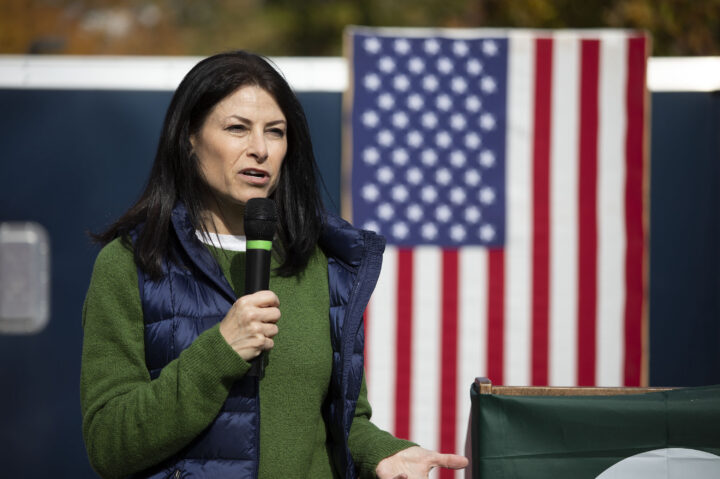
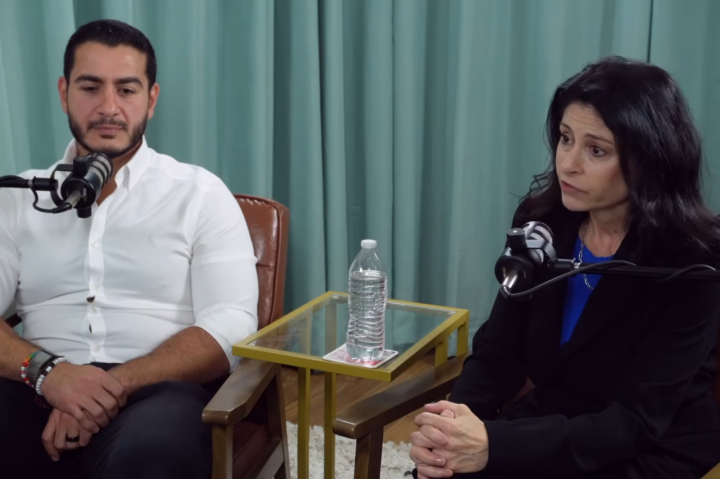
Bill Pugliano/Getty Images
Michigan Attorney General Dana Nessel speaks on Oct. 16, 2022 in East Lansing, Michigan.
Michigan Attorney General Dana Nessel, a Jewish Democrat, encouraged Jewish voters on Sunday to put aside concerns about their safety “in exchange for the opportunity to save the rest of humanity,” in a stark reference to the choices facing Jewish Democrats in the closely contested Senate election this November.
“We have a moral imperative to place the needs of the world above even our own self-interest and, yes, even our own survival,” Nessel told attendees in her remarks at the Michigan Democratic Jewish Caucus’ annual “Summer Simcha” gathering, where she was honored, according to reports confirmed by Jewish Insider.
Nessel’s comments did not explicitly refer to Abdul El-Sayed, the Democratic Senate nominee who has faced profound skepticism from Jewish Democrats over his hostile rhetoric toward Israel as well as his equivocal response to a violent terrorist attack on a synagogue outside Detroit in March.
But her plea to attendees suggested she was moving toward voting for El-Sayed, who also appeared at the event on Sunday to apologize for his initial comments on the synagogue attack in which he had claimed that “hurt people hurt people” and “violence is a cycle,” in remarks that were widely seen as insensitive to Jewish safety.
El-Sayed voiced regret for those remarks on Sunday, asking the caucus members “for forgiveness and a moment of grace” for what he called an ill-timed response. He also clarified that there was “an opportunity for context later on,” a sentiment that some voters found offensive in light of the attack, which had been perpetrated by a Lebanese American man who has lost relatives in Israeli strikes in Lebanon, including a brother who was a Hezbollah commander.
Nessel has been among the most high-profile Jewish Democrats in Michigan to withhold an endorsement of El-Sayed, whose response to the synagogue attack she had criticized in a podcast interview last week as “making excuses” for domestic terrorism that raised questions about how he would respond to other potential acts of violence.
Despite her reservations with El-Sayed, Nessel has also clarified that, unlike some Jewish Democrats in the state, she will not back former Rep. Mike Rogers (R-MI), the GOP nominee now aggressively courting Jewish voters who could help decide the election in a key battleground state.
In her speech on Sunday, Nessel alluded to Queen Esther, the biblical heroine of the Jewish holiday of Purim, in a dramatic illustration of the high stakes of the race.
“It is perhaps up to us now to follow in her path,” Nessel said, “and sacrifice the comfort, safety and security and even the very future of our own people in exchange for the opportunity to save the rest of humanity.” (In the Purim story, however, Queen Esther risked her own life to save the Jews rather than putting aside Jewish safety for a supposed greater good.)
She suggested the election hinged on more than just Israel, whose existence as a Jewish state El-Sayed has refused to acknowledge. “What good is defending the historic homeland of our ancestors and demanding that candidates acknowledge its right to exist, if the planet upon which it rests is no longer inhabitable?” she said to attendees at the event in Birmingham on Sunday.
“Come November, what do your Jewish values tell you to do?” Nessel asked, arguing against voting to empower Republicans when other urgent factors are also at play that go beyond Israel as well as the Jewish community.
One Jewish caucus leader who has spoken privately with Nessel said her remarks “certainly suggest” she will vote for El-Sayed even if she has not offered her endorsement.
“I think there is a difference between holding your nose and voting for someone and endorsing and I think she appreciates the distinction,” the caucus leader told JI, speaking anonymously to discuss a sensitive subject.
Joan Lowenstein, a Jewish caucus member, told JI after the event on Sunday that “the people who will vote for El-Sayed agree with” Nessel’s comments to the crowd.
“Many do not agree and don’t want to turn their backs on Jewish life in the U.S. or in Israel so that we can have a Democratic Senate,” she said, adding that “even though many of us disagree with each other, we respect the validity of these views.”
Nessel, a Jewish Democrat, expressed her frustrations with the Democratic Senate nominee on David Frum’s podcast

Chip Somodevilla/Getty Images
Michigan Attorney General Dana Nessel speaks on stage during the third day of the Democratic National Convention at the United Center on August 21, 2024 in Chicago, Illinois. Delegates, politicians, and Democratic Party supporters are in Chicago for the convention, concluding with current Vice President Kamala Harris accepting her party's presidential nomination.
Michigan Attorney General Dana Nessel, a Jewish Democrat who has been outspoken against the rise of antisemitism in her party, raised concerns that Abdul El-Sayed, the state’s Democratic nominee for Senate, had not publicly withdrawn his equivocal comments responding to a violent attack in March on a synagogue in suburban Detroit.
El-Sayed faced backlash for comments that critics interpreted as excusing the attack perpetrated by a Lebanese American man whose relatives — including his brother, a Hezbollah commander — were killed in Israeli strikes in Lebanon, controversially arguing that “hurt people hurt people.”
While many Jewish Democrats in Michigan have raised alarms over El-Sayed’s hostile rhetoric toward Israel and vilification of AIPAC, Nessel indicated in a a new podcast interview released on Wednesday that his remarks about the synagogue attack remain a key source of tension with skeptical Jewish voters whose support he will likely need to win in the battleground state.
“A lot of us perceived that as sort of making excuses for somebody who sought to murder over 100 pre-K school children, and that’s the kind of mentality that bothers me a lot,” Nessel explained to David Frum of The Atlantic. “You can’t make excuses for that kind of domestic terrorism,” she added.
Nessel, who recently said that she would not attend her party’s state nominating convention due to fears of antisemitic harassment, told Frum that El-Sayed, “to his credit,” had since clinching the nomination in early August held meetings with Jewish leaders in the state to address their reservations with his candidacy.
“I think privately he will say that he regrets having made those remarks,” she said on the podcast. “But here we are. It’s almost the end of of August, and he still has not withdrawn those statements and said, ‘I misspoke’ or ‘I now recognize the harm that I caused by making those statements.’”
His reticence “has me concerned that he really stands by them, and if so, what does that mean for American Jews moving forward?” Nessel said, while suggesting his response carried troubling implications about his ability to roundly denounce future potential terrorist incidents.
“I think by the same logic,” she argued, “if Iran were to attack, whether it would be a government building or a church or a mall or what have you, that we would just deserve those attacks, because, of course, we are engaged in this war in Iran, and really the list goes on and on as to how you could make excuses for acts of domestic terrorism.”
“It’s a dangerous, dangerous world to live in, where you have somebody who supports that kind of logic,” Nessel added. “When you are providing some sort of rational explanation for why it occurs,” she went on, “it possibly encourages other people to do the same.”
Even as she voiced hesitation about El-Sayed and acknowledged many Jewish Democrats are backing his opponent, former Rep. Mike Rogers (R-MI), she said she would never vote for the GOP nominee. “To make this abundantly clear,” she emphasized, “I will amputate my right arm before I fill in the oval next to Mike Rogers’ name.”
Nessel said she would “leave hope” for El-Sayed to “withdraw” his earlier remarks about the synagogue attack “because he now has a greater understanding of it” after his meetings with the Jewish community. “That’s my hope, and I’ve had that conversation with him personally. He still hasn’t done it, but I hope that we’ll hear more from him about this soon.”
Nessel is among the most prominent Democratic holdouts on El-Sayed, who on Tuesday declined to confirm if he hoped to receive an endorsement from Jeremy Moss, a Jewish state senator and Democratic congressional nominee in Michigan. El-Sayed stirred controversy this week over a statement that his critics said failed to adequately distance himself from his campaign surrogate Hasan Piker, the antisemitic streamer who recently targeted Moss while claiming Jews who support Israel are inviting violence against themselves.
Moss has likewise remained noncommittal about whether he will back El-Sayed, even as he said they are in “continual dialogue” about such shared goals as fighting “MAGA extremism” and “Jewish and Arab safety and security.”
Speaking more broadly, Nessel, who said she has been “bombarded” with antisemitic death threats since she became Michigan’s first Jewish attorney general, claimed that El-Sayed has displayed “a lack of knowledge about” the “religious values and beliefs” of Judaism.
The “real dearth” of understanding on such issues is contributing, she said, to a growing sense of political homelessness among Jewish Democrats who are now questioning their place in a party they had long called home.
At the moment, El-Sayed’s rhetoric on Israel and antisemitism is “creating this dynamic where you have a lot of Democrats thinking there’s good Jews and bad Jews,” Nessel argued in the interview. “The good Jews are the ones that don’t believe in Zionism, and the bad Jews are the ones that believe that Israel is our biblical religious historical homeland.”
“We absolutely want a Democratic majority in the Senate. But is Abdul going to spend six years railing against Israel, irrespective of who the government is there?” she asked. “That is a real concern.”
“And an even greater concern is how that’s affecting American Jews,” Nessel continued. “Because it really is turning up the antisemitism.”
The Jewish civil rights group pointed to $737 million in Qatari funding and communications showing Qatar Foundation officials trying to shape Northwestern's post-Oct. 7 messaging

Bonnie Jo Mount/The Washington Post via Getty Images
Students cross a sky bridge in the temporary campus of Northwestern University in Qater on the Education City campus in Doha, Qatar, on November 2, 2015.
A leading Jewish civil rights group is urging Attorney General Todd Blanche and the Justice Department’s Foreign Agents Registration Act Unit to investigate whether Northwestern University’s longstanding ties to Qatar violate FARA, Jewish Insider has learned.
In a letter sent to Blanche on Wednesday, the Louis D. Brandeis Center for Human Rights Under Law cited $737 million the government-run Qatar Foundation has sent to Northwestern in connection with the school’s Doha campus, arguing the relationship extends beyond ordinary academic activity.
The Brandeis Center asserts that “officials of Northwestern, acting in their official capacity using university resources, have acted for and on behalf of Qatar.”
The group points to communications uncovered by the House Committee on Education and Workforce showing Qatar Foundation officials pushing to shape Northwestern’s response to Hamas’ Oct. 7, 2023, terror attacks — including talking points sent to the dean of Northwestern Qatar, two weeks after the attack, on Qatar’s “diplomatic role and mediation efforts in Palestine/Gaza.”
Northwestern’s Qatar campus (NU-Q) opened in 2008, and has since faced scrutiny for faculty ties to Hamas. The NU-Q contract states that students, faculty and staff are subject to “applicable laws and regulations of the State of Qatar” including cultural, religious and social customs.
The contract is set to expire at the end of the 2027–2028 academic year. In an interview published in May with The Daily Northwestern, the university’s student newspaper, then-President Henry Bienen said the NU-Q review process to potentially renew the relationship is “ongoing” and would be left up to the university’s new leadership. Mung Chiang, who assumed the role of university president on July 1, has not publicly stated how he plans to address NU-Q and shape the long-term trajectories of both the Doha and Evanston, Ill., campuses.
“When a foreign government funnels hundreds of millions of dollars into one of America’s most prestigious universities and then seeks to shape the school’s actions and messaging, the public has a right to know the full extent of that relationship,” said Kenneth Marcus, chairman and CEO of the Brandeis Center.
“We are urging the Department of Justice to investigate Northwestern’s relationship with Qatar and determine whether the university has been acting on behalf of a foreign government without the transparency federal law requires. Academic freedom and the civil rights of students, faculty members, and their families should never be beholden to the purse strings of a foreign government, especially one that has so openly sought to spread anti-Semitism and embolden extremism in the United States,” he said.
Qatar is the leading foreign funder of American higher education — as well as a major source of funding in K-12 classrooms. As of July, it had provided some $9 billion to elite universities including Northwestern, Cornell and Georgetown.
The Jewish attorney general said she believes she will get ‘chased around,’ ‘harassed,’ ‘yelled and screamed at’ and ‘booed off stage’ if she were to attend her own party convention
Chip Somodevilla/Getty Images
Michigan Attorney General Dana Nessel speaks on stage during the third day of the Democratic National Convention at the United Center on August 21, 2024 in Chicago, Illinois. Delegates, politicians, and Democratic Party supporters are in Chicago for the convention, concluding with current Vice President Kamala Harris accepting her party's presidential nomination.
Michigan Attorney General Dana Nessel, a Jewish Democrat whose eight years in office will conclude at the end of December, said at an event in Lansing on Thursday that antisemitism in the state — and in the statewide Democratic Party — has gotten so bad that she will not attend the party’s nominating convention next month.
At the party’s first convention of the year, in April, attendees chose a pro-Hezbollah candidate over a pro-Israel Jewish incumbent for a slot to be a University of Michigan regent. Party members loudly booed Rep. Haley Stevens (D-MI), a pro-Israel Democrat running for Senate, when she addressed the room, leaving Jewish attendees “shell-shocked,” as a former Ann Arbor city councilmember said at the time.
“I don’t feel safe going,” Nessel said at the Thursday event, which was organized by the Anti-Defamation League and featured other Michigan Jews speaking about their own experiences of antisemitism. “I feel like my presence is not going to be welcomed. I don’t want to get chased around. I don’t want to get harassed. I don’t want to get yelled and screamed at. And I don’t want to get booed off the stage, irrespective of what I’m saying. And I believe that if I go, that is what will happen.”
Nessel spoke candidly, as heard in audio of the event obtained by Jewish Insider, about a problem that she said has gotten “worse and worse and worse,” including within her own political party.
“I can’t speak for the Republican Party because I’m not a member of that party, but I will speak as a member of the Democratic Party here in Michigan, that something’s got to change. This cannot continue,” Nessel said. “I have profound fears about what is going to happen to this state, and what is going to happen to this country if we don’t have a significant change of course.”
Nessel was billed as the moderator for the roundtable, where she heard from parents whose children had faced antisemitism in Michigan schools, the director of Chabad at Michigan State University and a rabbi from Temple Israel, the West Bloomfield synagogue that is still reeling from an antisemitic attack in March. Nessel listened to the stories and asked questions of the participants, but she also spoke at length about her own experiences and her perception of the threat that antisemitism poses.
“I can’t just say that it’s caused me a good deal of depression. I often feel despair,” Nessel said. She described gradually coming to terms with the modern reality: that antisemitism is now a feature of American society, and a fixture on both the political left and right.
“I’ve never seen it in my lifetime. I appreciate that my parents did — certainly my grandparents did,” Nessel said, noting that her grandparents fled Eastern Europe. “To see some of the same language that was used during that time period, and we’re seeing it emerge now in modern-day America — if you would have told me that … I still will say I was very naive and I didn’t think, ever, that this could happen in modern-day United States of America.”
Antisemitism is not entirely a post-Oct. 7 phenomenon for Nessel. In March 2023, several months before the Hamas attacks in Israel that kicked off the war in Gaza, federal investigators arrested an armed Michigan man for threatening to kill Jewish people serving in state government, including Nessel. But she stressed that things have only gotten worse since.
“Especially since Oct. 7, what has become clear to me,” said Nessel, is “how few people know anything about our religious beliefs, how little many people know really about Israel or about any connection that the Jewish community has with Israel.”
When she won her race in 2018, Nessel became the first LGBTQ person elected to statewide office in Michigan. She expected to face threats about that. She did not expect that nearly all of the threats against her would be because she was Jewish.
“The threats that I receive are almost exclusively antisemitic threats. People aren’t interested in the fact that I’m gay. They’re not interested in the fact that I’m a woman. They are very interested in the fact that I am Jewish,” Nessel said. “That is a barometer as to the focus that people have.”
ADL Michigan regional director Elyssa Schmier told JI that Nessel’s comments about the Democratic Party convention surprised her.
“I do think it says something that the highest ranking Democrat or any party official in our state who’s Jewish does not feel comfortable or safe,” Schmier said. “I think that there are people on both sides of each political party that want to remove Jews from public life and make it so they fear for their safety or their family’s safety, or the ability to even achieve what they want to achieve in those settings.”
Rabbi Arianna Gordon, director of education and lifelong learning at Temple Israel, lauded Nessel for speaking openly about the antisemitism she has faced in politics.
“There’s some really scary things happening in the political conversation right now, particularly here, but there also are politicians who really have shown up for us and for the Jewish community, and who I know care deeply about us,” Gordon said. “Good for her for saying that out loud.”
Attorney General Phil Weiser, the Democratic nominee for governor, made the comments after she declined to call the Boulder firebombing antisemitic
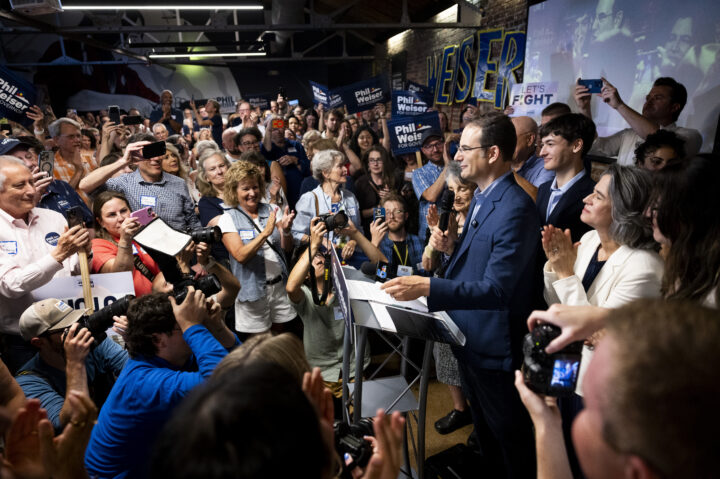
Photo by Michael Ciaglo/Getty Images
Colorado gubernatorial candidate, state Attorney General Phil Weiser speaks at an election-night watch party after winning the Democratic primary, at Ace Eat Serve on June 30, 2026 in Denver, Colorado.
Colorado Attorney General Phil Weiser, the Democratic nominee for governor, criticized his party’s socialist congressional nominee Melat Kiros for her refusal to describe the deadly firebombing of a Boulder, Colo., hostage awareness march last year as an act of antisemitism.
Kiros, speaking last week to 9News, a local channel, declined to call the attack antisemitic, because “I don’t know what was in the heart of the perpetrator. … I don’t know what his intentions were.”
Melat Kiros, a DSA-backed congressional candidate in Colorado, declined to call the Boulder firebombing attack antisemitic in an interview with the local channel 9News.
— Jewish Insider (@jewishinsider) June 26, 2026
"I don't know what was in the heart of the perpetrator," Kiros said.
Read more: https://t.co/rtQDjet1sl pic.twitter.com/jcK9qsMhH5
Weiser, who is Jewish, said in an interview with the same channel that he was concerned by Kiros’ comments, noting that he was personally friendly with Karen Diamond, the Holocaust survivor killed in the attack, and her husband.
“What happened on June 1 in Boulder was an antisemitic attack,” Weiser said. “We cannot look at that murder and say anything else happened than a hate crime, and so if someone isn’t going to acknowledge that I’m concerned about that, because this was tried, this was how we have a conviction” for a hate crime.
He said that he hasn’t spoken to Kiros yet, but when he does, he would raise his concerns about her comments.
“You hear it a lot in the context of Black Lives Matter — now we’re talking Jewish lives matter,” Weiser said. “Black Lives Matter, period. Black Lives Matter — Elijah McClain’s life mattered. Period. You don’t put a comma. Jewish lives matter. Karen Diamond’s life mattered. You don’t put a comma, an ‘and’ or a ‘but.’ Period.”
In a CNN interview on Wednesday, Kiros described the attack as “a horrific attack on a group of Jewish people that were engaging in peaceful protest” which “made many Jewish people … feel incredibly unsafe” but she again declined to directly call the attack antisemitic.
“The fact of the matter is, is that this conflation between the actions of the state of Israel and Judaism and the Jewish people is making Jewish people less safe. It is leading to a rise in antisemitism that’s taking place all across our country,” Kiros said. “My commitment is to protecting the sanctity and dignity of life for everyone. That means standing strong, side-by-side to our Jewish brothers and sisters and neighbors, to make sure that they are protected against this rising hate and this rising antisemitism.”
Pressed again on why she didn’t call the attack antisemitic, Kiros insinuated that Israel’s military actions in Gaza were to blame for the attack.
“What we’re talking about here is attacks that are taking place on the Jewish community as a result of the actions that are taking place in Palestine, the genocide that is taking place in Palestine, actively making Jewish people less safe in our city and across our country,” she said.
She repeated that “our commitment has to be to combating that hate, combating the conflation between the actions of the state and the Jewish people and standing against this antisemitism.”
Kiros’ campaign did not immediately respond to requests for comment.
The president backed Texas Attorney General Ken Paxton’s primary challenge to Sen. John Cornyn, despite the AG’s ethical and legal baggage
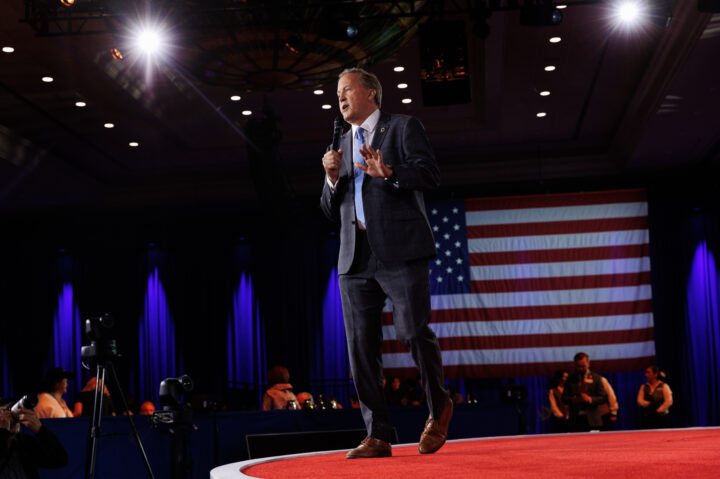
Shelby Tauber/Bloomberg via Getty Images
Ken Paxton, Texas attorney general and Republican US Senate candidate, speaks at the Conservative Political Action Conference (CPAC) in Grapevine, Texas, on Friday, March 27, 2026.
President Donald Trump endorsed Texas Attorney General Ken Paxton’s primary challenge against Sen. John Cornyn (R-TX) on Tuesday, dealing a significant blow to Cornyn’s bid for a fifth term.
Trump announced the Paxton endorsement in a post on Truth Social a week before the runoff election, writing that while Cornyn “is a good man,” the senator was insufficiently “supportive of me when times were tough.” He pointed to Cornyn’s late backing of his presidential bids and his aversion to terminating the filibuster in the Senate in order to pass the president’s Save America Act.
The president argued that Paxton, on the other hand, “is a true MAGA warrior who has ALWAYS delivered” for Texans, calling him “someone who has always been extremely loyal to me and our AMAZING MAGA MOVEMENT.”
The endorsement makes Paxton the odds-on favorite to win the Republican nomination, given Trump’s track record of success with his endorsed candidates in primaries. Cornyn narrowly finished ahead of Paxton in the first round of balloting in March with 42% of the vote, while Paxton received 41%.
If Paxton wins the May 26 runoff, Democrats plan to invest millions behind their nominee, state Rep. James Talarico, who is trying to become the first Democrat to win a Senate seat in Texas since 1988. General election polling indicates that a matchup between Talarico and Paxton — who carries significant legal and ethical baggage — would be highly competitive.
Sen. Lindsey Graham (R-SC) told reporters Tuesday that he thought the race would be three times more expensive with Paxton as the nominee. “You don’t have to be a rocket scientist to figure out the pathway for Paxton is there, but it’s more uphill.” Graham said.
Paxton thanked the president for his endorsement on X, saying “he look[s] forward to championing his American First agenda in the Senate.” In March, Paxton said that he would consider withdrawing from the race if Senate GOP leadership, who were lobbying the president to endorse Cornyn, agreed to get rid of the filibuster to pass the Save America Act, Trump’s election security bill. GOP leadership did not seriously consider Paxton’s offer, two sources familiar with the matter told JI.
Cornyn, in a statement, said that he has “worked closely with President Trump through both of his presidential terms and voted with him more than 99% of the time,” claiming Trump has “consistently called me a friend in this race.”
“It is now time for Texas Republican voters to decide if they want a strong nominee to help our GOP candidates down ballot and defeat [Democratic state. Rep James] Talarico in November, or a weak nominee who jeopardizes everything we care about,” Cornyn continued.
Cornyn, who was first elected in 2002, warned in an interview with Jewish Insider in February that the GOP is at risk of being overrun by extremists if prominent conservatives continue to align themselves with fringe figures who espouse antisemitic views, and attacked Paxton for appearing on Steve Bannon’s podcast.
“To maintain the integrity of conservatives, that’s why it’s so important to call out and to cut out some of these cancers that I think ultimately would result in the failure of the conservative movement,” Cornyn said.
“I know Ken Paxton regularly goes on Bannon’s ‘War Room’ podcast, and it’s something that should be alarming to Texas voters. People like that I don’t think are what I would call conservatives.”
Jewish Democrats described a ‘shell-shocked’ atmosphere at their statewide convention that saw marked hostility to pro-Israel voices
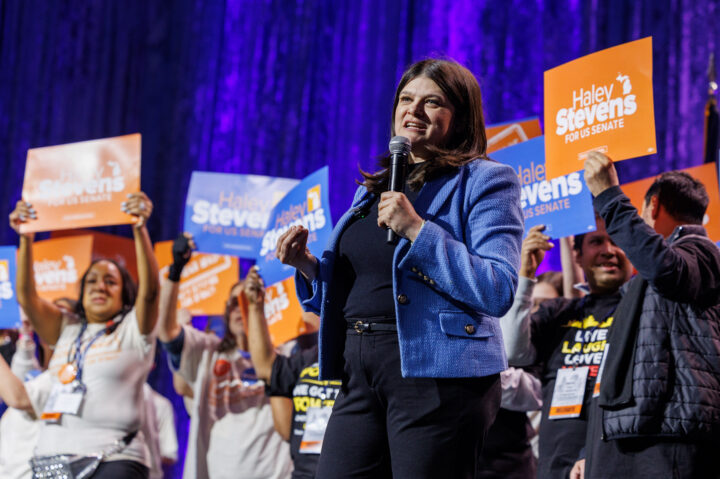
Andrew Roth/Sipa USA via AP Images
U.S. Rep. Haley Stevens speaks at the Michigan Democratic Party Endorsement Convention in Detroit, Mich., on April 19, 2026.
When thousands of Michigan’s most ardent Democratic activists gathered in Detroit on Sunday for the party’s nominating convention, Decky Alexander was thrilled: 200 people were in the room for a Jewish Democratic Caucus meeting, more than double the 70 people who showed up last year in its first official gathering.
Candidates for statewide office, from the U.S. Senate to attorney general, came by to pitch voters as activists schmoozed over bagels.
“It was incredibly energizing and affirming. That’s how the day began,” Alexander, who chairs the caucus, told Jewish Insider in an interview on Tuesday. “It didn’t end that way.”
As the day went on, Jewish Democrats were alarmed to see pro-Israel voices within the party marginalized and shouted down.
“Our Jewish caucus brought a lot of people to the convention, and I was with many of those people who were first-time conventiongoers. They were — I would use the term shell-shocked,” said Joan Lowenstein, a lawyer and former Ann Arbor city councilmember.
Rep. Haley Stevens (D-MI), a moderate and pro-Israel candidate for Senate, faced loud, sustained boos when she spoke in front of the main convention room. One person spotted an attendee on Sunday wearing a shirt that said “Resistance until liberation,” with an image showing someone wearing a keffiyeh throwing rocks.
The main reason that activists gathered that day was to vote to nominate candidates for a range of positions, including attorney general and secretary of state, distinct from other states where voters directly elect their party’s primary nominees.
The outcome of one relatively low-level race generated the most headlines: delegates’ decision to nominate Amir Makled, a Dearborn attorney with a history of social media posts praising Hezbollah, for a position on the University of Michigan Board of Regents. He unseated incumbent Jordan Acker, who is Jewish and was in part targeted due to his calls to discipline anti-Israel student protesters during the 2024 encampment at the Ann Arbor campus.
Acker told The Detroit News afterward that the level of antisemitism among Michigan Democrats is “extensive.”
“The question we have to ask as Jews is whether we still belong here,” said Acker, a Democrat.
The Democratic Party congratulated Makled in social media posts. What remains unclear is just how far party leaders will go to support Makled as he proceeds to the general election. Curtis Hertel, the chair of the Michigan Democratic Party, did not respond to a request for comment.
But Makled’s nomination is cause for concern among many Jewish Democrats.
“I certainly cannot vote for somebody who praises Hezbollah and uplifts posts that use ‘Jew’ as a slur. This was an unacceptable nomination, and I simply cannot affiliate with somebody who harbors those views,” Jeremy Moss, a state senator who is running for Congress in the Detroit suburbs, told JI on Tuesday.
Rep. Kristen McDonald Rivet (D-MI), a moderate Democrat representing a swing district, who is not Jewish, on Tuesday described the scenes from the convention as “deeply troubling,” and in particular criticized the party’s nomination of Makled.
For Jewish Democrats who are not willing to disavow Israel, the question of what to do in a race like the Board of Regents is uncertain. Lowenstein, the Ann Arbor activist, said she would “never” support Makled, but that she also would not vote for a Republican.
“I think Jewish voters are now in a position where we have to look at each person, and not look at their party, but look at what they stand for,” she said.
“I need to create the table, not just always be invited to the table. I just don’t know what that looks like,” said Decky Alexander, the Jewish caucus chair. “It’s a heartbreak. I felt, in moments, is this going to be a breakup? I don’t think so, but we’ve been feeling this way, a lot of us, for a long time.”
The Jewish voters who attended the convention on Sunday are among the most committed Democrats in the state, which makes it more notable that some were left questioning their place in the party.
“They think that there’s shrinking room for them in spaces that claim to be inclusive,” said Elyssa Schmier, the Anti-Defamation League’s Michigan director. “That’s kind of the saying of the Democratic Party: ‘We have a big tent, big-tent politics.’ It did not feel that way at the convention.”
Even the activists most disillusioned by Sunday’s events acknowledge that the convention attendees are not necessarily representative of the state’s Democratic electorate. All it took to attend the convention was registering as a party member a month beforehand and paying a nominal fee.
“I don’t know that it was an accurate representation of where the broader Democratic electorate would be, say, in a primary,” said Moss. “But there’s no question, there was incivility at best [and] displays of Jewish antagonism at worst in the convention hall.”
Jewish activists hope this moment of upheaval can be a chance for Jewish Democrats to reassert their place in the party, even if things feel tenuous and difficult at present.
“I need to create the table, not just always be invited to the table. I just don’t know what that looks like,” said Alexander, the Jewish caucus chair. “It’s a heartbreak. I felt, in moments, is this going to be a breakup? I don’t think so, but we’ve been feeling this way, a lot of us, for a long time.”
Between now and the general election, Alexander wants to talk to as many candidates as possible about whether they plan to take the concerns of Jewish voters seriously.
“I haven’t changed. I am not a Republican or a conservative. I cannot win my district as an independent. But I also wonder how I can continue to carry this party banner with anything approaching pride, or rather, without anxiety and ambivalence,” state Rep. Noah Arbit, a Democrat who represents West Bloomfield, told JI.
“This isn’t identity politics. This is figuring out, in a pluralistic nation like the United States, does everyone have a place? And we want the people who are running for office to answer: Do the Jews have a place in your vision and your platform?” she said.
Moss said he intends to use his platform as a state lawmaker and congressional candidate to answer that question clearly: Jews do have a place in the Democratic Party.
“My solution is to offer my candidacy for everybody and to ensure that folks know that there is a lane for Jewish Democrats in this moment, that we don’t have to feel hopeless, we don’t have to feel politically homeless, that this is a lane that we have to solidify here,” said Moss. “My core values as a Democrat are really Jewish values.”
For state Rep. Noah Arbit, a Democrat who represents West Bloomfield, the site of an antisemitic attack last month, Sunday’s convention adds to angst he has been feeling about his party for years. He was the one who founded the Jewish caucus in 2019, in response to rising antisemitism on the political left.
“I haven’t changed. I am not a Republican or a conservative. I cannot win my district as an independent. But I also wonder how I can continue to carry this party banner with anything approaching pride, or rather, without anxiety and ambivalence,” he told JI. Yet he said he will not cave to pressure from the party’s far-left flank.
“I certainly won’t be run out of representing my community by a band of extremists,” said Arbit. “So I need to stay.”
The Texas senator, facing a competitive primary, praised Sen. Ted Cruz for taking the lead in speaking out against anti-Jewish hate
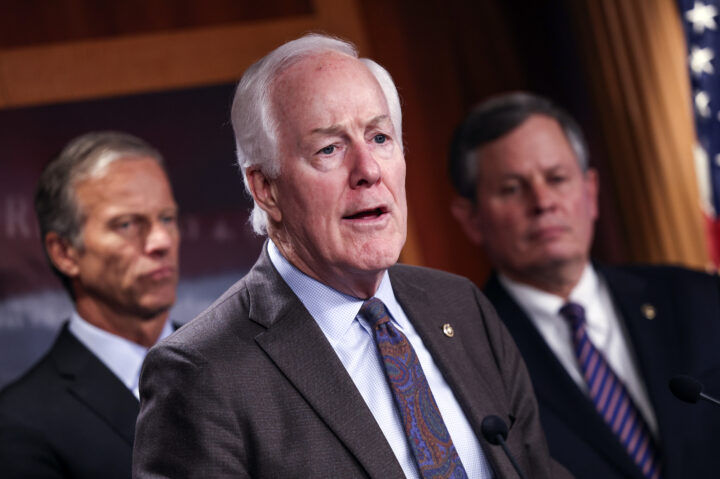
Kevin Dietsch/Getty Images
Sen. John Cornyn (R-TX), joined by Sen. John Thune (R-SD) (L) and Sen. Steve Daines (R-ID) speaks about the Senate Democrats at the U.S. Capitol on September 29, 2021 in Washington, D.C.
Facing a heated primary against Texas Attorney General Ken Paxton, Sen. John Cornyn (R-TX) accused his right-wing challenger on Thursday of associating with antisemitic and anti-Israel voices within the MAGA movement.
Cornyn told Jewish Insider in a wide-ranging interview that Texas Republican voters should view Paxton’s associations with figures such as former Trump advisor Steve Bannon as “alarming” — while urging Republicans to call out antisemitic and anti-Israel voices within the party, along the lines of his outspoken Texas GOP colleague Sen. Ted Cruz (R-TX).
“There’s this interesting, and troubling, tendency of some folks who claim the MAGA mantle to associate with antisemites like Nick Fuentes, Candace Owens and Steve Bannon. I know Ken Paxton regularly goes on Bannon’s ‘War Room’ podcast, and it’s something that should be alarming to Texas voters. People like that I don’t think are what I would call conservatives,” Cornyn said.
“Once they “get their foot in the door, they have a way of corrupting the whole party and the whole movement,” he continued. “I just think allowing somebody like Ken Paxton inside the tent will end up being the destruction of the Republican Party.”
Paxton has been a guest on Bannon’s “War Room” podcast on numerous occasions in recent years, even as Bannon has made a number of controversial comments, most notably labeling popular Jewish conservative podcast host Ben Shapiro as a “cancer” on the party after he spoke out against Tucker Carlson and Owens’ antisemitism at a Turning Point USA conference last year.
Bannon has also ramped up attacks on Israel, calling the Jewish state a “protectorate” of the United States — while speaking out against President Donald Trump’s decision last year to attack Iran’s nuclear facilities.
A spokesperson for Paxton defended the Texas attorney general’s record on Israel and fighting antisemitism in a statement to JI.
“AG Paxton has been a fierce friend of Israel,” the spokesperson said. “After spending $70 million and still being double digits behind in the polls, Sen. Cornyn has nothing else left but to throw random attacks at the wall and see if they stick. AG Paxton has a STRONG and unquestionable record standing against antisemitism.”
Cornyn is facing a tough reelection battle against Paxton and Rep. Wesley Hunt (R-TX), both of whom are running to his right in next month’s Republican primary.
The senator, a fixture in Texas politics for nearly four decades who served at the top levels of Senate leadership, argued that his primary contest would help determine what it means to be an electable Republican at a time when the party’s principles and values are being debated internally.
“A lot of it [the GOP primary election] is going to boil down to a question of character. I think character still matters and the attorney general doesn’t believe it matters at all,” Cornyn said. “I just can’t in good conscience turn over this job representing 32 million people and a state that I love and a party that I helped build over my career, I can’t turn it over to a corrupt and unprincipled individual like the attorney general.”
Cornyn warned that the GOP is at risk of being overrun by extremists if prominent conservatives continue to align themselves with fringe figures who espouse antisemitic views, drawing a comparison to his assessment of the current ideological trajectory of the Democratic Party.
“It starts out with the old saying: the enemy of my enemy is my friend. A lot of these folks were opposed to a lot of the worst excesses of the Democratic Party and the leftists. They began to corrode that movement with things like antisemitism and graft and greed. I think that’s how credibility of the opposition was eroded, by failing to call out people like that,” Cornyn said.
“To maintain the integrity of conservatives, that’s why it’s so important to call out and to cut out some of these cancers that I think ultimately would result in the failure of the conservative movement,” he continued. “Because people could point to the corruption that was allowed to develop and thus undermine the credibility and integrity of the whole movement.”
Cornyn praised Cruz for “being one of the first to stand up and call out some of the fringe characters,” and criticized Republicans who associate themselves with far-right figures.
“I’ve tried to do my part, initially through an editorial in the Dallas Morning News. I know this is a cancer, because antisemitism is just another way of dehumanizing people, and then using that behavior to justify in some people’s minds acts of violence,” the GOP senator said. “Obviously, the history of the Jewish people, dating back to the Holocaust, has been one of opponents trying to dehumanize them and make them seem to be something less than equal in terms of their dignity and their right to exist.”
Asked whether Trump would back him before the March primary, Cornyn told JI that he did not expect an endorsement, adding that he was dealing with “a lot of misinformation and lies.”
“I’ve been supportive of the president and his policies. Unfortunately, you always have to contend with a lot of misinformation and lies in modern elections,” Cornyn explained. “He [Trump] said he considers all three of us [GOP candidates] to be friends. If your base is divided among three people, choosing one out of those three people and disappointing the supporters of the other two, I can understand [that being] not something he would want to necessarily embrace unless he felt like it’s worth the cost.”
Cornyn argued that he would be the strongest general election candidate between himself, Paxton and Hunt, whereas Paxton would “ultimately provide the Democrats the best opportunity they’ve had since 1994 to turn Texas blue.”
“President Trump desperately wants to maintain the majority in the House, and we’ve got five new congressional seats in Texas,” he said. “If I’m the nominee, I will provide some help to those downballot races since I’ll be at the top of the ballot. I won by 10 [points] in 2020. If Paxton is the nominee, he’ll either lose or win by the skin of his teeth.”
Asked about Texas state Rep. James Talarico and Rep. Jasmine Crockett (D-TX), the Democrats in the race, Cornyn suggested he would enjoy running against either in a general election.
“They should be running for Senate in California because they are totally out of step with where I think Texans are,” he said.
Cornyn added that he would not underestimate Crockett.
“I wouldn’t count out Jasmine. Jasmine is smart, but I think she’s not running as good a campaign as Talarico,” Cornyn said. “Talarico is raising a lot of money, and he definitely has a better organization than Jasmine does.”
Please log in if you already have a subscription, or subscribe to access the latest updates.
 Continue with Google
 Continue with Apple