





















































In recent months, public sentiment in Israel has shifted noticeably. With most of Hamas’ senior military leadership eliminated, growing numbers of Israelis have begun to question the feasibility of Netanyahu’s goal of 'total victory' over Hamas

Amir Levy/Getty Images
Israeli soldiers organize military equipment while standing on armored personnel carriers near the border with the Gaza Strip on August 6, 2025 in Southern Israel, Israel.


 Add JewishInsider on Google
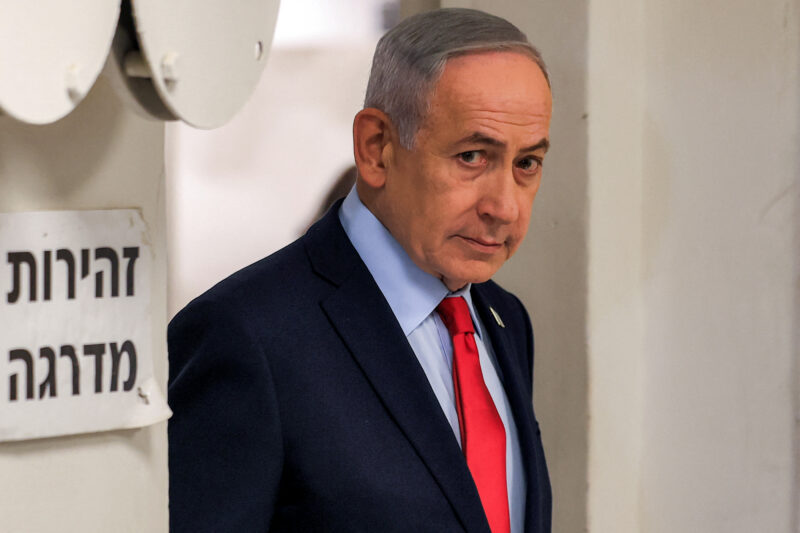
Israeli Prime Minister Benjamin Netanyahu’s announcement on Thursday that Israel plans to take control of additional parts of the Gaza Strip before handing it over to an unspecified Arab governing authority is being met with hesitation from even some of Israel’s most stalwart defenders. The Security Cabinet voted early this morning to take control of Gaza City, stopping short of the full occupation previously discussed.
Throughout much of Israel’s war against Hamas in Gaza, the Israeli public broadly supported the military effort, even as progressive lawmakers such as Sens. Bernie Sanders (I-VT) and Elizabeth Warren (D-MA) painted the war as “Netanyahu’s war,” and the Israeli prime minister as the bogeyman-in-chief.
But in recent months, public sentiment in Israel has shifted noticeably. With most of Hamas’ senior military leadership eliminated, growing numbers of Israelis have begun to question the feasibility of Netanyahu’s goal of “total victory” over Hamas, given the terror group’s hold on the Gazan population and a lack of clarity on what’s left to accomplish militarily. Instead, polling shows that a large majority of Israelis prefer prioritizing a diplomatic resolution that secures the release of the remaining hostages, rather than expanding the military occupation of Gaza in hopes of complete surrender.
Netanyahu’s plan this week to occupy more of Gaza has begun to sap Israel’s political capital even among some of its closest allies on Capitol Hill, not to mention the isolation the Jewish state is facing from less-friendly European capitals. Even within the American Jewish community, as the war drags on into its 23rd month and with mounting IDF fatalities and no living hostages having been released since May, splits have emerged over the wisdom of Netanyahu’s double-down strategy.
Indeed, while the official Israeli position on its war against Hamas in Gaza has hardened, the approach in the Diaspora, both from Jewish groups and leaders and elected officials, has also shifted — in the opposite direction.
Meanwhile, the families of hostages, whose desperation has been deepened by recent videos and images of emaciated captives, have escalated their efforts, taking to the sea in a flotilla that sailed toward Gaza on Thursday in an effort to raise awareness about the plight of their loved ones.
Netanyahu, still mired in legal issues, finds himself in a bind of his own making amid mounting global pressure to end the war and let aid flow freely into Gaza — which contrasts sharply with right-wing members of his coalition who loudly call for the opposite, even as top IDF brass opposes a full Gaza takeover. Speaking from the Temple Mount/Al Aqsa Mosque in Jerusalem earlier this week, National Security Minister Itamar Ben-Gvir called on Israel to “conquer all of Gaza, declare sovereignty over the entire Strip, eliminate every Hamas member, and encourage voluntary emigration.”
On Capitol Hill, Israel’s traditional allies in the Democratic caucus — including some who have given Netanyahu leeway to press forward in Gaza in the past, even when it meant butting heads with the Biden administration — are beginning to shift.
Rep. Ritchie Torres (D-NY) told Jewish Insider’s Marc Rod that Israel is ultimately responsible for making its own decisions, but said he’d advise the Israeli government to seek an end to the war once the remaining 50 hostages are freed.
“The war fatigue and post-traumatic stress in Israeli civil society and in the Israeli military — as well as the humanitarian crisis in Gaza — have become unbearable,” Torres said. “Israel has degraded Hamas. And so once Israel has secured the release of the hostages, it should declare victory, end the war and focus on expanding the Abraham Accords to include relations with the likes of Saudi Arabia and Indonesia.” More reactions from Torres and other Democratic lawmakers here.
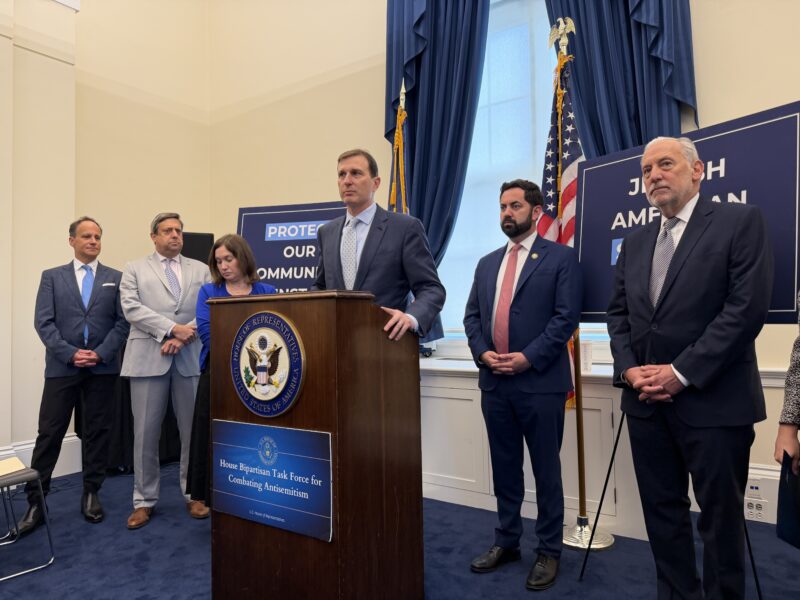
Rep. Dan Goldman (D-NY) said in a statement on Thursday that “Netanyahu’s personal and political interests are guiding Israel’s actions” and slammed the prime minister’s “ineffective military operation in Gaza,” which, he added, “has only led to more unnecessary deaths.”
Earlier this week, Rep. Valerie Foushee (D-NC) – who in 2022 was one of the first major recipients of support from AIPAC’s super PAC— announced she was signing onto legislation to ban offensive arms sales to Israel.
The New York Times’ Bret Stephens warned this week, “If Netanyahu makes the colossal mistake of trying to reoccupy Gaza for the long term, then no thoughtful person can be pro-Israel without also being against him.”
The new shift in tone — exacerbated by mounting concerns about humanitarian aid in Gaza and bolstered by Netanyahu’s recent efforts to prolong the war in Gaza — extends beyond Washington and the media elite to some of the leading Jewish communal organizations, figures and philanthropists, dozens of whom signed onto a letter to Netanyahu this week, condemning his government’s policies and rhetoric for causing “lasting damage” to Israel and Diaspora Jewry and calling for an end to the Israel-Hamas war. Read more in eJewishPhilanthropy here.
Mainstream groups and officials, such as the American Jewish Committee and U.K. Chief Rabbi Ephraim Mirvis, have in recent days expressed deep concern about the humanitarian crisis in Gaza and the prosecution of the war.
Israel finds itself, 22 months after Hamas’ attacks, at war at home and abroad. Hamas’ attack didn’t resolve the issues that had caused divisions in Israeli society in the months leading up to Oct. 7, 2023. The national cohesion following the horrific attacks has dissipated, and now segments of Israeli society are again at odds with each other, as Israel finds itself needing to win back invaluable political capital even as its leadership is taking it for granted.
Please log in if you already have a subscription, or subscribe to access the latest updates.
 Continue with Google
 Continue with Apple