























































Rep. Brad Schneider (D-IL): ‘It is disingenuous for El-Sayed to try to distance himself from Piker without specifically condemning, refuting, or even just rejecting Piker’s hateful rhetoric’
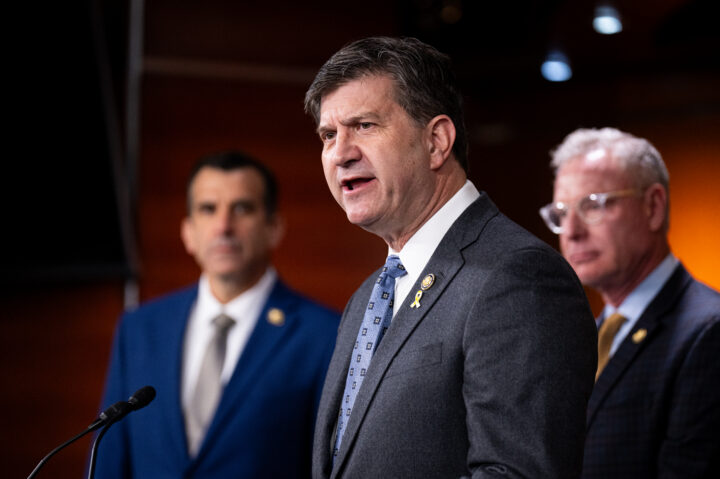
Bill Clark/CQ-Roll Call, Inc via Getty Images
Rep. Brad Schneider (D-IL) speaks during the New Democrat Coalition news conference on its policy platform for the 119th Congress in the Capitol on February 26, 2024.


 Add JewishInsider on Google
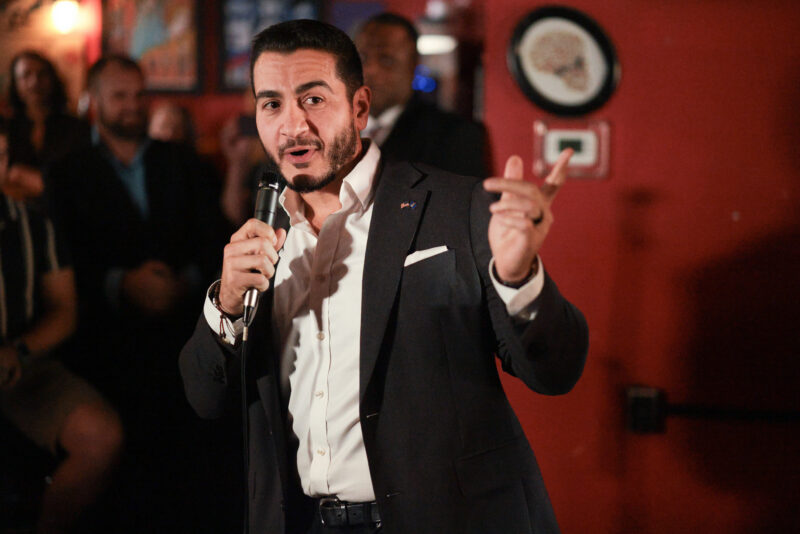
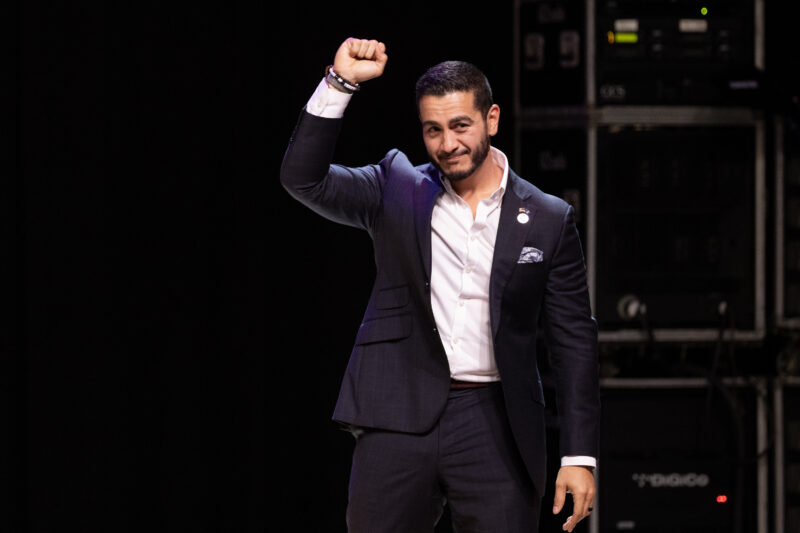
As more Democratic lawmakers join the chorus calling out influencer Hasan Piker over his comments that Jews’ support for Israel invites antisemitic violence, a growing number of moderate Democratic lawmakers said that Michigan Senate candidate Abdul El-Sayed’s efforts to distance himself from Piker, a campaign surrogate, haven’t gone far enough.
“Hasan Piker’s recent ‘victim-blaming’ comments inciting violence against American Jews reflect one of the oldest strategies long deployed by bigots and tyrants alike. His most recent diatribe is consistent with his history of antisemitic statements,” Rep. Brad Schnieder (D-IL), a co-chair of the Congressional Jewish Caucus and chair of the centrist New Democrat Coalition, said in a statement.
Schneider said that El-Sayed had “so-far refused to condemn the words of Hasan Piker, his friend and frequent campaign surrogate.”
“It is disingenuous for El-Sayed to try to distance himself from Piker without specifically condemning, refuting, or even just rejecting Piker’s hateful rhetoric,” Schneider continued. “Claiming that no one speaks for him except himself and his team is not enough. The Jewish community in Michigan deserves outright condemnation of rhetoric that threatens their safety and very identity.”
Rep. Josh Gottheimer (D-NJ) expressed similar sentiments.
“El-Sayed’s response was pathetic and it did not answer the call,” Gottheimer said on Fox News. “He did not condemn Piker. He didn’t even mention Piker. He didn’t condemn what Piker said. He didn’t say I will never campaign with this guy again. … Frankly, he should not only condemn him, but no Democratic members should allow Piker anywhere near them on the campaign trail, they should have nothing to do with this guy. And anybody who does and has not condemned him bears responsibility for some of these comments like that.”
Gottheimer also urged House Republican leadership to call up his resolution with Rep. Mike Lawler (R-NY) condemning both Piker and far-right antisemitic influencer Candace Owens for a vote when the House returns to session next week — a move to force progressive lawmakers who have allied and associated with Piker to take a clear stance on the record about Piker’s history of antisemitism.
El-Sayed did not respond to a request for comment.
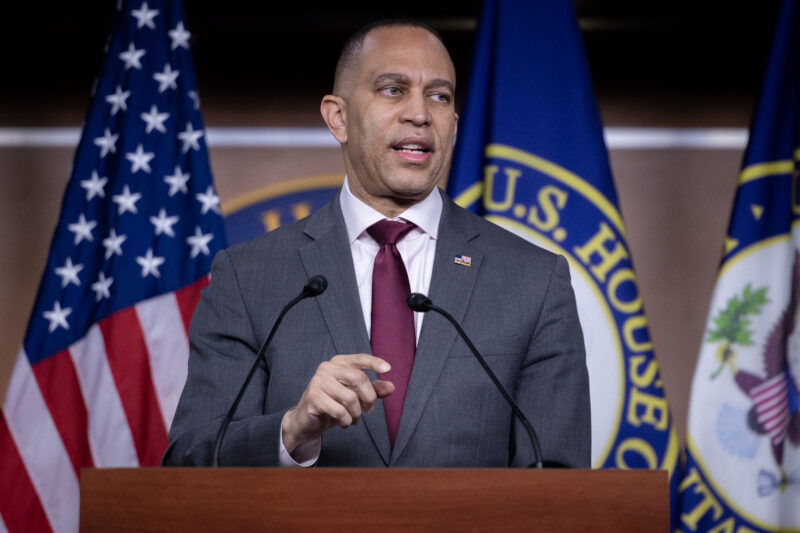
House Minority Leader Hakeem Jeffries (D-NY) also reiterated his previous condemnations of Piker’s comments in an appearance on CNN, confirming that he had been referring to Piker in a statement the day prior, which did not name the influencer specifically.
“Those comments were dangerous, malicious and antisemitic and should not be tolerated by anyone in the public square,” Jeffries said. “Everybody, regardless of ideological perspective, should be willing to denounce this rise of antisemitic rhetoric, hate crimes and bigotry, and actually try to move us to a society where we embrace everyone — even where there are differences on issues, be they foreign or domestic. The notion that people should be targeted because of their religious beliefs or ethnicity or race, whatever the case may be, that’s fundamentally inconsistent with who we are in this country.”
Piker dismissed the criticism from various Democrats as the result of an “aipac boss call.”
“they are unanimous in their hatred of me, and i welcome their hatred. if you’re a defender of israel’s genocide, of its occupation, of its child killing spree – then your boos mean nothing to me,” Piker wrote on X.
Other Democrats joined Jeffries in condemning Piker.
Sen. Jacky Rosen (D-NV), a co-chair of the bipartisan Senate antisemitism task force, called the comments a “new low,” even for someone who “has been trafficking in antisemitic tropes for a while.”
“Blaming Jewish Americans for the violence and hate they’re facing is not just wrong, it provides an excuse to those perpetuating these anti-Jewish hate crimes,” Rosen said. “Let me be absolutely clear: crimes against Jews for being Jews is antisemitism plain and simple. There’s no excuse for it.”
Rep. Elissa Slotkin (D-MI) said, “This shouldn’t be hard: no community should face the threat of violence for their political views.”
“In a time where political violence and anti-semitism has been spiking— and where just 6 months ago Michigan had a nearly deadly event of anti-semitic mass violence at Temple Israel — no one should causally be suggesting that anyone, Jews or otherwise, are to blame for being targeted,” Slotkin said.
Rep. Ritchie Torres (D-NY) emphasized the pattern of “the extremes of American politics” of blaming Jews for antisemitism.
“Let me put it plainly: there is absolutely no justification for antisemitism. There never has been, and there never will be,” Torres said. “No amount of victim-blaming or gaslighting by Hasan Piker can shift moral responsibility away from where it belongs: the antisemites who commit acts of violence and terror against Jews.”
Sen. Cory Booker (D-NJ) said that “Piker’s dangerous and hateful language targeting Jewish Americans has no place in our civic discourse. Suggesting that Jewish Americans bear responsibility for hatred or violence directed against them is wrong, dangerous, and antisemitic” and that his commentary goes well beyond debate over Israeli or American policy.
“No American should be told that their political beliefs make them responsible for hatred or violence directed against them,” Booker continued. “There is a bright line between vigorous debate and rhetoric that stokes hatred toward our neighbors. Mr. Piker has crossed that line, repeatedly and unmistakably.”
Rep. Greg Stanton (D-AZ), who chairs the campaign arm of the New Democrat Coalition, said, “Framing violence against Jewish Americans as something they brought on themselves shifts the blame from the perpetrators onto the very people they want to harm.”
Meanwhile, at least one progressive House Democrat is taking a different approach, calling out the growing number of Democrats who are condemning Piker.
“When the head of a major left-leaning DC think tank regularly gets in fights with the Dem base and progressive influencers on social media, almost in an irrational and uncontrollable way, does that ultimately hurt the think tank?” left-wing Rep. Mark Pocan (D-WI) said, an apparent reference to Center for American Progress CEO Neera Tanden, a vocal Piker critic on social media.
Plus, Israeli lasers beamed in UAE
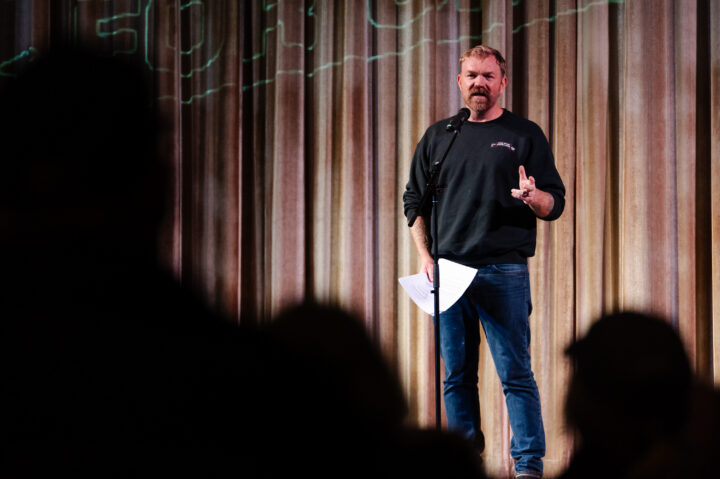
Sophie Park/Getty Images
Maine Senate Graham Platner speaks at a town hall at the Leavitt Theater on October 22, 2025 in Ogunquit, Maine.
Good Friday morning.
In today’s Daily Kickoff, we cover the British government’s announced policy changes in the wake of a wave of antisemitic violence in the U.K., and report on comments made by the Department of Justice’s Harmeet Dhillon at a Holocaust Remembrance Day event comparing post-Oct. 7 antisemitism in the U.S. to 1930s Germany. We cover the Jewish Democratic Council of America’s decision to hold off on endorsing hard-left Democrat Graham Platner following Gov. Janet Mills’ departure from the Maine Senate primary, and report on the allocation of $300 million for the Nonprofit Security Grant Program in yesterday’s Senate vote to fund the Department of Homeland Security. Also in today’s Daily Kickoff: William Daroff, Boaz Weinstein and Mike Solomonov.
Today’s Daily Kickoff was curated by JI Executive Editor Melissa Weiss and Israel Editor Tamara Zieve, with an assist from Danielle Cohen-Kanik. Have a tip? Email us here.
For less-distracted reading over the weekend, browse this week’s edition of The Weekly Print, a curated print-friendly PDF featuring a selection of recent Jewish Insider and eJewishPhilanthropy stories, including: Adeena Sussman’s new cookbook spotlights simple cooking for complicated times; Acting Labor Secretary Keith Sonderling guided by Holocaust survivor grandparents; and New think tank report urges centralized public diplomacy to combat Israel’s post-Oct. 7 isolation. Print the latest edition here.
What We’re Watching
- Today is the deadline for Iran to send a revised peace proposal to Pakistan following the U.S.’ rejection of Tehran’s earlier proposal that offered to reopen the Strait of Hormuz to all traffic but push off nuclear talks.The Wall Street Journal reported Thursday evening that the Islamic Republic is increasingly struggling amid the U.S.-imposed blockade that is cutting off Iran’s Islamic Revolutionary Guard Corps-linked shadow fleet from selling oil to China.
- The McCain Institute’s 2026 Sedona Forum kicks off today in Arizona. Speakers at the two-day confab include Sen. Mark Kelly (D-AZ), Ruben Gallego (D-AZ), Peter Welch (D-VT) and Sheldon Whitehouse (D-RI); Reps. Craig Goldman (R-TX), Don Bacon (R-NE), Jake Ellzey (R-TX), Jason Crow (D-CO), Mike Lawler (R-NY), Jim Himes (D-CT) and Stephanie Bice (R-OK); National Democratic Institute President Tamara Wittes, former CENTCOM head Gen. (ret.) Kenneth McKenzie, outgoing World Food Program executive director Cindy McCain, The Washington Post’s Jason Rezaian, Mo News’ Mosheh Oinounou, Polar Sun Ventures’ Ahron Cohen and David Axelrod.
- The Milken Institute Global Conference kicks off Sunday in Beverly Hills, Calif. Speakers at the annual gathering of business executives, philanthropists and politicians include Govs. Gretchen Whitmer of Michigan and Florida’s Ron DeSantis; Sens. Ted Cruz (R-TX) and Mark Warner (D-VA); NVIDIA CEO Jensen Huang, Meta President Dina Powell McCormick; university presidents from Dartmouth, Vanderbilt and the University of Southern California; former athletes Tom Brady and Shaquille O’Neal; and International Atomic Energy Agency Director-General Rafael Grossi. Jewish Insider‘s Gabby Deutch will be in L.A. covering the conference. Shoot her an email if you’ll be there, too.
What You Should Know
A QUICK WORD WITH JI’S TAMARA ZIEVE
Kenton — a suburb of northwest London that doesn’t ordinarily get international attention — has become one of the epicenters of the wave of antisemitic attacks sweeping England against Jewish individuals, synagogues and other institutions of Jewish life. It also happens to be where I grew up.
Last month, its synagogue was firebombed, causing some damage to the premises. Thankfully, no one was hurt. It is just one of the many incidents of antisemitic vandalism, harassment and violence across the U.K. that have made Jewish life all the more precarious in what was, previously, seen as a safe, close-knit Jewish community. The situation escalated further on Wednesday, when two Jewish men were stabbed in Golders Green, a suburb of London with a large Jewish population.
I moved to Israel as an adult, and have spent years covering the country as a journalist, most recently as Jewish Insider‘s Israel editor. In that time, the check-in calls have mostly gone one way, with friends from the U.K. touching base after terror attacks and through wars in Israel.
That dynamic has shifted in recent weeks. In a jarring role reversal, I have found myself checking up on Jewish British friends amid an alarming escalation of antisemitic attacks in London.
Some will say the writing was on the wall, but there is a difference between knowing something is possible and watching it become real.
“At the moment, people across the Jewish community are waking up and almost expecting to find there’s been yet another attack,” Justin Cohen, news editor and co-publisher of the U.K.’s Jewish News, told me. “And this has now been going on for several weeks.”
ECHOES OF HISTORY

In a speech at a federal government commemoration of the Holocaust on Thursday, Assistant Attorney General for Civil Rights Harmeet Dhillon argued that the post-Oct. 7 wave of antisemitism in the U.S. resembles 1930s Germany and warned that modern bigotry is often perpetrated by “educated elites” under the cover of intellectual language, Jewish Insider’s Gabby Deutch reports
What she said: Dhillon, drawing on a speech that the late Supreme Court Justice Antonin Scalia gave at a Holocaust remembrance event nearly three decades ago, said that Germany’s reputation as an intellectual and scientific hub in the 1920s and 1930s is closely connected to the development of the Holocaust. “The road to Auschwitz was incremental and methodical. It began with excluding Jews through the legal, political, economic and social life of everyday society,” Dhillon said. “Many perpetrators of the Holocaust were often the most educated intelligentsia in Germany.”
TIPPING POINT

U.K. Prime Minister Keir Starmer announced several new policies aimed at protecting British Jews, including a ramped-up security presence, a tightening of immigration laws and a crackdown on extremist charities, in a speech on Thursday following the stabbing of two Jewish men in a suburb of London, Jewish Insider’s Haley Cohen reports.
Starmer’s speech: Starmer denounced the rise in antisemitic attacks, naming several that have occurred in recent months, and fear that British Jews experience while conducting everyday life. He listed new government priorities including increasing visible police presence in Jewish communities; increasing investments in Jewish security services; introducing new legislation to prevent “hate preachers” from entering the country and speaking on college campuses; and working to speed up sentencing for perpetrators of antisemitic attacks.
Cracking down: London’s Metropolitan Police arrested two Green Party candidates who allegedly shared antisemitic social media posts. Screenshots reported by The Guardian indicate that Sabine Mairey shared a post suggesting that “[r]amming a synagogue isn’t antisemitism. It’s revenge,” while Saiqa Ali shared a post of a man wearing a Hamas headband with the slogan “Resistance is freedom.”
PR PROBLEM

The perennial complaint from supporters of Israel is that the Jewish state has “bad PR.” A new paper from the Institute for National Security Studies at Tel Aviv University seeks to analyze the challenges and find solutions for Israel’s government to better handle them, Jewish Insider’s Lahav Harkov reports.
Authors’ stance: In an interview with JI, the paper’s authors — Akiva Tor, a former Israeli ambassador to South Korea and head of the Israeli Foreign Ministry’s department for world Jewry and world religions, and Ofir Dayan, author of Intifada Globalized, about young Westerners’ turn away from Israel — characterized Israel’s image problem as a danger to its security. Dayan noted that “it’s become a real issue of national security when Israel faces sanctions and countries are not willing to sell weapons. It affects Israel’s ability to execute plans and achieve its goals, and has a direct influence on Israel’s capability to fight.”
DEM DEMUR

The Jewish Democratic Council of America is not ready to endorse Graham Platner, the controversial presumptive Democratic nominee in Maine’s Senate race following Gov. Janet Mills’ departure from the race, said Halie Soifer, the group’s CEO, Jewish Insider’s Matthew Kassel reports.
Soifer’s statement: “We won’t support a Democrat who doesn’t represent the views and values of the vast majority of American Jews,” Soifer said in a statement, made shortly after Mills announced she was suspending her campaign. “JDCA has endorsed more than 120 candidates across the country who are fighting for the issues Jewish Americans care about and standing against antisemitism. It’s those many Democrats who have our backs, and we’ll have theirs as they work to defeat Republicans aligned with this White House whose views are antithetical to our values.”
MEDIA MATTERS

New York City Mayor Zohran Mamdani drew criticism on Thursday from several prominent Jewish New Yorkers for releasing a social media video on rent regulation hearings that prominently featured a public employee sporting a keffiyeh, a checkered scarf associated with the Palestinian cause, Jewish Insider’s Will Bredderman reports. The video, which runs just over one minute long, promotes a new door-to-door outreach campaign to encourage participation in upcoming meetings of the Rent Guidelines Board.
Backlash: In it, one of staffers featured in the video, Mohamed Alharbi — deputy borough director of the newly established Mayor’s Office of Mass Engagement — wears a keffiyeh over his shoulders, visible for all but a few moments of the clip. “Shameful video. The anti-Zionist messaging isn’t subtle — it fuels a broader climate that emboldens antisemitism,” wrote Todd Richman, a veteran Democratic Party operative and co-founder of Democratic Majority for Israel.
NOT ENOUGH

House Democrats and Jewish groups welcomed the passage of $300 million for the Nonprofit Security Grant Program on Thursday, while warning that funding for the program remains insufficient to fully protect the Jewish community and places of worship amid a surge in antisemitism, Jewish Insider’s Matthew Shea reports.
State of play: The appropriation was passed through a bill funding most of the Department of Homeland Security, approved in the House on Thursday after receiving approval in the Senate. The move ends the monthslong shutdown of agencies including the Coast Guard, Transportation Security Administration and the Federal Emergency Management Agency, which operates NSGP. While lawmakers welcomed the fact that funding marks an increase from the $274.5 million provided in fiscal year 2025, they cautioned that the $300 million still falls short of the need within the Jewish community, given the threat level.
Voted down: The Senate rejected for the sixth time an effort from Democrats to force the Trump administration to halt the war in Iran — with the vote once again falling largely along party lines.
Worthy Reads
Mourning Miranda, in the Cloud: In The Wall Street Journal, Danielle Crittenden, whose daughter Miranda died in 2024, reflects on uphill efforts to retrieve Miranda’s digital data while facing regular reminders of her daughter on her own devices. “Our online profiles outlive our physical bodies. We can pack or give away possessions, but the tech gods preserve the digital lives forever of those we’ve lost. … Thirty years ago, the deceased left behind paper letters, files and boxes of photos. Now, the ‘clouds’ hold every scrap of our existence after we die, locked behind walls. Miranda was a talented writer. Were there unpublished essays? What about her photographs?” [WSJ]
The Road to Ruin: In The Washington Post, the American Enterprise Institute’s Danielle Pletka posits that radical Islamism will be the next ideology to join nationalism and socialism as failed movements in the Middle East. “Now another hinge point is here, and this one offers a liberalizing pathway that can respect Islam (and Judaism and Christianity) while delivering a better life to the hundreds of millions of people who live in the Middle East. Such a movement would repudiate the ideologies, from pan-Arab nationalism to socialism to radical Islamism, that overpromised and underdelivered and instead tread the path of slow opening that is now seen in Saudi Arabia, the United Arab Emirates, and even Syria and Lebanon.” [WashPost]
The Bondi Disconnect: eJewishPhilanthropy Managing Editor Judah Ari Gross reflects on the disparity between Australian Jewish communal concerns and law enforcement’s assessments of those concerns leading up to the December 2025 terror attack targeting a Hanukkah celebration at Sydney’s Bondi Beach, days after the release of a royal commission report on the deadly attack. “As violent antisemitism rises around the world — seen most apparently in this week’s stabbing attack in a heavily Jewish suburb of London and in last month’s attempted terror attack at Temple Israel outside Detroit — recognizing the difference between feelings of safety and actual safety becomes critical. … While it is easy to say with the benefit of hindsight, the Jews gathered at Bondi Beach did not need to ‘feel safe,’ they needed to be safe, and they weren’t.” [eJP]
Word on the Street
The Financial Times reports that during the Iran war earlier this year, Israel sent its Iron Beam laser-defense system to the United Arab Emirates to shoot down Iranian missiles in addition to a previously reported Iron Dome battery and operators…
The New York Times does a deep dive into recent attacks on Jewish individuals and sites across Europe, most of which bear the hallmarks of Iranian “hybrid warfare,” which the Times describes as involving “tactics, including cyberattacks, sabotage, assassination and disinformation campaigns, that are used covertly to destabilize countries, erode trust in institutions and undermine adversaries without provoking a major military response”…
Boaz Weinstein’s Saba Capital Management is poised to take over Edinburgh Worldwide Investment Trust, following a shareholder vote yesterday to replace the trust’s current board…
The Wall Street Journal looks at how the fallout from the release of emails between Jeffrey Epstein and Ariane de Rothschild is affecting the other branches of the Rothschild family and “threatens to deepen a divide among the descendants at a time when the two remaining banks bearing the family name are increasingly in competition”…
Yeshiva University announced that U.S. Ambassador to Israel Mike Huckabee will give the school’s commencement address later this month…
Rochester, N.Y., Rabbi Peter Stein served as yesterday’s guest chaplain in the House of Representatives…
Mike Solomonov’s Zahav is celebrating its 18th year — represented by the Hebrew letter chai, which means life — with a series of Shabbat dinners hosted at the Philadelphia restaurant this summer…
In The Wall Street Journal, Rabbi Avi Shafran observes the clash between Rabbi Warren Goldstein, chief rabbi of the Union of Orthodox Synagogues of South Africa, and Pope Leo XIV over the pontiff’s criticism of the war in Iran…
Authorities in Colombia are investigating the homicide of a Hasidic Jewish man from New York whose body was discovered in Bogota…
Amid tensions between Jerusalem and Kiev over allegations that Israel accepted Russian shipments of grain believed to have been taken from occupied areas of Ukraine, Israeli grain importer Zenziper rejected a Russian cargo ship slated to deliver a shipment at the port in Haifa; the Israeli Grain Importers Association said the Russian vessel “will be required to find an alternative destination for its discharge”…
FIFA President Gianni Infantino confirmed that Iran’s national team will play in this summer’s World Cup across North America, after a member of the team’s delegation to the FIFA congress was denied entry to Canada this week, an incident that Ottawa’s foreign affairs minister said was “unintentional”…
Toward the end of the congress’ gathering, Infantino attempted a photo with the heads of the Israeli and Palestinian delegations, but was denied when Palestinian Football Federation President Jibril Rajoub, who in 2019 faced a FIFA investigation over his alleged glorification of terror, refused to stand next to Israeli Football Association Vice President Basim Sheikh Suliman…
The New York Times reports on Hezbollah’s use of drones powered by fiber-optic cables that the Israeli army is struggling to combat; the UAVs, which are faster than normal drones and not controlled by radio signals susceptible to GPS jamming, have also been used in the Russia-Ukraine war…
The Jewish Theological Seminary named Rabbi Mike Uram as the school’s next chancellor; Uram, who is currently the chief Jewish learning officer at the Jewish Federations of North America, previously served as the executive director of University of Pennsylvania Hillel for 15 years…
Pic of the Day

Birthdays

Holocaust and genocide scholar, born in the Displaced Persons camp of Bergen-Belsen, Germany, Menachem Z. Rosensaft turns 78…
FRIDAY: Retired national director of the Anti-Defamation League, Abraham Henry Foxman turns 86… Professor at Yeshiva University and editor emeritus of Tradition, an Orthodox theological journal, Rabbi Shalom Carmy turns 77… Deborah Chin… Boston-area actor, David Alan Ross… Brigadier-general (res.) and former chief medical officer in the IDF, he was also a member of Knesset for 10 years, Aryeh Eldad turns 76… Of counsel at D.C.-based Sandler Reiff where he specializes in redistricting law, Jeffrey M. Wice… Member of the House of Representatives (D-CO) from 2007 to 2023, Edwin George “Ed” Perlmutter turns 73… Israeli entrepreneur and software engineer, founder and former CEO of Conduit, Israel’s first billion-dollar internet company, Ronen Shilo turns 68… Austrian-Israeli singer-songwriter, Timna Brauer turns 65… Real estate entrepreneur based in Southern California, Eli Tene turns 63… Member of the board of governors of the Jewish Federation of Greater Rochester, Rina F. Chessin… Member of the Computer Science and Artificial Intelligence Laboratory (CSAIL) at the Massachusetts Institute of Technology, David R. Karger turns 59… Israeli judoka, she is a member of the International Olympic Committee and the head of the merchandise division of Paramount Israel, Yael Arad turns 59… Majority leader of the Washington state Senate until 2025, he is a co-owner of minor league baseball’s Spokane Indians, Andrew Swire “Andy” Billig turns 58… Staff writer at The Atlantic, Jonathan Chait turns 54… Radio personality and voice-over artist, Gina Grad turns 48… Former professional tennis player with 23 USTA Pro Circuit singles titles, now a tennis coach, Michael Craig Russell turns 48… Attorney and co-founder of I Am a Voter, a nonpartisan civic engagement organization, Mandana Rivka Dayani turns 44… D.C.-based political reporter, Ben C. Jacobs turns 42… Pulitzer Prize-winning investigative producer at NBC News, Jonathan Gerberg… Former member of the Parliament of the Republic of Moldova, Marina Tauber turns 40… Team lead at GrowthSpace, Jenny Feuer… Principal at Forward Global, Omri Rahmil… Photographer known for incorporating Jewish culture into her work, she is the digital media editor at the Jewish Women’s Archive, Hannah Altman turns 31… Sam Zieve-Cohen turns 29…
SATURDAY: Former U.S. ambassador to Denmark, he financed the visitors center at the Touro Synagogue in Newport, R.I., John Langeloth Loeb turns 96… Former lord chief justice of England and Wales, Baron Harry Kenneth Woolf turns 93… Retired professor at NYU’s Center for Global Affairs, journalist, international negotiator and private consultant, Dr. Alon Ben-Meir turns 89… Author of 23 books and conservative political activist, Alan Merril Gottlieb turns 79… U.S. senator (D-VT) since 2023, Peter Welch turns 79… Former member of the Texas state Senate, she was born in NYC to Holocaust survivor parents, Florence Shapiro turns 78… Former USAID contractor imprisoned by Cuba from 2009 to 2014, Alan Phillip Gross turns 77… Co-founder and president of private equity firm NCH Capital, he funded the establishment of Chabad houses at universities throughout the world, George Rohr turns 72… Former under secretary of state for public diplomacy in the Obama administration, following a stint as managing editor of Time magazine, Richard Allen “Rick” Stengel turns 71… Member of the New York State Assembly since 2010, he was previously a member of the NYC Council and former Deputy Superintendent of the NYS Banking Commission, David Weprin turns 70… Former U.S. secretary of commerce in the Obama administration, she is on the board of Microsoft, Penny Sue Pritzker turns 67… Partner at Wachtell, Lipton, Rosen & Katz, she is active on many nonprofit boards including Penn Law School and the Jewish Federations of North America, Jodi J. Schwartz turns 66… Television writer and reality television personality known for his high IQ test scores, Richard G. Rosner turns 66… Admiral in the IDF (res.), he served as the commander of the Israeli Navy, Ram Rothberg turns 62…Chief rabbi of Slovakia, Rabbi Baruch Myers turns 62… Senior attorney in the Newark, N.J., office of Eckert Seamans, Laura E. “Lori” Fein… Founder and chairman of Shutterstock, Jonathan E. Oringer turns 52… Israeli writer known for his novels, essays and philosophical work, Yaniv Iczkovits turns 51… SVP of Drumfire Public Affairs following four years as deputy chief of staff to then-Maryland Gov. Larry Hogan, Stephen Schatz… Journalist and founder of MamaDen, a platform that connects and empowers mothers, Julianna Goldman turns 45… Podcast host and founder and president of ETS Advisory, Emily Tisch Sussman… Attorney in the office of the New York attorney general, Gabe Cahn… Chief development officer at Grinspoon Hillel at Cornell, Susanna K. Cohen… Running back for the NFL’s Carolina Panthers, A.J. Dillon turns 28…
SUNDAY: Southern California-area writer and activist promoting wellness, Deborah Shainman Szekely turns 104… Senior researcher at the International Institute for Counter-Terrorism at Reichman University, Ely Karmon, Ph.D. turns 85… Television journalist known for his work at ABC News and Al Jazeera English, David Marash turns 84… U.S. senator (R-ID), Jim Risch turns 83… Venture capitalist and economist, his original family name was Jacobstein, William H. Janeway turns 83… Francine Holtzman… U.S. senator (D-OR), his original family name was Weidenreich, Ron Wyden turns 77… Six-time Tony Award-winning Broadway producer, Stewart F. Lane turns 75… Retired attorney, he represented political parties, campaigns, candidates, governors and members of Congress on election law matters, Benjamin Langer Ginsberg turns 74… Retired chair and CEO of Mondelez International, a multinational food and beverage company, Irene Rosenfeld turns 73… Retired partner from the Chicago office of DLA Piper, now a consultant at Washburn Advisors, Mark D. Yura turns 73… Political reporter and former columnist for The Richmond Times-Dispatch, Jeff E. Schapiro… Retired senior advisor at the Center on Budget and Policy Priorities, Susan Steinmetz… EVP at NBCUniversal News Group, he is on the Board of Visitors at Duke Law School, Stephen Labaton turns 65… Former owner of the NBA’s Brooklyn Nets and Barclays Center, Mikhail Prokhorov turns 61… Lobbyist since 2010, he was previously deputy assistant secretary of state for legislative affairs in the Bush 43 administration, Scott A. Kamins… Veteran NHL player, he is now an assistant coach for the NHL’s Tampa Bay Lightning, Jeff Halpern turns 50… Israeli singer and actress, winner of multiple Israeli Female Singer of the Year awards, Miri Mesika turns 48… Reporter for Politico New Jersey and author of New Jersey’s Playbook, Matthew R. Friedman… Jewish Insider‘s director of audience development, Kevin Hechtkopf… Educated at the Hebrew Academy of San Francisco, he was a defensive lineman in the NFL, Igor Olshansky turns 44… Managing director and co-head of executive communications of SKDKnickerbocker, he was a speechwriter for President Obama, Stephen Andrew Krupin… President of Flaxman Strategies, Seth Flaxman… Israeli minister for social equality and women’s advancement, she is a member of the Knesset for the Likud party, May Golan turns 40… Benjamin S. Davis… NBA All-Star for the Sacramento Kings, he is studying to convert to Judaism, Domantas Sabonis turns 30… Director of the Judaism and State Policy Center at the Shalom Hartman Institute in Israel, Tani Frank… Foreign correspondent for NBC and a former Middle East correspondent for the Daily Telegraph, Raf Sanchez…
The group, organized by the ADL, urged lawmakers to increase NSGP funding and pass the Pray Safe Act and a new bill establishing buffer zones around houses of worship
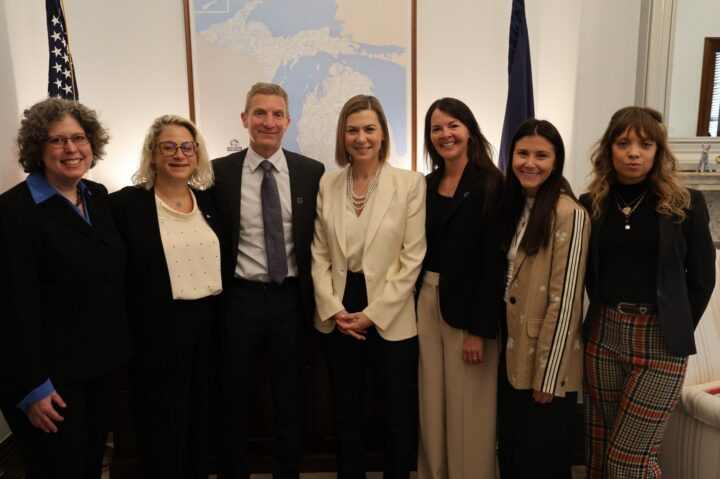
Sen. Elissa Slotkin/X
Sen. Elissa Slotkin (D-MI) meets with Jewish communal activists on April 22, 2026.
Jewish leaders from communities impacted by antisemitic violence in the past year met with House and Senate leaders on Capitol Hill on Wednesday to advocate for additional federal security assistance. The advocates represented Temple Israel in West Bloomfield, Mich., Beth Israel Congregation in Jackson, Miss., a hostage awareness march in Boulder, Colo. and, the Capital Jewish Museum in Washington.
“I will never forget the phone call. Or the images on the news of smoke rising from the place where I had just left my child,” Taylor Weintraub, a parent of a child who attended Temple Israel, told reporters on Wednesday morning. “Thank God, none of the children were physically hurt. But that wasn’t luck, that was preparation — reinforced doors, trained security, investments made because we knew this could happen. But here’s what keeps me up at night: we are the lucky ones.”
Among other priorities, the group, organized by the Anti-Defamation League, lobbied lawmakers for an increase to $1 billion in Nonprofit Security Grant Program funding in 2027, with Weintraub making the case that the program is “literally saving lives” — at Temple Israel, NSGP funding helped upgrade the synagogue’s cameras.
“Without these resources, more parents will get that phone call saying a terrorist is inside their child’s school,” Weintraub continued. “And no one should have to live through that.”
Cassi Cohen, the director of development at Temple Israel, said that, as a survivor of the attack, she is “living proof that these pieces of legislation work. … If I can be a voice to help ensure that other houses of worship have the ability to get the resources and the funding to prevent something as catastrophic as what we went through, then I’ll do this every day, because I don’t think there’s anything more important right now.”
Elyssa Schmier, a member of Temple Israel and the ADL’s regional director in Michigan, said that Jewish institutions across the state are undertaking reviews of their security and making upgrades — in some cases without the funding to pay for it.
Schmier’s son’s Jewish preschool is expanding its armed guard’s hours to full time — he previously worked part time because the school did not have enough money to pay for more — “and they’re not really sure how they’re paying for it. They’re just doing it.”
Smaller communities farther outside urban areas are especially vulnerable, she added.
Susan Rona, ADL’s Mountain States regional director, said that security has been critical to ensuring that the community feels able to continue gathering and participating in Jewish life.
“When we built the [Jewish Community Center] building, we benefited from the Nonprofit Security Grant Program as well, and it still is present,” Rona said. “We’re almost a year out, and there’s been real impacts to Boulder and our security needs are just getting higher to make sure that we can still create a space for the community to say, ‘Yes, I want to gather in this Jewish space.’”
The group met with the offices of House Speaker Mike Johnson (R-LA), House Majority Leader Steve Scalise (R-LA), House Majority Whip Tom Emmer (R-MN), Senate Minority Leader Chuck Schumer (D-NY), House Minority Leader Hakeem Jeffries (D-NY), House Democratic Whip Katherine Clark (D-MA), Sens. James Lankford (R-OK), Jacky Rosen (D-NV), Elissa Slotkin (D-MI), Michael Bennet (D-CO), Cindy Hyde-Smith (R-MS) and Gary Peters (D-MI) and Reps. Haley Stevens (D-MI), Hilary Scholten (D-MI), Joe Neguse (D-CO) and John James (R-MI).
In addition to NSGP funding, the group advocated for the Pray Safe Act and the SACRED Act, a new bill being led by Rep. Tom Suozzi (D-NY) to create a protected 100-foot buffer zone around houses of worship, similar to legislation being pursued in New York and California.
The Sunday evening gala honored the investor and philanthropist David Rubenstein and Esther Safran Foer, the former longtime CEO of Sixth & I Synagogue and the Capital Jewish Museum’s founding board president.

Gabby Deutch
CNN anchor Dana Bash says the HaMotzi blessing with investor and philanthropist David Rubenstein and Esther Safran Foer, the former longtime CEO of Sixth & I Synagogue and the Capital Jewish Museum’s founding board president
When several hundred people gathered on Sunday evening at the French Embassy in Washington for the Capital Jewish Museum’s second annual gala, they did so in service of a simple theme: “preserving history and building bridges.”
That message was particularly resonant as the evening’s honorees and organizers paid tribute to a tragic moment in recent history that will be part of the story of Washington’s Jewish community forever: the murder of Israeli Embassy staffers Sarah Milgrim and Yaron Lischinsky outside the museum in May.
“It was a horrific, brazen act of antisemitic violence, a wrenching reminder of the importance of what the museum does every day of its existence and the fact that it collects artifacts, but it is a living, breathing place for a viable Jewish community to go, and that’s what was happening that day,” CNN anchor Dana Bash, who emceed the gala, said at the start of the event, as she introduced a moment of silence for Milgrim and Lischinsky.
The Capital Jewish Museum opened in downtown Washington in 2023 with a commitment to teaching the history of the District’s local Jewish community, in the context of the city’s unique role as a nexus for civic-minded Americans. Speakers throughout the evening, including Washington Mayor Muriel Bowser and Maryland Gov. Wes Moore, touted the diversity and warmth of Washington while taking not-so-subtle jabs at President Donald Trump’s recent takeover of the city’s police force.
“You know that the real D.C. is 700,000 people that actually live here, go to work, raise their families and are tax-paying Americans,” Bowser said. “While we are diverse, we are also a connected city, and so we know in our honorees tonight that they have followed their faith [and] invested in their families, their city and their nation.”
The Sunday evening gala honored the investor and philanthropist David Rubenstein and Esther Safran Foer, the former longtime CEO of Sixth & I Synagogue and the Capital Jewish Museum’s founding board president. The two were asked, in conversation with Bash, where each traces their love of history.
For Rubenstein, the co-founder of the private equity giant Carlyle, who has supported major American institutions like the National Archives and the Kennedy Center, the answer was a sixth grade teacher who encouraged him to watch President John F. Kennedy’s inaugural address, sparking a lifelong love of American history. He used historical reference points — immigration quotes from 1915 and the doomed voyage of the MS St. Louis, a European ship with Jewish refugees on board that was turned away by the U.S. — to bemoan antisemitism as “at a level I’ve never seen before in my lifetime.”
Foer described a lifelong search for answers about her family’s story in Ukraine, which they fled after the Holocaust. She detailed that quest in her 2020 memoir, I Want You To Know We’re Still Here.
“Pulling together the family history and the context of the history of the times has been kind of a lifelong obsession for me,” said Foer, who was born in Poland in a displaced persons camp soon after World War II ended.
“My background is a Holocaust background, but when I wrote my book and I was working on the title, my working title was, ‘I Want You To Know We’re Still Here,’ and it ultimately became a title, because that’s our story. The Holocaust happened at a terrible time, a terrible place, but there’s a vibrant Jewish life here, in other countries. We need to celebrate that, and a museum is a way to celebrate that, to keep telling the stories.”
Please log in if you already have a subscription, or subscribe to access the latest updates.
 Continue with Google

 Continue with Apple