























































Plus, Graham's Munich message to Riyadh: 'Knock it off'
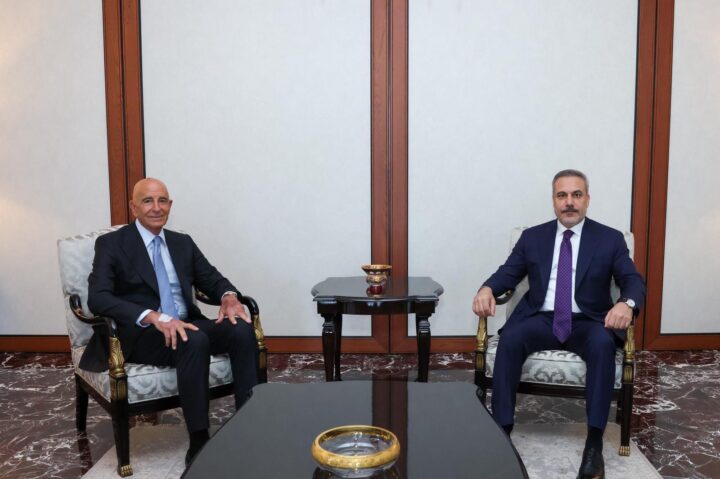
(Photo by Turkish Ministry of Foreign Affairs / Handout/Anadolu via Getty Images)
Turkish Foreign Minister Hakan Fidan (R) receives US Ambassador to Turkiye and Special Envoy for Syria Tom Barrack (L) in Ankara, Turkiye on November 14, 2025.


 Add JewishInsider on Google
👋 Good Tuesday morning!
In today’s Daily Kickoff, we cover the weekend’s Munich Security Conference, including Sen. Chris Murphy and Rep. Alexandria Ocasio-Cortez’s mainstage criticisms of Israel. We talk to lawmakers concerned about U.S. Ambassador to Turkey Tom Barrack as the diplomat expands his Middle East portfolio, and report on Illinois congressional candidate Daniel Biss’ defense of his decision, as mayor of Evanston, not to give police support to Northwestern as it sought to break up its anti-Israel encampment. Also in today’s Daily Kickoff: Sen. Lindsey Graham, LeBron James and Dasha Zhukova.
Today’s Daily Kickoff was curated by JI Executive Editor Melissa Weiss and Israel Editor Tamara Zieve, with assists from Danielle Cohen-Kanik and Marc Rod. Have a tip? Email us here.
What We’re Watching
- The second round of U.S.-Iran nuclear talks are taking place today in Geneva, with Omani Foreign Minister Badr Al-Busaidi, whose country hosted the first round of talks earlier this month, again mediating between the American team, led by White House Special Envoy Steve Witkoff and Jared Kushner, and the Iran team, led by Iranian Foreign Minister Abbas Araghchi. Witkoff and Kushner are also participating in Russia-Ukraine talks later today in Geneva.
- The latest round of talks comes a day after Araghchi met in Geneva with International Atomic Energy Agency head Rafael Grossi, and as Iran’s Islamic Revolutionary Guard Corps begins military exercises in the Strait of Hormuz.
- Representatives from members of the Trump administration’s Board of Peace are arriving in Washington this week ahead of a meeting of member states slated for Thursday. Israeli Foreign Minister Gideon Sa’ar will be representing Israel at the gathering. Over the weekend, Indonesia announced it would contribute thousands of troops to the international stabilization force in the Gaza Strip.
- The Conference of Presidents of Major American Jewish Organizations is holding its annual mission to Israel.
- Israel’s Olympic bobsled team, led by AJ Edelman, continues trials today, after coming in last place at Monday’s first round.
What You Should Know
A QUICK WORD WITH JI’S MARC ROD
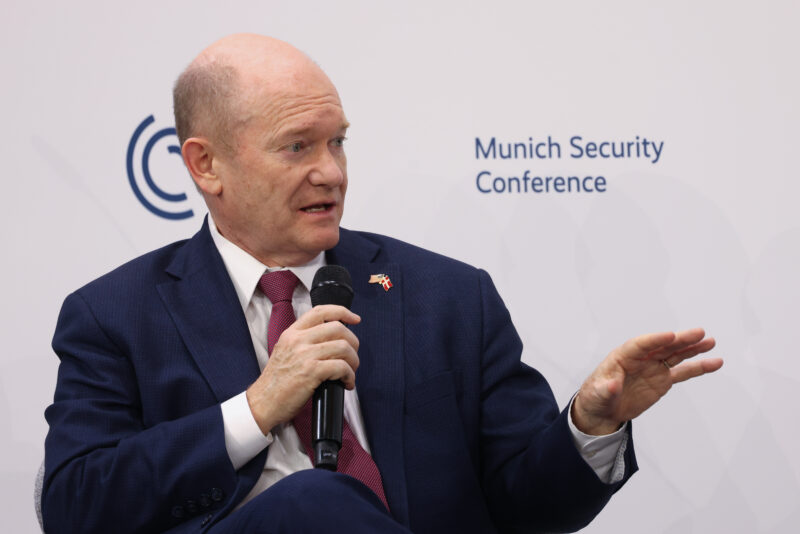
Taking the stage at the Munich Security Conference this weekend, two prominent progressive lawmakers rumored to be eyeing presidential runs in 2028, Rep. Alexandria Ocasio-Cortez (D-NY) and Sen. Chris Murphy (D-CT), used the opportunity to bash Israel.
Criticism of Israel isn’t new for either lawmaker, but taking place on one of the most prominent foreign policy stages in the world, their remarks are a sign of the anti-Israel current that continues to course through the Democratic Party, particularly on its left flank.
Ocasio-Cortez, calling for the U.S. to condition aid to Israel, repeated accusations that Israel committed genocide in Gaza.
“The United States has an obligation to uphold its own laws, particularly the Leahy laws,” Ocasio-Cortez said, referring to laws that require suspension of aid to military units engaged in war crimes. “And I think that personally, that the idea of completely unconditional aid, no matter what one does, does not make sense. I think it enabled a genocide in Gaza. And I think that we have thousands of women and children dead … that was completely avoidable.”
Adding insult to injury for some observers, Ocasio-Cortez leveled the accusations in Munich, the site of Adolf Hitler’s Beer Hall Putsch, which ultimately catalyzed his rise to power.
Ocasio-Cortez’s appearance at the conference was a foreign policy test for the congresswoman — one she ended up struggling to pass. Despite studying under the tutelage of Matt Duss, a former foreign policy advisor to Sen. Bernie Sanders (I-VT), she faced accusations that she remains unprepared to tackle global issues, accentuated by her stumbling response when asked whether the U.S. should come to the defense of Taiwan if it was attacked by China. (The New York Times headline: “Ocasio-Cortez Offers a Working Class Vision in Munich, with Some Stumbles”)
At the end of the weekend, Ocasio-Cortez griped that her gaffes and perceived presidential ambitions overshadowed the message she intended to deliver, denying that the trip had anything to do with a potential presidential run. Several congressional allies jumped in to back up Ocasio-Cortez.
Murphy, in a separate session, also continued the theme of Democrats’ Israel-bashing. He questioned the reality of the ceasefire in Gaza, emphasizing Israeli violations of the ceasefire agreement while not mentioning Hamas’ continued violations.
ENVOY ISSUES
Lawmakers alarmed by Barrack’s Turkey tilt in his Middle East diplomacy
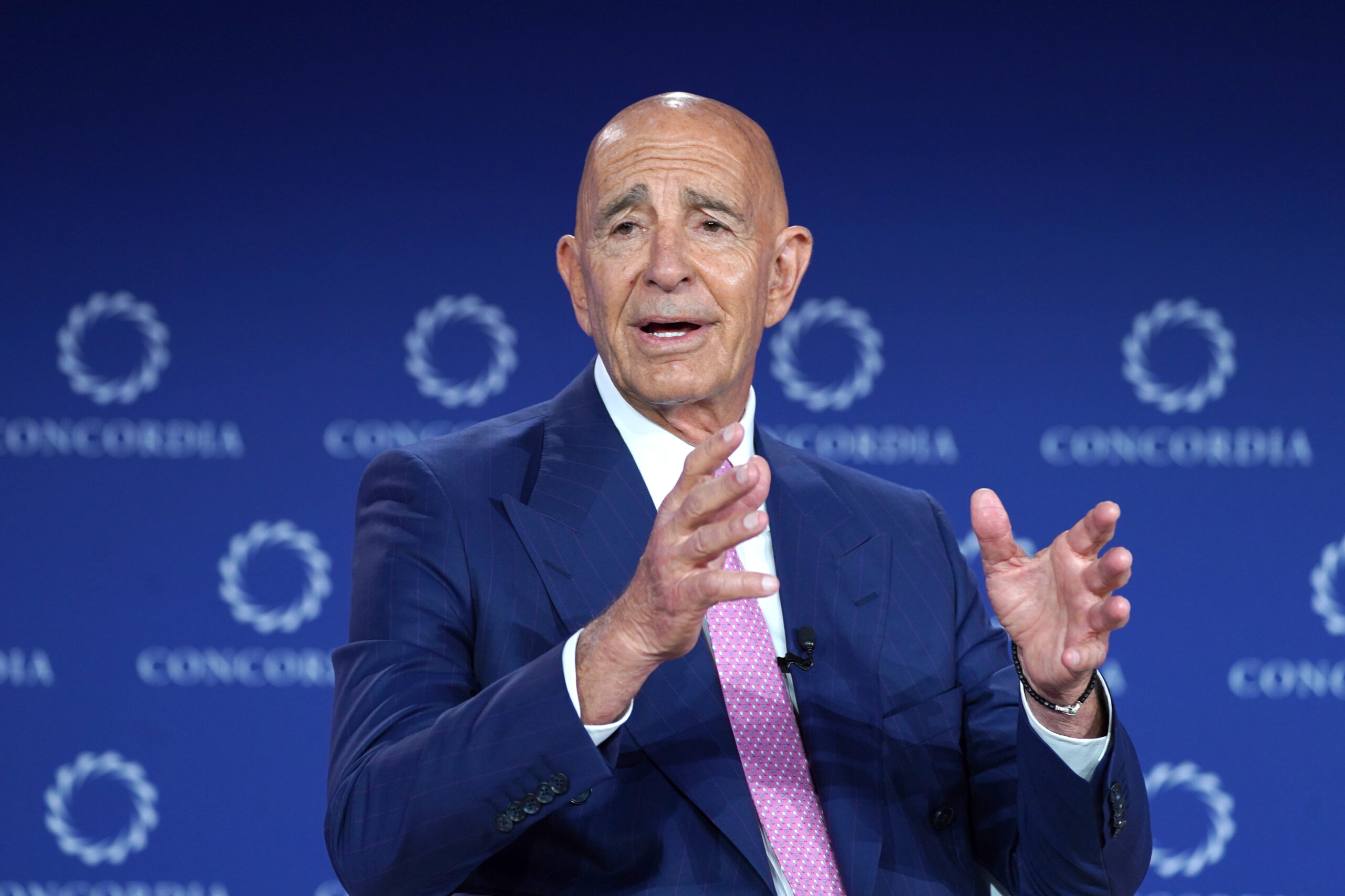
Simmering frustrations among lawmakers with U.S. Ambassador to Turkey Tom Barrack — who also serves as special envoy to Syria and manages a wide remit in America’s Middle East policy — have recently broken into public view, as multiple lawmakers tell Jewish Insider they have concerns about the U.S. envoy’s expansive role, JI’s Marc Rod reports.
What they’re saying: A Republican senator, granted anonymity to speak candidly, told JI last week that Barrack’s role in U.S. policy in the region makes them “nervous.” The senator added, “He’s running a Turkish line, and there are very legit[imate] concerns” about his role and influence. A senior Senate Democrat involved in foreign policy issues also said he had concerns about Barrack, suggesting the envoy was pursuing personal business interests through his post. “Barrack is clearly knowledgeable about the region, he’s clearly energetic and engaged. But that’s the only good I can say. I have real concerns about his motives and the consequences of his action,” the Democratic senator said.
TEHRAN’S TIMELINE
‘We’re on the verge of eliminating’ Iranian regime, Sen. Lindsey Graham says
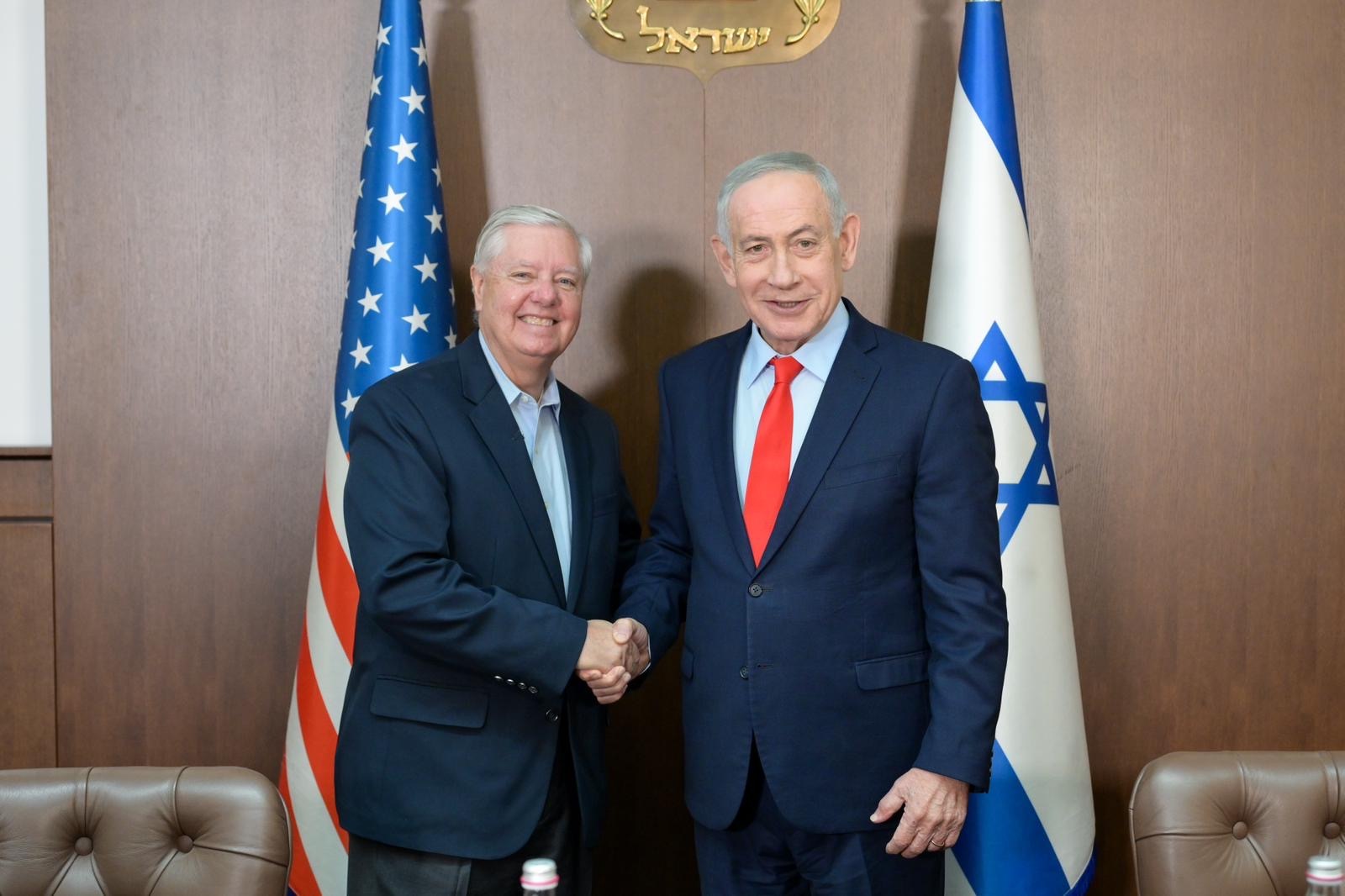
The Iranian regime may fall within weeks, Sen. Lindsey Graham (R-SC) said during a press conference in Tel Aviv on Monday, Jewish Insider’s Lahav Harkov reports. “We’re on the verge of eliminating the greatest state sponsor of terrorism in the region,” Graham said. “We’re in for weeks, not months.”
Senator says: “President Trump is very good at making sure people don’t play him by giving them deadlines. I think you may see that now with Iran,” he added. Graham, who has a good relationship with President Donald Trump, said that the president is pursuing diplomacy “to find a way to end this regime diplomatically that will advance our national security interests,” while leaving the military option open. “I think President Trump is looking to see which line will catch the biggest fish,” he added.
More from Graham: In remarks at the Munich Security Conference, Graham warned Saudi Arabia that the continued tensions with the United Arab Emirates risk benefiting Iran at a critical moment in the Middle East, Jewish Insider’s Matthew Shea reports. Referring to Saudi Crown Prince Mohammed bin Salman and Emirati President Sheikh Mohamed bin Zayed al-Nahyan by their nicknames, Graham said from the stage on Saturday, “As to MBS and MBZ — knock it off, Saudi Arabia, knock it off. I’m tired of this crap.”
CONSTITUTIONAL CONUNDRUM
Proposed interim Palestinian constitution would enshrine payments to terrorists
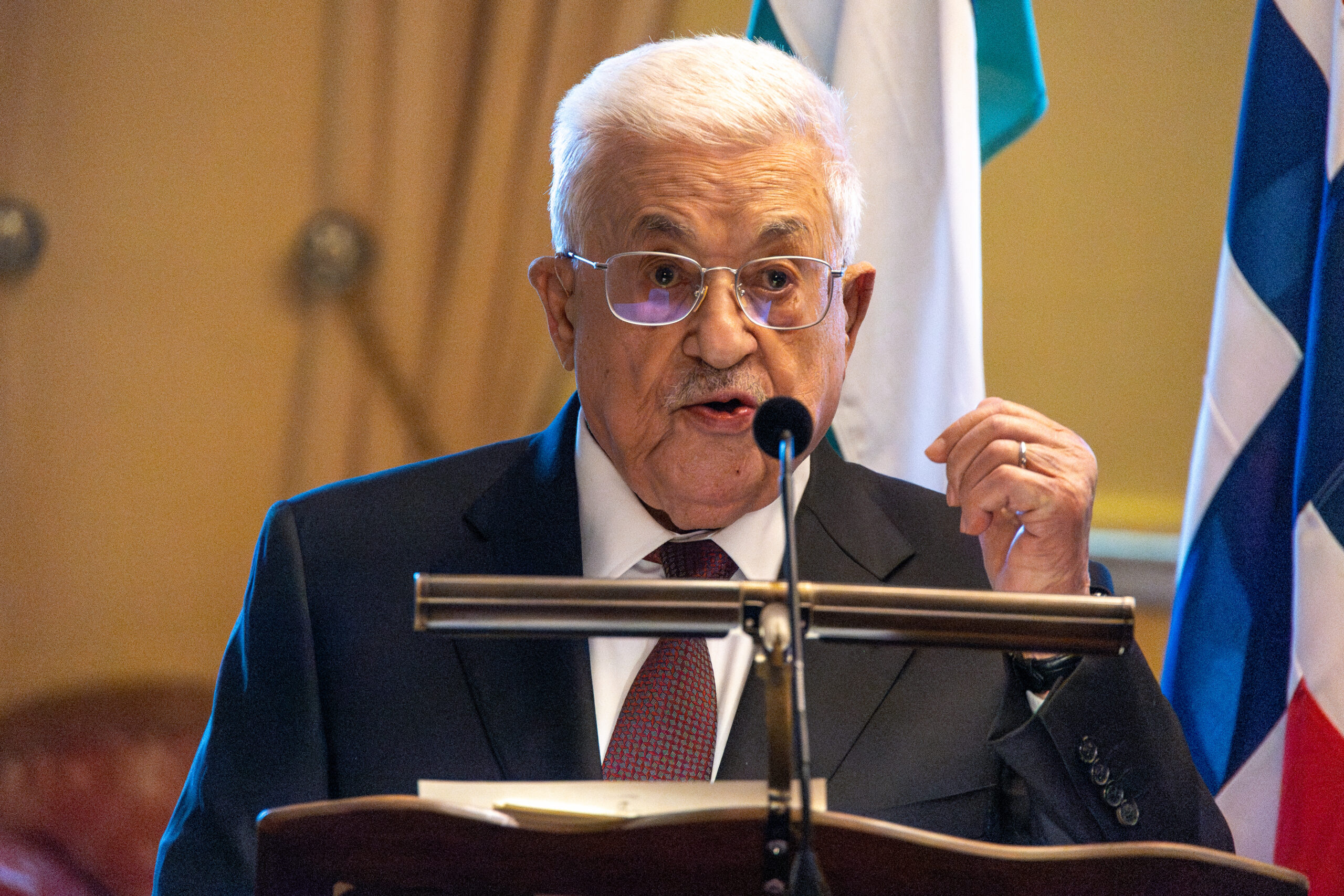
The Palestinian Authority’s proposed interim constitution, a draft of which was released last week, includes support for incarcerated and deceased Palestinian terrorists and their families, a practice called “pay for slay” by its critics, which the PA claimed to have ended last year. PA President Mahmoud Abbas published the interim constitution on Feb. 10, allowing for public comments over the next 60 days. The move comes as the Trump administration and the European Union have demanded reforms from the PA in recent months, including an end to the so-called “martyrs’ payments” to convicted and killed terrorists and their families, Jewish Insider’s Lahav Harkov reports.
What it says: Article 24 of the interim constitution states that “the State of Palestine and the relevant national institutions work to provide protection and care for the families of martyrs, and the wounded, and prisoners, and those released from the occupation prisons, and the victims of genocide.” Article 44 states that “the law organizes the provision of comprehensive care for the families of martyrs, the wounded, and prisoners, and those released, in preservation of their national dignity and their humanitarian and living needs.” “Martyrs” refers broadly to any Palestinian killed by Israelis, but historically the payments have gone to the families of those killed or imprisoned attempting to commit or committing acts of terror.
doubling down
Daniel Biss defends decision not to dispatch police to break up Northwestern encampment
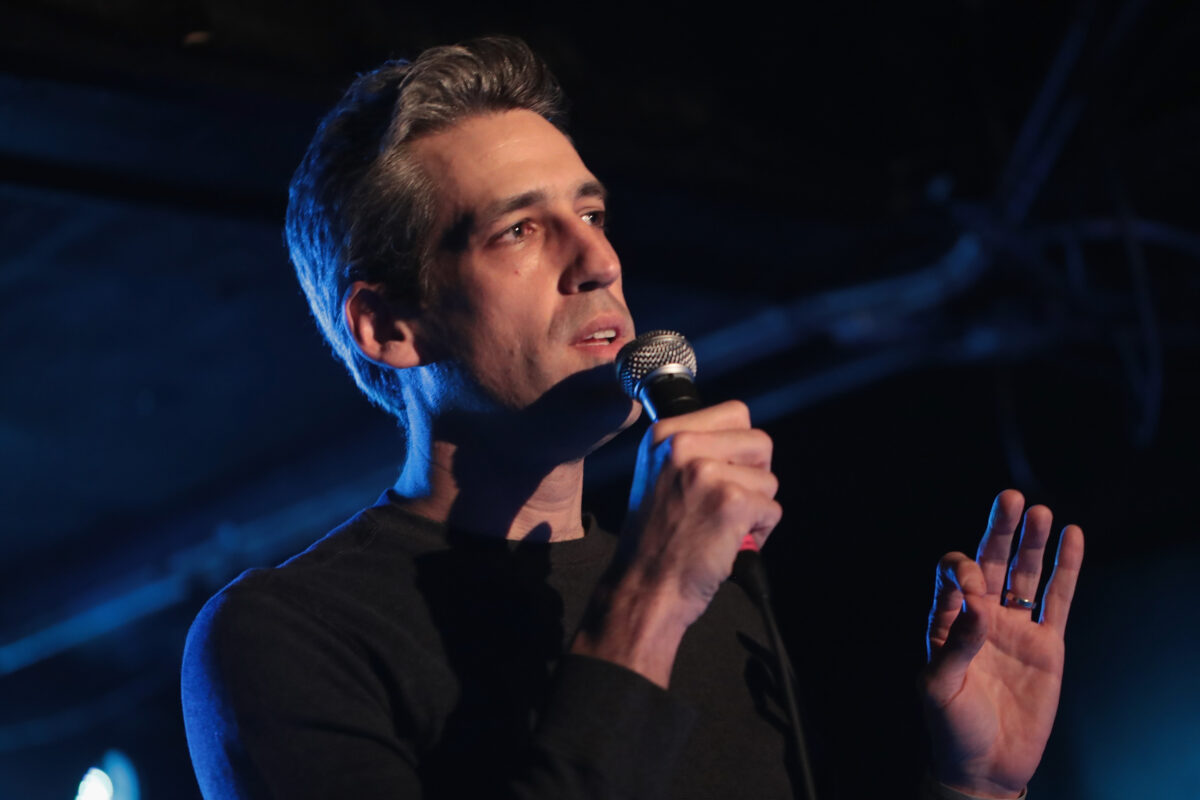
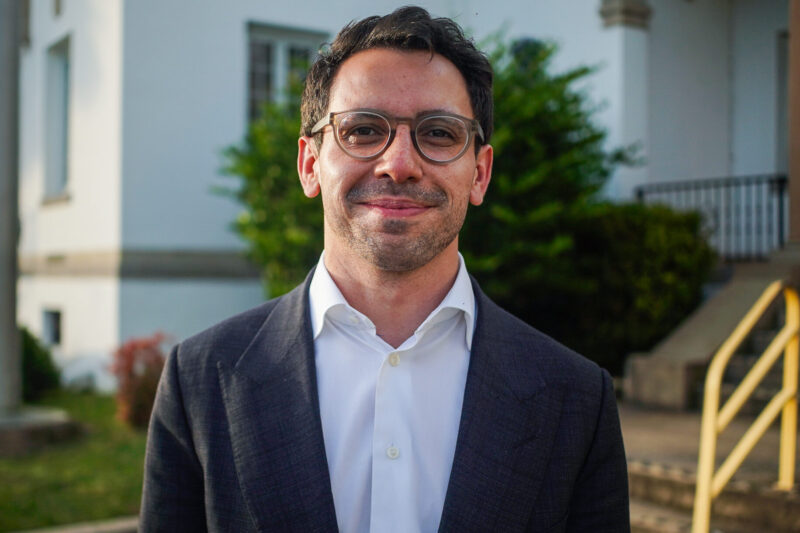
Evanston, Ill., Mayor Daniel Biss, a Democratic congressional candidate, on Monday defended his decision in 2024 to withhold police support requested by Northwestern University in 2024 to clear an anti-Israel encampment on the school’s campus, Jewish Insider’s Marc Rod reports.
Decision-making: Biss asserted that the Evanston police department did not find the encampment posed a threat to students or the community, and that police officials had been concerned that forcibly clearing the encampment would worsen the situation. “I did not, and would not, direct the Evanston Police Department to disperse a protest or arrest protesters against the advice of department leadership,” Biss said.
latin link
ADL report highlights accelerated Iranian antisemitic propaganda effort in Latin America
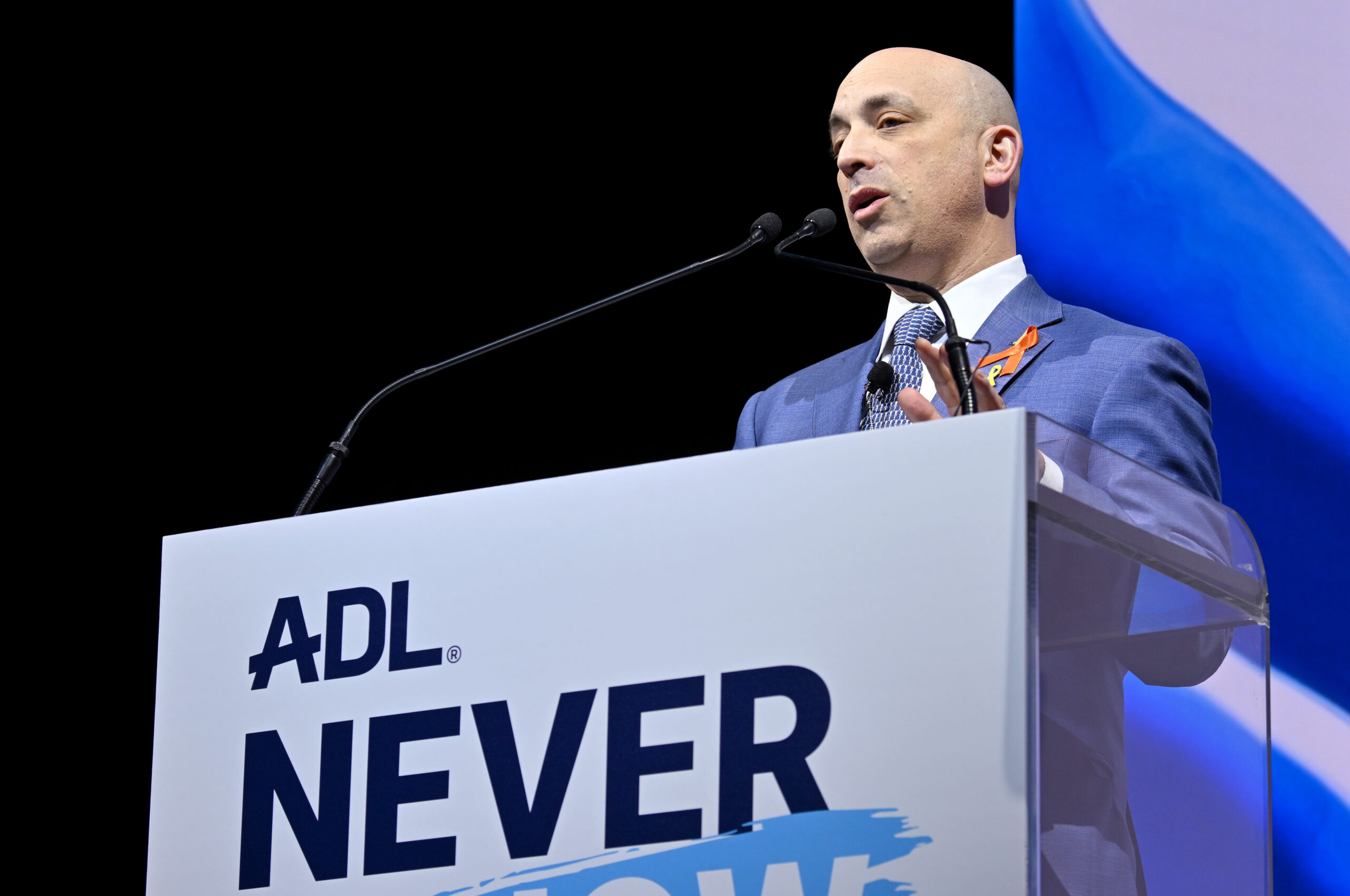
A new report released by the Anti-Defamation League on Tuesday highlights an acceleration over the past two years in antisemitic and anti-Israel rhetoric by HispanTV, Iran’s Spanish-language state-sponsored media outlet that primarily targets Latin America, Jewish Insider’s Marc Rod reports.
Media matters: The report urges governments to probe ties between HispanTV and sanctioned Iranian officials and government entities and consider designating the media outlet as a foreign influence operation. It also urges social media companies to take moderation action against or take down HispanTV’s pages, satellite companies to reconsider broadcasting the channel’s content and internet hosting companies to cease providing services to the outlet. The report was released in conjunction with an ADL-sponsored event on the sidelines of the Munich Security Conference focused on Iran’s malign activities in Latin America.
Trouble on the quad: A larger percentage of Jewish college students report having experienced antisemitism than ever before, according to data on college antisemitism that was collected as part of the American Jewish Committee’s annual “State of Antisemitism in America 2025 Report” and shared exclusively with eJewishPhilanthropy’s Jay Deitcher on Tuesday.
UNITED FRONT
Jewish social workers in U.S., Israel, Canada urge international body against expelling Israel

The largest global membership organization for social workers from around the world will vote on Wednesday on whether to expel Israel’s leading social work body, sparking a feverish advocacy campaign by Jewish and Israeli practitioners to urge members to vote against the measure. The vote by the International Federation of Social Workers is scheduled for Feb. 18, and it comes after several members in the IFSW complained that some Israeli social workers served in combat roles in the Israel Defense Forces during Israel’s war against Hamas in Gaza. The IFSW alleges that military service violates social workers’ professional and ethical commitments to nonviolence, Jewish Insider’s Gabby Deutch reports.
Their position: The Israeli Union of Social Workers — and its allies in the United States and Canada — argue that such a request ignores Israel’s mandatory draft policy, holds Israel to a different standard from other member nations and singles out the only Jewish state. The leader of the Israeli body said it would be “entirely unimaginable” for Israeli social workers to ask not to serve in combat, noting that it would come across as “elitist” and “mark our union as illegitimate in the eyes of both the government and the public.”
Worthy Reads
Trump, the Asset Manager: In The Wall Street Journal, Walter Russell Mead considers President Donald Trump’s strategic positioning as U.S. military assets move to the Middle East amid fresh nuclear talks with Iran. “He has a free hand in Iran and can move in any direction. He can push for regime change. He can take a weak deal with Tehran and claim victory. He can sit back while Israel does most of the hard work, as he did in June’s 12-day war, and swoop in at the end to take credit for victory. He can give the mullahs a new lease on life. Everyone who cares about Iran or its oil knows that Mr. Trump has the power to rock their world. The dealmaker is open for business. Iran doves, Iran hawks, Israelis, Qataris, Russians, Chinese, Europeans, Turks — operators are standing by to take your call. It isn’t only the leverage, it’s the status. As the sole arbiter of the fate of a nation that is crucial to its region and to world oil markets, Mr. Trump is the world’s most visible and powerful leader. Others talk, he decides.” [WSJ]
By the Good Book: The New York Times’ David French reflects on the recent controversy over Carrie Prejean Boller, the former member of the White House’s Religious Liberty Commission who was removed over her support for antisemitic figures. “I’m sharing this sad background not because Boller is particularly influential or powerful, but because she perfectly encapsulates the rising tide of antisemitism in the United States. Gross bigotry isn’t ending her career; it’s the rocket fuel that’s propelling her to stardom. Boller is also, ironically enough, showing the necessity for a sane Christian Zionism. She’s demonstrating exactly why I have long identified myself as a Christian Zionist. … Boller is a recent convert to Catholicism, and she — like Candace Owens — wields her newfound faith like a sword. But perhaps they both need to spend a little more time learning and a lot less time talking.” [NYTimes]
Nothing is Sacred: The Atlantic’s Charlie Warzel warns against the rise of growing nihilism that is especially pervasive among younger generations. “Social-media platforms — and especially X — have loosened their grip on moderation at the same time that AI tools have allowed for the easy proliferation of slop; never before has there been so much cynical, cruel content and trolling. When Clavicular records himself breaking his body, spouting the N-word, and reveling in anti-Semitism, he’s participating in what [online culture researcher Aidan] Walker dubs ‘nihilism by default,’ an ideology where ‘the only sources of purpose or profit are the self and the social media machine.’ This dynamic is everywhere now. It exists in political memes and propaganda. It drives broad swaths of popular culture. A kind of post-ironic fatalism that was once endemic to seedy message boards has bled into the broader culture, changing how people communicate. Nihilism is now the lingua franca of the internet.” [TheAtlantic]
Word on the Street
On the sidelines of the Munich Security Forum over the weekend, Rabbi Yehuda Kaploun, the State Department’s antisemitism envoy, met with Saudi Foreign Minister Faisal bin Farhan; elsewhere at the gathering, Alex Soros met with Rabbi Pinchas Goldschmidt, president of the Conference of European Rabbis…
Speaking at the opening ceremony for BBYO’s International Convention last week, Pennsylvania Gov. Josh Shapiro told the audience, “I want you to wear your Stars of David with pride. That will give strength to others. I want you to confront the bullies that you find in your communities, but I want you to confront them with a sympathetic heart and an effort to understand and change minds because understand those bullies, they are coming at that from a sense of weakness and ignorance, and you are the ones who can bring strength and light,” Jewish Insider’s Gabby Deutch reports…
American University has suspended its chapter of Students for Justice in Palestine through November 2027, the D.C. private school confirmed to Jewish Insider’s Haley Cohen…
Liz Magill, the former University of Pennsylvania president who resigned after facing criticism of inaction against campus antisemitism, was tapped on Friday as the dean of Georgetown University Law Center, Jewish Insider’s Haley Cohen reports…
Missouri’s Statehouse passed legislation codifying the International Holocaust Remembrance Alliance’s working definition of antisemitism, sending the bill to the Senate; Rabbi Jeffrey Abraham, a board member of the Missouri Alliance Network, a community group backing the bill, said in a statement, “As a Rabbi, I have heard from countless teens since October 7th about the antisemitic bullying they are experiencing, and in many cases how school districts are trying to sweep it under the rug. This will force needed accountability”…
Amazon CEO Andy Jassy announced that the company’s capital expenditure would rise to $200 billion this year, its largest capital spending program in its history…
Los Angeles Lakers star LeBron James, speaking at the NBA All-Star Game over the weekend, praised Israeli basketball player Deni Avdija of the Portland Trail Blazers and said, “Hopefully, someday I can make it over” to Israel, adding that he had “heard nothing but great things” about the country…
The official online store of the Olympic Games sold out of commemorative shirts from the 1936 Berlin Games, which were used by Adolf Hitler to promote Nazi ideology; the International Olympic Committee’s sale of items from the 1936 games had prompted pushback from politicians in Germany as well as Jewish groups…
Cultured profiles fashion designer Dasha Zhukova as she pivots to real estate development with the opening of her Ray Harlem residential housing complex in New York City…
The suspect in the terror attack at a Hanukkah celebration at Bondi Beach in Sydney, Australia, on Monday made his first court appearance since the attack…
The Financial Times looks at the legal limbo facing Palestine Action following a U.K. court ruling last week determining that the government’s proscription of the group as a terrorist organization was illegal…
A U.K. court sentenced two Islamic State supporters to life in prison for plotting to carry out a terror attack in the country; the men were part of a larger effort by the terror group to take advantage of rise in antisemitism that occurred after the Oct. 7, 2023, Hamas terror attacks and amid the ensuing war in Gaza…
Tom Burke and Eve Hewson are set to star in an upcoming film from “Normal People” director Lenny Abrahamson about the Dublin Jewish community in the 1970s, with filming set to begin next month…
Startup Nation Central’s board told stakeholders over the weekend that it is scaling back its activities and staff to focus on connecting Israeli tech companies with business opportunities in the Gulf, India and U.S. states; “Call Me Back” podcast host Dan Senor, a co-founder of SNC, said the organization was responding to a shift resulting from Israel’s growing economic strength…
German shipping company Hapag-Lloyd inked a deal to purchase Haifa-based Zim Integrated Shipping Services for $4.2 billion…
An Arab-Israeli citizen was arrested on charges that he spied on behalf of Iran by carrying out tasks assigned by an Iranian agent he met on the Telegram messaging app, including sending photographs of the home of former Defense Minister Yoav Gallant…
Israel is moving forward with an effort that would make it easier for settlers to buy land in the West Bank’s Area C in what far-right Finance Minister Bezalel Smotrich said was a move to increase settlement expansion “across all parts of our land”……
Doctors Without Borders suspended its operations at Gaza’s Nasser Hospital, citing the presence of armed individuals at the facility; two people interviewed by The Wall Street Journal said they had each been detained by Hamas in the hospital…
An Israeli court released all of the more than two dozen Haredi men and boys who had been arrested following weekend riots in the town of Bnei Brak, where two female IDF soldiers were attacked…
A new report from the Institute for Monitoring Peace and Cultural Tolerance in School Education found that Qatari textbooks continue to contain antisemitic and anti-Christian lessons, including materials that refer to non-Muslims as infidels and legitimize violent jihad…
The Financial Times does a deep dive into Patrick Drahi’s acquisition of a nearly 15% stake in Israel’s Channel 13…
India seized three Iran-linked oil tankers that are under U.S. sanctions…
Civil rights activist Jesse Jackson, who faced controversy for his offensive remarks about the New York City Jewish community weeks after the launch of his 1984 presidential campaign, died at 84… Criminologist Alfred Blumstein, who revolutionized his field using systems theory and quantitative analysis to discover crime patterns, died at 95… Sociologist Vicki Abt, who spoke out against sensationalist talk show programming, warning that it allowed both networks and viewers to “consume others’ misfortunes without feeling any responsibility to do anything to intervene,” died at 83… Israeli television producer Dana Eden, a co-creator of “Tehran,” died at 52 in Greece, where the fourth season of the show is being filmed… Documentarian Frederick Wiseman died at 96…
Pic of the Day
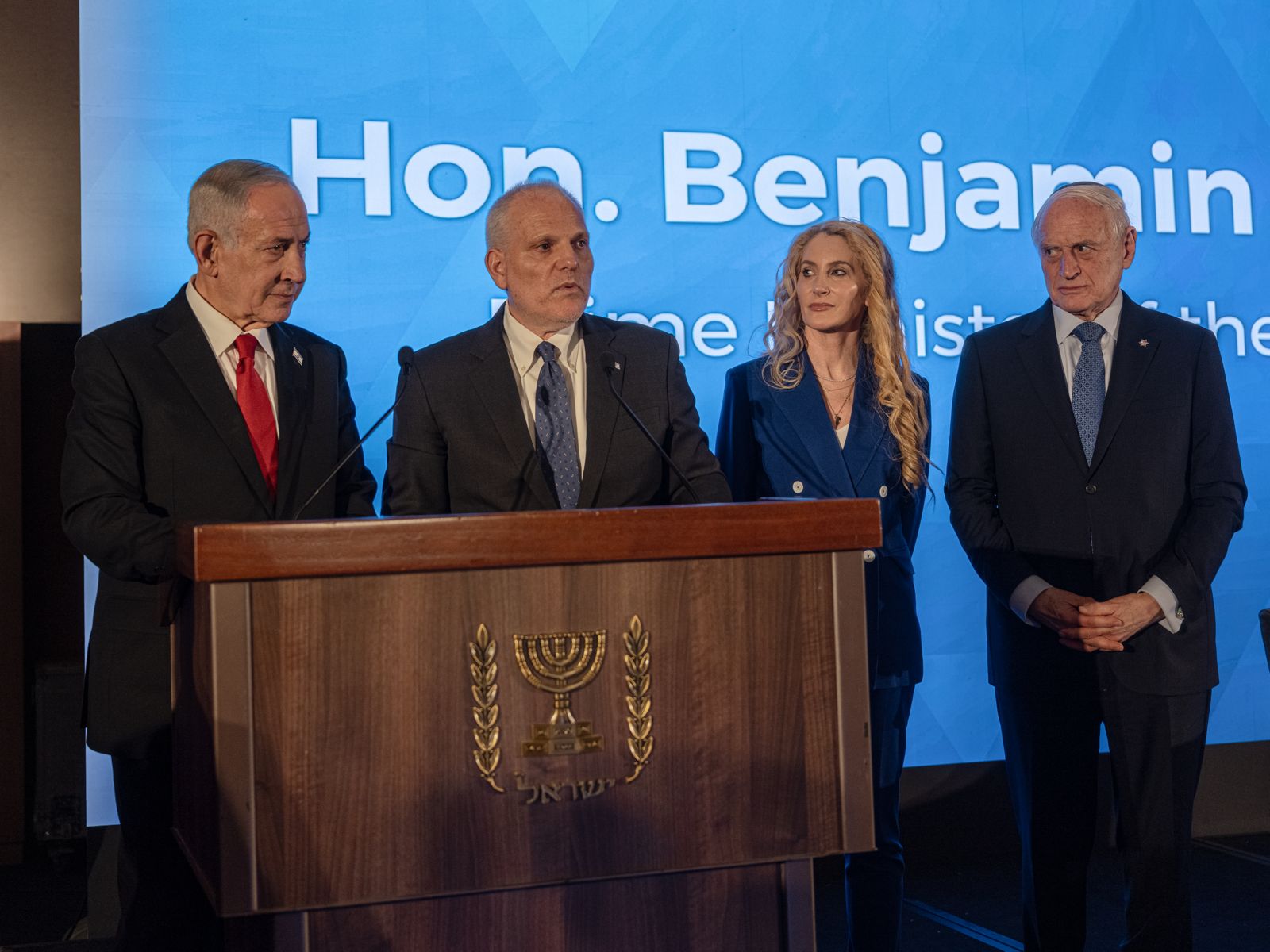
Israeli Prime Minister Benjamin Netanyahu (left), Conference of Presidents of Major American Jewish Organizations CEO William Daroff, Conference of Presidents Chair Betsy Berns Korn and former Conference of Presidents Executive Chairman Malcolm Hoenlein addressed the delegation of Jewish organizational leaders on Sunday in Jerusalem.
Birthdays
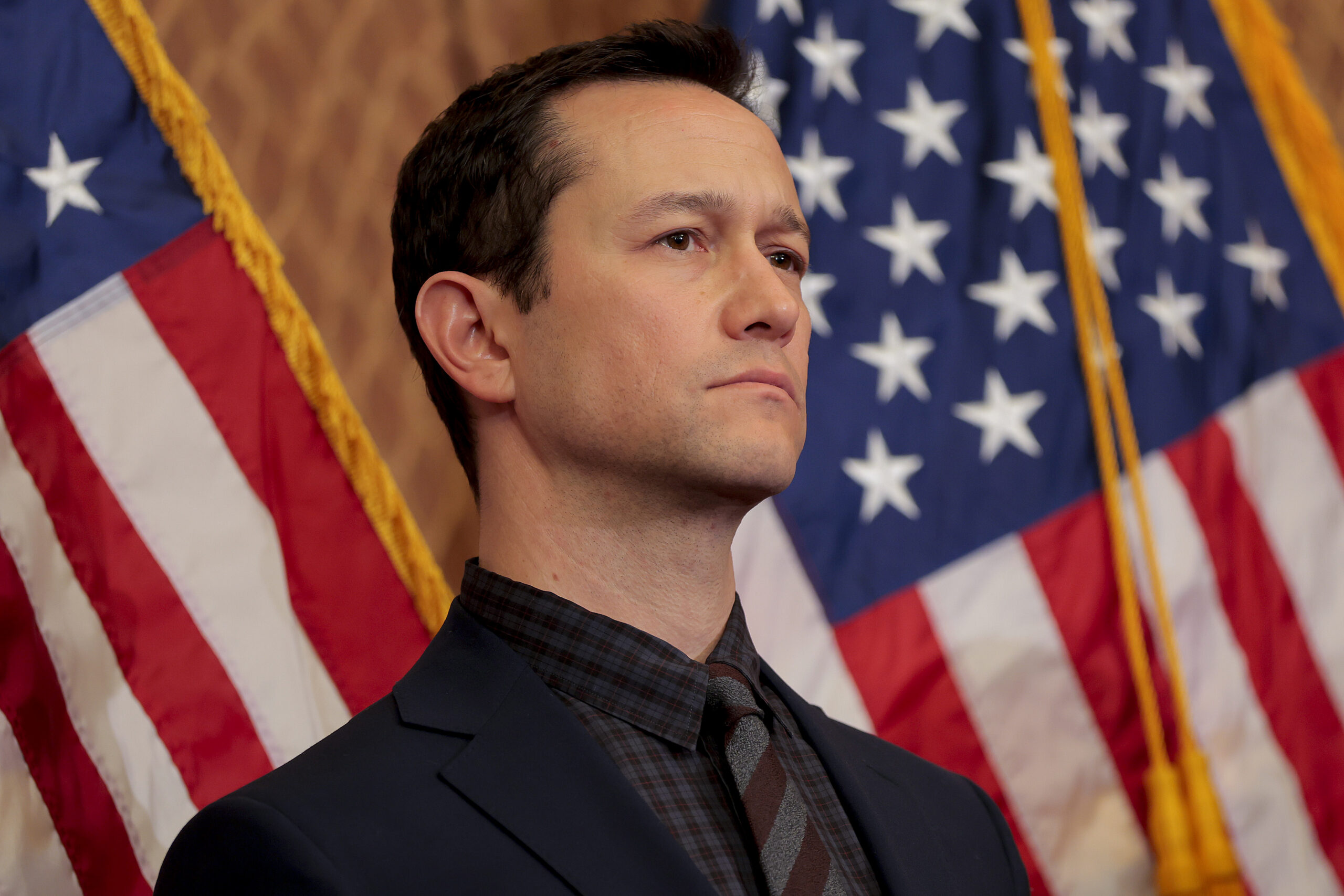
Actor and filmmaker, whose career was launched playing multiple roles as a child actor, Joseph Gordon-Levitt turns 45…
Real estate developer and former co-owner and president of the New York Mets, Saul Katz turns 87… President of AIPAC in the early 1990s, Steven Grossman turns 80… Former executive director of American Jewish Archives and professor of Reform Jewish history, both at HUC-JIR, Gary Phillip Zola turns 74… One of the most popular Israeli basketball players of all time, Miki Berkovich turns 72… Owner of Lynn’s Photography in Beachwood, Ohio, Lynn Katz Danzig… Professor of mathematics at Princeton University, Noga Alon turns 70… Chairman of Israel’s Shas party, he has held many ministerial positions during his career, Aryeh Deri turns 67… Partner in the D.C. office of Kirkland & Ellis specializing in international trade and national security, Ivan A. Schlager turns 65… Rabbi of Khal Ahavas Yisroel Tzemach Tzedek in Baltimore and a kashrut administrator at the Star-K, Rabbi Dovid Heber… Filmmaker known for directing and producing big-budget action films including the many “Transformers” films, Michael Benjamin Bay turns 61… President and CEO of MLB’s Arizona Diamondbacks, Derrick Hall turns 57… Executive director of American University’s Women and Politics Institute, Betsy Fischer Martin turns 56… Professor of international relations at Ben-Gurion University of the Negev, Sharon Pardo turns 55… Brigadier general (res.) in the IDF, he served as the chief of the Combat Engineering Corps, Oshri Lugasi turns 54… Deputy chief of the civil division at the U.S. Attorney’s office for the Eastern District of New York and rebbetzen of NYC’s Congregation Shearith Israel, known as the Spanish and Portuguese Synagogue, Layaliza Klein Soloveichik… President of USA TODAY Media, Kristin Roberts… Executive director of the Kraft Center for Jewish Student Life (the Columbia / Barnard Hillel), Brian Cohen… Israeli actor, model and beauty queen who won the Miss World beauty pageant in 1998, she has since completed law school, Linor Abargil turns 46… Former assistant secretary at the U.S. Department of Homeland Security, now a partner at Brunswick Group, Samantha Erin Vinograd turns 43… Director of audience and platforms at NOTUS, Dianna Heitz… Professional ice hockey defenseman for the NHL’s New York Rangers, Adam Fox turns 28… Miriam Schulman…
Rep. Rashida Tlaib’s resolution has been cosponsored by Reps. Alexandria Ocasio-Cortez, Ilhan Omar, Betty McCollum, Marie Newman, Cori Bush and Jamaal Bowman

Chip Somodevilla/Getty Images
Rep. Rashida Tlaib (D-MI) questions Treasury Secretary Janet Yellen as she testifies before the House Financial Services Committee in the Rayburn House Office Building on Capitol Hill on May 12, 2022, in Washington, D.C.
Rep. Rashida Tlaib (D-MI) and a handful of progressive Democrats introduced a resolution on Monday referring to Palestinian Arabs as the “indigenous inhabitants” of Israel and endorsing Palestinian right of return, one of the most sensitive issues in Israeli-Palestinian relations.
The resolution seeks to set as U.S. policy recognition of the “Nakba” — the term, translating to “catastrophe,” that Palestinians use to refer to the mass Palestinian exodus that accompanied the foundation of Israel — and accept as a settled issue Palestinian refugees’ right of return to inside Israel’s borders. It also refers to Palestinians as the “indigenous population” of the region, but does not acknowledge Jewish history in the region.
The legislation accuses Israel of having “depopulated more than 400 Palestinian villages and cities” during its 1948 War of Independence and characterizes ongoing Israeli “expropriation of Palestinian land and… dispossession of the Palestinian people,” including Israeli settlements, as part of an ongoing Nakba. In a statement announcing the legislation, Tlaib accused Israel of “ongoing ethnic cleansing.”
Tlaib’s resolution has been cosponsored by Reps. Alexandria Ocasio-Cortez (D-NY), Ilhan Omar (D-MN), Betty McCollum (D-MN), Marie Newman (D-IL), Cori Bush (D-MO) and Jamaal Bowman (D-NY).
Neither Tlaib nor any of the cosponsors responded to a question from Jewish Insider about whether they viewed Jews as also being “indigenous” to the region.
Newman is currently facing a primary challenger, Rep. Sean Casten (D-IL), who is backed by various pro-Israel groups, including J Street, which had endorsed Newman in 2020. Bowman has faced criticism from the Democratic Socialists of America over his positions on Israel, including voting for supplemental Iron Dome funding and traveling to the Jewish state last year. He has since removed himself as a cosponsor of legislation supporting the Abraham Accords.
Rep. Brad Sherman (D-CA) blasted Tlaib’s resolution as “predicated on a demonstrably false historical narrative… predictably failing to mention the hundreds of attacks on Jewish communities in the British mandate of Palestine by Palestinian militias.”
Sherman noted that the resolution “omits” that Israel was attacked by eight Arab states in 1948, that the 1948 war began with attacks by Arab forces seeking “a war of annihilation” against Jewish militants and civilians, that “not a single Jew was left alive in the portion of the British mandate controlled by Arab armies, that no Jews lived in the Jewish quarter of Jerusalem for two decades and that 800,000 Jews were expelled from neighboring Arab countries.”
“Thankfully, the vast majority of my colleagues in Congress and in the House Foreign Affairs Committee understand that the historical narrative in Congresswoman Tlaib’s resolution is an outrageous falsehood and thus this bill isn’t likely to be passed or even considered,” Sherman added.
Rep. Josh Gottheimer (D-NJ) agreed that the resolution has no “hope of moving forward,” claiming the resolution seeks to “rewrite history and question Israel’s right to exist.”
“It’s unfortunate that this histrionic and invidious resolution was introduced now, particularly, as we see continued progress in efforts to normalize relations between Israel and its neighbors in the region,” Gottheimer added. “Divisive efforts like this only set back our fight against terror and the advancement of democracy in the region.”
Aaron David Miller, a senior fellow at the Carnegie Endowment for International Peace who advised multiple secretaries of state on Arab-Israeli negotiations, said that the legislation asks Congress to “wade into the intricacies and volatility of some of the most combustible issues in the Israeli-Palestinian conflict and essentially recognize a narrative.”
“This legislation is packed with landmines and traps,” Miller continued. “The whole issue of right of return is an issue that for years in negotiations we realized was the most combustible, most complicated, and the one which we had the least chance of resolving…. That’s the third rail of the Israeli-Palestinian negotiations.”
Miller emphasized that the legislation has no prospect of seeing widespread support in “any Congress that I can imagine.”
He described the legislation as “designed basically to support what the framers regard as an unrecognized, underreported and unacknowledged narrative in the American political scene of the Palestinians.” He added that the “Palestinian narrative has never been adequately explored or acknowledged” in U.S. politics and argued that “there was a way perhaps to go about this which would have recognized both Israeli independence and the Nakba being intertwined.”
Some Republicans seized on the legislation.
Rep. Lee Zeldin (R-NY) called it “the latest in a long line of antisemitic, anti-Israel statements, policies and actions by the most radical voiced in the Democratic Party.” Rep. Jim Banks (R-IN) called it “disgusting anti-Semitism.” Sen. Rick Scott (R-FL) said “the continued anti-Semitism from radical socialists in the House is horrific.” The three Republicans also sought to tie House Speaker Nancy Pelosi (D-CA) to the initiative, demanding that she condemn the move.
Ossoff said he could play 'a constructive role in supporting negotiations' between Israel and Palestinians
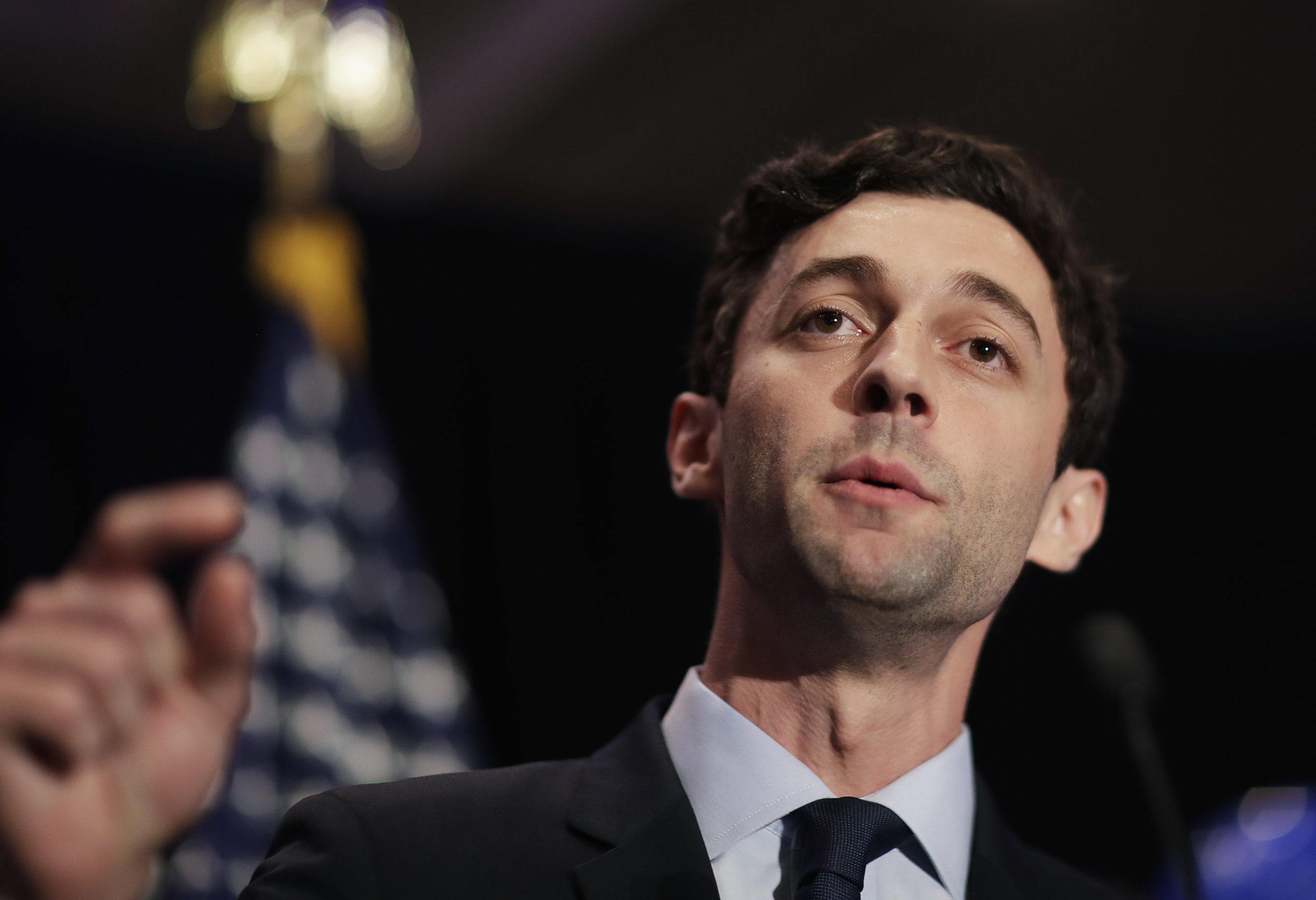
AP Photo/David Goldman
Jon Ossoff is seen here in 2017 conceding his Senate race in Atlanta to Republican Karen Handel.
Before Alexandria Ocasio-Cortez and Ilhan Omar, there was Jon Ossoff. In the spring of 2017, the lanky then-30-year-old became the face of “the resistance” almost by accident.
The Georgia Democrat ran in the first special election of the Trump administration. The race was treated as a key barometer of public opinion. It became the most expensive special election in American history, attracting roughly $55 million in spending by both sides in a traditionally Republican district in suburban Atlanta.
Ossoff almost won the district outright in the first round of voting, falling just short of the 50% necessary for victory, before being narrowly defeated by Republican Karen Handel in a runoff.
Two years after that loss, Ossoff is now mounting his second bid for elected office and has thrown his hat in the ring to challenge incumbent Republican David Perdue for the United States Senate.
In an interview with Jewish Insider, Ossoff framed his run as a crusade against Washington corruption and an extension of his career as an investigative journalist who had a colleague murdered while investigating a scandal in African soccer.
The message is an extension of how the Georgia Democrat initially sold himself to voters in 2017 before shifting his focus to non-partisan issues including government waste and turning Atlanta into “the Silicon Valley of the South.” But it takes an added edge during the ongoing impeachment crisis in Washington. (Ossoff has come out in favor of an impeachment inquiry).
Ossoff told Jewish Insider, “my first act in the Senate will be to co-sponsor a constitutional amendment to repeal the Citizens United decision. He denounced a political system awash in “dark money and secret anonymous political spending” and described Perdue as “the embodiment of Washington corruption.”
On foreign policy, the Democrat denounced the 2018 decision by the Trump administration to withdraw from the Iran deal, calling it “a reckless and thoughtless mistake by withdrawing unilaterally from the nuclear deal.” In Ossoff’s view, “it has put Iran back on path towards nuclear weapons development with no clear diplomatic strategy and escalated chances of war in the Gulf. There are no clear off ramps for either side as tensions continue to escalate and it has been deeply irresponsible.”
A former legislative assistant for longtime Georgia Democratic congressman Hank Johnson, Ossoff argued that the United States should “recommit to a multilateral approach to Iran nuclear program… to restrict uranium enrichment and ensure that there are penetrating IAEA and international inspections of their nuclear facilities.” He added, “the proliferation of nuclear weapons anywhere is a threat to people anywhere, and in the Senate preventing Iran from developing a nuclear weapon will be a top priority.
When asked if Iran possessing a nuclear weapon would present an existential threat to the United States, Ossoff answered, “any adversarial power that has nuclear weapons and ability to deliver them either via ICBM or by trafficking nuclear technologies to non-state actors poses a critical threat to us and an existential threat to allies in Middle East and Europe.”
He also strongly criticized the Saudi regime under the leadership of Crown Prince Mohammed bin Salman. “Our alliance with Saudi Arabia has compromised us ethically and has compromised our foreign policy,” said Ossoff. “We should cease supporting the Saudi war in Yemen and distance ourselves from regime that executes political dissidents, executes people for their sexuality and that brutally murders journalists.”
Ossoff, who is hoping to be only the second Jewish American from the South directly elected to Senate, told JI his “Jewish heritage has influenced my worldview profoundly… My relatives who are Holocaust survivors, my ancestors who fled pogroms in Eastern Europe, I think I have a heightened awareness of dangers of authoritarianism and antisemitism.”
He argued that, if elected, he could play “a constructive role in supporting negotiations” between Israel and the Palestinians as “a Jewish-American United States senator with a strong background in foreign policy and defense policy.”
However, Ossoff was “deeply pessimistic that any of the parties including the United States are serious about pursuing [a two-state solution].” In his view, “the two-state solution is on life support.”
Ossoff argued for a stronger emphasis on human rights in U.S. foreign policy. “Foreign policy is rightly about balancing values and interests and America throughout its history has too often, in my view, neglected its values in support of perceived interests,” said the Georgia Democrat. However, he noted, “there are U.S. officials around the world and throughout our history who have come to the aid of those facing persecution because they rightly understand that is a core part of national identity.”
Ossoff, who raised $800,000 in the three weeks after declaring his candidacy in mid-September, still has to win the Democratic nomination for the opportunity to run against Perdue next year. He will face more than half a dozen other candidates including Teresa Tomlinson, the former mayor of Columbus, Georgia, in the May primary.
Please log in if you already have a subscription, or subscribe to access the latest updates.
 Continue with Google
 Continue with Apple