




















































Lander endorses settlement sanctions bill while on West Bank trip
After his brush with IDF, Brad Lander announced he would join the Stop the Settlements Act
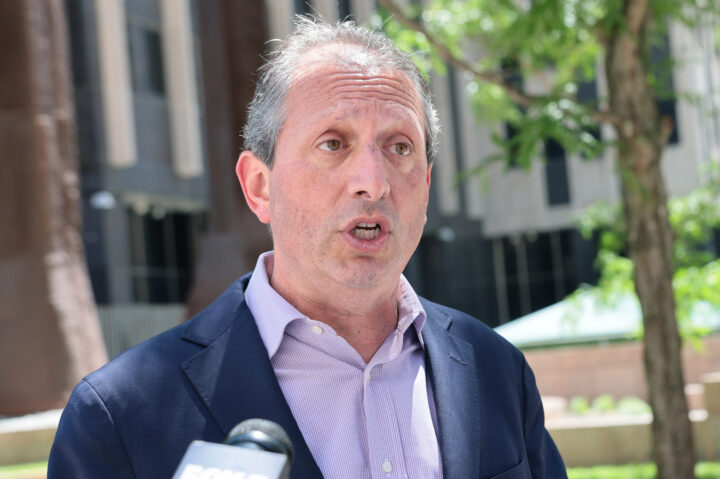
Michael M. Santiago/Getty Images
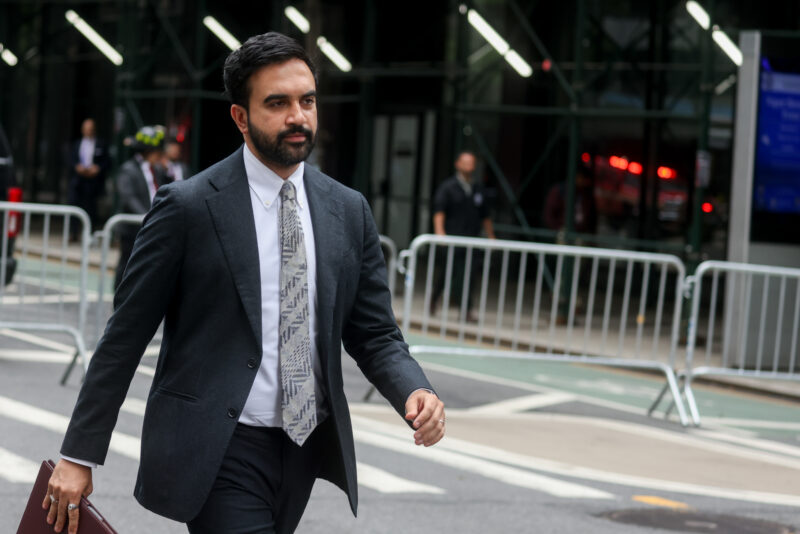
NYC congressional nominee Brad Lander speaks during a press conference outside of the Jacob K. Javits Federal Building on June 24, 2026 in New York City.


 Add JewishInsider on Google
New York Democratic congressional nominee Brad Lander announced on a Zoom call with reporters on Wednesday that he would sign on to a new bill to impose sanctions on Israeli settlements in the West Bank.
Speaking from a hotel in Beit Jala in the West Bank, where the Democrat traveled in a heavily promoted junket to participate in the local olive harvest, Lander told journalists that he had decided that, once he joins the next Congress, he would sign onto the Stop the Settlements Act, which Rep. Joaquin Castro (D-TX) introduced last month.
The legislation would impose sanctions on anyone involved in the expansion of any settlements in the West Bank, including Israeli government officials, and would ban the imports of any goods produced in the West Bank or Gaza.
“I will certainly be signing on to Rep. Castro’s bill when I get to Congress,” Lander said, praising similar moves by British Foreign Secretary Ed Miliband. “They’re going to be implementing a settlement trade ban. You know, which is not a full boycott of all Israeli products, you know, [it] will be a trade ban on economic activities in the settlements, which are illegal under international law. I have a lot of admiration for Secretary Miliband.”
Lander self-identifies as a “progressive Zionist,” but has made his opposition to Israeli policies the central theme of his campaign for Congress against Rep. Dan Goldman (D-NY), and received an early endorsement from New York City Mayor Zohran Mamdani, another fierce critic of the Jewish state. However, Lander had not previously expressed support for the Stop the Settlements Act.
Lander joined a delegation of left-wing Jewish activists from Israel and abroad to pick olives with Palestinian farmers in the West Bank during their annual harvest. He subsequently shared a photo and video of himself on Wednesday on a bus after having been briefly detained by the IDF along with participants of the trip.
By his own account on the call Wednesday, Lander spent roughly an hour in an IDF station before being released, and the remaining detained international and Israeli participants returned to the hotel while the Zoom call was ongoing. The Democrat told reporters that he did not believe any Palestinians involved in the harvest were taken into custody.
Numerous progressive House Democrats have spoken out against Lander’s detention, with some describing it as a violation of international law.
The Israeli Foreign Ministry accused Lander of “harvesting headlines” with what it described as “a calculated political provocation.” It added that his team had been in contact with the country’s government about the visit, and flouted their direction that “proper coordination with the relevant authorities was required.”
Lander denied this, and said his team had only been in touch with the U.S. Embassy in Jerusalem. He read what he described as an email from an embassy staffer that stated American policy is to ”generally recommend” working with the Israeli authorities.
Lander maintained a few weeks before Election Day was the right time to visit the West Bank because it coincided with the olive harvest. Asked by Jewish Insider if he planned to visit Pakistan-occupied Kashmir, the site of ongoing protests and a deadly military crackdown, or war-ravaged Ukraine, he provided no clear answer.
“As I enter Congress, I do expect to be more involved in foreign affairs and would be interested in learning more about and and supporting, you know, the folks in Ukraine who are engaged in a, you know, in a really important struggle for their democratic sovereignty,” said Lander. “You know, I don’t know what committees I will land on and what the future holds for me.”
The endorsement of Castro’s bill takes Lander one step closer to the Boycott, Divestment and Sanctions movement, from which he has long preserved a certain distance, even as he adopted their key policy proposals. As New York City comptroller, he ended the Big Apple’s half-century of investment in State of Israel bonds, to applause from BDS advocates — even as he maintained the policy was a matter of sound fiduciary policy, and noted that the city did not hold sovereign debt of other nations.
Nonetheless, in answering JI’s question, he acknowledged he had a special focus on the Jewish state.
“This place, I care about a lot as an American Jew,” he said. “You know, the reason that I’m regularly in Union Square [for protests], it’s not so much because I’m running for Congress, like, I’m a proud Jewish New Yorker. I long for a Jewish and democratic Israel.”
More Stories

Super Ball
Robert Kraft’s Blue Square gala pulls in $32 million as NYC’s Waldorf glows blue

DFL DISCORD
Amy Klobuchar, Angie Craig condemn Hasan Piker ahead of Minneapolis event with Ilhan Omar
UNLOCKING THE KEYSTONE
RJC drops $400,000 to boost Brian Fitzpatrick in Pennsylvania swing district
CANCEL CALLS
Democratic push grows for Ilhan Omar, Fateh to cancel Hasan Piker event
ALBANY ALLIANCE
Jewish New York Dems launch PAC to counter antisemitism and anti-Zionism

TEXTBOOK TEST
Syrian textbooks under al-Sharaa deny Israel’s right to exist and promote antisemitism, report finds
Please log in if you already have a subscription, or subscribe to access the latest updates.
 Continue with Google

 Continue with Apple