






















































Federal panel recommends suspending American Psychological Association’s accreditation authority
The recommendation comes amid widespread concerns from Jewish professionals about antisemitism in psychology education, which in some cases has painted Zionism as a mental illness
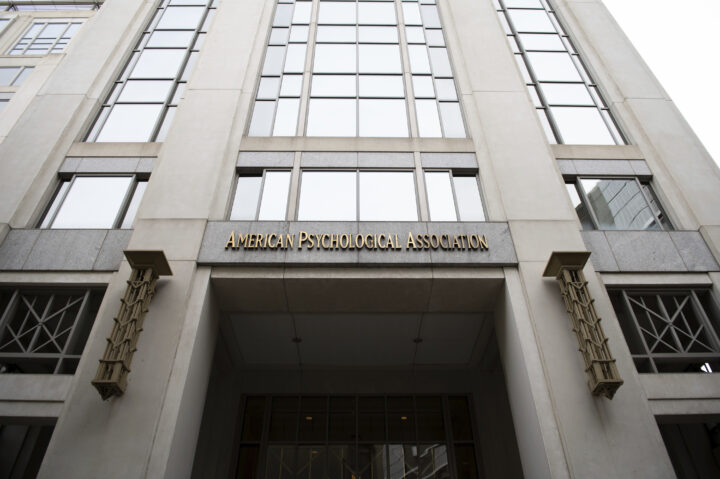
Graeme Sloan/Sipa via AP Images
A general view of the American Psychological Association headquarters in Washington, D.C. on April 23, 2020.


 Add JewishInsider on Google
A federal advisory board to the Department of Education recommended that the department suspend the accreditation authority of the American Psychological Association over the APA’s failure to address a “pervasive culture of antisemitism within the programs it accredits.”
The APA is the largest association of psychologists in the world and its Commission on Accreditation serves as the main accrediting body for U.S. psychology graduate programs and internships, offering a stamp of approval that their programs meet professional standards. Without accreditation, programs are ineligible for federal funding and graduates may be ineligible for certain roles or licenses.
A final decision on the issue will be made in the coming months by the Department of Education, and the exact implications and consequences may depend on the decision made. But the recommendation could create significant uncertainty for hundreds of programs and internships and throw into question the licensing of psychology students and professionals across the country.
The recommendation comes after years of concerns by Jewish students and professionals about pervasive antisemitism and anti-Israel sentiment in psychology education, which in some cases paints Zionism as a mental illness to be treated.
The APA as an organization has also faced criticism for delaying votes on recognizing a Jewish psychology organization, promoting anti-Israel and pro-Hamas propaganda at conferences and allegedly turning a blind eye to antisemitism within the organization. The House Education & Workforce Committee opened an investigation last year into the APA.
The National Advisory Committee on Institutional Quality and Integrity, the advisory body that provides recommendations to the Department of Education, voted 7-4 on Thursday to recommend that the Department of Education suspend the APA’s accreditation authorities.
Members of NACIQI are appointed by the administration and congressional leadership.
The decision came after two days of testimony by nearly 30 outside witnesses, including members of the Jewish community and Jewish community groups highlighting antisemitism issues in psychology education programs.
Dr. Aaron Joyce, the executive lead psychologist for the APA Commission on Accreditation, which operates autonomously under its own leadership, said in a lengthy statement to Jewish Insider that the commission “strongly disagrees with NACIQI’s recommendation to suspend its recognition and is concerned it will have a real and lasting impact on psychology programs, future psychologists, and the nation’s mental health.”
Joyce warned that the recommendation “will worsen the critical shortage of mental health professionals” and said that suspending the commission’s accreditation authority “will cause many accredited psychology programs to lose access to the federal funding necessary to train the next generation of mental health professionals, and in certain states impact the ability of students to meet requirements for state licensure,” with a particularly severe impact on communities already struggling with accessing psychological care.
Joyce condemned antisemitism as “a pernicious, dangerous and abhorrent bigotry with an ugly history in our country” and said it is “unacceptable for anyone to feel unwelcome or excluded in our professional community,” calling the public testimony “deeply troubling.”
He said the commission would review the complaints raised at the hearing and urged anyone impacted by antisemitism to bring their complaints forward. But he denied NACIQI’s conclusion that there is a “pervasive culture of antisemitism” in psychological education, noting that the commission has received only two complaints of antisemitism in accredited programs.
“The Commission’s only wish is that the individuals who raised legitimate concerns about programs in the public comments would have come forward to the Commission directly so that we could have taken action sooner,” Joyce said.
He said the commission will “take seriously every accreditation concern raised in today’s proceeding,” while emphasizing that the body “can and will still accredit programs” even if the Department of Education moves forward with the recommended suspension because it remains a recognized accreditor through an independent body responsible for evaluating educational accreditors.
Karen Paikin Barall, the chief policy officer at the Louis D. Brandeis Center for Human Rights Under Law, who testified alongside numerous Brandeis clients and other staff, said that Brandeis’ goal was “never to punish the APA or the programs that it accredits.” Rather, Barall said, the organization wants to see progress on the underlying issue of antisemitism “which they have not addressed or taken seriously enough.”
“We wanted them to take antisemitism and anti-Zionism seriously and to address conduct that is harming the Jewish students and members of the Jewish community,” she continued. “We asked for and we wanted to see meaningful enforcement, accountability, education and concrete steps to address these problems. We hope this is a wake-up call not only for the APA but for the hundreds of doctoral programs, internships and postdoctoral programs it accredits.”
She said that, given the potentially wide-ranging implications of a suspension of the APA’s authorities, “we’ve made a serious impact on combating antisemitism with this decision. They can’t ignore this.”
Alyza Lewin, president of U.S. affairs for the Combat Antisemitism Movement, testified to the NACIQI and told JI that the commission sent “a very strong message to the APA, and that message needed to be sent.”
“Antisemitism reached an alarming level in the mental health arena a long time ago and it’s really become baked into the fabric of so many of these programs that are accredited by the APA,” Lewin said.
Lewin said she believed that the testimony of members of the Jewish community made a significant difference in NACIQI members’ views and understanding of the problem, and that some of them indicated that they hadn’t been aware of the extent of the problem beforehand.
Lewin said one committee member said during the hearing that they were initially inclined toward a more limited sanction, “but then after listening to this, they realized that the problem of antisemitism in the APA is coming from psychologists or leaders in this space that have been educated and come up through the whole system the APA has created through its accredited institutions,” Lewin recounted.
She said that she hopes the NACIQI decision will increase “recognition and awareness of the problem” and produce “a serious commitment to try and understand the problem and address it.”
American Jewish Medical Association CEO Eveline Shekhman, who also testified, said in a statement to JI, “Antisemitism in behavioral health has become so pervasive that Jews are avoiding mental healthcare out of fear of discrimination and hostility.”
“The Jewish healthcare community spoke with one voice. Jewish trainees in APA-accredited programs have reported being told by classmates that they deserved October 7th, being told by supervisors that their Jewish identity makes them privileged, and encountering curricula that delegitimize Israel with little room for dissent,” Shekhman continued.
“This is an opportunity for APA to demonstrate that its accreditation standards are more than standards on paper — that they are enforced with the rigor, consistency, and diligence expected of a recognized accrediting agency. Recognition comes with responsibility, and Jewish trainees and the patients they serve deserve confidence that those standards are being meaningfully upheld.”
Several representatives of StandWithUs also testified before the commission.
The Anti-Defamation League also supported the recommended suspension, highlighting its past criticism of the APA.
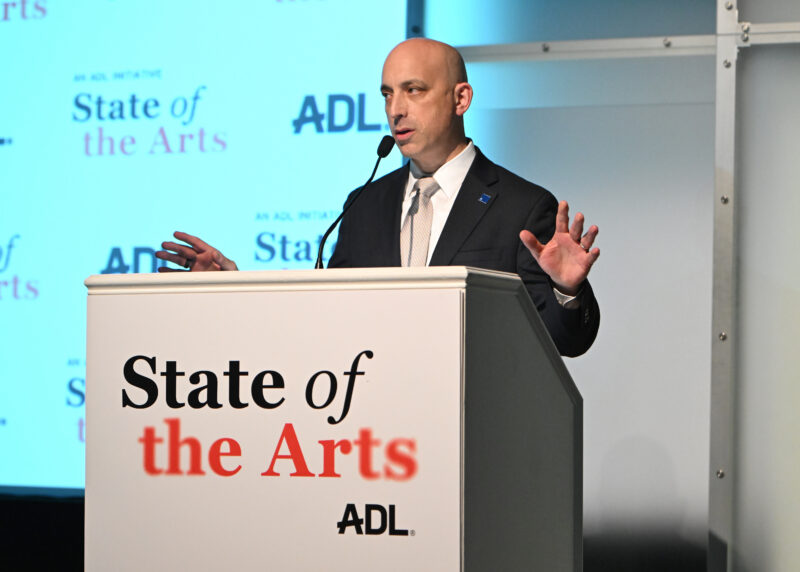
“For more than a year, we and other Jewish organizations told the American Psychological Association’s leadership exactly what needed to change, and they failed to act,” ADL CEO Jonathan Greenblatt said in a statement. “A federal advisory committee has now confirmed what Jewish psychologists have been saying all along: antisemitism within this organization is pervasive. An accreditor cannot credibly set standards for an entire profession while failing to uphold them within its own walls. This suspension should be a turning point, not another headline the APA waits out.”
Lewin said that she hopes that advocates in the Jewish community focused on the subject also come together over the next year to discuss real alternatives and other approaches to promote psychological educational programs that “don’t foster a hatred of Jews” if the APA does not enact necessary reforms.
More Stories

TWO JEWS, THREE OPINIONS
Jewish podcast ‘Chosen People Problems’ finds new home with Ark Media
PENSION POLITICS
Former NYC comptroller denounces Levine’s decision not to reinvest in Israeli bonds
SHARING A STAGE
Top N.J. Dem recruit campaigned alongside New Jersey mayor accused of antisemitism
SPENDING SCRAPPED
GOP leadership super PAC cancels spending plans against Rep. Landsman

PACKED PEWS
Scholten, Gottheimer and Bret Stephens join Dan Senor before packed Michigan crowd
EMPIRE STATE FEUD
Mamdani rips Blakeman’s claims he wouldn’t protect Jews as ‘directly racist’
Please log in if you already have a subscription, or subscribe to access the latest updates.
 Continue with Google
 Continue with Apple