










































































Eisenkot warns Netanyahu against launching war during coalition talks
Netanyahu to brief Yashar leader on current security situation following Eisenkot’s request, in the absence of an opposition leader
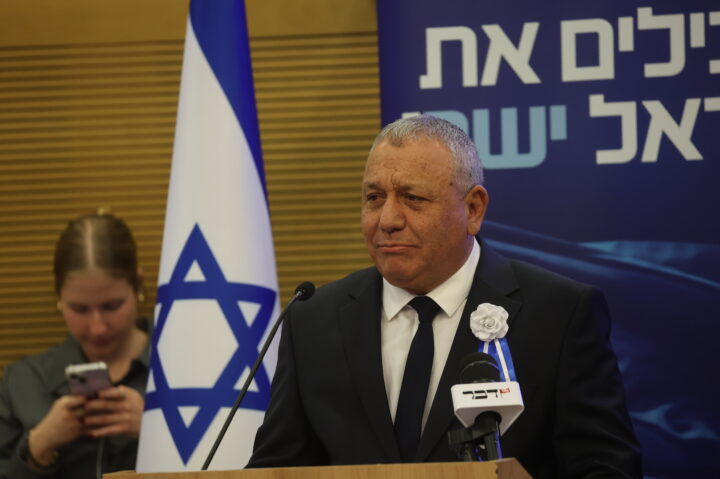
(Gil Cohen-Magen/picture alliance via Getty Images)
Yashar Party leader Gadi Eisenkot speaks to the press ahead of a party meeting at the Knesset in Jerusalem on the opening day of the new parliamentary session.


 Add JewishInsider on Google
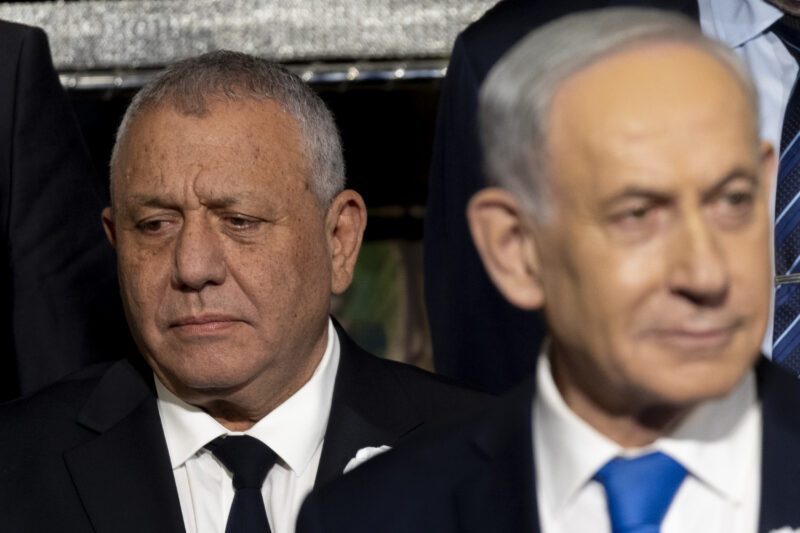
Yashar leader Gadi Eisenkot warned Israeli Prime Minister Benjamin Netanyahu that starting a major security operation while coalition talks are ongoing would violate the public’s trust, and sought to compel Netanyahu to brief him on national security.
Eisenkot sent Netanyahu a letter on Wednesday demanding that he “act with national responsibility at this sensitive time. Exercise restraint and caution regarding dangerous actions that can wait until a new government that has secured the confidence of the Knesset is sworn in. Do not violate the public’s trust in the institutions of the government and in the decision-making process.”
Negotiations to form a governing coalition led by Eisenkot officially began this week, amid ongoing U.S.-Iran tensions and Israeli strikes in Gaza.
Eisenkot’s letter comes after Israel’s Channel 12 reported on Wednesday that IDF Chief of Staff Lt. Gen. Eyal Zamir opposed actions Netanyahu sought to have the military carry out against Iran, in light of the current political uncertainty and U.S. President Donald Trump’s apparent lack of enthusiasm for a renewed war with Tehran following the Republicans’ major losses in the midterm elections.
“The use of the security forces in the absence of a direct and immediate threat requiring action without delay could have devastating consequences for Israeli democracy and citizens’ trust in the institutions of government,” Eisenkot stated in the letter. “You must not place the heads of the security establishment in a grave constitutional dilemma or leave them in doubt about what is required of them and the right course of action. Allow them to uphold, without doubt, the sacred duty entrusted to them.”
In a speech to the Knesset this week, Netanyahu said that “Iran is acting to renew the nuclear threat. The only way to remove this existential threat forever is to bring down the ayatollahs’ regime. We will soon face international pressures to accept a nuclear Iran and the existence of the terror regime that seeks to destroy us… Facing these threats, we must do one thing in this house: Put aside all other considerations and establish a national unity government.”
Netanyahu remains prime minister until a new government is sworn in; while the opposition calls him a “caretaker prime minister,” no such legal designation exists in Israel. The outgoing government is not constrained by law in actions it can take, though there have been legal precedents regarding reasonable actions such a government may take, especially with regard to budgetary allocations. Outgoing governments have started military operations in the past, such as the 2008, 2012 and 2019 Gaza operations, the latter two of which were under Netanyahu’s leadership.
The Prime Minister’s Office responded to Eisenkot that “every decision made by the government led by Prime Minister Netanyahu was made for security reasons only and in full coordination with the security establishment. They brought unprecedented achievements to the State of Israel and will continue to do so in the future.”
“Instead of sowing fear and separation, we must behave responsibly,” the PMO statement read. “Eisenkot’s letter is an irresponsible move … It is a transparent attempt to bring politicization to the matter of Israel’s national security.”
Netanyahu’s office accused Eisenkot of “trying to establish a government with terror supporters” — as the prime minister has called Arab parties in recent weeks — and called for Eisenkot to form a coalition with him.
Defense Minister Israel Katz said on Thursday that the government does not “need approval from the opposition or any legal authority to direct the IDF to carry out assassinations in Gaza, defensive operations and strikes in Lebanon, maintain the security zone in Syria to protect communities in the Golan, clear a terrorist neighborhood in Hebron.”
“With regard to Iran, we have demonstrated resolve and sound judgment, in full coordination with the IDF, and this will continue to be the case … Israel’s security is not on hold and not waiting for the political processes that are taking place in parallel,” he stated.
Eisenkot sent a second letter to Israeli Attorney General Gali Baharav-Miara asking her to order Netanyahu to hold regular security briefings with him “to ensure effective oversight, uphold a proper national decision-making process and safeguard national security interests.”
By law, Israel’s prime minister must brief the opposition leader on national security each month. However, as there is no governing coalition, there is currently no opposition leader whom Netanyahu must brief.
Eisenkot argued in the letter, “in the absence of a new opposition leader, and as the person entrusted by the President of the State with the mandate to form a government, it is appropriate that [he] receive regular, structured and comprehensive security briefings, as well as access to intelligence assessments.”
He also wrote that his team has attempted to arrange such meetings with the prime minister, to no avail.
On Thursday morning, Netanyahu and Eisenkot’s offices announced that they will meet for a security briefing, with the prime minister’s military secretary, Maj. Gen. Guy Markizeno, in attendance.
Netanyahu and his allies in the Knesset have also reportedly attempted to prevent the Knesset Foreign Affairs and Defense Committee, which has oversight over the IDF and Mossad, from convening. Following the new Knesset’s inauguration on Tuesday, Eisenkot’s bloc moved to place its members at the helm of major Knesset committees, including Yisrael Beiteinu leader and former Defense Minister Avigdor Liberman as chairman of the Foreign Affairs and Defense Committee.
Liberman wrote on X on Thursday morning that “a caretaker government cannot make decisions that could drag Israel to war without parliamentary oversight and without the full agreement of all security agencies. I emphasize: all security agencies.”
More Stories
Daily Overtime
GOP senators reject Vance’s Iran war blame

FUNDING FIGHT
Top Senate Dem says ‘looking at all options’ to end Iran war ahead of December funding deadline

THREAT THWARTED
Armed man arrested after trying to enter D.C. synagogue before Shabbat services
WORDS OF WARNING
Karl Rove says JD Vance ‘should not be president’ over Israel, Middle East stance
SANCTIONS STRATEGY
Rubio: Military operations in Iran unnecessary — for now
Daily Overtime
Senate Dems call to nix Israel cooperation provision
Please log in if you already have a subscription, or subscribe to access the latest updates.
 Continue with Google

 Continue with Apple