


















































Netanyahu does damage control after Trump, Vance, Rubio condemn annexation push
The Israeli PM called the Knesset vote ‘a deliberate political provocation by the opposition to sow discord during’ Vance’s visit
Marc Israel Sellem/Getty Images
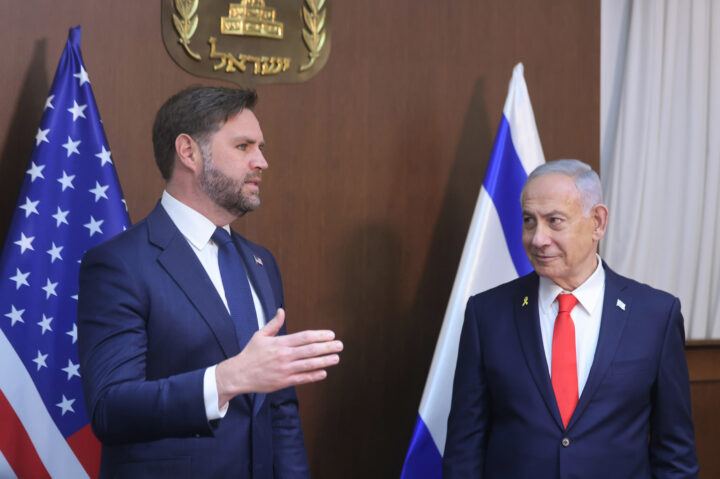
U.S. Vice President J.D. Vance (L) and Israeli Prime Minister Benjamin Netanyahu (R) speak to the media at the Prime Minister's Office in West Jerusalem, on October 22, 2025.


 Add JewishInsider on Google
Israeli Prime Minister Benjamin Netanyahu distanced himself on Thursday from the Knesset’s approval of two bills to extend Israeli sovereignty to the West Bank, after President Donald Trump, Vice President JD Vance and Secretary of State Marco Rubio spoke out against annexation.
The Knesset approved two settlement annexation bills brought by right-wing members of the opposition in preliminary votes on Wednesday, despite the coalition whipping votes against them.
The bill to annex the entire West Bank, proposed by Avi Maoz, the sole lawmaker from the anti-LGBT Noam party that quit the coalition earlier this year, received 25 votes — most of which were from Netanyahu’s coalition — with 24 voting against it.
The other bill, which would have the Jerusalem suburb of Maaleh Adumim be considered part of sovereign Israel, was proposed by former Defense Minister Avigdor Liberman and his Yisrael Beiteinu party and passed the early vote with 32 in favor — with only one from the coalition — and nine opposed. The bills still have to go through committee meetings and three plenary votes to become law.
Trump voiced opposition to annexation efforts in an interview with Time magazine published Thursday, but conducted before the Knesset vote, and said they could threaten U.S. support for Israel.
Annexation “won’t happen because I gave my word to the Arab countries,” Trump said, “and you can’t do that now. We’ve had great Arab support. … It will not happen. Israel would lose all of its support from the United States if that happened.”
Though the first Trump administration’s 2020 peace plan would have allowed Israel to annex parts of the West Bank, Netanyahu committed later that year to refrain from such a move in exchange for entering the Abraham Accords with the United Arab Emirates.
Vice President JD Vance was asked about the vote on his way onto Air Force Two departing Israel on Thursday, and said that he was “confused” and found the vote “weird.” He said he asked about the vote and was told it was symbolic.
“If it was a political stunt, it was a very stupid political stunt, and I personally take some insult to it,” he said. “The policy of the Trump administration is that the West Bank will not be annexed by Israel; that will continue to be our policy and if people want to take symbolic votes, they can do that, but we certainly weren’t happy about it.”
Rubio, who landed in Israel on Thursday, said the night before that the Knesset vote was “counterproductive,” while acknowledging that Israel is “a democracy, they’re going to have their votes. People are going to take these positions.”
Netanyahu attempted to repair the damage of the votes on Thursday morning, with a statement from his office calling them “a deliberate political provocation by the opposition to sow discord during Vice President JD Vance’s visit to Israel. The two bills were sponsored by opposition members of the Knesset.”
According to the statement, “the Likud party and the religious parties (the principal coalition members) did not vote for these bills, except for one disgruntled Likud member who was recently fired from the chairmanship of a Knesset committee. Without Likud support these bills are unlikely to go anywhere.”
Maoz’s bill got support from six coalition lawmakers from Finance Minister Bezalel Smotrich’s Religious Zionist Party and seven from National Security Minister Itamar Ben-Gvir’s Otzma Yehudit party. One Religious Zionist Party MK voted for Liberman’s legislation.
The one Likud lawmaker who supported Maoz’s bill was Yuli Edelstein, who was removed from the prestigious post of chairman of the Knesset Foreign Affairs and Defense Committee earlier this year due to his refusal to usher in legislation that would continue the broad exemption from IDF service for Haredim. Edelstein argued in a post on X: “If my only sin was standing with the Land of Israel and voting for applying sovereignty in Judea and Samaria” — the Biblical name for the West Bank — “then I am proud of it.”
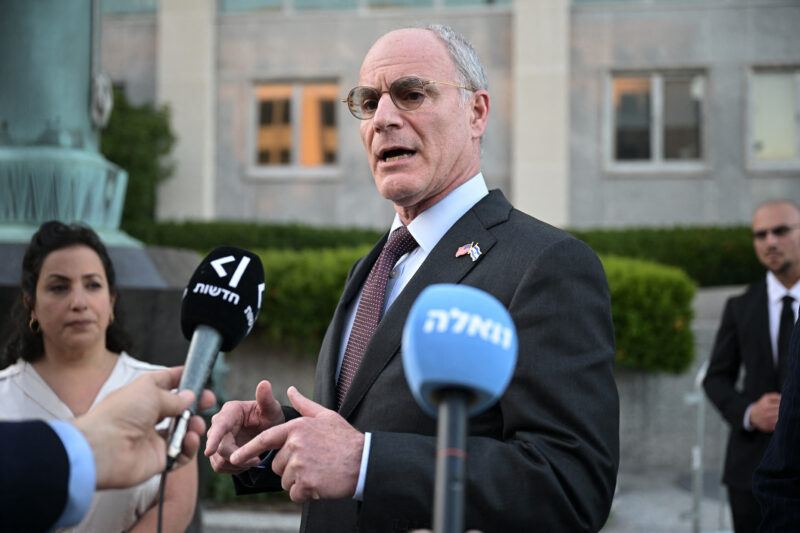
Israeli Ambassador to the U.S. Yechiel Leiter assisted in Netanyahu’s damage control efforts, calling Sen. Lindsey Graham (R-SC) to clarify the situation.
Leiter assured Graham “that this vote was not intended to be a slight to the U.S. and the position of the Prime Minister is that the U.S. is Israel’s most important and valuable ally and partner, and there will be no major changes without consulting and cooperating with the U.S.,” the South Carolina senator wrote on X.
“As with all legislative bodies and democracies, there are things you can control and things you cannot,” Graham added. “[Leiter] vigorously stressed no offense was meant and reinforced that no major decisions will be made by Israel without cooperation and coordination with the U.S.”
Separately, coalition chairman Ophir Katz, the Likud lawmaker responsible for whipping votes, said on Thursday that Netanyahu “clearly instructed me last night that the coalition must not vote for the bills on the matter of sovereignty. There was coalition discipline on the matter. Since there were MKs who acted against the prime minister’s instructions, the bills passed. Following that, the prime minister instructed me not to advance these bills until further notice.”
Katz punished Edelstein by removing him from the Foreign Affairs and Defense Committee entirely, but consequences for the coalition members from other parties have yet to be announced.
Edelstein said that “every such removal is a medal of honor for me. Anyone who thinks this deters me is making a big mistake.”
In 2010, during a visit by then-Vice President Joe Biden to Israel, Israel’s Interior Ministry announced, without first consulting Netanyahu, that it had approved 1,600 housing units in a northern Jerusalem neighborhood that the Obama administration and most of the international community considered to be a settlement. The incident sparked a diplomatic row between the countries.
More Stories

LESSONS LEARNED?
Three years after Oct. 7, Israel’s security is ‘much better,’ but risks loom

SCOOP
Rep. Lawler urges Treasury to reopen investigation into Swiss bank’s Nazi ties

FUNDRAISER FALLOUT
Attendee at El-Sayed fundraiser bragged about beating up pro-Israel demonstrator

Arrivederci, Reggio
Jewish preschool educators forced to condemn Israel to attend Reggio Emilia conference
exclusive
Second local Jewish Democratic official endorses Republican Lawler, citing Israel and antisemitism

CAMPAIGN TRAIL
‘There is no Palestinian nation,’ Ofer Winter says as party dips in polls
Please log in if you already have a subscription, or subscribe to access the latest updates.
 Continue with Google
 Continue with Apple