































































Democrats risk repeating 2020 mistakes with leftward shift on Israel
Racing to follow the ideological herd instead of focusing on the big political picture is the very mindset that drove so many Democrats off the political cliff in 2020
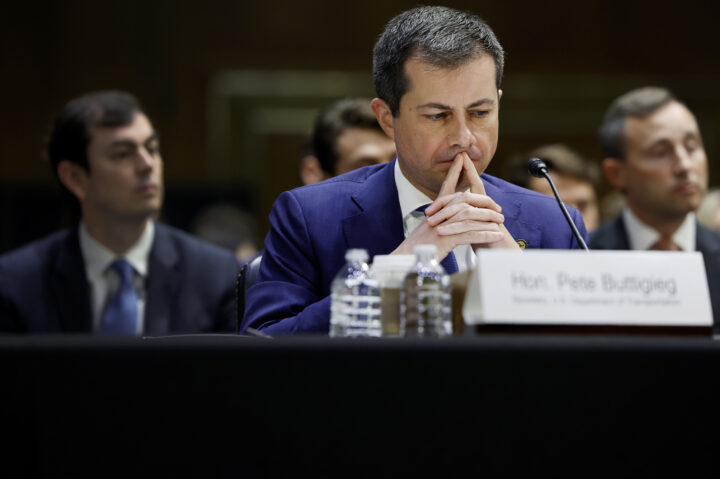
Anna Moneymaker/Getty Images
U.S. Secretary of Transportation Pete Buttigieg listens during a Senate Appropriations committee hearing in the Dirksen Senate Office Building on November 20, 2024 in Washington, DC.


 Add JewishInsider on Google
Watching several nationally ambitious Democrats, under pressure from the activist left, shift away from their measured support of Israel is reminiscent of watching the party’s 2020 presidential candidates rush to embrace a panoply of hard-left positions that turned politically costly in the long run.
The biggest flip-flop under pressure came from former Transportation Secretary Pete Buttigieg, who, in a recent appearance on the “Pod Save America” podcast, tried to maintain some support for the U.S.-Israel alliance while criticizing Israeli Prime Minister Benjamin Netanyahu for being responsible for the humanitarian crisis in Gaza.
That nuanced, largely-critical-of-Israel reaction, nonetheless, drew widespread opprobrium from the loudest anti-Israel voices within the party, including the former Obama administration operatives who host the show.
Within days, Buttigieg backtracked in favor of embracing a more hostile view towards the Jewish state. He came out against re-upping another long-term agreement to secure military aid to Israel — the type of deal that former President Barack Obama last secured before leaving office in 2016. He said he would have supported anti-Israel resolutions championed by Sen. Bernie Sanders (I-VT) to cut off some military aid to Israel. And he called for recognition of a Palestinian state, a position held by only the furthest-left Democratic lawmakers in Congress.
Buttigieg’s rapid reversal does him little good in advancing his national political interests. As a presidential candidate whose appeal was centered in his thoughtful pragmatism, his rush to pander to the far flank of his party threatens to undermine his more-moderate brand.
Sen. Ruben Gallego (D-AZ), to a lesser extent, is feeling similar pressure from the base as he hints at an interest in presidential politics. The swing-state senator, who has been critical of his party’s far-left, came out squarely against Sanders’ anti-Israel resolutions. But as anti-Israel activists aired an ad in Iowa targeting his position (he missed the actual vote in the Senate), he responded by saying his view on Israel is “evolving.”
And it wasn’t lost on the pro-Israel community that among the 26 Senate Democrats who voted with Sanders on the anti-Israel resolution was Sen. Amy Klobuchar (D-MN), a pragmatic Democrat who nonetheless is watching the radical strains within the party grow in influence within her state. Klobuchar is also expected to consider another presidential campaign, after experiencing surprising success in her first run — running as a centrist.
Five years ago, Israel wasn’t driving the left-wing grassroots the same way it is today. Back then, the issues driving the Democratic base were calls to defund the police, protecting illegal immigrants, ending private health insurance in favor of Medicare for All and backing protections for transgender individuals. Other than then-candidate Joe Biden, few of the leading candidates could resist pandering to what looked like an ascendant social justice movement. These issues ended up becoming politically toxic for the party’s image.
In fact, former Vice President Kamala Harris’ biggest impediments as the 2024 Democratic nominee stemmed from the most out-of-the-mainstream positions she adopted in that 2020 primary campaign.
It’s telling that Democrats who are focused on winning general elections in swing states or districts aren’t following suit with their anti-Israel rhetoric. It’s notable that the Democratic National Committee chairman is feverishly trying to head off an effort from the anti-Israel wing of the party calling for an arms embargo against Israel.
Even the polling, which has swung against Israel as the war drags on in Gaza, is still evenly divided. By a 13-point margin, voters are still more sympathetic to Israelis than Palestinians, according to a recent Gallup survey. And in a spring survey from the Chicago Council of Global Affairs, Israel received a “50” favorability rating — one that reflects divided and more-partisan public opinion towards the Jewish state, not a total collapse in support.
When the war ends and new Israeli elections are held in 2026 (if not earlier) with the possibility of a new prime minister, it’s not hard to imagine public opinion for Israel rebounding before the next U.S. presidential election. Indeed, racing to follow the ideological herd instead of focusing on the big political picture is the very mindset that drove so many Democrats off the political cliff in 2020 — a lesson that is being quickly forgotten in party circles.
More Stories
latin links
Top Mamdani international affairs staffer linked to global left-wing influence network
VIRGINIA IN VIEW
DMFI launches $1 million ad campaign supporting Elaine Luria
analysis
Sounds of silence: Texas Dems decline to speak out against Piker before his UT event

BUSY IN BEIRUT
Reps. Gottheimer, LaHood visit Lebanon, meet President Aoun

CAMPUS DIVIDE
University of Texas Jewish groups host former Israeli hostage to counter Piker program

the gulf divide
U.S. protection revives Hormuz oil traffic as debate shifts to how long it can last
Please log in if you already have a subscription, or subscribe to access the latest updates.
 Continue with Google
 Continue with Apple