





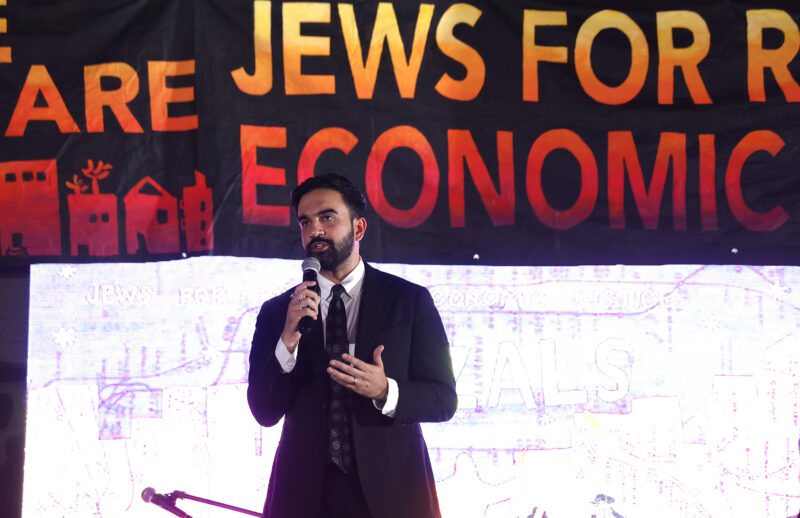













The Network Contagion Research Institute found that DSA trips abroad coincided with increases in the group’s promotion of U.S. adversaries’ priorities
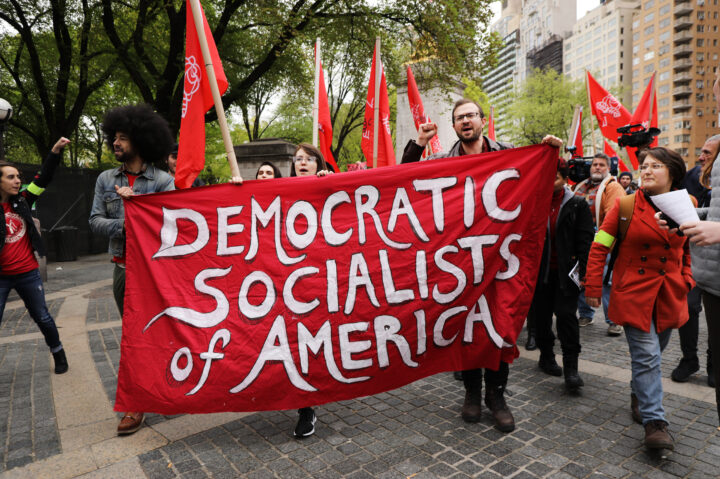
Spencer Platt/Getty Images
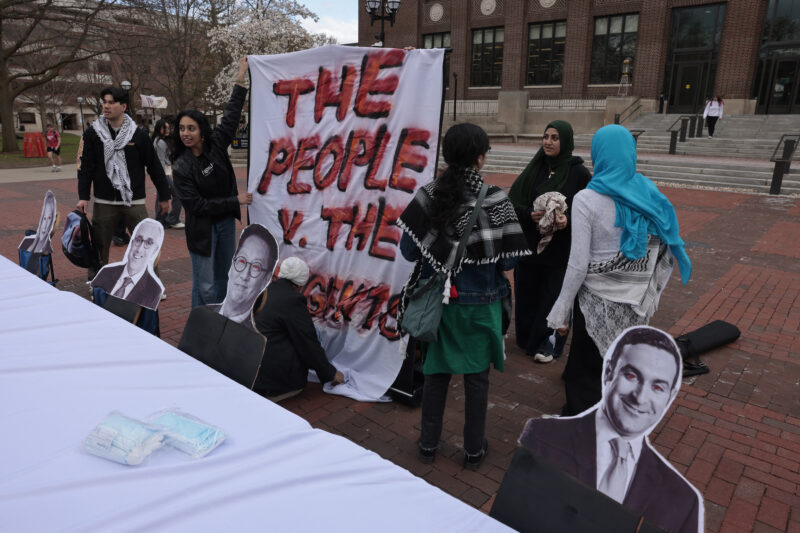
Members of the Democratic Socialists of America May 01, 2019 in New York City.


 Add JewishInsider on Google
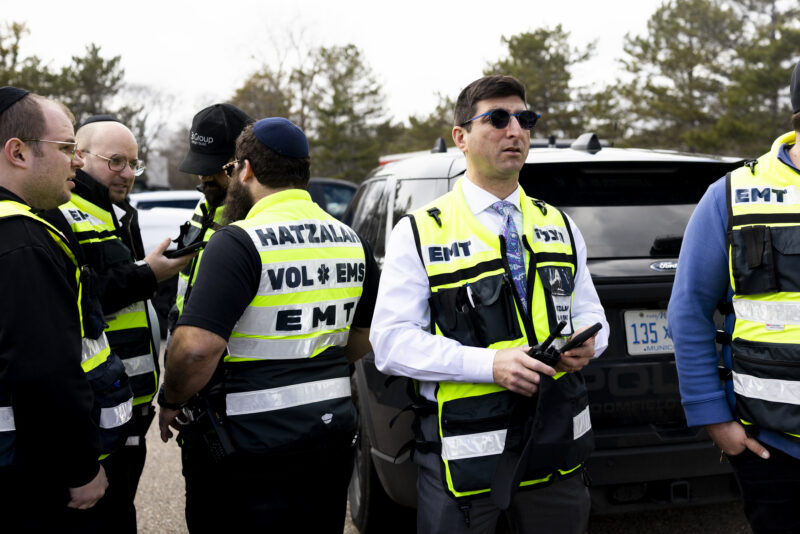
The Network Contagion Research Institute accused the Democratic Socialists of America, in a report released in late January, of activities that may run afoul of the Foreign Agents Registration Act — alleging that the far-left group may be acting as an unregistered agent of various U.S. adversaries.
The report points to foreign trips by DSA members to Venezuela, Cuba and China which have included access to top level officials and, the report alleges, lodging, transportation and other services provided by the host governments “that may constitute in-kind benefits from foreign government-linked entities” and “participation in quasi-official functions.”
The report claims that the DSA’s foreign engagements are followed by brief upticks in the group’s promotion of U.S. adversaries’ priority issues, such as removing sanctions on Cuba and Venezuela, “consistent with campaign-style political activity rather than incidental commentary.”
The NCRI alleges that the DSA’s “pattern of conduct across multiple countries raises material questions as to whether certain political activities were undertaken with foreign support, facilitation, or expectations of continued engagement.”
Noting that the DSA itself has stated its desire to create formal partnerships with foreign governments, the report suggests that a FARA investigation could look into “whether these stated partnership goals remained aspirational or were operationalized through material coordination, facilitation, or support, and whether any resulting activities required registration or remedial compliance.”
The report acknowledges that none of the activities described “conclusively establish that DSA or its members acted as agents of a foreign principal” but argues that the “pattern of conduct,” taken in sum, “meets the threshold for a good-faith FARA compliance inquiry.”
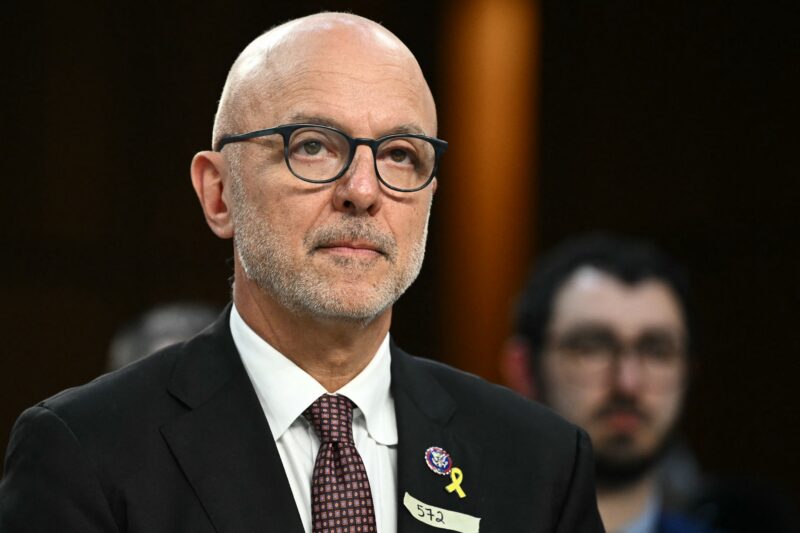
Adam Sohn, the co-founder of NCRI, is set to testify at a House Ways and Means Committee hearing on Tuesday on foreign influence in U.S. nonprofit organizations.
Some Venezuelan Jews see similarities in the response of far-left activists to Trump’s capture of Maduro and their criticism of Israel’s actions in Gaza
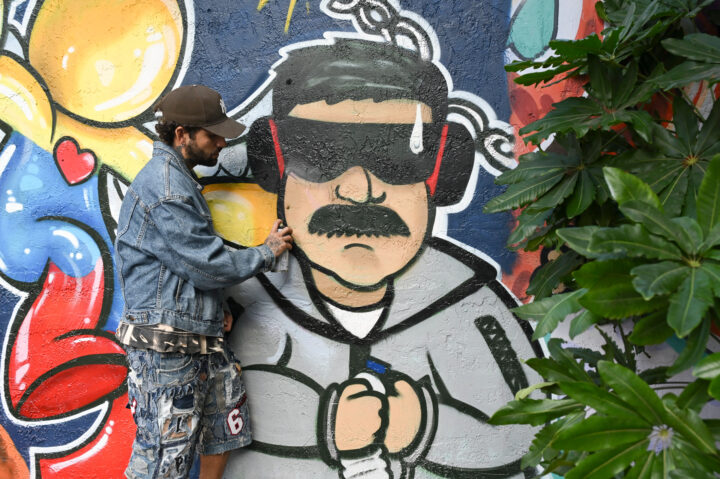
Michele Eve Sandberg/Sipa USA)(Sipa via AP Images
Mural artist from Venezuela, Pedro Martin, pictured. A mural depicting Venezuelan President Nicolas Maduro portrayed as captured is seen in the Wynwood Arts District in Miami, Florida.
When Valerie Stramwasser woke up on Saturday, Jan. 3, she glanced at her phone and saw hundreds of WhatsApp messages.
“I’m like, ‘Oh my god, something happened.’ I first thought that it was something in the family, and then I opened up and I hear, ‘We’re free.’ We’re free. It happened,” Stramwasser told Jewish Insider on Thursday. “Literally tears of joy.”
Stramwasser, 37, lives in Hollywood, Fla., with her husband and two children, but she grew up in Caracas, Venezuela. She was forced to flee the country as a teenager after a failed kidnapping attempt against her. She hasn’t been back in years, not even for the funerals of her grandparents.
The tears of joy began when she saw the news that the U.S. military had captured Venezuelan President Nicolás Maduro and his wife, and flown them to New York to stand trial on narco-terrorism charges. Stramwasser and her husband, who is also Venezuelan, couldn’t wait to tell their 8- and 11-year-old children the news.
“As a mom, you tell the stories to your kids, and they know how much I miss my country. But I’ve never been able to go back,” Stramwasser recounted. Then they drove to her brother’s house to celebrate and watch President Donald Trump discuss the operation. “This is one of the most important things that, as a Venezuelan, you can hear in the past 30 years.”
“Growing up there, it was a community of about 28,000 Jews that were living there. It was a vibrant community, a very successful and respected community,” said Paul Kruss, a city commissioner in Aventura, Fla., who also owns a popular local bagel shop. “Now there’s maybe 4,500 that live there, which should tell you all you need to know about the kind of brain drain that they had. It wasn’t only the Jewish community that fled.”
An economic crisis that began under the country’s socialist president, Hugo Chávez, who was elected in 1999, grew exponentially worse when Maduro came to power in 2013 after Chávez’s death. The resulting poverty, starvation and crime have led to a massive refugee crisis of roughly 8 million people who have left the South American country. Amid the global diaspora of Venezuelans, many are cheering the removal of Maduro, whom they view as responsible for deteriorating standards of living, repression and political dysfunction plaguing the country.
Stramwasser is one of hundreds of thousands of those Venezuelans who now call Florida home, including several thousand Venezuelan Jews who have developed outposts of their once-strong Caracas community centers in Miami.
“Growing up there, it was a community of about 28,000 Jews that were living there. It was a vibrant community, a very successful and respected community,” said Paul Kruss, a city commissioner in Aventura, Fla., who also owns a popular local bagel shop. His mother, who was from Warsaw, Poland, moved to Caracas after surviving the Holocaust. “Now there’s maybe 4,500 that live there, which should tell you all you need to know about the kind of brain drain that they had. It wasn’t only the Jewish community that fled.”
The surprise operation has largely garnered support from Republicans, while Democrats are more skeptical, including many who are outspoken critics of Maduro, igniting a debate in Congress about presidential war powers. Senate Minority Leader Chuck Schumer (D-NY) said Trump should not have acted without congressional approval.
“Maduro is a horrible, horrible person, but you don’t treat lawlessness with other lawlessness, and that’s what’s happened here,” Schumer said over the weekend.
In Florida, even among Democrats, the reaction was more celebratory.
“The capture of the brutal, illegitimate ruler of Venezuela, Nicolás Maduro, who oppressed Venezuela’s people is welcome news for my friends and neighbors who fled his violent, lawless, and disastrous rule,” Rep. Debbie Wasserman Schultz (D-FL) said in a statement. “However, cutting off the head of a snake is fruitless if it just regrows. Venezuelans deserve the promise of democracy and the rule of law, not a state of endless violence and spiraling disorder.”
The question of what comes next for Venezuela remains unanswered. The country’s interim president is Delcy Rodríguez, the vice president and oil minister, who was close to Maduro.
“The good thing about what just happened is that sometimes bad people in the world need a message to be sent. If they know that they can do bad things, and no one will come for them, well, they will just keep doing bad things,” said Brian Fincheltub. “ We want to go back, so we are very happy with this.”
Secretary of State Marco Rubio laid out a three-step process for Washington’s plans in Venezuela: stabilizing the country, followed by allowing American companies access to the Venezuelan market and, finally, a transition of power. But the U.S. has not laid out plans for a new political regime in Venezuela.
The Venezuelans cheering on the ouster of Maduro are content to wait a bit longer.
“She’s been part of the problem, no question,” Kruss said of Rodríguez. “I’m hopeful that the United States will be guiding them and letting the Venezuelan people decide who they want to be their leader, and I think this is just a transition period.”
Brian Fincheltub grew up in the Caracas Jewish community, which he called “one of the best in the world.” He was a social activist working in the slums of Caracas, but due to his ties to the opposition party, he fled the country in 2018 to avoid being jailed. Venezuela’s National Assembly named opposition leader Juan Guaidó acting president of Venezuela in 2019, setting up a showdown with Maduro, who never ceded power. Fincheltub moved to Washington to serve as Venezuela’s consul general under Guaidó’s opposition rule. Now Fincheltub works at the World Bank.
Fincheltub supports Trump’s actions, which he said is not about politics — that he would have supported the move had President Joe Biden done the same thing.
“The good thing about what just happened is that sometimes bad people in the world need a message to be sent. If they know that they can do bad things, and no one will come for them, well, they will just keep doing bad things,” said Fincheltub, 38. “ We want to go back, so we are very happy with this.”
Some Venezuelan Jews see similarities in the response of far-left activists to Trump’s capture of Maduro and their criticism of Israel’s actions in Gaza.
“People who are not Venezuelan, who did not grow up under Chávez or Maduro, who did not lose their country, their safety, their future, feel entitled to explain Venezuela to us,” said Valerie Stramwasser, who has said Florida will remain her home even if Venezuela elects a new government. “The same goes for people who are not Jewish, who have never lived the history, the wars, the constant existential threat, feel entitled to explain the Israel-Palestine conflict to us.”
“The same ones that were attacking Israel and the Jewish people are the same ones, or many of them, that are attacking President Trump, or that are attacking what happened in Venezuela,” Fincheltub said. “This is not about President Trump or President Biden. This is about the liberation of Venezuela.”
Stramwasser posted a video making a similar point on Instagram, where her posts usually get a couple thousand views. This one has been viewed more than 500,000 times.
“People who are not Venezuelan, who did not grow up under Chávez or Maduro, who did not lose their country, their safety, their future, feel entitled to explain Venezuela to us,” said Stramwasser, who has said Florida will remain her home even if Venezuela elects a new government. “The same goes for people who are not Jewish, who have never lived the history, the wars, the constant existential threat, feel entitled to explain the Israel-Palestine conflict to us.”
History, she added, will be on her side.
“History is very clear about this,” Stramwasser said in the video. “Those who confuse aggressors with victims don’t end up on the right side of history.”
Plus, Maduro's successor holds the party line
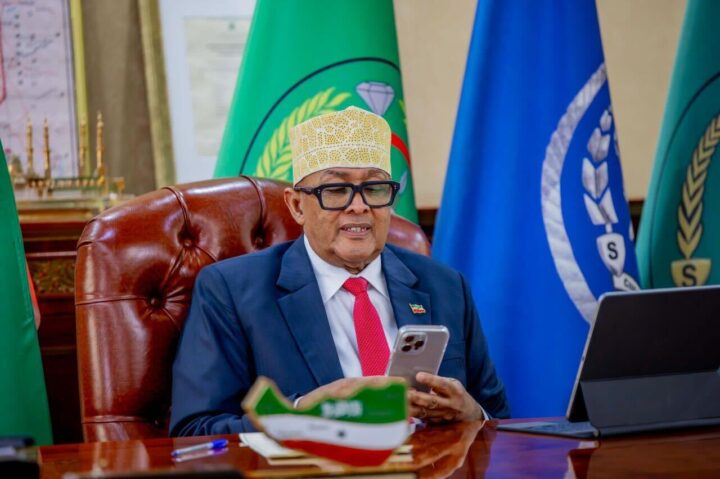
Amos Ben-Gershom (GPO)
Somaliland President Abdirahman Mohamed Abdullah speaks to Israel Prime Minister Benjamin Netanyahu, Dec. 26, 2025
👋 Good Wednesday morning!
In today’s Daily Kickoff, we do a deep dive into Israel’s strategic interests in and diplomatic overtures to Somaliland following Israeli Foreign Minister Gideon Sa’ar‘s trip the country, and look at early signals from interim Venezuelan President Delcy Rodríguez that she will maintain Caracas’ critical approach to Israel and relations with American adversaries. We talk to Rep. Josh Gottheimer about his recent trip to the Middle East and challenges in building Gaza’s International Stabilization Force, and report on an article in the Spanish daily El Pais that disparaged the Jewish background of the judge overseeing Venezuelan leader Nicolás Maduro’s case. Also in today’s Daily Kickoff: Rep. Dan Goldman, George Conway and Joyce Karam.
Today’s Daily Kickoff was curated by Jewish Insider Executive Editor Melissa Weiss and Israel Editor Tamara Zieve, with an assist from Danielle Cohen-Kanik. Have a tip? Email us here.
What We’re Watching
- Secretary of State Marco Rubio is holding House and Senate briefings this morning before meeting this afternoon with Saudi Foreign Minister Prince Faisal bin Farhan Al-Saud.
- The New York City Council will elect its next speaker today. Councilmember Julie Menin, the daughter of a Holocaust survivor, announced last month she’d garnered support from a supermajority of councilmembers. Read our report on Menin — and the counterweight she is expected to be to Mayor Zohran Mamdani’s agenda — here.
- Mamdani’s first major test with the Jewish community could come as soon as this evening, when PAL-Awda, the group behind the November protest outside a synagogue that was hosting a Nefesh B’Nefesh event about immigrating to Israel, is slated to protest another event hosted by NBN tonight in Manhattan.
- Elsewhere in Manhattan, the annual Colel Chabad International Awards Gala is taking place tonight. Russian-Israeli entrepreneur Yitzchak Mirilashvili, Heather and Joe Sarachek, Sara and Harry Krakowski and Lauren and Martin Tabaksblat are set to be honored at the event. Also slated to be honored is Ahmed al-Ahmed, the Syrian immigrant to Australia who helped disarm one of the Bondi Beach terrorists during last month’s terror attack in Sydney.
- The Atlantic Council’s Freedom and Prosperity Center is holding a panel discussion this morning at its Washington headquarters on the future of humanitarian assistance. Speakers include IsraAID CEO Yotam Polizer, Zipline Africa’s Caitlin Burton, DAI’s Tine Knott and UNICEF USA’s Patrick Quirk
What You Should Know
A QUICK WORD WITH JI’S Tamara ziEVE AND MATTHEW SHEA
At the conclusion of the 12-day war in June of last year, both Israel and Iran suspected that the ceasefire brokered by the U.S. would be a pause, not a final cessation of hostilities. That truce has lasted for more than six months, with both sides wary of entering another military conflict — one likely to be more deadly and destructive than the first.
But now, amid destabilizing world events from Venezuela to the Middle East — compounded by growing domestic pressure on the Islamic Republic amid nationwide protests — that ceasefire is even more tenuous, with officials in Tehran and Jerusalem closely watching the other’s every move, careful not to make a potentially disastrous miscalculation — even as both sides make overtures at de-escalation.
Speaking at the Knesset on Monday, Israeli Prime Minister Benjamin Netanyahu said, “President [Donald] Trump and I have expressed a firm stance — we won’t allow Iran to rebuild its ballistic missile industry or to renew the nuclear program, which we damaged severely in Operation Rising Lion.”
In response, Iran’s newly formed Defense Council warned on Tuesday that the country could act preemptively if it detects clear signs of a threat. “The long-standing enemies of this land … are pursuing a targeted approach by repeating and intensifying threatening language and interventionist statements in clear conflict with the accepted principles of international law, which is aimed at dismembering our beloved Iran and harming the country’s identity,” the council said.
Recent reports suggest that Israel, in an attempt to de-escalate tensions, has used Moscow as an intermediary, communicating through Russian President Vladimir Putin that it has no intention of launching a preemptive strike on Iranian soil. Iranian leaders, including Supreme Leader Ayatollah Ali Khamenei, are unconvinced.
In a post on X, Khamenei accused Israel of deception: “What makes the enemy first request a ceasefire during [12-day] war with the Iranian nation, then send messages saying he doesn’t want to fight us?”
“Now if he doesn’t believe the messaging and thinks that Israel is about to attack then you can understand why Israel is worried Iran is about to miscalculate and attack. Very tense days/weeks ahead of us,” Nadav Pollak, a lecturer on the Middle East at Reichman University, commented on Khamenei’s post.
REASONING AND RAMIFICATIONS
Why Israel recognized Somaliland — and what the rest of the world might do next
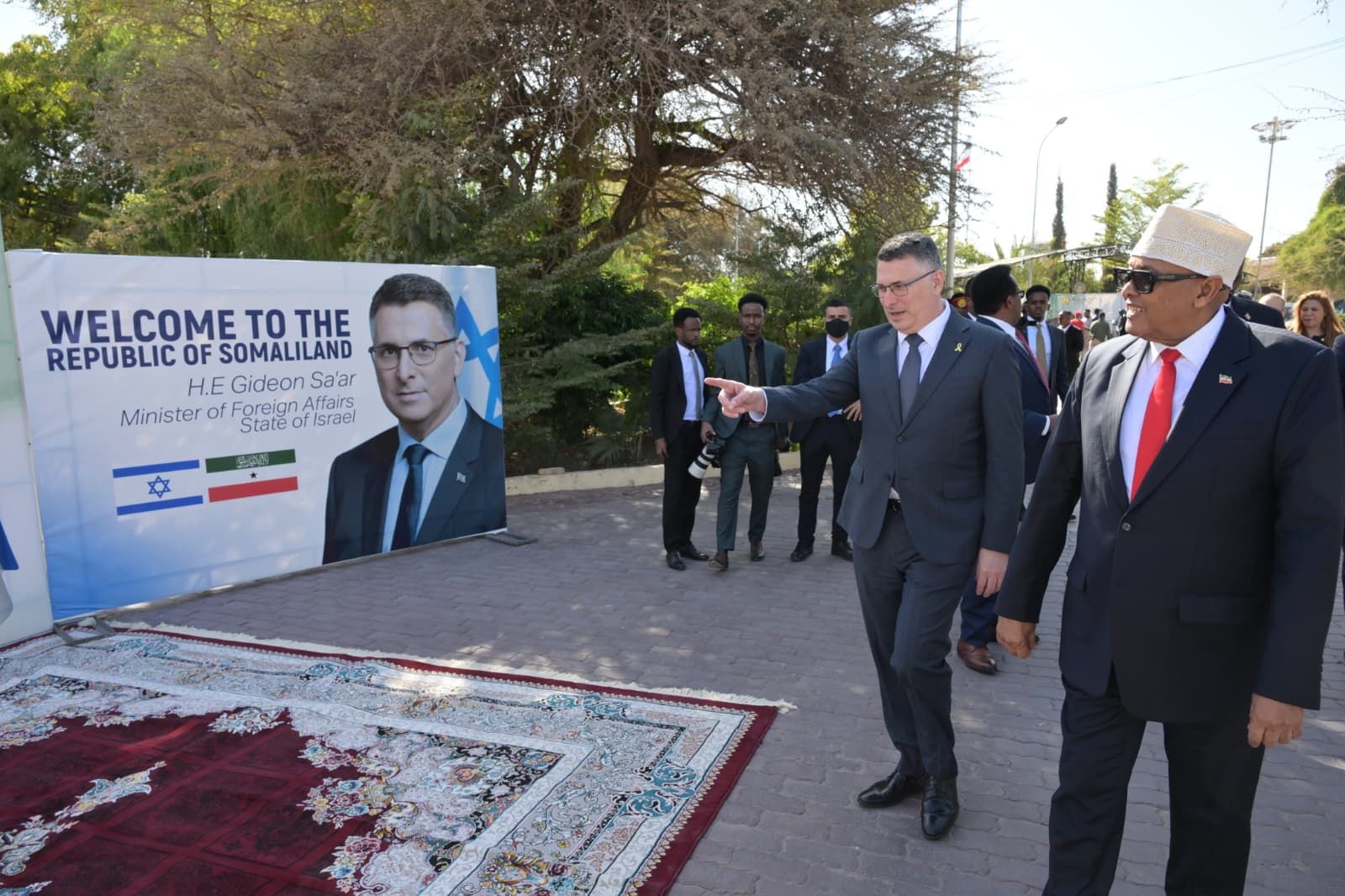
When Israel announced the day after Christmas that it would formally recognize Somaliland, making it the first country in the world to announce formal diplomatic relations with the secessionist region in the Horn of Africa, even some of Washington’s foremost foreign policy experts were sheepishly asking the same question: What, exactly, is Somaliland? There was no single event that led to Israel’s choice to recognize the sovereignty of Somaliland, which announced its independence from Somalia in 1991. The territory has functioned independently for 35 years; nothing in its governance changed last year. What changed was Israel — and its geopolitical calculus regarding regional security threats, Jewish Insider’s Gabby Deutch reports.
Security strategy: “The Houthis didn’t used to fire missiles at Israel. That’s new, and Israel’s now trying to respond to a new situation,” said David Makovsky, the Ziegler Distinguished Fellow at The Washington Institute for Near East Policy. “I have no doubt that this was driven by how to try to neutralize a threat from the Houthis that Israel takes very seriously.” Somaliland sits just across the Gulf of Aden from Yemen, from which the Iran-backed Houthis have fired drones and ballistic missiles at Israel following the Oct. 7 Hamas attacks in 2023.
Sa’ar in Somaliland: Israeli Foreign Minister Gideon Sa’ar made a historic diplomatic visit to Somaliland on Tuesday, marking the first official trip by an Israeli Cabinet minister to the territory and the latest move to strengthen bilateral ties following Israel’s recognition of Somaliland’s independence last month, JI’s Matthew Shea reports.
SAME AS THE OLD BOSS
New Venezuelan president signals similar anti-American foreign policy as Maduro
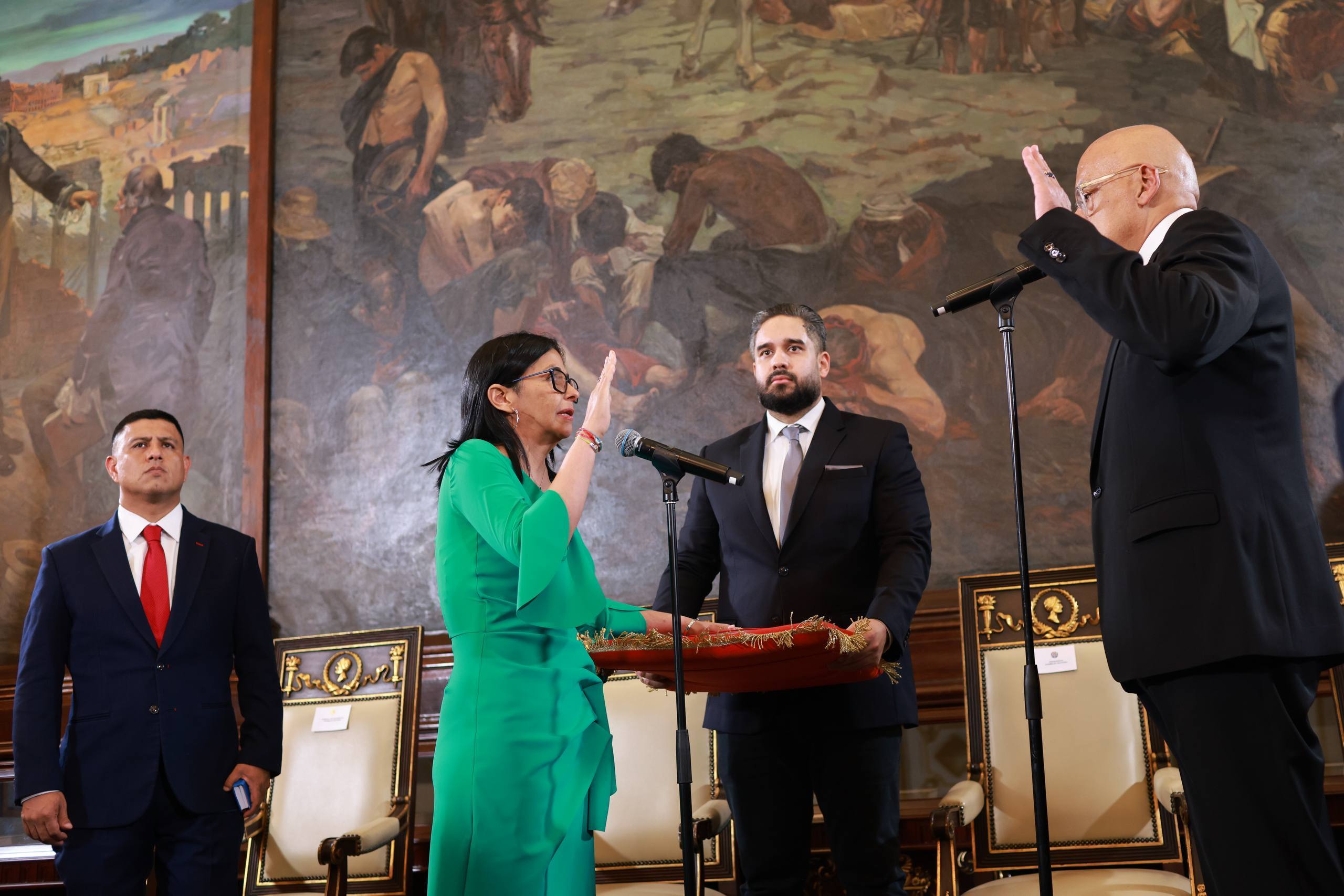
In the aftermath of U.S. strikes in Venezuela and the capture of leader Nicolás Maduro, uncertainty remains over whether the South American country’s ties to key U.S. adversaries and hostile posture toward Israel will change under interim President Delcy Rodríguez. Despite Maduro’s capture and vows from Venezuelan opposition leader María Corina Machado to return to the country and reject the authority of the interim president, the U.S. appears to be backing Rodríguez, who is closely aligned with Maduro and has shown a similar posture when it comes to Israel and U.S. adversaries, Jewish Insider’s Matthew Shea reports.
Similar direction: Brad Bowman, a senior director at the Foundation for Defense of Democracies, told JI that the Trump administration’s apparent backing of Rodríguez is a “mistake” and that he doesn’t see “any reason to believe” she would depart from Maduro’s approach to U.S. adversaries. “I have concern that we still have most of the problematic elements of the regime in Venezuela remaining in place,” said Bowman. “[Rodríguez] has been part of a regime that has been hostile to the United States and cozy with the Islamic Republic of Iran and its terror proxies. If one were a betting person, you would say at a minimum that [Rodríguez] is going to continue to harbor those problematic views toward China, Russia and Iran, if not manifest them in policy.”
REGIONAL RELUCTANCE
Gulf states yet to commit personnel to Gaza security force, Gottheimer says
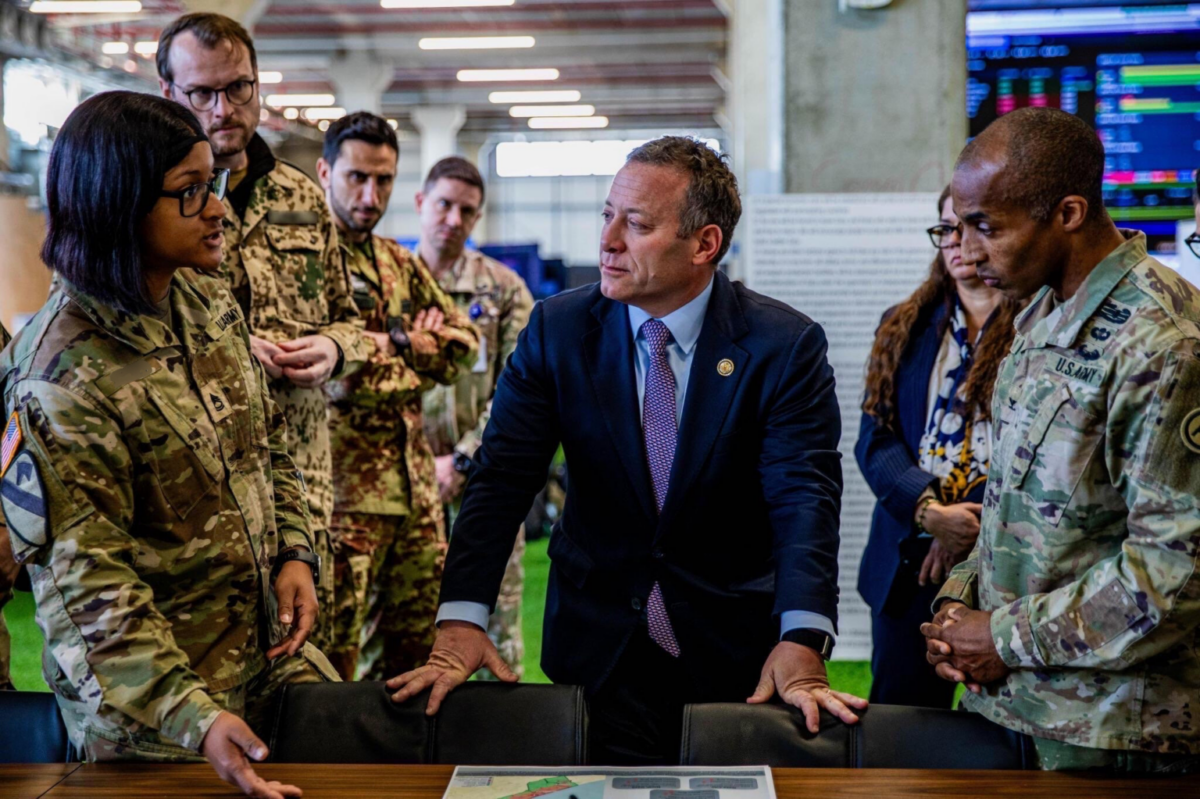
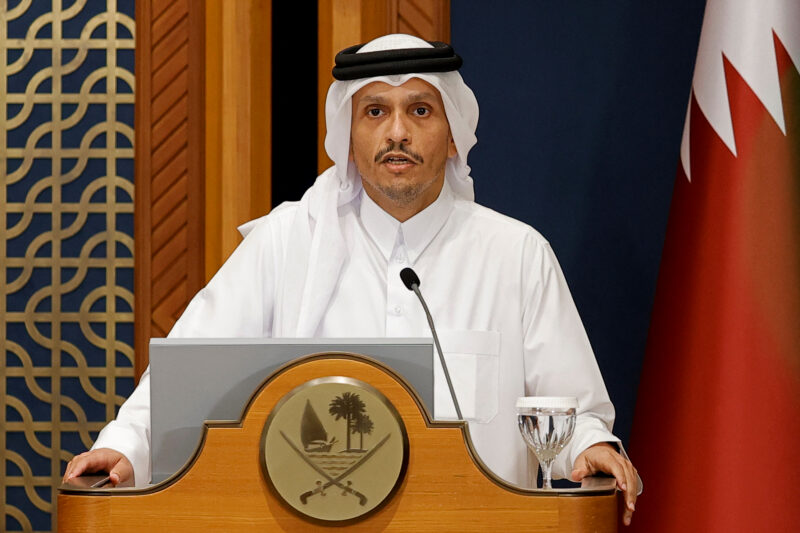
Rep. Josh Gottheimer (D-NJ), who visited Qatar, Bahrain and Saudi Arabia over the weekend, said that the Gulf countries have yet to commit personnel to be directly involved in the International Stabilization Force (ISF) in Gaza, without which the next phase of the ceasefire between Israel and Hamas cannot proceed, Jewish Insider’s Marc Rod and Emily Jacobs report. Gottheimer visited Qatar and Bahrain alongside Sen. Markwayne Mullin (R-OK) and Reps. Jimmy Panetta (D-CA), Jason Smith (R-MO) and Ronny Jackson (R-TX). Members of the delegation were photographed meeting with Qatari Prime Minister Sheikh Mohammed bin Abdulrahman bin Jassim Al Thani, who also serves as the kingdom’s foreign affairs minister.
Takeaway: “All the countries in the region who I’ve met with seem very eager to get to Phase 2. I think the question remains of which countries are willing to put boots on the ground and take the necessary steps to disarm Hamas,” Gottheimer told JI on Tuesday. “We’re all waiting for announcements on who that will be — that’s still the outstanding question … and what level of commitment.” Building and staffing the ISF, he emphasized, is a “very important piece of the puzzle right now.”
PAPER PROBLEM
Leading Spanish newspaper disparages Jewish background of Maduro trial judge
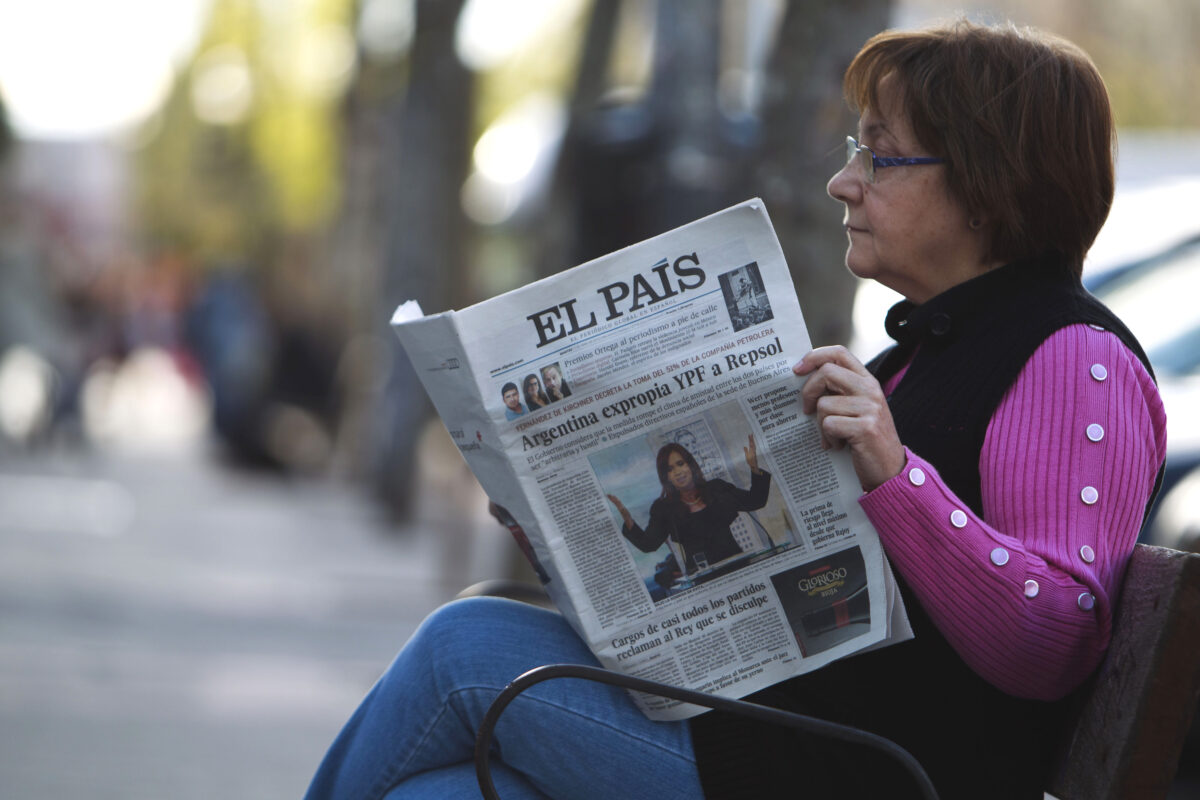
Spain’s leading newspaper, El País, came under fire Tuesday for publishing an antisemitic comment about the Jewish background of the judge overseeing the case against deposed Venezuelan President Nicolás Maduro. In a since-edited story, the left-leaning newspaper reported on Monday that federal Judge Alvin Hellerstein is a highly regarded jurist “despite being a recognized member of the Jewish community,” Jewish Insider’s Haley Cohen reports.
Printed words: “Hellerstein, who studied law at Columbia University (New York), began his career as a clerk in the court he now presides over. Throughout his career, he has issued well-reasoned rulings and strived to maintain impartiality, despite being a prominent member of the Jewish community,” the article stated in Spanish. The end of the last sentence was removed on Tuesday. Before it was edited, the story was reproduced by the Uruguayan El País, which also removed the line on Tuesday evening, following an inquiry from JI.
DILUTING THE MESSAGE
Asked about antisemitism, VP Vance says ‘all forms of ethnic hatred’ should be rejected
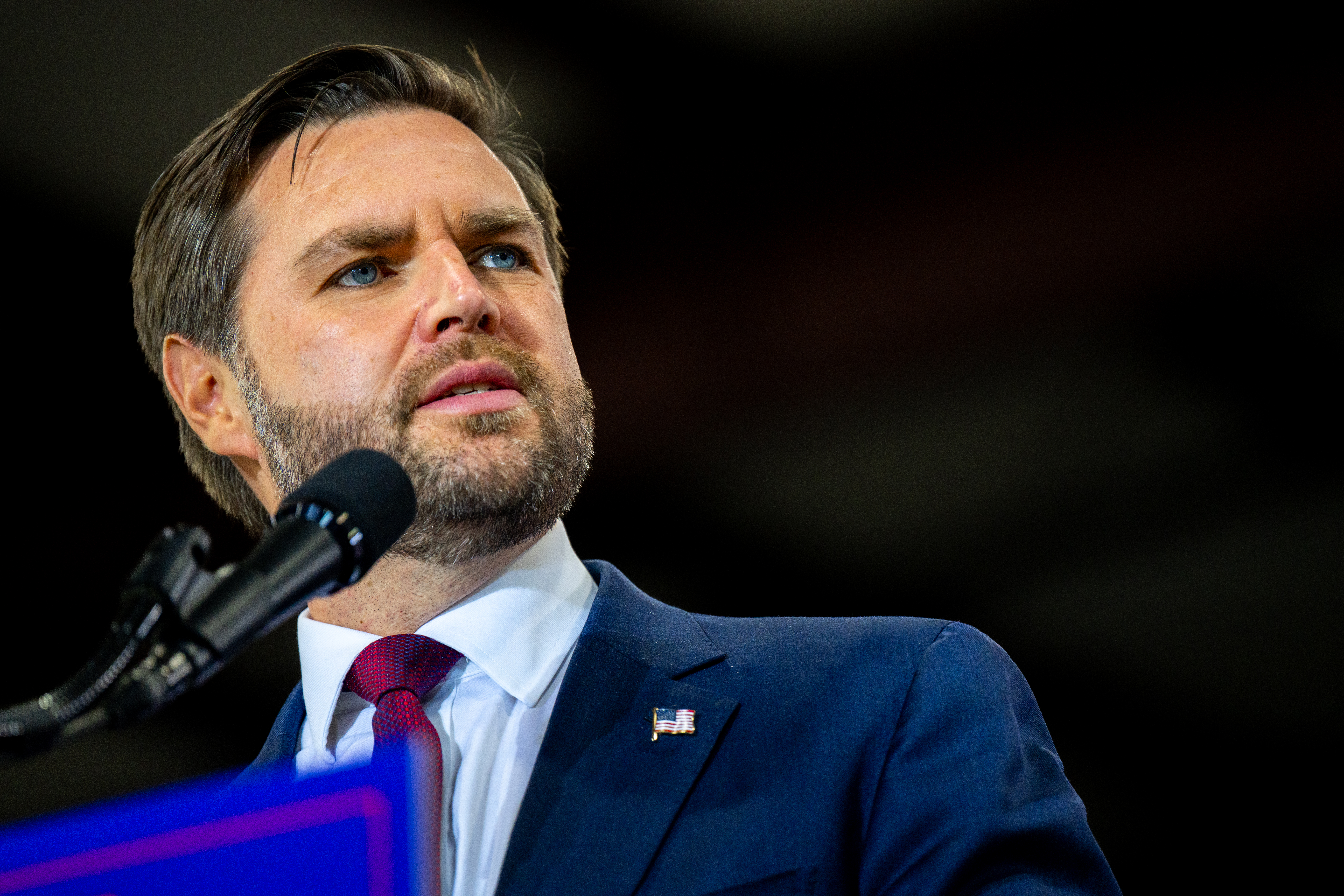
Vice President JD Vance, asked about the rise of antisemitism in the conservative movement, said “all forms of ethnic hatred” must be rejected and emphasized that the U.S. is rooted in “Christian principles,” Jewish Insider’s Danielle Cohen-Kanik reports. In an interview released Tuesday, CNN commentator Scott Jennings, on his eponymous podcast, asked the vice president about “certain kinds of views that have been espoused by certain kinds of people” in the conservative movement who “try to drag you into this conversation all the time.”
What he said: “Just for the record, does the conservative movement need to warehouse anybody out there espousing antisemitism in any way?” Jennings asked. “No it doesn’t, Scott,” Vance answered. “I think that we need to reject all forms of ethnic hatred, whether it’s antisemitism, anti-Black hatred, anti-white hatred. I think that’s one of the great things about the conservative coalition, is that we are, I think, fundamentally rooted in the Christian principles that founded the United States of America and one of those very important principles is that we judge people as individuals.”
CANDIDATE CONCERNS
George Conway, running for Congress, hits Mamdani on Israel views
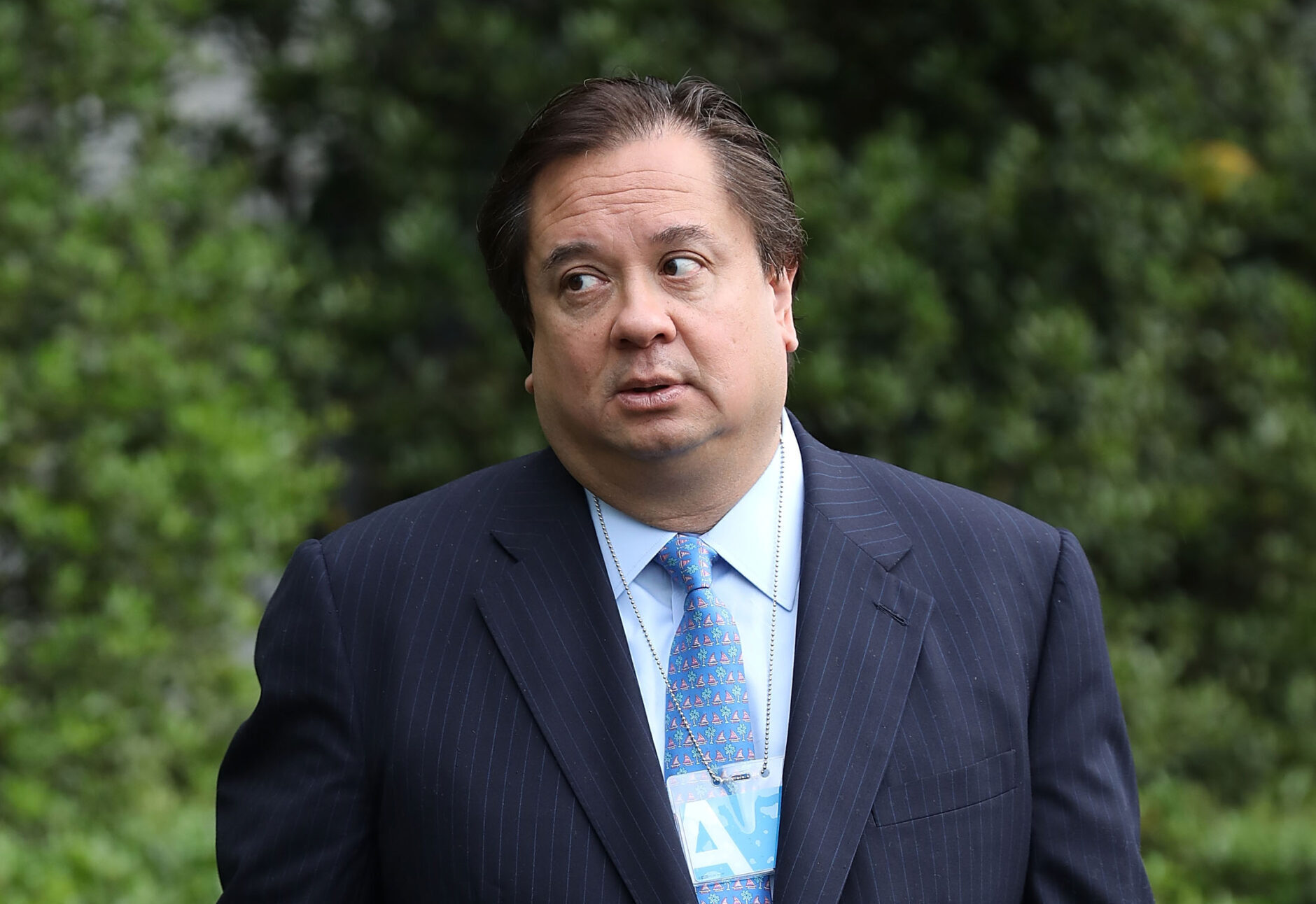
George Conway, a former Republican lawyer and prominent critic of President Donald Trump who announced his bid in a Democratic House primary in Manhattan on Tuesday, is raising concerns about New York City Mayor Zohran Mamdani’s approach to Israel and antisemitism, Jewish Insider’s Matthew Kassel reports.
Conway’s criticism: Conway, who recently relocated to Manhattan in order to run for the seat being vacated by retiring Rep. Jerry Nadler (D-NY), said in an interview with The New York Times published Tuesday that he was “disturbed” by Mamdani’s sharp criticisms of Israel, even as he called the mayor “a great politician” and voiced admiration for his “focus on affordability.” The first-time candidate, 62, added in an interview with NBC News on Tuesday that he was “concerned about some of the language” Mamdani has “used in the past about Israel,” as well as the mayor’s recent decision to revoke a pair of executive orders related to Israel and antisemitism on his first day in office.
Worthy Reads
Man of the Moment: In The Free Press, Eli Lake posits that Secretary of State Marco Rubio, who began the second Trump administration as “the odd man out,” now “might be the second most powerful man” in DC. “So what’s the secret to Rubio’s success? Administration officials and Trump intimates tell me that he clawed ahead through a combination of competence, loyalty, and realism. Rubio has not embarrassed the White House with episodes like Signalgate, when former national security adviser Mike Waltz accidentally included Atlantic editor in chief Jeffrey Goldberg in a Signal chat to discuss plans for bombing Houthi targets in Yemen. Rubio has not publicly accused subordinates of leaking classified information with little evidence, as Defense Secretary Pete Hegseth has done. ‘Marco puts his head down and does his job, and the president appreciates that,’ one administration official told me.” [FreePress]
Thank You For the Music: Rolling Stone’s Marisa Fox looks at how former Israeli hostages leaned on music for strength while in captivity in Gaza. “‘Music has been my lifeline until today,’ says [Alon] Ohel, who also attended Nova, and was snatched from a shelter along with Hersh Golberg-Polin. ‘Music helped me get through the nightmare … and rise above.’ Held in an apartment for his first 52 days, he would hum Bill Withers’ ‘Ain’t No Sunshine’ to himself, a track that took on new meaning in the pitch-black of the tunnels, where he was eventually relocated. Sometimes, he’d imagine the Police’s ‘Roxanne’ to rev himself up. But his most constant companion was ‘Shir LeLo Shem,’ or ‘A Song With No Name,’ by Israeli artist Yehudit Ravitz, and in particular the verse ‘For my song is a leaf in the wind/Faded out, forgotten/It’s the soft light opening in my nights/It is you who walks towards me.’” [RollingStone]
Word on the Street
Rep. Dan Goldman (D-NY) formally launched his reelection bid in New York’s 10th Congressional district, where he is facing a primary challenge from the left from former New York City Comptroller Brad Lander, on Tuesday…
In a New York Times interview, Goldman said that his support for Israel could cost him votes against Lander, acknowledging that some Democrats have been quick to turn on Israel; referring to a censure of Rep. Rashida Tlaib (D-MI) over her comments early in the Israel-Hamas war that he had backed, Goldman said he would “most likely vote differently” if the vote were held again…
House Majority Whip Tom Emmer (R-MN) announced the death of 65-year-old Rep. Doug LaMalfa (R-CA); the California Republican’s death shrunk the House GOP’s majority to 218-213…
Rep. Jan Schakowsky (D-IL), who is retiring at the end of this year, is expected to endorse Evanston, Ill., Mayor Daniel Biss in the Democratic primary to succeed her in the state’s 9th Congressional District…
Former Rep. Sean Patrick Maloney (D-NY) is passing on a challenge to Rep. Mike Lawler (R-NY) for his old Hudson Valley seat…
Former Rep. Mary Peltola (D-AK) is moving closer to launching a Senate bid challenging Sen. Dan Sullivan (R-AK) after narrowly losing her House reelection bid in 2024…
The Board of Deputies of British Jews called on the chief constable of West Midlands, U.K., to step down over his force’s recommendation to ban Maccabee Tel Aviv fans from a November match against Aston Villa and false statements given in a subsequent investigation…
A significant majority of Jewish Israelis feel that it is safer for them to live in Israel than abroad, according to a new survey by the Israeli Voice Index, reflecting heightened concerns about antisemitism overseas, Jewish Insider’s Tamara Zieve reports…
A teenager was killed and several others injured by a bus during a Jerusalem riot protesting Haredi draft efforts; the driver of the bus told investigators he had been attacked by Haredi protesters and lost control of the vehicle…
Senior Israeli and Syrian officials agreed at a U.S.-brokered meeting in Paris to speed up the pace of talks between the countries on reaching a security agreement…
Israel ordered Doctors Without Borders to cease operations in the Gaza Strip, citing the organization’s refusal to provide identification numbers of Palestinian employees as well its failure to comply with a policy cracking down on criticism of Israel’s conduct in Gaza…
Israel passed the final approval for the controversial E1 settlement project near Jerusalem, with a government tender now open for developers to submit bids, paving the way for construction that would effectively divide the West Bank…
At least 35 people have been killed and more than 1,200 arrested in anti-government protests sweeping across Iran…
Emily Bromberg is joining the Jewish Federations of North America as vice president of community security operations…
Joyce Karam was named the editor-in-chief of Al-Monitor…
Tennis table champion Josef Veselsky, who survived the Holocaust by joining the resistance in the mountains of Czechoslovakia before migrating to Ireland in 1949, where he eventually became the country’s oldest man, died at 107…
Pic of the Day
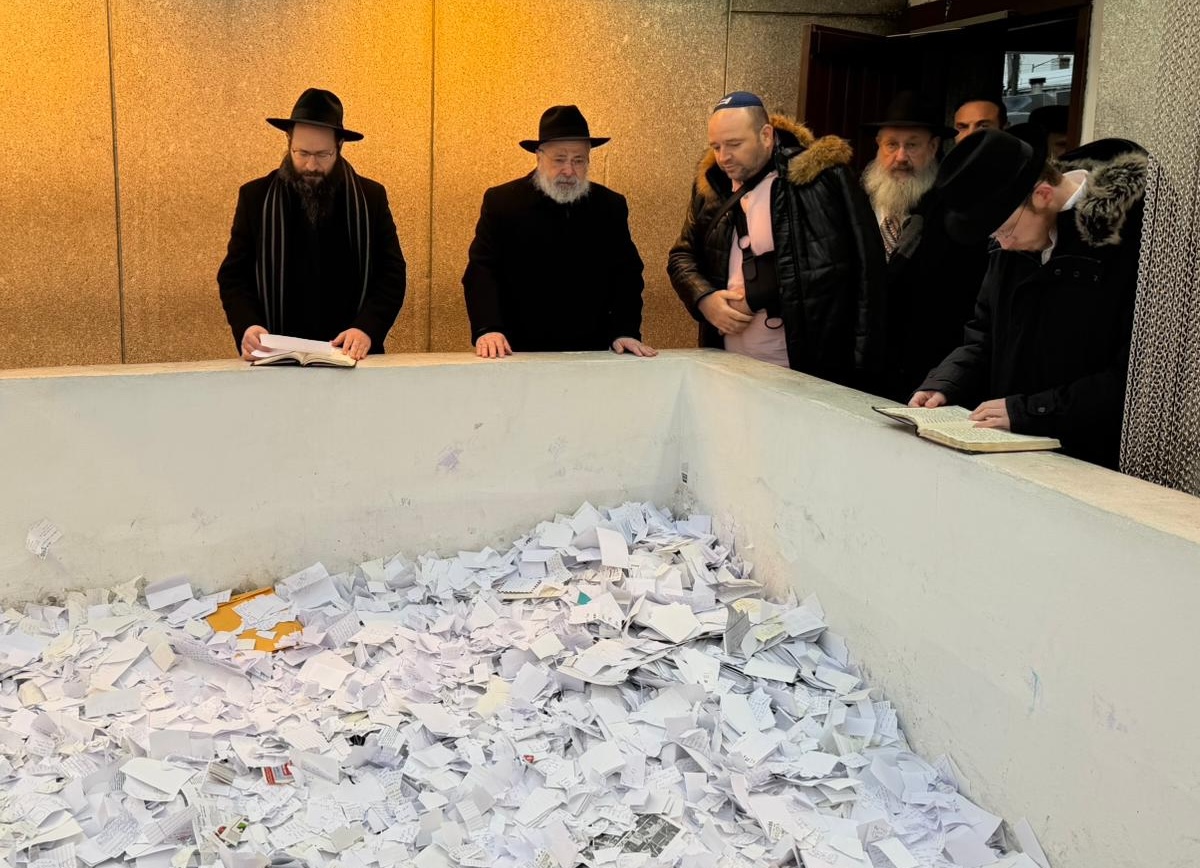
Ahmed al-Ahmed (third from left), who disarmed one of the terrorists during the terror attack on a Hanukkah celebration in Sydney, Australia, last month, joined Rabbi Yehoram Ulman (second from left), director of Chabad of Bondi, whose congregants and son-in-law were murdered in the attack, and Rabbi Sholom Duchman (fourth from left), director of Colel Chabad, at the Ohel, the resting place of the Lubavitcher Rebbe, Rabbi Menachem M. Schneerson, in Queens, N.Y.
Birthdays
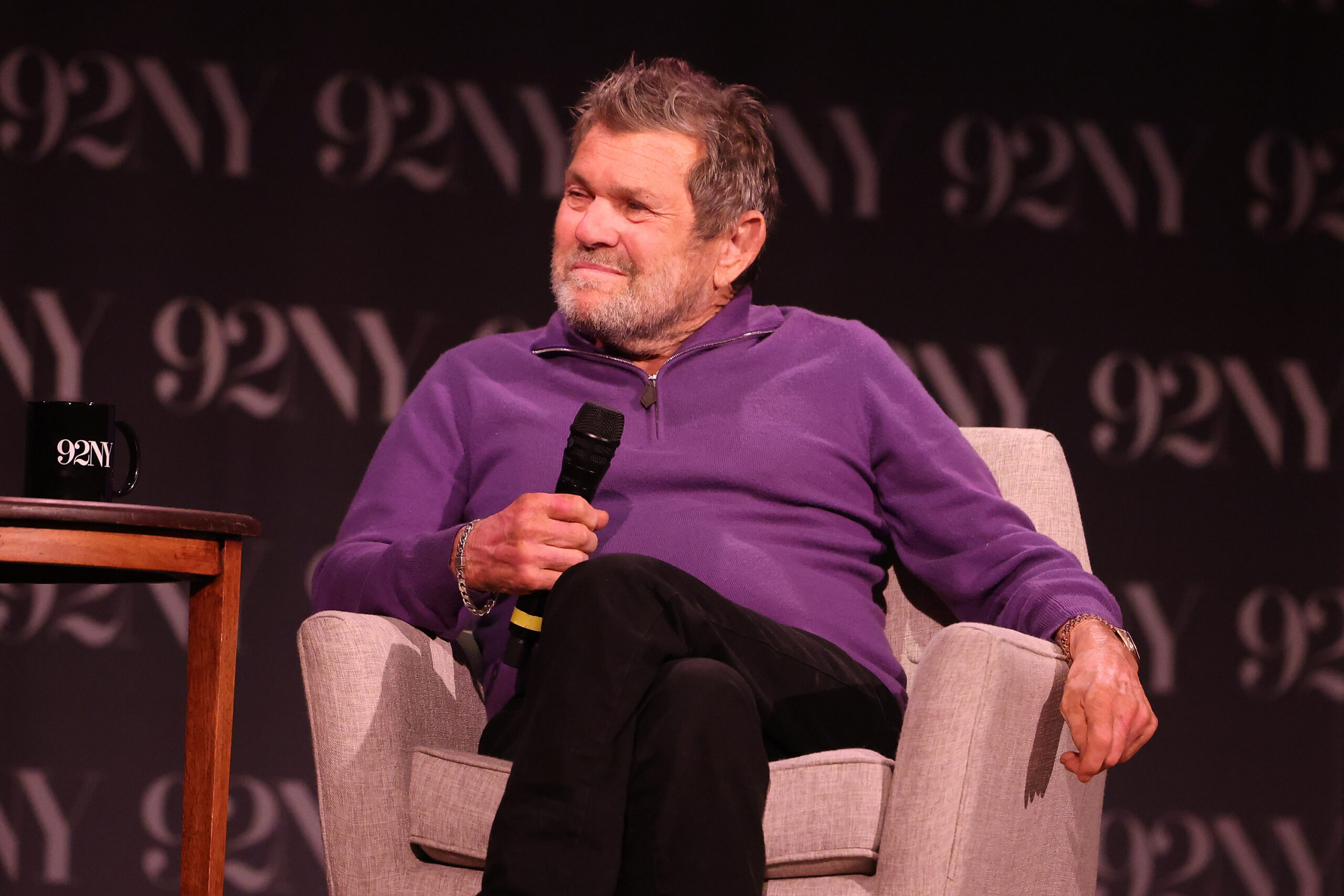
Co-founder and publisher of Rolling Stone magazine and co-founder of the Rock & Roll Hall of Fame, Jann Wenner turns 80…
Former president of the Federal Reserve Bank of Chicago, Michael H. Moskow turns 88… U.S. District Court judge for the Eastern District of Michigan since 1994, he assumed senior status in 2023, Judge Paul D. Borman turns 87… Pulitzer Prize-winning sports reporter, columnist and writer, he wrote for The New York Times from 1981 to 2007, Ira Berkow turns 86… Scottsdale, Ariz., resident, Bruce Robert Dorfman… Retired president of the University of South Florida system, Judy Genshaft turns 78… Senior U.S. District Court judge in Miami, Joan A. Lenard turns 74… Former brigadier general and chief rabbi of the IDF until 2016, then minister of Jerusalem affairs, Rafael “Rafi” Peretz turns 70… Former CEO of Glencore, one of the world’s largest commodity trading and mining companies, Ivan Glasenberg turns 69… Dermatologist and cosmetic surgeon in Beverly Hills, starting in 2011 he assumed control of his family’s nationwide real estate operations, Dr. Ezra Kest… Documentary filmmaker with a focus on social justice and Jewish history, Roberta Grossman turns 67… One of the heirs to the Hyatt Hotel fortune, Anthony Pritzker turns 65… U.S. senator (R-SD), he has served as Senate majority leader since January 2025, John Thune turns 65… U.S. senator (R-KY), Rand Paul turns 63… Managing director and senior relationship manager at Bank of America, she serves as the chair of the Jewish Funders Network, Zoya Raynes… Television and film actress, Lauren Cohan turns 44… Executive director of Keep Our Republic and author of Paths of the Righteous, Ari Mittleman… Concord, N. H.-based public affairs consultant, Holly Shulman… Executive director of Congregation Beth Am in Los Altos, Calif., Jeremy Ragent… Music director of the Israel Philharmonic Orchestra, he will become the chief conductor of the Munich Philharmonic at the start of the 2026-2027 season, Lahav Shani turns 37… Drummer and founding member of The Groggers, a pop punk band from Queens, Nechemia “Chemy” Soibelman turns 35… Reporter on Haredi and Knesset affairs for Walla News, Yaki Adamker… Author of five books and host of the history podcast “Noble Blood,” Dana Schwartz turns 33… National chair of Israel Policy Forum Atid, Jonathan Kamel… Pitcher for the Baltimore Orioles, the first Israeli player ever drafted by an MLB team, his great-uncle is Haim Saban, Dean Kremer turns 30…
As Israel signals restraint and Iran faces mounting internal pressures, both sides are increasingly wary of miscalculating
Stringer/Getty Images
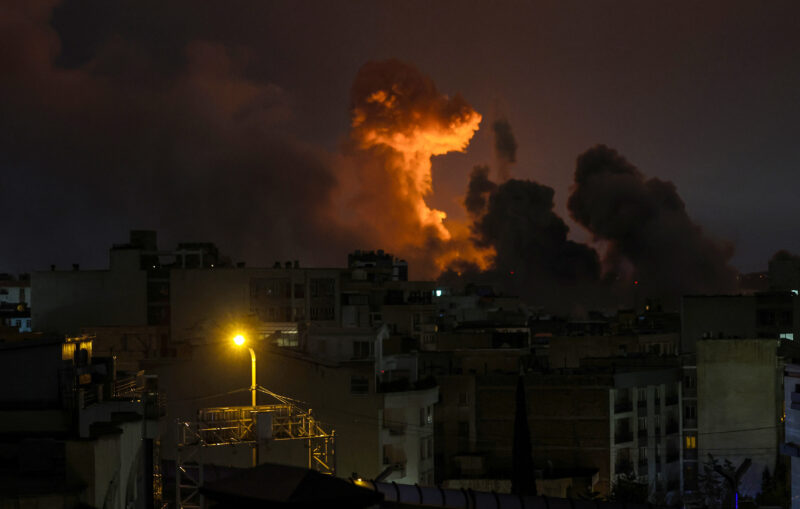
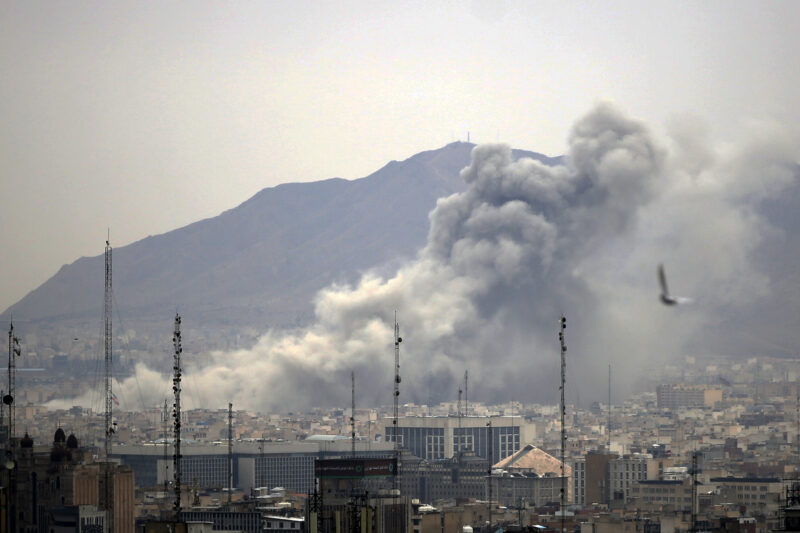
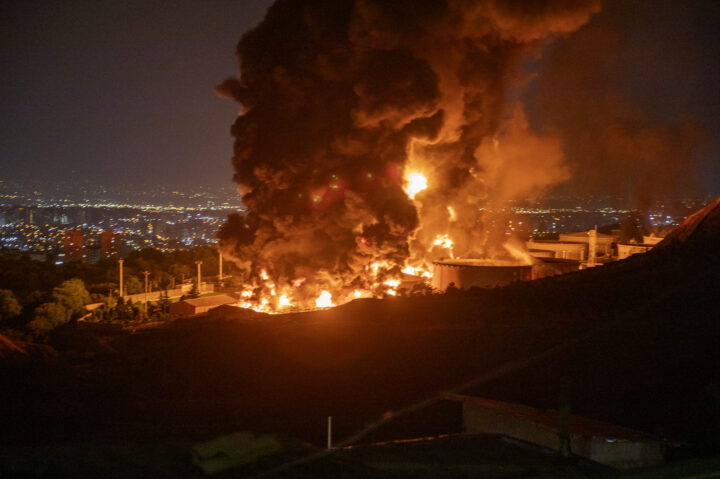
Fire and smoke rise into the sky after an Israeli attack on the Shahran oil depot on June 15, 2025 in Tehran, Iran.
At the conclusion of the 12-day war in June of last year, both Israel and Iran suspected that the ceasefire brokered by the U.S. would be a pause, not a final cessation of hostilities. That truce has lasted for more than six months, with both sides wary of entering another military conflict — one likely to be more deadly and destructive than the first.
But now, amid destabilizing world events from Venezuela to the Middle East — compounded by growing domestic pressure on the Islamic Republic amid nationwide protests — that ceasefire is even more tenuous, with officials in Tehran and Jerusalem closely watching the other’s every move, careful not to make a potentially disastrous miscalculation — even as both sides make overtures at de-escalation.
Speaking at the Knesset on Monday, Israeli Prime Minister Benjamin Netanyahu said, “President [Donald] Trump and I have expressed a firm stance — we won’t allow Iran to rebuild its ballistic missile industry or to renew the nuclear program, which we damaged severely in Operation Rising Lion.”
In response, Iran’s newly formed Defense Council warned on Tuesday that the country could act preemptively if it detects clear signs of a threat. “The long-standing enemies of this land … are pursuing a targeted approach by repeating and intensifying threatening language and interventionist statements in clear conflict with the accepted principles of international law, which is aimed at dismembering our beloved Iran and harming the country’s identity,” the council said.
Recent reports suggest that Israel, in an attempt to de-escalate tensions, has used Moscow as an intermediary, communicating through Russian President Vladimir Putin that it has no intention of launching a preemptive strike on Iranian soil. Iranian leaders, including Supreme Leader Ayatollah Ali Khamenei, are unconvinced.
In a post on X, Khamenei accused Israel of deception: “What makes the enemy first request a ceasefire during [12-day] war with the Iranian nation, then send messages saying he doesn’t want to fight us?”
“Now if he doesn’t believe the messaging and thinks that Israel is about to attack then you can understand why Israel is worried Iran is about to miscalculate and attack. Very tense days/weeks ahead of us,” Nadav Pollak, a lecturer on the Middle East at Reichman University, commented on Khamenei’s post.
Pollak told Jewish Insider that he sees the perception gaps between Israel and Iran as the “No. 1 risk for miscalculation. As we’ve seen from Khamenei’s tweet, he doesn’t believe the messages that came from Jerusalem about Israel not planning to attack. In his mind, Bibi just came back from Washington with Trump supporting action against Iran if some red lines are crossed. Bibi also continues to talk about the Iranian ballistic missile threat every week and that Israel will need to do something.”
Israeli commentator Nadav Eyal noted on Dan Senor’s “Call Me Back” podcast that “Israeli security officials are extremely worried about what’s happening vis-a-vis Iran, first and foremost because the Iranians are so tense and they are constantly fearing an Israeli attack themselves. So their first worry is miscalculation … If Iran senses that Israel might attack, it wants to preempt that. If Israel thinks that Iran is going to do that, it would want to preempt that.”
Tehran is also facing trouble at home, amid protests that have spread across the country over the last two weeks. The growing unrest, coupled with the Islamic Republic’s economic and climate woes, has put added pressure on the ayatollahs.
Aaron David Miller, a senior fellow at the Carnegie Endowment for International Peace, told JI that due to the Iranian regime’s vulnerable position amid nationwide protests over a severe economic crisis, “hardliners” within the IRGC could be weighing using a strike to “divert the public” and create national unity. However, he expressed that the decision would be a “strategic mistake,” suggesting that an Iranian strike this year is “highly unlikely.”
“It’s hard to see what the Iranians would gain,” said Miller. “A strike is simply going to wreak additional havoc on what the vast majority of the Iranian public is protesting against, which is inflation, a devaluation of the Iranian currency.”
Blaise Misztal, vice president for policy at the Jewish Institute for National Security of America, echoed those sentiments, adding that any Iranian strike now while the regime in Tehran is “on the ropes” would be “suicidal.”
“It seems unlikely that Iran would choose this moment to attack Israel,” said Misztal. “While it certainly might be looking for some way to distract its citizens from their grievances, all the evidence suggests that external aggression would have the opposite effect.”
Misztal said the Iranian regime is facing skyrocketing inflation and crumbling infrastructure “because it has chosen guns over butter and Iranians know it.”
“To once again pick up guns would only further inflame Iranians’ rightful anger,” said Misztal. “Not to mention that a direct Iranian attack against Israel would surely invite a devastating Israeli, if not also American, response.”
The lingering question is whether the fear of miscalculation will push either side toward action.
At a swearing-in ceremony on Monday, interim President Delcy Rodríguez appeared to embrace the ambassadors of Iran, China and Russia
Venezuelan National Assembly/Anadolu via Getty Images
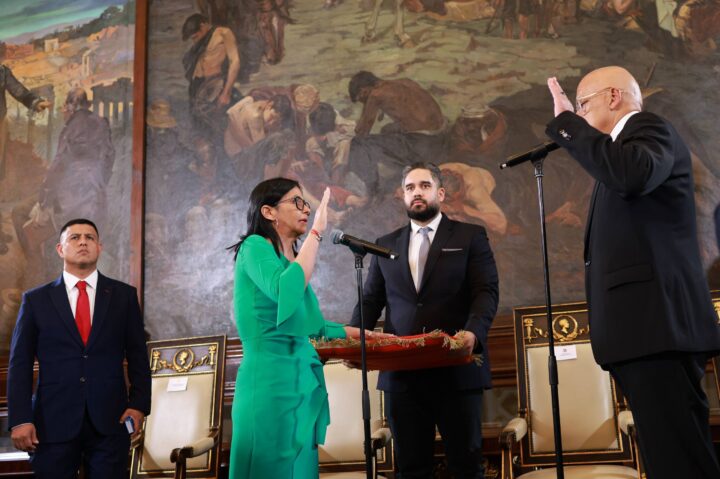
At the opening session of the National Assembly, Delcy Rodriguez (2nd L) is sworn in as acting president of Venezuela on January 5, 2026.
In the aftermath of U.S. strikes in Venezuela and the capture of leader Nicolás Maduro, uncertainty remains over whether the South American country’s ties to key U.S. adversaries and hostile posture toward Israel will change under interim President Delcy Rodríguez.
During his time in power, Maduro’s Venezuela had been deeply embedded in a broader network of U.S. adversaries, particularly Iran, Russia and China.
Dana Stroul, research director at the Washington Institute for Near East Policy, explained that Venezuela “is a key supplier of cheap oil to China and has provided fertile ground for Iran’s terrorist network abroad.”
“Venezuela under Maduro was firmly part of the anti-American bloc of countries seeking to upend the post-WWII order,” said Michael Koplow, chief policy officer at Israel Policy Forum. “Venezuela has particularly tight financial links with Iran and Hezbollah involving drugs and money laundering.”
The U.S. operation to oust Maduro was condemned by both China and Iran, who called it a violation of international law and demanded the illegitimate leader be freed. Experts have told Jewish Insider that the move potentially weakens Tehran’s hold in Latin America.
“It’s no surprise that the key enablers of the Maduro regime have all rejected the U.S. actions in Venezuela,” said Stroul. “They are now faced with the challenge of filling the Western Hemisphere gap in their network of anti-U.S. stakeholders.”
Jonathan Ruhe, a fellow at the Jewish Institute for National Security of America, said China and Iran will “miss having a Venezuelan partner to poke America in the eye from close range, launder their money, run their drugs and buy their weapons.”
Maduro also positioned himself as a consistent adversary of Israel, severing diplomatic relations in 2009 and repeatedly aligning Caracas with Palestinian causes and with Iran. After Venezuela’s disputed election in July 2024, Maduro accused “international Zionism” of orchestrating unrest in the country, claiming in a televised address that “all the communication power of Zionism, which controls all the social networks, the satellites and all the power, is behind this coup d’état.”
But despite Maduro’s capture and vows from Venezuelan opposition leader María Corina Machado to return to the country and reject the authority of the interim president, the U.S. appears to be backing Rodríguez, who is closely aligned with Maduro and has shown a similar posture when it comes to Israel and U.S. adversaries, creating concerns over whether the direction of Venezuela’s foreign policy will change.
Brad Bowman, a senior director at the Foundation for Defense of Democracies, told JI that the Trump administration’s apparent backing of Rodríguez is a “mistake” and that he doesn’t see “any reason to believe” she would depart from Maduro’s approach to U.S. adversaries.
“I have concern that we still have most of the problematic elements of the regime in Venezuela remaining in place,” said Bowman. “[Rodríguez] has been part of a regime that has been hostile to the United States and cozy with the Islamic Republic of Iran and its terror proxies. If one were a betting person, you would say at a minimum that [Rodríguez] is going to continue to harbor those problematic views toward China, Russia and Iran, if not manifest them in policy.”
At a swearing-in ceremony on Monday, the new leader appeared to embrace the ambassadors of Iran, China and Russia. In an address to the nation on Sunday, Rodríguez claimed the U.S. operation to capture the illegitimate dictator had “Zionist undertones,” echoing the sentiments of her predecessor.
“Rodríguez wasted little time before blaming Jews — or Zionists — for Maduro’s capture,” said David May, a senior research analyst at the Foundation for Defense of Democracies. “A junior partner of Iran, China, and Russia’s axis of aggressors and host of the Hezbollah terrorist group, the regime of [former Venezuelan dictator Hugo] Chávez and Maduro will continue to be hostile to Israel and the West.”
Koplow said Venezuela’s tight bonds with Iran and Hezbollah create an “anti-Israel narrative that is wrapped up in any action regarding Venezuela.”
“The close U.S.-Israel relationship has created a decades-long anti-American and anti-Israel front that links opposition to one as part and parcel of opposition to the other in a larger anti-imperialist position that takes an anti-Western and anti-Zionist stance, and we are seeing that play out in the Venezuela situation as well,” said Koplow.
Ruhe said Rodríguez’s claims were “sadly unsurprising,” and that “the Venezuelan government needs a perpetual enemy to justify its own rule.”
“The United States is the most obvious target, but leaders in Caracas scapegoat Jews and Israel, too,” said Ruhe, who added that the interim president’s initial statements “indicate key continuities with Maduro and Hugo Chavez before him.”
Bowman added that it is “not impossible” to change Rodríguez’s course of action away from Maduro’s past policy if it benefits her “personal political interests,” noting that it may take “an extraordinary set of incentives to get her to change course.”
Plus, Mamdani's first mayoral moves rankle Jewish community
Nicole Combeau/Bloomberg
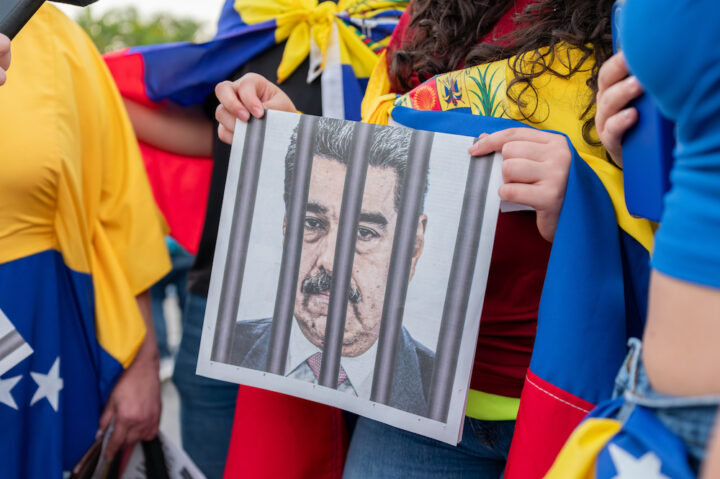
A resident holds a newspaper with news about ousted Venezuelan President Nicolas Maduro during a celebration at El Arepazo in Doral, Florida, US, on Sunday, Jan. 4, 2026.
Good Monday morning.
In today’s Daily Kickoff, we look at what the Trump administration’s capture of Venezuelan President Nicolás Maduro could mean for Iran’s influence in South America, and report on New York City Mayor Zohran Mamdani’s first days in office, which included the revocation of executive orders on supporting Israel and combating antisemitism. We have the exclusive on AIPAC’s appointment of Deryn Sousa as the organization’s new spokesperson, succeeding Marshall Wittmann, and report on Jewish communal priorities on Capitol Hill in the new year. Also in today’s Daily Kickoff: Julie Menin, Rabbi Zvi Hershcovich and Este Haim.
Today’s Daily Kickoff was curated by Jewish Insider Executive Editor Melissa Weiss and Israel Editor Tamara Zieve, with assists from Danielle Cohen-Kanik and Marc Rod. Have a tip? Email us here.
What We’re Watching
- As Congress returns this week, we’ll be keeping an eye on the Hill’s response to the ongoing wave of protests across Iran, the ripple effects of the Trump administration’s arrest of Venezuelan President Nicolás Maduro and the emerging rift among the U.S.’ Gulf allies.
- Following the winter break, lawmakers’ top priority now will be finalizing a deal on government funding before the end-of-month deadline. It’s looking less likely that we’ll see a repeat of last year’s extended government shutdown. There are still plenty of areas to be negotiated between the two chambers, including security grant funding, United Nations funding and funding levels for U.S.-Israel cooperative programs.
- We’re keeping an eye on the ongoing protests in Iran. Speaking to reporters on Air Force One last night, President Donald Trump reiterated his recent comments that the U.S. would intervene if Iranian officials were to kill protesters, having said on his Truth Social site on Friday that “If Iran shoots and violently kills peaceful protesters, which is their custom, the United States of America will come to their rescue.”
- Venezuelan President Nicolás Maduro is scheduled to make his first appearance in U.S. federal court at 12 p.m. ET today, where he will appear before Judge Alvin Hellerstein, a 92-year-old Orthodox Jewish federal judge.
- Minnesota Gov. Tim Walz, who had been planning a 2026 reelection bid, is set to make an announcement regarding his political future this morning, a day after meeting with Sen. Amy Klobuchar (D-MN). The impromptu press conference comes as Walz’s administration faces criticism and an investigation into widespread fraud centered around the state’s Somali diaspora population.
- U.S. Ambassador to Turkey and Syria envoy Tom Barrack is mediating talks in Paris today between senior Israeli and Syrian officials, aimed at reaching a security agreement between the countries.
What You Should Know
A QUICK WORD WITH JI’S MELISSA WEISS
As protests continue to spread throughout Iran and the geopolitical repercussions of the Trump administration’s capture of Venezuelan President Nicolás Maduro ripple across world capitals, the sentiment around the Middle East and in Washington is that renewed conflict with the Islamic Republic may well be on the horizon.
While smaller than previous nationwide protests in 2019 and 2022, the newest demonstrations come as Iran is facing economic instability, crushing international sanctions and record droughts. The protests that have spread across the country in recent days are the first major demonstrations since the 12-day war between Iran and Israel, with an assist from the U.S., last June that damaged the Islamic Republic’s nuclear program and further destabilized Iran.
The protests in Iran were already gaining steam at the time a Delta Force team apprehended Maduro and his wife on Saturday and brought them to the U.S. to stand trial on drug trafficking charges. But the Trump administration’s decision to send elite forces into Caracas and forcibly remove Maduro signals to Tehran — as well as Moscow and Beijing — that Washington is taking a tougher approach to regimes it sees as destabilizing and threatening to U.S. interests.
The world is watching this geopolitical high-wire act with wariness. In Israel, officials are closely monitoring the instability in Iran, concerned that the regime in Tehran could move to strike Israel in an effort to consolidate domestic support and quell the protests; Israel could also see a window of opportunity to strike Iran at a weak moment, either of which could reignite warfare between Jerusalem and Tehran.
It was less than a week ago that Israeli Prime Minister Benjamin Netanyahu met with President Donald Trump at his Mar-a-Lago resort in Florida and discussed the threat posed by Iran’s ballistic missile program.
In his weekly Cabinet meeting yesterday, Netanyahu addressed Iran in the context of his Palm Beach meeting last week, saying that Israel “reiterated our joint position of zero enrichment on one hand, and the need to remove the 400 kilograms of enriched material from Iran and oversee the sites with tight and genuine supervision.”
Noting that his sit-down with Trump was taking place as anti-government protests broke out in Iran, Netanyahu added, “The Government of Israel, the State of Israel, and my policy, we identify with the struggle of the Iranian people, with their aspirations for freedom, liberty, and justice. It is very possible that we are standing at the moment when the Iranian people are taking their fate into their own hands.”
DOMINO EFFECT
Toppling Maduro may weaken Iran’s hold in Latin America
The U.S.’ capture of Venezuelan President Nicolás Maduro on Saturday is expected to weaken Iran’s terrorism efforts, weapons production and economic activity in Latin America, experts say. With Vice President Delcy Rodriguez taking power — and the Trump administration expressing willingness to work with her — it remains unclear whether Maduro’s regime will largely remain intact with American supervision or if the government will ultimately be replaced by the democratic opposition, led by Nobel Peace Prize recipient Maria Corina Machado, or someone else, Jewish Insider’s Lahav Harkov reports.
Expected impact: Emanuele Ottolenghi, senior research fellow at the Center for Research on Terror Financing, told JI that “if the regime remains in place [under Washington’s supervision], there will have to be adjustments in its regional posture and foreign policy. That means, of course, the role that nefarious foreign actors such as China, Russia, Cuba and Iran played in Venezuela will change.” Danny Citrinowicz, a senior researcher at the Institute for National Security Studies at Tel Aviv University, told JI that “the Iranians turned Venezuela into a strategic hub, and now that has disappeared.”
Bonus: Politico talks to Vandenberg Coalition head Carrie Filipetti, who served as principal deputy assistant secretary of state for Cuba and Venezuela during the first Trump administration, about the apprehension of Maduro and potential next steps for the U.S. vis-à-vis its Venezuela policy.
shifting alliances
Saudi Arabia pivots from moderation
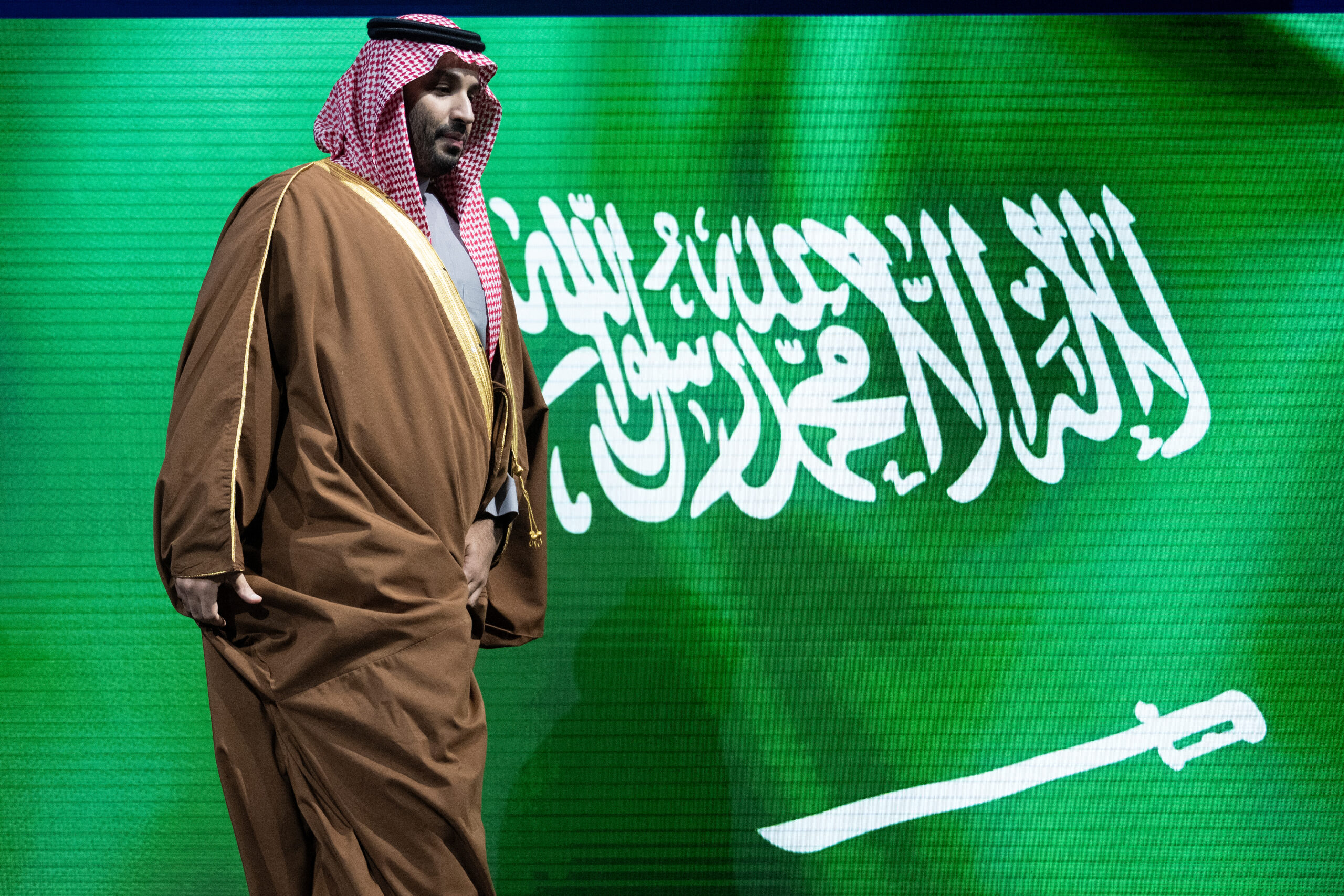
Saudi Arabia is recalibrating its regional posture in ways that are challenging long-held assumptions about Riyadh’s role as a moderating force in the Middle East, as recent moves across Yemen, Sudan and the Horn of Africa expose the country’s widening rift with the United Arab Emirates and a growing alignment with Qatar and Turkey — two countries with openly hostile positions toward Israel, Jewish Insider’s Emily Jacobs, Lahav Harkov and Matthew Shea report.
Series of events: The realignment has been most stark on the issue of Yemen, where Saudi Arabia led an airstrike on an Emirati shipment of vehicles last week that Riyadh claimed was intended for the UAE-backed Southern Transitional Council (STC), which has consolidated power in the country’s south as Saudi-backed efforts to stabilize the war-torn nation have stalled. Hours after the strike, the Emirati government announced it would withdraw its remaining troops from the country. The Saudis’ decision to embrace Islamist-aligned factions in Sudan, where the UAE is aligned with rival forces, has caused additional fissures with the Emiratis, putting the two U.S. allies and Gulf power players at odds. The Gulf states have also taken opposite sides on Somalia, with the UAE quietly supportive of Somaliland, while Saudi Arabia condemned Israel for recognizing its independence.
Qatari condolences: Qatari Education Minister Lolwah Al-Khater publicly mourned the death of Huthayfa Samir Abdullah Al-Kahlout, a senior Hamas military spokesman who served as the public face of the group’s media strategy during the war in Gaza, drawing renewed scrutiny of Qatar’s ties to the militant group, Jewish Insider’s Matthew Shea reports.
DAY ONE DOOZY
Mamdani slammed for repealing antisemitism executive orders

Newly inaugurated New York City Mayor Zohran Mamdani is facing criticism for repealing executive orders issued by former Mayor Eric Adams aimed at tackling antisemitism, including implementing the International Holocaust Remembrance Alliance’s working definition of antisemitism and an anti-Boycott, Divestment and Sanctions order. The revocation of those orders came as part of a blanket repeal of all of Adams’ executive orders following his September 2024 indictment on federal corruption charges, Jewish Insider’s Marc Rod reports.
Community reaction: In a joint statement, the UJA-Federation of New York, Jewish Community Relations Council of New York, American Jewish Committee of New York, Anti-Defamation League of New York/New Jersey, Agudath Israel of America, the New York Board of Rabbis and the Orthodox Union said that the Jewish community “will be looking for clear and sustained leadership that demonstrates a serious commitment to confronting antisemitism and ensures that the powers of the mayor’s office are used to promote safety and unity, not to advance divisive efforts such as BDS.” The statement continued, “Singling Israel out for sanction is not the way to make Jewish New Yorkers feel included and safe, and will undermine any words to that effect.”
Bonus: The New York Times reports that Mamdani’s decision to issue a blanket revocation of Adams’ executive orders was made in an effort to alleviate anger by Jewish groups over the rescinding of the two orders related to Israel and antisemitism.
EXCLUSIVE
AIPAC appoints Deryn Sousa as spokesperson

The American Israel Public Affairs Committee appointed Deryn Sousa as spokesperson, replacing Marshall Wittmann, who retired at the end of 2025 after 13 years in the role. Sousa steps into the public-facing position during a time when AIPAC is regularly in the spotlight — and as the powerful pro-Israel organization faces outsized criticism from the far left and far right over its influence in the American political system, Jewish Insider’s Gabby Deutch reports.
Background: Sousa reflects a different career trajectory than that taken by Wittmann, who came to AIPAC toward the end of his career after decades working in politics in Washington, including as communications director for Sens. Joe Lieberman (I-CT) and John McCain (R-AZ). Sousa has worked for AIPAC for a decade, having joined the organization soon after she graduated from the University of Georgia, where she studied Arabic and international affairs. She moved to Washington for the spokesperson role from Houston, where she served until recently as AIPAC’s Southwest regional political director.
MONEY IN THE BANK
Massie challenger raises $1.2 million in final quarter of 2025
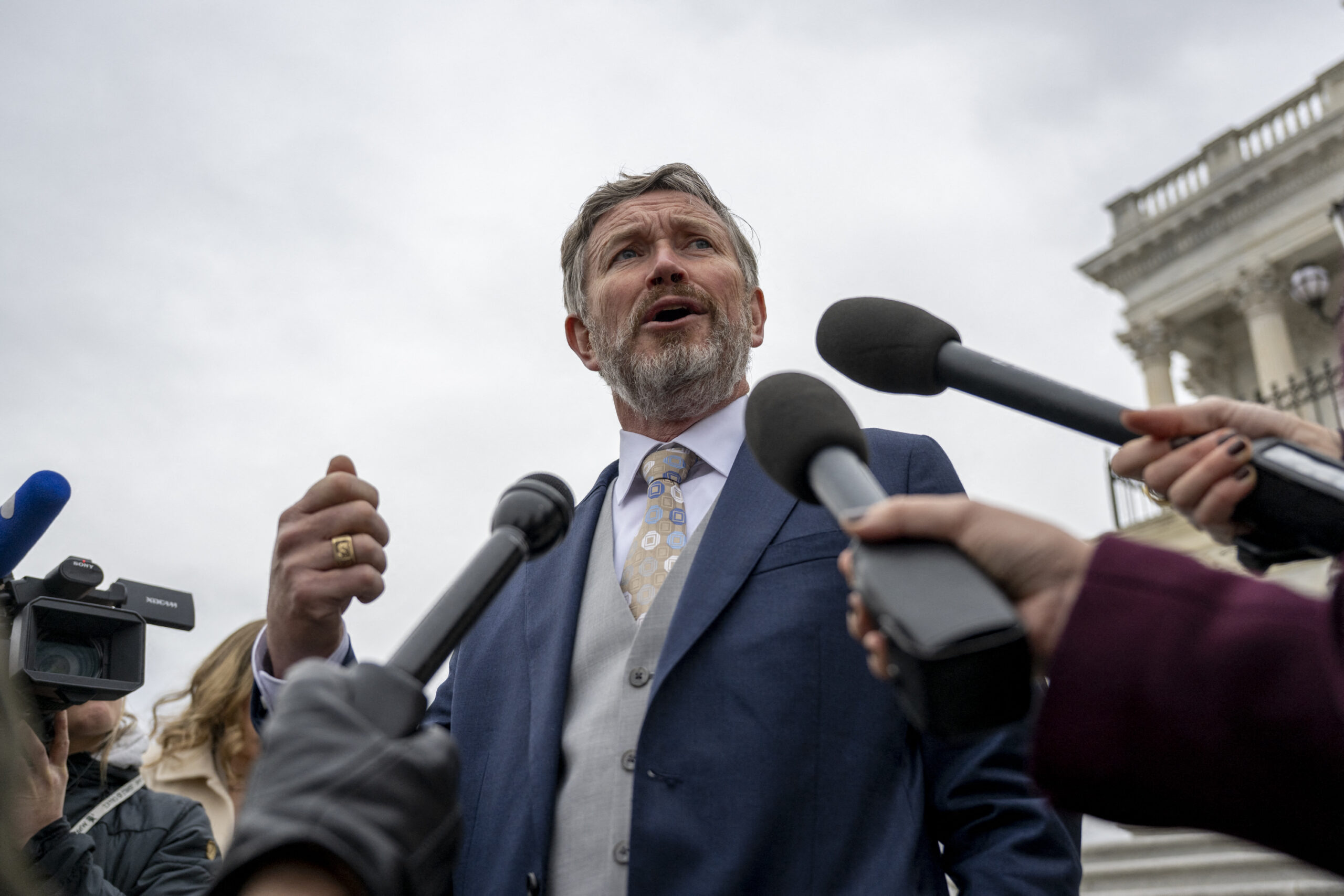
Ed Gallrein, the Republican primary challenger to Rep. Thomas Massie (R-KY) backed by President Donald Trump, said Friday that he had raised $1.2 million in the final quarter of 2025, a sizable sum that puts him in strong financial shape in preparation for a grueling race against Massie. Gallrein’s fundraising haul signals that he’s a more viable candidate than Massie’s previous challengers, and highlights the power of Trump’s endorsement, Jewish Insider’s Marc Rod reports.
Moving against Massie: Trump and his allies have also committed significant resources to the effort to defeat Massie, an isolationist Republican who has frequently opposed legislation to combat antisemitism and has broken with Trump on many key elements of his agenda, including on issues related to Israel and Iran. “This fundraising number reflects the overwhelming support Ed’s campaign has received right out of the gate,” Gallrein spokesperson Lance Trover said in a statement. “President Trump endorsed Ed because he knows Ed is fighting to put America First and will partner with him to unleash our economy, lower taxes, and stop the woke agenda.”
ON THE AGENDA
Security remains Jewish community’s top lobbying priority for 2026
Going into 2026, Jewish community groups said their advocacy priorities for Congress and the federal government remain largely consistent, with a focus across many of the major advocacy organizations on bolstering community security through the Nonprofit Security Grant Program and tackling antisemitism online, Jewish Insider’s Marc Rod reports.
The hurdles: While Congress has increased its attention to Jewish communal issues in the years since the Oct. 7, 2023, Hamas attacks on Israel, including a string of high-profile hearings on antisemitism and several bills passed to support Israel and combat Iran, many key legislative priorities for the Jewish community — including bills on antisemitism and substantial increases to annual security funding for nonprofits — have remained stubbornly intractable.
Worthy Reads
American Muscle: Politico’s Sophia Cai, Felicia Schwartz, Dasha Burns and Eric Bazail-Eimil posit that the Trump administration is taking a more hawkish approach to foreign policy in its second term. “The Saturday morning raid is a brazen escalation of U.S. involvement in a foreign country that landed the same weekend Trump publicly threatened to defend Iranian demonstrators against their own government. It serves as a fitting coda to Trump’s first year back in power, one marked by dramatically more involvement in foreign conflicts than candidate Trump or first-term Trump predicted. … Still, the move against [Nicolás] Maduro would have been almost unimaginable during Trump’s first term and during the heat of the 2024 campaign, when Trump adopted the views of restrainers who were skeptical of unconditional aid to Ukraine and spoke of the need to stop engaging in ‘forever wars.’” [Politico]
The Ties That Bind: In The Wall Street Journal, Armin Rosen observes the relationship between Somaliland and Israel, the latter of which was the first country to recognize Hargeisa’s independence last month. “Across 1,600 miles of distance, there is a surprisingly deep kinship between Hargeisa and Jerusalem. … Both countries see themselves as global outsiders waging a long campaign for legitimacy and respect. Israeli citizens and products are still banned in dozens of Muslim countries. As an unrecognized state, Somaliland lacks access to the Swift system for clearing international financial transactions, and its government is effectively blocked from borrowing meaningful amounts of money. Like Israel, a poor, war-ravaged and diplomatically isolated desert outpost during its first decades of existence, Somaliland has to find its way without much help.” [WSJ]
Word on the Street
The New York Post interviews New York City Councilmember Julie Menin about New York City Mayor Zohran Mamdani as Menin, who is Jewish, is expected to become city council speaker; Menin said she called Mamdani shortly after his revocation of Israel- and antisemitism-related executive orders to express her concern over the moves…
Florida GOP gubernatorial candidate James Fishback is facing resurgent allegations that he had an inappropriate relationship with a minor who worked at his nonprofit organization in 2022; Fishback called the allegations “completely false”…
Jewish Insider’s Gabby Deutch interviews Zvi Hershcovich, the Philadelphia-based Chabad rabbi running a digital clubhouse for Jewish hockey fanatics…
The Chabad house in Kathmandu, Nepal, is temporarily closed following a dispute with the building’s landlord; Rabbi Chezki Lifshitz and Rebbetzin Chani Lifshitz are looking for a new site for the Chabad house, which is a popular site for Israeli and Jewish trekkers and gained fame for hosting the largest Passover Seder in the world…
The New York Times reports on efforts to repatriate items that had belonged to Holocaust victims to their descendants…
A new report from the Israel Advanced Technology Industries Association found that more than half of the companies surveyed saw an increase in requests from employees to relocate outside of Israel…
Einav Zangauker, who gained prominence in Israel for her advocacy on behalf of her son, Matan, who was a hostage in Gaza, announced Matan’s engagement to Ilana Gritzewsky; Zangauker was released from Hamas captivity in October 2025, while Gritzewsky, who was also taken hostage on Oct. 7, 2023, was freed in November 2023…
Former Israeli hostage Romi Gonen recounted multiple incidents of sexual assault during the 471 days she spent in Hamas captivity in Gaza, in an interview with Israel’s Channel 12…
The BBC reached a five-figure settlement with an Israeli family from the Gaza envelope whose home a BBC reporting team filmed from without permission in the aftermath of the Oct. 7, 2023, Hamas terror attacks…
Egypt and Qatar inked an agreement that will see Doha sending gas to Cairo as Egypt works to diversify its national gas imports…
Swiss officials identified the bodies of Israeli teenager Charlotte Needham and Jewish sisters Alicia and Diana Gunst, who died in a fire at a Swiss ski resort on New Year’s Eve…
Singer Este Haim married tech entrepreneur Jonathan Levin in a New Year’s Eve wedding in Los Angeles…
eJewishPhilanthropy talks to friends and colleagues of philanthropist Morris Kahn, who died last week at 95…
Former Orthodox Union head Rabbi Julius Berman, who previously served as chair of the Conference of Presidents of Major American Jewish Organizations and chair of the board at Yeshiva University’s Rabbi Isaac Elchanan Theological Seminary, died at 80… Holocaust survivor Eva Schloss, the stepsister of Anne Frank, died at 96… Holocaust survivor Edward Gastfriend, who was instrumental in the creation of Philadelphia’s Holocaust Memorial Plaza, died at 100… Record executive and political activist Howie Klein died at 77 (read Phil Klein’s obituary for his father in the National Review here)… Journalist Tatiana Schlossberg, the daughter of Amb. Caroline Kennedy and Edwin Schlossberg, died at 35… Former Rep. Dick Zimmer (R-NJ) died at 81… Richard Pollak, the founder and editor of More magazine, died at 91… Piano virtuoso Gary Graffman died at 87… Longtime Upper East Side veterinarian Lewis Berman, whose clientele included the pets of numerous celebrities and high-profile figures, died at 90…
Pic of the Day

Israel’s Noa Szollos finished 28th in the Women’s Slalom race in Kranjska Gora, Slovenia, at the FIS Alpine Ski World Cup 2025-2026, earning Israel’s first-ever World Cup points in alpine skiing.
Birthdays
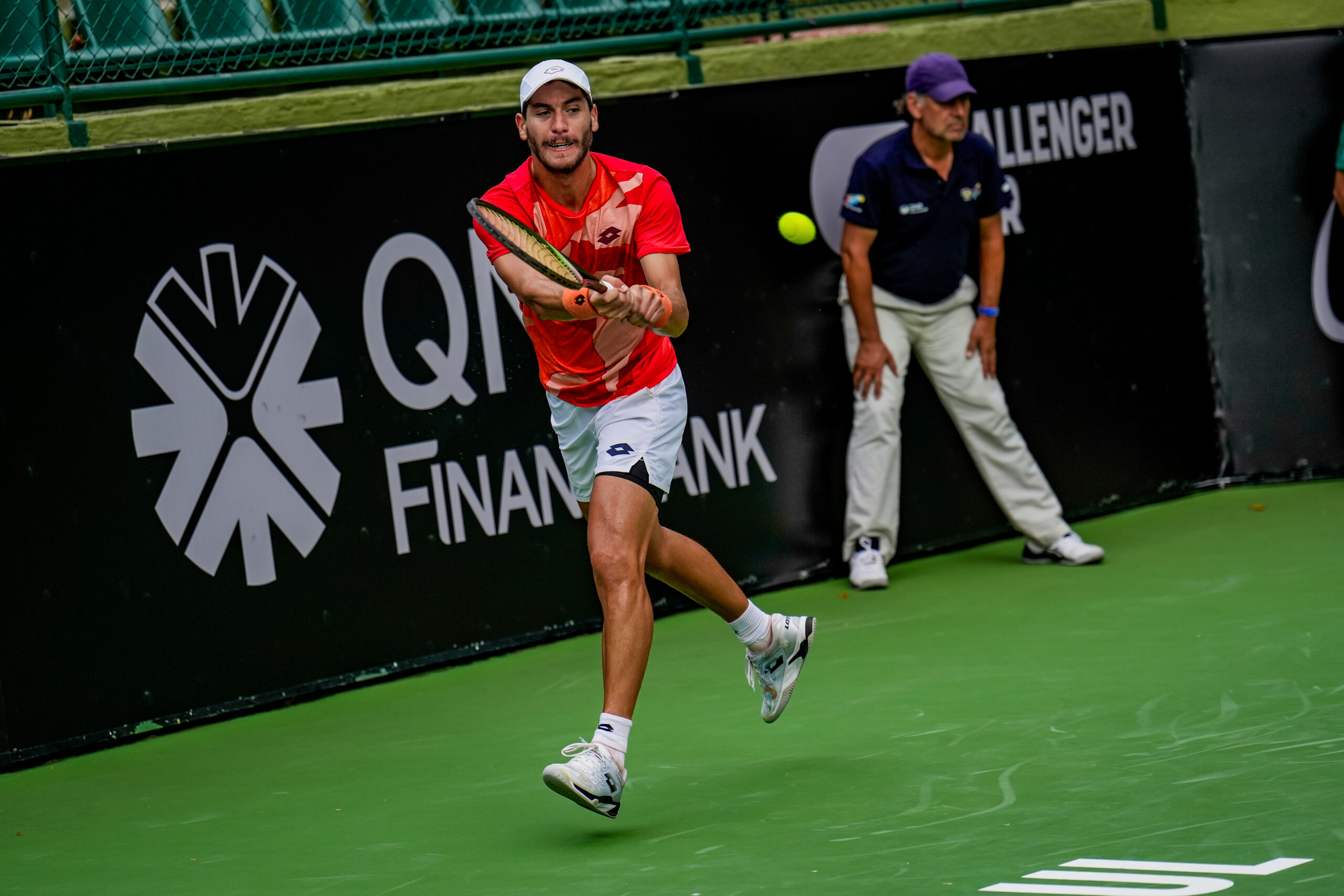
Tennis player ranked No. 1 in Israel for most of 2022, Yshai Oliel turns 26..
Author of 10 books including Mitzvah Man and collections of short fiction including Minyan: Ten Interwoven Stories, John Jacob Clayton turns 91… Sports journalist, author and former ombudsman for ESPN, Robert Lipsyte turns 88… NBA superfan who attends over 100 basketball games nationally each season, James F. Goldstein turns 86… Former member of the Knesset for the National Religious Party, Eliyahu Gabai turns 83… Former Philadelphia mayor for eight years, and then another eight years as Pennsylvania’s governor, currently a special counsel at Ballard Spahr, Ed Rendell turns 82… Retired attorney from Latham & Watkins, Paul Israel Meyer… San Diego-based attorney, she served as a member of Congress and as chief of staff for former California Gov. Gray Davis, Lynn Alice Schenk turns 81… Former attorney general of the U.K, now London co-managing partner and chair of the European and Asian litigation practice at Debevoise & Plimpton, Lord Peter Goldsmith turns 76… CEO of Legacy Interactive / Legacy Games, Ariella Lehrer, Ph.D…. Founder and principal of DC-based Mager & Associates, a boutique public policy and advocacy consulting firm, Mimi Mager… Retired chairman of the Jewish National Fund (Keren Kayemet LeYisrael), Daniel “Danny” Atar turns 68… Journalist John F. Solomon turns 59… Actress and television personality, she is best known for her nine seasons on “The Real Housewives of Orange County,” Heather Paige Kent Dubrow turns 57… Partner of both the law firm Galper & Goldberg PLLC and the PR firm Trident GMG, Joshua P. Galper… Professional poker player with more than $29 million of winnings, including $10 million at the 2025 World Series of Poker Main Event Championship, Michael Mizrachi turns 45… NYC-based saxophonist, composer, bandleader and educator, Oded Tzur turns 42… Founder and creative director of Alsall Studio, a social media and web design firm, Alexandra Lauren Sall…
The newest demonstrations come as Iran is facing economic instability, crushing international sanctions and record drought
Olivier Douliery/Abaca/Sipa USA via AP Images
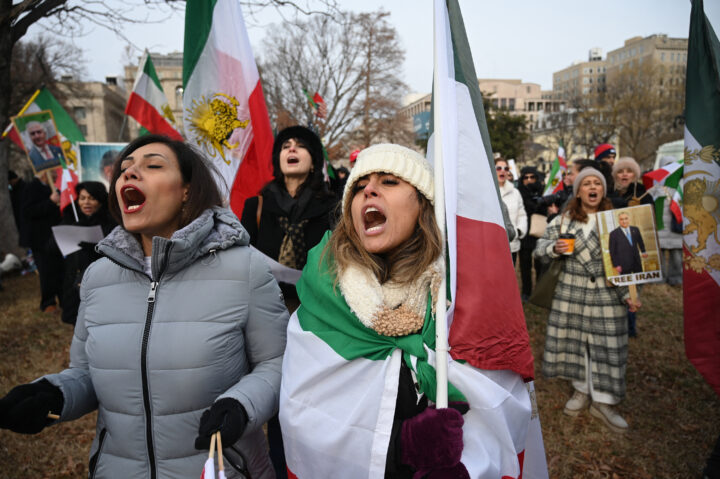
Activists take part in a rally supporting protestors in Iran at Lafayette Square, across from the White House in Washington, DC on January 3, 2026.
As protests continue to spread throughout Iran and the geopolitical repercussions of the Trump administration’s capture of Venezuelan President Nicolas Maduro ripple across world capitals, the sentiment around the Middle East and in Washington is that renewed conflict with the Islamic Republic may well be on the horizon.
While smaller than previous nationwide protests in 2019 and 2022, the newest demonstrations come as Iran is facing economic instability, crushing international sanctions and record droughts. The protests that have spread across the country in recent days are the first major demonstrations since the 12-day war between Iran and Israel, with an assist from the U.S., last June that damaged the Islamic Republic’s nuclear program and further destabilized Iran.
The protests in Iran were already gaining steam at the time a Delta Force team apprehended Maduro and his wife on Saturday and brought them to the U.S. to stand trial on drug trafficking charges. But the Trump administration’s decision to send elite forces into Caracas and forcibly remove Maduro signals to Tehran — as well as Moscow and Beijing — that Washington is taking a tougher approach to regimes it sees as destabilizing and threatening to U.S. interests.
The world is watching this geopolitical high-wire act with uncertainty. In Israel, officials are closely monitoring the instability in Iran, concerned that the regime in Tehran could move to strike Israel in an effort to consolidate domestic support and quell the protests; Israel could also see a window of opportunity to strike Iran at a weak moment, either of which could reignite warfare between Jerusalem and Tehran. It was less than a week ago that Israeli Prime Minister Benjamin Netanyahu met with President Donald Trump at his Mar-a-Lago resort in Florida and discussed the threat posed by Iran’s ballistic missile program.
In his weekly Cabinet meeting yesterday, Netanyahu addressed Iran in the context of his Palm Beach meeting last week, saying that Israel “reiterated our joint position of zero enrichment on one hand, and the need to remove the 400 kilograms of enriched material from Iran and oversee the sites with tight and genuine supervision.”
Noting that his sit-down with Trump was taking place as anti-government protests broke out in Iran, Netanyahu added, “The Government of Israel, the State of Israel, and my policy, we identify with the struggle of the Iranian people, with their aspirations for freedom, liberty, and justice. It is very possible that we are standing at the moment when the Iranian people are taking their fate into their own hands.”
With an eye toward Washington, the question is whether Trump will back future military action in Iran, after his success ousting Maduro in Caracas. Despite the widespread protests in Iran, there is no consolidated opposition, where the regime’s opponents are, as The Atlantic’s Arash Azizi writes, “hopelessly disorganized and disunited.”
Speaking to reporters on Air Force One last night, Trump reiterated his recent comments that the U.S. would intervene if Iranian officials were to kill protesters, having said on his Truth Social site on Friday that “If Iran shoots and violently kills peaceful protesters, which is their custom, the United States of America will come to their rescue.”
The Associated Press, citing human rights activists, reported that 15 people had been killed as of Saturday, the same day that Iranian Supreme Leader Ayatollah Ali Khamenei made his first public comments since the outbreak of protests, saying that “rioters must be put in their place.”
Iran’s political leadership appears at an impasse in its efforts to contain the demonstrations — or improve the conditions that led to them — with the hands of President Masoud Pezeshkian and other senior officials largely tied by the supreme leader. That could push the regime to act out of desperation — or to collapse entirely.
An increasingly unlikely scenario is that the protests fizzle out and Khamenei reasserts control — a move that would likely need to occur alongside an economic upturn to pull the rial up from record lows.
The first days of 2026 have seen tens of thousands of protesters taking to the streets across Iran and an administration in Washington flexing its military power, setting the stage for a potential power realignment in the Middle East and around the world.
Caracas served as the hub of Tehran's operations in the Western Hemisphere
PEDRO MATTEY/AFP via Getty Images
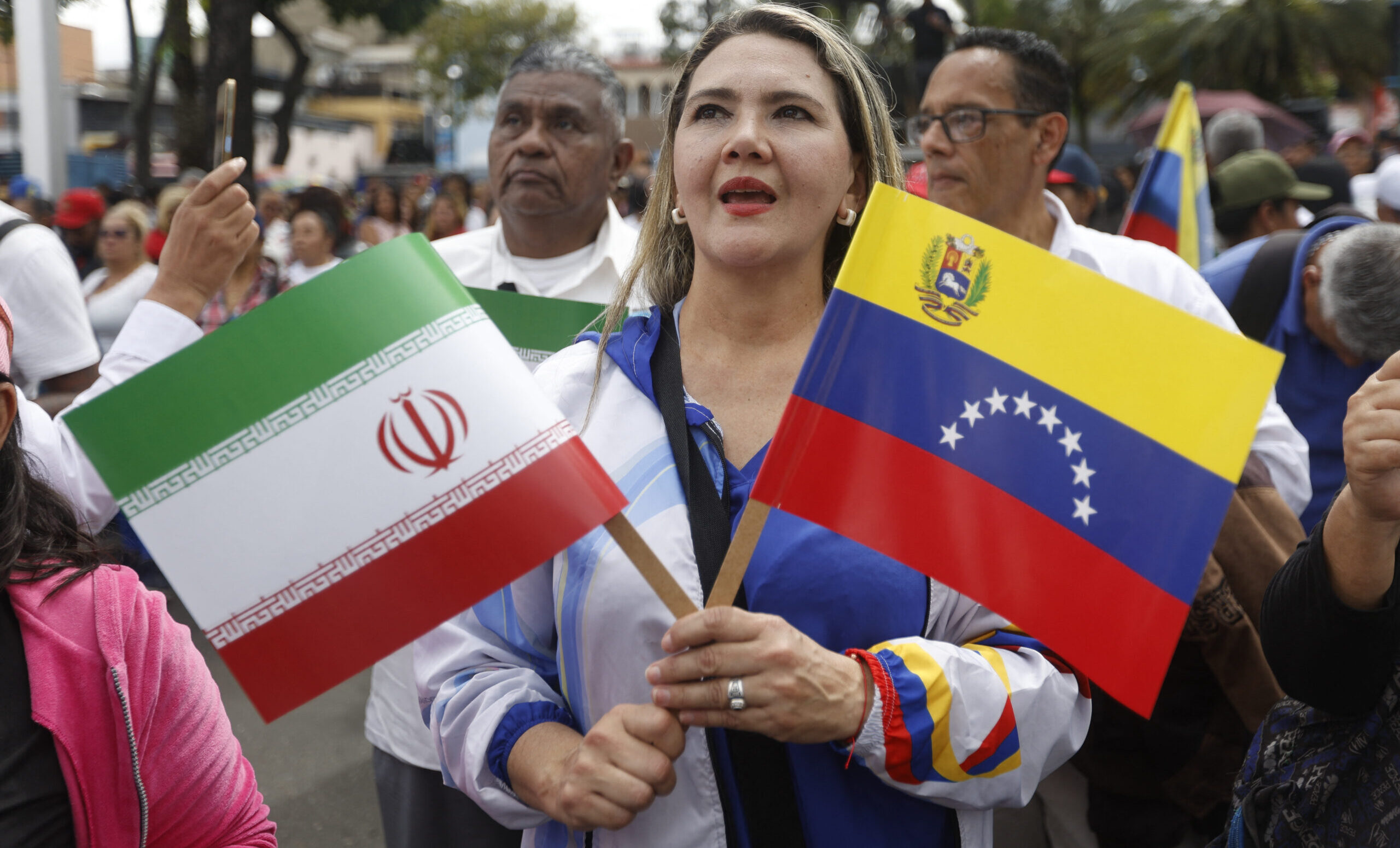
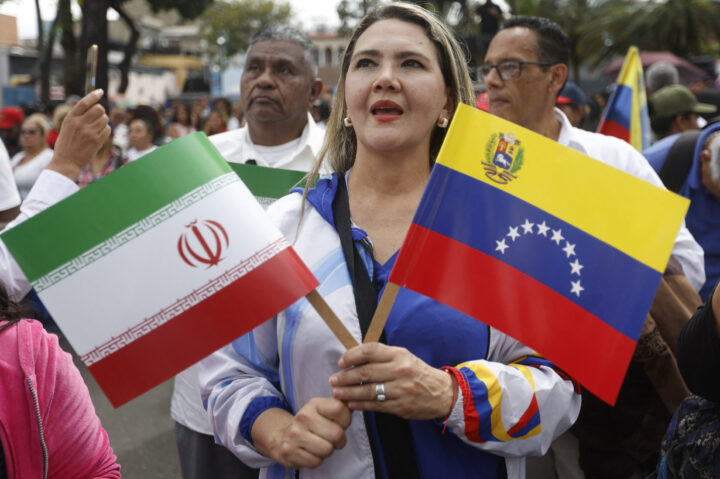
A woman carrying an Iranian flag and a Venezuelan flag participates in a march in Caracas on June 25, 2025.
The U.S.’ capture of Venezuelan President Nicolas Maduro on Saturday is expected to weaken Iran’s terrorism efforts, weapons production and economic activity in Latin America, experts say.
With Vice President Delcy Rodriguez taking power — and the Trump administration expressing willingness to work with her — it remains unclear whether Maduro’s regime will largely remain intact with American supervision or if the government will ultimately be replaced by the democratic opposition, led by Nobel Peace Prize recipient Maria Corina Machado, or someone else.
While Venezuela’s future remains unclear, Israel’s leaders applauded what they saw as a pro-American turn, with Prime Minister Benjamin Netanyahu expressing support for the Trump administration’s “determined decision and action of the United States to restore freedom and justice to that part of the world.”
“Across Latin America right now, we are seeing a transformation,” Netanyahu said. “Several countries are returning to the American axis and, not surprisingly, to a connection with the State of Israel. We welcome this.”
Emmanuele Ottolenghi, senior research fellow at the Center for Research on Terror Financing, told Jewish Insider that “if the regime remains in place [under Washington’s supervision], there will have to be adjustments in its regional posture and foreign policy. That means, of course, the role that nefarious foreign actors such as China, Russia, Cuba and Iran played in Venezuela will change.”
Danny Citrinowicz, a senior researcher at the Institute for National Security Studies at Tel Aviv University, told JI that “the Iranians turned Venezuela into a strategic hub, and now that has disappeared.”
“Iran built a very deep operative and strategic relationship with [Maduro’s predecessor Hugo] Chavez, and it uses Venezuela … as its jumping-off point for influence in Latin America,” he said.
Ottolenghi said that Maduro’s government allowed Iran to operate freely in Venezuela, which Tehran took advantage of in a variety of arenas, including propaganda, terrorism and arms manufacturing.
Tehran established a drone factory in Venezuela, in which Venezuelans produced Iranian drones, Ottolenghi said.
The recently foiled terrorist plot to assassinate Israel’s ambassador to Mexico was planned by Iranian operatives in Caracas, Ottolenghi added.
“The Iranians made Caracas the hub of all their propaganda and soft power operations in the region, including their Spanish-language 24/7 news network,” Ottolenghi said. “They established a permanent presence in Caracas for their missionary network, under the umbrella of the sanctioned Al-Mustafa International University.”
After former Iranian President Ebrahim Raisi visited Caracas in 2023, scientific and academic exchanges between the countries grew, and Iran was granted greater access to Venezuela’s economy.
The economic relationship with Venezuela has been important for Iran, Ottolenghi said.
“Venezuela assisted Iran in evading sanctions prior to the JCPOA [2015 Iranian nuclear deal], but since 2019-2020, when the Venezuelan economy sharply deteriorated, Iran gained the upper hand in the relationship,” he said. “Maduro essentially joined the ‘axis of resistance.’”
The country with the largest proven oil reserves in the world needed to buy refined gasoline from Iran because of “the dramatic deterioration in quality in the oil industry in Venezuela after years of cronyism, brain drain, corruption and mismanagement purging the national oil company,” Ottolenghi explained. “The Iranians stepped in to stop Venezuela from collapsing for lack of refined [oil] products, providing technicians, technology, refined gasoline shipped from Iran in exchange for gold. That gave [Iran] even more leverage inside Venezuela, including the ability to operate one of the refineries for their own needs.”
As for Hezbollah, Citrinowicz noted that the Lebanese terrorist organization is “very important to [Iran], in that it connects the Shi’ite communities in Latin America.”
Ottolenghi said that Hezbollah “benefitted from both the protection of the regime and the large expat community of Lebanese immigrants and their descendants … who are sympathetic to the movement and enabled them to become involved in money laundering and other financial activities … including crypto and reportedly illegal gold mining in the southeast of the country.”
Though Hezbollah is an Iranian proxy, it has independent sources of income, including the Latin American drug trade.
Maduro’s fall “will make it hard [for Hezbollah] to keep up those ties,” Citrinowicz said.
Ottolenghi said that “traditionally, [Hezbollah] has played mainly the role of intermediary for drug cartels, providing services in logistics, distribution and financial channels to move the money in complex translational transactions.”
However, he noted that, as opposed to Tehran, Hezbollah’s operations in Latin America have not been primarily based in Venezuela, and that until recently, the terrorist group’s senior official in Latin America was based in São Paolo, Brazil.
“Insofar as Maduro’s removal may curb Iran’s influence and its proxies in Venezuela, it does not address necessarily what Hezbollah is doing in other countries,” Ottolenghi said.
Maduro’s fall is one of “a series of blows” to Iran in recent years, Citrinowicz said, with the governments of Bolivia, Chile and Argentina turning more pro-American, and the same is likely to happen in Colombia in its upcoming presidential election.
“Iran likes working with socialist regimes that counter the West,” Citrinowicz said. “They can’t leave Latin America entirely. … They will need to work with what’s left and emphasize Cuba and Nicaragua.”
Citrinowicz said that Iran will likely pivot its investments of time and money to Africa.
The bipartisan Senate International Narcotics Control Caucus convened the hearing to explore the expansion of Hezbollah’s influence in Latin America
AP Photo/Jesus Vargas
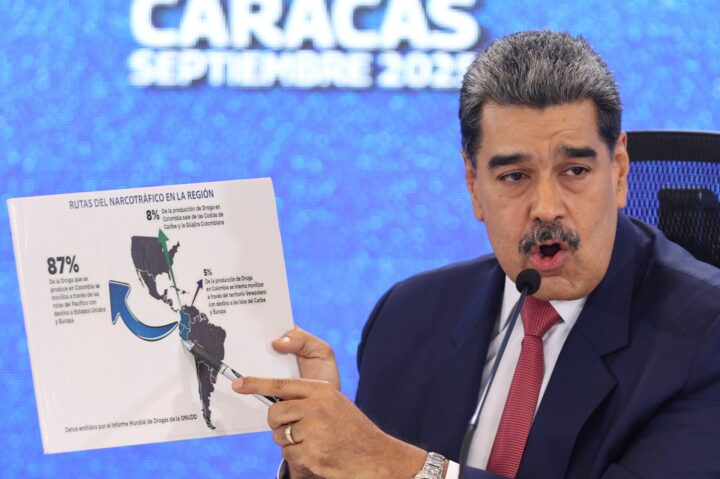
Venezuela's President Nicolas Maduro points at a map of the Americas during a news conference in Caracas, Venezuela, Sept 15, 2025.
The first congressional hearing on Hezbollah’s malign activities in the Western hemisphere in a decade took place this week, highlighting Venezuela’s embrace of Iran as a geopolitical partner and the Maduro regime’s efforts to transform the country into a regional hub for narcoterrorism.
The bipartisan Senate International Narcotics Control Caucus convened the hearing, titled “Global Gangsters: Hezbollah’s Latin American Drug Trafficking Operations,” on Tuesday, to explore how Hezbollah’s influence in the region had expanded and determine the most effective ways for the U.S. to respond. Witnesses included Amb. Nathan Sales, who served as the State Department’s counterterrorism coordinator in the first Trump administration; Marshall Billingslea, the special envoy for arms control and a former Treasury official during President Donald Trump’s first term; Matthew Levitt, the director of the Reinhard Program on Counterterrorism and Intelligence at The Washington Institute for Near East Policy; and Robert Clifford, a former FBI official who worked in the counterterrorism space.
Senators and counterterrorism experts warned that Venezuela had established itself as the narcoterrorism epicenter of Latin America, and predicted that Hezbollah would deepen financial ties with Venezuelan leader Nicolás Maduro as a result. Senators on both sides of the aisle and hearing witnesses urged a hawkish approach to quell Venezuela’s behavior.
“We have long known that Hezbollah is one of Iran’s tools to destabilize and terrorize the Middle East. Until 2023, about 70% of Hezbollah’s finances came from Iran. Hezbollah held up its side of the transaction,” Sen. Sheldon Whitehouse (D-RI), the top Democrat in the caucus, said. “Over the last two years, both Iran and Hezbollah have suffered significant setbacks. Iran is now looking more inward and Hezbollah is cash starved. If we target Hezbollah’s financing, we can deny them the opportunity to rebuild.”
“Where will Hezbollah look for money? Hezbollah has operated in Latin America for almost 50 years, cultivating ties with drug traffickers and developing illicit finance and trade networks. Modern drug cartels and terrorist groups run more like Fortune 500 conglomerates than street gangs,” he continued. “If we want to be serious about fighting the drug traffickers behind American deaths, we must strike their financial networks.”
Sen. Bernie Moreno (R-OH), the newest member of the caucus, asked witnesses for their take on the U.S. potentially declaring Venezuela as a state sponsor of terrorism, to which Billingslea and Sales both responded that the South American country’s behavior met the legal standard.
“Maduro should know his days are numbered,” Moreno, who was born in Colombia, said.
Sales also suggested that more Latin American countries should “designate Hezbollah in its entirety as a terrorist organization. Not just its so-called military wing, all of it.”
“During the first Trump administration, five Latin American countries did exactly that. Argentina, Colombia, Guatemala, Honduras and Paraguay,” Sales said. “According to a recent RAND study, the Latin American countries that sanctioned Hezbollah during the first [Trump] term have generally seen a drop in activity by the terror group. By contrast, Hezbollah has been more active in the countries in the region that haven’t designated it.”
Levitt noted that narcotics trafficking had become a key source of income for Hezbollah as Iran’s other financing wells dried up.
“Hezbollah has a long history of turning to its diaspora networks when it’s facing financial stress. Iran is still believed to provide Hezbollah with about the same amount of money today that it did before the Oct. 7 attacks, but that is not enough money to do what it needs to do today. And Iran is having a much harder time getting that money to Hezbollah in a timely manner,” Levitt explained.
“When Hezbollah is under stress, they traditionally reach out to their illicit financial networks around the world. We can expect that they will do the same today,” he continued. “If you need big money real fast, you turn to illicit activities and especially to narcotics trafficking. Hezbollah has demonstrated its ability to play an important and lucrative, niche role in laundering the proceeds of narcotics trafficking for a wide array of cartels.”
Please log in if you already have a subscription, or subscribe to access the latest updates.
 Continue with Google
 Continue with Apple