

































































The former ADL director said he is ‘troubled’ by the ‘demonizing’ of immigrants and attacks on universities

Anna Moneymaker/Getty Images
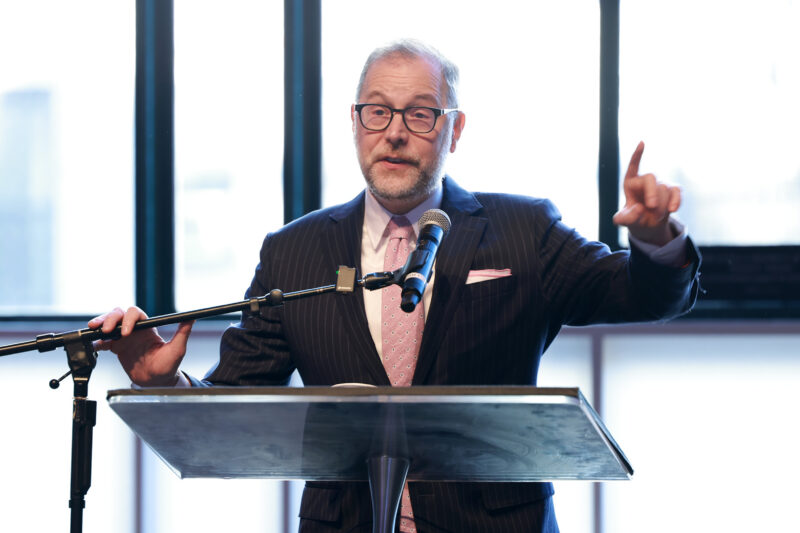
Holocaust survivor and former National Director of the Anti-Defamation League Abraham Foxman delivers remarks during the U.S. Holocaust Memorial Museum's Annual Days of Remembrance ceremony at the U.S. Capitol on April 23, 2025 in Washington, DC.


 Add JewishInsider on Google
Abe Foxman, the former Anti-Defamation League national director, offered pointed criticism of the Trump administration in a Holocaust Remembrance Day commemoration at the Capitol on Wednesday.
“As a [Holocaust] survivor, my antenna quivers when I see books being banned, when I see people being abducted in the streets, when I see government trying to dictate what universities should teach and whom they should teach. As a survivor who came to this country as an immigrant, I’m troubled when I hear immigrants and immigration being demonized,” Foxman said, to sustained applause from the audience.
Foxman, who led the ADL for nearly three decades, made the comments while delivering an address at the 2025 Days of Remembrance, which was organized by the U.S. Holocaust Memorial Museum in Washington.
Foxman also praised the Biden administration and the second Trump administration for each committing to addressing antisemitism. “We live in very chaotic times, where our values, our history, our democracy are being tested. As a survivor, I’m horrified at the explosion of antisemitism — global and in the U.S. I’m appreciative of President Biden’s historic initiative on antisemitism and thankful to President Trump’s strong condemnation of antisemitism and his promise to bring back consequences to antisemitic behavior,” Foxman said.
“We look around us and what do we see? Rampant antisemitism on college campuses and in cities worldwide in the aftermath of that horrific terror attack on our cherished Jewish state, Israel. We see social media algorithms that promote extreme views, conspiracy theories,” Foxman continued, adding that “online conspiracy theories are just one click away from antisemitism.”
“We also see forms of antisemitism that seemed unthinkable: Holocaust denial, distortion, civilization, exploitation and even glorification. We look around and see here in America antisemitism on both the far left and far right. The 20th-century history of Nazism and communism should be an alarm bell as to just how dangerous this is, and not just for us Jews, but for all of society, for all who care about democracy, individual freedom and dignity,” he said.
Foxman also noted that the scourge in domestic antisemitism was reminiscent of how Jew hatred worsened for years prior to Adolf Hitler’s rise to power. “Antisemitism [is] not so different from the conspiracy theories that permeated Europe for centuries, long before Hitler was born and helped make the killings of two-thirds of our people possible,” he said.
Commerce Secretary Howard Lutnick also spoke at Wednesday’s reception, where he described the Holocaust as a “failure of humanity” and argued that the evil that perpetrated it was akin to the Sept. 11, 2001, attacks and the Oct. 7, 2023, attacks on Israel.
“The Holocaust was a failure of humanity. But as we all know, no matter how hard we try, that kind of hatred continues to exist, just in many, many other forms. It shows up in different ways, and it shows up at different times,” Lutnick said.
The Oct. 7 attack, Lutnick argued, was “carried out with the same genocidal hatred that fueled Auschwitz, and it’s that same disregard for human life that fueled the Sept. 11 attacks. It’s just the same hate, it just comes at a different time with a different name.”
Becoming emotional, Lutnick vowed “in very, very clear and plain language” that Trump “will never back down from defending the Jewish people, never.”
The Foreign Relations Committee leaders called on the admin to ‘remove barriers to expanded engagement with the Syrian interim government’

Al Drago-Pool/Getty Images
Ranking member of the Senate Foreign Relations Committee U.S. Sen. Jim Risch (R-ID) speaks during a Senate Foreign Relations Committee hearing on April 26, 2022 in Washington, DC.
Sens. Jim Risch (R-ID) and Jeanne Shaheen (D-NH), the chair and ranking member of the Senate Foreign Relations Committee, this week urged the Trump administration in a letter to consider expanded sanctions relief for Syria.
Their letter, addressed to Secretary of State Marco Rubio and Treasury Secretary Scott Bessent, marked a notable new push from two of Congress’ most senior foreign policy leaders for targeted and conditional sanctions relief for the new Syrian government, an effort that has seen broad bipartisan support in Washington, but which is opposed by the Israeli government.
Risch and Shaheen urged the administration to “remove barriers to expanded engagement with the Syrian interim government,” with an aim of balancing “opportunity and risk” and providing opportunities for U.S. partners to engage in Syria even if the U.S. takes a more cautious approach.
“We recommend a thorough review of existing U.S. regulations on Syria, to include the extension and expansion of existing general licenses and limited or short-term sanctions relief in the near term,” the lawmakers said.
They urged the Cabinet officials to offer sanctions relief for a wide range of critical fields including agriculture, energy and energy infrastructure, finance, telecommunications and education.
The two said the U.S. should expand general license provisions to allow “more time and geographic flexibility to those on the ground” and consider “short-term sanctions relief” to increase liquidity and prevent instability, goals they believed are “essential to achieving the conditions to advance U.S. interests.”
Risch and Shaheen said that the U.S. should also work to push the new government to intensify efforts to crack down on terrorism, prevent Iranian and Russian entrenchment, destroy remaining chemical weapons, eliminate narcotics and find missing U.S. citizens.
The senators argued that the administration should reward “irreversible” progress on these issues with “fulsome sanctions relief,” and pursue “deeper economic and diplomatic isolation” if such progress does not materialize.
They warned that some recent reports out of Syria “raise serious concerns” about backsliding on some of these issues.
Risch and Shaheen further noted the “growing competition between Israel and Türkiye over Syria’s trajectory that may threaten American interests,” urging the administration “to move quickly to mediate between our allies.”
‘It’s outrageous, and Secretary Hegseth must fire her now,’ Senate Minority Leader Chuck Schumer said in a statement

Screenshot/X
Kingsley Wilson
Congressional Democrats lambasted the Trump administration for hiring Kingsley Wilson, who has a lengthy history of posting antisemitic conspiracy theories, as a deputy press secretary at the Pentagon. Republicans have largely remained silent on the issue.
“As antisemitism continues to surge around the world since October 7th: The Trump administration hired a top Pentagon official with a history of antisemitic conspiracy theories and extremism,” Senate Minority Leader Chuck Schumer (D-NY) said in a statement. “It’s outrageous, and Secretary [Pete] Hegseth must fire her now.”
Sen. Jacky Rosen (D-NV), the co-chair of the Senate antisemitism task force, told Jewish Insider that Wilson’s “appalling comments and conspiracy theories paint a disturbing pattern of behavior.”
“No one who engages in this antisemitic rhetoric should ever hold a position in the U.S. government, and it is alarming that the Trump administration hired her in the first place,” Rosen continued.
Sen. Elissa Slotkin (D-MI), who previously served in the Pentagon, told JI, “Whether it’s her antisemitic comments, delegitimizing Kosovo or promoting conspiracy theories, this woman is unfit to serve alongside our men and women in uniform.”
Rep. Debbie Wasserman Schultz (D-FL) also described Wilson’s hiring as characteristic of the Trump administration.
“Wilson has a long history of antisemitism and her comments are egregious and disqualifying,” Wasserman Schultz said. “But Trump has always surrounded himself with extremists, conspiracy theorists, and the far-right fringe, so I can’t say I’m surprised. She is not fit to serve in any role given her bigoted views.”
Rep. Jerry Nadler (D-NY), a co-chair of the House Jewish Caucus, described Wilson as the latest in a series of problematic hires.
“It is outrageous that someone with a history of promoting antisemitic conspiracy theories is now speaking for the Pentagon,” Nadler said in a statement. “Kingsley Wilson’s extremist views have no place in our government — yet under President Trump, they are not the exception, they are the rule. She is just the latest addition to a disgraceful roster of staffers who reflect this administration’s disturbing embrace of hate and bigotry. The American people deserve better.”
Rep. Dan Goldman (D-NY), the co-chair of the House antisemitism task force, said that Wilson “must be removed immediately.”
“To stomp out antisemitism, we must do it on the extreme left & right,” Goldman said. “No one who compares Hamas’ infanticide to abortion, promotes Great Replacement Theory, or celebrates the lynching of Jews should get an important DOD appointment.”
Rep. Ritchie Torres (D-NY) wrote to Hegseth, calling Wilson’s hiring “an insult to the integrity of the Department of Defense” and that she is “unfit for any position of public trust,” and demanding she be fired immediately.
“If Kingsley Wilson is the type of person you believe should represent the Department of Defense, it raises serious questions about your judgement — and your commitment to the values that define this nation,” Torres wrote, adding that a failure to fire her would be “reasonably understood by the public as an endorsement on behalf of yourself and the Pentagon of her repugnant views.”
Sen. Tim Kaine (D-VA), who serves on the Senate Foreign Relations Committee and the Senate Armed Services Committee, said that he had not been briefed beyond the basic details about the situation, but expressed sadness at the notion of a young person being so bigoted.
The Virginia senator said that the “first thing” he asked himself upon learning of Wilson’s comments was, “I wonder how old this person is, because you should never see this from a young person.”
“How could a young person have their mind so poisoned by this? I mean, I don’t get it. There’s no excuse for antisemitism or bigotry, but I, sort of I guess naively, think that young people would be more immune to it,” Kaine told JI. “What has been your life experience that has led you to that belief?”
No congressional Republicans commented on the situation to JI on Thursday, with several saying they weren’t familiar with the situation and saying they would look into the matter. Others did not respond to requests for comment.
On Wednesday, Sen. Deb Fischer (R-NE) told Politico the comments were “horrible” and “not appropriate.” She was not the only member of her conference to speak out.
“I’m not gonna tell them who to hire, but I do know that [President Donald] Trump doesn’t believe any of the things she’s talking about, and I’ll leave it up to them to determine if they think she’s the right spokesperson,” Sen. Lindsey Graham (R-SC) told the outlet. “If what you say about these posts are true, then she’s completely off-script with President Trump.”
The RJC’s decision to back Colby comes even as the group has differed with the foreign policy analyst on key issues — especially Iran

Dominic Gwinn / Middle East Images /via AFP)
Elbridge Colby speaks at the National Conservative Conference in Washington D.C., Tuesday, July 9, 2024.
The Republican Jewish Coalition urged the “swift confirmation” of Elbridge Colby as undersecretary of defense for policy in the Trump administration, according to a new letter, even as he faced scrutiny from pro-Israel conservatives over his dovish views on Iran and frequent calls to scale back U.S. involvement in the broader Middle East.
In the letter, which was sent on Thursday to Sen. Roger Wicker (R-MS), the chairman of the Senate Armed Services Committee, RJC leadership said it was “confident” Colby “will enact the strong pro-Israel policy of” President Donald Trump and Secretary of Defense Pete Hegseth, arguing the nominee “will be an asset to” the administration’s national security team.
“Mr. Colby understands that a strong and secure Israel is in America’s interests as well,” RJC CEO Matt Brooks and Norm Coleman, the group’s national chairman, wrote in their letter backing Colby. “He fully supports the continued robust U.S. political, military and financial support of Israel,” they added, noting Colby has “called Israel a model ally” and “will ensure that Israel can continue to check the aggression of our common enemies in Iran and its proxies in the region.”
The letter suggested the RJC was willing to overlook major potential differences with Colby, as Trump’s allies continued to fall in line behind some of his more divisive nominees awaiting confirmation.
Colby’s possible ascendancy also underscores how a new generation of defense advisors deeply skeptical of U.S. engagement abroad is poised to shape the Trump administration’s foreign policy — overshadowing more traditionally conservative voices raising concerns about recent hires at the Pentagon.
In contrast with the RJC, Colby, a so-called defense “prioritizer,” has voiced a more sanguine assessment of Iran, which he regards as a less urgent threat to U.S. interests than China. Colby has also argued that containing a nuclear Iran “is an eminently plausible and practical objective.”
Colby, who has called the Middle East “relatively unimportant,” has supported a withdrawal of U.S. military forces in the Persian Gulf that have helped defend Israel from Iranian missile attacks, saying that the U.S. can “more efficiently” deter Iran “by bolstering the military capabilities of its partners in the region.”
“If Iran’s provocations need to be answered, Washington must do so in a way that limits military involvement in the Middle East,” he wrote in a 2019 article. “If this means doing less than we might like against Iran, so be it.”
More recently, Colby questioned the Biden administration’s efforts to counter the Houthis, the Iran-backed proxy group in Yemen that has targeted Israel and global shipping lanes. While Colby has voiced support for Israel, he has called for a “reset” on the U.S.-Israel alliance to confront Beijing.
“America should be ready to provide potent material and political support to Israel,” Colby wrote shortly before the Hamas Oct. 7, 2023, attacks. “But at the same time, Israel should understand that the United States, which cannot afford to be enmeshed in another Middle Eastern war, will take a supporting role.”
He has otherwise opposed U.S. military assistance to Ukraine amid its war with Russia, which he has dismissed as a “peripheral conflict” with respect to U.S. national security interests. For its part, the RJC has urged Congress to back aid to Ukraine, saying “it is in America’s national interest to see Russia’s military might diminished and its malign strategic aims thwarted.”
Colby, whose confirmation hearing has not yet been scheduled, served in the first Trump administration as a deputy assistant secretary of defense and more recently worked at WestExec Advisors, a consulting firm co-founded by former Secretary of State Tony Blinken. Colby is an ally of Tucker Carlson, who has also pushed his inclusion in the Trump administration.
Sam Markstein, a spokesperson for RJC, said that “the letter in support of Mr. Colby came about as a result of extensive conversations with” Brooks and Coleman, “as we do with a wide range of various appointees and nominees for key administration positions.”
“After the conversation, in which we asked a wide range of questions and drilled down on his views, his commitment to support for Israel is clear,” Markstein told Jewish Insider on Sunday, “and as we said in the letter, Mr. Colby ‘will be an asset to President Trump’s solidly pro-Israel national security team.’”
Robert O’Brien, a former national security advisor in the first Trump administration, said he believed Colby’s foreign policy approach has “in some ways” been “mischaracterized,” calling Colby a “hawk when it comes to Israel and the Middle East.”
“I think Bridge’s concern is that the United States can only do so much,” O’Brien explained in a recent interview with JI.
Colby did not respond to a request for comment on Sunday.
In addition to Colby, some other Pentagon picks have also recently drawn backlash from pro-Israel Republicans, including Michael DiMino, the newly appointed deputy assistant secretary of defense for the Middle East, who has called for a reduced U.S. presence in the Middle East and said the U.S. does not have any critical interests in the region.
Dan Caldwell, a Pentagon advisor who helped lead the transition process at the Defense Department, has likewise advocated for a more restrained foreign policy that would have the U.S. “significantly” pull back its long-standing focus on the Middle East and regional adversaries such as Iran, while expressing a largely skeptical attitude toward Israel, among other views espoused by a growing isolationist wing of the GOP.
As Colby awaits Senate confirmation, his position is currently being held by a protégé, Alex Velez-Green, who most recently worked as a senior policy advisor at the Heritage Foundation.
One Republican foreign policy expert who served in the first Trump administration recently speculated to JI that Colby’s confirmation will be “a real tough one” — though the RJC’s recent letter could serve as a valuable stamp of approval amid broader skepticism from the pro-Israel community.
Eric Levine, a top GOP fundraiser and RJC board member who has vocally opposed the confirmation of Tulsi Gabbard, Trump’s pick to serve as the director of national intelligence, expressed comfort with Colby in an email to JI on Friday. “I’m with RJC,” he said.
The incoming Trump administration’s nominee to be secretary of state is expected to enjoy an easy glide-path to confirmation with overwhelming bipartisan support

Kevin Dietsch/Getty Images
President-elect Donald Trump’s nominee for Secretary of State, Sen. Marco Rubio (R-FL) testifies during his Senate Foreign Relations confirmation hearing at Dirksen Senate Office Building on January 15, 2025 in Washington, DC.
Sen. Marco Rubio (R-FL), the incoming Trump administration’s nominee to be secretary of state, said at his Senate confirmation hearing on Wednesday that President-elect Donald Trump’s administration is open to a new nuclear deal with Iran, under strict conditions.
Over the course of his testimony, Rubio also framed the announcement of a cease-fire between Israel and Gaza and recent losses for Iran and its proxies in the region as creating an opportunity for major steps forward on regional normalization and Israeli-Palestinian peace, condemned the International Criminal Court’s targeting of Israel and spoke forcefully about the need to combat antisemitism globally.
Overall, Rubio’s hearing — businesslike and cordial, focused on details of every region of the globe — marked a striking difference from the heated partisan slug-fests at confirmation hearings for other top Trump nominees this week. Rubio is expected to enjoy an easy glide-path to confirmation with overwhelming bipartisan support.
“My view is that we should be open to any arrangement that allows us to have safety and stability in the region, but one in which we’re clear-eyed,” Rubio said on the subject of Iran’s nuclear program. “Any concessions that we make to the Iranian regime, we should anticipate that they will use, as they have used in the past, to build their weapons systems and to try to restart their sponsorship of Hezbollah and other related entities around the region.”
He described the Iranian regime as at its “weakest point in recent memory, maybe ever,” with its air defenses degraded, its regional partners and proxies undermined and its economy in dire straits.
Secretary of State Nominee @marcorubio appeared at his confirmation hearing today, and discussed Israel, the ICC and Iran, among other issues. The following thread includes some of the highlights:
— Jewish Insider (@J_Insider) January 15, 2025
"How can any nation state on the planet co-exist side-by-side with a group of… pic.twitter.com/8x2Jl5oRab
Rubio said that this could push the Iranian regime in one of two directions: toward negotiations to buy time to rebuild, or toward rapid nuclearization as a method of regime protection.
He said that recent outreach from the regime to European nations, in the context of the expiration of snapback sanctions under the 2015 nuclear deal later this year, indicates that Iran may be leaning toward pursuing negotiations.
He said the U.S. cannot allow “under any circumstances” Iran to become a nuclear weapons state, to continue to sponsor terrorism or have the ability to attack its neighbors and the United States. He also noted that U.S. policy would be shaped by Iran’s yearslong efforts to assassinate Trump and other U.S. officials.
Rubio was careful to repeatedly draw a clear distinction between the Iranian regime of “radical Shia clerics” and the people of Iran, arguing that the gap between the regime and Iranian citizens is perhaps the widest of any country on Earth.
“In no way [are] the clerics who run that country representative of the people of that country and of its history and of the contributions it has made to humanity,” Rubio said.
He also noted that in Iran and other key U.S. adversaries, a “market” has developed for kidnapping and holding American citizens hostage, emphasizing the need for greater awareness about those risks.
Rubio described the cease-fire and hostage-release agreement between Israel and Hamas — announced in the middle of his hearing — as “a foundation to build upon” toward broader regional change, including Israeli-Palestinian peace and regional normalization. He said that the deal, in combination with the cratering of Hezbollah in Lebanon and the fall of the Assad regime, had altered the landscape of the Middle East, potentially opening pathways to renewed normalization and an Israeli-Palestinian peace process.
"I don't know of any nation on earth in which there is a bigger difference between the people and those who govern them than what exists in Iran. And that's a fact that needs to be made repeatedly." pic.twitter.com/cVAx1iUFCU
— Jewish Insider (@J_Insider) January 15, 2025
“There are opportunities now in the Middle East that did not exist 90 days ago,” Rubio said. “There are now factors at play in the Middle East that I think we can build upon and may open the door to extraordinary and historic opportunities, not just to provide for Israel’s security but ultimately begin to confront some of these other factors. But these things are going to be hard work and they’re going to require us to take advantage of those opportunities if they exist.”
Rubio said that the six-week first phase of the deal will be a critical period to build international cooperation to bring stability and new governance into Gaza. He said that both President Joe Biden and Trump deserved credit for working in tandem in the negotiations.
But he also noted that the deal did not ensure the release of all of the hostages, and emphasized that any cease-fire would be short-lived if hostages remain in Hamas captivity.
“Without the hostage situation resolved, this situation will not be resolved. It is the lynchpin,” Rubio said. “Hamas has been severely degraded, but these people, who include a number of American citizens, need to be home as soon as possible, and that will remain a priority in any engagement that we’re involved in.”
Rubio said that potential normalization between Saudi Arabia and Israel would be “one of the most historic developments in the history of the region,” adding that the Saudis and other partners in the Middle East should be part of the post-war stabilization efforts in Gaza and that a normalization agreement would help bring “a level of stability and peace” to the entire region.
He said that a key part of expanding and strengthening the Abraham Accords is ensuring that there are benefits to the countries joining the pact, such as, for Saudi Arabia, high tech investment, economic diversification and security against the mutual Iranian threat. He said the U.S. could help provide security assurances as well.
"Any concessions we make to the Iranian regime we should anticipate that they will use as they have used in the past to rebuild their weapons systems and to try to restart their sponsorship of Hezbollah and other related entities around the region." pic.twitter.com/CjH9BNsJVA
— Jewish Insider (@J_Insider) January 15, 2025
“We’re still going to have some issues with UAE and with Saudi Arabia, but we also have to be pragmatic enough to understand what an enormous achievement it would be if, in fact, you not just get a cease-fire but that leads to the opportunity of a Saudi-Israeli partnership and joint recognition,” Rubio said.
One such issue with the United Arab Emirates that Rubio said the U.S. should raise is Abu Dhabi’s support for a militant group in Sudan that Rubio and the Biden administration have said is commiting genocide. At the same time, he described the UAE as a critical partner to build stability in the Middle East.
On the subject of Israeli-Palestinian peace and a two-state solution, Rubio argued that the “conditions for that have not been in place for some time” — noting that the Palestinian Authority had rejected a Trump administration peace proposal in 2020.
He argued that if Israel had not responded forcefully to the Oct. 7 attack, the country may have faced existential threats from enemies on its various borders.
But Rubio said that there has been a potential “dynamic shift in the region” that has “an historic opportunity, if appropriately structured and pursued, that changes the dynamics of what might be possible.” He emphasized that for Israel, its existential safety is the non-negotiable starting point. If Israeli security can be guaranteed, Rubio said, there may be more opportunities for a peace process.
He said the key question for the Palestinians moving forward will be the future of governance in Gaza. “[Israel] can’t turn it over to people who seek [it’s] destruction … You cannot coexist with armed elements at your border who seek your destruction and evisceration as a state.”
Pressed by Sen. Ted Cruz (R-TX) — who accused the administration of secretly prohibiting Jews in the West Bank from accessing U.S. grants — Rubio committed to ending any waivers to sanctions in Gaza and the West Bank, ending what Cruz described as “discriminatory policies, including the Biden administration’s secret boycott policies” in the territory and ending the Biden administration’s sanctions regime against Israeli settlers accused of inciting violence in the West Bank.
One of the alleged boycotts, through the Development Finance Corporation, does not appear to have been revealed publicly before the hearing.
Senator @tedcruz pressed Senator @marcorubio during his secretary of state confirmation hearing on reversing discriminatory sanctions against Israeli Jews living in Judea and Samaria.
— Jewish Insider (@J_Insider) January 15, 2025
Rubio responded: "I'm confident in saying that President Trump's administration will continue… pic.twitter.com/i4p9mNkwny
He did not address a question from Sen. Chris Van Hollen (D-MD) about whether the Trump administration would oppose potential Israeli annexation of the West Bank.
Addressing the ICC prosecutions targeting Israeli leaders, Rubio said that the court had “done tremendous damage to its global credibility” with the effort, calling the case “completely flawed” and “completely offensive” in drawing equivalency between Israel and Hamas.
“Hamas carried out an atrocious operation. They sent a bunch of savages into Israel with the express and explicit purpose of targeting civilians,” Rubio said. “They deliberately targeted civilians. The ones they didn’t murder, the families they didn’t eviscerate, the people whose skulls they didn’t crack open, they kidnapped, and to this day continue to hold people, innocents that they took.”
He said that Israel cannot be expected to “coexist side-by-side with a group of savages like Hamas. They have to defend their national security and their national interest. And they didn’t target civilians.”
Rubio said that innocent people had been caught up in the war, “but there is a difference between those who in the conduct of armed action deliberately target civilians and those who do as much as they can to avoid civilians being caught up against an enemy that doesn’t wear a uniform, against an enemy that hides in tunnels, against an enemy that hides behind women and children.”
Further, Rubio said the case appeared to be a “test run” for a future case targeting U.S. leaders and military personnel.
Echoing rhetoric from other top Trump nominees, Rubio said that any individuals in the U.S. on visas who express support for Hamas or other terrorist groups should lose their visas and be forced out of the country.
Rubio committed to Sen. Jacky Rosen (D-NV) that the Trump administration would quickly nominate a qualified individual to serve as U.S. special envoy to monitor and combat antisemitism, saying that the nominee “needs to be someone that enjoys broad support across different sectors.”
He also said that the administration would promptly name a deputy envoy to run the office until an envoy is confirmed. Rubio said the antisemitism envoy role is particularly urgent in light of a recent Anti-Defamation League report that showed 60% of people hold some antisemitic views.
“Antisemitism is a unique danger. The suffering that it inflicted on the world historically, but within the last century, is unimaginable and can never be allowed to be repeated, and it’s something that we should make sure we’re constantly speaking out against, and identifying for what it is,” Rubio said. “I think the U.S.’s role in speaking out in that regard is indispensable, and we need to be forceful about it.”
Asked by multiple senators about the incoming administration’s approach to multilateral organizations such as the United Nations, Rubio said that the guiding philosophy for the administration’s engagement with such organizations will be whether engagement with them makes the U.S. safer and more prosperous. He said that no international organizations would be allowed to hold a veto over U.S. security interests.
Any funding to such organizations will require strict examination, Rubio added, suggesting that the administration may pull back funding from some of them.
He further described the U.N. Security Council as having become “almost irrelevant” and “weaponized” against the United States because of the power of Russia and China, which he called two of the top drivers of global conflict.
Rubio also said that international organizations had become “havens” for antisemitism, undermining their credibility.
Rubio characterized the new regime in Syria, led by leaders of an Al-Qaeda offshoot, as “not ideal” but nonetheless “worth exploring.”
“I do think it’s important to respond to this opportunity in Syria,” Rubio said. “It is in the national interest of the United States, if possible, to have a Syria that’s no longer a playground for ISIS, that respects religious minorities … that protects the Kurds and at the same time is not a vehicle through which Iran can spread its terrorism.”
Rubio said that an improved situation in Syria could positively impact Lebanon, Israel, Gaza and the Middle East as a whole. He said Iran and Russia would return to fill the gap in Syria if the U.S. does not “explore these opportunities.”
He described Turkish President Recep Tayyip Erdoğan as an “impediment” to that path forward, and said the Trump administration would communicate immediately to Erdoğan not to move against the Kurds in Syria. He said the U.S. should maintain its support for the Kurdish Syrian Democratic Forces — something Trump sought to pull back in his first administration.
FDD
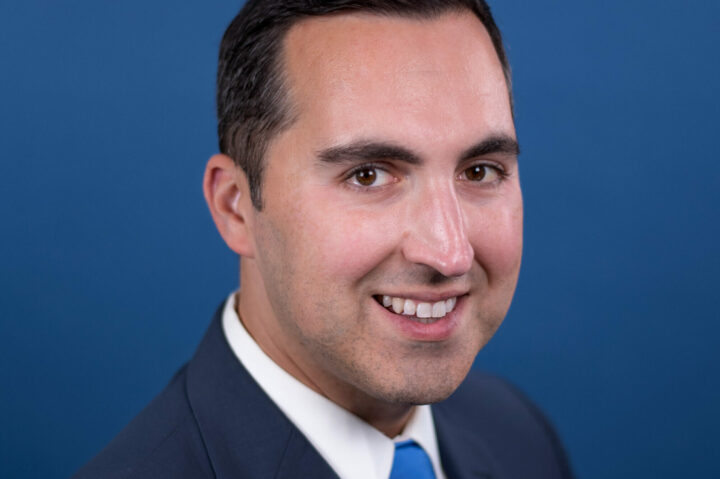
Richard Goldberg
Richard Goldberg, a senior advisor at the Foundation for Defense of Democracies and former Trump administration official, discussed the need for bipartisan action on Iran in an interview with Jewish Insider’s Jacob Kornbluh on the sidelines of AIPAC’s policy conference in Washington, D.C.
Congress on one side: Goldberg noted that until the 2015 nuclear deal was signed, Democrats and Republicans addressed the Iranian nuclear threat in a bipartisan manner, and even then several Democrats chose to vote against the deal. “You’re talking about less than five years ago, a solid majority of Congress in a bipartisan fashion was against the deal,” he explained. “Those people are still in Congress,” he added, and while “it may be politically impossible for some people to say we oppose the deal now, there are things that can and should win a bipartisan majority.” Goldberg cited the arms embargo on Iran and missile and nuclear restrictions as matters that both sides agree on when it comes to legislation.
His time in the Trump administration: Goldberg joined the White House’s National Security Council as its director for countering Iranian weapons of mass destruction in 2019. He departed a year later after the birth of his baby. “It was an incredible opportunity, I am honored beyond belief to have had the opportunity to serve the national security advisor and the president in that capacity,” he said. “From my perspective, the strategy that President Trump was pursuing on Iran is exactly the right one.”
Trump can do more: According to Goldberg, “examples include designating the financial sector of Iran in its entirety, for secondary sanctions, disconnect all remaining banks from the SWIFT international system, [cutting] off their access to investment capital and resources around the world. That would be a big statement to make, and the administration has the authority to do that on its own. They don’t need Congress for that.” The reason the administration is not doing so, Goldberg suggested, is because they are hoping to avoid a diplomatic fight at the United Nations Security Council, with respect to “snapback” sanctions, waiting for European countries to take action.
Please log in if you already have a subscription, or subscribe to access the latest updates.
 Continue with Google

 Continue with Apple