





































The two victims said they were approached by three assailants while speaking Hebrew

JCRC Bay Area/X
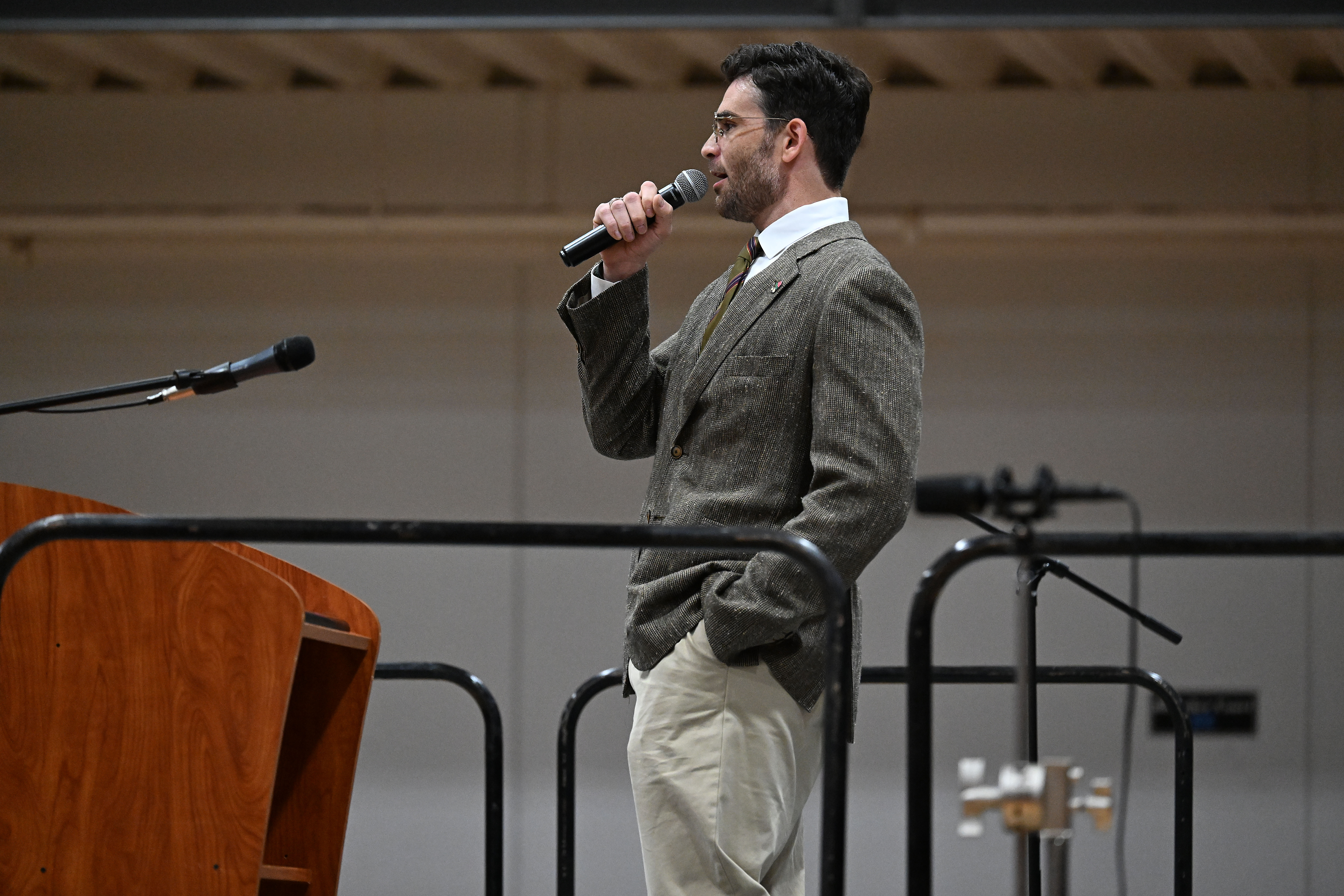
Video shows assailants attacking two Israeli-Americans in San Fransisco on March 9, 2026.


 Add JewishInsider on Google
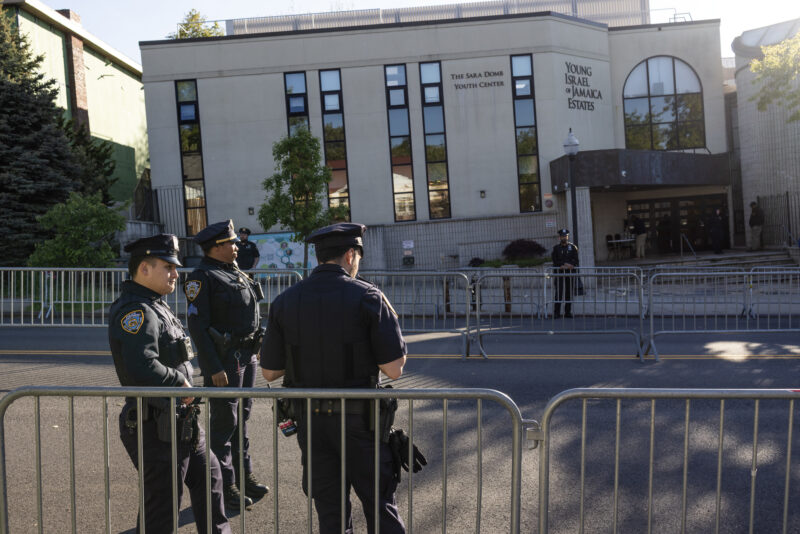
Police in San Jose, Calif., are investigating a violent attack against two adult men outside an upscale restaurant as an antisemitic hate crime, a spokesperson for the police department confirmed on Tuesday.
On Sunday afternoon, three assailants approached the two victims outside Augustine, a restaurant and cafe located in the Santana Row shopping mall. The two men — Israeli Americans — were speaking Hebrew when the attackers allegedly overheard them, according to the San Francisco Jewish Community Relations Council.
“The victims alleged that the suspects used antisemitic language during the altercation. The incident is currently being investigated by the Assaults Unit as a possible hate crime,” a spokesperson for the San Jose Police Department told Jewish Insider.
A video shows the three young men repeatedly punching and kicking the victims directly in front of other diners and as bystanders walked past. The assailants then fled before police arrived.
Tali Klima, a spokesperson for the grassroots advocacy group Bay Area Jewish Coalition, urged elected officials in the Silicon Valley community to speak out against the attack.
“We call on our local elected officials to finally take a strong stand against this hatred using not only their words but also concrete actions. It is time to take threats to the Jewish community seriously,” Klima said on Tuesday.
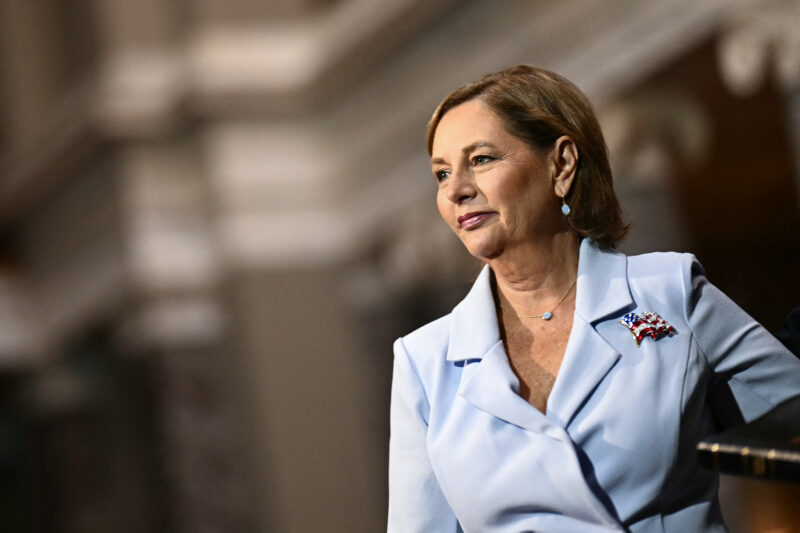
Sousa, who was previously AIPAC’s Southwest regional political director, replaces Marshall Wittmann after 13 years

Mark Wilson/Getty Images
House Speaker Nancy Pelosi (D-CA) speaks at the annual American Israel Public Affairs Committee (AIPAC) conference on March 26, 2019 in Washington, D.C.
The American Israel Public Affairs Committee appointed Deryn Sousa as spokesperson, replacing Marshall Wittmann, who retired at the end of 2025 after 13 years in the role.
Sousa steps into the public-facing position during a time when AIPAC is regularly in the spotlight — and as the powerful pro-Israel organization faces outsized criticism from the far left and far right over its influence in the American political system.
She reflects a different career trajectory than that taken by Wittmann, who came to AIPAC toward the end of his career after decades working in politics in Washington, including as communications director for Sens. Joe Lieberman (I-CT) and John McCain (R-AZ).

Sousa has worked for AIPAC for a decade, having joined the organization soon after she graduated from the University of Georgia, where she studied Arabic and international affairs. She moved to Washington for the spokesperson role from Houston, where she served until recently as AIPAC’s Southwest regional political director.
In a 2016 Times of Israel blog post, Sousa reflected on her first trip to Israel on an AIPAC mission for non-Jewish college students. She described her connection to Israel as a Christian.
“I was sitting in the Jewish homeland, at the Christian site of Jesus’ burial, with the faint sound of the Muslim call to prayer in the background. My three worlds came together at this exact moment: my Christian faith, my pro-Israel work for the Jewish cause, and my passion for my Arabic studies,” Sousa wrote. “In that moment, all three religions coexisted.”
Looking at where the three architects of President Joe Biden’s Middle East policy team have positioned themselves publicly, without the constraints of government service, is a sign of the options available to Democrats right now
Tom Williams/CQ-Roll Call, Inc via Getty Images/JACQUELYN MARTIN/POOL/AFP via Getty Images/Andrew Harnik/Getty Images
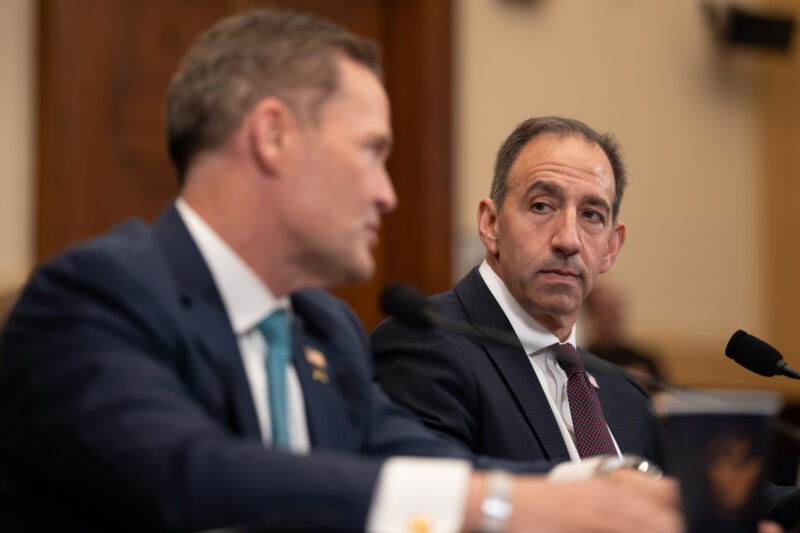
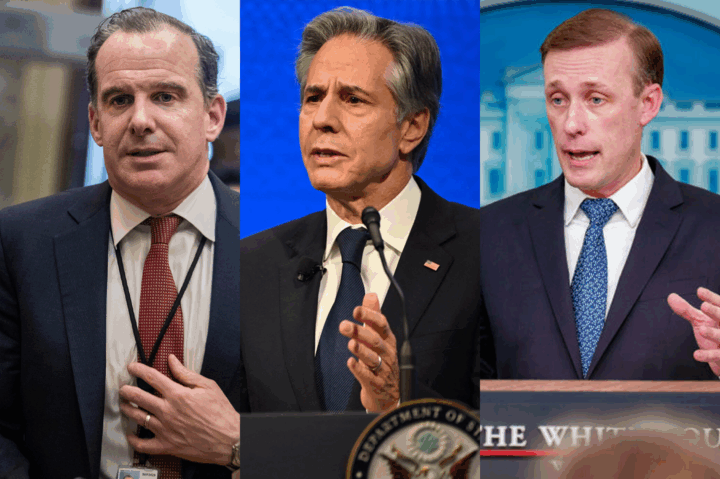
Former Secretary of State Tony Blinken, former National Security Advisor Jake Sullivan and Brett McGurk, Biden’s coordinator for the Middle East at the White House.
In Washington, whether a public official or their spokesperson is speaking honestly is usually not fully known until much later. Take Israel’s attack on Qatar last week: the Trump administration claimed not to have known about it ahead of time, but Israeli officials told Axios that Israeli Prime Minister Benjamin Netanyahu had given President Donald Trump a heads-up.
When a president leaves office, his former staffers tend to get rather loose-lipped — an opportunity for them to rehabilitate their reputation and, perhaps, tell the truth about their views (or at least the narrative they’d like to put forward on their own terms, not those of their boss).
The past few months have provided such an opportunity to the three architects of President Joe Biden’s Middle East policy team: Secretary of State Tony Blinken, National Security Advisor Jake Sullivan and Brett McGurk, Biden’s coordinator for the Middle East at the White House. All of them played a crucial role in shaping American policy toward Israel and Gaza after Oct. 7. Each has in recent months written op-eds and made lengthy appearances on podcasts and cable news to comment on developments in the Middle East.
Looking at where Blinken, Sullivan and McGurk have positioned themselves publicly, without the constraints of government service, is a sign of the options available to Democrats right now, at a moment when the party’s future is up for grabs — with an ascendant anti-Israel wing that is exerting stronger influence than ever, though it remains in the minority.
Sullivan, a measured foreign policy hand with a keen eye for politics, has in recent weeks begun saying that the U.S. should consider withholding weapons to Israel, a position he said he did not support one year ago. Whether Sullivan’s shift to the left represents a genuine change of heart or a response to shifting political winds within the Democratic Party, it’s a sharp departure from the way Biden governed.
McGurk, meanwhile, has been more willing to give the Israelis leeway in their prosecution of the war in Gaza and actions elsewhere in the Middle East. McGurk, used to being the behind-the-scenes negotiator who traveled regularly to Doha, Jerusalem and Cairo after Oct. 7, is now a commentator on CNN. That’s where he said in June that he gives “extremely high marks” to Trump for the way he handled Israel’s 12-day war with Iran and Washington’s brief entry into that conflict — while Sullivan has said the U.S. strikes weren’t necessary.
Helming the State Department, Blinken was Biden’s chief diplomat. And now, he finds himself in the middle of McGurk and Sullivan: navigating the party’s leftward pull while also sticking by his pro-Israel bona fides. He wrote in The New York Times in June that Trump shouldn’t have struck Iran — but now that Trump did so, “I very much hope it succeeded.” When many Democrats last month came out in support of European efforts to recognize a Palestinian state, a unilateral move that Israel opposes, Blinken wrote in The Wall Street Journal that he thinks it’s the right thing to do — but that France, Canada and the U.K. are “doing it too hastily,” and without needed conditions.
None of these men are aligned with the party’s far-left wing that seeks to sanction and isolate Israel on the world stage. Even Sullivan, in his commentary saying the U.S. should withhold weapons to Israel, is quick to point out the horrible toll of the Oct. 7 attacks two years ago and to praise Israel for weakening other threats in the Middle East, like Iran and Hezbollah, its proxy in Lebanon.
But keep an eye on the subtle yet shifting ways each of them approaches Israel and the Middle East to better understand the paths open to Democrats, as the party considers how to move forward and rebuild its battered brand in the era of Trump.
Please log in if you already have a subscription, or subscribe to access the latest updates.
 Continue with Google
 Continue with Apple