











































Slotkin: ‘People want to see a Jewish woman and a Muslim man being able to get along, debate, push and pull each other’
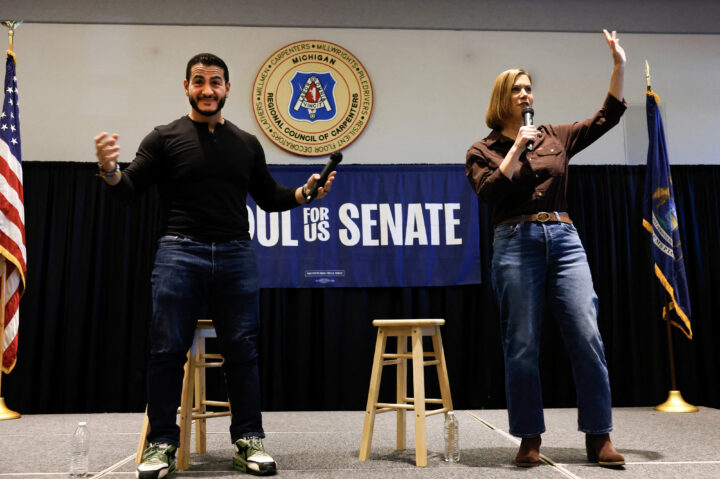
JEFF KOWALSKY / AFP via Getty Images
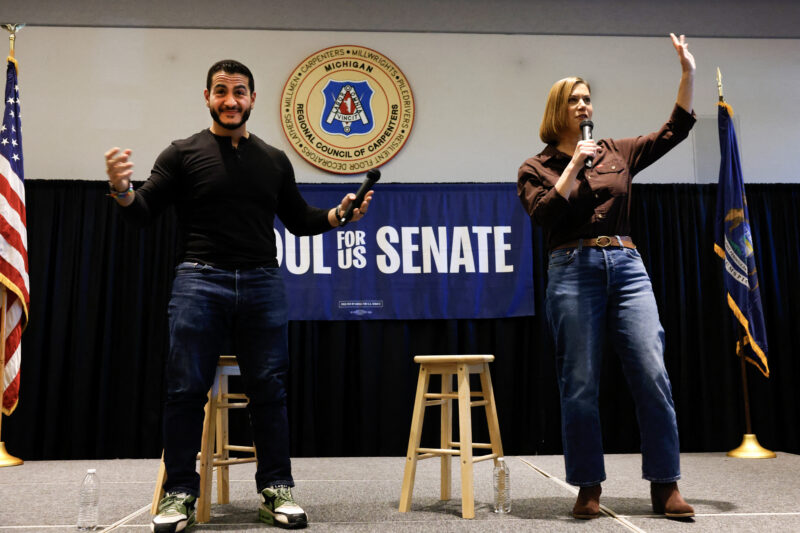
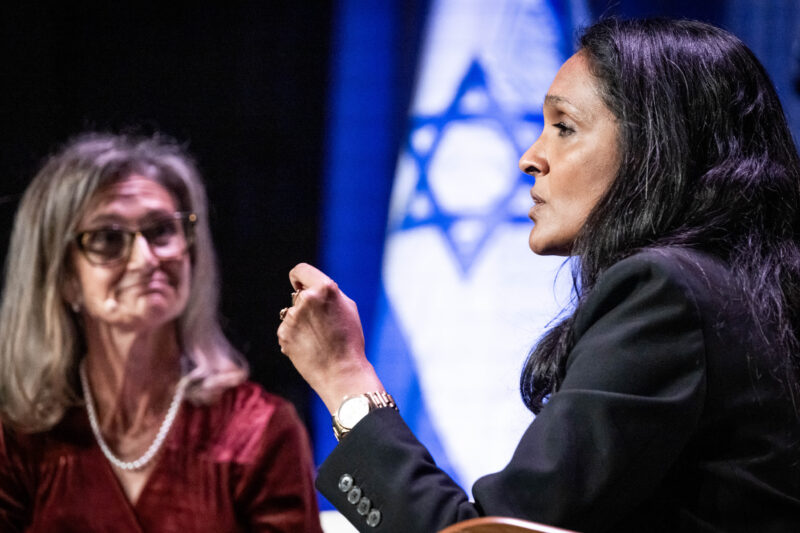
Democratic Michigan Senate candidate Abdul El-Sayed (L) reacts as Sen. Elissa Slotkin (D-MI) speaks during a town hall campaign event in Warren, Michigan, on October 3, 2026.


 Add JewishInsider on Google
Sen. Elissa Slotkin (D-MI) argued during her first joint campaign appearance with Michigan Democratic Senate nominee Abdul El-Sayed that the Jewish vote is not a monolith and that some Jewish voters are prioritizing other issues than Israel and antisemitism in the state’s upcoming competitive Senate race.
Many prominent Jewish Democrats in Michigan have offered strident criticism of El-Sayed, saying they will not vote for him without major commitments on Israel policy and antisemitism — or they plan to vote for his opponent. Slotkin is Jewish.
“There’s no such thing as the Jewish voters, just like there’s no such thing as the Muslim voters or the Black voters. People have their own views and the things that they prioritize are going to drive their vote,” she said during a joint appearance on MS NOW after participating in a joint town hall event.
“People want to see a Jewish woman and a Muslim man being able to get along, debate, push and pull each other, and move the state forward.”
"People want to see a Jewish woman and Muslim man … move the state forward." Sen. Elissa Slotkin and Abdul El-Sayed spoke to MS NOW about their first joint appearance on the campaign trail, as El-Sayed’s race against Mike Rogers appears neck and neck. https://t.co/y8aVj0CEkp
— Jewish Insider (@jewishinsider) October 5, 2026
El-Sayed said that he and Slotkin agree that “you ought to be safe in your place of worship” regardless of religion. El-Sayed has faced criticism from many in the Jewish community for responding to the terrorist attack targeting Temple Israel in West Bloomfield, Mich., by saying “hurt people hurt people.” He has since apologized for those remarks.
During their joint appearance at the town hall in Macomb County, Mich., on Saturday, Slotkin downplayed disagreements between moderate and progressive Democrats, arguing that the “real debate among Democrats right now is fight versus flight,” she said. “I am on Team Fight and I need someone with me who is on Team Fight.”
El-Sayed also emphasized that the Iran war is driving up prices at home, and said that the U.S. has “no business fighting” the war.
Slotkin also called Trump “the most successful corrupt leader in the history of the world” and said that former Iraqi dictator Saddam Hussein “would spit out his tea at the amount of money that Donald Trump has stolen from his own people.”
One signatory has repeatedly referred to pro-Israel officials as neo-Nazis while others have been involved with Students for Justice in Palestine and campus anti-Israel advocacy
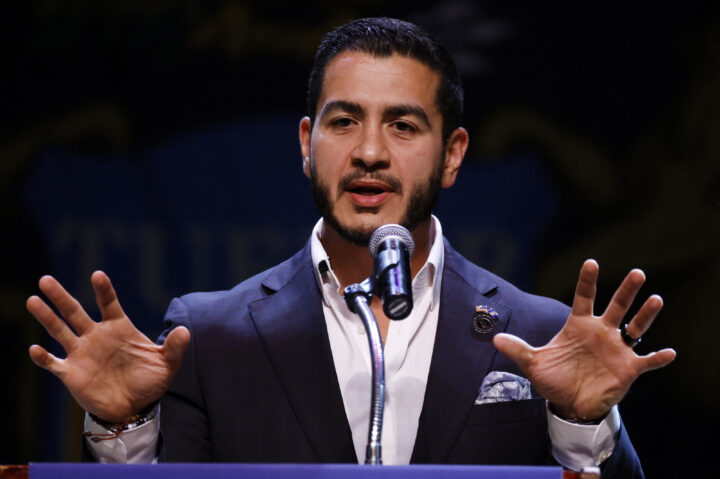
JEFF KOWALSKY / AFP via Getty Images
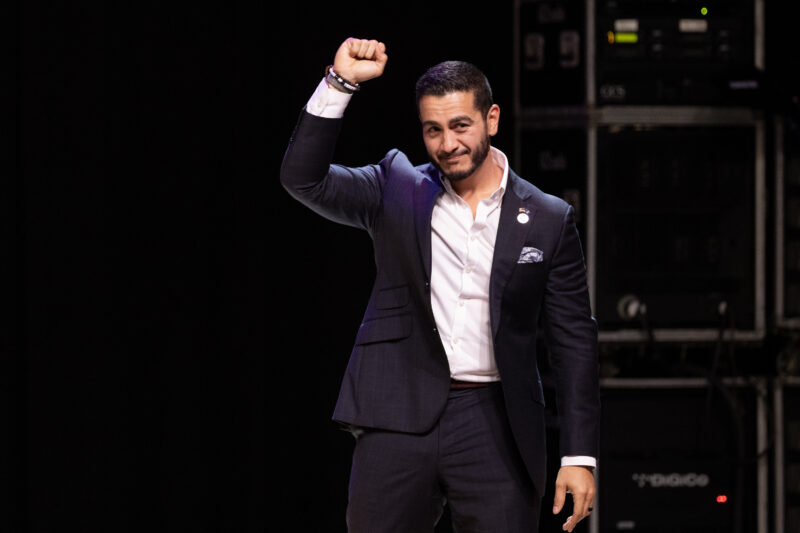
Abdul El-Sayed addresses supporters at his election night event at The Majestic Theatre in Detroit, Michigan, on August 4, 2026
A recent open letter from Jewish Michiganders expressing support for Michigan Democratic Senate nominee Abdul El-Sayed includes a series of figures with fringe or extremist views and backgrounds alongside several prominent members of the Jewish community.
El-Sayed’s campaign promoted the letter, which includes more than 800 total signatories, as a show of force for the candidate as he works to court Jewish voters as the general election nears. Meanwhile, other prominent leaders in the Jewish community have said they are not ready to vote for El-Sayed without changes in his stances on Israel or they plan to support his Republican opponent, Rep. Mike Rogers (R-MI).
The fringe figures on the letter also highlight the campaign’s ongoing struggles in appealing to mainstream Jews in Michigan — further highlighted by a recent video released by El-Sayed for Rosh Hashanah that featured two women connected to the anti-Israel group Jewish Voice for Peace. State Rep. Noah Arbit, who founded the Michigan Jewish Democratic Caucus, condemned the video as “tokenism.”
At the same time, the letter’s signatories include prominent members of the Jewish community such as former Rep. Sander Levin (D-MI), former Rep. Andy Levin (D-MI), attorney general nominee Eli Savit and Michigan Democratic Jewish Caucus Chair Decky Alexander. The letter states that the signatories are not all in lockstep — that some are enthusiastic supporters of El-Sayed while others are more reluctant and harbor concerns about his policy on Israel and language employed by his allies.
Perhaps the most widely discussed signatory on the list has been Liano Sharon, a progressive activist and Michigan Democratic Party officer facing disciplinary action from the state party for suggesting that Rep. Haley Stevens (D-MI) — whom he previously described as a “neo-Nazi” — should face a Nuremberg-style trial and potentially “the gallows” for her support for Israel, though he also said he does not support the death penalty.
In an email to Jewish Insider, he affirmed that he does consider her a neo-Nazi “based purely on her conduct supporting Nazi-like atrocities like apartheid, ethnic cleansing, and genocide” but emphasized that he does not “support the death penalty even for neo-Nazis” and that he would “advocate commutation” for Stevens and others who could be “convicted and sentenced to death.”
“Reichstag legislators were sentenced to the gallows at Nuremberg for similar legislative support for Nazi atrocities as Stevens gave to Zionist atrocities,” Sharon said in a separate email exchange he released publicly. “Why should our legislators be treated differently if the investigation concludes they committed neo-Nazi atrocities?”
Sharon told JI that he is being wrongly punished by the Michigan Democratic Party and called on it to take down a post accusing him of harassing Stevens.
Sharon suggested that Sens. Elissa Slotkin (D-MI) and Gary Peters (D-MI), former Sen. Debbie Stabenow (D-MI) and Rep. Shri Thanedar (D-MI) should face similar investigation and potential punishment. He has said that former Vice President Kamala Harris, Slotkin and Peters are also neo-Nazis.
Sharon has also previously declared that Zionism and Judaism are separate and incompatible and declared that Attorney General Dana Nessel was not Jewish because of her support for Israel, was a neo-Nazi sympathizer and is “complicit in war crimes and crimes against humanity.”
And he denied that the attack on Temple Israel in West Bloomfield, Mich., and its attached preschool was antisemitic. He affirmed that view in his email to JI, arguing that “suggesting [the attacker’s] motives were anything other than ***revenge against Israel*** for the ***Israeli airstrike that murdered his family in Lebanon*** days before is absurd mental gymnastics,” while also calling it a “horrific act of terrorism against civilians, which I condemn without qualification.”
In his email to JI, Sharon said, “That’s what Zionism has always been: antisemitic Jew hate so deep, they want to replace us all. Just like Hitler wanted to replace us all with Aryans, Zionists want to replace all Jews with Zionists.”
El-Sayed’s campaign did not respond to a request for comment.
Others who signed the letter have also expressed fringe views. Numerous signatories have accused Israel of genocide and have histories of anti-Israel advocacy, some of them being affiliated with JVP.
Several signatories have also been involved with Students for Justice in Palestine and campus anti-Israel advocacy, including serving as members or organizers of anti-Israel encampments on campuses. One was arrested for destruction of property when police cleared the encampment at the University of Michigan, though charges were later dropped.
At least 18 signatories on the letter signed onto a separate national statement demanding that institutions of higher education cut ties with mainstream Jewish groups like the Anti-Defamation League working to combat antisemitism on college campuses.
One signatory, a university professor, appeared to advocate for violence against “racist, homophobic, or transphobic speaker[s]” on campuses, for which he was suspended without pay and referred to law enforcement.
Another signatory asserted that U.S. officials “had reasons to expect a terrorist attack would occur” on 9/11 “and were far more interested in exploiting than in preventing” such an attack. He separately described Israel as “overtly Jewish-supremacist.”
Yet another, a former public official, made racist comments at a public city council meeting, for which she later apologized and resigned.
One signatory, an encampment organizer at the University of Michigan, argued in support of calls for intifada and “from the river to the sea, Palestine will be free,” rejecting the notion that such slogans — which Jews say invoke campaigns of terrorism against Israel and the wholesale elimination of the Jewish state — are violent or antisemitic.
One was an organizer in the anti-Israel Uncommitted Movement in Michigan.
And one self-publishes a website where he has discussed his ties to a 1990s school shooting case, in which he was charged and detained as a co-conspirator for more than a month, though charges were later dropped. He denies any involvement or wrongdoing. He also discusses, on the website, his conviction and jailing for purchasing machine gun parts online in the early 2000s and constructing an illegal machine gun.
Jessica Tarlov, who hosted El-Sayed on podcast with Scott Galloway: ‘There is a group of people that are asking you, I think, for very bare minimum acknowledgement of their concerns’
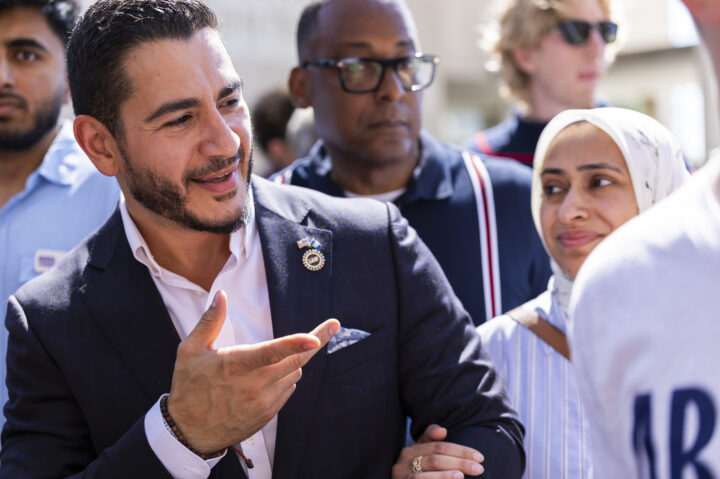
Abdul El-Sayed leaves after holding a press conference in front of the Spirit of Detroit statue on August 05, 2026 in Detroit, Michigan (Photo by Finn Gomez/Getty Images)
Abdul El-Sayed, the Democratic Senate nominee in Michigan, refused to tone down his hostile rhetoric toward Israel, including his repeated accusations of genocide, during a newly released podcast interview, even as his stances risk alienating Jewish Democrats who are otherwise eager to support his campaign in a key battleground state.
In an appearance on the “Raging Moderates” podcast hosted by Scott Galloway and Jessica Tarlov, who are both Jewish and disagree with his stances on Middle East policy, El-Sayed doubled down in defense of his repeated use of the term genocide to describe Israel’s actions in Gaza, invoking the Holocaust to justify his position.
“The word genocide was created to explain what that was,” El-Sayed said of the “murder of 6 million Jews” in the Holocaust, which he called the world’s “worst genocide.”
“But the whole point of creating that word isn’t that you have to wait until the crime is that big again to be able to use it, otherwise it loses its power,” he added. “Its power is in naming a thing before it gets that big, so we could do something about it.”
El-Sayed’s new comments demonstrate how he has largely been reluctant to offer major concessions on Israel even as he seeks to make inroads with Jewish Democrats in the final stretch of a closely contested election that could help decide control of the Senate.
Throughout the exchange, Galloway and Tarlov warned El-Sayed that his views are “disqualifying” for some Jewish voters who remain skeptical of his uncompromising approach to Israel and equivocal remarks on rising antisemitism.
Tarlov, for instance, told El-Sayed that “there are people who are not going to be able to” vote for him unless he demonstrates a meaningful understanding of their concerns, with little time left until November.
“This is about morals and values and ethics, and it is also about winning elections,” she said. “And there is a group of people that are asking you, I think, for very bare minimum acknowledgement of their concerns — they’re not even saying stop saying genocide.”
Still, El-Sayed held firm, insisting he is committed to building “uncomfortable coalitions” even if it results in losing some support from a pivotal constituency.
“When I’ve had conversations with my Jewish sisters and brothers here in Michigan, I’ve told them where we agree, I’m going to be honest, direct and specific, and where we disagree, I’m going to be honest, direct and specific,” El-Sayed said in the lengthy interview.
“You might disagree with me, and that might mean you might not vote for me,” he went on. “That’s OK.”
Despite recent efforts to mend fences with Jewish and pro-Israel Democrats in Michigan who want to back his campaign, El-Sayed has continued to draw criticism for the extent to which he has been unwilling to evolve on key issues.
While he apologized for his insensitive comments downplaying the violent attack on Temple Israel, a synagogue in suburban Detroit, some Jewish voters cast doubt on the sincerity of his explanation, saying that it did not amount to a wholesale disavowal of his initial remarks claiming “hurt people hurt people.”
Meanwhile, after El-Sayed met privately with rabbis at Temple Israel this month, most of their congregants who had long called the Democratic Party home say they oppose his campaign and intend to vote for his GOP rival, former Rep. Mike Rogers (R-MI), according to The Free Press.
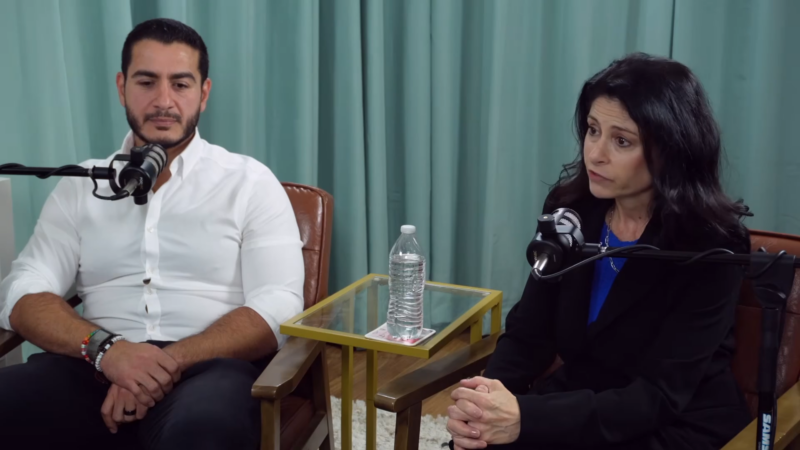
El-Sayed won a key endorsement on Tuesday from Michigan’s attorney general, Dana Nessel, a prominent Jewish Democrat who had voiced deep reservations about his views on Israel and countering the rise of antisemitism. But her decision to support El-Sayed, which she announced in a joint interview, was hardly a vote of confidence for the nominee.
“For me, I don’t want to say the choice is easy, but I am going to say that there is no choice,” Nessel said, “and that’s why I’m supporting Abdul for the United States Senate.”
Other Jewish leaders have indicated that they will withhold their support until El-Sayed confirms his commitment to “nonnegotiable” demands, such as “Jewish sovereignty in Israel,” which he has yet to recognize.
El-Sayed did little to assuage doubts among Jewish voters when he released a Rosh Hashanah video over the weekend featuring members of Jewish Voice for Peace, a far-left anti-Israel group that advocates for the Boycott, Divestment and Sanctions movement.
In the podcast interview with Galloway and Tarlov, El-Sayed summed up his approach to Israel and other issues that remain a key source of tension among Jewish Democrats in Michigan searching for reassurances that some believe he has not provided.
“I’m unwilling to bend my principle around what I believe, and I think we believe in the same principles. The question is ultimately how we apply them, and if we apply them evenly,” he said.
A prominent Jewish Democratic fundraiser in the state said he’s not currently prepared to vote for El-Sayed without changes to the nominee’s stances
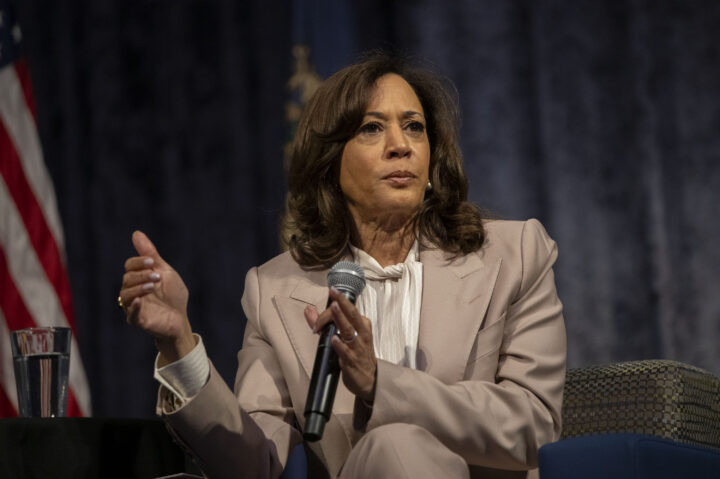
Bill Pugliano/Getty Images
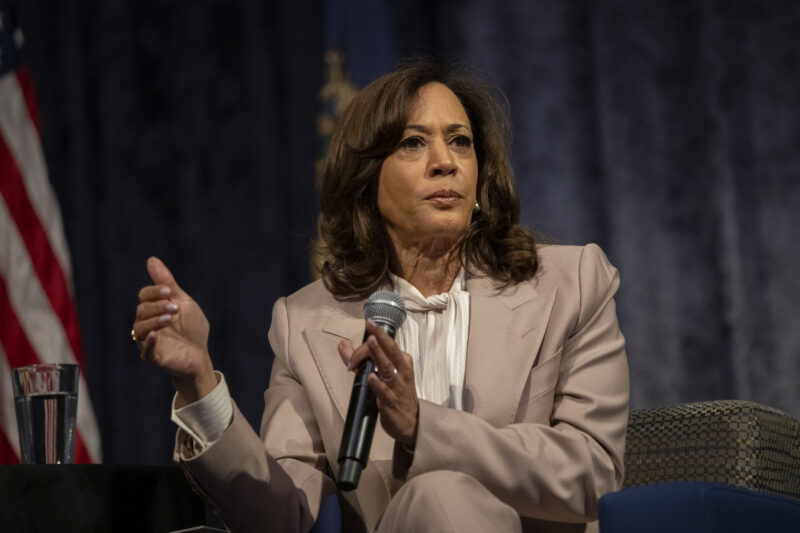
Former Vice President Kamala Harris speaks at the 38th Annual Michigan Democratic Women's Caucus Legacy Luncheon on April 18, 2026 in Detroit, Michigan.
Michigan Jewish leaders on Tuesday urged former Vice President Kamala Harris — who is set to campaign with the party’s Senate nominee, Abdul El-Sayed, in Michigan this week — to appeal to El-Sayed on issues related to antisemitism and Israel.
Meanwhile, one prominent Jewish Democratic leader and fundraiser in the state said that, without seeing significant changes in rhetoric from El-Sayed, he’s not willing to vote for him, even as the state’s Jewish attorney general, Dana Nessel, said this week that she plans to support El-Sayed.
The group of Jewish leaders, writing to Harris under the banner of the Nonnegotiable Michigan campaign, said that they are longtime supporters of her and the Democratic Party, and called on her to press El-Sayed to accept the five demands on Jewish issues and Israel that the Nonnegotiable campaign has presented.
The leaders highlighted Harris’ own history of fighting antisemitism and standing with the Jewish community, including hosting a Hanukkah celebration at the vice president’s residence and working with her Jewish husband, Doug Emhoff, on the national antisemitism strategy.
“As Vice President, you told us plainly that antisemitism ‘must be condemned unequivocally’ — no caveats, no context, no hesitation,” the letter reads. “When you accepted the Democratic nomination –– with many of us in Chicago cheering you on –– you proudly affirmed your commitment to Israel’s sovereignty and safety; you knew that promise did not contradict Palestinian dignity, security, freedom or self-determination, which you called for in the very same breath.”
The leaders said that Harris’ own stance and her understanding of antisemitism is clear, while El-Sayed “has had every opportunity to meet our request to support our basic needs. So far, he has declined even to respond” while employing antisemitic tropes and rejecting Israel’s existence as a Jewish state.
“When you stand beside Dr. El-Sayed on September 22nd, we urge you to call on him to say what he has thus far been unwilling to say: that Jewish safety, including for Zionists, is nonnegotiable,” the leaders said. “That our right to define our own identity is nonnegotiable. That Jewish statehood and self-determination in our ancestral homeland is nonnegotiable. That our full, proud participation in the Democratic Party is nonnegotiable.”
During a press call on Tuesday morning, David Kramer, a prominent Jewish donor and top Democratic official, said he was still uncomfortable supporting El-Sayed unless he agreed to a set of conditions the Jewish community laid out earlier this month. Kramer served as finance chair for Sen. Elissa Slotkin’s (D-MI) 2024 campaign and was campaign chair for Rep. Haley Stevens’ (D-MI) 2026 Senate campaign. He was also a prominent member of the Jewish Democratic effort supporting Harris in Michigan in 2024.
“I was involved with Michigan Jews for Harris. We had a pretty significant group that was, and we were proud to stand with her, and particularly proud of the work that she did with Doug Emhoff to combat antisemitism, and felt that she was a stalwart supporter of our community and the U.S.-Israel relationship,” Kramer told Jewish Insider. “We think that she’s particularly well-suited to raise non-negotiables with Abdul, given her support of our community and her unique understanding of our issues and the need for our security.”
Kramer told reporters that, if El-Sayed does not embrace the five conditions laid out by the Nonnegotiable campaign, “I’m not comfortable, at this point, voting for him.” Other Jewish leaders on the call, largely clergy who said that they were not willing to disclose who they were voting for, stopped short of explicitly making such a commitment.
Cantor Regina Lambert-Hayut added that Harris has a “very particular bird’s-eye view of what it means to be on the receiving end of a constituency feeling unheard or unsupported,” referencing the Uncommitted Campaign — which El-Sayed helped lead in 2024.
That campaign “cost — maybe fully or maybe in part — Democrats the election,” Lambert-Hayut said.
“I feel that she really understands this, and maybe she, someone with her integrity and her wisdom, could help appeal to Dr. El-Sayed to understand that every constituent matters, and to completely ignore the Jewish constituency, especially those of us who want to be able to support him, is something that I hope that she would be able to help him understand better,” she continued.
Rabbi Michael Moskowitz also emphasized that the Nonnegotiable campaign’s message extends beyond El-Sayed and Michigan. “It’s a national message we need to get out there to any candidate to understand how we feel as a Jewish community, and if that our votes count, and they need to help us in the midst of these concerns.”
El-Sayed responded dismissively when pressed on his support for the Uncommitted campaign on Tuesday, ahead of his appearance with Harris, arguing that the campaign was only designed to oppose President Joe Biden, not Harris, though many prominent Uncommitted leaders continued to pressure and protest Harris through the general election.
Kramer’s comment that he is not currently prepared to vote El-Sayed stands in contrast with Nessel, the Democratic AG, who endorsed him on Tuesday. Nessel made the endorsement alongside El-Sayed on the “For the Sake of Argument” podcast hosted by progressive activist Lori Goldman.
Nessel had previously been critical of El-Sayed and the Michigan Democratic Party more broadly, saying that she felt unsafe attending the party convention, but subsequently told Jewish Democrats in the state that they should put the “needs of the world above even our own self-interest and, yes, even our own survival.”
Kramer praised the Michigan Democratic Party and elected officials for their prompt condemnation of an incident last week in which an activist harassed and threatened Stevenson Capitol Hill for her support for Israel.
The activist involved is an officer of the Michigan Democratic Party, but the party is undertaking removal procedures. He also signed onto a letter of Jews supporting El-Sayed’s campaign, though El-Sayed also condemned his actions.
“It’s of great concern when any leader is accosted that way and things are thrown at them that are so damaging and alarming,” Moskowitz said on the press call.
The North Carolina Republican Senate nominee said support for Israel is a top-tier issue for his state’s voters
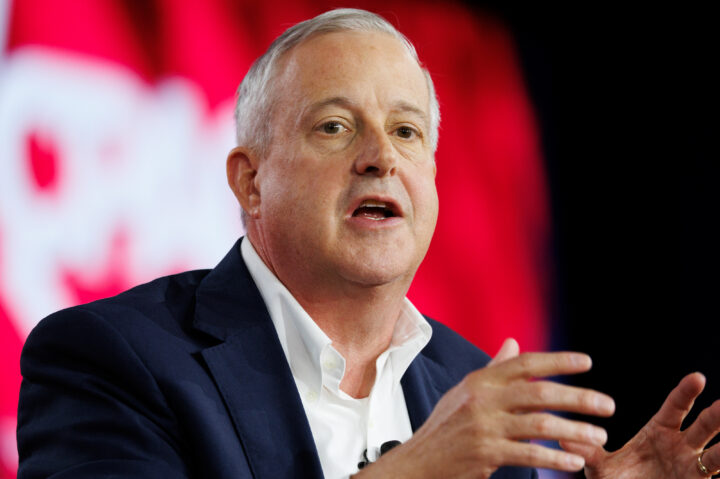
Shelby Tauber/Bloomberg via Getty Images
Michael Whatley, GOP Senate candidate for North Carolina, speaks during the Conservative Political Action Conference in Grapevine, Texas, on March 26, 2026.
LAS VEGAS — North Carolina Republican Senate nominee Michael Whatley is emphasizing that he stands firmly with Israel as he seeks to attract votes from the state’s Jewish community.
North Carolina Jewish Democrats have found themselves increasingly alienated from their state party in recent years, as the party resisted efforts to establish a Jewish caucus and approved various anti-Israel measures. But with a formidable and moderate nominee in former Gov. Roy Cooper at the top of the ticket, who has a generally strong record on Jewish community issues from his time in office, it remains to be seen how many Jewish votes will be up for grabs in November.
“The Jewish people matter [and] our relationship with Israel matters,” Whatley told Jewish Insider during the Republican Jewish Coalition’s annual leadership summit in Las Vegas. “Israel has been and will be our No. 1 ally in the Middle East and they need to be and we need to make absolutely sure that we have a senator who is going to fight for that relationship.”
Beyond just the Jewish community, during the RJC event, Whatley described support for Israel as a top-priority issue for North Carolina voters. He expressed unequivocal support for continued U.S. military aid to Israel.
Whatley has sought to cast Cooper as an extremist unfriendly to the Jewish community, highlighting, in his interview with JI, a Washington Free Beacon report that the governor had hosted an imam with extremist ties at a 2018 Iftar dinner at the governor’s mansion and criticizing him for not dispatching state police to stop university campus protests against the war in Gaza or speaking out against the state party’s anti-Israel resolutions.
“I think that there’s a track record that he has that Jewish voters should take a look at and understand there’s a very clear distinction,” he continued.
“These are more lies from a desperate candidate. Roy has been a strong advocate for and friend to the Jewish community throughout his career, hosting the first ever Passover Seder and Menorah Lighting at the Executive Mansion and working to stem the tide of antisemitism and he’ll continue that work as U.S. Senator,” a Cooper campaign spokesperson said in a statement to JI.
During his time as governor, Cooper signed anti-Boycott, Divestment and Sanctions legislation and a bill codifying the International Holocaust Remembrance Alliance’s working definition of antisemitism into state law, as well as hosted various events with the Jewish community and condemned antisemitism.
Whatley also noted that he spent a summer living in Israel, interning at an archeological site in Caesarea while he was a graduate student at Wake Forest University. He called Israel “truly remarkable” and a “fantastic country” with “fantastic people.”
He visited Israel as Republican National Committee chairman following the Oct. 7, 2023, Hamas attacks, meeting with senior Israeli leaders and visiting sites of the Hamas assault.
Despite its political unpopularity, Whatley expressed support for the war in Iran, emphasizing the need to block Iran from obtaining a nuclear weapon and arguing that it is “long past time for presidents to quit kicking this can down the road. When President Trump made the call that Iran was too close to a nuclear weapon and went in — I think that is where we need to be.”
In spite of skepticism from many political observers about his chances, and Cooper leading in the polls, Whatley expressed confidence that he is going to win the race.
“We feel very good about where the polls are right now,” Whatley said. “I’m down four points going into Labor Day. That is absolutely within striking distance.”
He said his campaign just began to run TV ads in the past few weeks, which he suggested would help him close the gap.
“The fact is that the people of North Carolina are not going to vote for the worst governor in the history of North Carolina,” Whatley insisted, pointing to Cooper’s record on criminal justice, immigration, transgender issues and the economy. “We are prosecuting this case from one end of the state to the other.”
Whatley said he entered the race after Sen. Thom Tillis (R-NC) announced his retirement at the urging of people in the state as well as President Donald Trump.
“Fundamentally, [I’m running] because I want to represent this state. I want to fight for the people of North Carolina,” Whatley said. “I want to make sure that I’m representing every family and every community across the state and to make sure that we have a conservative champion in the Senate.”
David Kramer, a Jewish Democratic leader in Michigan, said Rep. Hillary Scholten is ‘someone who has a very strong sense of self and what she thinks is right and wrong’
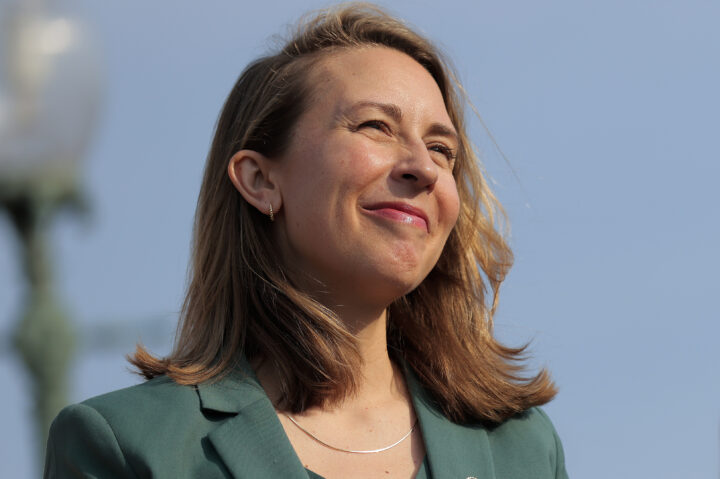
Heather Diehl/Getty Images
Rep. Hillary Scholten (D-MI) speaks outside the U.S. Capitol on March 26, 2026 in Washington.
Rep. Hillary Scholten (D-MI) has emerged in recent weeks as one of the Democratic Party’s most outspoken voices against antisemitic influencer Hasan Piker — including standing as one of the few Michigan Democratic holdouts in endorsing Senate nominee Abdul El-Sayed in light of his relationship with Piker.
Her stalwart outspokenness against antisemitism and resistance to her party’s home-state Senate nominee is increasingly rare in today’s politics. But Jewish Michiganders who have worked with her say she’s long been close with and supportive of the community, and that she’s been deeply and personally disturbed by rising antisemitism and other rhetoric from Piker and El-Sayed.
At an event for a fellow Michigan House candidate this week, Scholten faced down a questioner who said that she was making “bad faith accusations” against El-Sayed and Piker and stoking Islamophobic hate speech in the interest of protecting U.S. aid to Israel. Scholten stood her ground.
“I do not support the comments of Hasan Piker. He has said some terrible things about America, about American troops, and I would stand by comments condemning those. I think they don’t have any place in the Democratic Party or in the United States of America,” she said. “But even though we may not necessarily be in agreement about all of those things, we are in alignment about the things that unite us as Democrats: lowering costs, delivering on universal health care, and fighting corruption.”
Speaking to reporters after the event, she said that she has not endorsed El-Sayed and hasn’t heard from him in any capacity.
“If he would [reach out to me], I would have questions,” Scholten said. “A lot of it has to do with his past associations with Hasan Piker.”
She said she’s hearing “a lot of support” from people who agree with her raising the question of “whether this is the right direction for our party.”
Scholten was among Rep. Haley Stevens’ (D-MI) most outspoken supporters during the Senate primary, and unlike Stevens, refused to commit to endorse El-Sayed during the general election. Her decision to stick to her guns carries political risk: El-Sayed carried Scholten’s district in the Democratic primary, winning the Kent County (Grand Rapids) base by 26 points over Stevens.
El-Sayed’s campaign did not respond to a request for comment, but largely shrugged off questions about Piker and criticisms from Scholten and other Democrats during a press conference on Wednesday.
He accused Republicans of pushing a false narrative of Democratic division and suggested that his critics are simply “still nursing wounds or grievances from the primary.”
Despite having repeatedly campaigned with Piker, El-Sayed also dismissed him as “a streamer in California” who is not central to the campaign, which he described as focused on issues in Michigan. He asserted that questions about Piker are driven by a media focus on a “tabloid version of our politics.”
Scholten declined to comment to Jewish Insider for this story.
She was first elected in 2022, after losing a 2020 race in a GOP-leaning district against former GOP Rep. Peter Meijer. The Grand Rapids-area district was redrawn to be more favorable to Democrats two years later, and she prevailed over a hard-right Republican challenger who defeated Meijer in the GOP primary. The Cook Political Report now rates her as a shoo-in to win reelection.
In a 2020 interview with Jewish Insider during her run for the House, Scholten did not rule out conditioning or reducing U.S. aid to Israel in the interest of serving as a neutral arbiter to pursue a two-state solution, though she also argued that the U.S. should continue to be supportive of Israel. Scholten voted earlier this year against an amendment cutting U.S. aid to Israel that was supported by nearly half of House Democrats.
She also strongly condemned the Boycott, Divestment and Sanctions movement, saying that it has “deep roots in antisemitic sentiment and rhetoric.”
Jewish Democrats in Michigan said that Scholten is a longtime ally of their community, and said that her strong stand against Piker and antisemitism is nothing new.
David Kramer, a prominent Jewish Democratic leader in the Detroit area who served as campaign chair for Stevens’ Senate race, said Scholten is “someone who has a very strong sense of self and what she thinks is right and wrong, and she has a history of speaking up, even if it’s unpopular” — pointing also to her early call for then-President Joe Biden to end his reelection campaign and her strong and early support for Stevens.
“This is another one in the pattern of her doing what she thinks is right, even when she knows she’s going to get some flak for it,” Kramer continued. “I’m absolutely, positively convinced that she’s doing this just because of what her convictions are and her gut reaction.”
He said he’s heard from Scholten directly that even her staff have warned her about the potential consequences of the stand she has taken on Piker and El-Sayed, but that she feels strongly that this is an issue of right and wrong.
Kramer said that Scholten has come to him on various occasions about her concerns that El-Sayed and Piker’s comments and activity will cause insecurity in the Jewish community — “she just gets it.”
He added that, while Scholten is close with the small Jewish community in Grand Rapids as well as with Jewish leaders in the Detroit area, her positions come from her own deeply held values.
“She is a very, very smart, very, very principled person who is willing to speak the truth and is willing to take stands even if it is not something that others would say will help her politically, and that is really unusual today in politics,” Mark LoPatin, another Detroit-area Jewish Democrat who has interacted with Scholten, said. “She is one of the few who is really willing to get out there to say, ‘This is wrong,’ and why she believes it’s wrong.”
LoPatin said that Scholten may very well face a more difficult primary race in 2028 as a result of her outspokenness and has told supporters that she has faced backlash for her stances, but that she does not plan to back down.
“We should have more congressional leaders that are willing to do that,” he said. “We probably wouldn’t be in the position that we’re in right now.”
Michael Horowitz, another Detroit-area Jewish Democrat, said he got to know Scholten through Stevens and her campaign at joint events they held together. “She just fits a category of intelligent, caring people who are trying to do good … they approach their job with the goal of trying to get things done.”
He said that Scholten is someone who “sees right and wrong” and was “particularly offended” by the attacks leveled against Stevens in the primary, as well as against state Sen. Jeremy Moss, a House candidate whom Piker attacked by name in recent comments that have drawn particular criticism.
“This isn’t a political calculation, she sees it as wrong,” Horowitz said. “It’s just a person who’s a decent person, cares about right and wrong. I think it just upset her. … I don’t see any agenda here, other than people that she’s close to have been attacked, and … she doesn’t buy into it. This isn’t who she is, and she’s willing to say something.”
Kramer said that, having known Scholten for several years, he believes her convictions on antisemitism are authentic and deeply rooted. He also noted that she’s an active member of her church and “someone of a lot of faith,” and said he believes that some of her dedication to the issue of antisemitism comes through her faith, though he said he hasn’t asked her the question directly.
LoPatin agreed that Scholten’s stance seems to be a product of her moral character, and said that quality means he’ll continue to support her even if he disagrees with particular stances she may take. “I do know that she will have a thoughtful response to whatever those issues are.”
Kramer also emphasized that, despite not having endorsed El-Sayed, Scholten remains committed to helping Democrats up and down the ballot in Michigan win in November — a commitment Scholten expressed herself at the event earlier this week.
The Michigan Democratic Senate nominee didn't address Piker's role in promoting his campaign or his attack on congressional nominee Jeremy Moss
JEFF KOWALSKY / AFP via Getty Images
Abdul El-Sayed addresses supporters at his election night event at The Majestic Theatre in Detroit, Michigan, on August 4, 2026
Michigan Democratic Senate nominee Abdul El-Sayed distanced himself, to a degree, from antisemitic streamer Hasan Piker, who has been a prominent surrogate of his campaign, after Piker attacked Democratic state Sen. Jeremy Moss and argued that Jews are inciting antisemitic violence against themselves by supporting Israel.
But, in the statement — posted on X under the heading, “My statement on Hasan Piker’s comments regarding Jeremy Moss” — El-Sayed didn’t name Piker or Moss, and didn’t directly address Piker’s comments.
“I believe all Americans deserve the right to advocate what they believe without fear of violence,” El-Sayed said. “This is particularly true for communities that have been intimidated for their beliefs in the past.”
Amid ongoing attacks on him for his association with Piker, El-Sayed also insisted that “nobody speaks for this campaign besides me and my campaign spokespeople.”
He went on to downplay Piker as “a Twitch streamer” who will not define the race or his own campaign. He did not say whether his or his campaign’s relationship with Piker will change going forward.
“My commitment to Jewish safety is the same as my commitment to the safety of my own daughters,” El-Sayed added. “Antisemitism is a scourge and we need to address it in all its forms. And I stand against any rhetoric that puts the community at risk.”
Despite the title of the statement addressing Moss, the statement itself did not directly address El-Sayed’s fellow Michigan Democrat or Moss’ allegations that opponents are spreading fabricated audio of him promoting antisemitic tropes.
Republican nominee former Rep. Mike Rogers (R-MI) blasted El-Sayed’s comments as insufficient.
“Hasan Piker’s call for violence against the Jewish Community, specifically against Jeremy Moss, must be condemned by every single Michigan Democrat. But Conman Abdul El-Sayed doesn’t have the guts to disavow his running mate,” Rogers said. “Abdul’s attempt at distancing himself from this violent and hateful rhetoric now that he and Hasan won the primary is the epitome of what a conman does — says one thing when it serves him and another when it doesn’t.”
Rogers added, “His rhetoric is causing fear in Michigan communities, is unAmerican, and makes him unfit to represent our state.”
Moss said in a statement later on Monday that he and El-Sayed, whom Moss has not yet endorsed, are in ongoing conversations about their shared goals, safety for Jews and Arabs and co-existence among Michigan communities.
“These important conversations do not fit neatly in the confines of a tweet or a reel, like so many want them to. I’m grateful that Abdul and I are having them,” Moss said. “There is still work ahead to unite our ticket despite our differences. It won’t happen overnight, nor should it. It will require continuing outreach that is credible and authentic.”
But Moss made clear that despite his disagreements with El-Sayed, he will not support Rogers, as some other leaders in the Jewish community plan to.
Moss also lambasted Piker, without naming him individually.
“Provocatuers are exploiting this moment to create further divisions. I will not be lectured by a California podcaster about what Oakland County, Michigan’s Jewish community should and shouldn’t believe,” Moss continued. “And we certainly won’t be gaslit that we’re responsible for the antisemitic harm upon us. The attempted murder of Jewish children in West Bloomfield has no justification,” he said, referencing the violent attack on Temple Israel earlier this year.
Piker has so far shrugged off criticisms of his comments, including those from another Michigan Democrat, Rep. Hillary Scholten (D-MI). In a response, Piker called Scholten “an israel 1st congresswoman,” and said she’s “vying for the spotlight by actively defaming a prominent antizionist voice to harm the dem senate majority chances over a 90/10 issue,” while referencing unverified rumors about Scholten’s personal life.
The Texas Democratic Senate nominee said on 'The Breakfast Club' that he ‘would not vote to send weapons to the Netanyahu government’
Brandon Bell/Getty Images
Democratic Texas State Rep. James Talarico speaks during a campaign launch rally on September 09, 2025 in Round Rock, Texas.
James Talarico, the Democratic Senate nominee in Texas, said he would not vote to send further military aid to an Israeli government led by Prime Minister Benjamin Netanyahu, and that aid beyond that should be conditioned on Israeli policies in Gaza and the West Bank.
He also condemned AIPAC, saying it silences criticisms of Netanyahu and Israel.
“I would not vote to send weapons to the Netanyahu government,” Talarico said in an appearance on “The Breakfast Club” podcast last week, adding later in the interview that he wants to stop weapons sales as well.
Pressed on military aid to Israel in general, Talarico said, “I think all of that needs to be conditioned on ending the death and the destruction in Gaza and the West Bank.”
But he continued to decline to describe the war in Gaza as a genocide, citing the ongoing legal case on the subject at the International Court of Justice. He said, however, that there is “certainly evidence to bring those charges” and that the U.S. should “abide by whatever ruling that the court comes to.”
“As a U.S. senator, my job would be to take action,” he continued. “My job would not be to litigate what terms are used. My job would be to stop what’s happening. And that’s why I’ve said I would use every bit of our nation’s diplomatic and financial leverage to protect the lives of Palestinians.”
Talarico has made similar comments regarding aid to Israel earlier in the race, which prompted some Jewish Texans to turn away from him in the primary.
He suggested in the interview that politicians face pressure from AIPAC to not criticize Netanyahu — though even AIPAC-supported Democrats have been highly critical of the Israeli leader.
“The influence of AIPAC in our elections has a chilling effect and people don’t feel like they can speak their minds because they’re worried AIPAC is going to drop hundreds of millions of dollars of money in their race — usually not even talking about the issue of Israel or issues that Jewish Americans face,” he said, referring to AIPAC’s strategy of highlighting issues other than Israel in ads in Democratic districts.
In a statement, Talarico campaign manager Seth Krasne said, “James believes every human life is sacred. His longstanding record combating antisemitism, defending Jewish students on the floor of the Texas House, and supporting Israel’s right to exist demonstrate his steadfast commitment to Jewish safety.”
“He will continue to speak out against Prime Minister Netanyahu’s unacceptable actions that threaten civilians in Gaza — this moral clarity should never be misconstrued as opposition to the safety and security of Israeli civilians and Jewish people around the world,” Krasne continued. “In the coming months, James looks forward to working with Jewish leaders to continue the important work of eradicating hate wherever it rears its ugly head.”
In a video message directed at disaffected moderates, Rogers said ‘the fight is far greater than just left versus right. The fight is for the very soul of our nation’
Sarah Rice/Getty Images
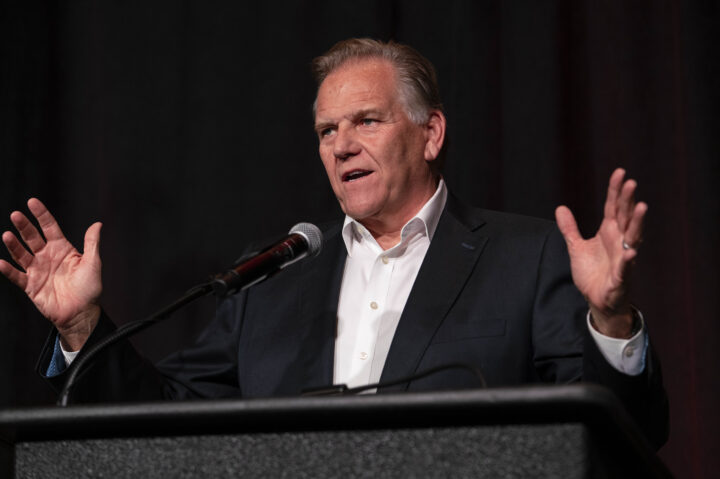
Michigan Senate candidate Mike Rogers speaks at his election watch party.
Addressing Michigan Democrats in a videotaped message, Republican Senate nominee Mike Rogers said that the “vast majority of people” rejecting Democratic Senate nominee Abdul El-Sayed — whose bid he framed as a “campaign filled with anger, divisiveness, calls for violence and the views that are out of touch with your values”— have “a home with us.”
“If you’re among the majority of Democratic voters that woke up on Wednesday feeling hopeless because the person who won does not represent your values, well, just know there is still hope,” Rogers said seated next to his wife, in a 90-second video message released on Friday.
“Michigan deserves a senator who is ready to sit with you, hear from you and represent you.
The parents across Michigan who want an education system that sets up their kids for success have a home with us. Grandparents across Michigan who are heartbroken from watching their kids and grandkids leave the state, you have a home with us,” he continued.
“To young people who are looking for real solutions to our housing affordability crisis, you have a home with us. To families who don’t want higher taxes and lower paychecks, you have a home with us. The fight is far greater than just left versus right. The fight is for the very soul of our nation. Over the next 90 days, I’m going to work hard to earn your trust, to earn your support and earn your vote.”
Most Democrats quickly coalesced behind El-Sayed after he narrowly clinched victory in Michigan’s Democratic primary on Wednesday morning, while Republicans quickly attacked El-Sayed’s extremist history and ties.
Just before he was declared winner, El-Sayed doubled down on his criticism of Israel on MS NOW’s “Morning Joe,” calling the Jewish state “bloodthirsty” and saying his critiques go beyond the government of Israeli Prime Minister Benjamin Netanyahu.
The Republican Jewish Coalition said that Michigan’s 100,000 Jewish voters could make the difference in the battleground race if they choose to back GOP nominee Mike Rogers
Sarah Rice/Bloomberg via Getty Images
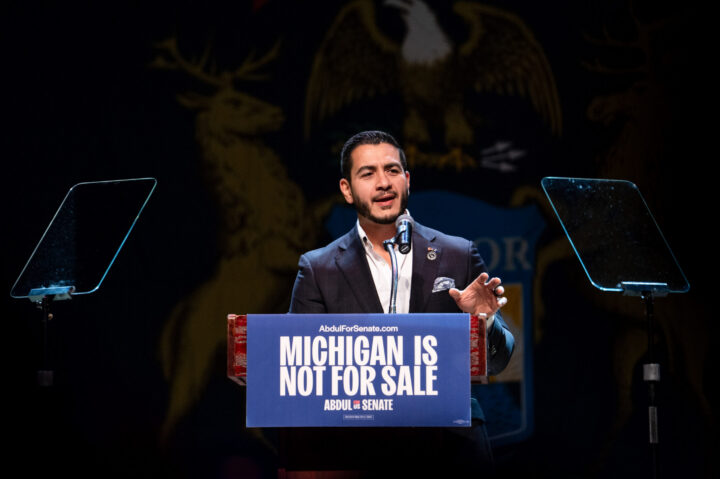
Abdul El-Sayed speaks during a primary election night watch party at The Majestic Theatre in Detroit, Michigan early on Aug. 5, 2026.
Democrats are quickly coalescing behind Senate nominee Abdul El-Sayed after the far-left candidate narrowly clinched victory in Michigan’s Democratic primary on Wednesday morning, while Republicans quickly pounced on El-Sayed’s extremist history and ties.
Rep. Haley Stevens (D-MI), who came within a percentage point of defeating El-Sayed, promptly congratulated him on his victory and offered her support.
“I want to congratulate Abdul El-Sayed on winning the Democratic nomination for U.S. Senate. He is a doctor, a community health official, a Rhodes Scholar, and a dedicated Michigander. I am proud to offer my support as he takes on Mike Rogers in the general election,” Stevens said. “This was a thorough and rigorous campaign that brought out the full span of views within the Democratic Party — and that is why we have primaries.”
She emphasized the need for Democrats to come together in support of El-Sayed, saying, “We must elect Democrats up and down the ballot. We need to flip some important House seats. We need to re-elect my friends Hillary Scholten and Kristen McDonald Rivet. We need to win this Senate seat, because Elissa Slotkin deserves a partner like Abdul in the U.S. Senate.”
Senate Minority Leader Chuck Schumer (D-NY) and Democratic Senatorial Campaign Committee Chair Sen. Kirsten Gillibrand (D-NY) also offered support for El-Sayed in a statement.
“Abdul El-Sayed has run an energetic campaign that inspired thousands of Michiganders across the state, with a clear focus on lowering costs and standing up for working families,” the pair said. “Democrats are united by a common purpose: putting a check on Donald Trump by defeating his Republican enablers and taking back the Senate. We look forward to working with Abdul and Democrats across Michigan to win this seat in November.”
Retiring Sen. Gary Peters (D-MI), who had initially planned to stay out of the race but ultimately endorsed Stevens, said that the party must come together behind El-Sayed to block Rogers.
“Both candidates ran strong campaigns focused on improving the lives of all Michiganders. But now it’s time to come together as a party and rally around our nominee, Abdul El-Sayed, to make sure Mike Rogers never sees the floor of the U.S. Senate,” Peters said. “I’ve repeatedly said that I will support our nominee because the most important election is in November.”
Sen. Elissa Slotkin (D-MI), who declined to endorse El-Sayed in the primary, offered her support while also saying little about El-Sayed personally and focusing on the need to keep the seat in Democratic hands.
“Congratulations to @AbdulElSayed for winning the Democratic nomination for Senate. It’s been a long primary, but now it’s time to gear up to beat Mike Rogers (again) and win up and down the ticket,” Slotkin said. “There is nothing more important than the mission of the next 90 days: uniting, keeping this seat blue, flipping the House and Senate, and providing a real check on President Trump.”
Meanwhile, Republicans have quickly pounced on El-Sayed, highlighting his extreme history.
“Abdul isn’t just another liberal. He’s an extremist. He wants to empty prisons and put murderers and sex offenders back on our streets. He pledged his support to the Muslim Brotherhood and campaigns with people who refuse to condemn terrorism,” Republican nominee former Rep. Mike Rogers (R-MI) said. “I spent years hunting terrorists and bringing Osama bin Laden to justice. Never in a million years did I think that I would be running against someone who believes America deserved 9/11.” His comment was apparently a reference to El-Sayed’s ties to far-left streamer Hasan Piker, who championed El-Sayed in the primary.
Matt Brooks, CEO of the Republican Jewish Coalition, declared in a statement that El-Sayed is the “most antisemitic U.S. Senate candidate in America” and called on Jewish Democrats, who he said could prove “decisive” in the November general election, to back Rogers.
“Abdul El-Sayed is a direct threat to Michigan’s Jewish community,” Brooks said. “El-Sayed has called the government of the Jewish state as ‘evil’ as Hamas, ‘struggled’ to say that Israel has a right to exist as a Jewish state, and empathized with a terrorist who tried to murder Jewish schoolchildren at Temple Israel in the Detroit suburbs — and yet, Michigan Democrats just picked him as their nominee for the United States Senate.”
The Senate Leadership Fund, a super PAC aligned with Senate GOP leadership, announced a six-figure digital ad campaign describing El-Sayed as “dangerous.”
Candidates vying for the Democratic nomination in Maine are largely pledging to oppose arms sales to Israel and reject AIPAC — but several have yet to say where they stand

Joe Raedle/Getty Images
Democratic U.S. Senate candidate Graham Platner and Troy Jackson stand together during a “Fighting Oligarchy” tour stop at the Collins Center for the Arts on the University of Maine campus on May 24, 2026 in Orono, Maine.
The mad dash to replace Graham Platner as the Democratic Senate nominee in Maine is coming together so quickly and haphazardly that one potential replacement, Nirav Shah, is taking stickers from his failed gubernatorial campaign and cutting off the “for governor” line below his name before handing them to supporters.
Much is still in flux about the process to replace Platner, who dropped out of the race on Wednesday two days after being accused of rape by a former romantic partner. His potential successors aren’t jockeying for the public’s approval — they’re angling for the support of the Maine Democratic Party, which voted on Wednesday, before Platner even announced his resignation, to hold a statewide nominating convention to tap his replacement. The MDP said it would share more in the days to come about the process, which according to state law would have to be completed by July 27.
Many of the candidates now seeking to succeed Platner on the general election ballot are commending the populist movement he built and looking to capitalize on it. Less than 24 hours into the contest, some had already made clear they will adopt a platform much like Platner’s when it comes to Israel — seeking to end U.S. weapons sales to the country and shunning donations from AIPAC — while others are remaining mum on that topic.
Shah, who served as the director of the Maine Centers for Disease Control and Prevention during the COVID-19 pandemic, said this week that he would support a full arms embargo against Israel, that he believes Israel’s actions in Gaza amount to genocide and that he would refuse AIPAC support. He finished second in the gubernatorial primary last month.
One contender who seems poised to rack up support from the party’s left flank is Troy Jackson, the former president of the Maine Senate. He placed third in last month’s gubernatorial primary, and earned the endorsement of Sen. Bernie Sanders (I-VT) and the Maine chapter of Democratic Socialists of America in that race. Jackson was one of Platner’s biggest boosters and appeared with him at several campaign rallies.
Our Revolution, the Sanders-aligned advocacy organization, has already endorsed Jackson’s Senate campaign, along with Rep. Ro Khanna (D-CA) and far-left, antisemitic streamer Hasan Piker.
In a post on X on Thursday, Jackson accused Israel of committing genocide in Gaza, saying that “anybody with eyes” would agree, and pledged to “never vote in favor of U.S. taxpayer-funded military aid to Israel.” His team did not respond to a request for comment.
Jordan Wood, a former chief of staff to Rep. Katie Porter (D-CA) who placed third in last month’s congressional primary to replace retiring Rep. Jared Golden (D-ME), said in a Thursday statement announcing his Senate run that he would not accept money from “corporate PACs and AIPAC.” He said in a post on X that the U.S. “can’t continue to fund Israel’s genocide in Gaza,” and that he would support the Block the Bombs Act.
In a statement to Jewish Insider on Thursday, Wood added some nuance to his views: “Israel is our strongest ally in the Middle East,” Wood said via a spokesperson. “But there’s a difference between the Israeli people and the Netanyahu government, and nothing about self-defense justifies waging a war without limits. Starving children and flattened hospitals don’t make Israel safer, and they don’t make America safer.” He also stated that “Hamas must disarm, and it can never be allowed to govern Gaza again.”
Wood reiterated that he will not accept support from AIPAC but said AIPAC supporters are still welcome in the Democratic Party.
“Jewish Democrats, and Democrats who care deeply about Israel’s security, are part of this party and always will be,” he said. “What’s not welcome is AIPAC’s agenda, which demands unconditional support for the Netanyahu government’s genocide in Gaza no matter the cost in innocent lives.”
Paige Loud, a 29-year-old social worker who placed fourth in the same congressional primary as Wood, ran an anti-Israel campaign and claimed that Democrats lost the presidency in 2024 “because of our lackluster stance on the genocide that’s happening in Gaza right now.” Her campaign website says she is committed “to human rights, sovereignty, and self-determination everywhere — from Palestine to Iran, Ukraine, Venezuela, and Greenland.”
Shenna Bellows, Maine’s secretary of state and a former state senator, entered the race on Thursday afternoon. She espoused a similarly populist message to Platner, pledging to take on billionaires and corporations, but stayed away from mentioning the Middle East or AIPAC in her opening salvo. A spokesperson for Bellows, who also ran for governor in last month’s primary and placed fourth, did not respond to a request for comment.
Bellows served as executive director of the Holocaust and Human Rights Center of Maine from 2018 to 2020, an experience that she still refers to regularly. In a campaign video from International Holocaust Remembrance Day, she said one way to remember the Holocaust is as a story of “resistance, of communities coming together to say no to antisemitism, xenophobia, racism, homophobia,” and said that Americans must speak out “against any othering and dehumanization of our friends and neighbors.”
One unorthodox candidate is Dan Kleban, the founder of Maine Beer Company, a brewery in Freeport. He was briefly a candidate in the Senate primary last year, but dropped out early and endorsed Maine Gov. Janet Mills, the establishment favorite who dropped out of the race in April. He reentered the race on Wednesday and said in a Substack post that he’s “had enough meddling from Washington establishment insiders and New York City consultants trying to dictate who represents us,” ostensibly a dig at Platner’s own political consultants.
Asked on CNN this week if he considered Israel guilty of genocide, Kleban called the situation in Gaza an “absolute tragedy” and said he would support placing conditions on U.S. arms sales to Israel, but did not use the term genocide. Kleban told Politico in October that he would not have supported Sanders’ resolution to block arms sales to Israel.
“I believe Israel has a right to defend itself. I don’t think that we solve the horrific humanitarian crisis in Gaza by disarming Israel and exposing them to harm,” Kleban said at the time.
While Platner and Mills were the main candidates running for Senate, a third, David Costello — a former senior official in Maryland’sMaine’s Department of the Environment who got 8% of the vote in last month’s primary — is now running again. He said during the campaign that Israel, after the Oct. 7 attacks, “not only had a right but an obligation to attempt to crush Hamas.” But, he argued, they did not do so surgically, and said Israel’s conduct has been “indefensible.” He said he would oppose offensive weapons sales to Israel.
One possible wild card is state Rep. Valli Geiger, who has said she is considering entering the race. Geiger, who in the past defended Platner’s treatment of women, stuck by him until the end. “I will not throw Graham under the bus, but neither will I slander or accuse Ms. [Jenny] Racicot [Platner’s accuser] of anything more than telling the truth as she experienced it. I acknowledge the pain on all sides and offer compassion on all sides,” Geiger wrote on Facebook.
She has said little publicly about Gaza, but shared Facebook posts criticizing Israel, including one in April that listed Prime Minister Benjamin Netanyahu as someone who, like President Donald Trump and Russian President Vladimir Putin, harbors “delusions of grandeur.”
Collins said her Senate opponent makes AIPAC sound like ‘some sort of evil foreign influence, and that is absolutely wrong’
(Photo by Chip Somodevilla/Getty Images)
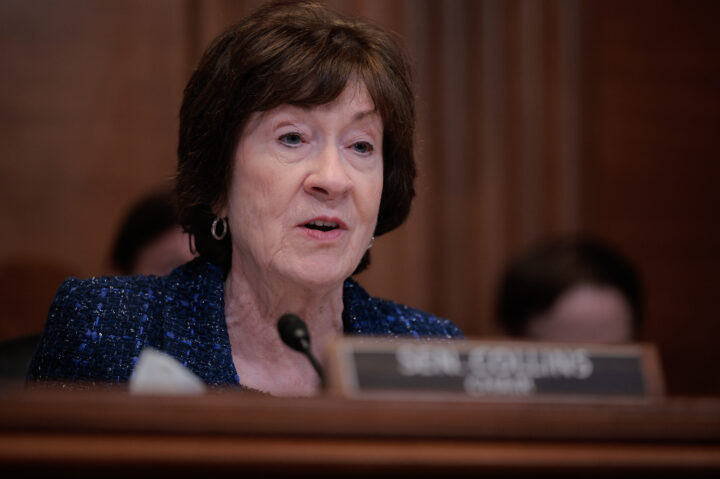
Sen. Susan Collins (R-ME) in the Dirksen Senate Office Building on Capitol Hill on December 9, 2025 in Washington, DC.
Sen. Susan Collins (R-ME) accused Maine Democratic Senate nominee Graham Platner of antisemitism and defended her support for Israel in a Fox News interview on Monday.
“I remain a very strong supporter of Israel, the one democracy in the Middle East, our true ally in the Middle East,” Collins said when asked about increasing hostility to Israel and AIPAC among the American public. She attributed such trends to “rising antisemitism in our country that Graham Platner certainly is part of, and has been since his high school days. That’s been a consistent theme throughout his entire life.”
WATCH: Sen. Susan Collins accused Maine Democratic Senate nominee Graham Platner of antisemitism and defended her support for Israel in a Fox News interview on Monday.
— Jewish Insider (@jewishinsider) June 22, 2026
“I remain a very strong supporter of Israel, the one democracy in the Middle East, our true ally in the Middle… pic.twitter.com/iShufv15PM
Collins pointed to Platner’s accusations of genocide against Israel and his comments praising Hamas’ tactics in a raid that killed multiple Israeli soldiers, as first reported by Jewish Insider in April, calling his activity “appalling.”
“AIPAC is made up of Americans who care deeply about our relationship with Israel,” Collins continued. “Platner makes it sound like this is some sort of evil foreign influence, and that is absolutely wrong.”
In his victory speech, Platner railed against the political establishment and criticized U.S. wars in the Middle East
Sophie Park/Bloomberg via Getty Images
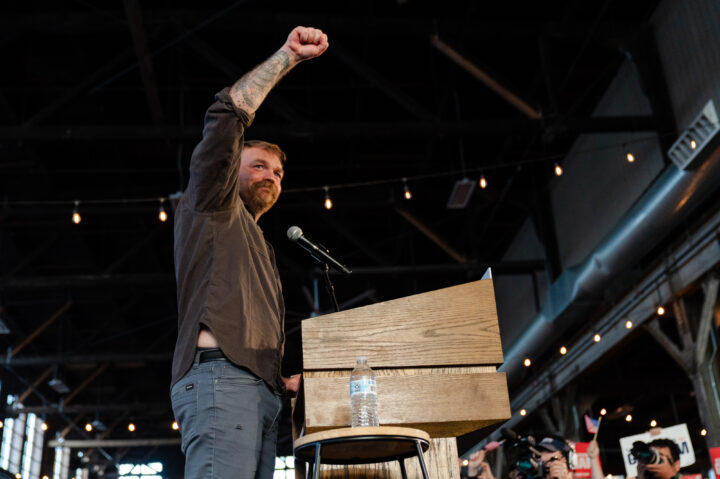
Graham Platner, Democratic Senate candidate for Maine, arrives to speak during a Fighting Oligarchy event in Portland, Maine, on May 25, 2026.
Maine Democrats rallied behind scandal-plagued oyster farmer and military veteran Graham Platner as their Senate nominee against Sen. Susan Collins (R-ME) in Tuesday’s primary, turning to a left-wing outsider running against the political and institutional establishment as its standard-bearer for the general election.
Platner — whose controversies, including his now-covered Nazi tattoo and abuse allegations, have unnerved many Democrats — will be a political test over whether his brand of progressive populism can win over swing voters in a state critical to the Democrats’ hopes of winning back the Senate.
“In trying so hard to understand me, [the media] failed to understand that this is not about me at all. This is a movement about us, about the far too many, working far too hard and struggling far too much,” Platner said in his victory speech.
Attacking “forever wars,” Platner railed against the Trump administration’s war in Iran, and slammed Collins for “closing hospitals while using our tax dollars to destroy them halfway around the world.” (The line was an apparent attack against Israel’s targeting of Hamas terror infrastructure that was often lodged in medical facilities during the war in Gaza.)
Platner won about 72% of the primary vote despite Gov. Janet Mills remaining on the ballot, a solid enough showing amid all the controversies that should mute any calls for him to drop out of the race. In a statement on Platner’s victory, Senate Minority Leader Chuck Schumer (D-NY) and Democratic Senatorial Campaign Committee Chair Kirsten Gillibrand (D-NY) reiterated their support for the nominee: “In November, Maine voters will elect Graham Platner, and we will win a Senate majority.”
Mills, for her part, did not mention Platner at all in her statement about the election results.
The most recent polls in the race, conducted as Platner’s scandals hit the news, suggest a highly competitive matchup between Collins and Platner. Maine is the only state Trump lost in the 2024 presidential election that is represented by a Republican in the Senate, but Platner’s personal baggage is complicating the party’s path to victory.
Collins, meanwhile, is one of the most politically resilient senators, winning reelection even when the political environment for her party has been less than favorable.
Platner was surrounded by mostly older women as he delivered his victory speech, a critical constituency for him to win in the general election in the state with the oldest median population, especially given the allegations of abuse towards several ex-girlfriends.
In other primary news on Tuesday, Sen. Lindsey Graham (R-SC) coasted to renomination, though he only won 58% of the GOP vote against weak competition.
In his victory speech, Graham railed against Rep. Thomas Massie (R-KY) and former Rep. Marjorie Taylor Greene (R-GA), two isolationist, anti-Israel GOP lawmakers who left or were ousted from Congress. “What did we prove tonight? That South Carolina is Trump country, not Massie country. We proved tonight that nobody gives a damn what Marjorie Taylor Greene thinks about who to vote for in South Carolina,” Graham said.
In South Carolina’s governor’s race, Lt. Gov. Pamela Evette, who was endorsed by President Donald Trump, will face state Attorney General Alan Wilson in a runoff for the nomination. Reps. Ralph Norman (R-SC) and Nancy Mace (R-SC) lagged well behind in the primary, with Mace’s fifth-place finish serving as a disappointing conclusion to her congressional career.
Please log in if you already have a subscription, or subscribe to access the latest updates.
 Continue with Google

 Continue with Apple