




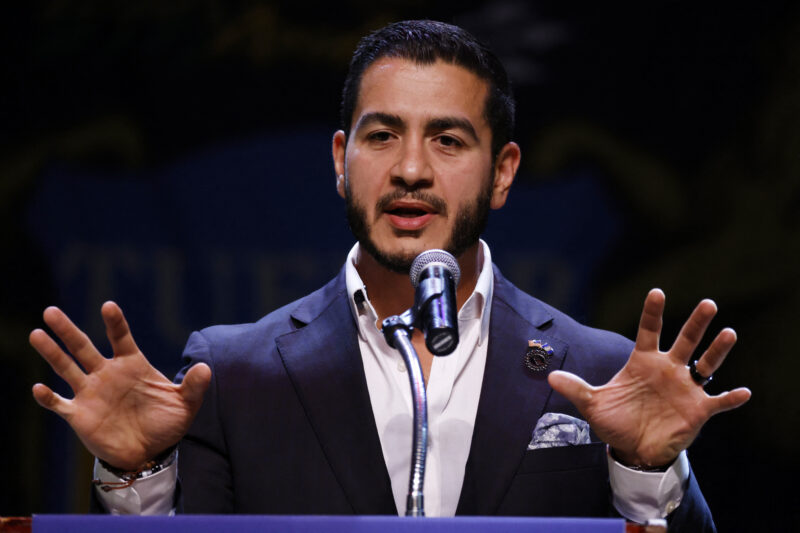


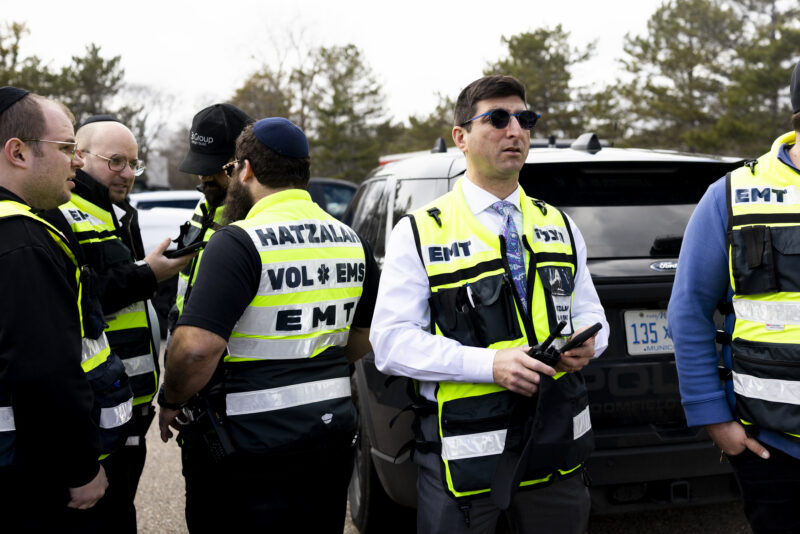
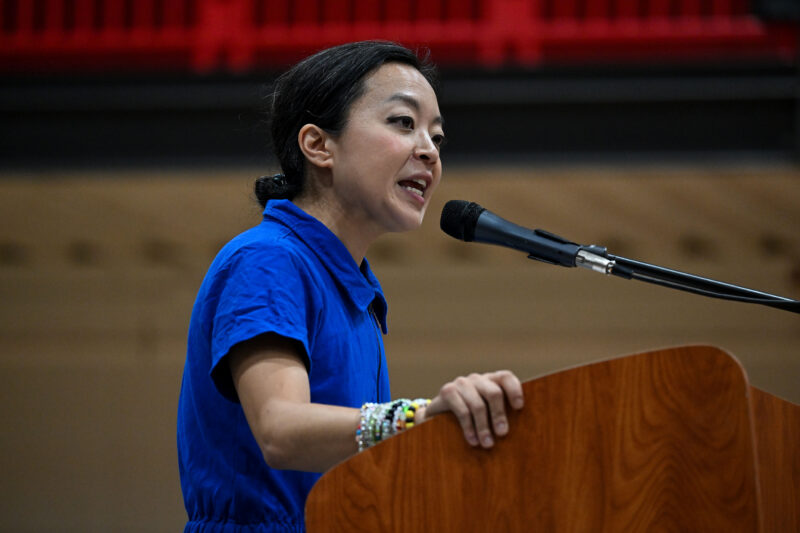



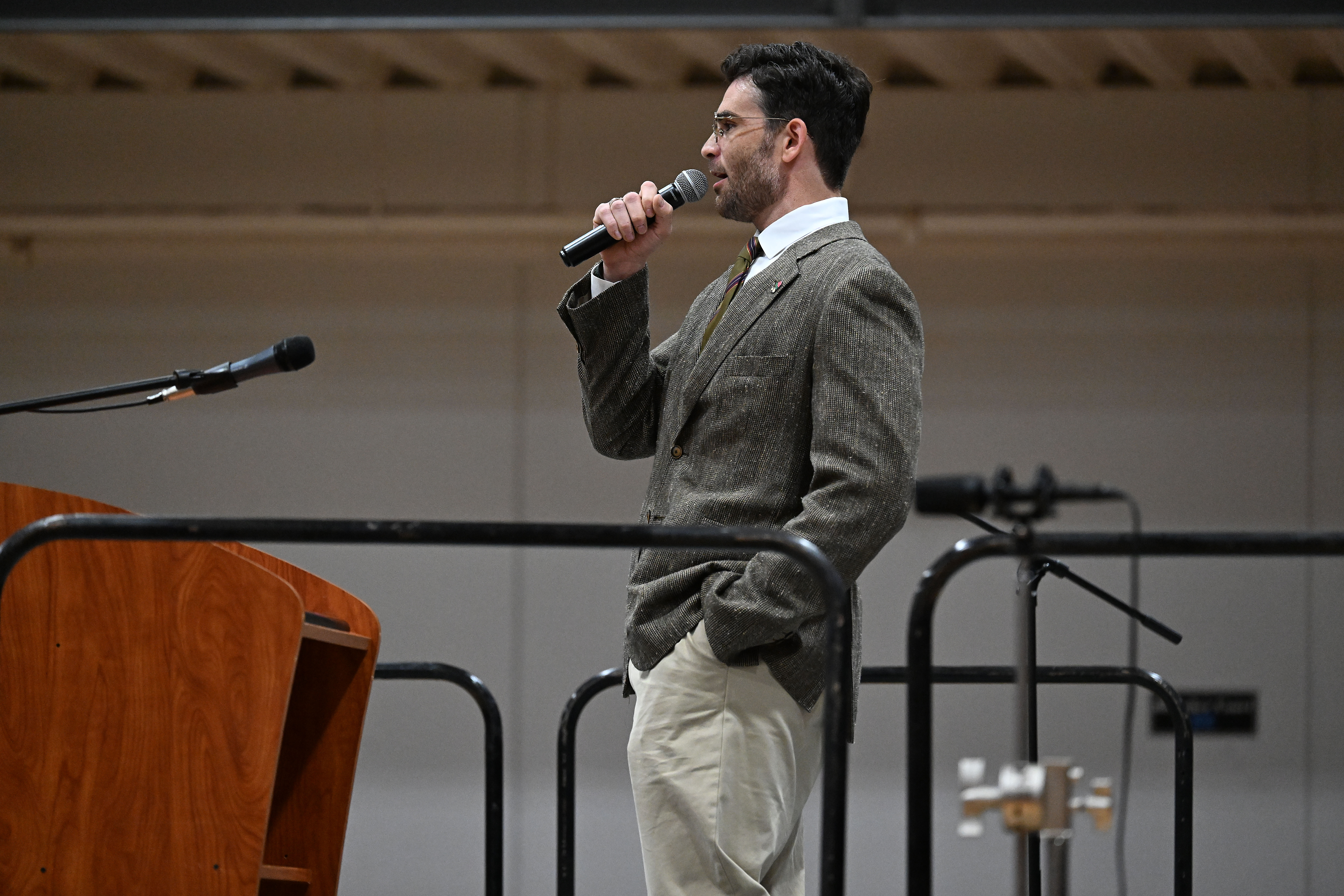



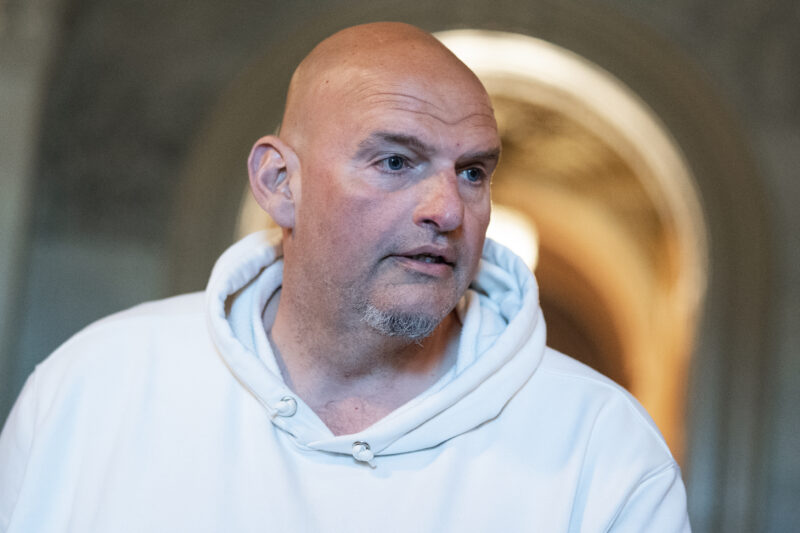






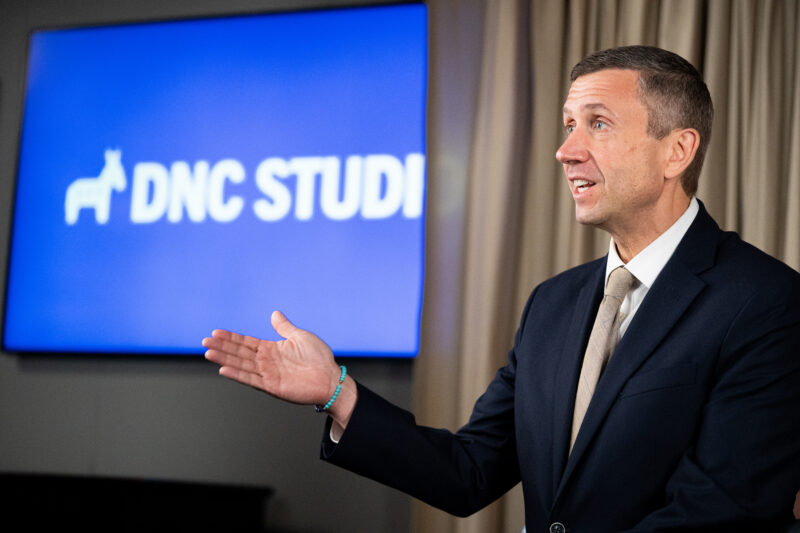










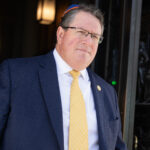

Rep. Dan Goldman said that ‘words of condemnation are no longer enough’ and that there has been a ‘systematic failure’ by Congress to address rising antisemitism since Oct. 7


 Add JewishInsider on Google
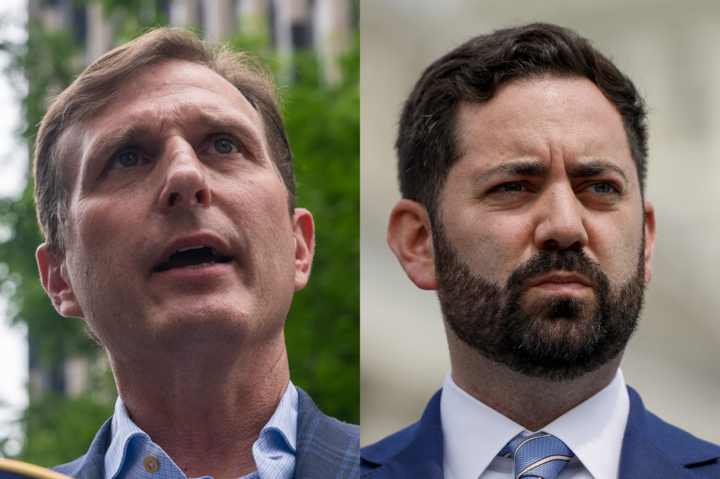
Reps. Dan Goldman (D-NY) and Mike Lawler (R-NY) are leading 28 colleagues in introducing a House version of the Jewish American Security Act, the package of antisemitism-related legislation introduced by Sens. Jacky Rosen (D-NV) and James Lankford (R-OK) last month in the Senate.
The bill includes a proposal for significant increases in security funding, new oversight and administrative measures to address antisemitism on college campuses and new transparency requirements for social media companies relating to antisemitism online.
The legislation is being co-sponsored by Reps. Grace Meng (D-NY), Brian Fitzpatrick (R-PA), Debbie Wasserman Schultz (D-FL), Maria Salazar (R-FL), Jared Moskowitz (D-FL), Rudy Yakym (R-IN), Josh Gottheimer (D-NJ), Marc Veasey (D-TX), Don Bacon (R-NE), Haley Stevens (D-MI), Michael McCaul (R-TX), Nicole Malliotakis (R-NY), Laura Gillen (D-NY), Jeff Van Drew (R-NJ), Jake Auchincloss (D-MA), Ted Lieu (D-CA), Dan Meuser (R-PA), Brad Schneider (D-IL), Tom Barrett (R-MI), Jen Kiggans (R-VA), Greg Landsman (D-OH), David Kustoff (R-TN), Juan Ciscomani (R-AZ), Lois Frankel (D-FL), Tom Suozzi (D-NY), Randy Weber (R-TX), Kristen McDonald Rivet (D-MI) and John Moolenaar (R-MI).
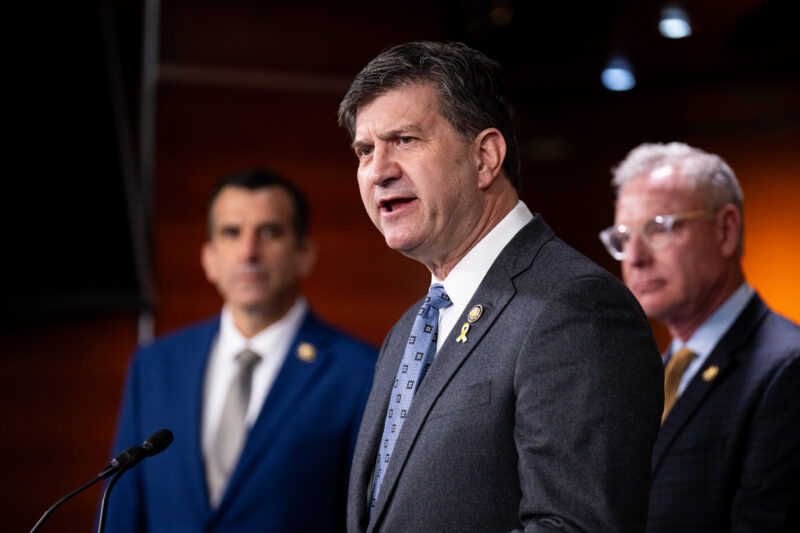
“Words of condemnation are no longer enough,” Goldman said in a statement. “Since the October 7th attacks, there has been a systematic failure in Congress and in our communities to counter the threat posed by surging antisemitism across this country.”
Goldman, a co-chair of the House antisemitism task force, said the bill would change that pattern: “Whether on campus, at synagogues, or online — the Jewish American Security Act will provide the tools necessary to help secure our at-risk communities to practice their faith without fear. American Jews cannot be asked to bear this burden alone. As Americans, we must stand shoulder to shoulder with those under siege by hate.”
Lawler, who is also the lead sponsor of the long-stalled Antisemitism Awareness Act, said in a statement that by providing additional resources for the Nonprofit Security Grant Program, the bill would help safeguard constitutionally protected religious freedom and bolster Jewish institutions against attacks.
“This bill also delivers critical protections for Jewish students on college campuses through stronger Title VI enforcement, requires greater transparency from online platforms on antisemitic content, and establishes key threat assessments,” Lawler said. “We must act decisively so Jewish Americans can feel safe in their schools, synagogues, and online.”
The legislation is supported by a wide range of Jewish groups across the religious and political spectrum.
“[A]ntisemitism remains a serious threat to the safety and security of the American Jewish community. A piecemeal approach to combat this scourge of [antisemitism] is no longer sufficient. The Jewish American Security Act is a serious and comprehensive federal response to this epidemic of hate,” Jonathan Greenblatt, CEO of the Anti-Defamation League, said in a statement. “We are grateful to Congressmen Goldman and Lawler for championing this bill in the House and showing that keeping Jewish Americans safe is a genuine bipartisan priority.”
Eric Fingerhut, the CEO of the Jewish Federations of North America, told Jewish Insider in a brief interview that, given the support in both the House and Senate and the Jewish community, “there’s never really been something like this at this level of comprehensiveness on Jewish security, with all the Jewish organizations working together.”
“People care, but they just don’t realize how bad it’s been. They don’t realize what’s happened in the last year. They don’t understand how Temple Israel was almost a disaster that would have changed the country,” Fingerhut continued. “This is really an important moment and we are all over this. There’s nothing that’s a higher priority.”
He said that if the bill passes, “we really have something that will make a difference for the Jewish community, which has been the target of a serious domestic terror crisis over this last year. So we’re grateful and we’re ready to work.”
American Jewish Committee CEO Ted Deutch said in a statement that Americans should not need security to pray or be afraid to leave their homes and interact in their communities, “yet, that is exactly what Jews in this country are experiencing every day.”
“We are at an inflection point. Surging antisemitism is not just a threat to the Jewish community; it is a crisis for our democracy and the values we cherish as Americans — pluralism, religious freedom, and the promise of equal protection,” Deutch said. “We thank Representatives Goldman and Lawler for their leadership and demonstrating that confronting this hatred is not a political issue, but a moral obligation.”
Amy Spitalnick, the CEO of the Jewish Council for Public Affairs, said that antisemitic violence “demands investments in a sustained, whole-of-government and whole-of-society response.”
“The Jewish American Security Act helps us to meet that need by focusing on tools that we know work,” Spitalnick said. “A truly inclusive American democracy requires Jewish safety — and so too does our safety as Jews depend on protecting our democratic institutions and values and ensuring the safety and rights of each and every community.”
Nathan Diament, the executive director of the Orthodox Union Advocacy Center, said that the organization “strongly supports” the bill and that the “unprecedented wave of antisemitism demands an unprecedented response by our government,” including increasing NSGP funding to $1 billion.
Rabbi Jonah Pesner, the director of the Religious Action Center of Reform Judaism, said that “the need for meaningful steps to bolster security and the fight against hate is vital.”
“The Jewish American Security Act strengthens the government tools and funding that will be available to help us meet this moment and uphold the American commitment to religious freedom,” Pesner said.
William Daroff, the CEO of the Conference of Presidents of Major American Jewish Organizations, praised the bipartisan support for the legislation as well as the broad consensus around it in the Jewish community, urging the bill’s quick passage.
“It is deeply encouraging to see this bill come together with bipartisan, bicameral support at a time when that kind of consensus is all too rare. There is real meaning in Republicans and Democrats joining around the shared responsibility to protect Jewish Americans,” Daroff said.
“It is encouraging to see real consensus across Jewish organizations. Since October 7, engagement is up and coordination is stronger. That unity is both needed and significant.”
‘Safeguarding communities at risk of violence is not the responsibility of philanthropic organizations. Rather, it is the government’s responsibility,’ the organization wrote to every member of Congress

Brandon Bell/Getty Images
A law enforcement vehicle sits near the Congregation Beth Israel synagogue on January 16, 2022, in Colleyville, Texas.
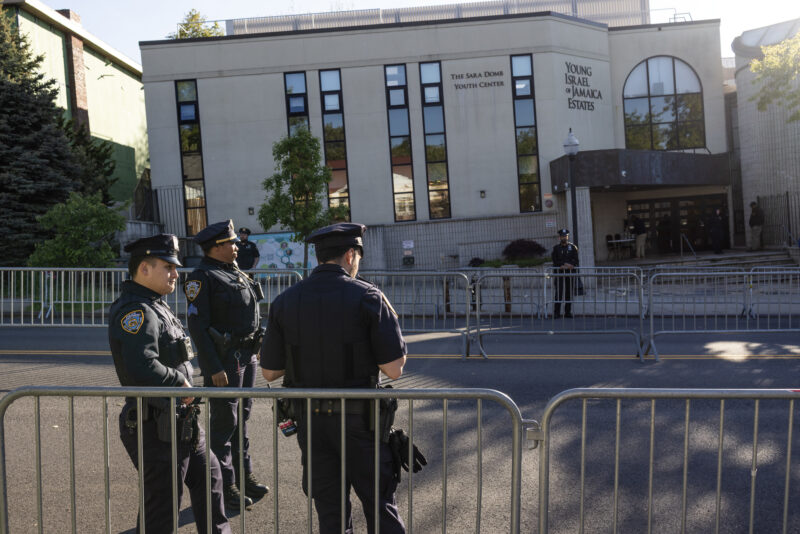
Following an attack last Thursday on Temple Israel and its early learning facility in West Bloomfield Township, Mich., the Jewish Federations of North America is making a renewed push for expanded security funding and resources to protect the Jewish community.
Since the Oct. 7, 2023, Hamas attacks in Israel, antisemitic attacks have repeatedly prompted such efforts from Jewish community groups and advocates on Capitol Hill, but funding has remained stubbornly gridlocked. Currently, funding for community security under the Nonprofit Security Grant Program remains in limbo during the Department of Homeland Security shutdown, with no signs of movement in the immediate aftermath of the attack.
In a letter sent to every member of Congress on Friday, JFNA Chair Gary Torgow and President Eric Fingerhut highlighted the significant degree of security support that Temple Israel received from its own membership, from the Jewish Federation of Metropolitan Detroit and JFNA.
“We are grateful that philanthropic funding and security planning played a decisive role in ensuring no harm came to any of the children or staff at Temple Israel,” the letter reads. “However, safeguarding communities at risk of violence is not the responsibility of philanthropic organizations. Rather, it is the government’s responsibility to protect its citizens in their places of worship and communal gathering.”
The letter emphasizes that the “Jewish community is under attack today like no other religious or ethnic group,” as a top target of hate crimes by a significant margin.
The letter urges increased funding for the NSGP at $1 billion and the prompt allocation of funds already appropriated that have not yet been disbursed for 2025. It also requests an end to restrictions on using NSGP funding to pay salaries for security personnel.
“The Jewish Community in Detroit has received important support from the state of Michigan and the Federal Nonprofit Security Grant Program, but the funding levels currently provided across the nation to protect our communities are simply not commensurate with the escalating threat landscape that American Jewish communities face daily,” the letter states.
The letter additionally asks Congress to ensure that NSGP applications are quickly opened and processed and that reimbursements are promptly fulfilled, following significant delays to funding grants and reimbursements last year.
It also calls for additional funding for FBI counterterrorism personnel and field offices that work to protect Jewish communities, and increased federal funding for local law enforcement to protect Jewish institutions, so that those institutions don’t have to pay for such protection themselves.
“Finally, we urge all our political leaders to take action to confront antisemitic-fueled violence in the public discourse and on social media,” the letter concludes. “This virulent ideology surging across the political spectrum utilizes rhetoric that either normalizes or minimizes such hatred, manifesting in dangerous consequences, potentially far worse than what took place today.”
The letter precedes a visit by Torgow, Detroit Federation CEO Steve Ingber, Temple Israel Rabbi Jennifer Lader and Detroit federation security director Gary Sikorski to Capitol Hill on Tuesday. The group is set to meet with both of Michigan’s senators and nearly every member of its House delegation.
The requests, in some cases, constitute calls for Trump to walk back funding cuts he proposed earlier this month

Getty Images
U.S. Capitol Building
In response to the shooting that killed two Israeli Embassy staffers outside the Capital Jewish Museum last week, a bipartisan group of 46 House members wrote to President Donald Trump on Friday urging him to support expanded funding for key security programs in his full budget request to Congress, expected as soon as Friday afternoon.
While presidential budget requests are non-binding and are frequently modified by Congress, Trump’s requests are likely to be influential in the GOP-controlled Congress. And the appeals made by the lawmakers, in some cases, constitute calls for Trump to walk back funding cuts he proposed in the high-level budget toplines — known as a “skinny budget” — he submitted to Congress earlier this month.
Highlighting the “sharp rise in threats to the Jewish community,” the lawmakers — most of them Democrats — said that it is “imperative that the federal government take the necessary steps to increase funding for enhanced security measures” and “ensure that the Jewish community is equipped with the necessary tools to prevent loss of life in the case of an attack.”
The legislation calls on Trump to support $500 million in funding for the Nonprofit Security Grant Program, the same funding level that bipartisan groups of House and Senate members have urged Appropriations Committee leaders to support, calling the program “one of the most effective and critical programs for protecting the Jewish community and all faith-based communities from attack.” Jewish groups have called for funding to be increased to $1 billion.
Trump, in his “skinny budget,” had called for a reduction in funding for non-emergency grants at the Federal Emergency Management Agency, a category that includes NSGP, but did not put forward a specific request for the program itself. In the past, presidents have not always made any specific funding requests for the NSGP, even in their more detailed budget outlines.
The letter outlines a series of examples that “demonstrate the direct return on investment for communities under threat” from the NSGP, highlighting incidents in which security upgrades paid for by the program likely saved lives by stopping shooting attacks.
The lawmakers also called for Trump to “explore opportunities,” in collaboration with lawmakers, to provide an additional dedicated fund to allow faith-based organizations to hire security officers.
“Although Jewish institutions can use the NSGP to hire additional security personnel, the majority of Jewish institutions have either not been recipients of these grants or cannot afford the additional costs incurred,” the letter reads. “In light of recent events, it is more clear than ever that Jewish institutions are in desperate need of additional personnel support.”
The letter calls on Trump to support increased funding for the Federal Bureau of Investigation. Trump called for a $545 million cut to the FBI’s budget in his “skinny budget”, pledging that the FBI would focus on counterintelligence and counterterrorism and that it would eliminate “duplicative intelligence activities.”
The letter emphasizes the FBI’s role in domestic terrorism investigations, which have been on the rise, and intelligence gathering and the FBI’s responsibility to report to Congress on domestic terrorism threats.
It calls for increased Department of Justice grants for local law enforcement to ensure that hate crimes are properly reported to local and federal law enforcement agencies, and specifically for grant programs to counter hate crimes “to ensure that antisemitic hate crimes are addressed and prosecuted in a timely manner” and their extent is fully understood.
The “skinny budget” called for cutting $1 billion in DOJ grant programs, including “programs that focus on so-called hate crimes in clear violation of the First Amendment.”
The letter was led by Reps. Josh Gottheimer (D-NJ) and Jared Moskowitz (D-FL) and co-signed by Reps. Max Miller (R-OH), Haley Stevens (D-MI), Brittany Pettersen (D-CO), Laura Gillen (D-NY), John Larson (D-CT), Dan Goldman (D-NY), Jamie Raskin (D-MD), Nikema Williams (D-GA), David Scott (D-GA), Wesley Bell (D-MO), Shri Thanedar (D-MI), Dina Titus (D-NV), Donald Norcross (D-NJ), Susie Lee (D-NV), Andre Carson (D-IN), Shontel Brown (D-OH), Sheila Cherfilus-McCormick (D-FL), Lloyd Doggett (D-TX), Lizzie Fletcher (D-TX), Greg Landsman (D-OH), Frederica Wilson (D-FL), Debbie Wasserman Schultz (D-FL), Janelle Bynum (D-OR), Madeleine Dean (D-PA), Frank Pallone (D-NJ), Jerry Nadler (D-NY), LaMonica McIver (D-NJ), Ted Lieu (D-CA), George Latimer (D-NY), Juan Vargas (D-CA), Julie Johnson (D-TX), Julia Brownley (D-CA), Marilyn Strickland (D-WA), Darren Soto (D-FL), Chris Pappas (D-NH), Brendan Boyle (D-PA), Bill Keating (D-MA), Tom Suozzi (D-NY), Steve Cohen (D-TN), Benny Thompson (D-MI), Jan Schakowsky (D-IL), Brad Sherman (D-CA), David Kustoff (R-TN) and Del. Eleanor Holmes Norton (D-DC).
Miller and Kustoff, who are both Jewish, are the only Republican signatories.
Please log in if you already have a subscription, or subscribe to access the latest updates.
 Continue with Google
 Continue with Apple