
























One Jewish community leader said that the debate had ‘reinforced’ Jewish community members’ ‘deep concern’ about El-Sayed and his political ideology
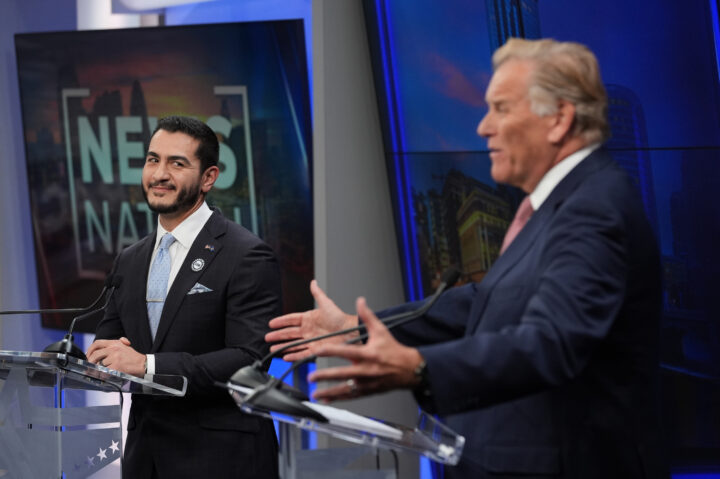
Paul Sancya, Pool/AP
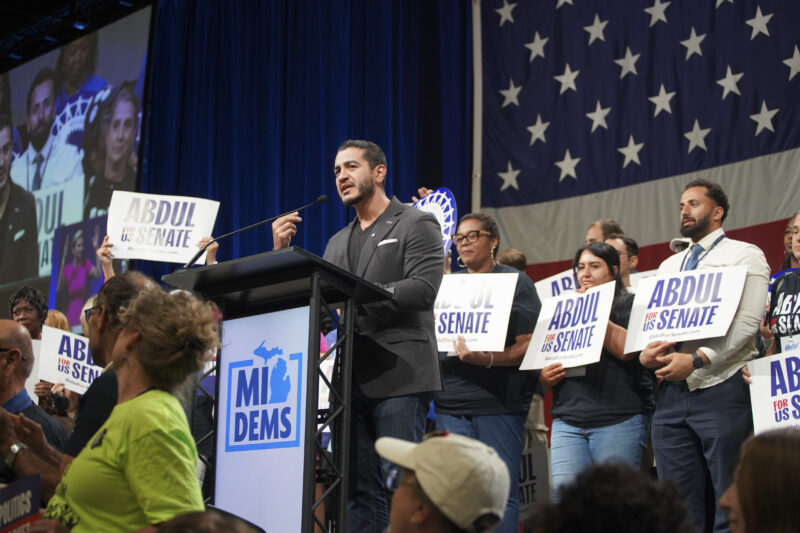
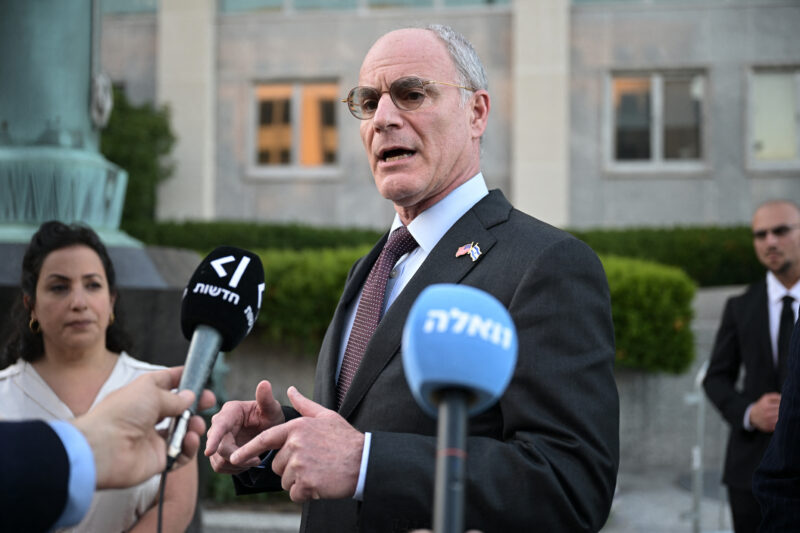
Republican nominee for U.S. Senate Mike Rogers, right, speaks during a televised debate with Democratic nominee for U.S. Senate Abdul El-Sayed on Oct. 8, 2026, in Grand Rapids, Mich.


 Add JewishInsider on Google
Last Thursday’s Michigan Senate debate, where Democratic nominee Abdul El-Sayed framed Israel as a threat to the United States comparable to Iran and said he would not vote to send defensive aid to Israel even if it were under fire, proved to be a breaking point for some Jewish Democrats who were holding out hope that the Democratic nominee would moderate his views in the general election.
Community leaders said that they’re hearing from some previously undecided Jewish Democrats that, after they debate, they now plan to back Republican Mike Rogers.
“I think for a lot of pro-Israel Jewish Democrats, Abdul has made it easy. He’s not really made any accommodations whatsoever, and the debate was just the latest example,” said David Kramer, a prominent Michigan Democratic fundraiser and vice chair of the Michigan Democratic Jewish Caucus.
He told Jewish Insider he’s heard from members of his community that they felt the debate demonstrated that El-Sayed is “not giving an inch and he’s absolutely showing who he is.”
Kramer had previously said he wasn’t willing to vote for El-Sayed without changes to his rhetoric and platform.
“I’ve talked to a couple of people who were wrestling with the same choice as I am, who have said that based on the debate, that was kind of a final straw, and they are going to vote for Rogers,” Kramer told JI.
Another Michigan Jewish Democrat told JI that they are hearing similar feedback in their network.
El-Sayed’s campaign did not respond to a request for comment.
Kramer said, “I think there were well-intentioned voters and community leaders, and even elected officials, who were hoping we’d get him to a better place, and he’ll need us, and he’ll want to embrace us, and it’s quite evident, at this point, that he’s not doing anything.”
Joan Lowenstein, a member of the Michigan Democratic Party Central Committee and president of the Jewish Federation of Ann Arbor, said she’s also heard from people in her community that the debate was a turning point. “I think people who did watch the whole thing really didn’t get anything new about what El-Sayed thinks, or what he was willing to do for Jewish safety — not at all.”
Lowenstein said the debate had “confirmed what I think about El-Sayed,” describing him as evasive and lacking in substantive policy proposals. On Israel, she said that his responses show a “lack of understanding that you would expect a senator to have” about foreign policy issues.
Kramer and Lowenstein are members of the Nonnegotiable Michigan campaign that has sought to pressure El-Sayed to make commitments to supporting Israel’s right to exist as a Jewish state and to Jewish safety in the United States.
Dennis Bernard, the national chair of government relations at the Jewish Federations of North America, who supported both Rep. Haley Stevens (D-MI) and Rogers in their respective primaries, said that El-Sayed’s response on whether Israel or Iran is more dangerous to the United States was “the defining moment for our community. … It’s an astounding comment.”
“At this point, if you still haven’t decided that there is enough out there as a Democrat not to vote for him, nothing’s going to convince you,” he said. “There were still a lot holding out. … After that debate, those who will go for Rogers have made their decision. El-Sayed did not help himself in our community. It was not a good performance. He had to have a better answer.”
Anecdotally, Bernard said that there’s intense discussion in the Jewish community about the race, with his social circle unanimously questioning how any Jewish voter at this point could support El-Sayed. Bernard said that he’d spoken to six lifelong Democrats on Saturday who were all planning to vote for Rogers. Bernard also said he’s never heard so much discussion in the Jewish community about ticket splitting.
Rabbi Aaron Starr, of Congregation Shaarey Zedek in Southfield, Mich., speaking in his personal capacity, said the debate left him “frustrated and sad” with both candidates spending more time “criticizing each other with personal attacks than helping us understand how they will help us work toward a better tomorrow for our children.”
“Dr. El-Sayed’s inability to affirm my basic needs has led me, and many others in my community, to confidently decide we simply cannot vote for him,” Starr continued, referring to the Nonnegotiable campaign’s core principles. Starr is a leading organizer of the Nonnegotiable petition.
He said that El-Sayed’s comments during the debate “reinforced” Jewish community members’ “deep concern about his candidacy, and reminded us that if Dr. El-Sayed’s position takes hold in the Democratic Party, Israel’s enemies will be emboldened, American Jews will be even more vulnerable, and America will be pulled into even more war –– not less, as Dr. El-Sayed claims to want.”
Starr said that he was “horrified, though not surprised” at El-Sayed’s hostility toward Israel and “refusal to condemn the Iranian regime and its proxies.” He added that “Dr. El-Sayed gave voice to centuries-old libels against the Jewish people by suggesting Israelis somehow manipulated an otherwise innocent America into a war. In this way, he denies America’s agency in choosing to defend itself and its allies against nuclear threats and belligerency.”
Zach Nessel, the secretary of the Michigan Democratic Jewish Caucus, who spoke to JI in his personal capacity, said that he thought El-Sayed’s answer to the question about Israel and Iran showed he is “not really taking our national security seriously” and “doesn’t want to upset people who don’t have America’s national security interests top of mind.”
Nessel, the son of Michigan Attorney General Dana Nessel, who is supporting El-Sayed, said he’s still undecided and doesn’t believe in sitting out elections, but feels “unenthusiastic” about both candidates.
He said he also found El-Sayed’s frequent attacks on AIPAC and its donors to be hypocritical when he has refused to address his own donors’ and associates’ support for groups including Hamas and Hezbollah, something that Rogers repeatedly hammered him on during the debate.
El-Sayed denied Sunday that any of his family have ties to the Muslim Brotherhood, and asserted that Rogers had only raised the issue to stoke Islamophobia.
“Now, I don’t think one man is perfectly represented by his donors, but it seems to be certainly very problematic,” Nessel said.
Lowenstein also said that she had received the anti-El-Sayed mailer that AIPAC’s United Democracy Project began circulating to Michigan Jews at the end of last week, describing it as an effective and targeted message, particularly coming in tandem with the debate.
But others take a different view, and said they haven’t heard much movement — in either direction — following the debate.
“From the people that I’ve spoken to, they all said that Rogers didn’t say anything new,” said Rabbi Asher Lopatin, who said previously that he’s voting for Rogers but is no longer discussing his personal views on the race, given his nonpartisan role as director of community relations at the Jewish Federation of Greater Ann Arbor. “On the other hand, the people that have reservations about Abdul El-Sayed, they also feel he avoided questions … he didn’t change his opinion at all. So there wasn’t any real movement on either side and it really hadn’t changed anything.”
He said that people who were struggling with their votes prior to the debate are still struggling, and some are still holding out hope for a change from El-Sayed.
Several Jewish Democrats also said that El-Sayed’s explanation that he didn’t issue a statement honoring the third anniversary of the Oct. 7, 2023, Hamas attacks on Israel to avoid turning the event into “political theater” was unsatisfactory.
“It was a sorry excuse not to stand up for our community three years after the Oct. 7 attack,” Nessel said, adding that El-Sayed’s failure to speak up cast doubt on other comments asserting that he wants to protect and stand up for the Jewish community. “It’s a really simple ask, just to remember the tragedy of Oct.7 and condemn Hamas for killing 1,200 Jews and kidnapping 200 more.”
He said he thinks that El-Sayed stayed silent because “I don’t think anything he would say would have been true to his values and probably would have been inflammatory.”
Starr offered a somewhat different view.
“While at first I felt resentment at his lack of communication on Oct. 7, I actually appreciate Dr. El-Sayed’s explanation about why he chose not to address the Jewish community,” Starr said. “He recognized that because he couldn’t say anything that spoke to the anguish in Jewish hearts, he was better off not saying anything at all. That said, his inability to speak genuinely with sympathy to us on that heartbreaking day does reinforce why so many Jewish Michiganders are unable to vote for him.”
Lowenstein told reporters before the debate that she had been looking for Rogers to make commitments on civil rights and other issues she sees as tied to her Jewish values, and emerged somewhat encouraged by his responses, including his willingness to reform Immigration and Customs Enforcement and to separate from the Trump administration’s stance on tariffs.
Nessel said he was disappointed in the performance of both candidates, saying that neither had done a good job of arguing their points or explaining their policy positions. He said that the debate could have been a “productive conversation and it just simply didn’t happen,” though he credited Rogers as being more willing and able to discuss policy specifics than El-Sayed.
“I might not agree with his ultimate conclusions when it comes to certain policies, but the fact that he expresses working knowledge and being able to at least understand the issues and explain it to the public is helpful,” Nessel said.
Bernard said he felt that El-Sayed appeared off balance and unwilling to address specifics, though he said that he “also would have liked to see Mike a little more senatorial.”
Lopatin said that hearing Rogers make a clearer declaration that he will not be a “rubber stamp for Donald Trump,” particularly when it comes to defending democracy and the Supreme Court, could be helpful to Rogers in reassuring Jewish Democrats still hesitant to pull the lever for him.
The Democratic Senate nominee also said he regrets his comments about the Temple Israel attack: ‘I regret anytime if I step on somebody's grief’
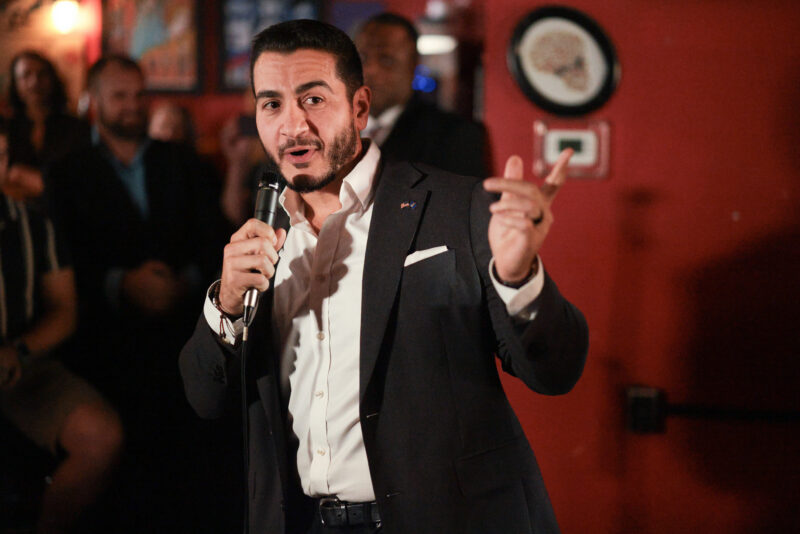
Chip Somodevilla/Getty Images
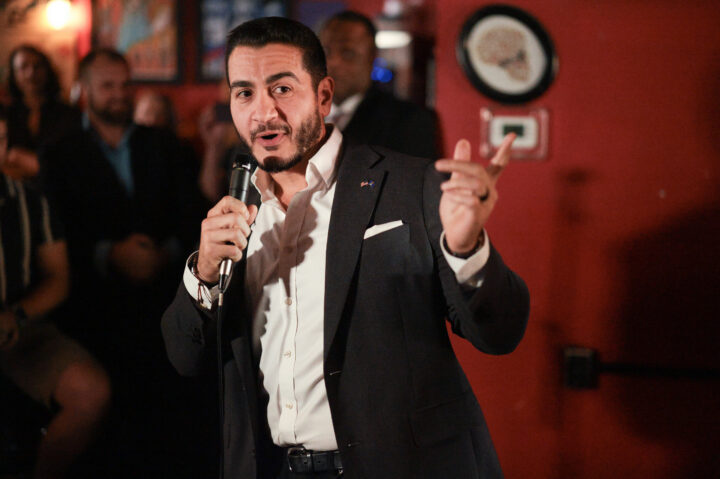
Michigan Democratic Senate candidate Abdul El-Sayed campaigns at The Meanwhile Bar on October 8, 2026 in Grand Rapids, Michigan.
Democratic Michigan Senate nominee Abdul El-Sayed on Sunday denied that he or any of his family members have ties to the Muslim Brotherhood — accusations his opponent, former Rep. Mike Rogers (R-MI), raised last week during the first Michigan Senate debate.
Asked by Kristen Welker on “Meet the Press” to respond to Rogers’ claims, El-Sayed first answered, “You know Kristen, the only reason he said those things is because he really wanted to repeat the word Muslim.”
Pressed to answer directly if he or his family have ties to the Muslim Brotherhood, El-Sayed said, “No.”
Rogers had claimed that El-Sayed received donations from groups in support of the Muslim Brotherhood and from individuals who “openly support Hamas, Hezbollah [and] al-Qaida.” El-Sayed’s mother also worked for the Islamic American Relief Agency, which was designated as a terrorist organization for supporting al-Qaida, and his sister-in-law sued to be removed from a federal terrorism watchlist, according to recent reports.
“Let me ask you though, why this is even a subject of debate,” El-Sayed said to Welker. “Because his only strategy is to point to me and my name and my faith and to say that we’re different. And that you should suspect people simply because they are different than you in how they pray.” He went on to accuse Rogers of being beholden to President Donald Trump and seeking office in order to enrich himself.
El-Sayed also reiterated in the interview that his “commitment to Jewish safety is the same as my commitment to my own kids,” a common refrain of his on the campaign trail, and said of his relationship with the Jewish community that he has “had really important conversations.”
Abdul El-Sayed denied on NBC’s “Meet the Press" that he or any of his family members has ties to the Muslim Brotherhood — accusations his opponent Mike Rogers made during the first Michigan Senate debate last week. Read @marcrod97’s full coverage: https://t.co/8I0EFZd5w9 https://t.co/Vi7gMuHy3x
— Jewish Insider (@jewishinsider) October 11, 2026
“I’ve learned a lot from the conversations I’ve had, some conversations with folks who will be colleagues, somebody like Sen. Elissa Slotkin (D-MI). And, you know, I remember sitting down with her and her sharing how she felt when she heard that ‘hurt people hurt people’ comment. And it was really important to me to hear, to understand that I had been stepping on somebody’s pain. That’s not my goal here,” El-Sayeed said, referring to his comments in the aftermath of the terror attack on Temple Israel earlier this year that critics said attempted to justify the actions of the perpetrator, a Hezbollah sympathizer.
Asked if he regretted the comment, El-Sayed said, “I regret anytime, you know, if I step on somebody’s grief, of course I regret that. And I really wish I’d thought about how somebody would have felt hearing that, and thought twice about making those comments.”
United Democracy Project spent nearly $100,000 on direct-mail advertisements against El-Sayed
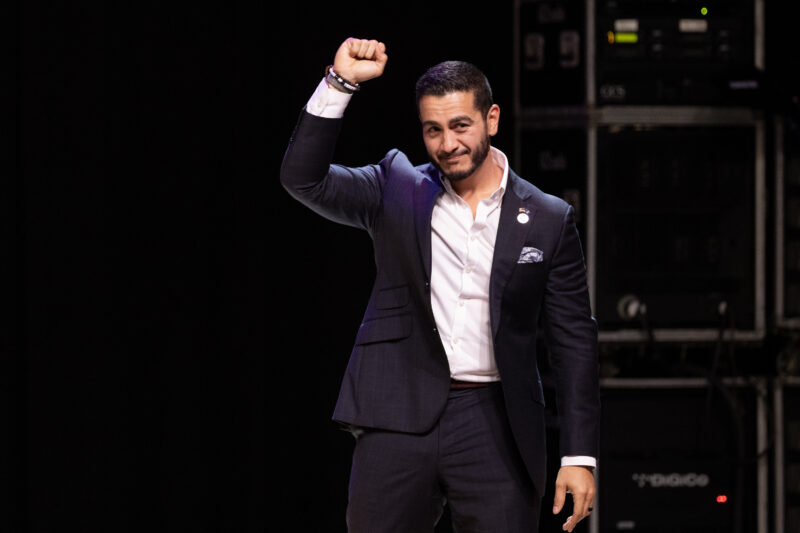
(Scott Olson/Getty Images)
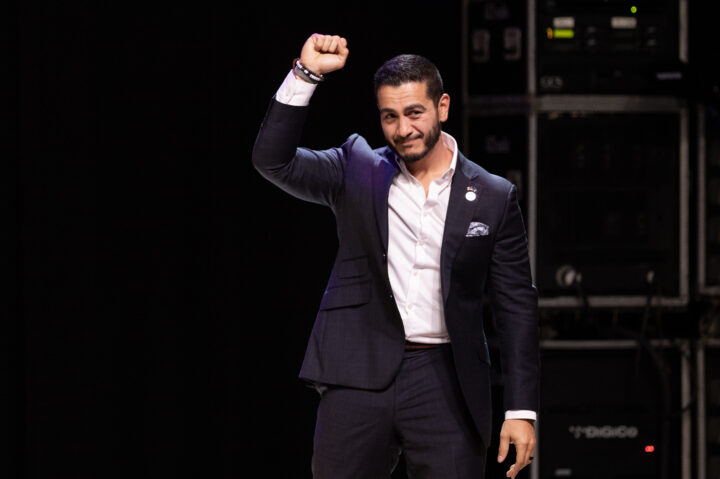
Democratic candidate for U.S. Senate Abdul El-Sayed speaks to supporters at an election-night rally at the Majestic Theatre on August 04, 2026 in Detroit, Michigan.
AIPAC’s super PAC, United Democracy Project, entered the Michigan Senate general election on Friday to oppose Democratic nominee Abdul El-Sayed, after reported tensions with the GOP nominee, former Rep. Mike Rogers (R-MI) over its role in the race.
Individuals affiliated with Rogers’ campaign had reportedly told AIPAC that it did not want the group to openly spend in favor of him in the general election, fearing that its controversial reputation might do harm to his campaign.
But UDP announced in a Friday filing that it had spent nearly $100,000 on direct-mail advertisements against El-Sayed.
A UDP spokesperson told Jewish Insider that the mailers were being sent to 130,000 Jewish voters in Michigan. They highlight El-Sayed’s response to the terrorist attack on Temple Israel in West Bloomfield, Mich., saying of the shooter, “Hurt people hurt people.”
The mailer highlights that the attack was a Hezbollah-inspired terrorist attack intentionally targeting the Jewish community in Michigan.
El-Sayed later apologized for the comments as he worked to appeal to Jewish voters after the primary, saying he was trying to “offer broader context” on the attack.
The group spent tens of millions in the primary election attacking El-Sayed and boosting Rep. Haley Stevens (D-MI), who ultimately fell one point short of victory.
The UDP spokesperson did not immediately respond to a request for comment on whether the group has plans for further advertising, including on television or digital in the general election race.
Asked at a Thursday night debate about whether he would accept support from AIPAC, in light of the reported tensions, Rogers did not answer directly.
Rogers said he would welcome anybody “that wants to help my campaign stop a guy who can’t condemn terrorism in our own country because he’s so close to the people who are supporting the Muslim Brotherhood.”
A newly formed super PAC, Together for Michigan, ran an ad during the debate featuring comments from Taylor Weintraub, a mother of a student at the Temple Israel preschool that was attacked by a terrorist earlier this year, directing viewers to a website for Democrats supporting Rogers’ campaign.
The congresswoman will join El-Sayed for a bus tour and rallies as Republicans seek to tie him to the Democratic Party's left wing
Sarah Rice/Getty Images
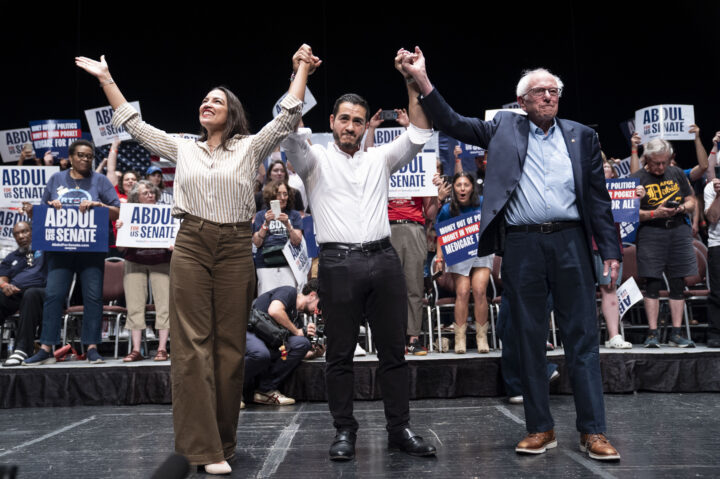
(L-R) U.S. Rep. Alexandria Ocasio-Cortez (D-NY), Michigan Democratic candidate for Senate Abdul El-Sayed and Sen. Bernie Sanders (I-VT) at the Detroit Opera House on July 18, 2026 in Detroit, Michigan.
Rep. Alexandria Ocasio-Cortez (D-NY) will campaign alongside Michigan Democratic Senate nominee Abdul El-Sayed next week, joining him for a bus tour across the state’s Upper Peninsula before holding several rallies in the Detroit area on Friday.
Ocasio-Cortez and El-Sayed are scheduled to make stops on Thursday in Escanaba, Iron Mountain and Marquette as part of his campaign’s “Shouldn’t Be This Hard” tour. On Friday, the congresswoman will hold rallies at Oakland University in Rochester and Eastern Michigan University in Ypsilanti, along with a “Latinos for Abdul” event in Detroit.
The trip will mark Ocasio-Cortez’s first campaign appearance for El-Sayed during the general election, following her endorsement and appearances on his behalf during the Democratic primary. El-Sayed faces former Rep. Mike Rogers (R-MI), who narrowly lost Michigan’s 2024 Senate race, in a closely watched contest for the seat being vacated by retiring Sen. Gary Peters (D-MI).
At a New York City fundraiser for El-Sayed earlier this week, Ocasio-Cortez described his campaign as part of a broader “generational project” for the progressive movement, according to audio obtained by The New York Times. She argued that an El-Sayed victory would “break open the entire political calculus” of what progressives could accomplish.
“Because if you can win, if Abdul can win in Michigan, anybody can win anywhere,” Ocasio-Cortez said.
Ocasio-Cortez, who is thought to be considering a potential 2028 presidential bid, has become a prominent ally of El-Sayed as Republicans have sought to portray him as too liberal for the swing state of Michigan.
El-Sayed welcomed Ocasio-Cortez’s support, praising her leadership and calling her a “critical partner in the primary.” Former President Barack Obama is also scheduled to campaign with El-Sayed on Oct. 24.
Plus, Jewish preschool teachers' Italy trip nixed over Israel litmus test
Paul Sancya, Pool/AP
Republican nominee for U.S. Senate Mike Rogers, right, speaks during a televised debate with Democratic nominee for U.S. Senate Abdul El-Sayed on Oct. 8, 2026, in Grand Rapids, Mich.
Good Friday morning.
In today’s Daily Kickoff, we cover last night’s contentiousMichigan Senate debate between Mike Rogers and Abdul El-Sayed, report on the cancellation of a program for Israeli and American Jewish preschool educators in Italy after organizers asked them to condemn Israel, and spotlight conversations and addresses at the National Conservatism Conference in Jerusalem in which speakers criticized Jews for raising concerns about antisemitism. Also in today’s Daily Kickoff: Hakeem Jeffries, Asaf Rajuan and Nechumi Yaffe.
Today’s Daily Kickoff was curated by JI Executive Editor Melissa Weiss, with assists from Tamara Zieve and Danielle Cohen-Kanik.
For less-distracted reading over the weekend, browse this week’s edition of The Weekly Print, featuring stories from Jewish Insider and eJewishPhilanthropy, including: Three years after Oct. 7, Israel’s security is ‘much better,’ but risks loom; Michigan Hillel’s break with Israel advocacy groups raises questions about where it stands; and The Siegels lost their home and community on Oct. 7. Now they’re finding their way forward. Print the latest edition here.
Today’s Agenda
With weeks to go before the midterms, President Donald Trump ruled out a resumption of strikes on Iran before Election Day, saying on Truth Social that the U.S. is having “productive discussions” with the Islamic Republic.
The president’s comments could be taken with a grain of salt: In June 2025, he suggested that the U.S. was pursuing diplomacy a day before joining Israel’s attacks on the Islamic Republic, and earlier this year, he said he had not decided on whether to attack Iran, hours before the U.S. and Israel launched coordinated military strikes that took out the top echelon of Iranian leadership.
The Norwegian Nobel Committee announced Navi Pillay, a former U.N. high commissioner for human rights and International Criminal Court judge, as the winner of this year’s peace prize. Pillay, a South African jurist and sharp critic of Israel, served as the head of the U.N.’s Commission of Inquiry targeting Israel, which has been condemned by members of the international body over its anti-Israel bias.
We’re keeping an eye on the political situation in the U.K., where Green Party leader Zack Polanski lost his House of Commons by-election bid overnight, days after his party passed a resolution declaring Zionism to be racism. Polanski has said he will stay on as party leader following his defeat, despite questions over his ability to lead the Greens going forward. The Campaign Against Antisemitism, meanwhile, has reported Polanski’s party to the U.K.’s Equality and Human Rights Commission over the Zionism motion passed earlier this week, saying that such a move has “real potential to embolden expressions of antisemitism.”
One Thing To Know
DEBATE DEBACLE
By Marc Rod
In the first debate of the general election for Senate in Michigan, former Rep. Mike Rogers (R-MI) repeatedly hit Democratic nominee Abdul El-Sayed over his supporters’ ties to and support for terrorist groups and El-Sayed’s comments on the Temple Israel terrorist attack — accusations that El-Sayed largely did not respond to during the deeply acrimonious exchange.
El-Sayed, for his part, said he would not support defensive aid to Israel even if it was under attack, framed Israel as a threat to the United States comparable to Iran, defended his decision not to issue a statement honoring the anniversary of Hamas’ Oct. 7, 2023, attacks on Israel and continued to sidestep questions on Iran’s persecution of its own civilians.
“He has taken money from groups in support of the Muslim Brotherhood. He has taken money from individuals on his campaign who openly support Hamas, Hezbollah, al-Qaida,” Rogers said several times throughout the debate, and accused El-Sayed of failing to condemn terrorist groups and attacks.
The Big Reads
Arrivederci, Reggio
A planned study trip to Italy for some 100 Jewish early childhood educators from the U.S. and Israel was canceled after participants were required to sign a statement condemning Israel’s actions in Gaza, prompting organizers to conclude that the trip’s political litmus test made such a trip untenable, Jewish Insider’s Haley Cohen reports. The educators — members of the U.S.-based Paradigm Project — were scheduled to travel to Reggio Emilia, Italy, from Oct. 11–16. Their goal was to study the Reggio Emilia Approach to early childhood education, a method long embraced by Jewish preschools, and bring those insights back to their classrooms. But ahead of the trip, participants were asked to sign a statement declaring, “I distance myself from the occupation of Gaza and the violation of children’s and human beings’ rights in the occupied territories as well as in every places [sic] in the world,” according to a screenshot obtained by JI.
mayor unmoved
New York City Mayor Zohran Mamdani on Thursday shrugged off the protest — which featured jeers of “traitor” at the democratic socialist leader, and chants of “long live Hamas” — that sought to drown out an event he attended the night prior memorializing the victims of the Oct. 7, 2023, Hamas attacks, Jewish Insider’s Will Bredderman reports. “I was proud to attend last night’s vigil, as I did last year, to listen to testimonies from family members of those who were killed on Oct. 7, and those who’ve been killed in the three years since, and all of whom united in a vision for peace and an end to the genocide in Gaza,” Mamdani told journalists after an unrelated event in Brooklyn. “As for those protesting me, I am the mayor of New York City, and this is what I signed up for.”
Buddy backlash: Politico spotlights concerns from Jewish allies of Mamdani who were dismayed over his Oct. 7 statement, among them T’ruah’s Rabbi Jill Jacobs, a backer of the mayor’s recently announced antisemitism plan who said Mamdani’s comments “missed the mark.”
conference quotables
Several speakers at the right-wing National Conservatism Conference in Jerusalem said on Wednesday that Jews complain too much about antisemitism — on the third anniversary of the Oct. 7 Hamas attacks on Israel, which were followed by a sharp increase in hate crimes against Jews around the world, Jewish Insider’s Lahav Harkov reports. NatCon, as the conference spearheaded by right-wing Israeli American intellectual Yoram Hazony is known, was held in Israel for the first time this week. In a plenary on Wednesday titled “American Right: The Next Generation,” multiple speakers berated Jews for speaking out against antisemitism, accused Israel of drawing the U.S. into wars and mocked evangelical Christians’ beliefs about Israel. They also blamed liberal and neoconservative Jews for mass immigration to the U.S.
The Rundown
exclusive
back from the gulf
cross-party call
TORAH AND TAXES
On Our Radar
● The Live Briefing. Word on the street, clips, podcasts and quick updates — the items we’re tracking all day in our Live Briefing on the app (on Apple and Android) and website.
The Treasury Department announced sanctions on 17 new vessels tied to the Islamic Revolutionary Guard Corps’ “shadow fleet” used to clandestinely move oil and gas out of Iran…
OpenAI said on Thursday that Iranian operatives used ChatGPT to help place nearly 100 articles criticizing the Iran war under fake journalist bylines in roughly a dozen online outlets around the world…
House Minority Leader Hakeem Jeffries (D-NY) said he “strongly” backs the creation of an Oct. 7 memorial in Brooklyn; any future memorial, the funds for which are being privately raised, would require the approval of the mayor’s office to move forward…
The Denver school board voted to censure its vice president, Monica Hunter, over allegations she had made antisemitic comments to a Jewish member of the board; an independent investigation was inconclusive, finding that the allegations amounted to a “he said, she said” situation…
The former head of the Middle Eastern studies department at the University of Arkansas — who called for Israel to be “dismantled” and shared a social media post calling for someone to “thrust the dagger from Doha into the throats of the Zionists, so that all of them howl” — is seeking for a court to strike down the state’s recently adopted antisemitism law, saying it was used for her dismissal from the university…
A district court judge in California ruled that German singer-songwriter Alice Merton’s copyright lawsuit against Kanye West, now known as Ye, can proceed with references to the Holocaust and West’s documented history of antisemitism; West had sought permission to sample one of Merton’s songs for his 2024 track “Gun to My Head,” and chose to use it after Merton, who is a descendant of Holocaust survivors, refused…
Germany’s Left Party, which won a plurality of votes in last month’s state elections in Berlin, agreed to measures to address antisemitism within the party as part of coalition talks with the Social Democrats and Greens…
The Royal College of Pharmacy ended its relationship with the U.K. arm of Teva Pharmaceuticals, becoming the second British institution after the Royal College of Nursing to do so; the college cited the Israeli pharmaceutical company’s unspecified “activities” as the reason for its cutting of ties, which came amid pressure from anti-Israel activists…
British counterterrorism police arrested two Latvian men after they were found inside RAF Molesworth, an air base used by the U.S. military and NATO for intelligence operations. Police said there is no evidence at this stage linking the incident to the suspected Iran-related plot at RAF Fairford…
The Israeli Defense Ministry opened a national pavilion and led a delegation of defense firms — including Elbit Systems, Israel Aerospace Industries and Rafael — at the Marrakech Airshow in Morocco this week, marking Israel’s first official participation in a Moroccan defense exhibition since signing the Abraham Accords…
The Gaza Children’s Village network, a U.S. nonprofit providing food, medical care and education to Palestinian children in Gaza, is planning to use AI to monitor classroom lessons for “hateful” speech and ensure teachers adhere to a peace-focused curriculum…
Three Saudi citizens were killed in Houthi attacks on Riyadh’s King Khalid International Airport and a Saudia Airlines aircraft…
Canadian philanthropist and investor Stephen Jarislowsky died at 101…
Worthy Reads
Hatred on the March: In Fox News, Jeff Miller and Stuart Eizenstat, respectively the current and former chairs of the United States Holocaust Memorial Council, raise concerns about the rise of antisemitism, aided by malign actors. “Furthermore, state actors like Iran, Qatar, China and Russia spread antisemitic and anti-Israel conspiracy theories and Holocaust denial to stir hatred of Jews and sow chaos in democracies. They are succeeding. Antisemitism is no longer lurking at society’s fringes. It is marching openly through its institutions. Violent antisemitism is at levels not seen since the Holocaust.” [FoxNews]
Facing the Palestinian Question: In The New York Times, Shira Efron, a senior fellow at RAND, posits that Israel’s next government must address questions around the Palestinians in order to improve the country’s global social standing. “No amount of walking is going to make the Palestinian question go away. The current government tried to settle the matter for good, seeking to bury the idea of the Palestinian question once and for all. Instead, this government may have exhumed it, turning it into a domestic issue in nations around the world and leaving whichever government comes next no choice but to finally reckon with it.” [NYTimes]
The Meaning of Mourning: In The Wall Street Journal, Kenneth Brander, the president and rosh yeshiva of Ohr Torah Stone, reflects on Jewish mourning practices. “We need the dead to take on an enduring role in the lives of the living. That takes time, and the shaping of time spent mourning is one of the purposes of ritual. In Jewish practice, when one says the name of a deceased person, one adds the phrase “may his memory be a blessing.” The goal of mourning is to make that phrase true: The memory of the dead actually improves our physical lives and our moral selves.” [WSJ]
Find more Worthy Reads in our Live Briefing via our app (on Apple and Android) and website.
Picture of the Day
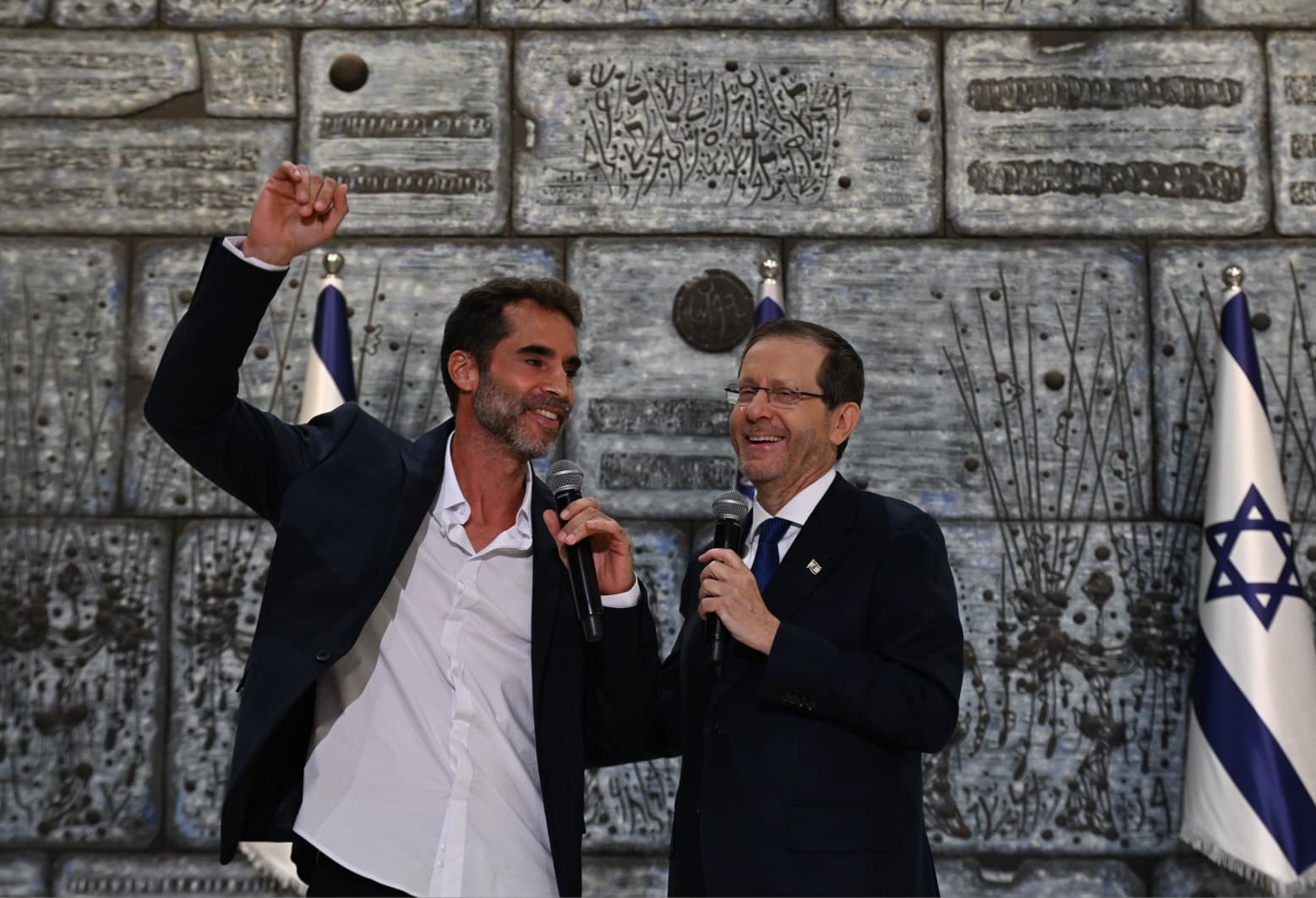
Israeli President Isaac Herzog presented FlyDubai 1073 passenger Asaf Rajuan with the Presidential Award for Civilian Heroism during a ceremony yesterday at the President’s Residence in Jerusalem. Herzog and his wife, First Lady Michal Herzog, honored Rajuan and five other Israelis for their successful efforts for their efforts to thwart an attempted hijacking by the plane’s co-pilot, who had attacked his Indian captain and attempted to crash the plane with 174 people, most of whom were Israelis, on board. Haim Zach/GPO
Wine of the Week
Tzora Vineyards Shoresh Blanc 2025
Shoresh is the Hebrew word for root, and this week I was shown what grows from it. I was at Tzora Vineyards, in the Judean Hills, in the company of my dear friend Yoram, tasting the 2025 Shoresh Blanc, arguably one of the three finest white wines produced in Israel today, when the winery manager insisted on opening the same wine from the 2016 vintage. With nearly a decade in the bottle, the older wine was significantly better than the 2025, and the pairing of the two made for a wine tasting made in heaven.
A blend of predominantly sauvignon blanc, chardonnay, and semillon, the wine holds a subtle sweetness and a bright acidity in graceful balance. The front palate is overwhelmingly citrus; the mid-palate carries a whisper of vanilla, in the elegant, restrained manner of French chardonnay; and the finish is still sitting on my tongue three days later. This is a wine that will hold for a very long time. Serve it with the best cheese in your refrigerator. Buy the 2025 now, and give the roots time.
Birthdays

Evgeny Kissin, concert pianist and composer, turns 55 on Saturday
FRIDAY
Brian Lamb, founder and retired executive chairman and CEO of C-SPAN, known for his unique interview style, turns 85
Charles Miller, retired federal government manager and analyst
Bernard Dov Cooperman, associate professor of Jewish history at the University of Maryland, turns 80
Richard Marpet, Burbank, Calif., resident
David Jacobson, U.S. ambassador to Canada during the Obama administration, then vice-chair of BMO from 2013 to 2024, turns 75
Don Garber, commissioner of Major League Soccer since 1999, turns 69
David Gerstman, research analyst at the Committee for Accuracy in Middle East Reporting and Analysis
Eric S. Kassoff, president of Wilkes Artis, he is active in AIPAC, the Washington JCC and the Jewish Federation of Greater Washington, turns 66
Debby Arzt-Mor, retired director of Jewish learning at the Brandeis School of San Francisco
Todd Richman, managing director and financial advisor at Morgan Stanley Private Wealth Management and chair emeritus of Democratic Majority For Israel
Simon Sinek, best-selling author and motivational speaker, his 2010 TED Talk about leadership is one of the most popular talks of all time, turns 53
Rabbi Shmuel Herzfeld, rosh yeshiva at Yeshivas Elimelech following 17 years as rabbi at Ohev Shalom Synagogue in Washington, D.C., turns 52
Neshama Carlebach, musician and singer, the protégé of her late father, singer-songwriter Rabbi Shlomo Carlebach, turns 52
Karin Elharar Hartstein, member of the Knesset for Yesh Atid., turns 49
Benjamin Berger, SVP for Jewish education, community and culture at Hillel International
Justin Barasky, partner at TKO Political
Ben Lusher, CEO at Denver-based energy firm Nexus Energy Partners, he was the national board chair of Moishe House (now known as Mem Global) until 2022
David Meyerson, executive director of international initiatives at the U.S. Chamber of Commerce Institute for Legal Reform
Ian Karmel, stand-up comedian and Emmy Award-winning television writer, turns 42
Lily Goldstein, VP of portfolio management for LEO Impact Capital
David Cohen, counsel in O’Melveny’s NYC office, he was an executive assistant and advance associate in the Obama White House
Chaya Notik, physical therapist in Montreal
Jason Kaplan, VP at L’Oréal, turns 36
Julia Schechter, senior manager of policy communications at Snap
Daniel Rubin, Israel-based VP at JP Morgan
Kayla Levinson Segal, manager of in-stock management at Amazon in NYC
Inbal Rabin-Lieberman, security coordinator of Kibbutz Nir Am on Oct. 7, 2023, where her team killed 25 terrorists and the kibbutz suffered no casualties, turns 28
Nick Itkin, foil fencer, he won a team bronze medal at the 2020 Olympics (Tokyo) and an individual bronze medal at the 2024 Olympics (Paris), turns 27
SATURDAY
Laurence Tribe, professor emeritus of constitutional law at Harvard Law School, he has argued 36 cases at the U.S. Supreme Court, turns 85
Bruce Karatz, past chairman and CEO of KB Home, a nationwide home builder, turns 81
Miriam Adelson, physician, philanthropist and the majority owner of the Las Vegas Sands Corporation and the NBA’s Dallas Mavericks, turns 81
Ronald Maurice “Ronny” Naftaniel, former director of the Center for Information and Documentation Israel in The Hague, promoting a positive view of Israel within Dutch society, turns 78
Meir Sheetrit, former member of the Knesset for 30 years on behalf of three political parties, he has served in seven ministerial roles, turns 78
Yedidya Atlas, longtime IDF chaplain
Diane Schmidt, award-winning writer and photographer based in Albuquerque, N.M.
David Lee Roth, vocalist and songwriter best known as the lead singer of Van Halen, he is an inductee of the Rock & Roll Hall of Fame, turns 72
Bruce Karsh, co-chairman and chief investment officer of Oaktree Capital Management, turns 71
John M. Grunsfeld, former NASA astronaut who flew on five space shuttle missions, he has held many positions at NASA including chief scientist, turns 68
Neil Gurvitch, senior counsel at the Bethesda, Md., law firm of Selzer Gurvitch
John C. P. Goldberg, dean of Harvard Law School, turns 65
Rodney Freeman, founder and principal of Los Angeles-based real estate firm, Freeman Group
Sam Lauter, governmental relations and strategic communications principal at BMWL Public Affairs
Mark H. Shpall, head of school at de Toledo High School, a Jewish school in northern Los Angeles County
Gavin Newsom, governor of California since 2019, turns 59
Asi Cohen, Israeli comedian and actor, twice voted as the funniest Israeli, turns 52
Rabbi Schlomo Elieser Hofmeister, community rabbi of Vienna and chief rabbi of the Austrian Armed Forces, turns 51
Matti Friedman, columnist for The Free Press, he is the author of five acclaimed books, turns 49
Chanan Weissman, Jewish liaison during the first two years of the Biden administration, now the director of emerging technologies at the Maimonides Fund
Ian Sugar, president of Ian Sugar Strategies
Seth Levey, head of U.S. government relations and corporate affairs at Glencore
Avi Davidoff, VP in the Chicago office of Goldman Sachs
Rabbi Elliot Schrier, rabbi of Congregation Bnai Yeshurun in Teaneck, N.J., turns 37
Hali Haber Spiegel, director of education at CAMERA
Avner Netanyahu, winner of Israel’s National Bible Quiz as a teen and then a soldier in the IDF’s Combat Intelligence Collection Corps, he is a son of PM Benjamin Netanyahu, turns 32
Or Shaked, U.S. correspondent at Israel Hayom and deputy director at Jewish Virtual Library
SUNDAY
Saul Friedländer, professor emeritus of history at UCLA, winner of both a Pulitzer Prize and the Israel Prize, he won a MacArthur Genius fellowship in 1999, Saul Friedländer, turns 94
Ronald S. Liebman, former assistant U.S. attorney who prosecuted then-VPOTUS Spiro T. Agnew in 1973, he is the author of four novels, turns 83
Amos Gitai, Israeli filmmaker and artist, turns 76
Patty Murray, U.S. senator (D-WA), turns 76
Barry G. Silverman, senior judge of the U.S. Court of Appeals for the 9th Circuit, turns 75
Helane Goldstein, past president and then board chair of Congregation B’nai Tzedek in Potomac, Md., turns 73
Ron Prosor, Israeli ambassador to Germany, he has also been Israel’s ambassador to both the U.K. and the U.N., turns 68
Shari Aronson, NYC-based philanthropist
Mark Gurvis, former EVP at JFNA, now CEO at the Vancouver, British Columbia-based Ronald S. Roadburg Foundation, turns 67
Sharon Rockman, owner of Sababa Travel
Peter Turman, Los Angeles-based real estate agent
Rob Speyer, president and CEO of NYC-based real estate firm Tishman Speyer, turns 57
Asher Epstein, CEO of Focus at 50, helping Israeli companies break into the U.S. market
Joshua London, head of philanthropy at the University of Haifa UK, also an advisor at the Yad Vashem UK Foundation, turns 51
Michael Dickson, executive director of the StandWithUs Israel office in Jerusalem, turns 49
Brianne Nadeau, member of the Council of the District of Columbia since 2015, turns 46
Jamie Weinstein, political journalist, opinion commentator and satirist, he is the host of “The Dispatch” podcast, turns 43
A super PAC supporting Rogers ran an ad during the debate featuring a mother whose child attended school at Temple Israel and said she couldn’t vote for El-Sayed
Chip Somodevilla/Getty Images
Michigan Democratic Senate candidate Abdul El-Sayed campaigns at The Meanwhile Bar on October 8, 2026 in Grand Rapids, Michigan.
In the first debate of the general election for Senate in Michigan, former Rep. Mike Rogers (R-MI) repeatedly hit Democratic nominee Abdul El-Sayed over his supporters’ ties to and support for terrorist groups and El-Sayed’s comments on the Temple Israel terrorist attack — accusations that El-Sayed largely did not respond to during the deeply acrimonious exchange.
El-Sayed, for his part, said he would not support defensive aid to Israel even if it was under attack, framed Israel as a threat to the United States comparable to Iran, defended his decision not to issue a statement honoring the anniversary of Hamas’ Oct. 7, 2023, attacks on Israel and continued to sidestep questions on Iran’s persecution of its own civilians.
“He has taken money from groups in support of the Muslim Brotherhood. He has taken money from individuals on his campaign who openly support Hamas, Hezbollah, al-Qaida,” Rogers said several times throughout the debate, and accused El-Sayed of failing to condemn terrorist groups and attacks.
“The prattling and repetition of his argument does not solve the dismantling of terrorist networks that America demands,” Rogers added, framing himself — with a military and FBI background — as the clear choice for those concerned about national security, while El-Sayed repeatedly dinged Rogers as a war hawk who had been an avid cheerleader for the war in Iran and other conflicts.
At one point, Rogers suggested that El-Sayed opposed federal counterterrorism programs because people in El-Sayed’s family were tied to terrorism, leading El-Sayed to goad him, “Go ahead and say that I’m a — go ahead and say it. You’ve been tiptoeing around it the whole time. Just say it.”
Though he fired back at most of the attacks Rogers leveled throughout the debate, El-Sayed offered no direct response or rebuttal to Rogers’ barbs about his ties to terrorism. “He wants this to be about anything but his own record … going after my mom, my sister, got nothing to actually say about me. I’m a dad and a doctor,” the Democratic nominee said.
El-Sayed’s mother worked for the Islamic American Relief Agency, which was designated as a terrorist organization for supporting al-Qaida, and his sister-in-law sued to be removed from a federal terrorism watchlist, according to recent reports.
He also insisted that he had condemned the Temple Israel attack. (El-Sayed apologized for his initial response to the attack, which many in the Jewish community saw as justifying or excusing it, as he tried to appeal to Jewish voters this summer.)
Asked whether he considered Israel or Iran a bigger threat to the United States — a question he dismissed earlier this week when asked by a reporter — El-Sayed again called the question a “ridiculous hypothetical.”
“Our ostensible ally in Israel has lobbied us to go to war with Iran. We have watched as Iran has responded by bombing all kinds of countries in the Middle East, and then choking off the world’s energy supply,” he continued. “I think both of them have proven dangerous in their own way, one at risk of attacking us, one getting us into wars we have no business fighting.”
El-Sayed said he would not support providing defensive weapons to Israel if it were attacked by Iran or another state, and framed Israel as the aggressor against Iran, with the aim of drawing the U.S. into the Iran war and annexing southern Lebanon.
Abdul El-Sayed would not vote to provide defensive military weapons to Israel if it were under attack, the Michigan Democratic Senate nominee said during last night’s debate. Read more: https://t.co/HzcvnWB5Fg https://t.co/RbMKkzJwbf
— Jewish Insider (@jewishinsider) October 9, 2026
When Rogers raised the fact that El-Sayed had not issued a statement to commemorate the third anniversary of the Oct. 7 attacks — describing in detail some of Hamas’ atrocities — El-Sayed responded, “I’m not somebody who tries to make political theater out of other people’s pain.”
Later, in the post-debate spin room, El-Sayed reportedly said, “Let me make a clear point here: I learned that when people are grieving, don’t step on their grief, and I know that how much things were being watched that this was going to be — whatever I said — it was going to feel like politicizing that moment. So I decided not to say anything.”
Pressed during the debate on whether he would condemn the Islamic Revolutionary Guard Corps, El-Sayed broadly said he “will condemn any use of force against a diplomatic population abroad,” but focused his response primarily on condemning the war in Iran.
El-Sayed said that he believes that the U.S. can end the war in Iran without reopening the Strait of Hormuz or ensuring Iran cannot produce nuclear weapon and address those issues diplomatically after the end of the fighting.
Rogers, who has recently urged an end to the Iran war, said the conflict cannot end if Iran maintains the capability to produce nuclear weapons, but argued that Iran’s nuclear program has been set back 20 years so that is not a relevant concern at this point.
He also said that the use of nuclear weapons would be the only red line that Israel could cross that would cause him to withdraw support for the Jewish state.
Asked whether he would welcome public support from AIPAC, given reporting that his allies had urged the group not to get openly involved in the general election, Rogers sidestepped the issue but said that he would welcome anybody “that wants to help my campaign stop a guy who can’t condemn terrorism in our own country because he’s so close to the people who are supporting the Muslim Brotherhood.”
A newly formed super PAC, Together for Michigan, ran an ad during the debate featuring comments from Taylor Weintraub, a mother of a student at the Temple Israel preschool that was attacked by a terrorist earlier this year.
“Since I could vote, [I] have been a Democrat and have considered myself a Democrat. When Abdul El-Sayed said, ‘Hurt people hurt people,’ it allows people to believe that this is acceptable,” Weintraub said in the ad. “It was justification as to why a terrorist would want to hurt all of these children. … He put the words out there and he cannot take them back.”
“Mike Rogers is here to listen to us and here to help us feel safe,” Weintraub continued.
The ad directed viewers to a website for Democrats supporting Rogers.
Ahead of the debate, members of the Nonnegotiable Michigan campaign, which has been pressuring El-Sayed to make commitments to Jewish safety and Israel’s right to exist, held a call with reporters on Thursday to urge both candidates to address their concerns during the debate.
Organizers said that thousands of people have now signed onto the movement, but they still haven’t received sufficient responses from El-Sayed’s campaign.
“If anything, he’s only given a lot of Jewish Michiganders reasons not to vote for him,” Rabbi Aaron Starr, one of the organizers of the effort said. “It’s been very alarming to see that he hasn’t shown more support.”
But Starr emphasized that members of his community aren’t just choosing between Rogers and El-Sayed — some are also considering writing in a candidate or sitting out the Senate race altogether.
Two leaders of the group, Rabbi Josh Whinston and Joan Lowenstein, a member of the Michigan Democratic Party Central Committee and president of the Jewish Federation of Ann Arbor, said that — despite Rogers’ public appeals and private outreach to members of the Jewish community — they haven’t heard from Rogers or his camp directly about trying to secure their backing.
Lowenstein noted that she’s a longtime AIPAC club member, “so I’m definitely on a list if he was going to reach out — and I have not gotten anything.”
Some other leaders of the campaign have been in touch with Rogers’ team, however: another leader of the Nonnegotiable campaign told Jewish Insider Rogers had reached out to them, while El-Sayed had not. Starr did not say specifically which candidates he had met or spoken with, but told JI that he had “outreach from a variety of candidates, both Democrat and Republican.”
The Nonnegotiable organizers also emphasized that their message is not just one for the Michigan Senate race, but also for the Democratic Party as a whole and the 2028 presidential field. Starr said that, even if El-Sayed wins, the difference in the margin of victory between himself and other statewide Democratic candidates will also be a significant message to the party.
The Nonnegotiable members said they were disappointed by El-Sayed’s failure to issue a statement on Oct. 7, particularly given that he has been consistent in honoring other Jewish holidays in the past month.
“His lack of communication is noticeable, and it comes back to what we’ve been saying — I’ve been saying now for a while is — when he communicates, he often communicates out of both sides of his mouth, and when he doesn’t communicate, it also becomes noticeable,” Starr said.
Members of the Nonnegotiable group emphasized that they wanted to hear from Rogers at the debate not only about support for Israel and the Jewish community, but also about standing up for other priority issues including civil rights, democracy, abortion rights, the Supreme Court and other issues they consider to be Jewish values.
Several Jewish university students in Michigan also joined Thursday’s press call, having publicly signed onto the Nonnegotiable petition.
Jacob Reich, a sophomore at the University of Michigan, said that he is organizing for and supporting Democratic candidates in other states, but in Michigan feels “torn between both my Jewish identity and supporting the Democratic candidate in my state.”
“We don’t have a candidate who supports all of my beliefs,” Robert Kashan, a freshman at the University of Michigan, agreed.
Reich emphasized that he saw multiple people on his campus on the Oct. 7 anniversary wearing Hamas T-shirts, but “I expect a lot more from a leader, especially someone who would be representing me in the Senate … so I would expect at least a statement memorializing Oct. 7.”
The Republican Jewish Coalition announced Wednesday it’s launching a $2 million campaign to appeal to disaffected Jewish Democrats and independents
Katie McTiernan/Anadolu via Getty Images
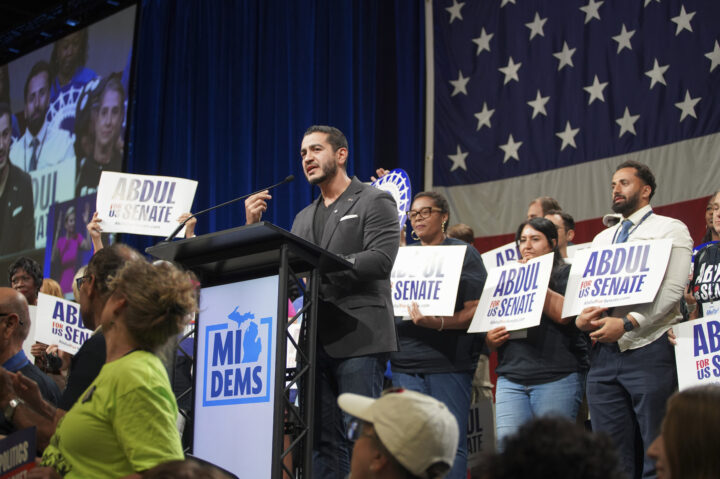
Abdul El-Sayed, Democratic nominee for the U.S. Senate, speaks at the Michgan Democratic Nominating Convention in Lansing, Mich. on Aug. 29, 2026.
Lansing, Mich., Mayor Andy Schor told CNN that he’s not currently supporting Michigan Democratic Senate nominee Abdul El-Sayed, and is not willing to consider backing him without a conversation with El-Sayed about the nominee’s rhetoric around Israel and antisemitism.
Schor, who is Jewish, told CNN he’s uncomfortable with some of the rhetoric used by El-Sayed, and that he has reached out to El-Sayed for a conversation, but hasn’t heard back. “If he doesn’t need me, he doesn’t need me,” Schor told CNN. “And that’s their strategic decision.”
Schor said he also will not support the Republican nominee, former Rep. Mike Rogers (R-MI).
He’s the latest in a growing list of prominent Jewish Democratic elected officials and other leaders in the state who say they’re uncomfortable with El-Sayed and his campaign and aren’t willing to support him without changes in his platform and rhetoric — if at all.
Capitalizing on that, the Republican Jewish Coalition on Wednesday announced a $2 million ad campaign targeting Jewish voters in Michigan, highlighting Jewish Democrats who refuse to support El-Sayed.
Ads from the group call out El-Sayed’s response to the terrorist attack earlier this year on Temple Israel, featuring several self-described lifelong Democrats saying they will not vote for El-Sayed, including a woman who says in the ad that her grandson attended preschool at Temple Israel.
One woman featured in the advertisements accuses El-Sayed of giving “permission” for further attacks on the Jewish community.
As he tries to appeal to Jewish voters, El-Sayed apologized for his initial comments on the attack, though some Jewish voters found his apology insufficient.
The RJC campaign is targeting Jewish Democrats and independents in Michigan through digital advertisements, mail and get-out-the-vote efforts, with a focus on Oakland County and other areas of the state with sizable Jewish populations.
“Three years ago, on October 7, 2023, Iran-backed terrorists began the deadliest massacre of Jews since the Holocaust,” RJC spokesperson Sam Markstein said in a statement on Wednesday. “It is on this solemn day that we are reminded precisely why antisemitic violence can never be excused; the RJC Victory Fund is launching a $2 million dollar GOTV campaign across Michigan’s Jewish community, after Abdul El-Sayed made excuses for the Hezbollah-inspired terrorist who attacked Temple Israel in West Bloomfield this past March.”
Markstein continued, “We saw the smoke billowing from Temple Israel after the terrorist drove his car filled with explosives into a synagogue while Jewish schoolchildren played inside, and watched as Abdul El-Sayed said, ‘hurt people hurt people.’ A complete disgrace, and totally disqualifying to be Michigan’s next United States Senator. The RJC VF ads feature the voices of lifelong Jewish Democrats from Michigan, who are crystal clear: we will never vote for Abdul El-Sayed.”
Anti-Israel activist Jacob Berger: ‘It’s cathartic because I want to beat the s*** out of these guys every single day’
(Esra Hacioglu Karakaya/Anadolu via Getty Images)
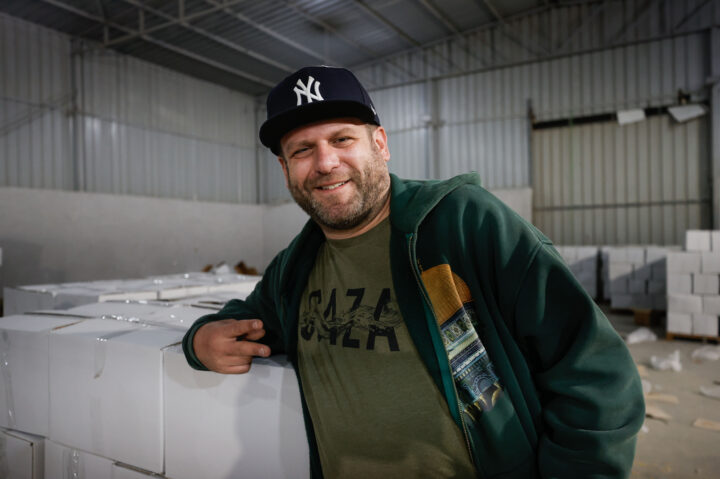
Jacob Berger, a Jewish American actor and viral content creator, poses for a photo wearing a T-shirt with Gaza written on it during an interview in Cairo, Egypt on January 29, 2025.
An attendee at a New York City fundraiser for Michigan Democratic Senate candidate Abdul El-Sayed on Monday night told a fellow attendee that beating up a pro-Israel demonstrator outside the rally was “cathartic” and “the next best thing” to being able to punch an Israeli.
According to video of the incident posted on social media by both men involved, the two mutually agreed to fight and that they would not report the incident to the police.
The El-Sayed supporter, an anti-Israel Jewish actor and activist named Jacob Berger, then bragged about the incident to a fellow attendee at the El-Sayed event, in an audio recording obtained by Jewish Insider. Berger does not appear to have any formal affiliation with the El-Sayed campaign and was not a host or organizer of the fundraiser.
Berger posted clips from the fight with the caption, “had to rock a zionist face” with a smiling emoji. Asked about the fight, Berger claimed in the recording that he and the other man have a history of antagonism from past demonstrations and confrontations, and described the fight gleefully.
“It’s cathartic because I want to beat the s*** out of these guys every single day. He cheers on genocide, he cheers on babies being blown up,” Berger said in the recording. “F*** you — I was literally putting all my rage into my fists there. … I can’t punch an Israeli right now, but that’s the next best thing.”
Asked by JI whether the recording was authentic, Berger sent a vulgar response, dismissing the question.
“Abdul believes everyone has a right to express their opinion without fear of violence,” campaign spokesperson Roxie Richner said in a statement to JI.
Berger has recently posted a series of videos mocking the FlyDubai hijacking, and suggested in another video during the U.N. General Assembly that Israeli Prime Minister Benjamin Netanyahu and other Israeli officials should go “back to Poland where they belong.”
Berger was also a member of the 2025 Gaza flotilla and was detained by Israel. He claims to have been banned from Israel. He moved to Egypt at some point in recent years, and has been accused of misconduct by other anti-Israel activists.
As El-Sayed works to rally members of the Jewish community who remain skeptical of him and his campaign, a recent letter from Michigan Jews in support of the candidate was also found to include a series of fringe figures holding various extremist views.
Jocelyn Benson, the party’s gubernatorial nominee, is also slated to attend the Oct. 24 event
Geoff Stellfox/Getty Images
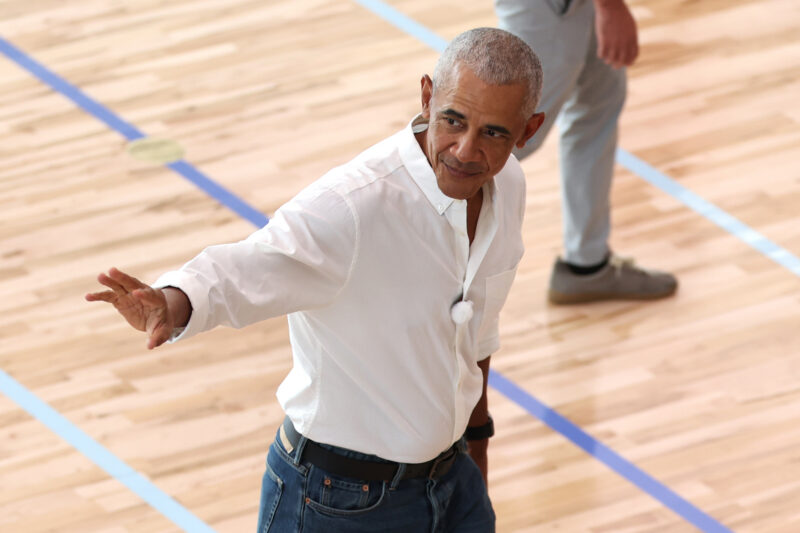
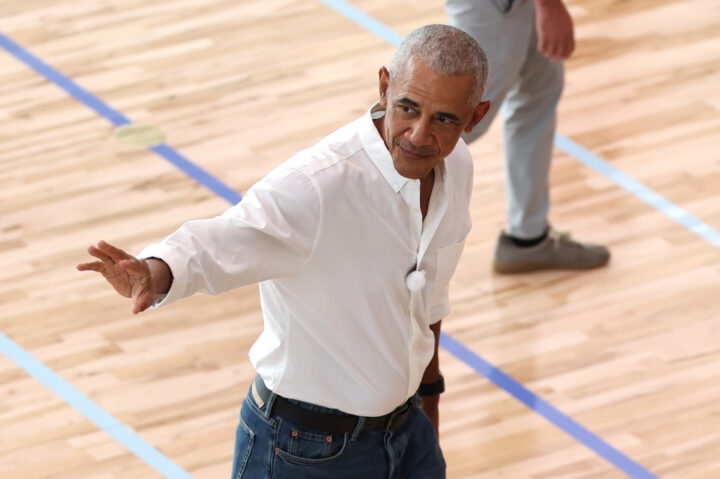
Former U.S. President Barack Obama waves to players at Obama Presidential Center on July 24, 2026 in Chicago, Illinois.
Former President Barack Obama is set to campaign on Oct. 24 in Detroit with Michigan Democratic Senate candidate Abdul El-Sayed and gubernatorial candidate Jocelyn Benson, around the beginning of early voting in the state.
Holding the Michigan Senate seat is among Democrats’ top priorities in the midterm elections. Polling has shown the race between El-Sayed and Republican former Rep. Mike Rogers is highly competitive, with Republicans making the seat one of their top targets.
El-Sayed has struggled to consolidate support from Jewish Democratic voters and is also working to win over Black voters.
El-Sayed campaigned over the weekend with Sen. Elissa Slotkin (D-MI), their first joint appearance since El-Sayed became the nominee.
Slotkin: ‘People want to see a Jewish woman and a Muslim man being able to get along, debate, push and pull each other’
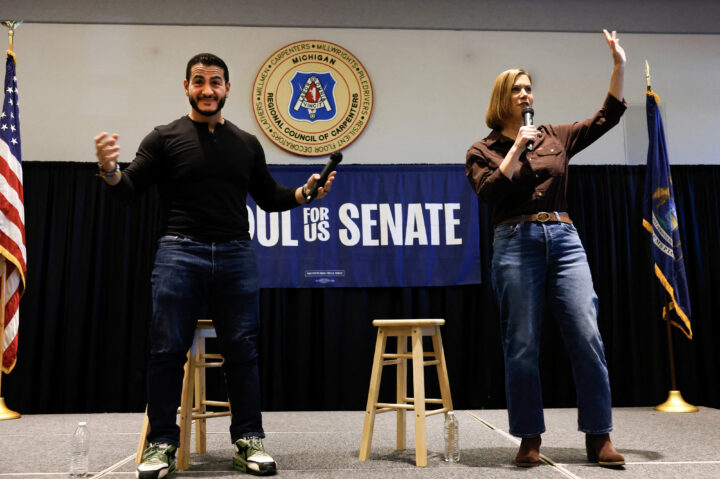
JEFF KOWALSKY / AFP via Getty Images
Democratic Michigan Senate candidate Abdul El-Sayed (L) reacts as Sen. Elissa Slotkin (D-MI) speaks during a town hall campaign event in Warren, Michigan, on October 3, 2026.
Sen. Elissa Slotkin (D-MI) argued during her first joint campaign appearance with Michigan Democratic Senate nominee Abdul El-Sayed that the Jewish vote is not a monolith and that some Jewish voters are prioritizing other issues than Israel and antisemitism in the state’s upcoming competitive Senate race.
Many prominent Jewish Democrats in Michigan have offered strident criticism of El-Sayed, saying they will not vote for him without major commitments on Israel policy and antisemitism — or they plan to vote for his opponent. Slotkin is Jewish.
“There’s no such thing as the Jewish voters, just like there’s no such thing as the Muslim voters or the Black voters. People have their own views and the things that they prioritize are going to drive their vote,” she said during a joint appearance on MS NOW after participating in a joint town hall event.
“People want to see a Jewish woman and a Muslim man being able to get along, debate, push and pull each other, and move the state forward.”
"People want to see a Jewish woman and Muslim man … move the state forward." Sen. Elissa Slotkin and Abdul El-Sayed spoke to MS NOW about their first joint appearance on the campaign trail, as El-Sayed’s race against Mike Rogers appears neck and neck. https://t.co/y8aVj0CEkp
— Jewish Insider (@jewishinsider) October 5, 2026
El-Sayed said that he and Slotkin agree that “you ought to be safe in your place of worship” regardless of religion. El-Sayed has faced criticism from many in the Jewish community for responding to the terrorist attack targeting Temple Israel in West Bloomfield, Mich., by saying “hurt people hurt people.” He has since apologized for those remarks.
During their joint appearance at the town hall in Macomb County, Mich., on Saturday, Slotkin downplayed disagreements between moderate and progressive Democrats, arguing that the “real debate among Democrats right now is fight versus flight,” she said. “I am on Team Fight and I need someone with me who is on Team Fight.”
El-Sayed also emphasized that the Iran war is driving up prices at home, and said that the U.S. has “no business fighting” the war.
Slotkin also called Trump “the most successful corrupt leader in the history of the world” and said that former Iraqi dictator Saddam Hussein “would spit out his tea at the amount of money that Donald Trump has stolen from his own people.”
Two weeks after Oct. 7, before the IDF had entered Gaza, El-Sayed said there was a ‘genocide being perpetrated against innocent Palestinians’
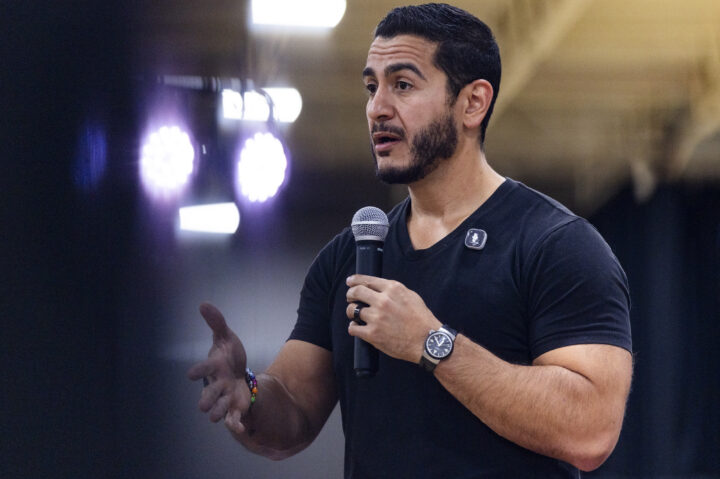
Emily Elconin/Getty Images
Democratic candidate for U.S. Senate Abdul El-Sayed answers questions from attendees during a town hall event on September 3, 2026 at the Oakland Expo Center in Waterford, Michigan.
Democratic Michigan Senate candidate Abdul El-Sayed accused Israel of committing genocide in Gaza as early as two weeks after Hamas’ Oct. 7, 2023, attacks on Israel, before Israel’s ground invasion began nearly a week later and well before any other mainstream political leaders used the term.
“At the heart of the genocide being perpetrated against innocent Palestinians today is the Islamophobic trope that *all* Palestinians must be aligned with Hamas,” El-Sayed said on X on Oct. 21, 2023. “It’s the most murderous form of the post-9/11 lie our country told to take civil liberties from Arabs & Muslims then.”
Israel began conducting airstrikes in Gaza within hours of the Oct. 7 attacks and launched a sustained air campaign the next day, but IDF did not begin its ground invasion until Oct. 27.
El-Sayed’s campaign did not immediately respond to a request for comment on what he understood as of Oct. 21 that led him to believe a genocide was occurring.
State Rep. Noah Arbit said El-Sayed aligns with people who want to ‘purge the Democratic Party and American life of Zionists and, therefore, most Jews’
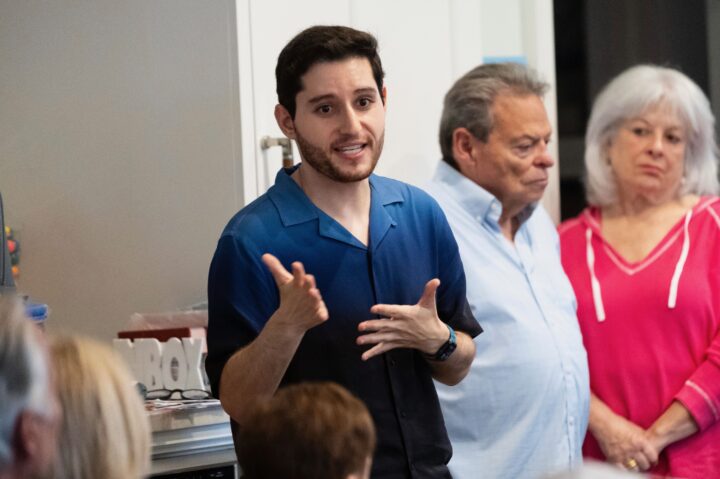
Courtesy
Michigan state Rep. Noah Arbit
Noah Arbit, a rising Jewish Democrat in Michigan’s state Legislature, has been a vocal critic of Abdul El-Sayed, a fellow Democrat whose Senate campaign in the key battleground state has exposed deep divisions within the Jewish community.
But until now, Arbit had not yet publicly clarified if he is willing to set aside his differences and endorse El-Sayed, like some prominent Jewish Democrats in the state who have recently announced their support despite reservations with his hostile stances on Israel and approach to countering antisemitism.
In an interview with Jewish Insider on Monday, Arbit, 31, confirmed that he would not be endorsing El-Sayed, pointing to what he called the nominee’s promotion of antisemitic conspiracy theories and affiliations with extremist figures on the far left, among other issues he cast as deal-breakers in the closely contested race.
“At the very least,” El-Sayed “aligns himself with people who want to purge the Democratic Party and American life of Zionists and, therefore, most Jews,” Arbit said. “That is unacceptable.”
Asked if he believed El-Sayed himself is antisemitic, Arbit referenced a fiery speech he had delivered last week on the floor of the state House in which he had argued there was no longer a meaningful distinction between anti-Zionism and anti-Jewish prejudice at a moment when “the logical leap to justifying violence against Israelis and all Jews becomes so tiny as to be invisible.”
“The definition of antisemitism as just a shorthand for hating Jews is useless because you don’t have to hate Jews to be a vector for conspiracy theories,” he told JI. “I think it’s very, very clear that the fulcrum of Abdul’s campaign was an antisemitic conspiracy about AIPAC being the No. 1 obstacle toward universal healthcare, better schools and better roads in Michigan and in America.”
“It’s just a dog whistle,” Arbit said of El-Sayed’s demonization of AIPAC, the pro-Israel group that spent more than $30 million opposing his primary campaign and is now backing his rival, former GOP Rep. Mike Rogers. “It is a neat, clever argument. You take an unpopular policy and you say this is the reason why you don’t have nice things. It is the demagogue’s oldest trick in the book.”
While Arbit declined to share how he will vote in the November election, which could help decide control of the Senate, he strongly suggested he would not be casting a ballot either for El-Sayed or Rogers, calling both candidates “unacceptable options for Michigan” who “threaten” his constituents. “That,” he said, “is a tragic place to be.”
“I feel that it is a moral question for each voter to answer as to who is frankly less threatening to them,” said Arbit, who on Monday joined the Nonnegotiable Michigan campaign laying out a series of demands to El-Sayed related to Jewish safety and Israel’s right to exist. “For me personally,” Arbit noted, “I don’t know how to choose between” El-Sayed and Rogers, whom he condemned as a “bootlicker” for President Donald Trump.
His struggle to reckon with a polarizing election reflects the difficult choices and sense of alienation now facing many Jewish Democrats in the state who have begun to question their place in a party to which they have long been loyal.
“We have a group text with a number of Jewish Democratic elected officials where it’s basically one long commiseration session about everything going on,” Arbit said. “How we feel under siege and under assault by people we consider friends and ideological allies and basically watching the radicalization of our party.”
“It’s a very difficult position to be in as a liberal Jewish Democrat,” he explained.
With just over a month until the general election, Arbit stands out as one of the most prominent Jewish Democrats withholding support for El-Sayed, even as the Democratic nominee has ramped up his efforts to mend fences with skeptical Jewish voters who remain uncomfortable with his views and feel he has not fully addressed their concerns.
Even though El-Sayed has condemned antisemitism while pledging his commitment to Jewish safety, his uncompromising stances on Israel have continued to raise questions among critics. He has also faced some scrutiny from Jewish Democrats who have cast doubt on the sincerity of his recent apology for equivocating over the attack in March against a synagogue in West Bloomfield, a heavily Jewish Detroit suburb in Arbit’s legislative district.
Despite his criticism of El-Sayed, Arbit, who is running for reelection this cycle, said he believed the Democratic nominee will claim victory in the Senate contest. But while Arbit predicted he himself would “probably win West Bloomfield by double digits,” he envisioned El-Sayed prevailing in the community by just a couple of points, “if he wins” the area at all.
“I think that there is going to be a massive underperformance by him in communities he hasn’t entirely successfully worked to feel comfortable with his candidacy,” Arbit elaborated, pointing to what he characterized as “an unwillingness to be accountable for your statements and actions.”
“Abdul consistently judges pro-Israel Jews in Michigan, and the entire Zionist movement, by Israel’s most extremist elements, such as [Itamar] Ben-Gvir and [Bezalel] Smotrich,” Arbit said, referring to far-right ministers in Israeli Prime Minister Netanyahu’s coalition, “yet gets very indignant when people judge him by the most extreme statements of Hasan Piker,” a Twitch streamer who has espoused antisemitic rhetoric and with whom El-Sayed campaigned during the primary.
“I have a huge problem with that hypocrisy,” Arbit added. “Should you judge a movement by its fringes or shouldn’t you? Which is it?”
Arbit, who has long warned of antisemitism in his party, said he did not judge Jewish Democrats who have recently backed El-Sayed — such as Michigan’s attorney general, Dana Nessel, who had voiced strong reservations with his candidacy before endorsing him last week.
“I empathize tremendously with people in the Jewish community,” he said, while acknowledging that there are many voters in the state who “simply do not want to risk a Republican Senate” and have been weighing the contest accordingly. “Every vote is like comparing apples and oranges,” he noted. “Everyone is weighing different factors.”
Arbit said he sat down with El-Sayed after he had won the Aug. 4 primary and “explained to him very earnestly” about his upbringing and “understanding of Zionism.”
He said it had been “framed by the understanding that minority groups are only safe under conditions of democracy, freedom and the rule of law, and also how that understanding really led to my empathy for Palestinians and their dispossession in 1948,” which had led him to believe that “the best way to right that is a two-state solution.”
It was challenging to find common ground, he said. “I think it’s very difficult because he won’t even commit to a two-state solution, where one of those two states is Jewish,” Arbit explained. “We have fundamentally different positions on that.”
Still, he credited El-Sayed for speaking with him in spite of their profound disagreements. “I’ve obviously criticized him publicly,” he told JI. “I think that it is a sign of a mature leader for someone who is willing to have a conversation with people who don’t agree with them.”
“If Abdul wins,” he told JI, “my constituents will be his constituents, and it’ll be up to him to demonstrate he is also representing all people in West Bloomfield — including the Jewish community — with faith and fidelity. That is a challenge that I would put to him.”
For his part, Arbit said his own mission is “to put sand in the gears of both the far right and the far left.” His floor speech last week was born out of rising frustration with what he characterized as a growing radicalization on the far left after Hamas’ Oct. 7, 2023, terror attacks in Israel. “This conflict has colored my entire tenure,” he told JI, “because I took office in January 2023.”
“I think that most criticism of Israel these days is not just about Israel’s policies, but is calling into question the very foundation of the state,” he said. The far left, he argued, has “no agenda to improve the rights and lives of Palestinians. It is all about hating Israel, and that is what makes this movement so vacuous and so dangerous.”
With regard to El-Sayed’s potential elevation to the Senate, Arbit clarified that he was “not really worried about” Israel’s future. “I’m worried about the climate for Jews in in Michigan and in the Democratic Party.”
“This is an incredibly obviously uncomfortable time to be a liberal Zionist Democrat,” Arbit told JI. “We are about to find out whether there is enough space in the party for those of us who are good Democrats but also are unwilling to relinquish our connections and commitments to our homeland — to Israel.”
Noah Arbit, one of the most vocal and visible Jewish elected officials in Michigan, joined the campaign laying out a series of demands for the state’s Democratic Senate nominee related to Jewish safety and Israel’s right to exist
Katie McTiernan/Anadolu via Getty Images
Abdul El-Sayed, Democratic nominee for the U.S. Senate, speaks at the Michgan Democratic Nominating Convention in Lansing, Mich. on Aug. 29, 2026.
Democratic Michigan state Rep. Noah Arbit and 15 other Democratic leaders on Tuesday joined the Nonnegotiable Michigan campaign that is laying out a series of demands for the state’s Democratic Senate nominee, Abdul El-Sayed, related to Jewish safety and Israel’s right to exist.
Arbit, one of the most vocal and visible Jewish elected officials in the state, has been outspoken in his concerns about El-Sayed, condemning as “tokenism” the Senate candidate’s Rosh Hashanah video with two Jewish women affiliated with the anti-Israel group Jewish Voice for Peace, and condemning El-Sayed ally Hasan Piker as a “fascist” and “dumb and brain-rotted.”
The campaign has called on El-Sayed and other Democratic leaders to affirm commitments to Jewish safety, including that of Zionist Jews; to the right of Jews to define their own identities; to the Jewish right to sovereignty in Israel; to the right of all Jews, including Zionists, to full participation in the American political process; and to “an affirmative vision for a better future for the Middle East.”
In addition to Arbit, who also founded the Michigan Democratic Jewish caucus, several current former public officials joined the effort, including former state Rep. Ellen Cogen Lipton; University of Michigan Regent Mark Bernstein, who also previously chaired the state civil rights commission and led Gov. Gretchen Whitmer’s transition office; West Bloomfield Township Clerk Debbie Binder, township Supervisor Jonathan Warshay and township Treasurer Teri Weingarden; Clawson City Council Member Adam Duberstein; Madison Heights Council Member Sean Fleming; and former Keego Harbor Mayor Rob Kalman.
Several other Jewish and Democratic leaders also joined the effort including Joan Lowenstein, a member of the Michigan Democratic Party Central Committee and president of the Jewish Federation of Greater Ann Arbor; Ron Lippitt, an officer-at-large for the Oakland County Democrats; and David Lauer, Cindy Bank, Michelle Serlin, Michelle Miletic and Yehudis Brea, all board members of the Michigan Jewish Democratic Caucus.
David Kramer, the vice chair of the Michigan Democratic Jewish Caucus and prominent Democratic fundraiser in the state, announced that he was joining the Nonnegotiable campaign last week and that he is not, at this point, prepared to support El-Sayed without his commitment to the demands laid out by the Nonnegotiable campaign.
One signatory has repeatedly referred to pro-Israel officials as neo-Nazis while others have been involved with Students for Justice in Palestine and campus anti-Israel advocacy
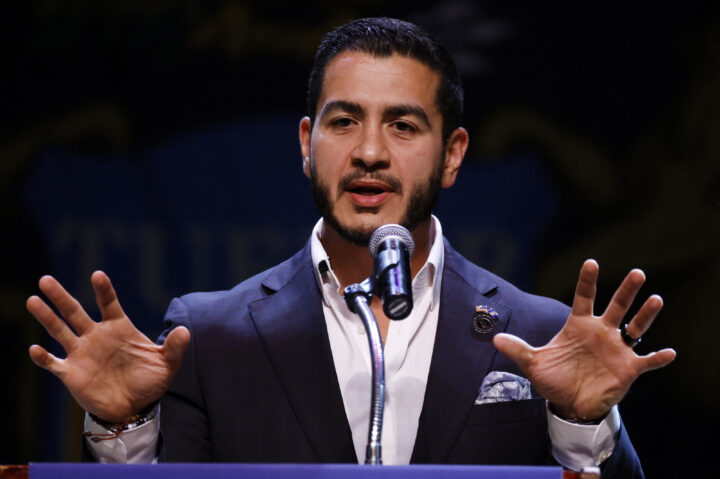
JEFF KOWALSKY / AFP via Getty Images
Abdul El-Sayed addresses supporters at his election night event at The Majestic Theatre in Detroit, Michigan, on August 4, 2026
A recent open letter from Jewish Michiganders expressing support for Michigan Democratic Senate nominee Abdul El-Sayed includes a series of figures with fringe or extremist views and backgrounds alongside several prominent members of the Jewish community.
El-Sayed’s campaign promoted the letter, which includes more than 800 total signatories, as a show of force for the candidate as he works to court Jewish voters as the general election nears. Meanwhile, other prominent leaders in the Jewish community have said they are not ready to vote for El-Sayed without changes in his stances on Israel or they plan to support his Republican opponent, Rep. Mike Rogers (R-MI).
The fringe figures on the letter also highlight the campaign’s ongoing struggles in appealing to mainstream Jews in Michigan — further highlighted by a recent video released by El-Sayed for Rosh Hashanah that featured two women connected to the anti-Israel group Jewish Voice for Peace. State Rep. Noah Arbit, who founded the Michigan Jewish Democratic Caucus, condemned the video as “tokenism.”
At the same time, the letter’s signatories include prominent members of the Jewish community such as former Rep. Sander Levin (D-MI), former Rep. Andy Levin (D-MI), attorney general nominee Eli Savit and Michigan Democratic Jewish Caucus Chair Decky Alexander. The letter states that the signatories are not all in lockstep — that some are enthusiastic supporters of El-Sayed while others are more reluctant and harbor concerns about his policy on Israel and language employed by his allies.
Perhaps the most widely discussed signatory on the list has been Liano Sharon, a progressive activist and Michigan Democratic Party officer facing disciplinary action from the state party for suggesting that Rep. Haley Stevens (D-MI) — whom he previously described as a “neo-Nazi” — should face a Nuremberg-style trial and potentially “the gallows” for her support for Israel, though he also said he does not support the death penalty.
In an email to Jewish Insider, he affirmed that he does consider her a neo-Nazi “based purely on her conduct supporting Nazi-like atrocities like apartheid, ethnic cleansing, and genocide” but emphasized that he does not “support the death penalty even for neo-Nazis” and that he would “advocate commutation” for Stevens and others who could be “convicted and sentenced to death.”
“Reichstag legislators were sentenced to the gallows at Nuremberg for similar legislative support for Nazi atrocities as Stevens gave to Zionist atrocities,” Sharon said in a separate email exchange he released publicly. “Why should our legislators be treated differently if the investigation concludes they committed neo-Nazi atrocities?”
Sharon told JI that he is being wrongly punished by the Michigan Democratic Party and called on it to take down a post accusing him of harassing Stevens.
Sharon suggested that Sens. Elissa Slotkin (D-MI) and Gary Peters (D-MI), former Sen. Debbie Stabenow (D-MI) and Rep. Shri Thanedar (D-MI) should face similar investigation and potential punishment. He has said that former Vice President Kamala Harris, Slotkin and Peters are also neo-Nazis.
Sharon has also previously declared that Zionism and Judaism are separate and incompatible and declared that Attorney General Dana Nessel was not Jewish because of her support for Israel, was a neo-Nazi sympathizer and is “complicit in war crimes and crimes against humanity.”
And he denied that the attack on Temple Israel in West Bloomfield, Mich., and its attached preschool was antisemitic. He affirmed that view in his email to JI, arguing that “suggesting [the attacker’s] motives were anything other than ***revenge against Israel*** for the ***Israeli airstrike that murdered his family in Lebanon*** days before is absurd mental gymnastics,” while also calling it a “horrific act of terrorism against civilians, which I condemn without qualification.”
In his email to JI, Sharon said, “That’s what Zionism has always been: antisemitic Jew hate so deep, they want to replace us all. Just like Hitler wanted to replace us all with Aryans, Zionists want to replace all Jews with Zionists.”
El-Sayed’s campaign did not respond to a request for comment.
Others who signed the letter have also expressed fringe views. Numerous signatories have accused Israel of genocide and have histories of anti-Israel advocacy, some of them being affiliated with JVP.
Several signatories have also been involved with Students for Justice in Palestine and campus anti-Israel advocacy, including serving as members or organizers of anti-Israel encampments on campuses. One was arrested for destruction of property when police cleared the encampment at the University of Michigan, though charges were later dropped.
At least 18 signatories on the letter signed onto a separate national statement demanding that institutions of higher education cut ties with mainstream Jewish groups like the Anti-Defamation League working to combat antisemitism on college campuses.
One signatory, a university professor, appeared to advocate for violence against “racist, homophobic, or transphobic speaker[s]” on campuses, for which he was suspended without pay and referred to law enforcement.
Another signatory asserted that U.S. officials “had reasons to expect a terrorist attack would occur” on 9/11 “and were far more interested in exploiting than in preventing” such an attack. He separately described Israel as “overtly Jewish-supremacist.”
Yet another, a former public official, made racist comments at a public city council meeting, for which she later apologized and resigned.
One signatory, an encampment organizer at the University of Michigan, argued in support of calls for intifada and “from the river to the sea, Palestine will be free,” rejecting the notion that such slogans — which Jews say invoke campaigns of terrorism against Israel and the wholesale elimination of the Jewish state — are violent or antisemitic.
One was an organizer in the anti-Israel Uncommitted Movement in Michigan.
And one self-publishes a website where he has discussed his ties to a 1990s school shooting case, in which he was charged and detained as a co-conspirator for more than a month, though charges were later dropped. He denies any involvement or wrongdoing. He also discusses, on the website, his conviction and jailing for purchasing machine gun parts online in the early 2000s and constructing an illegal machine gun.
Asked by a student to ‘stand unequivocally against the IRGC,’ El-Sayed criticized the U.S. for trying to be the ‘world’s policeman’
Emily Elconin/Getty Images
Democratic candidate for U.S. Senate Abdul El-Sayed answers questions from attendees during a town hall event on September 3, 2026 at the Oakland Expo Center in Waterford, Michigan.
Pressed during an event on Wednesday to condemn the Iranian regime’s massacre of tens of thousands of protesters earlier this year, Democratic Michigan Senate candidate Abdul El-Sayed sidestepped the question, focusing his answer on criticizing the U.S. war in Iran.
A Persian American student — who said that his cousin had been “hunted in the streets” by the Islamic Revolutionary Guard Corps for wearing her hijab improperly and that his uncle was “sentenced to die [and] received 50 lashings” — pressed El-Sayed to “renounce” those who supported assassinated Iranian Supreme Leader Ayatollah Ali Khamenei. The student, speaking at a town hall held at the University of Michigan, additionally called on El-Sayed to “stand unequivocally against the IRGC, against the Islamic Republic of Iran” and make some statement in support of the protesters.
El-Sayed responded by criticizing the U.S. for taking the role of the “world’s policeman.”
Asked by a Persian American student at a town hall held at the University of Michigan to "stand unequivocally against the IRGC," Abdul El-Sayed sidestepped the question and criticized the U.S. for trying to be the "world’s policeman."
— Jewish Insider (@jewishinsider) September 24, 2026
Read more: https://t.co/N2r8xS6tyt pic.twitter.com/pPTL86EtDc
“Here’s my point: one can disagree with the governance of a foreign country. One can stand in solidarity with freedom and democracy movements, but my worry is when one decides that we are going to go in and take out the leadership of a foreign government,” El-Sayed said. “Because here’s what happens: a lot of times that frustration gets used to justify corporate interests that have a real stake in the natural resources in a particular country.”
El-Sayed went on to say that he “will always stand for and with democratic movements, always” but added, “I also don’t believe that we were in the right to go to war to topple the government of Iran,” and said that it is the “responsibility of the people of Iran to decide what their leadership should look like.”
Pressed again by the student to express solidarity with the protesters who were murdered, El-Sayed repeated that he will “always stand with movements for freedom and democracy.”
The Michigan Senate candidate previously faced criticism over leaked comments in which he said he did not want to speak out publicly on Khamenei’s killing by the U.S. and Israel at the start of the Iran war because he did not want to alienate voters in Dearborn, Mich., who were upset about the ayatollah’s death.
“Abdul El-Sayed is looking a young man in the eyes and can’t even condemn a terrorist dictator murdering thousands of his own people. Pathetic,” former GOP Rep. Mike Rogers, El-Sayed’s Republican opponent, said on X in response to the exchange.
Plus, Cruz's wake-up call
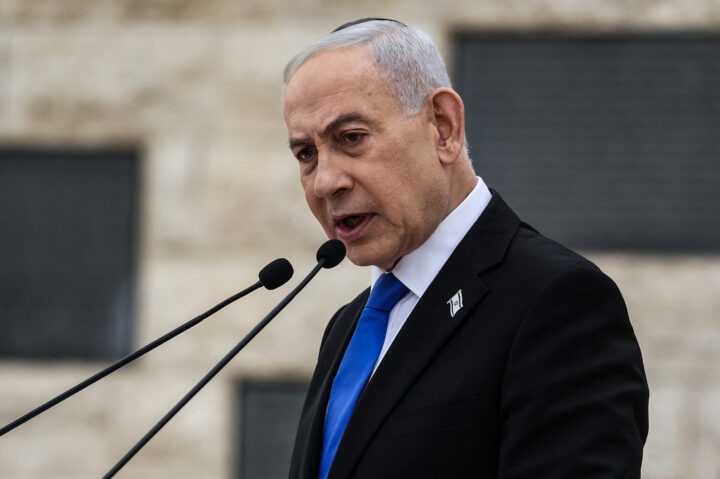
Ilia YEFIMOVICH / POOL / AFP via Getty Images
Israeli Prime Minister Benjamin Netanyahu speaks during a ceremony commemorating Israel's Remembrance Day on Mount Herzl in Jerusalem on April 21, 2026.
Good Thursday morning.
In today’s Daily Kickoff, we preview Israeli Prime Minister Benjamin Netanyahu’s U.N. General Assembly address, report on Michigan Democratic Senate candidate Abdul El-Sayed’s invocation of the Holocaust to justify his anti-Israel rhetoric and cover Sen. Ted Cruz’s warning that Christian leaders are failing to address rising antisemitism and anti-Israel sentiment among younger Christians. Also in today’s Daily Kickoff: House Speaker Mike Johnson, Alina Habba and Wayne Rooney.
Today’s Daily Kickoff was curated by JI Executive Editor Melissa Weiss, with assists from Danielle Cohen-Kanik and Tamara Zieve.
Today’s Agenda
Israeli Prime Minister Benjamin Netanyahu is set to address the U.N. General Assembly around 2 p.m. ET today during his brief visit to the U.S.
Before departing for New York last night, Netanyahu traveled to Shaare Zedek hospital in Jerusalem, where Neria Leiter, a son of Israeli Ambassador to the U.S. Yechiel Leiter, was in critical condition after injuries sustained in a car-ramming attack at a West Bank checkpoint earlier in the day. More below.
Speaking to reporters earlier today at the hospital, Leiter said his son was still “hanging in the balance” but had been stabilized by medical workers. “The next few days will be critical,” the ambassador added.
Security in the area around the U.N. headquarters in Turtle Bay will be tight during Netanyahu’s speech, owing to several protests planned around the Israeli leader’s trip to New York. Read our previous coverage on how the NYPD is preparing to handle UNGA-related protests.
In Washington tonight, President Donald Trump and First Lady Melania Trump will host a state dinner for Chinese President Xi Jinping, with a guest list that includes several tech and finance executives.
An International Court of Justice panel could rule as soon as today on an effort to change the threshold for defining genocide in a case between Gambia and Myanmar that would have implications for South Africa’s case against Israel in the court.
One Thing To Know
analysis
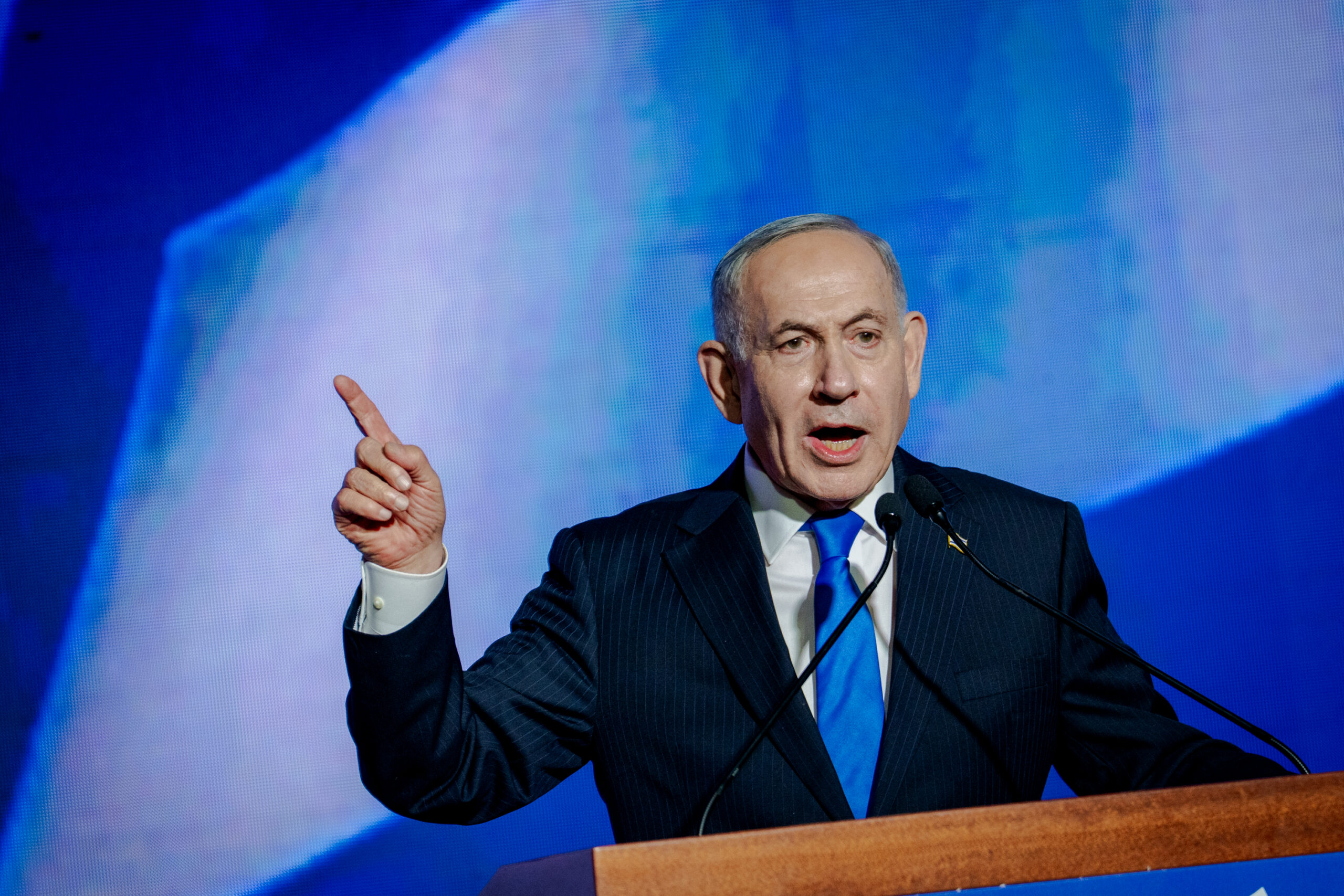
By Gili Cohen
For a few hours, Israel’s deeply polarized political arena, just a month before the elections, found rare unity following the news that Neria Leiter, son of Israel’s ambassador to the U.S., Yechiel Leiter, was critically injured in a car-ramming terror attack in the West Bank.
But even before the attack, which could affect the content of Netanyahu’s speech, the prime minister’s trip to New York was set to be entirely different from prior UNGA appearances. The prime minister’s brief video message about his speech on Tuesday referenced only one individual: New York City Mayor Zohran Mamdani. Not Iran, not Hamas, nor Turkish President Recep Tayyip Erdogan.
Sources close to the prime minister claim Mamdani is the reason for Netanyahu’s unprecedented brief visit. The concern, his aides claim, stems from potential protests or political posturing by Mamdani, despite him admitting he has no authority to arrest Netanyahu, a key campaign pledge of the mayor’s. However, a former official involved in coordinating prime ministerial trips offered a different explanation: As long as Netanyahu remains in New York for only a few hours, the absence of a meeting with President Donald Trump becomes far less conspicuous.
The Big Reads
no compromise
Abdul El-Sayed, the Democratic Senate nominee in Michigan, refused to tone down his hostile rhetoric toward Israel, including his repeated accusations of genocide, during a newly released podcast interview, even as his stances risk alienating Jewish Democrats who are otherwise eager to support his campaign in a key battleground state, Jewish Insider’s Matthew Kassel reports. In an appearance on the “Raging Moderates” podcast hosted by Scott Galloway and Jessica Tarlov, who are both Jewish and disagree with his stances on Middle East policy, El-Sayed doubled down in defense of his repeated use of the term genocide to describe Israel’s actions in Gaza, invoking the Holocaust to justify his position.
sanctions push
Nineteen Senate Democrats, led by Sen. Chris Coons (D-DE), introduced a bill on Wednesday that would impose sanctions on companies, individuals and others involved in the construction and development of Israeli settlements in the E1 area of the West Bank, which the lawmakers argue would be a severe blow to the viability of a Palestinian state, Jewish Insider’s Marc Rod reports. The far-reaching sanctions would also target financial institutions and government officials and entities involved in supporting or facilitating E1 settlement construction.
wake-up call
Sen. Ted Cruz (R-TX) warned on Wednesday that Christian leaders are “asleep” and failing to recognize the degree to which antisemitism and anti-Israel sentiment have spread among Christian youth, Jewish Insider’s Emily Jacobs reports. The Texas senator made the comments while accepting the leadership award at the American Friends of Lubavitch (Chabad) annual Lamplighter Awards in Washington. Cruz voiced concern that older Christian leaders, specifically evangelicals, were not acknowledging that younger adherents have ideologically drifted from previous generations. “If you look at the polling, young evangelicals are turning systematically against Israel, and there are millions of dollars that are being spent to turn them against Israel,” he said.
The Rundown
alternate reality
security advocacy
envoy debate
memorial event
On Our Radar
● The Live Briefing. Word on the street, clips, podcasts and quick updates — the items we’re tracking all day in our Live Briefing on the app (on Apple and Android) and website.
Oman and Azerbaijan halted flights to and from Iran, in accordance with a deadline set by Treasury Secretary Scott Bessent as part of the Trump administration’s Operation Economic Outcast; Iraq, whose president pledged last week to crack down on Iran-backed militias operating in the country, also suspended flights from Baghdad.
Tehran, meanwhile, threatened to paralyze the airports of countries in the region who comply with the U.S.’ block on flights to and from the Islamic Republic…
Sen. Jeanne Shaheen (D-NH), the ranking member on the Senate Foreign Relations Committee, urged President Donald Trump to press Chinese President Xi Jinping during his visit to the White House this week on Chinese companies’ provision of satellite imagery to Iran that helped the regime target American military installations in the Middle East, and China’s continued evasion of U.S. sanctions on Iranian oil…
House Speaker Mike Johnson (R-LA) said the war with Iran needs to be brought “to a resolution,” arguing that the U.S. has achieved its objective of preventing Tehran from obtaining a nuclear capability and pointing to the closure of the Strait of Hormuz as driving up gas, fuel and grocery costs…
American Priorities PAC, which backed several successful Democratic socialist congressional campaigns, said it plans to target nine House Democrats in 2028; the group will focus on challenging Reps. Ritchie Torres (D-NY), George Latimer (D-NY), Laura Gillen (D-NY), Tom Suozzi (D-NY), Greg Landsman (D-OH) and Jared Moskowitz (D-FL), as well as current candidates Melissa Bean, Adrian Boafo and Ben McAdams, all of whom won their primaries and are expected to join the next Congress…
Florida’s attorney general filed a lawsuit against The New York Times on behalf of a group of shareholders alleging that the newspaper’s board of directors failed to hold the Times newsroom to its own editorial standards regarding its coverage of the Israel-Hamas war; the lawsuit claims that the paper’s editorial standards were “weaponized within the company to serve the personal agendas of unchecked editors”…
The attorney general of Missouri launched an investigation into Students for Justice in Palestine’s fundraising activities in the Show-Me State, saying, “We will use every tool the law allows to expose deceptive fundraising, trace where the money goes, and stop any effort to channel charitable donations to violent or terror-linked actors”…
Manhattan District Attorney Alvin Bragg announced the repatriation of three dozen antiquities to Syria, more than a dozen of which had been housed at the Metropolitan Museum of Art…
A federal judge sentenced a Massachusetts man to nearly 10 years in prison for making interstate threats targeting Rep. Randy Fine (R-FL) and his family in August 2024…
Alina Habba, a former lawyer for Trump who briefly served as acting U.S. attorney for the District of New Jersey last year, is reportedly set to marry Turkish businessman Turhan Mildon, whose company has overseen projects in the Democratic Republic of Congo and Venezuela…
A Philadelphia educator and anti-Israel activist who claimed to be Black and Palestinian publicly acknowledged that she was Jewish, with family living in the West Bank, prompting local activist groups with which she was affiliated to distance themselves from her…
Sunkist Fruit Gems, a staple at many a Jewish simcha for the last half century, has been discontinued, eJewishPhilanthropy’s Jay Deitcher reports…
A 19th-century Albert Lang painting was restituted to the descendants of the German-Jewish art collector who owned the work, which was determined by authorities in Germany to have been looted by the Nazis, before she fled the country in 1938…
The Netherlands will rejoin the Eurovision Song Contest in 2027, after its Avrotros public broadcaster refused to take part in this year’s competition as well as the one slated for next year over Israel’s participation; the umbrella body of Dutch broadcasters determined that the NOS will provide coverage instead of Avrotros, while a Dutch contestant will be selected by an independent panel…
Longtime Manchester United star Wayne Rooney, who played for D.C. United after leaving Manchester United in 2017, said in a new docuseries, which includes a trip with his wife and sons to Auschwitz, that his Polish-born maternal great-grandmother was Jewish…
Worthy Reads
Find more Worthy Reads in our Live Briefing via our app (on Apple and Android) and website.
Iran’s BFF: The Wall Street Journal’s Rory Jones, Jon Emont, Vera Bergengruen and Summer Said look at how China is quietly assisting Iran as it faces crippling sanctions spearheaded by the U.S., even as the White House prioritizes good relations with Beijing. “Washington has launched hundreds of sanctions targeting Iran since the war began on Feb. 28, including penalties against companies and individuals in China it believes are helping Tehran. Those steps, along with an embargo of Iranian trade, have caused a contraction of Iran’s economy. But the White House has proven reluctant to more seriously confront Beijing over its support for Iran, which has continued launching attacks on U.S. forces and oil infrastructure in the Middle East.” [WSJ]
Regional Realignment: In an excerpt from his new book The Cauldron: The Making of the Modern Middle East, published in The Atlantic, Simon Sebag Montefiore considers the evolution underway in the Middle East. “The United States, Russia, and China still intervene in the Middle East, but in a manner that is Olympian, erratic, and inconsistent. Behind them lurks a deeper conflict of entire systems: the open world, still (just) led by America, versus the closed world that is the axis of China and Russia. A parallel, simultaneous battle, centered within the Middle East, rages among different versions of, or attitudes toward, the practice of Islam and its complex relationship with the West.” [TheAtlantic]
Picture of the Day
Nova music festival survivor Shalev Biton (right) appeared onstage at yesterday’s rally against antisemitism near the U.N. headquarters in New York alongside Yunes Alkarnawi (left), a Bedouin from southern Israel who saved Biton and dozens of others during the Hamas-led Oct. 7, 2023, terror attacks. Read more about Alkarnawi’s rescue of Biton here. Michael Priest Photography
Birthdays
Marc Guggenheim, screenwriter, television producer, comic book writer and novelist, turns 56
Joanne Greenberg, author of 26 books, best known for the semi-autobiographical novel I Never Promised You a Rose Garden, turns 94
Judith Margolis, artist working visually in paintings, drawings, artist’s books and multimedia collages, turns 82
Rafael Eldad, retired Israeli diplomat who served as Israel’s ambassador to Peru, Argentina, Brazil and Chile, turns 77
David Pecker, former CEO of American Media, publisher of celebrity and health and fitness magazines, turns 75
Franz Lidz, feature writer for Sports Illustrated for 27 years, he is a 2015 inductee into the Philadelphia Jewish Sports Hall of Fame, turns 75
Michael Weiss, attorney and former judge advocate
Jeffrey Hecktman, founder, executive chairman and CEO of Hilco Global, turns 73
William Gross, lead public safety success manager at FirstNet by AT&T
Christopher L. Eisgruber, president of Princeton University since 2013, in his mid-40s he discovered that his mother was Jewish, turns 65
Alan Popovsky, co-founder and principal at DC-based PRG Hospitality
Chanina Sperlin, EVP of governmental affairs at the Crown Heights Jewish Community Council
Noreena Hertz, economist, best-selling author and a great-granddaughter of former British Chief Rabbi Joseph Hertz, turns 59
Yael Goldman-Pfeffer, Israeli television host, actor and model, turns 48
Jessica Schumer, Yale Law graduate and head of New York policy and community engagement at Amazon
Alexandra Jaffe, former White House reporter at the Associated Press, now editorial manager at Elastic
Ben Platt, actor, singer and songwriter, turns 33
Benjamin David Goldberg, rap musician, known professionally as Token, turns 28
Jessica Tarlov, who hosted El-Sayed on podcast with Scott Galloway: ‘There is a group of people that are asking you, I think, for very bare minimum acknowledgement of their concerns’
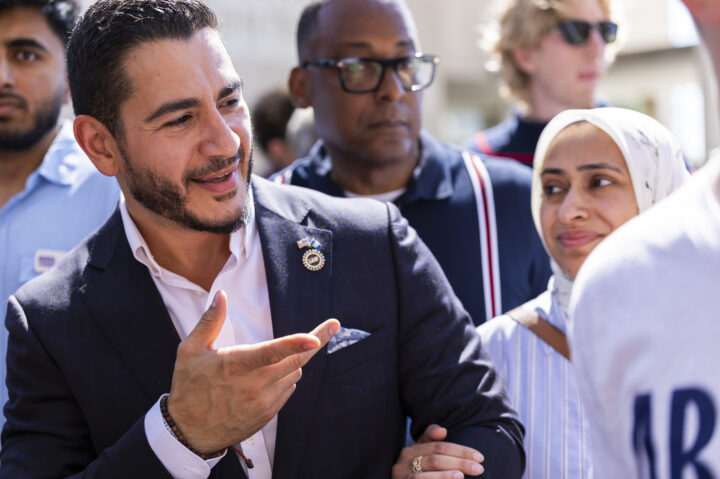
Abdul El-Sayed leaves after holding a press conference in front of the Spirit of Detroit statue on August 05, 2026 in Detroit, Michigan (Photo by Finn Gomez/Getty Images)
Abdul El-Sayed, the Democratic Senate nominee in Michigan, refused to tone down his hostile rhetoric toward Israel, including his repeated accusations of genocide, during a newly released podcast interview, even as his stances risk alienating Jewish Democrats who are otherwise eager to support his campaign in a key battleground state.
In an appearance on the “Raging Moderates” podcast hosted by Scott Galloway and Jessica Tarlov, who are both Jewish and disagree with his stances on Middle East policy, El-Sayed doubled down in defense of his repeated use of the term genocide to describe Israel’s actions in Gaza, invoking the Holocaust to justify his position.
“The word genocide was created to explain what that was,” El-Sayed said of the “murder of 6 million Jews” in the Holocaust, which he called the world’s “worst genocide.”
“But the whole point of creating that word isn’t that you have to wait until the crime is that big again to be able to use it, otherwise it loses its power,” he added. “Its power is in naming a thing before it gets that big, so we could do something about it.”
El-Sayed’s new comments demonstrate how he has largely been reluctant to offer major concessions on Israel even as he seeks to make inroads with Jewish Democrats in the final stretch of a closely contested election that could help decide control of the Senate.
Throughout the exchange, Galloway and Tarlov warned El-Sayed that his views are “disqualifying” for some Jewish voters who remain skeptical of his uncompromising approach to Israel and equivocal remarks on rising antisemitism.
Tarlov, for instance, told El-Sayed that “there are people who are not going to be able to” vote for him unless he demonstrates a meaningful understanding of their concerns, with little time left until November.
“This is about morals and values and ethics, and it is also about winning elections,” she said. “And there is a group of people that are asking you, I think, for very bare minimum acknowledgement of their concerns — they’re not even saying stop saying genocide.”
Still, El-Sayed held firm, insisting he is committed to building “uncomfortable coalitions” even if it results in losing some support from a pivotal constituency.
“When I’ve had conversations with my Jewish sisters and brothers here in Michigan, I’ve told them where we agree, I’m going to be honest, direct and specific, and where we disagree, I’m going to be honest, direct and specific,” El-Sayed said in the lengthy interview.
“You might disagree with me, and that might mean you might not vote for me,” he went on. “That’s OK.”
Despite recent efforts to mend fences with Jewish and pro-Israel Democrats in Michigan who want to back his campaign, El-Sayed has continued to draw criticism for the extent to which he has been unwilling to evolve on key issues.
While he apologized for his insensitive comments downplaying the violent attack on Temple Israel, a synagogue in suburban Detroit, some Jewish voters cast doubt on the sincerity of his explanation, saying that it did not amount to a wholesale disavowal of his initial remarks claiming “hurt people hurt people.”
Meanwhile, after El-Sayed met privately with rabbis at Temple Israel this month, most of their congregants who had long called the Democratic Party home say they oppose his campaign and intend to vote for his GOP rival, former Rep. Mike Rogers (R-MI), according to The Free Press.
El-Sayed won a key endorsement on Tuesday from Michigan’s attorney general, Dana Nessel, a prominent Jewish Democrat who had voiced deep reservations about his views on Israel and countering the rise of antisemitism. But her decision to support El-Sayed, which she announced in a joint interview, was hardly a vote of confidence for the nominee.
“For me, I don’t want to say the choice is easy, but I am going to say that there is no choice,” Nessel said, “and that’s why I’m supporting Abdul for the United States Senate.”
Other Jewish leaders have indicated that they will withhold their support until El-Sayed confirms his commitment to “nonnegotiable” demands, such as “Jewish sovereignty in Israel,” which he has yet to recognize.
El-Sayed did little to assuage doubts among Jewish voters when he released a Rosh Hashanah video over the weekend featuring members of Jewish Voice for Peace, a far-left anti-Israel group that advocates for the Boycott, Divestment and Sanctions movement.
In the podcast interview with Galloway and Tarlov, El-Sayed summed up his approach to Israel and other issues that remain a key source of tension among Jewish Democrats in Michigan searching for reassurances that some believe he has not provided.
“I’m unwilling to bend my principle around what I believe, and I think we believe in the same principles. The question is ultimately how we apply them, and if we apply them evenly,” he said.
The Jewish Democratic AG said she ‘couldn’t be true to [her] values’ in voting for the GOP nominee, despite having voiced reservations over El-Sayed’s views on Israel and antisemitism
Screenshot
Michigan Attorney General Dana Nessel and Senate nominee Abdul El-Sayed appear on the "“For the Sake of the Argument with Lori Goldman” podcast.
Michigan Attorney General Dana Nessel announced that she is endorsing Abdul El-Sayed, the Democratic nominee in Michigan’s high-profile Senate contest, after having previously voiced reservations over his views on Israel and antisemitism.
Nessel, a Jewish Democrat whose eight years in office will conclude at the end of December, made the announcement while appearing with El-Sayed in an episode of the “For the Sake of the Argument with Lori Goldman” podcast released on Tuesday.
“For me, I don’t want to say the choice is easy, but I am going to say that there is no choice, and that’s why I’m supporting Abdul for the United States Senate,” Nessel said.
Asked if she would personally be voting for El-Sayed, Nessel replied: “I can’t be true to my values if I even consider voting for [GOP nominee] Mike Rogers. Yes, I’ll be voting for Abdul.”
Michigan AG Dana Nessel said she will vote for Abdul El-Sayed, the Democratic Senate nominee in Michigan, after she previously withheld her support amid concerns over his positions on Israel and his response to the attack on Temple Israel. pic.twitter.com/GQ6m4LXuqh
— Jewish Insider (@jewishinsider) September 22, 2026
Nessel predicted that she would “get attacked” by “right-wing media” for failing to “hold whatever is, I guess, the party line of the day when it comes to the Jewish community,” though she defended her decision to support El-Sayed by arguing that, “it is a tremendous disservice not to look at all of the issues” that he and Rogers are respectively campaigning on.
“I care deeply about [the Jewish] community. I’ve been a member of it, obviously, my entire life, and we’re talking about my family. … I know that just by sitting together today, people are going to call me a traitor to my people. People are going to call me a kapo. People are going to call me much worse things than that,” Nessel said. “But at the end of the day, when we talk about protecting our children, protecting generations to come, when we talk about protecting the people that we serve, I think it is a tremendous disservice not to look at all of the issues.”
Asked about their differences on the issue of support for Israel and whether pro-Israel Jews were welcome the Democratic “big tent,” Nessel said that while she did not “want to minimize my interest in the state of Israel” or her belief that “we need to have those conversations” about achieving peace for Israelis and Palestinians, she suggested there are more pressing policy questions to address first.
“How can we expect that Israel or its people will have any future at all whatsoever if we are not tackling AI? If we’re not looking at real solutions to climate change? If we’re not forward-facing in terms of fighting against whatever the next global pandemic is going to be?” Nessel asked. “These issues absolutely need to be addressed. Mike Rogers doesn’t care about any of them.”
Nessel then pressed El-Sayed on if Jewish Democrats were welcome in the party, to which he responded affirmatively and said that he believed in the idea of the party having a “big tent … where we march in lockstep on the 95% of things we agree on and where we continue to have the conversation in that tent about the spaces where we disagree, so yes.”
El-Sayed said that if elected, he would support the Jewish American Security Act, a bipartisan and bicameral proposal to address antisemitism across multiple sectors of American society being championed by the mainstream Jewish community. He noted, however, that he would work to expand the legislation to provide similar protections for people of other faiths.
“I look forward to working alongside [Sen.] Jacky Rosen (D-NV), who is the principal sponsor and drafter of this legislation, to support it and expand it so it includes the critical infrastructure to protect Jewish spaces, to also include spaces for other religious minorities and, frankly, for Christian folk and for places of reflection for folks who might not ascribe to an organized religion,” El-Sayed said.
“I know this piece of legislation would support things like security cameras and security for these institutions, and it also would protect against online harassment,” he continued. “I think it’s important for us as we think about that, that folks are not being harassed simply because of how they pray. And I want to make sure that I’m working with Sen. Rosen to expand that so that all communities can feel safe.”
El-Sayed noted that, “We’ve had an uptick in antisemitism and it is critical to protect Jewish Americans. We’ve also seen harassment of Sikh communities and other communities as well. And so being able to protect the rights of people to pray as they choose to pray without having to fear that they are going to be targets for violence and hate speech is absolutely critical.”
A prominent Jewish Democratic fundraiser in the state said he’s not currently prepared to vote for El-Sayed without changes to the nominee’s stances
Bill Pugliano/Getty Images
Former Vice President Kamala Harris speaks at the 38th Annual Michigan Democratic Women's Caucus Legacy Luncheon on April 18, 2026 in Detroit, Michigan.
Michigan Jewish leaders on Tuesday urged former Vice President Kamala Harris — who is set to campaign with the party’s Senate nominee, Abdul El-Sayed, in Michigan this week — to appeal to El-Sayed on issues related to antisemitism and Israel.
Meanwhile, one prominent Jewish Democratic leader and fundraiser in the state said that, without seeing significant changes in rhetoric from El-Sayed, he’s not willing to vote for him, even as the state’s Jewish attorney general, Dana Nessel, said this week that she plans to support El-Sayed.
The group of Jewish leaders, writing to Harris under the banner of the Nonnegotiable Michigan campaign, said that they are longtime supporters of her and the Democratic Party, and called on her to press El-Sayed to accept the five demands on Jewish issues and Israel that the Nonnegotiable campaign has presented.
The leaders highlighted Harris’ own history of fighting antisemitism and standing with the Jewish community, including hosting a Hanukkah celebration at the vice president’s residence and working with her Jewish husband, Doug Emhoff, on the national antisemitism strategy.
“As Vice President, you told us plainly that antisemitism ‘must be condemned unequivocally’ — no caveats, no context, no hesitation,” the letter reads. “When you accepted the Democratic nomination –– with many of us in Chicago cheering you on –– you proudly affirmed your commitment to Israel’s sovereignty and safety; you knew that promise did not contradict Palestinian dignity, security, freedom or self-determination, which you called for in the very same breath.”
The leaders said that Harris’ own stance and her understanding of antisemitism is clear, while El-Sayed “has had every opportunity to meet our request to support our basic needs. So far, he has declined even to respond” while employing antisemitic tropes and rejecting Israel’s existence as a Jewish state.
“When you stand beside Dr. El-Sayed on September 22nd, we urge you to call on him to say what he has thus far been unwilling to say: that Jewish safety, including for Zionists, is nonnegotiable,” the leaders said. “That our right to define our own identity is nonnegotiable. That Jewish statehood and self-determination in our ancestral homeland is nonnegotiable. That our full, proud participation in the Democratic Party is nonnegotiable.”
During a press call on Tuesday morning, David Kramer, a prominent Jewish donor and top Democratic official, said he was still uncomfortable supporting El-Sayed unless he agreed to a set of conditions the Jewish community laid out earlier this month. Kramer served as finance chair for Sen. Elissa Slotkin’s (D-MI) 2024 campaign and was campaign chair for Rep. Haley Stevens’ (D-MI) 2026 Senate campaign. He was also a prominent member of the Jewish Democratic effort supporting Harris in Michigan in 2024.
“I was involved with Michigan Jews for Harris. We had a pretty significant group that was, and we were proud to stand with her, and particularly proud of the work that she did with Doug Emhoff to combat antisemitism, and felt that she was a stalwart supporter of our community and the U.S.-Israel relationship,” Kramer told Jewish Insider. “We think that she’s particularly well-suited to raise non-negotiables with Abdul, given her support of our community and her unique understanding of our issues and the need for our security.”
Kramer told reporters that, if El-Sayed does not embrace the five conditions laid out by the Nonnegotiable campaign, “I’m not comfortable, at this point, voting for him.” Other Jewish leaders on the call, largely clergy who said that they were not willing to disclose who they were voting for, stopped short of explicitly making such a commitment.
Cantor Regina Lambert-Hayut added that Harris has a “very particular bird’s-eye view of what it means to be on the receiving end of a constituency feeling unheard or unsupported,” referencing the Uncommitted Campaign — which El-Sayed helped lead in 2024.
That campaign “cost — maybe fully or maybe in part — Democrats the election,” Lambert-Hayut said.
“I feel that she really understands this, and maybe she, someone with her integrity and her wisdom, could help appeal to Dr. El-Sayed to understand that every constituent matters, and to completely ignore the Jewish constituency, especially those of us who want to be able to support him, is something that I hope that she would be able to help him understand better,” she continued.
Rabbi Michael Moskowitz also emphasized that the Nonnegotiable campaign’s message extends beyond El-Sayed and Michigan. “It’s a national message we need to get out there to any candidate to understand how we feel as a Jewish community, and if that our votes count, and they need to help us in the midst of these concerns.”
El-Sayed responded dismissively when pressed on his support for the Uncommitted campaign on Tuesday, ahead of his appearance with Harris, arguing that the campaign was only designed to oppose President Joe Biden, not Harris, though many prominent Uncommitted leaders continued to pressure and protest Harris through the general election.
Kramer’s comment that he is not currently prepared to vote El-Sayed stands in contrast with Nessel, the Democratic AG, who endorsed him on Tuesday. Nessel made the endorsement alongside El-Sayed on the “For the Sake of Argument” podcast hosted by progressive activist Lori Goldman.
Nessel had previously been critical of El-Sayed and the Michigan Democratic Party more broadly, saying that she felt unsafe attending the party convention, but subsequently told Jewish Democrats in the state that they should put the “needs of the world above even our own self-interest and, yes, even our own survival.”
Kramer praised the Michigan Democratic Party and elected officials for their prompt condemnation of an incident last week in which an activist harassed and threatened Stevenson Capitol Hill for her support for Israel.
The activist involved is an officer of the Michigan Democratic Party, but the party is undertaking removal procedures. He also signed onto a letter of Jews supporting El-Sayed’s campaign, though El-Sayed also condemned his actions.
“It’s of great concern when any leader is accosted that way and things are thrown at them that are so damaging and alarming,” Moskowitz said on the press call.
Plus, the MS NOW anchor who got her start in Israel
JEFF KOWALSKY / AFP via Getty Images
Abdul El-Sayed addresses supporters at his election night event at The Majestic Theatre in Detroit, Michigan, on August 4, 2026
Good Thursday morning.
In today’s Daily Kickoff, we have the scoop on a recent meeting between Michigan Democratic Senate nominee Abdul El-Sayed and rabbis from Michigan’s Temple Israel, which earlier this year was attacked by a pro-Hezbollah terrorist, and cover yesterday’s Capitol Hill rally supporting the passage of the Right to Worship Act. We report on New York City Mayor Zohran Mamdani’s remarks that he will not participate in protests against Israeli Prime Minister Benjamin Netanyahu during next week’s U.N. General Assembly, and profile MS NOW anchor Erielle Reshef, who got her start on Israeli television. Also in today’s Daily Kickoff: Michael Dell, Lacey Schwartz Delgado and Jonathan Powell.
Today’s Daily Kickoff was curated by JI Executive Editor Melissa Weiss and Israel Editor Tamara Zieve, with an assist from Danielle Cohen-Kanik.
Today’s Agenda
Vice President JD Vance is sitting down for an interview with Sid Rosenberg today, during which the conservative radio host said he intends to press Vance on his relationship with Tucker Carlson and his stance on the U.S.-Israel relationship.
The Hudson Institute is holding a fireside chat this morning focused on Iran-China relations and the U.S.’ Operation Economic Outcast effort to financially isolate Tehran that had initially featured Rep. Zach Nunn (R-IA). Nunn, who is locked in a tight reelection bid and earlier this week voted in favor of a war powers resolution to force an end to the Iran war, no longer appears on Hudson’s promotional page for the event, which now features Rep. Michael Baumgartner (R-WA).
Axios is releasing portions of its recent interview with far-left commentator Hasan Piker over the course of the day, ahead of the release of the full interview tomorrow. In the first released clip, Piker told the outlet’s Alex Thompson that he believed that the U.S. had committed more acts of terror than al-Qaida, saying, “Pound for pound as far as the number of deaths, yes,” adding, “We have caused tremendous terror all around the world.”
New York City Mayor Zohran Mamdani is holding a briefing today alongside NYPD Commissioner Jessica Tisch about security around the U.N. General Assembly, which begins next week. More below.
The Atlantic Festival kicks off today in New York. The three-day convening begins this morning with a sit-down with former Transportation Secretary Pete Buttigieg (who was in New York’s Hudson Valley yesterday campaigning with NY-17 Democratic candidate Cait Conley). This afternoon, former U.S. Ambassador to Japan Rahm Emanuel, who is mulling a 2028 bid, will take the stage for a fireside chat about the future of the Democratic Party.
We’re continuing to follow the fallout from Macklemore’s performance earlier this month at two Ed Sheeran concerts over the rapper’s anti-Israel remarks at previous concerts and past antisemitic incidents. Robert Kraft, who along with several other stadium owners banned the rapper from performing at their venues over his past antisemitic rhetoric and imagery — prompting several other opening acts to drop out of the shows in solidarity — pledged $2 million for aid to the Middle East on Wednesday, matching a donation of the same amount by Sheeran. Read more about the donation here.
One Thing To Know
SCOOP
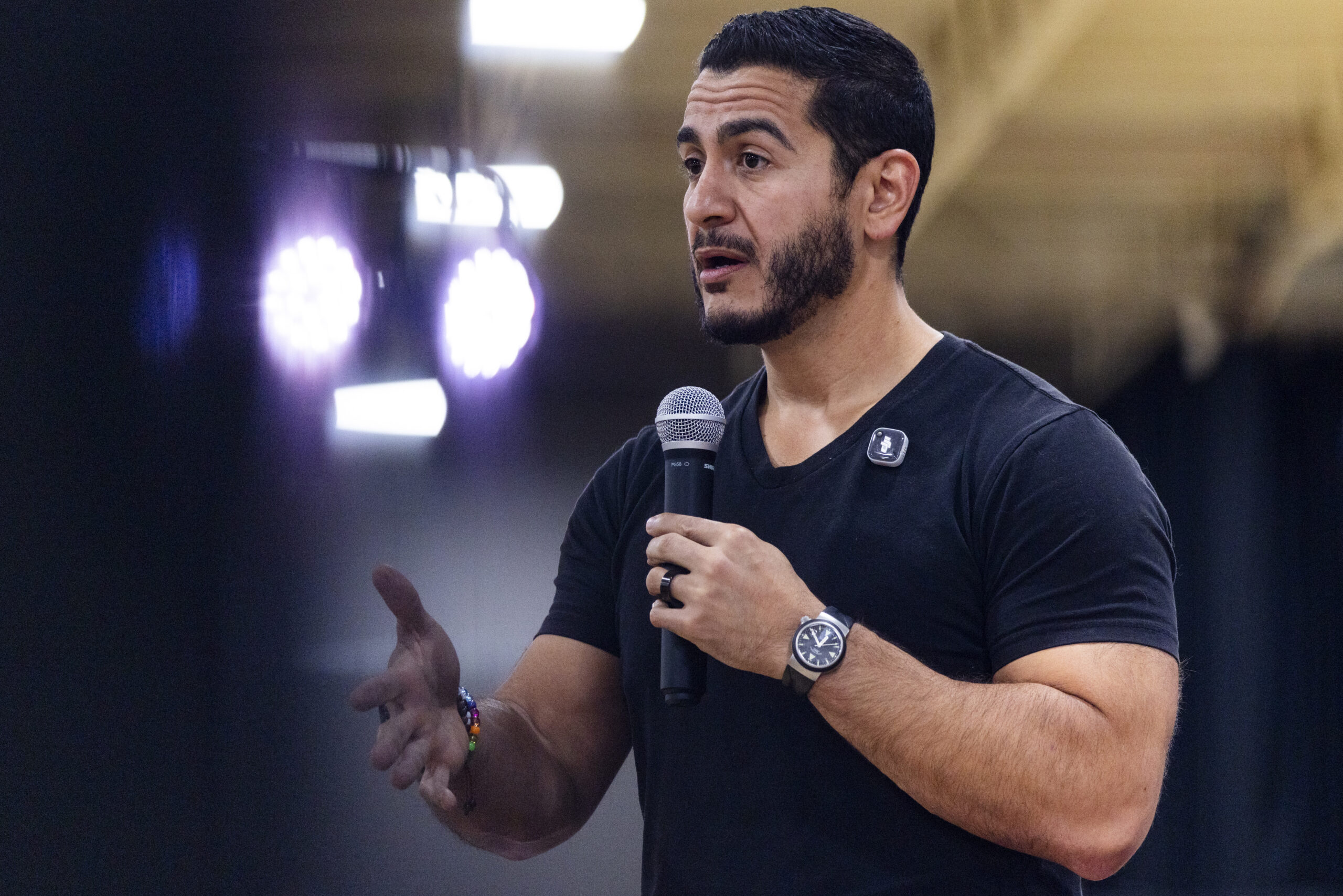
In the most significant sign of his efforts to make inroads with skeptical Jewish voters in Michigan’s Senate race, Abdul El-Sayed, the Democratic nominee, recently met with rabbis at Temple Israel for a closely guarded conversation, according to two people familiar with the meeting.
Two rabbis who were said to have participated in the conversation, details of which were unclear, declined to comment when reached on Wednesday. El-Sayed’s campaign did not respond to a request for comment.
The covert nature of the meeting, which neither party has publicized, underscores the sensitivities felt among some Jewish leaders who have remained wary of publicly associating with El-Sayed because of their continued discomfort with his positions on Israel and remarks about antisemitism.
The Big Reads
show of support
Reps. Brad Knott (R-NC) and Tom Suozzi (D-NY) rallied outside the Capitol on Wednesday alongside more than two dozen representatives of religious community organizations in support of the Right to Worship Act, their federal bill establishing buffer zones outside of religious institutions to protect them from disruptions. House Speaker Mike Johnson (R-LA), who has been involved in supporting the bill behind the scenes, also expressed his support for it in a statement to Jewish Insider’s Marc Rod. “Religious liberty is regarded as our ‘First Freedom.’ Our Founders listed it first in the Bill of Rights because they understood how essential it was to the foundation of our Republic. But that right rings hollow if worshippers must brave harassment or worry for their safety as they exercise their religion,” Johnson said.
First in JI: Over a year after the deadly firebombing attack targeting an Israeli hostage awareness march in Boulder, Colo., Rep. Joe Neguse (D-CO), who represents the city, and Rep. Don Bacon (R-NE) introduced legislation to modify Nonprofit Security Grant Program conditions to allow grantees to use funding for staffing costs.
PROTEST POLITICS
New York City Mayor Zohran Mamdani told reporters on Wednesday that he does not intend to participate in any demonstrations against Israeli Prime Minister Benjamin Netanyahu’s appearance at the U.N. General Assembly next week — and maintained he did not endorse public agitation against the Jewish state’s premier, an apparent ratcheting-down of his remarks from earlier this summer, Jewish Insider’s Will Bredderman reports. Following an unrelated press conference, Mamdani confirmed information leaked to Politico that he would not take part in anticipated protests against Netanyahu’s scheduled arrival in New York on Sept. 23 or speech at the international summit the next day. He also stressed that he did not call for his anti-Israel allies on the left to take to the streets either. “I do not have any plans to attend any protest at the U.N. General Assembly,” Mamdani said. “To New Yorkers, I have never encouraged them to protest.”
anchor point
MS NOW anchor Erielle Reshef never planned to become a television journalist. After completing a master’s degree in diplomacy and conflict studies in Israel in 2010, she happened to be watching an English-language news program whose anchors were about to go on maternity leave. Her husband wrote down the email address on the screen and pushed her to apply. That opportunity launched a career that has taken Reshef from her hometown of Oklahoma City to local television, international news and eventually ABC News, where she spent eight and a half years, including as a national correspondent. In June 2025, Reshef left the relative comfort of a network news reporting job to join MSNBC, which was rebranded later in the year as MS NOW, where she is now a fill-in anchor for daytime cable news shows for the first time. In an interview with Jewish Insider’s Haley Cohen, Reshef said her Jewish values — particularly curiosity, rigorous debate and a commitment to understanding people on the margins — are the “scaffolding” of her journalism.
The Rundown
ON THE HILL
not so fast
behind the veil
On Our Radar
● The Live Briefing. Word on the street, clips, podcasts and quick updates — the items we’re tracking all day in our Live Briefing on the app (on Apple and Android) and website.
President Donald Trump is planning to meet with Gulf leaders next week on the sidelines of the U.N. General Assembly in New York to discuss a postwar strategy for Iran; the president held a similar meeting on the sidelines of last year’s UNGA to discuss Gaza, a week before publicly releasing his postwar plan for the enclave…
The State Department extended its visa ban on Palestinian Authority President Mahmoud Abbas and other senior Palestinian officials, preventing members of the delegation from attending UNGA next week for the second year in a row; State Department officials attributed the ban to Palestinian leaders’ efforts to “internationalize the Israeli-Palestinian conflict”…
New photos obtained by CBS News indicate widespread damage at U.S. facilities around the Gulf resulting from Iranian attacks, including destroyed planes, buildings and vehicles in Kuwait and Saudi Arabia.
CNN reports that more than a dozen Russian spy satellites had operated over a U.S. base in Saudi Arabia two days before the facility was struck in an Iranian drone and missile attack in which 15 U.S. troops were injured…
The House passed, in a 262-159 vote, a major Russia and Iran sanctions package named for the late Sen. Lindsey Graham (R-SC), which targets Russia’s energy sector as well as Iran’s weapons and energy industries…
Sens. Tim Kaine (D-VA) and Adam Schiff (D-CA) filed a war powers resolution to block military action against Oman, in response to Trump‘s threats to bomb the U.S. ally if it does not cooperate with U.S. efforts to counter Iran in the Strait of Hormuz…
Former Vice President Kamala Harris is slated to campaign with Michigan Democratic Senate nominee Abdul El-Sayed next week in the Wolverine State.
Meanwhile, the Detroit News endorsed El-Sayed’s opponent, former Rep. Mike Rogers (R-MI), citing in part El-Sayed’s history of deleting past social media content and noting that a “candidate who feels the need to hide his past from voters is not someone who can be trusted to be the same person after Election Day as he was on the campaign trail”…
A New York man who pleaded guilty to assaulting a Jewish man days after the Oct. 7, 2023, Hamas terror attacks was sentenced to 90 days in jail; during sentencing, Yehia Amin was photographed smiling and flashing the peace sign with his hands, telling the judge through an interpreter that he wanted to look good in photographs from the courtroom…
Michael Dell listed his Boston penthouse in the city’s Millennium Tower for less than he purchased it a decade ago for $10.9 million…
The Hollywood Reporter reviews documentarian Lacey Schwartz Delgado’s “Re/Pair,” which premiered at the Toronto International Film Festival and pairs Black and Jewish figures, including David Schwimmer, Van Jones, Black Lives Matter co-founder Patrisse Cullors and Rabbi Sharon Brous, for conversations about Black-Jewish relations…
The Spectator reports that both U.K. National Security Advisor Jonathan Powell and London’s ambassador in Israel, Simon Walters, advised Foreign Secretary Ed Miliband against banning imports from Israeli settlements, warning that such a move would bolster support for Israeli Prime Minister Benjamin Netanyahu and his government ahead of next month’s elections…
Air Canada removed an in-flight service director following a report that the employee had shared antisemitic content on social media; the Canadian carrier will also resume direct flights between Toronto and Israel at the end of November, earlier than its planned January resumption of flights…
A Kurdish-Jewish man with Canadian and Israeli citizenship who had traveled to the region to fight ISIS more than a decade ago was freed from an Iraqi Kurdish prison after he was convicted of killing a taxi driver in 2015; Aish announced that Ben Chasin will arrive at the organization’s yeshiva this week, where he will study…
Israeli Foreign Minister Gideon Sa’ar met with Moroccan Foreign Minister Nasser Bourita in New York in a meeting convened by U.S. Ambassador to the U.N. Mike Waltz, during which Jerusalem and Rabat agreed to a series of measures to boost bilateral ties, including appointing full ambassadors to each other’s countries, turning their diplomatic missions into embassies, increasing direct flights and holding high-level visits in the near future.
The night prior, Waltz hosted Sa’ar, Bourita, United Arab Emirates Ambassador to the U.S. Yousef Al Otaiba and diplomats from Bahrain and Kazakhstan for a diplomatic reception marking the sixth anniversary of the Abraham Accords.
While in New York, Sa’ar also met with senior leaders of the Conference of Presidents of Major American Jewish Organizations for a wide-ranging discussion on Israel’s security, regional developments and U.S.-Israel relations…
Dalia Ziada is joining the Institute for the Study of Global Antisemitism and Policy as the director of the organization’s Washington office…
Artist and graphic designer Peter Max died on Monday at 88…
Worthy Reads
Find more Worthy Reads in our Live Briefing via our app (on Apple and Android) and website.
Meta-morphosis: Bloomberg’s Riley Griffin and Alexandra Levine look at the role that Dina Powell McCormick plays at Meta, where she now serves as president, vice chairman and co-leader of Meta Compute after eight months on the company’s board. “While [Mark] Zuckerberg, 42, is the cerebral engineering leader obsessed with improving Meta’s products for the AI race, Powell McCormick, 53, has her pulse on the world outside of Silicon Valley, and can be Meta’s bridge to opportunities and fixer of challenges. ‘She is a close, trusted advisor of the whole senior leadership team, but especially of Mark,’ said CJ Mahoney, Meta’s chief legal officer. ‘She’s generally the last person who’s consulted on really important decisions.’” [Bloomberg]
Riyadh Ruminations: In War on the Rocks, Richard Nephew posits that the burgeoning nuclear agreement between the U.S. and Saudi Arabia is better than had initially been expected. “If it performs as promised, its provisions of exclusivity will provide benefits to the U.S. nuclear industry and lock Russia and China out of a potentially lucrative market that could have attendant political and security implications long term, especially in a Middle East where nuclear proliferation remains a serious threat. The U.S.-Saudi agreement is also innovative and imaginative, a credit to creative negotiations to unlock an issue that has been difficult for multiple administrations.” [WarontheRocks]
AI and the Archives: In The Washington Post, Daniella Greenbaum Davis explains how she used Anthropic’s Claude to recover and translate a 1946 Yiddish-language article that had been authored by her grandmother and detailed the day she was liberated from Bergen-Belsen. “Much of the debate concerning AI today is about scale and mortal threat, about destroying jobs and flooding social media with slop. It’s easy to forget that large language models, like all tools, are a thing human ingenuity has built to finish what human hands cannot. … I had spent years blindly feeling my way through archives; in a matter of days, AI had stitched together pieces of information that I couldn’t see, let alone put together.” [WashPost]
Picture of the Day
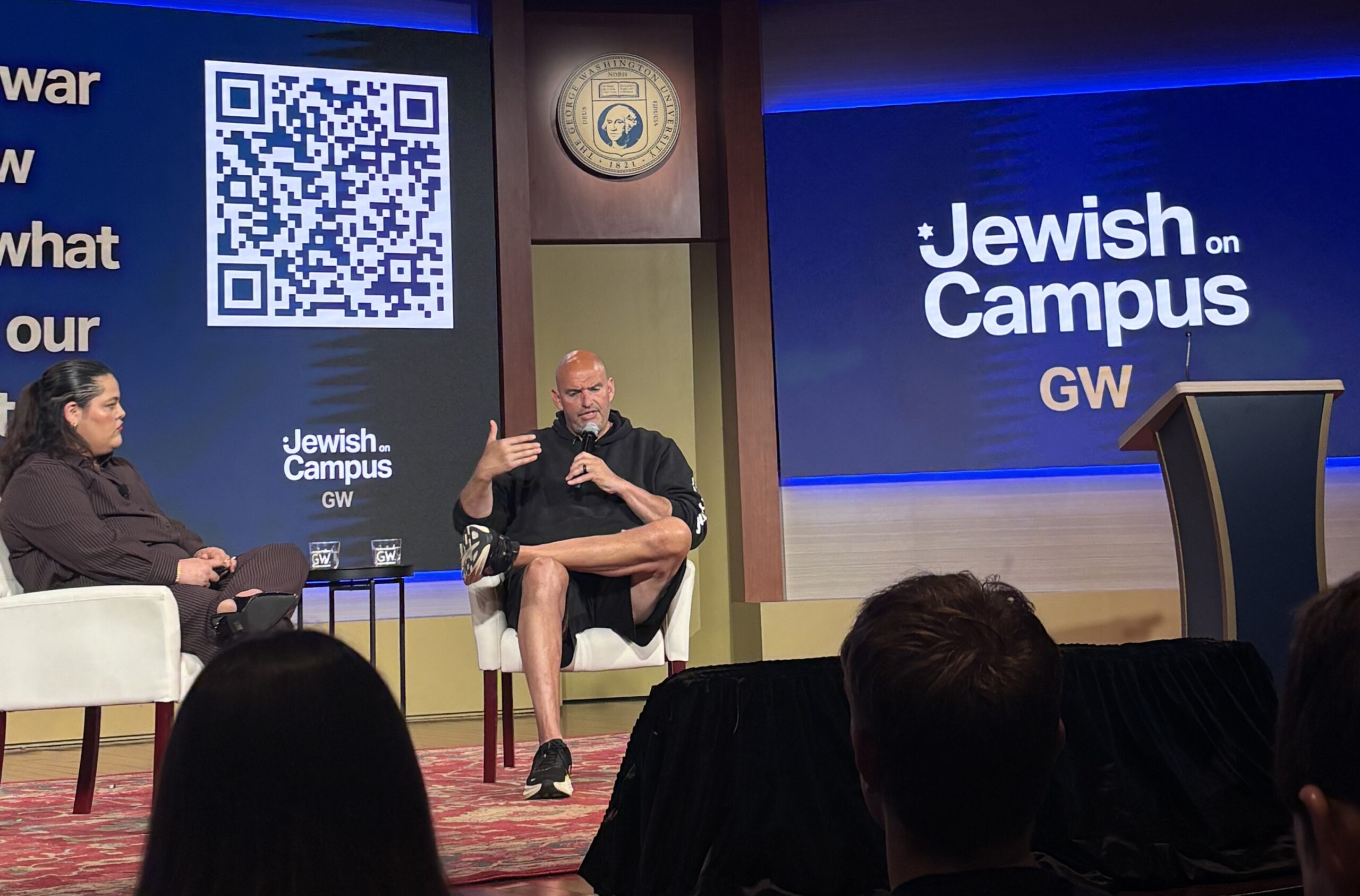
Birthdays
Stan M. Herman, fashion designer known worldwide for his leading-edge corporate uniforms, turns 98
Chuck Grassley, U.S. senator (R-IA) since 1981 and president pro tempore of the Senate, turns 93
Peter J. Solomon, investment banker who once served as a NYC deputy mayor, turns 88
Gail Carson Levine, Newbery Honor-winning author of many young adult books, some with Jewish themes, turns 79
Joshua Muravchik, author of 11 books and hundreds of articles on foreign policy and the Middle East, turns 79
T. Alan Hurwitz, former president of the National Technical Institute for the Deaf and then president of Gallaudet University, turns 79
Frank Hagelberg, Rochester, N.Y., attorney, he has held positions at the UJA-Federation of New York and the Rochester Jewish Federation
Jeremy Don Fogel, retired judge on the U.S. District Court for the Northern District of California, turns 77
Harold Solomon, former professional tennis player who achieved a world ranking of No. 5 in 1980, turns 74
Rita Rudner, comedian, writer and actor, she was a frequent guest of Johnny Carson on the “Tonight Show,” turns 73
Daniel Fingeroth, author, comic book writer and editor, best known as group editor of the Spider-Man books at Marvel Comics, turns 73
Mody Kidon, Israeli businessman with real estate holdings in Israel and NYC, turns 72
Ellen Kahan Zager, author and graphic designer
Rina Frenkel, former member of the Knesset for the Yesh Atid party, turns 70
Rabbi Jonathan Wittenberg, rabbi emeritus of the New North London Synagogue and senior rabbi of Masorti Judaism UK, turns 69
Elliott S. Feigenbaum, former consultant at Quick Hits News
Richard Wolffe, journalist, best-selling author including two books on the Obama presidency and Emmy Award-winning executive producer, turns 58
Mandy Krauthamer Cohen, director of the Centers for Disease Control and Prevention (CDC) for the last 18 months of the Biden administration, turns 48
Adam Abrams, former regional communications director and spokesperson for former President Barack Obama, now a partner at Seven Letter
Nick Melvoin, member of the Los Angeles Unified School District’s Board of Education, turns 41
David Litt, former Obama White House speechwriter who has since written a best-selling comedic memoir, turns 40
Adina Shatz, principal product manager for CathWorks
Rachel Roubein, national healthcare reporter The Washington Post covering the FDA
Natalie Edelstein Jarvis, editorial producer at Google
Max August, founder of the Israel Summit at Harvard, now a member of the partnerships team at OpenAI
The previously unreported Jewish outreach comes as Democrats worry about El-Sayed’s struggles to expand support beyond his base
Emily Elconin/Getty Images
Democratic candidate for U.S. Senate Abdul El-Sayed answers questions from attendees during a town hall event on September 3, 2026 at the Oakland Expo Center in Waterford, Michigan.
In the most significant sign of his efforts to make inroads with skeptical Jewish voters in Michigan’s Senate race, Abdul El-Sayed, the Democratic nominee, recently met with rabbis at Temple Israel for a closely guarded conversation, according to two people familiar with the meeting.
Two rabbis who were said to have participated in the conversation, details of which were unclear, declined to comment when reached on Wednesday. El-Sayed’s campaign did not respond to a request for comment.
The meeting came after El-Sayed apologized last month to Jewish Democrats for his equivocal response to the March terrorist attack against Temple Israel, a prominent Reform synagogue outside Detroit, which he had downplayed with the explanation that “hurt people hurt people.”
The covert nature of the meeting, which neither party has publicized, underscores the sensitivities felt among some Jewish leaders who have remained wary of publicly associating with El-Sayed because of their continued discomfort with his positions on Israel and remarks about antisemitism.
One rabbi at Temple Israel joined a rally last month at which Vice President JD Vance laid into El-Sayed while touting his Republican rival, former Rep. Mike Rogers (R-MI) — who has successfully courted some Jewish Democratic voters. Vance mentioned the rabbi in his speech, but not by name. A Jewish leader confirmed that a Temple Israel rabbi participated in the event.
Despite the unusual show of resistance, El-Sayed has, following his apology as well as a vow to hire a Jewish campaign liaison, made some inroads as he seeks to ease tensions with Jewish voters in the final stretch of a closely contested election.
He has since won endorsements from several progressive Jewish leaders including former Sen. Al Franken (D-MN). Former longtime Rep. Sander Levin (D-MI), in a statement on Tuesday, backed El-Sayed in spite of what he called “significant disagreement” over the nominee’s hostile approach to Israel — concerns about which some Jewish voters in Michigan have dismissed in recent opinion articles. While Levin held a pro-Israel record during his time in the House, his son Andy was highly critical of Israel while in Congress and ended up losing to Rep. Haley Stevens (D-MI) in a hotly contested 2022 primary.
Meanwhile, Sen. Elissa Slotkin (D-MI), who is one of the most prominent Jewish leaders in Michigan, is now urging fellow caucus members to rally behind El-Sayed after remaining neutral in a heated primary where Stevens, a vocal supporter of Israel, was narrowly defeated.
Still, it remains to be seen if such inroads will result in meaningful support for El-Sayed on Election Day, as he faces opposition from some Jewish voters who say he has fallen short of addressing major differences in a race that continues to stir up raw feelings.
Some Jewish holdouts in the state, for instance, have expressed their dissatisfaction with his apology over his comments on the synagogue attack. El-Sayed said he had “made a mistake” and asked “for forgiveness,” even as he also clarified that there was “opportunity for context later on,” a caveat some Jewish leaders interpreted as a sign he only regretted the timing of his sentiments rather than the message.
Halie Soifer, CEO of the Jewish Democratic Council of America, suggested in a statement on Wednesday that her group would not be endorsing El-Sayed, who has refused to acknowledge Israel’s right to exist as a Jewish state while failing to explicitly disavow Hasan Piker, an antisemitic steamer featuring in GOP attack ads and with whom El-Sayed campaigned ahead of the August primary..
“We have not endorsed El-Sayed” and “do not endorse all Democrats,” Soifer told Jewish Insider, even as she rejected crossing party lines to support Rogers — which she called “a vote to enable Donald Trump’s agenda.”
The Michigan Democratic Jewish Caucus, for its part, has yet to confirm whether it will back El-Sayed after he appeared at its summer fundraising event to offer his apology. Jessica Alexander, the caucus chair, told JI on Wednesday that members would be releasing a statement soon explaining their approach to the race that could help decide control of the Senate next year.
For now, “people are looking to learn more” about El-Sayed’s views and “are still struggling” with how they will vote, Alexander said, noting those “making decisions in the affirmative are just being quiet about it.”
“It’s this really strange space of liminality,” she said of the calculus facing Jewish Democrats. “Everyone wants different assurances — and I’m not sure if you get those in political races, ever.”
While El-Sayed has yet to name a Jewish liaison, Alexander said she was asked to participate in the interview process and had spoken with about five candidates, whom she declined to name. She told JI that she had not yet been informed of a final decision.
David Hecker, a Jewish union leader in Michigan, also took part in the interviews, he confirmed to JI Wednesday. “The key is having conversations with Jews who haven’t decided how they’re going to vote,” he explained of the liaison role. “With many there are going to be disagreements,” he added, while counting himself among them.
“His domestic policies I’m pretty much on board with,” Hecker said of El-Sayed. But, he added, “I’m a Zionist” and “I disagree with his perspective on what needs to happen in the Middle East.”
Still, “I appreciate how much he’s thought about it,” Hecker clarified.
Earlier this month, a coalition of rabbis and other Jewish leaders across the state launched a petition campaign to pressure El-Sayed to affirm a series of “nonnegotiable” commitments on a range of Jewish issues, arguing that failing to do so would jeopardize Jewish support for Democrats. The petition did not mention El-Sayed by name but was clearly aimed at him.
Among the demands were support for “Jewish sovereignty in Israel”; Jewish safety, including for Zionist Jews; and “full participation in American political life” for Jews.
But two Jewish leaders who signed the petition told JI Wednesday they had not had the chance to speak with El-Sayed and did not feel he had demonstrated his commitment to their requests.
Rabbi Aaron Starr of Congregation Shaarey Zedek in Southfield, Mich., who serves as the president of the Michigan Board of Rabbis, said he appreciated how in the past couple of weeks El-Sayed “has moderated his previously offensive and inflammatory rhetoric.”
“His callous words and violent tone, though, remain hard to forget — and probably foolish to forget,” he added. Now, “El-Sayed has become adept at talking around our concerns,” he continued. “Nevertheless, he is silent with regard to our right to define our own identities as American Zionists” and “Israel’s right to exist as a Jewish state,” among other key issues.
Joan Lowenstein, the Jewish caucus endorsement chair who also signed the petition, said she was unconvinced El-Sayed had meaningfully evolved in his stances on Israel since the primary. “He still will not say ‘Israel,’” she observed. “He says ‘Holy Land.’”
Even though El Sayed has condemned antisemitism and affirmed his commitment to Jewish safety, some critics have raised concerns that his rhetoric and alliances with extreme figures such as Piker have helped contribute to rising antisemitism on the far left, which has made a growing number of Jewish Democrats feel alienated in a party they have long called home.
A co-founder of “Jews for Abdul,” a loose coalition of Jewish activists, voiced reservations last month over El-Sayed’s approach to Israel, saying in a private call he could “do a better job” toning down his rhetoric on accusations of genocide in Gaza and his opposition to U.S. funding for the Jewish state, including defensive aid.
El-Sayed has said privately that he “is not going to change his position on Israel at all,” according to a source informed of such remarks. “He is who he is,” the source told JI.
Despite the hesitation among some Jewish voters with weeks remaining until the November election, one Jewish leader in Michigan who does not support El-Sayed predicted that the Democratic nominee “is on track to be elected narrowly but solidly,” citing unfavorable polling for Republicans nationally.
“I think the Jewish vote being split is not enough to cost him the election,” the Jewish leader said about El-Sayed on the condition of anonymity. (Michigan is home to some 130,000 Jews.) “Trump’s continued chaos is really causing a lot of people to swallow hard and just hold their nose and vote the entire Democratic ticket.”
Steve Gold said the candidate’s refusal to acknowledge Israel’s right to exist as a Jewish state and opposing Iron Dome funding are making it hard for him to make any inroads
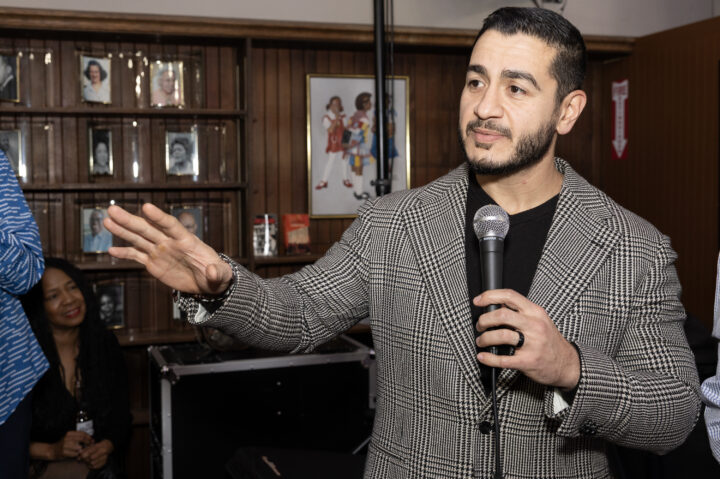
Monica Morgan/Getty Images
Abdul El-Sayed at the Bridge Center on Dec. 16, 2025, in Detroit, Michigan.
A co-founder of “Jews for Abdul,” a loose coalition of Jewish activists backing Abdul El-Sayed, Michigan’s Democratic nominee for Senate, voiced reservations over the nominee’s approach to Israel in a recent organizing call, arguing he could “do a better job” toning down harsh rhetoric that has alienated many Jewish voters in the key battleground state.
Steve Gold, a “Jews for Abdul” member in a heavily Jewish Detroit suburb, said during the mid-August call that there were “three issues” about which El-Sayed has been “less than effective in communicating” his views, citing his refusal to acknowledge Israel’s right to exist as a Jewish state, his “insistence on using the word genocide” to describe Israel’s war against Hamas in Gaza and his opposition to all U.S. funding for Israel, including defensive aid.
Gold confirmed to Jewish Insider on Thursday that his comments made on the private organizing call, a video of which was first reported by The Midwesterner, were authentic.
His remarks underscore how even some Jewish supporters of El-Sayed recognize that his hostile statements against Israel could cost him votes in the broader Jewish community, which he will likely need to prevail in the closely contested election. Michigan is home to around 100,000 Jewish voters, many of whom have raised concerns about rising antisemitism within the Democratic Party.
Even as El-Sayed has recently apologized for his comments equivocating over a violent terror attack against a synagogue outside Detroit in March, some Jewish Democrats remain skeptical of his campaign and feel his outreach has been politically calculated.
Meanwhile, a growing number of Jewish Democrats have gravitated to El-Sayed’s Republican opponent, former Rep. Mike Rogers (R-MI), a vocal supporter of Israel.
Even “without changing his policies and feelings,” Gold said during the video call that El-Sayed “could do a better job” of articulating his views in a manner that is less alienating to Jewish community members who do not share his views.
The question over whether Israel has a right to exist “needs to be answered ‘yes,’ full stop, and then go on to explaining the nuances,” Gold said, while warning that El-Sayed’s frequent accusations of genocide have also been unhelpful. “It’s something that makes some Jews stop as though he is denigrating the significance and importance of the Holocaust, which of course he is not,” he explained.
Gold noted that he was “just talking about problems” and was not casting judgement on “whether they’re right or wrong.”
With regard to El-Sayed’s “statement that all aid to Israel,” including for its Iron Dome missile-defense system, “should be cut off,” Gold told the organizers, “people stop listening when they” hear “Israel doesn’t have a right to defend itself,” using air quotes around the oft-repeated line.
“I think that those are three things that turn off a lot of Jews,” he concluded, “and if Abdul did a better job talking about them, it would help.”
In a brief phone interview on Thursday, however, Gold downplayed his feedback, saying “it was just a random moment” caught on video. He noted that he has “no access or policy input” with El-Sayed’s team, even as he told the organizers he would be “trying to take up” the issues he raised on the call last month.
“Everybody I talk to has a different take on all of these questions,” he told JI, emphasizing that Don Greenspon, a fellow co-founder of “Jews for Abdul,” did not agree with his criticism. “The old joke,” Gold quipped, “is three Jews, five opinions.”
Gold, who has called Israel “genocidal” in a social media post, declined to share if he believes Israel should receive defensive aid, in contrast to El-Sayed. “I think Abdul’s positions that he’s expressed about Israel are right on the money,” he stated. “I have no difference of opinion with Abdul on withholding tax dollars.”
Still, he said he had “no expertise” on the topic and was not authorized to speak on behalf of El-Sayed’s campaign, noting he was just a “volunteer” and one of some 150 members of the “Jews for Abdul” group.
“There’s no reason to solicit my opinion,” he told JI. “I’m not going to make any more of it than it was.”
Plus, no gala for Galliano
Jim Watson - Pool/Getty Images
U.S. Vice President JD Vance gives remarks following a roundtable discussion with local leaders and community members amid a surge of federal immigration authorities in the area, at Royalston Square on January 22, 2026 in Minneapolis, Minnesota.
Good Tuesday morning.
In today’s Daily Kickoff, we cover Vice President JD Vance’s speech yesterday to the Republican Jewish Coalition, as well as his campaign rally in Michigan, where he called the state’s Democratic Senate nominee Abdul El-Sayed “very, very evil.” We report on Michigan Attorney General Dana Nessel’s call for Jewish voters to put “the needs of the world” above their own survival, and talk to pollsters about voters’ considerations in the upcoming Israeli election. We also speak with former White House officials and regional analysts about whether Washington’s economic campaign and naval blockade against Iran are yielding dividends. Also in today’s Daily Kickoff: Leo Terrell, Josh Kushner and Ambassador Marcy Grossman.
Curated by Israel Editor Tamara Zieve and U.S. Editor Danielle Cohen-Kanik.
Today’s Agenda
It’s primary Election Day in Massachusetts, where Sen. Ed Markey (D-MA) is hoping to fend off a challenge from Rep. Seth Moulton (D-MA), who has called for generational change in the race.
This morning, a House Foreign Affairs Committee subcommittee is holding a hearing on the threat posed by the Houthi terror group to U.S. interests in the Red Sea.
Finance ministers from the G-20 countries are wrapping up a summit in Asheville, N.C., where Treasury Secretary Scott Bessent told reporters yesterday he’s aiming in his meetings to shore up support for the U.S.’ economic isolation campaign against Iran.
Meanwhile, the leaders of China, Russia, India, Iran and several other countries are in Kyrgyzstan wrapping up their own meeting of the Shanghai Cooperation Organization, a group meant to counter U.S. global influence.
From there, Chinese President Xi Jinping is headed on a three-day state visit to Cairo, his first in a decade, as the two countries mark the 70th anniversary of diplomatic relations and as Egypt increasingly balances its long-standing ties to Washington against a deepening partnership with Beijing, now its largest trading partner.
One Thing To Know
ANALYSIS
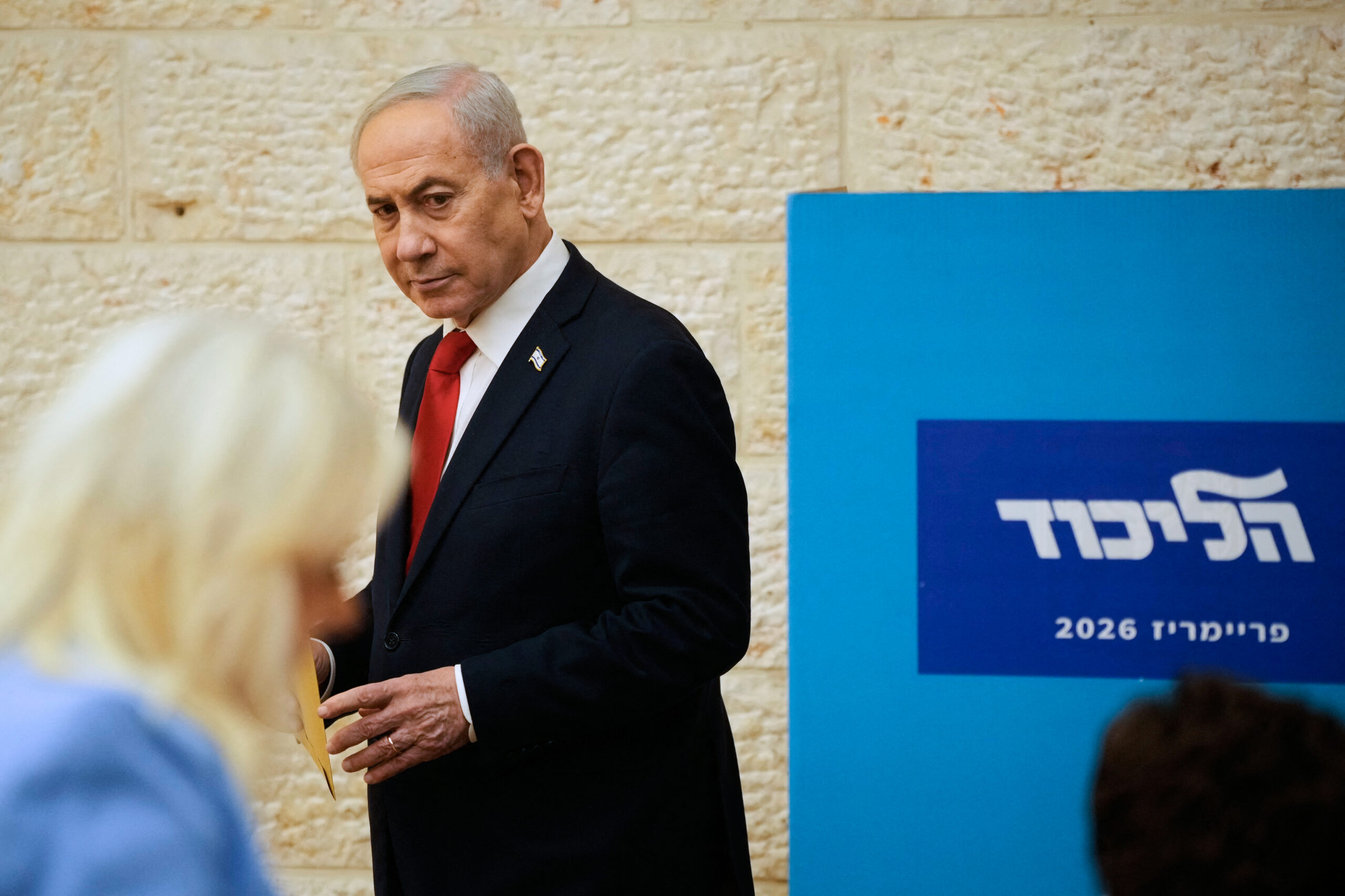
By Gili Cohen
The countdown to Israel’s October elections has begun, bringing with it a central question: Will Prime Minister Benjamin Netanyahu — who, against all odds, remains in office three years after the Oct. 7, 2023, Hamas attacks took place under his tenure — remain Israel’s leader?
Israeli governments have often faced political upheaval after major wars or security crises, but Netanyahu’s current government completed a full term — the first time a government has done so in nearly four decades. But Netanyahu is not out of the woods yet.
“Oct. 7 serves primarily as a reminder that the stakes are genuinely high. Israel is a country where elections are fought over matters of life and death in the most literal sense,” Shmuel Rosner, a pollster and analyst for Israel’s Channel 13, told Jewish Insider.
The Big Reads
COURTING SKEPTICS
Vice President JD Vance stuck to a pro-Israel line and rejected antisemitism in remarks on Monday to the Republican Jewish Coalition, avoiding any new controversies while not being pressed directly about some of his past comments and affiliations, including with Tucker Carlson, that have most concerned Jewish Republicans, Jewish Insider’s Marc Rod reports from the conference in Las Vegas. Attendees at the closed-door meeting, with some exceptions, largely said that the speech helped Vance reassure skeptical Jewish and pro-Israel Republicans and boost his support with the RJC crowd ahead of a potential 2028 presidential bid.
Also at the RJC: Ron Dermer, Israel’s former strategic affairs minister and close advisor to Israeli Prime Minister Benjamin Netanyahu, praised Vance on Monday, saying he had played a “critical role” in the 12-day war against Iran in June 2025, “and particularly the first day, where that element of surprise was so critical to our success. And I will be forever grateful for the role that he played at that critical moment.”
DAMAGE CONTROL
Vice President JD Vance laid into Michigan Democratic Senate nominee Abdul El-Sayed on Monday during a campaign rally held in the state, calling him “very, very evil” and an apologist “for the worst people in the world and America’s enemies all over the globe,” Jewish Insider’s Matthew Kassel reports. Speaking at the event in Sterling Heights organized by a pro-Trump super PAC, Vance accused El-Sayed of sympathizing with the assailant who carried out a terrorist attack against a synagogue outside of Detroit in March and associating with the antisemitic Twitch streamer Hasan Piker, who had claimed that America deserved 9/11. In a statement after the rally, El-Sayed said in response: “Evil is ripping healthcare away from working people in exchange for tax breaks for billionaires. Evil is making people pay more for groceries and gas while pushing for trade wars and actual war. Evil is dividing people for your own gain. Evil is selling out your morals for a little bit of power.”
Safety aside: Michigan Attorney General Dana Nessel, a Jewish Democrat, encouraged Jewish voters on Sunday to put aside concerns about their safety “in exchange for the opportunity to save the rest of humanity,” in a stark reference to the choices facing Jewish Democrats in the closely contested Senate election this November.
MONEY MATTERS
As the conflict between the United States and Iran passes the six-month mark, former White House officials and regional analysts remain divided over whether Washington’s economic campaign and naval blockade are meaningfully changing the strategic landscape, Jewish Insider’s Matthew Shea reports. Alexander Gray, former chief of staff on the National Security Council during President Donald Trump’s first term, expressed confidence in the administration’s trajectory, arguing U.S. leverage is “only growing.” However, other former White House officials warned that Iran could turn the tide. “His policy is working right now, but the enemy gets a vote,” Elliott Abrams, a former U.S. special representative for Iran during the first Trump administration, told JI.
The Rundown
PERSONAL PRIVILEGE
OVAL OFFICE OUTREACH
BRUSHING IT OFF
UNLIKELY ALLIES
QATAR QUANDARY
ADDRESSING ANTISEMITISM
ADDRESSING ANTISEMITISM
On Our Radar
● The Live Briefing. Word on the street, clips, podcasts and quick updates — the items we’re tracking all day in our Live Briefing on the app (on Apple and Android) and website.
Army Secretary Dan Driscoll submitted his resignation to President Donald Trump and is expected to step down in the coming days,which will leave the Army without any Senate-confirmed civilian or military leadership…
Trump told Fox News on Monday that the U.S. will respond to Iran’s attacks on U.S. forces in Jordan on Sunday: “We’re going to hit them hard. There will be a response,” he said…
CENTCOM and Defense Secretary Pete Hegseth have proposed to Trump a campaign of limited strikes around the Strait of Hormuz to prevent Iran from rebuilding its radar and missile capacities, U.S. officials told Axios, a plan that may draw the president’s approval following the renewed hostilities over the weekend…
A new alliance between the Houthis and the al-Qaida affiliate al-Shabaab group, brokered in part by a Somali arms fixer killed in a U.S. airstrike in February, is now working to disrupt Israel’s presence in Somaliland, whose independence Jerusalem recognized last year, according to The Wall Street Journal…
The campaign of Michigan Senate Democratic nominee Abdul El-Sayed is working to hire a Jewish community liaison, the Jewish Telegraphic Agency reports, as he seeks to make inroads with the state’s Jewish community following his apology for equivocating on a violent terrorist attack targeting a Michigan synagogue in March…
Jewish Democratic Council of America CEO Halie Soifer, whose organization has not endorsed El-Sayed, said in a statement that the candidate’s apology to the Jewish community was “a good first step” but added that “building trust with Jewish voters will take additional work.” She said El-Sayed will have to show a commitment to Jewish security that goes beyond rhetoric and denounce antisemitic streamer Hasan Piker to have a shot at winning the group’s support…
Politico speaks with Detroit-area Arab American leaders who helped rally their community to support Trump in the 2024 campaign, many of whom are now souring on the GOP amid the war in Iran and his attacks on El-Sayed…
San Francisco congressional candidate Connie Chan endorsed the “Oakland People’s Arms Embargo,” an activist movement seeking to halt what it claims are arms shipments out of Oakland Airport heading to Israel, as she seeks to best state Sen. Scott Wiener in the Democrat-on-Democrat race with the backing of Rep. Nancy Pelosi (D-CA)…
Thrive Capital founder Josh Kushner broke his silence about his unsuccessful bid to help launch FIFA Forward Enterprise, a proposed commercial subsidiary of soccer’s global governing body, telling Axios in a statement: “While we stand behind the motivations of FFE, we failed to appreciate the political dynamics of global football, and the lengths some would go to … Had we known what this would devolve into, we would not have gotten involved”…
The Israeli government has launched a NIS 5 million ($1.67 million) program to recruit AI experts and entrepreneurs from abroad…
Israeli Arab party Ra’am announced on Monday that former police commander Yoav Segalovitz, who recently left the Yesh Atid party, will run on its Knesset slate, making him the first Jewish candidate to be included on the Islamist party’s list. Segalovitz is expected to be given the No. 2 slot, behind MK Mansour Abbas…
The IDF said it carried out strikes in the Gaza Strip on Tuesday “in order to remove threats to the security forces,” following local reports that an Israeli-backed anti-Hamas Palestinian militia conducted a raid in Gaza City. Defense Minister Israel Katz said Israel arrested a senior Hamas terrorist, while Hamas-run media reported three were killed in the strikes, including a woman and a child, and several others were wounded…
The American Jewish Committee announced on Tuesday that Ambassador Marcy Grossman is the new director of AJC Abu Dhabi. Grossman served as Canada’s ambassador to the United Arab Emirates from 2019 to 2022, during which the Abraham Accords were signed…
Worthy Reads
Find more Worthy Reads in our Live Briefing via our app (on Apple and Android) and website.
Rooting for Rogers: Rabbi Asher Lopatin, director of community relations at the Jewish Federation of Greater Ann Arbor, writing in his personal capacity in The Forward, urges Jewish Democratic Michiganders to vote for GOP nominee Mike Rogers over his Democratic opponent, Abdul El-Sayed, in the upcoming Senate race. “For me, the disdain that El-Sayed has shown for the Jewish community, especially in his continuing refusal to disavow his relationship with Piker, puts him in the same category as candidates who are openly racist and homophobic. Even the most loyal progressive would reject a racist, even if that meant risking a Republican Senate. To show the Democrats that such candidates should never be nominated, we must show them that such candidates can never win. Such a candidate winning would be a disaster for the most fundamental requirements we have for any candidate of any party.” [Forward]
Out of Bounds: In eJewishPhilanthropy, Menachem Z. Rosensaft, a visiting professor of the practice at Cornell Law School and lecturer-in-law at Columbia Law School, condemns Michigan Attorney General Dana Nessel’s statement that the Jewish community has “a moral imperative” to place the needs of the world above its own survival. “Let’s be clear: Jewish safety is not and can never be negotiable or sacrificed for any reason. Jewish survival even less so. Moreover, this is not and should not be a Jewish issue. No group’s safety and no people’s survival should ever be turned into a pragmatic political bargaining chip. Can you imagine the outrage if anyone suggested that Black survival, or Muslim survival, or any other group’s survival, should be put at risk? Nessel’s remarks constitute a new low in contemporary political discourse.” [eJP]
Schumer’s Silence: The Wall Street Journal’s editorial board calls on Senate Minority Leader Chuck Schumer (D-NY) to publicly condemn Hasan Piker, the Twitch streamer who campaigned for El-Sayed and who suggested American Jews will invite attacks on themselves if they keep signaling support for Israel. “It’s worth watching how Democrats handle Mr. Piker, whom they once thought was their answer to Joe Rogan, but who as a political matter represents the serrated edge of the party’s antisemitic wing. Mr. Schumer has embraced Mr. El-Sayed, though the Michigan nominee has said he won’t vote for Mr. Schumer for Senate leader. Mr. Schumer has taken great pride across his career as an opponent of antisemitism and a (less and less reliable) supporter of Israel. With Rep. Alexandria Ocasio-Cortez looking over his shoulder in his 2028 re-election year, Mr. Schumer’s political career may be nearing its end. Why not publicly say Mr. Piker’s brand of antisemitism has no place in the Democratic Party and stand with some honor?” [WSJ]
Picture of the Day
Birthdays
Rachel Zoe Rosenzweig, fashion designer, businesswoman and writer, she uses only her first and middle names professionally, turns 55
Alan Dershowitz, retired Harvard Law School professor and constitutional scholar, turns 88
Leonard Slatkin, conductor, author and composer, turns 82
Shalom Hanoch, Israeli rock singer, lyricist and composer, he is often referred to as “The King of Israeli Rock,” turns 80
Esther Safran Foer, former director of Sixth & I historic synagogue, she is the matriarch of a literary family (her sons are Franklin, Jonathan and Joshua), turns 80
Linda Feldman, turns 77
Nadia Ficara, director of donor travel programs at the U.S. Holocaust Memorial Museum, turns 70
Susan Berry Miller, national president of NA’AMAT USA, turns 69
Joe Straus, former member and speaker of the Texas House of Representatives, the first Jewish House speaker in Texas, turns 67
Eric Adams, former mayor of New York City, turns 66
Dee Dee Myers, White House press secretary during the first two years of the Clinton administration, turns 65
Rabbi Asher Lopatin, director of community relations at the Jewish Federation of Greater Ann Arbor and rabbi of Kehillat Etz Chayim synagogue, turns 62
Malca Resnick, former clinical sciences group lead in the global product development group at Pfizer, turns 62
Charlotte Fonrobert, associate professor of religious studies at Stanford specializing in Talmudic literature, turns 61
Elana Broitman, former SVP of public affairs at the Jewish Federations of North America, now principal at the Roosevelt Group, turns 60
Craig Caplan, Capitol Hill producer for C-SPAN, turns 59
Harris Vederman, VP of programs at the Jewish Institute for National Security of America, turns 56
Jesse Kellerman, novelist and playwright, his parents, Faye Kellerman and Jonathan Kellerman, are both best-selling authors, turns 48
Samuel Salkin, turns 40
Shauna Ruda, Denver-based therapist, turns 39
Lauren Kiel, head of Bloomberg Media’s global community innovation team, turns 37
Itay Milner, spokesperson and consul for media affairs at the Israeli Consulate in New York
The vice president said El-Sayed's comments about the Temple Israel attack reflect 'something evil on the rise in America'
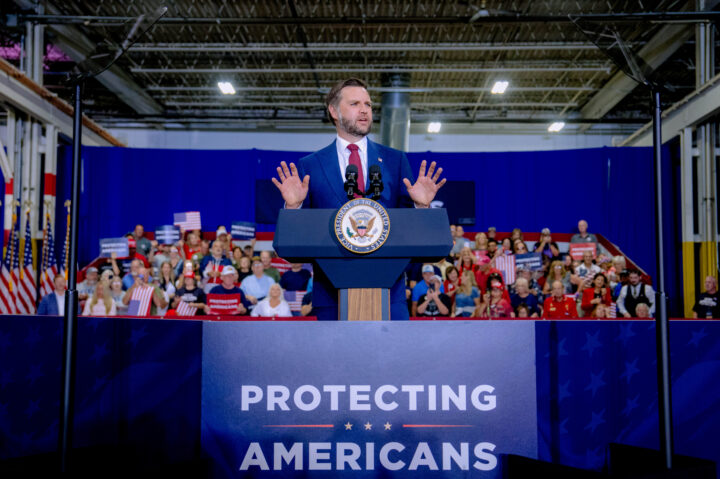
Nic Antaya/Getty Images
Vice President JD Vance speaks during a rally on Aug. 31, 2026 in Sterling Heights, Michigan.
Vice President JD Vance laid into Michigan Democratic Senate nominee Abdul El-Sayed on Monday during a campaign rally held in the state, calling him “very, very evil” and an apologist “for the worst people in the world and America’s enemies all over the globe.”
Speaking at the event in Sterling Heights organized by a pro-Trump super PAC, Vance accused El-Sayed of sympathizing with the assailant who carried out a terrorist attack against a synagogue outside of Detroit in March and associating with the antisemitic Twitch streamer Hasan Piker, who had claimed that America deserved 9/11.
“I realize that there’s something about Abdul El-Sayed that is very, very evil and on the rise in the United States of America today,” Vance said at the rally, where he touted the campaign of former Rep. Mike Rogers (R-MI), El-Sayed’s opponent.
“It’s people who see themselves not as citizens of a common nation fighting for every single person — whether they’re Jewish or Christian, whether they’re white or Black or brown — but see themselves as fighting for one group at the expense of others — and that is how, ladies and gentlemen, you destroy the United States of America,” he added in his speech.
Vance devoted significant attention to the violent terrorist attack targeting Temple Israel, a Reform synagogue in West Bloomfield, which El-Sayed had initially dismissed as representing a broader cycle of violence where “hurt people hurt people,” prompting widespread backlash from Jewish voters in Michigan.
The vice president’s focus on the synagogue attack indicates that El-Sayed’s remarks have reverberated well beyond the sizable Jewish community in the key battleground state.
Vance also said in his remarks he was “honored to be joined by the rabbi and some of the security guards of Temple Israel,” though Jewish Insider was unable to immediately confirm their individual involvement. (A Jewish community leader told JI that he knew of one rabbi who was attending the rally, but did not share a name.)
While El-Sayed voiced regret for his comments in meetings with Jewish Democrats over the weekend, Vance said that his response raised questions about what he is “going to do when he goes to Washington D.C.. when the cameras aren’t on.”
Vance called El-Sayed, who is Muslim, “a man who has sympathy and compassion for people who share his religion, but have nothing for people who don’t.”
“My message to Abdul El-Sayed is: You can pal around with terrorist sympathizers, and you can say that America deserved 9/11, or you could empathize not with the children who were targeted at Temple Israel, but with the attacker,” Vance said, before his comments took a personal turn.
He alluded to a recent social media post in which El-Sayed questioned if Vance would take his wife, Usha, who is Indian American, “back in time” to meet his late grandfather.
“Whatever you want to talk about, Abdul,” he shot back at the event, “keep my wife’s name the hell out of your mouth.”
“Today, you have an opportunity to speak loudly,” he said to the crowd, “and in November you have an opportunity to speak much more loudly against the hatred that is on the rise in the United States of America. Reject Abdul El-Sayed.”
In a statement after the rally, El-Sayed said in response: “Evil is ripping healthcare away from working people in exchange for tax breaks for billionaires. Evil is making people pay more for groceries and gas while pushing for trade wars and actual war. Evil is dividing people for your own gain. Evil is selling out your morals for a little bit of power.
“Michigan is better than being lectured to by sock puppets from Ohio and Florida,” El-Sayed added. “We understand what’s at stake, and Michiganders will show you at the ballot box this November when we send Mike Rogers packing.”
Vance, who has faced skepticism from Jewish conservatives over his refusal to disavow far-right commentator Tucker Carlson as he mulls a 2028 presidential campaign, is slated to address members of the Jewish Republican Coalition in closed-door remarks tonight at its annual summit in Las Vegas.
One member of the Michigan Democrats’ Jewish Caucus said Jewish Democrats ‘remain divided’ on El-Sayed after his outreach
Katie McTiernan/Anadolu via Getty Images
Abdul El-Sayed, Democratic nominee for the U.S. Senate, speaks at the Michgan Democratic Nominating Convention in Lansing, Mich. on Aug. 29, 2026.
Abdul El-Sayed, the Democratic Senate nominee in Michigan, expressed regret over the weekend for equivocating in response to a terrorist attack against a synagogue outside Detroit in March, a key source of tension among skeptical Jewish voters ahead of the fall election.
Speaking at the Michigan Democratic Jewish Caucus’ annual “Summer Simcha” event on Sunday, El-Sayed reiterated his recent comments in which he said he had “made a mistake” in his initial statement on the violent attack targeting Temple Israel, a Reform synagogue in West Bloomfield.
The armed assailant, who had rammed his car into the synagogue, was a Lebanese American man whose family members — including his brother, a Hezbollah commander — were killed in Israeli airstrikes in Lebanon, leading El-Sayed to comment in a video statement that “hurt people hurt people” and “violence is a cycle.”
His comments on Sunday, according to attendees, echoed his remarks to members of the Jewish caucus a day before at a party convention in Lansing, where he said he had been seeking to “offer broader context” on the attack but “should have issued a statement, of course condemning it, and it just should have been the full stop.”
“I’m asking for forgiveness and a moment of grace,” El-Sayed told the caucus on Sunday, adding that “there’s opportunity for context later on.”
Jessica Alexander, the Jewish caucus chair, said in a statement to Jewish Insider after the event on Sunday that “Abdul’s remarks were sincere and reflected his dedication to serving all those he seeks to represent.”
In contrast with the party convention, the Jewish caucus event “was more intimate,” according to Alexander, “and thus the comments felt more personal and intimate.”
David Kramer, the caucus’ vice chair and the former Senate campaign chair of Rep. Haley Stevens (D-MI), who narrowly lost the primary, said attendees “were certainly polite” when El-Sayed gave his remarks on Sunday.
“There was absolutely nobody jeering him” and “nobody who interrupted him,” Kramer told JI in an interview after the event. “There were several people in the room who were pretty vocally applauding him and many in the room who were just being courteous and maybe lightly applauding him.”
Broadly speaking, El-Sayed’s comments were “well-received” on Sunday “in the sense that people appreciated he was willing to come into that space and talk and that he’s been willing to at least turn down some of the negative rhetoric,” Kramer added.
While El-Sayed acknowledged his initial comments were received as insensitive, Kramer echoed Jewish leaders in Michigan who remain skeptical about the sincerity of his new statements and have questioned their timing as politically calculated.
“For me personally, and I know for a lot of Michigan Democratic Jews, there are still some incredibly core, fundamental differences we have with him that are going to be nearly impossible to bridge,” Kramer told JI, citing El-Sayed’s refusal to recognize Israel’s right to exist as a Jewish state, his criticism of Zionism and opposition to continuing America’s close relationship with Israel, among other major points of tension.
“It will make the decision for quite a lot of us either very difficult to vote for him or impossible to vote for him,” Kramer explained.
He suggested that El-Sayed’s apology left room for improvement. “If you parse his words, he definitely talked about apologizing if people were offended and saying there’s a time for context but still leaving open the ability to add context,” he observed to JI. “I don’t think that there’s ever context for targeting 100-plus preschoolers.”
Joan Lowenstein, a caucus member, said that Jewish Democrats remain divided after the event. “No one I spoke to had changed their mind as a result of his speech yesterday or today,” she told JI. “I think we are evenly divided.”
“Everyone agrees we’re in a bad position that we haven’t had to face before,” she added.
Michael Horowitz, a Jewish Democratic leader who recently decided to vote for former Rep. Mike Rogers (R-MI), El-Sayed’s opponent in the November election, said he felt El-Sayed’s weekend apology was “insufficient.”
“I think he’s doing exactly what a skilled politician would do, which is saying exactly what he needs to say to get other people on board,” Horowitz, who did not attend the caucus event, told JI. “There is plenty he could have said and should have said to sincerely apologize.”
One politically connected Jewish leader in Michigan, speaking on the condition of anonymity to address a sensitive issue, said many Jewish leaders are hesitant about El-Sayed’s apology. “People want him to say, ‘I was wrong for not coming forward to explain this six months ago,’” he told JI on Sunday. “There is a ton of skepticism.”
A spokesperson for El-Sayed’s campaign did not respond to a request for comment.
The caucus event on Sunday also honored Dana Nessel, Michigan’s first Jewish attorney general, who is stepping down after eight years at the end of her current term.
Last week, Nessel — whose son, Zach, is secretary of the Michigan Democratic Jewish Caucus — expressed concern that El-Sayed had at that point not publicly shown contrition for his response to the synagogue attack, saying she felt he was “making excuses” for domestic terrorism.
‘This election is about what’s going to happen when we elect Abdul to the United States Senate. I am done,’ Dingell said, suggesting criticism of Piker is a Republican ploy
EFF KOWALSKY / AFP via Getty Images
Democratic Senate candidate from Michigan Abdul El-Sayed speaks while Reps. Jamie Raskin and Debbie Dingell listen during a Student Meet and Greet at the Michigan Theatre in Ann Arbor, Mich., on August 26, 2026.
Speaking at a rally for Democratic Senate candidate Abdul El-Sayed on Wednesday, Rep. Debbie Dingell (D-MI) brushed aside criticisms of El-Sayed’s relationship with antisemitic streamer Hasan Piker and said she wants to stop talking about Piker altogether.
The streamer has faced a torrent of criticism, including from top Democratic leaders, in recent days after making comments suggesting that Jews supportive of Israel have invited antisemitic violence on themselves. El-Sayed repeatedly campaigned with Piker and some Democratic lawmakers say he hasn’t done enough to distance himself from or condemn Piker’s comments.
“I’m done. This election is about what’s going to happen when we elect Abdul to the United States Senate. I am done,” Dingell said, kicking off the rally at the University of Michigan in Ann Arbor. “So don’t any reporter ask me again about Hasan Piker. It’s not what November is about.”
Dingell said she doesn’t “agree with Hasan Piker on a lot of stuff, and I really don’t agree with him on some of the [things he said about] women” and said she doesn’t understand why he has become popular, but suggested questions about Piker are a Republican tactic to divide Democrats.
“Republicans are trying to divide us, and we’ve got to stop letting them divide us,” she said. “You need to go out there and define what this election is about. Don’t let others do it. They’re trying to divide us. They’re trying to take us off of so many other issues.”
Dingell chairs the Democratic Policy and Communications Committee, serving as a member of House Democratic leadership.
Nessel, a Jewish Democrat, expressed her frustrations with the Democratic Senate nominee on David Frum’s podcast

Chip Somodevilla/Getty Images
Michigan Attorney General Dana Nessel speaks on stage during the third day of the Democratic National Convention at the United Center on August 21, 2024 in Chicago, Illinois. Delegates, politicians, and Democratic Party supporters are in Chicago for the convention, concluding with current Vice President Kamala Harris accepting her party's presidential nomination.
Michigan Attorney General Dana Nessel, a Jewish Democrat who has been outspoken against the rise of antisemitism in her party, raised concerns that Abdul El-Sayed, the state’s Democratic nominee for Senate, had not publicly withdrawn his equivocal comments responding to a violent attack in March on a synagogue in suburban Detroit.
El-Sayed faced backlash for comments that critics interpreted as excusing the attack perpetrated by a Lebanese American man whose relatives — including his brother, a Hezbollah commander — were killed in Israeli strikes in Lebanon, controversially arguing that “hurt people hurt people.”
While many Jewish Democrats in Michigan have raised alarms over El-Sayed’s hostile rhetoric toward Israel and vilification of AIPAC, Nessel indicated in a a new podcast interview released on Wednesday that his remarks about the synagogue attack remain a key source of tension with skeptical Jewish voters whose support he will likely need to win in the battleground state.
“A lot of us perceived that as sort of making excuses for somebody who sought to murder over 100 pre-K school children, and that’s the kind of mentality that bothers me a lot,” Nessel explained to David Frum of The Atlantic. “You can’t make excuses for that kind of domestic terrorism,” she added.
Nessel, who recently said that she would not attend her party’s state nominating convention due to fears of antisemitic harassment, told Frum that El-Sayed, “to his credit,” had since clinching the nomination in early August held meetings with Jewish leaders in the state to address their reservations with his candidacy.
“I think privately he will say that he regrets having made those remarks,” she said on the podcast. “But here we are. It’s almost the end of of August, and he still has not withdrawn those statements and said, ‘I misspoke’ or ‘I now recognize the harm that I caused by making those statements.’”
His reticence “has me concerned that he really stands by them, and if so, what does that mean for American Jews moving forward?” Nessel said, while suggesting his response carried troubling implications about his ability to roundly denounce future potential terrorist incidents.
“I think by the same logic,” she argued, “if Iran were to attack, whether it would be a government building or a church or a mall or what have you, that we would just deserve those attacks, because, of course, we are engaged in this war in Iran, and really the list goes on and on as to how you could make excuses for acts of domestic terrorism.”
“It’s a dangerous, dangerous world to live in, where you have somebody who supports that kind of logic,” Nessel added. “When you are providing some sort of rational explanation for why it occurs,” she went on, “it possibly encourages other people to do the same.”
Even as she voiced hesitation about El-Sayed and acknowledged many Jewish Democrats are backing his opponent, former Rep. Mike Rogers (R-MI), she said she would never vote for the GOP nominee. “To make this abundantly clear,” she emphasized, “I will amputate my right arm before I fill in the oval next to Mike Rogers’ name.”
Nessel said she would “leave hope” for El-Sayed to “withdraw” his earlier remarks about the synagogue attack “because he now has a greater understanding of it” after his meetings with the Jewish community. “That’s my hope, and I’ve had that conversation with him personally. He still hasn’t done it, but I hope that we’ll hear more from him about this soon.”
Nessel is among the most prominent Democratic holdouts on El-Sayed, who on Tuesday declined to confirm if he hoped to receive an endorsement from Jeremy Moss, a Jewish state senator and Democratic congressional nominee in Michigan. El-Sayed stirred controversy this week over a statement that his critics said failed to adequately distance himself from his campaign surrogate Hasan Piker, the antisemitic streamer who recently targeted Moss while claiming Jews who support Israel are inviting violence against themselves.
Moss has likewise remained noncommittal about whether he will back El-Sayed, even as he said they are in “continual dialogue” about such shared goals as fighting “MAGA extremism” and “Jewish and Arab safety and security.”
Speaking more broadly, Nessel, who said she has been “bombarded” with antisemitic death threats since she became Michigan’s first Jewish attorney general, claimed that El-Sayed has displayed “a lack of knowledge about” the “religious values and beliefs” of Judaism.
The “real dearth” of understanding on such issues is contributing, she said, to a growing sense of political homelessness among Jewish Democrats who are now questioning their place in a party they had long called home.
At the moment, El-Sayed’s rhetoric on Israel and antisemitism is “creating this dynamic where you have a lot of Democrats thinking there’s good Jews and bad Jews,” Nessel argued in the interview. “The good Jews are the ones that don’t believe in Zionism, and the bad Jews are the ones that believe that Israel is our biblical religious historical homeland.”
“We absolutely want a Democratic majority in the Senate. But is Abdul going to spend six years railing against Israel, irrespective of who the government is there?” she asked. “That is a real concern.”
“And an even greater concern is how that’s affecting American Jews,” Nessel continued. “Because it really is turning up the antisemitism.”
Plus, Moskowitz named to powerful Mideast post
BRENDAN SMIALOWSKI/AFP via Getty Images
Pennsylvania Governor Josh Shapiro speaks before Democratic presidential candidate Kamala Harris in Philadelphia, Pennsylvania, August 6, 2024.
Good Tuesday afternoon.
This P.M. briefing is reserved for our premium subscribers like you — offering a forward-focused read on what we’re tracking now and what’s coming next.
Today’s Daily Overtime was curated by JI U.S. Editor Danielle Cohen-Kanik.
📡On Our Radar
Notable developments and interesting tidbits we’re tracking
President Donald Trump announced on Truth Social today that the Navy informed him that “all mines have been removed and/or detonated” in the Strait of Hormuz, and that the U.S. has notified Iran “that any ship or boat placing new mines will be immediately and systematically destroyed.” The U.S. Space Force is monitoring the strait as well as Iran’s nuclear sites, including Pickaxe Mountain, for any suspicious activity, he added…
Omani Foreign Minister Badr Albusaidi said following a meeting with Iranian Foreign Minister Abbas Araghchi in Tehran today that he is hopeful the two countries “will soon announce a temporary corridor for the Strait of Hormuz and practical arrangements to restore safe navigation,” while continuing to work towards a permanent agreement on administering the waterway. The Omani Foreign Ministry further specified that the parties aim to establish a joint effort to clear the strait of mines — despite Trump’s announcement that all have been cleared…
The State Department is preparing to send some foreign service officers and other diplomats back to work at embassies in Israel, Lebanon, Saudi Arabia, Qatar, Jordan, Oman, Iraq and Kuwait that were evacuated or had staffing reductions during the Iran war, according to a State Department document obtained by The New York Times, potentially indicating the Trump administration does not expect hostilities to resume…
Israeli Foreign Minister Gideon Sa’ar announced that Israel has expelled officials from the Netherlands from the military and humanitarian coordination hub for Gaza located in Kiryat Gat due to “a series of anti-Israel moves by the Dutch government,” including a new law prohibiting trade with Israeli settlements in the West Bank…
Michigan Democratic Senate nominee Abdul El-Sayed doubled down on his anti-Israel rhetoric during an event at a Dearborn church today, Jewish Insider‘s Matthew Kassel reports, a day after the nominee drew renewed scrutiny over his ongoing association with antisemitic streamer Hasan Piker.
El-Sayed declined to confirm if he hopes to win an endorsement from state Sen. Jeremy Moss — a Jewish Democratic nominee for a congressional seat in the Detroit area who is a key holdout in offering his backing — and said that his support for ending aid to Israel is “about making sure that in our foreign policy, we substantiate equal rights to peace, dignity and self-determination for Palestinian folk”…
Rep. Jared Moskowitz (D-FL) was named ranking member of the House Foreign Affairs Committee’s Subcommittee on the Middle East and North Africa, where he said he will “work to strengthen America’s relationships with Israel and our Gulf allies.”
A source familiar with the situation told JI’s Marc Rod that, since outgoing ranking member Rep. Brad Sherman (D-CA) would have been unable to remain in the post next year, he decided to give up the position early to help support Moskowitz in his reelection race — in a South Florida district with a substantial pro-Israel constituency where the leadership position will further bolster Moskowitz’s profile — and to pass off committee leadership to a preferred successor….
A new New York Times/Philadelphia Inquirer/Siena University poll released today found that nearly half of voters in Pennsylvania view Gov. Josh Shapiro, a Jewish Democrat mulling a presidential bid in 2028, as “about right on support of Israel,” even as he has faced skepticism from the far left over his pro-Israel views, JI’s Matthew Kassel reports. Sixty percent of Democrats said they were satisfied with his support for the Jewish state; 39% of Republicans said the same, while another 40% said he is not supportive enough…
The Department of Justice announced today that a 26-year-old Ohio man had been arrested and charged for sending an email threatening to kill Rep. Randy Fine (R-FL) and his family, saying he would behead the Jewish congressman and calling him a Nazi, JI’s Marc Rod reports…
The IDF said it views with “utmost severity” an incident involving far-right MK Zvi Sukkot and his aides who, during a requested tour of the Palestinian town of Madama, attacked a memorial — dubbed the “Martyrs’ Monument” — with a sledgehammer, an incident which was captured on video. The IDF said the tour participants “acted deceptively and manipulatively” while accompanied by IDF soldiers “who had been diverted from their operational activities for this purpose … while the IDF is operating under significant operational strain”…
The Syrian Democratic Forces, a Kurdish group that was backed by the U.S. in the fight against ISIS, has officially dissolved, SDF head Mazloum Abdi announced at the presidential palace in Damascus today. The group has completed its merger into the Syrian army under President Ahmad al-Sharaa, Abdi said — the culmination of a fraught integration process that followed months of deadly clashes between government and Kurdish forces…
Assouline, the luxury publisher known for turning global cities into vibrant $100 coffee-table books, has focused its lens on several Middle Eastern capitals over the years — most recently Beirut. But out of hundreds of titles spanning the globe, not a single Israeli city has made the cut, despite co-founder Prosper Assouline‘s Moroccan Jewish roots, JI’s Haley Cohen reports…
⏩ Tomorrow’s Agenda, Today
An early look at tomorrow’s storylines and schedule to keep you a step ahead
Keep an eye on Jewish Insider for a look at how Jewish leaders are viewing Rep. Jamie Raskin‘s (D-MD) investigation into the Trump administration’s efforts to crack down on campus antisemitism.
Israeli singer Omer Adam will marry his partner Sacha Israelovich at a converted 14th-century Christian monastery in the Italian seaside village of Portofino tomorrow, after having held a civil ceremony today. Hassidic singer Motty Steinmetz is expected to perform at the celebration, reportedly prompting gender-segregated seating for the guests.
Stories You May Have Missed
CONFRONTING HATE
House Minority Leader: ‘There is zero justification for threats against the safety of our Jewish brothers and sisters at a moment of rising hate’
HOLLYWOOD HEADACHE
Rabbi Noah Farkas, CEO of Jewish Federation Los Angeles: ‘California has a special obligation to … protect the people who power this industry from antisemitism’
At a Dearborn church, El-Sayed declined to say whether he’d like to win an endorsement from state Sen. Jeremy Moss, a Jewish Democratic holdout
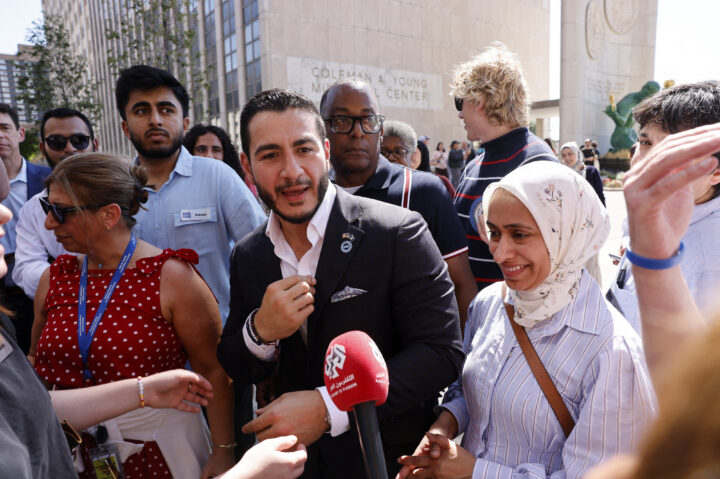
JEFF KOWALSKY / AFP via Getty Images
Michigan Democratic Senate candidate Abdul El-Sayed departs with his wife, Sarah Jukaku (R) after a press conference on August 5, 2026.
Abdul El-Sayed, Michigan’s Democratic Senate nominee, doubled down on his anti-Israel rhetoric on Tuesday — a day after he drew renewed scrutiny over his ongoing association with antisemitic streamer Hasan Piker.
Speaking at a Dearborn church, El-Sayed declined to confirm if he hopes to win an endorsement from state Sen. Jeremy Moss, a Jewish Democratic nominee for a congressional seat in the Detroit area, whom Piker had recently targeted on his show while arguing that Jews who support Israel are inviting violence against themselves.
“I’m not going to sugarcoat that we have our disagreements, especially when it comes to foreign policy and the best use of our tax dollars,” El-Sayed said of Moss at the event on Tuesday, billed as “Hate Has No Home in Michigan.”
“And the plurality of Michigan Democratic primary voters nominated me to be the Democratic nominee,” he added.
While reiterating his opposition to antisemitism and appreciation for Judaism, he said that his support for ending aid to Israel is “about making sure that in our foreign policy, we substantiate equal rights to peace, dignity and self-determination for Palestinian folk.”
“I’d rather my tax dollars not get spent to take away some people’s self-determination that could be used to empower other folks here,” El-Sayed argued in his remarks.
The comments suggest El-Sayed is continuing to play to his far-left voting base, even as his hostile views on Israel have alienated Jewish Democrats whom he will likely need to win the competitive battleground state.
Moss, for his part, is among the most prominent Democratic holdouts on El-Sayed, whose modest effort to distance himself from Piker on Monday drove a wedge between the two nominees.
In a statement posted to X on Monday, El-Sayed made no mention of either Piker or Moss, omissions that drew backlash from critics. Instead, he said that “nobody speaks for this campaign besides me and my campaign spokespeople,” while downplaying Piker as a “Twitch steamer” who would not define the contest. He did not say if his relationship with Piker, who has been a top surrogate for his campaign, would change moving forward.
“My commitment to Jewish safety is the same as my commitment to the safety of my own daughters,” he went on in his statement. “Antisemitism is a scourge and we need to address it in all its forms. And I stand against any rhetoric that puts the community at risk.”
The statement reportedly disrupted a conversation between the two nominees regarding an endorsement from Moss that is now in question — even as the state senator has vowed not to back El-Sayed’s Republican rival, former Rep. Mike Rogers (R-MI), who has been courting Jewish Democrats.
Moss, in a statement released Monday, said that he and El-Sayed have been in “continual dialogue” about shared goals such as fighting “MAGA extremism” and “Jewish and Arab safety and security.”
“There is still work ahead to unite our ticket despite our differences,” Moss added, without confirming if he would back El-Sayed. “It won’t happen overnight, nor should it. It will require continuing outreach that is credible and authentic.”
Jessica “Decky” Alexander, the Michigan Democratic Jewish Caucus chair, said that several campaigns and Jewish voices had urged El-Sayed’s team to release a statement on Monday countering Piker’s comments. “Whether they would have or not” without such prompting, “I do not know, but there is a comment,” she told Jewish Insider, calling his response a sign of “definite forward movement.”
“Many caucus members have shared that they would like him to disavow Piker,” she clarified on Tuesday.
Plus, Bessent's plan to make Iran an 'economic outcast'
Nathan Posner/Anadolu via Getty Images
House Minority Leader Hakeem Jeffries (D-NY) speaks during his weekly press conference at the U.S. Capitol in Washington, DC on March 19, 2026.
Good Monday afternoon.
This P.M. briefing is reserved for our premium subscribers like you — offering a forward-focused read on what we’re tracking now and what’s coming next.
Today’s Daily Overtime was curated by JI U.S. Editor Danielle Cohen-Kanik.
📡On Our Radar
Notable developments and interesting tidbits we’re tracking
Treasury Secretary Scott Bessent announced this afternoon that the Trump administration is launching “Operation Economic Outcast” against Iran, an effort aimed at severing Tehran’s global economic ties in order to “collapse every last option” for the regime, Jewish Insider’s Matthew Shea reports.
The Treasury Department designated over 60 entities, individuals and vessels “that enable the Iranian regime to procure illicit nuclear and missile technology, conduct cyber operations and generate oil revenue,” Bessent said, while President Donald Trump “is making phone calls to world leaders with specific requests to cease their interactions with the regime”…
The Treasury Department also redesignated Hezbollah, already a Foreign Terrorist Organization, for acting as a proxy of the Iranian regime under the direction of the Islamic Revolutionary Guard Corps, and sanctioned 10 individuals who were part of a network transferring funds to Hezbollah through couriers on commercial flights between Lebanon, Turkey, the UAE and Iran…
Israeli Prime Minister Benjamin Netanyahu claimed today that Iran tried to assassinate one of his sons: “Iran tried to kill, to murder one of my sons,” he said in an interview with Israel’s Channel 14, without specifying which of his two sons was the target…
House Minority Leader Hakeem Jeffries (D-NY) today denounced comments by antisemitic streamer Hasan Piker claiming that Jews are inviting antisemitic attacks against themselves by supporting Israel, JI’s Marc Rod reports.
Jeffries wrote on X that the “malicious claim that American Jews are inviting violence against themselves is dangerous and antisemitic,” without naming Piker directly. “We will fight the cancer of antisemitism with the fierce urgency of now,” he said…
Michigan Democratic Senate nominee Abdul El-Sayed, meanwhile, distanced himself from Piker but did not name him nor address the substance of his comments.
El-Sayed insisted that “nobody speaks for this campaign besides me and my campaign spokespeople,” despite having campaigned prominently with Piker, and went on to downplay Piker as “a Twitch streamer” who will not define the race or his campaign. He did not say whether his or his campaign’s relationship with Piker will change going forward…
Rep. Hillary Scholten (D-MI) condemned Piker outright, calling him “a hack who thrives on hate, shock and awe because he lacks substance.” Rep. Ro Khanna (D-CA), who has previously appeared on Piker’s show, also rejected the streamer’s comments, telling JI’s Marc Rod that “Jews are not the cause of [antisemitism]. Neither are people who support Israel. Antisemites are to blame. That’s it”…
Former Rep. Mike Rogers (R-MI) attended three AIPAC-hosted fundraisers in Los Angeles yesterday with another planned for today, according to The New York Times, as reporting emerges about a growing rift between Rogers and the pro-Israel group as he runs for U.S. Senate.
Rogers reportedly told Michael Tuchin, AIPAC’s board chair, that the group should consider whether it is the best messenger against El-Sayed, though he did not explicitly say he did not want its support and its United Democracy Project super PAC is still considering running ads backing Rogers…
New York City Mayor Zohran Mamdani condemned comments by Brooklyn Democratic leader Carmella Charrington attacking Jewish investors with whom she is engaged in a property dispute as “Zionists” and suggesting some link between her situation and Israeli settlement activity in the West Bank.
“Suggesting that an alleged deed theft in Brooklyn is part of a global conspiracy involving Jewish people is blatant, reprehensible antisemitism. Trafficking in these dangerous antisemitic tropes is vile and inexcusable,” the mayor’s office told JI’s Will Bredderman, after initially avoiding his questions on the issue at a press conference earlier today. However, the administration did not answer a follow-up question about whether the mayor believes Charrington should step aside from her district leader role…
Several leading Jewish and pro-Israel organizations condemned actor Mark Ruffalo for using what they deemed antisemitic rhetoric in his recent social media commentary targeting the Ellison family amid the pending merger of Paramount and Warner Bros. Discovery, JI’s Haley Cohen reports.
Rabbi Noah Farkas, president and CEO of Jewish Federation Los Angeles, said Ruffalo’s “unhinged rant, which combined Jewish wealth, media control, secret technology and sinister global power, is not legitimate criticism. It draws on recognizable antisemitic tropes with a long and dangerous history”…
As New York magazine continues to come under fire for a recent cover issue depicting the rise of Southwest Asian and North African culture in New York City while taking a hostile view of Israel, the magazine said its editors decided “genocide” is an “accurate description” of Israel’s actions in Gaza and therefore “its use would be allowed in our pages,” claiming that “accusations of antisemitic intent” in usage of the word “were in fact obfuscating an overwhelming scholarly consensus”…
The Trump administration formally revoked Syria’s designation as a State Sponsor of Terrorism today at the end of the 45-day congressional notification period, Secretary of State Marco Rubio announced, in order to “eliminate the final major barriers for private sector investment in Syria and promote Syria’s economic recovery and reintegration into the global economy.”
Rubio also revoked the designation of Hay’at Tahrir al-Sham (HTS) — a group that Syrian President Ahmad al-Sharaa led until he assumed the presidency in January 2025 — as a Specially Designated Global Terrorist, after having removed HTS from the Foreign Terrorist Organization list last year…
⏩ Tomorrow’s Agenda, Today
An early look at tomorrow’s storylines and schedule to keep you a step ahead
Keep an eye on Jewish Insider for a preview of tomorrow’s Senate special election runoff in South Carolina, where Sen. Darline Graham (R-SC) still has the backing of much of the GOP establishment, including President Donald Trump, in her race against Rep. Ralph Norman (R-SC).
Omani Foreign Minister Sayyid Badr Albusaidi is expected to visit Iran tomorrow, as the two countries continue negotiations over administering the Strait of Hormuz amid the announcement of the new U.S. economic campaign against Tehran.
Stories You May Have Missed
BOOKSHELF
Ahmed Fouad Alkhatib, a Gaza native who lost 33 family members in Israeli airstrikes, argues in his new book that Hamas bears primary blame for Palestinian suffering and political stagnation
MONEY MOVES
The suspension ends a key commercial lifeline, though analysts said Iran’s sanctions-evasion networks and enforcement uncertainty limit how decisive a blow it will be
The Michigan Democratic Senate nominee didn't address Piker's role in promoting his campaign or his attack on congressional nominee Jeremy Moss
JEFF KOWALSKY / AFP via Getty Images
Abdul El-Sayed addresses supporters at his election night event at The Majestic Theatre in Detroit, Michigan, on August 4, 2026
Michigan Democratic Senate nominee Abdul El-Sayed distanced himself, to a degree, from antisemitic streamer Hasan Piker, who has been a prominent surrogate of his campaign, after Piker attacked Democratic state Sen. Jeremy Moss and argued that Jews are inciting antisemitic violence against themselves by supporting Israel.
But, in the statement — posted on X under the heading, “My statement on Hasan Piker’s comments regarding Jeremy Moss” — El-Sayed didn’t name Piker or Moss, and didn’t directly address Piker’s comments.
“I believe all Americans deserve the right to advocate what they believe without fear of violence,” El-Sayed said. “This is particularly true for communities that have been intimidated for their beliefs in the past.”
Amid ongoing attacks on him for his association with Piker, El-Sayed also insisted that “nobody speaks for this campaign besides me and my campaign spokespeople.”
He went on to downplay Piker as “a Twitch streamer” who will not define the race or his own campaign. He did not say whether his or his campaign’s relationship with Piker will change going forward.
“My commitment to Jewish safety is the same as my commitment to the safety of my own daughters,” El-Sayed added. “Antisemitism is a scourge and we need to address it in all its forms. And I stand against any rhetoric that puts the community at risk.”
Despite the title of the statement addressing Moss, the statement itself did not directly address El-Sayed’s fellow Michigan Democrat or Moss’ allegations that opponents are spreading fabricated audio of him promoting antisemitic tropes.
Republican nominee former Rep. Mike Rogers (R-MI) blasted El-Sayed’s comments as insufficient.
“Hasan Piker’s call for violence against the Jewish Community, specifically against Jeremy Moss, must be condemned by every single Michigan Democrat. But Conman Abdul El-Sayed doesn’t have the guts to disavow his running mate,” Rogers said. “Abdul’s attempt at distancing himself from this violent and hateful rhetoric now that he and Hasan won the primary is the epitome of what a conman does — says one thing when it serves him and another when it doesn’t.”
Rogers added, “His rhetoric is causing fear in Michigan communities, is unAmerican, and makes him unfit to represent our state.”
Moss said in a statement later on Monday that he and El-Sayed, whom Moss has not yet endorsed, are in ongoing conversations about their shared goals, safety for Jews and Arabs and co-existence among Michigan communities.
“These important conversations do not fit neatly in the confines of a tweet or a reel, like so many want them to. I’m grateful that Abdul and I are having them,” Moss said. “There is still work ahead to unite our ticket despite our differences. It won’t happen overnight, nor should it. It will require continuing outreach that is credible and authentic.”
But Moss made clear that despite his disagreements with El-Sayed, he will not support Rogers, as some other leaders in the Jewish community plan to.
Moss also lambasted Piker, without naming him individually.
“Provocatuers are exploiting this moment to create further divisions. I will not be lectured by a California podcaster about what Oakland County, Michigan’s Jewish community should and shouldn’t believe,” Moss continued. “And we certainly won’t be gaslit that we’re responsible for the antisemitic harm upon us. The attempted murder of Jewish children in West Bloomfield has no justification,” he said, referencing the violent attack on Temple Israel earlier this year.
Piker has so far shrugged off criticisms of his comments, including those from another Michigan Democrat, Rep. Hillary Scholten (D-MI). In a response, Piker called Scholten “an israel 1st congresswoman,” and said she’s “vying for the spotlight by actively defaming a prominent antizionist voice to harm the dem senate majority chances over a 90/10 issue,” while referencing unverified rumors about Scholten’s personal life.
Plus, Baltimore's Orthodox Jews get a day at the races
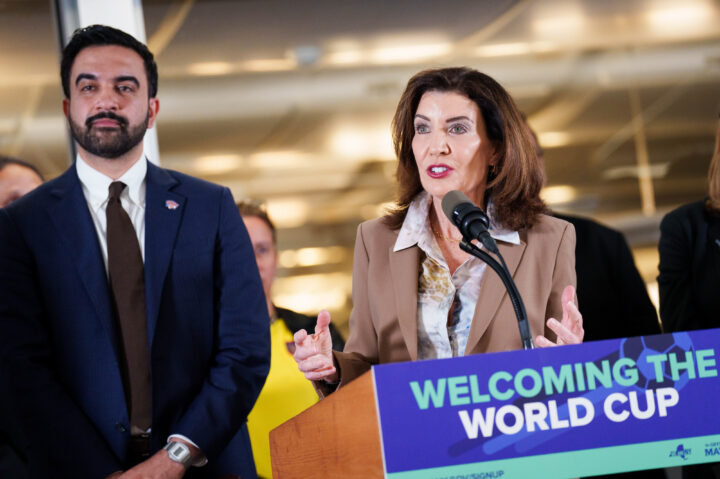
Adam Gray/Bloomberg via Getty Images
Zohran Mamdani, mayor of New York, left, and Kathy Hochul, governor of New York, during a news conference on 2026 FIFA World Cup transportation at the MTA Rail Control Center in New York, US, on Thursday, June 4, 2026.
Good Thursday afternoon.
This P.M. briefing is reserved for our premium subscribers like you — offering a forward-focused read on what we’re tracking now and what’s coming next.
Today’s Daily Overtime was curated by JI U.S. Editor Danielle Cohen-Kanik.
📡On Our Radar
Notable developments and interesting tidbits we’re tracking
Stefany Shaheen, the daughter of Sen. Jeanne Shaheen (D-NH) and a candidate for New Hampshire’s 1st Congressional District, launched a TV ad this week hitting her primary opponent, military veteran Maura Sullivan, for receiving $300,000 in donations “bundled from AIPAC donors,” Jewish Insider’s Marc Rod reports.
The donations referenced in the ad appear to be from individual donors who have previously contributed to AIPAC, but the pro-Israel group itself has made no endorsement and has not been directly involved in the race…
Michigan Democratic congressional nominee Jeremy Moss declined to endorse his party’s Senate nominee, Abdul El-Sayed, in an interview with Slate: “Abdul’s going to have to demonstrate some serious outreach to Oakland County’s Jewish community,” Moss said. The two candidates have “had an ongoing dialogue,” Moss added, as he said Democrats must ensure that “the liberal Jewish community is not politically homeless”…
Rabbi Asher Lopatin, director of community relations at the Ann Arbor Jewish federation who has been outspoken about the threat he believes El-Sayed poses to the Jewish community, appeared at a “Democrats for Rogers” press conference in Detroit today where he said, “I usually vote Democrat, but I’m gonna be voting for Mike Rogers … I’m sad to say this, that Abdul El-Sayed has made one thing very clear: We cannot let him anywhere near the U.S. Senate”…
A new poll commissioned by AARP found El-Sayed leading Rogers by one percentage point, 48-47%, but voters ages 50 and up were 16 points more likely than younger voters to say they were motivated to participate in the general election — a population that swings heavily towards Rogers. Voters ages 50-64 favored Rogers over El-Sayed 51-46%, and voters above 65 favored the Republican by 13 points (54-41%)…
Asked in a New York Times interview about New York City Mayor Zohran Mamdani’s call for the federal government to arrest Israeli Prime Minister Benjamin Netanyahu when he arrives in the city for the U.N. General Assembly next month, Gov. Kathy Hochul advised the mayor, “Let’s focus on the blocking and tackling of city government. That is where I believe the main focus should be”…
The Trump administration, meanwhile, is weighing in on another official’s appearance at the UNGA: The White House intends to prevent Palestinian Authority President Mahmoud Abbas from attending for the second year in a row, a U.S. official told The Times of Israel…
Treasury Secretary Scott Bessent explained on CNBC today that in order to implement the new U.S. economic campaign against Iran, the Trump administration will approach “all of our allies” and tell them, “You are either with us or against us.”
“If you insist on doing business with [Iran] — either transferring money, buying their oil, doing seaborne ship transfers — then the U.S. Treasury and the U.S. government will put its full might and force toward enforcing against you,” he added…
The NYT looks at which countries do the most business with Iran and could therefore be hardest hit by the new measures, including China, India and several Middle East nations…
Georgia state Rep. Esther Panitch, the only Jewish member of the state’s Legislature, denounced the Georgia branch of the Council on American-Islamic Relations for featuring extremist anti-Israel voices including Zahra Billoo, Ana Kasparian and Cenk Uygur as keynote speakers at its gala next month.
CAIR-GA has “dropped the mask at this point,” Panitch told the Jerusalem News Syndicate. “This is actual straight-out, Nazi-level Protocols of the Elders of Zion kind of antisemitism. They’re doing it, and they can’t say they didn’t know”…
For more than 150 years, Baltimore’s Orthodox Jews have walked to synagogue on Preakness Saturday and listened to the roar of the crowd from Pimlico Race Course less than a mile away, never able to join it. That changes in 2027, when the second jewel in horse racing’s Triple Crown — following the Kentucky Derby and preceding the Belmont Stakes — moves from Saturday to Sunday, finally opening the gates at Pimlico to the local Shabbat-observant community for the first time since the race started in 1873, JI’s Haley Cohen reports…
⏩ Tomorrow’s Agenda, Today
An early look at tomorrow’s storylines and schedule to keep you a step ahead
Keep an eye on Jewish Insider for a look at the growing divide between the United States and Israel over how to approach post-Assad Syria.
Despite her recent debate stage snafu, which has led GOP operatives to question her chances in next week’s special runoff election, Sen. Darline Graham (R-SC) is still enjoying the support of the party: Sen. John Barrasso (R-WY), the Senate majority whip, is in South Carolina today to support her race, and President Donald Trump will join her in Myrtle Beach for a rally tomorrow.
We’ll be back with the Daily Overtime on Monday. Shabbat shalom!
Stories You May Have Missed
GOING LOCAL
A Brookings Institution study found that of the 104 Democratic Socialists of America-backed candidates running for state legislature, nearly 75% have won their primaries
COLD TURKEY
Alleged straw-donor masterminds are selling tickets to an event with the Montana Republican — who says he’s not attending
Plus, ICE detains Jewish bridal shop owner
Sarah Rice/Getty Images
Senate candidate Mike Rogers greets supporters at his election watch party with the MIGOP on November 5, 2024 in Novi, Michigan.
Good Wednesday afternoon.
This P.M. briefing is reserved for our premium subscribers like you — offering a forward-focused read on what we’re tracking now and what’s coming next.
Today’s Daily Overtime was curated by JI U.S. Editor Danielle Cohen-Kanik.
📡On Our Radar
Notable developments and interesting tidbits we’re tracking
Jewish leaders in Michigan are circulating an open letter, obtained by Jewish Insider’s Matthew Kassel, urging Jewish Democrats and independents in the battleground state to sign their names in support of former Rep. Mike Rogers (R-MI) as he faces Democratic nominee Abdul El-Sayed in the race for U.S. Senate.
If El-Sayed were to claim victory in the general election, the authors say, “we fear the far-left and anti-Jewish elements in the Democratic party would become dominant … We cannot allow him to become the Democratic standard-bearer or Michigan’s senator”…
California state Sen. Aisha Wahab still holds a narrow lead as of this afternoon over former Dublin, Calif., Mayor Melissa Hernandez in the special election runoff for an East Bay House seat that drew a late surge of outside spending from AIPAC.
With 62% of the vote counted in yesterday’s election, Wahab had 51%, leading Hernandez by two percentage points or 1,356 votes, according to the unofficial initial returns. “We made a race that wasn’t close when we started into a nail-biter,” Patrick Dorton, a spokesperson for AIPAC’s United Democracy Project super PAC, told JI’s Matthew Kassel…
ICE detained a Jewish bridal shop owner and his mother living in Englewood, N.J., a local elected official confirmed today to JI’s Haley Cohen: Ari Ladino and his mother, Chava, who are originally from Bogotá, Colombia, run Luana Rose Modestly in Teaneck — a dress shop specializing in modest special occasion gowns popular among local Orthodox Jewish women. The reason for their arrest remains unclear…
In an interview with The Jerusalem Post today, U.S. Ambassador to Turkey Tom Barrack doubled down on his criticism of Israeli strikes on a Syrian air base earlier in the week, which Israel said had been prompted by Turkish involvement at the base. “Turkish forces were not aware that the Israeli aircraft were en route to that specific Syrian base … [and] could potentially have been inclined to scramble their own jets in the belief that they themselves were under attack,” Barrack said.
He announced that the U.S. is looking to relaunch a deconfliction cell between Israel and Syria, with potential Turkish participation, and downplayed reported Israeli concerns over a specific Turkish radar system said to be deployed at the base. “We remain convinced that this technical requirement need not pose a security concern, and that further conversations can help clarify the matter to everyone’s satisfaction,” Barrack said…
Lt. Gen. Eyal Zamir, the IDF’s chief of staff, visited Israeli troops in southern Syria today, where he said Israel is “monitoring the changes on the Syrian front” and “know[s] how to use our power precisely where it is needed and when it is needed”…
The IDF announced it is opening an investigation into the killing of 5-year-old Hind Rajab in Gaza in January 2024 after finding that troops had indeed fired at her family’s vehicle as it was traveling opposite the direction of an evacuation route. The military had previously denied responsibility for the incident, which drew global attention and inspired an Oscar-nominated film titled “The Voice of Hind Rajab.”
The IDF will also investigate the killing of 15 rescue workers traveling in emergency vehicles in March 2025, and closed investigations into a strike on a World Central Kitchen convoy and into the deaths of several Doctors Without Borders members, finding that troops’ actions in those incidents did not rise to the level of criminal offenses…
The New York Times examines CENTCOM’s efforts to keep oil traffic flowing through the Strait of Hormuz, including utilizing air- and water-based assets to intercept Iranian drones and missiles targeting commercial traffic.
Beyond protecting tankers loaded with oil, the U.S. military has also reportedly established its own corridor to help empty ships enter the strait, load up and exit largely undetected…
The New York State Department of Financial Services issued a notice warning Holocaust survivors and their families about potential fraud by an organization calling itself the “Jewish Holocaust Claims Center” that is contacting such individuals about their eligibility for compensation…
⏩ Tomorrow’s Agenda, Today
An early look at tomorrow’s storylines and schedule to keep you a step ahead
Keep an eye on Jewish Insider for a look at how Sen. Darline Graham‘s (R-SC) debate stage flub on national security may impact her chances in next week’s South Carolina special runoff election for Senate.
Sen. Ed Markey (D-MA) and his primary opponent, Rep. Seth Moulton (D-MA), will face off in their final debate before the election. Moulton, 47, is mounting a generational challenge to the 80-year-old Markey and has taken an increasingly critical stance against Israel and AIPAC on the campaign trail, while Markey has long staked out staunchly anti-Israel positions.
Stories You May Have Missed
SUNSHINE STATE SOCIALISM
Angie Nixon, who called Israel’s war against Hamas a genocide and campaigned with Rep. Rashida Tlaib, will be the party’s candidate against GOP Sen. Ashley Moody
CAMPUS BEAT
The study shows how unions are turning away from advocating for higher wages and using their institutions to foment attacks against Israel
In an early sign of Rogers’ bipartisan backing, three prominent Jewish Democratic bundlers are holding fundraiser for Rogers next week
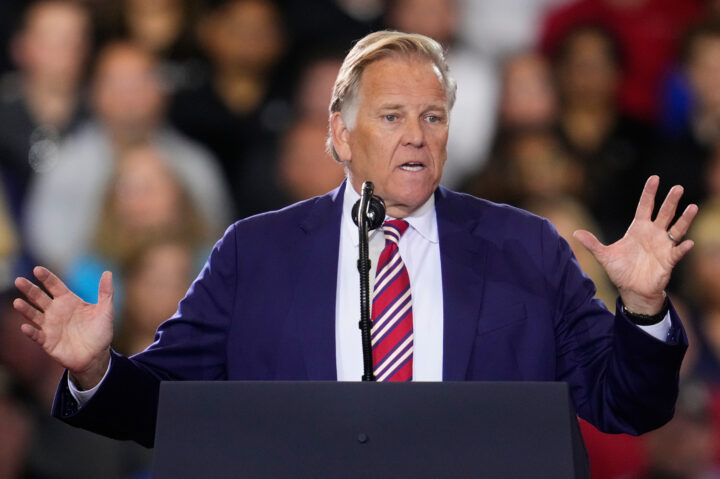
Paul Sancya/AP
Republican Senate candidate Mike Rogers speaks before President Donald Trump at an event at the General Motors Proving Ground Monday, July 27, 2026, in Milford, Mich.
More than a week after Abdul El-Sayed narrowly clinched the Democratic nomination in Michigan’s bruising Democratic Senate primary, his Republican opponent, former Rep. Mike Rogers (R-MI), is working to fine-tune his campaign’s outreach and messaging to disaffected Jewish voters who could play a decisive role in the closely contested race.
While Republicans in the key battleground state see an opportunity in November to capitalize on Jewish Democrats’ alarm over El-Sayed’s hostile rhetoric toward Israel and lackluster record in confronting the rise of antisemitism, Rogers has in the days following the primary still appeared relatively cautious in directly courting Jewish voters, as he has widened his pitch to Democrats in Michigan whom he reassured in a video message last week have “a home with” his campaign.
He has otherwise called El-Sayed, a far-left former public health official, “beyond antisemitic” and said he “hates Jewish people,” echoing the most extreme concerns among Jewish Democrats turned off by the Democratic nominee’s ties to antisemitic Twitch streamer Hasan Piker and comments equivocating over the foiled terrorist attack against a synagogue outside Detroit in March, among other issues.
Despite such criticism, Jason Cabel Roe, a GOP strategist in Michigan not involved in the race, said that he had not seen Rogers “specifically identifying the Jewish community as a target,” underscoring how the campaign is balancing private engagement with a key constituency alongside a more broadly calibrated public invitation for Democrats to join his coalition.
“A lot of this is going to come organically,” Roe told Jewish Insider, referring to Jewish Democrats in the state who are contemplating voting for Rogers. “This is not new territory for him.”
Bobby Schostak, a former chairman of the Michigan Republican Party and a prominent Jewish campaign surrogate, said he had hosted a donor call on Monday with Rogers and his pollster, Tony Fabrizio, joined by some 150 people. “There were people there who were traditionally not Republican voters,” he told JI, citing some Jewish Democrats and other former backers of Rep. Haley Stevens (D-MI), the moderate, pro-Israel lawmaker who lost to El-Sayed.
“Mike spoke to the importance of having a wide-open campaign with multiple coalitions,” Schostak said of the donor call, while stressing that Jewish Democrats in the Detroit area are particularly energized to help Rogers. “It is consequential both in numbers and in names,” he told JI on Thursday. “They are not being passive,” he explained. “They want to beat El-Sayed.”
In one of the first major signs of those efforts now materializing, three prominent Jewish Democratic bundlers in Michigan are hosting a fundraiser for Rogers next Tuesday, according to an email invite sent to Jewish community members on Thursday.
“This is something that none of us has ever done,” said Hannan Lis, who is leading the fundraiser with Brian Hermelin and Rob Orley. “But we feel this is a departure in the direction of the Democratic Party,” he told JI of El-Sayed’s staunch opposition to Israel and refusal to recognize its right to exist as a Jewish state. “We’re taking a stand here,” he added. “This is beyond politics.”
Even though “there are many issues where we don’t necessarily agree with Mike Rogers,” Lis noted, “we trust him” on key issues. The fundraiser is meant to “show we are willing to back up a person” who holds a mutual commitment to a “strong relationship with Israel” and “is not playing politics” on other matters concerning the Jewish community, he explained.
Hermelin, the president of the Jewish Federation of Detroit, confirmed his involvement in the fundraiser but declined to comment further on the event, which he is co-hosting in his personal capacity.
Rogers, recognized as a national security-focused conservative, has also attended pro-Israel fundraisers outside of the state this week, according to a person familiar with the matter. “There is now a lot of enthusiasm in the pro-Israel community for Mike Rogers,” the person said. “A not-insignificant piece is from Democrats.”
A spokesperson for Rogers’ campaign did not return a request for comment on Thursday.
The Republican Jewish Coalition has indicated it intends to aggressively target the nearly 100,000 Jewish voters in Michigan who make up a potential swing bloc, with a special focus on Jewish Democrats who “now find themselves politically homeless,” Sam Markstein, a spokesperson for the group, told JI in a statement.
Markstein said that he could not yet share specifics about the RJC’s plans to invest in the race but noted an independent expenditure is in the works and “will be significant.”
Eric Levine, a top Republican bundler in New York and an RJC board member who hosted a fundraiser for Rogers in late July, said the former congressman is “making a direct appeal to the Jewish community,” including Democrats, and “has been very successful.”
AIPAC, the pro-Israel advocacy group whose super PAC spent over $30 million to help Stevens, has not officially endorsed Rogers, but sources say it is likely to spend on his behalf before the November election. Representatives for AIPAC and its super PAC did not respond to requests for comment.
In a tacit recognition of the Jewish vote’s potential significance in the general election, El-Sayed has, for his part, recently sought to ease tensions with Jewish Democrats who remain skeptical about his campaign, emphasizing his “commitment to Jewish safety” even he has continued to use incendiary rhetoric on Israel in the wake of the primary.
Michael Horowitz, a Jewish Democratic leader and Detroit businessman, said he was “leaning heavily” toward voting for Rogers but that he had not made up his mind, underscoring the inherent challenges in enticing Jewish Democrats to defect from a party that they have long called home.
Though Horowitz said he will not vote for El-Sayed, he attributed his reservations to delivering a win for the Trump administration as well as a “volatile world” that could shape his assessment in the lead-up to the election. “I would say that the vast majority of people I’ve talked to are voting against El-Sayed — as opposed to voting for Rogers,” he told JI.
He said he is now working to arrange a “more intimate conversation” with Rogers to get a better sense of the candidate, after a surrogate reached out to make a connection. “I don’t think that not voting is an option,” he said, adding, “until I cast my vote it’s not a done deal.”
Shimon Levy, an Israeli American entrepreneur in Detroit who identifies as an independent and backed Stevens in the primary, said he is supporting Rogers’ campaign and had wrapped up lunch with members of his team when he spoke with JI on Thursday.
“I think, at this stage, the Rogers team is just here to listen,” he said. “They’re asking, ‘How do we win your vote?’”
The Fox News survey shows Rogers leading El-Sayed, 51-47%, winning over a small but critical mass of Democratic voters
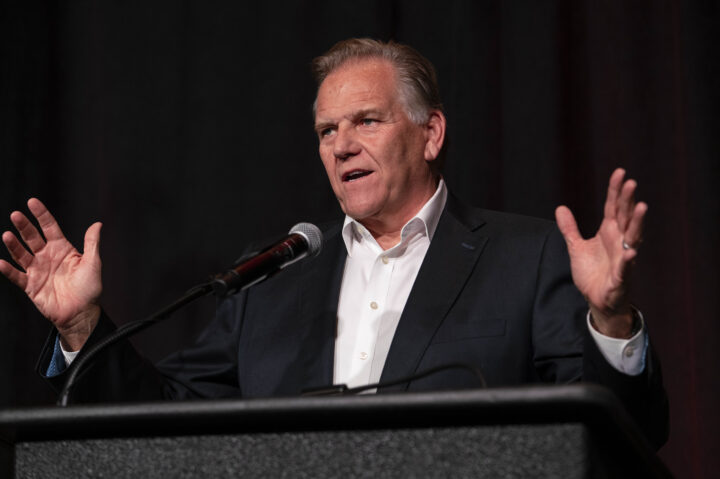
Sarah Rice/Getty Images
Michigan Senate candidate Mike Rogers speaks at his election watch party.
Former GOP Rep. Mike Rogers starts off the Michigan Senate general election race with a narrow advantage over Democrat Abdul El-Sayed, according to a new Fox News poll, aided by an advantage with independents and making inroads with a small but significant number of Democrats willing to cross party lines.
Overall, Rogers leads El-Sayed among registered voters by four points, 51-47% — and is one of the only Republicans to hold a lead in the series of Fox News Senate battleground polls that have otherwise shown Democratic Senate candidates ahead of their GOP opponents.
The poll found Rogers’ advantage is sustained by holding onto more of his base than El-Sayed, while claiming a small edge with independents. Rogers wins 96% of Republican support, while El-Sayed support is at 91% among Democrats and is only polling at 69% with Democrats who don’t support the Democratic Socialists of America.
54% of Michigan voters surveyed said El-Sayed is too extreme for the state, while 51% of respondents said Rogers was too close to President Donald Trump.
El-Sayed starts the general election with 54% of Michigan respondents viewing him unfavorably and a 41% minority viewing him favorably. That minus-13 net negative unfavorability is a notch worse than Rogers’ 45% favorable rating and 51% unfavorable rating (minus-6).
The pollsters also found that El-Sayed is underperforming with Black voters, women and suburbanites — all key constituencies in a midterm election. Rogers, however, is lagging among younger voters under 30 and independents compared to Trump’s 2024 showing in the state.
The poll surveyed 1,006 registered Michigan voters between Aug. 6-10, and has a 3% margin of error.
Left-wing Lt. Gov. Peggy Flanagan’s anti-Israel message is being complicated by her outreach to AIPAC earlier in the campaign

(AP Photo/Ellen Schmidt)
U.S. Rep. Angie Craig, D-Minn., left, and Minnesota Lt. Gov. Peggy Flanagan participate in a forum for U.S. Senate candidates at Farmfest Wednesday, Aug. 5, 2026, in Morgan, Minn.
The outcome of Michigan’s bruising Democratic Senate primary last week, where Abdul El-Sayed claimed a narrow victory over Rep. Haley Stevens (D-MI) in an upset championed by the anti-Israel left, is looming over the next intraparty showdown being held in Minnesota on Tuesday — the latest in a series of proxy battles between the party’s mainstream and left-wing flanks.
In an echo of Michigan, the bitter Democratic primary for an open Senate seat in battleground Minnesota this week is pitting a moderate House member with a long-standing pro-Israel record, Rep. Angie Craig (D-MN), against an outspoken progressive, Lt. Gov. Peggy Flanagan, whose attack lines have frequently centered on AIPAC, which spent over $30 million in its unsuccessful effort to help Stevens.
The Minnesota primary is, in the closing stretch, likewise revolving around questions of electability for Democrats in the must-win November contest. Craig has pointed to controversies amid Flanagan’s tenure in government as vulnerabilities Republicans are eager to exploit — most notably including the welfare fraud scandal that prompted Democratic Gov. Tim Walz to abandon his reelection campaign for a third term earlier this year.
Flanagan, in addition to her anti-AIPAC messaging, has hammered Craig over what she has described as a “disqualifying” vote approving the Laken Riley Act — legislation requiring the detention of unauthorized migrants charged with certain crimes — the optics of which have been damaging in the wake of President Donald Trump’s protracted immigration crackdown in Minnesota. Craig has expressed regret for her vote.
But unlike Michigan, where El-Sayed claimed the nomination by less than one point after polls had suggested a double-digit blowout, the Minnesota matchup has been seen as neck-and-neck, the outcome of which is hard to predict, experts say. Recent independent surveys have shown a statistical dead heat in the final weeks of the primary, with each candidate garnering around 40% of the vote.
The candidates’ equivocations over AIPAC and individual ties to the group have also emerged as fault lines in recent weeks, complicating the ideological divisions that have shaped other primaries in which Israel and Middle East policy have featured prominently.
In a reflection of the extent to which AIPAC is now viewed as a liability in Democratic primaries, Craig has distanced herself from the group, which has not officially made an endorsement in the race even as its donor network has contributed to her campaign. The congresswoman, who is backed by several pro-Israel lawmakers including Sen. Elissa Slotkin (D-MI) and House Minority Leader Hakeem Jeffries (D-NY), has said she is not accepting contributions from AIPAC’s political arm in her current campaign.
During a recent debate, Flanagan said AIPAC had been Craig’s “biggest funder throughout her entire political career,” while claiming her own “values do not align with” the group. Flanagan has cast AIPAC as part of “a band of super villains” in the race now trying to “buy this election,” language some Jewish leaders say they have found unsettling amid rising antisemitism.
Flanagan, however, acknowledged last month she had met privately with AIPAC after The Minnesota Star Tribune obtained a video recording of remarks to Jewish community members — also reviewed by Jewish Insider — in which she said the outreach was “important” for her “to make sure that we’re building that relationship.”
Flanagan claims that AIPAC turned against her and came to regard her as a “threat” when she confirmed her support last year for Senate resolutions to block arms sales to Israel. She has since endorsed a House amendment to end aid to Israel, which Craig rejected, further illustrating her policy disagreements with the group.
Craig, for her part, has sharply dismissed the lieutenant governor as “completely disingenuous about her soliciting support from AIPAC,” claiming that she “has been very hypocritical” because of her efforts to demonize the group.
While Flanagan has insisted she was not seeking an endorsement in her outreach to AIPAC officials, she did write an Israel position paper that she submitted to the group as part of their discussions, according to two people familiar with the matter.
Manny Houle, a pro-Israel Democratic consultant in Minnesota, confirmed to JI that Flanagan presented a Middle East policy paper to AIPAC and said that he had personally reviewed the document. He said he no longer had a copy, which JI was unable to obtain, but he recalled that she “was open to conditioning aid” to Israel and said she “put a lot of pressure and fault on Israel and occupation,” among other “key factors” he characterized as distinguishing Flanagan from Craig.
Houle, a former director of progressive outreach for AIPAC in the Midwest, said his impression had been that Flanagan wrote the paper and sought the group’s feedback early in her campaign last year because she viewed it as part of a broader process. The lieutenant governor “would have been open to engaging within the network of donors” affiliated with AIPAC, Houle claimed, “but when she realized that wasn’t going to be the case,” she pivoted to a more hostile position.
“Many key advisors to Peggy are anti-AIPAC, so it’s hard for me to think she’d ever honestly in good faith engage with the organization,” Houle explained to JI. “I’ve had conversations with her throughout the race trying to get her to tone down her rhetoric” on Israel issues, he added, “but to no avail.”
A spokesperson for AIPAC did not return a request for comment.
Alexandra Fetisoff, a spokesperson for Flanagan’s campaign, did not directly address the AIPAC paper in a statement responding to a request for comment. “Flanagan disagrees with AIPAC’s deeply unpopular political agenda and the catastrophic actions of” the government led by Israeli Prime Minister Benjamin Netanyahu, Fetisoff told JI on Friday.
“Flanagan believes what has happened in Gaza is genocide, a position in line with the United Nations,” Fetisoff said. “Flanagan has consistently condemned antisemitism, and will continue standing with Jewish Minnesotans against hate.”
Last week, American Priorities, a new super PAC created to counter AIPAC’s influence in Democratic primaries, began spending in the race to help boost Flanagan, spending over $50,000 on an ad calling her a “fighter” who would “stand up to Trump” while touting her support from Sen. Bernie Sanders (I-VT).
Flanagan also claims backing from the state Democratic Party and retiring Sen. Tina Smith (D-MN), whom she is vying to succeed, along with leading progressive critics of Israel such as Sens. Elizabeth Warren (D-MA) and Chris Van Hollen (D-MD).
Doug Rossinow, a professor of history at Metro State University in St. Paul, who has tracked divisions over Israel in the state Democratic Party, said the “AIPAC issue flew under the radar until pretty recently” in the election. “The Flanagan-Craig contest is, compared to Michigan’s Democratic Senate primary race, a classic case of Minnesota understatement and even passive aggression,” he told JI.
“Flanagan lately has made an issue of Craig’s history of support from AIPAC,” he noted, “but Craig, unlike Haley Stevens, doesn’t want to own that or talk about Israel.” Meanwhile, Flanagan has stated “little about her own position on Israel” and the region, he added, “unlike El-Sayed in Michigan,” a fierce critic of Israel who has refused to acknowledge its right to exist as a Jewish state.
One state party activist described the race as “a little bit less black and white than Michigan,” while noting the contrasts between Craig and Flanagan are not as drastic. “I see it as a toss-up,” he said of the primary.
Joe Radinovich, a Democratic consultant based in Minneapolis, added that while the national political mood has favored populist progressives, he believes there is reason to interpret the closer-than-expected finish in Michigan as a relatively promising omen for Craig, who flipped a GOP-held swing district in 2018.
“The dominant narrative has belonged to the further left wing of the party, populist candidates and people decrying AIPAC and Israel,” Radinovich, who said he is supporting Craig but is not involved in the primary, told JI in an interview on Friday. “But if I’m on the Craig campaign and looking at the results of the election in Michigan, I’m feeling some wind in my sails.”
Mara Kunin, Craig’s campaign manager, projected confidence in a statement on Friday. “National and state Republicans are making a serious play for this Senate seat and primary voters understand that we can’t risk putting up a weak candidate in the general election,” she said, adding Craig “is positioned to win this race on Tuesday and seal the deal in November.”
The Democratic nominee is expected to face Michele Tafoya, a former NFL sideline reporter who is heavily favored to win the Republican primary, in November. The GOP’s Senate campaign arm has indicated that it views Minnesota among four pickup opportunities as the party seeks to retain its majority in the chamber.
“It is very saturated, very ugly and very negative,” another state party activist said about the primary, which has otherwise seen a flood of outside spending from opposing groups. “I think that AIPAC will have an impact in the race, but social services fraud could be more important,” he told JI. “Whoever wins, it will sort of say which issue” carries the most weight.
In an interview with CNN, she underscored her pro-Israel bona fides, saying she is a ‘Zionist Democrat in Michigan’
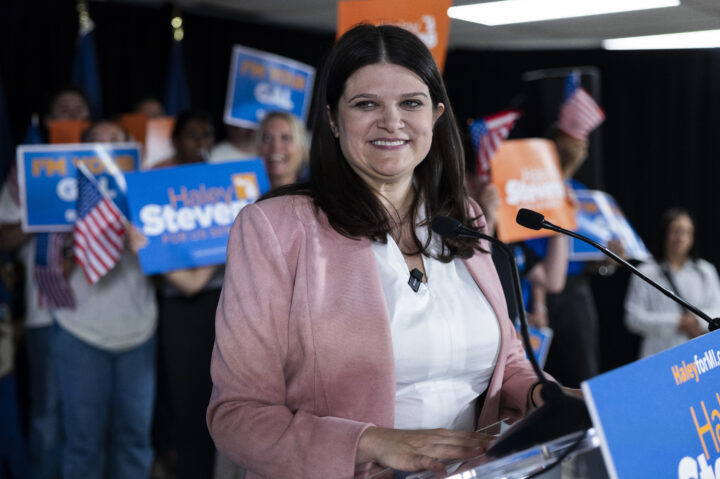
Rep. Haley Stevens (D-MI), candidate for Michigan's open U.S. Senate seat, holds a rally with Sen. Gary Peters (D-MI) on August 2, 2026 in Madison Heights, Michigan (Photo by Finn Gomez/Getty Images)
In her first cable news interview since her Senate primary loss on Wednesday morning, Rep. Haley Stevens (D-MI) told CNN that Jewish voters who are concerned about Democratic Senate nominee Abdul El-Sayed’s hostility towards Israel are “going to have to make a personal and private decision” as to who to support in November.
Stevens also told CNN on Friday that she is a “Zionist Democrat in Michigan.”
Just before he was declared the winner in the Democratic primary for the pivotal Michigan Senate race, El-Sayed doubled down on his criticism of Israel on MS NOW’s “Morning Joe,” calling the Jewish state “bloodthirsty” and saying his critiques go beyond the government of Israeli Prime Minister Benjamin Netanyahu.
El-Sayed, who made his opposition to AIPAC a central part of his campaign message, sought to ease tensions with skeptical Jewish voters after winning the nomination, addressing what he called “an issue that has been focused on in this race.”
“To all of my sisters and brothers of the Jewish faith,” he said in his televised remarks, “I want you to know that my commitment to your safety, my commitment to Jewish safety, is the same commitment that I have to the safety of my own daughters.” He also spoke about his experience going to a seder during the campaign, where in an awkward turn of phrase, said he was able to “break bread” with his Jewish friends.
On Friday, Republican Senate nominee Mike Rogers argued that the “vast majority of people” rejecting El-Sayed — whose bid he framed as a “campaign filled with anger, divisiveness, calls for violence and the views that are out of touch with your values”— have “a home with us.”
In a video message directed at disaffected moderates, Rogers said ‘the fight is far greater than just left versus right. The fight is for the very soul of our nation’
Sarah Rice/Getty Images
Michigan Senate candidate Mike Rogers speaks at his election watch party.
Addressing Michigan Democrats in a videotaped message, Republican Senate nominee Mike Rogers said that the “vast majority of people” rejecting Democratic Senate nominee Abdul El-Sayed — whose bid he framed as a “campaign filled with anger, divisiveness, calls for violence and the views that are out of touch with your values”— have “a home with us.”
“If you’re among the majority of Democratic voters that woke up on Wednesday feeling hopeless because the person who won does not represent your values, well, just know there is still hope,” Rogers said seated next to his wife, in a 90-second video message released on Friday.
“Michigan deserves a senator who is ready to sit with you, hear from you and represent you.
The parents across Michigan who want an education system that sets up their kids for success have a home with us. Grandparents across Michigan who are heartbroken from watching their kids and grandkids leave the state, you have a home with us,” he continued.
“To young people who are looking for real solutions to our housing affordability crisis, you have a home with us. To families who don’t want higher taxes and lower paychecks, you have a home with us. The fight is far greater than just left versus right. The fight is for the very soul of our nation. Over the next 90 days, I’m going to work hard to earn your trust, to earn your support and earn your vote.”
Most Democrats quickly coalesced behind El-Sayed after he narrowly clinched victory in Michigan’s Democratic primary on Wednesday morning, while Republicans quickly attacked El-Sayed’s extremist history and ties.
Just before he was declared winner, El-Sayed doubled down on his criticism of Israel on MS NOW’s “Morning Joe,” calling the Jewish state “bloodthirsty” and saying his critiques go beyond the government of Israeli Prime Minister Benjamin Netanyahu.
In interview with JI, Feterman said El-Sayed ‘will quickly discover a primary is a much different situation’ than a general election
Tom Williams/CQ-Roll Call, Inc via Getty Images
Sen. John Fetterman (D-PA) is seen after the Senate luncheons in the U.S. Capitol on Tuesday, April 14, 2026.
Sen. John Fetterman (D-PA) said on Wednesday that he believes Abdul El-Sayed’s victory in the Democratic primary for U.S. Senate in Michigan has put the state in play for Republicans in November.
Fetterman made the comments in an interview with Jewish Insider in the hours after Rep. Haley Stevens (D-MI) conceded to El-Sayed in what was a competitive and contentious primary. The Pennsylvania Democrat said he expects El-Sayed will struggle to reach moderate voters without distancing himself from antisemitic streamer Hasan Piker and his record of extremist comments, including remarks that America deserved 9-11 which Republicans are already revisiting in campaign ads.
“He will quickly discover a primary is a much different situation in this state [than the general election], when you’re accountable for winning the other side. I can’t wait to see him campaign for the general. I have got my popcorn for that,” Fetterman told JI. “Will he denounce Hasan Piker? Because Piker is already calling moderates ‘Islamophobic pieces of s***.’ Will he campaign with him? Will he denounce his views? I am daring him to continue to campaign with Hasan Piker now.”
“Think about how volatile a guy like Piker is,” Fetterman said. “He’s already gone off and exploded because El-Sayed was saying how now we have to mend fences.”
Fetterman called El-Sayed “a dream for a Republican candidate,” adding that he would spend millions on political advertisements highlighting El-Sayed’s relationship with Piker if he were the GOP candidate in the race.
Fetterman argued that El-Sayed’s close margin of victory over Stevens — less than one point — shows that his win is not indicative of a shift in the state’s overall electorate.
“I don’t know why El-Sayed described this as a big movement. He thinks that this was an incredible win and that’s just not the case,” he told JI. “Just the opposite — he barely won by 14,000 votes.”
“He really ran the under-four mile politically, palling around with a dude that loves Hamas and thinks America deserved 9/11,” he added. “I mean, will that stick? We’ll see, but overall, this takes largely what had been a safe seat for Democrats and absolutely puts it in play now. Mike Rogers barely lost to [Sen.] Elissa Slotkin (D-MI) [in 2022].”
Asked if he’ll consider endorsing former Rep. Mike Rogers (R-MI), El-Sayed’s Republican opponent in the contest, Fetterman said, “I’m not making any endorsements in this race.”
The Pennsylvania Democrat expressed skepticism that El-Sayed would be able to win over pro-Israel and Jewish voters in November, specifically pointing to his defense of the perpetrator of the violent attack on Temple Israel in the Detroit suburbs earlier this year. “Nothing justifies the heinous attack that we saw on Temple Israel,” Fetterman said.
“Every other word out of his mouth is AIPAC, AIPAC, AIPAC. Imagine what that must look like to a Jewish voter,” Fetterman said of El-Sayed. “Essentially he has defined his race by opposing Jewish money or saying Israel is the aggressor, and he aligns himself with some of the worst people.”
“I’m not a member of the Jewish community, but I can’t imagine how anyone could vote for him in good conscience,” he continued. “How could a Jewish voter in Michigan vote for a guy that refused to condemn a terrorist that crashed his car into a synagogue to kill 150 Jewish children? That’s disqualifying, and it’s appalling.”
Fetterman argued that, “This is a guy that has similar views to Piker. We all know why Abdul El-Sayed was sad after we incinerated Iranian leadership. Remember what Hamas has done to defenseless Israeli and Jewish civilians on 10/7. Piker is the guy that cheers for that organization. I don’t know how you are able to reconcile that.”
Fetterman also took aim at Sen. Bernie Sanders (I-VT) for his endorsements of El-Sayed in Michigan and failed Senate candidate Graham Platner in Maine, who Sanders withdrew his support for after he was accused of sexual assault. The Pennsylvania senator, who has publicly sparred with all three men in recent months, criticized Sanders’ candidate choices as detrimental to Democrats retaking control of the Senate.
“Bernie Sanders is not flipping seats,” Fetterman said. “He is trying to put volatile and terrible candidates into otherwise more safe kinds of opportunities for Democrats.”
He went on to add that he does not plan to endorse the Democrat in the race, while noting that El-Sayed would likely not want his support.
“I can’t ever endorse him, not to think he’d even want mine, and not because he’s called me an asshole or because I’m an ogre that belongs on a pike,” Fetterman said, referring to comments El-Sayed made about him earlier this month. “It’s because he’d have to renounce people like Piker and some of those extreme community leaders that were very much involved with standing with Iran and engaged in rhetoric that describes America as evil. They’re just essentially anti-American people, ironically, while they are living in our country.”
Plus, Hawaii's sleeper House race
(Scott Olson/Getty Images)
Democratic candidate for U.S. Senate Abdul El-Sayed speaks to supporters at an election-night rally at the Majestic Theatre on August 04, 2026 in Detroit, Michigan.
Good Thursday morning.
In today’s Daily Kickoff, we cover the fallout from Abdul El-Sayed’s narrow victory over Rep. Haley Stevens in Michigan’s Democratic Senate primary, and talk to Jewish Democrats in the state who are considering crossing party lines to vote for GOP nominee Mike Rogers in the November election. We report on the obstacles facing Rep. Ed Case ahead of a challenge from his left in Saturday’s primary in Hawaii’s 1st Congressional District, and cover a Senate Judiciary subcommittee hearing examining Muslim Brotherhood networks and affiliates in the United States. Also in today’s Daily Kickoff: Benny Stanislawski, Tom Kahn and Gianni Infantino.
We also have a new on-demand Live Briefingthat you can access throughout the day via our new app (on Apple and Android) and on our website.
Today’s Daily Kickoff was curated by JI Israel Editor Tamara Zieve and U.S. Editor Danielle Cohen-Kanik. Have a tip? Email us here.
What We’re Watching
- U.S.-led talks between Israel and Lebanon in Rome are slated to conclude today, after yesterday’s discussion was cut short by several hours “due to events on the ground,” the State Department said.
- The decision to pause talks came after the IDF conducted strikes in southern Lebanon over what it said were “blatant violations” of the ongoing ceasefire by Hezbollah, including an incident in which two IDF reservists were killed and four seriously wounded by an explosive device in southern Lebanon.
- Reports continue to indicate Iran and Oman are inching toward a deal to reopen the Strait of Hormuz after earlier agreements on the issue fell apart. An Iranian Foreign Ministry spokesperson said on Wednesday that Tehran and Muscat were close to finalizing an agreement, so long as “certain parties do not obstruct this process” — an apparent reference to the U.S.
- Tennessee is holding its primary elections today. In the state’s 5th District, Rep. Andy Ogles (R-TN), a far-right lawmaker, is facing a serious primary challenge from Charlie Hatcher, a former state commissioner of agriculture.
What You Should Know
A QUICK WORD WITH JI’S MATTHEW KASSEL
Abdul El-Sayed’s narrow victory over Rep. Haley Stevens (D-MI) in Michigan’s bruising Democratic Senate primary on Tuesday is forcing many Jewish leaders in the state to confront an uncomfortable decision as they now look ahead to the general election in November.
Several Jewish Democrats in the battleground state are now indicating that they will break with a party they have long called home and instead vote for the Republican nominee, Mike Rogers, in the November election, citing their continued alarm over El-Sayed’s hostile rhetoric toward Israel as well as remarks they have interpreted as indifferent to rising antisemitism, among other concerns.
“I can’t vote for El-Sayed,” Michael Horowitz, a Jewish community leader and Detroit businessman who supported Stevens, a pro-Israel moderate, told Jewish Insider. “So many things I find despicable about him, not the least of which is his close association with Hasan Piker,” the antisemitic Twitch streamer, who Horowitz said “demeans America, demeans Jews and demeans all but the most radical among us.”
Horowitz confirmed he was now “leaning strongly to Rogers,” a former congressman who narrowly lost in his bid for Senate last cycle. “And I have heard from many in the Jewish community who say they will be supporting Rogers,” he said on Wednesday.
Hannan Lis, a Democratic fundraiser and Jewish leader who splits his time between Michigan and Israel, was among those who had told JI before the primary that he would vote for Rogers in the general election if El-Sayed won the nomination, noting he knows “many” Jewish Democrats who plan to do the same.
His reservations about Republicans preserving their Senate majority by picking up the Michigan seat held by retiring Sen. Gary Peters (D-MI), he clarified, were superseded by his objections to El-Sayed’s stances on Israel and responses to antisemitism. “El-Sayed is no Democrat,” he claimed.
CASE STUDY
Rep. Ed Case (D-HI), a moderate pro-Israel Democrat in Hawaii who was first elected to the House in 2002, has not drawn a serious primary threat in several years. Now, as he prepares to defend his seat in a primary on Saturday that has largely flown under the radar, some Democrats are warning that the 73-year-old could be at risk of losing to a younger challenger capitalizing on a national political environment that has proven unfavorable to Democratic incumbents amid broader calls for generational change from the party’s activist base, Jewish Insider’s Matthew Kassel reports.
While you were sleeping: “It’s one of those sleeper races where there’s definitely an upset brewing,” said a Democratic operative who worked on the Case campaign until a few months ago, speaking on condition of anonymity to avoid professional reprisals. “Ed is running a poor race,” the former staffer told JI, echoing other observers who described a sluggish approach in which Case has largely foregone campaign events and avoided debates with his opposition.
ON THE HILL
Sen. Ted Cruz (R-TX), speaking at a Senate Judiciary subcommittee hearing on Wednesday that he organized to examine Muslim Brotherhood networks and affiliates in the U.S., suggested that Michigan Senate candidate Abdul El-Sayed was tied to such networks and that his Democratic primary win represented a victory for them. “Behind El-Sayed’s political rise sits a much older and more entrenched institutional network,” Cruz asserted, Jewish Insider’s Marc Rod reports.
Zoom out: Kyle Shideler, a senior analyst for homeland security and counterterrorism at the Center for Security Policy, testified under questioning from Cruz that El-Sayed’s win concerned him given the nominee’s father-in-law’s ties to Muslim Brotherhood-linked groups and El-Sayed’s own relationship with groups connected to the Council on American-Islamic Relations. “It shows the success of the Muslim Brotherhood network over multiple decades. It achieved what they said they were going to achieve, which was to normalize support for Hamas and normalize support for terrorism,” Shideler said.
COMMUNITY CONCERN
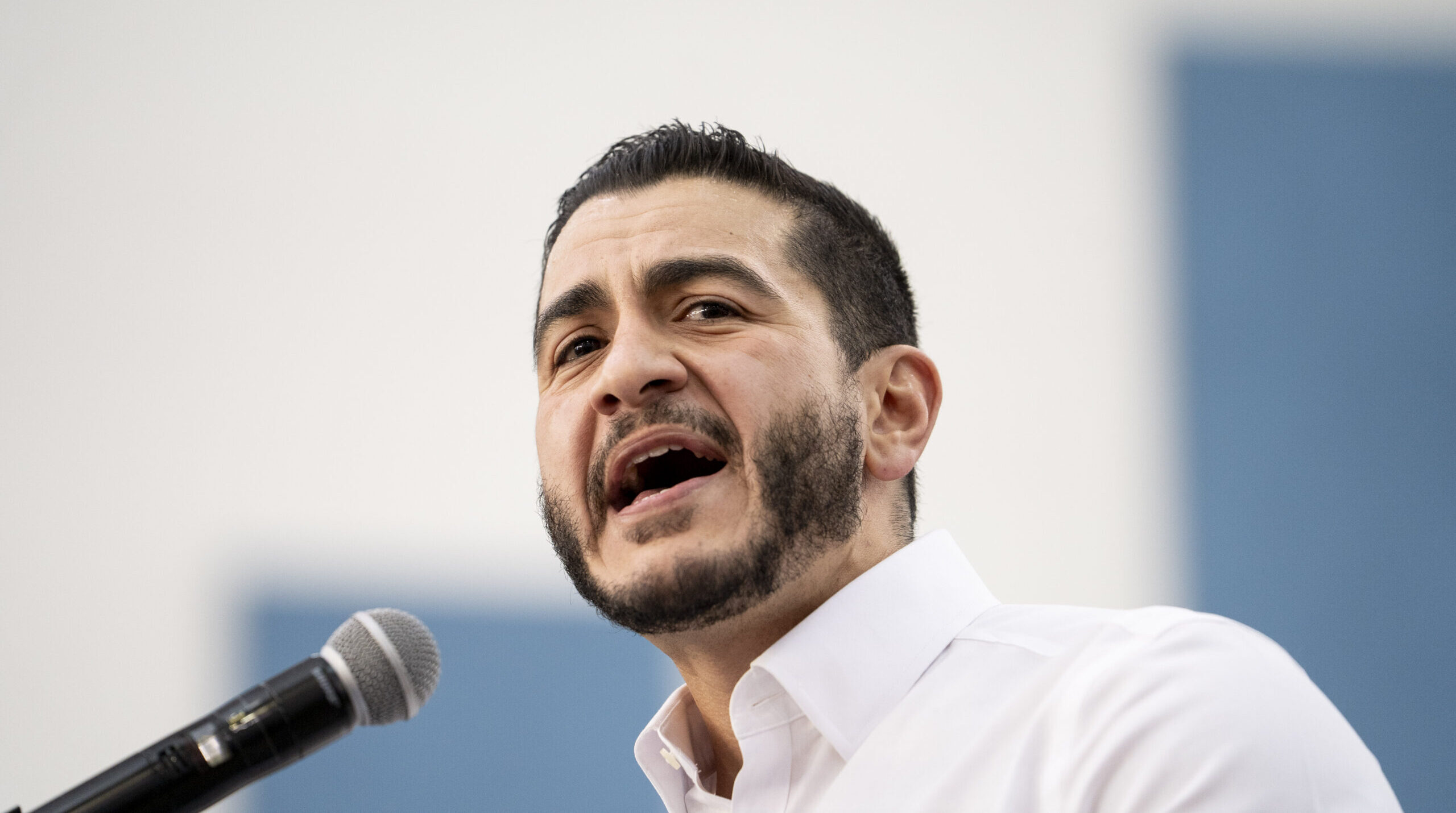
Jewish groups expressed concern on Wednesday about the victory of Abdul El-Sayed in the Democratic primary for U.S. Senate in Michigan, highlighting his extreme rhetoric on Israel and the broader rise of the far left, Jewish Insider’s Marc Rod reports.
Reactions: Jewish Democratic Council of America CEO Halie Soifer said in a statement that the group was “disappointed” by the results of the primary, in which the group had endorsed and campaigned strongly for Rep. Haley Stevens (D-MI). Soifer congratulated but stopped short of endorsing El-Sayed. AIPAC, while declining to preview specific plans, indicated it intends to stay engaged in the Michigan race through November. “Our members remain determined to ensure that voters reject Dr. El-Sayed and his radical anti-Israel agenda in November,” spokesperson Deryn Sousa told JI.
Trump’s take: President Donald Trump, speaking at an event in Las Vegas on Wednesday, said al-Sayed “hates Jews and he hates Israel,” adding, “He’s a man of hate, and now he’s going around saying, ‘Oh I love everybody.’ He doesn’t love everybody. Put him in office, and you’re going to find out what he loves.”
WITHHOLDING SUPPORT
Rep. Hillary Scholten (D-MI), a moderate Michigan lawmaker representing a swing district, broke with most other Democratic members of the state’s congressional delegation in declining to offer an explicit endorsement of Democratic Senate nominee Abdul El-Sayed, after offering strident criticism of him during the primary campaign, Jewish Insider’s Marc Rod and Matthew Shea report.
What she said: “Congratulations to everyone who participated in Michigan’s hard-fought primary elections last night, and thank you to every voter who made your voice heard. In these close elections, we want you to know — you are HEARD,” Scholten said in a statement that did not mention El-Sayed. “Now our focus turns forward. I’ve always said I’ll work with anyone committed to lowering costs, expanding affordable health care, creating more opportunity, and fighting corruption. I mean that.”
Phone a friend: New York City Mayor Zohran Mamdani refused to close the door on a trip to Michigan to campaign for El-Sayed, whom Mamdani praised for what he described as a focus on “the concerns of working-class Americans” — even as he tried to explain away El-Sayed’s poor performance in the areas where working-class voters live, JI’s Will Bredderman reports.
RACE RHETORIC
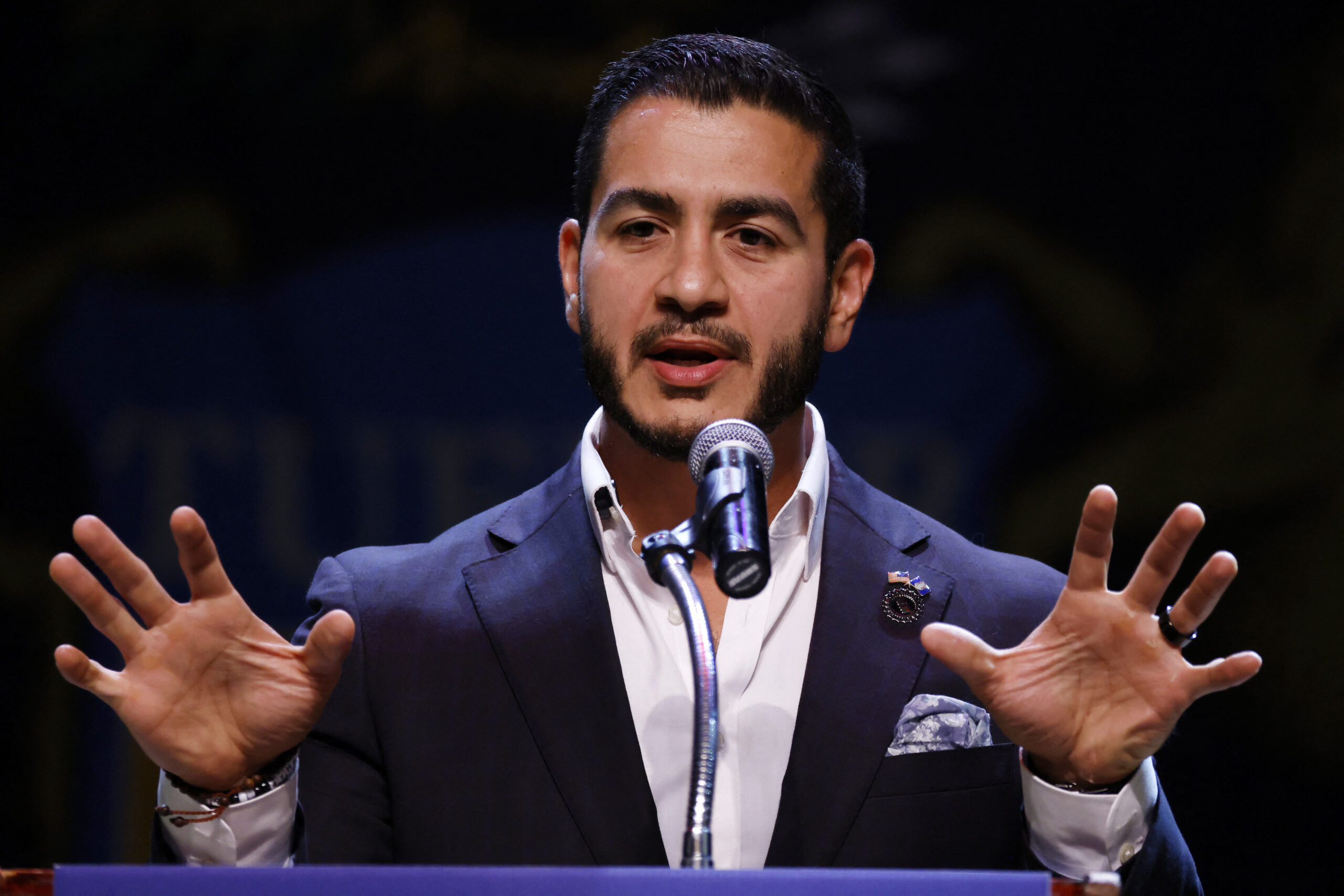
Appearing on MS NOW’s “Morning Joe” on Wednesday, Abdul El-Sayed doubled down on his criticism of Israel, calling the Jewish state “bloodthirsty” and saying his critiques go beyond the government of Israeli Prime Minister Benjamin Netanyahu, Jewish Insider’s Danielle Cohen-Kanik reports.
What he said: “I think we’ve seen the worst of what the Israeli government has done [under Netanyahu] but don’t forget that we’ve been talking about an illegal apartheid regime for a very, very long time, and that supersedes Netanyahu himself,” El-Sayed said. “I understand that Netanyahu is a big reason why they’ve gotten so aggressive and frankly so bloodthirsty under his reign, but I also understand that it’s impossible for us to say we want a two-state solution while we’ve been aiding, arming and abetting the very people who have been trying to foreclose on the possibility of a Palestinian state.”
It’s all over: Democrats quickly coalesced behind El-Sayed after the far-left candidate narrowly clinched victory in Michigan’s Democratic primary on Wednesday morning, while Republicans quickly pounced on his extremist history and ties, JI’s Marc Rod reports.
Worthy Reads
Reassessing Reality: The Atlantic‘s Jonathan Chait contends that, in order to wrest back their party from the far left, moderate Democrats will have to reevaluate some of their core stances, including support for AIPAC and Israel. “Fending off a leftist insurgency will be all but impossible unless Democrats reject AIPAC’s endorsements and stop supporting unconditional aid for an Israel that no longer works toward a two-state solution. Democrats also have to stop passively allowing multiple candidates to split the mainstream vote while the leftist vote consolidates behind a single candidate, as occurred in Michigan’s Seventh District and the Wisconsin governor’s race. But the greatest challenge for mainstream liberals is to find a way to engage in and win the substantive argument with the left.” [TheAtlantic]
Lemons into Lemonade: Tablet‘s Jacob Siegel argues that the U.S.-Israel alliance is loosening, and that the moment presents an opportunity for Israel to reduce its dependence on Washington and diversify its alliances. “A greater degree of separation between the United States and Israel is not only inevitable, it is desirable. Many supporters of Israel seem to be aware only of the significant challenges that this will create for the small country. They overlook the significant opportunities it presents for Israel’s growth. … With the chapter closing on its role as an outsize client state, Israel needs to develop itself as an independent regional power that is a desirable partner by virtue of its ability to innovate technologies and project force.” [Tablet]
Fashion Faux Pas: In The New York Times, John Galliano biographer Dana Thomas cautions against the decision by the Metropolitan Museum of Art to honor the designer, who was convicted of antisemitic abuse after praising Adolf Hitler. “Not all great creators deserve a retrospective, and someone as incendiary as Mr. Galliano certainly shouldn’t be the subject of one during his lifetime, when he stands to profit from the honor personally. With ‘John Galliano: Horizons,’ the Met and Ms. Wintour are selling the idea that they can tell the rest of us how to think about a difficult and divisive figure. Maybe they didn’t notice that idea has gone badly out of fashion.” [NYTimes]
Find more Worthy Reads in our Live Briefing via our new app (on Apple and Android) and website.
Word on the Street
Asked about an Axios report that claimed Israeli Prime Minister Benjamin Netanyahu “confronted” him over their diverging policy views during his visit to Washington last week, Vice President JD Vance said in an interview on Fox News on Wednesday, “He didn’t confront me. We had a nice and frank conversation. … I would describe it as a pleasant but direct conversation”…
The White House denied a Washington Post report that President Donald Trump and Defense Secretary Pete Hegseth clashed last week at Camp David over the war in Iran; the Post reported that the president asked why he had been misled about a shortage of munitions…
A group of far-right figures, including Tucker Carlson, outgoing Rep. Thomas Massie (R-KY), former Rep. Marjorie Taylor Greene (R-GA) and former National Counterterrorism Center head Joe Kent — who gathered over the weekend at Carlson’s Maine home — are considering launching a third-party political organization…
The Israeli Foreign Ministry denounced a joint statement adopted by Arab states — including Qatar, Saudi Arabia, Turkey, Pakistan and Egypt, among others — whose foreign ministers convened in Jordan on Wednesday to discuss Israel’s policies in Jerusalem and said that Israel, which the statement claimed “has no sovereignty” over the city, had “alter[ed] the Arab Islamic and Christian identity of occupied Jerusalem”…
The IDF is investigating a reported arson attack by Israeli settlers in a Palestinian village in the West Bank overnight in which suspects allegedly set fire to homes and attacked residents, including children…
A new Israel Democracy Institute survey found that a majority of Israelis believes the integrity of the October election is in danger…
The Iran-backed Houthis in Yemen said on Wednesday that they struck a Saudi oil tanker in the northern Red Sea, escalating the group’s stated blockade against Riyadh and strikes on Saudi ships that have thus far been focused in the southern Red Sea, near the Bab el-Mandeb strait…
James Stavridis, former supreme allied commander of NATO, argues in Bloomberg that a Saudi-led naval coalition could help protect commercial shipping in the Red Sea from Houthi attacks, though it would likely still require U.S. and European intelligence and logistical support to be effective…
An Azerbaijani official said on Turkish TV that Baku lobbied Israel to stop the Knesset from voting to recognize the Armenian genocide…
FIFA officials gathered in Morocco this week reaffirmed their support for Gianni Infantino, days after the FIFA president faced widespread criticism from within the organization over a plan to privatize elements of the World Cup…
The Atlantic investigates whether al-Qaida, 25 years after the 9/11 attacks, is quietly rebuilding or if its core organization is effectively defunct…
A new poll shows left-wing Brazilian President Luiz Inácio Lula da Silva‘s lead over conservative challenger Flávio Bolsonaro, the son of former President Jair Bolsonaro, narrowing ahead of the country’s October elections…
Benny Stanislawski, previously the communications director for Rep. Ritchie Torres (D-NY), is joining Pennsylvania Democrat Bob Brooks‘ congressional campaign as communications director…
American University’s School of Public Affairs named Tom Kahn as director of its Center for Congressional and Presidential Studies; Kahn, who served as acting director for the past year, was the longest-serving staff director in history for the House Budget Committee…
Find on-demand Live Briefing updates throughout the day via our new app (on Apple and Android) and website.
Pic of the Day
The Louis D. Brandeis Center for Human Rights Under Law hosted 34 law students from leading law schools, including Columbia, Cornell, Duke, Georgetown, NYU and Vanderbilt, for its three-day Law Student Leadership Conference in Washington, D.C., this week. The students received training in civil rights law, Title VI, free speech and advocacy on behalf of Jewish students from a range of experts, including Brandeis Center founder Ken Marcus, pictured here addressing attendees.
Birthdays
Actor, director, producer and screenwriter, Soleil Moon Frye turns 50…
Retired founding partner of the Jaffe Family Law Group, Daniel J. Jaffe turns 89… Esports executive and casino owner, he is a three-time bracelet winner at the World Series of Poker, Lyle Berman turns 85… Professor emerita and former dean at Bar Ilan University, Malka Elisheva Schaps turns 78… Film director, television director, producer and screenwriter, Brian Michael Levant turns 74… Austrian businessman with many U.S., Israeli and Eastern European investments, Martin Schlaff turns 73… Former state treasurer of Virginia and then state secretary of finance, she is now a gourmet popcorn manufacturer, Jody Moses Wagner turns 71… Professor of public diplomacy at The Fletcher School of Tufts University, she was formerly undersecretary of state for public diplomacy, Tara D. Sonenshine turns 67… Professor of psychiatry and behavioral sciences at The George Washington University Medical Center, Alan J. Lipman, Ph.D. turns 66… Israeli diplomat, he served as Israel’s consul general in NYC between 2000 and 2004, Alon Pinkas turns 65… NASA astronaut who spent 198 days on the International Space Station, he brought 18 bagels from his family’s bagel store in Montreal into space, Gregory Chamitoff turns 64… Chair of White & Case’s white collar practice group, Joel M. Cohen… Executive director of public affairs and policy communications at the American Council on Education, Jonathan Riskind… CEO of Elluminate (formerly known as the Jewish Women’s Foundation of New York), Melanie Roth Gorelick… Vice chair of Jewish California and a board member of JFNA and JCRC Bay Area, Susie Sorkin… Television and radio sports anchor on ESPN and ABC, he was one-half of the “Mike & Mike” team but now hosts his own ESPN morning program, Mike Greenberg turns 59… Chief economist at The Burning Glass Institute, Gad Levanon, Ph.D…. Law professor and associate dean at Michigan State University College of Law, David Blankfein-Tabachnick turns 55… Former boxing commentator and co-host of ESPN’s “This Just In,” Yiddish speaking Max Kellerman turns 53… Co-founder and former CEO of Uber, Travis Kalanick turns 50… Founder and CEO at Climb Together which helps prepare people from low-income backgrounds for entry level jobs, Nitzan Pelman… Screenwriter and television producer, he is best known for creating and executive producing the Fox teen drama “The O.C.,” Joshua Ian Schwartz turns 50… Former comms director for Zohran Mamdani’s New York City mayoral general election campaign, Jeffrey Lerner… Creative director and visual strategist, Rachel Gogel… Member of the New York State Assembly, Simcha Eichenstein turns 43… Winner of two gold medals in swimming at the 2008 Summer Olympics in Beijing, he is now CEO of Gather Campgrounds north of Austin, Garrett Weber-Gale turns 41… Director of strategy and policy at K2 Space Corporation, he is also a non-resident senior fellow at the Atlantic Council, Corey A. Jacobson… Reporter at San Antonio Express-News, Elizabeth Teitz… Special advisor at the Department of Homeland Security and former student at Marjory Stoneman Douglas High School, Hunter Pollack turns 29…
Several Jewish Democrats in the battleground state are now indicating that they will break with a party they have long called home and instead vote for the Republican nominee, Mike Rogers, in the November election
Scott Olson/Getty Images
Democratic candidate for U.S. Senate in Michigan Abdul El-Sayed visits a polling place as residents cast their votes on August 04, 2026 in Dearborn, Michigan.
Abdul El-Sayed’s narrow victory over Rep. Haley Stevens (D-MI) in Michigan’s bruising Democratic Senate primary on Tuesday is forcing many Jewish leaders in the state to confront an uncomfortable decision as they now look ahead to the general election in November.
Several Jewish Democrats in the battleground state are now indicating that they will break with a party they have long called home and instead vote for the Republican nominee, Mike Rogers, in the November election, citing their continued alarm over El-Sayed’s hostile rhetoric toward Israel as well as remarks they have interpreted as indifferent to rising antisemitism, among other concerns.
“I can’t vote for El-Sayed,” Michael Horowitz, a Jewish community leader and Detroit businessman who supported Stevens, a pro-Israel moderate, told Jewish Insider. “So many things I find despicable about him, not the least of which is his close association with Hasan Piker,” the antisemitic Twitch streamer, who Horowitz said “demeans America, demeans Jews and demeans all but the most radical among us.”
Horowitz confirmed he was now “leaning strongly to Rogers,” a former congressman who narrowly lost in his bid for Senate last cycle. “And I have heard from many in the Jewish community who say they will be supporting Rogers,” he said on Wednesday.
Hannan Lis, a Democratic fundraiser and Jewish leader who splits his time between Michigan and Israel, was among those who had told JI before the primary that he would vote for Rogers in the general election if El-Sayed won the nomination, noting he knows “many” Jewish Democrats who plan to do the same.
His reservations about Republicans preserving their Senate majority by picking up the Michigan seat held by retiring Sen. Gary Peters (D-MI), he clarified, were superseded by his objections to El-Sayed’s stances on Israel and responses to antisemitism. “El-Sayed is no Democrat,” he claimed.
Dennis Bernard, a Jewish leader in Michigan who backed both Rogers and Stevens in their respective primaries, said that the “word is out on a few Rogers fundraisers targeting historical Jewish Dems,” efforts that he described as “co-led” with Jewish Democratic donors.
“Candidly,” he added, “the only area that may not jump on Rogers is the highly progressive Ann Arbor community,” which he called “very small.”
Bernard, national chair of government relations at the Jewish Federations of North America, told JI that it would likely take a few more days for such events to materialize as donors now “settle down and organize” in the wake of the primary. “Everyone is jumping in,” he said.
One Democratic fundraiser in Michigan, who spoke on the condition of anonymity to address a sensitive subject, said he was “absolutely certain” that “several large Jewish Dem donors” will be supporting Rogers.
“I would guarantee there will be fundraisers for him hosted by high-profile Jewish Dems,” he told JI.
The fundraiser, who backed Stevens, said that hours after the race had been called on Wednesday he was “already contacted by Rogers surrogates” seeking to make inroads with Jewish Democrats whose support could prove consequential in what is expected to be a close race.
The surrogates’ pitch, as he put it: “Essentially that as Jews, we need to put our communal well-being ahead of the party.”
It remains to be seen whether the depth of Jewish Democrats’ fears of electing El-Sayed will ultimately translate to a meaningful boost for Rogers’ bid amid a national political environment that is less favorable to Republicans.
Still, Rogers and his supporters have said they are eager to court Jewish Democrats alienated by their party as support for Israel has emerged as a litmus test on the far left — particularly in Michigan, where Jewish Democratic leaders have recently voiced fears of antisemitic harassment from anti-Israel activists in the state.
Alyssa Brouillet, a spokesperson for Rogers, told JI on Sunday that his campaign was “beginning to see more and more Jewish Democrats coming to us who feel abandoned by their party.”
“Mike Rogers stands with the Jewish community in Michigan and across the country,” she said, “and he will continue fighting to make life better for working families all across the state.”
In a video ad posted to social media on Wednesday, Rogers highlighted his opponent’s close ties to Piker, featuring past comments in which the streamer said “America deserved 9/11,” among other controversial remarks that have faced scrutiny. “You are who your friends are, and Abdul El-Sayed’s are radical leftists who hate America,” Rogers wrote.
The Republican Jewish Coalition called El-Sayed “a direct threat to Michigan’s Jewish community” in a statement on Wednesday that urged Jewish voters in the state to get behind Rogers in the general election.
“To our friends in Michigan’s Jewish community, including the tens of thousands who have voted Democrat their entire adult lives and now find themselves politically homeless: this is the moment for real change and action,” said Matt Brooks, the RJC’s CEO. “There are more than 100,000 Jewish voters in the Wolverine State. We are not a rounding error, we are the decisive margin. Mike Rogers has earned your vote.”
Even as El-Sayed quickly won backing on Wednesday from national Democratic leaders hoping to unite the party for a must-win election, the Jewish Democratic Council of America stopped short of an endorsement, underscoring the extent to which the divisive primary has left some Jewish leaders rudderless after Stevens’ defeat.
“While we are disappointed in the final result of the Michigan Senate race, the razor-thin margin isn’t the resounding win for the far-left that was predicted,” said Halie Soifer, the JDCA’s CEO. “We are proud of the race run by Rep. Haley Stevens, and we thank her for her consistent and principled leadership standing with Jewish Americans. We congratulate Dr. Abdul El-Sayed on his victory after a difficult and divisive primary.”
Several nonpartisan Jewish groups, including the Anti-Defamation League and the American Jewish Committee, released statements on Wednesday condemning El-Sayed.
Deryn Sousa, a spokesperson for AIPAC, whose super PAC invested over $30 million on an aggressive effort to boost Stevens, said in a statement that the group’s “members remain determined to ensure that voters reject Dr. El-Sayed and his radical anti-Israel agenda in November,” indicating it intends to back Rogers in the general election.
AIPAC’s super PAC, United Democracy Project, did not return a request for comment, but sources told JI the group was all but certain to support Rogers, who was recognized as a pro-Israel hawk while serving in the House from 2001 to 2015.
For his part, El-Sayed, who made his opposition to AIPAC a central feature of his campaign messaging, sought to ease tensions with skeptical Jewish voters on Wednesday, addressing what he called “an issue that has been focused on in this race.”
“To all of my sisters and brothers of the Jewish faith,” he said in his televised remarks, “I want you to know that my commitment to your safety, my commitment to Jewish safety, is the same commitment that I have to the safety of my own daughters.”
But many Jewish leaders in the state suggested that they would be unmoved by such appeals — especially as El-Sayed has continued to use incendiary rhetoric while discussing Israel. In an interview on MS NOW’s “Morning Joe” on Wednesday morning, for instance, he doubled down on his criticism of Israel, calling the Jewish state “bloodthirsty” while saying his critiques go beyond the government led by Israeli Prime Minister Benjamin Netanyahu.
His comments faced criticism from Democratic Majority for Israel, which said “El-Sayed should be working to build a bigger tent and earn the trust of Jewish Michiganders” but was instead invoking “an age-old antisemitic trope that is especially dangerous amid rising violence against Jews.”
Asher Lopatin, a rabbi who serves as director of community relations at the Jewish Federation of Greater Ann Arbor and endorsed Stevens, told JI he has “heard from several people who say that they will campaign for Rogers and support him and tell others to vote for him.”
“I have not spent a lot of time looking into his positions,” Lopatin added, “but I can say clearly that I will not be voting for Abdul El-Sayed and I wish more Democrats would come out and say they will not be voting for him.”
Some Jewish Democrats in the state have confirmed privately that while they cannot bring themselves to vote for Rogers, they will leave their ballots blank or write in another candidate due to their reservations about El-Sayed.
Despite widespread objections to El-Sayed within Michigan’s mainstream Jewish community, others suggested that their loyalty to the Democratic Party outweighed those concerns. “I know Jewish Dems who will vote for Rogers,” Richard Lenter, a Jewish community activist in Detroit, told JI. “I am leaning toward voting for El-Sayed while holding my nose.”
Michigan state Rep. Noah Arbit, a Jewish Democrat who has been outspoken against antisemitism in his party, declined to confirm whether he would vote for El-Sayed, even as he expressed strong concerns about past comments in which the candidate has dismissed Zionists as “illiberal” and refused to recognize Israel’s right to exist as a Jewish state.
“Abdul’s rhetoric has been alarming and dangerous for my community,” Arbit, whose district in suburban Detroit includes a sizable Jewish constituency, said in a message posted to Facebook Wednesday morning. “There is a profound need for him to come to the table and attempt to repair the harm he has caused, to see what semblance of trust and confidence may be built.”
The Texas senator added that Brotherhood-connected groups have aligned with far-left organizations, like the Democratic Socialists of America
Patrick T. Fallon/AFP via Getty Images
Sen. Ted Cruz (R-TX) speaks during the 29th annual Milken Institute Global Conference at the Beverly Hilton in Beverly Hills, California on May 4, 2026.
Sen. Ted Cruz (R-TX), speaking at a Senate Judiciary subcommittee hearing on Wednesday that he organized to examine Muslim Brotherhood networks and affiliates in the United States, suggested that Michigan Senate candidate Abdul El-Sayed was tied to such networks and that his Democratic primary win represented a victory for them.
“[Democrats’] campaign is now openly embracing terrorist organizations waging war on America. Behind El-Sayed’s political rise sits a much older and more entrenched institutional network,” Cruz asserted.
Kyle Shideler, a senior analyst for homeland security and counterterrorism at the Center for Security Policy, testified under questioning from Cruz that El-Sayed’s win concerned him given the nominee’s father-in-law’s ties to Muslim Brotherhood-linked groups and El-Sayed’s own relationship with groups connected to the Council on American-Islamic Relations.
“It shows the success of the Muslim Brotherhood network over multiple decades. It achieved what they said they were going to achieve, which was to normalize support for Hamas and normalize support for terrorism,” Shideler said.
He also said that Muslim Brotherhood-connected groups have partnered with organizations including the Democratic Socialists of America, united around a “shared revolutionary objective of advocating for the overthrow of the U.S. Constitution.”
El-Sayed, who did not respond to a request for comment, has accused opponents of using Islamophobia to attack him because they lack responses to his policy proposals.
The hearing — which was not attended by any lawmakers other than Cruz — focused primarily on CAIR and other groups that Cruz and witnesses said were linked to a Muslim Brotherhood network in the United States, as part of a long-running plan to infiltrate and usurp Western civilization from within and offer support for Hamas and other terrorist organizations, including by working with and co-opting other groups.
Cruz and the witnesses emphasized that CAIR leaders were part of a 1993 meeting of Muslim Brotherhood-linked anti-Israel activists, captured on an FBI wiretap, in which the activists plotted to undermine the Oslo accords and support Hamas through a range of spinoff and front organizations, including the Holy Land Foundation and Islamic Association for Palestine, which have been shuttered for funneling support to Hamas.
“The Holy Land Foundation prosecution revealed that these organizations do not operate in isolation; they function as part of a broader Muslim Brotherhood ecosystem,” Cruz said. “The events we witnessed on college campuses after Oct. 7 [2023] did not emerge from nowhere. They were not spontaneous. They were not organic. They were the product of an organized network that has spent decades building influence inside the United States.”
Shideler described CAIR as so central to the Muslim Brotherhood’s plans that it received explicit approval and support from Muslim Brotherhood leaders in Egypt.
Lara Burns, a retired FBI special agent and senior research fellow at the George Washington University Program on Extremism, said that the wiretapped meeting indicated that CAIR was created “to defend and protect the other elements of the Hamas support network and to pressure others to adopt its narratives or remain quiet.”
Burns was a lead investigator in the Holy Land Foundation case and later supervised national security and counterterrorism investigations and prosecutions.
She emphasized that CAIR has never disavowed the Holy Land Foundation and that it warrants further investigation, also noting that the group had sought to thwart the seizure of documents during the Holy Land Foundation investigation that proved the existence of Hamas and Muslim Brotherhood support networks domestically.
Burns emphasized that terrorist infrastructure has existed in the United States for decades, under the guise of charity, advocacy and activism. The network, she said, seeks to funnel support to and rally public support for Hamas; infiltrate universities, media and politics; and reshape American curricula. She said groups in the Muslim Brotherhood network continue to carry on the same agenda and some individuals and groups are still likely providing material support for terrorism.
Arielle Klepach, senior counsel at the National Jewish Advocacy Center, described CAIR and its affiliates as “a foreign terror-supporting movement on American soil, targeting our Constitution and our founding principles.”
“I would ask you to remember three things: these organizations are dangerous, they are in our schools and they hide by abusing the very legal system they are working to dismantle,” she continued.
Klepach said that the federal government should work to enforce existing laws to counter this network, arguing for imposing sanctions and prosecuting Muslim Brotherhood-connected groups for material support for terrorism and racketeering and reviewing their tax-exempt status. She said Congress should work to close loopholes that have allowed such groups to avoid legal accountability by shuttering and rebooting under new names with similar leadership.
She also warned that CAIR and other similar groups are receiving and distributing tens of millions of dollars in taxpayer funding.
Shideler said that the Holy Land Foundation case provided a trove of intelligence and evidence on the U.S. Muslim Brotherhood support network and its efforts to infiltrate and influence all areas of American life, but that the federal government had subsequently failed to pursue further action, and CAIR and other linked groups have obstructed and dodged efforts to seek justice.
Democrats announced in advance that they planned to boycott the hearing, describing it as Islamophobic and targeted at Muslims writ large, but ultimately none of Cruz’s Republican colleagues appeared to ask questions of witnesses either.
Other centrist Senate Democrats also sounded reticent about embracing their Michigan Senate nominee
Tom Williams/CQ-Roll Call, Inc via Getty Images
Rep. Hillary Scholten (D-MI) speaks during a news conference outside the U.S. Capitol on March 26, 2026.
Rep. Hillary Scholten (D-MI), a moderate Michigan lawmaker representing a swing district, broke with most other Democratic members of the Michigan congressional delegation in declining to offer an explicit endorsement of Democratic Senate nominee Abdul El-Sayed as of Wednesday afternoon, after offering strident criticism of him during the primary campaign.
“Congratulations to everyone who participated in Michigan’s hard-fought primary elections last night, and thank you to every voter who made your voice heard. In these close elections, we want you to know — you are HEARD,” Scholten said in a statement that did not mention El-Sayed. “Now our focus turns forward. I’ve always said I’ll work with anyone committed to lowering costs, expanding affordable health care, creating more opportunity, and fighting corruption. I mean that.”
A Scholten spokesperson did not respond to a request for clarification on whether this constituted an endorsement of El-Sayed.
Scholten said that she is a “proud, commonsense Democrat” and said that she’s focused on helping to elect “similar candidates around the country.”
During the campaign, as a vocal supporter of Rep. Haley Stevens (D-MI), Scholten suggested she might struggle to support El-Sayed in the general election.
“I will not stand beside someone who has allowed distinctly anti-American sentiment to enter our public dialogue,” she said in one interview.
In another, she criticized El-Sayed for campaigning with antisemitic and anti-Israel influencer Hasan Piker.
“To campaign with Hasan Piker, who said America deserved Sept. 11 — sure, he went on to disavow those comments, but I’m telling you, nobody on my team would ever, you know, come even close to making a comment like that,” she said. “I think that condoning behavior like this from candidates like Abdul El-Sayed is taking us in a direction that we don’t want to go as a party.”
Other Democratic moderates, with the exception of maverick Sen. John Fetterman (D-PA), are largely keeping their heads down following the election, with several contacted by JI declining to comment or not responding to requests.
Other Democrats are backing El-Sayed.
“He worked hard. People in Michigan had their word last night, and I imagine he’s going to work really hard over the next 90 days to win this race, and it’s obviously a critical one,” Sen. Mark Kelly (D-AZ) said. “If we’re going to fix some of the problems created by this president, we’ve got to win back the Senate.”
Asked whether he believes the narrow margin of victory for El-Sayed might imperil his chances in November, Sen. Gary Peters (D-MI), who had supported Stevens in the primary, offered a short response: “Yeah, he could win. Definitely.”
Sen. Chris Coons (D-DE) said he hasn’t met El-Sayed but noted that Stevens had endorsed him and “my sense is that whatever divisiveness there might have been because of the primary, they’re … past it.”
Sen. Richard Blumenthal (D-CT) declined to comment on El-Sayed’s history or his decision to campaign with Piker, and said that he doesn’t think “generalizations are possible from one race” about the direction of the party, “whether it’s in Brooklyn or Michigan.”
AIPAC indicated it intends to remain engaged in the race, while the Anti-Defamation League raised concerns about El-Sayed’s rhetoric and the acceptance of it
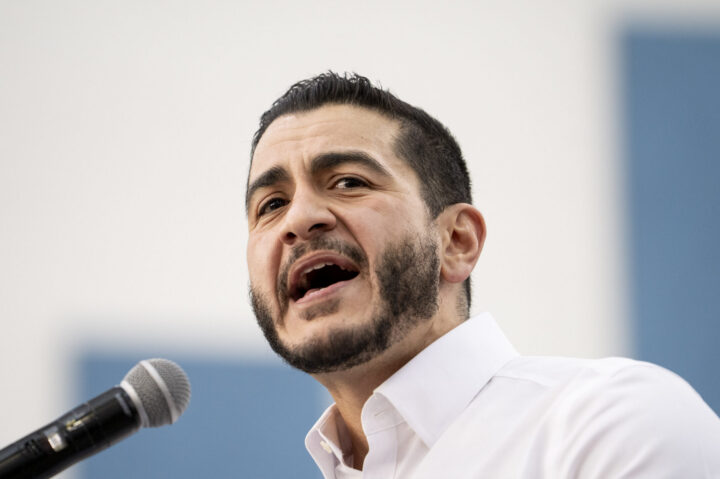
Sarah Rice/Getty Images
Abdul El-Sayed, candidate for US Senate in Michigan, speaks at Mumford High School on May 3, 2026 in Detroit, Michigan.
Jewish groups expressed concern on Wednesday about the victory of Abdul El-Sayed in the Democratic primary for U.S. Senate in Michigan, highlighting his extreme rhetoric on Israel and the broader rise of the far left.
Jewish Democratic Council of America CEO Halie Soifer said in a statement that the group was “disappointed” by the results of the primary, where the group had endorsed and campaigned strongly for Rep. Haley Stevens (D-MI). She congratulated but stopped short of endorsing El-Sayed.
“While we are disappointed in the final result of the Michigan Senate race, the razor-thin margin isn’t the resounding win for the far-left that was predicted,” Soifer said. “We are proud of the race run by Rep. Haley Stevens, and we thank her for her consistent and principled leadership standing with Jewish Americans. We congratulate Dr. Abdul El-Sayed on his victory after a difficult and divisive primary.”
Soifer also highlighted that “mainstream Democrats, including many of the candidates JDCA has endorsed, remain the key to winning back control of Congress” and emphasized that Rep. Wesley Bell (D-MO) and Michigan state Sen. Jeremy Moss “overwhelmingly defeated challengers on the far-left.”
AIPAC, while declining to preview specific plans, indicated it intends to stay engaged in the Michigan race through November.
“Our members remain determined to ensure that voters reject Dr. El-Sayed and his radical anti-Israel agenda in November,” spokesperson Deryn Sousa told Jewish Insider.
In a letter to members, AIPAC President Bernie Kaminetsky said that the group will continue to “stand up for what is right, ensure pro-Israel voices are loudly heard in Congress, and fight even harder to ensure the U.S.-Israel alliance grows stronger.”
“In Abdul El-Sayed, a fiercely anti-Israel candidate has emerged as the Democratic nominee. His statements about Israel, AIPAC, and the Jewish community are outrageous and offensive, and his ascent is part of a much larger, profoundly worrying trend we are closely tracking,” Kaminetsky added, praising Stevens and her support for Israel. “This narrow loss stings, but [Stevens’] defeat doesn’t change our principled opposition to the dangerous policies El-Sayed wants to bring to the U.S. Senate.”
Tacitly acknowledging setbacks across the political map, Kaminetsky emphasized, “Our conviction will not be measured in a single race or a single cycle. This is a generational fight, and we remain undeterred in our mission. Our political fight is not just about strengthening America’s partnership with Israel. It is also about the future of America and our individual rights to engage in our democracy.”
In a rare statement on campaign politics, Anti-Defamation League CEO Jonathan Greenblatt also highlighted the group’s concerns about El-Sayed’s rhetoric.
“Throughout the campaign, ADL has called out nominee Abdul El-Sayed for peddling in antisemitic tropes … or for campaigning with notorious bigot Hasan Piker,” Greenblatt said in a video statement. “Campaign trail rhetoric and actions send clear signals about what a person believes and what a political party thinks is permissible.”
“We are not going to stop, and we will keep calling on political leaders and candidates from both parties to reject antisemitism and to commit to combating it whenever and wherever it occurs,” Greenblatt continued.
ADL Michigan regional director Elyssa Schmier said in her own statement that “Jews across Michigan and the country are alarmed by the rhetoric that defined this race and its implications for the future of political norms in our country.”
Calling out a series of specific comments by El-Sayed, without naming him directly, Schmier said that “anyone seeking public office should know better than to normalize antisemitic tropes” and that “we are calling on political leaders to reject antisemitism outright and demand better.”
The American Jewish Committee, which also rarely comments on electoral politics, likewise issued a statement strongly condemning El-Sayed.
The group called his victory “a deeply troubling reflection of the growing mainstreaming of divisive rhetoric and exclusionary politics in America. At the same time, Congresswoman Stevens’ strong showing demonstrates that there is still a place and support for nuanced, moderate voices,” it continued.
“We are concerned by El-Sayed’s framing of American politics as a zero-sum game that too often casts those who disagree as the enemy,” the statement continued, accusing him of “delegitimiz[ing]” those who disagree with him, an “approach [that] is fundamentally at odds with the principles of civility, pluralism, and robust democratic debate that are central to our democracy.”
The group also condemned El-Sayed’s past comments on Israel and its supporters and said that “most Americans agree that political rhetoric of this nature has gone too far,” calling for voters“to reject extremist rhetoric from all candidates — no matter their party — that perpetuate this divisive approach.”
The group said it would continue efforts to engage leaders around the country “who seek to reclaim American politics from the extremes.”
In a separate statement, AJC CEO Ted Deutch said that he saw during his time as a member of Congress “that when leaders treat those who disagree with them as enemies, the communities they represent feel the consequences” and emphasized “AJC’s work to reject extremist politics.”
Democratic Majority for Israel also criticized El-Sayed after his primary win for calling Israel “bloodthirsty” in a Wednesday morning interview.
“El-Sayed should be working to build a bigger tent and earn the trust of Jewish Michiganders. Instead, this morning he described the government of the world’s only Jewish state as ‘bloodthirsty’ — an age-old antisemitic trope that is especially dangerous amid rising violence against Jews,” the group said. “His language is inflammatory. He should retract it and apologize.”
The Democratic nominee said his issues with Israel go beyond Netanyahu’s government, though he ‘understand[s] that Netanyahu is a big reason why they’ve gotten so aggressive and frankly so bloodthirsty under his reign’
JEFF KOWALSKY / AFP via Getty Images
Abdul El-Sayed addresses supporters at his election night event at The Majestic Theatre in Detroit, Michigan, on August 4, 2026
Appearing on MS NOW’s “Morning Joe” on Wednesday, Abdul El-Sayed, who was about to be declared the winner of the Democratic primary for U.S. Senate in Michigan, doubled down on his criticism of Israel, calling the Jewish state “bloodthirsty” and saying his critiques go beyond the government of Israeli Prime Minister Benjamin Netanyahu.
“I think we’ve seen the worst of what the Israeli government has done [under Netanyahu] but don’t forget that we’ve been talking about an illegal apartheid regime for a very, very long time, and that supersedes Netanyahu himself,” El-Sayed said when asked about the extent of his issues with Israeli policy.
“I understand that Netanyahu is a big reason why they’ve gotten so aggressive and frankly so bloodthirsty under his reign, but I also understand that it’s impossible for us to say we want a two-state solution while we’ve been aiding, arming and abetting the very people who have been trying to foreclose on the possibility of a Palestinian state,” he continued.
He said the U.S. should “hold foreign actors accountable to international law,” claiming Israel has “conducted a genocide, has at baseline done apartheid and has taken us into a war we have no business fighting. So why, of course, are we sending money to that country to fund their military?”
On his position on foreign aid to Israel, El-Sayed said he doesn’t believe in “unconditional foreign military aid” to Israel, nor to other countries including Egypt, where his family emigrated from, Pakistan, Saudi Arabia, Qatar and the UAE.
The Democratic nominee said his message to Jewish voters who backed his opponent, Rep. Haley Stevens (D-MI) because of his message on Israel, is that his “commitment to Jewish safety is the same as my commitment to the safety of my own kids. We have a responsibility to take on antisemitism in all of its forms wherever we see it. It’s the same responsibility we have to take on Islamophobia. … So the things that bring us together are so much bigger than the things that divide us.”
The Republican Jewish Coalition said that Michigan’s 100,000 Jewish voters could make the difference in the battleground race if they choose to back GOP nominee Mike Rogers
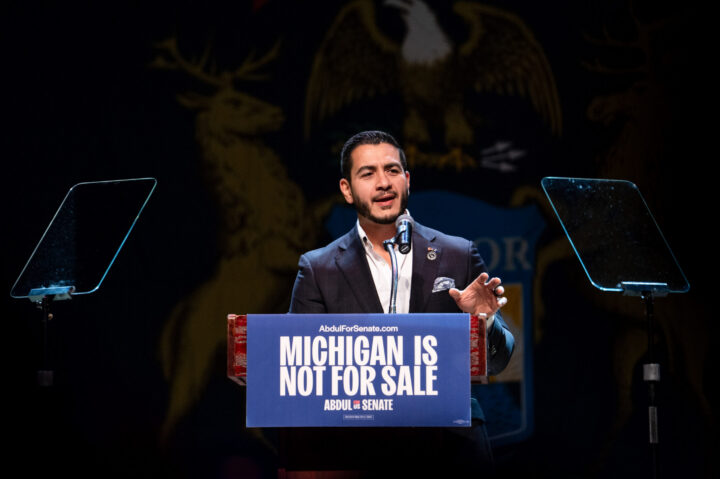
Sarah Rice/Bloomberg via Getty Images
Abdul El-Sayed speaks during a primary election night watch party at The Majestic Theatre in Detroit, Michigan early on Aug. 5, 2026.
Democrats are quickly coalescing behind Senate nominee Abdul El-Sayed after the far-left candidate narrowly clinched victory in Michigan’s Democratic primary on Wednesday morning, while Republicans quickly pounced on El-Sayed’s extremist history and ties.
Rep. Haley Stevens (D-MI), who came within a percentage point of defeating El-Sayed, promptly congratulated him on his victory and offered her support.
“I want to congratulate Abdul El-Sayed on winning the Democratic nomination for U.S. Senate. He is a doctor, a community health official, a Rhodes Scholar, and a dedicated Michigander. I am proud to offer my support as he takes on Mike Rogers in the general election,” Stevens said. “This was a thorough and rigorous campaign that brought out the full span of views within the Democratic Party — and that is why we have primaries.”
She emphasized the need for Democrats to come together in support of El-Sayed, saying, “We must elect Democrats up and down the ballot. We need to flip some important House seats. We need to re-elect my friends Hillary Scholten and Kristen McDonald Rivet. We need to win this Senate seat, because Elissa Slotkin deserves a partner like Abdul in the U.S. Senate.”
Senate Minority Leader Chuck Schumer (D-NY) and Democratic Senatorial Campaign Committee Chair Sen. Kirsten Gillibrand (D-NY) also offered support for El-Sayed in a statement.
“Abdul El-Sayed has run an energetic campaign that inspired thousands of Michiganders across the state, with a clear focus on lowering costs and standing up for working families,” the pair said. “Democrats are united by a common purpose: putting a check on Donald Trump by defeating his Republican enablers and taking back the Senate. We look forward to working with Abdul and Democrats across Michigan to win this seat in November.”
Retiring Sen. Gary Peters (D-MI), who had initially planned to stay out of the race but ultimately endorsed Stevens, said that the party must come together behind El-Sayed to block Rogers.
“Both candidates ran strong campaigns focused on improving the lives of all Michiganders. But now it’s time to come together as a party and rally around our nominee, Abdul El-Sayed, to make sure Mike Rogers never sees the floor of the U.S. Senate,” Peters said. “I’ve repeatedly said that I will support our nominee because the most important election is in November.”
Sen. Elissa Slotkin (D-MI), who declined to endorse El-Sayed in the primary, offered her support while also saying little about El-Sayed personally and focusing on the need to keep the seat in Democratic hands.
“Congratulations to @AbdulElSayed for winning the Democratic nomination for Senate. It’s been a long primary, but now it’s time to gear up to beat Mike Rogers (again) and win up and down the ticket,” Slotkin said. “There is nothing more important than the mission of the next 90 days: uniting, keeping this seat blue, flipping the House and Senate, and providing a real check on President Trump.”
Meanwhile, Republicans have quickly pounced on El-Sayed, highlighting his extreme history.
“Abdul isn’t just another liberal. He’s an extremist. He wants to empty prisons and put murderers and sex offenders back on our streets. He pledged his support to the Muslim Brotherhood and campaigns with people who refuse to condemn terrorism,” Republican nominee former Rep. Mike Rogers (R-MI) said. “I spent years hunting terrorists and bringing Osama bin Laden to justice. Never in a million years did I think that I would be running against someone who believes America deserved 9/11.” His comment was apparently a reference to El-Sayed’s ties to far-left streamer Hasan Piker, who championed El-Sayed in the primary.
Matt Brooks, CEO of the Republican Jewish Coalition, declared in a statement that El-Sayed is the “most antisemitic U.S. Senate candidate in America” and called on Jewish Democrats, who he said could prove “decisive” in the November general election, to back Rogers.
“Abdul El-Sayed is a direct threat to Michigan’s Jewish community,” Brooks said. “El-Sayed has called the government of the Jewish state as ‘evil’ as Hamas, ‘struggled’ to say that Israel has a right to exist as a Jewish state, and empathized with a terrorist who tried to murder Jewish schoolchildren at Temple Israel in the Detroit suburbs — and yet, Michigan Democrats just picked him as their nominee for the United States Senate.”
The Senate Leadership Fund, a super PAC aligned with Senate GOP leadership, announced a six-figure digital ad campaign describing El-Sayed as “dangerous.”
For many Jewish Democrats in Michigan who have long called the party home, the bruising lead-up to the primary on Tuesday has been difficult to experience
Sarah Rice/Getty Images
Michigan Senate candidate Mike Rogers speaks at his election watch party.
As Abdul El-Sayed pulls ahead in the final days of Michigan’s bitter Democratic Senate primary race, Republicans are eyeing a chance, in the general election, to peel support from disaffected Jewish Democrats anxious about their party’s sharp turn to the left on Israel and its tolerance for actions they view as antisemitic.
For many Jewish Democrats in Michigan who have long called the party home, the bruising lead-up to the primary on Tuesday has been difficult to experience, as El-Sayed, a far-left former public health official, has continued to gain traction while fiercely attacking Israel, using anti-Zionist rhetoric and centering his messaging on opposition to AIPAC, the pro-Israel advocacy group whose super PAC is aggressively promoting Rep. Haley Stevens (D-MI) in a record ad barrage that has exceeded $30 million.
If Stevens loses, Republicans are eager to present former Rep. Mike Rogers (R-MI), the GOP’s presumptive nominee who was narrowly defeated in his bid for Senate last election cycle, as a safe alternative to El-Sayed for Jewish Democrats in the general election who may not be able to stomach voting along party lines.
“I think that Jewish voters and many Democrats in general feel” the party “has moved away from them,” Bobby Schostak, a former chairman of the Michigan Republican Party who sits on the Republican Jewish Coalition’s board, told Jewish Insider, calling Rogers “unconditionally and unapologetically pro-Israel and part of the fight against antisemitism in America.”
He predicted that Jewish Democrats “are going to flock to” Rogers “come November if El-Sayed wins the nomination,” referring, among other things, to the candidate’s refusal to distance himself from the antisemitic streamer Hasan Piker and controversial remarks following a foiled terrorist attack against a synagogue in Michigan in March in which he said, “Hurt people do hurt people.”
“Playing that response back is all it takes,” Schostak said of the anticipated GOP attacks against El-Sayed in the still-hypothetical general election. “That clearly showed his position and lack of concern for Jews and Jewish children,” he added of the comments. “I don’t think it takes much more than that.”
Sam Markstein, a spokesperson for the RJC, which has endorsed Rogers, said that “Michigan’s open U.S. Senate seat is at the center of the political battlefield” in the fight for control of the upper chamber.
“I think there’s a real opportunity for Mike and other Republicans in Michigan to build on Jewish support,” Jason Cabel Roe, a GOP strategist who has served as the executive director of the state’s Republican Party, told JI.
“With nearly 100,000 Jewish voters in a state where the margins of victory are incredibly close,” he said in a statement to JI, “Michigan’s Jewish community will once again be a decisive group in one of the most important contests in the country this November.”
Markstein suggested that “Michigan Jews are well aware of the stakes,” pointing to divisive comments in which El-Sayed declined to acknowledge Israel’s right to exist and said “I call bullshit” on “a definition of antisemitism to include a foreign government and its leaders,” among others that have faced scrutiny.
“I think there’s a real opportunity for Mike and other Republicans in Michigan to build on Jewish support,” Jason Cabel Roe, a GOP strategist who has served as the executive director of the state’s Republican Party, told JI.
While he called El-Sayed’s rhetoric on Israel “a big factor” influencing that dynamic, Roe argued there are deeper issues at play, notably including the Democratic state party convention in April at which pro-Israel candidates were heckled by activists and an attorney with a history of praising Hezbollah was nominated to sit on the University of Michigan Board of Regents.
Michigan Attorney General Dana Nessel, a Jewish Democrat, said last week that she planned to skip her party’s nominating convention next month, citing the episodes as sowing fears of antisemitic harassment.
“What happened at the” state convention “has really animated Jewish donors and voters and moved them in the direction of Republicans,” Cabel Roe explained to JI. “I think it’s very significant.”
Alyssa Brouillet, a spokesperson for Rogers, said his campaign is “beginning to see more and more Jewish Democrats coming to us who feel abandoned by their party.”
“It’s easy to see why when you have a candidate in this race who fundraised off of Oct. 7 and sympathized with the terrorist attacker who attempted to mass murder 140 kids at Temple Israel synagogue. That’s terrifying,” she told JI in a statement. “Unlike his opponents, Mike Rogers stands with the Jewish community in Michigan and across the country — and he will continue fighting to make life better for working families all across the state.”
The former congressman, recognized as a pro-Israel hawk while serving in the House from 2001 to 2015, has also raised concerns over rising antisemitism as well as anti-Israel sentiment on the far right, which he has said the GOP needs to more forcefully fight.
He has said publicly that it “doesn’t matter” who he faces in the general election, claiming he is confident that he will beat either of them. During a private call with supporters last month, he said that he would be “in good shape” if El-Sayed clinched the nomination as opposed to the moderate Stevens, describing him as “so radical,” according to audio obtained by CNN.
Polling has suggested that a general election matchup between Rogers and El-Sayed would be competitive.
It remains to be seen if the depth of disillusionment among Jewish Democrats in Michigan who feel their party is abandoning them will ultimately translate to a vote for Rogers should El-Sayed be the nominee — given accompanying reservations with how it could help Republicans flip a crucial seat held by retiring Sen. Gary Peters (D-MI).
But Stevens herself in some ways gave Rogers a path to make inroads with Jewish Democrats who distrust El-Sayed when she directly accused her opponent of antisemitism in a fiery social media post on Thursday underscoring the increasingly personal animosities in the closing stretch of the primary.
“After Tuesday, you will see a plethora of Jewish Democrats openly supporting Mike Rogers,” said Dennis Bernard, national chair of government relations at the Jewish Federations of North America, adding such support could help tip the scales in a general election that is expected to be close. He said Rogers has been doing “significantly more events in the Jewish community” and is being more favorably received than last cycle, when he lost to Sen. Elissa Slotkin (D-MI), a Jewish Democrat.
“Everyone in America understands you want to blame all of your problems on Jewish Americans,” she wrote in the post addressed to El-Sayed, after he had taunted AIPAC and called her the “least capable candidate in America.”
A spokesperson for AIPAC’s super PAC, United Democracy Project, did not return a request for comment about its plans for the general election.
A source familiar with UDP’s thinking told JI that “no decision has been taken yet because we’re not there,” but suggested that the group would support Rogers if Stevens loses to El-Sayed. “What would the expectation be?” the source told JI. “That they would do everything they can do to beat this guy.”
Dennis Bernard, a Jewish leader in Michigan who says he supports both Stevens and Rogers in their respective primaries, echoed others who told JI that even as there are Jewish Democrats planning to pull the lever for Rogers if Stevens loses on Tuesday, they are not willing to admit that publicly until the results are in.
“After Tuesday, you will see a plethora of Jewish Democrats openly supporting Mike Rogers,” said Bernard, national chair of government relations at the Jewish Federations of North America, adding such support could help tip the scales in a general election that is expected to be close. He said Rogers has been doing “significantly more events in the Jewish community” and is being more favorably received than last cycle, when he lost to Sen. Elissa Slotkin (D-MI), a Jewish Democrat.
Hannan Lis, a Democratic fundraiser and Jewish leader who splits his time between Michigan and Israel, said he would vote for Rogers in the general election if El-Sayed wins the nomination, adding he knows “many” Jewish Democrats who plan to do the same.
His reservations over the prospect of Republicans preserving their Senate majority by picking up the Michigan seat, Lis told JI, were overshadowed by his deeper objections to El-Sayed and his views on Israel and antisemitism. “El-Sayed is no Democrat,” he told JI.
“If Abdul El-Sayed wins the primary, I will have to spend more time seeing if El-Sayed is as dangerous to Israel, America and American Jews as he appears — and I haven’t seen anything so far to the contrary — and I will also spend some time examining Mike Rogers’ record on Israel and other issues that the Jewish community cares deeply about,” Asher Lopatin, a rabbi who serves as director of community relations at the Jewish Federation of Greater Ann Arbor and is backing Stevens, told JI.
El-Sayed’s campaign did not respond to a request for comment about tensions with Jewish voters.
One pro-Israel strategist in the state who is close to Stevens estimated, on gut instinct, that it was more likely what he called mainstream Jewish Democrats who support Israel would not vote at all rather than pull the lever for Rogers if El-Sayed is the nominee, pegging that number at some 50% of the community.
He speculated that 25% of such voters would support Rogers because they are “disgusted with Democrats,” while another 25% could swallow their concerns and choose El-Sayed, motivated by loyalty to their party.
Asher Lopatin, a rabbi who serves as director of community relations at the Jewish Federation of Greater Ann Arbor and is backing Stevens, said he is trying to keep an open mind for the general election if the congresswoman loses, even as he has “been deeply disturbed by many quotes from El-Sayed regarding Israel and by many of his ads, in which AIPAC is attacked as what I see as an antisemitic dogwhistle.”
“If Abdul El-Sayed wins the primary, I will have to spend more time seeing if El-Sayed is as dangerous to Israel, America and American Jews as he appears — and I haven’t seen anything so far to the contrary — and I will also spend some time examining Mike Rogers’ record on Israel and other issues that the Jewish community cares deeply about,” he told JI.
Lopatin added that he would also “want to make sure” that Rogers is “someone who can stand up to” President Donald Trump.
Noah Arbit, a Jewish Democratic state legislator in Michigan who is outspoken against antisemitism in his party, declined to confirm how he would vote in a general election without Stevens as the nominee, even as he has accused El-Sayed of helping to “stoke and inflame hatred against Jews” and grappled with whether he belongs in a party he sees as “hostile” to his community.
For now, he told JI, “I’m entirely focused on winning a third term representing my district in Greater West Bloomfield,” a heavily Jewish suburb of Detroit, “and electing a Democratic House, Senate and governor in Michigan.”
Michael Horowitz, a Jewish community leader and Detroit businessman, was reluctant to engage in any hypotheticals before the primary’s end. “I still think Haley is going to pull it out on Tuesday,” he told JI on Friday.
Pressed to clarify how he would vote if she loses, he wrote in a text, “I try to avoid playing games with the Devil,” inserting an upside-down smiley face emoji reflective of the uncomfortable position that Jewish Democrats now find themselves confronting as the primary finally comes barreling to a close this week.
With polls showing Stevens trailing, she said El-Sayed wants ‘to blame all of [his] problems on Jewish Americans’
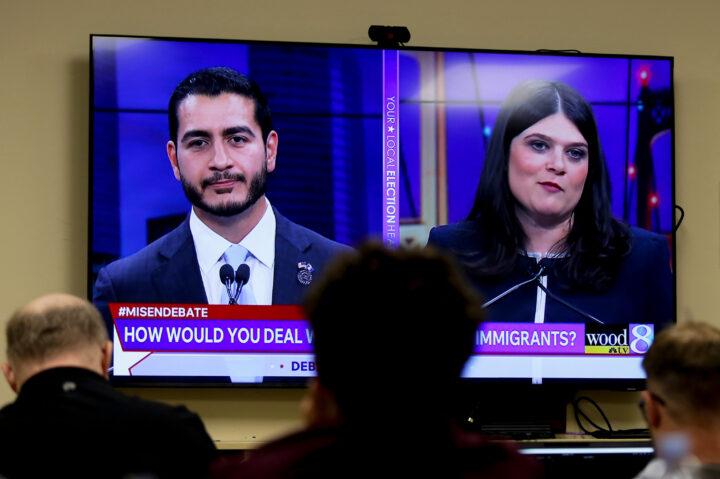
Kristen Norman/AP
Michigan U.S. Senate candidates, Abdul El-Sayed, left, and Rep. Haley Stevens, D-Mich., are displayed on a television during a debate inside the spin room at WoodTV studios on Tuesday, July 7, 2026, in Grand Rapids, Mich.
In a late-night tweet five days before Michigan’s high-stakes Democratic Senate primary, Rep. Haley Stevens (D-MI) explicitly accused her opponent, Abdul El-Sayed, of trafficking in antisemitism.
Stevens’ post came in response to a video in which El-Sayed attacked AIPAC for supporting her, as he called her “literally the least capable candidate in America.” He has made criticism of AIPAC a central tenet of his campaign.
“Abdul, we were both on the ballot in 2018. I was capable of winning my competitive primary and general election. You lost,” Stevens wrote in the post, which was uploaded at 10:30 p.m. on Thursday, referring to El-Sayed’s run for governor. “You lost by over twenty points to Gretchen Whitmer and you will lose to [GOP nominee] Mike Rogers by talking like this.”
“Everyone in America understands,” Stevens continued, “you want to blame all of your problems on Jewish Americans.”
Stevens has generally avoided mentioning AIPAC on the campaign trail, even as it has spent tens of millions of dollars backing her, as the pro-Israel group has fallen out of favor with rank-and-file Democrats. After a new poll showed her trailing El-Sayed by 15 percentage points, Stevens ratcheted up her rhetoric.
She also pledged in her post to “lower the costs of groceries, ban stock trading for elected officials, stop Trump’s abuses of power and protect Michigan manufacturing” — and said El-Sayed will just turn into “a celebrity whining and writing books to get even richer.”
The AIPAC-affiliated super PAC accused El-Sayed of ‘helping Trump win,’ in a continuation of its messaging strategy hitting far-left candidates over their opposition to the Biden administration
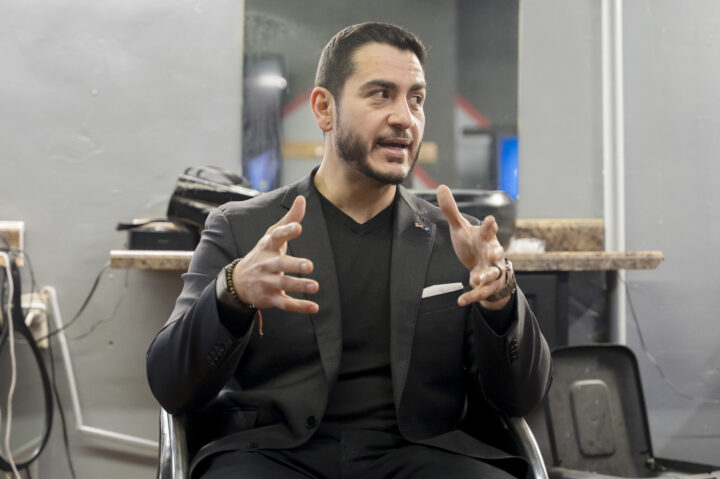
Evan Cobb for The Washington Post via Getty Images
Michigan Senate candidate Abdul El-Sayed speaks with customers and barbers at Blazin Wade Cuts in Grand Rapids, Michigan, on Saturday, Feb. 21, 2026.
United Democracy Project, the AIPAC-affiliated super PAC, is running a new ad targeting Abdul El-Sayed, a far-left Democrat in Michigan’s closely contested Senate primary, over his past support of the “uncommitted” movement and his criticisms of popular Democratic leaders — a messaging strategy the group has used as an effective attack line against anti-Israel opponents in previous election cycles.
The 30-second TV spot, released on Tuesday in advance of the Aug. 4 contest, cites comments in which El-Sayed had criticized Barack and Michelle Obama while accusing El-Sayed of “helping Trump win” the election in 2024 because of his promotion of the “uncommitted” effort that urged Democratic primary voters to leave their ballots blank as a protest against former President Joe Biden’s support for Israel amid the war in Gaza.
“With our democracy on the line against Donald Trump in 2024, El-Sayed told Democrats to vote ‘uncommitted,’ even after Gov. Whitmer warned those efforts would help elect Donald Trump,” the narrator says, referring to Michigan Gov. Gretchen Whitmer, who last week endorsed El-Sayed’s rival, Rep. Haley Stevens (D-MI), a pro-Israel Democrat backed by AIPAC.
“Disrespecting women. Attacking the Obamas. Helping Trump win. That’s the real Abdul El-Sayed,” the ad concludes.
While UDP has invoked similar rhetoric in other ads hitting El-Sayed, the new spot is the first to mention his ties to “uncommitted,” a campaign first launched in Michigan that is emerging as a key point of tension for the insurgent candidate — particularly with Black leaders who believe the movement helped contribute to former Vice President Kamala Harris’ defeat in the battleground state.
An image of Harris is shown in UDP’s new TV ad, but the former vice president is not named directly by the narrator.
UDP is also running two new digital ads — aimed at younger voters ages 18-25 who have been drawn to El-Sayed’s anti-establishment bid — that accuse him of making sexist remarks toward women and saying he was “one of the reasons Trump won,” again referring to his “uncommitted” activism.
Earlier this month, Stevens likewise highlighted El-Sayed’s alignment with “uncommitted,” while alleging he called Harris’ campaign “nauseating.”
El-Sayed, for his part, has sought to downplay his association with the movement, claiming in a recent campaign ad that he was “the first Muslim American leader to endorse Kamala Harris for president,” even as fact-checkers have deemed that statement inaccurate.
In a statement to Jewish Insider on Tuesday, Patrick Dorton, a UDP spokesperson, called El-Sayed “a bad Democrat” who “has repeatedly advocated positions that lose elections for Democrats.”
“That’s why Republicans are desperate to have him be the nominee,” Dorton said. “They know they can beat him.”
A new poll commissioned by the Michigan Education Association, which has not made an endorsement in the primary, found Stevens leading former Rep. Mike Rogers (R-MI), the Republican nominee, by two points in a hypothetical general election matchup, making the race a toss-up. El-Sayed, by contrast, was trailing Rogers by seven points in the open-seat race to succeed retiring Sen. Gary Peters (D-MI), which Democrats see as key to control of the Senate, according to the poll.
El-Sayed, an outspoken critic of Israel, has made AIPAC’s investment in the race a centerpiece of his messaging, as the group has grown increasingly toxic among Democrats. UDP’s spending to help Stevens has so far exceeded $30 million.
The pro-Israel group is also targeting former Rep. Cori Bush (D-MO), who is seeking a rematch in next Tuesday’s House primary in St. Louis against Rep. Wesley Bell (D-MO) — after he unseated her last cycle with a significant financial boost from UDP.
In recent weeks, UDP has run ads attacking Bush for past comments criticizing Biden and Harris, echoing the messaging it deployed two years ago to help oust the former Squad member who was among the most strident critics of Israel in the House.
A new TV ad released by UDP on Tuesday further dinged Bush as an absentee lawmaker who passed “zero bills” in Congress and called her opposition to the bipartisan infrastructure package in 2021 a vote “against Democrats.”
“Cori Bush has her own agenda, and it hurts St. Louis,” the ad claims.
Haley Stevens touted her support for a two-state solution for Israel and the Palestinians, while Abdul El-Sayed lambasted U.S. aid to the Jewish state
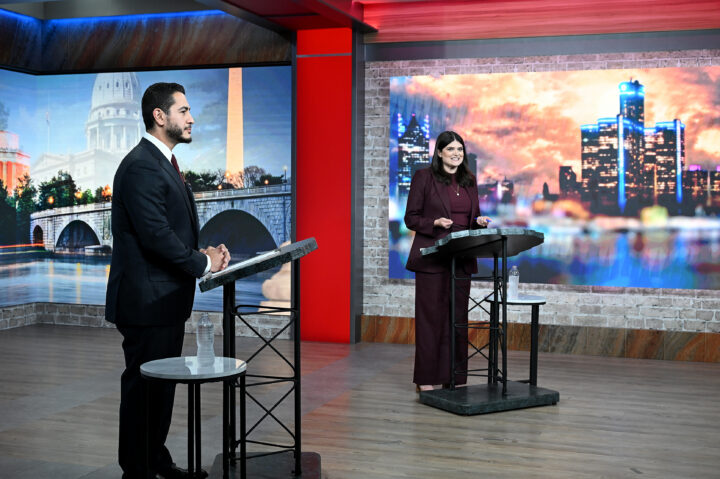
(Robin Buckson/Detroit News via AP, Pool)
Senate candidates Abdul El-Sayed, left, and Rep. Haley Stevens participate in a televised debate moderated by Roop Raj, Monday, July 27, 2026, in Southfield, Mich.
If Michigan’s Democratic Senate primary has become a test case for the saliency of AIPAC and Israel as a political issue for Democratic voters, then Monday night’s debate between Abdul El-Sayed, a far-left former public health official, and Rep. Haley Stevens (D-MI) served as the ultimate battlefield — and illustrated the gulf between the two candidates on the issue.
Over the course of an hourlong debate, El-Sayed made clear that he believes his opposition to AIPAC and to Israel will help him win next week’s election. Stevens, meanwhile, did not even utter the word “AIPAC.”
Stevens outlined her views on the Middle East, arguing that she and El-Sayed diverge because she supports a two-state solution to the Israeli-Palestinian conflict while he has not acknowledged Israel’s right to exist as a Jewish state. She touted her support for Michigan’s Jewish community and mentioned the work she did to advocate for the hostages after the Oct. 7, 2023, Hamas attacks on Israel.
Debate moderator Roop Raj, an anchor on FOX 2 News, prodded Stevens on her support from AIPAC, pushing her to discuss the group’s spending in the race, but she largely avoided doing so.
“Absolutely not,” Stevens said when asked by Raj whether voters should be concerned that she will do AIPAC’s “bidding” when she wins the seat.
Mostly, she turned the transparency questions on her opponent, attacking El-Sayed for not releasing all of his financial disclosure forms and for benefitting from a super PAC to which his father-in-law has contributed $200,000.
“I don’t think there’s much difference between super PACs going in for Abdul or super PACs going in for me,” Stevens said, when asked about AIPAC spending $46 million in the race. “We have a problem with campaign finance reform in this country.”
El-Sayed did the same, but in reverse: When she called out his lack of personal financial transparency, he went after her for benefiting from outside spending in the race.
The first question of the debate, to El-Sayed, was about how he would work to make Michigan more affordable. His answer: eschewing campaign donations “from the corporations who are jacking up your prices in the first place,” a category in which he placed AIPAC.
“Just last week, our friend here voted to send 3.3 billion of your tax dollars to a foreign government. That is the pro quo that comes with the quid of $30 million spent by AIPAC,” El-Sayed said. “It really comes down to how are you funded.”
Stevens, when asked about affordability, talked about regulating utilities in the state and promising to be a “proven fighter.”
When Stevens described being “robbed by Washington, D.C., and [President] Donald Trump,” and pledged to fight corruption in public office, El-Sayed said he agreed that Michiganders are being robbed — but by AIPAC, not Trump.
“The money that we should have to invest in our schools is being sent to foreign governments to destroy other people’s schools instead of investing in our own, and that is exactly what AIPAC wants you to do, and why they’re spending so much money to get the congresswoman elected,” El-Sayed said.
Plus, former Bernie bro bashes old boss
Michael M. Santiago/Getty Images
New York City Mayor Zohran Mamdani speaks during a primary-night watch party for NYC congressional candidate Claire Valdez on June 23, 2026.
Good Tuesday morning.
In today’s Daily Kickoff, we report on a fundraiser for Michigan Senate candidate Abdul El-Sayed that is being cohosted by a Democratic Party operative who praised her grandfather’s Nazi service, and spotlight Ed Miliband, who was announced as the U.K.’s foreign secretary on Monday. We talk to Jewish Democrats in Washington state who feel increasingly isolated in their own party, and interview Joel Rubin, a former Jewish liaison for Sen. Bernie Sanders, about his concerns that his one-time boss is promoting antisemitic candidates. Also in today’s Daily Kickoff: Micah Lasher, Ron Dermer and Khalil Al-Hayya.
We have also launched a new on-demand Live Briefing that you can access throughout the day via our new app (on Apple and Android) and on our website.
Today’s Daily Kickoff was curated by JI Executive Editor Melissa Weiss and Israel Editor Tamara Zieve, with assists from Danielle Cohen-Kanik and Marc Rod. Have a tip? Email us here.
What We’re Watching
- President Donald Trump is slated to meet today with Lebanese President Joseph Aoun at 11 a.m. ET. The meeting comes as Israel moves forward with its plan to withdraw from “pilot zones” in southern Lebanon where the Lebanese Armed Forces will move in and administer the area in accordance with the framework agreement established last month between Beirut and Jerusalem.
- The White House is reportedly mulling a proposal from Middle East mediators including Qatar, Egypt and Pakistan for a 10-day ceasefire to halt fighting between the U.S. and Iran. Earlier today, officials in Bahrain confirmed that sirens sounded in the Gulf state ahead of what was believed to have been another Iranian attack.
- Defense Secretary Pete Hegseth and Chairman of the Joint Chiefs of Staff Gen. Dan Caine are slated to appear before the Senate Appropriations Committee this morning to testify about the Trump administration’s $88 billion supplemental funding request for the Pentagon.
- The House Intelligence Committee is convening a hearing today on the next generation of terror threats, with former National Security Advisor H. R. McMaster set to testify.
- Arizona is holding its primaries today, with the GOP’s gubernatorial race between Reps. Andy Biggs (R-AZ) and Dave Schweikert (R-AZ) taking center billing. The winner will face Democratic Gov. Katie Hobbs in November.
- We’re also closely watching the primary results in Arizona’s 1st District, a swing district based in Scottsdale with a sizable Jewish population, which Schweikert is vacating to run for governor. The Democratic Congressional Campaign Committee is backing former TV news anchor Marlene Galan-Woods over former state Rep. Amish Shah, who was the party’s 2024 nominee. The GOP front-runner is former NFL kicker and CBS Sports sideline reporter Jay Feely.
- In New York, Jewish Women International is hosting a day-long workshop series focused on Jewish women in the workplace.
- More than a dozen Jewish and pro-Israel groups, including the Conference of Presidents of Major American Jewish Organizations, the Israeli-American Council, the Jewish Federations of North America and Christians United for Israel, are hosting a virtual tribute to Sen. Lindsey Graham (R-SC) tonight ahead of his funeral next week.
- The three-day Gulf Research Meeting kicks off today in Cambridge, U.K. Speakers include Saudi Foreign Minister Prince Faisal bin Farhan Al Saud; Qatari Foreign Ministry spokesperson Majed al-Ansari; Mohammed Ibrahim Al Dhaheri, the deputy director of the United Arab Emirates’ Anwar Gargash Diplomatic Academy; and Arab World Institute President Anne-Claire Legendre.
What You Should Know
A QUICK WORD WITH JI’S MELISSA WEISS
In recent weeks, following the collapse of the memorandum of understanding between Washington and Tehran and the closure of the Strait of Hormuz, Iran has fired dozens of times on Jordan, Saudi Arabia, Iraq, Bahrain, Kuwait, Qatar and the United Arab Emirates.
At the same time, it has sustained fire from the U.S., whose military bases across the region have been targeted by the Islamic Republic, with several service members killed. And all the while, Tehran has targeted commercial ships transiting through the strait.
But as focus on the conflict with Iran has shifted from addressing the Islamic Republic’s nuclear ambitions to the Strait of Hormuz, Israel has stayed out of the fighting — despite Iranian threats earlier this month to target the Jewish state if the U.S. attacks did not cease.
There is no upside for Israel to reenter the fight, especially when the issue of the Strait of Hormuz falls outside of the objectives set by Israel at the start of the war earlier this year. (This, despite the widespread sentiment among Israelis that this year’s war did not improve Israel’s security situation, according to polling last month from the Israel Democracy Institute.)
Key among the goals laid out by Israel was degrading Iran’s ballistic missile program and setting back elements of its nuclear program. Reopening Hormuz is an American objective, not an Israeli one. With Israel having made the calculus that the most immediate Iranian threats have been blunted — at least in the short term — the current mission has become an American one.
“Israel’s best move is to not move — yet,” Mark Dubowitz, the CEO of the Foundation for Defense of Democracies, told Jewish Insider this morning. “Washington does the striking. Israel keeps its fire and its threats in reserve, waiting for one of two triggers: a U.S. request to join, or an Iranian regime foolish enough to hit Israel and invite the reprisal that has been promised.”
Despite Iran’s threats to target Israel, such a move would likely be a strategic misstep for the Islamic Republic. Iran’s blockade of the strait and its attacks on Arab and Gulf states are an attempt to reassert its dominance over the region and demonstrate its ability to impact the global energy market. Tehran also appears to be betting that sustained attacks across the region will push Arab states to pressure the U.S. to accept an agreement to reopen the strait, handing the Islamic Republic a win.
BLUE STATE BLUES
The past few years of rising tensions in the Democratic Party over Israel and antisemitism have been marked for many Jewish Democrats in Washington — one of the country’s bluest states, which has a Jewish population of about 90,000 — by disappointment, anger and a growing sense of isolation within a party they have spent decades supporting. But the answer, they say, is not to walk away; rather, it’s to try to reclaim influence from within, Jewish Insider’s Danielle Cohen-Kanik reports.
Rebuilding: That effort begins with rebuilding the party’s own Jewish infrastructure. The Washington State Democratic Party’s Jewish caucus has gone “by the wayside, because it takes a lot of organizing and energy to keep it up,” said Linda Clifton, a longtime member of the caucus. “It’s all volunteer [work], and people had other jobs and other things they had to pay attention to. I think we need to revive it, and there’s been some effort to do that … but I think people are so disheartened that that becomes very difficult,” she continued.
FRIENDLY FIRE
Joel Rubin, a former State Department official who led Jewish outreach for Sen. Bernie Sanders’ (I-VT) 2020 presidential campaign, is now excoriating his former boss and the movement he has built for elevating stridently anti-Israel candidates — most notably former Maine Senate candidate Graham Platner, Jewish Insider’s Marc Rod reports.
Notable quotable: “I think what Sanders and the Sanders operation have done is shove into our system the most categorically anti-Israel, antisemitic candidates that we’ve seen in a generation — if ever, certainly within the Democratic Party — and it’s by design,” Rubin said in an interview with JI last week at the Aspen Security Forum. “It’s not by accident, and it’s very disruptive intentionally. The goal is to undermine Democratic unity and even rationality on Israel at this stage.”
More Dem dynamics: Sen. John Fetterman (D-PA) said in an interview with JI’s Emily Jacobs on Monday that the votes by more than 100 House Democrats last week in favor of an effort to end all U.S. aid to Israel indicate the party is “flirting with” making opposition to Israel the official party stance, something he said would lead him to leave the caucus.
NOT SO FUNNY MONEY
Michigan Senate candidate Abdul El-Sayed is slated to appear at a campaign fundraiser this weekend that is co-hosted by Kelly Neumann, a controversial Democratic fundraiser in Michigan who faced scrutiny earlier this year for a 2024 Facebook post on Veterans Day that praised her grandfather, who fought for the Nazis in World War II, Jewish Insider’s Gabby Deutch reports.
Pulled out: Sen. Elizabeth Warren (D-MA), who endorsed El-Sayed on Monday, was initially listed as a speaker at the Saturday event hosted by Neumann, though Neumann and the campaign removed Warren from their promotional materials after JI inquired about the senator’s role. Warren is speaking at a rally for El-Sayed later that day.
ACROSS THE POND

Ed Miliband’s appointment on Monday as U.K. foreign secretary is raising questions about how the former Labour chief will influence Israel and Middle East policy under Andy Burnham, the country’s new prime minister, Jewish Insider’s Matthew Kassel reports. As the first Jewish leader of the Labour party, which he helmed from 2010-2015, Miliband has long balanced his commitment to Israel’s security with vocal criticism of the Jewish state that has fueled some tensions with British Jewish leaders.
Israel approach: During his past tenure as Labour leader, Miliband “certainly wasn’t an instinctive supporter of Israel, but he also wasn’t as hostile as some expected given his background,” Arieh Kovler, a political analyst in Jerusalem who previously served as the director of policy and research for Britain’s Jewish Leadership Council, told JI. “But that was a decade ago. Attitudes to Israel have hardened across British politics and the Labour Party with it.”
BACKTRACK
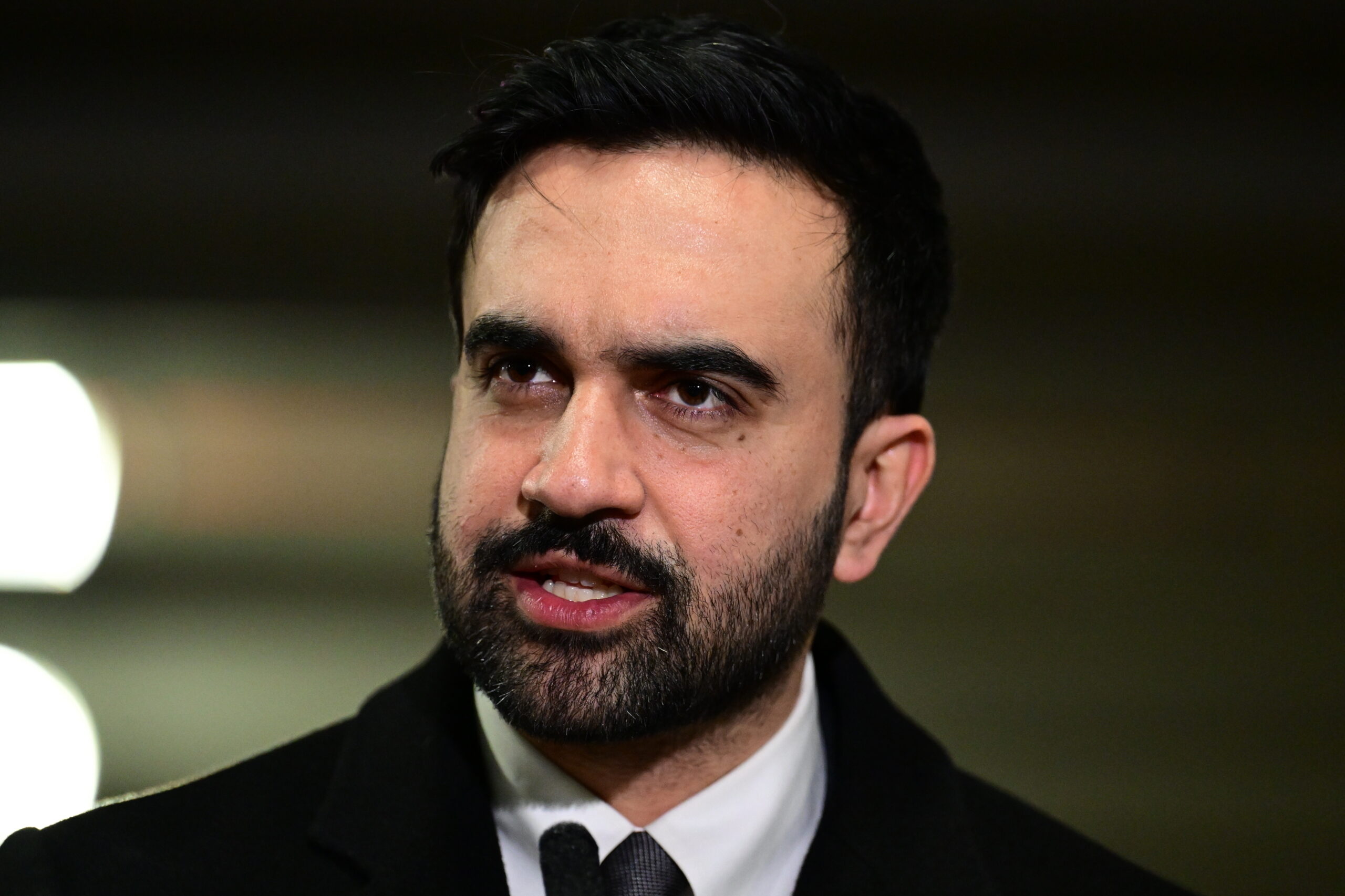
New York City Mayor Zohran Mamdani seemed to shy away on Monday from a campaign vow — referenced in an interview over the weekend — to arrest Israeli Prime Minister Benjamin Netanyahu, even as he continued to lob rhetorical fusillades at the leader of the Jewish state, Jewish Insider’s Will Bredderman reports.
What he said: Mamdani seemed to acknowledge on Monday that such a move might exceed his authority. “My administration will follow all applicable local laws, that is our commitment, that is something we will follow through on, when it comes to adherence to local laws,” the mayor told reporters after an unrelated event, stressing again when pressed: “We will follow our local laws.”
View from 1600 Pennsylvania Ave.: President Donald Trump posted on his Truth Social site that Netanyahu would not be arrested “in any way, shape, or form” while in the U.S.
SHE’S RUNNING
Sen. Darline Graham (R-SC) said that she will run in next month’s special election to replace her brother, the late Sen. Lindsey Graham (R-SC), on the ballot as the GOP nominee for Senate in November, Jewish Insider’s Emily Jacobs reports.
Mind made up: Graham, who was appointed last week to serve out the remainder of her brother’s term in the Senate, announced her decision to run for a full term in an interview with Fox News’ Sean Hannity on Monday. “I’ve made a decision,” Graham said. “I’m in.” Graham told Hannity, a friend of her late brother’s, that she had been “praying a lot” and “talking to my family” about the decision, which she acknowledged she needed to make at an expedited pace due to the week-long filing period for candidates beginning on Tuesday.
Worthy Reads
Eye on 2028: The Atlantic’s Mark Leibovich interviews Sen. Mark Kelly (D-AZ) and his wife, former Rep. Gabby Giffords (D-AZ), about Kelly’s presidential considerations, Giffords’ recovery after a 2011 shooting and Kelly’s shortlisting as former Vice President Kamala Harris vetted potential running mates. “Kelly told me that he’d only ‘read parts’ of Harris’s memoir. Presumably, these were the parts that corresponded to mentions of ‘Kelly, Mark.’ He smiled when I suggested this and did not deny it. When I brought up that Harris said she was concerned that he wasn’t tested as a national candidate, Kelly grew more openly annoyed than I might have expected, given how beside the point the topic is now. … He also noted, sarcastically, that some people apparently found it charming that Walz asked for Diet Mountain Dew to drink during his VP interview. ‘[Gov. Josh] Shapiro and I asked for water,’ he said, smirking.” [TheAtlantic]
Tehran’s Tactics: In The Wall Street Journal, Reuel Marc Gerecht and Ray Takeyh posit that Iran’s ability to withstand international economic pressure and U.S. strikes has given the Islamic Republic a “wartime advantage” over Washington. “Today’s conflict with the U.S. and Israel lets senior guard commanders, lowly IRGC foot soldiers and the rest of the theocracy’s security forces feel the fraternity of resistance against the regime’s enemies. For a dictatorship that lost most Iranians’ loyalty years ago, these wars were a boon. The zeal of the revolutionary faithful has baffled many Iranian expatriates and analysts, who see a morally, spiritually and financially bankrupt regime.” [WSJ]
Kuwait in the Crosshairs: The Financial Times’ Ahmed Al Omran looks at how the Iranian attacks across the Gulf have affected Kuwait, which has been targeted by more than 1,500 missiles and drones since the start of the war. “The sense of fear is particularly potent in Kuwait, which is still scarred by the trauma of the 1990 Iraqi invasion — a unique experience that sets it apart from other Gulf Arab states. Since the US-Israeli war against Iran started in February, Kuwait’s proximity to the Islamic republic and high concentration of American troops have made it an easy target for Tehran’s short-range missiles. … But the intensity and frequency of the attacks came as a surprise to some observers in Kuwait, which before the war enjoyed relatively cordial relations with Iran.” [FT]
A larger selection of Worthy Reads is available in our Live Briefing.
Word on the Street
Amid its escalating conflict with Iran, the White House’s social media feed posted a three-week-old poll on Monday from a right-wing polling firm indicating Americans support the U.S.-Iran memorandum of understanding established last month, JI’s Haley Cohen reports…
The Pentagon confirmed a New York Times report that nearly 100 American troops stationed in Jordan have been injured by Iranian attacks over the last two weeks as the Islamic Republic targets U.S. bases in the region; several of the strikes had not been made public prior to the Times’ reporting…
Israeli intelligence shared with the U.S. indicates that Iran moved thousands of centrifuges into its clandestine Pickaxe Mountain site last fall, following the 12-day war in June; read more about Pickaxe Mountain here…
The Wall Street Journal spotlights the “once-unthinkable” ideas being mulled by Washington, Beirut and Jerusalem to disarm Hezbollah in Lebanon…
The New Yorker‘s David Kirkpatrick talks to former Biden administration officials about the Biden White House’s policies toward Israel and Gaza at the height of the conflict between Israel and Hamas…
Rep. Mike Collins (R-GA), who is challenging Sen. Jon Ossoff (D-GA), removed from his campaign website family photos that featured his son-in-law, who was found to have promoted white nationalism and Nazi ideology online…
The Washington Post reports on the volatile temperament of Troy Jackson, who is expected to replace Graham Platner as the Democratic Senate candidate in Maine, during the time that Jackson served as the head of the state Senate…
Axios examines how Rep. Alexandria Ocasio-Cortez’s (D-NY) rhetoric as she campaigns for Democrats around the country resembles former President Barack Obama’s own early campaign rhetoric following the launch of his 2008 presidential bid…
Politico looks at how New York City Mayor Zohran Mamdani has alienated portions of the city’s electorate — including the Black, Jewish and Latino communities — that have traditionally had close ties with City Hall…
The New York Times interviews New York state Assemblymember Micah Lasher about his childhood hobby of performing magic; the New York Democrat, who won last month’s Democratic primary to succeed Rep. Jerry Nadler (D-NY), in 1996 published The Magic of Micah Lasher, and performed on national television as a child…
Adam Hamawy and Darializa Avila Chevalier, who won their respective Democratic congressional primaries against more moderate candidates in part by attacking Israel on the campaign trail, were announced as the keynote speakers at the Council on American-Islamic Relations’ annual gala in Washington…
Hungarian chess grandmaster Judit Polgar turned down Hungarian Prime Minister Péter Magyar’s offer to serve as the country’s interim president, saying she felt she lacked “the strength to take on the historic responsibility of uniting a divided nation” in the post-Viktor Orbán era…
The president of the Australian Association of Jewish Holocaust Survivors and Descendants testified before the country’s royal commission investigating antisemitism that increasing antisemitism in the country has “disturbing parallels” to Nazi Germany, but that he did not believe that the country was “becoming another Germany in the 1930s,” owing to Australia’s “democratic institutions, legal system and civilian civil society”…
OpenAI is reportedly starting a business development operation in Israel, having hired a senior Israeli executive from Amazon Web Services to lead the effort to develop relationships in the Israeli high-tech sector…
Air France paused its flights to and from Dubai until next week; the airline is also temporarily suspending its routes to Saudi Arabia until later this week…
Hamas announced Khalil Al-Hayya, the terror group’s top negotiator in Qatar, as its new leader; Al-Hayya succeeds Yahya Sinwar, who was killed by the IDF in October 2024…
Former Israeli Strategic Affairs Minister Ron Dermer is rejoining the Jewish Institute for National Security of America as a distinguished fellow, a position he previously held from 2021 to 2022…
Pic of the Day
Demonstrators from the Union of Jewish Students of France protested on Monday outside the Paris headquarters of French far-left party La France Insoumise following the interruption over the weekend of a Jewish DJ’s concert in Grenoble. La France Insoumise had for months been calling for a boycott of Barbara Butch’s show last Saturday, which was disrupted by anti-Israel activists.
Birthdays
Retired CEO of Sony/ATV, a large music publishing firm, he is a member of the Songwriters Hall of Fame, Martin Bandier turns 85…
President at Admar Group, Henry Dean Ostberg turns 98… Professor in the physics department at Bar-Ilan University, he won the Israel Prize in 2018, Shlomo Havlin turns 84… Director of the Center for the Political Future at USC, Robert Shrum turns 83… Criminal defense attorney, known for representing many politicians, celebrities and organized crime defendants, Benjamin Brafman turns 78… Former member of the U.K.’s House of Commons, now in the House of Lords, Baroness Susan Veronica Kramer turns 76… Senate majority whip (R-WY), John Barrasso turns 74… Chairman and CEO at Quantitative Financial Strategies, Sanford “Sandy” Jay Grossman turns 73… Endocrinologist and professor at Columbia University’s medical school, she is an honorary president of NYC’s Central Synagogue, Shonni Joy Silverberg, MD… Professor at Columbia Law School and daughter of the late Justice Ruth Bader Ginsburg, Jane Carol Ginsburg turns 71… Brooklyn resident, Irene Ostrovsky… Comedian and actor, best known for his five seasons on “Saturday Night Live” ending in 1990, Jon Lovitz turns 69… Former chief rabbi of Moscow, his opposition to the Ukraine war forced him to leave Russia, Rabbi Pinchas Goldschmidt turns 63… Literary agent at the William Morris Endeavor book department, Eric Matthew Simonoff turns 59… Actor and producer, Alysia Reiner turns 56… Professor of astronomy at MIT and winner of a 2013 MacArthur Genius Award, Sara Seager turns 55… Brazilian fashion designer best known for avant-garde designs and eclectic prints, Alexandre Herchcovitch turns 55… CEO of Fanatics, licensed sports merchandise and digital sports platform, Michael G. Rubin turns 54… Founder, president and CEO of Securing America’s Future Energy (SAFE) and the Electrification Coalition, Raphael “Robbie” Diamond… Rabbi of Congregation Bais Naftali in Los Angeles, his YouTube channel has over 4.6 million views, Rabbi Yoel Gold… Online media personality and director of product management at Electronic Arts (EA) in British Columbia, Veronica Belmont turns 44… CEO of Women of Reform Judaism since 2023, Rabbi Liz P.G. Hirsch… Clinical social worker, Aniko Gomory-Pink… Entrepreneur and political activist, she came to prominence as an African-American pro-Israel student activist at the U of New Orleans, Chloé Simone Valdary turns 33… Policy advisor at Brownstein Hyatt Farber Schreck, Zachary A. Marshall… Senior recruiter at Tines, Rachel Elizabeth Nieves… Attorney in Madrid and secretary general of the Federation of Jewish Communities of Spain until 2021, Elias Cohen…
Elizabeth Warren, who is speaking at a rally for El-Sayed later that day, was originally billed as a speaker for the event but was since removed from event publicity
Sarah Rice/Getty Images
Abdul El-Sayed, candidate for US Senate in Michigan, speaks at Mumford High School on May 3, 2026 in Detroit, Michigan.
Michigan Senate candidate Abdul El-Sayed is slated to appear at a campaign fundraiser this weekend that is co-hosted by Kelly Neumann, a controversial Democratic fundraiser in Michigan who faced scrutiny earlier this year for a 2024 Facebook post on Veterans Day that praised her grandfather, who fought for the Nazis in World War II.
Sen. Elizabeth Warren (D-MA), who endorsed El-Sayed on Monday, was initially listed as a speaker at the Saturday event hosted by Neumann, though Neumann and the campaign removed Warren from their promotional materials after Jewish Insider inquired about the senator’s role. Warren is speaking at a rally for El-Sayed later that day.
A spokesperson for El-Sayed said Warren’s “inclusion on the flier was a clerical error by our campaign” and that she was never scheduled to speak at the fundraiser. A spokesperson for Warren declined to comment.
In Neumann’s November 2024 post, which was previously reported by JI, she said her grandfather, Albert Neumann, fought “on the German side in WWI & WWII.” She noted that he “was one of the first people in my life that accepted me as gay” and described him as “a true testament that people can change and love indeed can win.”
Neumann, a Michigan attorney, has since deleted the post after it resurfaced earlier this year. In a March 2026 Facebook post, she apologized “to anyone who was hurt by [my] post from years ago, as that was certainly never my intention,” but blamed Rep. Haley Stevens’ (D-MI) Senate campaign for unearthing the original post.
Neumann had endorsed state Sen. Mallory McMorrow, but after McMorrow dropped out early this month, Neumann backed El-Sayed. Neumann hosted a fundraiser for Stevens’ House reelection campaign last year.
A spokesperson for Stevens told JI in January that Stevens would not have invited Neumann to host the event if Stevens had “seen the post celebrating Ms. Neumann’s grandfather’s service to the SS.” (The Daily Mail reported later that Neumann’s grandfather was likely in the German Wehrmacht, or armed forces, rather than the Nazi SS.)
“The host in question has hosted or donated to several democratic senators, congresspeople, statewide elected officials and candidates, including Abdul’s opponent, Congresswoman Stevens,” a spokesperson for El-Sayed told JI. “All of us, including the host, condemn Nazi ideology.”
Neumann defended her grandfather even as she apologized for the original post. “To be clear, my grandfather was a german soldier, not a nazi,” Neumann wrote in March. In a phone call with JI on Monday, Neumann stood by this assertion and claimed that a representative from Germany’s Ministry of Defense told her the same thing.
“All I know is that I’ve been informed as a child, in growing up, and then recently again, is that they said he wasn’t a Nazi,” Neumann said. “I believe there is a distinction between a young German soldier and a Nazi in the actual regime close to Hitler.”
The U.S. Holocaust Memorial Museum calls the idea that German soldiers were not part of the Nazi regime a “myth.”
“This belief is untrue. The German military participated in many aspects of the Holocaust: in supporting Hitler, in the use of forced labor, and in the mass murder of Jews and other groups targeted by the Nazis,” the museum states on its website.
Neumann’s political resume is lengthy. She served as a co-chair of the finance committee for McMorrow’s Senate campaign. She also previously worked to support gubernatorial candidate Jocelyn Benson, Michigan’s secretary of state, though Neumann has since endorsed Chris Swanson, a long-shot challenger to Benson.
Neumann told JI that she is “not antisemitic in any sort of way,” and that she regularly hosts events for Jewish politicians. Last year she hosted a fundraiser for Michigan state Sen. Jeremy Moss, a Jewish Democrat who is running for Congress.
“I’m not proud of my grandfather being in World War II as a young German soldier,” said Neumann. “What I am proud about is how he was so kind to me and accepted me as a minority in the ‘90s.”
The far-left Senate candidate is facing off in the Aug. 4 primary against Rep. Haley Stevens
Sarah Rice/Getty Images
Abdul El-Sayed, candidate for US Senate in Michigan, speaks at Mumford High School on May 3, 2026 in Detroit, Michigan.
Abdul El-Sayed, the Democratic Senate candidate in Michigan running in the race’s far-left lane, on Sunday described Israel as a “rogue state” that has committed genocide and apartheid. El-Sayed made the comments in an interview with Manu Raju on CNN’s “Inside Politics Sunday.”
Asked whether he thought the Israeli government should be considered by the U.S. to be a foreign terrorist organization, El-Sayed answered, “It’s certainly a rogue state.”
“I mean, they did a genocide,” he continued. “What about doing a genocide is not evil in your book? At baseline they do apartheid.”
Abdul El-Sayed, the Democratic Senate candidate in Michigan running in the race’s far-left lane, on Sunday described Israel as a “rogue state” that has committed genocide and apartheid.@HaleyCohen19 reports: https://t.co/9BELSWPMXQ pic.twitter.com/vSYVTTRZJZ
— Jewish Insider (@jewishinsider) July 12, 2026
El-Sayed’s comments come as Michigan’s heated Democratic Senate primary enters its final stretch. He is facing off in the Aug. 4 primary against Rep. Haley Stevens (D-MI) — a moderate lawmaker who has been supported by AIPAC and pro-Israel donors.
Last week, El-Sayed told CNN that he did not believe that a Democratic politician’s support for Israel could be about anything other than money. Earlier in the race, El-Sayed said he struggled to answer questions about whether he believed Israel has a right to exist as a Jewish state and that he believed the Israeli government was just as “evil” as Hamas.
Stevens highlighted Israeli Prime Minister Benjamin Netanyahu’s criticisms of her earlier on Tuesday amid attacks by primary rival Abdul El-Sayed over AIPAC support
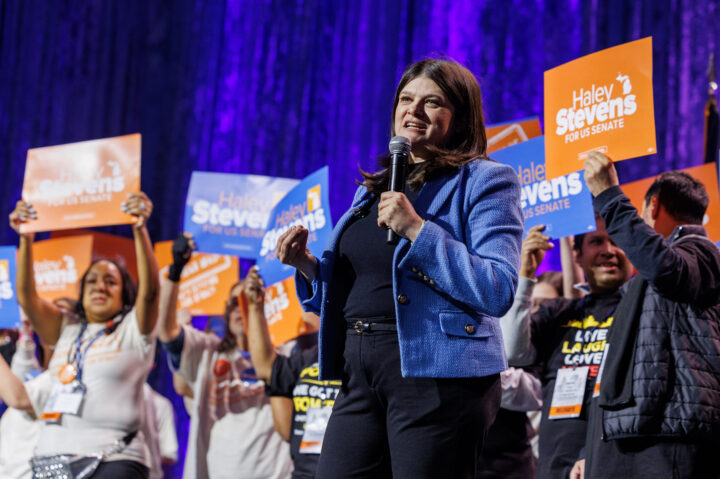
Andrew Roth/Sipa USA
Rep. Haley Stevens (D-MI) speaks at the Michigan Democratic Party Endorsement Convention in Detroit, Mich., on April 19, 2026.
Rep. Haley Stevens (D-MI) continued a war of words with Israeli Prime Minister Benjamin Netanyahu as she faced a barrage of attacks from her primary opponent, former public health official Abdul El-Sayed, at a debate on Tuesday in Michigan.
Netanyahu, in a CNN interview earlier on Tuesday, criticized Stevens for saying that his actions and government had made the Jewish community less safe and placed Jews in an “uncomfortable position.”
“It’s made her uncomfortable because she can’t stand up for the truth. She’s trying to, probably, excuse antisemitism,” Netanyahu said in response to a question from CNN host Dana Bash.
Asked about the war in Iran, Stevens criticized both President Donald Trump and Netanyahu.
“We need long-term peace. Donald Trump has failed us. The prime minister of Israel has failed in that regard, and he was just coming after me on this today,” Stevens said. “Look, I am unafraid. Michigan, you are my North Star, and no illegal wars, no unilateral wars at our expense.”
She doubled down on those criticisms later in the debate.
“It is very clear that Mr. Netanyahu has not made us safer, has not brought us closer to peace, and he’s endangered Jews here in America and around the world,” Stevens said. “This is why he was just trashing me today on CNN. I am not afraid of bullies. I am not afraid to stand up, and I continue to stand up for humanitarian aid, for the U.S. to work with the countries in the region and get aid into Gaza.”
She also highlighted her work with the families of Israeli hostages formerly held in Gaza.
Stevens accused El-Sayed of opposing a two-state solution, alluding to his repeated refusal to say directly whether he believes Israel has a right to exist.
“The difference between my opponent and myself on this issue is that I believe in a two-state solution,” Stevens said. “I can say that Israel has a right to peacefully exist alongside the people of Palestine and in Gaza.”
El-Sayed argued that Netanyahu and AIPAC’s support for U.S. politicians are the primary reasons the U.S. entered the war, and emphasized that an AIPAC-linked super PAC has been attacking him and supporting Stevens.
“So long as our politicians continue to be bought off by AIPAC, do not be surprised when we fight wars that are in their best interest to … annex Lebanon or to do genocide in Gaza,” he continued.
He also argued that U.S. support for Israel, which he described as a “rogue state,” has foreclosed the possibility of a two-state solution, calling for an end to U.S. aid to Israel and “blank checks” to other Middle Eastern countries including Egypt and Saudi Arabia.
In response to repeated attacks over her support from AIPAC, Stevens pivoted to discussing other issues including her record in Michigan, GOP support for El-Sayed’s campaign and El-Sayed’s failure to release his tax returns, among other issues.
Responding to multiple questions from viewers and the debate moderator about the leftward shift of the Democratic Party, both candidates largely sidestepped the issue, though El-Sayed suggested he’s supportive of a shift in the party.
“I’ll tell you this: it won’t shift if we continue to elect leaders who take money from the same corporations who have broken with the interests of the American public,” El-Sayed said. “[Senate Minority Leader] Chuck Schumer (D-NY) desperately wants one of us to be the next senator, and it’s not me. So, if you want your politics dictated by AIPAC or Chuck Schumer, then I’m not your guy.”
Stevens, meanwhile, emphasized her record in office as a “workhorse” for the state. “This has always been about Michigan,” she said, when asked whether the race was a battle over the future direction of the Democratic Party.
El-Sayed ultimately offered a similar answer, saying, “I’m not doing this because of some direction of a party. I’m doing this because of the Michiganders that I’ve gotten to see.”
The Michigan Senate candidate also intimated it’s not possible to be a Zionist and a progressive
Monica Morgan/Getty Images
Abdul El-Sayed at the Bridge Center on Dec. 16, 2025, in Detroit, Michigan.
As the heated Democratic Senate primary in Michigan enters its final stretch, far-left candidate Abdul El-Sayed told CNN this week that he does not believe that a politician’s support for Israel could be about anything other than money.
“Not if you’re a Democrat and you believe in human rights,” El-Sayed told CNN when asked about such a distinction.
Asked whether it was possible to be a Zionist and be a progressive, El-Sayed said, “Every definition of a Jewish state ends up in some articulation of illiberal values, every single one.”
El-Sayed is facing off against Rep. Haley Stevens (D-MI) in the Aug. 4 primary, following state Sen. Mallory McMorrow’s departure from the race on Sunday.
Stevens, a moderate lawmaker who has been supported by AIPAC and pro-Israel donors throughout her career, has drawn a contrast between herself and El-Sayed on the issue.
“There is a difference between me and Abdul,” she said in an MS NOW interview on Monday. “I believe in a two-state solution. I want to see the people of Palestine and in Gaza live peacefully, side by side, with the people of Israel. He cannot qualify Israel’s right to exist.”
The AIPAC-aligned super PAC is also beginning an ad blitz in St. Louis on behalf of Rep. Wesley Bell in his rematch against former Rep. Cori Bush
Monica Morgan/Getty Images
Abdul El-Sayed at the Bridge Center on Dec. 16, 2025, in Detroit, Michigan.

