













































































The Ohio Republican said the committee is investigating Middle East funding of universities
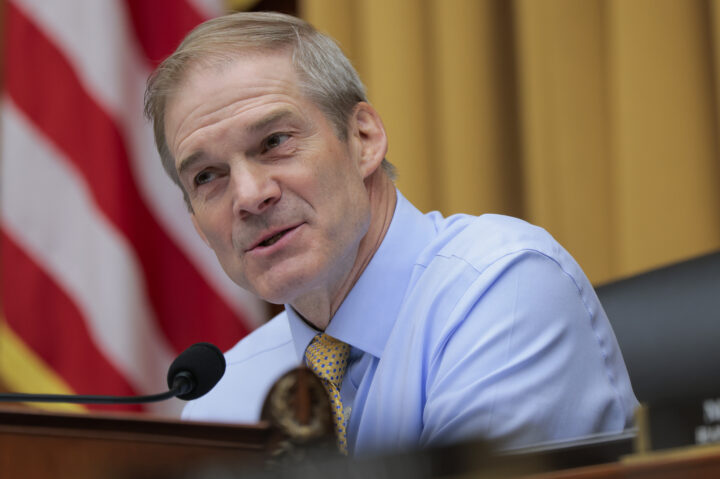
Heather Diehl/Getty Images
Chairman Jim Jordan (R-OH) speaks during a House Judiciary Committee hearing in the Rayburn House Office Building on March 4, 2026 in Washington, DC.


 Add JewishInsider on Google
LAS VEGAS — Rep. Jim Jordan (R-OH), the chair of the House Judiciary Committee, said that he’s hoping to take action in the committee on antisemitism in the remaining months of the congressional term, and also previewed plans for a hearing on the International Criminal Court.
Several major pending bills on combating antisemitism, including the Right to Worship Act, Jewish American Security Act and the Antisemitism Awareness Act, fall at least in part under the jurisdiction of Jordan’s committee, which could help move them forward to the full House.
“We want to try to be helpful in that,” Jordan told Jewish Insider, acknowledging that there are several pending bills on the subject. “We’ve been supportive of all of those in the past, so we’ll see what we can get done here in the last few weeks of September, or maybe even in the lame duck session” after the midterm elections.
Jordan said he hadn’t paid much attention to a whistleblower investigation opened by his Democratic counterpart, Rep. Jamie Raskin (D-MD), into allegations that the administration had mishandled its investigations of antisemitism on college campuses.
“We know what happened. You know, it’s like, what are we supposed to do? Not believe our lying eyes, as the old line goes?” Jordan said. “The vast majority of Americans have common sense, and they saw what took place on these campuses.”
He praised the work being done on the issue by the Justice Department, and said his own committee is also examining funding from Middle Eastern nations flowing to universities.
Jordan also defended the U.S. war in Iran, calling it consistent with President Donald Trump’s pledge not to allow Iran to obtain a nuclear weapon, even as he acknowledged that it is contributing to cost of living concerns.
“I know that things cost too much, but we’re working on that,” he said. “But we’ve got to also understand this regime … 47 years, largest state sponsor of terrorism, killed Americans, killed Israelis, killed others, killed thousands of their own people — they are bad, and you cannot let that regime get a nuclear weapon.”
He expressed full support for the supplemental funding request for the war submitted by the administration.
“I understand we’ve got running huge deficits, got a big debt, and we’ve got to address that problem too. But this is national security, and you have to do that,” he said.
Jordan also argued strongly for maintaining the “special relationship” between the U.S. and Israel, explaining that the two countries’ shared Judeo-Christian heritage is important to him, especially as an evangelical.
“There are 190-some countries in the world, and the left focuses on attacking two. The radical left focuses on attacking the United States and Israel,” he said. “They’re two countries with shared values and principles, but they’re also two countries with a special purpose, and started in such similar ways.”
The House Freedom Caucus co-founder, who made a brief run for the House speakership in 2023 that was blocked by fellow Republicans, said he would be supporting House Speaker Mike Johnson (R-LA) to remain in his role if Republicans maintain control of the House.
Asked if he would make a bid for minority leader if Republicans lose the House, Jordan insisted that would not happen.
“We’re going to keep the majority. I’m focused on that,” he said, noting that he’s traveled to more than a dozen states in the past month to rally with GOP candidates. “We’ve got to win. … They will ruin this amazing thing called America — the left will ruin it if they get power.”
Students said they were buoyed by the response they received during their advocacy meetings, including with staff for House Speaker Mike Johnson
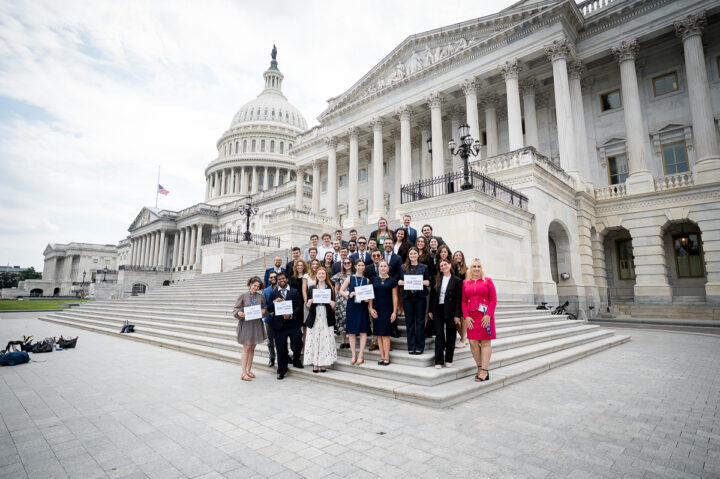
The Jewish Grad Org
For 40 Jewish graduate students gathered on Capitol Hill on Monday, the trip to Washington was not simply an exercise in advocacy. Many arrived carrying stories from campuses where they had felt increasingly isolated, targeted or ignored — and left with a desire to do something about it.
The students gathered for the Jewish Grad Organization’s Partners Summit, sponsored by Adam Miller and Family, and met with congressional offices throughout the day to advocate for the Jewish American Security Act, a bipartisan bill designed to strengthen security on university campuses, among other efforts to combat antisemitism across American society. They also discussed campus codes of conduct and equal protection, and shared their personal experiences with antisemitism.
For Rachel Applefield, the stakes of the legislation were deeply personal.
Applefield, a second-year student at Indiana University Maurer School of Law and president of the school’s Jewish Law Student Association, grew up in West Bloomfield, Mich. She is a member of Temple Israel, where an attacker drove a truck into the synagogue’s early childhood center in March. That attack underscored for her the vital need for robust Jewish security—and reinforced her belief that college campuses require similar resources to protect students.
“It’s been very, very difficult and very personal,” Applefield told Jewish Insider. “I’m sure it’s personal for everyone, but it’s very personal for me, this Jewish American Security Act.”
Applefield said the security resources at Temple Israel helped prevent the attack from becoming deadly.
“My temple is so blessed and lucky to have had all of the resources to prevent anything bad from happening,” she said. “Obviously, it was an awful event, what happened, but what went right went right. Like, everything that was supposed to correctly happen happened.”
“All of the security that was in place really saved lives,” she continued, “and you don’t see that level of security, those resources, on college campuses.”
Applefield shared her experience during meetings with staff for House Speaker Mike Johnson (R-LA) and Rep. Mike Quigley (D-IL), as well as with Rep. Gabe Amo (D-RI).
She said her meeting with Amo was particularly meaningful because her rabbi had met the lawmaker following the Temple Israel attack. Applefield noted that the connection helped make the conversation feel less like a routine congressional meeting and more like an opportunity to have someone in Washington understand what she had been through.
“My rabbi actually came down to D.C. a few months ago, right after the incident at our temple happened, and she met with him, so he knew exactly what I was talking about, and he was very empathetic, and I really connected with him,” she said. “I felt like I could tell he really cared.”
Applefield’s experiences with campus antisemitism have extended beyond concerns about physical security. She was president of Indiana University’s Hillel during the aftermath of the Oct. 7, 2023, Hamas terror attacks and later wrote an article for the Herald-Times about antisemitism and pro-Hamas graffiti on campus. A professor responded by publishing a piece attacking her.
“He called me heartless and just really took my name and made a story out of something I didn’t really talk about,” she said. “It’s just very scary, that power dynamic. Just knowing that a professor would do that to a student is just — it’s so inappropriate and scary.”
Applefield said she had entered law school unsure whether she would find much of a Jewish community. However, she said the summit gave her and the other students a national network of peers and leadership training. More importantly, Applefield said, it offered a form of support that she said students do not always receive from their universities.
“Just knowing that there’s that external support that we might not be getting from the university, knowing that this kind of organization exists is just so important,” she said.
Cassandra White, a third-year law student at Suffolk University Law School in Boston, came to Washington with a similar personal experience of antisemitism in an academic setting.
During her second year of law school, while serving as president of her school’s Jewish Law Students Association, White encountered what she described as antisemitic tropes in a legal writing final that she said was worth roughly 60% to 70% of her grade. One of the exam questions, she said, centered on a Jewish woman confiding in her rabbi about a money embezzlement scheme, with characters given names such as David and Rachel.
“It’s not this crazy encampment story where somebody gets physically assaulted or anything along those lines,” White told JI. “But it just shows that antisemitism really can be quite subtle and can also present itself in the content that we’re receiving as students in the graduate and in the undergraduate level as well.”

White said that while the incident was not as obvious as others that made headlines in the aftermath of Oct. 7, it was precisely what made it significant to her: antisemitism could be embedded in an ordinary academic exercise.
“Jews and stereotypically Jewish names and money embezzlement … it was very insensitive, and a lot of first-year students, Jewish students, were quite put off by that,” White said.
She turned to JGO, which connected her with an attorney who helped her navigate how to respond. The group also helped bring the Anti-Defamation League to campus for a training meant to prevent similar incidents.
“I actually went to JGO for assistance, and they put me in contact with an attorney,” White said. “She walked me through the entire process, and they actually ended up having the ADL come do a training at my school in order to mitigate this sort of thing happening again.”
“For any other minority group, this would not be considered acceptable,” she continued. “So why are Jews the exception?”
That question followed White to Capitol Hill, where she joined Applefield – her roommate for the overnight program – and the other Jewish graduate students in urging lawmakers to take campus antisemitism more seriously. Over the course of the day, she met with staff from the offices of Reps. Laura Friedman (D-CA), John McGuire (R-VA) and Suzanne Bonamici (D-OR).
“Overall, I would say my experience was absolutely incredible,” she said. “It was sort of like a roundtable discussion where all of the students shared their experiences, and we advocated in favor of them co-signing the Jewish American Security Act, drawing off of our own personal anecdotes and stories, experiencing antisemitism on campus or online.”
White said the meetings “felt extremely successful,” with aides engaging substantively with the students’ concerns.
“I do think it was very impactful,” she said. “The staff were actively taking notes, and it was also a great experience for us. I think as graduate students, I’ve never really been in that sort of advocacy position, you know, on Capitol Hill, talking to representatives and their staff. So I really enjoyed it a lot. I would definitely do it again.”
The program on Capitol Hill culminated in a congressional dinner, hosted by Rep. Debbie Wasserman Schultz (D-FL), where Rep. Greg Landsman (D-OH) spoke candidly to the students about navigating antisemitism and the broader turbulence of the moment.
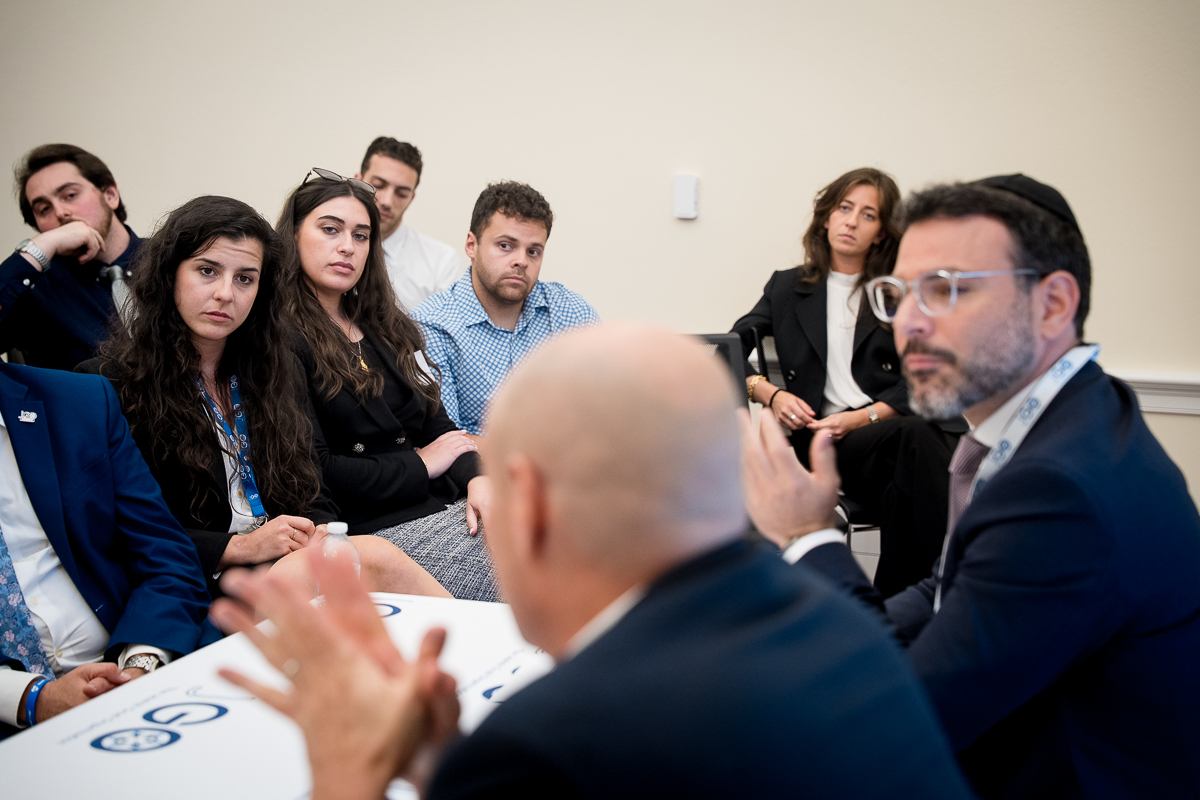
Landsman told the group that the frustration, isolation and anger many of them feel is not only real – but reasonable.
“This is a hard time. There’s no question that this is a very difficult time,” he said. “So it’s understandable if you’re frustrated or you feel isolated or you get angry. It’s all understandable considering how hard it is. It’s not you — it’s the moment.”
But he urged them not to assume they are facing it alone.
“You’re not alone,” Landsman said. “There’s this huge community that you’re a part of, and that is a really important thing you’ve just got to remember, because it feels so isolating.”
Landsman also pushed back against the notion that “everyone” on campus opposes pro-Israel or visibly Jewish students, arguing that the loudest voices often distort reality.
“There are a lot more folks out there that are curious but don’t want to get in the middle of all this because it seems so complicated and awful,” he said. “They’re curious, and it’s worth having those conversations and reaching out. It feels like everyone is against us because the folks who are so loud are very much in our faces. But they still represent a very small number of your classmates.”
To illustrate his personal connection to the challenges students face, Landsman described an incident in which his son, who is a freshman in high school, was recently confronted by a peer for his father’s political positions, pro-Israel advocacy, and being Jewish.
“He’s a freshman, and he went to the high school football game on Friday night, and a girl came up to him and got in his face about me and Israel and being Jewish, it was actually quite excessive,” Landsman said. “And I felt bad for him because he didn’t ask for this. I certainly stepped out for some leadership role — he didn’t. He wasn’t feeling bad about it, you know, it was more just that this is part of life now.”
What struck him, he told the students, was how his son chose to respond.
“I asked him how he handled it,” Landsman recalled. “He said, ‘I was very kind, very nice. I told her, “That’s not true,” [in response to her claims about Israel] and then I helped her.’ He was very generous with her.”
“There is something very Jewish about responding with kindness and generosity,” he continued. “We don’t use the word ‘grace,’ but that is a word in the religious community — to give that kind of kindness. In the end, it’ll make you feel better, and it’s just a better strategy.”
That sense of isolation from peers extends beyond campus life. Asked how Jewish Americans who feel alienated from the Democratic Party should navigate a growing sense of political homelessness, Landsman offered a direct answer: “Stay” in the party.
“There are a set of values that made you believe that you were a Democrat. Those values still exist. Don’t let anyone take that away from you,” Landsman said. “Just because somebody else showed up doesn’t mean you have to leave. If that’s where you’re supposed to be, don’t leave. Stay.”
Landsman cautioned the students that campus antisemitism “isn’t going to get solved overnight.”
“You’re in this for the long haul,” he said. “Do as much as you can, but don’t beat yourself up or expect things that no one person can do. We’re all doing our best, and we make as much progress as we can every day.”
For the students, the summit offered a chance to turn painful and often isolating experiences on their campuses into conversations with lawmakers — while also connecting them with other young Jewish leaders confronting many of the same issues.
White said the experience may also have reshaped what she plans to do after law school.
“I had never ever considered lobbying as a potential career path until yesterday,” White said. “I absolutely adored the advocacy program that we did with the representatives on Capitol Hill, it just spoke to me. I felt really in my element. I enjoyed it so deeply, and it was so satisfying to be able to speak my truth.”
“So it definitely has changed my potential career track, if you can believe it,” she continued. “I’m still going to graduate from law school, don’t worry … But I am genuinely and very strongly considering potentially lobbying as a post-law school career after yesterday because of just how enjoyable it was.”
Meanwhile, Applefield said she left the summit feeling more hopeful because of the support she received from Jewish peers and members of Congress and their staff. She said the meetings made her feel the issue was finally on the radar in Washington.
“I definitely have hope, just from feeling so supported throughout the two days, knowing that this is on the minds of congressmen, especially the speaker of the House,” Applefield said.
“I was very upset to hear what everyone was going through, because we’ve all experienced it, you know,” she continued. “But I do feel empowered in a way — how JGO brought us all together, gave us this training, gave us the opportunity to share our stories — and I really do hope that with the past few days we can continue the conversation.”
The congressman said he’s confident Congress will pass the Jewish American Security Act by the end of the year
Marc Rod
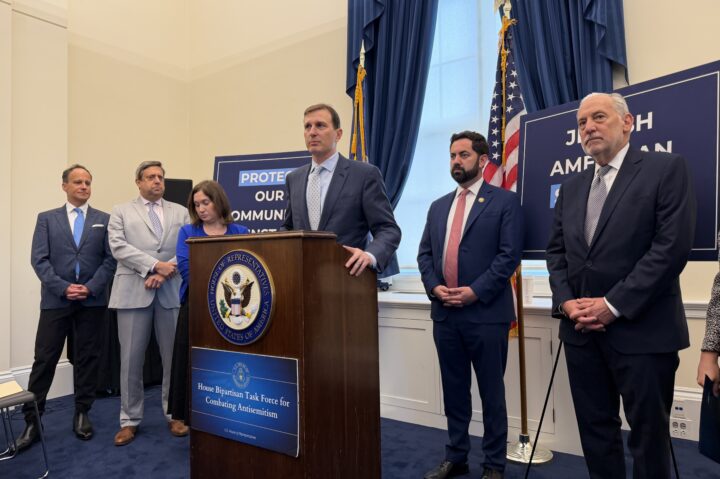
Rep. Dan Goldman (D-NY) speaks at a press conference announcing the Jewish American Security Act being introduced in the House on June 10, 2026.
Rep. Dan Goldman (D-NY), the chair of the House antisemitism task force, argued in an interview with Jewish Insider on Wednesday that the Jewish community needs non-Jewish allies to help fight antisemitism, following a press conference introducing the Jewish American Security Act (JASA), a bipartisan and bicameral package aimed at tackling attacks on Jewish institutions, campus antisemitism and online antisemitism.
“It’s really important that we gain and bolster allies from outside the Jewish community, because ultimately antisemitism is hate, and hate is easily transferable, and history has taught us that,” Goldman said. “The way we are going to combat antisemitism is not just through Jewish advocacy but through a broad coalition of people who support the democratic value of equal rights and social justice, and so we’re excited that this bill can be a vehicle towards bringing people of all backgrounds together to fight.”
Though some in the Jewish community feel that they’ve been abandoned by longtime allies since the Oct. 7 attacks, Goldman argued that it’s important to continue to reach out to and cultivate allies, in part because “Jewish community is too small to do it ourselves, and we need allies.”
Asked whether there are groups outside the Jewish community supporting JASA, Goldman said, “Broadly speaking, I’ve had really meaningful conversations with a lot of leaders in other communities, and I think that there is a recognition that it is incredibly important to have a united front against hate.”
In spite of Congress’ now yearslong struggle to pass legislation to address the significant rise in antisemitism since Oct. 7, 2023, Goldman said he’s confident that Congress will pass JASA before the end of the year.
The New York congressman said that “part of the reason you see such widespread bipartisan support, and you see so many of the Jewish organizations supporting it, is because we worked very intentionally to streamline it into things that can get bipartisan agreement, so that we can actually get it passed.”
“I’m very optimistic that we are going to pass it this year, because of that broad bipartisan support and because there are no poison pills,” Goldman continued.
He said that the bill’s sponsors have spoken to leadership on both sides of the aisle about the bill, and have received support for it.
Rep. Mike Lawler (R-NY), the lead Republican cosponsor of the bill in the House, said at the press conference that, as a representative of one of the largest Jewish communities in the country, “this issue matters.”
“I am grateful for the local law enforcement agencies in my district that coordinate very closely with our synagogues and with our yeshivas to protect our Jewish students, but it is not enough. We need additional resources to ensure everyone’s safety in New York. We’ve seen firsthand why this program matters,” the lower Hudson Valley Republican said, referring to Nonprofit Security Grant Program funding. “As a practicing Catholic who goes to church, fact is, I can walk into my church without fear. I can walk into my church without passing a security guard stationed outside. Jewish Americans don’t have that luxury, and it’s outrageous, and it should anger each and every one of us.”
He said the bill would also improve protections for Jewish students “by ensuring colleges and universities have clear accountability and enforcement mechanisms” and “increas[ing] transparency and accountability for online platforms as antisemitic content continues to spread across the internet.”
Rep. Jared Moskowitz (D-FL), a cosponsor of the bill, said at the press conference, “This bill shouldn’t be necessary. It shouldn’t be necessary. We shouldn’t have to do this. We’re not doing this because it’s optional. We’re doing it because it is necessary.”
“If people stop trying to hurt Jewish kids in preschools, we won’t have to build walls around them. If people stop trying to blow up synagogues, then we wouldn’t have to have armed guards at every entrance, but we’re seeing all over the country now people going to synagogues to stage foreign policy protests,” Moskowitz said. “We see people in the street, Jews in the street, wearing a Jewish star, having to put that Jewish star away, and if they don’t, they’re accosted.”
He said he saw firsthand the impact and necessity of NSGP funding when he served as Florida’s director of emergency management, where he was responsible for administering those grants at the state level.
Rep. Laura Gillen (D-NY), another supporter of the bill, told JI that antisemitism is an issue she’s been focused on since she was on the campaign trail, and said that the bill tackles many issues she pledged to address as a candidate.
“It talks about putting pressure on social media platforms to moderate hate speech, because we know that that is the hotbed of what is stirring up these hateful feelings — where people hide behind their computers, they say vicious vile things, and they create a lot of false information out there in the universe,” Gillen said.
She added that the security funding increase proposed in the bill, which puts NSGP funding at $1 billion, is also critical. “We saw they got a little bit more of a bump in [the] homeland security [appropriations bill], but we need a [much] bigger bump. There is a tremendous need across my district, and it’s not even just synagogues or yeshivas, it’s also other places of worship.”
Also speaking at the press conference were Amy Spitalnick, CEO of the Jewish Council for Public Affairs; Nathan Diament, executive director of the Orthodox Union Advocacy Center; Eric Fingerhut, CEO of the Jewish Federations of North America; Rabbi Jonah Pesner, director of the Religious Action Center of Reform Judaism; Jessica Bernton, director of congressional affairs at the American Jewish Committee; Lauren Wolman, senior director of government relations and strategy at the Anti-Defamation League; and Elizabeth Cullen, director of government relations at Hadassah.
Rep. Dan Goldman said that ‘words of condemnation are no longer enough’ and that there has been a ‘systematic failure’ by Congress to address rising antisemitism since Oct. 7
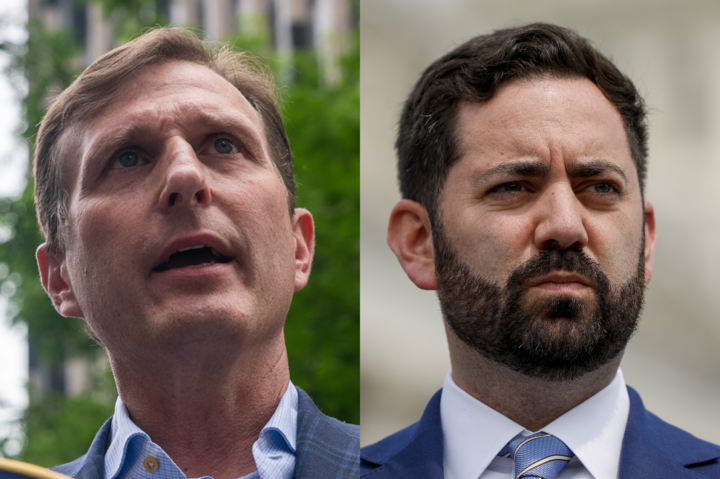
Reps. Dan Goldman (D-NY) and Mike Lawler (R-NY) are leading 28 colleagues in introducing a House version of the Jewish American Security Act, the package of antisemitism-related legislation introduced by Sens. Jacky Rosen (D-NV) and James Lankford (R-OK) last month in the Senate.
The bill includes a proposal for significant increases in security funding, new oversight and administrative measures to address antisemitism on college campuses and new transparency requirements for social media companies relating to antisemitism online.
The legislation is being co-sponsored by Reps. Grace Meng (D-NY), Brian Fitzpatrick (R-PA), Debbie Wasserman Schultz (D-FL), Maria Salazar (R-FL), Jared Moskowitz (D-FL), Rudy Yakym (R-IN), Josh Gottheimer (D-NJ), Marc Veasey (D-TX), Don Bacon (R-NE), Haley Stevens (D-MI), Michael McCaul (R-TX), Nicole Malliotakis (R-NY), Laura Gillen (D-NY), Jeff Van Drew (R-NJ), Jake Auchincloss (D-MA), Ted Lieu (D-CA), Dan Meuser (R-PA), Brad Schneider (D-IL), Tom Barrett (R-MI), Jen Kiggans (R-VA), Greg Landsman (D-OH), David Kustoff (R-TN), Juan Ciscomani (R-AZ), Lois Frankel (D-FL), Tom Suozzi (D-NY), Randy Weber (R-TX), Kristen McDonald Rivet (D-MI) and John Moolenaar (R-MI).
“Words of condemnation are no longer enough,” Goldman said in a statement. “Since the October 7th attacks, there has been a systematic failure in Congress and in our communities to counter the threat posed by surging antisemitism across this country.”
Goldman, a co-chair of the House antisemitism task force, said the bill would change that pattern: “Whether on campus, at synagogues, or online — the Jewish American Security Act will provide the tools necessary to help secure our at-risk communities to practice their faith without fear. American Jews cannot be asked to bear this burden alone. As Americans, we must stand shoulder to shoulder with those under siege by hate.”
Lawler, who is also the lead sponsor of the long-stalled Antisemitism Awareness Act, said in a statement that by providing additional resources for the Nonprofit Security Grant Program, the bill would help safeguard constitutionally protected religious freedom and bolster Jewish institutions against attacks.
“This bill also delivers critical protections for Jewish students on college campuses through stronger Title VI enforcement, requires greater transparency from online platforms on antisemitic content, and establishes key threat assessments,” Lawler said. “We must act decisively so Jewish Americans can feel safe in their schools, synagogues, and online.”
The legislation is supported by a wide range of Jewish groups across the religious and political spectrum.
“[A]ntisemitism remains a serious threat to the safety and security of the American Jewish community. A piecemeal approach to combat this scourge of [antisemitism] is no longer sufficient. The Jewish American Security Act is a serious and comprehensive federal response to this epidemic of hate,” Jonathan Greenblatt, CEO of the Anti-Defamation League, said in a statement. “We are grateful to Congressmen Goldman and Lawler for championing this bill in the House and showing that keeping Jewish Americans safe is a genuine bipartisan priority.”
Eric Fingerhut, the CEO of the Jewish Federations of North America, told Jewish Insider in a brief interview that, given the support in both the House and Senate and the Jewish community, “there’s never really been something like this at this level of comprehensiveness on Jewish security, with all the Jewish organizations working together.”
“People care, but they just don’t realize how bad it’s been. They don’t realize what’s happened in the last year. They don’t understand how Temple Israel was almost a disaster that would have changed the country,” Fingerhut continued. “This is really an important moment and we are all over this. There’s nothing that’s a higher priority.”
He said that if the bill passes, “we really have something that will make a difference for the Jewish community, which has been the target of a serious domestic terror crisis over this last year. So we’re grateful and we’re ready to work.”
American Jewish Committee CEO Ted Deutch said in a statement that Americans should not need security to pray or be afraid to leave their homes and interact in their communities, “yet, that is exactly what Jews in this country are experiencing every day.”
“We are at an inflection point. Surging antisemitism is not just a threat to the Jewish community; it is a crisis for our democracy and the values we cherish as Americans — pluralism, religious freedom, and the promise of equal protection,” Deutch said. “We thank Representatives Goldman and Lawler for their leadership and demonstrating that confronting this hatred is not a political issue, but a moral obligation.”
Amy Spitalnick, the CEO of the Jewish Council for Public Affairs, said that antisemitic violence “demands investments in a sustained, whole-of-government and whole-of-society response.”
“The Jewish American Security Act helps us to meet that need by focusing on tools that we know work,” Spitalnick said. “A truly inclusive American democracy requires Jewish safety — and so too does our safety as Jews depend on protecting our democratic institutions and values and ensuring the safety and rights of each and every community.”
Nathan Diament, the executive director of the Orthodox Union Advocacy Center, said that the organization “strongly supports” the bill and that the “unprecedented wave of antisemitism demands an unprecedented response by our government,” including increasing NSGP funding to $1 billion.
Rabbi Jonah Pesner, the director of the Religious Action Center of Reform Judaism, said that “the need for meaningful steps to bolster security and the fight against hate is vital.”
“The Jewish American Security Act strengthens the government tools and funding that will be available to help us meet this moment and uphold the American commitment to religious freedom,” Pesner said.
William Daroff, the CEO of the Conference of Presidents of Major American Jewish Organizations, praised the bipartisan support for the legislation as well as the broad consensus around it in the Jewish community, urging the bill’s quick passage.
“It is deeply encouraging to see this bill come together with bipartisan, bicameral support at a time when that kind of consensus is all too rare. There is real meaning in Republicans and Democrats joining around the shared responsibility to protect Jewish Americans,” Daroff said.
“It is encouraging to see real consensus across Jewish organizations. Since October 7, engagement is up and coordination is stronger. That unity is both needed and significant.”
Plus, bipartisan push for Jewish American Security Act

Jeffrey Dean/Bloomberg via Getty Images
Representative Thomas Massie, a Republican from Kentucky, speaks during a campaign event ahead of a primary election at Veterans Memorial Park in Vanceburg, Kentucky, US, on Monday, May 18, 2026.
Good Wednesday morning.
In today’s Daily Kickoff, we break down the results of yesterday’s critical primaries, including Rep. Thomas Massie’s loss in Kentucky and Chris Rabb’s win in PA-03, and report on the introduction by Sens. Jacky Rosen and James Lankford of the Jewish American Security Act. We look at how Democratic officials speaking at the Center for American Progress’ convening on Tuesday sidestepped discussions about Israel even as it held multiple sessions on the Middle East, and cover a new report from Israel’s Institute for National Security Studies warning about the effects of the erosion of American Jewish support for Israel on the relationship between Washington and Jerusalem. Also in today’s Daily Kickoff: Mahmoud Ahmadinejad, Nick Valensi and Israeli Foreign Minister Gideon Sa’ar.
Today’s Daily Kickoff was curated by JI Executive Editor Melissa Weiss and Israel Editor Tamara Zieve, with assists from Danielle Cohen-Kanik and Marc Rod. Have a tip? Email us here.
What We’re Watching
- The House of Representatives is expected to vote today on the Iran war powers resolution sponsored by Rep. Greg Meeks (D-NY), the ranking Democrat on the House Foreign Affairs Committee. The vote comes a day after Sen. Bill Cassidy (R-LA), who last week fell short in his reelection bid after President Donald Trump endorsed an opponent, flipped his vote to advance a similar Democratic-led measure in the Senate. More below.
- The House Education Committee’s subcommittee on Health, Employment, Labor, and Pensions is holding a hearing this morning on antisemitism in the healthcare field, with the Louis D. Brandeis Center for Human Rights Under Law’s Deena Margolies, Dr. Jacob Agronin, Bend the Arc CEO Jamie Beran and American Jewish Medical Association CEO Eveline Shekhman set to testify. Read more here.
- Former Rep. Tom Malinowski (D-NJ) is among those slated to speak at a hearing being convened this morning by the House Foreign Affairs Committee on the State Department’s budget request for its adjacent entities.
- The House Judiciary Committee is holding a hearing on the Southern Poverty Law Center in a session titled “The Southern Poverty Law Center: Manufacturing Hate.”
- Elsewhere in Washington this morning, the Jewish Federations of North America, Conference of Presidents of Major American Jewish Organizations, Combat Antisemitism Movement and the Weitzman National Museum of American Jewish History are hosting a congressional breakfast to celebrate Jewish American Heritage Month. Sam Salz, who in 2022 became one of the only Orthodox Jews to play Division I college football when he walked on to Texas A&M’s team, will give the breakfast’s keynote address.
- Down Pennsylvania Ave., the Hudson Institute is holding an event with Sarah Rogers, the under secretary of state for public diplomacy, on modernizing public diplomacy to address global challenges. Sen. Eric Schmitt (R-MO) is slated to give introductory remarks at the event.
- The Federalist Society is hosting its inaugural Legislative Branch Summit today in Washington.
- In Israel, the Knesset unanimously advanced a bill to dissolve the body, which if passed would automatically trigger elections, which are slated to take place no later than October 27. The bill will still need to go through several more readings and votes before it is passed.
What You Should Know
A QUICK WORD WITH JI’S JOSH KRAUSHAAR
Pro-Israel and Republican Jewish groups helped oust one of their leading GOP antagonists on Tuesday night, aligning with President Donald Trump to defeat Rep.Thomas Massie (R-KY) in the most expensive House primary in recent memory.
Ed Gallrein, a military veteran and farmer recruited by the Trump White House to challenge Massie, decisively defeated the congressman by 10 points, 55-45%. Massie, a libertarian lawmaker who long cast lonely Republican votes against Israel funding and resolutions condemning antisemitism, increasingly trafficked in bigoted rhetoric in the closing weeks of the campaign.
In his concession speech, Massie continued his antisemitic vitriol against his opponent, telling the crowd: “I had to call my opponent and concede, and it took a while to find Ed Gallrein in Tel Aviv.” Even though Trump’s outspoken opposition was the leading factor behind his demise, he routinely blamed Jewish and pro-Israel donors like Miriam Adelson for costing him his seat and insinuated that Israel was buying seats in Congress.
Massie first drew the ire of Trump for voting against his “big beautiful” reconciliation bill last year, and the anger was exacerbated by his work with Democrats to force the Department of Justice to release all of the files involving Jeffrey Epstein.
Outside groups, including a Trump-aligned super PAC (MAGA KY) and those affiliated with the Republican Jewish Coalition, AIPAC and Christians United for Israel, spent aggressively with ads and billboards attacking Massie over his record, with several pointing out his opposition to Israel and Trump’s foreign policy.
Massie’s defeat also underscores Trump’s strong and continued support within the party, with his endorsements in primaries almost always translating into his candidate’s victory. His opposition to Sen. Bill Cassidy (R-LA) led to his defeat last week, and he successfully ousted most of the Indiana GOP state senators who opposed his redistricting efforts.
POLICY PRIORITIES
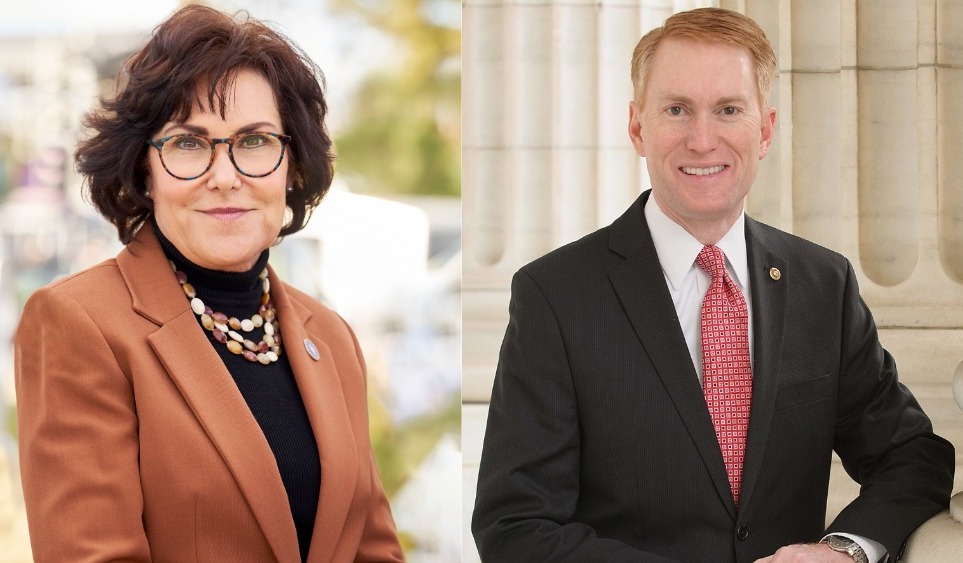
Sens. Jacky Rosen (D-NV) and James Lankford (R-OK) on Tuesday introduced the Jewish American Security Act, a broad new effort by the lawmakers, who co-chair the Senate antisemitism task force, to address antisemitism across multiple sectors of American society, Jewish Insider’s Marc Rod reports. Similar legislation is also expected to be introduced in the House.
About the bill: The bill contains various provisions aimed at increasing security for Jewish communities through additional funding and federal resources. Key provisions include: additional security assistance and improvements to security grant programs for Jewish communities; addressing antisemitism on college campuses through new federal oversight measures including a federal official to handle campus antisemitism; and addressing the spread of antisemitism online by requiring new transparency reports from social media companies, among a range of related steps in each category.
EIGHTH TIME’S THE CHARM

Sen. Bill Cassidy (R-LA) joined with Democrats to vote for a procedural motion advancing legislation that would end U.S. military operations against Iran, allowing the war powers resolution to move forward on Democrats’ eighth such attempt since the war began, Jewish Insider’s Marc Rod reports.
State of play: Cassidy, who last week fell short in his reelection primary effort against a Trump-backed challenger, joined three other Republicans — Sens. Susan Collins (R-ME), Lisa Murkowski (R-AK) and Rand Paul (R-KY) — in voting for the procedural motion, which was approved by a 50-47 vote. Sen. John Fetterman (D-PA) voted against the motion. The passage of the motion will now tee up further debate on and an additional vote on the resolution itself, at a time to be determined.
Money messages: Treasury Secretary Scott Bessent called on U.S. allies on Tuesday to “step up” and join Washington in taking aggressive economic action against Iran and its broader terrorism financing networks, JI’s Matthew Shea reports.
LEAVING FINGERPRINTS
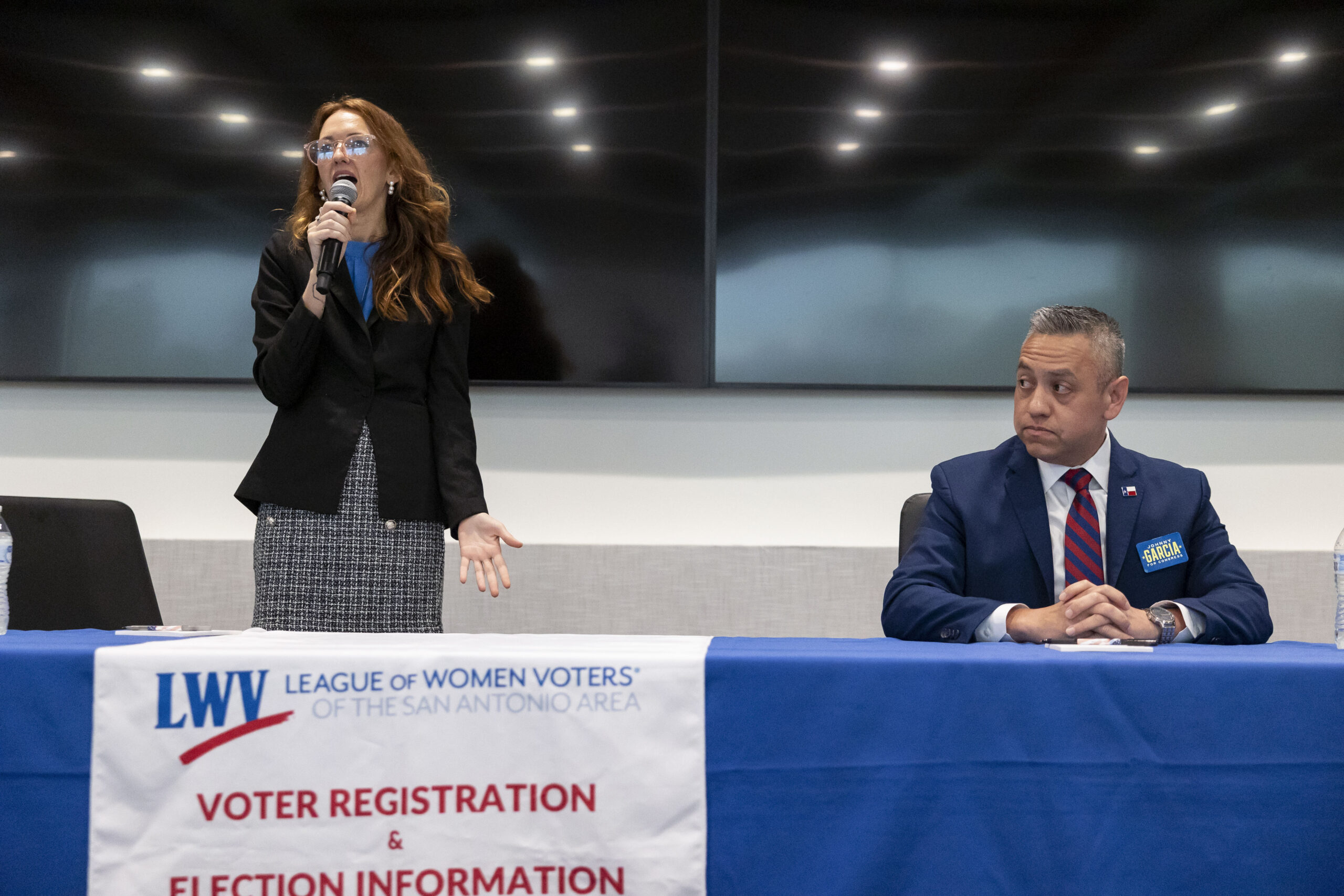
A newly launched super PAC with ties to Republicans has spent nearly half a million dollars to help boost a Democrat running for a competitive open House seat in Texas who is facing growing bipartisan furor over a series of virulently antisemitic social media remarks, Jewish Insider’s Matthew Kassel reports.
Boosting Galindo: Lead Left PAC, the GOP-linked group, has been aggressively promoting Maureen Galindo, a fringe San Antonio activist who finished first in the primary and has said that Jews “own Hollywood” and “worship the synagogue of Satan.” Last week, she said that, if elected, she would turn a local immigration detention center “into a prison for American Zionists and former ICE officers for human trafficking,” while adding, “It will also be a castration processing center for pedophiles which will probably be most of the Zionists.”
Bonus: Rep. Alexandria Ocasio-Cortez (D-NY) slammed Galindo’s comments, saying that “bigoted garbage and antisemitism should be nowhere near our politics” and suggesting that the “donors behind the Republican super PAC funding her should be exposed.”
MENDING FENCES

A new study from the Tel Aviv University-affiliated Institute of National Security Studies warns that American Jews’ ties with Israel have weakened in recent years, and Israeli leaders do not seem to care enough about how these shifting attitudes might affect Israel’s national security. If Israel ignores the growing distance with the American Jewish community, the country could face long-term consequences, authors Ted Sasson and Avishay Ben Sasson-Gordis argue, Jewish Insider’s Gabby Deutch reports.
Words of warning: “An American Jewish community that is less supportive of Israel would leave Israel more isolated globally, less capable of extending soft power, and less confident in its role as the nation-state of the Jewish people,” Sasson, a Middlebury College professor and INSS scholar, and Ben Sasson-Gordis, director of the Israel-United States Research Field at INSS, write.
DEM DISCUSSIONS
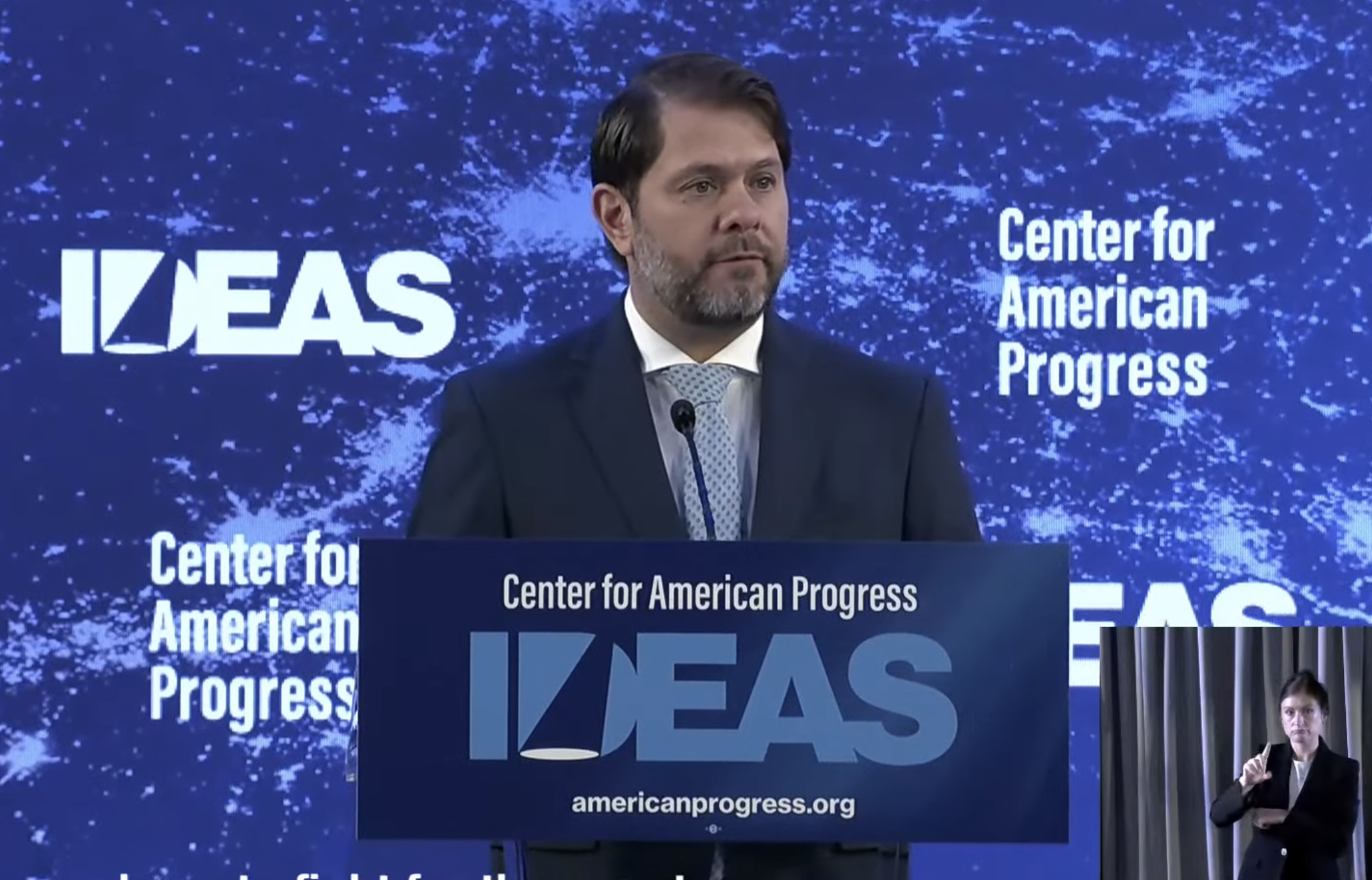
On Tuesday, more than a dozen Democrats pitched their vision for America to a roomfull of liberal donors, staffers and funders at the Center for American Progress’ IDEAS Conference, a convening that pledged to bring together “the broad center-left’s leading thinkers and doers” to offer ideas on a range of policy topics. American foreign policy was one of those topics. In the two sessions on national security, each of which devoted significant discussion to the Middle East, one topic was notably absent: Israel, Jewish Insider’s Gabby Deutch reports.
Iran war opposition: Sen. Ruben Gallego (D-AZ) kicked off the gathering with an address billed as “National Security Ideas for the Future.” He cited his own experiences as a member of the Marine Corps who served in Iraq, arguing that the war in Iran is misguided and harming Americans. ”I’m here today because right now our country is in danger. Will this president continue to drag America into another endless Middle East war?” Gallego said. “This is a war that wasn’t planned, wasn’t authorized and is not making us safer. [Donald] Trump got his war, and working families got stuck with the bill every day.”
FLOURISHING FRIENDSHIPS

While some geopolitical relationships have been tested by the Iran war, others have been strengthened: Emerging alignments between Israel, the United Arab Emirates and India are creating new opportunities for cooperation among three countries increasingly bound by shared defense and economic interests, experts told Jewish Insider’s Matthew Shea reports.
Overlapping interests: On Friday, India and the UAE agreed on the framework for a strategic defense partnership, a step that could deepen ties between New Delhi and Abu Dhabi amid the regional fallout from the war. Hussain Abdul-Hussain, a research fellow at the Foundation for Defense of Democracies, told JI that the partnership also extends to Israel, which has remained a key ally of both countries. He said the emerging alignment is rooted in overlapping economic and strategic interests and shared adversaries.
Worthy Reads
Narrative War: Days after The New York Times’ Nicholas Kristof published a piece alleging numerous abuses of Palestinian prisoners by Israeli security officials, Kristof’s colleague on the Opinion desk, Bret Stephens, observes the documented history of news outlets publishing falsehoods about Israel without basic fact-checking. “The common thread in these and many other stories is that they all involve strenuous, if ultimately embarrassed, efforts to prove that Israelis deliberately seek to kill the innocent and maim the vulnerable, apparently for no other reason than gratuitous cruelty. This isn’t a matter of reporters’ impartially trying to expose wrongdoing wherever they find it — if that were the case, the errors wouldn’t invariably lean in the same ideological direction. It isn’t speaking truth to power. It’s feeding narratives to the credulous.” [NYTimes]
Drawing Down Aid: In The Wall Street Journal, the American Enterprise Institute’s Daniel Samet argues in favor of winding down U.S. aid to Israel, calling it a “political liability” that could affect the future of the relationship between the countries. “Military aid to Israel, which Washington began supplying in significant amounts during the 1960s, has been a sound investment. The U.S. has financed a reliable ally that fights and wins wars against America’s enemies. Yet Israel no longer commands the affection of the American people as widely as it once did. Ending military assistance is a political imperative in changing times.” [WSJ]
Word on the Street
U.S. forces in the Indian Ocean seized an Iran-linked oil tanker that had been under U.S. sanctions since March; the vessel was believed to be carrying upwards of a million barrels of crude oil that was loaded earlier this year from Iran’s Kharg Island…
The New York Times reports on an Israeli-developed plan, backed by the U.S., for former Iranian President Mahmoud Ahmadinejad, who was under house arrest in Tehran, to be installed as the leader of Iran; the plan reportedly fell apart after the hard-liner was injured on the first day of the war in a strike intended to free him from house arrest and, per the Times, “became disillusioned with the regime change plan”…
Ahmadinejad biographer and Israeli analyst Meir Javedanfar dismissed the report, calling it “a disinformation campaign initiated by those that tried to assassinate him”; Javedanfar said that the “disinformation is being used to create chaos within the ranks of the Islamic Republic of Iran” following what he described as “an assassination attempt gone wrong”…
Iranian state media reported that Tehran had offered a new proposal to the U.S. that would include the withdrawal of U.S. troops from areas near Iran, an end to hostilities targeting both Iran and Hezbollah in Lebanon and reparations for damages the regime sustained in the recent war…
The United Arab Emirates said that three drones that targeted the country’s nuclear power plant over the weekend originated from Iraq, deepening speculation that Iran, which backs militias in the country, was behind the attack…
The Wall Street Journal spotlights the challenges facing Kuwait following the closure of the Strait of Hormuz that has halted the Gulf state’s ability to ship crude oil…
President Donald Trump endorsed Texas Attorney General Ken Paxton’s primary challenge against Sen. John Cornyn (R-TX) on Tuesday, dealing a significant blow to Cornyn’s bid for a fifth term, Jewish Insider’s Emily Jacobs reports…
Former CIA officer Amaryllis Fox Kennedy, an ally of Director of National Intelligence Tulsi Gabbard, is departing her senior roles at the Office of the Director of National Intelligence and the Office of Management and Budget to return to the private sector…
The Senate passed a resolution honoring Jewish American Heritage Month by unanimous consent…
Rep. Ro Khanna (D-CA), responding to Rep. Thomas Massie’s (R-KY) primary defeat, said that Massie “lost because he had the guts to stand up to the Epstein class and against the war”; the California Democrat, who is mulling a 2028 presidential bid, said he welcomed “voters who feel rejected by Trump,” pledging to “build a movement to stand for Team America”…
The South Carolina Statehouse approved a new congressional map that would eliminate the district represented by Rep. Jim Clyburn (D-SC), the state’s only Democratic district; the new map will next head to the state Senate for a vote…
New York City Mayor Zohran Mamdani has in recent days held a series of meetings and listening sessions with Wall Street executives, including JPMorgan Chase CEO Jamie Dimon and Goldman Sachs CEO David Solomon, after Mamdani angered business leaders by filming a video outside the home of Citadel’s Ken Griffin in which the mayor announced a plan to tax second homes in the city…
Police in New York are investigating the death of a Jewish bakery owner and former Hatzolah volunteer whose body was found in the Queens neighborhood of Flushing after he was shot in the neck and back…
The Strokes announced that guitarist Nick Valensi, who is Jewish, won’t be participating in the band’s upcoming summer tour, weeks after Strokes frontman Julian Casablancas said on the “SubwayTakes” web series that “American Zionists get the benefits of white privileged people, but talk like they are Black people during slavery”…
Mohamed Hagi, Somaliland‘s newly arrived ambassador to Israel, announced that Hargeisa planned to open its embassy in the country in Jerusalem…
Israeli Finance Minister Bezalel Smotrich claimed that the International Criminal Court was seeking a warrant for his arrest; the ICC would not comment on the claim, saying that requests for warrants are confidential…
In what he said was a response to the ICC’s request for a warrant, Smotrich threatened to evict residents of the West Bank Bedouin village of Khan al-Ahmar…
Comedy writer Barry Blaustein, a longtime collaborator of comedian Eddie Murphy who worked on the screenplays of “Coming to America” and “The Nutty Professor,” died at 71…
Pic of the Day

Israeli Foreign Minister Gideon Sa’ar, who is in Prague this week for meetings with senior officials, announced the launch of the Israel-Czech Republic Business Forum alongside his Czech counterpart, Petr Macinka.
Birthdays

Emmy Award-winning singer and songwriter, Rachel Platten turns 45…
CEO at Kings’ Care – A Safe Place, operator of multiple drug and alcohol rehabilitation and treatment centers, Ilene Leiter… Canadian businesswoman and elected official, she served in the Ontario Assembly and in the Canadian House of Commons, Elinor Caplan turns 82… Former member of the New York State Assembly until 2020, representing the 97th Assembly District in Rockland County, Ellen Jaffee turns 82… Former member of the U.S. House of Representatives (D-CT) for 20 years, he was born in a DP camp in Germany after WWII, Sam Gejdenson turns 78… Chagrin Falls, Ohio, attorney, Robert Charles Rosenfeld… CEO emeritus of the Jewish Community Relations Council of New York, Michael S. Miller… Seamstress and weaver, Bernice Ann Penn Venable… Retired in 2022 as a federal judge for the Southern District of Texas, she is now a mediator and arbitrator, Judge Nancy Ellen Friedman Atlas turns 77… Five-time Emmy Award-winning producer and writer who has worked on “Saturday Night Live,” PBS’ “Great Performances” and “It’s Garry Shandling’s Show,” Alan Zweibel turns 76… U.S. Sen. Mike Crapo (R-ID) turns 75… Former director of international affairs, policy and planning at the Conference of Presidents of Major American Jewish Organizations, following 12 years at the ADL, Michael Alan Salberg… Professor at Tulane, he was president of the Aspen Institute, CEO of CNN and managing editor of Time, Walter Isaacson turns 74… Born in upstate New York as Michael Scott Bornstein, former Israeli ambassador to the U.S. and then member of the Knesset, Michael Oren turns 71… Actor and singer, known for her work in musical theater, Judy Kuhn turns 68… CEO and founder of Abrams Media, chief legal analyst for ABC News and the founder of Mediaite, Dan Abrams turns 60… NYC location scout and unit production manager for feature films, TV and commercials, David Brotsky… Co-founder and CEO of Breitbart News, Larry Solov turns 58… Senior advisor at Majority Democrats, Ami Copeland… French singer and actor, at 13 she became the youngest singer to ever reach No. 1 in the French charts, Elsa Lunghini turns 53… Co-president of Major League Baseball’s Tampa Bay Rays, Matthew Silverman turns 50… Principal of public policy at Amazon, Philip Justin “PJ” Hoffman… Program officer of Jewish life at the Michigan-based William Davidson Foundation, Vadim Avshalumov… Founder and CEO of Berkeley, California-based Caribou Biosciences, a genome engineering company, Rachel Haurwitz, Ph.D…. Senior director of government relations and strategy for the ADL, Lauren D. Wolman… Executive communications leader, Susan Sloan… VP of digital advocacy at McGuireWoods Consulting, Josh Canter… Beauty pageant winner who was awarded the title of Miss Israel 2014, Doron Matalon turns 33… Master of public policy candidate at Oxford University, Aylon Berger turns 26… Conservative political activist, he is a survivor of the Marjory Stoneman Douglas High School shooting, Kyle Kashuv turns 25…
The Jewish American Security Act addresses security threats, antisemitism on campus and online antisemitism
U.S. Senate
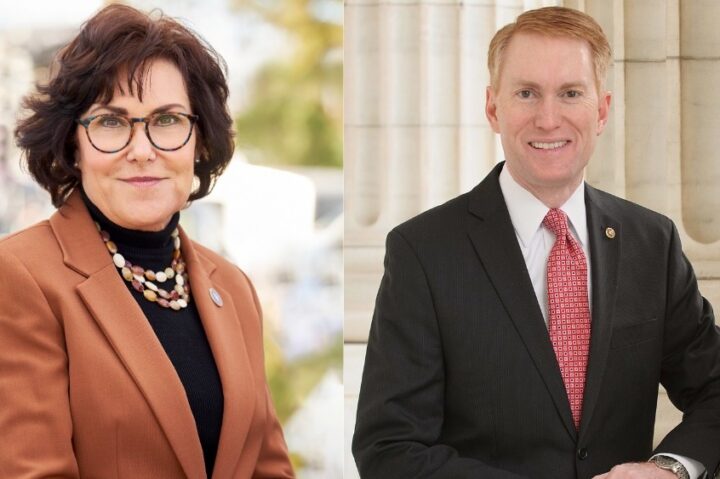
Sens. Jacky Rosen (D-NV) and James Lankford (R-OK)
Sens. Jacky Rosen (D-NV) and James Lankford (R-OK) on Tuesday introduced the Jewish American Security Act, a broad new effort by the lawmakers, who co-chair the Senate antisemitism task force, to address antisemitism across multiple sectors of American society.
Similar legislation is also expected to be introduced in the House.
The bill, which has widespread support from all corners of Jewish leadership, including all major religious denominations and political organizations on both sides of the aisle, contains various provisions aimed at increasing security for Jewish communities through additional funding and federal resources.
Key provisions include: additional security assistance and improvements to security grant programs for Jewish communities; addressing antisemitism on college campuses through new federal oversight measures including a federal official to handle campus antisemitism; and addressing the spread of antisemitism online by requiring new transparency reports from social media companies, among a range of related steps in each category.
Rosen, leaders from the Anti-Defamation League, American Jewish Committee and BBYO International and local leaders whose communities have been impacted by antisemitic violence in recent years spoke in favor of the bill at a Jewish Federations of North America press conference on Capitol Hill on Tuesday. JFNA activists are on Capitol Hill this week meeting with more than 200 lawmakers to advocate for the bill and other legislation.
Rosen called the bill an “aggressive and comprehensive” response to antisemitism in the U.S. which will “help keep Jewish students safe, will help secure Jewish community institutions and we will help fight antisemitism online.”
She acknowledged that the path ahead is “not going to be easy” but emphasized that “it’s not an option for our government to not do more to fight antisemitism.”
Lankford emphasized the impacts of antisemitic violence on individual Jews and communities in a statement on the bill.
“These are not just numbers, these are real stories impacting real people. Jewish students being targeted on campuses. Synagogues being vandalized. People being attacked in the streets simply because of their faith and heritage,” Lankford said. “That is not who we are as a nation, and we unequivocally condemn antisemitism in all its forms. Every American deserves to live their faith freely. That is worth fighting for.”
Rosen told Jewish Insider later in the day that she and Lankford had been working to craft the bill for the past year, and had taken a range of input on the legislation. She said she and Lankford had learned from past legislative fights that to garner strong bipartisan support “you have to be very specific” and targeted in how legislation is crafted.
She said the new bill is focused on combating domestic antisemitism across three of the areas that have been epicenters of the recent rise in antisemitism since Oct. 7.
“I think it’s a good, solid bill and I believe that we crafted it in a way to get that good bipartisan support,” Rosen said. “We’re not going to solve every problem, but you have to start with something and work from there, and hopefully we build on that success.”
“Antisemitism we know is a canary in the coal mine. It starts with the Jews, it doesn’t end with the Jews,” she said.
“This bill that we wrote, we meant it to not be so prescriptive,” Rosen continued.” When we do things on college campuses, it’s going to help all students. When we do things in houses of worship, it’s not just for synagogues, it’s for all houses of worship. And when we start looking and analyze some of these algorithms online, it will probably inform us about some of the other algorithms, probably the same algorithms that are taking people down that hateful rabbit hole.”
Asked after the press conference about the path forward for the bill, and how advocates could avoid the same pitfalls that befell other efforts to combat antisemitism since Oct. 7, JFNA CEO Eric Fingerhut said that Jewish community groups took lessons from previous fights, particularly over the Antisemitism Awareness Act, which would codify the federal government’s use of the International Holocaust Remembrance Alliance’s working definition of antisemitism in evaluating campus antisemitism cases, but has failed to pass in several congressional sessions.
“We learned a lot from the experience with the Antisemitism Awareness Act. Of course we still support the IHRA definition, but we made a collective communal decision that there’s a separate bill that covers the IHRA definition, and that we hope that will continue to move through the process, but this is a separate issue,” Fingerhut told JI.
The bill does not explicitly endorse the International Holocaust Remembrance Alliance’s working definition of antisemitism, which has proven a hurdle to previous efforts to combat antisemitism, but it notes that the Trump administration in 2019 implemented an executive order enforcing the IHRA definition on college campuses.
“This is the security of the Jewish community, and it has to be something that can be embraced on a bipartisan basis across the aisle,” he continued.
Fingerhut said that Rosen and other advocates made specific efforts to ensure the bill would not contain elements that would “turn it into a partisan effort” or “alienate people who have strong feelings about some of the issues that were in the Antisemitism Awareness Act, and so we hope we’ve accomplished that.”
Rep. Dan Goldman (D-NY), who co-chairs the House antisemitism task force and also spoke at the press conference, said that he and his House co-chairs are moving toward introducing companion legislation.
“This was a labor of … unquestionabl[e] importance and it has taken us quite some time to come together in a bipartisan, bicameral way,” Goldman acknowledged. “We worked for several months to fine tune this bill, so that it can be a targeted, productive, and effective concrete step to fighting antisemitism and rooting it out on the ground. We have worked very hard in a bipartisan way because none of these bills matter unless they become law.”
Goldman highlighted the “dramatic escalation” in antisemitic incidents in New York City in recent weeks, and said that simple condemnation after -the -fact is “too little, too late.”
The bill has widespread support among Jewish community groups and across all major religious denominations, including from the American Jewish Committee, Anti-Defamation League, Jewish Council for Public Affairs, Orthodox Union, JFNA, Conference of Presidents of Major Jewish Organizations, Secure Community Network, The Rabbinical Assembly, Hadassah, Jewish Women International, Religious Action Center of Reform Judaism, the United Synagogue of Conservative Judaism, the Blue Square Alliance Against Hate, JCC Association of North America, the Nexus Project, Union for Reform Judaism, the Central Conference of American Rabbis and Agudath Israel of America.
The Republican Jewish Coalition and Jewish Democratic Council of America are also both endorsing the bill, JI has learned.
The legislation follows a previous effort by Rosen and Lankford, and counterparts in the House, to introduce a comprehensive package of antisemitism legislation in the past Congress, the Countering Antisemitism Act, which faced opposition from senior lawmakers on both sides of the aisle and ultimately did not advance.
The new bill is somewhat more limited than that prior effort, and builds on or combines other efforts that lawmakers have advanced individually, though certain provisions could still face objections from various corners.
Mirroring efforts currently underway in the 2027 government funding process, the legislation would authorize $1 billion annually for the Nonprofit Security Grant Program — though that funding would still have to be approved annually through the appropriations process even if this bill passes.
It also includes various provisions aimed at reforming NSGP management, including requiring that the Federal Emergency Management Agency provide sufficient staffing to “streamline the application process and post-approval process for a grant,” provide additional technical assistance to grantees and quickly disburse funds under the program, within 90 days of when grantees submit reimbursement requests.
At the outset of the Trump administration, grant reimbursements were paused for a significant period as the administration reviewed all Department of Homeland Security grant programs.
It requires that applications for the program open no later than 90 days after Congress passes funding for the program, and that each state publicize a timeline to submit applications, both of which were issues during the 2025 grant cycle.
Addressing repeated congressional complaints during the second Trump term that lawmakers have not received adequate information about or communication from the administration about the grant program, the legislation would codify a requirement that FEMA provide Congress with a list of grant awards and amounts at least a week before such grants are publicized. It would also release to the public information about grant acceptances and rejections and the criteria for such decisions.
Responding to concerns about new conditions imposed on applicants relating to cooperation with immigration authorities and Diversity, Equity and Inclusion programming, the bill bars any conditions or terms that would disadvantage applicants or grant recipients based on their “religious, political, or ideological affiliation.”
The bill would modify current grant rules to allow nonprofits to use NSGP funding to pay for contracted or in-house security personnel.
At the press conference, Rosen called the provisions “comprehensive and long overdue reforms to this program that will actually make sure that it works for our at-risk institutions.”
And it would require the intelligence community to produce annual assessments on domestic and transnational antisemitic violent extremism.
The legislation would additionally codify a version of a program established in the 2026 Department of Justice funding bill that would allow the DOJ to provide grants to state and local law enforcement for the purpose of protecting religious institutions and addressing religious-based hate crimes.
In the education space, the bill would establish an antisemitism coordinator within the Department of Education, whose responsibilities would include working to ensure that antisemitism complaints that have been pending with the department’s Office for Civil Rights for more than 180 days are resolved promptly.
It would also mandate that any schools receiving federal funding designate a coordinator for addressing discrimination complaints under Title VI of the Civil Rights Act, and establish a uniform grievance procedure and provide support mechanisms for such complaints. The effort mirrors policies currently in place for sex-based discrimination, under Title IX.
To improve visibility into the volume of antisemitic activity on college campuses, the legislation would change federal reporting procedures for hate crimes on college campuses, requiring that annual public campus crime reports disaggregate such offenses based on the bias category, such as antisemitism, that motivated them.
It also requires the Department of Education to offer trainings for schools on their Title VI responsibilities and to create an online database on Title VI best practices and recommendations. It requires schools to publicize educational materials about students’ Title VI rights both online and in person.
Rosen told JI that existing mechanisms have been “woefully inadequate to protect our students.”
Addressing antisemitism online, the bill requires platforms with more than 50 million unique monthly American users to submit to the Federal Trade Commission and to share publicly a transparency report on their “content moderation practices and efforts to detect, remove, limit the visibility of, and prevent the amplification of antisemitic content” on their platform, twice each year.
That report would include details on the specific review mechanisms and content moderation tools the platforms use; the total number of pieces of content on the platform that were determined to violate their policies on antisemitism and what action the platforms took; the amount of antisemitic content that reached more than 100 viewers or was promoted by the platform’s algorithms; the percentage of antisemitic content that violated the platforms’ policies but remained online; and details on accounts that were suspended or removed for sharing antisemitic content.
Platforms that do not comply with these reporting requirements would be subject to penalties by the FTC.
The administration would also be required to report to Congress on antisemitism online that has been linked to offline violence.
Goldman said that such transparency provisions would serve as a “tremendous deterrent.”
“If these social media companies need to disclose how much money they’re making off of antisemitic content, that’s going to be a deterrent. That is bad PR. And so it is critically important that we take this first step,” Goldman said. “It doesn’t violate the First Amendment, it doesn’t violate Section 230. It is purely bringing some transparency.”
Rosen emphasized that social media has been an “accelerant” and driver of antisemitism, making such content easier to access. She said the legislation would not compel speech or action by the platforms, but would provide transparency into how algorithms may be driving people toward hate and violence, and allow better analysis and understanding of the problem.
Fingerhut told JI that recent antisemitic attacks may also play a role in demonstrating to lawmakers the need for the legislation to address antisemitism and protect the Jewish community.
Several speakers also made note at the press conference of the attack on Monday at the Islamic Center in San Diego, highlighting the threats to religious communities broadly which can benefit from the NSGP funding.
Please log in if you already have a subscription, or subscribe to access the latest updates.
 Continue with Google

 Continue with Apple