


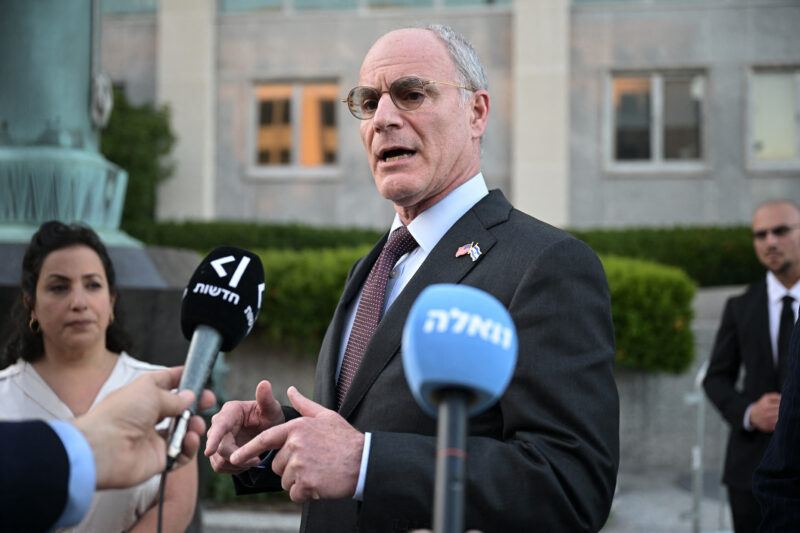
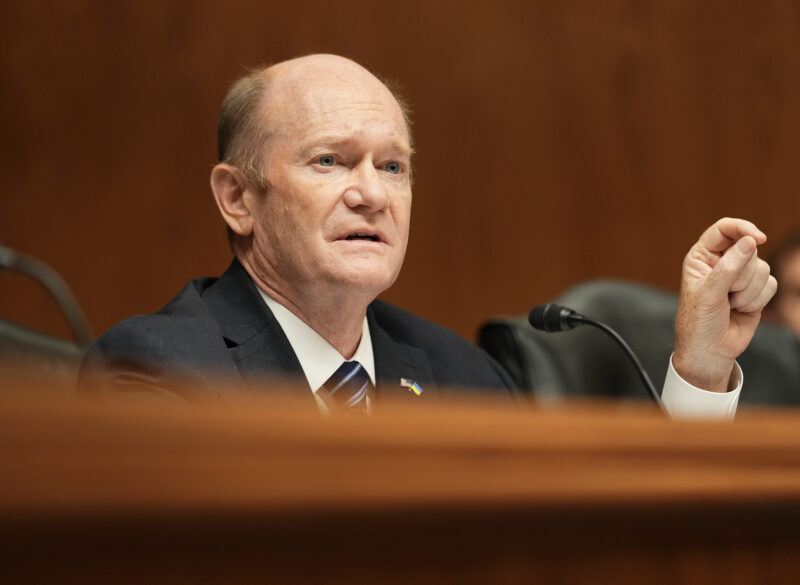


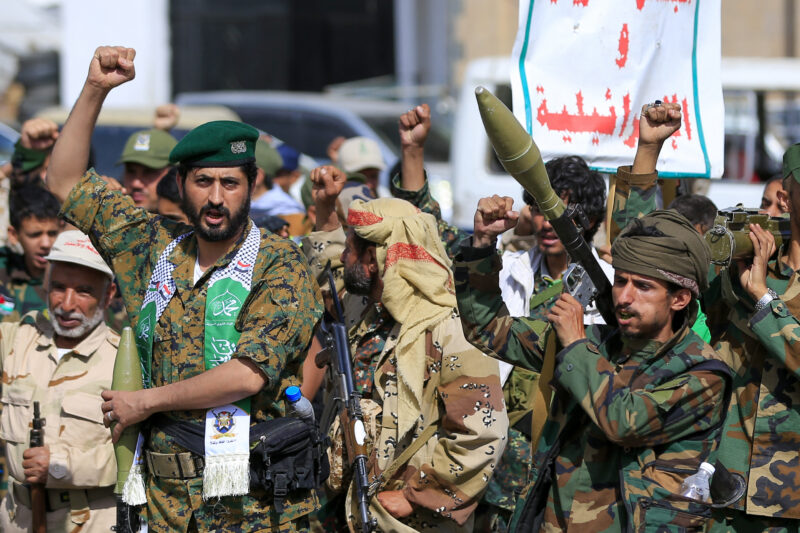





























FDD’s Behnam Ben Taleblu said that successful U.S. economic pressure may lead Iran to retaliate in the fall in an attempt to impact the elections
Screenshot
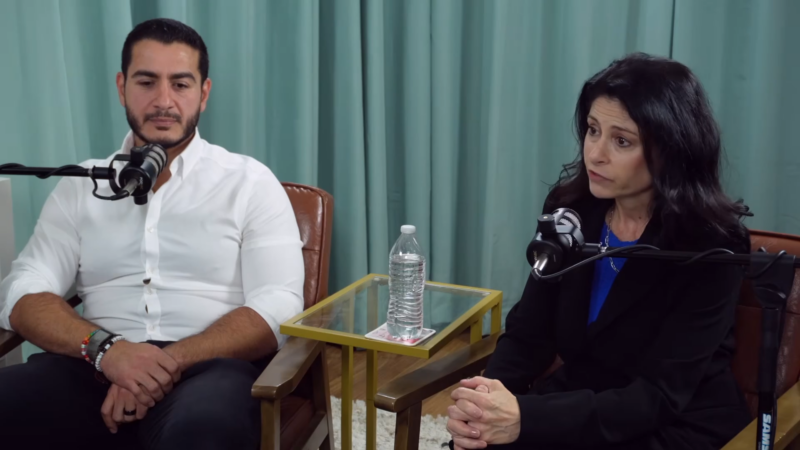
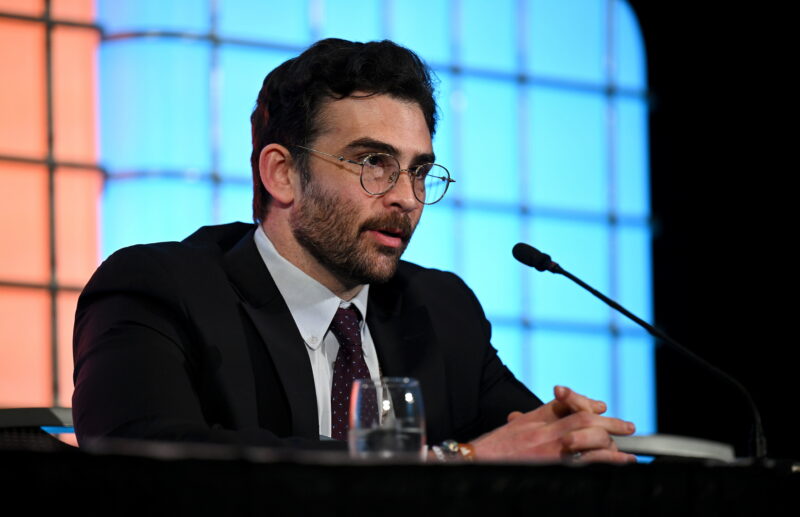
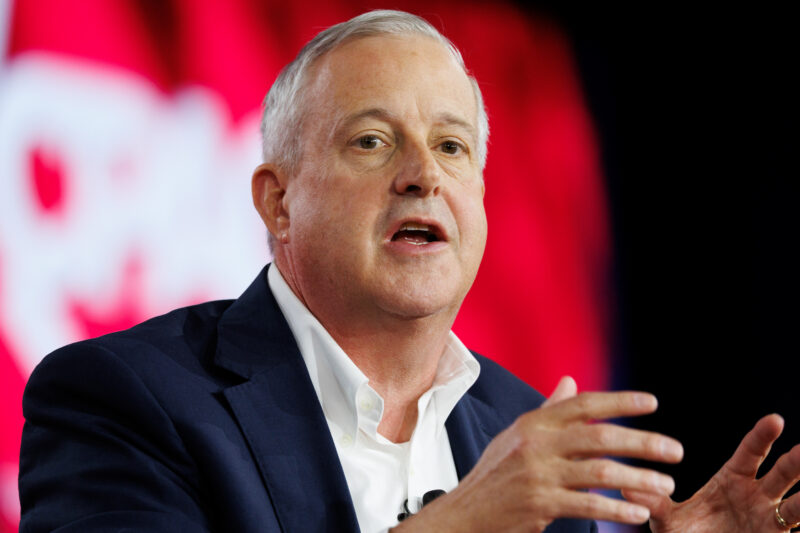
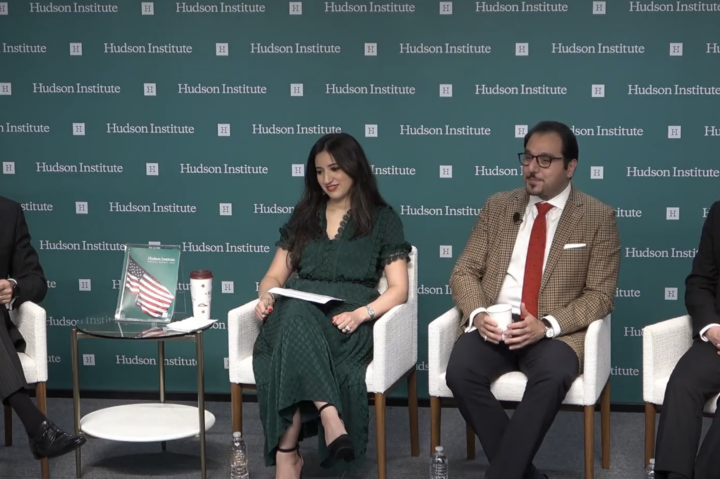
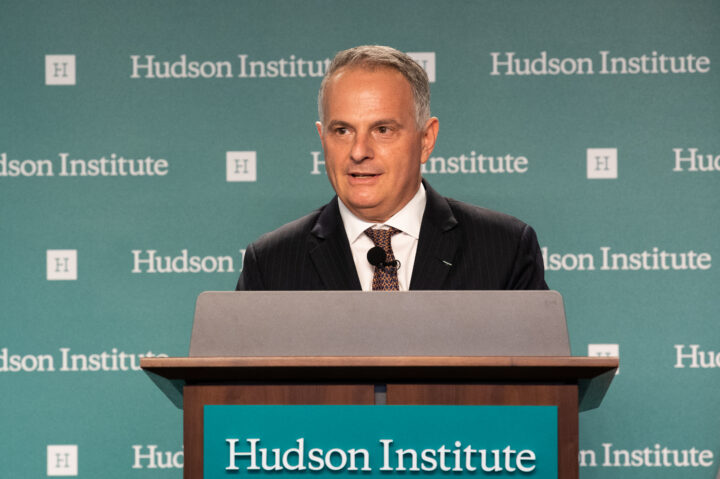
Hudson Institute Senior Fellow Ludovic Hood moderates a panel with Behnam Ben Taleblu, the senior director of the Foundation for Defense of Democracies’ Iran program (center), and Hudson Institute fellows Michael Doran and Zineb Riboua, August 13th, 2026


 Add JewishInsider on Google
Behnam Ben Taleblu, the senior director of the Foundation for Defense of Democracies’ Iran program, warned on Thursday of potential Iranian escalation — military or otherwise — in the run-up to the midterms, with the goal of disrupting the elections.
Taleblu said on a panel at the Hudson Institute that, ahead of November, “my fear for the president prior to the midterms … is not failure. My fear for the president now is success.” He said that U.S. economic pressure alongside the blockade has been highly effective and will have success in squeezing Iran’s economy and oil exports, potentially bringing retaliation from Iran, even in the event of another diplomatic agreement.
“What you might actually have now is the Islamic Republic, once we reverse the economic pressure, they might lean in on asymmetric military pressure, and they might do so at a time that might deliver some sort of an October surprise or constrain his options, or create one surrender option or one major military engagement option, come October, prior to November,” Taleblu said.
A senior Islamic Revolutionary Guard Corps advisor, Mohammed Reza Naqdi, told PBS earlier this week that Iran intends to prolong the war until the next administration and that it maintains significant capacity to attack at a time of its choosing.
Taleblu said that the U.S. needs to “prepare for success” and anticipate what Iran will do next, and to prepare contingencies for those situations.
“If you do turn it off, if you do try to pursue diplomacy, if you do try to pursue a deal, if you do try to handhold and arm-twist the media and markets just to make sure that … this global financial crisis doesn’t emerge — if you do all of that, I hope you use the time well here in this town to prepare for how Iran is preparing,” Taleblu said.
All three experts on the panel — Taleblu and Hudson Institute fellows Michael Doran and Zineb Riboua — predicted that the U.S. will be reengaged in negotiations with Iran by Thanksgiving and that there will be further U.S. or Israeli strikes before the holiday. Doran predicted that strikes are more likely after the midterms and the Israeli elections, which are scheduled for Oct. 27.
The three diverged on whether the Strait of Hormuz will be reopened by Thanksgiving.
Doran praised the administration’s strategy overall but said that the U.S. hasn’t achieved all of its stated goals and there are no easy solutions to Iran’s remaining drone and missile stockpiles, with which it can continue to hold the Strait of Hormuz hostage.
“The Iranians don’t have to hit every tanker in order to close the strait. … We have to eradicate the drone program; that is nearly an impossible mission short of carrying out a regime change policy, or short of destroying all of the export capacity of the Iranians, wiping out Kharg Island — and this is a step that Donald Trump doesn’t want to take,” Doran said, given concerns about attacks on the Gulf and a potential refugee crisis from Iran.
Ultimately, he said, the path forward will be determined by political decisionmakers in the U.S., adding that there is at this point no easy military solution and that the conflict may continue for months or years to come.
Taleblu downplayed the oft-repeated notion that the new Iranian leadership is measurably younger or more hardline than the previous leadership, arguing that the war had just accelerated existing trends that had already been in place, and that the current leadership is still of the same generation and background as the previous group.
He added that Iran’s decision-making apparatus is now more diffuse and is concentrated in the Iranian institutional cabal, which will not bow easily to pressure.
Plus, Josh Kushner and Bob Iger ball out
Jemal Countess/Getty Images for Breakthrough T1D)
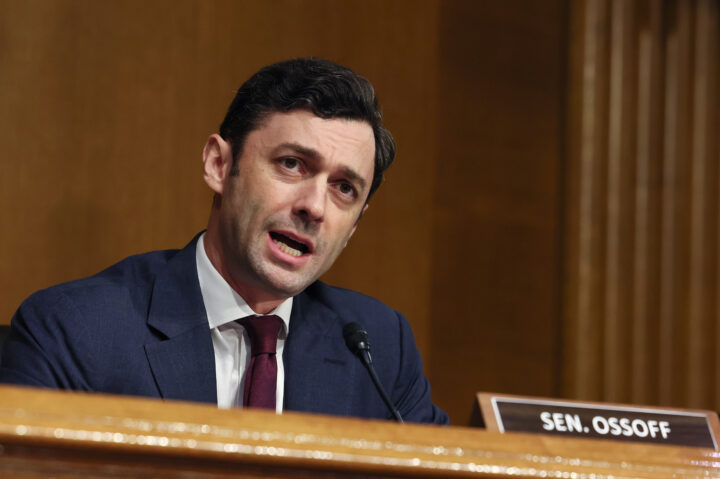
Sen. Jon Ossoff (D-GA) questions witnesses during a hearing held to examine a future without Type 1 Diabetes with a focus on accelerating breakthroughs and creating hope at the Dirksen Senate Office Building on July 09, 2025 in Washington, DC.
Good Wednesday afternoon.
This P.M. briefing is reserved for our premium subscribers like you — offering a forward-focused read on what we’re tracking now and what’s coming next.
Today’s Daily Overtime was curated by JI U.S. Editor Danielle Cohen-Kanik.
📡On Our Radar
Notable developments and interesting tidbits we’re tracking
A State Department official pushed back on Israeli Defense Minister Israel Katz’s comments in southern Lebanon today, where he said the IDF would remain deployed in a security zone, contrary to the agreement signed between Washington, Jerusalem and Beirut.
“The United States expects all parties to act in a manner consistent with the Framework they agreed to, and Israel clearly stated that it has no territorial ambitions in Lebanon. A permanent military presence in South Lebanon is not consistent with the commitments made in the Framework, or the long-term peace and security of both states,” the official told Axios…
Sources told Reuters that Israel and Lebanon have agreed that countries including Britain, Italy, Switzerland and Indonesia could contribute troops to an international force meant to oversee Hezbollah’s disarmament; an Israeli official denied any decisions had been made on the issue…
President Donald Trump continued to boast about the success of the U.S. campaign against Iran, stating again in a post on Truth Social today that the U.S. “has total control over the Strait of Hormuz” and that the Islamic Revolutionary Guard Corps is “decimated and fleeing.”
Meanwhile, out of the 166 ships that have transited the strait so far this month — a significant decrease from the average before the war — only two are known to have used the U.S.- and Oman-backed route, according to The Wall Street Journal…
In a rare interview with Western media, top IRGC advisor Mohammad Reza Naqdi told “PBS News Hour” that Iran is prepared to continue hostilities through the end of Trump’s term and accused the U.S. of waging a “war without strategy”…
The New York Times documents the efforts being made by Gulf countries to construct routes to move oil out of the region that do not rely on the Strait of Hormuz…
Board of Peace head Nickolay Mladenov denied in a post in Hebrew today that there is any financial agreement between the board and Hamas, refuting a report by Israeli public broadcaster Kan that the board would cover Hamas’ debts up to $400 million.
The disarmament roadmap states that the new Palestinian technocratic government will “assess the legitimate commitments to suppliers, contractors and other parties — up to a total amount of no more than $400M — and address them”; Mladenov said in his post that such processes “are not channeled through Hamas” and that “all accounts are open to full scrutiny by the donor governments”…
The publisher of the Atlanta Jewish Times, Michael Morris, penned an open letter to Sen. Jon Ossoff (D-GA) today pressing the senator over his repeated votes to block U.S. military sales to Israel, Jewish Insider’s Marc Rod reports.
“I apologize for being blunt, but please, stop lying to me and your constituents. I hear you claim, over and over again, that you support Israel — that your support is ‘ironclad.’ It is not,” Morris wrote…
Rep. Haley Stevens (D-MI) denied today that the more than $30 million of support she received from AIPAC’s super PAC in her failed run for U.S. Senate backfired, saying on CNN that those who criticize AIPAC “maybe don’t understand what the group is” and that she’s “proud of the friendships and the relationships I have there [and] the really good Americans” who make up its membership…
White House Press Secretary Karoline Leavitt is stepping away from her role at the end of the month, Trump announced today, in order to spend more time with her family. The president said Leavitt will now serve as “one of my top outside advisors”…
Josh Kushner, managing partner of the venture capital firm Thrive Capital, and former Disney CEO Bob Iger have agreed to purchase a controlling interest in the Los Angeles Lakers for a record-breaking price of $12.5 billion, JI’s Matthew Shea reports…
⏩ Tomorrow’s Agenda, Today
An early look at tomorrow’s storylines and schedule to keep you a step ahead
Keep an eye on Jewish Insider for a look at local Jewish political organizing efforts in major cities across the country.
The Hudson Institute will hold an event examining the state of the ongoing conflicts in the Gulf with the Foundation for Defense of Democracies’ Behnam Ben Taleblu and Hudson’s Michael Doran, Ludo Hood and Zineb Riboua.
Stories You May Have Missed
TRUST, BUT VERIFY
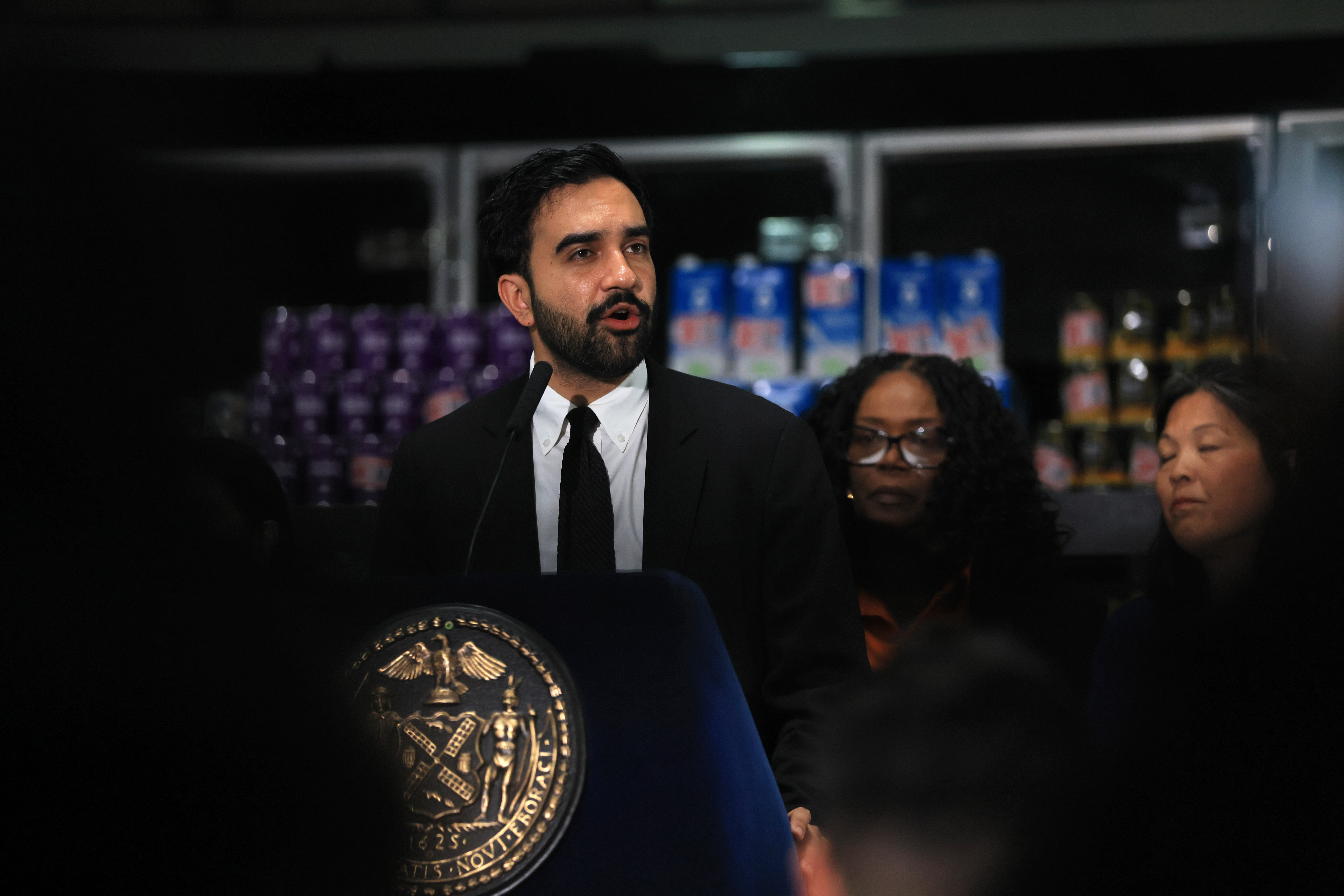
Mamdani’s antisemitism czar invited a cross-section of rabbis and Jewish leaders broadly sympathetic to the mayor for the candid conversation
BALLIN’ OUT
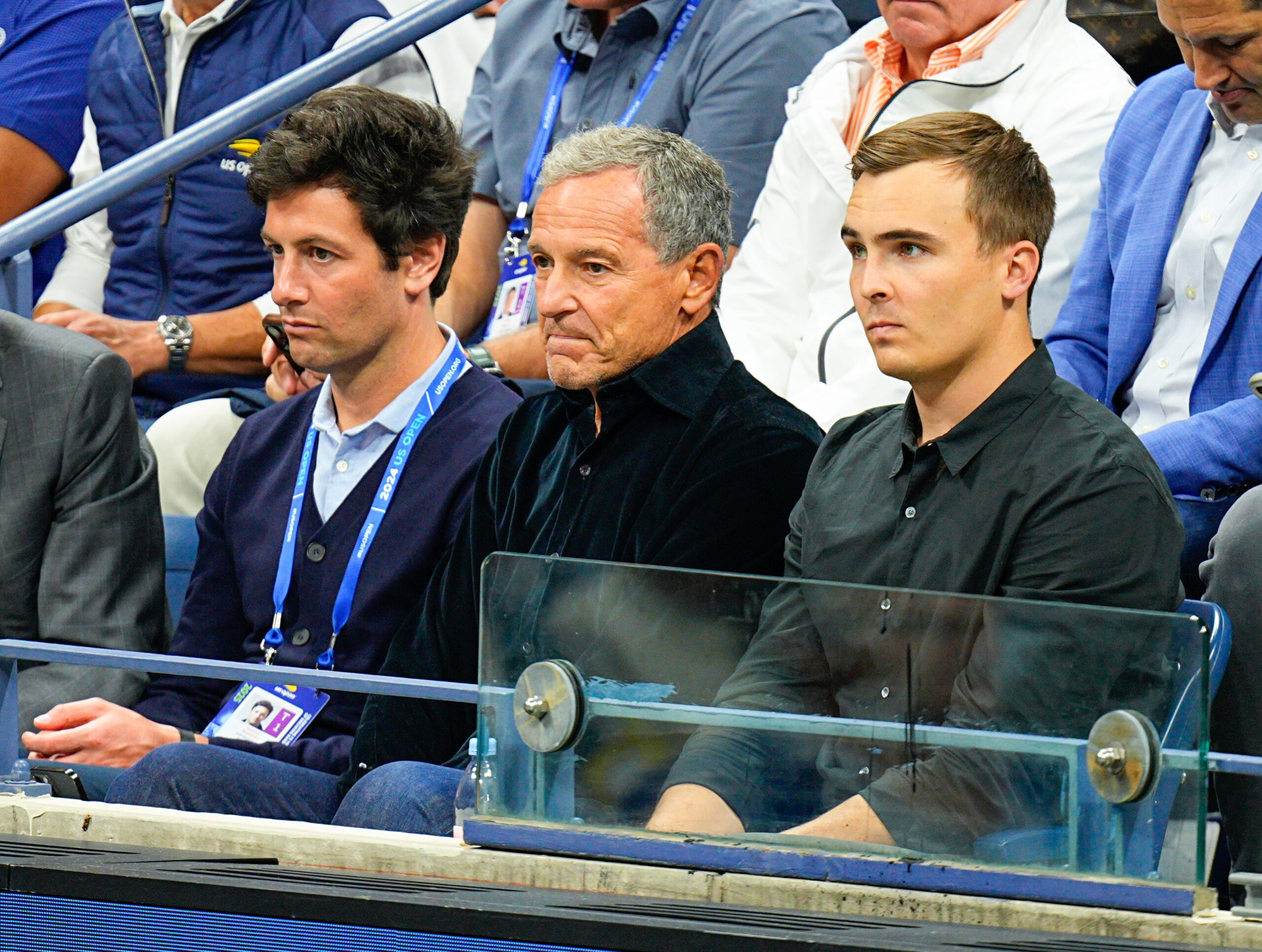
The sale is the largest purchase price for any sports team in American history
The conservative think tank taps a longtime staffer to lead, reaffirming its pro-Israel foreign policy stance
Screenshot/C-SPAN
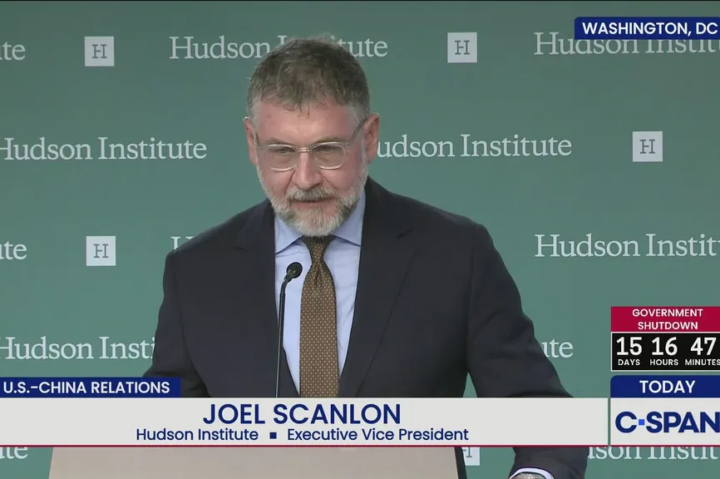
Newly appointed Hudson Institute president and CEO Joel Scanlon introduces Rep. John Moolenaar (R-MI) to discuss U.S.-China relations on Oct. 16, 2025.
Former George W. Bush administration official Joel Scanlon was announced on Monday as the new president and CEO of the Hudson Institute, a conservative think tank in Washington.
The outgoing CEO, John P. Walters, also came out of the Bush administration, where he served as director of the Office of National Drug Control Policy. The institute is closely associated with the Republican Party’s hawkish, more interventionist wing, and its slate of experts is considered strongly pro-Israel.
After the Oct. 7, 2023, Hamas attacks in Israel, Walters released a statement saying that Hudson “will always stand on the side of Israel.” Hudson has since doubled down on its support for the U.S.-Israel alliance, even as some GOP-aligned groups — such as the Heritage Foundation, one of the most influential conservative think tanks — have recently taken a more isolationist approach to foreign policy.
At the end of the Bush administration, Scanlon served as director of the White House Office of Strategic Initiatives. Scanlon joined Hudson in 2014, moving through several senior roles, including his current position as executive vice president. He will start as president and CEO in January.
The Florida Republican also described a clash he had with Tucker Carlson

Samuel Corum/Getty Images
Rep. Brian Mast (R-FL) speaks during a House Committee on Foreign Affairs hearing on Capitol Hill on January 11, 2024 in Washington, DC.
Rep. Brian Mast (R-FL) said on Friday that there is a concerted network, on both the right and left, pushing antisemitic and anti-Israel ideology to the point that it has become “pervasive,” particularly among younger people.
Speaking at a Hudson Institute conference on antisemitism, Mast, the chair of the House Foreign Affairs Committee, said he does not have a “silver bullet” to address the problem because of how widespread it has become. He recounted a recent speech in a class at a military academy where he saw “probably a 50/50 divide about why we have this [U.S.-Israel] relationship, what is the benefit of this relationship?”
The Florida Republican said that he sees a “very specific network that is in place that works together to sow antisemitism that is now, in many cases, working on the left and right across the media, to go out there and put this wedge in this relationship.”
Mast described the effort as “pervasive, systematic, planned out, orchestrated” and a “very, very serious global threat across multi-national organizations, media across the globe and adversaries and terrorist organizations.”
Mast said that in response “we need to do a really good effort of showing the pervasive effort to drive this wedge — through antisemitism, is my opinion — between the United States of America and one of our greatest allies anywhere in all of these spheres — military capabilities, relationships, intelligence sharing, geography, signals intelligence, geospatial intelligence, human intelligence — all these different things that we are so close in, beyond the trust that we have.”
The Foreign Affairs Committee chair said that Europe is one of the U.S.’ “biggest adversaries” in the fight against antisemitism, describing its actions post-Oct. 7, particularly several states’ decisions to recognize a Palestinian state, as “the most unhelpful thing that could possibly be done.” He said that those efforts emboldened the terrorist groups fighting Israel.
Mast said he had not interacted much with Tucker Carlson, one of the most prominent anti-Israel voices on the right, but had a direct conversation with Carlson after the commentator attacked the congressman for his time in the Sar-El program, where he volunteered in a support capacity alongside the Israeli Defense Forces. Mast said he told Carlson he was overlooking that Mast’s ultimate loyalty is to the United States, not to Israel.
“You never bothered to ask the question of, ‘How many countries have I taken an oath to support and defend?’ Just one: the United States of America,” Mast said he told Carlson, going on to emphasize he took that oath five times as a member of the military and an equal number as a member of the House, in addition to nearly losing his life three or four times in U.S. military service. “You’re connecting dots that don’t exist because you failed to ask some really fundamentally important questions which is, ‘Where do your allegiances lie?’”
Mast said he decided to sign up for the IDF volunteer program during Operation Protective Edge in 2014, when he faced down anti-Israel demonstrators in Boston following his time in the military.
“Some of these people draping themselves — like we see on our college campus here — draping themselves in Palestinian flags, chanting, rallying, whatever, they started harassing me and my family for being a U.S. service member,” Mast said. “At the end of that night, we got home and I told my wife, ‘I don’t know what it’s going to look like, I’m going to find a way. I’m going to show my support for Israel against this hypocrisy and against these pricks that we encountered.’”
Jewish Insider senior national correspondent Gabby Deutch contributed reporting.
The hiring signals a concerted effort at limiting anti-Israel bias at the network
Michael Brochstein/SOPA Images/LightRocket via Getty Images
Kenneth Weinstein, President and Chief Executive Officer of Hudson Institute, speaking at the Hudson Institute in Washington, DC.
Ken Weinstein, the former president and CEO of the pro-Israel Hudson Institute think tank, has been named ombudsman of CBS News, where he will be tasked with reviewing complaints about editorial bias from consumers and employees, Paramount announced on Monday.
The hire represents a shift for the news organization, which has faced accusations of anti-Israel bias in the wake of Hamas’ Oct. 7, 2023, attacks.
The creation of the new role also follows through on a pledge that Skydance Media had made as it sought approval from the Federal Communications Commission for its merger in late July with Paramount, CBS’ parent company.
Weinstein will report to Jeff Shell, the president of Paramount. “I’ve known him for many years and have great respect for his integrity, sound judgment and thoughtful approach to complex issues,” Shell said in a statement on Monday. “Ken brings not only a wealth of advisory experience in media and beyond but also a calm, measured perspective that makes him exceptionally well-suited to serve as our ombudsman.”
Weinstein, who is currently the Japan chair at the Hudson Institute, previously served as chair of the Broadcasting Board of Governors, now called the U.S. Agency for Global Media, from 2017 to 2020. He was nominated by President Donald Trump to serve as U.S. ambassador to Japan in 2020, but his nomination lapsed and he was never confirmed for the role in a full Senate vote.
“I am honored to serve as Ombudsman for CBS News, one of the most respected journalistic institutions in the world,” Weinstein said in a statement on Monday. “I look forward to supporting the talented team behind its reporting and to stewarding public trust in this critical institution.”
Weinstein declined to comment further on his new position.
The appointment comes amid recent reports that Skydance is now nearing a deal to acquire The Free Press and install its founder, Bari Weiss, in a senior editorial role at CBS News.
Please log in if you already have a subscription, or subscribe to access the latest updates.
 Continue with Google
 Continue with Apple