

































Plus, Texas labels CAIR, Muslim Brotherhood as terror orgs
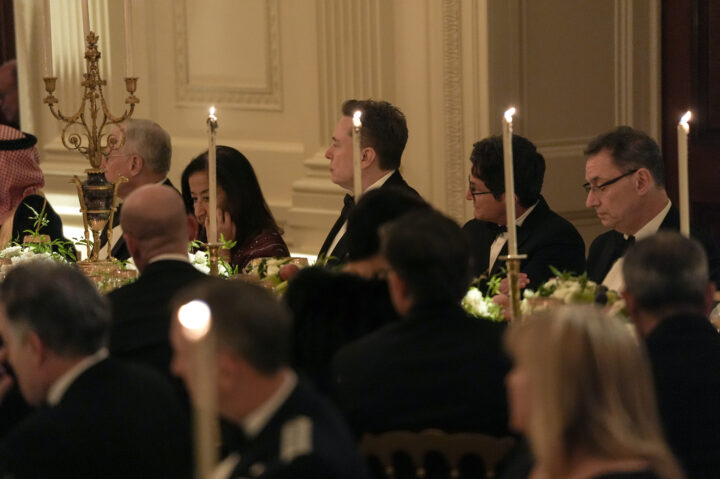
WASHINGTON, D.C. - Elon Musk attends a dinner hosted by President Donald Trump for Saudi Crown Prince Mohammed bin Salman on Tuesday, Nov. 18, 2025 at the White House in Washington, D.C. (Photo by Salwan Georges/The Washington Post via Getty Images)


 Add JewishInsider on Google
Good Wednesday morning.
In today’s Daily Kickoff, we report on yesterday’s meeting between President Donald Trump and Saudi Crown Prince Mohammed bin Salman, and preview the Saudi leader’s schedule today in Washington. We talk to Sens. Richard Blumenthal and Mark Kelly about the Islamic Revolutionary Guard Corps’ seizure last weekend of a tanker that originated in the United Arab Emirates, and cover Texas’ designation of the Muslim Brotherhood as a terrorist group. Also in today’s Daily Kickoff: Rep. Mike Lawler, Ambassador Charles Kushner and Noam Tibon.
Today’s Daily Kickoff was curated by Jewish Insider Executive Editor Melissa Weiss and Israel Editor Tamara Zieve with assists from Marc Rod, Emily Jacobs and Danielle Cohen-Kanik. Have a tip? Email us here.
What We’re Watching
- President Donald Trump is slated to deliver remarks at today’s U.S.-Saudi investment summit in Washington, being hosted by Saudi Arabia during Crown Prince Mohammed bin Salman’s visit to the capital. Commerce Secretary Howard Lutnick and Saudi Investment Minister Khalid bin Abdulaziz Al-Falih will kick off the daylong summit at this morning’s plenary. Others slated to speak today include Elon Musk, Blackstone’s Stephen Schwarzman, Salesforce’s Marc Benioff, IBM’s Gary Cohn, Alphabet and Google’s Ruth Porat, Andreessen Horowitz’s Benjamin Horowitz, Pfizer’s Albert Bourla, Palantir’s Alex Karp and Anduril’s Matthew Steckman.
- Following his White House sitdown and dinner yesterday (more below), MBS is slated to meet with House members today on Capitol Hill.
- Elsewhere on Capitol Hill, the Senate Foreign Relations Committee is holding confirmation hearings this morning for Rabbi Yehuda Kaploun, the Trump administration’s nominee to be antisemitism envoy, and former State Department spokesperson Tammy Bruce to be deputy U.N. ambassador. Kaploun was a last-minute addition to the SFRC’s schedule, first appearing yesterday afternoon, Jewish Insider’s Marc Rod reports.
- Tonight in Washington, the Endowment for Middle East Truth is hosting its 16th annual Rays of Light in the Darkness awards dinner. This year’s honorees include Sen. John Fetterman (D-PA), the Justice Department’s Leo Terrell, Israeli Ambassador to the U.S. Yechiel Leiter, Hungarian Ambassador to the U.S. Szabolcs Takacs and Pakistani American journalist Anila Ali.
What You Should Know
A QUICK WORD WITH JI’S GABBY DEUTCH
As 2,000 Jewish philanthropists, activists and professionals prepared to leave Washington on Tuesday as the Jewish Federations of North America’s General Assembly wrapped up, they heard a stern warning from Sen. Ted Cruz (R-TX): Americans must confront antisemitism on both sides, including the right; if they don’t, the nation will face an “existential crisis.”
“I do not want to wake up in five years and find that both major parties in America have embraced hatred of Israel and have tolerated, if not embraced, antisemitism,” Cruz said. Read JI’s coverage of his remarks here.
Cruz has become the most prominent Republican elected official speaking out against a rising tide of right-wing antisemitism. But the weeks following podcaster Tucker Carlson’s interview with neo-Nazi provocateur Nick Fuentes have sparked a reckoning for Republicans, including some who until recently considered antisemitism to be primarily a left-wing phenomenon.
That internal tension was on full display at a Tuesday afternoon conference hosted by the conservative National Task Force to Combat Antisemitism. The group was until recently affiliated with the Heritage Foundation, until the conservative think tank’s president came to Carlson’s defense. Earlier this month the task force members voted to cut ties with Heritage.
The NTFCA gathering, arranged in less than two weeks after the group’s split from Heritage, took place in a basement ballroom at The Line Hotel in Washington. About 100 people were in attendance, among them representatives from Jewish advocacy groups including the Anti-Defamation League, Jewish Federations of North America and Combat Antisemitism Movement.
The event’s organizers — NTFCA co-chairs Ellie Cohanim, who served as deputy antisemitism special envoy in the first Trump administration; Mario Bramnick, a Florida pastor and president of the Latino Coalition for Israel; and Luke Moon, a pastor and executive director of the Philos Project — took the opportunity to forcefully reject Carlson and other far-right media figures who are gaining clout among conservatives by attacking Israel and its backers, and to issue a call for conservatives to join them in calling out growing animosity toward Jews. They don’t think enough people are doing so.
“I remember Luke, early on, said, ‘Mario, keep your eye on the right.’ I said, ‘Well, look, that’s a fringe. It’s not really important,’” Bramnick said. “But now we’re seeing a very troubling development during President Trump’s second administration within the MAGA movement: antisemitic acts coming from MAGA movement leaders.” The Project Esther report that the task force developed with Heritage last year was focused solely on left-wing antisemitism.
BEST OF FRIENDS
Trump, MBS announce sale of advanced F-35 fighter jets, progress on defense pact
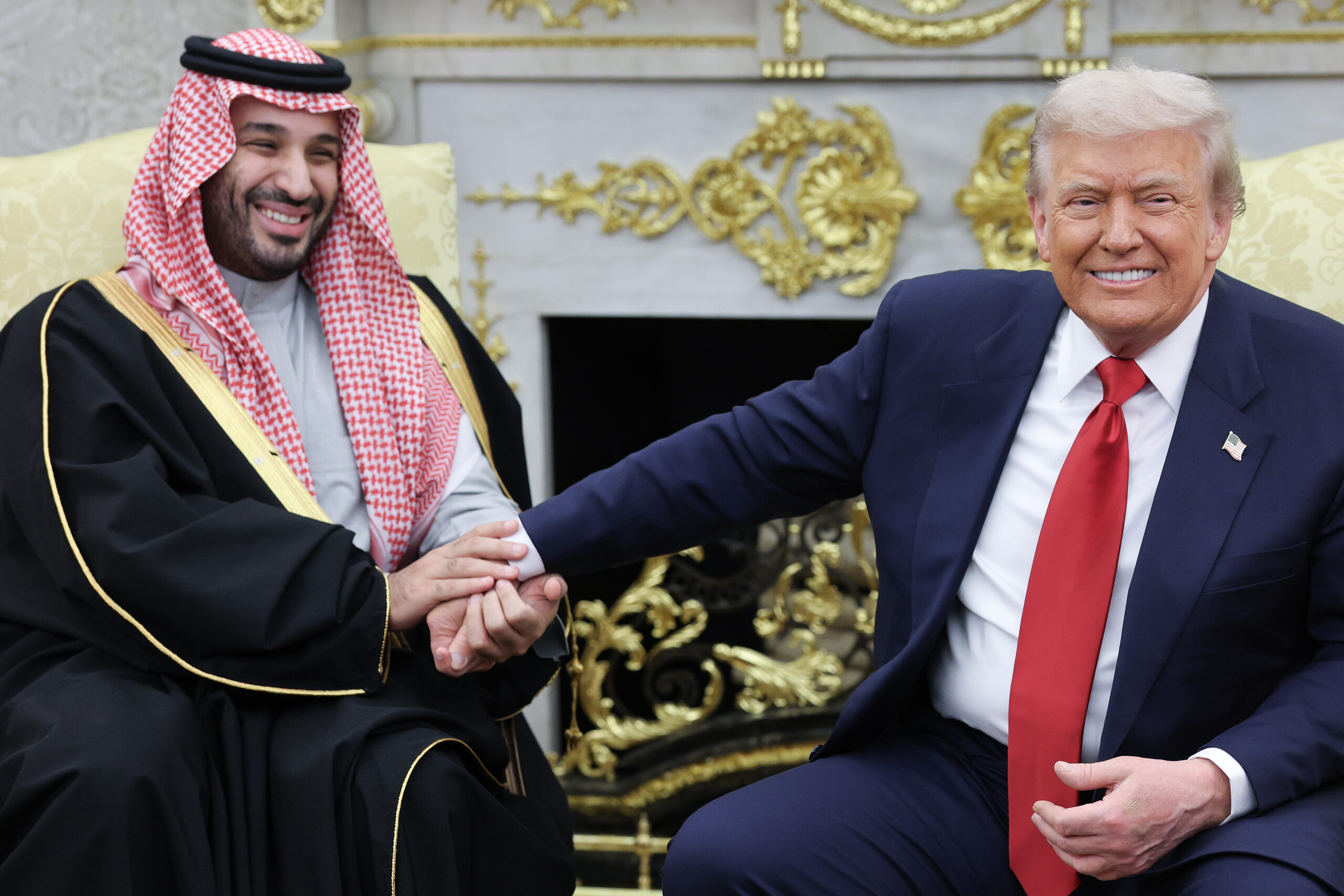
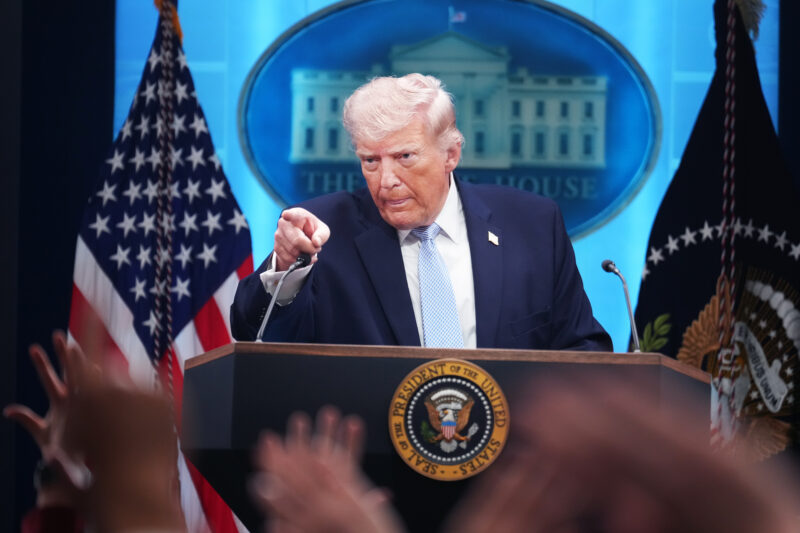
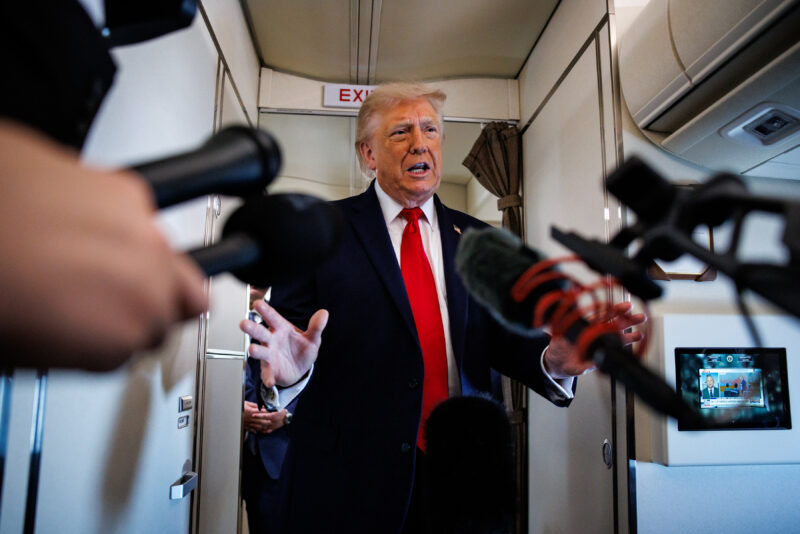
In an Oval Office appearance following their meeting on Tuesday, President Donald Trump and Saudi Crown Prince Mohammed bin Salman announced progress on multiple bilateral initiatives, including a U.S.-Saudi defense pact and Riyadh’s purchase of F-35 fighter jets, Jewish Insider’s Matthew Shea reports.
What Trump said: Trump indicated Riyadh may receive a similar jet to Israel’s advanced F-35I Adir model: “When you look at the F-35 and you’re asking me ‘Is it the same [as Israel’s]?’ I think it’s going to be pretty similar,” said Trump. “This [Saudi Arabia] is a great ally, and Israel’s a great ally. I know they’d like you [MBS] to get planes of reduced caliber, but I don’t think that makes you too happy. … We’re looking at that exactly right now but as far as I’m concerned, [both countries are] at a level where they should get top of the line.”
Dinner guests: The White House dinner with MBS included, from the business world, Apple CEO Tim Cook; Tesla CEO Elon Musk; Palantir CEO Alex Karp; Blackstone CEO Stephen Schwarzman and wife, Christine; Pershing Square founder Bill Ackman and his wife, former MIT professor Neri Oxman; Salesforce CEO Marc Benioff; Pfizer CEO Albert Bourla; BDT & MSD Partners Vice Chair Dina Powell McCormick; Paramount CEO David Ellison; and Washington Commanders owners Josh and Marjorie Harris. Vice President JD Vance and Second Lady Usha Vance; Donald Trump Jr.; and Tiffany Trump were also in attendance, as were Attorney General Pam Bondi and longtime partner John Wakefield; Defense Secretary Pete Hegseth; Commerce Secretary Howard Lutnick and his wife, Allison Lutnick; Treasury Secretary Scott Bessent; EPA Director Lee Zeldin; Interior Secretary Doug Burgum; Agriculture Secretary Brooke Rollins and Chairman of Joint Chiefs Gen. Dan Caine. From Capitol Hill, House Speaker Mike Johnson (R-LA); Sens. Jim Risch (R-ID) and Dave McCormick (R-PA); and Rep. Brian Mast (R-FL), chairman of the House Foreign Affairs Committee made the trip up Pennsylvania Avenue for the dinner. Fox News’ Bret Baier and Maria Bartiromo were also spotted at the dinner.
WEAPONS SALES SCRUTINY
Democrats raise concerns about Trump’s sale of F-35 fighter jets to Saudi Arabia

Senate Democrats echoed their House counterparts on Tuesday in expressing concern about President Donald Trump’s announcement of a deal to sell advanced F-35 fighter jets to Saudi Arabia, Jewish Insider’s Emily Jacobs and Marc Rod report.
Shaheen’s statement: Sen. Jeanne Shaheen (D-NH), the ranking member of the Senate Foreign Relations Committee who will have some ability to obstruct or slow the deal, was deeply critical of multiple announcements made by Trump during his White House summit with MBS. Shaheen said in a statement that the F-35 deal “raises major concerns about protecting U.S. military technology and the military edge America shares with our allies” and demanded the administration “fully explain to the Senate Foreign Relations Committee why this sale is in the vital national interest of the United States.”
Read the full story with additional comments from Sens. Richard Blumenthal (D-CT), Mark Kelly (D-AZ) and Markwayne Mullin (R-OK).
MARITIME SECURITY
Blumenthal, Kelly alarmed by IRGC seizure of tanker in the Strait of Hormuz
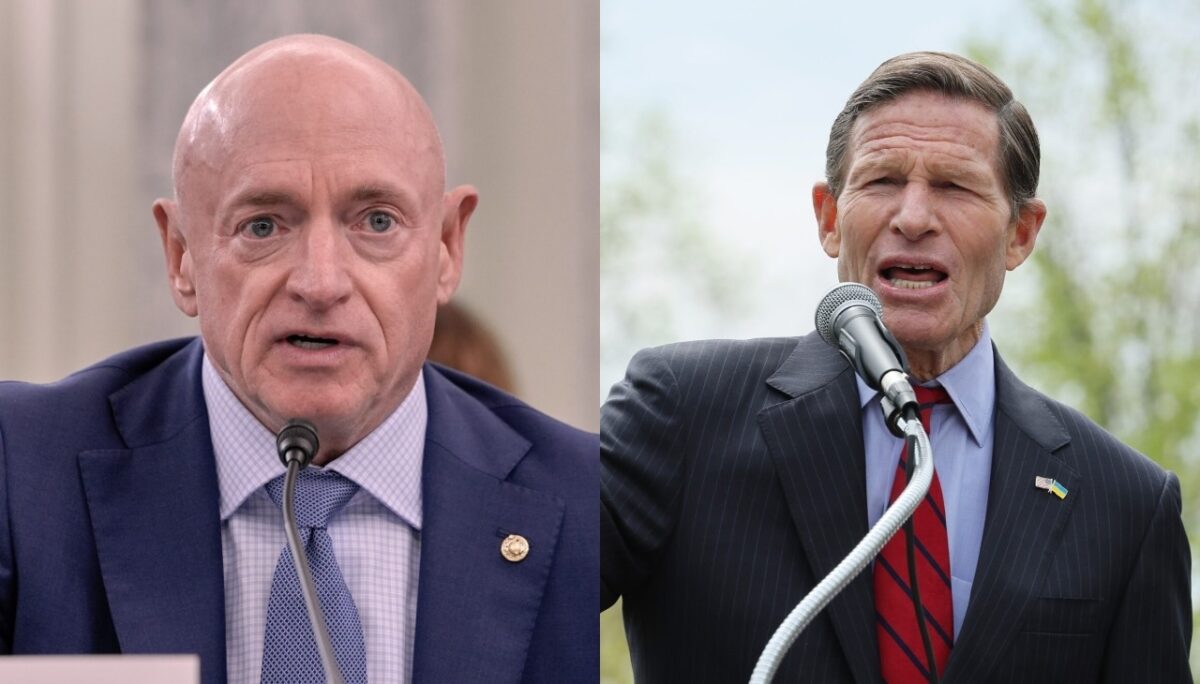
Two Democratic senators expressed concern on Tuesday about the Islamic Revolutionary Guard Corps’ seizure of an commercial oil tanker in the Strait of Hormuz, a critical international shipping route, Jewish Insider’s Emily Jacobs and Marc Rod report. The IRGC took credit on Friday for the seizure of the Talara, a Marshall Islands-flagged tanker, for what state media described as alleged cargo violations. The tanker, which began its journey in the United Arab Emirates, was carrying petrochemicals through the Strait of Hormuz to Singapore when it was diverted by the IRGC into Iranian territorial waters.
On alert: “It’s like the 1980s all over again,” Sen. Mark Kelly (D-AZ), a former fighter pilot, said. “The first time I was there was 1989, in the Strait of Hormuz, with the Iranians doing that same old shit, where they would harass shipping. A couple times, I felt like we were on the edge of getting in the conflict.” Sen. Richard Blumenthal (D-CT) said that the U.S. needs to remain vigilant against Iran’s other malign activities in spite of the setbacks to its nuclear program. “Iran is Iran. They are the toxic element in the Middle East. We have no reason for complacency. Just because we set them back in their nuclear program, they remain a malevolent force, and the seizure of that tanker is just one indication of that,” Blumenthal said.
TEXAS TAKEDOWN
Texas designates Muslim Brotherhood, CAIR as terrorist, criminal organizations
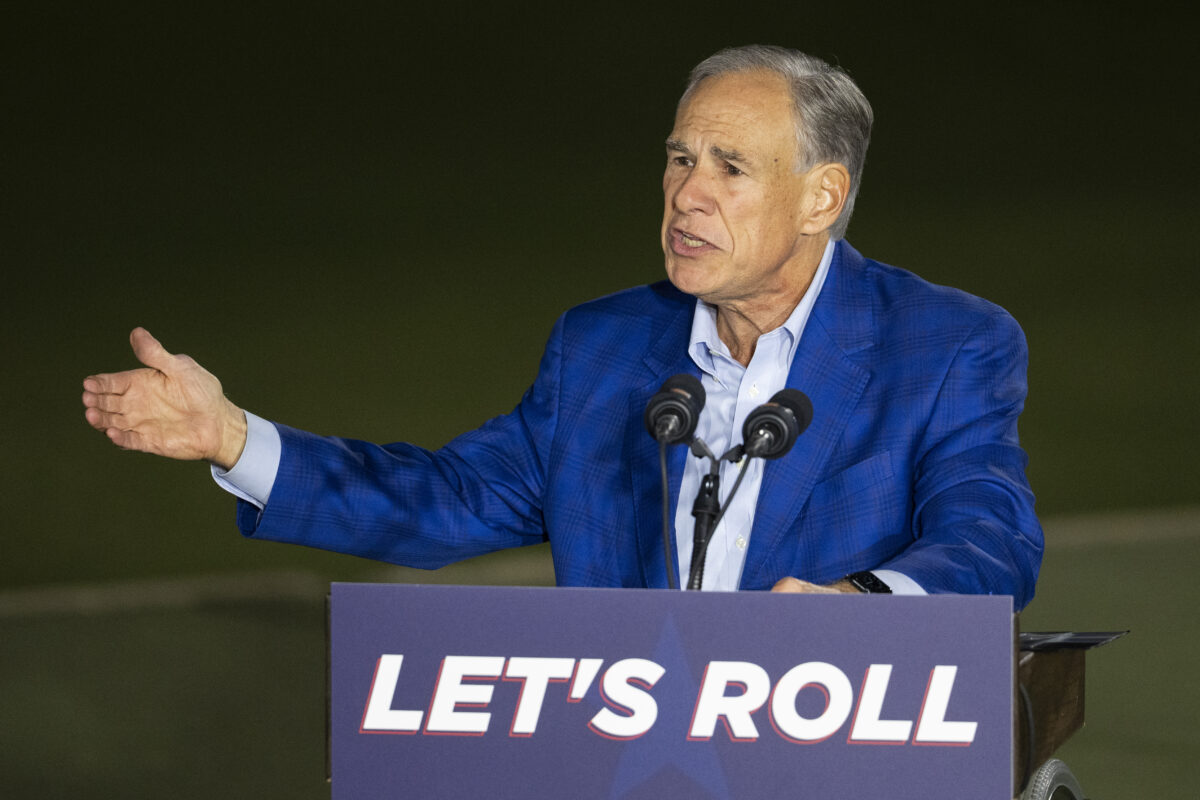
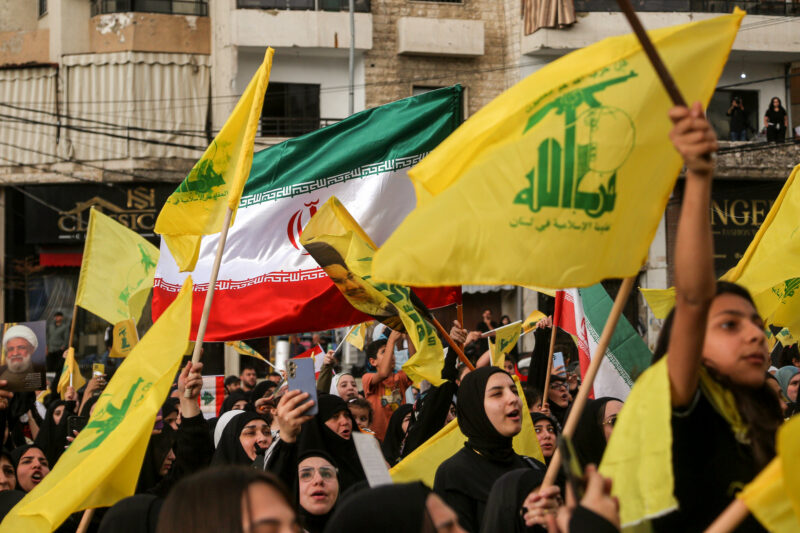
Texas Gov. Greg Abbott issued a declaration on Tuesday designating the Muslim Brotherhood and Council on American-Islamic Relations as foreign terrorist groups and transnational criminal organizations — a move that some lawmakers are pushing on the federal level, Jewish Insider’s Marc Rod reports.
What it does: Abbott’s proclamation notes the Muslim Brotherhood’s support to groups, including Hamas, that conduct terrorism in various countries, some of which have already been designated as terrorist groups, and that a series of countries have already imposed restrictions on their local Muslim Brotherhood branches. The proclamation describes CAIR as a “successor organization” to the Muslim Brotherhood and an effective front group for Hamas in the United States and accuses the group of seeking to spread Sharia law in the country by infiltrating public office and other areas of public life.
EXCLUSIVE
Booker, Goldman urge Trump to pressure Israel to crack down on West Bank settler violence, settlement expansion
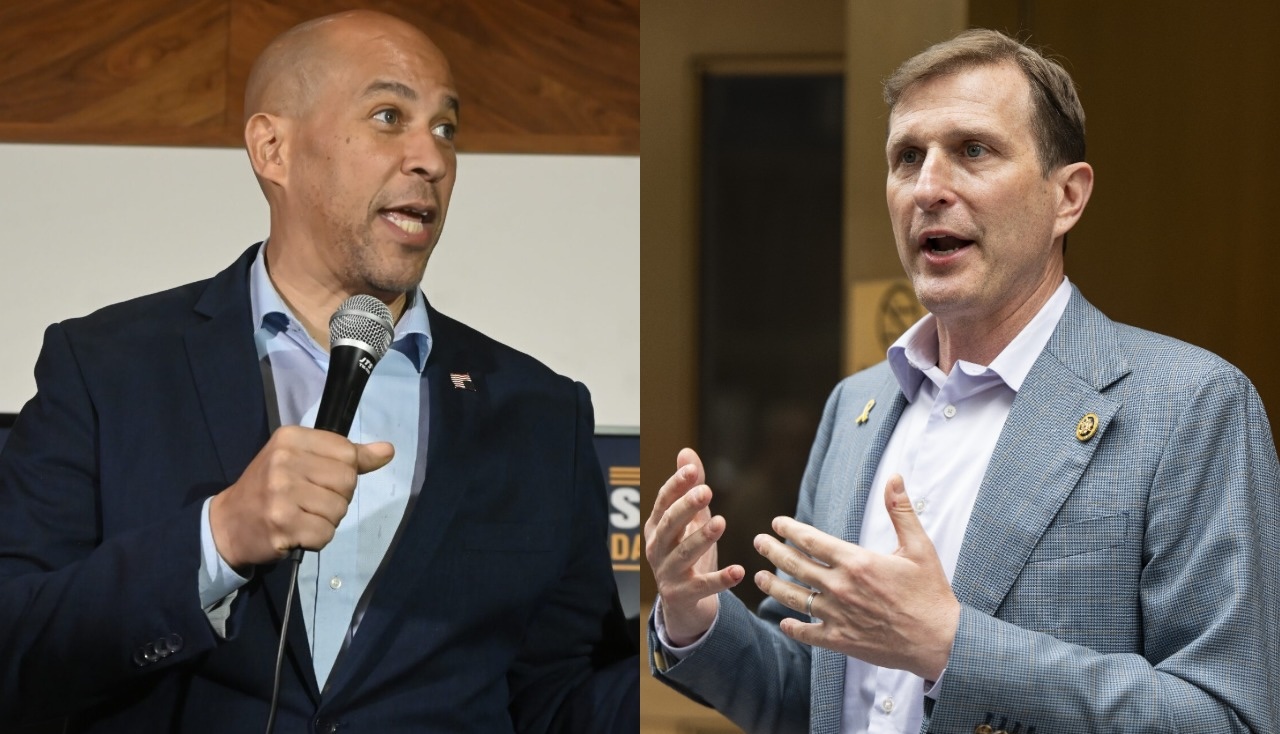
Sen. Cory Booker (D-NJ) and Rep. Dan Goldman (D-NY) wrote a letter to President Donald Trump on Wednesday urging him to pressure the Israeli government to intervene to stop attacks on Palestinians by Israeli settlers in the West Bank and to oppose settlement expansion. The clear-cut criticism of Israel is notable coming from two lawmakers generally seen as strong supporters of the Jewish state. The two urged Trump to reimpose Biden-era sanctions — withdrawn by the Trump administration — on those involved in the settler attacks if the Israeli government does not act, Jewish Insider’s Marc Rod reports.
What they wrote: “The Netanyahu government’s lack of action to address extreme settler violence emboldens Hamas, Palestinian Islamic Jihad, and other terrorist groups, and builds resentment in the West Bank, while putting increased pressure on the fragile ceasefire agreement in Gaza that your Administration secured,” the two lawmakers wrote. “More must be done to stop settler violence and ensure that those who perpetrate acts of violence against civilians in the West Bank are not allowed to operate with impunity.”
SUIT SETTLED
Virginia private school reaches settlement with Jewish parents over antisemitic harassment

A private K-8 school in Northern Virginia reached a settlement on Tuesday with the parents of an 11-year-old Jewish student who say their daughter faced months of antisemitic harassment that went unaddressed by school officials, Jewish Insider’s Haley Cohen reports. According to the complaint, filed in July with the Office for Civil Rights in the Virginia Attorney General’s Office by the Louis D. Brandeis Center for Human Rights under Law and Washington-based firm Dillon PLLC, the student faced several antisemitic incidents while a student at Nysmith School for the Gifted in Herndon, Va., including a history class in which students collaborated on a large artistic rendering featuring Adolf Hitler’s face. The student was also told that Jews are “baby killers” and that they deserved to die because of the Israel-Hamas war. Kenneth Nysmith, the headmaster and owner of Nysmith, told the parents to tell their daughter to “toughen up” when they asked the school to take steps to address the bullying, according to the complaint. Two days later, the headmaster sent the parents an email stating all three of their children were expelled effective that same day.
Terms and conditions: Under the terms of the settlement, in addition to monetary relief to the family, Nysmith School agreed to establish a committee to review and investigate discrimination complaints — with an independent monitor evaluating the committee’s work. It also agreed to adopt the International Holocaust Remembrance Alliance’s working definition of antisemitism and to provide staff with annual antisemitism training and students with annual education on antisemitism and the Holocaust for the next five years. The training will be led by the Jewish Community Relations Council of Greater Washington. Nysmith also agreed to issue a public statement apologizing for expelling the children and making them feel unwelcome based on religious identity.
Worthy Reads
Heritage’s Right Turn: The editorial board of The Wall Street Journal weighs in on the departure of Robert George from the Heritage Foundation’s board of trustees over the think tank’s relationship with Tucker Carlson and approach to far-right antisemitism. “Mr. George’s departure from the Heritage board means that the institution may be less likely to heed his call to be ‘unbending and unflinching’ in its fidelity to these principles. But a decision this serious may be owed in some part to his sense that Heritage’s commitments were already deteriorating during Mr. Roberts’s tenure. Others in the institution are confronting this same dilemma. Some of Mr. Roberts’s defenders are celebrating Mr. George’s departure as a victory for their form of conservatism. For them, it may be. But that is a reflection of a worldview that doesn’t resemble the conservatism for which Heritage has long stood. A ‘conservatism’ that plays footsie — or worse — with antisemitism and white identity politics, and those who traffic them, doesn’t merit the name.” [WSJ]
The GOP’s ‘Corroded’ Soul: In the Washington Reporter, Pastor John Hagee, the founder of Christians United for Israel, warns of the rise of right-wing antisemitism. “Regardless of who the bigot may be, and whether they are declaring hatred for millions of Christian Zionists, blaming Prime Minister Benjamin Netanyahu for ‘duping’ President Donald Trump into bombing Iran, accusing Israel of killing J.F.K., and/or Charlie Kirk, and/or implying that Hitler wasn’t as bad as we think — there are evil elements on the right who’ve discovered what many Democrats on the formerly fringe left have known for some time: there is both cash and cache in attacking Israel and her people. … People of faith and conscience cannot allow the same spirit that flowed through Haman and Hitler to corrupt and corrode the soul of the GOP. Whether it is in our communities, in our churches, on college campuses, or in Congress, antisemitism in our society must be confronted at every turn.” [WashingtonReporter]
Taking on the Brotherhood: The Washington Institute for Near East Policy’s Matthew Levitt and Michael Jacobson consider the ways in which the Trump administration can counter the Muslim Brotherhood’s global influence. “The evidence validates U.S. concerns about the Muslim Brotherhood, particularly as the Trump administration aims to move beyond the Gaza ceasefire to build a more stable, peaceful Middle East. But taking sweeping action against the entire group will be both counterproductive and ineffective. Instead, the administration should look closely at Brotherhood entities that provide financial support for Hamas as potential SDGT targets. It should also designate those branches that are tied to violence as FTOs. At the same time, it should provide a strong legal framework to go after Brotherhood organizations using both sanctions and law enforcement tools.” [WashingtonInstitute]
Word on the Street
The Department of Education is moving several of its offices to other departments within the administration as part of President Donald Trump’s effort to dismantle the agency altogether; the Office for Civil Rights will remain within the DoE, but could be moved elsewhere in the future…
Rep. Mike Lawler (R-NY) introduced legislation to provide diplomatic privileges to the Gulf Cooperation Council, allowing it to establish a de-facto embassy in Washington; the legislation was previously approved by the House Foreign Affairs Committee as an amendment to its State Department reform package in September…
U.S. Ambassador to France Charles Kushner presented his credentials to Prince Albert II of Monaco this week…
The Free Press explores antisemitic conspiracy theorist Nick Fuentes’ efforts to get involved in the 2026 midterms through his America First Foundation…
A Gustav Klimt painting from the collection of the late philanthropist Leonard Lauder was sold for $236.4 million, becoming the most expensive work of modern art to be sold at auction…
The Equal Employment Opportunity Commission is accusing the University of Pennsylvania of obstructing efforts to identify complainants and victims of campus antisemitism as part of the EEOC’s probe into the school’s handling of antisemitism…
Harvard’s undergraduate student population is voting this week on three Israel divestment proposals…
A Maryland man is facing up to 169 years in prison after pleading guilty to dozens of federal charges in connection with more than 40 threatening letters and postcards sent to 25 Jewish institutions spanning multiple states…
The Council on American-Islamic Relations has given tens of thousands of dollars in interest-free loans to students who lost “scholarships, housing or other support” due to their anti-Israel campus advocacy…
The Canada Revenue Agency revoked the tax-exempt status of Herut Canada, 15 months after revoking the statuses of the Canadian arm of the Jewish National Fund and the Ne’eman Foundation of Canada…
France posthumously promoted Alfred Dreyfus to the rank of brigadier general, 130 years after the French army captain was wrongly convicted on charges of treason…
The Wall Street Journal reports on the ongoing discovery of hundreds of mass graves across Syria and the efforts to identify the bodies discovered in them…
Nvidia joined the Lightspeed-led $200 million funding round for AI startup AA-I Technologies, founded by Mobileye’s Amnon Shashua…
One person was killed and three others injured in a car-ramming terror attack in the West Bank…
Maj. Gen. (res.) Noam Tibon, who rose to international prominence after he rescued of his son’s family and others during the Oct. 7, 2023, Hamas terror attacks, is joining Yair Lapid’s Yesh Atid party ahead of next year’s elections…
The New York Times reports from the southern Israeli facility from which U.S. and Israeli military personnel, diplomats and Arab interlocutors are overseeing the ceasefire between Israel and Hamas and are working to prepare the Gaza Strip for post-Hamas administration…
The U.S., France, Germany and the U.K. submitted a draft resolution to the board of the International Atomic Energy Agency calling on Iran to provide “precise information on nuclear material accountancy and safeguarded nuclear facilities” and allow nuclear inspectors access to those facilities…
The Wall Street Journal spotlights the Ukrainian corruption probe targeting former business associates of President Volodymyr Zelensky…
Combat Antisemitism Movement appointed former U.S. Deputy Special Envoy to Monitor and Combat Antisemitism Aaron Keyak, Republican Jewish Coalition board member Barbara Feingold and former Democratic Governors Association Executive Director Noam Lee to the organization’s advisory board, whose new chair will be Arie Lipnick, senior advisor to Rep. Elise Stefanik (R-NY)…
Pic of the Day
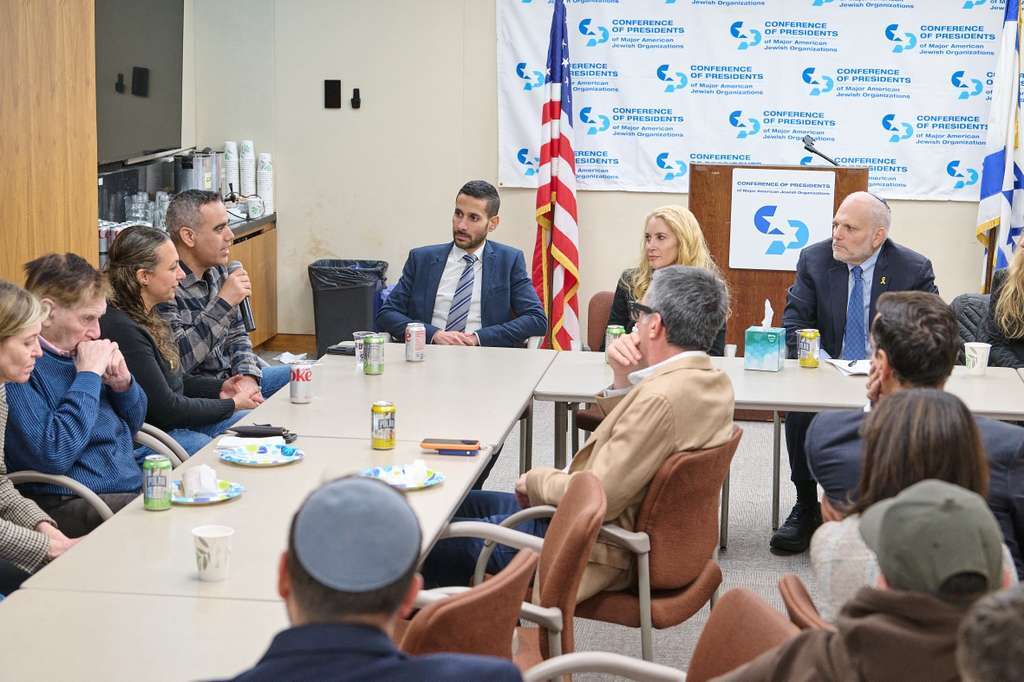
The Conference of Presidents of Major American Jewish Organizations hosted a roundtable in New York on Tuesday with recently released hostages, including Omri Miran (pictured with microphone).
Birthdays
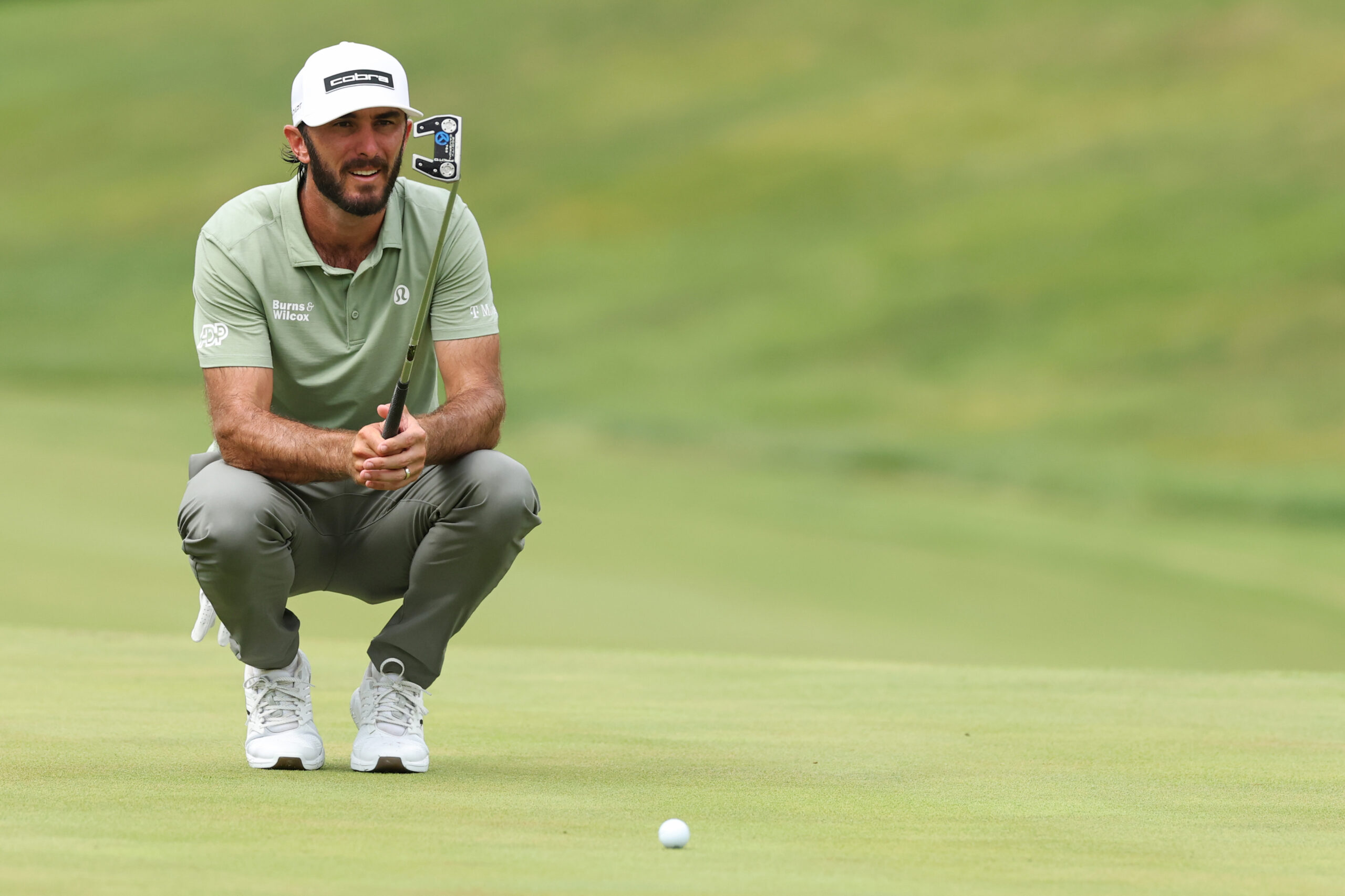
Professional golfer who plays on the PGA Tour, John Maxwell Homa turns 35…
Retired New York state Supreme Court judge, his tenure on “The People’s Court” was shorter than that of his wife “Judge Judy,” Jerry Sheindlin turns 92… Attorney, investment banker and former U.S. ambassador to the U.K., Louis B. Susman turns 88… Professor of chemistry at Stanford University, Richard Neil Zare turns 86… Fifteen-term member in the U.S. House of Representatives (D-NY) until 2013, he is now a partner in Gotham Government Relations, Gary Ackerman turns 83… Fashion designer whose name appears on clothing, perfumes, watches and jewelry, Calvin Klein turns 83… Founder and president of the Washington-based Arab American Institute, James J. Zogby turns 80… U.S. ambassador to Germany from 2022 untilJuly 2024, following 18 years as president of the University of Pennsylvania, Amy Gutmann turns 76… Los Angeles-based real estate investor, Sydney Ilene Cetner… Owner of Patty’s Piano Studio in Santa Monica, Calif., Patricia Fiden… Cosmetic dentist and chairman of pharma company Akelos, Inc., Steven Fox, DDS… California state senator until 2022, Robert Myles “Bob” Hertzberg turns 71… Dean and professor of Jewish history, literature and law at Yeshiva University, Rabbi Dr. Ephraim Kanarfogel turns 70… Past chairman of the Illinois chapter of the Friends of the Israel Defense Forces and president of Millennium Properties R/E Inc., Daniel Hyman turns 70… Academy Award-winning screenwriter, producer, director and lyricist, best known as the writer of “Being John Malkovich,” Charlie Kaufman turns 67… Angel investor, investment banker and president of Sunrise Financial Group, Nathan Low… Retired member of the Knesset for the Kulanu party, he served as Israel’s minister of finance for five years, Moshe Kahlon turns 65… Officer of NORPAC New York and a partner in a New York law firm, Trudy Stern… Co-president of the Charles and Lynn Schusterman Family Philanthropies, Lisa Eisen… Director of state and local government affairs for SAIC, Eric Finkbeiner… Co-founder of Optimistic Labs, Seth Cohen… Member of the New York state Assembly since 2005, Andrew D. Hevesi turns 52… New York Times best-selling novelist, she is also a professor at Rutgers University-Camden, Lauren Grodstein turns 50… Gymnast, she was a member of the Magnificent Seven, the women’s U.S. gymnastics team at the 1996 Summer Olympics, Kerri Allyson Strug turns 48… Editor-in-chief of Time magazine, Samuel P. Jacobs… Senior program director at M²: The Institute for Experiential Jewish Education, Rachel Hillman… Former congressional staffer, Michael Dale-Stein turns 38… Managing director at Climate Power, John D. Axelrod… European deals reporter at the Financial Times based in London, Ivan Levingston…
Bipartisan group of experts urges members of the Senate Foreign Relations Near East, South Asia, Central Asia and Counterterrorism subcommittee to keeping engaging with Mideast allies

Leigh Vogel/Getty Images for Concordia Summit
Brian Hook, former U.S. special representative for Iran and senior advisor to the U.S. secretary of state, speaks onstage during the 2021 Concordia Annual Summit at Sheraton New York on September 21, 2021, in New York City.
Members of the Senate Foreign Relations Near East, South Asia, Central Asia and Counterterrorism subcommittee were urged by a bipartisan group of experts on Wednesday to support efforts to keep the U.S. engaged with Israel and other allies in the Middle East. The experts, including former Trump and Biden administration officials, warned that a U.S. retreat from the region would create a vacuum quickly filled by American adversaries.
Wednesday’s proceedings, which marked the subcommittee’s first hearing of this Congress, focused on “U.S. diplomatic strategies for a dynamic Middle East,” and was organized by Sen. Dave McCormick (R-PA), the subcommittee chairman, and Sen. Jacky Rosen (D-NV), the top Democrat on the panel.
Brian Hook, who served as U.S. special representative for Iran in the first Trump administration; Daniel Shapiro, who served as former U.S. ambassador to Israel under President Barack Obama and then as special liaison to Israel in the Biden administration; and Shelly Culbertson, a senior policy researcher at RAND focused on disaster and post-conflict recovery appeared as witnesses. All three concurred that U.S. diplomatic and military engagement was critical for ensuring that mistakes of the past are not repeated.
“The old order in the Middle East is passing away, and a new, better order is coming into view. We have too much proof of a better order to return to the failed strategies that perpetuated the old order. American diplomacy should support the new and dynamic Middle East,” Hook said. “In broad strokes, I think this means diplomacy that stands by our allies in good times and in bad. It means deterring our adversaries, and it means sustaining the incredible gains made over the last two years, especially during the recent 12-day war against the Iranian regime.”
“The United States can help midwife a regional dynamic of sovereign states anchored by Israel and Arab Gulf nations, who together counter extremism, invest in their own citizens and recognize the right of the Jewish people to live in peace alongside their neighbors. President Trump described this vision in his 2017 Riyadh speech. He deserves great credit for realizing this vision across his first term and into the second term,” he continued.
Hook went on to say that the U.S. “should help organize our allies around shared interests.”
“For example, countering Iran’s threats to the U.S. and the region, advancing the peace process through the Abraham Accords and deepening economic and cultural ties. But continued success in the region is not inevitable. American leadership coupled with burden sharing by our partners is essential for this vision to become a reality. We should convert the recent military gains into an enduring balance of power that favors America and her regional allies. The U.S. and its partners should continue resisting Iran’s expansionist, antisemitic designs in the region,” he argued.
Shapiro offered a similar message, telling senators that the U.S. has “a once-in-a-generation opportunity to help reshape the region in ways that will bring more peace and prosperity and less conflict and violence to those who live there and significant benefit to the interests of the United States.”
“President Trump was right to seek a nuclear deal with Iran through diplomacy, but given how close Iran was to a nuclear weapon and its proven willingness to attack Israel directly, I believe a military confrontation was necessary and inevitable,” Shapiro said, praising the president’s handling of the nuclear issue.
“Israeli and U.S. operations caused severe damage to Iran’s nuclear facilities. They’ll be unusable for a significant period of time, and that’s time we can perhaps extend through a range of means. Now, none of this means the threats posed by Iran and its proxies are eliminated. But the significant gains produced by military power now give us the opportunity to use all the tools at our disposal – deterrence, but also diplomacy – to consolidate those gains,” Shapiro continued.
Shapiro urged members to capitalize “on the damage to Iran’s nuclear program and the weakening of the Iranian allied access to secure a long-term improvement in the regional security environment.”
“That means seeking renewed negotiations with Iran to sustain the gains of the military strikes, prevent the nuclear programs reconstitution, secure full access for IEA inspectors, locate and remove Iran’s enriched uranium stockpile, assure zero enrichment going forward, and achieve meaningful limits on Iran’s ballistic missile inventory. It also means maintaining pressure on Iran by coordinating with European partners on the snapback of JCPOA sanctions, increasing efforts to scale back Iranian oil exports to China, and making clear that additional military strikes by Israel or the United States are possible,” he said.
Shapiro warned, however, that no progress could be made “until the Gaza war ends” and encouraged all parties to work toward a 60-day ceasefire that “really must transition directly into the end of the war.”
“That will require Israeli agreement to certain terms, but also intense pressure on Hamas by Qatar and other actors,” Shapiro explained.
Hook told senators he had “never been more optimistic about the future of the Middle East than I am now,” following the degradation of Iran’s nuclear program, while cautioning that he hoped that Israel’s actions to ensure Hamas “is uprooted from Gaza” could be conducted “in a way to maintain support here in the United States.”
Culbertson similarly praised the U.S. and Israel’s operations against Iran’s proxies and the regime’s nuclear program, while arguing that an emphasis on diplomatic efforts was necessary to “set a new course for the Middle East” and allow the U.S. to “reestablish itself as the partner of choice” in the region.
“This means rethinking what constitutes U.S. interests. Civilian displacement, state collapse and economic despair are not peripheral. They’re central to long-term global stability. These are, of course, primarily the responsibility of regional governments, but the United States has powerful tools to support progress. Doing so is not charity, it’s strategy,” Culbertson explained.
“The U.S. has repeatedly sought to reduce its footprint in the Middle East, only to be drawn back in again and again. Every administration since Jimmy Carter has launched new military operations there in response to threats to American interests. This has meant chasing symptoms instead of solving underlying problems. We now have an opportunity to break that cycle,” she added.
Culbertson also said the U.S. should mediate the ends of the conflicts in Gaza, Syria, Lebanon, Yemen and Libya, address the region’s long-term humanitarian and refugee crisis, support and facilitate post-war recovery efforts, help improve governance and job prospects in these countries, and focus on “strategic priority locations” such as Iraq, Syria, the West Bank and Gaza that “could become a model of recovery and partnership.”
Culbertson presented two potential futures, one where “conflicts grind on, economies remain stagnant, Iran, Russia and China fill the vacuum, extremist groups like Hamas and ISIS exploit social gaps, refugees flee and the United States is pulled back in again and again,” and another where “the United States steps forward with strategic leadership. We help end wars. We support governments in rebuilding. Cities recover. Youths find work. The region stabilizes and draws closer to us and our allies.”
“We can choose, at least in part, which future unfolds,” Culbertson argued.
Please log in if you already have a subscription, or subscribe to access the latest updates.
 Continue with Google
 Continue with Apple