


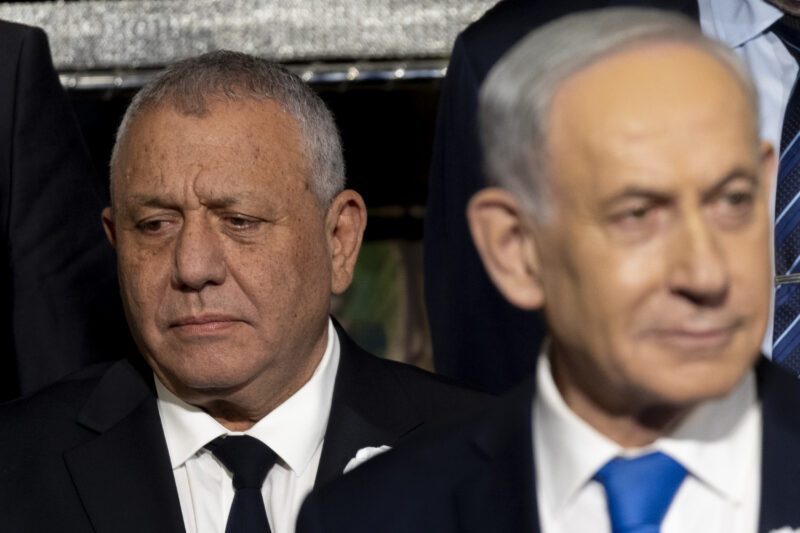











































































The Montana GOP senator: ‘What was once the intellectual property of liberal elites is metastasizing into a generational rejection of Israel, of Jews, and of American global power’
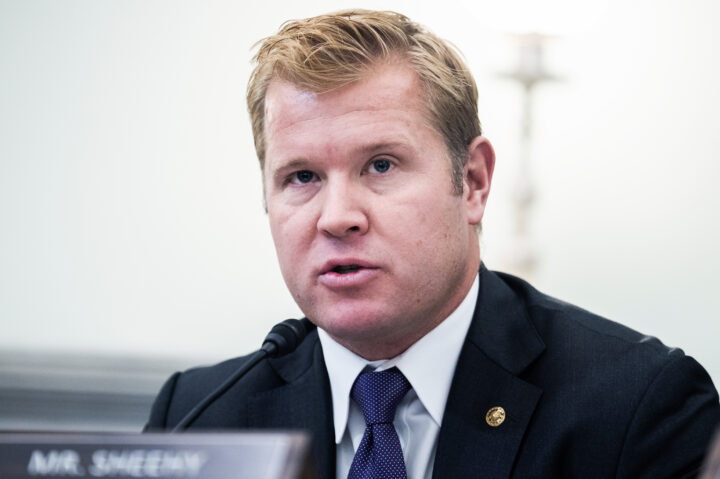
Tom Williams/CQ-Roll Call, Inc via Getty Images
Sen. Tim Sheehy (R-MT) during a Senate Commerce, Science and Transportation Committee confirmation hearing in Russell building on Dec. 3, 2025.


 Add JewishInsider on Google
LAS VEGAS — Speaking at the Republican Jewish Coalition’s annual conference in Las Vegas, Sen. Tim Sheehy (R-MT) warned of a “red-green alliance” between the far left and Islamists that has fueled antipathy against the Jewish people and America.
“These two forces should be natural enemies. One denies God; the other claims exclusive possession of Him. One worships the collective; the other commands submission to a caliphate,” Sheehy said. “Yet they have formed a red-green alliance of convenience, united by one thing: shared hatred of the West, of capitalism and of the Jewish people, who stand as living proof that a people can thrive anywhere despite any oppressor.”
He said that he’s seeing patterns that played out across the world in the 1970s, including in the Iranian revolution, unfolding on American college campuses and across the country.
“Radical progressive movements march under the banner of decolonization while providing political cover for those who openly celebrate the massacre of Jews and the destruction of the only Jewish state in history,” Sheehy said.
He described higher education as the “point of fatal penetration,” funded by taxpayer dollars and philanthropy, which have “fueled an engine of Marxism and Islamism gilded as credentialism.” He said that this alliance is using tools including universities, podcasts and mass migration to tear down the United States, in lieu of the terrorist tactics of prior ages.
“Generations of young adults and their families have been mortgaged to student debt, while Marxist and anti-Western indoctrination became the primary byproduct,” Sheehy said. “Deranged hatred of Israel has been their most valued product. What was once the intellectual property of liberal elites is metastasizing into a generational rejection of Israel, of Jews and of American global power. Young Americans, products of this infected system, have been conditioned to blame their grievances on a fictitious global elite led by Israel and the Jews.”
But he also acknowledged that such problems aren’t exclusive to the left, with the same antisemitic conspiracy theories, isolationist sentiments and collectivist impulses pushing into the fringes of the right.
“Antisemitism has repeatedly been the early warning system for far worse,” Sheehy said. “Antisemitism is never merely hatred of Jews; it is the asset that dissolves the restraints of civilization and paves the way for tyranny. The standing of the people of Israel and the Jewish people worldwide is therefore not political convenience or strategic calculation. It is fundamental morality.”
He said that abandoning Israel would be a signal that the West “no longer believes its own story” and that the United States has abandoned the values of the Constitution. And he said that embracing isolationism and leaving allies to face threats alone is a “capitulation,” a betrayal of U.S. interests and global leadership.
Sheehy drew a comparison between President Donald Trump’s efforts to confront Iran to President Thomas Jefferson’s efforts to combat the Barbary Pirates in the early years of the United States.
“Like our current president, he took decisive action despite allied and congressional opposition to protect Americans and American interests. It was the right decision. It sent a message that our nation was here to stay,” he said.
Sheehy also said that U.S. adversaries in Russia and China are using Iran to divide and weaken America. And he said that if the U.S. can come together and show strength, it will inspire other U.S. allies to “retake their nations as well.”
The messaging theme has been an effective attack against anti-Israel candidates in the past, and has been especially resonant with Black voters

Then-Rep. Cori Bush (D-MO) speaks at the "Just Majority" Supreme Court press conference on June 22, 2023 in Washington, DC. / Then-Louis County Prosecutor, Wesley Bell gives remarks at the Urban League Empowerment Center on June 17, 2020.
In the concluding weeks of the primary season, AIPAC is drawing in part on a messaging strategy used successfully by pro-Israel groups in previous cycles to thwart the far left, which is facing a new set of political tests after a series of recent victories in heavily progressive congressional districts.
From Michigan to Missouri, where tensions between the Democratic Party’s moderate and far-left factions are playing out in high-profile contests for the House and Senate, AIPAC is hitting its anti-Israel opponents for their past criticism of former President Joe Biden and former Vice President Kamala Harris in an effort to portray the candidates as hostile to mainstream policy goals.
The tactic, which UDP also deployed last election cycle in key races, dates back to at least 2021, when DMFI PAC, Democratic Majority for Israel’s political arm, had relentlessly attacked Nina Turner — a former Ohio state senator running for an open House seat in Cleveland on a platform that was critical of Israel — for remarks in which she had compared voting for Biden to eating a “bowl of s**t.”
Mark Mellman, the veteran Democratic pollster who founded DMFI and died in November 2025, was the brainchild of the anti-Turner strategy. His attack ads were effective in emphasizing what became a liability for Turner, particularly among Black voters, helping to elevate a lesser-known moderate rival with ties to the establishment, Rep. Shontel Brown (D-OH), to a come-from-behind upset.
The race served as an early venue for the Democratic proxy fights over Israel shaping a growing number of primaries in the wake of the war in Gaza and Hamas’ Oct. 7, 2023, attacks.
Now, UDP is reviving Mellman’s playbook as it takes on former Rep. Cori Bush (D-MO), who is seeking a rematch against Rep. Wesley Bell (D-MO) after she lost her St. Louis House seat in 2024.
In recent attack ads, UDP, which has spent over $2.5 million to boost Bell, is hitting Bush over past comments criticizing Biden and Harris, as well as her vote against the bipartisan infrastructure package while in Congress in 2021. Its strategy is reminiscent of messaging it deployed two years ago to help oust the former Squad member who was among the harshest critics of Israel in the House.
“Cori Bush’s attacks helped Trump,” one of the UDP ads claims, citing interview clips in which she voiced misgivings about voting for Harris shortly before the 2024 election.
It remains to be seen if such ads will resonate amid a national political environment favorable to left-wing populists who are now casting themselves as strident opponents of the establishment and claiming wins in recent competitive congressional primaries.
The playbook has had mixed results in other races, including a 2022 primary in Pittsburgh where UDP failed to block Rep. Summer Lee (D-PA) even as the group spent heavily on ads depicting her as disloyal to Biden’s agenda.
More recently, Rep. Adriano Espaillat (D-NY), a close AIPAC ally, lost his House seat early last month to an anti-Israel challenger, Darializa Avila Chevalier, who drew scrutiny over controversial deleted social media posts in which she had called Biden a “rapist” as well as a “war criminal,” while also dismissing Harris with an expletive.
Both Espaillat and his allies sought to draw attention to the comments in the final stretch of the race, to no avail. UDP was not directly involved in the New York City primary but did contribute over $1.5 million to a pro-Espaillat super PAC that hit his opponent for her past remarks, according to campaign disclosures filed after the race had concluded. Avila Chevalier has said she regrets her rhetoric attacking Biden and Harris.
For her part, Bush, rather than leaning into her reservations with Harris tied to the war in Gaza as the former vice president keeps the door open for a White House bid in 2028, has indicated she sees the attacks as a possible vulnerability.
During a recent joint media appearance, Bush, who endorsed Harris soon after she had announced her campaign to replace Biden in July 2024, accused Bell of equivocating on whether he had immediately done the same.
In a statement to Jewish Insider, Patrick Dorton, a spokesperson for UDP, criticized Bush as “a terrible member of Congress who didn’t do her job and didn’t deliver for St. Louis.”
“We are going to educate every Democratic primary voter in St. Louis about how bad and ineffective Cori Bush was in Congress,” Dorton said on Monday when asked to explain how UDP believes its repeat strategy will again persuade voters in the Aug. 4 primary race.
Meanwhile, in Michigan’s closely watched Senate primary set for next Tuesday, Abdul El-Sayed, an anti-Israel insurgent who is facing AIPAC-backed Rep. Haley Stevens (D-MI), has sought to downplay his role in promoting the “uncommitted” movement that urged Democratic primary voters to leave their ballots blank as a protest against Biden’s support for Israel during the war in Gaza.
In a recent campaign ad, for example, El-Sayed boasted that he was “the first Muslim American leader to endorse Kamala Harris for president,” a claim that fact-checkers have deemed inaccurate.
While Stevens has highlighted El-Sayed’s support for “uncommitted,” UDP, which is spending aggressively in the primary, has been focused more broadly on his perceived hostility to popular Democratic leaders.
In its first negative ad, released earlier this month, UDP attacked El-Sayed for what the group called his “long history of disrespecting women,” citing harshly worded past criticisms of former First Lady Michelle Obama as well as Michigan Gov. Gretchen Whitmer, the latter of whom announced a late endorsement of Stevens last week.
Elsewhere in Michigan, a far-left Democrat who is seeking the nomination to claim a Republican-held Lansing swing seat, Will Lawrence, has faced recent attacks for his comments denigrating Black political leadership and calling Harris a “warmonger,” as well as his support for the “uncommitted” movement. He has said his remarks have been taken out of context.
The race is expected to be close as Lawrence, a vocal critic of Israel, has gained endorsements from several prominent progressives, including Sen. Bernie Sanders (I-VT). Crush MAGA PAC has spent nearly $1 million on attack ads against Lawrence that have cited his affiliation with “uncommitted,” among other things.
While Lawrence’s allies have accused AIPAC of funding the ads, UDP has denied involvement in the race, calling such claims “pure fiction and dishonest.”
Rep. Diana DeGette is facing a formidable challenge from DSA-backed Melat Kiros, who recently declined to call the Boulder firebombing attack antisemitic
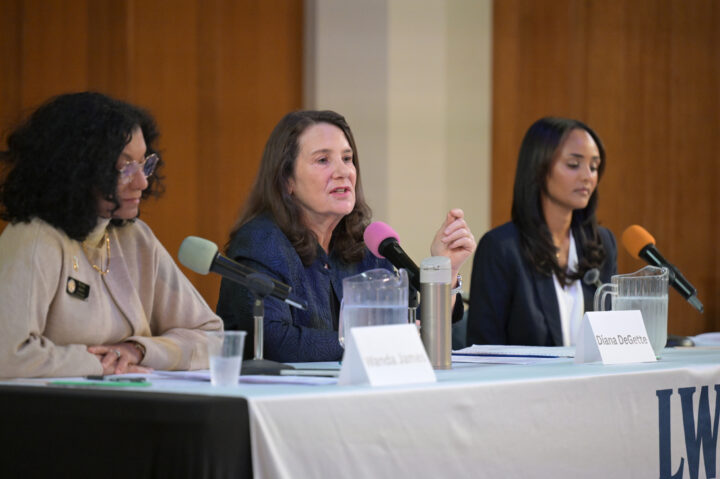
RJ Sangosti/MediaNews Group/The Denver Post via Getty Images
From left, Wanda James, Diana DeGette and Melat Kiros participate in a League of Women Voters Congressional District 1 candidate forum on May 28, 2026, in Denver, Colorado.
The wave of victories for Democratic Socialists of America-aligned candidates in New York City on Tuesday is buoying the hopes of progressives that the far left can pull off upsets against two Democratic incumbents in Colorado’s Tuesday primary elections.
Rep. Diana DeGette (D-CO) is facing a challenge from Melat Kiros, whose campaign has attracted substantial national attention and backing from several anti-Israel organizations and individuals including the Justice Democrats, DSA, Sunrise Movement, Jewish Voice for Peace, TrackAIPAC, the Council on American-Islamic Relations, Chris Rabb, Hasan Piker and, most recently, Sen. Bernie Sanders (I-VT).
Sen. John Hickenlooper (D-CO) is also facing a DSA-aligned challenger, state Sen. Julie Gonzales, though her campaign hasn’t garnered as much attention as Kiros’.
Just this week, in an interview with the local channel 9News, Kiros declined to call the firebombing of a hostage awareness march in Boulder, Colo. last year antisemitic.
“I don’t know what was in the heart of the perpetrator. All I know is that he went and attacked innocent people because of what they might have believed, and I don’t even know what the people that were at that protest believed too,” she said. “I don’t know what his intentions were.”
The House voted unanimously last year to condemn the attack as an antisemitic incident. Only Reps. Rashida Tlaib (D-MI) and Thomas Massie (R-KY), two of the leading anti-Israel lawmakers in Congress, voted present.
Kiros lost her job at the law firm Sidley Austin in 2023 for publishing a column denouncing hundreds of top law firms that called on law schools to do more to address antisemitism on their campuses. The column argued that calling for the elimination of Israel is not antisemitic and defended Hamas and those who have expressed support for it.
Kiros has made a complete arms embargo on Israel a central part of her campaign and has described the war in Gaza as a genocide and Israel as an apartheid state.
“I believe that our selling of arms to Israel, defensive or offensive, gives them the cover to continue the genocide that’s taking place in Palestine, and now the ethnic cleansing that’s taking place in Lebanon,” Kiros said in the local interview.
Kiros said in the interview that she did not agree with Piker that Hamas is a “lesser evil” than Israel, and denied that she thought the Oct. 7, 2023, Hamas attacks were justified.
Jim Carpenter, a Democratic political strategist in the state, predicted that DeGette “will ultimately win” but “this is certainly the toughest primary challenge she’s had in a really long time, if ever, since she was elected — lots of visibility, lots of interest.”
A poll commissioned by the Justice Democrats found Kiros leading DeGette 41-36%.
Multiple local venues recently declined to host a rally led by Kiros and Piker, which Kiros blamed on pressure from DeGette’s donors — something DeGette’s campaign has called “ridiculous.” Piker and Gonzales, citing security threats, declined to appear at a rescheduled rally in front of the state Capitol.
DeGette has been blasting Kiros over her affiliation with Piker, highlighting the streamer’s comments — supporting Hamas, dismissing sexual violence on Oct. 7, claiming that the U.S. deserved 9/11 and that he “hate[s] this country so much.”
“If Melat Kiros wants to campaign with someone who said America deserved 9/11 we’d do nothing to stop her,” a DeGette spokesperson told Colorado Newsline.
Carpenter highlighted the Sanders endorsement of Kiros as particularly valuable, noting that the senator has been popular in the state. But he also highlighted the significant influx of outside spending that has flowed into the race in favor of DeGette and targeting Kiros.
One group, Pro-Choice Majority Action, has spent more than $1.5 million boosting DeGette and attacking Kiros. Some observers have tied that spending to AIPAC, noting that the group took in close to $900,000 from EDW Action Fund, which in turn received $1 million from the AIPAC-linked United Democracy Project in May.
A UDP spokesperson did not respond to a request for comment. DeGette has not been consistently supportive of Israel, including signing a letter calling for unilateral U.S. recognition of Palestinian statehood and opposing additional offensive aid to Israel, but UDP has at times supported candidates not fully aligned with AIPAC’s policies in the interest of defeating others with more extreme records.
Rep. Pramila Jayapal (D-WA), a former Progressive Caucus chair, also recorded a last-minute video offering support for DeGette, describing her as critical to advancing Medicare for All.
Meanwhile, Justice Democrats has spent more than $500,000 supporting Kiros and opposing DeGette, and the anti-Israel American Priorities super PAC has spent $150,000 in support of Kiros.
Carpenter told Jewish Insider that, particularly in the wake of a party delegate vote earlier this year when DeGette was badly beaten by Kiros and came close to falling short of the threshold to appear on the ballot, the congresswoman has been campaigning aggressively.
Carpenter said that the anti-DeGette vote might ultimately come out split: University of Colorado Regent Wanda James is also challenging DeGette, and is likely to win support from some Black voters.
Though some in the progressive sphere have interpreted the New York City victories as a sign of momentum for an ascendant far left nationwide, Carpenter said that the results in New York don’t necessarily reflect Colorado’s own voting base.
“Colorado’s politics are very different,” he said. “All politics are local. I get the enthusiasm, and I get everybody trying to point to a trend and all of that. I just don’t think that’s going to hold in Colorado. Denver is very liberal but it’s a different kind of Democrat than the DSA.”
Gonzales is less likely to pose a serious challenge to Hickenlooper, the state’s former governor, having trailed significantly behind him in fundraising. “Gonzales just hasn’t had the resources really to compete statewide,” Carpenter said.
She’s been visible on social media and active in the Denver media market but “she just hasn’t had the ability to do paid advertising in a way that I think is any kind of real threat to Hickenlooper,” Carpenter said. Hickenlooper’s biggest vulnerabilities may be his age, 74, and a perception of him as an establishment Washington Democrat.
But Hickenlooper has also “taken this very seriously” and has been campaigning actively, reminding voters of his record during his two terms as senator and one term as governor, Carpenter said. The state also allows unaffiliated voters to choose the party’s primary in which to vote, and such voters have typically been a boon for Hickenlooper in the past, Carpenter added.
From the start of her campaign, Gonzales has made criticism of Israel a centerpiece of her bid, accusing Israel of genocide, supporting an arms embargo and fundraising based on her opposition to Israel and AIPAC. TrackAIPAC also endorsed Gonzales.
Also on Tuesday, state Rep. Manny Rutinel faces former state Rep. Shannon Bird in a primary for a key swing seat held by Rep. Gabe Evans (R-CO). Carpenter said that the race is difficult to predict and both have been strong candidates with built-in advantages and key endorsements.
Democratic Majority for Israel is supporting Bird and called the race one of its top priorities for the cycle. Bird has long been a strong supporter of Israel and vocal in opposition to antisemitism. Rutinel’s views on Israel have been less clear, and his past as a campus activist has worried some pro-Israel Democrats.
As an undergraduate at the University of Florida, according to a local news report, Rutinel attended a demonstration co-organized by Students for Justice in Palestine, but a Rutinel spokesperson, in a statement to JI, denied that Rutinel had any affiliation with SJP and said the demonstration was focused on police brutality in the U.S.
“Manny supports Israel’s right to exist and supports a two-state solution with secure borders to bring peace,” a campaign spokesperson said. Rutinel also “supports U.S. security assistance to Israel in line with the Obama administration’s 2016 memorandum of understanding,” the spokesperson added.
Carpenter said that Bird has a longer political record and deeper roots in the district, which she has leaned on in her campaign, but also may face headwinds from a perception of her as a moderate Democrat. Rutinel might benefit from the substantial Latino vote in the district.
“Bird is making the argument that because it’s a swing district that is more moderate … that’s what’s going to appeal” in the general election, Carpenter said. “That’s a harder message in a Democratic primary.”
Rutinel leaned into more of a progressive posture but “it seems to me like he’s trying to moderate that a little bit, and has gotten tripped up in a couple of debates on some of the more left progressive positions that he had taken in the past. It’s not a simple progressive-versus-establishment divide there, but it is kind of shaking out that way,” Carpenter continued.
Bird is also backed by moderate groups including the NewDems, Blue Dog PAC and Welcome PAC, as well as EMILY’s List and Elect Democratic Women.
Rutinel is backed by an array of both moderate and progressive lawmakers including Sen. Cory Booker (D-NJ) and Reps. Adriano Espaillat (D-NY), Lou Correa (D-CA), Robert Garcia (D-CA), Teresa Leger Fernandez (D-NM), Rob Menendez (D-NJ), Emily Randall (D-WA), Luz Rivas (D-CA), Linda Sanchez (D-CA) and Pat Ryan (D-NY).
The state’s gubernatorial primary is also set for Tuesday, where recent polling shows Attorney General Phil Weiser taking the lead for the first time against Sen. Michael Bennet (D-CO). The poll was conducted by a group supporting Weiser and showed that a significant portion of the voting base is still undecided.
Carpenter said that Weiser’s last-minute surge might signal that Bennet’s longtime service in Washington is being seen as a negative on the campaign trail, and he’s been tagged as not being anti-Trump enough in his time in the Senate.
But he said he didn’t think that the anti-establishment mood would necessarily be sufficient to oust DeGette or Hickenlooper, noting that Weiser himself is a well-known quantity and popular among Colorado Democrats going into the race.
“I think he benefits a little bit more from that than Gonzales or Kiros would,” Carpenter said.
The former Biden advisor is publicly challenging candidates and activists she sees as beyond the mainstream, even as CAP largely avoids the party’s internal Israel battles

Tom Williams/CQ-Roll Call, Inc via Getty Images
Neera Tanden, president and CEO of the Center for American Progress, and Kentucky Governor Andy Beshear have a discussion at CAP titled "Focusing on What Matters: How Democrats Can Connect With America," on Thursday, February 19, 2026.
A decade ago, Center for American Progress CEO Neera Tanden spent her time arguing with leftists on Twitter.
Her life doesn’t look too different today: After four years holding senior roles in the Biden administration, Tanden is back at CAP and once again arguing with the far left on Twitter, now called X.
Though she faced a torrent of online hate from the so-called “Bernies Bros” in 2016, Tanden was not alone among Democrats in staking out a line against the more insurgent, left-wing vision for the party promoted by Sen. Bernie Sanders (I-VT) during his unsuccessful primary campaign that year against Hillary Clinton. (Tanden, a longtime Hillary Clinton aide, held a senior role in Clinton’s unsuccessful 2008 primary campaign.) The Clinton wing, of which Tanden was a proud member, won the ideological war within the party, at least at the time.
Tanden now finds herself fighting a much more solitary battle against the ascendant left flank of the party. She has called out far-left candidates challenging incumbent Democratic lawmakers for taking positions well outside the party’s mainstream. And at a time when some in the party are calling to make the Democratic tent so wide that it includes even activists and candidates who have flirted with antisemitism, she has taken to X to push back.
“Sorry if I think it’s important to state out loud on here my disagreements with a guy who says it’s ok to murder people, Jews are inbred, America was responsible for 9/11 and Russia was right to invade Crimea, amongst other insane things,” Tanden wrote on X in April after “Pod Save America” interviewed Hasan Piker, the far-left, antisemitic political streamer who has in recent months campaigned with several Democrats, including Michigan Senate candidate Abdul El-Sayed and Chris Rabb, who last month won the nomination in Pennsylvania’s 3rd Congressional District.
After The New York Times reported on Maine Senate candidate Graham Platner’s history of abusive relationships in early June, Tanden took to X to attack those who described the reporting as a hit job by pro-Israel activists who opposed Platner. “People who create Israel conspiracies around a Maine Senate race are no different in their antisemitism than Republicans who blame Jewish space lasers for the weather,” Tanden wrote.
Yet aside from several tweets criticizing Israeli Prime Minister Benjamin Netanyahu and his close ties to President Donald Trump, Tanden has largely stayed quiet on the question of U.S. support for Israel. At CAP’s Ideas Conference last month, which was billed as a convening of “the broad center-left’s leading thinkers and doers,” Israel was not discussed at either of the event’s two conversations about foreign policy.
During Joe Biden’s presidency, CAP was run by Patrick Gaspard, a former U.S. ambassador to South Africa and aide to President Barack Obama. In the 18 months after the Oct. 7, 2023, Hamas attacks, Gaspard became increasingly critical of American support for Israel. In May 2024, he published a set of guiding principles on Israel and Gaza that reflected his growing frustration with the status quo and Biden’s continued military support for Israel. The document sharply criticized Israel’s actions in Gaza and called for U.S. arms transfers to Israel to be paused.
Tanden did not respond to requests for comment, and a spokesperson for CAP declined to say whether the Israel principles authored by Gaspard still represent the position of the organization.
Institutionally, at least since Tanden’s return last year, CAP has avoided getting involved in the thorny debates about U.S. aid to Israel that are now causing turmoil among Democrats. The group is seeking to help chart the future of the party — the who’s who of big-name Democrats attended last month’s gathering, including California Gov. Gavin Newsom, Maryland Gov. Wes Moore and Virginia Gov. Abigail Spanberger — while leaving intra-party bickering over Israel aside.
More than a decade ago, Tanden hosted Netanyahu for a conversation at CAP. The 2015 event, which followed Netanyahu’s monthslong campaign against Obama’s Iran nuclear deal, earned Tanden significant pushback from the progressive wing of the party, including some of her own employees. She weathered the storm and stood by the decision; she continues to defend it in the face of occasional criticism on X, even as she tweeted recently that she “would like Netanyahu to lose his next election.”
While Tanden and CAP may be staying out of the Israel fracas, Tanden’s social media posts reflect a penchant for the more pragmatic wing of the party, and an aversion to far-left candidates — including those who take a hard line against Israel.
A critic of the Democratic Socialists of America, Tanden recently weighed in on a slate of contentious Democratic primaries where DSA was hoping to elect aligned candidates.
She expressed support for Washington, D.C., mayoral candidate Kenyan McDuffie before he lost to his democratic socialist competitor, Janeese Lewis George, and called on New Yorkers to “get it together” instead of voting for Darializa Avila Chevalier, an anti-Israel student activist who ousted Rep. Adriano Espaillat (D-NY).
Both of Tanden’s preferred candidates lost. But whether her vision for the party — comprising the “broad center-left” — wins out will not be clear until Democrats pick their next presidential candidate.
The pro-Israel congressman raised early campaign cash, defined his opponent aggressively and prioritized strong constituent services

Blue/Bloomberg via Getty Images
Representative Ritchie Torres, during an interview in New York, US, on Tuesday, Jan. 28, 2025.
Rep. Ritchie Torres (D-NY) has long been a target of the far left in New York City, largely because of his outspoken support for Israel and his Jewish constituents.
But Torres emerged with a commanding victory over a far-left challenger in Tuesday’s Democratic primaries, even as pro-Israel Reps. Dan Goldman (D-NY) and Adriano Espaillat (D-NY) were defeated by democratic socialist-aligned challengers. Brooklyn Borough President Antonio Reynoso, a progressive backed by party leaders, was also defeated by a challenger aligned with the Democratic Socialists of America.
Observers attribute Torres’ landslide win against former New York Assemblymember Michael Blake to a variety of factors, including the different demographics of his district — which includes the heavily Jewish neighborhood of Riverdale, as well as some of the poorest neighborhoods in the city— as compared to the other three districts, his strength as a member of Congress and as a campaigner and Blake’s own weaknesses as a candidate.
Torres is popular in the district, has prioritized constituent services, has been a longtime presence in the district — as a city councilman from 2014 to 2020 before his time in the House — and maintains a strong reputation locally, Torres campaign spokesperson Benny Stanislawski said.
That’s in spite of the online vitriol that’s frequently directed the congressman’s way by the far left.
House Minority Leader Hakeem Jeffries (D-NY), in an MS NOW interview on Wednesday, pointed largely to the demographics of the districts — wealthier voters taking more of an interest in Middle East policy issues — as the reason for the differential results.
“What’s interesting is that, in some of those districts, which tended to be higher-income districts … there was an outsized focus on issues connected to the Middle East, the Middle East,” Jeffries said. “In other districts, for instance, in the South Bronx, Ritchie Torres was running against somebody who was heavily critical of Ritchie Torres’s position on Israel, and he won by fifty points.”
Strategists largely offered a similar assessment.
Torres is a strong fit for his district, as an Afro-Latino man who grew up in housing projects in the district, Hank Sheinkopf, a longtime New York Democratic strategist, said.
The voting population in Torres’ district, overall, is less friendly to the far left than the other districts where left-wing candidates surged, and Torres retained strong support among both the Jewish community and older minority voters.
Blake didn’t benefit from the same institutional DSA backing that others received. Blake himself is not a DSA member and is “not particularly DSA-adjacent, although he’s tried to position himself there since the mayoral primary,” Jake Dilemani, another New York Democratic strategist, said.
“[The DSA] supports candidates who they think have the best shot at winning based on who the candidate is, but also who or what the district is,” Dilemani said. “They pick carefully where they engage, and I think a combination of, potentially, they couldn’t find a legitimate candidate for them to run, coupled with the district is not as favorable to a DSA candidate as some of the others, they wanted to use their resources wisely.”
Strategists said Blake is also known as being a politically unreliable striver — he pivoted during his recent mayoral campaign and congressional bid against Torres from being a supporter of Israel and ally of AIPAC to staunchly anti-Israel, for instance — who has run for a slew of different offices.
“I don’t know that anyone particularly took his candidacy all that seriously. He’s run for nearly every single office there is, with the exception of maybe king of England,” Dilemani quipped.
Blake also faced a barrage of attacks and scrutiny from the outset of his congressional campaign, something that was not the case for other candidates like Darializa Avila Chevalier, who defeated Espaillat.
“Torres is a better pol[itician] and a smarter campaigner. He just is,” Sheinkopf said. “The other guys … didn’t define their opponents. Torres knew that anything was possible. He has a smarter way of looking at New York City Mayor Zohran Mamdani, and he did what was appropriate to protect himself.”
Sheinkopf also speculated that Mamdani didn’t want to take a chance on Blake when he had other, easier targets that were more fertile ground for his brand of politics. DSA-style politics have typically thrived among younger populations newer to the area, a smaller contingent in Torres’ district.
Sheinkopf noted that Torres also significantly outraised Blake — he stockpiled millions in campaign cash even before Blake emerged as his leading rival.
And, strategists said, Torres’ outspokenness on behalf of Israel has been somewhat less prominent over the past year, even as the congressman’s views and positions have remained largely the same. Torres offered some criticism of Israel last year, similar to that expressed by some other pro-Israel Democrats.
“It’s smart on his part,” Sheinkopf said. “He understands that survival is important. Has he betrayed the pro-Israel community and the Jewish community as others have? The answer is no. Is he being smart about it? The answer is yes, and we should respect him for that.”
Strategists said Torres can’t count on his strong victory on Tuesday deterring future efforts to challenge him.
Dilemani emphasized that “two years is an eternity in politics,” and that it would be foolhardy to try to predict what might happen in the next race.
“The DSA people have no sense of what fits and what doesn’t fit … they will do it again because they can,” Sheinkopf said.
'They took a page out of the AIPAC playbook over the past 30 years, in terms of recruiting and maintaining relationships with members of Congress,' Democratic operative Sara Forman said

(Myung J. Chun / Los Angeles Times via Getty Images
Randy Villegas, running for California's 22nd Congressional District walking neighborhoods in Bakersfield, Calif., on Saturday, May 23, 2026.
The far left is gaining traction in its electoral battle against the mainstream pro-Israel political community, notching a recent string of victories in high-profile Democratic primaries as it now finds itself on stronger financial footing compared to past campaign cycles.
Thanks in part to a range of new super PACs created to counter AIPAC’s political spending, the far left has elevated several anti-Israel Democrats in New Jersey, Pennsylvania and California to the nomination in key congressional primaries, with its sights set on closely contested upcoming matchups in New York City and Michigan.
In some cases, the anti-Israel left — buoyed by public opinion that has swung against the Jewish state in the wake of the war in Gaza — has been at parity or outspending pro-Israel groups, marking a significant change.
The most prominent vehicle for such spending is the recently launched American Priorities super PAC — which has pledged to spend at least $10 million during the midterms. The group most recently helped lift Randy Villegas, a progressive vying to unseat Rep. David Valadao (R-CA), in California. He claimed victory in the primary over Jasmeet Bains — a state lawmaker supported by pro-Israel activists and national Democatic leaders. American Priorities had invested heavily on behalf of Villegas, going toe to toe with Democratic Majority for Israel’s political arm — whose $500,000 for Bains failed to help her advance to the November election.
The anti-Israel PAC also played a role in securing wins for Pennsylvania state Rep. Chris Rabb, who faced scrutiny for pushing an antisemitic conspiracy theory before his House primary in Philadelphia last month, and Adam Hamawy, a retired Army surgeon who claimed the Democratic nomination in a central New Jersey district despite past controversial links to a convicted terrorist. American Priorities spent over $1.5 million in the crowded race to bolster Hamawy’s campaign.
Notably, AIPAC’s well-funded super PAC, United Democracy Project, chose to stay on the sidelines in all three of those races, as the far left has capitalized on the pro-Israel group’s unpopularity within the Democratic Party, particularly in heavily progressive districts where American Priorities is engaging most significantly.
AIPAC’s relatively cautious approach to Democratic races this cycle reflects a changing political landscape for the formidable pro-Israel group, which has flexed its financial resources in consequential primaries that meaningfully shaped the House Democratic caucus.
Just two years ago, UDP and DMFI PAC had both engaged in a well-resourced effort to defeat two of the most prominent Israel critics in the House, Reps. Jamaal Bowman (D-NY) and Cori Bush (D-MO), who were ousted by pro-Israel Democrats currently sitting in Congress.
By contrast, UDP has now been absent from major primaries where AIPAC-endorsed incumbents are facing serious challenges from the far left. In New York City’s June 23 primary, Reps. Adriano Espaillat (D-NY) and Dan Goldman (D-NY) are preparing to defend their seats in tough reelection fights against outspoken critics of Israel, backed by Mayor Zohran Mamdani, who have highlighted their ties to AIPAC as a top vulnerability.
American Priorities, in a joint effort with Justice Democrats — the far-left, incumbent-challenging group that helped propel the Squad to Congress in 2018 — is now investing aggressively in Espaillat’s race to help Darializa Avila Chevalier, a community organizer and anti-Israel activist whose past deleted extremist online posts have recently fueled attacks against her from super PACs backing the incumbent.
Justice Democrats, which had struggled to raise money last cycle as it found itself on the defensive in primaries against UDP, has rebounded and become a driving force behind far-left candidates in the current election cycle — powered in part by a major donation from an anti-Israel dark money group also connected to American Priorities.
The super PAC, led by a progressive strategist who was previously the independent expenditure director for Justice Democrats, has raised about $5.4 million primarily through a small network of Arab American donors who have contributed significant amounts. It entered June with $1.2 million on hand, according to its latest filing — a total that is greatly overshadowed by UDP’s nearly $95 million war chest.
But even critics of American Priorities and affiliated groups in its loose fundraising network acknowledge that the super PAC is spending wisely in races where it believes it can have a potential impact — especially as AIPAC has ceded some ground to its opponents by staying out of contested primaries in places including New Jersey and Pennsylvania.
“They took a page out of the AIPAC playbook over the past 30 years, in terms of recruiting and maintaining relationships with members of Congress,” Sara Forman, a longtime Democratic operative and Jewish community activist, told Jewish Insider on Thursday. “They understood that this was all about funding.”
In many ways, American Priorities in particular has imitated UDP in both style and strategy, down to its vaguely patriotic-sounding name. The group has also accepted contributions from several donors who have given to Republicans, even as it has criticized AIPAC, which is bipartisan, as a Trojan horse advancing GOP interests in Democratic strongholds.
One donor, Hussein Mahrouq, a Texas businessman who has contributed $625,000 while also supporting far-right Republicans, told JI that he is “not affiliated with any political party,” and believes that “decisions affecting our country should be made based on what is best for the United States, independent of pressure from any foreign government, foreign interest group or partisan agenda.”
American Priorities is also involved with a new super PAC called Fighting for Michigan, which vowed this week to invest in “a multimillion-dollar” campaign to boost Abdul El-Sayed, a far-left Israel critic gaining momentum in the state’s three-way Senate primary set for Aug. 4.
“We know big-money groups representing the Israel lobby, corporate interests and AI billionaires are going to spend heavily against Abdul in the coming days,” Connor Farrell, a progressive strategist who is working with the super PAC, told Axios of its effort.
While AIPAC is viewed as a lightning rod in Michigan’s competitive Democratic Senate primary, UDP notably jumped into the race this week with an initial ad buy of around $2 million to help Rep. Haley Stevens (D-MI), a pro-Israel moderate also favored by Senate Minority Leader Chuck Schumer (D-NY).
It remains to be seen if AIPAC and other pro-Israel organizations will be matched or outnumbered by opposing groups amid a surge of new spending in the race, which is among the most closely watched in the country.
With the anti-Israel left emboldened by a growing Democratic skepticism of the U.S. relationship with Israel and a national political environment favorable to anti-establishment views, some Jewish and pro-Israel Democrats are raising concerns that their community is not meeting the moment in response.
“This should be a wake-up call to the Jewish community,” said Kenneth Baer, a former Obama administration staffer who leads a communications firm.
Sam Lauter, a veteran pro-Israel strategist in the San Francisco Bay Area and a DMFI board member, said simply that the “playing field has gotten bigger” over the past several years.
But he also attributed the left’s ascendance to a strategic miscalculation in the pro-Israel activist community that had long been a dominant force in elections.
“Where our community failed is seeing that our opposition has been building and preparing and getting ready for the moment where they could take the fight to us, and our community neglected to pay close attention to that,” Lauter told JI.
Former U.S. Ambassador Daniel Shapiro called the provision largely ‘unremarkable,’ countering claims from the extremes that it would mark a surrender of U.S. sovereignty

Zack Frank
Capitol Building
A relatively routine provision that aims to facilitate expanded U.S. cooperation with Israel in the House’s draft of the 2027 National Defense Authorization Act has fueled outrage from the far left and far right, with some prominent figures making inaccurate claims that the provision would subjugate the U.S. military to Israel or otherwise compromise U.S. sovereignty.
The turmoil appears to have begun with an article published in the isolationist Quincy Institute’s Responsible Statecraft journal that claimed the legislation “would all but fuse the two countries’ armed forces together.”
The backlash has gained widespread attention, from current and former lawmakers, anti-Israel commentators and even a celebrity news account with more than 3.5 million followers on X — an unusual series of events for the wonky annual defense policy bill.
Critics are objecting to a provision in the bill, the “United States-Israel Defense Technology Cooperation Initiative,” which aims to expand and accelerate joint U.S.-Israel technological development and industrial cooperation; allow the U.S. to quickly adopt proven Israeli technologies; and promote joint training exercises, information sharing and co-production in areas including defense manufacturing, anti-tunneling, air- and missile-defense and various advanced technologies.
But the U.S. already has established cooperative programs in Israel in many of the areas enumerated in the bill, set up in previous years’ NDAAs and defense budget bills, without much fanfare — so the sort of cooperation laid out in the bill is hardly new, unprecedented or a significant change.
The language also closely hews to bipartisan legislation in both chambers, the U.S.-Israel FUTURES Act, which has 46 co-sponsors in the House and 11 in the Senate. Those bills aim to leverage U.S. and Israeli technology and innovation to assist in the defense of both countries.
“This provision promotes ongoing, and in some ways, expanded cooperation between the United States and Israel in developing key military technologies. It is quite unremarkable,” Daniel Shapiro, a former U.S. ambassador to Israel and senior Pentagon official who is now a distinguished fellow at the Atlantic Council, told Jewish Insider. “Those describing it as promoting ‘integration’ between the U.S. and Israeli militaries are making a mountain out of a molehill. But these days, there are a lot of people trying to make molehills into mountains in this arena.”
Critics on both sides of the aisle are mobilizing against the legislation.
Rep. Thomas Massie (R-KY) suggested that the legislation would undermine American sovereignty and vowed to introduce an amendment to strip it out of the bill if it makes it through the committee process.
Rep. Ro Khanna (D-CA), who sits on the Armed Services Committee, said he’ll try to remove the provision during the committee markup later this week. “Trump can’t kill the Massie/Khanna partnership no matter how much he posts on Truth Social,” Khanna said.
“Looking forward to posting that roll call vote from the Armed Services committee,” Massie responded. “Maybe they’ll go ahead and strip the provision instead of taking the vote, now that people are on to them.”
Anti-Israel commentators have also seized on the provision.
“This is what complete capture to a foreign government looks like and there hasn’t been a single shot fired,” former Rep. Marjorie Taylor Greene (R-GA) declared.
Former State Department official Josh Paul, an anti-Israel activist, claimed the provision would “intertwine our military with Israel’s” and give Israel “incredible leverage over America’s own defense priorities.”
The condemnation of this provision also foreshadows potential objections to future efforts to shift the U.S.-Israel relationship away from direct aid and toward jointly funded cooperative programs.
Indeed, Paul highlighted that likely shift as a reason to oppose this provision in a video on the subject.
In addition to the new cooperation provision, the NDAA draft includes language extending the U.S. weapons stockpile in Israel, counter-tunneling cooperation programs and counter-drone cooperation programs through 2029.
It authorizes $50 million for cooperative programs in emerging technology, as well as $100 million for each of the counter-drone and counter-tunneling programs and an annual $300 million for cooperative air defense systems including Iron Dome. All of that funding would still have to be appropriated separately.
It also praises the U.S. relationship with Jordan and urges efforts to expand cooperation with Amman, including on integrated air- and missile-defense systems and cybersecurity cooperation efforts.
Democrats are likely to push a range of other amendments related to the war in Iran at Thursday’s markup.
Notably, the bill backed by House Republicans also includes several provisions designed to hamstring isolationist-minded moves by the Trump administration, including limiting troop drawdowns from Europe and South Korea. It would also freeze construction of the “Trump-class” battleship until the technology is better developed.
Please log in if you already have a subscription, or subscribe to access the latest updates.
 Continue with Google

 Continue with Apple