




























Michigan rabbis set red lines for El-Sayed
Tom Williams/CQ-Roll Call, Inc via Getty Images
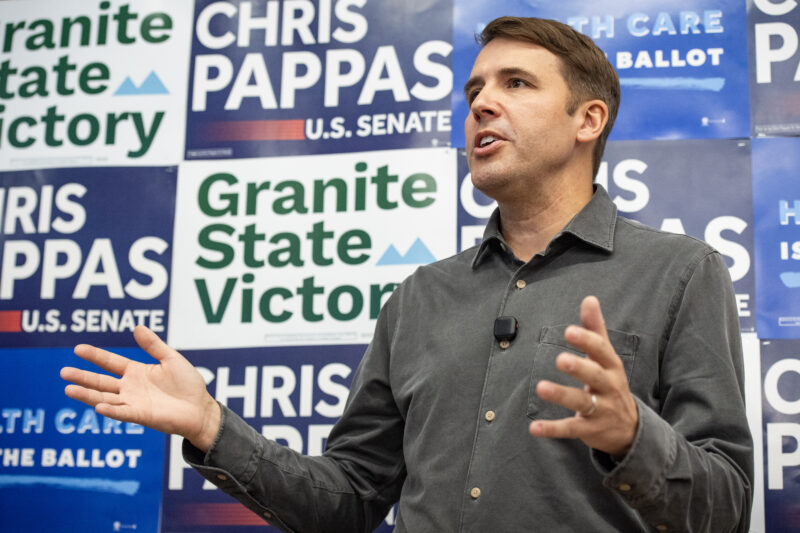
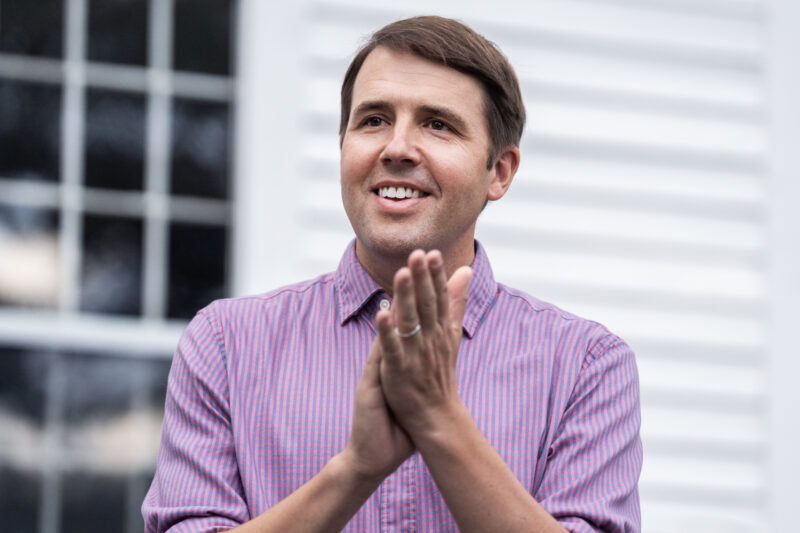
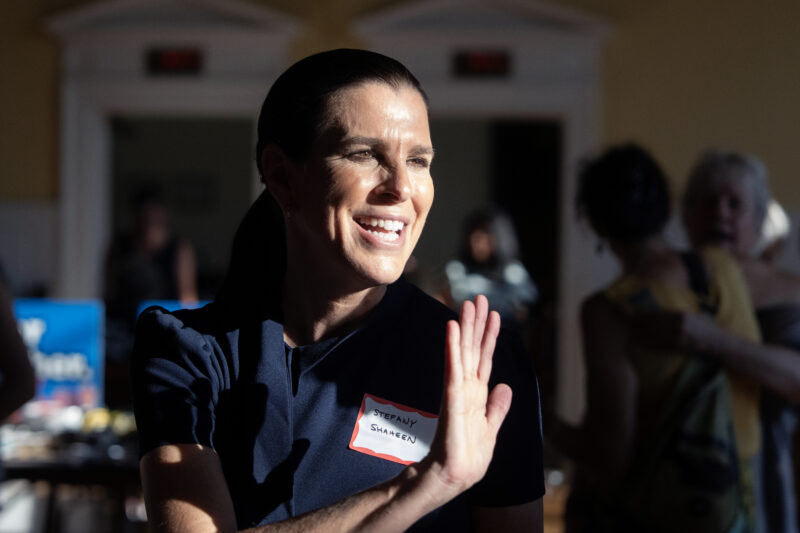
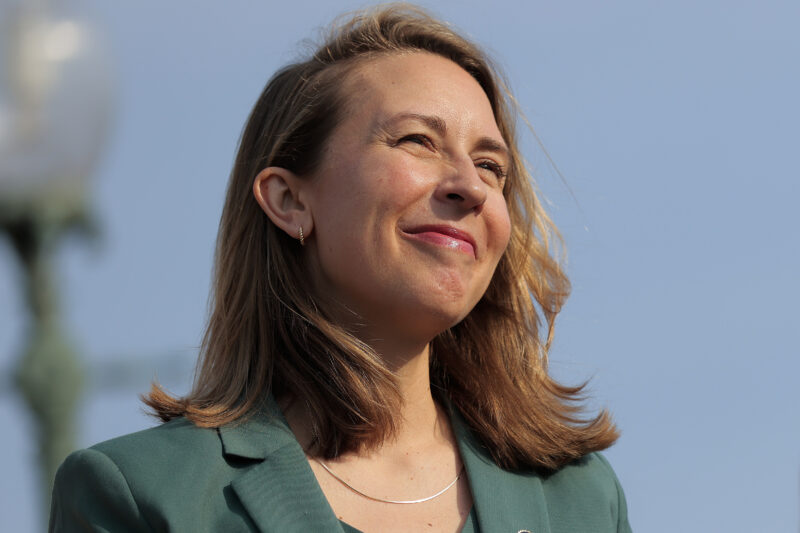
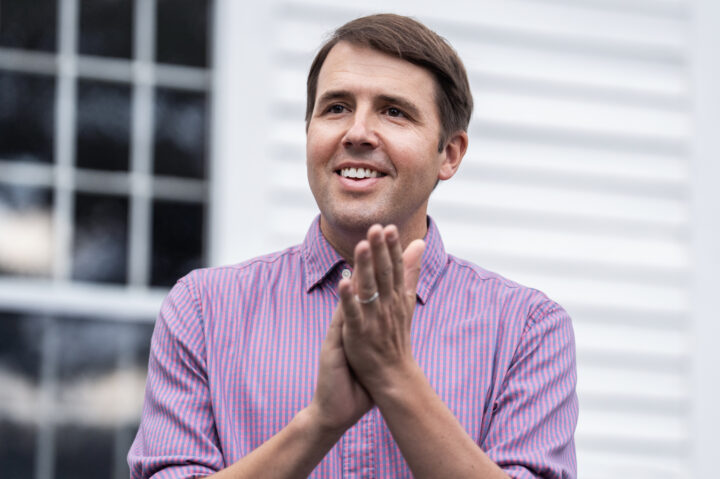
Rep. Chris Pappas (D-NH), Democratic candidate for U.S. Senate, talks with voters on August 16, 2026.


 Add JewishInsider on Google
Good Wednesday morning.
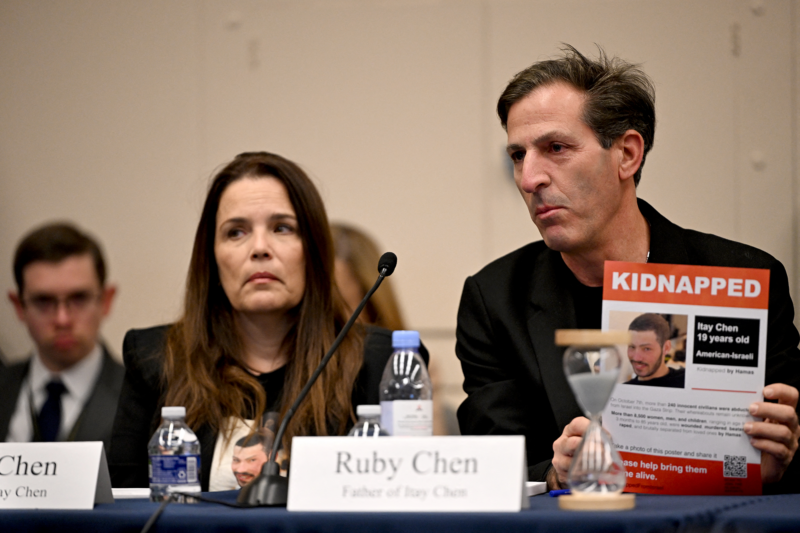
In today’s Daily Kickoff, we analyze the results of Tuesday night’s Democratic primaries in New Hampshire, and report on the blowback from the U.K.’s move to sanction Israeli settlements in the West Bank. We highlight a new petition campaign launched by a coalition of Michigan Jewish leaders to pressure Democratic Senate nominee Abdul El-Sayed to affirm a series of “nonnegotiable” commitments to the Jewish community, and report on a new caucus launched by Reps. Josh Gottheimer and Elise Stefanik to combat antisemitism on college campuses. Also in today’s Daily Kickoff: Ruby Chen, New York Gov. Kathy Hochul, Yonah Jeremy Bob and Elliot Kaufman.
Curated by Israel Editor Tamara Zieve and U.S. Editor Danielle Cohen-Kanik, with an assist from Haley Cohen.
Today’s Agenda
The Republican National Committee will kick off its first-ever midterm convention this afternoon in Dallas. President Donald Trump will deliver the keynote address tonight (as well as closing remarks on Thursday), with additional speeches throughout the two-day convening by Vice President JD Vance, Treasury Secretary Scott Bessent and Attorney General Todd Blanche.
Also scheduled to speak are: House Speaker Mike Johnson (R-LA); Sens. Ted Cruz (R-TX), Jon Husted (R-OH) and Dave McCormick (R-PA); Texas Attorney General and Senate candidate Ken Paxton; Georgia Senate candidate Rep. Mike Collins (R-GA); former Rep. Mike Rogers (R-MI), GOP nominee for Senate in Michigan; and former RNC Chair Michael Whatley, GOP nominee for Senate in North Carolina.
Some GOP candidates in tight races, including Sen. Susan Collins (R-ME), former Sen. John Sununu (R-NH) and Sen. Dan Sullivan (R-AK), will not be attending the convention, in what appears to be a pointed effort to keep their distance from Trump.
Rhode Island is holding its primaries today: Gov. Dan McKee, a Democrat, is at risk of losing the nomination to business leader Helena Foulkes. Brett Smiley, the Jewish mayor of Providence, R.I., is also facing serious opposition from 27-year-old state Rep. David Morales, a socialist challenger.
The Israeli Embassy in Washington is hosting its Rosh Hashanah celebration this evening.
The two-day MEAD Summit continues in Washington today, attended by representatives from Israel, the U.S. and Arab countries — including some that do not have diplomatic ties with Israel.
New York City Council Speaker Julie Menin and Comptroller Mark Levine will walk the runway at the Metropolitan Opera House during Style Across the Aisle, where they will be dressed by Jewish designers Elie Tahari and Yosel Tiefenbrun.
Elsewhere in New York City, the La’Aretz Foundation will host its annual benefit dinner.
One Thing To Know
ANALYSIS
By Marc Rod
Tuesday night’s Democratic primaries in New Hampshire delivered mixed results for candidates who made attacks on Israel a centerpiece of their closing arguments.
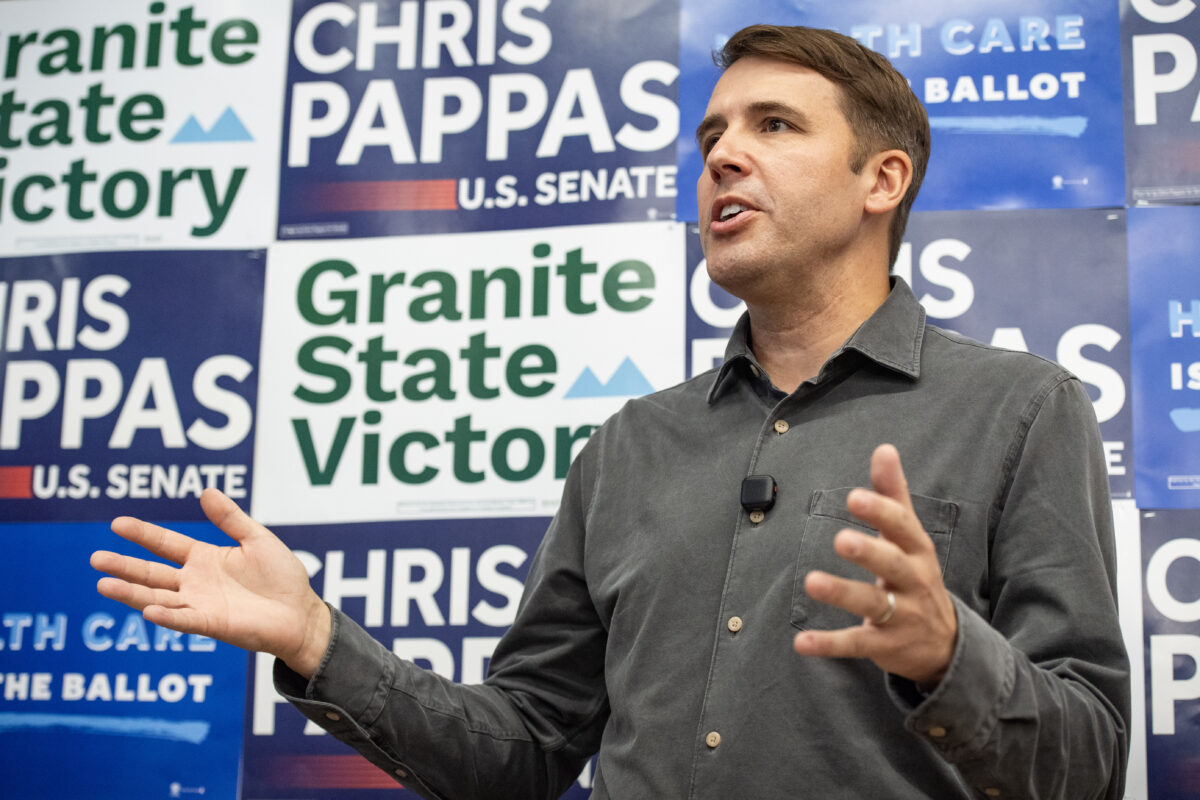
Rep. Chris Pappas (D-NH) trounced progressive activist Karishma Manzur by nearly a 2-to-1 margin (65%-33%) in the Senate primary, after Manzur attacked Pappas for his stance on Israel and called him a “shill for AIPAC” as a central message of her campaign.
Pappas is now facing a competitive general election against former Sen. John Sununu (R-NH), who is running to rejoin the Senate after nearly two decades out of office. Sununu is expected to be a formidable challenger who holds a narrow lead over Pappas in some recent public polling.
The Big Reads
SETTLEMENT SHOWDOWN
U.K. Foreign Secretary Ed Miliband announced a sweeping new sanctions regime on Tuesday targeting Israeli settlements in the West Bank, marking a major escalation in Britain’s diplomatic stance toward Israel, Jewish Insider’s Matthew Shea reports. Addressing the House of Commons, Miliband unveiled an import ban on goods produced in settlements alongside targeted sanctions against individuals and corporate entities involved in constructing, advertising or financing settlement expansion. The secretary also announced a ban on real estate events in the U.K. promoting the purchase of homes in West Bank settlements.
Muted Marco: Secretary of State Marco Rubio offered a tepid response on Tuesday to the U.K.’s new sanctions regime against Israeli settlements in the West Bank. “Obviously, we’re not going to do what the U.K. did,” Rubio told reporters when asked about Miliband’s announcement, but said he didn’t have anything further to add.
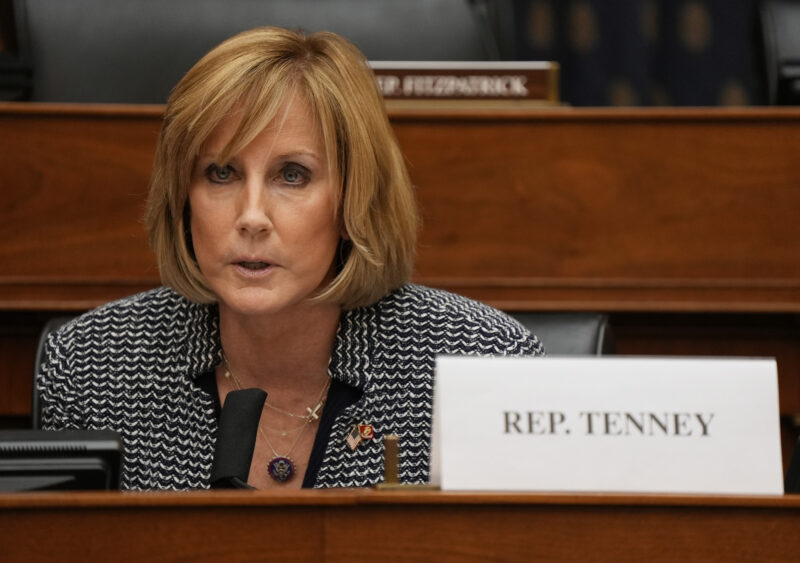
Scoop: Rep. Claudia Tenney (R-NY) urged the Trump administration on Wednesday to review whether the U.K. and other countries imposing trade restrictions and additional sanctions on Israeli settlements places those countries in violation of U.S. anti-boycott laws — and to consider whether the effort merits a response from the U.S., JI’s Emily Jacobs reports.
Diplomacy risks: Former White House officials and diplomats say the U.K. government’s decision is primarily a bid to appease far-left political factions in Britain, warning that while the move is unlikely to alter Israeli behavior on the ground, it risks increasing diplomatic friction between London, Jerusalem and Washington.
COMMUNITY VOICE
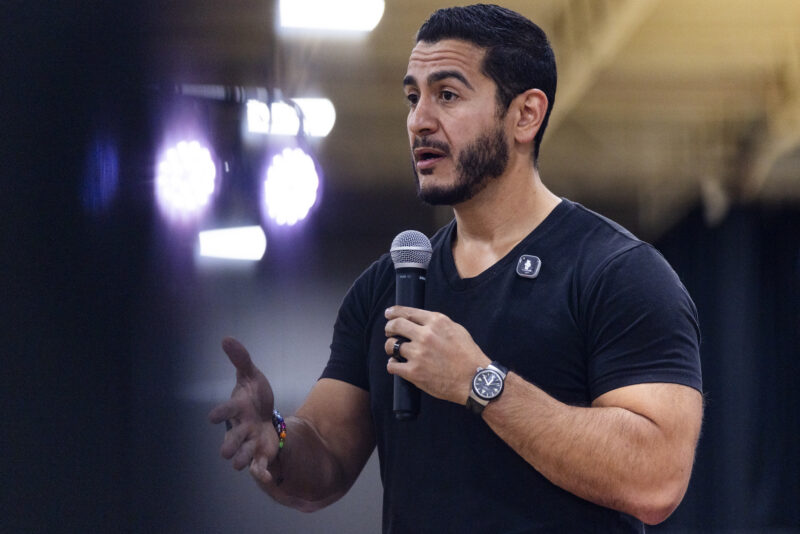
A group of more than a dozen Michigan rabbis, cantors and Jewish lay leaders from across the state launched a new petition campaign this week to pressure Abdul El-Sayed, the Democratic Senate nominee, to affirm a series of “nonnegotiable” commitments to the Jewish community, arguing that failing to do so would jeopardize Jewish support for Democrats, Jewish Insider’s Marc Rod reports. The Nonnegotiable Michigan campaign, created in cooperation with the liberal Jewish group Zioness Action Fund, calls out El-Sayed for a “sustained pattern” of comments by himself and surrogates that organizers say crosses the line into antisemitism, including downplaying, justifying or potentially inciting violence against Jews.
CAMPUS CAUCUS
Reps. Josh Gottheimer (D-NJ) and Elise Stefanik (R-NY) announced that they are launching the Combating Antisemitism on College Campuses Caucus during a visit to Vanderbilt University on Tuesday, Jewish Insider’s Marc Rod reports. The announcement was made during an event with Vanderbilt Chancellor Daniel Diermeier and the leaders of the University of Kentucky, University of Texas at Austin, Dartmouth College, the University of Alabama and Washington University in St. Louis. The event, with an audience of Vanderbilt students, faculty, staff and local community members, was focused on highlighting some of the campuses that have, in the view of the organizers, successfully navigated the post-Oct. 7 environment, balancing freedom of speech and expression with protecting Jewish students.
The Rundown
EXCLUSIVE
BOOKSHELF
A FATHER’S LOVE
SAFETY SURGE
SCOOP
On Our Radar
● The Live Briefing. Word on the street, clips, podcasts and quick updates — the items we’re tracking all day in our Live Briefing on the app (on Apple and Android) and website.
The U.S. destroyed five Iranian oil tankers on Tuesday after the Islamic Revolutionary Guard Corps targeted a U.S. Navy warship with ballistic missiles twice over the previous two days, CENTCOM announced. Iran retaliated by firing 20 ballistic missiles at U.S. forces in Jordan, 18 of which the Jordanian army said it intercepted…
The tit-for-tat comes as Iran signals readiness for broader escalation, The New York Times reports, with analysts warning the clashes risk reigniting full-blown war ahead of a U.S. midterm season Tehran believes gives it leverage…
Earlier on Tuesday, the Treasury Department announced sanctions against 27 Iranian airlines as well as several front companies, foreign intermediaries and other aviation-related actors for supporting the regime’s illicit activities…
Despite the new sanctions and more than a decade of existing ones, Iranian airline Mahan Air, which Washington accuses of ferrying cash, weapons and personnel for the Islamic Revolutionary Guard Corps, is expanding its operations, The Wall Street Journal reports…
The global price of oil hit $100 a barrel on Wednesday for the first time since July, after Yemen’s Houthis attacked energy facilities in Saudi Arabia on Tuesday, stoking supply concerns…
The Independent examines why the escalating fighting between Yemen’s Houthis and Saudi Arabia poses a problem for the Trump administration, with analysts arguing that Washington can no longer ignore the Red Sea front of the war with Iran…
Former GOP Rep. Mike Rogers, the Republican Senate nominee in Michigan, is up with a new ad attacking his Democratic opponent, Abdul El-Sayed, for associating himself with influencer Hasan Piker, and featuring the antisemitic streamer’s comments that “America deserved 9/11.” “Abdul is too extreme for Michigan. I’m Mike Rogers, and I approve this message — because I’ll fight to keep America safe. Always,” Rogers says at the end of the ad…
El-Sayed’s speech at a controversial Islamic convention in Detroit last weekend came before a video montage that featured an imam declaring “America is going down!” and an address from another cleric who described lawmakers who voted for a bill tackling antisemitism as “treasonous”…
A new poll commissioned by the Detroit News found Rogers with a narrow 46%-44% lead over El-Sayed, with 9% of respondents undecided. The poll was conducted by the Glengariff Group and surveyed 600 likely general election voters between Aug. 31 and Sept. 3…
The University of Texas’ College Democrats chapter invited Piker to speak on campus on Sept. 30…
Rep. Jared Moskowitz (D-FL) launched his first ad of the general election campaign, touting his leadership in passing school safety laws in the aftermath of the shooting at Marjory Stoneman Douglas High School that killed 17 students and staff…
Democratic Majority for Israel announced on Wednesday the election of Michael Horowitz, founding partner of The Selective Group; David Kramer, a principal of Highstreet ProLaw Group; Jeffrey Stewart, founder and president of Walnut Hill Advisors; Jerry Yanowitz, former telecommunications industry executive; and Kinney Zalesne, former Microsoft executive, to its board of directors…
Bloomberg does a deep dive on the Democratic Socialists of America‘s breakout this year — 19 congressional primary wins and nearly 100 state and local victories, per a Brookings Institution study. The string of victories, the outlet suggests, puts the movement on a collision course with the party’s moderates, with Third Way planning to spend $15 million through 2028 to counter the DSA and former Chicago Mayor Rahm Emanuel arguing that the socialists are “not Democrats”…
Israeli Prime Minister Benjamin Netanyahu’s office denied reports that he was warned by the UAE ahead of the Oct. 7, 2023, Hamas attacks: “If there was any relevant information, it was passed through intelligence channels between the two countries,” the PMO said…
President Donald Trump, who was briefed on the U.K.’s move to sanction Israeli settlements ahead of the announcement, did not push back, U.S. officials and Western diplomats told Axios. In addition, a White House official told the news outlet that U.S. Ambassador to Israel Mike Huckabee’s remarks that the move amounted to “discrimination against the Jewish people” “were not coordinated with the White House” or State Department…
According to Israel Hayom, however, British Prime Minister Andy Burnham had initially considered a broader and harsher set of sanctions, but Washington pushed him to dial it down…
The 59th season premiere of CBS News’ “60 Minutes” this Sunday will feature an interview with one of the officers aboard an F-15 fighter jet that was shot down in April over Iran. The officer, known as “Dude 44 Bravo,” will be interviewed by correspondent Norah O’Donnell in his first on-camera sit-down…
The New York Times is soliciting reader feedback on “how Israel’s war in Gaza is affecting New Yorkers,” specifically asking Jewish respondents to let them know how their views and feelings have evolved since the Hamas terrorist attack on Oct. 7, 2023…
As Jewish students return to K-12 classrooms and face another year marked by increased antisemitism, five major Jewish organizations — the Jewish Federations of North America, the Anti-Defamation League, the American Jewish Committee, the Conference of Presidents of Major American Jewish Organizations and StandWithUs — released a Jewish Students’ Bill of Rights…
The document outlines six standards schools should meet, including staff training on antisemitism; clear incident-reporting processes; accurate curricula on Jewish history and Israel; accommodations to treat religious observances as excused absences and avoiding scheduling school events on major Jewish holidays; protection of Jewish identity and Israel affiliation from coercion or bullying; and balanced teaching on contested issues…
LIV Golf filed for Chapter 11 bankruptcy protection in New Jersey on Tuesday, listing between $500 million and $1 billion in liabilities, months after Saudi Arabia’s Public Investment Fund — which had poured more than $5 billion into the league — announced it was ending its backing…s deputy chief of mission in Rabat, Morocco, and Nairobi, Kenya…
Worthy Reads
Find more Worthy Reads in our Live Briefing via our app (on Apple and Android) and website.
From 9/11 to MAGA: Former Wall Street Journal Washington bureau chief Gerald Seib examines the contrast between the bipartisan political moment after 9/11 and the polarization within the country on the 25th anniversary of the terror attacks. “It isn’t hard to draw a line from 9/11 to the rise of the Make America Great Again movement of President Trump, who once falsely claimed that thousands of Muslims in New Jersey celebrated the terrorist attacks. The oxygen feeding the MAGA forces is precisely the anger and dissatisfaction with the political establishment that has emerged in the years since.” [WSJ]
Labour Pains: In The Telegraph, British journalist Nicole Lampert accuses the Labour government of “audacious cynicism” over its sanctions targeting Israeli settlements in the West Bank. “I don’t think this Government actually is filled with Jew-haters, but perhaps this is even worse: I think it is filled with people who are happy to appease Jew-haters and will do anything to make that happen. Beyond cynical … What has happened to this country where one of our most senior politicians is pushing this dangerous propaganda? Are we really going to shoot ourselves in the foot just because Labour wants to win a few more votes? Truly staggering.” [Telegraph]
Contenders’ Circle: In The Free Press, historian Simon Sebag Montefiore, whose history of the modern Middle East, The Cauldron: The Making of the Modern Middle East, is out later this month, surveys the “tournament of power” reshaping the region since Oct. 7, 2023 — from the new Saudi-Turkish-Pakistani “Islamic NATO” to Israel’s deepening ties with Greece and India. “In sum, all of these players will contend for control of the Middle East. But none of them are strong enough to rule or dominate — a formula for fierce competition. As the Gulf monarchies seek safety from Iran and less so from Israel, their alignments are so far too flawed, contradictory, and performative to deliver the security they seek.” [The Free Press]
Picture of the Day

Met Council, America’s largest Jewish nonprofit organization dedicated to fighting poverty, distributed a record 2,016,982 pounds of kosher food to struggling families ahead of the High Holy Days. The food drive was carried out from August through September together with 162 partner organizations, including shuls, yeshivas and community tzedakah organizations. Courtesy of Met Council
Birthdays
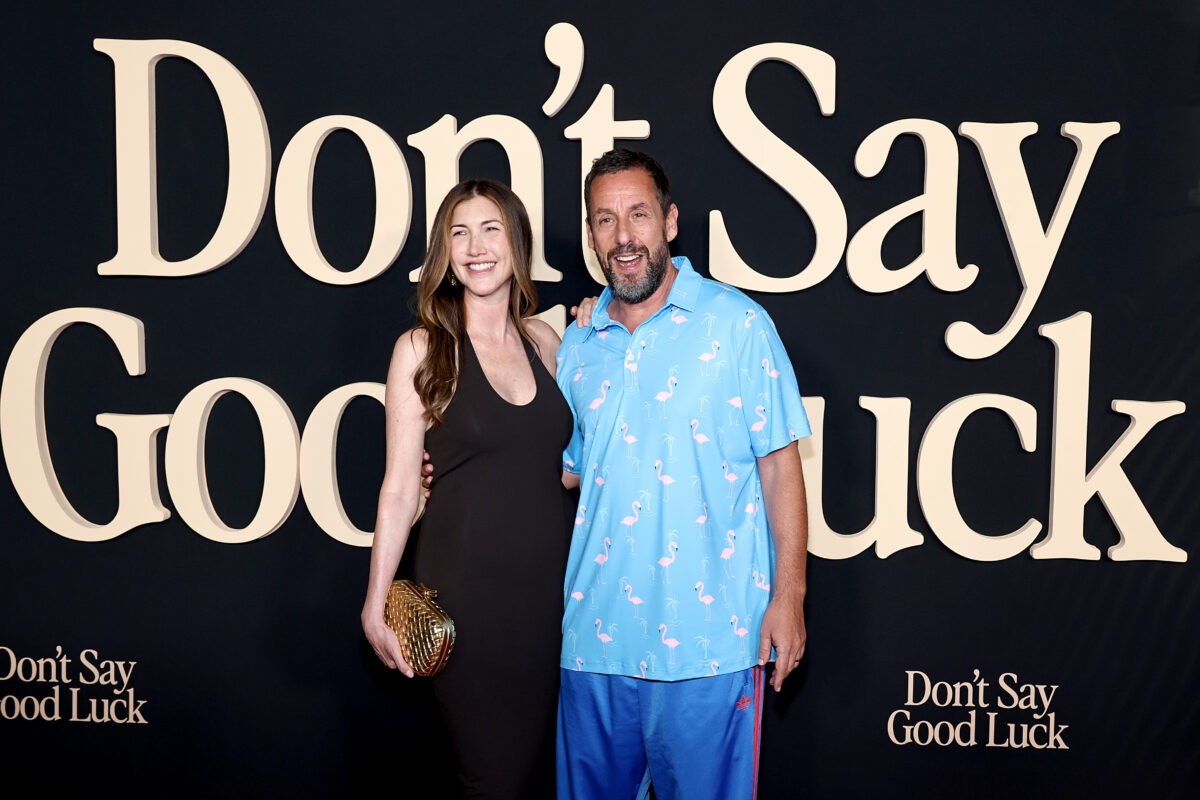
Adam Sandler, actor, comedian, screenwriter, film producer and musician, famous for “The Chanukah Song,” turns 60
Barbara Schechter, Beverly Hills resident
Reuven Rivlin, president of Israel from 2014 to 2021, turns 87
Kenneth Lieberthal, senior fellow emeritus in the foreign policy program at The Brookings Institution, turns 83
Donald M. Berwick, former administrator of the Centers for Medicare and Medicaid Services, turns 80
Daniel Pipes, president of the Middle East Forum and publisher of its Middle East Quarterly journal, turns 77
Richard Joel, president emeritus of Yeshiva University, turns 76
Nissim Ze’ev, a founder of the Shas party, he served in the Knesset for 16 years, turns 75
Martin Kramer, founding president of Shalem College in Jerusalem, he is the Walter P. Stern fellow at The Washington Institute for Near East Policy, turns 72
Steven Elworth, Brooklyn educator
Altie Karper, retired editorial director of Schocken Books (the Judaica imprint of the Knopf Doubleday Publishing Group, which is part of Penguin Random House)
Shari Arison, Israeli businesswoman and philanthropist, at times reported to be the wealthiest woman in the Middle East, turns 69
Aaron G. Frenkel, Israeli businessman, based in Monaco, he is the president of Limmud FSU, turns 69
Suzanna Stone
Jeffrey Weintraub, D.C.-based communications strategist and tactician
Eric B. Dezenhall, crisis management consultant, author and co-founder of D.C.-based PR firm Dezenhall Resources, turns 64
Lloyd Appel, founder and managing member of Alternative Asset CFO Services
Chris Coons, U.S. senator (D-DE), turns 63
Skip Kendall, professional golfer formerly on both the PGA Tour and then on the Champions Tour, turns 62
Jonathan Cohn, author and former senior national correspondent at HuffPost for 10 years, now senior national correspondent at The Bulwark, turns 57
Dov Lipman, former member of the Knesset for the Yesh Atid party, turns 55
Sacha Frédéric Litman, former partner and associate director at Boston Consulting Group, now an independent consultant
David Freedlander, features writer and political columnist for New York magazine
Zeev Farbman, Israeli entrepreneur and the CEO and co-founder of Lightricks, turns 47
Michael B. Greenwald, director of global executive relations at Amazon Web Services
Carla Hashley, program specialist at USC’s school of architecture
Brett Perlmutter, former head of Google Cuba, now an investor and strategist
Trey Meehan, managing director at Alums for Campus Fairness
Ben Lang, co-founder of International Hummus Day in 2012, now an angel investor, he served in the IDF’s signals intelligence group, Unit 8200
Luke Hughes, fourth overall pick by the New Jersey Devils in the 2021 NHL draft, he is the son of hockey star Ellen Weinberg-Hughes, turns 23
Plus, no gala for Galliano
Jim Watson - Pool/Getty Images
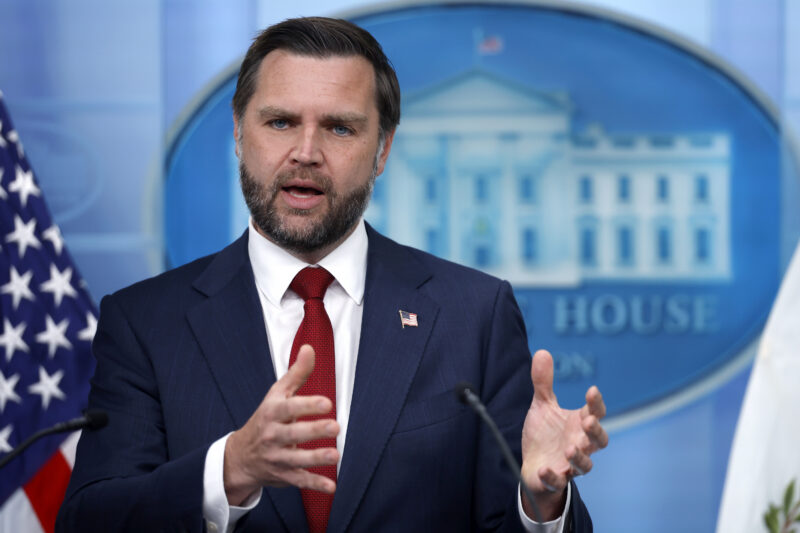
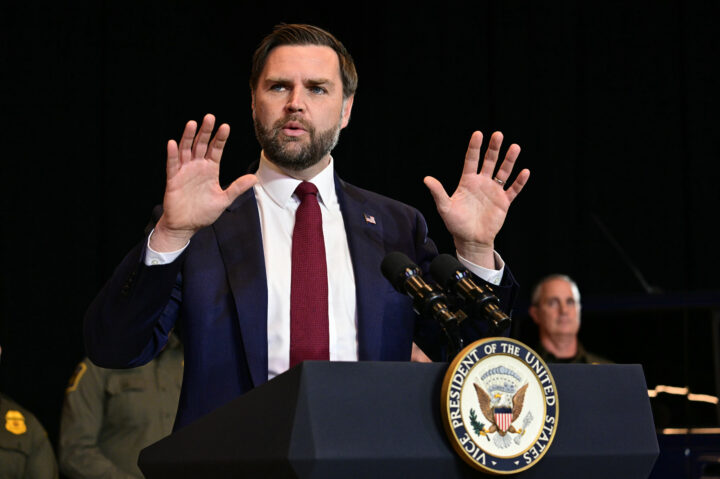
U.S. Vice President JD Vance gives remarks following a roundtable discussion with local leaders and community members amid a surge of federal immigration authorities in the area, at Royalston Square on January 22, 2026 in Minneapolis, Minnesota.
Good Tuesday morning.
In today’s Daily Kickoff, we cover Vice President JD Vance’s speech yesterday to the Republican Jewish Coalition, as well as his campaign rally in Michigan, where he called the state’s Democratic Senate nominee Abdul El-Sayed “very, very evil.” We report on Michigan Attorney General Dana Nessel’s call for Jewish voters to put “the needs of the world” above their own survival, and talk to pollsters about voters’ considerations in the upcoming Israeli election. We also speak with former White House officials and regional analysts about whether Washington’s economic campaign and naval blockade against Iran are yielding dividends. Also in today’s Daily Kickoff: Leo Terrell, Josh Kushner and Ambassador Marcy Grossman.
Curated by Israel Editor Tamara Zieve and U.S. Editor Danielle Cohen-Kanik.
Today’s Agenda
It’s primary Election Day in Massachusetts, where Sen. Ed Markey (D-MA) is hoping to fend off a challenge from Rep. Seth Moulton (D-MA), who has called for generational change in the race.
This morning, a House Foreign Affairs Committee subcommittee is holding a hearing on the threat posed by the Houthi terror group to U.S. interests in the Red Sea.
Finance ministers from the G-20 countries are wrapping up a summit in Asheville, N.C., where Treasury Secretary Scott Bessent told reporters yesterday he’s aiming in his meetings to shore up support for the U.S.’ economic isolation campaign against Iran.
Meanwhile, the leaders of China, Russia, India, Iran and several other countries are in Kyrgyzstan wrapping up their own meeting of the Shanghai Cooperation Organization, a group meant to counter U.S. global influence.
From there, Chinese President Xi Jinping is headed on a three-day state visit to Cairo, his first in a decade, as the two countries mark the 70th anniversary of diplomatic relations and as Egypt increasingly balances its long-standing ties to Washington against a deepening partnership with Beijing, now its largest trading partner.
One Thing To Know
ANALYSIS
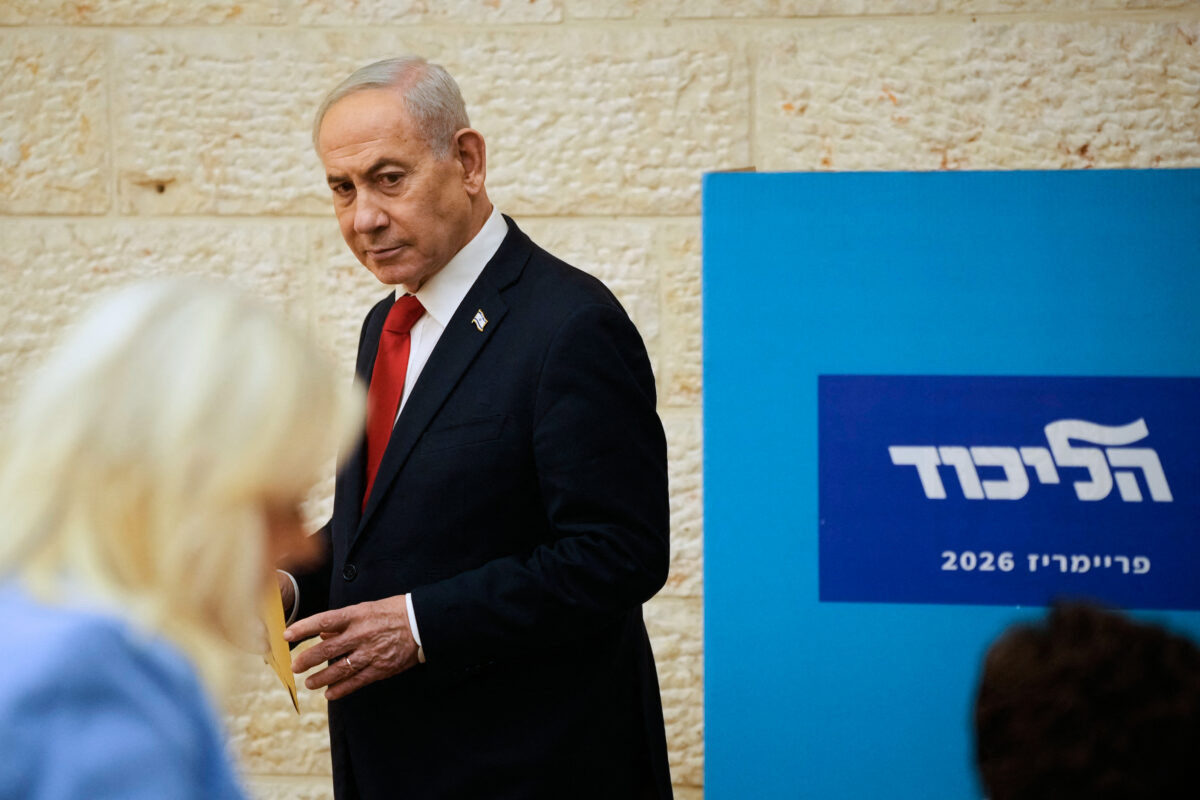
By Gili Cohen
The countdown to Israel’s October elections has begun, bringing with it a central question: Will Prime Minister Benjamin Netanyahu — who, against all odds, remains in office three years after the Oct. 7, 2023, Hamas attacks took place under his tenure — remain Israel’s leader?
Israeli governments have often faced political upheaval after major wars or security crises, but Netanyahu’s current government completed a full term — the first time a government has done so in nearly four decades. But Netanyahu is not out of the woods yet.
“Oct. 7 serves primarily as a reminder that the stakes are genuinely high. Israel is a country where elections are fought over matters of life and death in the most literal sense,” Shmuel Rosner, a pollster and analyst for Israel’s Channel 13, told Jewish Insider.
The Big Reads
COURTING SKEPTICS
Vice President JD Vance stuck to a pro-Israel line and rejected antisemitism in remarks on Monday to the Republican Jewish Coalition, avoiding any new controversies while not being pressed directly about some of his past comments and affiliations, including with Tucker Carlson, that have most concerned Jewish Republicans, Jewish Insider’s Marc Rod reports from the conference in Las Vegas. Attendees at the closed-door meeting, with some exceptions, largely said that the speech helped Vance reassure skeptical Jewish and pro-Israel Republicans and boost his support with the RJC crowd ahead of a potential 2028 presidential bid.
Also at the RJC: Ron Dermer, Israel’s former strategic affairs minister and close advisor to Israeli Prime Minister Benjamin Netanyahu, praised Vance on Monday, saying he had played a “critical role” in the 12-day war against Iran in June 2025, “and particularly the first day, where that element of surprise was so critical to our success. And I will be forever grateful for the role that he played at that critical moment.”
DAMAGE CONTROL
Vice President JD Vance laid into Michigan Democratic Senate nominee Abdul El-Sayed on Monday during a campaign rally held in the state, calling him “very, very evil” and an apologist “for the worst people in the world and America’s enemies all over the globe,” Jewish Insider’s Matthew Kassel reports. Speaking at the event in Sterling Heights organized by a pro-Trump super PAC, Vance accused El-Sayed of sympathizing with the assailant who carried out a terrorist attack against a synagogue outside of Detroit in March and associating with the antisemitic Twitch streamer Hasan Piker, who had claimed that America deserved 9/11. In a statement after the rally, El-Sayed said in response: “Evil is ripping healthcare away from working people in exchange for tax breaks for billionaires. Evil is making people pay more for groceries and gas while pushing for trade wars and actual war. Evil is dividing people for your own gain. Evil is selling out your morals for a little bit of power.”
Safety aside: Michigan Attorney General Dana Nessel, a Jewish Democrat, encouraged Jewish voters on Sunday to put aside concerns about their safety “in exchange for the opportunity to save the rest of humanity,” in a stark reference to the choices facing Jewish Democrats in the closely contested Senate election this November.
MONEY MATTERS
As the conflict between the United States and Iran passes the six-month mark, former White House officials and regional analysts remain divided over whether Washington’s economic campaign and naval blockade are meaningfully changing the strategic landscape, Jewish Insider’s Matthew Shea reports. Alexander Gray, former chief of staff on the National Security Council during President Donald Trump’s first term, expressed confidence in the administration’s trajectory, arguing U.S. leverage is “only growing.” However, other former White House officials warned that Iran could turn the tide. “His policy is working right now, but the enemy gets a vote,” Elliott Abrams, a former U.S. special representative for Iran during the first Trump administration, told JI.
The Rundown
PERSONAL PRIVILEGE
OVAL OFFICE OUTREACH
BRUSHING IT OFF
UNLIKELY ALLIES
QATAR QUANDARY
ADDRESSING ANTISEMITISM
ADDRESSING ANTISEMITISM
On Our Radar
● The Live Briefing. Word on the street, clips, podcasts and quick updates — the items we’re tracking all day in our Live Briefing on the app (on Apple and Android) and website.
Army Secretary Dan Driscoll submitted his resignation to President Donald Trump and is expected to step down in the coming days,which will leave the Army without any Senate-confirmed civilian or military leadership…
Trump told Fox News on Monday that the U.S. will respond to Iran’s attacks on U.S. forces in Jordan on Sunday: “We’re going to hit them hard. There will be a response,” he said…
CENTCOM and Defense Secretary Pete Hegseth have proposed to Trump a campaign of limited strikes around the Strait of Hormuz to prevent Iran from rebuilding its radar and missile capacities, U.S. officials told Axios, a plan that may draw the president’s approval following the renewed hostilities over the weekend…
A new alliance between the Houthis and the al-Qaida affiliate al-Shabaab group, brokered in part by a Somali arms fixer killed in a U.S. airstrike in February, is now working to disrupt Israel’s presence in Somaliland, whose independence Jerusalem recognized last year, according to The Wall Street Journal…
The campaign of Michigan Senate Democratic nominee Abdul El-Sayed is working to hire a Jewish community liaison, the Jewish Telegraphic Agency reports, as he seeks to make inroads with the state’s Jewish community following his apology for equivocating on a violent terrorist attack targeting a Michigan synagogue in March…
Jewish Democratic Council of America CEO Halie Soifer, whose organization has not endorsed El-Sayed, said in a statement that the candidate’s apology to the Jewish community was “a good first step” but added that “building trust with Jewish voters will take additional work.” She said El-Sayed will have to show a commitment to Jewish security that goes beyond rhetoric and denounce antisemitic streamer Hasan Piker to have a shot at winning the group’s support…
Politico speaks with Detroit-area Arab American leaders who helped rally their community to support Trump in the 2024 campaign, many of whom are now souring on the GOP amid the war in Iran and his attacks on El-Sayed…
San Francisco congressional candidate Connie Chan endorsed the “Oakland People’s Arms Embargo,” an activist movement seeking to halt what it claims are arms shipments out of Oakland Airport heading to Israel, as she seeks to best state Sen. Scott Wiener in the Democrat-on-Democrat race with the backing of Rep. Nancy Pelosi (D-CA)…
Thrive Capital founder Josh Kushner broke his silence about his unsuccessful bid to help launch FIFA Forward Enterprise, a proposed commercial subsidiary of soccer’s global governing body, telling Axios in a statement: “While we stand behind the motivations of FFE, we failed to appreciate the political dynamics of global football, and the lengths some would go to … Had we known what this would devolve into, we would not have gotten involved”…
The Israeli government has launched a NIS 5 million ($1.67 million) program to recruit AI experts and entrepreneurs from abroad…
Israeli Arab party Ra’am announced on Monday that former police commander Yoav Segalovitz, who recently left the Yesh Atid party, will run on its Knesset slate, making him the first Jewish candidate to be included on the Islamist party’s list. Segalovitz is expected to be given the No. 2 slot, behind MK Mansour Abbas…
The IDF said it carried out strikes in the Gaza Strip on Tuesday “in order to remove threats to the security forces,” following local reports that an Israeli-backed anti-Hamas Palestinian militia conducted a raid in Gaza City. Defense Minister Israel Katz said Israel arrested a senior Hamas terrorist, while Hamas-run media reported three were killed in the strikes, including a woman and a child, and several others were wounded…
The American Jewish Committee announced on Tuesday that Ambassador Marcy Grossman is the new director of AJC Abu Dhabi. Grossman served as Canada’s ambassador to the United Arab Emirates from 2019 to 2022, during which the Abraham Accords were signed…
Worthy Reads
Find more Worthy Reads in our Live Briefing via our app (on Apple and Android) and website.
Rooting for Rogers: Rabbi Asher Lopatin, director of community relations at the Jewish Federation of Greater Ann Arbor, writing in his personal capacity in The Forward, urges Jewish Democratic Michiganders to vote for GOP nominee Mike Rogers over his Democratic opponent, Abdul El-Sayed, in the upcoming Senate race. “For me, the disdain that El-Sayed has shown for the Jewish community, especially in his continuing refusal to disavow his relationship with Piker, puts him in the same category as candidates who are openly racist and homophobic. Even the most loyal progressive would reject a racist, even if that meant risking a Republican Senate. To show the Democrats that such candidates should never be nominated, we must show them that such candidates can never win. Such a candidate winning would be a disaster for the most fundamental requirements we have for any candidate of any party.” [Forward]
Out of Bounds: In eJewishPhilanthropy, Menachem Z. Rosensaft, a visiting professor of the practice at Cornell Law School and lecturer-in-law at Columbia Law School, condemns Michigan Attorney General Dana Nessel’s statement that the Jewish community has “a moral imperative” to place the needs of the world above its own survival. “Let’s be clear: Jewish safety is not and can never be negotiable or sacrificed for any reason. Jewish survival even less so. Moreover, this is not and should not be a Jewish issue. No group’s safety and no people’s survival should ever be turned into a pragmatic political bargaining chip. Can you imagine the outrage if anyone suggested that Black survival, or Muslim survival, or any other group’s survival, should be put at risk? Nessel’s remarks constitute a new low in contemporary political discourse.” [eJP]
Schumer’s Silence: The Wall Street Journal’s editorial board calls on Senate Minority Leader Chuck Schumer (D-NY) to publicly condemn Hasan Piker, the Twitch streamer who campaigned for El-Sayed and who suggested American Jews will invite attacks on themselves if they keep signaling support for Israel. “It’s worth watching how Democrats handle Mr. Piker, whom they once thought was their answer to Joe Rogan, but who as a political matter represents the serrated edge of the party’s antisemitic wing. Mr. Schumer has embraced Mr. El-Sayed, though the Michigan nominee has said he won’t vote for Mr. Schumer for Senate leader. Mr. Schumer has taken great pride across his career as an opponent of antisemitism and a (less and less reliable) supporter of Israel. With Rep. Alexandria Ocasio-Cortez looking over his shoulder in his 2028 re-election year, Mr. Schumer’s political career may be nearing its end. Why not publicly say Mr. Piker’s brand of antisemitism has no place in the Democratic Party and stand with some honor?” [WSJ]
Picture of the Day

Israeli children attended the first day of the new school year on Tuesday at Shahar Eshkol Elementary School in the Eshkol Regional Council, near the Gaza border in southern Israel. Tsafrir Abayov/Flash90
Birthdays
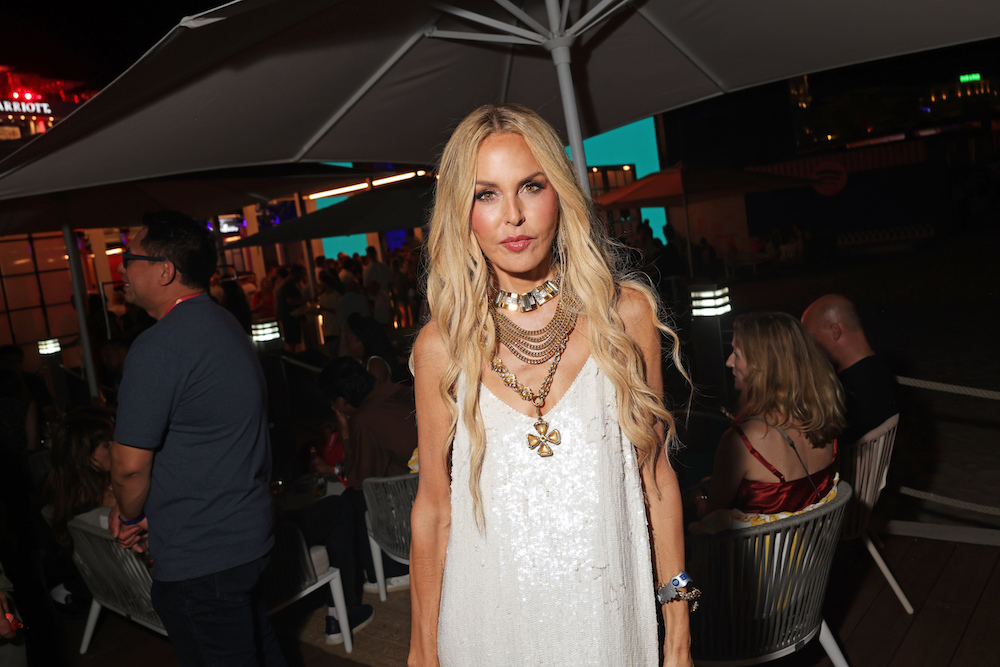
Rachel Zoe Rosenzweig, fashion designer, businesswoman and writer, she uses only her first and middle names professionally, turns 55
Alan Dershowitz, retired Harvard Law School professor and constitutional scholar, turns 88
Leonard Slatkin, conductor, author and composer, turns 82
Shalom Hanoch, Israeli rock singer, lyricist and composer, he is often referred to as “The King of Israeli Rock,” turns 80
Esther Safran Foer, former director of Sixth & I historic synagogue, she is the matriarch of a literary family (her sons are Franklin, Jonathan and Joshua), turns 80
Linda Feldman, turns 77
Nadia Ficara, director of donor travel programs at the U.S. Holocaust Memorial Museum, turns 70
Susan Berry Miller, national president of NA’AMAT USA, turns 69
Joe Straus, former member and speaker of the Texas House of Representatives, the first Jewish House speaker in Texas, turns 67
Eric Adams, former mayor of New York City, turns 66
Dee Dee Myers, White House press secretary during the first two years of the Clinton administration, turns 65
Rabbi Asher Lopatin, director of community relations at the Jewish Federation of Greater Ann Arbor and rabbi of Kehillat Etz Chayim synagogue, turns 62
Malca Resnick, former clinical sciences group lead in the global product development group at Pfizer, turns 62
Charlotte Fonrobert, associate professor of religious studies at Stanford specializing in Talmudic literature, turns 61
Elana Broitman, former SVP of public affairs at the Jewish Federations of North America, now principal at the Roosevelt Group, turns 60
Craig Caplan, Capitol Hill producer for C-SPAN, turns 59
Harris Vederman, VP of programs at the Jewish Institute for National Security of America, turns 56
Jesse Kellerman, novelist and playwright, his parents, Faye Kellerman and Jonathan Kellerman, are both best-selling authors, turns 48
Samuel Salkin, turns 40
Shauna Ruda, Denver-based therapist, turns 39
Lauren Kiel, head of Bloomberg Media’s global community innovation team, turns 37
Itay Milner, spokesperson and consul for media affairs at the Israeli Consulate in New York
The vice president said El-Sayed's comments about the Temple Israel attack reflect 'something evil on the rise in America'

Nic Antaya/Getty Images
Vice President JD Vance speaks during a rally on Aug. 31, 2026 in Sterling Heights, Michigan.
Vice President JD Vance laid into Michigan Democratic Senate nominee Abdul El-Sayed on Monday during a campaign rally held in the state, calling him “very, very evil” and an apologist “for the worst people in the world and America’s enemies all over the globe.”
Speaking at the event in Sterling Heights organized by a pro-Trump super PAC, Vance accused El-Sayed of sympathizing with the assailant who carried out a terrorist attack against a synagogue outside of Detroit in March and associating with the antisemitic Twitch streamer Hasan Piker, who had claimed that America deserved 9/11.
“I realize that there’s something about Abdul El-Sayed that is very, very evil and on the rise in the United States of America today,” Vance said at the rally, where he touted the campaign of former Rep. Mike Rogers (R-MI), El-Sayed’s opponent.
“It’s people who see themselves not as citizens of a common nation fighting for every single person — whether they’re Jewish or Christian, whether they’re white or Black or brown — but see themselves as fighting for one group at the expense of others — and that is how, ladies and gentlemen, you destroy the United States of America,” he added in his speech.
Vance devoted significant attention to the violent terrorist attack targeting Temple Israel, a Reform synagogue in West Bloomfield, which El-Sayed had initially dismissed as representing a broader cycle of violence where “hurt people hurt people,” prompting widespread backlash from Jewish voters in Michigan.
The vice president’s focus on the synagogue attack indicates that El-Sayed’s remarks have reverberated well beyond the sizable Jewish community in the key battleground state.
Vance also said in his remarks he was “honored to be joined by the rabbi and some of the security guards of Temple Israel,” though Jewish Insider was unable to immediately confirm their individual involvement. (A Jewish community leader told JI that he knew of one rabbi who was attending the rally, but did not share a name.)
While El-Sayed voiced regret for his comments in meetings with Jewish Democrats over the weekend, Vance said that his response raised questions about what he is “going to do when he goes to Washington D.C.. when the cameras aren’t on.”
Vance called El-Sayed, who is Muslim, “a man who has sympathy and compassion for people who share his religion, but have nothing for people who don’t.”
“My message to Abdul El-Sayed is: You can pal around with terrorist sympathizers, and you can say that America deserved 9/11, or you could empathize not with the children who were targeted at Temple Israel, but with the attacker,” Vance said, before his comments took a personal turn.
He alluded to a recent social media post in which El-Sayed questioned if Vance would take his wife, Usha, who is Indian American, “back in time” to meet his late grandfather.
“Whatever you want to talk about, Abdul,” he shot back at the event, “keep my wife’s name the hell out of your mouth.”
“Today, you have an opportunity to speak loudly,” he said to the crowd, “and in November you have an opportunity to speak much more loudly against the hatred that is on the rise in the United States of America. Reject Abdul El-Sayed.”
In a statement after the rally, El-Sayed said in response: “Evil is ripping healthcare away from working people in exchange for tax breaks for billionaires. Evil is making people pay more for groceries and gas while pushing for trade wars and actual war. Evil is dividing people for your own gain. Evil is selling out your morals for a little bit of power.
“Michigan is better than being lectured to by sock puppets from Ohio and Florida,” El-Sayed added. “We understand what’s at stake, and Michiganders will show you at the ballot box this November when we send Mike Rogers packing.”
Vance, who has faced skepticism from Jewish conservatives over his refusal to disavow far-right commentator Tucker Carlson as he mulls a 2028 presidential campaign, is slated to address members of the Jewish Republican Coalition in closed-door remarks tonight at its annual summit in Las Vegas.
One member of the Michigan Democrats’ Jewish Caucus said Jewish Democrats ‘remain divided’ on El-Sayed after his outreach
Katie McTiernan/Anadolu via Getty Images
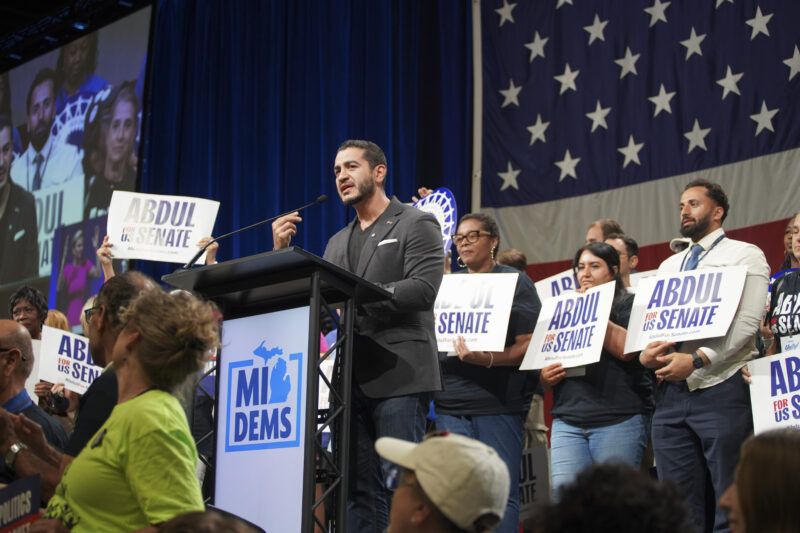
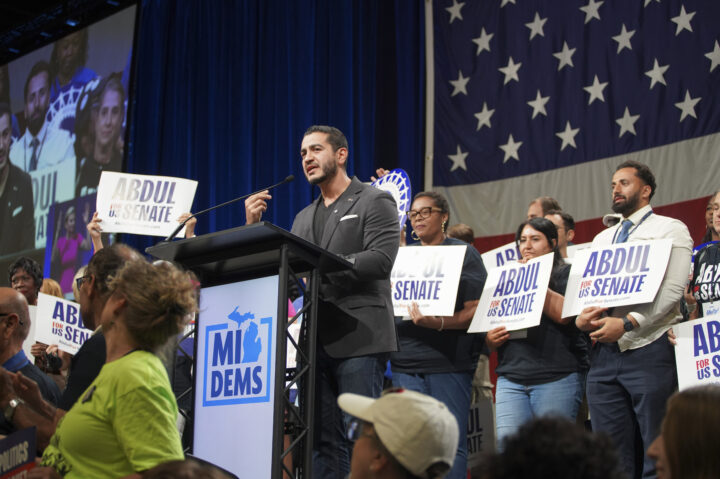
Abdul El-Sayed, Democratic nominee for the U.S. Senate, speaks at the Michgan Democratic Nominating Convention in Lansing, Mich. on Aug. 29, 2026.
Abdul El-Sayed, the Democratic Senate nominee in Michigan, expressed regret over the weekend for equivocating in response to a terrorist attack against a synagogue outside Detroit in March, a key source of tension among skeptical Jewish voters ahead of the fall election.
Speaking at the Michigan Democratic Jewish Caucus’ annual “Summer Simcha” event on Sunday, El-Sayed reiterated his recent comments in which he said he had “made a mistake” in his initial statement on the violent attack targeting Temple Israel, a Reform synagogue in West Bloomfield.
The armed assailant, who had rammed his car into the synagogue, was a Lebanese American man whose family members — including his brother, a Hezbollah commander — were killed in Israeli airstrikes in Lebanon, leading El-Sayed to comment in a video statement that “hurt people hurt people” and “violence is a cycle.”
His comments on Sunday, according to attendees, echoed his remarks to members of the Jewish caucus a day before at a party convention in Lansing, where he said he had been seeking to “offer broader context” on the attack but “should have issued a statement, of course condemning it, and it just should have been the full stop.”
“I’m asking for forgiveness and a moment of grace,” El-Sayed told the caucus on Sunday, adding that “there’s opportunity for context later on.”
Jessica Alexander, the Jewish caucus chair, said in a statement to Jewish Insider after the event on Sunday that “Abdul’s remarks were sincere and reflected his dedication to serving all those he seeks to represent.”
In contrast with the party convention, the Jewish caucus event “was more intimate,” according to Alexander, “and thus the comments felt more personal and intimate.”
David Kramer, the caucus’ vice chair and the former Senate campaign chair of Rep. Haley Stevens (D-MI), who narrowly lost the primary, said attendees “were certainly polite” when El-Sayed gave his remarks on Sunday.
“There was absolutely nobody jeering him” and “nobody who interrupted him,” Kramer told JI in an interview after the event. “There were several people in the room who were pretty vocally applauding him and many in the room who were just being courteous and maybe lightly applauding him.”
Broadly speaking, El-Sayed’s comments were “well-received” on Sunday “in the sense that people appreciated he was willing to come into that space and talk and that he’s been willing to at least turn down some of the negative rhetoric,” Kramer added.
While El-Sayed acknowledged his initial comments were received as insensitive, Kramer echoed Jewish leaders in Michigan who remain skeptical about the sincerity of his new statements and have questioned their timing as politically calculated.
“For me personally, and I know for a lot of Michigan Democratic Jews, there are still some incredibly core, fundamental differences we have with him that are going to be nearly impossible to bridge,” Kramer told JI, citing El-Sayed’s refusal to recognize Israel’s right to exist as a Jewish state, his criticism of Zionism and opposition to continuing America’s close relationship with Israel, among other major points of tension.
“It will make the decision for quite a lot of us either very difficult to vote for him or impossible to vote for him,” Kramer explained.
He suggested that El-Sayed’s apology left room for improvement. “If you parse his words, he definitely talked about apologizing if people were offended and saying there’s a time for context but still leaving open the ability to add context,” he observed to JI. “I don’t think that there’s ever context for targeting 100-plus preschoolers.”
Joan Lowenstein, a caucus member, said that Jewish Democrats remain divided after the event. “No one I spoke to had changed their mind as a result of his speech yesterday or today,” she told JI. “I think we are evenly divided.”
“Everyone agrees we’re in a bad position that we haven’t had to face before,” she added.
Michael Horowitz, a Jewish Democratic leader who recently decided to vote for former Rep. Mike Rogers (R-MI), El-Sayed’s opponent in the November election, said he felt El-Sayed’s weekend apology was “insufficient.”
“I think he’s doing exactly what a skilled politician would do, which is saying exactly what he needs to say to get other people on board,” Horowitz, who did not attend the caucus event, told JI. “There is plenty he could have said and should have said to sincerely apologize.”
One politically connected Jewish leader in Michigan, speaking on the condition of anonymity to address a sensitive issue, said many Jewish leaders are hesitant about El-Sayed’s apology. “People want him to say, ‘I was wrong for not coming forward to explain this six months ago,’” he told JI on Sunday. “There is a ton of skepticism.”
A spokesperson for El-Sayed’s campaign did not respond to a request for comment.
The caucus event on Sunday also honored Dana Nessel, Michigan’s first Jewish attorney general, who is stepping down after eight years at the end of her current term.
Last week, Nessel — whose son, Zach, is secretary of the Michigan Democratic Jewish Caucus — expressed concern that El-Sayed had at that point not publicly shown contrition for his response to the synagogue attack, saying she felt he was “making excuses” for domestic terrorism.
At a Dearborn church, El-Sayed declined to say whether he’d like to win an endorsement from state Sen. Jeremy Moss, a Jewish Democratic holdout
JEFF KOWALSKY / AFP via Getty Images
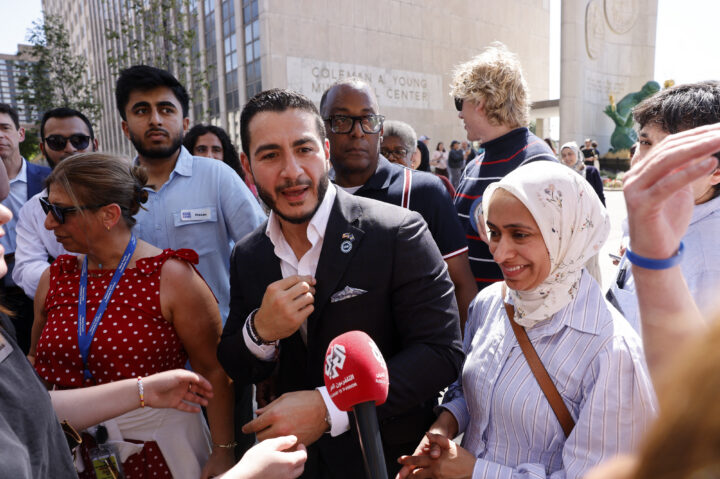
Michigan Democratic Senate candidate Abdul El-Sayed departs with his wife, Sarah Jukaku (R) after a press conference on August 5, 2026.
Abdul El-Sayed, Michigan’s Democratic Senate nominee, doubled down on his anti-Israel rhetoric on Tuesday — a day after he drew renewed scrutiny over his ongoing association with antisemitic streamer Hasan Piker.
Speaking at a Dearborn church, El-Sayed declined to confirm if he hopes to win an endorsement from state Sen. Jeremy Moss, a Jewish Democratic nominee for a congressional seat in the Detroit area, whom Piker had recently targeted on his show while arguing that Jews who support Israel are inviting violence against themselves.
“I’m not going to sugarcoat that we have our disagreements, especially when it comes to foreign policy and the best use of our tax dollars,” El-Sayed said of Moss at the event on Tuesday, billed as “Hate Has No Home in Michigan.”
“And the plurality of Michigan Democratic primary voters nominated me to be the Democratic nominee,” he added.
While reiterating his opposition to antisemitism and appreciation for Judaism, he said that his support for ending aid to Israel is “about making sure that in our foreign policy, we substantiate equal rights to peace, dignity and self-determination for Palestinian folk.”
“I’d rather my tax dollars not get spent to take away some people’s self-determination that could be used to empower other folks here,” El-Sayed argued in his remarks.
The comments suggest El-Sayed is continuing to play to his far-left voting base, even as his hostile views on Israel have alienated Jewish Democrats whom he will likely need to win the competitive battleground state.
Moss, for his part, is among the most prominent Democratic holdouts on El-Sayed, whose modest effort to distance himself from Piker on Monday drove a wedge between the two nominees.
In a statement posted to X on Monday, El-Sayed made no mention of either Piker or Moss, omissions that drew backlash from critics. Instead, he said that “nobody speaks for this campaign besides me and my campaign spokespeople,” while downplaying Piker as a “Twitch steamer” who would not define the contest. He did not say if his relationship with Piker, who has been a top surrogate for his campaign, would change moving forward.
“My commitment to Jewish safety is the same as my commitment to the safety of my own daughters,” he went on in his statement. “Antisemitism is a scourge and we need to address it in all its forms. And I stand against any rhetoric that puts the community at risk.”
The statement reportedly disrupted a conversation between the two nominees regarding an endorsement from Moss that is now in question — even as the state senator has vowed not to back El-Sayed’s Republican rival, former Rep. Mike Rogers (R-MI), who has been courting Jewish Democrats.
Moss, in a statement released Monday, said that he and El-Sayed have been in “continual dialogue” about shared goals such as fighting “MAGA extremism” and “Jewish and Arab safety and security.”
“There is still work ahead to unite our ticket despite our differences,” Moss added, without confirming if he would back El-Sayed. “It won’t happen overnight, nor should it. It will require continuing outreach that is credible and authentic.”
Jessica “Decky” Alexander, the Michigan Democratic Jewish Caucus chair, said that several campaigns and Jewish voices had urged El-Sayed’s team to release a statement on Monday countering Piker’s comments. “Whether they would have or not” without such prompting, “I do not know, but there is a comment,” she told Jewish Insider, calling his response a sign of “definite forward movement.”
“Many caucus members have shared that they would like him to disavow Piker,” she clarified on Tuesday.
The Michigan Democratic Senate nominee didn't address Piker's role in promoting his campaign or his attack on congressional nominee Jeremy Moss
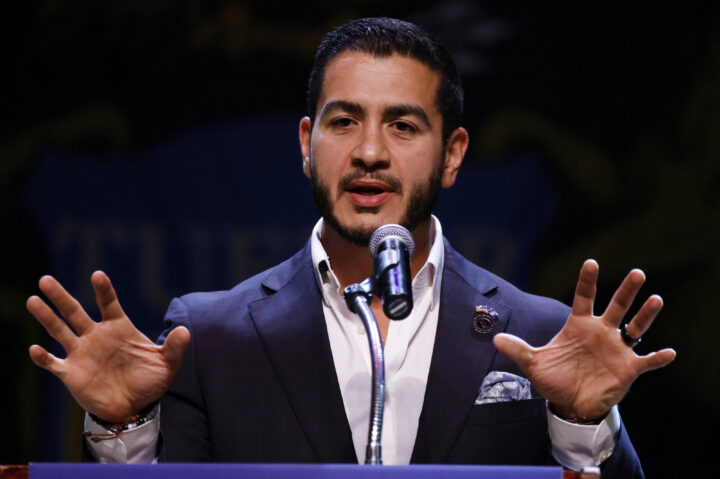
(JEFF KOWALSKY / AFP via Getty Images)
Abdul El-Sayed addresses supporters at his election night event at The Majestic Theatre in Detroit, Michigan, on August 4, 2026
Michigan Democratic Senate nominee Abdul El-Sayed distanced himself, to a degree, from antisemitic streamer Hasan Piker, who has been a prominent surrogate of his campaign, after Piker attacked Democratic state Sen. Jeremy Moss and argued that Jews are inciting antisemitic violence against themselves by supporting Israel.
But, in the statement — posted on X under the heading, “My statement on Hasan Piker’s comments regarding Jeremy Moss” — El-Sayed didn’t name Piker or Moss, and didn’t directly address Piker’s comments.
“I believe all Americans deserve the right to advocate what they believe without fear of violence,” El-Sayed said. “This is particularly true for communities that have been intimidated for their beliefs in the past.”
Amid ongoing attacks on him for his association with Piker, El-Sayed also insisted that “nobody speaks for this campaign besides me and my campaign spokespeople.”
He went on to downplay Piker as “a Twitch streamer” who will not define the race or his own campaign. He did not say whether his or his campaign’s relationship with Piker will change going forward.
“My commitment to Jewish safety is the same as my commitment to the safety of my own daughters,” El-Sayed added. “Antisemitism is a scourge and we need to address it in all its forms. And I stand against any rhetoric that puts the community at risk.”
Despite the title of the statement addressing Moss, the statement itself did not directly address El-Sayed’s fellow Michigan Democrat or Moss’ allegations that opponents are spreading fabricated audio of him promoting antisemitic tropes.
Republican nominee former Rep. Mike Rogers (R-MI) blasted El-Sayed’s comments as insufficient.
“Hasan Piker’s call for violence against the Jewish Community, specifically against Jeremy Moss, must be condemned by every single Michigan Democrat. But Conman Abdul El-Sayed doesn’t have the guts to disavow his running mate,” Rogers said. “Abdul’s attempt at distancing himself from this violent and hateful rhetoric now that he and Hasan won the primary is the epitome of what a conman does — says one thing when it serves him and another when it doesn’t.”
Rogers added, “His rhetoric is causing fear in Michigan communities, is unAmerican, and makes him unfit to represent our state.”
Moss said in a statement later on Monday that he and El-Sayed, whom Moss has not yet endorsed, are in ongoing conversations about their shared goals, safety for Jews and Arabs and co-existence among Michigan communities.
“These important conversations do not fit neatly in the confines of a tweet or a reel, like so many want them to. I’m grateful that Abdul and I are having them,” Moss said. “There is still work ahead to unite our ticket despite our differences. It won’t happen overnight, nor should it. It will require continuing outreach that is credible and authentic.”
But Moss made clear that despite his disagreements with El-Sayed, he will not support Rogers, as some other leaders in the Jewish community plan to.
Moss also lambasted Piker, without naming him individually.
“Provocatuers are exploiting this moment to create further divisions. I will not be lectured by a California podcaster about what Oakland County, Michigan’s Jewish community should and shouldn’t believe,” Moss continued. “And we certainly won’t be gaslit that we’re responsible for the antisemitic harm upon us. The attempted murder of Jewish children in West Bloomfield has no justification,” he said, referencing the violent attack on Temple Israel earlier this year.
Piker has so far shrugged off criticisms of his comments, including those from another Michigan Democrat, Rep. Hillary Scholten (D-MI). In a response, Piker called Scholten “an israel 1st congresswoman,” and said she’s “vying for the spotlight by actively defaming a prominent antizionist voice to harm the dem senate majority chances over a 90/10 issue,” while referencing unverified rumors about Scholten’s personal life.
The Texas Democratic Senate nominee said on 'The Breakfast Club' that he ‘would not vote to send weapons to the Netanyahu government’

Brandon Bell/Getty Images
Democratic Texas State Rep. James Talarico speaks during a campaign launch rally on September 09, 2025 in Round Rock, Texas.
James Talarico, the Democratic Senate nominee in Texas, said he would not vote to send further military aid to an Israeli government led by Prime Minister Benjamin Netanyahu, and that aid beyond that should be conditioned on Israeli policies in Gaza and the West Bank.
He also condemned AIPAC, saying it silences criticisms of Netanyahu and Israel.
“I would not vote to send weapons to the Netanyahu government,” Talarico said in an appearance on “The Breakfast Club” podcast last week, adding later in the interview that he wants to stop weapons sales as well.
Pressed on military aid to Israel in general, Talarico said, “I think all of that needs to be conditioned on ending the death and the destruction in Gaza and the West Bank.”
But he continued to decline to describe the war in Gaza as a genocide, citing the ongoing legal case on the subject at the International Court of Justice. He said, however, that there is “certainly evidence to bring those charges” and that the U.S. should “abide by whatever ruling that the court comes to.”
“As a U.S. senator, my job would be to take action,” he continued. “My job would not be to litigate what terms are used. My job would be to stop what’s happening. And that’s why I’ve said I would use every bit of our nation’s diplomatic and financial leverage to protect the lives of Palestinians.”
Talarico has made similar comments regarding aid to Israel earlier in the race, which prompted some Jewish Texans to turn away from him in the primary.
He suggested in the interview that politicians face pressure from AIPAC to not criticize Netanyahu — though even AIPAC-supported Democrats have been highly critical of the Israeli leader.
“The influence of AIPAC in our elections has a chilling effect and people don’t feel like they can speak their minds because they’re worried AIPAC is going to drop hundreds of millions of dollars of money in their race — usually not even talking about the issue of Israel or issues that Jewish Americans face,” he said, referring to AIPAC’s strategy of highlighting issues other than Israel in ads in Democratic districts.
In a statement, Talarico campaign manager Seth Krasne said, “James believes every human life is sacred. His longstanding record combating antisemitism, defending Jewish students on the floor of the Texas House, and supporting Israel’s right to exist demonstrate his steadfast commitment to Jewish safety.”
“He will continue to speak out against Prime Minister Netanyahu’s unacceptable actions that threaten civilians in Gaza — this moral clarity should never be misconstrued as opposition to the safety and security of Israeli civilians and Jewish people around the world,” Krasne continued. “In the coming months, James looks forward to working with Jewish leaders to continue the important work of eradicating hate wherever it rears its ugly head.”
In an interview with CNN, she underscored her pro-Israel bona fides, saying she is a ‘Zionist Democrat in Michigan’
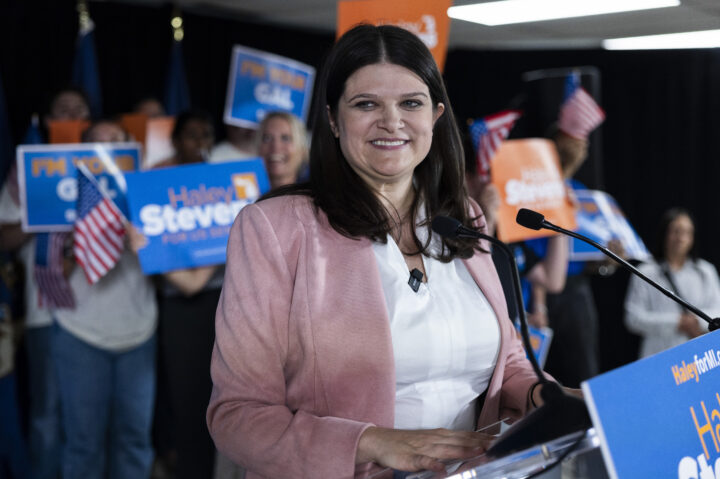
Rep. Haley Stevens (D-MI), candidate for Michigan's open U.S. Senate seat, holds a rally with Sen. Gary Peters (D-MI) on August 2, 2026 in Madison Heights, Michigan (Photo by Finn Gomez/Getty Images)
In her first cable news interview since her Senate primary loss on Wednesday morning, Rep. Haley Stevens (D-MI) told CNN that Jewish voters who are concerned about Democratic Senate nominee Abdul El-Sayed’s hostility towards Israel are “going to have to make a personal and private decision” as to who to support in November.
Stevens also told CNN on Friday that she is a “Zionist Democrat in Michigan.”
Just before he was declared the winner in the Democratic primary for the pivotal Michigan Senate race, El-Sayed doubled down on his criticism of Israel on MS NOW’s “Morning Joe,” calling the Jewish state “bloodthirsty” and saying his critiques go beyond the government of Israeli Prime Minister Benjamin Netanyahu.
El-Sayed, who made his opposition to AIPAC a central part of his campaign message, sought to ease tensions with skeptical Jewish voters after winning the nomination, addressing what he called “an issue that has been focused on in this race.”
“To all of my sisters and brothers of the Jewish faith,” he said in his televised remarks, “I want you to know that my commitment to your safety, my commitment to Jewish safety, is the same commitment that I have to the safety of my own daughters.” He also spoke about his experience going to a seder during the campaign, where in an awkward turn of phrase, said he was able to “break bread” with his Jewish friends.
On Friday, Republican Senate nominee Mike Rogers argued that the “vast majority of people” rejecting El-Sayed — whose bid he framed as a “campaign filled with anger, divisiveness, calls for violence and the views that are out of touch with your values”— have “a home with us.”
In a video message directed at disaffected moderates, Rogers said ‘the fight is far greater than just left versus right. The fight is for the very soul of our nation’
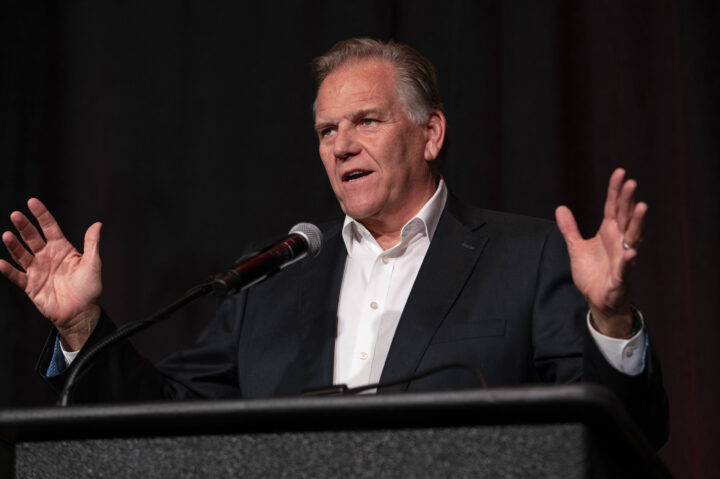
Sarah Rice/Getty Images
Michigan Senate candidate Mike Rogers speaks at his election watch party.
Addressing Michigan Democrats in a videotaped message, Republican Senate nominee Mike Rogers said that the “vast majority of people” rejecting Democratic Senate nominee Abdul El-Sayed — whose bid he framed as a “campaign filled with anger, divisiveness, calls for violence and the views that are out of touch with your values”— have “a home with us.”
“If you’re among the majority of Democratic voters that woke up on Wednesday feeling hopeless because the person who won does not represent your values, well, just know there is still hope,” Rogers said seated next to his wife, in a 90-second video message released on Friday.
“Michigan deserves a senator who is ready to sit with you, hear from you and represent you.
The parents across Michigan who want an education system that sets up their kids for success have a home with us. Grandparents across Michigan who are heartbroken from watching their kids and grandkids leave the state, you have a home with us,” he continued.
“To young people who are looking for real solutions to our housing affordability crisis, you have a home with us. To families who don’t want higher taxes and lower paychecks, you have a home with us. The fight is far greater than just left versus right. The fight is for the very soul of our nation. Over the next 90 days, I’m going to work hard to earn your trust, to earn your support and earn your vote.”
Most Democrats quickly coalesced behind El-Sayed after he narrowly clinched victory in Michigan’s Democratic primary on Wednesday morning, while Republicans quickly attacked El-Sayed’s extremist history and ties.
Just before he was declared winner, El-Sayed doubled down on his criticism of Israel on MS NOW’s “Morning Joe,” calling the Jewish state “bloodthirsty” and saying his critiques go beyond the government of Israeli Prime Minister Benjamin Netanyahu.
The mayor lauded the Democratic Senate nominee while downplaying his weak performance among working-class voters
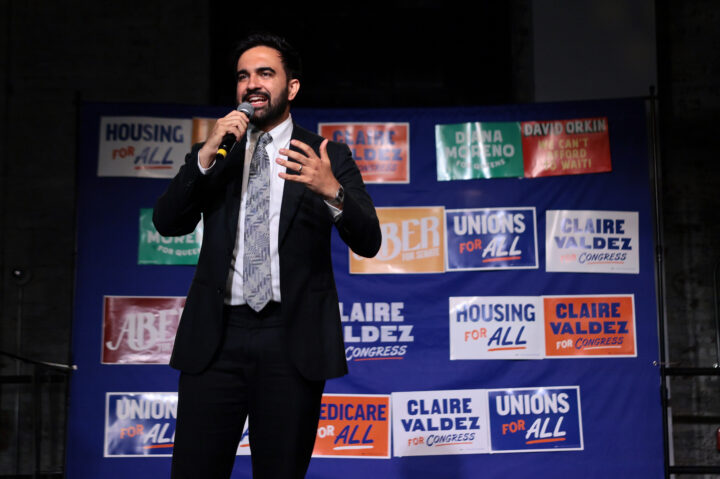
Michael M. Santiago/Getty Images
New York City Mayor Zohran Mamdani speaks during a primary-night watch party for NYC congressional candidate Claire Valdez on June 23, 2026.
New York City Mayor Zohran Mamdani refused to close the door on a trip to Michigan to campaign for newly minted Democratic Senate nominee Abdul El-Sayed, whom Mamdani praised for what he described as a focus on “the concerns of working-class Americans” — even as he tried to explain away El-Sayed’s poor performance in the areas where working-class voters live.
The mayor extended his congratulations from Manhattan to the Wolverine State, lauding in particular El-Sayed’s slogan of “money out of politics, money in your pocket, Medicare for all.” Unlike fellow democratic socialist Rep. Alexandria Ocasio-Cortez (D-NY), Mamdani did not travel to Michigan during the primary to support El-Sayed, but left open the possibility he would visit before the general election.
“My focus thus far has been on New York City. And what I will tell you is I know that many New Yorkers were incredibly excited at the results,” Mamdani, speaking after an unrelated event, said in answer to a question of whether he would consider making the trip. Asked whether he would completely rule out such a campaign jaunt, he answered: “I’m here right now.”
Mamdani answered in the affirmative when asked whether El-Sayed was the kind of candidate he hoped to see change the Democratic Party. Meanwhile, he stayed clear of the issue that fueled their most fervent support online: Israel.
“I am proud to be part of a movement of politicians and candidates who are looking to put working-class Americans back at the heart of our politics,” the mayor said. “And that’s our focus here in New York City, and just from what we’re seeing in Michigan, that’s what Michiganders want … to be their focus come November.”
Yet the mayor struggled to answer why, like his own map in the 2025 primary against former Gov. Andrew Cuomo, the results from Tuesday night showed El-Sayed performing poorly among the lower-income voters whose interests he purportedly championed. El-Sayed’s strongest precincts, like Mamdani’s, were home to many college students and well-compensated professionals.
Mamdani suggested those voters had been duped by ad campaigns.
“When you are facing $60 million in outside spending, you are facing almost what feels like surround sound,” he said. “People are hearing a message about you again and again and again. And to win this race as someone who is not currently holding elected office, it’s a testament to what he ran on, and also to the way he ran the campaign.”
Candidates vying for the Democratic nomination in Maine are largely pledging to oppose arms sales to Israel and reject AIPAC — but several have yet to say where they stand

Joe Raedle/Getty Images
Democratic U.S. Senate candidate Graham Platner and Troy Jackson stand together during a “Fighting Oligarchy” tour stop at the Collins Center for the Arts on the University of Maine campus on May 24, 2026 in Orono, Maine.
The mad dash to replace Graham Platner as the Democratic Senate nominee in Maine is coming together so quickly and haphazardly that one potential replacement, Nirav Shah, is taking stickers from his failed gubernatorial campaign and cutting off the “for governor” line below his name before handing them to supporters.
Much is still in flux about the process to replace Platner, who dropped out of the race on Wednesday two days after being accused of rape by a former romantic partner. His potential successors aren’t jockeying for the public’s approval — they’re angling for the support of the Maine Democratic Party, which voted on Wednesday, before Platner even announced his resignation, to hold a statewide nominating convention to tap his replacement. The MDP said it would share more in the days to come about the process, which according to state law would have to be completed by July 27.
Many of the candidates now seeking to succeed Platner on the general election ballot are commending the populist movement he built and looking to capitalize on it. Less than 24 hours into the contest, some had already made clear they will adopt a platform much like Platner’s when it comes to Israel — seeking to end U.S. weapons sales to the country and shunning donations from AIPAC — while others are remaining mum on that topic.
Shah, who served as the director of the Maine Centers for Disease Control and Prevention during the COVID-19 pandemic, said this week that he would support a full arms embargo against Israel, that he believes Israel’s actions in Gaza amount to genocide and that he would refuse AIPAC support. He finished second in the gubernatorial primary last month.
One contender who seems poised to rack up support from the party’s left flank is Troy Jackson, the former president of the Maine Senate. He placed third in last month’s gubernatorial primary, and earned the endorsement of Sen. Bernie Sanders (I-VT) and the Maine chapter of Democratic Socialists of America in that race. Jackson was one of Platner’s biggest boosters and appeared with him at several campaign rallies.
Our Revolution, the Sanders-aligned advocacy organization, has already endorsed Jackson’s Senate campaign, along with Rep. Ro Khanna (D-CA) and far-left, antisemitic streamer Hasan Piker.
In a post on X on Thursday, Jackson accused Israel of committing genocide in Gaza, saying that “anybody with eyes” would agree, and pledged to “never vote in favor of U.S. taxpayer-funded military aid to Israel.” His team did not respond to a request for comment.
Jordan Wood, a former chief of staff to Rep. Katie Porter (D-CA) who placed third in last month’s congressional primary to replace retiring Rep. Jared Golden (D-ME), said in a Thursday statement announcing his Senate run that he would not accept money from “corporate PACs and AIPAC.” He said in a post on X that the U.S. “can’t continue to fund Israel’s genocide in Gaza,” and that he would support the Block the Bombs Act.
In a statement to Jewish Insider on Thursday, Wood added some nuance to his views: “Israel is our strongest ally in the Middle East,” Wood said via a spokesperson. “But there’s a difference between the Israeli people and the Netanyahu government, and nothing about self-defense justifies waging a war without limits. Starving children and flattened hospitals don’t make Israel safer, and they don’t make America safer.” He also stated that “Hamas must disarm, and it can never be allowed to govern Gaza again.”
Wood reiterated that he will not accept support from AIPAC but said AIPAC supporters are still welcome in the Democratic Party.
“Jewish Democrats, and Democrats who care deeply about Israel’s security, are part of this party and always will be,” he said. “What’s not welcome is AIPAC’s agenda, which demands unconditional support for the Netanyahu government’s genocide in Gaza no matter the cost in innocent lives.”
Paige Loud, a 29-year-old social worker who placed fourth in the same congressional primary as Wood, ran an anti-Israel campaign and claimed that Democrats lost the presidency in 2024 “because of our lackluster stance on the genocide that’s happening in Gaza right now.” Her campaign website says she is committed “to human rights, sovereignty, and self-determination everywhere — from Palestine to Iran, Ukraine, Venezuela, and Greenland.”
Shenna Bellows, Maine’s secretary of state and a former state senator, entered the race on Thursday afternoon. She espoused a similarly populist message to Platner, pledging to take on billionaires and corporations, but stayed away from mentioning the Middle East or AIPAC in her opening salvo. A spokesperson for Bellows, who also ran for governor in last month’s primary and placed fourth, did not respond to a request for comment.
Bellows served as executive director of the Holocaust and Human Rights Center of Maine from 2018 to 2020, an experience that she still refers to regularly. In a campaign video from International Holocaust Remembrance Day, she said one way to remember the Holocaust is as a story of “resistance, of communities coming together to say no to antisemitism, xenophobia, racism, homophobia,” and said that Americans must speak out “against any othering and dehumanization of our friends and neighbors.”
One unorthodox candidate is Dan Kleban, the founder of Maine Beer Company, a brewery in Freeport. He was briefly a candidate in the Senate primary last year, but dropped out early and endorsed Maine Gov. Janet Mills, the establishment favorite who dropped out of the race in April. He reentered the race on Wednesday and said in a Substack post that he’s “had enough meddling from Washington establishment insiders and New York City consultants trying to dictate who represents us,” ostensibly a dig at Platner’s own political consultants.
Asked on CNN this week if he considered Israel guilty of genocide, Kleban called the situation in Gaza an “absolute tragedy” and said he would support placing conditions on U.S. arms sales to Israel, but did not use the term genocide. Kleban told Politico in October that he would not have supported Sanders’ resolution to block arms sales to Israel.
“I believe Israel has a right to defend itself. I don’t think that we solve the horrific humanitarian crisis in Gaza by disarming Israel and exposing them to harm,” Kleban said at the time.
While Platner and Mills were the main candidates running for Senate, a third, David Costello — a former senior official in Maryland’sMaine’s Department of the Environment who got 8% of the vote in last month’s primary — is now running again. He said during the campaign that Israel, after the Oct. 7 attacks, “not only had a right but an obligation to attempt to crush Hamas.” But, he argued, they did not do so surgically, and said Israel’s conduct has been “indefensible.” He said he would oppose offensive weapons sales to Israel.
One possible wild card is state Rep. Valli Geiger, who has said she is considering entering the race. Geiger, who in the past defended Platner’s treatment of women, stuck by him until the end. “I will not throw Graham under the bus, but neither will I slander or accuse Ms. [Jenny] Racicot [Platner’s accuser] of anything more than telling the truth as she experienced it. I acknowledge the pain on all sides and offer compassion on all sides,” Geiger wrote on Facebook.
She has said little publicly about Gaza, but shared Facebook posts criticizing Israel, including one in April that listed Prime Minister Benjamin Netanyahu as someone who, like President Donald Trump and Russian President Vladimir Putin, harbors “delusions of grandeur.”
Collins said her Senate opponent makes AIPAC sound like ‘some sort of evil foreign influence, and that is absolutely wrong’
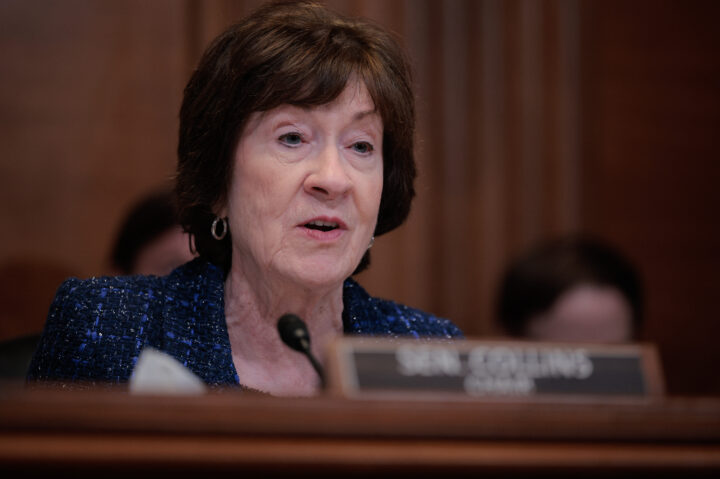
(Photo by Chip Somodevilla/Getty Images)
Sen. Susan Collins (R-ME) in the Dirksen Senate Office Building on Capitol Hill on December 9, 2025 in Washington, DC.
Sen. Susan Collins (R-ME) accused Maine Democratic Senate nominee Graham Platner of antisemitism and defended her support for Israel in a Fox News interview on Monday.
“I remain a very strong supporter of Israel, the one democracy in the Middle East, our true ally in the Middle East,” Collins said when asked about increasing hostility to Israel and AIPAC among the American public. She attributed such trends to “rising antisemitism in our country that Graham Platner certainly is part of, and has been since his high school days. That’s been a consistent theme throughout his entire life.”
WATCH: Sen. Susan Collins accused Maine Democratic Senate nominee Graham Platner of antisemitism and defended her support for Israel in a Fox News interview on Monday.
— Jewish Insider (@jewishinsider) June 22, 2026
“I remain a very strong supporter of Israel, the one democracy in the Middle East, our true ally in the Middle… pic.twitter.com/iShufv15PM
Collins pointed to Platner’s accusations of genocide against Israel and his comments praising Hamas’ tactics in a raid that killed multiple Israeli soldiers, as first reported by Jewish Insider in April, calling his activity “appalling.”
“AIPAC is made up of Americans who care deeply about our relationship with Israel,” Collins continued. “Platner makes it sound like this is some sort of evil foreign influence, and that is absolutely wrong.”
The progressive Israel advocacy group said it did not ‘have anything to share at this time’ about Maine’s scandal-plagued Democratic Senate nominee
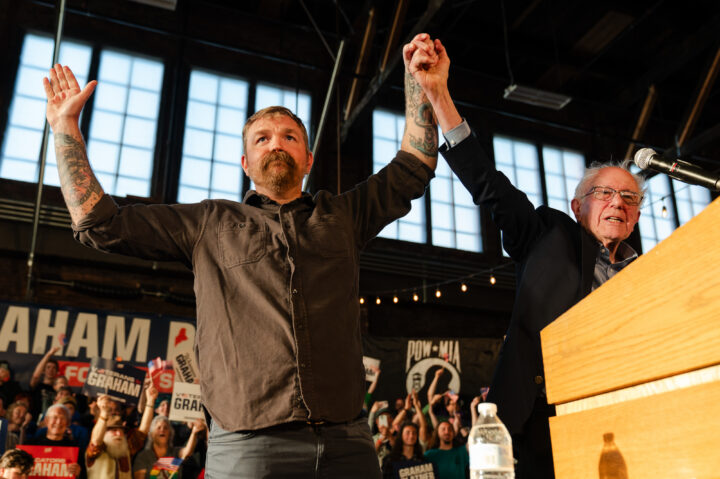
Sophie Park/Bloomberg via Getty Images
Graham Platner, Democratic Senate candidate for Maine, left, and Sen. Bernie Sanders (I-VT) during a Fighting Oligarchy event in Portland, Maine, on May 25, 2026.
J Street, the progressive Israel advocacy group, is for now withholding an endorsement of Graham Platner, the scandal-plagued Democratic Senate nominee in Maine, underscoring the extent to which even some left-wing Jewish activists appear skeptical of his insurgent campaign.
A spokesperson for J Street told Jewish Insider on Wednesday that the group did not “have anything to share at this time” about a Platner endorsement but would provide more information “if that changes.”
The spokesperson declined to confirm if J Street, which this cycle has backed a handful of Democratic Senate candidates vying for open seats or challenging Republican incumbents, had considered whether it will make an endorsement. The group had told JI in early May that it did “not currently have a position in the race.”
In a statement to JI on Thursday, the spokesperson said that it “is incorrect to frame J Street as actively withholding an endorsement from Graham Platner.”
The group “evaluates candidates and makes endorsement decisions on a rolling basis,” and its “endorsement process is ongoing,” the spokesperson said. “The timing of endorsement decisions does not reflect judgment about any individual candidate.”
J Street’s response came after Platner had clinched the nomination on Tuesday to challenge Sen. Susan Collins (R-ME), in a high-profile race Democrats see as crucial to reclaiming control of the upper chamber.
Platner won the Democratic primary decisively even as he has faced a mounting series of controversies over alleged “toxic” relationships with past girlfriends, sexual messages he sent to women while married and deleted Reddit comments expressing a range of incendiary views.
He also weathered a scandal relating to a Nazi tattoo on his chest for nearly two decades that he covered up last October. Platner has insisted that he did not recognize its imagery, despite claims to the contrary from a former girlfriend who first spoke with JI last year, shortly after he had announced his campaign.
The tattoo, along with Platner’s hostile criticism of Israel and insistent demonization of AIPAC, have stoked ongoing concerns among Jewish Democrats. Halie Soifer, CEO of the Jewish Democratic Council of America, has said the group is not ready to endorse Platner.
“We won’t support a Democrat who doesn’t represent the views and values of the vast majority of American Jews,” Soifer said in a statement in late April echoing a sense of discomfort with Platner’s candidacy felt by mainstream Jewish leaders.
JDCA had endorsed Maine Gov. Janet Mills, who suspended her campaign amid lackluster fundraising but remained on the ballot Tuesday, pulling in 19% of the vote. Platner won 72%.
Following Tuesday’s win, some prominent Senate Democrats have also declined to endorse Platner as he prepares for a bruising and expensive campaign.
J Street, which has moved to the left in recent years as it has sought to capitalize on growing Democratic frustration with Israel, is in many ways aligned with Platner on Middle East policy, including accusations that Israel committed genocide in its war in Gaza and calls to block U.S. military aid to the Jewish state that are now gaining momentum in Congress.
Still, the group has shown its intolerance for some extreme views that could be seen as antisemitic. In 2024, for instance, J Street revoked its endorsement of former Rep. Jamaal Bowman (D-NY), who was at the time fighting for reelection in a bitterly contested primary he would later lose, saying his inflammatory rhetoric on Israel had crossed a line.
Even as the group officially stays on the sidelines in Maine’s marquee Senate race, J Street’s state leader, Steven Koltai, who helped organize a Passover Seder with Platner, told the Jewish Telegraphic Agency he is “still very much” supporting the oyster farmer and former Marine in spite of recent revelations about his past.
In the statement to JI on Thursday, J Street’s spokesperson said the group “remains steadfast in our commitment to ensuring a pro-Israel, pro-peace majority in the Senate and House come January.”
Klain claimed ‘the tattoo was a skull and crossbones to remember his fallen comrades from his service in Afghanistan’ — an explanation the campaign itself has not previously offered
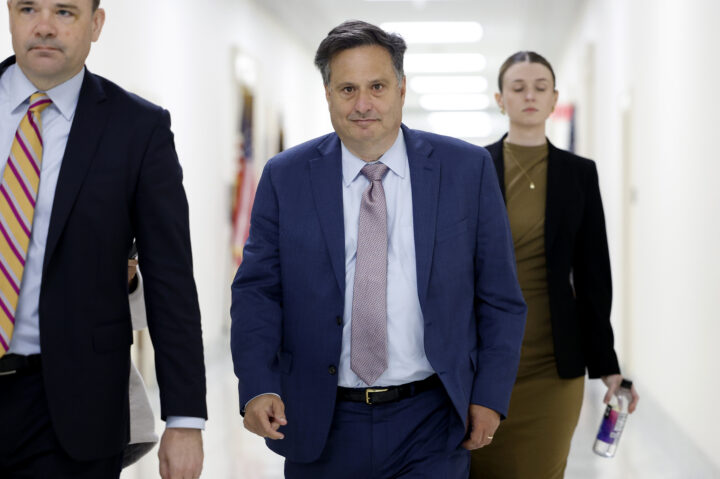
Kevin Dietsch/Getty Images
Ron Klain, the White House chief of staff under President Joe Biden, leaves an interview in the Rayburn House Office Building on July 24, 2025 in Washington, DC.
Ron Klain, the former chief of staff to President Joe Biden, defended Maine Democratic Senate nominee Graham Platner’s tattoo of a Nazi symbol in a comment responding to the Republican Jewish Coalition on Instagram.
The RJC, after Platner’s victory in Tuesday’s primary election, called on Senate Minority Leader Chuck Schumer (D-NY) to rescind his support for Platner. Klain, in a comment on the RJC’s Instagram post, declared, “This is just a partisan attack. The tattoo was a skull and crossbones to remember his fallen comrades from his service in Afghanistan.” Platner was deployed to Iraq, not Afghanistan, when he got the tattoo.
Platner has denied that he knew what the symbol was until late last year, when the campaign was contacted by media about it, but has not claimed, as Klain did, that it was intended to memorialize fallen comrades.
Klain, now the chief legal officer at Airbnb, has reportedly been quietly backing and advising Platner’s campaign, as well as several other prominent progressives, including New York City Mayor Zohran Mamdani, potential presidential candidate Rep. Ro Khanna (D-CA), California gubernatorial candidate Xavier Becerra, New York congressional candidate Jack Schlossberg and Sen. Ed Markey (D-MA).
But he had previously declined to comment to Politico last week on his political activities, and had otherwise not discussed his involvement with Platner.
Platner’s former romantic partner, Lyndsey Fifield, who has accused him of domestic abuse, has said that he described the tattoo to her as “my Totenkopf” and would joke about it being a Nazi symbol. She said that Platner told her that he and his Marine colleagues chose the symbol because they saw a parallel between themselves and the Nazi SS as a “death unit.”
Fifield shared text messages with The New York Times showing that she had informed friends that Platner had a tattoo of a Nazi symbol in August 2025, months before it became public knowledge.
The RJC said on X that “Klain’s pathetic rationalization of a clear Nazi symbol is a total disgrace,” and that, as a former U.S. Holocaust Memorial Museum board member, “Klain absolutely knows better.”
“Every Jewish family in America knows what the insignia of the Nazi SS — the unit that ran the death camps — looks like and Klain knows exactly what it is too,” the group said.
Following his victory in Maine’s primaries on Tuesday, some Senate Democrats who appeared wary of Platner after the domestic abuse allegations once again appear to be rallying around him.
“I think Graham showed a great deal of support in the primary, and I think … that’s going to build momentum and will assure that we win Maine,” Sen. Kirsten Gillibrand (D-NY), who chairs the Democratic Senatorial Campaign Committee, told CNN.
Please log in if you already have a subscription, or subscribe to access the latest updates.
 Continue with Google
 Continue with Apple