




































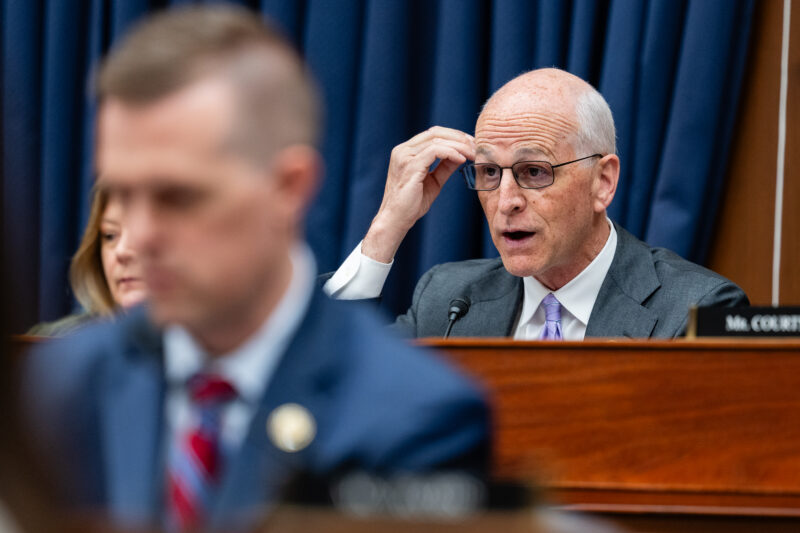











Jayapal: ‘I encourage student groups who want to hear from Mr. Piker to work with the University to ensure that they can proceed’
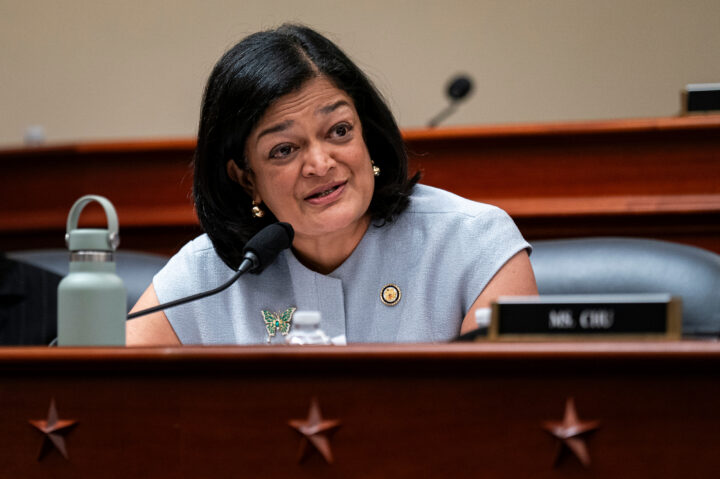
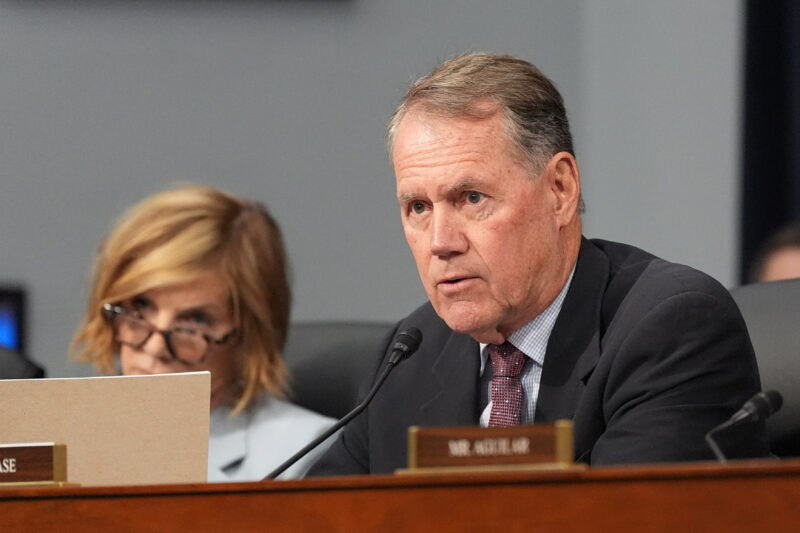
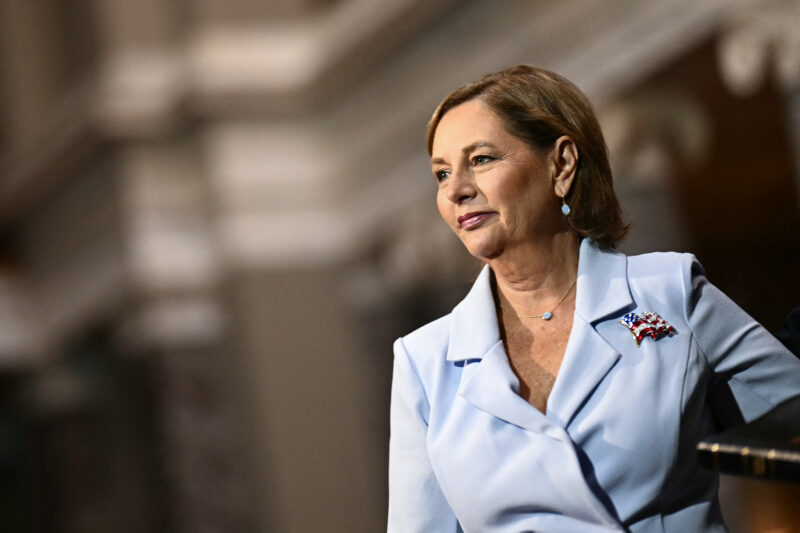
Al Drago/Bloomberg via Getty Images
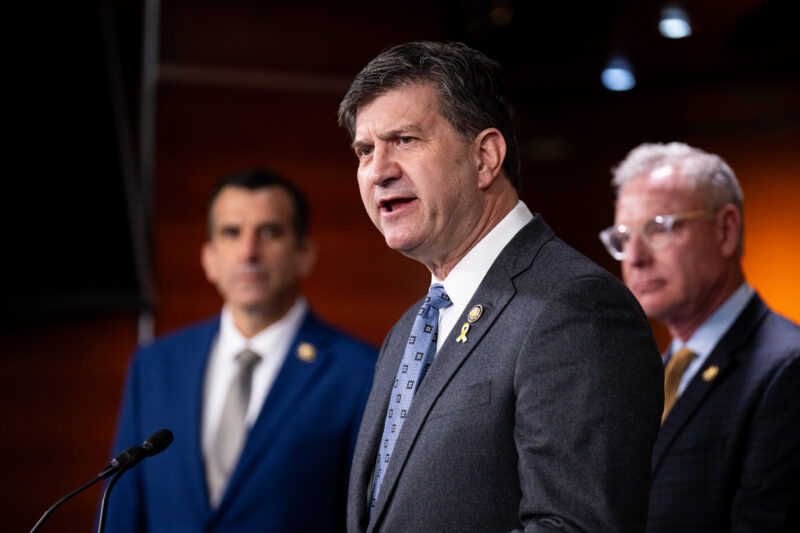
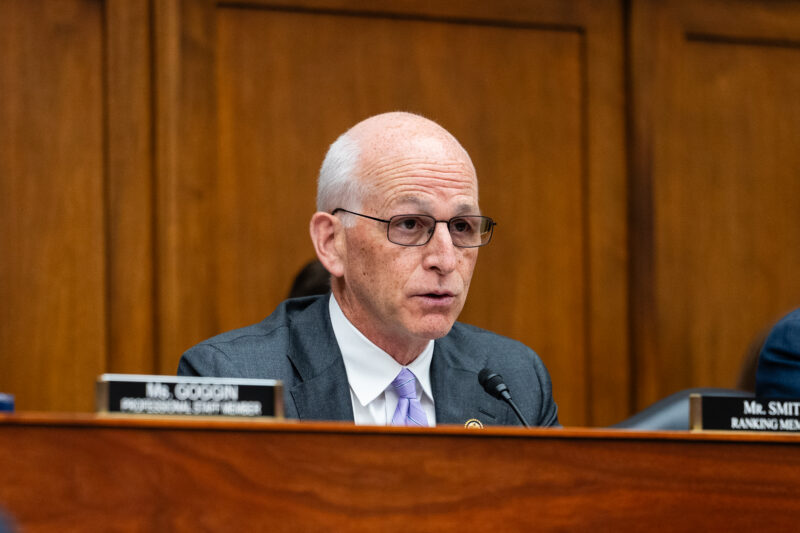
Rep. Pramila Jayapal (D-WA) speaks during a House Budget Committee hearing on Capitol Hill in Washington, DC, on April 15, 2026.


 Add JewishInsider on Google
Rep. Pramila Jayapal (D-WA), the former chair of the Congressional Progressive Caucus, said on Thursday that she had been “communicating [her] concerns” to the University of Washington over the school’s decision to cancel a planned appearance by antisemitic influencer Hasan Piker, and pushed student groups to engage with the streamer.
The University of Washington “informed me that they are doing an internal review to ensure this never happens again,” Jayapal wrote in a post on X. “I encourage student groups who want to hear from Mr. Piker to work with the University to ensure that they can proceed.” She linked in her post a Seattle Times article on Piker claiming he was silenced over his views on Israel.
Framing the cancellation as a First Amendment issue, Jayapal said: “As a member of the Judiciary Committee, I have been absolutely clear that free speech is a Constitutional right that we must all stand up and protect.”
Rep. Dan Goldman (D-NY), a pro-Israel Democrat who recently lost his primary to former New York City Comptroller Brad Lander, criticized Jayapal’s defense of Piker. Responding to her post, Goldman said that the school “has obligations under Title VI” to “not create a hostile environment” for Jewish students.
“Given [Piker’s] repeated and overtly antisemitic (and anti-American) statements, no federally funded university should sanction a platform for Piker to speak,” Goldman wrote.
The comments followed statements from Piker a day earlier, in which he denounced Democrats for failing to “speak out against this clear violation” of the First Amendment, attributing the decision to his “position as a prominent critic of Israel.”
The university defended its decision in a statement, maintaining that the event was canceled after it “was determined that the process for organizing this event did not meet the necessary level of rigor for University-hosted events.”
Piker has previously drawn criticism for extremist statements, including remarks that America “deserved” the 9/11 terrorist attacks and calling Hamas, a U.S.-designated foreign terrorist organization, “a thousand times better than Israel.”
Jayapal’s office did not respond to a request for comment.
The retiring liberal Democrat also pointed out the contingent of anti-Israel lawmakers in the caucus
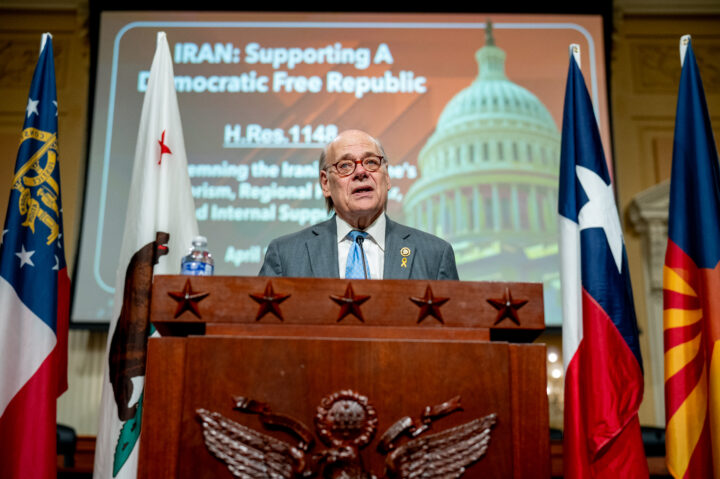
Andrew Harnik/Getty Images
U.S. Rep. Steve Cohen (D-TN) speaks during a Congressional briefing on Iran held by the Organization of Iranian American Communities on Capitol Hill on April 16, 2024 in Washington, DC.
Rep. Steve Cohen (D-TN) told CNN he left the Congressional Progressive Caucus last year — and decided not to run for reelection this year — in part because of the rise in socialist leadership in the caucus.
“I just found it to be not the same caucus I joined in 2007. It had become more the socialist caucus, and most of the leadership was socialist Democrats,” Cohen, a longtime progressive, said in an interview with the outlet. “I didn’t feel comfortable in it.”
The Democrat said there’s now a growing contingent of anti-Israel Democrats as well within the Congressional Progressive Caucus, which he said was not present when he first came to the Hill.
“There certainly were not people who were so anti-Israel when I started, and there are within the progressive caucus now,” Cohen said.
The chairman of the Congressional Progressive Caucus is Rep. Greg Casar (D-TX), who won his seat in 2022 on an anti-Israel platform. The caucus’ vice-chair is Rep. Ilhan Omar (D-MN), who has long been one of the most outspoken detractors of Israel in Congress and has been subject to censures over allegations of antisemitism.
Cohen, who announced his retirement after Tennessee Republicans carved up his congressional district, predicted that he would have faced antisemitic attacks over his stance on Israel if he had run for reelection.
Before redistricting, Cohen was facing a challenge from far-left state Sen. Justin Pearson, who was campaigning on an anti-Israel platform.
“I foresaw it getting really nasty and antisemitism getting into it,” Cohen said.
Cohen also told CNN that Rep. Rashida Tlaib (D-MI) had not spoken to him since he voted to censure her for sharing a video that included the slogan “from the river to the sea” and after she accused former President Joe Biden of supporting genocide.
CPC members constitute nearly 45% of the House Democratic caucus
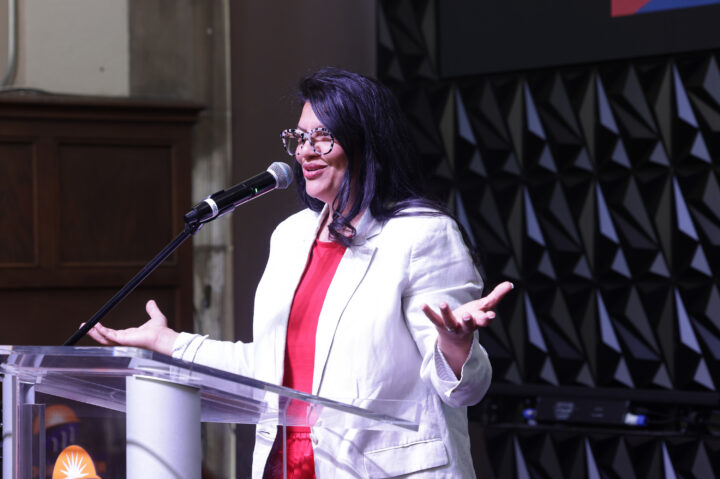
Monica Morgan/Getty Images
Rep. Rashida Tlaib (D-MI) speaks at the “Bridging Community and Normalization with the Republic of Cuba and the United States of America" event.
The leadership of the Congressional Progressive Caucus, whose members constitute nearly 45% of the House Democratic caucus, is encouraging members to vote for a war powers resolution led by Rep. Rashida Tlaib (D-MI) which aims to prevent any U.S. cooperation with or assistance for the Israeli operations in Lebanon, Jewish Insider has learned.
Tlaib is expected to force a vote on the resolution this week. The backing of the CPC leadership does not guarantee support from all 95 of the caucus’ members, but indicates that Tlaib’s resolution could pick up substantial support among congressional Democrats.
CPC Chair Rep. Greg Casar (D-TX) did not respond to a request for comment.
The resolution currently has nine cosponsors along with Tlaib: Reps. Delia Ramirez (D-IL), Nydia Velázquez (D-NY), Chuy García (D-IL), Valerie Foushee (D-NC), Yassamin Ansari (D-AZ), Lateefah Simon (D-CA), Ilhan Omar (D-MN), Val Hoyle (D-OR) and Ro Khanna (D-CA).
House Foreign Affairs Committee Ranking Member Greg Meeks (D-NY), who has been at the forefront of other war powers efforts that aim to stymie the Trump administration, hasn’t yet publicly weighed in on Tlaib’s effort.
House Minority Leader Hakeem Jeffries (D-NY) said he hadn’t reviewed the legislation yet.
Tlaib, in advocating for the resolution, has largely ignored Hezbollah’s role in the conflict. An FAQ circulated by her office last week asserted that Hezbollah is not the true target of Israel’s operations.
“Israeli leaders’ statements and actions have made it clear that this invasion is not about Hezbollah. Indiscriminate bombings, the demolition of entire towns and villages, and illegal forced displacement orders have targeted the entire population across wide swaths of Lebanese territory,” the FAQ reads in a section entitled, “What about Hezbollah?”
“The U.S. enabling and supporting another Israeli invasion and indefinite military occupation in Lebanon will only lead to more death and destruction. It is clear that if we are serious about achieving peace and security for all, we must use our leverage to put an immediate end to this invasion,” the section continues.
While she framed the resolution as cutting off U.S. support for Israel’s operations, she said it would not impact U.S. assistance or support for the Lebanese Armed Forces.
Parsi has long faced allegations of closeness with the Iranian regime, while Rhodes’ nickname in the Obama WH was ‘Hamas’ in part due to his hostility toward Israel
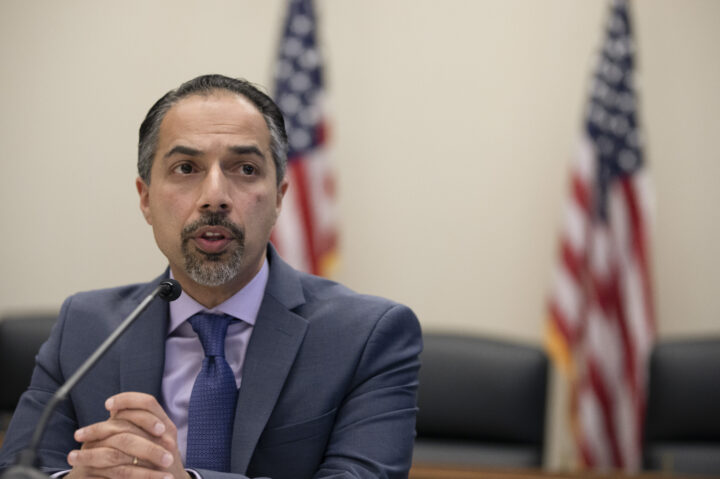
Tasos Katopodis/Getty Images
Trita Parsi of the Quincy Institute speaks on February 12, 2020 at the U.S. Capitol in Washington, DC.
The Congressional Progressive Caucus organized an “emergency convening” on Saturday evening for members to receive a briefing on Iran from the Quincy Institute’s Trita Parsi and former Obama administration official Ben Rhodes, according to an invitation obtained by Jewish Insider.
CPC members have been largely unified in condemning the U.S. strikes on Iran.
Parsi, a cofounder of the National Iranian American Council, has long faced accusations of being overly cozy with and supportive of the Iranian regime, while Rhodes has come under scrutiny for his hostility toward Israel — a stance that earned him the nickname “Hamas” inside the Obama White House.
Throughout the first day of the war, Parsi was vociferous in condemning the attack, characterizing it as a U.S. operation in service of “Israel’s war” and condemning a variety of international actors, particularly in Europe, that he said have failed to respond forcefully enough and he claimed are acting as “vassals” of the U.S. and Israel.
He has further suggested that the public in Arab states are rallying around Iran, despite the forceful and united condemnation of Iran’s indiscriminate strikes across the region by all Gulf countries.
Parsi also highlighted a strike on a girls’ school in Iran which killed dozens, according to Iranian media, though the source of the missile has not been determined. He claimed such incidents would make a civilian uprising in Iran less likely.
Rhodes has also forcefully condemned the operation. “A war that has no domestic or international legal basis. A war that Americans do not support. A war in response to no imminent threat. A pointless war,” Rhodes said in response to the attack. “Trump and Netanyahu seem to be totally unconcerned about the human beings — on all sides — who will suffer.”
Please log in if you already have a subscription, or subscribe to access the latest updates.
 Continue with Google
 Continue with Apple