


























The unanimous decision came after several countries including France and Italy removed their objections due to Iran’s violent crackdown on protesters
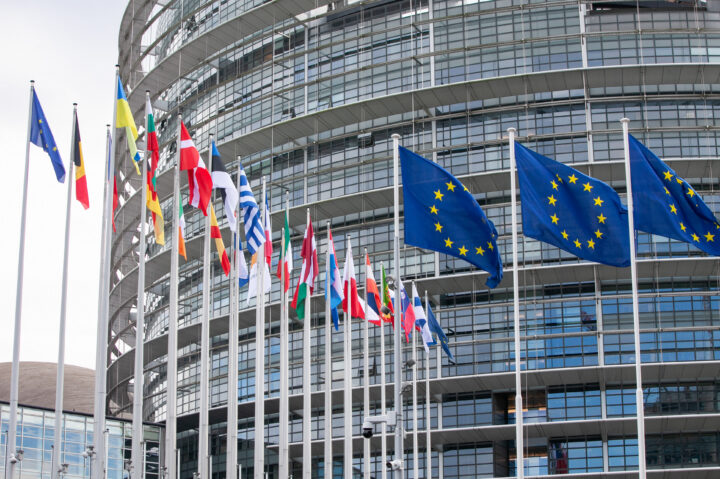
Siavosh Hosseini/SOPA Images/LightRocket via Getty Images
EU Flag and 27 members of European countries at the European Parliament building.


 Add JewishInsider on Google
The European Union designated Iran’s Islamic Revolutionary Guard Corps as a terrorist organization on Thursday, marking a significant shift in policy for European countries that had long been wary of irreparably harming ties with Tehran.
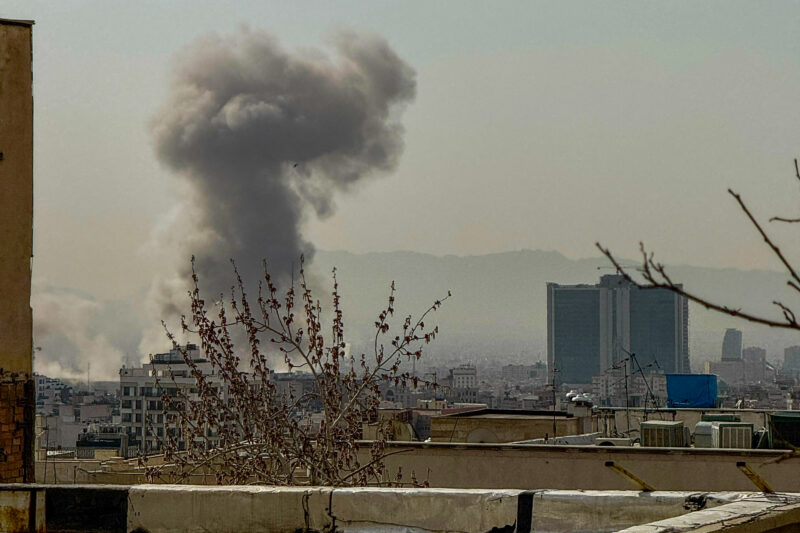
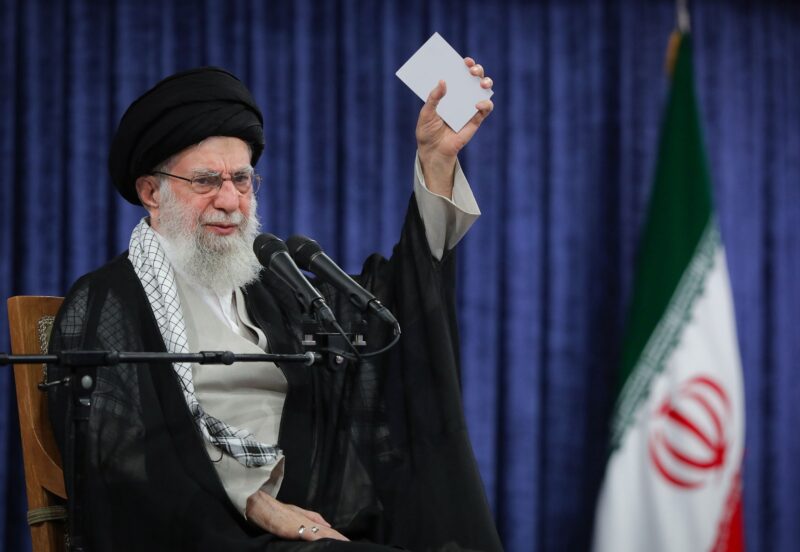
The 27 European Union foreign ministers convened in Brussels, Belgium where they voted unanimously to make the designation as a response to Iran’s violent suppression of nationwide protests. The decision puts the IRGC among the likes of al-Qaida, Hamas and the Islamic State on the EU terror list. The bloc also imposed new sanctions on 15 Iranian officials, including top commanders of the Revolutionary Guard, in addition to existing stringent sanctions.
“Repression cannot go unanswered,” Kaja Kallas, the EU’s high representative for foreign affairs and security policy, wrote on X on Thursday following the decision. “EU Foreign Ministers just took the decisive step of designating Iran’s Revolutionary Guard as a terrorist organisation. Any regime that kills thousands of its own people is working toward its own demise.”
Anne-Sophie Sebban-Bécache, vice president of Europe at the American Jewish Committee, told Jewish Insider the declaration was a “historical political decision.”
“It’s a very key political decision that will also have concrete consequences, because as soon as it is considered a terrorist organization, it will have legal implications,” said Sebban-Bécache. “It means that all the counter-terrorist authorities and organizations in Europe … will now be in charge of also tackling IRGC networks in Europe.”
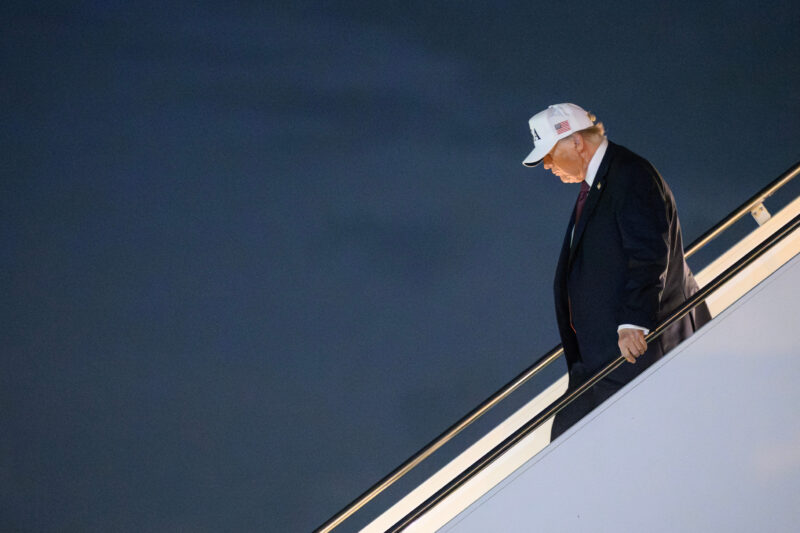
The United States has long regarded the IRGC, an elite military force separate from the country’s regular army, as a terrorist organization; The State Department proscribed the group, along with its Quds Force, in April 2019 during President Donald Trump’s first term. Canada and Australia have also recognized the IRGC as a terrorist group, among other countries.
However, the issue had remained stalled in the EU for years, as designation requires unanimous consent of all member states. Germany and the Netherlands are among the countries that have repeatedly urged for the EU to follow suit of the U.S. Others, such as France, Italy and Spain, remained opposed, citing concerns over diplomatic ties, negotiations over European nationals being held in Iran, lack of a legal basis and ability for the bloc to reach unanimity on the issue.
“It’s a question that was on the table for many, many years,” said Sebban-Bécache. “Some countries were in favor of it, some were reluctant to do it, and because there is a need for unanimity, the discussion never really took place at the EU Council level.”
In January 2023, the European Parliament, one of two legislative bodies of the EU, voted overwhelmingly — 598 to 9 — to call for the union to make such a designation, but the issue remained unresolved.
It was not until Iran’s violent crackdown on protesters earlier this month that the conversation was reignited, sparking holdout countries to reverse course and signal newfound support for such a move. The U.S.-based Human Rights Activists News Agency (HRANA) said it had confirmed at least 6,126 deaths since the start of the protests earlier this month, adding it was investigating over 17,000 more potential deaths.
“The dramatic events that we’ve witnessed in Iran in the past month have shifted many countries’ positions, and there was some political pressure also mounting,” said Sebban-Bécache, who noted that the designation is the “best tool” for Europe to “isolate” the regime. “I think Europeans also came to the conclusion that that regime can fall and that we all have a role to play to isolate it and to make it accountable.”
On Monday, Italian Foreign Minister Antonio Tajani announced that Italy would be withdrawing its objections, stating that it is his country’s “highest priority” to protect Iranian citizens. On Wednesday, France followed suit.
Sebban-Bécache noted that the new decision is a way for Europe to further take a stand “against terror” and finally recognize an organization that poses a threat “not just for the Iranian people and the Middle East, but also for international and European security itself.” She noted that the IRGC has tried to develop financial networks in Europe.
“We’ve had proof now for many years that the IRGC has developed an international network … and also has already tried to conduct terrorist attacks around the world and especially in Europe,” said Sebban-Bécache. “We know that IRGC is the organ that is orchestrating all the terror and oppression of the Iranian population inside Iran, but it’s also the organ that is coordinating the financing and support of Iran’s proxies and conducting terrorist activities across the Middle East.”
Gideon Sa’ar, Israel’s minister of foreign affairs, welcomed the decision, calling it “important and historic.”
“The number one actor in spreading terror and undermining regional stability has now been called by its name,” Sa’ar wrote on X. “Designating the IRGC as a terrorist organization will thwart and criminalize their activities in Europe. It will deal a significant economic blow to an organization that controls a vast share of the Iranian regime’s economy, and it sends an important message to the brave men and women of Iran who are fighting for their freedom.”
The House Foreign Affairs Committee Majority also lauded the move, stating that Europe is “waking up to the truth.”
“The IRGC must not be given a free pass to export terror and brutality throughout the globe on behalf of the Ayatollah,” the post read.
Hamas member Majed al-Zeer said ‘the resistance’ is key to changing how the Western world views Israel
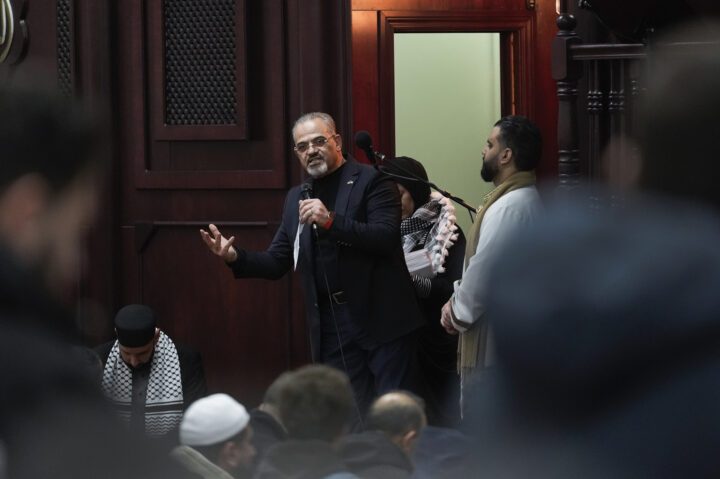
Paul Sancya/AP
Khalid Turaani, co-chair of the Abandon Biden campaign in Michigan, speaks at the Islamic Center of Detroit in Detroit, Friday, Jan. 26, 2024.
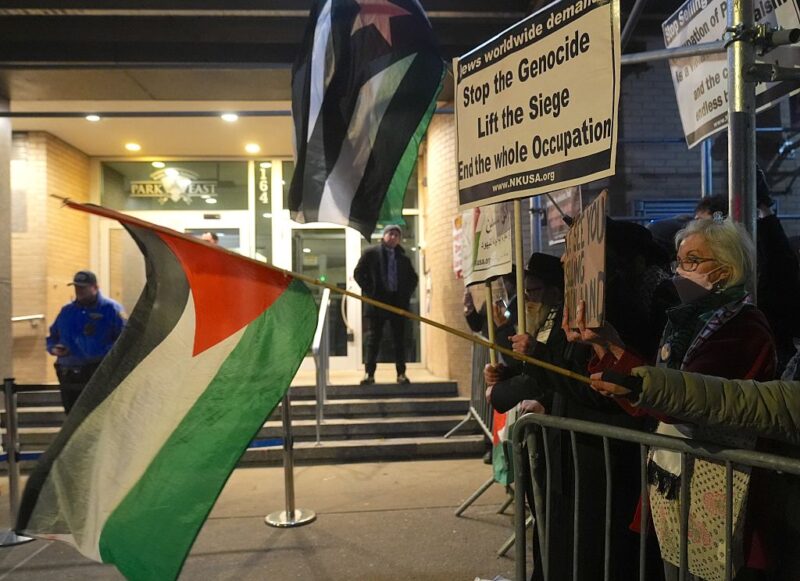
The executive director of the Council on American-Islamic Relations’ Ohio branch moderated an online event last week featuring a Hamas official designated as a terrorist by the Treasury Department, as well as other Hamas and Palestinian Islamic Jihad members.
The Beirut-based think tank Al-Zaytouna Centre for Studies and Consultations hosted an event in Arabic last week titled “Palestinians Abroad and Regional International Strategic Transformations in Light of Operation Al-Aksa Flood,” using Hamas’ name for its Oct. 7, 2023, attacks on southern Israel.
Among the speakers at the web conference was Majed al-Zeer, who was designated by the Treasury Department in October 2024 as “the senior Hamas representative in Germany, who is also one of the senior Hamas members in Europe and has played a central role in the terrorist group’s European fundraising.”
Al-Zeer said that “the resistance” is key to maintaining the momentum of a “strategic shift” in how Europe and the world views the Palestinian issue.
Palestinian Islamic Jihad financier Sami al-Arian, a former University of South Florida computer science professor who was deported from the U.S. in 2015 due to his ties to the terrorist group, said on the same panel as Al-Zeer that “the overall Palestinian situation is much better strategically than it was before the flood [Oct. 7].”
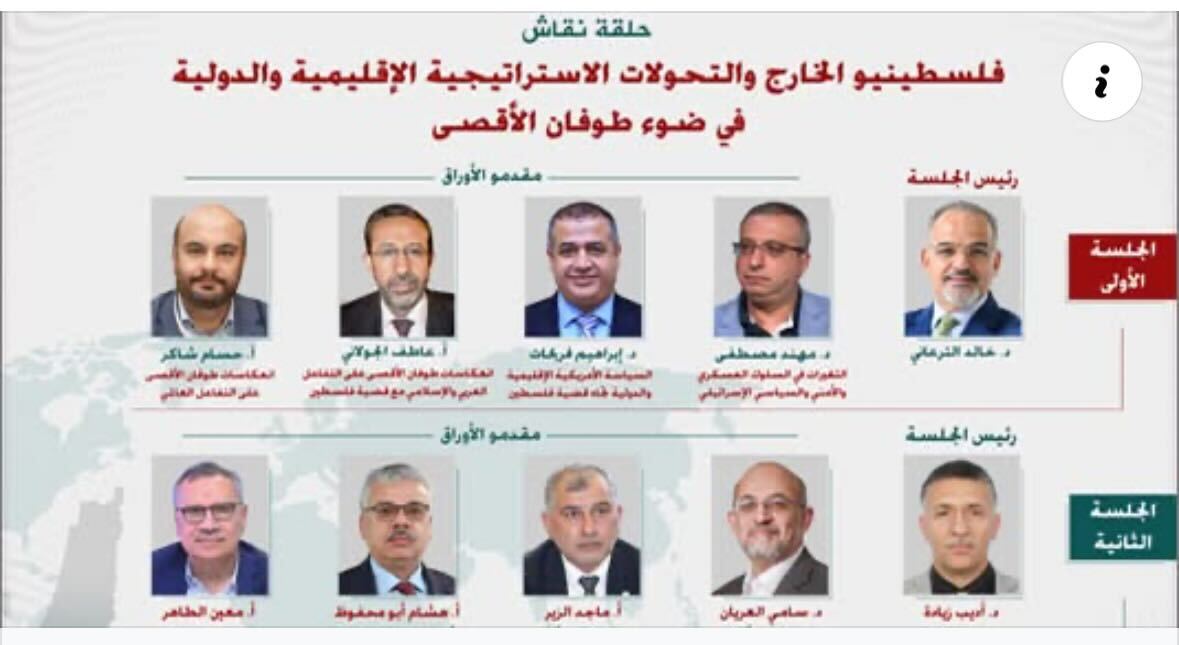
CAIR-Ohio Director Khalid Turaani moderated one panel with commentary provided by Ziad el-Aloul, who is active in several Hamas-affiliated organizations in Europe, including the Popular Conference for Palestinians Abroad, which was designated a terrorist group by Israel in 2021 for its work on behalf of Hamas. More recently, PCPA was found to be involved in facilitating the Global Sumud Flotilla that attempted to sail to Gaza with climate activist Greta Thunberg on board.
Another speaker in the Turaani-led panel expressed hope that the Turkish army would deploy in Gaza and fight the IDF.
The CAIR-Ohio director’s participation in a conference with senior Hamas and Palestinian Islamic Jihad figures came two months after Sen. Tom Cotton (R-AR) called for an IRS investigation into the organization and the revocation of its 501(c)(3) nonprofit status, citing alleged “ties to terrorist organizations like Hamas and the Muslim Brotherhood.”
CAIR did not respond to a request for comment.
Journalist Jabar Al-Harmi deleted his threatening tweet after drawing controversy
KARIM JAAFAR/AFP via Getty Images
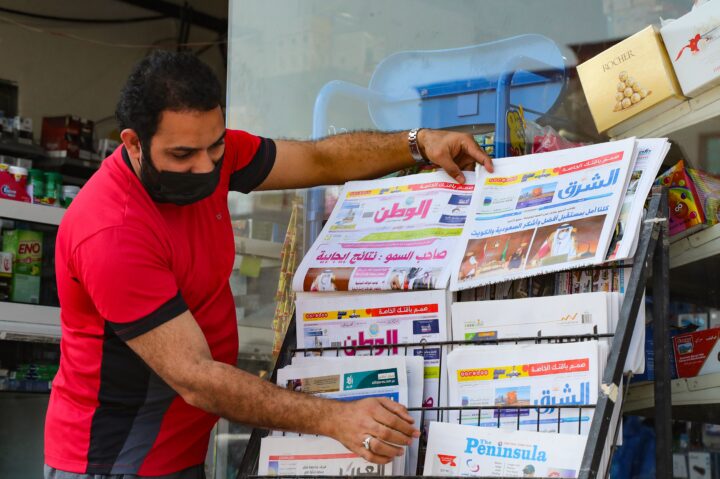
A man arranges newspapers on a stand outside a shop in Doha on Jan 6, 2021.
The editor-in-chief of Qatar’s pro-government newspaper Al Sharq called on Hamas “heroes” to kidnap more IDF soldiers in a since-deleted tweet.
“If success is not achieved this time in capturing Zionist soldiers at the hands of the heroes of #AlQassamBrigades, then the second, third, and fourth attempts will succeed, God willing, by adding new rats to the tally held by the heroes of the Brigades,” Qatari journalist Jabar Al-Harmi wrote in Arabic last week, adding that the “heroes” of Al-Qasam “sent a number of Zionist soldiers to hell” by storming an IDF military site in southern Gaza. Those that weren’t killed were “sent to worldly torment with permanent disabilities and impairments, and others to mental and psychological institutions.”
Al-Harmi continued, “Blessed be the hands of the heroes. And may the hands of the vile criminal outcasts be paralyzed.”
Al Sharq, which is published in Doha by a privately held media company founded and owned by Sheikh Khalid bin Thani Al Thani, a member of the Qatari ruling family, is one of the four leading private daily Arabic newspapers in Qatar, all of which have a pro-government bent.
Ghaith Al-Omari, a senior fellow in The Washington Institute for Near East Policy’s Irwin Levy Family Program in the U.S.-Israel Strategic Relationship, told Jewish Insider that the tweet is “not surprising” and comes amid widespread praise for Hamas in Qatari media.
“The Qatari media landscape is rife with statements, selective reporting and editorials that support Hamas,” said Al-Omari, former executive director of the American Task Force on Palestine. “Under the guise of supporting the Palestinian people, many Qatari media outlets have been a key vehicle for amplifying Hamas propaganda.”
Please log in if you already have a subscription, or subscribe to access the latest updates.
 Continue with Google
 Continue with Apple