


































EU designates IRGC as terror organization in policy reversal
The unanimous decision came after several countries including France and Italy removed their objections due to Iran’s violent crackdown on protesters
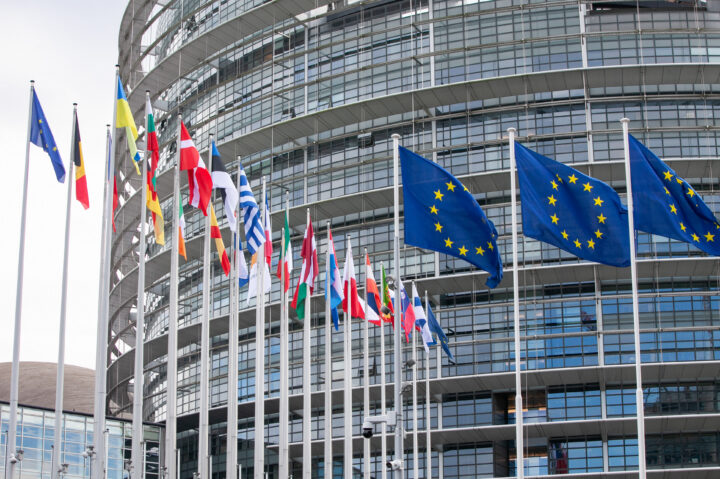
Siavosh Hosseini/SOPA Images/LightRocket via Getty Images
EU Flag and 27 members of European countries at the European Parliament building.


 Add JewishInsider on Google
The European Union designated Iran’s Islamic Revolutionary Guard Corps as a terrorist organization on Thursday, marking a significant shift in policy for European countries that had long been wary of irreparably harming ties with Tehran.
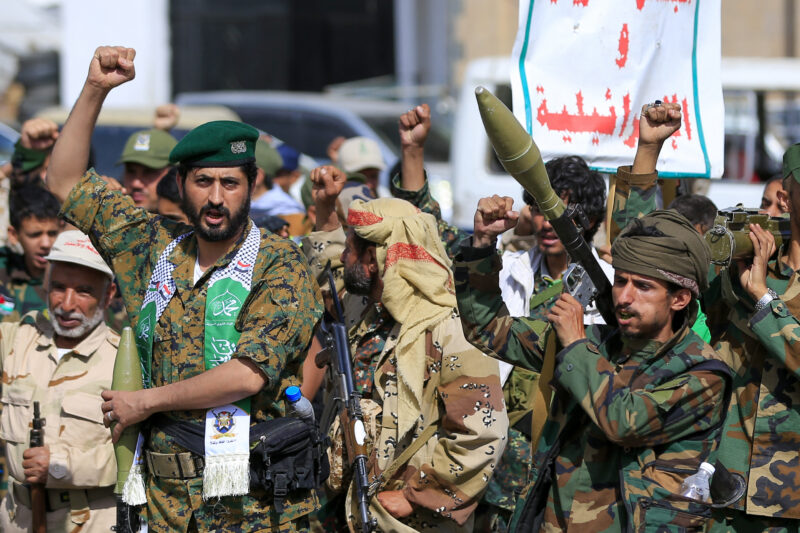
The 27 European Union foreign ministers convened in Brussels, Belgium where they voted unanimously to make the designation as a response to Iran’s violent suppression of nationwide protests. The decision puts the IRGC among the likes of al-Qaida, Hamas and the Islamic State on the EU terror list. The bloc also imposed new sanctions on 15 Iranian officials, including top commanders of the Revolutionary Guard, in addition to existing stringent sanctions.
“Repression cannot go unanswered,” Kaja Kallas, the EU’s high representative for foreign affairs and security policy, wrote on X on Thursday following the decision. “EU Foreign Ministers just took the decisive step of designating Iran’s Revolutionary Guard as a terrorist organisation. Any regime that kills thousands of its own people is working toward its own demise.”
Anne-Sophie Sebban-Bécache, vice president of Europe at the American Jewish Committee, told Jewish Insider the declaration was a “historical political decision.”
“It’s a very key political decision that will also have concrete consequences, because as soon as it is considered a terrorist organization, it will have legal implications,” said Sebban-Bécache. “It means that all the counter-terrorist authorities and organizations in Europe … will now be in charge of also tackling IRGC networks in Europe.”
The United States has long regarded the IRGC, an elite military force separate from the country’s regular army, as a terrorist organization; The State Department proscribed the group, along with its Quds Force, in April 2019 during President Donald Trump’s first term. Canada and Australia have also recognized the IRGC as a terrorist group, among other countries.
However, the issue had remained stalled in the EU for years, as designation requires unanimous consent of all member states. Germany and the Netherlands are among the countries that have repeatedly urged for the EU to follow suit of the U.S. Others, such as France, Italy and Spain, remained opposed, citing concerns over diplomatic ties, negotiations over European nationals being held in Iran, lack of a legal basis and ability for the bloc to reach unanimity on the issue.
“It’s a question that was on the table for many, many years,” said Sebban-Bécache. “Some countries were in favor of it, some were reluctant to do it, and because there is a need for unanimity, the discussion never really took place at the EU Council level.”
In January 2023, the European Parliament, one of two legislative bodies of the EU, voted overwhelmingly — 598 to 9 — to call for the union to make such a designation, but the issue remained unresolved.
It was not until Iran’s violent crackdown on protesters earlier this month that the conversation was reignited, sparking holdout countries to reverse course and signal newfound support for such a move. The U.S.-based Human Rights Activists News Agency (HRANA) said it had confirmed at least 6,126 deaths since the start of the protests earlier this month, adding it was investigating over 17,000 more potential deaths.
“The dramatic events that we’ve witnessed in Iran in the past month have shifted many countries’ positions, and there was some political pressure also mounting,” said Sebban-Bécache, who noted that the designation is the “best tool” for Europe to “isolate” the regime. “I think Europeans also came to the conclusion that that regime can fall and that we all have a role to play to isolate it and to make it accountable.”
On Monday, Italian Foreign Minister Antonio Tajani announced that Italy would be withdrawing its objections, stating that it is his country’s “highest priority” to protect Iranian citizens. On Wednesday, France followed suit.
Sebban-Bécache noted that the new decision is a way for Europe to further take a stand “against terror” and finally recognize an organization that poses a threat “not just for the Iranian people and the Middle East, but also for international and European security itself.” She noted that the IRGC has tried to develop financial networks in Europe.
“We’ve had proof now for many years that the IRGC has developed an international network … and also has already tried to conduct terrorist attacks around the world and especially in Europe,” said Sebban-Bécache. “We know that IRGC is the organ that is orchestrating all the terror and oppression of the Iranian population inside Iran, but it’s also the organ that is coordinating the financing and support of Iran’s proxies and conducting terrorist activities across the Middle East.”
Gideon Sa’ar, Israel’s minister of foreign affairs, welcomed the decision, calling it “important and historic.”
“The number one actor in spreading terror and undermining regional stability has now been called by its name,” Sa’ar wrote on X. “Designating the IRGC as a terrorist organization will thwart and criminalize their activities in Europe. It will deal a significant economic blow to an organization that controls a vast share of the Iranian regime’s economy, and it sends an important message to the brave men and women of Iran who are fighting for their freedom.”
The House Foreign Affairs Committee Majority also lauded the move, stating that Europe is “waking up to the truth.”
“The IRGC must not be given a free pass to export terror and brutality throughout the globe on behalf of the Ayatollah,” the post read.
More Stories
SCOOP
El-Sayed met with Temple Israel rabbis in closed-door sit-down
ON THE HILL
House passes Iran war powers resolution with record seven Republican supporters
on the trail
Moskowitz leans into work combating antisemitism as he launches general election campaign
road to riyadh
Trump taps Rep. Wesley Hunt as U.S. ambassador to Saudi Arabia
MINYAN MATTERS
Supreme Court to hear case of man blocked from holding minyan in his home
BOOKSHELF
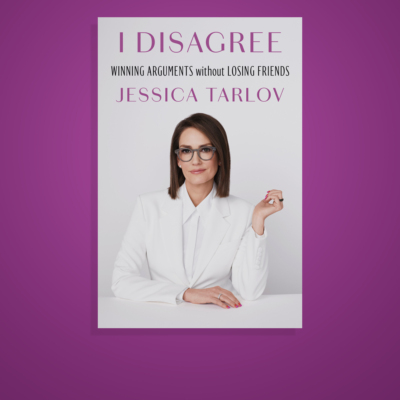
Jessica Tarlov on her new book, Hasan Piker and the limits of being able to ‘acknowledge without accepting’
Please log in if you already have a subscription, or subscribe to access the latest updates.
 Continue with Google
 Continue with Apple