

























































Half of Jewish Michiganders voted for Abdul El-Sayed, new poll finds
The senator-elect underperformed Democratic Gov.-elect Jocelyn Benson by nearly 20 points; Republican Mike Rogers decisively won Jewish voters in Oakland County
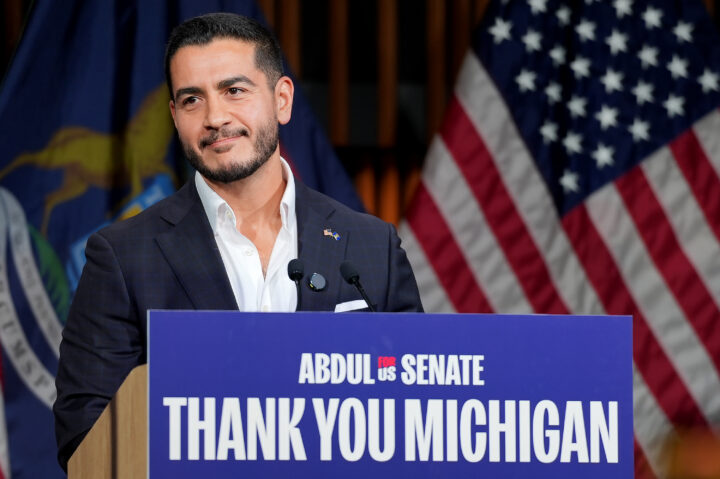
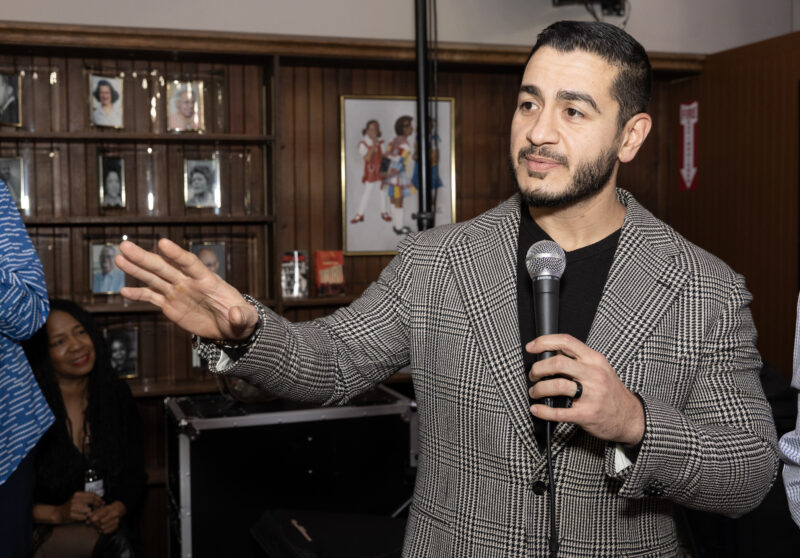
(Salwan Georges/Getty Images)
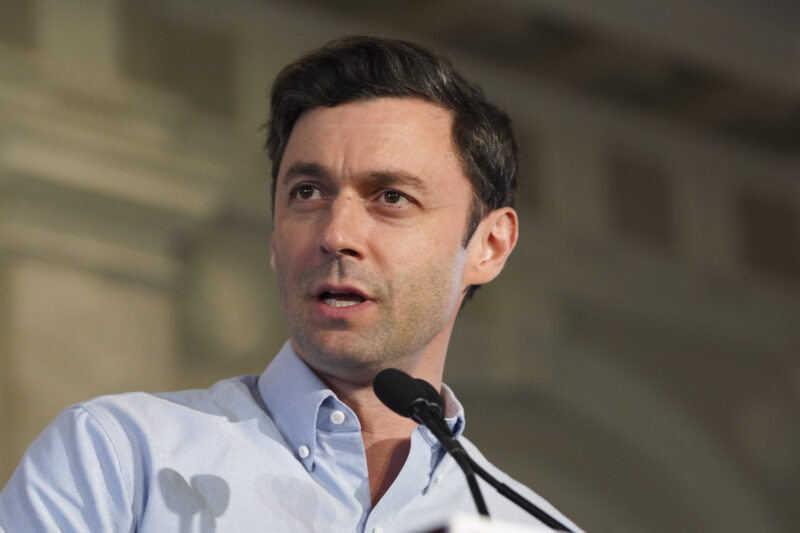
Michigan Democratic Senate candidate Abdul El-Sayed speaks during a midterm election night watch party at the Department at Hudson's on November 04, 2026 in Detroit, Michigan.


 Add JewishInsider on Google
Half of Jewish Michiganders voted for Sen.-elect Abdul El-Sayed (D-MI) in the midterm election, according to a new poll conducted by The Jewish Majority, far below typical voting patterns in the state for a Democratic candidate and badly lagging behind Gov.-elect Jocelyn Benson’s own performance with Jewish voters.
The poll is the clearest picture yet of the Jewish electorate in Michigan, amid conflicting estimates and analyses of how many Jewish voters in the state supported the controversial Democratic nominee.
The poll found that Republican Mike Rogers won 43% of the Jewish vote, while 4% of Jewish voters left their ballots blank in the Senate race and 3% voted for a third-party candidate.
The Nonnegotiable campaign, representing Jewish Democrats torn over their choices in the state’s Senate race, had urged a write-in vote for deceased poet Emma Lazarus for voters uncomfortable supporting either major-party candidate.
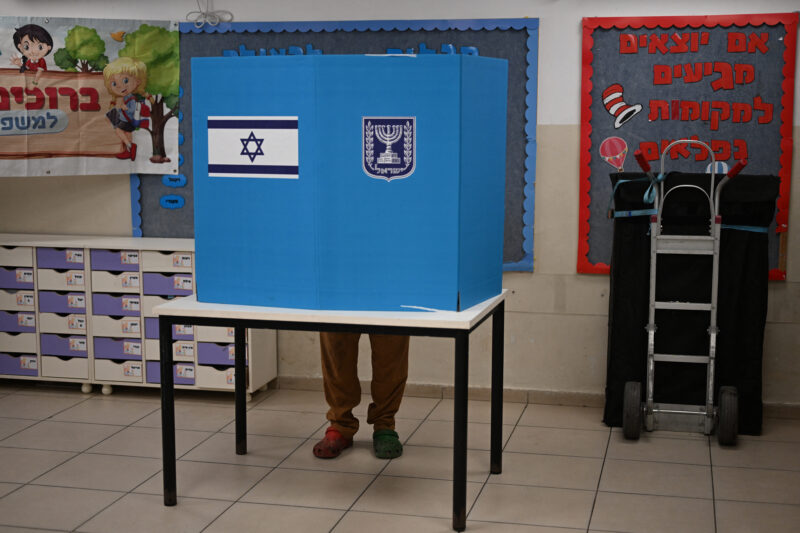
In Oakland County, the largest Jewish community in the state, Rogers won a majority of the Jewish vote, comfortably outpacing El-Sayed 52-39%. Much of Oakland County lies in the district of Rep. Haley Stevens (D-MI), who withdrew her endorsement of El-Sayed and switched it to Rogers in the closing days of the race.
El-Sayed performed strongest with Jewish voters in the progressive college towns of Ann Arbor and East Lansing.
Data analyses since the election have also found that El-Sayed significantly underperformed Democratic Gov.-elect Jocelyn Benson and Democrats in the Statehouse in heavily Jewish precincts in Oakland County.
Rogers also comfortably won Jewish voters affiliated with a synagogue by a double-digit margin, 54%-42%.
Benson won 69% of the Jewish vote, according to the poll, running 19 points ahead of El-Sayed, and more in line with typical Jewish voting patterns in the state, which have traditionally split approximately 70% Democratic and 30% Republican. In the overall electorate, El-Sayed ran just two percentage points behind Benson.
According to the poll, Benson won 98% of self-identified Jewish Democrats, compared to 70% who supported El-Sayed. Over one-third (37%) of Jewish voters who supported Sen. Elissa Slotkin (D-MI) in 2024 did not vote for El-Sayed.
Fifty-nine percent of Rogers voters said their vote was “mainly a vote against El-Sayed.”
Nearly all Jewish Democrats who opposed El-Sayed said they would likely have voted for a different Democrat, with 87% citing antisemitism as a concern about El-Sayed, 84% pointing to his comments following a terror attack targeting a Michigan synagogue earlier this year, 83% expressing concerns about his positions on Israel, 82% citing his treatment of Michigan’s Jewish community and 71% pointing to concerns about people with whom he campaigned or from whom he accepted support.
Statewide, 81% of all Jewish voters said that antisemitism, concerns related to Michigan’s Jewish community and Israel policy impacted their vote to some degree.
Most voters surveyed (67%) identified as Democrats or said they leaned towards Democrats, while 26% said they identified as or leaned Republican.
A poll of Jewish early voters by The Jewish Majority found that El-Sayed won 59% of the early vote, meaning El-Sayed did worse among Election Day voters statewide. The new poll combines that survey with a postelection round of interviews, for a combined sample of 883 Michigan Jewish voters.
“A Democratic Senate candidate earning just half of the Jewish vote should be a blaring alarm for every Democratic leader in the country, especially when that candidate underperformed the Democratic nominee for governor by nearly 19 points,” The Jewish Majority’s executive director, Jonathan Schulman, said in a statement. “Democrats cannot assume Jewish voters will stay with them when their concerns are dismissed. Republicans should not assume a vote against one Democrat is a lasting endorsement of their party.”
“This year’s Democratic wave defied recent cycles that have been decided by razor-thin margins. Officials must understand that even a modest shift in the Jewish vote can be decisive. Both parties have to earn it,” Schulman continued.
More Stories
STAFF SHAKEUP
Trump taps Stephen Miller as chief of staff after Susie Wiles resigns
SCHOOL DAZE
Higher education leaders call for overhaul of ‘broken’ university system

TRANSITION TENSIONS
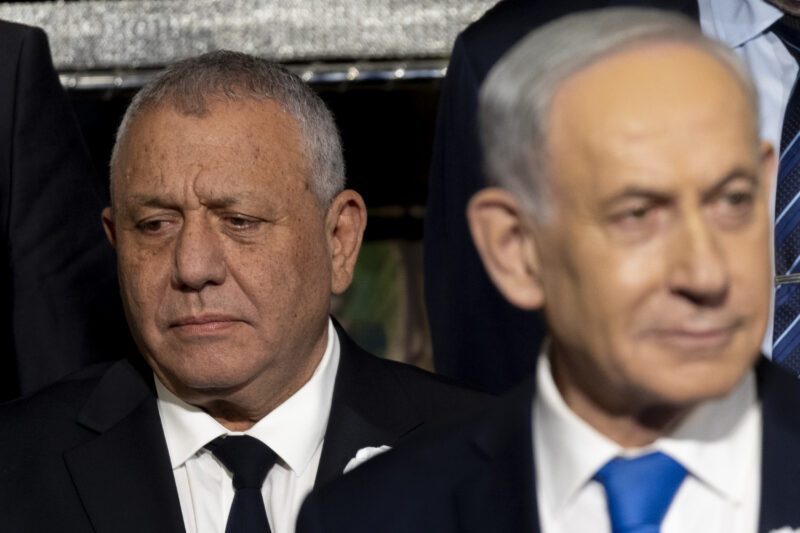
Eisenkot warns Netanyahu against launching war during coalition talks
POWER OF THE PURSE
Senate Democrats tee up December funding fight over Iran war
CONDITIONAL CONFIRMATION
Cruz ties support for Somalia ambassador nominee to U.S. recognition of Somaliland
SECOND ACT
Ex-Heritage aide behind Tucker Carlson video to lead new GOP recruiting group
Please log in if you already have a subscription, or subscribe to access the latest updates.
 Continue with Google

 Continue with Apple