























































Arab parties still don’t meet Eisenkot’s coalition conditions
While the Joint List leader Yousef Jabareen said that he is ‘truly ready’ to remove Netanyahu from office, he made clear that he would not be able to meet Eisenkot’s conditions

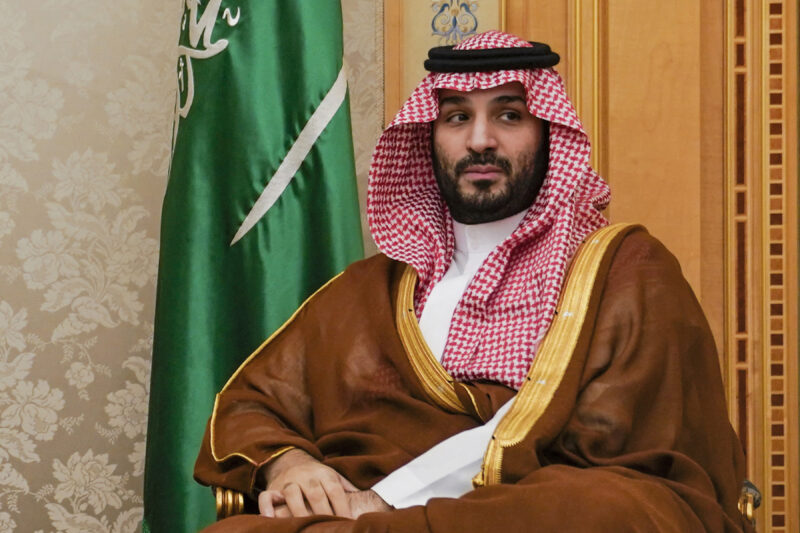
(AHMAD GHARABLI / AFP via Getty Images)
Yousef Jabareen, leader of Israel's Arab-led Joint List political alliance, (C) and other members cheer at the alliance's campaign headquarters in the northern Israeli city of Nazareth on October 27, 2026, as the first exit polls are announced on television during Israel's legislative election.


 Add JewishInsider on Google
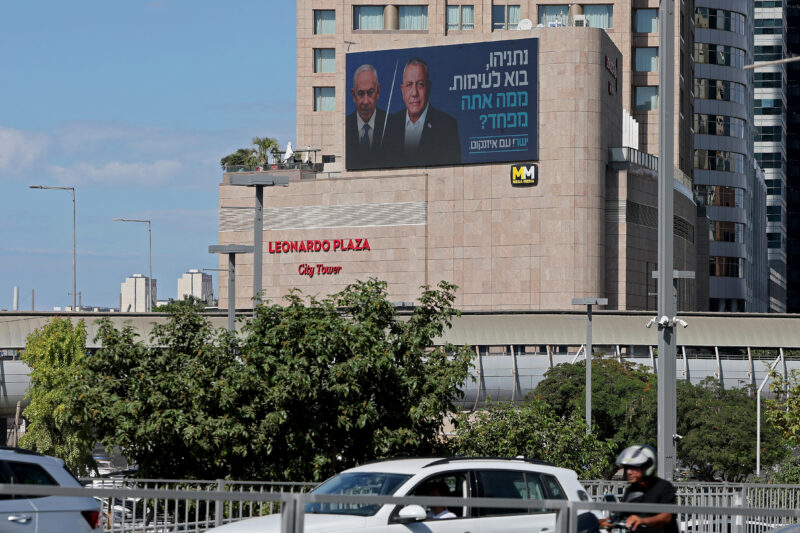
While most of the incoming Knesset was aligned against Israeli Prime Minister Benjamin Netanyahu following last week’s election, Yashar party leader Gadi Eisenkot’s ability to turn that majority into a coalition that includes Arab parties remained in doubt as of Tuesday.
Eisenkot’s bloc has 48 seats, far short of a majority in the 120-seat Knesset. The Knesset’s two Arab factions, Ra’am and the Joint List, received a total of 19 seats, which together with Eisenkot’s bloc could form a 67-seat majority. However, only Ra’am has ever been part of a governing coalition, in 2021-2022, while the three parties that make up the Joint List are ideologically opposed to doing so, bringing the possible coalition to 56 seats — short of the 61 needed for a majority.
Over the weekend, Eisenkot wrote on X that he “plans to act immediately to realize the clear parliamentary majority for the good of all Israeli citizens.”
He emphasized that he is maintaining his four conditions for partners in a coalition that is “Zionist and statesmanlike, and broad as possible”: that they recognize Israel as a “Jewish, democratic, liberal and egalitarian state”; that they are committed to the values of Israel’s Declaration of Independence; that they support mandatory service for all Israeli citizens, whether military or civilian; and that they publicly recognize Hamas as a terrorist organization which must be destroyed as a military and governing force in Gaza.
Eisenkot has not yet met with Arab party leaders, but has called a meeting on Tuesday with the leaders of the other parties in his bloc. Yisrael Beiteinu leader Avigdor Liberman said in a press briefing on Monday that he would not be in a coalition with Haredi parties, Netanyahu or Arab parties — even if they only supported a minority coalition from outside of government. .
While Joint List leader Yousef Jabareen said in an interview with Israel’s Channel 12 on Saturday that he is “truly ready” to remove Netanyahu from office and told The Guardian that he would back an Eisenkot-led government from the outside in order to do so, he made clear that he would not be able to meet Eisenkot’s conditions.
Asked repeatedly if he would call Hamas a terrorist organization, Jabareen declined, saying, “We condemn the massacre in the Israeli communities bordering on Gaza,” and adding, “The Palestinian people are made up of several movements. Often all of the Palestinian political movements are treated as illegitimate organizations.”
Hadash, the communist party within the Joint List, doubled down on Monday on its opposition to being part of a government led by Zionist parties, which are committed to Israel being a Jewish state.
While “toppling the government of Netanyahu, [National Security Minister Itamar] Ben-Gvir and [Finance Minister Bezalel] Smotrich is an urgent historic mission … we do not have illusions about the political alternative and replacing the government alone will not bring the end of the occupation or a deep change in Israeli policy,” the party stated.
As such, it said, “any support for an alternative government must be conditional on the promise of a security net for the Arab public and weaker sectors, while maintaining [Arabs’] political independence and not joining the government.”
Ra’am leader Mansour Abbas took a more conciliatory tack, saying in a press briefing that Eisenkot’s conditions “will not be an obstacle” to forming a government, but noted that his party joining the bloc will not lead to a majority.
Abbas set his own conditions for joining a coalition: that all members be determined to replace Netanyahu, and that they are creative and flexible in coalition negotiations.
Meanwhile, Netanyahu and his allies in recent days have railed against the opposition bloc, accusing it of attempting to form a coalition with terrorist sympathizers.
”The Israeli public does not want a government that depends on Ra’am and the Joint List, parties that support terror and reject the existence of a Jewish state,” Netanyahu wrote on X. “A clear majority chose Likud as the largest party and me as prime minister to lead the next government. We aim to establish a broad government with our partners and with any party that wants it and does not support terror.”
Soon after, Eisenkot warned against “spin about my and my party’s political activities. That is the old politics; it is not our way. Be patient. When there is what to update, I promise to do so fully, in a way that is detailed and trustworthy, in my name and my voice. False spins will not influence decision-making, only the right thing to do for the State of Israel will.”
More Stories

LAYING DOWN THE LAW
Four new defendants charged in plot targeting Jewish groups, University of Michigan leaders

60 MINUTES SPOTLIGHT
El-Sayed says Palestine has a right to exist, but puts conditions on Israel’s right to exist
PREACHING HATE
Hasan Piker compares suburban Jewish voters to white supremacists in online rant
MANAMA MOMENT
Bahrain prepares to host Manama Dialogue amid economic, security disruptions

SURROGATE ASSURANCE
Mallory McMorrow makes the case for El-Sayed to Jewish voters

carlson's claim
Carlson’s claim of Israeli push for nuclear strike on Iran gains traction among liberal figures
Please log in if you already have a subscription, or subscribe to access the latest updates.
 Continue with Google

 Continue with Apple