















































Bipartisan House members demand administration hold to no-enrichment position
An early draft of the letter stated that the administration’s alleged deal proposal was weaker and more dangerous than the original nuclear deal

GETTY IMAGES
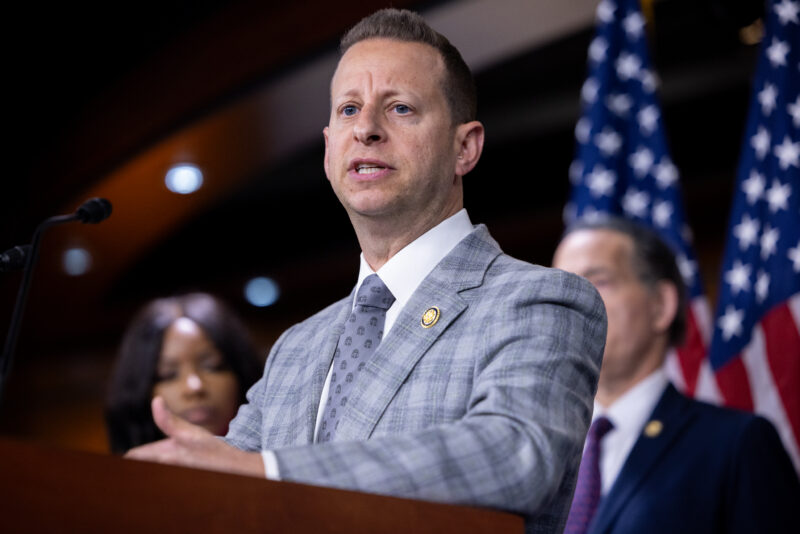
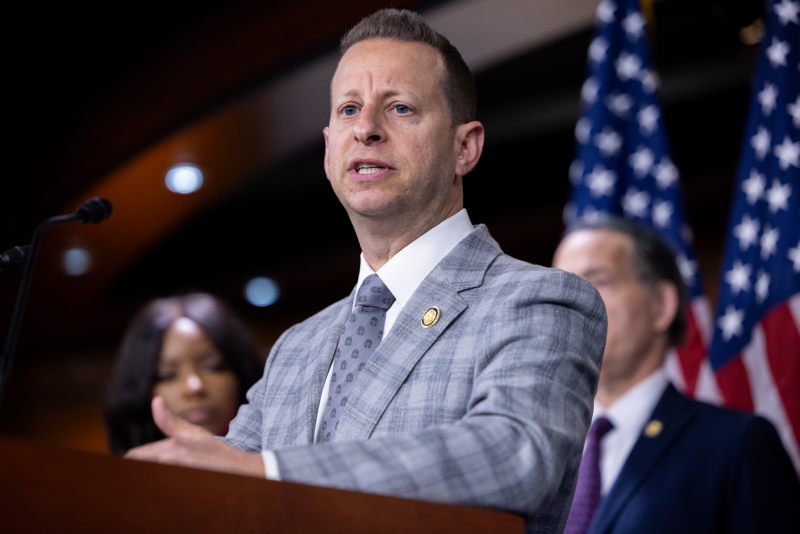
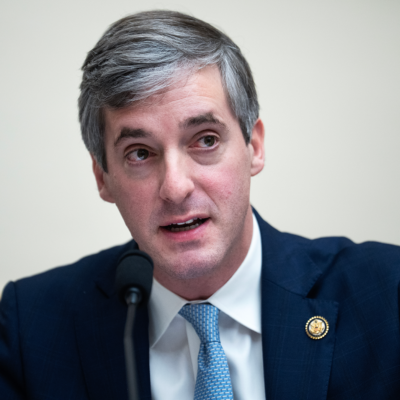
Rep. Josh Gottheimer, D-N.J., leaves the U.S. Capitol after the House passed the One Big Beautiful Bill Act on Thursday, May 22, 2025.


 Add JewishInsider on Google
A bipartisan group of nine House members wrote to the Trump administration on Friday emphasizing — as the administration continues to push for a nuclear deal — that U.S. negotiators must not allow Iran to maintain any nuclear enrichment capacity if a deal is reached.
An early draft of the letter circulated by Reps. Josh Gottheimer (D-NJ) and Don Bacon (R-NE) prior to Israel’s strikes on Iran on Friday forcefully condemned the administration over reports that it had proposed allowing Iran to temporarily maintain low-level enrichment, criticizing that proposal as weaker and more dangerous than the original nuclear deal, and describing the talks as an Iranian delay tactic.
The finalized letter, which follows a similar communique from a bipartisan group of members earlier this month, again highlights that the administration will face vocal opposition on both sides of the aisle if it agrees to a deal that allows Iran to maintain a pathway toward a nuclear weapon.
“[Israel’s] decisive action comes after two months of unsuccessful diplomacy and represents a critical chance to stop the Iranian regime from acquiring a nuclear weapon,” the final version of the letter reads. “Tehran’s pursuit of nuclear arms, combined with its long record of fueling violence through terrorist proxies, has brought this moment upon itself.”
The letter argues that the U.S. must insist upon “zero enrichment, zero pathway to a nuclear weapon” and warns that any nuclear deal that does not meet those benchmarks “will face strong bipartisan opposition in Congress.”
The letter states that Iran “spent decades deceiving the international community and using diplomacy as a delay tactic while building the capacity to produce nuclear weapons” and describes the Israeli campaign against Iranian nuclear, military and critical infrastructure sites as “an opportunity to bring an end to Iran’s nuclear ambitions by ensuring their complete dismantlement in negotiations.”
The lawmakers said that they are “deeply concerned by Iran’s continued use of stalling tactics,” calling the talks an effort to buy time to avoid snapback of United Nations sanctions and rebuild Iran’s nuclear program. They noted that the Trump administration’s own two-month deadline for talks had already passed.
“It is time Iran makes a decision — make meaningful concessions or face crushing diplomatic pressure in addition to Israel’s military pressure,” the lawmakers wrote, urging the administration to work with allies to reimpose sanctions by next month — in advance of the October deadline.
The finalized letter was led by Gottheimer and Bacon and co-signed by Democratic Reps. Jared Moskowitz (D-FL), Greg Landsman (D-OH), Juan Vargas (D-CA), Tom Suozzi (D-NY), Ritchie Torres (D-NY), Brad Sherman (D-CA) and Darren Soto (D-FL).
The previous version of the letter, drafted and circulated by Gottheimer and Bacon prior to the beginning of the Israeli campaign, more directly criticized the administration and its reported proposal to allow Iran to maintain some level of enrichment in an interim capacity.
“Such a proposal undermines U.S. national security and the security of our allies in the region,” the draft read. “The Iranian regime cannot be trusted … The Iranian regime must not be permitted to enrich uranium on its soil, at any level, under any circumstances.”
“We are deeply concerned that the United States is even entertaining proposals that would enable any form of enrichment — particularly one that involves U.S. assistance to build nuclear reactors in Iran and allows enrichment until a regional enrichment consortium facility is built, something Iran will demand is on their soil,” the draft continued.
The draft framed the delays and that proposal, as outlined, as “not just weaker than the JCPOA but far more dangerous,” referring to the Obama-era Joint Comprehensive Plan of Action, imposing fewer restrictions and greater concessions than the original 2015 nuclear deal at a time when Iran is only weeks from nuclear breakout.
It argued that a deal should also address Iran’s support for terrorism, something that Secretary of State Marco Rubio said, as recently as last month, has not been part of talks.
“If Iran refuses, we must return to a policy of maximum pressure and strategic deterrence,” the draft read. “The Iranian regime responds only to strength — not appeasement.”
The draft stated that the negotiations bore the hallmarks of Iranian obstructionism and stalling tactics.
“Iran continues to slow-walk negotiations, refusing to make meaningful concessions — all while continuing to grow its stockpile of enriched uranium,” the draft read. “If this process feels like a delay tactic, that is because it is.”
The draft also condemned Trump’s discussions with Russian President Vladimir Putin about joining the nuclear talks as “not only naïve, [but] incredibly dangerous.”
“Putin is openly allied with Iran and is actively engaged himself in an unprovoked war in Ukraine,” the draft read. “Asking for Putin’s help in securing a nuclear deal with Tehran risks legitimizing the actions of both regimes and could invite further instability.”
More Stories

CLAUDE CONTROLS
Anthropic report reveals Iran-linked actors used AI tools to target Jews, develop weapons
BACKUP PLAN
Buffer zone bill aims to protect worshipers when prosecutors fail to act, lead GOP sponsor says
YE SAYER
Blakeman-backed House candidate defended Ye’s antisemitic rants
SENSE OF SECURITY
Mamdani and NYPD unveil safety plans for 9/11 memorial, Rosh Hashanah

delay deja vu
Department of Education again delays report on foreign funding to universities

SELF-SCRUTINY
Most Middle East scholars say U.S. academia has lost its way since 9/11, survey finds
Please log in if you already have a subscription, or subscribe to access the latest updates.
 Continue with Google
 Continue with Apple