





















The Treasury Department also sanctioned an Italian tech group that provided digital infrastructure to groups linked to Hamas and the IRGC
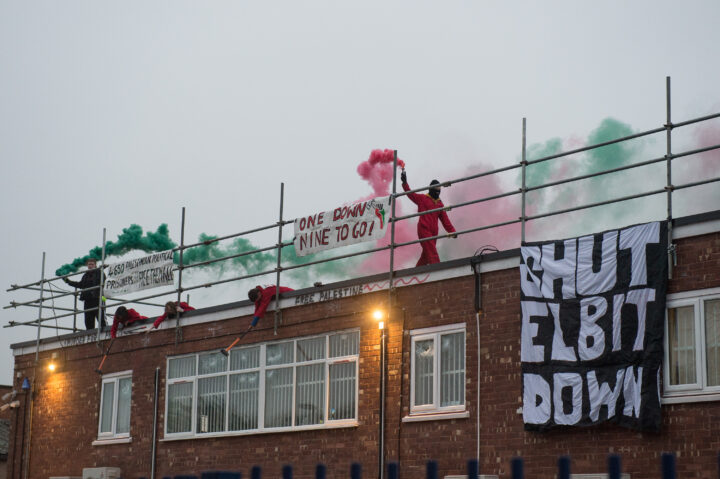
Guy Smallman/Getty Images
The exterior of the building is vandalised as Palestine Action activists occupy the roof of the Elbit Factory on Jan. 24, 2022 in Shenstone, England.


 Add JewishInsider on Google
The Treasury Department’s Office of Foreign Assets Control sanctioned several far-left organizations on Wednesday, including the U.K.-based Palestine Action and transnational group Masar Badil, which is linked to the Popular Front for the Liberation of Palestine.
Palestine Action was founded in 2020 with the stated goal of “ending global participation in Israel’s genocidal and apartheid regime,” with a particular focus on attacking Israeli defense manufacturer Elbit Systems. It was proscribed as a terror group by the British government in July 2025 after the groups engaged in several high-profile break-ins at Israel‑linked defense companies and British military installations, including an August 2024 incident where activists physically assaulted security personnel and police at an Elbit office.
Treasury noted in its designation of the group as a Specially Designated Global Terrorist organization that Palestine Action promoted their activities on social media to encourage “similar tactics internationally, including within the United States and along the U.S.-Mexican border.”
Masar Badil was also designated as an SDGT after being identified as a transnational front for the Samidoun Palestinian Prisoner Solidarity Network — an organization that has itself been sanctioned for operating as a front for the PFLP, a designated Foreign Terrorist Organization since 1997.
The department stated that Masar Badil is “inextricably linked with Samidoun, and described by one of its senior leaders as part of the same political project.” The two groups share executive committee members, senior leadership, and fundraising mechanisms.
The designation places the entities in the same category as Hamas, al-Qaida and ISIS, while barring foreign supporters from entering the United States. It marks the first known case of British left-wing activist groups being targeted by American counterterrorism sanctions, effectively severing the organization from the global financial system.
The action also blocks all U.S.-based assets and property interests of the designated entities and individuals, while prohibiting American citizens and foreign financial institutions from conducting transactions with them under threat of civil penalties or secondary sanctions.
In addition to the Palestinian-linked networks, OFAC sanctioned Italy-based Autistici Inventati for providing digital architecture, encrypted communications and web hosting to far-left cells and designated foreign terrorist organizations, including the Kurdistan Workers’ Party as well as Hamas and Iran’s Islamic Revolutionary Guard Corps.
Members of Congress acknowledged Israel-Syria normalization is a worthwhile goal, while recognizing the limits of the current geopolitical landscape
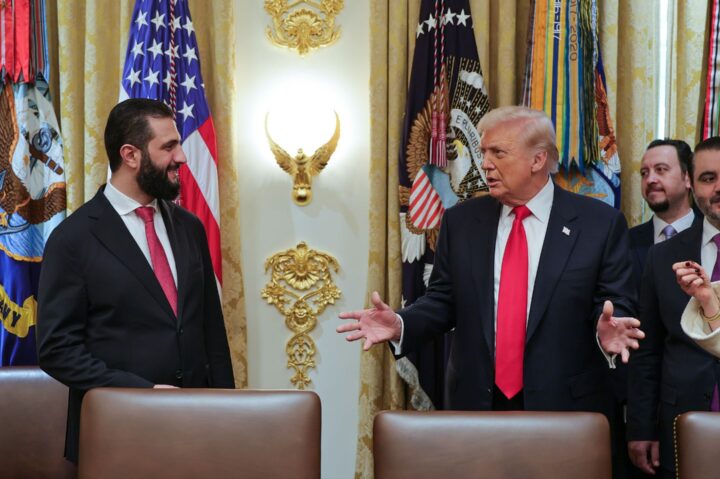
Syrian Presidency/Anadolu via Getty Images
President Donald Trump meets with Syrian President Ahmad al-Sharaa at the White House on Nov. 10, 2025.
As the Trump administration moves to end the diplomatic isolation of Syria, dismantling decades of U.S. sanctions in the process, lawmakers are offering mixed assessments of whether Washington should have conditioned that relief on steps toward normalizing relations with Israel.
Rep. Brad Sherman (D-CA) told Jewish Insider the Trump administration “should be urging” Damascus to improve economic and political relations with Jerusalem in exchange for sanctions relief, “but I would say that you’ve got to have a consistent standard.”
Sherman noted he would “like to see Syria move in that direction,” toward joining the Abraham Accords, “even if they can’t join the accords yet.” However, he cautioned that the administration’s leverage depends on what Damascus is seeking, drawing a distinction between whether Syria is asking for direct U.S. aid or “if they’re simply asking for the same normal treatment” that the U.S. provides to other sovereign nations.
“We need to do everything we can to see Syria succeed and write a new chapter, and our support needs to come with expectations and accountability,” Rep. Brad Schneider (D-IL) told JI. “The United States has an opportunity to work to bring Syrians and Israelis together to an agreement that will not just improve the lives of people living on each side of the border, but help pave the path towards better stability throughout the region.”
Congress and the Treasury Department lifted the U.S.’ longstanding sanctions on Syria unconditionally in June 2025.
Rep. Steny Hoyer (D-MD) agreed that the Trump administration should be pursuing normalization as part of its efforts with Damascus, but said the current focus on prioritizing stability is a “worthwhile objective” and “positive” effort.
“I think a stable, democratic [Syria] may be too much of a hope, but a stable and non-terrorist-supporting Syria is important to the Middle East and to the United States of America and to some type of global stability,” Hoyer said to JI. “Efforts to normalize the government are positive and part of that will ultimately involve normalizing relations between their neighbor Israel and themselves, and I think that will be determined by [Syria’s] performance.”
Rep. Troy Nehls (R-TX), meanwhile, deferred to the White House’s diplomatic strategy. “I would let the administration do the negotiations as it relates to Syria. I’m not part of those discussions, but Trump is trying to make the world a safer and a better place for everybody, and so if he can find a way to cut some deals, I support it.”
Rep. Tim Burchett (R-TN) told JI he would like to see relations between Syria and Israel improve, but did not push back on the White House lifting sanctions before that progress was made.
“No, I just think it’s something we look at. It’s always going to be a variable, but words are cheap, actions are where we got to see it,” Burchett said. “I haven’t trusted Syria as far as I can throw them, so we’ll just see what happens. I’d prefer they normalize relations with Israel, but I mean that fight has been going on since before the time of Christ. I don’t know that we’re going to solve it by signing a piece of paper.”
Foreign policy experts told JI that normalization between Israel and Syria remains stalled by highly complex territorial and political issues, making it unrealistic to leverage relief on such progress.
“Normalization between Israel and Syria is not remotely close and shouldn’t even be on anyone’s radar,” said Michael Koplow, chief policy officer at the Israel Policy Forum. “Expecting any imminent normalization between Syria and Israel given decades of enmity, an ongoing IDF presence in southern Syria and severe disagreements over Syrian policy toward its Druze and Kurdish minorities is not realistic.”
Koplow explained that the administration is focused on “taking advantage of the end of the Assad regime” to give the nascent government “a chance to succeed,” while pulling Damascus toward Washington and away from hostile regional actors.
“U.S. policy towards Syria should not be judged on whether it is going to normalize with Israel, but over other more pressing and imminent concerns that impact U.S. priorities,” Koplow said.
John Hannah, a senior fellow at the Jewish Institute for National Security of America, agreed that normalization with Israel “hasn’t been on the agenda.”
“In Syria’s eyes, and certainly in the eyes of [Syrian President Ahmad al-]Sharaa and the ex-jihadists who came to power with him, normalization without recovering the Golan Heights is an absolute non-starter and would be widely viewed as abject and unacceptable surrender and capitulation,” Hannah said. “Of course, it goes without saying that any discussion about withdrawing from the Golan is equally anathema in Israel. So I just don’t see normalization as being in the cards right now.”
Israel formally annexed the Golan Heights in 1981, after capturing the territory from Syria in the 1967 War. The IDF has held additional territory in southern Syria as a security zone since the collapse of the Assad regime.
President Donald Trump reportedly asked Israeli Prime Minister Benjamin Netanyahu earlier this month to pull back IDF troops from Syria.
Still, Hannah noted that al-Sharaa has shown “no interest whatsoever in fighting with Israel” since rising to power and has taken positive steps toward Jerusalem.
“On the contrary, for most of 2025 [al-Sharaa] was practically begging Israel to resurrect, update and strengthen the Israel-Syria disengagement agreement of 1974,” Hannah said. “Indeed, for the first time in 25 years, al-Sharaa, the former Al-Qaida leader, authorized direct Israel-Syria negotiations under U.S. auspices to reach a new security agreement.”
Hannah suggested the U.S. still has an opportunity to “play some hardball” and use rolling back Syria’s State Sponsor of Terrorism designation as leverage. Trump formally initiated the process to lift the designation, which has been applied to Syria since 1979, earlier this month.
The White House could press “for an expansion of security, economic and social relations with Israel,” Hannah said. “That’s separate from a demand for full normalization, which I just don’t see as realistic under present circumstances.”
Al-Sharaa has worked to earn the overtures from Washington by cooperating with U.S. priorities, Hannah argued.
“He ensured Iran and Hezbollah’s eviction from Syria and has systematically fought their efforts to maintain Iran’s land bridge to Lebanon, engaging in several firefights with Hezbollah units trying to smuggle weapons across the border,” Hannah said. “He directed his security forces to work closely with CENTCOM in combating ISIS, cooperated with the U.N. to come clean on Assad’s chemical weapons program and constrained the ability of Palestinian terrorist groups to operate from Syrian soil.”
Despite these positive security developments, analysts warn that serious issues remain about al-Sharaa’s governance.
“There should be concerns about ongoing extremism within the ranks of Syrian leadership and the military, and the al-Sharaa government’s ties to Turkey and to what extent Syria is going to trade Iranian domination for Turkish domination,” Koplow said.
Hannah raised similar alarms regarding the internal makeup of the transitional government and its growing reliance on neighboring powers.
“There is definitely a legitimate question of whether Trump surrendered America’s overwhelming economic leverage too cheaply by not demanding even more from Sharaa,” Hannah said. “For example, by requiring the decommissioning of radical jihadist groups that he incorporated wholesale into his new army, holding to account those forces in his service that committed massacres against Alawites and Druze civilians in 2025 and guaranteeing full rights and protections to Syria’s disparate religious and ethnic minorities, including the Kurds who fought alongside the U.S. against ISIS for more than a decade.”
A U.S. official said the longstanding designation could be removed by the end of the summer
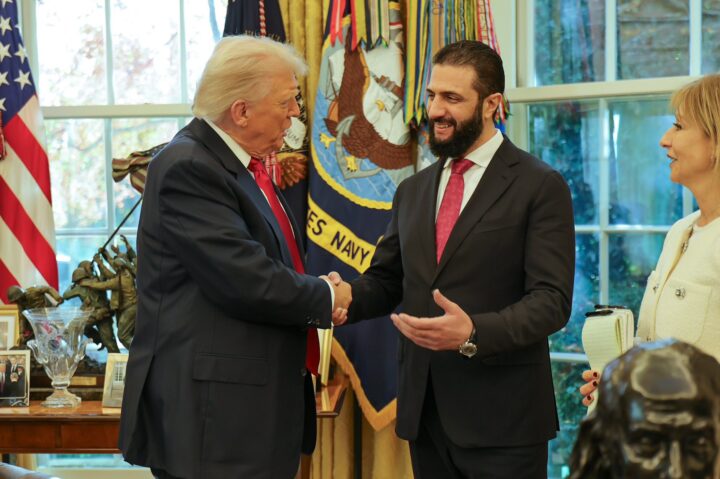
Syrian Presidency
President Donald Trump greets Syrian President Ahmad al-Sharaa in the Oval Office on Nov. 10, 2025.
As the Trump administration moves to dismantle much of the decades-old U.S. sanctions regime imposed on Syria, one major obstacle remains: Damascus is still designated as a state sponsor of terrorism by the U.S. The White House and lawmakers have signaled that could be about to change, in another move to attempt to pull Syria back into the global order.
Syria remains one of just four countries — alongside Cuba, North Korea, and Iran — designated as an SST. It is a status Damascus has held since 1979 and its current government, led by President Ahmad al-Sharaa, has actively sought to shed.
During the second Trump administration and following the ouster of former Syrian President Bashar al-Assad, President Donald Trump and Congress have worked to rapidly unwind U.S. sanctions on Damascus in an effort to integrate the country into the global economy.
Congress repealed the Caesar Act last year, which had long imposed crippling secondary sanctions on Syrian individuals, companies and entities tied to the Assad regime. Under the direction of an executive order from Trump, the Treasury Department subsequently reviewed and waived a sweeping array of sanctions, though Washington still maintains targeted restrictions on Assad and his immediate associates.
As part of Trump’s executive order last year, the administration mandated a formal review of Syria’s SST designation. While the State Department has publicly maintained that there is no specific timeline for a conclusion, a U.S. official said the sanctions “will be off by end of summer,” Politico reported on Thursday. Trump “made [Secretary of State Marco] Rubio move it forward after Sharaa asked him,” the official said in messages to Mouaz Moustafa, executive director of the Syrian Emergency Task Force.
The prospect of delisting has also garnered support from members of Congress. Senate Foreign Relations ranking member Jeanne Shaheen (D-NH) told Politico that “other sanctions like the State Sponsor of Terrorism designation remain obstacles in Syria’s path to economic recovery and stability.”
On the other side of the aisle, Rep. Joe Wilson (R-SC) said in a video alongside the Syrian American Council’s Mohammed Ghanem this week that he has “an agreement with Secretary of State Marco Rubio … to eliminate the State Sponsor [of Terrorism] sanctions.”
“I’m just so confident that it would be bipartisan … because the American people are united in the hopes and dreams and possibility of a sovereign, peaceful and prosperous Syria,” Wilson said. “We have faith in the people of Syria, we want the best for the people of Syria to have the freedoms that can be enjoyed in all of the Middle East.”
Ahmad Sharawi, a senior research analyst at the Foundation for Defense of Democracies, told Jewish Insider that Washington would like to see Syria removed from the list in an effort to “pull Damascus out of the Iranian-Russian orbit and move it toward a U.S.-aligned regional order.”
“That shift is already underway, given that President Trump has rolled back most Syria sanctions,” Sharawi said. “For Damascus, removal from the list is essential to unlocking investment and reconstruction, especially as Gulf states signal a willingness to pour money into the country. Syrian officials have argued that the designation continues to limit the country’s recovery.”
However, Sharawi said that Syria should not be removed “unconditionally.” He argued that while Syria has taken important steps — such as joining the anti-ISIS coalition and “disrupting some Hezbollah weapons flows through Syria” — that Damascus still has work to do.
“The right approach is conditional delisting,” Sharawi said. “There are still designated foreign jihadist factions that have been integrated into the Syrian army, and ISIS has reportedly infiltrated parts of Syria’s new security structures. The United States should use the designation to demand measurable progress that brings Syria closer into the regional order.”
Armed Services Committee chair Roger Wicker broke his silence on Thursday, warning the deal would make Iran’s Obama-era payoff ‘look like a pittance’

Tom Williams/CQ-Roll Call, Inc via Getty Images
Senate Armed Services Committee Chairman Roger Wicker (R-MS) arrives for a confirmation hearing in Dirksen building on Tuesday, May 13, 2025.
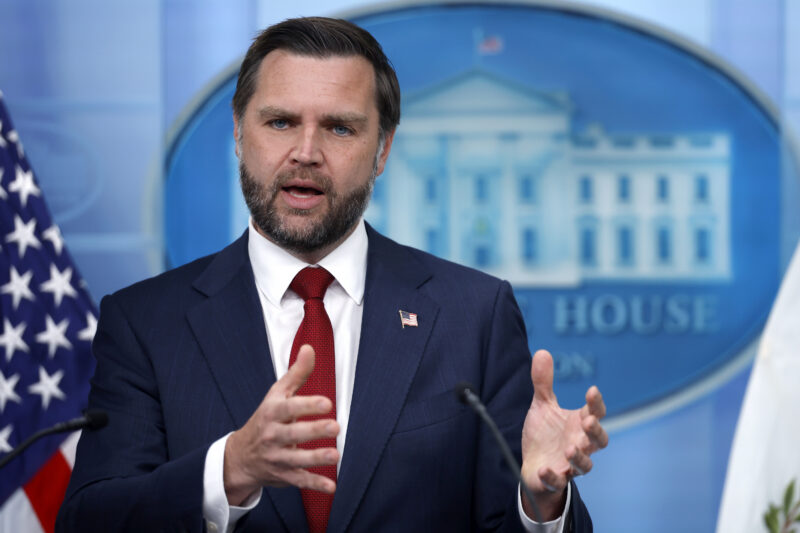
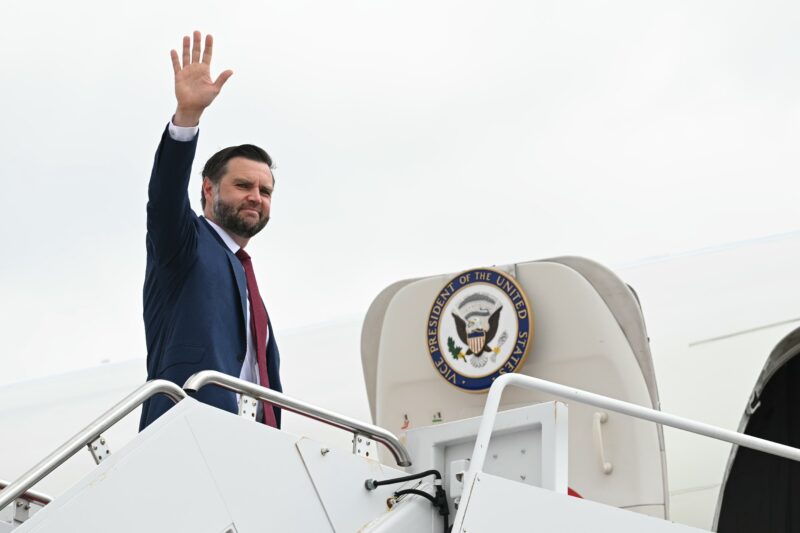
Senate Republicans continued on Thursday to air concerns about the U.S. memorandum of understanding with Iran, in some cases fueled further by Vice President JD Vance’s comments dismissing the effectiveness of U.S. sanctions and lambasting Israeli government officials who have objected to the deal.
Sen. Roger Wicker (R-MS) — the chairman of the Senate Committee on Armed Services — issued a statement ripping into the agreement, saying he’s “concerned [it] negotiates away the victories of Operation Epic Fury in ways that are completely out of step with the president’s goals.” Wicker had for days told reporters he was “withholding comment” on the MOU.
He said that, even though the $300 billion reconstruction fund outlined in the deal is not coming from U.S. taxpayer money, it “would make Iran’s payoff under President [Barack] Obama’s 2015 deal look like a pittance by comparison” and that it “would be an error to force Israel to stand down against Hezbollah.”
He said he also opposes any sanctions relief or unfreezing of funds for Iran “in exchange for Iran’s mere agreement to negotiate for another 60 days. The Iranian regime has not renounced its ultimate goal — ‘Death to America, Death to Israel.’ The regime will invest every penny it receives to further that aim.”
But Wicker pointed ultimate blame for the final shape of the deal at the “intermediaries,” rather than Trump himself.
Wicker told reporters he expects to hear from Vance about the deal but that no briefings have yet been arranged or scheduled.
Reiterating a stance he expressed a day prior, Sen. Ted Cruz (R-TX) said, “History demonstrates giving billions of dollars to theocratic lunatics who want to kill you is an exceptionally bad idea. So I hope we don’t do that.”
Asked about the comments by Vance — a potential candidate in the 2028 GOP presidential primary — Cruz, who mounted his own presidential bid a decade ago and is rumored to be considering a 2028 run, said, “I think the vice president can speak for himself.”
Sen. Thom Tillis (R-NC) said that he plans to go through the agreement in detail to compare it to the 2015 Joint Comprehensive Plan of Action because “what we don’t want to do is repeat that mistake.”
Tillis rejected Vance’s comments that sanctions have not been effective. “You’ve seen all kinds of their behavior changes in reaction to sanctions,” Tillis told Jewish Insider. “To suggest it’s not working would suggest that broadly sanctions don’t work, and we all know that that’s just factually incorrect.”
He told JI that “clearly any sanctions that are subject to congressional approval, he needs to come to Congress. Pretty straightforward. They covered that on ‘Schoolhouse Rock.’”
Tillis, who is retiring, also called the deal a “very important moment” for Vance. “It’s definitely a two-edged sword. Coming up short’s probably not good for him, but it could be a great achievement for him.”
Sen. Mike Rounds (R-SD) told JI he hadn’t heard Vance’s comments on sanctions, but he said that “it seems to me that there are billions of dollars that have been held from Iran, which has not gone to terrorist activities, and I think that is a good thing. So, with regard to that, it clearly had an effect. Whether or not it was completely effective is debatable.”
Rounds said he was concerned that Israel was not a party to the negotiations but “there’s an expectation somehow that there would be a limitation on activity going on in Lebanon that we’re not involved with at all, but that Israel is.”
He emphasized that “the Israeli government has a right to defend its people” from the yearslong ongoing attacks from Hezbollah, “and I don’t see that necessarily correctly addressed within this original memorandum. Perhaps there’ll be more meat on it in an actual agreement.”
The senator said he’s unsure whether the Iran Nuclear Agreement Review Act, which blocks the lifting of sanctions or unfreezing of funds for a congressional review period on any deal pertaining to Iran’s nuclear program, would be applicable, or what legislative steps would be involved if it were.
“We need to learn more about what [Trump’s] intent is and how permanent the two parties expect this to be,” Rounds said. “There’s a lot of questions we don’t have answers to yet, but it’s early in the process.”
He raised concerns about how the agreement would be enforced “particularly if you release all of their funds immediately, they’re allowed to do with it whatever they want. In the past, they’ve used that to fund terrorist activities. The first one that comes to mind is Hezbollah, which sits in Lebanon right now and has been attacking Israel relentlessly for years.”
Sen. John Cornyn (R-TX) said that “everything I’ve heard about it causes me concern” and he believes the president agreed to the deal because he was “concerned about the midterm elections and gas prices and blockage of the Strait of Hormuz.”
“This gets that open, but I think he’s had to pay a very deal price to get that done, and I think we should be clear-eyed and realistic that this isn’t going to persuade the Iranian regime to go in peace,” Cornyn, who is retiring after being defeated by a Trump-backed primary challenger, said.
He said that the steps taken by U.S. military operations to degrade Iran’s ballistic missile program and military-industrial base and delay its nuclear program were positive, but “I think we ought to be realistic about where we are. It’s temporary. It’s certainly not a permanent solution.”
Cornyn said he does not believe that Trump was joking when he said on Wednesday that he would blame Vance if the deal goes awry, and that the outcome of the deal might affect Vance’s prospects in the 2028 presidential race.
Cornyn said he expects that Congress, in its oversight role, will be examining the release of sanctions and whether the administration has the ability to lift those sanctions unilaterally.
Sen. Tom Cotton (R-AR), the Senate Intelligence Committee chair who also had not yet commented on the deal, said on Thursday that he has “concerns” over the MOU, warning that “certain aspects of this deal are a step in the wrong direction.”
The Arkansas senator told Fox News’ “The Story with Martha MacCallum” that Trump “deserves enormous credit for making Iran weaker than it’s been in decades, and we need to make sure that we don’t squander the leverage that we’ve built.” Cotton said he wished that the president “had continued with Project Freedom when it was announced a couple months ago.”
He also called on Trump to “use our military to force the Strait open and to keep it open, in addition to reimposing the blockade in the event that “Iran doesn’t keep its end of the bargain.”
Cotton pointed to the immediate lifting of sanctions on Iran’s oil exports, suggesting the funding would go toward malign activities, and raised concerns about the long-term control of the Strait of Hormuz.
“There’s certain parts of this memorandum that are a bit vaguer about Iran’s ability to access up to $100 billion of frozen funds or whether Iran can impose tolls on the Strait of Hormuz after two months,” Cotton said. “We’ll need more explanation there. I hope President Trump won’t allow those things to happen.”
Sen. Joni Ernst (R-IA) said that lawmakers had “very serious problems” with the JCPOA and the administration will need to come explain the deal because “I don’t want to see JCPOA 2.0.”
Sen. Lisa Murkowski (R-AK) told JI that she expects to find out “a lot more about the real details and particulars in these next 30 days.”
The Alaska senator said Congress needs “to make sure that the way that the president and the United States are interpreting this is in sync with how Iran is interpreting this, and I’m not certain yet that we’re at that place.”
Murkowski said “they can’t tell me” how the sanctions relief and reconstruction funding will work “so I certainly have a lot of questions that have yet to be resolved, but I also appreciate that the agreement allows for this next 30 days to work through reaching it.”
Asked about Trump’s suggestion on Wednesday that he wasn’t opposed to Iran possessing ballistic missiles, Murkowski replied, “That wasn’t helpful.”
Murkowski responded affirmatively when pressed on if those types of comments from the president and senior administration officials gave her pause about what the final agreement could look like.
Sen. Jim Justice (R-WV) said that “if we don’t have absolute assurances” that Iran can never obtain a nuclear weapon “then we lose,” though he said that “there’s still work to be done” in further negotiations.
“If it were to come to pass that we still have all kinds of concerns and no assurances and everything else, then it’s not good at all,” Justice said. “We have to have control one way or another” of Iran’s nuclear materials.
He said he couldn’t address disputes with Israel about the deal directly but said “the Israelis have been wonderful allies, and we’re going to stay arm-in-arm with them, period.”
Democrats, meanwhile, continued to lambast the agreement.
Sen. Richard Blumenthal (D-CT) told JI the administration is “desperate” and “flailing” and criticized the exclusion of Israel from the negotiations given that it continues to face attacks from Hezbollah, from which he said it must defend itself.
He said the agreement’s reliance on the U.N. as an enforcement and verification mechanism also hurts Israel.
“How can Israel trust the U.N.? Working with Israel is simply not in their toolkit. With the hundreds of billions of dollars provided, the unfreezing of sanctions immediately, the lifting of the freeze on assets, I don’t know how Republicans who attacked us with the JCPOA are going to handle that,” Blumenthal said. “This is a regime that continues to call the United States ‘the Great Satan.’ I don’t know what they’re thinking.”
And, he argued, the agreement effectively requires nothing of Iran: “I know the vice president’s line has been, ‘They only get the benefit of the bargain if they keep their side of it,’ but there is no side of it for them. They’re under no obligations here. It keeps the status quo for nuclear arms, lifting sanctions, lifting the freeze on assets, the $300 billion dollars.”
Sen. Chris Coons (D-DE) called the deal “appalling, flawed, pathetic failure” but “the inevitable conclusion of a combination of never making the case to the American people, flawed strategic provision, lack of grasp of the regional dynamics. How many ways can I say bad, bad, bad.”
On the issue of sanctions, Coons told JI, “President Trump cut a horrible deal where he is giving to Iran an enormous amount of released assets that have been frozen, sanctions relief that will generate tens of billions, if not hundreds of billions, and this reconstruction fund In combination, this is a massive infusion of cash to the mullahs and the IRGC. History shows the mullahs will not primarily use this money to build health clinics and schools.”
He said that Vance’s criticisms of Israeli officials are part and parcel of his efforts to sell an unsatisfactory agreement.
“I think JD Vance has been tasked with trying to sell a really bad deal and he is being as aggressive as he possibly can in knocking down one of the more obvious critics — a country that has a lot to lose,” he added. “If their opposition to the JCPOA was in any way principled, then they have to criticize a deal that’s worse than the JCPOA.”
Coons pointed responsibility for countering the deal toward Republicans, emphasizing that Iran will use the funding it receives under the deal for malign purposes. The Delaware senator said that there are “some things” Congress can do including conduct oversight of the congressional sanctions that the deal seeks to lift.
Sen. Cory Booker (D-NJ) echoed colleagues in describing the agreement as an “unconditional surrender” by the U.S. ‘because we get nothing from this deal.”
“All the specific benefits go to Iran. We get vague promises for potentially in the future hundreds of billions of dollars,” Booker said. “We’re allowing an extreme, terrorist supporting regime, that’s more extreme than when we began this, that chant ‘Death to America,’ to have more resources to do more things. So this is perhaps one of the biggest presidential blunders and failures in the last 20 years.”
He said that whether Senate Republicans stand firm and refuse to allow the administration to lift sanctions requiring congressional approval “is going to be the big test.”
“Will they just roll over and lay down for him, or will they stand up and provide the kind of checks, balances, oversight, and accountability when it comes to Iran, that they should be doing?” Booker asked. “They have a lot of levers to pull on the Republican side, where they right now control the Senate and control the House.”
He did not address what Democrats plans’ or role might be.
In the House, pro-Israel Democrats are also outraged by the deal and vowed not to support when it comes before Congress, which they said it must under INARA.
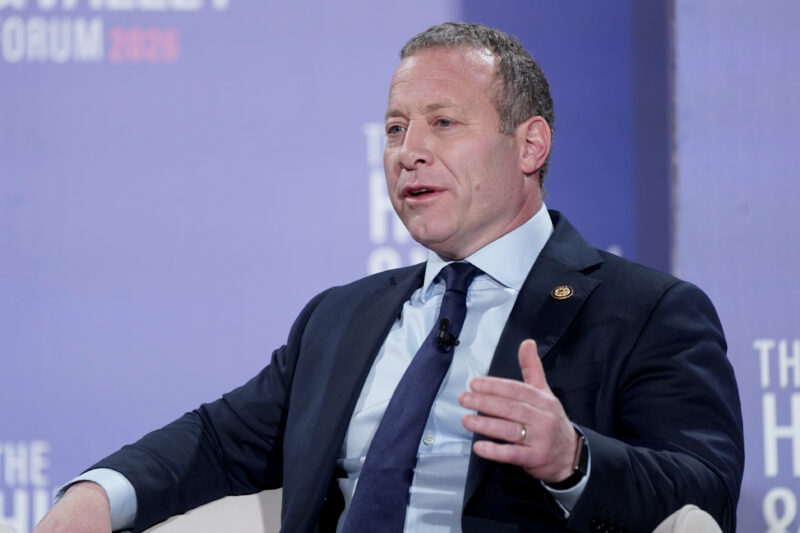
Rep. Josh Gottheimer said he is “totally dumbfounded by this agreement, and, like many, in a state of disbelief,” adding that the U.S. “got nothing” and “not one core objective was meaningfully met.”
He predicted that the next phase of the deal will never come about, and said the U.S. is “selling out Israel” and “kowtowing to Hezbollah terrorists, by tying Israel’s hands in Lebanon.”
Rep. Brad Schneider (D-IL) called it a “surrender agreement” and an “unacceptable capitulation without achieving any of our objectives” that will “facilitate the rebuilding” of Iran’s military and support for proxy groups.
“Unless the agreement is changed to actually close and permanently block Iran’s path to nuclear weapons, I will vote against it,” Schneider said.
Recent FDD reports found that Iranian oil exports have remained near peak levels in spite of U.S. sanctions, which the think tank attributed to a failure of enforcement

Florence Lo-Pool/Getty Images
Chinese President Xi Jinping speaks at the opening ceremony of the China-CELAC Forum ministerial meeting at The Great Hall of People on May 13, 2025 in Beijing, China.
A new bipartisan and bicameral bill is pushing for greater accountability and transparency on China’s violations of U.S. oil sanctions on Iran.
China is the largest importer of Iranian oil, in spite of the sweeping U.S. sanctions regime targeting the Iranian oil and gas industry, as well as newer sanctions that target importers of that oil, which have been recently applied to some firms in China.
Recent reports by the Foundation for Defense of Democracies have found that Iran oil exports, primarily to China, have remained near their peak level in spite of U.S. sanctions, which FDD has attributed to a “failure of U.S. sanctions enforcement.”
The new bill, led by Sens. Richard Blumenthal (D-CT) and Lindsey Graham (R-SC) and Reps. Raja Krishnamoorthi (D-IL) and Ben Cline (R-VA), requires the administration, within a year of the bill’s passage, to determine whether the People’s Republic of China is conducting sanctionable activities with regard to Iran.
In advance of that determination, the bill requires the administration to report to Congress within 180 days on China’s purchases of Iranian oil, including how China is using shell companies and other methods to dodge sanctions, as well as on Chinese efforts to sell or transfer chemical precursors to Iran to support its ballistic missile program.
Recent reports have found that Iran has been importing materials from China to rebuild its ballistic missile program, an effort that has prompted concern on Capitol Hill.
“China’s growing purchases of Iranian oil and its support for Iran’s ballistic missile program are not just violations of U.S. sanctions—they are direct threats to regional stability and to our allies,” Krishnamoorthi said in a statement, adding that the legislation “gives Congress the intelligence and transparency needed to expose how the PRC enables Iran’s most dangerous activities.”
“By bringing these transactions into the light, we strengthen our ability to enforce sanctions and hold malign actors accountable,” Krishnamoorthi continued.
Krishnamoorthi is mounting a bid for the U.S. Senate in his home state.
“China’s continued purchases of Iranian oil and its role in enabling Iran’s missile program to pose a direct threat to U.S. national security and to the stability of our allies in the Middle East,” Cline said. He called the legislation and the reporting it requires “a necessary step toward exposing how the PRC uses shell companies, transshipment schemes, and other avenues to evade sanctions.”
“This report will give Congress and the Treasury Department the insight needed to strengthen enforcement, close loopholes, and ensure that hostile regimes, and those who bankroll them, are held accountable,” Cline continued.
Blumenthal said that China’s purchases of oil are “providing significant financial support for Iran’s terrorist activities in the Middle East and beyond.”
“Transparency is the first step towards accountability, which is why our bill would require a full report on China’s oil and ballistic missile-related transactions with Iran. This information will support robust sanctions enforcement and provide a path forward for additional legislative action,” Blumenthal said.
Graham called the bill “the first step in fully understanding how China and other nations prop up the Ayatollah’s war machine.”
Please log in if you already have a subscription, or subscribe to access the latest updates.
 Continue with Google
 Continue with Apple