












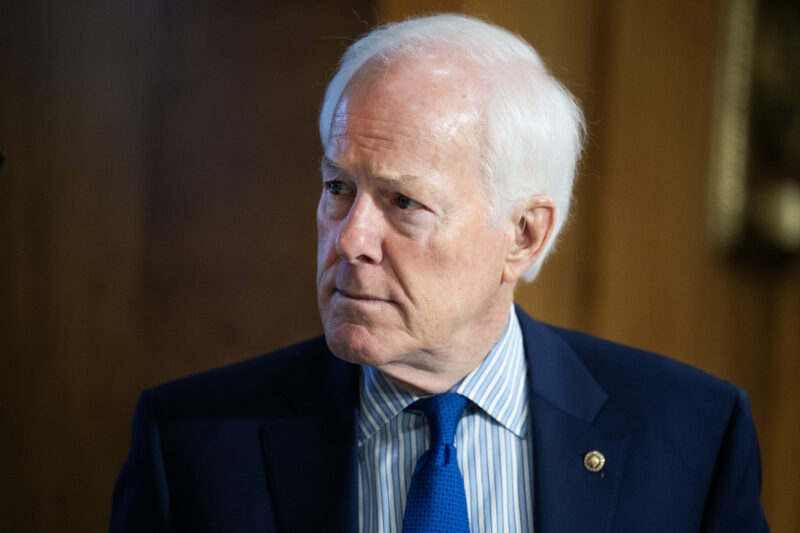



























‘Saying Jewish donors are somehow the same as "pro-Israel lobby," I got a problem with that, and not just as an elected official, as a Jew,’ Slotkin said in response to a question at a town hall
Tom Williams/CQ-Roll Call, Inc via Getty Images
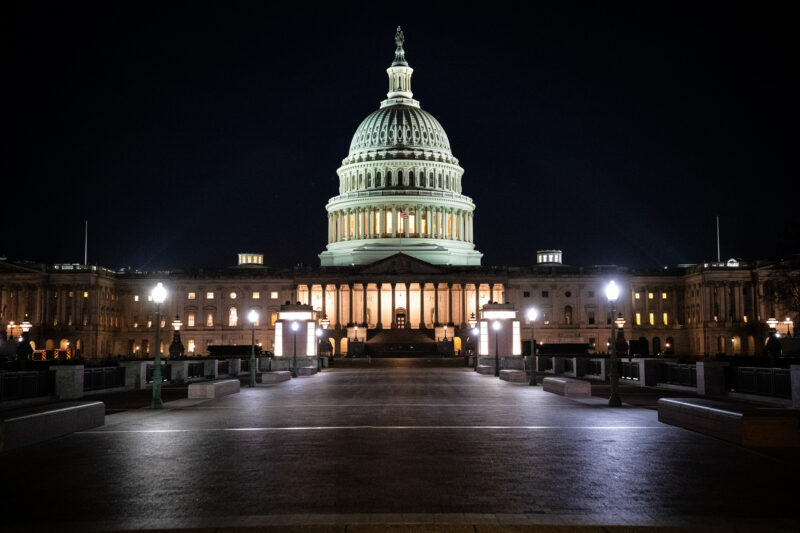
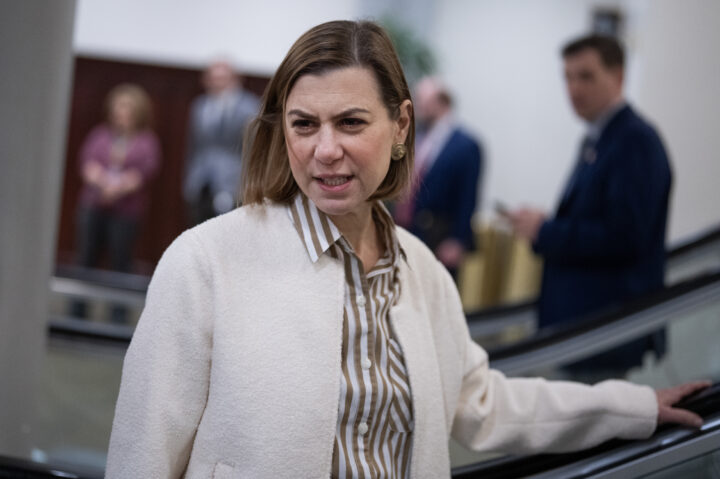
Sen. Elissa Slotkin (D-MI) is seen in the U.S. Capitol on Thursday, March 26, 2026.


 Add JewishInsider on Google
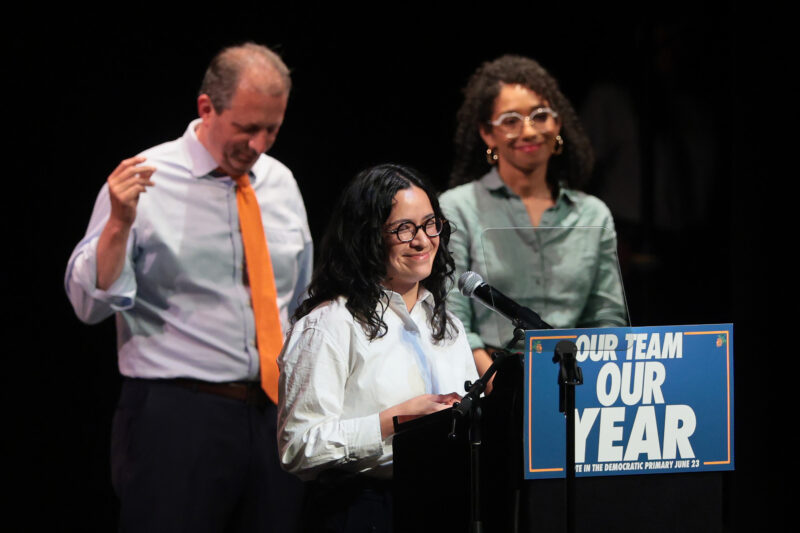
Sen. Elissa Slotkin (D-MI) has lately been saying that she does not take money from AIPAC or any corporate political action committees. So when a college student asked her at a town hall in Cincinnati on Thursday about $4.5 million she has received from “pro-Israel lobbies,” Slotkin pushed back — arguing the student was unfairly lumping together all Jewish donors.
“I’m not sure what you’re referring to on ‘not AIPAC but the Israel lobby.’ If you’re equating ‘Israel lobby’ to Jews, I got a problem with that,” Slotkin said.
The figure that the Xavier University student quoted comes from a far-left organization called Track AIPAC, which targets elected officials who it alleges have received funding from the “Israel lobby.” But increasingly, the group is tallying up donations from “lobby donors,” a broad category that critics believe includes any Jewish donors who have also supported AIPAC, J Street or other Jewish or Israel-related advocacy groups.
Slotkin said that just as Iranian Americans, for instance, may not agree with everything the Iranian government does, “I think it’s really important, especially now, to make a distinction between the Israeli government and the choices that they’re making and the average Jew, okay, and Jewish people who donate to campaigns,” Slotkin said, earning applause from the audience.
At the end of the event, she stood by her response to the question when asked about it by another attendee.
“What I take issue with is someone saying that I took $4.5 million from the pro-Israel lobby. That’s not AIPAC. I don’t know what that is,” she said. “But if that’s counting Jewish donors and saying Jewish donors are somehow the same as ‘pro-Israel lobby,’ I got a problem with that, and not just as an elected official, as a Jew.”
Asked her position about taking money from AIPAC, Slotkin said she doesn’t accept AIPAC funding in the same way she eschews other “corporate PAC money.” But she said their work in Washington, of advocating for an issue by building relationships with members of Congress, is the same thing that scores of other groups do.
“I think Americans have the right to support those groups and do whatever they want. Doesn’t mean I have to agree with them. I don’t personally take money from AIPAC. I haven’t in many, many years,” Slotkin said to cheers. “But they and every other organization have an ecosystem in Washington, that they are doing things that every — there’s plenty of groups like them that do the very same thing, a Pakistani American group, or whatever group.”
After the town hall, Slotkin told Politico that she would not do an interview with Hasan Piker, the antisemitic Twitch streamer who appeared at two campaign rallies earlier this week with progressive Michigan Senate candidate Abdul El-Sayed.
“I gotta call balls and strikes, whether it’s antisemitism, Islamophobia, coming from the state that I come from, so that’s what I’ve tried to do as he’s come into Michigan,” Slotkin said.
The comments Piker has made with which she takes issue, Slotkin continued, are “some derogatory things he’s said about Orthodox Jews, saying that we deserve 9/11, there’s some things in there. Not to mention he calls me stupid like every other week.”
Former Rep. Cori Bush or a political ally could attempt to unseat the first-term congressman
Michael B. Thomas for The Washington Post via Getty Images
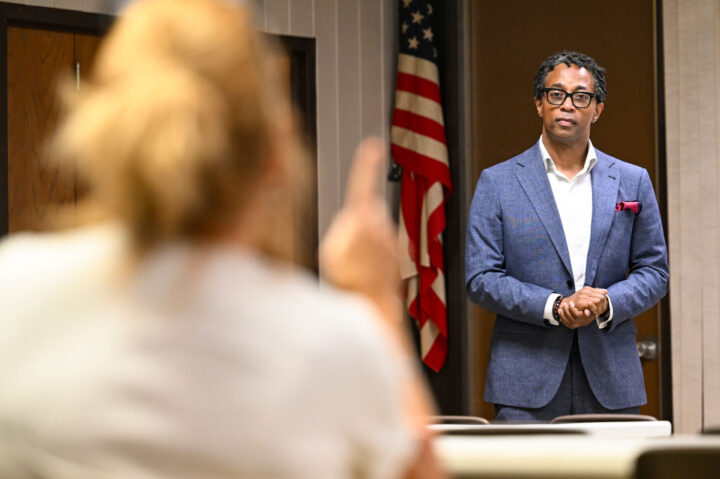
St. Louis County prosecutor and congressional candidate Wesley Bell speaks during a campaign stop at a Ward meeting held at the American Czech Center in St. Louis, Missouri on July 11, 2024.
A town hall organized by Rep. Wesley Bell (D-MO) last week in St. Louis turned contentious as a large group of demonstrators turned out to heckle the freshman congressman — fresh off a trip to Israel — over his support for the Jewish state. A scuffle later broke out between security guards and some of the demonstrators.
The situation highlights the ongoing antagonism from local far-left activists against Bell, which could foreshadow a primary challenge to the congressman from former Rep. Cori Bush (D-MO), whom Bell unseated, or one of her political allies.
Bell, during the 90-minute town hall, pushed back on accusations from demonstrators that Israel is committing genocide, emphasizing that “Israel was attacked by an openly genocidal terrorist group,” while calling for Hamas’ defeat, the release of hostages, the end of the war and ensuring food aid in Gaza.
Demonstrators shouted as Bell sought to address the crowd, disrupting the event repeatedly and accusing Bell of supporting the killing of children, among a variety of other offenses. Some Bell supporters in the audience — whom local reports described as about half of the crowd — also at times exchanged heated words with the congressman’s critics.
“There’s a lot of folks who don’t want to have the conversation,” Bell said during the event. “They just want to spew what they think is important, but they don’t want to have an actual debate because these are tough issues. So, now we’re going to have the conversation — whether you like it or not.”
Bell told local news channel KSDK that he had expected even more disruptions and that he was willing to meet with critics.
“Congressman Bell came prepared to answer questions, including tough ones, about the issues on the minds of his constituents — from standing up to Trump to helping tornado victims rebuild,” a Bell spokesperson told Jewish Insider. “Even with the disruptions, he made sure to respond to as many questions as possible, and he’s continuing to follow up with those he didn’t reach. That’s the work he’s committed to doing every day.”
Braxton Payne, a St. Louis-based Democratic strategist, told JI he recognized some of the individuals involved in the demonstrations as longtime backers of Bush. He said that the political coalitions supporting and opposing Bell in 2024 have remained largely unchanged since Bell took office.
“You’re still seeing the same bases, cohorts of support” as in the 2024 race, Payne said. “I do think there is a sentiment for someone to run against [Bell] in a primary” with support from the “de-facto Cori Bush base.”
He predicted that the 2026 primary election will see higher-than-average turnout among suburban St. Louis County voters — a development likely to help Bell, who in 2024 won St. Louis County but not the city of St. Louis — given other open seats likely to be on the ballot.
Payne said that a mid-decade redistricting effort by Missouri Republicans is expected to largely leave St. Louis-area congressional seats untouched, if it succeeds. But if the redraw brings more of St. Louis County into Bell’s district, that would also likely help boost his support base.
Bush has publicly kept open the possibility of another run for Congress, saying in June that she wouldn’t provide a timeline for when she would decide whether to run again. Bush recently founded a national PAC, Politivist Action.
Payne said that Bush’s husband’s legal troubles — he was charged with defrauding federal pandemic relief programs — could play into her decision on whether to run again. He added that she has been less present at local political events since leaving office than she was before she became a member of Congress.
Bush did not respond to a request for comment about her plans.
Asked by KSDK about the possibility of a rematch with Bush, Bell said that he wouldn’t address the hypothetical question, but that he is working to support and represent his district daily.
Megan Green, the president of the St. Louis Board of Aldermen, is also rumored to be interested in the seat, local observers said, but said in an email to JI that she is “not running.” Green is a Bush ally who recently accused Israel of genocide and has claimed that AIPAC exercises malicious influence over the Democratic Party.
Bell’s campaign appears to be gearing up early for the possibility of a competitive primary — he has raised nearly $700,000 thus far this cycle.
Stacey Newman, the executive director of the Missouri Alliance Network and a former Democratic state lawmaker who led Jewish outreach for Bell’s 2024 campaign, told JI that Bell’s supporters in the Jewish community expect that the congressman will face a primary challenge, but that it’s not entirely clear yet from whom.
Newman said that, given some of the names floated as potential challengers to Bell, the race would likely rehash the same issues of the 2024 campaign, which included a heavy focus on Israel policy.
Newman said that the unruly town hall had further contributed to unease and fear in the St. Louis-area Jewish community about the community’s safety, in the wake of the firebombing of cars in a residential neighborhood targeting a Jewish family whose son served in the IDF. No suspects have been announced or arrested in the case, which is being investigated as an antisemitic hate crime, and local Jewish groups are offering a $30,000 reward.
The events at the town hall follow a series of other aggressive anti-Israel demonstrations in the area, she noted.
“The Jewish community is on edge in terms of our safety,” Newman said.
2020 Democratic hopeful says the U.S. should not be taking sides in the Israeli-Palestinian conflict

AP Photo/John Locher
Democratic presidential candidate Sen. Elizabeth Warren, D-Mass., speaks at the Iowa Democratic Wing Ding at the Surf Ballroom, Friday, Aug. 9, 2019, in Clear Lake, Iowa.
Sen. Elizabeth Warren (D-MA) said during a live CNN town hall on Wednesday night that the U.S. embassy in Israel should be moved to wherever the capital is agreed upon in negotiations with the Palestinians.
Figure it out: “The parties should negotiate whether or not the capital is in Jerusalem, where the capital is, and then the United States should move its embassy to be in the capital of each of the two states in a two-state solution,” Warren said. But Warren did not say whether she would reverse President Donald Trump’s decision to move the embassy to Jerusalem.
Stop political handouts: Warren indirectly criticized Trump for taking unilateral moves to favor Israeli Prime Minister Benjamin Netanyahu. “Our job is to get [the Israelis and the Palestinians] to the negotiating table and stop handing out — for political reasons — just favors to one side and hurting the other,” she said.
Read the full exchange below:
Chris Cuomo: Senator, a key ally in the region, of course, Israel. President Trump moved the U.S. embassy from Tel Aviv to Jerusalem. Would you move the embassy back out of Jerusalem?
Warren: “I — here’s the overall approach we need to use. We need to encourage both Israel and the Palestinians to negotiate with each other. The United States should not be putting a thumb on the scale, should not be saying, in these negotiations, ‘We stand only with one party.’ We should recognize that Israel has a right to its security. The Palestinians have a right to self-determination and to be treated with respect.”
“The two-state solution has been the official policy of the United States and of Israel for nearly 70 years now. How do you make that happen? You want to be a good friend to Israel and to the Palestinians. Keep pushing them to the negotiating table. Let them negotiate, for all of the pieces they want, how they create a long-term, sustainable home for Palestinians and a safe, stable home for the Israelis. But our job is to get them to the negotiating table and stop handing out for political reasons just favors to one side and hurting the other. That does not in the long run move that region closer to peace and it does not treat the people in the region with the respect they deserve.”
Cuomo: So the embassy?
Warren: “The embassy is what they should be negotiating. They should be negotiating the capital.”
Cuomo: Where — where the U.S. embassy is?
Warren: “No, they should be negotiating what constitutes the capital. That’s really my point, is that that’s what the parties should decide. The parties should negotiate whether or not the capital is in Jerusalem, where the capital is, and then the United States should move its embassy to be in the capital of each of the two states in a two-state solution.”
Please log in if you already have a subscription, or subscribe to access the latest updates.
 Continue with Google
 Continue with Apple