
















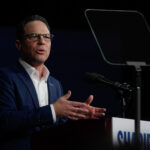

After traveling with the ‘Blind Sheikh,’ Hamawy worked with Benevolence International Foundation, later shuttered as an Al-Qaida front
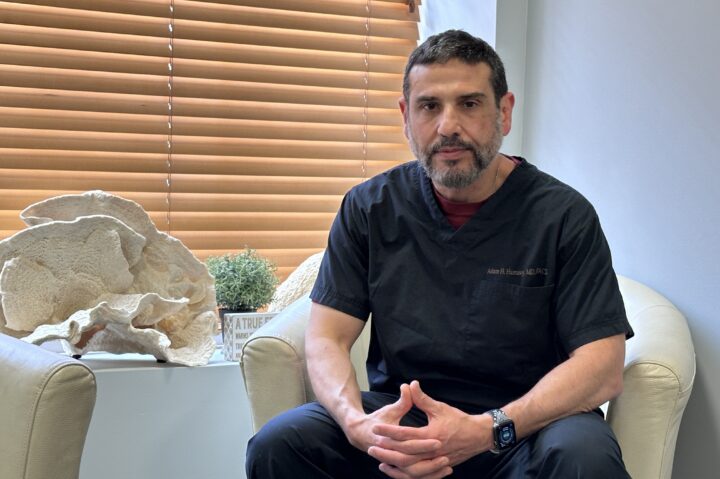
Islam Dogru/Anadolu via Getty Images
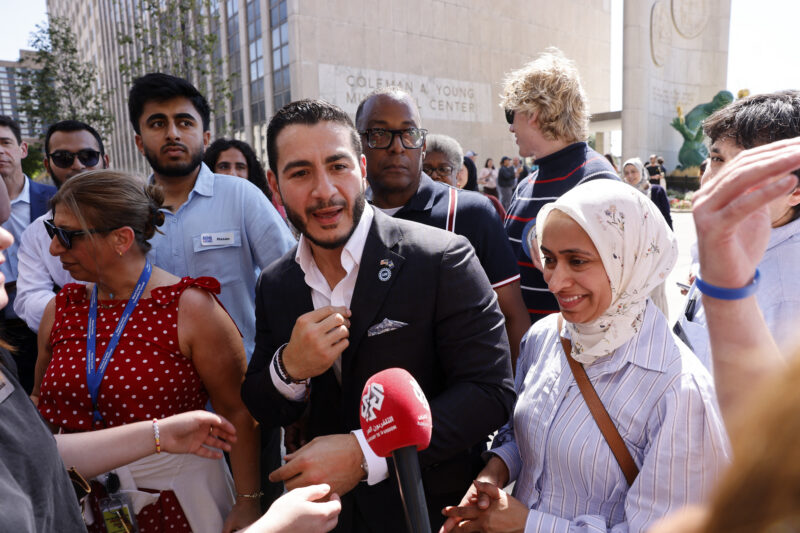
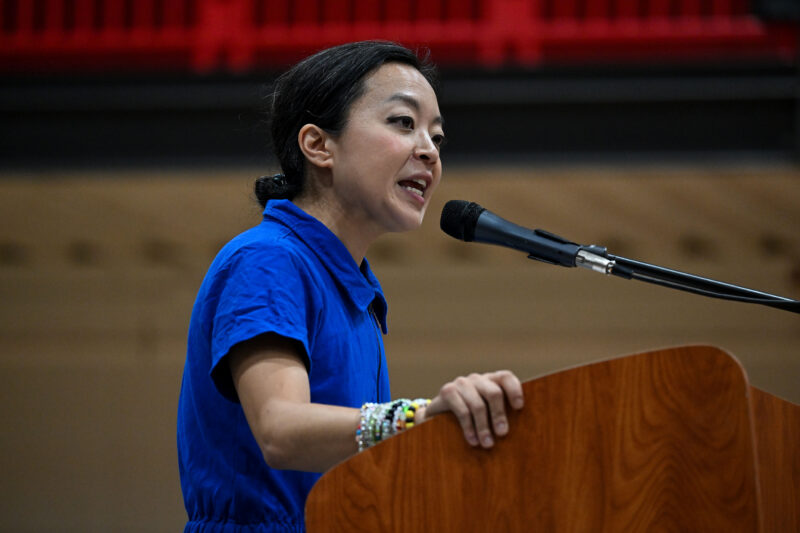
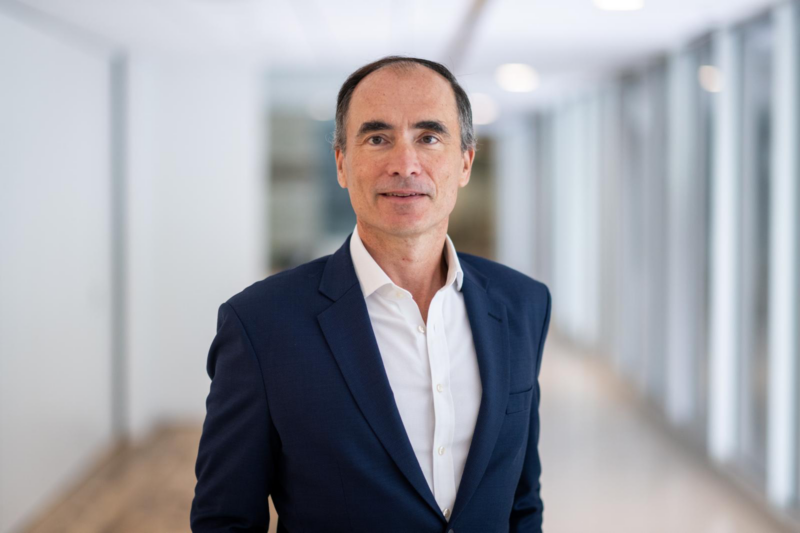
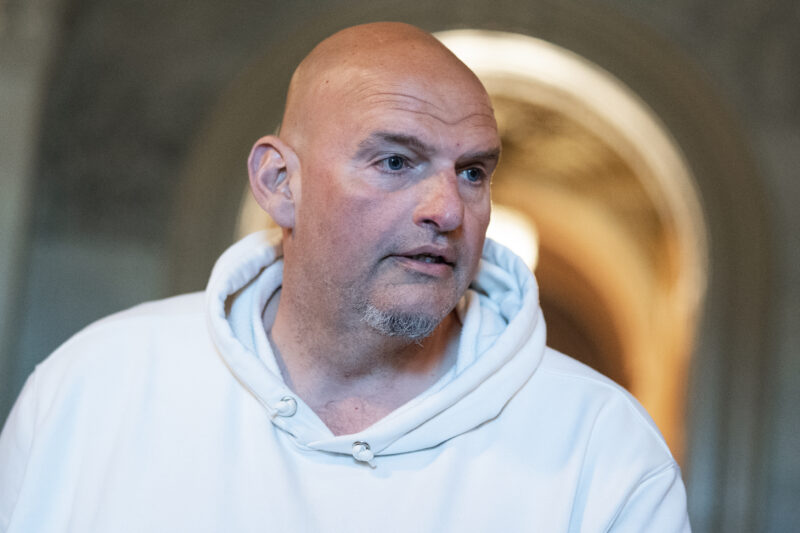
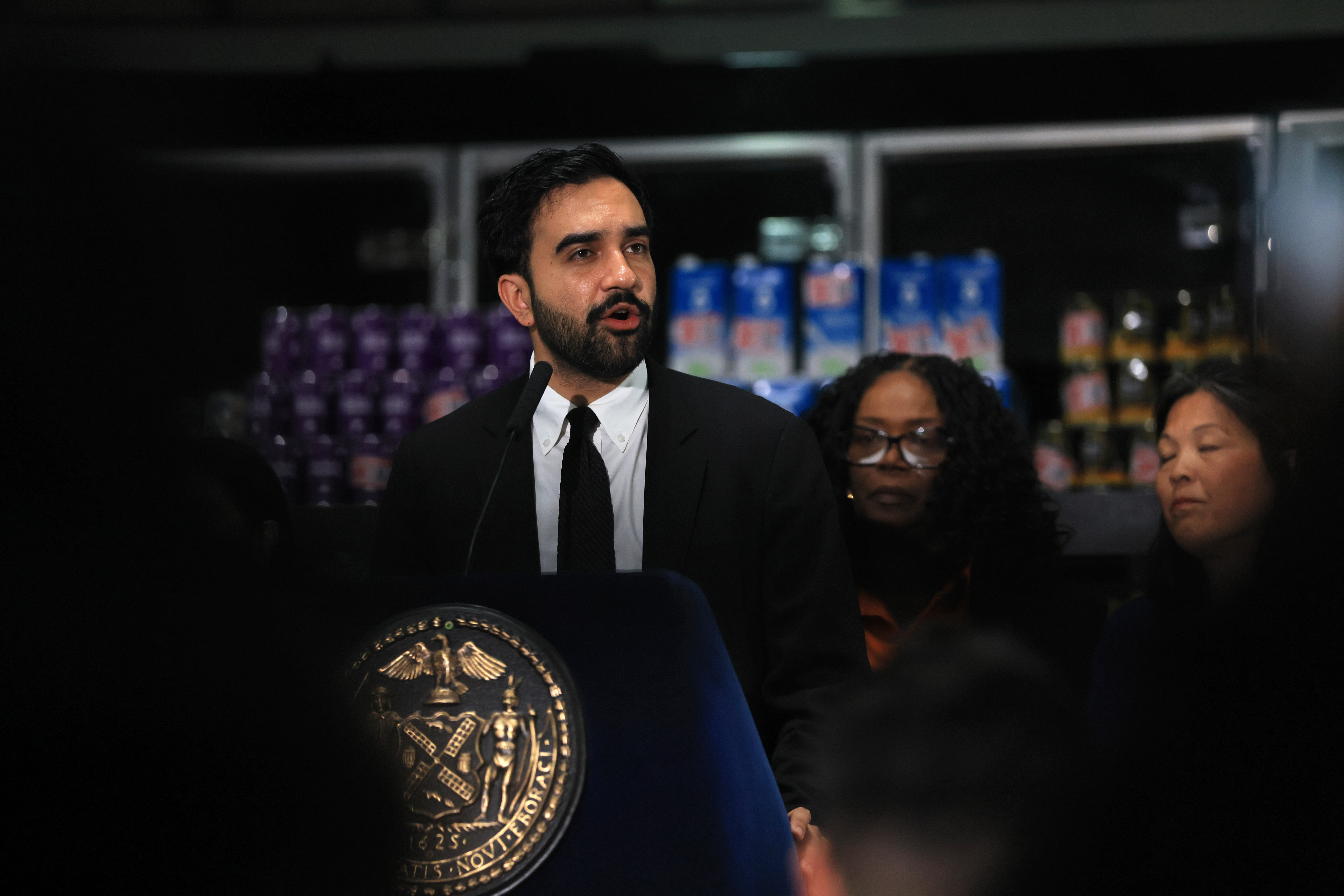
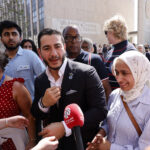
Adam Hamawy, a plastic surgeon, is seen during an exclusive interview at in New York, United States on April 24, 2024.


 Add JewishInsider on Google
Adam Hamawy’s past relationship with terrorist mastermind Sheikh Omar Abdel-Rahman has loomed over his rapid rise in the race to succeed retiring Rep. Bonnie Watson Coleman (D-NJ).
Their relationship spanned a 1991 road trip the two took together to Detroit, Hamawy’s service as the sheikh’s translator for a press conference in which Abdel-Rahman denied any role in the 1993 World Trade Center bombing and Hamawy’s testimony on the sheikh’s behalf at his 1995 trial, where the Islamist leader was convicted of plotting to carry out a campaign of terrorist attacks in New York City.
But just one year before Hamawy took the witness stand to describe his travels with Abdel-Rahman, the now-Congressional candidate made a different journey with another party entangled in terrorist conspiracies: to Bosnia, with a group subsequently shut down for providing “logistical support” to Al-Qaida.
In a 1996 interview with the Newark Star-Ledger, according to a copy Jewish Insider recovered through an archive of print publications, Hamawy described volunteering in Bosnia during the summer of 1994 with a Chicago-based nonprofit called the “Benevolence International Foundation.”
“I worked in Sarajevo for 10 days and then the rest in Zenica, a large regional center in central Bosnia,” Hamawy, who had just graduated from medical school, told the paper about the five weeks he spent with the organization. “We went out to hospitals around the area and in the mountains to check what supplies they needed and we tried to deliver them.”
Sarajevo and Zenica were the exact cities where Benevolence International maintained its offices — offices that Bosnian authorities raided in 2002, part of a joint effort with U.S. authorities to dismantle the group, which they had identified as a front for Al-Qaida. The 9/11 Commission Report would later identify the foundation’s base in the Bosnian capital as part of the “impressive array of offices [that] covertly provided financial and other support for terrorist activities” that Osama bin Laden established in the early 1990s.
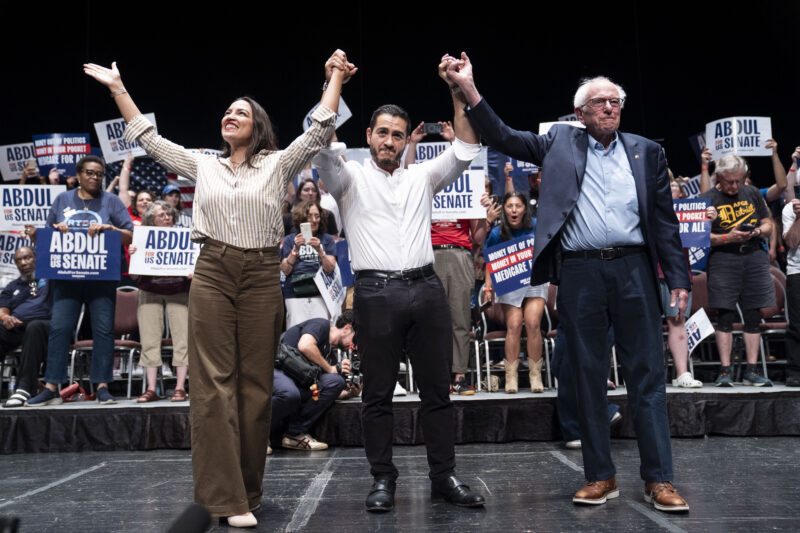
Hamawy, who has scored endorsements from Sen. Bernie Sanders (I-VT) and Reps. Ro Khanna (D-CA), Ilhan Omar (D-MN), Alexandria Ocasio-Cortez (D-NY) and Rashida Tlaib (D-MI) in his New Jersey congressional bid, did not respond to repeated questions about his relationship with Benevolence International and his contacts and activities in Bosnia.
The plastic surgeon has emerged as a frontrunner in the congressional race despite his relationship with the “Blind Sheikh” receiving significant coverage in recent weeks. A 1995 court transcript shows how the then-medical student Hamawy described meeting the Islamist leader in 1991, visiting him at his home and accompanying him on a 13-hour van trip to a conference in Detroit. In the courtroom, he and the sheikh greeted each other warmly, and Hamawy denied a government informant’s claim that Abdel-Rahman had urged the assassination of the then-president of Egypt.
But no other publication has reported Hamawy’s connection to Benevolence International since the Star-Ledger interview in 1996.
According to evidence federal prosecutors proffered in court, and the affidavits of federal agents, the 2002 raids on the Bosnian offices recovered weapons; correspondence between the group’s chief executive, Enaam Arnaout, and bin Laden from the 1980s and 1990s; letters from other Al-Qaida leaders on battles and financial transactions; a photo of Arnaout and bin Laden together; an organizational chart of Al-Qaida; a handwritten list of top donors to the terror organization; copies of never-before-seen documents concerning Al-Qaida’s 1988 founding and its admission policies; and details regarding training camps and Al-Qaida operations in Afghanistan, Pakistan and Sudan.
According to Marko Atila Hoare, a political science professor and historian at the Sarajevo School of Science and Technology, the early 1990s saw a global mobilization of Muslims to aid their co-religionists in the Balkans. Facing a Serbian onslaught, the embattled Bosnian government accepted this support, even though the involvement of foreign Islamic militants would later cause frustration and embarrassment for authorities there.
“A lot of them wanted to go and defend Muslims from non-Muslims persecuting them,” Hoare said, noting that the chaos of war allowed many groups to operate with little scrutiny from officials or the outside world. “You had these organizations like Benevolence, like the Third World Relief Agency, which were operating in this chaotic situation, and some of them were absolute fronts for radical Islamists, and others were ordinary charities. But in these ordinary charities you could also have radicals or extremists infiltrating them.”
Hoare said that not every volunteer who came to the country, even with Benevolence International, was “a hardcore jihadist with terrorist intent.” But among those who took up this “cause celebre in the Muslim world,” as he called it, was Al-Qaida.
The federal evidence file in the case against Benevolence International and Arnaout described how the terror organization deployed a representative to the Balkans in late 1992 on a fact-finding mission for bin Laden, part of a plan “to establish a base for operations in Europe against al Qaeda’s true enemy, the United States.” The materials assert that senior Al-Qaida officials credited Benevolence International with obtaining funds and weapons for the jihadist group, as well as with helping Al-Qaida secure arms for Bosnian militants.
By the time Hamawy arrived, the Syrian-born Arnaout had already been arrested in Croatia on suspicions of weapons smuggling, according to a 2002 handbook from the Austrian National Defence Academy — and then “apparently managed to escape from prison” and continued “forming and supervising the Training Centres” near Zenica (An attorney for Arnaout called this account of his client’s activities “unsupported,” and asserted he lacked the “practical military experience” to carry them out.)
The area near Zenica was where Hamawy reported working in 1994. It was also where the Bosnian Army had recently set up its “El Mujahedin” unit, for foreign fighters who had poured into the warzone, according to the European Court of Human Rights. And among the organizations providing the unit with “funds and assistance,” the court found, was the Benevolence International Foundation.
According to the testimony of FBI agent Robert Walker, Benevolence International was originally the creation of Saudi Sheikh Adel Abdul Jalil Batterjee, a since-sanctioned Al-Qaida financier. The group, Walker attested, operated in tandem with the terror group across multiple nations, providing it with “logistical support.”
“BIF was used in the early 1990s by Usama Bin Laden as a means to transfer money to bank accounts, generally held by purported relief organizations, in countries where al Qaeda members or associates were conducting operations,” the Walker affidavit, which cites multiple confidential informants, reads. “Arnaout was an administrator for Usama Bin Laden who disbursed funds at times on behalf of Bin Laden.”
Arnaout incorporated the Benevolence International branch in the United States in 1992 and served as its chief executive. In 1994, the year Hamawy volunteered with the group, its leadership included Mohamed Loay Bayazid, an alleged Al-Qaida co-founder who sought to secure weapons-grade uranium for the terrorist group. In December of that year, Bayazid was arrested in San Francisco in the company of bin Laden’s brother-in-law, Al-Qaida lieutenant Mohammed Jamal Khalifa.
Walker’s informants also described Arnaout as a “close associate” of Afghan militant commander Gulbuddin Hekmatyar, and the Bosnian office raid turned up video footage of the two men together. The FBI affidavit in turn linked Hekmatyar to Hamawy’s associate and travel companion, the Blind Sheikh Abdel-Rahman — another ally of bin Laden, who also allegedly encouraged his followers to wage jihad in Bosnia.
In 1996, Hamawy told the Star-Ledger he had gotten in contact with Benevolence International through the “Bosnian mission to the United States,” and made no mention of the then-freshly convicted Abdel-Rahman. The article also said his work in Bosnia had occurred “under the auspices of the United Nations High Command for Refugees.” No U.N. agency of this name exists, although there is a High Commission for Refugees, which was unable to confirm that it worked with Benevolence International in Bosnia. Hoare, the historian in Sarajevo, described the U.N.’s work in the country during the war as “corrupted” by local interests and actors, many with ill intent.
Records show that in 1994, the counselor and second deputy ambassador at the Bosnian mission in New York was a New Jersey native named Saffet Catovic. In December 2001, the time of the first federal raids upon Benevolence International’s offices outside Chicago, Catovic was widely quoted as the foundation’s spokesman.
“[The collapsing Bosnian state was] forming these missions in different countries on an ad hoc basis, with what they had, the people they had,” said Hoare, who did not speak directly to Catovic’s case. “It was a very sort of chaotic, ad hoc situation where it was very easy for people to infiltrate missions.”
An imam, Catovic has remained prominent in New Jersey politics and religious affairs, and last fall hosted Hamawy on a YouTube panel discussion of the Gaza conflict. Members of Catovic’s family have donated to Hamawy’s congressional campaign, Federal Election Commission records show.
Catovic did not respond to repeated questions about his contact with Hamawy during his time in the Bosnian mission. Hamawy and his campaign similarly did not answer whether Catovic provided any referral for his work with Benevolence International, or whether the Blind Sheikh had ever referenced the Bosnian conflict in his presence.
Arnaout ultimately pleaded guilty to a racketeering charge in 2003, admitting he had raised money for purported humanitarian purposes and funneled it to the Bosnian military. The Justice Department dropped its terrorism charges, and the judge in the case criticized some of the evidence federal authorities presented as overly reliant on personal associations.
However, the same judge ruled in the Justice Department’s favor in 2019 when it moved to strip Arnaout of his U.S. naturalization status. The prosecutors cited — among other factors — Ernaout’s employment at Benevolence International and the group’s links to Al-Qaida.
In his defense at his denaturalization trial, Arnaout admitted having been “an acquaintance” of bin Laden and Hekmatyar, but continued to deny any ties to terrorist activity. His attorney underscored that the criminal terrorism allegations against him “were never proven.” He entered a settlement agreement with the federal government that remains under seal.
The U.S. Treasury Department and the United Nations Security Council continue to include Benevolence International on their lists of entities sanctioned for terrorist connections, although the group has long since ceased operations. The foundation has been the target of numerous civil lawsuits from parties harmed on 9/11.
On the campaign trail, Hamawy has stressed another part of his volunteer record: his eight years as a U.S. Army officer during the Global War on Terror, which saw him work in a host of military hospitals, including one in Baghdad.
He has referenced his time in Bosnia only glancingly, gently correcting a Turkish state TV interviewer that his work in the Balkans was not through the Army but “another volunteer mission.” He did not mention Benevolence International by name.
He also told a local New Jersey station, “I was in Bosnia early on in ‘95” — which, if accurate, would mean he either spent more time in the country than he acknowledged in the 1996 Star-Ledger interview, or was there during a different period than he described to the newspaper.
But what has given the plastic surgeon such recent prominence has been his volunteer work in the Gaza Strip during Israel’s war with Hamas, including at the European Hospital in Khan Younis. The IDF struck the hospital repeatedly in 2025 to take out an underground Hamas command center that it said operated beneath the medical center.
In multiple interviews in far-left media, Hamawy has denied the existence of such a terrorist post, and insisted to Jacobin that the facility was “a completely benign civilian hospital with no tunnels underneath it.”
The IDF has contradicted his account with footage of subterranean passages, including where it reported recovering the body of Hamas leader Mohammed Sinwar. Hamas subsequently confirmed the killing.
Please log in if you already have a subscription, or subscribe to access the latest updates.
 Continue with Google
 Continue with Apple