









































President Donald Trump called on Iranians to ‘take over your government’ when ‘we are finished’
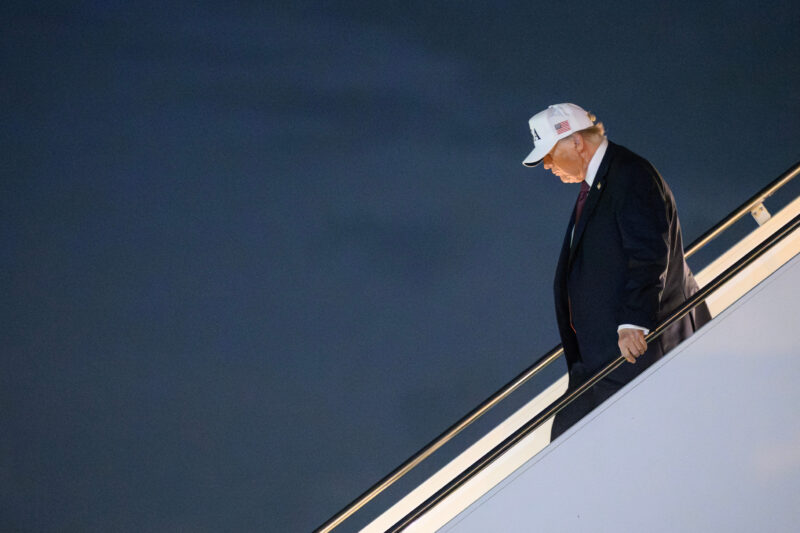
Mandel NGAN / AFP via Getty Images
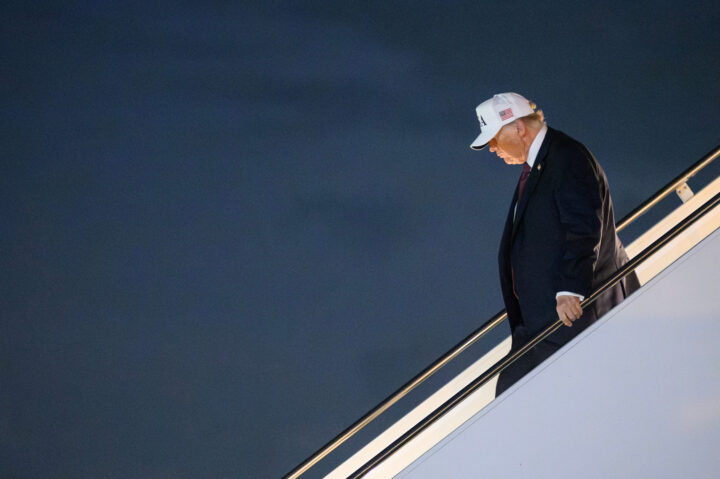
President Donald Trump steps off Air Force One at Palm Beach International Airport in West Palm Beach, Florida, on February 27, 2026.


 Add JewishInsider on Google
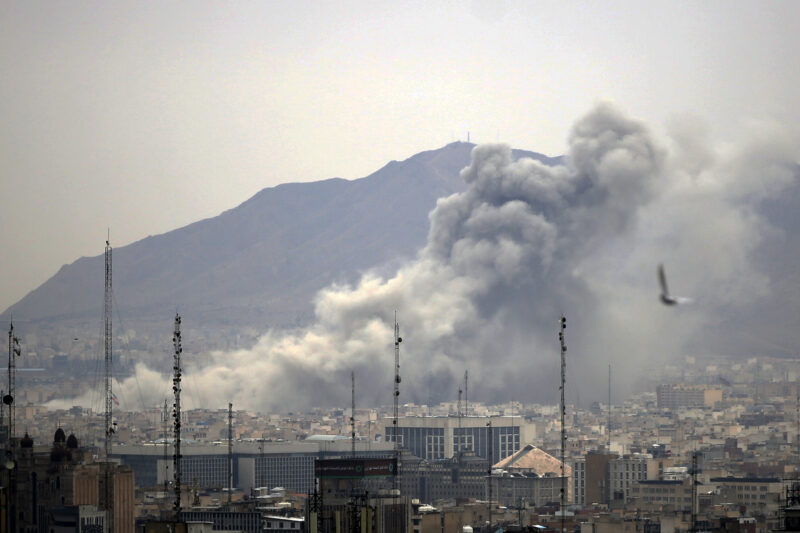
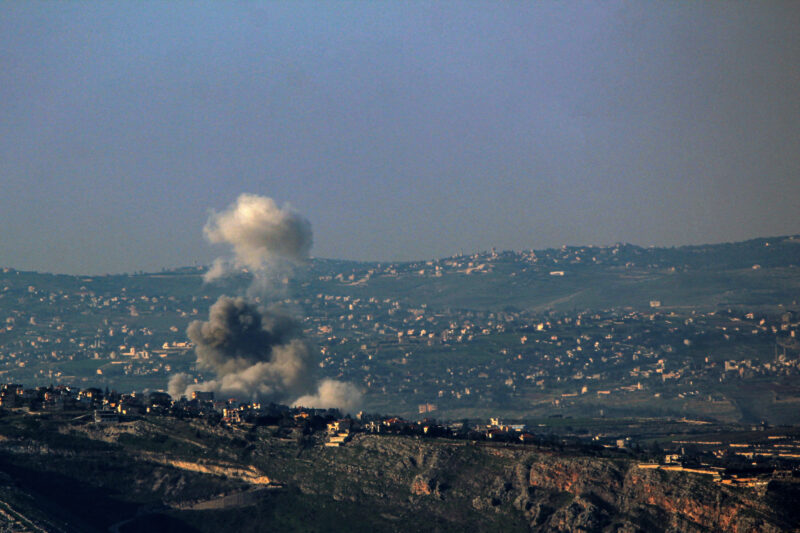
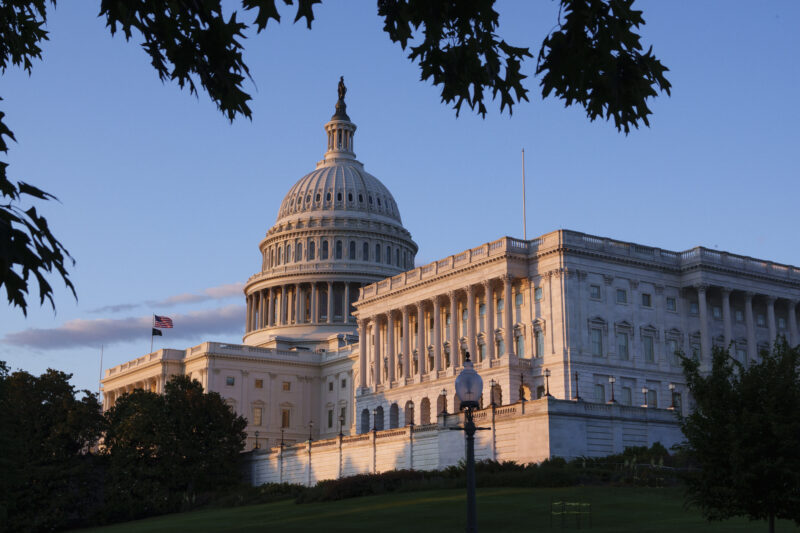
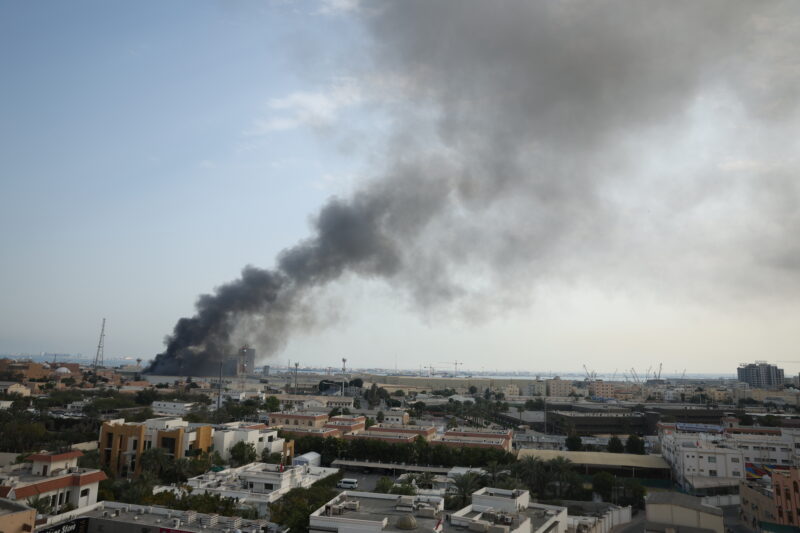
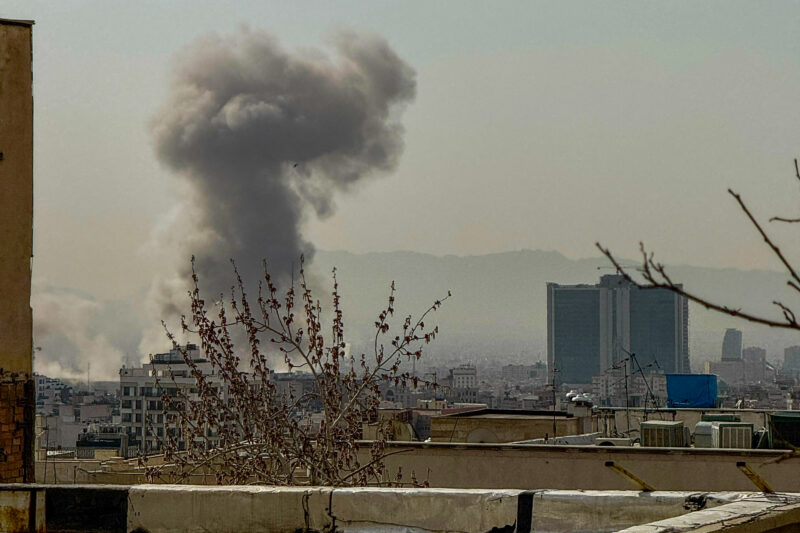
The U.S. and Israel launched a joint military operation targeting Iran on Saturday morning, the culmination of months of tensions and, more recently, negotiations aimed at reaching a diplomatic resolution to concerns over Iran’s nuclear program.
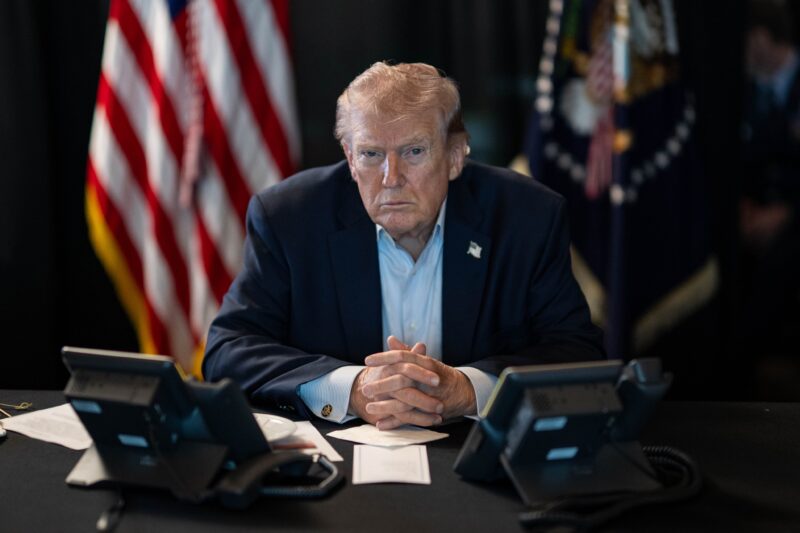
In an address on Saturday shortly after the first strikes were reported, President Donald Trump announced that “the United States military is undertaking a massive and ongoing operation to prevent this very wicked, radical dictatorship from threatening America and our core national security interests.”
Trump said that the goal of the operation “is to defend the American people by eliminating imminent threats from the Iranian regime, a vicious group of very hard, terrible people.”
“For 47 years, the Iranian regime has chanted ‘Death to America’ and waged an unending campaign of bloodshed and mass murder targeting the United States, our troops and the innocent people in many, many countries,” Trump said, noting that “it was Iran’s proxy Hamas that launched the monstrous October 7 attacks on Israel, slaughtering more than 1,000 innocent people, including 46 Americans, while taking 12 of our citizens hostage.”
The strikes came a day after Omani Foreign Minister Bdar Al Busaidi traveled to Washington to meet with Vice President JD Vance after mediating a round of talks in Geneva between senior Iranian officials and a U.S. delegation led by White House Special Envoy Steve Witkoff and Jared Kushner.
The military confrontation came eight months after Israel’s 12-day war with Iran, which the U.S. joined, which significantly degraded Iran’s aerial defenses and nuclear program.
The White House had faced questions in recent weeks about the scale of a potential operation in Iran as it amassed the largest U.S. military presence in the Middle East in more than two decades.
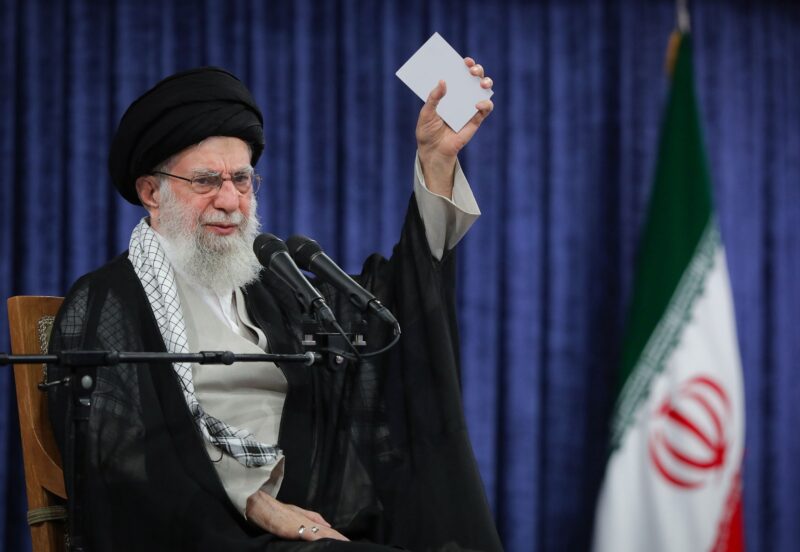
In his most direct remarks targeting Iranian Supreme Leader Ayatollah Ali Khamenei, Trump addressed “the great proud people of Iran,” saying, “The hour of your freedom is at hand. Stay sheltered. Don’t leave your home. It’s very dangerous outside. Bombs will be dropping everywhere. When we are finished, take over your government.”
Trump slammed the efforts by Iran and its proxies to disrupt commercial waterways and target U.S. interests and positions across the region. “It’s been mass terror, and we’re not going to put up with it any longer. From Lebanon to Yemen and Syria to Iraq, the regime is armed, trained and funded terrorist militias that have soaked the earth with blood and guts,” Trump said.
Two hours after the start of the strikes, Iran launched its first barrages of ballistic missiles at Israeli population centers. No injuries were reported.
Israeli Prime Minister Benjamin Netanyahu said in a statement, “My brothers and sisters, citizens of Israel, a short while ago, Israel and the United States embarked on an operation to remove the existential threat posed by the terrorist regime in Iran. I thank our great friend, President Donald Trump, for his historic leadership.”
“For 47 years, the Ayatollah regime has called for ‘Death to Israel’ and ‘Death to America.’ It has spilled our blood, murdered many Americans, and massacred its own people. This murderous terrorist regime must not be allowed to arm itself with nuclear weapons that would enable it to threaten all of humanity,” Netanyahu continued.
“Our joint action will create the conditions for the brave Iranian people to take their destiny into their own hands” Netanyahu said. “The time has come for all segments of the people in Iran – the Persians, the Kurds, the Azeris, the Balochis, and the Ahwazis – to rid themselves of the yoke of tyranny and bring about a free and peace-seeking Iran.”
“The coming days of Operation Roaring Lion will demand patience and fortitude from all of us. We shall stand together, fight together, and ensure the eternity of Israel together,” he concluded.
Jewish Insider’s Israel Editor Tamara Zieve contributed reporting.
Experts tell JI that despite the constant flow of reports that Trump favors a military response as talks with Iran falter, an American strike and Iranian retaliation against Israel are likely not imminent

Tomer Neuberg/AP
Israeli Iron Dome air defense system launches to intercept missiles fired from Iran, in central Israel, Sunday, April 14, 2024.
Tensions in Israel continued to rise over possible missile strikes from Iran, as signals increased that President Donald Trump is ready to order a strike on the Islamic Republic, possibly within days.
Yet experts told Jewish Insider on Thursday that, despite the constant flow of reports that Trump favors a military response as negotiations with Iran falter, an American strike and Iranian retaliation against Israel are likely not imminent.
Nearly every major Israeli news website and broadcast led with Iran news on Wednesday evening and Thursday morning, referencing reports in CBS News that the U.S. military could be prepared to strike in the coming days and and the Wall Street Journal headline that the U.S. has amassed the greatest air power in the Middle East since the Iraq war in 2003.
In a moment that went viral in Israel and sparked hundreds of phone calls to the IDF Home Front Command, former IDF intelligence chief Amos Yadlin told Israel’s Channel 12 on Wednesday that while he went to the Munich Security Conference last week, “I would think twice about flying [abroad] on the coming weekend.”
Every Israeli “asks himself several times a day when there will be a campaign against Iran,” Knesset Foreign Affairs and Defense Committee chairman Boaz Bismuth (Likud) said on Wednesday. “The entire population and homefront are preparing.”
However, IDF Spokesperson Effie Defrin said that “there is no change in the situational assessment, and if there will be, we will update [the public]. There is no need to panic.”
Defrin also noted that “there are negotiations, and the IDF has long been prepared for maximum defense. If we are attacked, we will respond forcefully.”
However, while Israel’s leadership and the IDF’s assessment is that the U.S. will warn them before a strike, they plan to prepare quietly and not alert the public in advance, in order to increase the chances of success, Israel’s Kann News reported on Wednesday.
Raz Zimmt, director of the Iran Program at Tel Aviv University’s Institute for National Security Studies, quipped to JI in reference to Yadlin’s remarks: “Don’t change your weekend plans.”
Zimmt noted that the USS Gerald Ford aircraft carrier is still on the way to the region, and argued that “the Americans will want to be maximally prepared when they make their decision” whether to strike Iran.
“I think it’s a matter of days, not weeks, but it could also be 14 days,” he said.
Oded Ailam, former head of the Mossad Counterterrorism Division and a researcher at the Jerusalem Center for Security and Foreign Affairs, said that he “doesn’t see a scenario of an immediate strike in the coming days or the coming week, despite the fearmongering in the media.”
Ailam argued that Trump will try to exhaust the current negotiations to be certain if Iran will accept a deal.
“He won’t attack until it is totally clear that this is a dead end, but he will gather forces” in the region, Ailam said. “It won’t happen for the next week or two, and after that, it depends mostly on the Iranians and the extent of their concessions.”
In Zimmt’s assessment, an Iranian surprise attack, rather than a retaliation following an American strike, is unlikely.
“Iran understands the chance of an American attack is higher than the chance of an agreement, but why should they drag themselves into a war that they have a chance of avoiding?” he said.
In addition, he said, the Iranian leadership “knows very well that Israel is ready and won’t be surprised, so it’s not worth it.”
Still, Zimmt said, Iran’s likely first reaction to an American strike will likely be to attack U.S. bases in the Gulf and Israeli targets: “For them, the U.S. and Israel are the same thing.”
Ailam said that Israel has greatly improved its air defenses since the 12-day war with Iran last June. At the time, Israel intercepted 85% of the missiles coming from Iran, and Ailam said the interception rate would likely be higher next time. Israel’s Iron Beam laser-defense system has also become operative in the interim, adding a new element of defense against drones.
In addition, he noted that the amassing of American naval vessels in the region means that the U.S. will likely contribute more to Israel’s defense than during the last war.
At the same time, Ailam said, “the Iranians have not managed to rebuild their ballistic missile systems. They only have 240 launchers, which is not much. When you strike launchers, you neutralize their ability to shoot many missiles simultaneously and disrupt Israel’s defense systems.”
As such, Ailam’s assessment was that “Iran is on the defensive and Israel has a clear advantage.”
“If two ballistic missiles penetrate Israel’s defensive envelope, it can cause great damage — as it did at Soroka [Medical Center in Beersheba] and Weizmann [Institute of Science] last year — but it is not a threat that Israel can’t handle. I don’t see it as an existential or very significant threat,” he said.
The senator addressed Saudi and Emirati leadership directly about escalating tensions in the region in his remarks at the Munich Security Conference
Sean Gallup/Getty Images
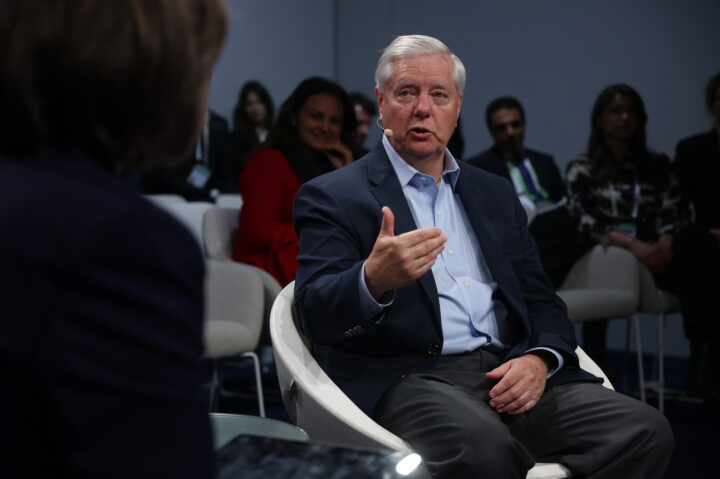
Sen. Lindsey Graham (R-SC) speaks at the 62nd Munich Security Conference on February 13, 2026 in Munich, Germany.
Sen. Lindsey Graham (R-SC) warned Saudi Arabia that the escalating tensions with the United Arab Emirates risk benefiting Iran at a critical moment in the Middle East, addressing the nations’ leaders directly in remarks at the Munich Security Conference on Saturday.
“As to MBS [Saudi Crown Prince Mohammed bin Salman] and MBZ [UAE President Sheikh Mohamed bin Zayed al-Nahyan] — knock it off, Saudi Arabia, knock it off,” Graham said from the stage. “I’m tired of this crap.”
Graham also urged “anybody who will listen in the Middle East — don’t let this moment pass,” and warned that the rift between the UAE and Saudi Arabia is “emboldening Iran.” He added that “MBZ is not a Zionist,” pushing back against criticism in Saudi Arabia of the Emirati leader’s ties to Israel. Among other escalatory rhetoric out of the kingdom, a prominent Saudi academic publicly accused Abu Dhabi last month of aligning itself too closely with Jerusalem and acting as “Israel’s Trojan horse in the Arab world.”
Saudi Arabia and the UAE have increasingly been at odds in recent months as the two U.S. allies have backed different sides in several regional conflicts and Riyadh continues to pivot away from its role as a moderating force in the region.
“Be smart, but don’t be locked down with fear,” said Graham. “I know they [the UAE and Saudi Arabia] got differences in Yemen and they got differences in Sudan, but we got to think big picture,” he said. “To any leader in the region that doesn’t understand you’re on the verge of history, history would judge you poorly.”
In Yemen, Saudi Arabia conducted an airstrike in late December 2025 against what Riyadh said was an Emirati arms shipment linked to the UAE-backed Southern Transitional Council (STC). Hours after the strike, the Emirati government announced it would withdraw its remaining troops from the country.
The two countries have also diverged in Sudan, where Riyadh has embraced Islamist-aligned factions while the UAE has aligned with rival forces. The Gulf states have also taken opposite sides in Somalia, with the UAE quietly supportive of Somaliland, while Saudi Arabia condemned Israel for recognizing the region’s independence.
Graham’s remarks in Munich come as the South Carolina senator remains an outspoken advocate of expanded cooperation between Israel and Arab states and has repeatedly emphasized countering Iran as a central U.S. objective in the region. On Monday, Graham met with Israeli Prime Minister Benjamin Netanyahu in his Jerusalem office during a trip to Israel.
Trump, true to form, has been unpredictable and inconsistent in his approach to Tehran — alternating between threatening force and teasing diplomacy
Chip Somodevilla/Getty Images
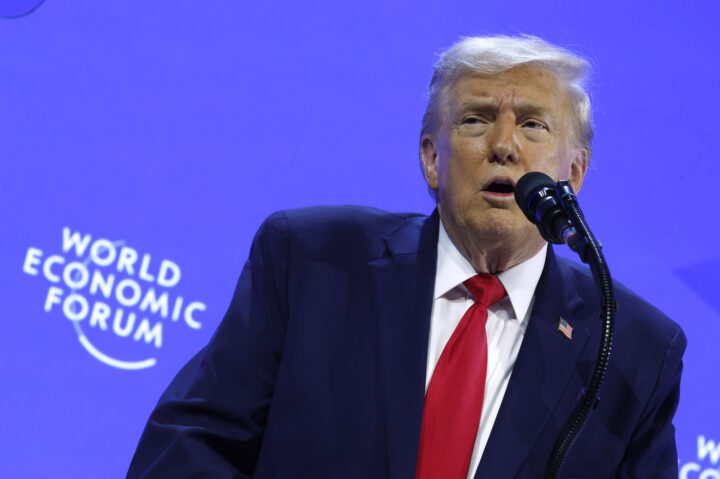
U.S. President Donald Trump gives a speech at the World Economic Forum (WEF) on January 21, 2026 in Davos, Switzerland.
Tensions are running high across the Middle East after a week in which the U.S. and Iran lobbed threats at each other, dominating headlines, destabilizing markets and leaving many in the region unnerved at the prospect of renewed military action seven months after the 12-day war between Israel and Iran that included U.S. strikes on Iranian nuclear facilities.
On the sidelines of the World Economic Forum in Davos, Switzerland, yesterday, Trump warned that an “armada” was on its way to the Gulf — a reference to the aircraft carrier and fleet of fighter jets being redeployed from the South China Sea.
In response, Gen. Mohammad Pakpour, the head of Iran’s Islamic Revolutionary Guard Corps, warned that Iran had its “finger on the trigger, more prepared than ever, ready to carry out the orders and measures of the supreme commander-in-chief.”
Trump, true to form, has been unpredictable and inconsistent in his approach to Tehran — alternating between threatening force and teasing diplomacy. “Iran does want to talk, and we’ll talk,” Trump said at a signing ceremony in Davos on Thursday, just hours before he told reporters on Air Force One about the naval deployment to the Gulf. “We have a massive fleet heading in that direction, and maybe we won’t have to use it,” he said on AF1, managing in one whiplash-inducing sentence to lob a threat at Iran while also offering it a theoretical off-ramp.
The president has proven that he is willing to engage in bold action — especially when it comes to Iran. One has only to look to the 2020 killing of Quds Force head Gen. Qassem Soleimani or the U.S. strikes on Iranian nuclear facilities last June to see that the Trump administration is willing to engage militarily with Iran in ways prior administrations may have not. (Case in point: former President Joe Biden’s issuance in April 2024 of a one-word warning to Iran — “Don’t” — a day before Tehran launched hundreds of missiles and drones at Israel.)
More recently, the capture of Venezuela’s Nicolás Maduro demonstrates that the Trump administration isn’t opposed to regime change. And indeed, that was a possibility the president has mulled vis-a-vis Tehran, telling Politico last weekend that it was “time to look for new leadership in Iran.”
Meanwhile, Trump’s inner circle and key allies are split over how to approach Iran. White House Special Envoy Steve Witkoff has been a vocal backer of using diplomacy to quell tensions with Tehran.
“Iran needs to change its ways,” Witkoff told Bloomberg on Wednesday in Davos. “They need to do that. And if they do, if they indicate that they’re willing to do that, I think we can diplomatically settle this.”
Witkoff additionally expressed disappointment that Iranian Foreign Minister Abbas Araghchi had been removed from the agenda at Davos after quietly being added last week, saying he had been “looking forward to meeting [Araghchi], because we have to build that communication channel, because the alternative to that is not a good alternative.”
Hours after Witkoff’s comments, Sen. Lindsey Graham (R-SC) posted a thinly veiled reference to the White House envoy, saying he was “unnerved by statements being made by people involved in the Iran file suggesting that if the ayatollah could change his ways, we might be able to reach an agreement with the regime.”
“Anyone who believes that the ayatollah is remotely interested in changing his ways does not understand the history of the ayatollah and the murderous regime,” Graham continued. “That’s the same as believing someone could have done a deal with Hitler.”
Within Iran, there are still hopes that U.S. action will topple Supreme Leader Ayatollah Ali Khamenei. The Economist notes a joke making the rounds among Iranian civil servants: “We used to worry we’d become Venezuela. Now we worry we won’t.”
Heading into the weekend with tensions still high, those who have to live with the consequences of the continuation of the Iranian regime — from the Iranians who have faced years of repression to the Israelis preparing their bomb shelters for the next war to people across the region whose lives have been upended by Iran’s proxies in Lebanon, Syria, Iraq and Gaza — will be watching closely for any signal from Trump and his top advisors about Washington’s next moves, and their reverberations around the world.
Trump was reportedly briefed in recent days on options for sites to strike in Iran as the regime cracks down on protesters
Morteza Nikoubazl/NurPhoto via Getty Images
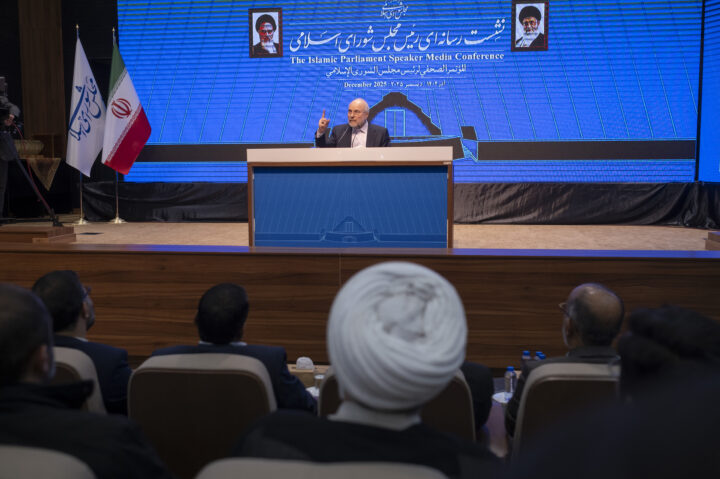
Iranian Parliament Speaker, Mohammad Bagher Ghalibaf, speaks with the media in a media conference at a conference hall in the Iranian Parliament building in Tehran, Iran, on December 2, 2025.
Tensions between the U.S. and Iran escalated on Sunday as President Donald Trump weighed options for striking Iran amid the regime’s crackdown on protesters, and Tehran threatened to strike U.S. bases in response.
Trump was briefed in recent days on options for sites to strike in Iran, The New York Times reported, after he issued several threats warning that the U.S. could get involved if the Iranian regime attempted to violently suppress the nationwide demonstrations that have racked the country for several weeks.
The options include nonmilitary sites in Tehran, the Times wrote, as well as a large-scale aerial strike on military targets, The Wall Street Journal reported. Trump has not yet made a decision whether to proceed and no U.S. military action has been taken in preparation thus far, U.S. officials told the Times and the Journal.
In response to the reports, Mohammad-Bagher Ghalibaf, the speaker of Iran’s parliament, said on Sunday that the country would attack American military bases in the region if the U.S. follows through, and even raised the possibility of a preemptive strike. Ghalibaf also threatened to attack regional shipping lanes and Israel.
Over the last week, Trump has made repeated threats against the Iranian regime that the U.S. was “locked and loaded” and would “rescue” demonstrators if security forces began killing them. Human rights groups say the death toll has reached over 200 as the protests, sparked by a severe economic crisis in the country, have spread, with protesters explicitly calling for regime change.
The president wrote on Truth Social on Saturday that “Iran is looking at FREEDOM, perhaps like never before” and that the “USA stands ready to help!!!”
Trump has floated the possibility of regime change in Iran before. During the country’s June war with Israel, when the U.S. struck nuclear sites inside Iran, Trump wrote on social media that the U.S. knows “exactly where the so-called ‘Supreme Leader’ [Ayatollah Ali Khamenei] is hiding. He is an easy target, but is safe there — We are not going to take him out (kill!), at least not for now.” Later, he wrote, “It’s not politically correct to use the term, ‘Regime Change,’ but if the current Iranian Regime is unable to MAKE IRAN GREAT AGAIN, why wouldn’t there be a Regime change??? MIGA!!!”
GOP lawmakers have voiced their support for renewed U.S. strikes on Iran, with Sen. Lindsey Graham (R-SC) sharing a message to Khamenei on Fox News last week: “You need to understand, if you keep killing your people who are demanding a better life, Donald J. Trump is gonna kill you.”
The delegation, which makes up a third of freshman Democratic House members, demonstrates the organization’s continued pull even amid heightened tensions between Dems and Israel
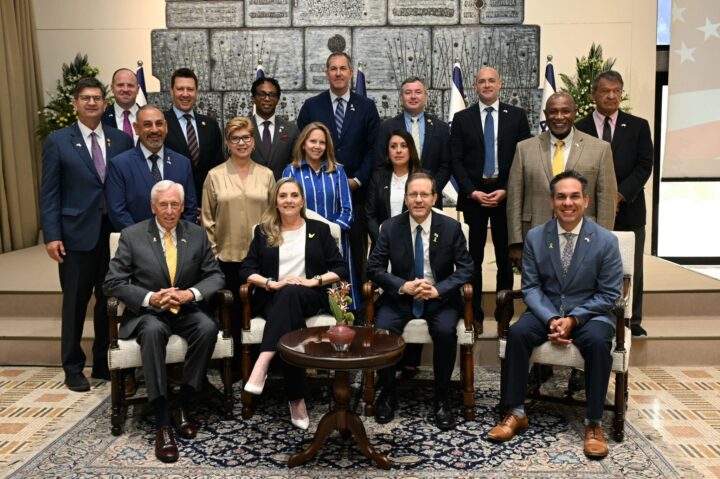
President Isaac Herzog on X
Israeli President Isaac Herzog meets a delegation of House Democrats in Jerusalem on August 11, 2025.
A group of 14 House Democrats, including 11 first-term lawmakers, are currently visiting Israel with the AIPAC-affiliated American Israel Education Foundation.
The group includes Reps. Tim Kennedy (D-NY), Gil Cisneros (D-CA), Josh Riley (D-NY), Nellie Pou (D-NJ), Wesley Bell (D-MO), Laura Gillen (D-NY), Johnny Olszewski (D-MD), Eugene Vindman (D-VA), Luz Rivas (D-CA), Herb Conaway (D-NJ) and George Latimer (D-NY).
They make up a third of the 33 freshman Democratic members of the House — a sign of AIPAC’s continued pull among more centrist pro-Israel Democrats even as progressives have sought to make the group politically toxic. An AIEF-sponsored Republican trip which visited Israel last week included around the same number of freshmen lawmakers.
The trip comes at a time when tensions, even among Israel’s most vocal Democratic supporters, and the Israeli government are at a high point, amid concern with the humanitarian crisis in Gaza and Israel’s newly finalized plans to expand the war and conduct a military takeover of Gaza City.
The Democratic delegation also includes Reps. Steny Hoyer (D-MD), Pete Aguilar (D-CA) and Brad Schneider (D-IL). Aguilar is the No. 3 Democrat in the House.
The Democratic group met with Israeli President Isaac Herzog on Monday, who said that the “visits show the bi-partisan, steadfast alliance between the United State[s] and Israel, and of the true shared values between our peoples.”
“I told them that Israel continues to operate in accordance with international law, that it was dramatically increasing the flow of humanitarian aid to Gaza, and that Israel continues to strive with all its might and in every way possible to bring our hostages home,” Herzog said in a statement. “I also made clear that Hamas continues to hold, starve, torture and abuse the hostages, holding 50 still in captivity, in a deliberate and flagrant crime against humanity. I told them it was Hamas which was looting and stealing the aid, preventing the distribution to the civilians in Gaza. And that Hamas was blocking and rejecting a deal that would bring an end to the suffering.”
The Democratic group also appears to have visited the City of David.
Please log in if you already have a subscription, or subscribe to access the latest updates.
 Continue with Google
 Continue with Apple