































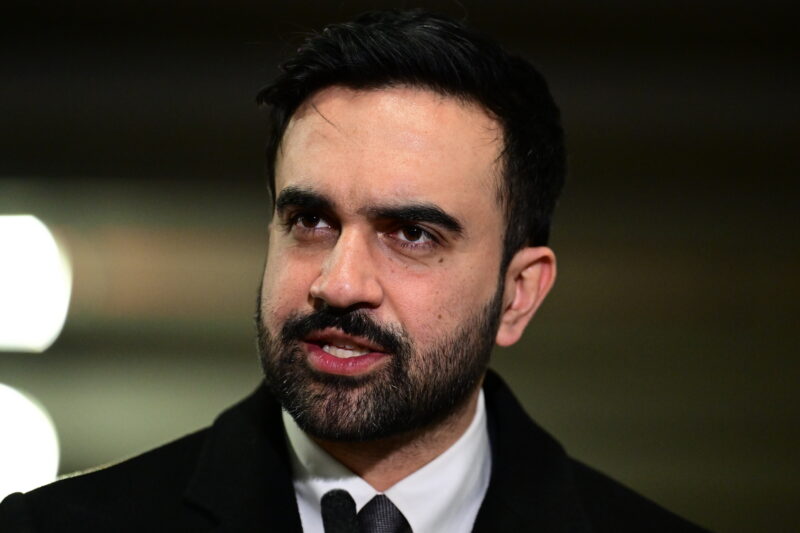











In an interview with JI, the Minnesota prosecutor and Jewish community leader said he was motivated to seek the role because of the ‘rapid escalation of violent antisemitism’
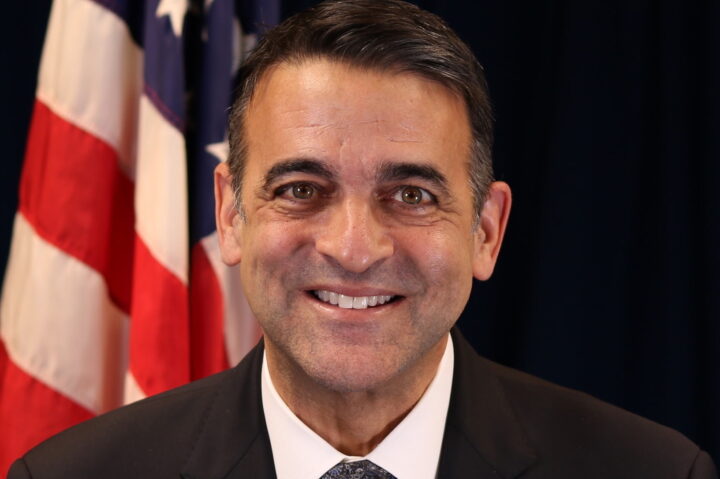
United States Attorney’s Office District of Minnesota
U.S. Attorney Daniel Rosen


 Add JewishInsider on Google
Daniel Rosen earned a unique distinction when he was confirmed by the U.S. Senate early this month to be Minnesota’s top federal prosecutor.
The 60-year-old lawyer and Orthodox Jewish community activist is one of the few Orthodox Jews to serve as U.S. attorney. And he is almost certainly the only chief federal law enforcement officer in the county who regularly studies the Talmud, a text, he says, that shares a “phenomenal” range of common principles with the American legal tradition.
“The more you study the Talmud, the more you see how rooted in our [Jewish] traditions American law, and the British law from which it emerged, really is,” Rosen explained in a recent interview with Jewish Insider.
As he acclimates to his new role, Rosen, who had previously worked in private practice, said that one of his “primary motivations” for seeking the position was the “rapid escalation of violent antisemitism” in the United States, calling the “prosecution of violent hate crimes” a top priority for his office.
“Jewish history tells us that Jews fare poorly in societies that turn polarized,” he said, arguing that Jewish Americans, in particular, “have a profound and immediate interest in reversing the direction of the violent hatred that’s being expressed in many directions.”
Rosen, a Minnesota native who gave up his law practice to assume his government position this month, is a graduate of University of Minnesota Law School and a Navy veteran. He has long been involved in Jewish communal life and pro-Israel activism, having served as a board member of the Jewish Community Relations Council of Minnesota and the Dakotas as well as a state representative for AIPAC.
Despite his lack of prosecutorial experience, Rosen was among three candidates for the job put forward by Minnesota’s four House Republicans — including Rep. Tom Emmer (R-MN), the majority whip.
In their recommendation to President Donald Trump, Emmer and his colleagues praised Rosen’s advocacy on behalf of “community and charitable issues, especially matters of particular interest to the American Jewish community,” later describing him as “one of the sharpest legal minds in the entire country.”
Speaking with JI this week, Rosen discussed his expectations for the role he assumed just weeks ago and how his Jewish faith influences his approach to the law, among other things.
The conversation has been edited and condensed for clarity.
Jewish Insider: How have you been acclimating to your new job after being confirmed earlier this month?
Daniel Rosen: It’s been profoundly interesting, above all. For me, who comes in without a prosecutorial background, it has required a considerable education in the specifics of criminal procedure. But far more interesting are all the inputs that go into every case. From all of the various participants in the investigation and the prosecution and the cases, I’m seeing a world that heretofore I had not seen, and I’m finding it absolutely fascinating.
What really strikes home is the not only the number of bad actors out there, but the sheer nefariousness of all of those bad actors and the real need for what it is that U.S. attorneys’ offices are doing all over the country in order to help maintain safety in an environment when our society is tearing apart.
In Minneapolis, we are one of several locales around the country where the philosophy of the local prosecutor is really inconsistent with the kind of law enforcement that, in my view, the country needs right now. And accordingly, the burden on the U.S. attorney’s office here in Minnesota — to pick up the slack that’s left behind by the local prosecutor — is a heavy burden, and dealing with the additional burden that their reticence creates for us is something that I’m having to learn quickly on the job. But I’m adjusting to it.
JI: Are there any noteworthy cases that your office is currently handling that you can mention?
DR: There are several cases that have achieved quite a bit of not only local but national notoriety that we are in the midst of right now. First of all, in Minnesota, this office has been prosecuting a COVID assistance fraud that is simply breathtaking in a scope and amount. It is generally known as the ‘Feeding Our Future’ case, or more accurately put its cases — where a large group of defendants and others that have not been charged have together stolen hundreds of millions of the taxpayers’ dollars in a brazen fraud. We’ve also uncovered and now charged frauds of similar character also involving taxpayer money and also involving breathtakingly large amounts of money.
We have a team here in our office that certainly has its hands full in completing the investigations and bringing those cases to trial. In addition to that, we of course had a political assassination here in Minnesota early in the summer, where the former speaker of the Minnesota House of Representatives and the current leader of the House Democratic Caucus was assassinated, along with her husband, and another legislator was shot and left for dead but, thank God, he survived. The prosecution of that case is one of tremendous importance, particularly given our current times where bitterness in political discourse has turned to violence, and deadly violence, repeatedly.
JI: As you know, we’ve seen the rise of political violence across the country, some of it related to anti-Israel and antisemitic sentiment. Is that on your mind as you take over this job?
DR: The rapid escalation of violent antisemitism in America is not only on my mind, but it’s one of my primary motivations for having sought this position. Jewish history tells us that Jews fare poorly in societies that turn polarized, and where that polarization evolves into factional hatreds in the non-Jewish societies within which we live. Those factional hatreds virtually always evolve into violent expressions of hate against the Jews.
Accordingly, Jewish Americans have a profound and immediate interest in reversing the direction of the violent hatred that’s being expressed in many directions in the country. So for that reason, prosecution of violent hate crimes is certainly at the highest level of priority for me.
JI: In your lifetime, do you feel antisemitism has reached a level that you haven’t seen before?
DR: Yes. By my recollection, in the 1990s, if someone sprayed a swastika on the side of a synagogue in Omaha, it would probably be noted in The New York Times. Today, those kinds of antisemitic acts are happening, it seems, every single day, or nearly every single day, and they’re happening all over the country. It’s been a slow change, but now it’s rapidly escalating.
There is something else I can add. I don’t know if it’s directly responsive to the question, but it is something that I think about. In the 2,000-year odyssey of the Jews, through the diaspora, we have had other countries that have played host to us, and where the lives of the Jews were comparable to what they are here in America. In Spain, the Jews had what historically is referred to as the Golden Age in Spain. There was a Jewish Torah scholar who was the prime minister. There was another tremendous Jewish Torah scholar who was the finance minister to the king and the queen. Our life in Spain, everybody thought it couldn’t get better. And then, of course, it ultimately came to the point where every Jew in Spain had to choose to either leave, surrender their faith or die.
In Germany, there were Jews who said, ‘Forget Jerusalem. Berlin is our Jerusalem.’ There were Jews who thought, ‘Here we are at the height of culture, at the height of refinement, at the height of knowledge. What could be better for us than Germany? We Jews, a cultured and knowledgeable people, fit in here so well.’ But, of course, we know how that ended.
So, we all have to ask ourselves, how’s it going to proceed here in the United States? And I believe the answer is, it depends on the good faith of the thousands, maybe tens of thousands, of elected and appointed officials all over the country who recognize the good that the Jews contribute to society and recognize the good that comes from being good to the Jews, and having the courage to stand by their convictions. If they lose their courage, it would not bode well for the Jews in the country. So it’s my view that, if nothing else, as an example to fellow Americans, sometimes we’re just called to do our part to contribute to the rebuilding of the society that we so desperately need. And so I gave up a law practice and here I am now, an appointed public servant.
JI: Can you elaborate on your own involvement in Jewish communal life and fighting antisemitism?
DR: When I was a young lawyer, my father had some political relationships. He was not a man of politics, but he had political relationships, and he was a person who was not for any organization or in any communally organized way, but he was an advocate for Jews, for the Jewish community and for Israel in the non-Jewish world in a very active way. I can remember as a teenager going with my father to an annual convention of all the employees of a company that he represented, and the chief executive officer of that company asked my father to speak to them about the history of Israel and the imperative of supporting Israel. By my recollection, there was not a dry eye in the house. But whether that recollection is precisely correct or not, what I can tell you is it had a profound impact on me.
Early on in my law career, my father encouraged me to develop political relationships, and I realized that if there was going to be a way that I could contribute to the welfare of the Jewish community, that was really the realm within which I could do it. That evolved into developing really important and long-lasting relationships with elected officials, especially federally elected officials. I acted a lot in partnership with AIPAC, and I did a lot, following my father’s example, on my own independent path.
Over the years, I realized the importance of bringing members of Congress to Israel, showing them Israel through the eyes of members of the Jewish community who were committed to the welfare of the people of Israel and who were also committed to the welfare of the Jews of America. So I began to organize and lead trips to Israel for members of the U.S. House of Representatives. I’ve taken a good number of members of the U.S. House from the Upper Midwest to Israel, one or two or three at a time, and those members of the House have gone on to become governors and Cabinet secretaries and congressional leaders. Their exposure to Israel and to Jewish lay leaders on the trips that I have led, I think, has resulted in developing a very strong and, God-willing, unbreakable affinity, on their part, for the Jewish community.
JI: Were you raised in an Orthodox household?
DR: I was raised in a traditional household where Shabbat was respected but not strictly observed. My evolution into Orthodoxy was a slow one through my early adulthood, but I became shomer Shabbat approximately 20 years ago.
JI: How do Judaism and Jewish values influence your own approach to the law?
DR: I study the Talmud every day. What I can tell you is, the more you study the Torah, and the more you study the Talmud, the more you see how rooted in our traditions American law, and the British law from which it emerged, really is. The common denominators are phenomenal. But why is that? That’s because the values that we hold dear, the values that the Torah instills in us, are the values from which the societies in which we live have derived their fundamental principles of justice.
JI: Are there any specific concepts you’d like to cite?
DR: I guess my answer to your question is, Tzedek, tzedek tirdof — ‘Justice, justice, you shall pursue.’ I think that’s a good one for a U.S. attorney.
Please log in if you already have a subscription, or subscribe to access the latest updates.
 Continue with Google
 Continue with Apple