









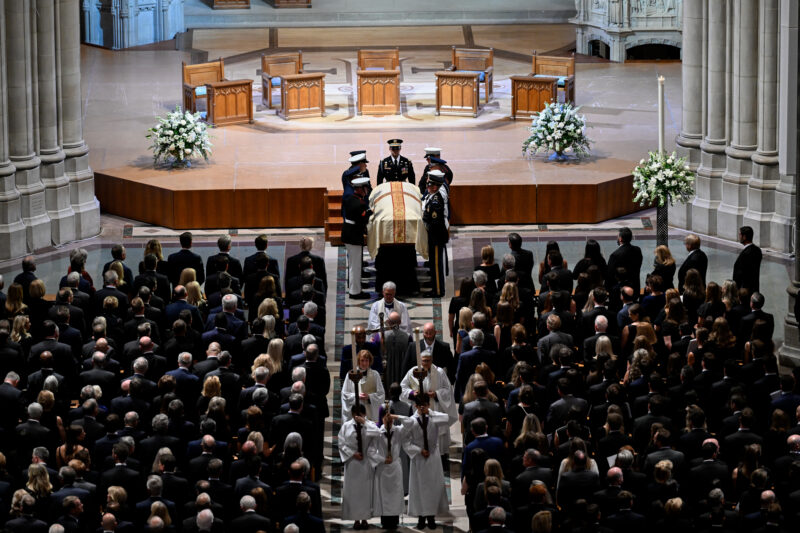
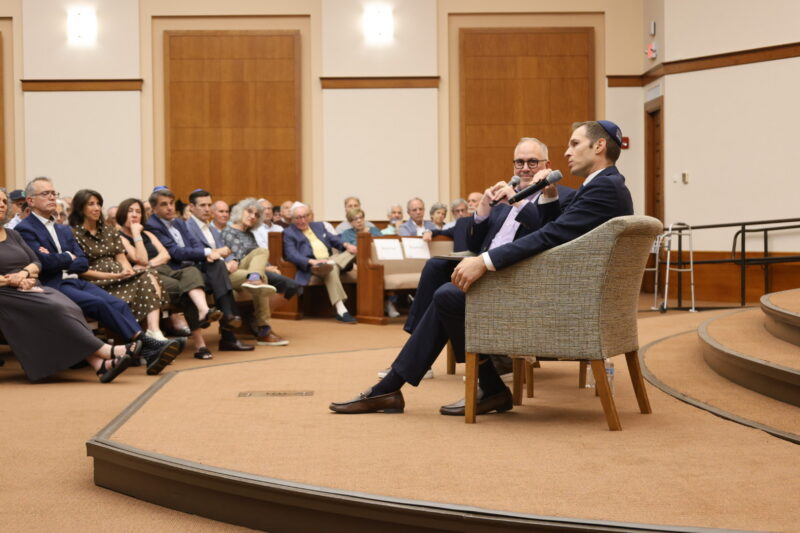
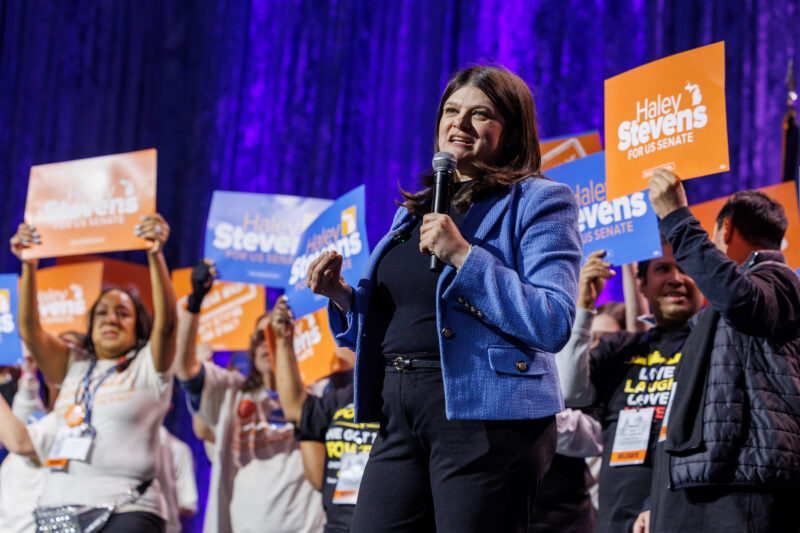

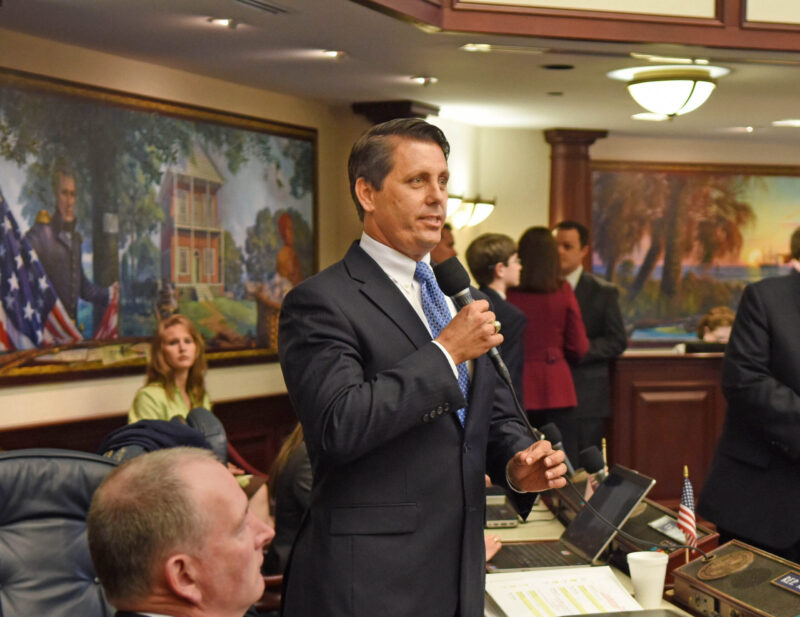










Norman Goda, a Holocaust historian at the University of Florida, said that modern remembrances of the Holocaust that fail to mention Jews are 'a soft form of denial'
Jim Watson - Pool/Getty Images
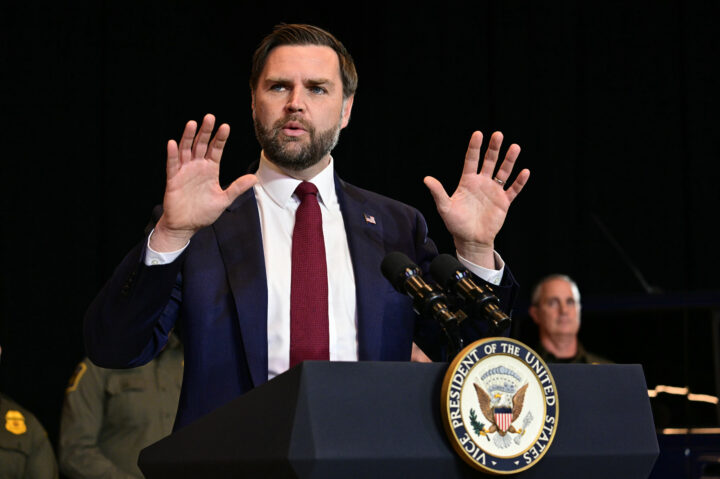
U.S. Vice President JD Vance gives remarks following a roundtable discussion with local leaders and community members amid a surge of federal immigration authorities in the area, at Royalston Square on January 22, 2026 in Minneapolis, Minnesota.


 Add JewishInsider on Google
A week after President Donald Trump took office for the first time in 2017, the White House ignited a political and media firestorm by releasing a statement commemorating International Holocaust Remembrance Day that failed to mention Jews.
The omission was covered in major media outlets like CNN and Politico; the Anti-Defamation League called it “puzzling and troubling.”
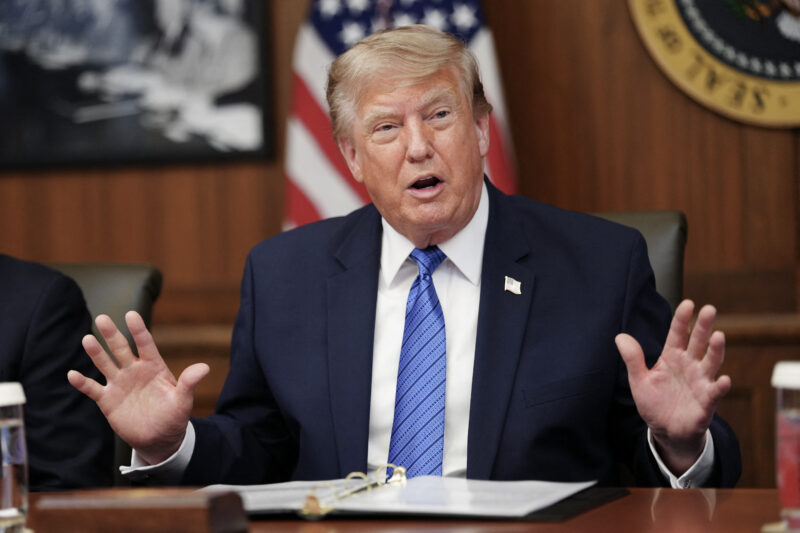
Nearly a decade later, Trump released another Holocaust Remembrance Day post this week, with a far more specific message: “Today, we pay respect to the blessed memories of the millions of Jewish people, who were murdered at the hands of the Nazi Regime and its collaborators during the Holocaust,” the statement read, “as well as the Slavs and the Roma, people with disabilities, religious leaders, persons targeted based on their sexual orientation, and political prisoners who were also targeted for systematic slaughter.”
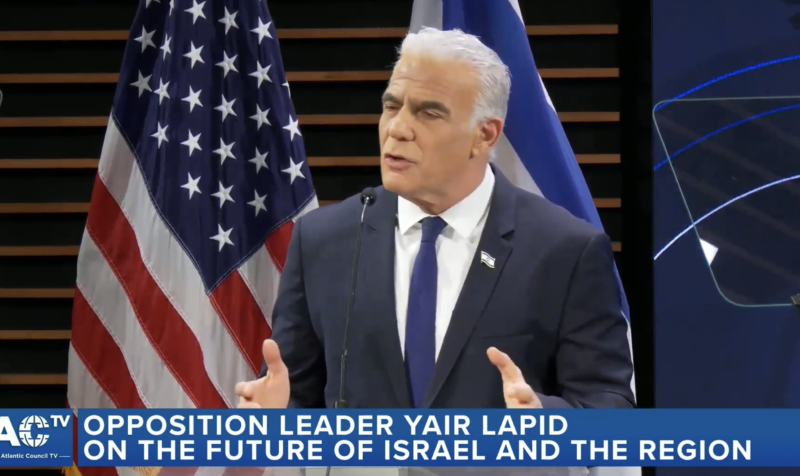
Meanwhile, Vice President JD Vance’s post commemorating the day, which marks the anniversary of the 1945 liberation of Auschwitz by Allied Forces, did not mention Jews or antisemitism, leading political rivals on the left to pounce. (Democratic Majority for Israel called it “indefensible.”)
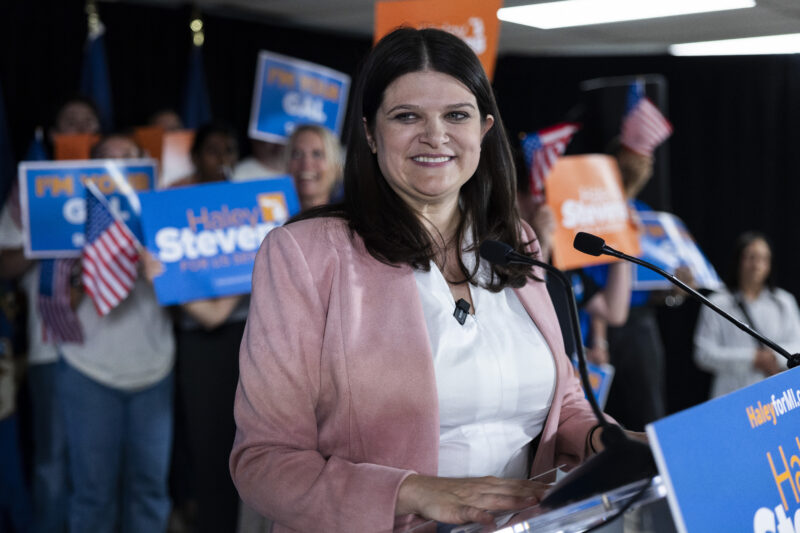
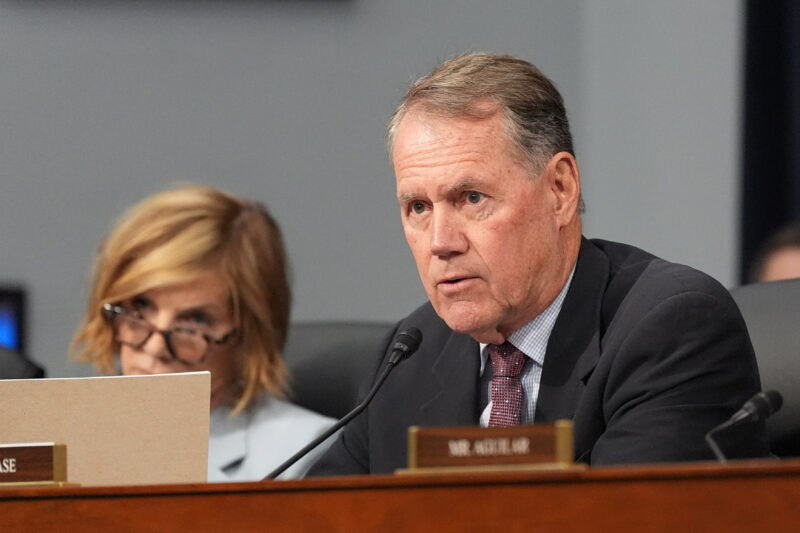
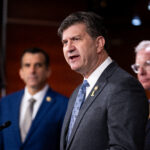
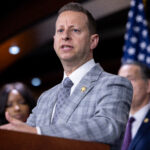
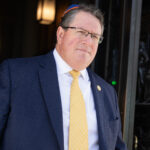
But despite the visibility of Vance’s tweet — which his defenders pointed out included pictures of him and his wife at Dachau, standing in front of a sign that said “Never again” in Yiddish — he was far from the only politician that failed to mention the fact that the Holocaust targeted Jews. Among them were: Sen. Roger Wicker (R-MS) and Rep. James Walkinshaw (D-VA), both of whom pledged to remember the victims of the Holocaust without referring to Nazis’ targeting of Jews.
Multiple presenters at the U.K.’s BBC also failed to mention Jews in their coverage of Holocaust Remembrance Day — drawing backlash and a subsequent apology from the national broadcaster.
Does it matter that these politicians or media don’t reference Jews if they are still highlighting the significance of the Holocaust? It’s possible to argue that, definitionally, the Holocaust was about Jews, so one could assume that any reference to the Holocaust is itself a reference to the killing of Jews and the antisemitism that led to it.
“If I talk about the potato famine, do I have to say Irish? How many other potato famines were there?” asked Deborah Lipstadt, a Holocaust historian who served as President Joe Biden’s antisemitism envoy. “But this is part of a greater whole in an age of rising antisemitism.”
For years, Americans’ knowledge of basic facts about the Holocaust has been declining, particularly as fewer Holocaust survivors are alive each year to share their stories. A 2023 survey conducted by the Claims Conference found that 21% of Americans believed that 2 million Jews or fewer were killed. Eight percent of Americans, and 15% of 18- to 29-year-olds, said the number of Jews who were killed during the Holocaust has been greatly exaggerated.
“Holocaust history has the power to teach vital, timeless lessons about why our choices matter — but only when it is approached with the precision, historical integrity and respect it rightfully deserves,” the U.S. Holocaust Memorial Museum said in a statement this week that called for an end to “the abuse and exploitation of Holocaust memory.”
In the 81 years since the Holocaust, political leaders and movements have exploited the memory of the genocide to serve their own ends, particularly by shifting the focus of who its victims were.
In the former Soviet Union, where more than 2 million Jews were killed during the Holocaust, memorials to those killed called them “peaceful Soviet citizens” — stripping them of their Jewish identity, as if their killers had targeted Russians rather than Jews. Some right-wing politicians in modern Poland have attempted to quash historical scholarship documenting that Poles were involved in Nazis’ killing of Jews, and that the Nazis targeted Jews, in particular, rather than just the Poles (though Poles were targeted, too).
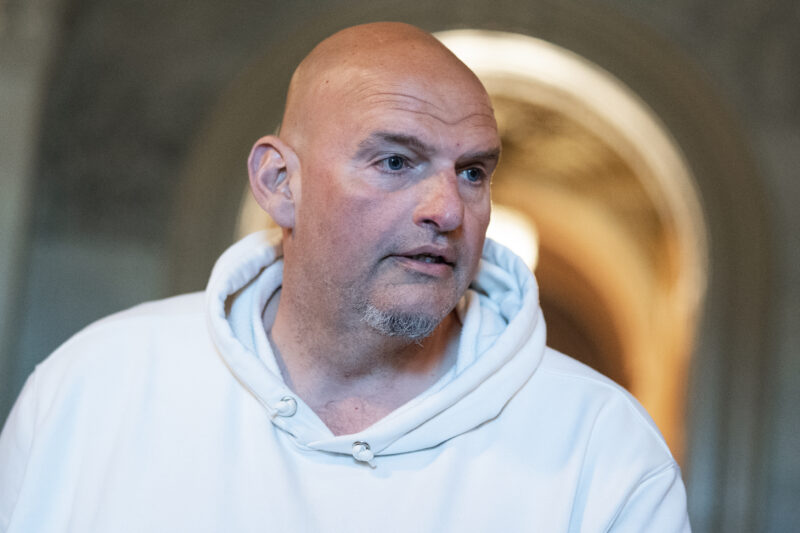
Norman Goda, a Holocaust historian at the University of Florida, said that modern remembrances of the Holocaust that fail to mention Jews are “a soft form of denial.”
“The Nazis certainly knew who they were deporting. The Nazis certainly knew who they were gassing,” Goda told Jewish Insider on Wednesday. “The ignorance is such that you have to remind people that the Nazis called this Die Endlösung der Judenfrage, the final solution of the Jewish question. They weren’t just killing random people.”
The politicians posting about the Holocaust almost surely know that, as do most of their constituents. But rising antisemitism coupled with declining knowledge about a genocide that targeted and killed 6 million Jews means that reminding people of the facts — the specifics — remains crucial.
“Do we do this with any other mass catastrophe? Do we discuss the Armenian Genocide without mentioning the Armenians? Do we discuss slavery in the United States without mentioning who the slaves were?” Goda questioned. “We don’t do it, and anybody who would do that is engaged in an almost willful misunderstanding, either a profound historical ignorance, on the one hand, where you almost have to try to be that ignorant, or something that is simply more nefarious.”
Merrill Eisenhower told JI while visiting Holocaust survivors in the U.K. that his ancestor would be ‘disturbed’ by the rise of antisemitism on both sides of the political spectrum
Alexi Rosenfeld/Getty Images
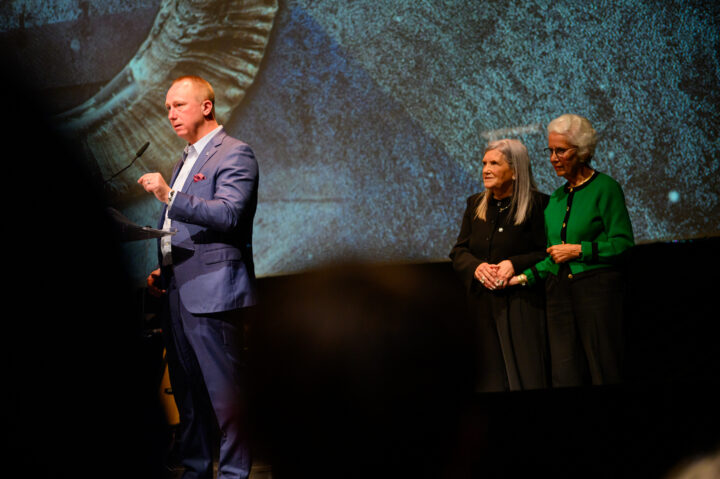
Merrill Eisenhower Atwater (L), great grandson of General Dwight D. Eisenhower speaks after receiving the Champion of Truth Award as Phyllis Greenberg Heideman (C) and Holocaust survivor, Eva Clarke (R) look onwards at the International March Of The Living Erev Yom HaShoah ceremony on April 23, 2025 in Krakow, Poland.
LONDON — When he arrived at the Ohrdruf concentration and forced labor camp in Germany in April 1945, Gen. Dwight D. Eisenhower was appalled by what he saw.
The first to be liberated by U.S. troops, the camp was strewn with the decomposing remains of hundreds of prisoners murdered by the SS, who had days earlier fled the scene of their crimes.
Three days later, Eisenhower, the supreme commander of the Allied Expeditionary Force in Europe, wrote to U.S. Army Chief of Staff George C. Marshall saying, “The things I saw beggar description. … I made the visit deliberately in order to be in a position to give first hand evidence of these things if ever, in the future, there develops a tendency to charge these allegations merely to ‘propaganda.’”
Eighty years later, Eisenhower’s great-grandson, Merrill Eisenhower, the CEO of People to People International, is carrying the torch for Holocaust remembrance, as he seeks to ensure the world never forgets.
Earlier this year, he joined the March of the Living from Auschwitz to Birkenau in Poland. In a powerful act of remembrance and continuity, he walked alongside Holocaust survivor Eva Clarke, who he now considers a good friend. Last week, the pair were reunited in London to raise awareness and funds for the charity behind the annual march.
Eisenhower told Jewish Insider in an interview this month he hadn’t heard of the organization before they approached him a year ago. But when he was invited to join this year’s event commemorating the 80th anniversary of VE Day, he didn’t hesitate.
“I said ‘absolutely, I’d be honored to’. It was humbling,” he said, adding that he immediately suggested organizing a fundraiser in Washington beforehand. That was where he first met Clarke, who was born on April 29 inside the gates of Mauthausen, just days before Eisenhower’s forces liberated the camp in Austria.
“We’ve been friends ever since,” he said of Clarke. “You know how you meet somebody and you just connect — it was one of those things.”
Although he never met his famous great-grandfather, who later became the 34th U.S. president, Eisenhower was close to his maternal grandfather. John Eisenhower served alongside his father in Europe and would later serve him in the White House, too.
“On June 6, 1944, D-Day, my grandfather John graduated West Point and became aide-de-camp to Gen. Eisenhower, and so he was with him the whole time through Europe,” the younger Eisenhower said.
“When my great-grandfather arrived at his first camp, he said directly to my grandfather: ‘Make sure you document this, take photos. Bring Congress, bring the press. One day there’s going to be some bastard that says this never happened.’”
Sadly those words proved prophetic. Holocaust denial and distortion are surging around the world, including in the U.S.
The haunting images are part of what motivates Eisenhower. “Those photos that he [his grandfather] was taking, some of those still sit in my house and some are in the National Archives and some are in the Eisenhower Presidential Library in Kansas,” he said.
“Most of the time, I find myself on the verge of not understanding how someone could do it, and being grateful of the fact that there were people like my great-grandfather who stood up to the tyranny and the devastation, and the death and the murder,” he said.
“My great-grandfather being a part of it is important, but he was one of hundreds of thousands of American troops who marched across Europe liberating those camps.”
Being involved with March of the Living has given Eisenhower a fresh perspective on the devastation.
“It’s not just about going from Auschwitz to Birkenau in a march that represents the same death march that so many millions of people, mainly Jewish, suffered,” he said. “It’s about understanding that when you’re doing that march, you’re actually celebrating the lives and the liberation of all those people who were saved throughout Europe. Every step taken from Auschwitz to Birkenau is a little bit of erasing the evil out of that place, because we’re educating and teaching people the good that can happen.”
Eisenhower is grateful that survivors like Clarke, who lost most of her family in Auschwitz, including her father and brother, are still able to testify.
“I’m thankful they’re here to spread the message and to combat antisemitism, discrimination, racism,” he said. “Being with people like Eva is refreshing, it’s eye-opening and I think that I’ve actually gained more from them [survivors] than I could ever give them. It’s amazing to find out how they were able to survive — their stories give hope to humanity.”
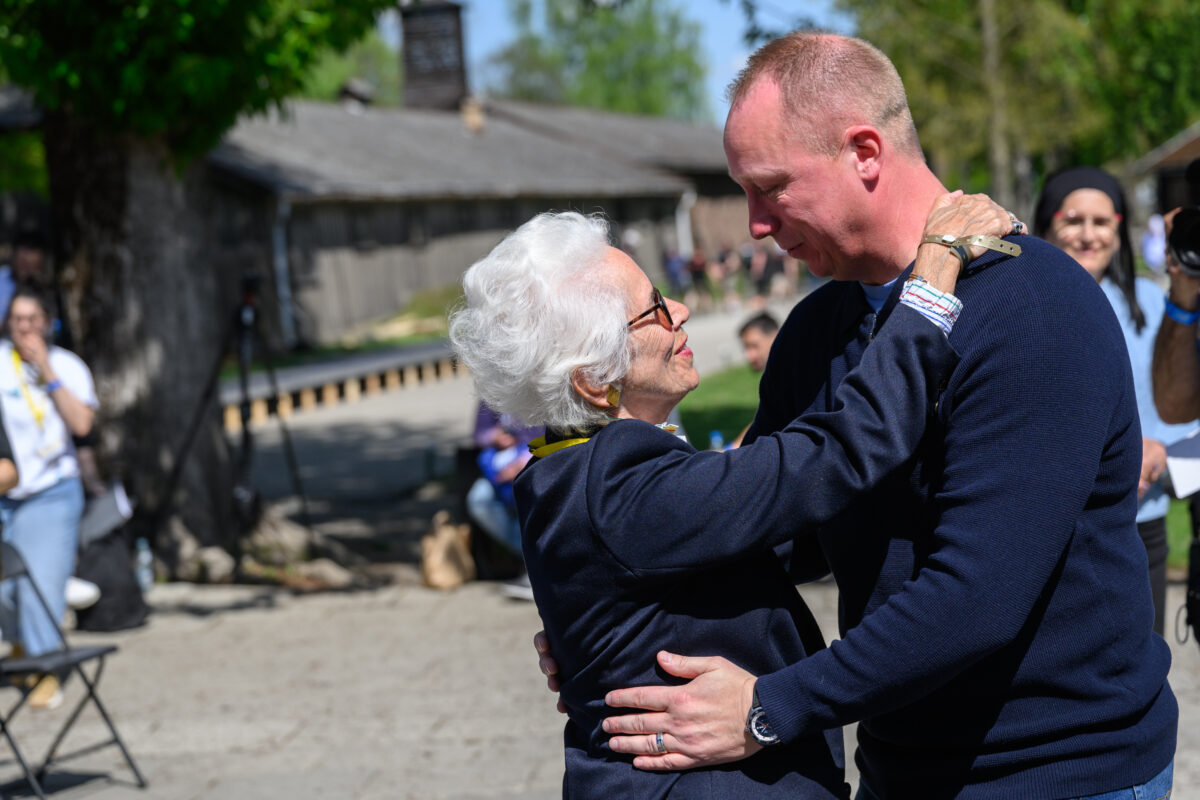
While in London, Eisenhower met with others who owe their lives to his great-grandfather’s forces and also visited the Houses of Parliament where he met with Lord Mann, the British government’s independent advisor on antisemitism.
Eisenhower lives with his wife, Nicole, and their children in Kansas, where he works in property development. “I build high-rises — that’s my day job,” he said. Beyond that, the 44-year-old is heavily involved in public service work and philanthropy. He serves on the international board of directors for People to People International, an NGO set up by his great-grandfather and which his mother, Mary, formerly headed.
The youngest of John Eisenhower’s four children, his mother spent much of her early childhood in the White House. But Ike was not the family’s only link to power.
“I’m actually related to two presidents, which is kind of wild, right?” said Eisenhower. His aunt Julie, married to his mother’s brother David, is Richard Nixon’s daughter.
So does anyone else in the family have ambitions for 1600 Pennsylvania Avenue today?
“Nobody is political at all,” he said. “In fact, we do the opposite of politics. We try to really get involved with improving international relations, but it’s more like world peace efforts.”
That said, he reserves the right to keep his options open.
“I may one day run for office,” he admitted to JI. “But I can’t imagine wanting to be president of the United States of America. You have constant criticism even if you’re right, and even worse criticism if you’re wrong.”
Although he refused to be drawn on party politics or individuals, Eisenhower had this to say about the current climate: “Right now within politics you have people from both sides that are well beyond the point of reason.
“This is what I tell people: if I agree with you in my day-to-day life 60% of the time, I’m probably going to be a pretty good friend of yours. For some reason, if I agree with you 80% of the time in politics, but I disagree with you 20% of the time, it means you hate me.
“That type of complete divisiveness is why you had someone like Hitler rise to power, then all of a sudden the economy goes terrible and now we need someone to blame.”
The rise of antisemitism from both sides of the political spectrum “doesn’t make sense to me” and is “disappointing,” he said. What would his great-grandfather think?
“I think he’d be disturbed with the way the current political environments are going, and he would give caution and warning, making sure we remember what people like Eva and her family went through so that we don’t do it again.
“I think when people stand still and say nothing, that’s when bad things happen. We have to crack down on that kind of rhetoric.”
He admitted that’s easier said than done, but added: “In the U.S. we have absolute freedom of speech; however, being a leader, you have the ability to say, ‘this is not right’ and ‘we cannot tolerate this behavior.’ I think there are certain presidents that have done a better job [of that].”
Clarke, 80, who traveled to London from her home in Cambridge, said the week with Eisenhower had been “incredible.”
“I’m going to say this forever — he’s my new best friend and I’ve been dropping his name all the time,” she said.
“It is such an incredible privilege to have met Merrill in his own right and for all the good he’s doing, but just to think about what his great-grandfather did. … If he hadn’t done what he did, I wouldn’t be here now.”
She described the global rise in antisemitism as “very depressing and very worrying,” but has pledged to continue promoting Holocaust education, a role she has inherited from her mother who brought her to Britain as a preschooler.
“All we can do is to carry on with what we’re doing because we can only take very small measures, but every small measure adds to the whole,” she said. “I feel it’s my duty, like Merrill does.”
The connection between the pair is all important, according to Scott Saunders, founder and chairman of March of the Living.
“Merrill represents the next chapter in the ongoing story of witness and responsibility,” he told JI.
“Earlier this year he marched with us at the March of the Living in Auschwitz, and now, meeting British survivors here in the U.K., he is demonstrating what it means to actively carry the torch of remembrance.
“The March of the Living has always been about connection: between past and present, survivors and young people, memory and action. Merrill’s dedication embodies that mission.”
Please log in if you already have a subscription, or subscribe to access the latest updates.
 Continue with Google
 Continue with Apple