





























The group disputed Rabbi Nikki Golomb’s claim that she was fired due to her fiancé’s anti-Israel activism

ELIJAH NOUVELAGE/AFP via Getty Images
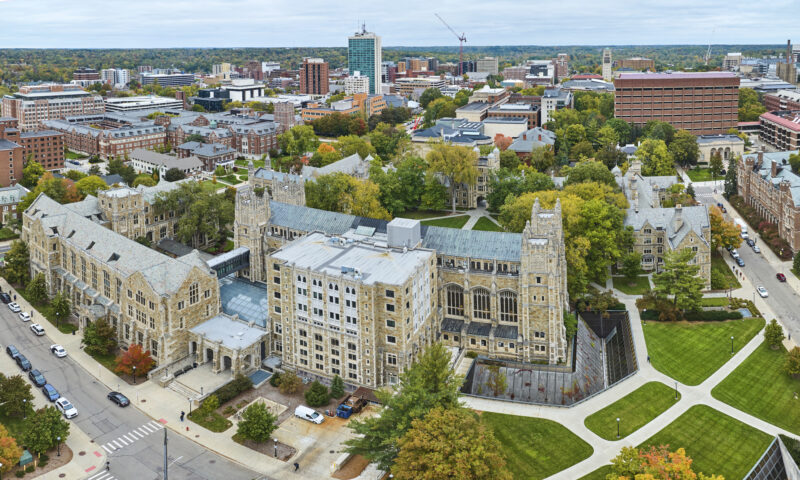
Young people are seen on the Emory University campus in Atlanta, Georgia on October 14, 2022.


 Add JewishInsider on Google
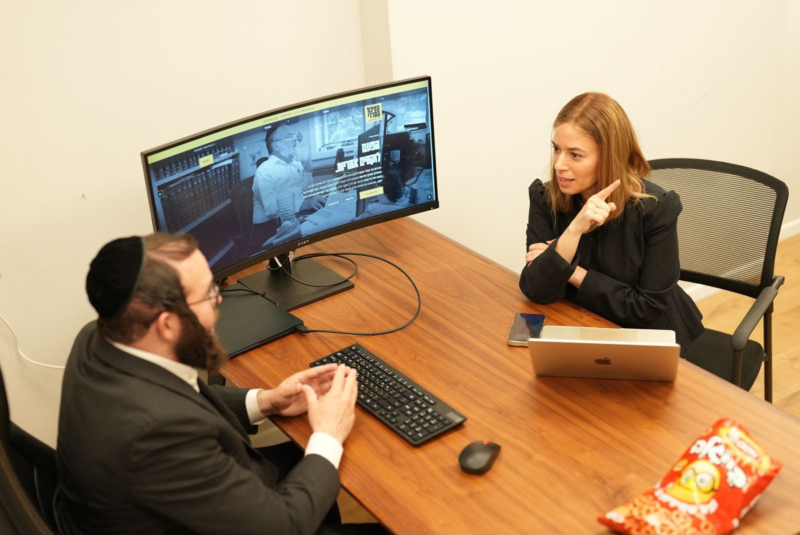
Hillel’s Georgia affiliate is disputing allegations made by Rabbi Nikki Golomb, a former campus rabbi at Emory University Hillel, saying that she was terminated due to her failure to be “truthful or transparent during the interview process,” and not, as she has claimed, because of her fiancé’s anti-Israel activism.
In a statement to Jewish Insider responding to what it called “false and misleading statements” that Golomb, 31, made last week to Jewish Currents, which first covered her firing, Hillels of Georgia said she had not been transparent during the hiring process about potential conflicts with the organization’s mission and values. The organization, which oversees Hillel programming across Georgia’s campuses, said the decision was not based on ideological issues but on concerns about Golomb’s conduct and suitability to advise students.
Hillels of Georgia said it reviews candidates’ social media accounts and conducts multiple rounds of interviews with Hillel students and staff to assess whether prospective employees align with the organization’s mission, programming goals and Jewish values. The organization said Golomb’s social media did not raise concerns during the hiring process and that she was asked direct questions intended to identify potential conflicts, but that her conduct changed shortly after she began working at Emory Hillel.
“During multiple rounds of interviews with Hillel students and staff, Rabbi Golomb was asked direct questions designed to uncover whether these potential conflicts existed,” the group said. “She disclosed no potential conflicts. Shortly into her tenure with Emory Hillel, this changed dramatically in ways that demonstrated she had not been truthful or transparent during the interview process.”
“As a result, our leadership team lost confidence that Rabbi Golomb possessed the necessary judgment and integrity to serve as an effective spiritual, moral and ethical advisor to students at a pivotal time in their development,” Hillels of Georgia said. Golomb, who was hired in early July, was fired in the beginning of August, prior to the start of the fall semester.
Hillels of Georgia describes itself as pluralistic, while also saying its employees must align with the organization’s mission “to create vibrant Jewish life on every campus in Georgia.” The organization declined to tell JI what information Golomb failed to disclose during the hiring process, what conduct prompted leadership to lose confidence in her and whether it asked Golomb about her position on Israel.
Golomb is listed as a member of the group Rabbis for Ceasefire, whose mission statement says it is committed to dismantling “Jewish supremacy” and to “Palestinian liberation.”
She has appeared as a member of the group, which was started by anti-Zionist activist Rabbi Alissa Wise, since at least February, according to an archived version of the group’s website. Hillels of Georgia did not respond when asked if it was aware of her involvement with the group at the time of her hiring.
Speaking with JI on Monday, Golomb said that she does not identify as a Zionist — or as anti-Zionist — because everyone defines them differently. During the interview for the position, she said, the interviewer shared that Hillel identified as a Zionist organization and many of the students who attend Hillel identified as Zionist.
“I have a lot of relationships with people who are very strongly Zionist, so this didn’t feel like it was outside of my comfort zone,” Golomb said. “It didn’t feel like it was asking me to make any compromises. This is something that I was excited to do … to work with students across the political spectrum.”
Golomb indicated that if she had been asked about her views regarding Zionism, she would not have given a concrete answer about Jewish self-determination in the land of Israel. Instead, Golomb said, she would have responded: “I believe that all people should be able to feel safe in their home, and of course, I believe that Jews around the world, including Jews in Israel, have the right to feel safe.”
Golomb asserted in the interview with Jewish Currents that her firing was driven by her fiancé’s criticism of Israel rather than any concerns about her own conduct.
Golomb’s fiancé, Sam Stein, has drawn attention for his anti-Zionist activism, including a post on X on the morning of Oct. 7, 2023, just as Hamas’ massacre was beginning, saying, “My solidarity is not conditional. If I get killed by a rocket put Free Palestine on my tombstone.”
Stein, a writer and activist with a following of nearly 60,000 on Instagram, has long identified as non-Zionist and anti-Zionist and condemned fundamental elements of Israel’s existence as a Jewish state. Last month, for instance, he wrote in a Substack post that Israel’s Law of Return — the legislation allowing nearly anyone with at least one Jewish grandparent to emigrate to Israel — is “inherently colonial and supremacist” and should not exist because it grants Jews preferential access to Israeli citizenship while denying Palestinians the same.
Golomb said that during the Aug. 3 meeting in which she was fired, Hillels of Georgia CEO Larry Sernovitz showed her a photo of the couple’s engagement and what she believed was a still from one of Stein’s videos. She said Sernovitz told her the organization was concerned that the Marcus Foundation, a major donor, might withdraw its funding if it learned of the engagement, which occurred after Golomb had been offered and accepted the job.
Jay Kaiman, president of the Marcus Foundation, told JI that it does fund a rabbinic position for Hillel at Emory, but had no role in Golomb’s hiring or dismissal. The Emory Hillel building bears the Marcus family name.
Golomb graduated from University of Delaware in 2017 and went on to serve as a fellow at UC San Diego Hillel, according to her LinkedIn. She graduated from Hebrew College’s rabbinical school in Massachusetts in spring 2026. Hebrew College, which describes itself as pluralistic, said it stands by Golomb and that her firing “has the potential to set a dangerous precedent.”
Jay Deitcher contributed to this report.
Rabbi Ronald Kaplan, who volunteered as a spiritual first responder after 9/11, was diagnosed with laryngeal cancer traced to his time on the pile — a battle he’s still fighting on the 25th anniversary of the attacks
Jonah and Ronald Kaplan
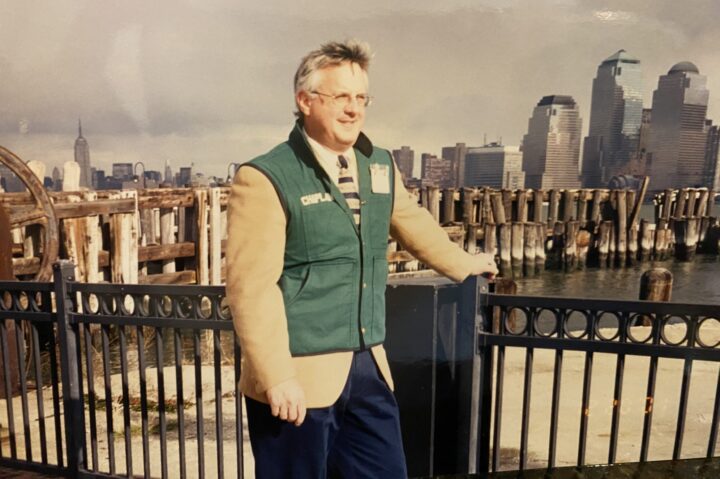
Rabbi Ronald Kaplan on Dec. 20, 2001, at Liberty State Park, NJ, before boarding the ferry to Lower Manhattan.
For more than four decades, Rabbi Ronald Kaplan’s primary tool for his work was his voice. It was the instrument he relied on every Shabbat and holiday on the bimah, in the classroom, under the chuppah, at the cemetery and in the hospital — guiding congregants through both moments of celebration and grief. As he puts it, a rabbi’s task is to “pray, to teach, to inspire, to counsel and to lead” — and the voice is the means to do it.
But this year, as the nation marks the 25th anniversary of the 9/11 attacks — a commemoration that falls as the major Jewish holiday of Rosh Hashanah begins on Friday night — that work of speaking and remembering holds particular resonance for Kaplan, whose service as a spiritual first responder at Ground Zero during the aftermath of the attacks ultimately cost him his “greatest sacrifice” — his voice.
In the late 1990s, the American Red Cross and the National Association of Jewish Chaplains sought to prepare clergy for disasters that were not acts of nature. In the wake of the 1997 crash of TWA Flight 800 off Long Island, they piloted a program for “spiritual first responders” to support survivors, bereaved families and recovery workers. Kaplan, then a congregational rabbi living in northern New Jersey, enrolled in what became known as the Spiritual Air Disaster Intervention Response (SAIR) program in the fall of 2000.
“When the program was offered, I was energized by its content and thought it would add to my chaplaincy skills,” Kaplan wrote in a recollection to Jewish Insider. “I never assumed nor expected to be mobilized so quickly.”
Kaplan said the call to serve at Ground Zero came just days after the attacks. “It was nearly as startling as the attacks themselves, for I felt so ill-prepared and inadequate with any experience,” he said. His instructor’s chilling hypothetical — what if a plane hit the World Trade Center? — “immediately came to mind.”
Starting on Sept. 19, 2001, Kaplan began making regular journeys from New Jersey to Lower Manhattan, returning weekly through the spring of 2002. At the staging area at Liberty State Park, he donned a green vest emblazoned with the word “CHAPLAIN” and introduced himself to grieving families and exhausted rescue workers.
“Who would I meet? Who or what would be recovered? What will I say, what will I learn, and where could we see any source of light in this darkness,” Kaplan recalled in a personal reflection he wrote this week titled “Pain in the Neck: Speaking Up Without the Voice 9/11 Took From Me.”
“I was tasked with meeting with many of the grieving family members and rescue workers, identifying myself as a chaplain,” Kaplan told JI. “I explained what they would witness, encouraged them to hold on to each other and gain strength as a group.”
From there, he joined New Jersey state troopers and families on the ferry across the Hudson, heading toward an elevated wooden platform overlooking the ruins that recovery workers called simply “The Pile.”
Kaplan describes the scene as “ancient liturgy for modern horror”: the acrid air, pulverized concrete, twisted steel and battered office furniture strewn amid the rubble, punctuated by sudden cries when recovery teams found human remains or fragments of clothing.
“I can vividly picture the walk to the pile, seeing the flames, feeling the intense heat and hearing the deafening noise from the machinery,” Kaplan said. “The horrific scene was incomprehensible. I could not process what my eyes were seeing and my ears were hearing.”
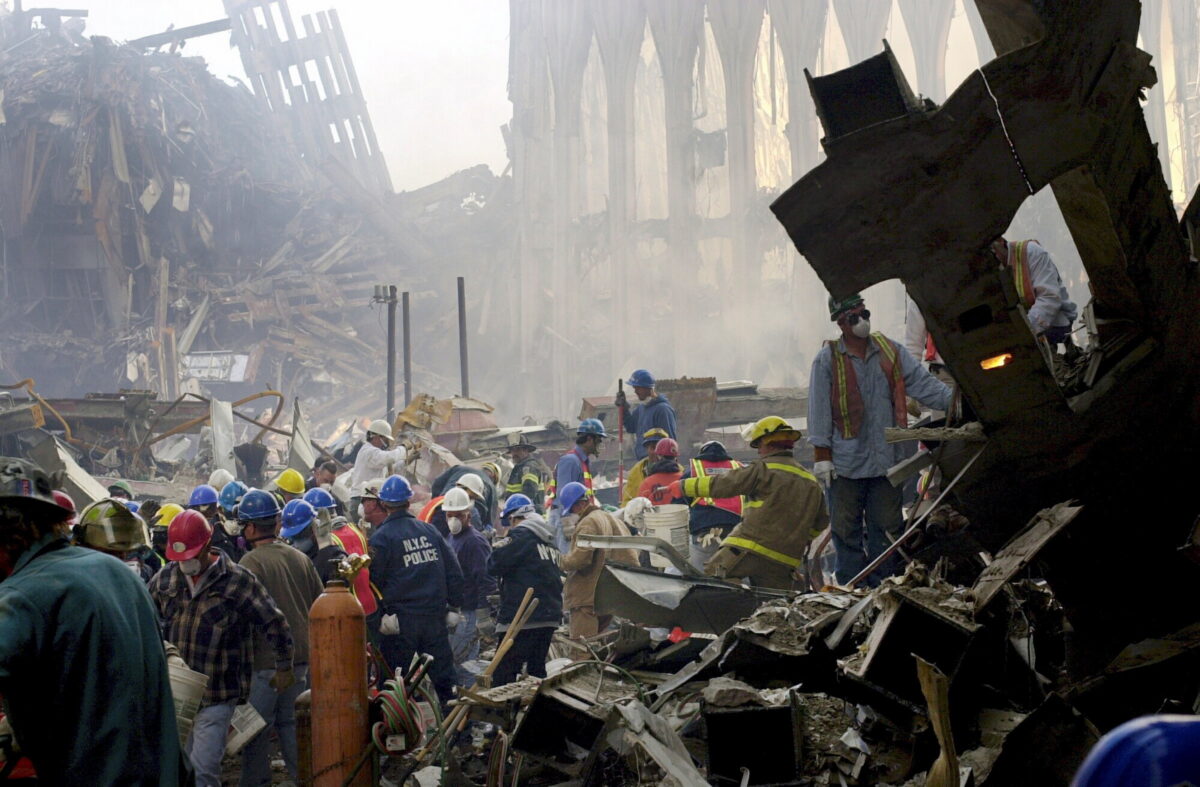
Many of those he accompanied instinctively covered their mouths and noses because “it was so difficult to breathe,” he added. “There were no masks, nor equipment for protection. There were no hard hats and no protective gear. Just my kippah served as my protection.”
Kaplan’s training as a congregational rabbi and chaplain — decades spent at hospital bedsides, cemeteries and shiva houses — shaped how he approached those walks to the platform and the moments of stunned silence that followed.
“As a congregational rabbi, a chaplain and a spiritual leader, I learned how to listen, knowing that I was there to reflect their stories and focus on others,” he said. “My personal feelings needed to be bracketed. I needed to be directed and focused on those who needed my presence.”
Many of the people who poured out their grief to him “spoke to me not wanting nor waiting for an answer,” he added. “My presence was their support. This is a lesson I carry to this day. What I represented to them as a clergy with a connection to God and faith was more important than any words I could offer.”
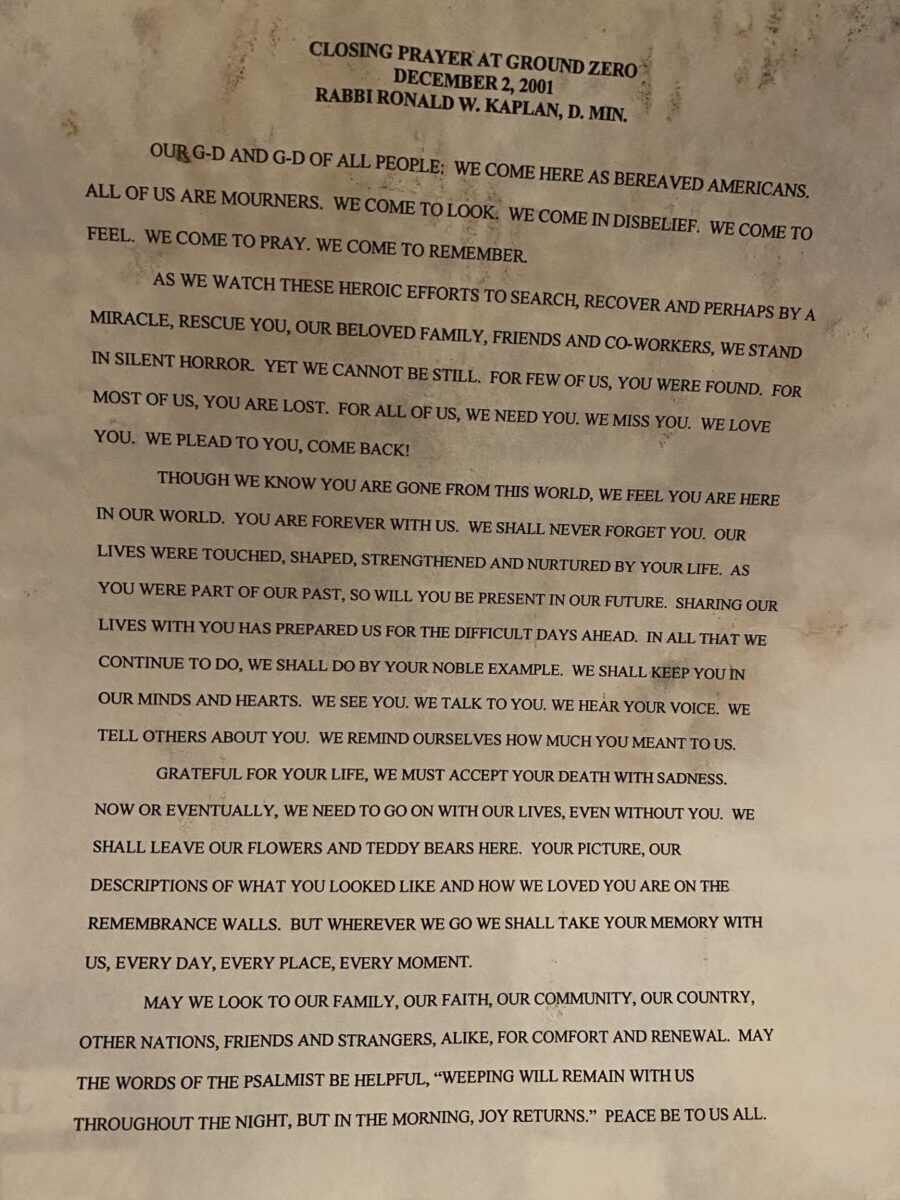
When recovery operations abruptly halted upon the discovery of human remains, Kaplan broke the stillness with an ecumenical prayer in English and Hebrew — “a tribute to the loss of one life, nearly three thousand times,” as he wrote. In his files from that period, he still keeps a sheet of paper he used on Dec. 2, 2001, titled “Closing Prayer at Ground Zero,” still stained with World Trade Center soot. When he rubs his thumb along the page, the dust still smudges his skin — “the same dust of history,” he writes, “and the dust of my voice’s demise.”
For years after 9/11, Kaplan did not directly connect his Ground Zero service to his health. He first began experiencing symptoms — “a persistent deep cough and hoarse voice” — in late 2019. He was diagnosed with laryngeal cancer in 2020.
“I never made the connection,” he said. During an early consultation, Kaplan’s physician ran through the usual risk factors — smoking, heavy drinking and HPV. “When my answers were all in the negative, he looked at me and asked: ‘Did you ever work at Ground Zero?’” Kaplan recalled. “He immediately connected my rare cancer to my exposure on the pile.”
New York City Mayor Zohran Mamdani this week released more than 170,000 pages of previously undisclosed documents indicating that city officials misled the public about air quality at Ground Zero — assuring people the fallout was harmless even as they knew it was unsafe to inhale. Asked whether these efforts to hold the city accountable distract from the terrorists’ responsibility for his suffering, Kaplan said both “can be done simultaneously, and both need the attention.”
“At first I did not fully comprehend [the cancer’s] ramifications and only wanted to know if [it] was treatable and curable,” he said. What followed was a long journey back to health “as chaotic and unpredictable as my work on the pile”: nine full rounds of chemotherapy, 35 sessions of radiation and, in 2023, a 12-hour throat reconstruction surgery, along with a total laryngectomy.
“My greatest challenge is my frustration and difficulty in communicating verbally with people since my laryngectomy,” Kaplan said. “This has isolated me from my family and community in deep and profound ways.” Yet even so, he insists, “it has not lessened my faith and I do not question why.”
Today, a quarter-century after his weekly journeys to Lower Manhattan, Kaplan’s sacrifice remains an active, daily reality. Following his diagnosis and years of treatment, the cancer has returned and he is once again undergoing treatment at Memorial Sloan Kettering’s satellite clinic in Basking Ridge, with another major surgery scheduled for next month.
“I don’t ask why,” Kaplan wrote. “I just say thank you — for my wife, for my sons and daughter-in-law, for my grandchildren, and to my Creator, for the ultimate gift of life.”
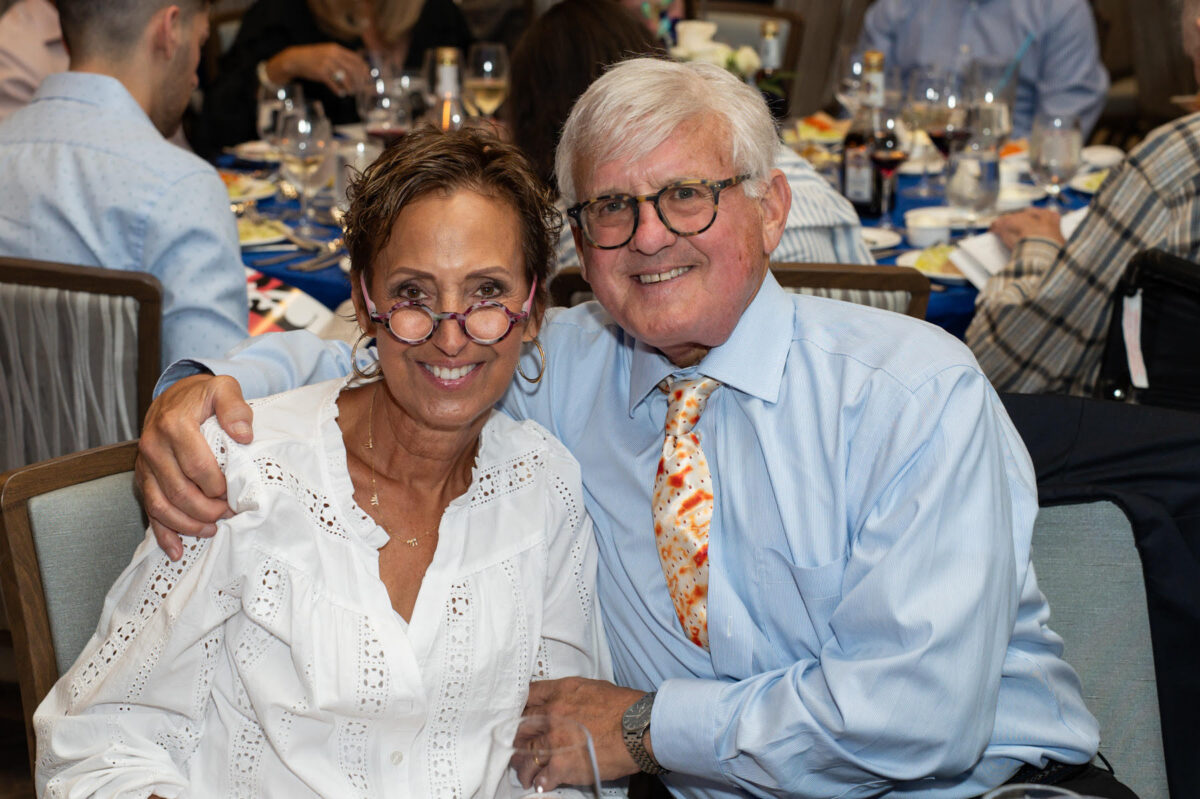
As the 9/11 generation ages, Kaplan worries about how the story of that day — and the moral obligations it created — will be remembered by those who were not yet born.
“Fortunately, the annual memorial commemoration at the reflecting pools and in large and small communities throughout the nation help us all to remember,” Kaplan said. “But with each passing year the crowds diminish and a new generation has not yet been taught the story and the ramifications of this singular event. Our world is as broken today as it was on 9/11.”
This year, as the anniversary of the 9/11 attacks coincides with erev Rosh Hashanah, Kaplan said he hopes synagogues and Jewish communities will lean into the calendar convergence.
“I deeply hope that congregations will add appropriate mention through liturgy and ritual in marking 9/11 on erev Rosh Hashanah,” he said. “After all, Rosh Hashanah is also known as Yom Hazikaron, the day of Remembrance. The kesher (the bond) is too obvious to ignore!”
Boca Raton rabbi urges congregants to register as Democrats to stop Moskowitz’s socialist challenger
Rabbi Efrem Goldberg says the effort is aimed at blocking anti-Israel candidate Oliver Larkin from succeeding in the Democratic primary, not influencing the general election
Nathan Posner/Anadolu via Getty Images
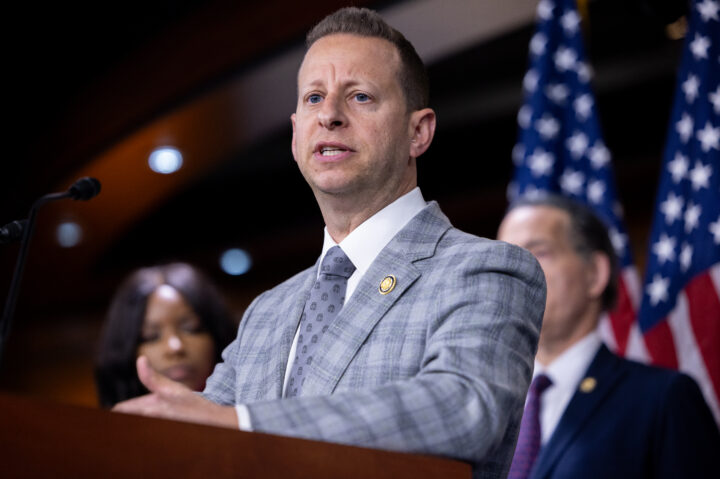
Rep. Jared Moskowitz (D-FL) speaks at a press conference on Capitol Hill on Sept. 8, 2025.
Rabbi Efrem Goldberg, who leads the Boca Raton Synagogue, an Orthodox congregation in South Florida, is urging members of his congregation to register as Democrats ahead of the upcoming Florida primary in order to help Rep. Jared Moskowitz (D-FL) fend off a far-left primary challenger.
The goal of the effort, Goldberg explained to Jewish Insider last week, is to ensure that Democratic Socialists of America-backed candidate Oliver Larkin, who has been outspoken against Israel and Moskowitz’s support for it, does not emerge victorious in the primary.
Larkin has accused Israel of genocide, urged the end of U.S. military aid and called for a right of return for Palestinian refugees. He has campaigned alongside a range of anti-Israel figures, including antisemitic influencer Hasan Piker.
The district, redrawn to favor Republicans, is a key swing seat for the November midterms. It has one of the largest Jewish constituencies of any House district in the country.
Goldberg said that he generally sees himself as more supportive of Republicans — though he said he appreciates the leadership of pro-Israel Democrats including Moskowitz — but said that supporters of Israel should participate in the Democratic primary in order to block Larkin.
In the general election, people should vote however they want, he continued. “I have no opinion, I’m not endorsing a candidate. This has to do with a primary where one of the candidates is a supporter of Hamas, anti-Israel, antisemitic. We have the opportunity, if we can participate in that primary, to ensure that he never represents us and he never is in a position to be influencing policy.”
In a statement to JI, Larkin’s campaign said the candidate “unequivocally condemns antisemitism and all forms of religious hatred. Attempts to equate criticism of the policies of the Israeli government with hatred toward Jewish people are completely false and undermine the very real need to combat antisemitism wherever we see it.”
According to the campaign, Larkin reached out to Goldberg following JI’s inquiry and they “had a respectful conversation, during which Oliver reaffirmed his unequivocal opposition to antisemitism and his commitment to maintaining an open dialogue with Jewish community leaders.”
Goldberg said that the response from his congregation — which includes more than 1,000 families and generally leans politically conservative — to the registration effort has been “overwhelmingly … positive” and that most congregants understand the effort and the concerns at play.
He said holdouts fall into two groups — some want to maintain the ability to vote in the GOP primary, particularly in the gubernatorial race which features an openly antisemitic Republican candidate, while others, on a more emotional level, feel uncomfortable registering as Democrats.
Goldberg says he understands those who want to maintain a vote in the GOP primary for strategic reasons but said that those resisting the effort on emotional grounds are missing an opportunity.
“Should this socialist, anti-Israel antisemite be either the Democratic nominee for our Congress or even win that election, I think they’ll have to look at themselves when they could have done more and didn’t,” Goldberg told JI.
In a statement to JI, Larkin said he would “do everything in my power to combat antisemitism, islamophobia, and every form of hate. Protecting the safety of our families and communities must be our highest priority and there is no place for hate here.”
“Families across South Florida care deeply about what is happening in Israel and Palestine. In the very strongest terms possible, I unequivocally condemn antisemitism and every form of hate that threatens the safety of Jewish people or any other religious group. I join millions of people of good conscience around the world who believe that standing up for human rights, opposing antisemitism, and seeking a just and lasting peace are not contradictory, but inseparable,” Larkin continued.
“Our campaign is about protecting human rights for all people, stopping endless wars, and building a safer and brighter future where U.S. policy helps to ensure both Israelis and Palestinians alike can live in peace and security. And that starts with our communities coming together here at home,” Larkin continued.
Though he said he’s not backing any candidate in the general election in his capacity as a communal leader, Goldberg said that his personal preference is keeping Moskowitz, with whom he is friendly, in office.
“I am deeply appreciative that he has been staunchly pro-Israel, and particularly when there is pressure with his own party, and I know he’s made compromises in his own career to do that,” Goldberg said.
But, he continued, even his personal support for Moskowitz alone wouldn’t have been enough to prompt him to undertake this effort.
“What drives it — to express a voice where I ordinarily don’t — is the danger, the threat of this Hamas-supporting candidate and our needing to do all that we can to make sure he’s not even a candidate,” Goldberg said.
Larkin’s campaign also shared a statement from Larkin’s campaign manager, Zack Bofshever.
“My Jewish upbringing taught me the importance of Tikkun Olam,” Bofshever said. “I learned early on that the lessons of the Shoah are the necessity of solidarity, opposing dehumanization of communities, and that never again must mean never again for anyone. I am proud to be working on a campaign that is about repairing the world by fighting for peace, democracy, and human rights for all people.”
A flyer about the effort that Goldberg circulated on X emphasizes both Moskowitz’s record and concerns about Larkin.
“Regardless of your partisan leanings, it will be a major loss for the pro-Israel community if Jared Moskowitz loses his primary,” the flyer reads. “Please vote for Jared even if you have to change it again before November. It’s simple and can be done online.”
A poll released by Moskowitz’s campaign in late June found him with a sizable lead over Larkin, though Larkin’s campaign has seen a surge of interest following other DSA-backed candidates’ victories in New York and Colorado in recent Democratic primaries.
Rabbi Mordechai Lightstone: ‘When we ascribe human attributes — emotions, consciousness and soul — to AI, we risk transforming a sophisticated instrument into an idol’

Getty Images
Illustrative
When Rabbi Joseph Potasnik, an Orthodox rabbi from Brooklyn, stepped up to the microphone in April to share his perspective on what Judaism has to say about artificial intelligence, his remarks resembled a sermon he might deliver on the bimah.
Except the audience for this talk was not congregants. It was interfaith religious leaders, and — more importantly — representatives of the Silicon Valley giants Anthropic and OpenAI.
Potasnik quoted the Book of Deuteronomy, when Moses delivers his final address to the Israelites before they cross into the Promised Land. “I call heaven and earth to witness against you today: I have put before you life and death, blessing and curse. Choose life, so that you and your offspring may live,” Moses says, channeling the words of God.
“Of course you’re going to choose life,” Potasnik said at the AI convening, comments he relayed to Jewish Insider this week. “But sometimes when you choose it, it also comes with certain dangers. If you look at the story of the Garden of Eden, for example, you are forbidden to eat of the tree of knowledge. Why? You can understand when you look at AI, because knowledge without guardrails, knowledge without a moral component, can be a very dangerous thing.”
Potasnik, who is the executive vice president of the New York Board of Rabbis, delivered this word of caution at the inaugural gathering of a new initiative called the Faith-AI Covenant, which argues that religious communities have something valuable to teach the companies developing the large language models that are reshaping the way many humans engage with knowledge and with the world around them.
A group of rabbis, educators and thinkers in the Jewish world is deeply engaged in considering related questions.
Some of them are theological, almost halachic: Should rabbis be allowed to use AI to write sermons? Can an AI chatbot be considered a havruta, or study partner, in place of an actual human? Should AI even be used for serious Jewish study?
DZ Kalman, a research fellow at the Shalom Hartman Institute who studies Judaism and technology, argued strongly against AI being used to write sermons. “I think people in religious communities would like to know that there’s at least one space in their lives when they are able to be free of machines, when they can actually just be humans interacting with other humans,” he said.
The Orthodox Union faced criticism from within its ranks after releasing a new app in March that uses AI to help people study Torah. Rabbi Netanel Wiederblank, an instructor of Talmud, halacha and philosophy at Yeshiva University’s rabbinical school, delivered a talk at YU where he criticized the app and said AI should not be used to resolve rabbinic debates.
“It’s true the OU says you shouldn’t rely on such an app for practical halacha, though one wonders what purpose there is in putting it out,” Wiederblank said.
Other questions are more philosophical in nature. How can Jewish wisdom guide people who are looking for meaning at a moment of massive technological and even societal upheaval, with the possibility of looming job loss? What is the value of God when AI comes across as all-knowing?
“We spent a few thousand years thinking really hard about what it means to be human and how to be human and how to live a purposeful life,” said Joshua Foer, the founder of Sefaria, an online library of Jewish texts. “At a moment when we’re going to be really challenged about how to be human, I think Judaism’s got a lot of compelling answers, and maybe this is the moment that we really need to stand up and be a light.”
And then there is the matter of whether LLMs should be shaped, in some way, by religion. They already are being built with certain parameters for morality.
Anthropic was created by several former OpenAI employees who were concerned about AI safety, and the company has built its brand on the idea that AI should be constructed responsibly. Anthropic employs Amanda Askell, a philosopher, to teach morality to Claude, Anthropic’s popular chatbot. In January, Anthropic published its 30,000-word “constitution” for Claude, which details how the company trained Claude and the values it hopes to imbue in the chatbot. “We want Claude to have good values,” the document states.
“A lot of people, I imagine, are very happy just to be told that they’re absolutely right, so I think that this could be an instance where potentially some Talmudic AI that’s more designed to offer a counter argument or multiple perspectives off the bat might be an interesting way to counter this default solipsism,” said Zohar Atkins, a rabbi and philosopher.
OpenAI also professes to value safety, and OpenAI founder Sam Altman told a Senate hearing in 2023 that people are “rightly anxious” about the technology. The company released a document in December described as its “model spec,” which discusses “our approach to shaping desired model behavior.” ChatGPT is taught to “love humanity,” and “humanity should be in control of how AI is used and how AI behaviors are shaped,” according to the model spec.
“All of [the chatbots] are interested in the question of how do you align the AI to not do bad things and to do good things, and then there’s obviously a lot of complexity under the hood of defining what the good is and what do you do when there’s ethical dilemmas,” Zohar Atkins, a rabbi and philosopher, told JI.
Atkins is building an AI chatbot called Yochai to help people engage with Jewish texts. Could there be a “Torah values AI,” he asked, where Jewish virtues like debate and humility are baked into the way a chatbot engages with users? He drew a contrast between that idea to the way most chatbots adopt a sycophantic approach, telling the user what they want to hear.
“A lot of people, I imagine, are very happy just to be told that they’re absolutely right, so I think that this could be an instance where potentially some Talmudic AI that’s more designed to offer a counter argument or multiple perspectives off the bat might be an interesting way to counter this default solipsism,” said Atkins.
This spring, Anthropic convened two major summits for faith leaders. The first, in March, was a two-day gathering for Christian leaders. Several weeks later, Anthropic hosted another two-day event featuring guests from several religious minorities: Confucian, Hindu, Jewish, Latter-day Saint, Sikh, Unitarian Universalist, African indigenous, Islamic and Taoist, according to Politico.
“As AI becomes more consequential for society, questions about the values and moral considerations that shape these systems are important ones, and we think they benefit from a wide range of perspectives,” an Anthropic spokesperson told Politico. (JI did not receive a response to a request for comment to Anthropic. OpenAI declined to comment for this article.)
“Increasingly powerful general purpose AI is not inevitable. It’s a choice, and moral choice as much as anything else. Just because you can build something, doesn’t mean you should build it,” said Alex Pascal, the executive director of Harvard’s Berkman Klein Center for Internet & Society and a former advisor to President Joe Biden on AI policy. “What I hope the faith leaders are communicating is that the potential impact of AI and the impact already of AI is gargantuan, and it’s really affecting almost everybody, and that the power to design and deploy the technology should not be in the hands of a very, very select few people.”
Kalman, who attended the April meeting, declined to share much, noting that it was conducted under the promise of privacy. But he described Anthropic as a new company that “has found itself with huge amounts of power and is trying to understand how to wield that power responsibly.” He entered the meeting with a good deal of skepticism, he wrote in a blog post afterward, but he left feeling hopeful.
Even if AI companies are engaging with the diverse users of their products in good faith, any guardrails placed on their LLMs come entirely at the discretion of the companies creating those products. That leads to potentially conflicting motivations — grow their product and build their bottom line, or err on the side of responsibility and safety?
“Right now, there’s gargantuan power asymmetry. It’s really a few people, at the end of the day, who are designing and deploying AI to all of us,” said Alex Pascal, the executive director of Harvard’s Berkman Klein Center for Internet & Society and a former advisor to President Joe Biden on AI policy.
“Increasingly powerful general purpose AI is not inevitable. It’s a choice, and moral choice as much as anything else. Just because you can build something, doesn’t mean you should build it,” Pascal continued. “What I hope the faith leaders are communicating is that the potential impact of AI and the impact already of AI is gargantuan, and it’s really affecting almost everybody, and that the power to design and deploy the technology should not be in the hands of a very, very select few people.”
Anthropic, for instance, recently said it would not release a new AI model called Mythos because it is too powerful, and runs the risk of severely undermining global security. But any decisions like this rest on the goodwill of the people running these companies, each of whom have their own biases and blind spots.
“The people creating this are going to introduce a certain level of their own worldview into what they’re creating,” said Rabbi Mordechai Lightstone, the director of Tech Tribe, a New York-based affiliate of Chabad Young Professionals that serves as a gathering place for Jews working in the tech sector.
Lightstone considers himself an advocate for the technology, but he has warned of the risks of putting too much faith in AI.
“When we ascribe human attributes — emotions, consciousness and ‘soul’ — to AI, we risk transforming a sophisticated instrument into an idol,” Lightstone wrote in a recent blog post. “Key to our harnessing AI is understanding it for what it is: A tool — an immensely powerful one — but not a being with a soul.”
One Jewish response to the almost-messianic belief that AI will usher in a utopia comes from Sefaria’s chief learning officer, Sara Wolkenfeld and Sam Arbesman, a scientist-in-residence at the venture capital firm Lux Capital. The pair wrote in Arc Magazine last month that a Jewish approach to AI might be rooted in the incremental approach of tikkun olam, repairing the world step by step.
They compared it to the Talmudic story of Rabbi Akiva, who “is said to have been inspired to reach for greatness after observing the power of water to wear away stone, drop by drop, as he drew water from the local well,” the Wolkenfeld and Arbesman wrote. “Therein lies the potential of artificial intelligence from a Jewish perspective — not as a far-off goal or panacea, but as a set of tools that provide each of us the means to chip away at barriers and obstacles and create an improved society.”
Last month, Pope Leo XIV released a 42,000-word document known as an encyclical that called for the safeguarding of human dignity as AI develops further and becomes even more integrated into people’s lives. Some rabbis have explored similar questions, but nothing has come close to exerting as much power or reach as the pope’s document. Some of that is by design; Judaism has no central leader of any kind. But some of it may be because many religious leaders have not fully comprehended the scope of the developing technology’s potential.
“A problem I’d say in the Jewish world right now is it’s not clear whose job it is to think about this,” Wolkenfeld told JI.
“I think the Jewish community needs to be actively grappling with a whole range of questions. What does it mean to be human? What are we outsourcing to technology versus retaining for ourselves? We’re going to be seeing massive job dislocation, and so what does that mean, first of all, socioeconomically in our communities?” Zvika Krieger, the rabbi of Chochmat HaLev, said. “Also, for so much of human history, people’s worth and their days were tied to their profession, and we’re seeing a fundamental change of how to build a meaningful life.”
Zvika Krieger is the rabbi of Chochmat HaLev, a progressive minyan in Berkeley, Calif. He does not have the typical resume for a rabbi: He was Facebook’s director of responsible innovation, and a State Department “ambassador” to Silicon Valley in the Obama administration. He now consults for Silicon Valley tech companies, including both Anthropic and OpenAI.
“Most of the leaders in the Jewish community don’t know much about AI, so it can feel like the blind leading the blind. I’m often the only person in the room for these conversations who’s actually worked in a tech company, and the knowledge gap limits how productive these conversations can be,” Krieger told JI.
He described AI as an “epochal technology that is going to fundamentally change the nature of humanity in a way that I think we haven’t seen since the printing press.”
“I think the Jewish community needs to be actively grappling with a whole range of questions. What does it mean to be human? What are we outsourcing to technology versus retaining for ourselves? We’re going to be seeing massive job dislocation, and so what does that mean, first of all, socioeconomically in our communities?” asked Krieger. “Also, for so much of human history, people’s worth and their days were tied to their profession, and we’re seeing a fundamental change of how to build a meaningful life.”
In some ways, conversations about AI are everywhere within the Jewish community — at congregations, at Shabbat dinner tables, at campus Hillels — because of how rapidly the technology has become a part of everyday life. But discussing how to best use specific tools is different than the biggest questions about life and society that AI prompts.
The Jewish conversation about AI needs to be “top-down and also bottom-up,” said Wolkenfeld. “I think every rabbi needs to be thinking about this.”
Potasnik, the New York rabbi who addressed the interfaith tech convening in April, agrees that AI is a transformative technology. But Potasnik, who is 79, remembers how other technological innovations have upended his rabbinate, too, a perspective he brings into his observations on AI.
“We used to think that the newspaper, the radio, those were the popular places for dissemination of information. Well, how many people listen to the radio for information [now]?” Potasnik said. “When I first became a rabbi, I said, ‘If you don’t know baseball, you can’t be a successful rabbi.’ Today, if you don’t know technology, you’re not going to be successful either. You’re going to be seen as ancient, not advanced.”
But Potasnik believes there is one thing that AI cannot replace that is at the heart of what it means to be Jewish.
“We have what’s called the theology of presence. You have to be present, you have to show up, that’s what people want,” Potasnik said. “I think AI cannot take that from us. We still need the human to hug, to hold. We need to see each other, listen and learn from each other. These are important, indispensable ingredients in our human relationships.”
The NYC mayor has tapped an anti-Zionist Brooklyn rabbi who backed his campaign for the newly created role
John Lamparski/Getty Images
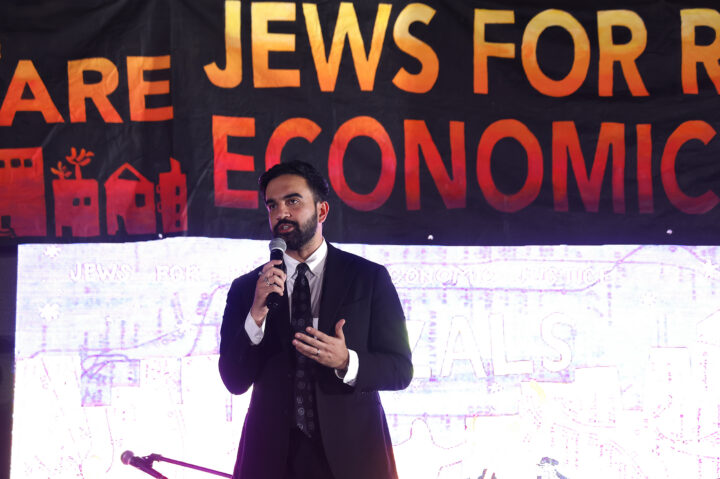
Then-New York City mayoral candidate Zohran Mamdani speaks during the Jews For Racial And Economic Justice's Mazals Gala on September 10, 2025 in New York City.
New York City Mayor Zohran Mamdani will appoint Rabbi Miriam Grossman — a veteran of various far-left and anti-Israel organizations, and one of the few Jewish religious leaders to back his campaign — to a taxpayer-funded post in his newly created “Office of Mass Engagement,” Jewish Insider has learned.
Multiple sources confirmed that Grossman, a graduate of the Reconstructionist Rabbinical College who formerly led the independent congregation Kolot Chayeinu in Brooklyn, will take on the role of “faith liaison” inside the new department, which has imported personnel and outreach strategies from the Democratic Socialists of America into City Hall.
A listing for the position posted on May 1 shows a salary in the $90,000 to $110,000 range, and indicates Grossman will be responsible for engaging the city’s Jewish religious community, the world’s largest outside Israel.
The listing indicated that Grossman will also be responsible for maintaining key relationships with Jewish religious leaders and organizations, representing Mamdani at community events and acting as the primary link between the community and City Hall.
Grossman, however, is well to the left of even some of the most progressive-minded Jews when it comes to Israel. A self-identified “member-leader” of far-left Jews for Racial and Economic Justice and a veteran of the rabbinical council of the pro-Boycott, Divestment, and Sanctions group Jewish Voice for Peace, in a 2021 NPR interview she referred to her father as an “AIPAC rabbi” and recounted turning against Zionism while protesting construction of an oil pipeline in North Dakota as an Oberlin College student in 2008.
“I was really specifically taught not to trust or empathize with Palestinians and how to dismiss charges of anti-Zionism or criticism of Israel as antisemitism,” she said of her youth. “I was beginning to criticize the United States and I was starting to feel that way about Israel as well.”
Seven months before the Oct. 7 attacks, she participated in a march on the Brooklyn home of Senate Minority Leader Chuck Schumer (D-NY) to protest U.S. military aid to the Jewish State. In the immediate aftermath of Hamas’ atrocities, Grossman doubled down, joining a JFREJ protest demanding a halt to military aid to Israel and speaking with the Islam Channel on YouTube at a demonstration outside the White House.
“We are here to take it to the White House to tell the White House and Congress it is in our power to prevent a genocide to stop this cycle of death for all of us — for Palestinians and most especially this moment for the people of Gaza who are suffering and crying out for help, and the world is watching,” she said.
She also participated in multiple DSA-led events protesting the Israeli response to the assault. She later appeared in a JFREJ “New York Rabbis for Mamdani” video, endorsing the anti-Israel democratic socialist’s campaign.
Grossman did not respond to requests for comment, and Mamdani’s administration would not remark on the record about the hire. The faith liaison role is distinct from the executive directorship and deputy directorship of the Mayor’s Office to Combat Antisemitism, to which the mayor has appointed Phylisa Wisdom of New York Jewish Agenda and J Street veteran Josh Binderman, respectively.
Binderman and Wisdom’s groups are also critical of Israel, but identify as Zionist.
One Orthodox Jewish leader, who asked to remain anonymous to avoid antagonizing Mamdani, despaired at the news.
“If true it would send a terrible signal and would be one more indication that this mayor is not a friend to the Jewish community,” he said. “JVP is a radical fringe group that does not represent the views of the overwhelming majority of Jewish New Yorkers.”
The report from Combat Antisemitism Movement found the platform has actively recommended this content to millions of users

Illustration by Jonathan Raa/NurPhoto via Getty Images
The Instagram logo is being displayed on a smartphone among other social media networks in this photo illustration in Brussels, Belgium, on January 22, 2024.
An AI-generated Instagram account portraying an Orthodox-looking rabbi is pushing antisemitic conspiracy theories to its more than 1.4 million followers, and it’s not the only one, a study published this week about antisemitic content on the social media platform has found.
An account called “Rabbi Goldman” “uses fake, AI-created authority figures to spread hate” in “a troubling and growing tactic,” according to the report, published on Wednesday by the Combat Antisemitism Movement.
The 12-page report, titled “Engineered Exposure: How Antisemitic Content Is Pushed and Amplified to Millions Across Instagram,” documents 100 posts that researchers described as antisemitic, pushed directly to Instagram accounts over a 96-hour period from March 19-22.
These posts, actively suggested by the platform’s recommendation systems, generated more than 5.3 million likes and 3.8 million shares, with an estimated reach of 150 to 280 million users, according to the report.
CAM defined antisemitic posts as ones that invoke conspiracy theories — such as Jews controlling the media or manipulating global conflicts — and posts that claim Jews, often referred to as “Zionists,” are linked to demonic forces or satanic imagery, all of which have been used to justify antisemitic violence.
The report raises particular concern around the creation of “closed content environments,” in which users are repeatedly fed similar antisemitic themes, with little or no countervailing content.
“This type of algorithmic clustering reaffirms dangerous beliefs, contributing to a process of radicalization that can have lethal real-world consequences,” the report states. Researchers identified 12 AI-generated “rabbis” with a combined following of 2.1 million Instagram users, all of which promote classic antisemitic stereotypes.
The “Rabbi Goldman” account features many of these, including one video in which the “rabbi,” wearing a tuxedo and seemingly seated in a luxury airplane, claims that Jews utilize empty private jets to evade taxes. The community note attached to the clip reads, “This is an AI generated rabbi who is trying to scam you by selling a fake 9$ get rich handbook. This account is ran by scammers based in south India.”

Meta, which is the parent company of Instagram — as well as Facebook and WhatsApp — did not respond to a request for comment from Jewish Insider about the report’s findings.
“Simply put, this is evidence of a broad systemic failure on the part of Instagram and Meta,” Sacha Roytman, the CEO of CAM, said in a statement. “When a platform actively recommends content that dehumanizes Jews to mass audiences, we are no longer talking about a simple oversight or a mistake in the algorithmic design. We are talking about infrastructure that normalizes hatred at scale that must be addressed immediately.”
“CAM is calling on Meta to go beyond basic enforcement and take real responsibility. What’s been uncovered here must be taken seriously. This isn’t a fringe problem. Rather, it points to a broader, systemic issue with global reach, shaping how millions of people encounter and engage with antisemitic ideas in 2026,” the report states.
Last year, Meta received pushback from Jewish leaders when it introduced a new community-driven fact-checking system, ending its third-party fact-checking program and replacing it with a system modeled after the community notes feature on Elon Musk’s X. Some Jewish leaders expressed concern that the move would “open the floodgates to content” that could target Jewish communities and individuals, and called the decision a “step back” in the fight against rising antisemitism.
Dangerous implications of social media have extended beyond the Jewish community, with a jury in Los Angeles ruling on Wednesday that Meta, as well as Google, are liable for creating addictive products that caused a teenager’s depression and anxiety. The verdict marks the first time juries have decided that tech companies are at least partially liable for distress online and offline.
Chabad Rabbi Zvi Hershcovich thought he was the ‘only weirdo’ following Jewish hockey players, until he started an X account for fellow aficionados

courtesy
@JewishHockey account creator Zvi Hershcovich (center, right) after his team won their division in last year's Rofeh Cholim Cancer Society Classic, a Jewish benefit tournament in Pennsylvania/
Zvi Hershcovich is from Canada, which means he loves hockey. He is also a Chabad rabbi, so helping Jews connect to their faith is his sacred mission.
Helping a Jewish hockey player wrap tefillin? Life goal achieved.
Yet that wasn’t what Hershcovich expected to happen when he created the X account @JewishHockey, where he posts clips of Jewish hockey players at all levels — National Hockey League superstars, minor league up-and-comers, college athletes — scoring goals and generally looking cool on the ice, usually accompanied by a deeply Jewish caption.
“On the last night of Chanukah, Zach Hyman spins the Dreidel on a backhand and wins the chocolate coins,” one post from @JewishHockey stated on Monday, with a clip showing Edmonton Oilers left winger and Jewish day school graduate Zach Hyman scoring a goal against the Vegas Golden Knights. (The Oilers won 4-3.)
A day earlier, @JewishHockey spotlighted a goal by Vancouver Canucks center Max Sasson against the Boston Bruins in a game Vancouver won in a shootout. “With seconds left to the period, Max Sasson shakes off his defenseman like powder sugar on a Sufganiya, and buries it like a defiled altar found by the Maccabees,” the post read.
With 3,900 followers, the nearly two-year-old account doesn’t have a huge audience. But it does have a cult following. That’s where the story with the tefillin comes in.
“People reach out all the time with different things, and I’ve made some connections with many hockey players,” Hershcovich told Jewish Insider in an interview on Tuesday. “Some of them have been very Chabad-centric, where I’ll connect with someone online or in person. Just last week, I helped a Jewish hockey player get a pair of tefillin.”
After the antisemitic attack at a Hanukkah celebration in Australia earlier this month, a hockey player in British Columbia was motivated to wrap tefillin but did not know where or how to do so, so he reached out to @JewishHockey. The closest Chabad rabbi was still a significant drive away, but Hershcovich, who declined to name the athlete, made the shidduch anyway. The two men connected, and FaceTimed Hershcovich to prove it.
“Then I decided, I shot my shot. I said, ‘Hey, listen, would you be interested in wearing tefillin every day if you had your own pair?’” Hershcovich recalled. “He said sure. He gave his word. So I threw it out there on Twitter, and someone who asked to remain anonymous wrote back and said, ‘I’ll sponsor the pair.’”
The hockey account is a bright spot on X, where antisemitism and harassment have grown worse in recent years.
“Twitter [X] has become a bit of a cesspool thanks to the propaganda of the enemies of the Jews,” Hershcovich said. “Even on posts that I post, you’ll get a lot of hate, but there definitely has been a community rising, and there’s a close knit Jewish hockey community. It’s very neat to be part of it.”
Serving as the unofficial Jewish ambassador to the world of hockey is not Hershcovich’s day job (though it did lead to some freelance work for a Jewish Hockey Hall of Fame being developed in Toronto). His career looks like many other Chabad rabbis. He spent a short stint as a Chabad emissary in Russia more than a decade ago. Now he teaches at a Chabad day school in Philadelphia, creates animated programming for religious children and works on programming for Jewish college students.
The son of two ba’al teshuva Jews — people who were raised secular but chose in adulthood to become observant — Hershcovich, 43, first connected to hockey through his grandfather, with whom he often watched Montreal Canadiens games.
“There was Mathieu Schneider on the Canadiens, and he was my grandfather’s pride and joy, that the Canadiens had a Jewish hockey player on the team. So that might be where it started,” Hershcovich said, referring to the hockey Hall of Famer who won a Stanley Cup in 1993.
Basketball was Hershcovich’s main sport as a child, until he took up hockey at a Chabad camp. Later, his parents subscribed to the Jewish Press and he remembered an article about a Jewish hockey prospect. So he started keeping an eye on the hockey news for Jewish players after seeing how excited that story made his grandfather.
“I thought I was the only weirdo doing this for many years, following specifically Jewish hockey players,” Hershcovich said. He still plays hockey every Saturday night after Shabbat, and participates in an annual Jewish hockey tournament in Pennsylvania that draws hundreds of athletes and benefits Rofeh Cholim Cancer Society, which supports cancer patients and their families.

In 2022, as a passion project, Hershcovich drafted a pseudo “Team Israel” for hockey — a fantasy roster of Jewish players from around the world who might join an Israeli team, inspired by the fact that 20 of the 24 players on the Israeli baseball team at the 2020 summer Olympics were American Jews.
“I had some fun with that, and that led to more fans, more Jewish hockey fans, discovering there was a larger group. So I opened up a Twitter account and started posting highlights of Jewish hockey players, and things kind of blew up from there,” said Hershcovich. “It’s become part of my daily routine. I wake up in the morning, I just breeze through a couple of Google Alerts, and I go through elite prospects, my bookmarked players. It gives you an update over who scored and some basic statistics from the previous night. I’ll look through it. If I see some highlights, I’ll share them. This has been going on as there’s been a huge explosion in the Jewish hockey world.”
Jewish hockey fans have been delighted to see more and more Jewish players on the ice in the NHL in recent years. Hershcovich thinks a “golden age” of Jewish hockey is on the horizon. He has watched with excitement the rise of Zeev Buium, the American son of Israeli immigrants, who was the 12th overall pick in the 2024 NHL draft, now playing for the Canucks. Among younger prospects, there are even more Jewish players.
“The rise of Jewish hockey is incredible. And following along with the youth, there’s incredible talent coming to the NHL. This might be just the start of the golden age of hockey,” said Hershcovich.
There is perhaps no better time to witness the dawn of that golden age than the holidays, when team Jewish heritage nights take place across the month of December.
“This Chanukah, Jewish players are no longer anomalies in the NHL … they’re central to the game,” Dan Brosgol, the executive director of Temple Shir Tikva in Wayland, Mass., wrote in a blog post this month after seeing Bruins goaltender Jeremy Swayman at TD Garden.
Throughout Hanukkah, hockey teams throughout the league host Jewish heritage nights to bring more Jewish fans and families to the games. These programs often feature public menorah lightings and special giveaways. @JewishHockey, of course, posts about all of them.
The Florida Panthers had Hebrew-language jerseys. The Pittsburgh Penguins gave out special jerseys showing the team’s mascot underneath Hanukkah candles, with Stars of David scattered across the design. People who purchased a special ticket for the Philadelphia Flyers’ Jewish heritage night received a Flyers-themed menorah, complete with a puck and a hockey stick.
“Hanukkah seems to have that Christmas feel of the snow and all that, that winter vibe, and therefore to have it with ice hockey really makes sense,” said Hershcovich. “Recently, the teams have been trying to somewhat outdo each other with different shtick.”
One of the most creative celebrations of Jewish heritage will come in March, when the minor league Tulsa Oilers will host the team’s first ever “Jewish Heritage Game” — and the athletes will take to the ice in specially designed blue-and-white jerseys that say “Jewish Heritage Game” and feature the Oilers’ logo on top of a star of David.
“That’s something that hopefully will get imitated as well. That would bring a tremendous surge of pride,” said Hershcovich.
He’ll be tweeting about it.
Jewish military chaplains told JI about their drive to be ohr l’goyim, a light unto the nations
Courtesy
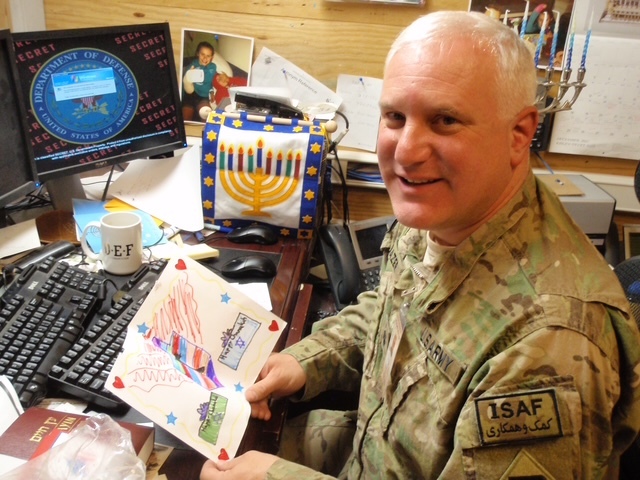
Rabbi Laurence Bazer reading Hanukkah cards sent to Jewish servicemembers
The women’s basketball team at Rochelle Zell Jewish High School in Chicago was practicing earlier this month ahead of its annual Senior Night when an announcement came over the intercom, presenting a special guest. That’s where the video starts — one of those designed-to-go-viral tearjerkers showing a child reuniting with their parent who is in the military.
“He is joining us after leaving the military service in Europe,” the announcer says. Team members start to look around, smiling but confused, when they see that the door to the gym is open.
“We are grateful for his dedication, especially his daughter Hannah,” the announcer continues. That’s when one athlete, in a long-sleeve practice jersey and a ponytail, begins to cry and run toward the door. “Thank you for your service and sacrifice, and welcome home, U.S. Army Chaplain Rabbi Aaron Melman.” Everyone cheers. Throwing her arms around her father, Hannah sobs.
Melman, a Conservative rabbi who since 2021 has served as a chaplain in the Illinois Army National Guard, had just returned from a U.S. Army base in Western Poland. He submitted his request for leave back in September but didn’t tell his daughter, who was devastated most of all to learn his deployment conflicted with the pinnacle of her high school basketball career. (She was more upset that he would miss that game than her graduation.) When she hugged him, Melman took off his cap and revealed a light brown yarmulke that matched his fatigues.
“We made it happen,” Melman tells his daughter in the video, smiling. Days later, RZJHS won at Senior Night. Hannah scored four points.
For more than two decades after he graduated from the Jewish Theological Seminary in 2002, Melman was a congregational rabbi in the northern suburbs of Chicago. He had thought, early in his career, about joining the military — his father served in the U.S. Army Reserves — but decided against enlisting, recognizing that serving in active duty would be challenging as he raised two young children.
But later, when his kids were older, the itch to serve returned. Melman was commissioned as an officer in the Illinois Army National Guard, a responsibility that typically required two days of service a month and two weeks each year, until he was sent to Poland earlier this year. That assignment made him one of several Jewish chaplains serving on the front lines of Europe, providing religious support and counseling to American soldiers — most of whom are not Jewish — who are stationed in Germany, Poland and other allied nations largely as a bulwark against Russia.
Many Jewish chaplains serve in the military only part-time. They fit the training into already-busy schedules leading congregations and providing pastoral care to people in their own communities.
Several military rabbis told JI that they view their mission as more than counseling the soldiers in their care and helping them deal with the hardships of military service. They explained that it’s also about reminding American Jews — many of whom have parents or grandparents who fought in World War II, Korea or Vietnam — about the value of service. During World War II, the military printed pocket-sized Hebrew bibles for Jewish soldiers. Today, some Jews don’t know anyone serving in the military.
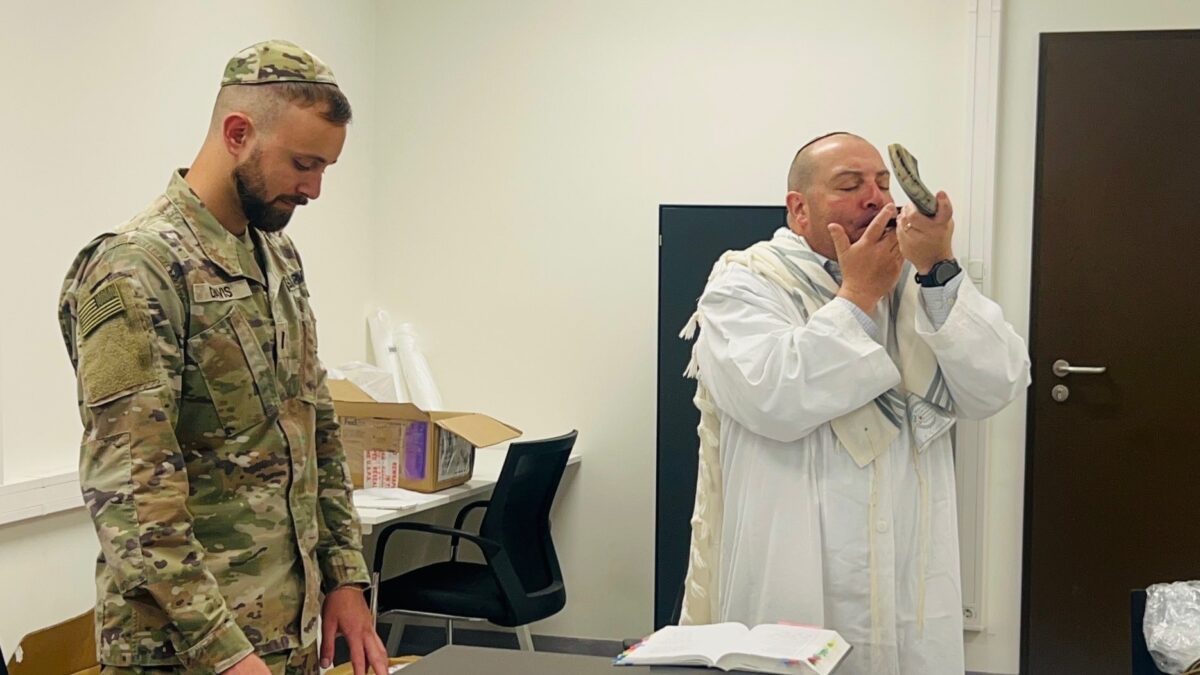
“Most Jews in America are not connected in any way, shape or form to the United States Armed Forces. The common reaction many of us get, when we go into the armed forces here in the States is, ‘Oh, you don’t want to go into the IDF?’ or, ‘Why didn’t you go into the IDF?’ And for the record, I happen to be a very strong Zionist,” Melman told Jewish Insider in an interview last week. “One of the things for me that I’ve really grown to appreciate is trying to connect the younger generation of American Jews into joining or thinking about joining the military and how important it is.”
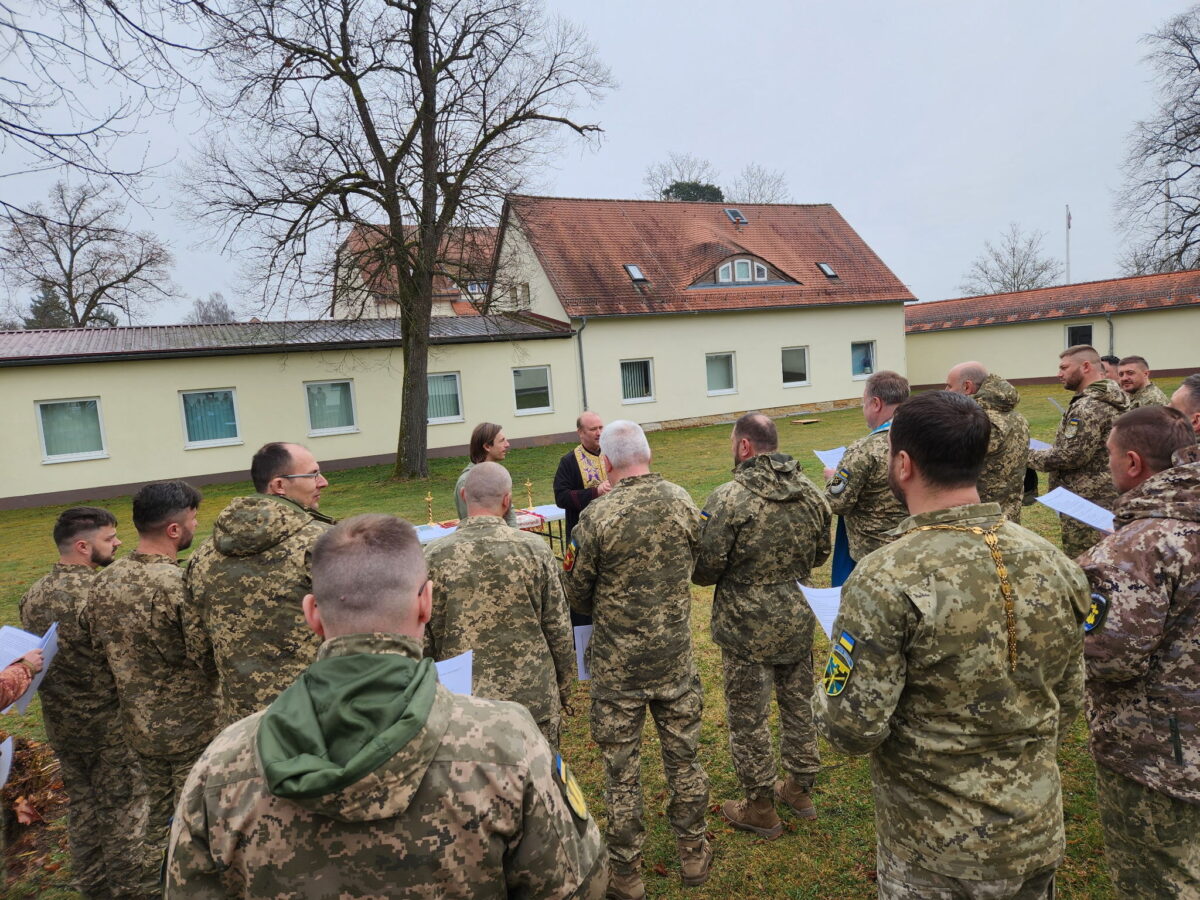
Rabbi Aaron Gaber spent nine months at Grafenwoehr, a major American base in Germany, starting last summer. As a member of the Pennsylvania Army National Guard, his unit’s mission was to train Ukrainian soldiers, and Gaber was tasked with training Ukrainian chaplains. He took them to the Memorium Nuremberg Trials, a museum located inside the German courtroom where Nazi leaders were tried for their crimes after World War II.
“That created a whole conversation about moral integrity and personal courage. How do you say to your commander, ‘Don’t commit atrocities’? Or how do you keep your soldiers who are angry at what’s happening and want to do things that are unethical or immoral from doing that?” Gaber told JI. “That elicited a whole conversation on a theological level about light versus darkness, good versus evil, but also then on a practical level: How do you advise your commander in a way that gives him or her the option not to do something that shouldn’t be done?”
Most of Gaber’s job, when dealing either with Ukrainian troops or American, involved assisting people who were not Jewish.
“As a rabbi, I got to make sure every week there was a Protestant worship service happening,” said Gaber, who returned from Germany in June (and specified that he did not lead those services).
Last year, he volunteered to spend the High Holidays in Poland and Lithuania. He drove between several different bases to make sure Jewish soldiers had access to religious services, food and learning opportunities tied to the holidays.
“I take the idea of ohr l’goyim, or bringing light to the world, I was able to bring light to the world. I was able to help Jewish soldiers celebrate their faith. If I met 10 Jewish soldiers through the entire two weeks, that was a lot. So it was individual work,” Gaber said. “In one case, I had one soldier travel, I think, three hours each way to be able to spend an hour with me. He couldn’t go by himself, so he had a noncommissioned officer, one of his squad leaders, go with him. That was the length that the military can and does go to make sure soldiers can access their faith.”
Ohr l’goyim is a phrase that comes up often for Jewish military chaplains. For Rabbi Laurence Bazer, a retired U.S. Army colonel who is now a vice president at the JCC Association and the Jewish Welfare Board’s Jewish Chaplains Council, those words — from the Book of Isaiah — commanded him to be a light unto the nations. “And that’s not just to our own fellow Jews, but to the rest of the community,” Bazer told JI.
A friend of his from the North Dakota National Guard once took Bazer, who served in the Massachusetts Army National Guard, to visit North Dakota’s state partner in Ghana. He sat down with a group of Ghanaian soldiers and told them to ask him anything they might want to know about Judaism.
“Now, these are all Catholic, Protestant and Muslim chaplains from the Ghanaian army,” Bazer recalled. “I said, ‘You could ask me, like, why Jews don’t believe in the New Testament, or Jesus, whatever.’ That’s part of the role that I love doing, of being, again, ohr l’goyim, a light unto the nations, to be able to share the positive, affirming side of Judaism so that they felt enriched. It was all in true fellowship of, we’re all servants of the Divine.”
Bazer spent his final years in the military in Washington, working full time in an active duty role at the National Guard’s headquarters. He oversaw the religious response to the COVID-19 pandemic, the 2020 racial-justice protests and the Jan. 6 Capitol riot.
“I was advising commanders up to four stars at a senior level about what’s going on religiously, which really meant the moral welfare of their troops,” said Bazer, who had served in New York during the 9/11 attacks and later led the chaplaincy response to the Boston Marathon bombings in 2013. “That emotional level affects readiness, and chaplains are the key to help that readiness.”
In 2023, Bazer was asked to go to Europe to lead Passover services and programming for Jewish troops. He led Passover Seders in Germany and Poland, and then drove between Lithuania and Latvia, delivering matzah and visiting with Jewish soldiers.
The Seder at Grafenwoehr took place on a large lawn on the base. After he spoke about opening the door for the prophet Elijah, a symbolic act tied to hope that the Messiah will come, a Christian chaplain on base who had attended the Seder pulled Bazer aside. He pointed to a tower that stood next to the lawn.
“He says, ‘You know, Hitler used to go up there and watch,’” Bazer said. The base — now so central to America’s operations in Europe — was once used by the Nazis. “To think that back then he used to watch the Nazis do formation, and now, in 2023 we’re holding a Passover Seder on the same base in the shadow of that tower is an incredible experience.”
English translation, commentary by former U.K. chief rabbi seeks to ‘make Torah relevant to us today’
Blake Ezra Photography Ltd.
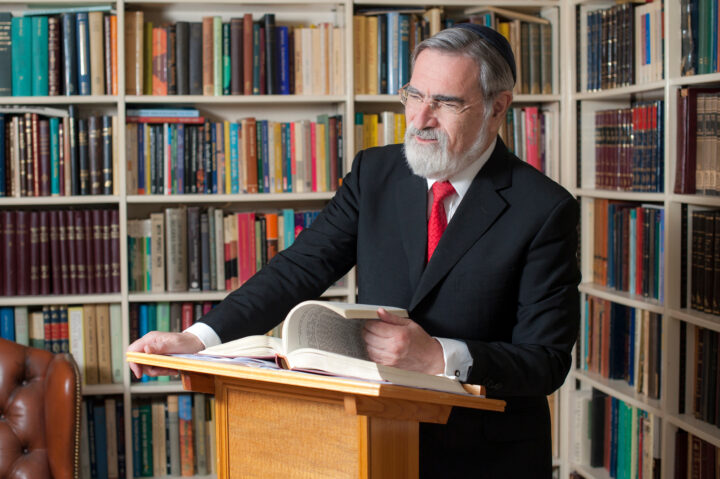
Former British Chief Rabbi Lord Jonathan Sacks
Former British Chief Rabbi Lord Jonathan Sacks was a towering figure in Jewish life whose unique blend of Torah and Western wisdom attracted adherents around the world for many years before his death in 2020.
Now, with Rosh Hashanah, the Jewish new year, approaching later this month, and the restarting of the cycle of reading the weekly Torah portion a few weeks later, Rabbi Sacks’ longtime Jerusalem-based publisher, Koren, is releasing a posthumously completed Koren Shalem Humash, with a new translation and insights to encourage deeper understanding of the Five Books of Moses.
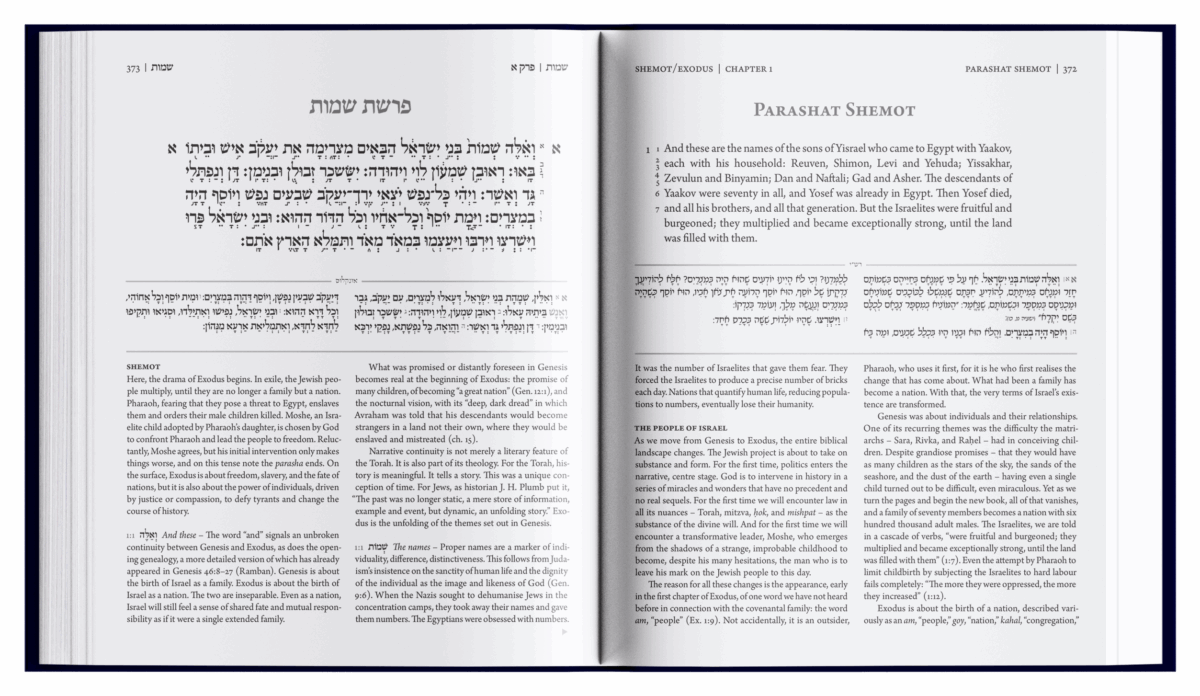
Each spread features the words of the Humash in Hebrew — written in the clear Koren font, recognizable to users of the publisher’s popular prayer books — on one side. On the other side there is a new, modern English translation that Sacks completed in 2018. Below there are two of the standard commentaries: from the 11th-century French rabbi Rashi and second-century sage Onkelos, who translated the Torah into Aramaic.
On the bottom half of the pages is Sacks’ own commentary, which he began writing before his death, after which The Rabbi Sacks Legacy continued his work based on his writings and speeches.
The story of the Koren Shalem Humash begins in 2006, Joanna Benarroch, president of The Rabbi Sacks Legacy, told Jewish Insider last week. At that time, Sacks began working on his popular series of books about the weekly Torah portion, Covenant and Conversation.
“He started writing it online every week,” Benarroch recalled. “He was the chief rabbi of the United Kingdom and the Commonwealth, based in London, but he started to build a global audience.”
Sacks’ goals for Covenant and Conversation were “to make Torah relevant to us today, so it’s not just wisdom from 2,000-3,000 years ago today, but wisdom we can also take with us. It was very important to him for us to be proud, knowledgeable Jews and to share that with the next generation … to create new leaders who were proud, knowledgeable Jews. These were the things permeating his mind when he was writing,” Benarroch said.
After Rabbi Sacks’ death, Koren brought scholars, including the rabbi’s niece, Jessica Sacks, to compile elements of Covenant and Conversation, his many other books, his BBC Radio “Thought for the Day” segments and other essays and speeches to complete Sacks’ commentary on the Humash.
“The scholars beautifully weaved his ideas from each parasha [Torah portion] into detailed commentary,” Benarroch said. “It’s his words, very carefully crafted to give a whole picture of each parasha. The ideas are woven together in a way they had never before been [presented]. You have 15 years of writing and speaking on Bereishit [Genesis] crafted in this way.”
In his Passover Haggadah, quoted in the editor’s note of the Humash, Sacks wrote that “traditional commentaries are usually close readings of individual words and phrases rather than reflections on the meaning of the whole. That is a classic Jewish response and I have not hesitated to do likewise … But it is the great themes, the overarching principles, that are often neglected or taken for granted.”
Sacks’ commentary combines both, in some places referring to specific words and phrases, and in others sharing insights on broader stories and ideas, which gives, Benarroch said, “an overview of what you can learn from the parasha. You’re coming out with a clear understanding of what it is about, with relevant ideas for today.”
Benarroch recounted recently being in synagogue and sitting near a non-Jewish visitor who was reading along to the Torah portion in English.
“I was mortified, because it was a parasha that was quite difficult, with a lot of blood and gore,” Benarroch said. “I wished at that point that the Rabbi Sacks Humash was available, because he would have given her a sense of what is going on and an understanding of the battles in the time of the Humash … He wanted people to understand the whole picture, to read it as a narrative.”
She paid tribute to Sacks’ ability to “make very complicated things accessible.”
In addition, the Humash features detailed references, such that if there is an idea a reader seeks to explore further, he or she can find the full essay, book or radio program it came from.
Benarroch worked for Sacks for 24 years, as executive director of the Office of the Chief Rabbi and then of his private office, and was key to establishing The Rabbi Sacks Legacy after his death. She said that the greatest lesson she’s taken from him is the importance of listening to and learning from one another.
“He felt active listening was absolutely imperative for all of us. We talk a lot, but we don’t listen enough,” she said. “When he was writing his Humash, he felt he was connecting to God through it, and that for us to listen to the words and the messages, we must also listen closely to one another. Judaism is a religion of listening … in terms of unity, community, being part of the Jewish people.”
State Rep. George Hruza described the incident as ‘Jew-hatred violence’ and an ‘act of pure evil’
First Alert 4 News
Screenshot
St. Louis’ Jewish community is reeling after a targeted antisemitic attack in the predawn hours of Tuesday morning on a family whose college-aged son served in the IDF.
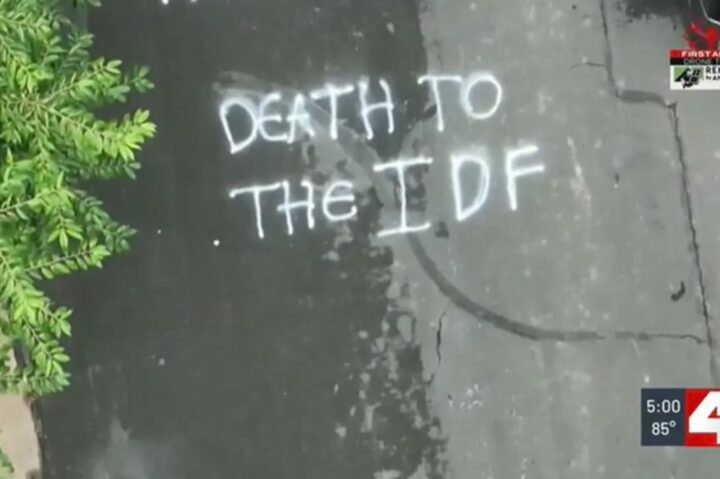
The family, living in a quiet suburban neighborhood with a significant Jewish population, found three of their cars burned and a message spray-painted on the street which read, in part, “Death to the IDF.” Another part of the message specifically targeted the IDF veteran, local news reports and members of the local Jewish community said, but has not been publicly disclosed.
The attack has shaken a Jewish community that has faced frequent and heated protests since the Oct. 7, 2023, attacks on Israel. This is the first time that activity has turned openly violent. Local and federal officials are investigating the attack as a hate crime.
“People are just really startled,” Rabbi Jeffrey Abraham, a board member of the Missouri Alliance Network, a local political organization dedicated to fighting antisemitism and supporting Israel, said.
He said the local Jewish community has been “on edge” for months following the violent antisemitic attacks in Washington and Boulder, Colo. “But when it actually happens in your own backyard, it takes on a different meaning. I think people are legitimately worried and also just really upset.”
Abraham said that he and other Jewish leaders are in close touch with local law enforcement, but attacks targeting individual families are harder to prevent than those targeting Jewish institutions.
“[Law enforcement] know any time we’re having a service or event, but it’s hard to protect everyone’s individual home in the middle of the night,” Abraham said. He said he’d had a conversation earlier Wednesday with a congregant who asked if he should take down his mezuzah, for fear that it would make his home a target.
Stacey Newman, director of the Missouri Alliance Network, said the community is “completely on edge.”
“Everybody’s worried about their kids,” Newman continued. Newman said she’s heard about another family whose children had served in the IDF that had asked local police to keep a closer watch on their home.
A coalition of Jewish organizations including the local American Jewish Committee, Anti-Defamation League and National Council of Jewish Women branches, the St. Louis Jewish Community Relations Council, Jewish Federation of St. Louis and the St. Louis Kaplan Feldman Holocaust Museum issued a joint statement condemning the attack.
“We condemn in the strongest terms the attack on members of our community last night. This is more than vandalism; it is a hateful act of intimidation and only the latest example of what happens when antisemitic and anti-Israel rhetoric are normalized,” the organizations said. “We are a resilient community, and we will not be deterred in our quest to uproot antisemitism and hatred, alone and with our partners. Antisemitism is a social ill that must be rejected by all of society.”
Local and federal officials have condemned the attack.
“This targeted attack against the Jewish community in St. Louis is horrific and must be met with full condemnation,” Sen. Eric Schmitt (R-MO) said. “Antisemitism has no place in our society. Everyone involved in this awful attack must be held accountable to the fullest extent of the law.”
Rep. Wesley Bell (D-MO) said, “Hate in any form is unacceptable and should never be tolerated. Those responsible must be held accountable to the full extent of law.”
Leo Terrell, who leads the Department of Justice’s antisemitism task force, described the incident as “horrific,” and said that he had engaged the FBI and the attorney general, as well as spoken directly to the family and informed them that the DOJ task force will be focused on the attack.
“I am outraged. Antisemitic violence has no place in America, not in St. Louis and not anywhere,” Terrell said. “We will pursue every avenue to bring the perpetrators to justice. If you commit antisemitic hate crimes, you will be caught. And you will be held accountable.”
State Rep. George Hruza described the incident as “Jew-hatred violence” and an “act of pure evil,” linking it to the attacks in Washington and Boulder, Colo.
“Nothing happening in the world at large can justify such a hateful act,” Hruza said. “This incident is antisemitism, plain and simple. This act did not arise in a vacuum. Since the mass murder, torture, rapes, and hostage-taking by the terrorist group Hamas on Oct. 7, 2023, antisemitic rhetoric has become commonplace in the United States. Tragically, with echoes of 1930s Germany, this rhetoric has fueled incitement to violence.”
Hruza, the son of a Holocaust survivor, said he is angry but committed to continuing to push to pass legislation to combat antisemitism in the state Legislature.
Newman and Abraham said that the IDF veteran in question had been individually targeted by protests in the past, when he delivered a speech in the community following his return from his service earlier this year.
A poster advertising that protest, reviewed by JI, includes the individual’s name and photograph, and the caption “Resistance is Justified, When People are Occupied,” and calls on supporters to “join us for a powerful demonstration to oppose the Zionist military presence in our community and to demand accountability for those who help commit atrocities abroad.”
Rabbi Arie Zeev Raskin, chief rabbi of Cyprus, said the Israelis stranded on the island amid Israel’s war with Iran are making ‘lemonade out of lemons’

Courtesy Chabad of Cyprus
Israelis stranded in Cyprus amid Israel's war with Iran gather at Chabad.
An American couple who were en route to Israel to celebrate their wedding but had their flight diverted. Two Israeli single mothers on holiday looking for a quick refresh, now stranded. A group of injured Israel Defense Forces soldiers on a healing retreat.
These are some of the nearly 2,500 Jewish people that Rabbi Arie Zeev Raskin, the chief rabbi of Cyprus, and his wife, Shaindel, unexpectedly found themselves hosting for Shabbat last Friday after at least 32 flights from the United States and Europe were diverted to the island in the Mediterranean amid Israel’s preemptive military campaign against Iran, which was launched early Friday morning.
“Everybody in the community gave a hand with cooking and preparing,” Raskin, who has run the local Chabad center in the port city of Larnaca since 2003, told Jewish Insider.
Shabbat at Chabad “was amazing, a crazy experience,” said Tzvi Berg, a Jerusalem resident who was flying home from a wedding in New York on Thursday night when — just moments away from landing in Tel Aviv — his flight was rerouted to Larnaca.
“When the pilot made the announcement, everyone went online and saw Israel was attacking Iran and instead of being upset, everybody was clapping,” Berg said.
But as Shabbat ended — with Israeli airspace still shuttered as Iranian missiles continued to strike in Tel Aviv and elsewhere — “the challenge began again,” Raskin said. Hotels on the island are overwhelmed. Tourists have exhausted their vacation funds. People with chronic illness can’t access medications.
And they are knocking on Chabad’s door looking for food and accommodations, as many Jews do in moments of crisis around the world.
“We have a few challenges at the moment,” Raskin said.
“People have started to lose patience. Parents want to get back to their kids,” said Berg, who on Tuesday traveled some 30 miles to the island’s other Chabad, located in the resort town of Ayia Napa, where he barbecued for the injured IDF soldiers.
The couple whose wedding is scheduled for Thursday remains hopeful they can still get to Israel via boat.
One of the single mothers who came to Cyprus on vacation has two children with special needs in southern Israel facing constant missile fire. “There’s a lot of tears and crying that she can’t get back to her kids,” Raskin said.
Still, Raskin said that most of those stranded are making “lemonade out of lemons” during their time on the picturesque island — which is a popular tourist destination for Israelis due to its proximity.
“The majority of the people here trust in God, so you see happy faces,” Raskin said. “They’re saying, ‘OK, we’re here on holiday, we have a place to stay and food, we’re happy.’”
Cypriot police said on Sunday that security measures would be increased for Israeli tourists following concerns that Iran or its proxies could attempt to target them abroad.
Israel’s Transportation Ministry announced on Monday it would launch Operation Safe Return to bring close to 150,000 Israelis stuck abroad back home. According to the Israeli airline El Al, 60,000 Israelis registered for rescue flights to return them to Israel within the first 90 minutes of the registration site going live on Monday.
Israeli carriers El Al, Arkia and Israir announced on Tuesday that they received permission from the Israeli government to organize repatriation flights to bring back Israelis stranded abroad. The first two flights from Larnaca, Cyprus, landed at Ben Gurion Airport on Wednesday morning.
“People are doing crazy stuff to get back,” Berg said, adding that while he looks forward to reuniting with his wife and children, who have been hunkered down in Jerusalem, the people in Cyprus “have been very hospitable and accommodating. They love Israelis.”
“I was here [on holiday] in the summer once, but this is a different experience,” said Berg.
Some Israelis, including Aliyah and Integration Minister Ofir Sofer, who was stuck in Azerbaijan, which borders Iran, were able to return home over the weekend by flying to Greece and then to Cyprus, from which they took a boat to Israel. Others, including civilians, have charted private flights from Larnaca to Israel through Sharm el-Sheikh, Egypt.
But Raskin advises displaced Israelis who are safe in Europe to “stay where you are if you have good accommodations.”
“Don’t rush to Cyprus because it won’t get you to Israel any faster.”
Please log in if you already have a subscription, or subscribe to access the latest updates.
 Continue with Google
 Continue with Apple