
































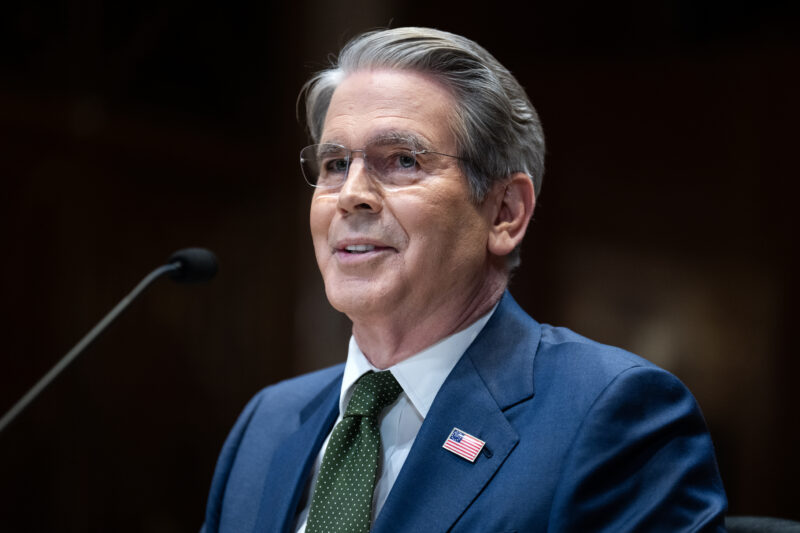








‘I’m not an investment advisor, but you can see that if you were not in Israel in the past two years, you probably missed out, if Israel was not part of your portfolio,’ Seffy Zinger, chair of the Israel Securities Authority, told JI
Patrick T. Fallon / AFP via Getty Images
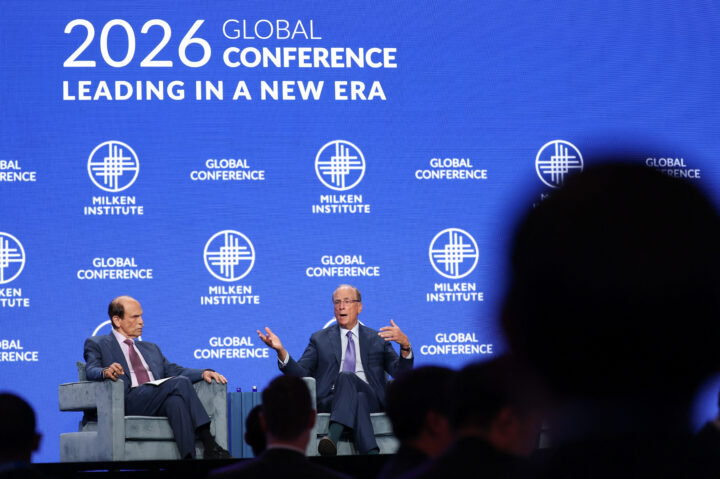
Laurence D. Fink (R), co-founder, chairman and CEO of BlackRock, speaks next to Milken Institute chairman Michael Milken during the 29th annual Milken Institute Global Conference at the Beverly Hilton in Beverly Hills, California on May 5, 2026.


 Add JewishInsider on Google
LOS ANGELES — The Israeli financiers, investors and entrepreneurs who attended last week’s Milken Institute Global Conference in Beverly Hills almost couldn’t make it. Just weeks earlier, after all, the country’s airspace had been largely closed as war raged with Iran.
But aside from their slight fear that the fragile ceasefire would fall apart and leave them stranded in the United States, the Israelis who participated in the marquee conference of global finance brought an upbeat attitude about Israel’s economy, even two-and-a-half years into near-constant war that began with Hamas’ Oct. 7, 2023, attacks.
“When the war began, I think none of us — none of the regulators in Israel, and almost none of the players or the investors in Israel — thought or believed that after two-and-a-half years of war, Israel would show such growth, such resilience,” Seffy Zinger, chair of the Israel Securities Authority, told Jewish Insider in an interview. (The ISA is Israel’s equivalent of the U.S. Securities and Exchange Commission.)
Zinger was at Milken to spread the message that global financiers should consider investing in the Israeli economy, and in particular the Tel Aviv Stock Exchange, despite the doom-and-gloom headlines about the Middle East.
“I’m not an investment advisor, but you can see that if you were not in Israel in the past two years, you probably missed out, if Israel was not part of your portfolio. So I think Israel is becoming a very interesting place economically,” he said.
The shift away from Israel in American politics did not appear to be reflected at this gathering of global business elites: Natti Ginor, a managing director at Jefferies and the bank’s head of Israel investment banking, pitched Israel at the conference as a financial capital in the Middle East. Blackstone’s Tel Aviv-based senior managing director, Yifat Oron, was also there talking about her work leading the firm’s investments in Israel.
“When we are talking to investors and the big players, what I see is a lot of interest in Israel, and I think the economy and the numbers speak for themselves,” said Zinger.
Dror Barak traveled to Los Angeles from Israel to meet developers and investors from across the Middle East, including Saudi Arabia, the United Arab Emirates and the Palestinian territories. He is the founder of Align Capital, an infrastructure-focused private equity firm that is working on projects related to IMEC, the India-Middle East-Europe Economic Corridor — a planned project meant to further economic cooperation across wide swathes of the world. Its development has stalled since the Oct. 7 terror attacks and the ensuing war, but behind the scenes, progress is being made.
“The war, I don’t like to say it, but with all the bad things it also pushed us toward a new era of cooperation,” Barak told JI last week. “The war made us on the same side. It’s the first time in history that we, the UAE [and] Saudi are on the same side. We are all against, publicly or less publicly, Iran. With the United States, of course. So this is a very, very, very dramatic thing, and it’s changed dramatically the nature of our relationship.” IMEC has been floated as an alternative for global shipping amid turbulence in the Strait of Hormuz.
Barak acknowledges that Israel’s reputation has suffered: “Yes, it’s an issue,” he said. But he argued that the work of investing in cross-regional infrastructure must happen, even if the geopolitical situation remains unresolved.
“I’m not waiting for the American public to dedicate my direction, and I’m not waiting for [Israeli Prime Minister Benjamin Netanyahu] or [President Donald Trump] to do some peace,” said Barak. “We promote Arabs and Jews working together. So everywhere that you are looking, I think that we are doing the right thing — the right thing for Israel, the right thing for the region and the right thing for the global politics that want to support the right forces.”
Last year was a banner one for Israeli startups, and the country’s GDP rebounded last year after slowing in 2023 and 2024. But challenges remain. Bentzion Levinson, founder and CEO of Heven AeroTech, an American company with a large Israeli workforce, said there were times that more than one-third of his employees were out of the office doing reserve duty in the Israeli military.
“To this day, we have an average of 10 to 20% of our employees in reserves, around the clock. So I think it’s a challenge. But challenges build strength,” Levinson told JI in Los Angeles. His company’s creation of pioneering long-range stealth drones has driven contracts with the U.S. military and earned a unicorn valuation.
“A lot of things are taking a toll on families [and the] personal, but I think people are strong and they realize that there’s no other choice,” said Levinson. “I think it’s gonna be a decade of significant growth in Israel, especially in the defense tech world … it’s a challenge, but I think the Israeli people can overcome it.”
Zinger, the ISA chair, was attending Milken with his chief of staff, who spent nearly 400 days serving in the reserves after Oct. 7. Responsibilities got juggled; some days the staffer would work three days and do reserve duty for two days. There was no choice but to adapt. And that flexibility, Zinger argued, is part of why Israel’s economy has performed better than anyone expected during the war.
“I think this is part of the strength of the Israeli community and society, exactly these kinds of things, and of course, without that strength, the performance that we see could not have happened,” said Zinger. “It’s something that I think we learn how to live with.”
The executives, philanthropists and politicians who attended the gathering took note of the increasingly populist moment while discussing how to remedy some of the legitimate concerns of Americans

Patrick T. Fallon / AFP via Getty Images
US musician and tech entrepreneur Will.i.am shakes hands with Editorial Director of Bloomberg, Erik Schatzker, during the 29th annual Milken Institute Global Conference at the Beverly Hilton in Beverly Hills, California on May 5, 2026.
The country’s consummate insiders gathered at the Milken Institute Global Conference in Beverly Hills this week. But far away from the five-star hotels where attendees closed business deals and mingled over salmon bento boxes, there is concern over an anti-elite sentiment that is dominating American politics.
The executives, philanthropists and politicians who attended the gathering took note of this increasingly populist moment while discussing how to remedy some of the legitimate concerns of Americans.
There were sessions focused on protecting the workforce in the face of disruption from AI, and on retirement planning for gig economy workers who cannot contribute to a typical 401(k). Behind the scenes, Trump Accounts — tax-advantaged savings accounts for American children, with $1,000 kicked in from Uncle Sam — were a big topic of conversation.
As some of America’s most important decision-makers discussed the turbulent downstream impacts of the AI boom, and the sense that many people are feeling left behind, a related topic that animated the many Jewish executives and investors who attended the conference.
They worry that the intermingling of populism and antisemitism, already heightened following the Oct. 7 Hamas attacks on Israel two and a half years ago, represents a dangerous combination.
“Antisemitism is a manifestation of extremism and populism,” TD Bank Vice Chair Jeffrey Solomon told Jewish Insider. “Extremism on the left and extremism on the right, neither one of those is good for us as Jews, but it’s not good for a lot of people.”
Solomon, a major Jewish philanthropist who chairs the board of the Foundation for Jewish Camp, spoke on a panel at Milken about macroeconomic trends. He said that fighting antisemitism requires also understanding that the problems in society run deeper than just anti-Jewish hate.
“Our job isn’t necessarily to just cure antisemitism. The job is to get at the root cause of what’s causing there to be stress in society. We have to acknowledge that the policies that have gotten us to this place have not been inclusive enough for enough people,” said Solomon, which requires “enabling [people] to be able to find their own path and be successful. The people that can make that happen are at this conference, and if we do that, antisemitism will take care of itself, because there will be no need for it.”
Sara Eisen, a CNBC reporter who was at the conference to moderate several conversations with big-name principals like Citadel CEO Ken Griffin, told JI she heard concerns about antisemitism, and the broader political environment, raised in conversation with other high-profile attendees.
“They see what’s happening in the political world. They see what’s happening in geopolitics,” she said. “This is the sideline conversation.”
At a Tuesday panel about antisemitism, Steven Weitzman, director of the Center of Advanced Judaic Studies at the University of Pennsylvania, made the case that antisemitism is itself anathema to the ideals espoused by Milken attendees.
“Not only is antisemitism the hatred of the Jews,” said Weitzman, “it’s also opposition to globalization, it’s opposition to what this very conference represents, which is peaceful cooperation across national borders.”
Eisen, who has been moderating panels at the Milken Institute conference, said the rise in anti-Jewish hate has been the ‘sideline conversation’ all week
Daniel Zuchnik/Sportico via Getty Images
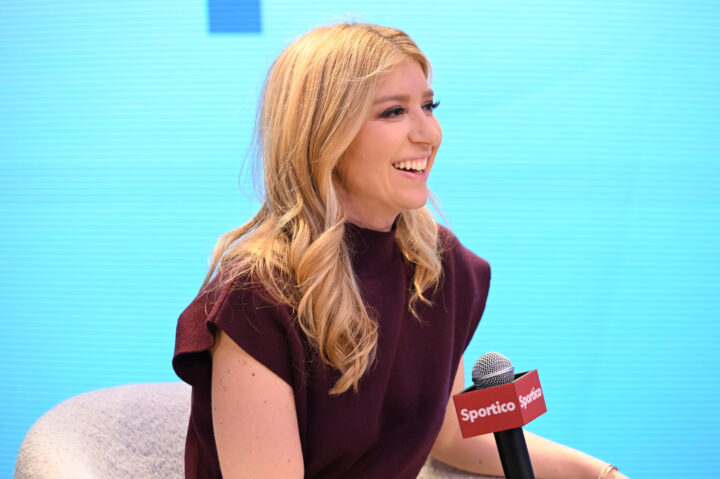
Sara Eisen at Sportico Invest in Sports New York 2025 at Nasdaq HQ on Nov. 4, 2025 in New York.
LOS ANGELES — CNBC anchor Sara Eisen is a fixture at the annual Milken Institute Global Conference in Los Angeles, where she moderates marquee events, such as a one-on-one interview on Tuesday with Ken Griffin, CEO of the hedge fund Citadel.
But the real reason that Eisen — along with scores of billionaire investors and business executives — comes to Beverly Hills for the exclusive annual gathering is for the conversations happening far from the main stages. And much of the conversation Eisen is hearing this week, she told Jewish Insider, has to do with the dramatic rise in antisemitism in recent years.
“To a large extent, I reflect a lot of what the sources that I speak to [say]. That’s investors, and it’s business leaders, and it’s private equity leaders,” Eisen said in an interview during the conference, after she wrapped up moderating a conversation with the CEO of Carlyle, the co-president of Morgan Stanley, the chairman and CEO of State Street and the CEO of the California Public Employees’ Retirement System.
“A lot of these people, Jewish and non-Jewish, talk to me about it. They know about my background. They know my perspective. They see what’s happening in the political world. They see what’s happening in geopolitics,” she continued. “This is the sideline conversation.”
The issue isn’t new for Eisen. Her grandfather was a Holocaust survivor, and he talked openly about his experiences. “I have always been someone with a really strong Jewish identity,” she said. But something began to change for her after the Oct. 7, 2023, Hamas attacks in Israel, and it seeped into her professional work.
“I think for a lot of us, after Oct. 7, it was a wake-up call that we need to speak out more about these issues. I try to use my platform to bring awareness and education to issues like antisemitism, because I care about it,” said Eisen.
During a guest appearance on “The View” in March, she criticized former Trump administration official Joe Kent, who resigned from his position as director of the National Counterterrorism Center in March, for blaming Washington’s war with Iran on Israel.
“It is a very old-school, antisemitic trope to blame the Jews and to blame Israel. It’s as old as time,” Eisen said on “The View.” “It is a classic case of quintessential antisemitism, and by the way it is a dangerous time to do that because the Jews are under attack, and we’re fortifying our synagogues and our schools.”
In an April interview with Sen. Elizabeth Warren (D-MA), Eisen pressed Warren on her support for Maine Senate candidate Graham Platner, despite the fact that the Democrat had a tattoo of a Nazi symbol and praised military tactics used by Hamas. “I’m just curious why you think he’s your ‘kind of man,’” Eisen said, referencing Warren’s description of Platner at a recent campaign event.
Warren defended Platner, noting that he apologized for the tattoo and his history of insensitive remarks. Eisen drilled down on Platner’s praise of Hamas tactics: “You guys want to be the party of inclusivity, right?”
“I want to be the party that stands up for hard-working people,” was Warren’s response. “I want us to be the party that actually delivers on lowering costs and that expands opportunities, and that’s what Graham Platner wants to do, and I’m there to stand with him and to help in that fight.”
Eisen is known as a no-nonsense TV anchor with an occasional snarky streak and an aptitude for finance and economic trends. She covers the news, and lately, she sees antisemitism in the headlines — and feels a particular obligation to cover it.
“I think that the world’s changed,” Eisen said. “There is now this raging outburst of antisemitism, and it’s a societal issue, and I have a background and a perspective on it. And I think it feeds directly into stories we’re doing about the economy and society and geopolitics.”
Reporters, Eisen argued, should not pretend they do not have backgrounds that affect the issues they cover. For her, that means talking about being Jewish, and spotlighting the rise in antisemitism. It stands out at a time when questions like the ones she asked Warren are not necessarily echoed by other top reporters at national outlets.
“As journalists, we’re also people. We have families, we have religions, we have backgrounds, we have history. I try not to inject those opinions, but I do think perspective matters,” she said. “Nobody wants to be interviewed by robots.”
The result is even more social media vitriol than she has always received as a prominent media figure. Only now, it’s antisemitic.
“I feel the heat, and that’s definitely a calculated risk, and it’s unfortunate and it’s unpleasant,” said Eisen. “But I also feel like if, if we’re not asking these questions and we’re not speaking up about these issues, then then nobody will. So we need to.”
Former Virginia governor, on panel with Rahm Emanuel: ‘This was a moment for us to address something that has been festering for 50 years’
Patrick T. Fallon/AFP via Getty Images
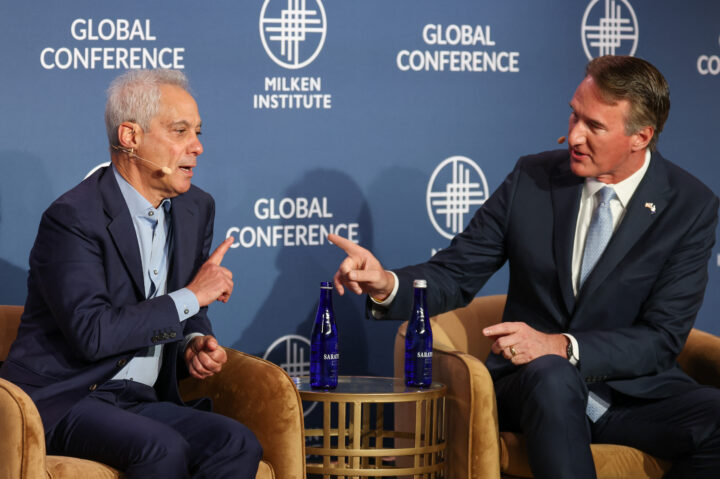
Former Virginia Gov. Glenn Youngkin (R) and U.S. Ambassador to Japan Rahm Emanuel speak during the 29th annual Milken Institute Global Conference at the Beverly Hilton in Beverly Hills, California on May 5, 2026.
LOS ANGELES — Amid declining public support for the U.S. military action against Iran, Virginia’s former Republican governor, Glenn Youngkin, defended President Donald Trump’s Middle East policies in a Tuesday address at the Milken Institute Global Conference in Los Angeles.
“I believe what has been briefed out: that the need to intervene immediately was real, and therefore this was a moment for us to address something that has been festering for 50 years and that has been the bane — the bane of safety and the bane of the entire region for 50 years,” said Youngkin, who held office until January. “I support us solving this now.”
Youngkin was speaking on a panel at the Beverly Hills convening with former Chicago Mayor Rahm Emanuel, a Democrat, both of whom are considered potential future presidential candidates. Youngkin stood by his support for Trump’s war against Iran even amid conversation about the growing number of younger Americans, Republicans included, who are questioning Trump’s more interventionist approach to global conflicts.
“We have seen a decimation of their military capabilities,” Youngkin said of Iran. “We should drive this to its finish.”
Emanuel has amped up his criticism of Israel in recent months. He argued on Tuesday that eroding American support for Israel can be traced back to Israeli Prime Minister Benjamin Netanyahu’s 2015 speech to Congress, when he bypassed President Barack Obama, angering many Democrats. But Emanuel also noted that even Republicans are less sympathetic to Israel than they used to be.
Youngkin, however, maintained that supporting Israel is the right thing to do.
“Who do we stand with? I think we should stand with Israel. I just do,” he said.
‘Every elected official is going to have to decide where he or she stands, and what you believe,’ the Republican Texas senator told JI

Patrick T. Fallon/AFP via Getty Images
Sen. Ted Cruz (R-TX) speaks during the 29th annual Milken Institute Global Conference at the Beverly Hilton in Beverly Hills, California on May 4, 2026.
Sen. Ted Cruz (R-TX) has for months been raising the alarm about the growing threat of antisemitism on the American right. During a visit to Los Angeles for the Milken Institute Global Conference, he called for elected officials — including in his own party — to take a clear stand on the issue.
“I don’t want to wake up in five years and find ourselves in a country where both major political parties are unequivocally anti-Israel and unapologetically antisemitic. And I think that is a very real threat,” Cruz told Jewish Insider in an interview on Monday at the Milken conference.
Among populist young conservatives, where the MAGA ideology of President Donald Trump has given way to an isolationist, America First worldview, Cruz sees a big shift on Israel.
“Every elected official is going to have to decide where he or she stands, and what you believe,” said Cruz. “As Ronald Reagan said more than 50 years ago, this is a time for choosing, and each person can decide where he or she stands.”
When pressed about Vice President JD Vance — who, through his choice of staffers and comments suggesting skepticism of interventionist policies, is increasingly seen as sympathetic to younger conservatives’ worldviews — Cruz did not come to the vice president’s defense.
“You got my answer,” Cruz told JI.
The Texas Republican was at Milken to speak on a panel about economic mobility. But Cruz was also eager to talk about what he saw as exciting developments in the war with Iran. He called for what he described as “regime collapse” in Iran: the U.S. working to free Iran from authoritarian religious leaders without necessarily sticking around to replace them with a new leader.
He called for a more muscular U.S. approach to Iran; he wants to see the U.S. arming the Iranians, the Kurds and the Peshmerga — whatever it takes to bring down the Islamic Republic.
“Removing that regime from power is unambiguously in America’s national security interest. Now, that does not mean we should engage in nation-building, and I have no delusions that we’re going to go transform Iran into some democratic utopia [or] we’re going to turn Iran into Switzerland. That’s not our job,” said Cruz. “For 25 years, Republican foreign policy has operated under what [former Secretary of State] Colin Powell described as the Pottery Barn rule: ‘You break it, you buy it.’ I think that’s nonsense.”
Plus, Milken's Global Conference kicks off

Tasos Katopodis/Getty Images
U.S. President Donald Trump waves to the media after walking off of Air Force One at Miami International Airport on April 11, 2026 in Miami, Florida.
Good Monday morning.
In today’s Daily Kickoff, we preview this week’s Milken Institute Global Conference in Los Angeles, and look at the state of play in the Middle East as President Donald Trump rejects Iran’s latest proposal to end the war. We have the scoop on a new Title VII complaint filed by the Brandeis Center against the National Education Association, and report on the University of Michigan’s apology after a faculty member bashed Israel while delivering a commencement address during the weekend’s graduation ceremonies. Also in today’s Daily Kickoff: Victor Schwartz, Yael Shelbia and Morgan Ortagus.
Today’s Daily Kickoff was curated by JI Executive Editor Melissa Weiss and Israel Editor Tamara Zieve, with an assist from Danielle Cohen-Kanik. Have a tip? Email us here.
What We’re Watching
- We’re keeping an eye on the launch of the U.S.’ “Project Freedom” effort — announced by President Donald Trump on Sunday — to guide vessels out of the Strait of Hormuz. Iran has since warned the U.S. Navy against entering the waterway. The U.S. military denied a claim earlier today that Iran hit an American warship trying to enter the strait. More below.
- The Milken Institute Global Conference kicked off yesterday in Los Angeles and runs through Wednesday. More below on what to expect at this year’s summit. JI’s Gabby Deutch is on the ground covering the Milken conference — drop her a line if you’re there, too.
- In Washington, U.S. Under Secretary for Public Diplomacy Sarah Rogers is slated to meet this morning with Lior Haiat, the Israeli Ministry of Foreign Affairs’ deputy director-general for North America.
- Tonight in New York, The Jewish Center is hosting a candidate roundtable with Micah Lasher and Alex Bores, two of the candidates vying to succeed Rep. Jerry Nadler (D-NY) in New York’s 12th Congressional District.
- Lag B’Omer begins tonight. In Israel, police are preparing for potential unrest in the vicinity of Mt. Meron, a Hasidic pilgrimage site where thousands have gathered annually for the holiday. Law enforcement scaled back the celebrations out of concern that the site, in northern Israel, could become a target for Hezbollah.
- The Pulitzer Prize Board will announce the winners of the 2026 prizes at 3 p.m. ET.
- A bevy of high-profile guests are slated to attend tonight’s Met Gala, with attendees dressed according to this year’s theme, “Costume Art.” This year marks the first that Jeff Bezos and Lauren Sánchez Bezos are serving as cosponsors and lead chairs of the annual event.
What You Should Know
A QUICK WORD WITH JI’S GABBY DEUTCH
A who’s who of global decision-makers is gathering today at the iconic Beverly Hilton hotel in Los Angeles for this year’s annual Milken Institute Global Conference. Investors, philanthropists and business executives from around the world will hobnob with pro athletes, movie stars and politicians.
The four-day convening is billed as a way for global leaders to address some of the world’s biggest challenges. According to event organizers, this year’s conference is focused on building “a more sustainable, equitable and resilient future” in the face of “recent disruption and innovation.” In other words: What are the most powerful innovators in the world going to do about artificial intelligence?
AI is shaping up to be the buzzword at Milken, just like it is everywhere else right now. Govs. Ron DeSantis of Florida and Gretchen Whitmer of Michigan will each be talking on Monday about developing a competitive workforce. Sens. Bill Hagerty (R-TN) and Mark Warner (D-VA) will speak on a panel with Alphabet President Ruth Porat and Meta President Dina Powell McCormick about disruptions to the American workforce. Perhaps the most anticipated speaker of the day is Nvidia CEO Jensen Huang.
A closed-door session today about ties between Silicon Valley, Washington and the Middle East features UAE Ambassador to the U.S. Yousef Al Otaiba, Israeli-born Silicon Valley investor Elad Gil, Abu Dhabi department of health chair Mansoor Ibrahim Al Mansoori and Jacob Helberg, the U.S. under secretary of state for economic affairs.
UNSTEADY GROUND
Mideast ceasefires shaky on three fronts, as Trump declares Iran’s terms ‘not acceptable’

Iran’s latest proposal for a ceasefire is unacceptable, President Donald Trump said on Sunday, as the tenuous ceasefire in Lebanon continued to hold in name only and as Israel weighed whether to resume combat in Gaza, citing Hamas’ refusal to disarm, Jewish Insider’s Lahav Harkov reports. “It’s not acceptable to me,” Trump told Israeli public broadcaster Kan of Iran’s proposed ceasefire terms. “I’ve studied it; I’ve studied everything. It’s not acceptable.”
State of play: Iran submitted a proposal on Thursday that reportedly includes an end to the fighting, after nearly a monthlong ceasefire, and the reopening of the Strait of Hormuz in the next 30 days. Talks about the Islamic Republic’s nuclear plan would only begin after that, with an initial offer of a 15-year pause in uranium enrichment. On Sunday, Trump announced “Project Freedom,” an endeavor by which, he wrote on Truth Social, the U.S. would “guide … ships out of these restricted waterways” in the Strait of Hormuz.
SCOOP
Brandeis Center files Title VII complaint against the National Education Association
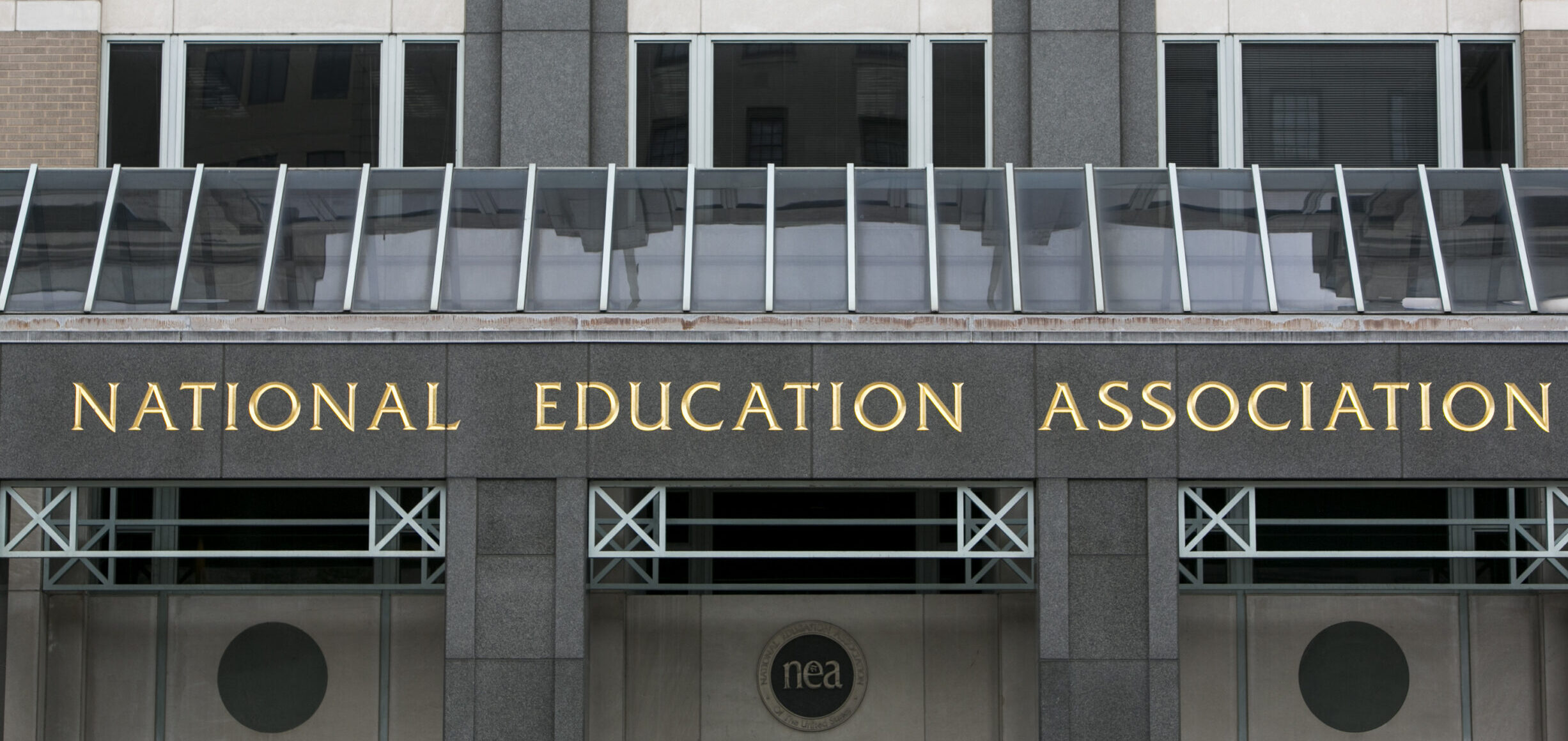
A leading Jewish legal group has filed a bias complaint with the U.S. Equal Employment Opportunity Commission against the National Education Association, alleging the country’s largest teachers’ union violated civil rights law by discriminating against its Jewish members, Jewish Insider’s Haley Cohen has learned.
What it says: The complaint, filed Monday by the Louis D. Brandeis Center for Human Rights Under Law, highlights several incidents in which the NEA — which represents over 3 million educators — allegedly breached Title VII of the Civil Rights Act of 1964, which protects employees, resulting in the spread of antisemitism in K-12 public schools.
RESOLUTION REJECTED
New School rejects student government vote to cut ties, defund Hillel

The New School rejected a student government vote on Saturday to defund and sever ties with the private New York City university’s Hillel chapter, a vote that prompted condemnation from local lawmakers and Jewish groups, while drawing praise from a controversial Muslim advocacy organization, Jewish Insider’s Haley Cohen reports.
Move to cut ties: On Friday, the New School’s student senate approved a resolution to strip funding and cease collaboration with Hillel, the world’s largest Jewish student organization. In a 38-page report, the student organization alleged that Hillel violated international law by running programming in Israel, including Birthright trips and volunteer opportunities with the Israel Defense Forces.
CAMPUS BEAT
University of Michigan apologizes for faculty leader’s anti-Israel commencement speech

The University of Michigan apologized after the outgoing chair of the faculty senate, who has a history of anti-Israel advocacy, delivered an unapproved jab at Israel at a commencement ceremony on Saturday, Jewish Insider’s Haley Cohen reports.
Going off script: Derek Peterson, a tenured professor of history and African studies, praised “the pro-Palestinian student activists who have over these past two years opened our hearts to the injustice and inhumanity of Israel’s war in Gaza,” during his campus-wide commencement address to loud cheering from students. The university’s president, Domenico Grasso, said in a statement later on Saturday that the remarks were “hurtful and insensitive to many members of our community” and noted that Peterson had “deviated from the remarks he had shared before the ceremony.”
CAMPAIGN CONTROVERSY
Far-left Pa. candidate pushed Bondi Beach conspiracy theory
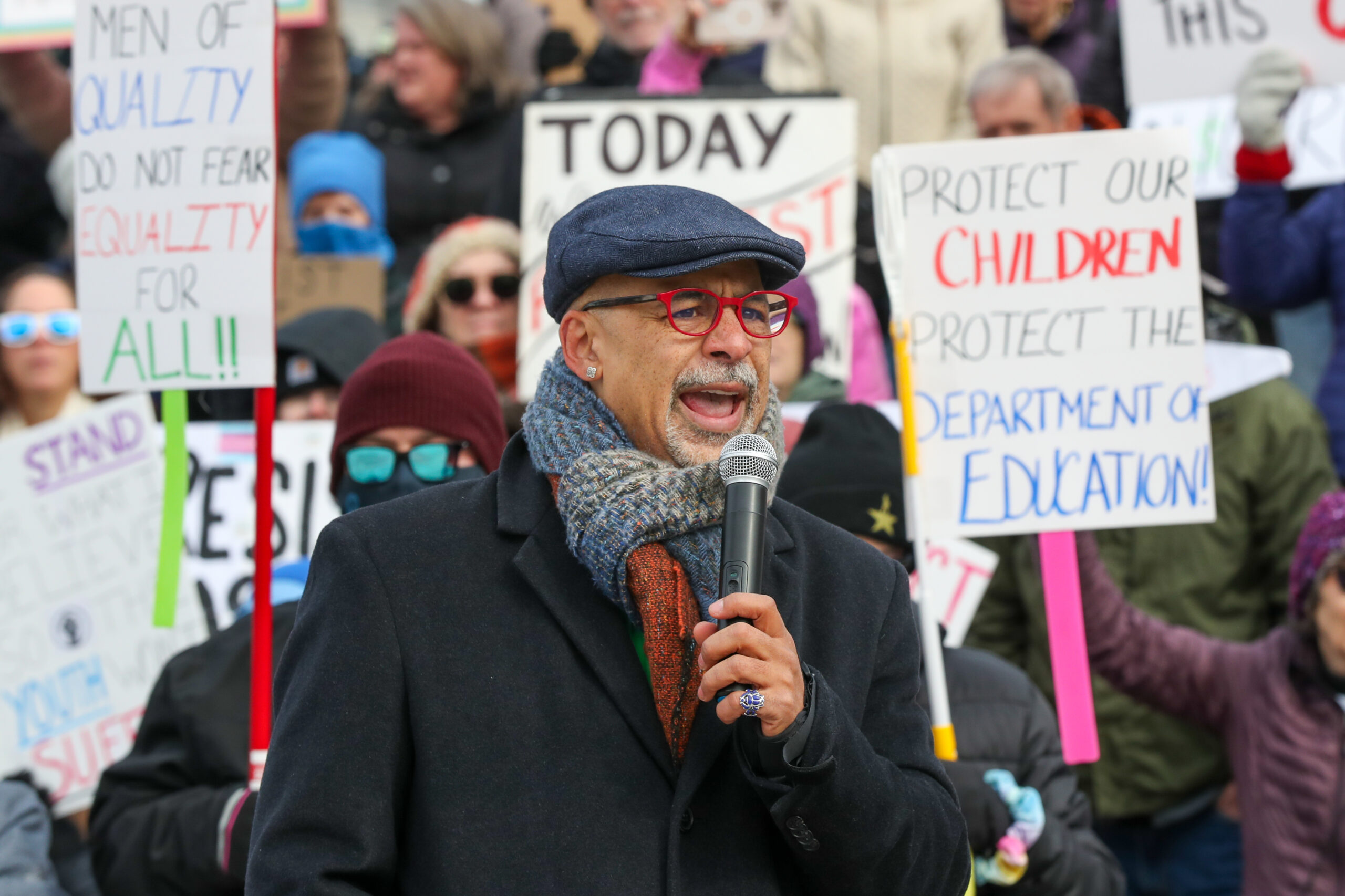
Pennsylvania state Rep. Chris Rabb — a Democrat seeking the Philadelphia House seat of retiring Rep. Dwight Evans (D-PA) — shared an Instagram post blaming the massacre of Jewish Australians at a Hanukkah celebration at Sydney’s Bondi Beach on “Zionists,” the Philadelphia Inquirer reported. In the aftermath of the attack, in which 14 were killed and 40 injured, Rabb’s account shared disinformation insinuating the slaughter was a false flag perpetrated by Israeli interests, Jewish Insider’s Will Bredderman reports.
What it said: “We all know the gunmen were likely Zionists themselves,” read the post, which used an emoji in the place of the word “gun.” Shortly after the attack, the alleged assailants were identified as a father and son whom authorities linked to an offshoot of the Islamic State. A Rabb campaign spokesperson asserted to the Inquirer that the candidate not only did not share the post himself, but that he had “no knowledge” of it, and blamed a former staffer for posting it.
tucker to the times
Tucker Carlson touts relationship with Vance, slams Trump and Rubio in NYT interview

In a wide-ranging New York Times interview published on Saturday, far-right podcaster Tucker Carlson offered an unusually personal defense of Vice President JD Vance, describing him as a close friend while suggesting he is being undermined by hawkish forces inside the White House amid tensions over the administration’s military actions in Iran, Jewish Insider’s Josh Kraushaar reports.
Carlson’s comments: “I couldn’t be a bigger fan of him as a man,” Carlson told Times podcast host Lulu Garcia-Navarro. He added that Vance is “in a tough spot” because his long-held foreign policy views clash with the administration’s decision to attack Iran in February. Carlson took a swipe at Secretary of State Marco Rubio, baselessly alleging that backers of Washington’s top diplomat have been engaging in “nonstop treachery” against Vance. “There are people in the White House who want to hurt JD Vance and have wanted that since the very first day. They were bitter. They wanted Marco Rubio to be the choice as vice president,” Carlson said.
Worthy Reads
Dem Reset on Israel: In The Bulwark, former U.S. Ambassador to Israel Dan Shapiro posits that the Democratic Party’s relationship with Israel has hit the “feeding-frenzy stage” and suggests considerations for the party to weigh as it moves leftward on Israel. “How will Hamas, Iran, Hezbollah, and the Houthis respond to the end of U.S. assistance to Israel? Will it make them less likely to pursue their dreams of Israel’s destruction? Or will they feel emboldened? … Would Arab and Muslim countries considering normalizing relations with Israel be more or less likely to do so if they see the United States pull away? Would Gulf nations still see the United States as their primary security partner as we distance ourselves from Israel?” [TheBulwark]
MBZ Zigs: The Financial Times’ Andrew England looks at how United Arab Emirates President Mohamed bin Zayed is steering the Gulf nation as the region sits at a crossroads that will determine its future. “For MBZ, it is a pivotal moment — a conflict he had long prepared for, but also a test of who among his nation’s traditional allies could be relied upon in a crisis. And the UAE has made clear it believes some have been found wanting. The state has openly criticised what it perceives to be the tepid response of Arab and Muslim partners. … But the war gave it the impetus to act on a threat it had previously only dangled, deepening a festering rift with Riyadh, fuelled by economic competition and conflicting visions of how to manage the region’s crises.” [FT]
The Unity Test: In The Jerusalem Post, William Daroff, the CEO of the Conference of Presidents of Major American Jewish Organizations, considers the challenges facing the American Jewish community. “Institutions were built to sustain a broader communal fabric: federations, schools, synagogues, community centers, and civic organizations grounded in the idea that Jewish continuity is a collective responsibility. That instinct toward unity now faces a real test. … Fragmentation carries risk, especially under external pressure. The strength of American Jewish life depends on the ability to hold differences within a framework of mutual obligation: to argue, even sharply, without losing sight of a shared inheritance and a common future.” [JPost]
Pod Squad: Air Mail’s Alyson Krueger spotlights the use of the “pod” as an alternative to a traditional receiving line during King Charles III’s recent visit to Washington. “A political pod featured Speaker Mike Johnson, Treasury Secretary Scott Bessent, Nancy Pelosi, and Stephen Miller — a seemingly flammable grouping. But John McCarthy, a Democratic strategist and former Biden White House aide, who was also in the pod, saw diplomatic promise in the 25 minutes its members spent waiting as a group. ‘There are not a lot of scenarios where leaders who are Democrats and Republicans are getting together in D.C. right now,’ he says. He thought it created a useful shared experience. ‘You met the King together! Next time you need something across the aisle, you have this interesting life experience that you can draw upon.’” [AirMail]
Word on the Street
National Security Action, the foreign policy group founded by former National Security Advisor Jake Sullivan and Obama administration senior official Ben Rhodes — both of whom remain on the board — has tapped Maher Bitar, the former NSA official who had faced criticism from GOP lawmakers for his alleged “clear bias against and disregard for Israel,” to lead the organization as it wades into the 2028 primaries…
Former U.S. Ambassador to Japan Rahm Emanuel, a likely Democratic presidential candidate, on Friday signaled his backing for Maine Democratic Senate candidate Graham Platner, who has drawn scrutiny over his far-left views and decades-old Nazi tattoo that he recently covered up, Jewish Insider’s Josh Kraushaar reports…
The newly formed Jewish Federation of Annapolis & the Chesapeake is pushing back after Anne Arundel County Executive Steuart Pittman repeatedly declined to include funding for security grants requested by Jewish institutions in his proposed budget, Jewish Insider’s Haley Cohen reports…
Ivanka Trump and Jared Kushner were spotted on Saturday night at the Amex x Carbone Beach pop-up in Miami Beach, Fla., chatting with Carbone owner Jeff Zalaznick, on the sidelines of the Miami Grand Prix…
Israeli model Yael Shelbia and Formula 1 driver Lance Stroll, who have been rumored to be dating since last year, made their F1 debut as a couple at the Miami Grand Prix, where Stroll was racing, on Sunday…
New York magazine profiles wine importer and distributor Victor Schwartz, the lead plaintiff challenging the Trump administration’s tariffs, who scored a 6-3 Supreme Court victory last fall…
Ryan Cohen’s GameStop made an offer to purchase eBay for $56 billion, with the goal of turning the online reseller into an Amazon competitor…
Cornell University President Michael Kotlikoff clashed with students whom he said were engaging in “harassment and intimidation” following an on-campus event on the Israeli-Palestinian conflict; several students surrounded Kotlikoff’s car as he was trying to leave the parking lot and he was filmed backing into a student while another claimed he ran over his foot, but no injuries were reported…
The Washington Post spotlights JoJo and Yoni Kalin, a married couple that witnessed the killings last year of two Israeli Embassy staffers at the Capital Jewish Museum in Washington, and looks at how they have responded in different ways to the rise in antisemitism and anti-Israel sentiment…
A historic Nantucket, Mass., lifesaving station purchased by the island’s Jewish community is set to become Nantucket’s first synagogue in more than four decades…
Australia’s royal commission into the December attack at a Hanukkah party at Sydney’s Bondi Beach held its first public hearing, with members of the city’s Jewish community testifying about their experiences with antisemitism; among those testifying was Sheina Gutnick, whose father was killed in the attack and who warned of the “real-world consequences of hatred”…
The man suspected of stabbing two Jewish men in the London suburb of Golders Green last week was charged with two counts of attempted murder, as well as a weapons charge; Essa Suleiman was also hit with a third charge of attempted murder, for an attack that took place in another part of the city earlier in the day…
A British court found a Kuwaiti asylum-seeker guilty of weapons charges and preparing to conduct a terrorist attack, a year after the man was apprehended outside the Israeli Embassy in London with knives…
Robert Shrimsley, the executive editor of the Financial Times, warns that British Jews are “being forced to live a more fearful and smaller Jewish life” amid ongoing attacks on Jewish communities around the country…
Israel Hayom interviews Morgan Ortagus, who departed the Trump administration earlier this year after working on the White House’s Lebanon portfolio…
The family of journalist Austin Tice, who disappeared in Syria in 2012, said there is new information indicating that Tice is potentially alive and in the hands of Iran’s Islamic Revolutionary Guard Corps…
Pakistan said it assisted in the transfer of 22 Iranians whose ship was seized by the U.S. Navy last month, as a “confidence-building measure” between Washington and Tehran…
The New York Times looks at how China is attempting to benefit from any outcome in the U.S.-Iran conflict, both by encouraging Tehran to come to the negotiating table and providing commercial support to the Islamic Republic in the event of a resumption of hostilities, while also preparing for a summit in mid-May between President Donald Trump and Chinese President Xi Jinping…
The Wall Street Journal profiles Iranian businessman Babak Zanjani, who was released from Iran’s death row last year after facing corruption charges and now helps the Islamic Republic evade sanctions through cryptocurrency networks…
Marc Rod, JI’s senior congressional correspondent, and Olivia Truesdale-Rod, program manager for Former Members of Congress, married on Friday at Meridian House in Washington, D.C., with JI’s D.C. team in attendance. Rabbi Aaron Miller of Washington Hebrew Congregation officiated…
Nick Stewart is departing his role as managing director of advocacy at FDD Action and joining the Trump administration, working in the office of White House Special Envoy Steve Witkoff…
Psychologist and Holocaust survivor Edith Eger, who as a teenager in Auschwitz was forced to dance for Dr. Josef Mengele — and who recounts those experiences in her books — died at 99…
Pic of the Day

The Michael Levin Lone Soldier Center hosted the opening on Friday of an exhibit titled “Plates of Hope and Color” that included 180 original works created by Israeli artists, musicians and “lone soldiers” from around the world with no family in Israel.
Birthdays

Medalist in the women’s halfpipe event at the 2018 Winter Olympics in PyeongChang, South Korea, Arielle Townsend Gold turns 30…
Former chairman and CEO of American International Group, once the largest insurance company in history, then chairman and CEO of the Starr Companies, Maurice Raymond “Hank” Greenberg turns 101… Executive director of the Texas A&M Hillel for 30 years, now a security consultant for the tourism industry, Peter E. Tarlow turns 80… U.S. special envoy for climate change in the Obama administration, now a nonresident senior fellow at the Brookings Institution, Todd D. Stern turns 75… Trustee of the Institute for Islamic, Christian and Jewish Studies, Lee Sherman… Partner at NYC-based Mintz & Gold, he was EVP and general counsel for both the Las Vegas Sands and News Corporation, Lawrence “Lon” A. Jacobs… Northern Virginia-based portrait artist, Ilisa G. Calderon… CEO at Gigawatt Global, Yosef Israel Abramowitz turns 62… Member of the House of Representatives (D-VT), Rebecca A. “Becca” Balint turns 58… Triathlete, she has a Ph.D. from Johns Hopkins and is a winner of international ironman competitions, Joanna Sue Zeiger turns 56… Director of congregational education at NYC’s Park Avenue Synagogue, Bradley Solmsen… Former Florida state senator and state attorney for Palm Beach County from 2013 to 2025, Dave Aronberg turns 55… Chair and director at NYC’s Department of City Planning until last month, Daniel Garodnick… Mechal Wakslak… Executive advisor at Veterans Community Project, he served as the secretary of state of Missouri, Jason Kander turns 45… Chief operating officer at Repair the World, Jessica Chait… Tech entrepreneur, best known as a co-founder of both Vine and HQ Trivia, Rus Yusupov turns 42… SVP at BerlinRosen, Allison Fran Bormel… Chief development officer at Ramah Darom, previously with Americans for Ben-Gurion University and AIPAC, Rebecca Leibowitz Wasserstrom… Script writer at Disney, Steven A. Rosenberg… Adjunct senior fellow at the Center for a New American Security, Shana Mansbach… Manager of public policy and external affairs at Meta / Facebook, Sasha Altschuler… Actor best known for voicing the title character of the animated film “Finding Nemo,” Alexander Gould turns 32… Partner in the client services group at Signum Global Advisors, Elliot Miller… Finance lead at Shopify, Olivia Breuer…
The four-day convening is billed as a way for global leaders to address some of the world’s biggest challenges
Taylor Hill/FilmMagic
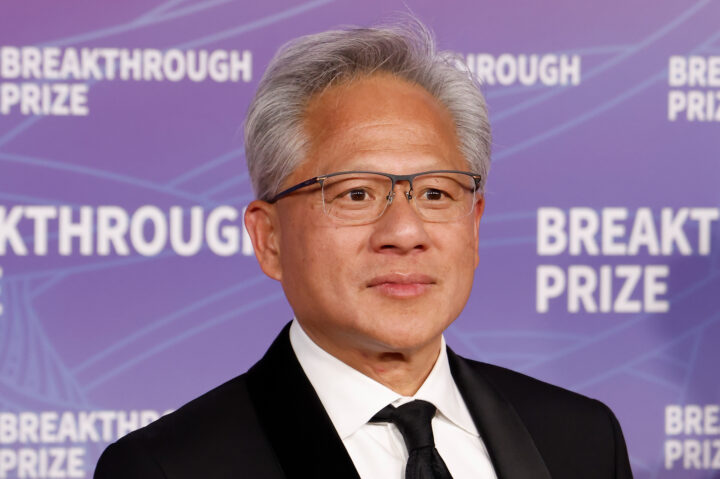
Jensen Huang attends the 12th Breakthrough Prize Ceremony at Barker Hangar on April 18, 2026 in Santa Monica, California.
A who’s who of global decision-makers is gathering today at the iconic Beverly Hilton hotel in Los Angeles for this year’s annual Milken Institute Global Conference. Investors, philanthropists and business executives from around the world will hobnob with pro athletes, movie stars and politicians.
The four-day convening is billed as a way for global leaders to address some of the world’s biggest challenges. According to event organizers, this year’s conference is focused on building “a more sustainable, equitable and resilient future” in the face of “recent disruption and innovation.” In other words: What are the most powerful innovators in the world going to do about artificial intelligence?
AI is shaping up to be the buzzword at Milken, just like it is everywhere else right now. Govs. Ron DeSantis of Florida and Gretchen Whitmer of Michigan will each be talking on Monday about developing a competitive workforce. Sens. Bill Hagerty (R-TN) and Mark Warner (D-VA) will speak on a panel with Alphabet President Ruth Porat and Meta President Dina Powell McCormick about disruptions to the American workforce. Perhaps the most anticipated speaker of the day is Nvidia CEO Jensen Huang.
The events at Milken are a mix of utilitarian, educational and enlightening. Practical panel discussions about investing take place next to addresses from world leaders and politicians; conversations about philosophy occur alongside sessions about medical breakthroughs. (Rabbi David Wolpe and the actor Kelsey Grammer are speaking about the meaning of faith today.)
Milken attendees will have the opportunity on Monday to hear from Nobel Peace Prize-winner Maria Corina Machado, the Venezuelan opposition leader, as well as U.S. Ambassador to the United Nations Mike Waltz and Rafael Grossi, director-general of the International Atomic Energy Agency.
Many Israelis who work in tech are attending amid a period of relative calm in Israel during a ceasefire with Iran. A closed-door session today about ties between Silicon Valley, Washington and the Middle East features UAE Ambassador to the U.S. Yousef Al Otaiba, Israeli-born Silicon Valley investor Elad Gil, Abu Dhabi department of health chair Mansoor Ibrahim Al Mansoori and Jacob Helberg, the U.S. under secretary of state for economic affairs.
At a moment of geopolitical tumult and economic uncertainty, the Milken conference presents an opportunity to listen in on some of the conversations that could drive policy and shape economic outcomes. We’ll be paying close attention.
Lankford and Rosen have been pressing the Senate Health, Education, Labor and Pensions Committee chair to address rising antisemitism at American universities

Andrew Harnik/Getty Images
Sen. James Lankford (R-OK) speaks during a news conference on Capitol Hill on May 1, 2024 in Washington, DC.
LOS ANGELES — As the House Education and Workforce Committee prepares to hold its third major hearing on campus antisemitism later this month, the corresponding Senate committee — chaired by Sen. Bernie Sanders (I-VT) — has yet to hold any special hearings about rising antisemitism at American universities.
Sens. James Lankford (R-OK) and Jacky Rosen (D-NV), the co-chairs of the Senate Bipartisan Task Force for Combating Antisemitism, have been asking Sanders to call a hearing on the matter. As of last week, they hadn’t heard back from the Vermont progressive.
But in a conversation with Jewish Insider on Monday at the Milken Institute Global Conference, Lankford said that Sanders has now weighed in on the matter, telling Lankford that he intends to call a hearing with a focus that is “broader and not just on antisemitism. He wants to really focus on increasing Islamophobia, and a very different direction on it.”
“I have no issue with trying to be able to say no one should be discriminated against, but we want to be really clear what’s actually happening,” Lankford added. He and Rosen have sought stronger Senate action on campus antisemitism for two or three years, he said, so the issue is deeper than just the current spike.
“No one really took it seriously at that point. They are now. People do see it now,” said Lankford. “This is a bigger issue than what we thought was happening on campus. So we’re trying to just be really clear that this is not a knee jerk to October the seventh. This has grown for a while and we feel it’s important to be able to set that context.”
Lankford declined to say if he expects Sanders to come around to his view on the issue. But he pointed out that even a Senate hearing would not fix the problem of inaction by university administrators.
“Ultimately, I’m trying to figure out, how do we actually get administrations — how do we get people to engage, to enforce their own code of conduct on their own campus, just to be consistent? That’s doable. Many campuses have done that,” said Lankford. “We’re going to protect free speech, but we’re not going to allow people to be intimidated on their own campus.” (A Sanders spokesperson did not immediately respond to a request for comment.)
Lankford called for the Senate to take up the Antisemitism Awareness Act that passed the House with bipartisan support next week, but he said he has not yet spoken to Senate Majority Leader Chuck Schumer (D-NY) about when the Senate might consider the legislation. The bill’s adoption of the International Holocaust Remembrance Alliance’s (IHRA) working definition of antisemitism drew some pushback from both the right — among Christians who falsely claimed that the bill would criminalize statements that the Jews are responsible for Jesus’s death — and the left, where anti-Israel voices worry that the law would impinge on their ability to criticize Israel.
“It starts this whole big stir that the IHRA definition is suddenly going to outlaw the Bible and the New Testament is going to cause people to be arrested,” Lankford said. “The IHRA definition in the Antisemitism Awareness Act doesn’t take away free speech. It notifies a campus if you’re discriminating in this way, then that’s discrimination, the same as it would be for a Black student or Hispanic students or whatever it may be. That’s discrimination. Your federal funding would be at risk, as it would be or any other type of discrimination on your campus. So just don’t discriminate.”
Please log in if you already have a subscription, or subscribe to access the latest updates.
 Continue with Google
 Continue with Apple