


































The defense secretary announced the death of the individual responsible for the Trump assassination attempt and said the U.S. sank an Iranian warship with a torpedo
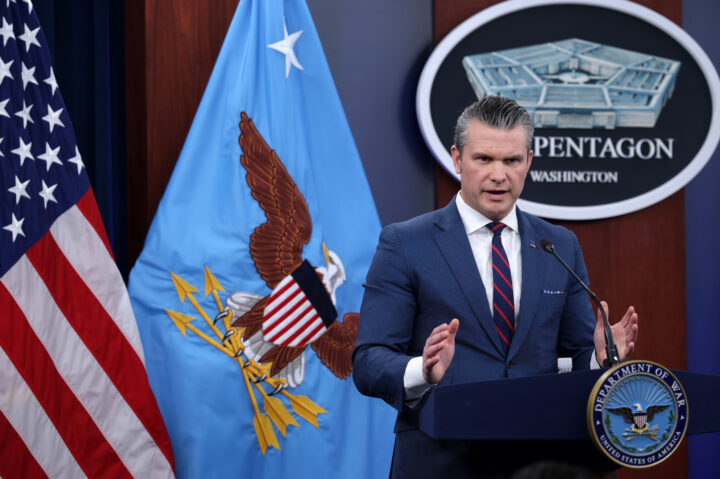
Alex Wong/Getty Images
Secretary of Defense Pete Hegseth speaks during a news conference at the Pentagon on March 2, 2026 in Arlington, Virginia.


 Add JewishInsider on Google
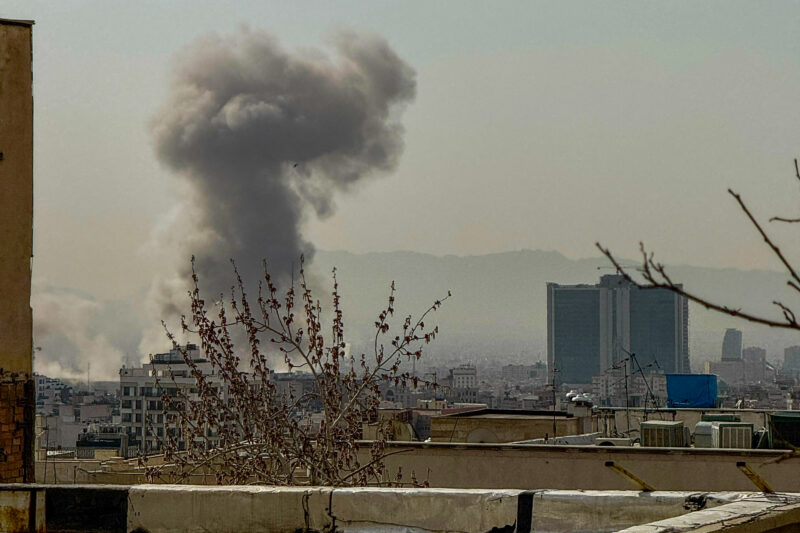
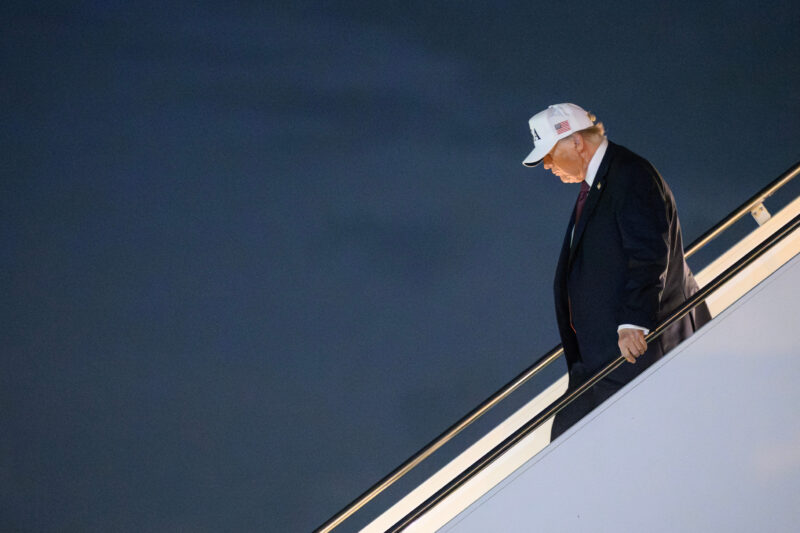
On the fifth day of the joint U.S. and Israeli military campaign against Iran, Secretary of Defense Pete Hegseth announced the accomplishment of several key objectives, including that “the leader of the unit” responsible for the assassination attempt on President Donald Trump in November 2024 “has been hunted down and killed.”
Hegseth, speaking alongside Chairman of the Joint Chiefs Gen. Dan Caine, also touted the naval and air superiority achieved by the U.S. and Israel over Iran.
“The Iranian Air Force is no more … their navy is not a factor,” Hegseth said. “In fact, last night, we sunk their prize ship, the Soleimani, and … yesterday in the Indian Ocean an American submarine sank an Iranian warship that thought it was safe in international waters. Instead, it was sunk by a torpedo. Quiet death, the first sinking of an enemy ship by a torpedo since World War Two.”
Caine noted that the U.S. has sunk more than 20 Iranian warships.
Still, Hegseth said, the operation is only in its early days.“We are accelerating, not decelerating,” he claimed, noting that “more bombers and more fighters are arriving today.”
“Starting last night and to be completed in a few days, in under a week, the two most powerful air forces in the world [the U.S. and Israel] will have complete control of Iranian skies, uncontested airspace. Flying over Tehran, flying over Iran, flying over their capital, flying over the IRGC Iranian leaders, looking up and seeing only us and Israeli air power every minute of every day, until we decide it’s over. Iran will be able to do nothing about it.”
“Iran’s senior leaders are dead, the so-called governing council that might have selected a successor are dead, missing or cowering in bunkers too terrified to even occupy the same room, senior generals, mid- level, officers, enlisted ranks, they can’t talk or communicate, let alone mount a coordinated and sustained offensive,” Hegseth added.
Hegseth said the current campaign has wrought “seven times the intensity” than that of the 12-day war in June 2025, noting that the U.S. is “just getting started” and “more and larger waves are coming.”
Hegseth did not comment on whether the U.S. would deploy ground troops, but said that the department is working to move existing personnel around the region out of harm’s way.
“We have, from the start, put the protection of our troops ahead of everything else before we very publicly built up offensive combat power,” Hegseth said. “We moved the vast majority of American troops, over 90% of Americans that were on our bases, out of the range of Iranian fire.”
Hegseth credited Israel for its role in the operation, telling reporters that working with “such a capable ally” is a “force multiplier and breath of fresh air.” In addition to working with Israel, Hegseth said the U.S. is also closely coordinating with Arab partners.
“Whether it’s UAE or Qatar or Bahrain or Kuwait or Saudi on different levels, they’re reaching out to us … they’re giving us additional access basing and overflight … we’re working very closely and collaborating with them also on air defenses,” Hegseth said.
“The air defense capabilities of those countries are significant, and when combined with ours and we coordinate it, it brings simplicity to the shot doctrine,” he added.
Caine laid out the U.S.’ strategy moving forward: “CENTCOM is now shifting from large, deliberate strike packages using standoff munitions … into stand-in precision strikes overhead Iran,” he said. “This will allow the joint force to deliver significantly increased precision effects on the target.”
Caine said that Iran has been “indiscriminate” in its attacks, firing “more than 500 ballistic missiles and more than 2000 drones striking innocent civilian targets throughout the region.”
Responding to concerns over whether the U.S. will be able to maintain enough munitions throughout the conflict, Hegseth dismissed “stories and speculation,” instead asserting: “Iran cannot outlast us.”
“We’re going to ensure through violence of action and our offensive capabilities and our defensive capabilities that we set the tone and the tempo of this fight,” Hegseth said. “The only limits we have in this is President Trump’s desire to achieve specific effects on behalf of the American people … You can say four weeks, but it could be six, it could be eight, it could be three. Ultimately, we set the pace.”
‘You don’t have to drag him into anything. Donald Trump is the strongest leader in the world. He does what he thinks is right for America,’ Netanyahu said in his first interview since the operation began

SAUL LOEB/AFP via Getty Images
President Donald Trump shakes hands with Israeli Prime Minister Benjamin Netanyahu during a meeting in the Oval Office of the White House in Washington, DC, on April 7, 2025.
In his first interview since the U.S. and Israel launched their joint military campaign against Iran, Israeli Prime Minister Benjamin Netanyahu defended the timing of the operation’s launch and rebuffed the notion that he decisively pushed President Donald Trump to take action.
“The reason that we had to act now is because after we hit [Iran’s] nuclear sites and their ballistic missile program [in June 2025] … they started building new sites, new places, underground bunkers that would make their ballistic missile program and their atomic bomb program immune within months,” Netanyahu told Fox News host Sean Hannity on his show Monday night. “If no action was taken now, no action could be taken in the future.”
Without undertaking military operations, Netanyahu warned that Iran would be able to “target” and “blackmail America” and argued that Tehran could threaten the U.S. and Israel “and everyone in between.” He added that the moment was also opportune due to the Iranian regime being “at the weakest point that it’s been since it hijacked Iran from the brave Iranian people 47 years ago.”
When asked about allegations from critics of the operation that he had “dragged” the U.S. into a wider conflict with Iran, Netanyahu dismissed the notion, calling it “ridiculous.” He said that Trump made the decision on his own because he “understands” the threat Iran poses to the U.S.
“You don’t have to drag him into anything,” said Netanyahu. “Donald Trump is the strongest leader in the world. He does what he thinks is right for America.”
In comments Monday afternoon, both Secretary of State Rubio and House Speaker Mike Johnson (R-LA) suggested it was Israel’s determination to strike Iran, which would have prompted Iranian retaliation against U.S. assets, that necessitated U.S. preemptive action.
Netanyahu did not offer a timeline for how long he expects the joint operation to last; however, he emphasized that it will be “quick and decisive” and not an “endless war” as some critics have alleged.
“You’re not going to have an endless war,” said Netanyahu. “This is going to be a quick and decisive action, and we’re going to create the conditions first for the Iranian people to get control of their destiny, to form their own democratically elected government, which will make Iran different altogether. It may take some time, but it’s not going to take years.”
The prime minister argued that the current military confrontation is intended not only to neutralize an immediate threat but to reshape the region’s long-term trajectory, describing it as a potential “gateway to peace.”
“I think it changes the world,” Netanyahu said, arguing that dismantling Iran’s regime would remove what he called the Middle East’s primary driver of instability. “Iran has been the main engine of war over these years. Ninety-five percent of all the problems you see in the Middle East are generated by Iran and the worldwide terror network that they built.”
“When you take away Iran [Iranian leadership] — let the people of Iran have the opportunity to act and liberate themselves, free themselves from the work of this terror machine — you get a different future,” he added.
Rubio and Defense Secretary Pete Hegseth, however, have insisted that the U.S. objective in Iran is more constrained. The White House has asserted it is not seeking regime change, instead emphasizing that American action is narrowly focused on dismantling Tehran’s nuclear program, ballistic missile capabilities and naval assets.
Still, Netanyahu embraced a broader vision, suggesting that the fall of the Iranian regime would fundamentally reshape the region and open the door to normalization agreements and “many peace treaties” with Arab and Muslim-majority countries. He specifically pointed to Saudi Arabia as a potential partner.
“Saudi Arabia will have a lot to gain,” Netanyahu said. “All these countries around Iran are threatened by Iran. I think they [Arab countries] want to see this regime go down, even if they don’t publicly say that.”
“If Iran [Iranian leadership] is removed, that’s a great boon to Saudi Arabia, a great boon to these other countries, and I think peace between Israel and Saudi Arabia would be really possible — and probably very close — once this thing happens.”
Canada and Australia immediately offered support; European leaders signaled changing views amid Iran’s indiscriminate attacks in the region
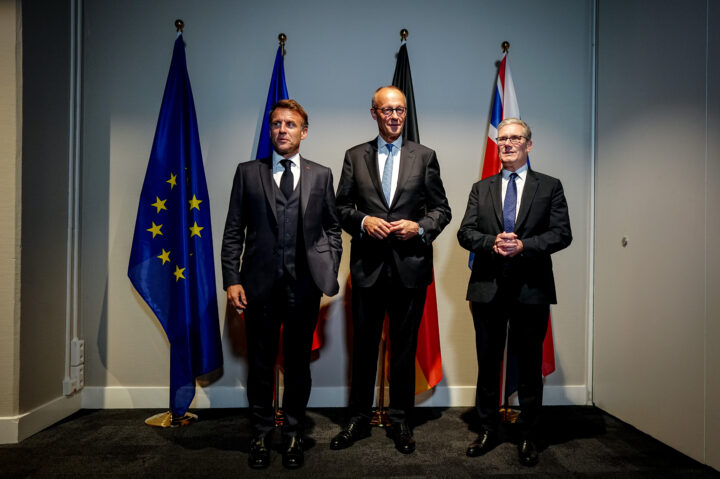
Kay Nietfeld/picture alliance via Getty Images
French President Emmanuel Macron (l-r), German Chancellor Friedrich Merz (CDU) and Keir Starmer, Prime Minister of Great Britain, meet in The Hague at the delegation hotel on the sidelines of the NATO summit for trilateral talks in the E3 format.
President Donald Trump’s decision to launch a military campaign against Iran has earned unexpected support from Western leaders who have otherwise sparred with Trump, particularly on trade policy. Canada and Australia, both of which are led by liberal parties, robustly backed the strikes that began on Saturday morning.
“We support the United States acting to prevent Iran from obtaining a nuclear weapon and to prevent Iran continuing to threaten international peace and security,” Australian Prime Minister Anthony Albanese said in a statement on Saturday.
Canadian Prime Minister Mark Carney, speaking to reporters during a trip to India, also threw his support behind the U.S.: “Canada supports the United States acting to prevent Iran from obtaining a nuclear weapon and to prevent its regime from further threatening international peace and security,” he said.
Meanwhile, three powerful European allies known as the E3 — France, Germany and the United Kingdom — were more circumspect after the military campaign began, with British Prime Minister Keir Starmer, French President Emmanuel Macron and German Chancellor Friedrich Merz calling on Saturday for nuclear negotiations to resume.
But by late Sunday, as Iran doubled down on its campaign of retaliation against American and Western assets across the Middle East, the E3 nations inched toward support for Washington with a statement strongly calling on Iran to cease its “indiscriminate and disproportionate missile attacks.”
“We call on Iran to stop these reckless attacks immediately. We will take steps to defend our interests and those of our allies in the region, potentially through enabling necessary and proportionate defensive action to destroy Iran’s capability to fire missiles and drones at their source,” the E3 leaders said. “We have agreed to work together with the U.S. and allies in the region on this matter.”
Please log in if you already have a subscription, or subscribe to access the latest updates.
 Continue with Google
 Continue with Apple