























































The letter, led by Reps. Claudia Tenney (R-NY) and Brad Sherman (D-CA), was sent ahead of a meeting in Brussels, where new sanctions are expected to be approved

Morteza Nikoubazl/NurPhoto via Getty Images
Members of the Islamic Revolutionary Guard Corps (IRGC) special forces are walking along the Azadi (Freedom) square in the west of Tehran after a rally to mark the 44th anniversary of the Victory of Iran's 1979 Islamic Revolution on February 11, 2023.


 Add JewishInsider on Google
Reps. Claudia Tenney (R-NY) and Brad Sherman (D-CA) are leading a bipartisan group of legislators ahead of a meeting of European Union officials on Thursday urging the EU to designate Iran’s Islamic Revolutionary Guard Corps as a terrorist organization.
Tenney, Sherman and 23 House lawmakers sent a letter to European Union High Representative for Foreign Affairs Kaja Kallas on Wednesday encouraging the EU to “join the United States, Canada, and Australia” in designating the IRGC as a terrorist organization and outlining the IRGC’s record of supporting terrorism abroad, including in Europe.
“As you know, the Islamic Republic of Iran remains a leading state sponsor of terror. The IRGC has not only committed terrorist acts throughout the Middle East but has also carried out attacks throughout the EU and against EU citizens – all while continuing to brutalize its own citizens at home in Iran, with a brutal crackdown this month leading to the murder of an estimated 12,000 Iranian protesters,” the letter states.
“The IRGC’s targeting of EU citizens includes attacks in France, Germany, Belgium, Sweden, and Cyprus,” it continues. “These attacks span from cyberattacks and surveillance operations to targeted assassinations and synagogue bombings. Additional attacks have occurred in countries bordering the EU, such as Switzerland, the UK, Albania, and Türkiye.”
The letter was sent ahead of a Thursday meeting of EU foreign ministers in Brussels, where new sanctions, which target around 20 Iranian individuals and groups associated with the crackdown on Iranian protesters, are expected to be approved. France, which had remained the leading holdout among EU member states in opposing adding the IRGC to its list of terrorist organizations, announced on Wednesday evening that it was dropping its opposition to the move as a result of the Iranian regime’s violent crackdown on protesters.
Italy has also expressed concern about the move, and it is not clear how either country’s foreign ministers will vote when the IRGC terror designation, which is separate from the sanctions against the 20 Iranian entities, comes up for a vote on Thursday.
“As recently as April 3, 2025, the European Parliament overwhelmingly voted for a resolution reiterating its call to designate the IRGC as a terrorist organization,” the lawmakers wrote. “However, to date, the EU has still not moved on this important matter, despite growing consensus amongst EU member states.”
“We respectfully urge you to prioritize the designation of the IRGC during tomorrow’s meeting of the Foreign Affairs Council given its important and timely nature,” they added. “As the people of Iran rise up to protest their brutal oppression by the mullahs and face violence in response, designation of the IRGC as a terror group is more than appropriate. It sends a clear message that Europe stands with the United States in opposing terror, human rights abuses, and the slaughter of innocent Iranians.”
Lawmakers who cosigned the letter include Reps. Joe Wilson (R-SC), Brad Schneider (D-IL), Mike Lawler (R-NY), Brendan Boyle (D-PA), Chris Smith (R-NJ), Marilyn Strickland (D-WA), Brian Fitzpatrick (R-PA), Deborah Ross (D-NC), Maria Elvira Salazar (R-FL), Jared Moskowitz (D-FL), Marlin Stutzman (R-IN), Jimmy Panetta (D-CA), Mike Carey (R-OH), Josh Gottheimer (D-NJ), James Baird (R-IN), Dina Titus (D-NV), Debbie Wasserman Schultz (D-FL), Sheila Cherfilus-McCormick (D-FL), Laura Gillen (D-NY), Ted Lieu (D-CA), Juan Vargas (D-CA), Jake Auchincloss (D-MA) and Dan Goldman (D-NY).
In statements to Jewish Insider, Tenney and Sherman reiterated their call for the EU to take action against the IRGC at Thursday’s Foreign Affairs Council meeting.
“For decades, the IRGC has waged a campaign of terror against its own people and others around the world, including numerous attempted attacks on EU soil. I have for years urged the EU to join the U.S. in designating the IRGC as what they are: a terrorist organization.” Sherman, the top Democrat on the House Foreign Affairs subcommittee on the Middle East and North Africa, said. “As the brave Iranian people continue to fight for their freedom from the Islamic Republic, the world must stand with them completely and unequivocally – including by sanctioning the IRGC, whose Basij militia continues to murder thousands of Iranian protesters.”
“The IRGC is not a conventional military force. It is the central engine of Iran’s global terror network and a tool of violent repression against its own people,” said Tenney. “With the newfound consensus among EU member states and overwhelming evidence of the IRGC’s terrorist activity, including attacks on European soil and plots targeting Americans, the European Union must act at today’s Foreign Affairs Council meeting to designate the IRGC.”
Tenney added that the move “would send a clear message that terror, human rights abuses, and state-sponsored violence will not be tolerated. This bipartisan effort builds on my years of advocacy for our allies to designate the IRGC as a terrorist organization, including Canada and Australia, both of whom have already designated the IRGC. This letter urges our European allies to stand with the United States and formally designate the IRGC as a terrorist organization without further delay.”
Several Republican lawmakers threatened to reimpose sanctions on the Syrian government if it fails to protect the Kurds

OMAR HAJ KADOUR / AFP via Getty Images
Syrian government troops patrol through the streets of Tabqa on January 18, 2026 after Kurdish-led forces withdrew from Syria's largest oil field.
U.S. officials and GOP legislators are raising concerns about the Syrian government military offensive against territory held by the Kurdish-led Syrian Democratic Forces, which has been a close U.S. ally.
Several Republican lawmakers said the Syrian government is failing to meet expectations that Damascus would protect minority rights — which was their impetus to agree to repeal the Caesar Act sanctions on Syria just months ago.
The lawmakers are now threatening to reverse course — but re-imposing those sanctions would be a difficult task.
The Syrian military, assisted by local tribal militias, has advanced into areas of northern Syria long held by the SDF, pushing them out and taking control of major power-generation facilities and oil and gas fields. Despite certain agreements made between Syrian Kurds and the government, the SDF said the government had not offered them sufficient concessions or autonomy.
On Sunday, the Syrian government announced a new agreement with the SDF, which would involve further significant concessions by the SDF to the Syrian government.
“The United States commends the Syrian government and the Syrian Democratic Forces (SDF) for their constructive efforts in reaching today’s ceasefire agreement, paving the way for renewed dialogue and cooperation toward a unified Syria,” U.S. Ambassador to Turkey Tom Barrack, who also serves as Syria envoy, said in a statement.
Barrack said that the Syrian government had “affirmed that the Kurds are an integral part of Syria, and the United States looks forward to the seamless integration of our historic partner in the fight against ISIS with the Global Coalition’s newest member, as we press forward in the enduring battle against terrorism.”
He said that work would have to continue to finalize a “comprehensive integration agreement.”
On Saturday, some U.S. officials had expressed concerns about the Syrian government offensive.
“We welcome ongoing efforts by all parties in Syria to prevent escalation and pursue resolution through dialogue. We also urge Syrian government forces to cease any offensive actions in areas between Aleppo and al-Tabqa,” Adm. Brad Cooper, who leads U.S. Central Command, said in a statement on Saturday. “Aggressively pursuing ISIS and relentlessly applying military pressure requires teamwork among Syrian partners in coordination with U.S. and coalition forces. A Syria at peace with itself and its neighbors is essential to peace and stability across the region.”
Several prominent GOP lawmakers also expressed concern about the developing situation and threatened to reimpose sanctions as a result.
“The Kurdish people have long fought for a better future for Syria and have been steadfast American partners,” Rep. Brian Mast (R-FL), the House Foreign Affairs Committee chair, said in a statement. “It is time for Syrian President [Ahmad] al-Sharaa to follow in their footsteps and work for his country’s future, rather than fighting the Kurdish people.”
Mast had been a skeptic of fully repealing the Caesar sanctions, but ultimately acquiesced.
“If there is use of military force by the new Syrian government against Syrian Kurds and the SDF, that would create tremendous instability in Syria and the region and would tell me all I need to know about this new regime,” Sen. Lindsey Graham (R-SC) said. “If military action is taken by the Syrian government, I will do everything in my power to revive the Caesar Act sanctions, making them even more bone crushing.”
Graham fought, unsuccessfully, to place binding conditions on the repeal of the sanctions. He and Mast ultimately both pushed for non-binding conditions to be included in the repeal, which recommended the administration reimpose sanctions if the Syrian government fails to protect minority rights.
Lawmakers faced intense pressure, including from the Trump administration as well as from Syrian diaspora groups, to agree to a full and unconditional repeal of the sanctions. Restoring a sanctions regime similar to Caesar now would likely require renewed action by Congress.
“Amidst numerous brutal attacks on religious and ethnic minorities in Syria — including Christians, Druze, and Kurds — I call on the Syrian government to do more to stop the violence immediately,” Rep. Michael McCaul (R-TX), the former Foreign Affairs Committee chairman, said. “Congress’ repeal of Caesar Act sanctions should not be misconstrued as indifference to the government’s actions, but as an expectation that they will form a better future in which all Syrians can live in peace.”
McCaul, like Graham, suggested that Congress would act to reimpose sanctions if the Syrian government does not change course in protecting minorities and following through on an agreement to integrate the SDF into the state armed forces.
“I am also deeply concerned by reports that armed forces are advancing against the Syrian Democratic Forces in Aleppo. I would remind the Syrian government that the Caesar Act repeal included requirements on protecting ethnic minorities and upholding the March 10th integration agreements with the SDF,” McCaul continued. “The government must immediately de-escalate and protect vulnerable communities to ensure the stability of the region. Congress — and the United States — is watching closely.”
Rep. Marlin Stutzman (R-IN) said that the Syrian government has the “responsibility” to stop any violence in Syria and “must protect all Syrians from [being] attacked — no matter their religion.”
“The outcome of this situation is going to determine how America approaches Syrian diplomacy in the future. If Al-Sharra needs help putting a stop to the violence, he should ask for help!” Stutzman, one of the first lawmakers to travel to Syria after the fall of the Assad regime, said. “Sanctions can be reversed!!”
Plus, meet Minnesota's new U.S. attorney
Salwan Georges/The Washington Post via Getty Images
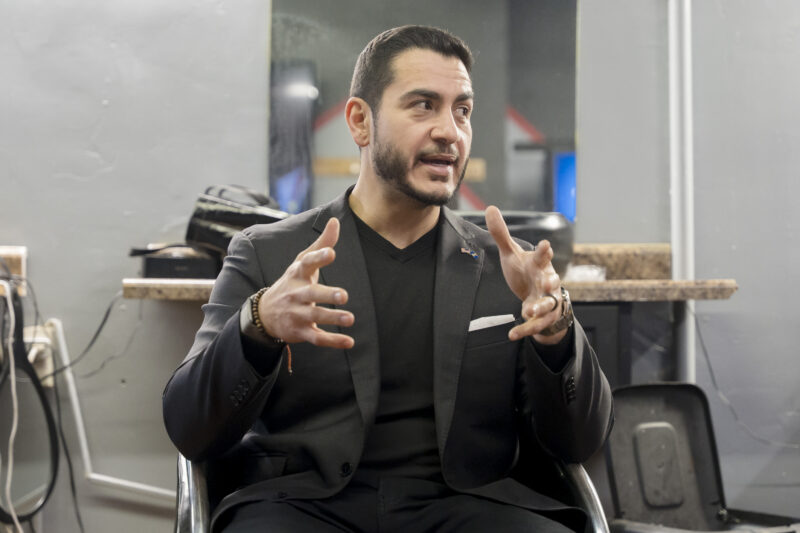
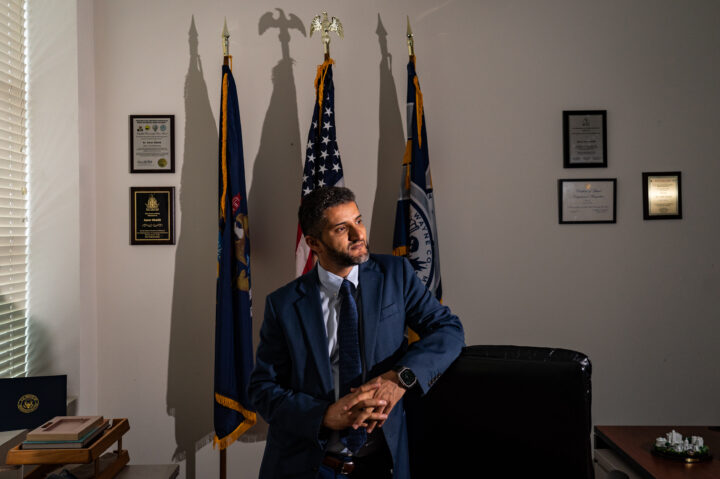
Hamtramck Mayor Amer Ghalib is photographed in his office at the City Hall in Hamtramck, Michigan, Sunday, September 10, 2023.
Good Wednesday morning.
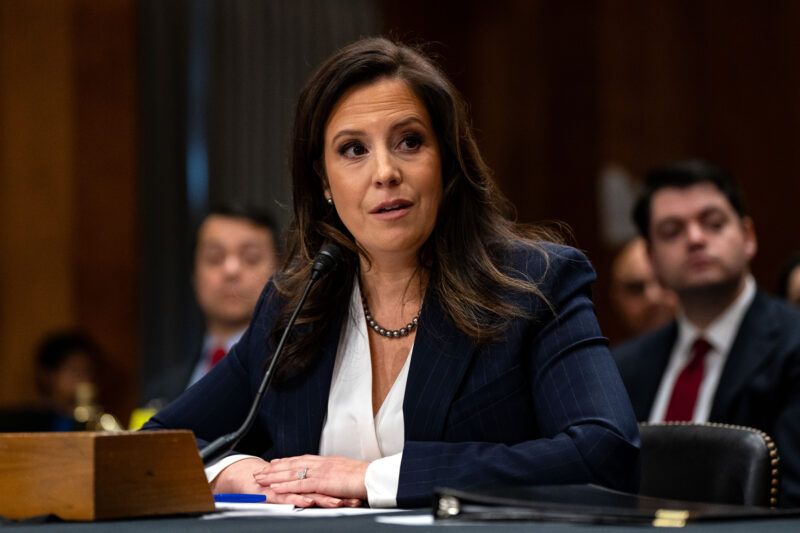
In today’s Daily Kickoff, we report on the resumption of the ceasefire between Israel and Hamas and talk to legislators in Washington about the repeated Hamas violations of the agreement. We report on the mounting challenges facing Amer Ghalib, the Trump administration’s embattled nominee to be ambassador to Kuwait, and interview Daniel Rosen, who was recently tapped as U.S. attorney in Minnesota. Also in today’s Daily Kickoff: Bill Ackman, Rep. Elise Stefanik and Itzhak Perlman.
Today’s Daily Kickoff was curated by Jewish Insider Executive Editor Melissa Weiss and Israel Editor Tamara Zieve. Have a tip? Email us here.
What We’re Watching
- The World Zionist Congress continues today in Jerusalem. We’re monitoring efforts by the center-left and center-right blocs to broker a coalition agreement that will determine control over national institutions. Voting on dozens of resolutions and amendments that was previously slated for Thursday — including one resolution regarding Haredi military enlistment — was moved to today in an effort to avoid planned protests outside Jerusalem’s convention center by members of the Haredi community.
- Tonight in Washington, the Jewish Community Relations Council of Greater Washington is holding its annual gala. This year’s gala will honor former Rep. David Trone (D-MD) and his wife, June; JCRC Vice President Behnam Dayanim; and Eva Davis, the co-chair of the Jewish Federation of Greater Washington’s Network Council.
- The Future Investment Initiative summit continues today in Riyadh, Saudi Arabia. More below.
- The two men convicted earlier this year for their roles in an Iran-backed assassination plot targeting Iranian dissident Masih Alinejad will be sentenced today in New York. Prosecutors are seeking 55-year sentences for the two men, who are believed to have ties to the Russian mafia.
What You Should Know
A QUICK WORD WITH JI’S EMILY JACOBS AND MATTHEW SHEA
The tenuous ceasefire agreement between Israel and Hamas that had threatened to collapse earlier this week following repeated Hamas violations, including the killing of an IDF soldier in Rafah, and a series of Israeli strikes that killed dozens of Palestinians in the Gaza Strip last night was restored on Wednesday morning.
The Israel Defense Forces announced that in accordance with a directive from political leaders, it had renewed enforcement of the ceasefire. The army said it had hit dozens of terror targets and struck over 30 terrorists holding command positions within terrorist organizations operating in Gaza.
Israel had protested to the White House over what it says are multiple violations of the deal by Hamas — including the terror group’s slow-walking of its return of the bodies of the 13 remaining hostages and its staging of the discovery of additional remains of a hostage whose body was repatriated by the IDF in December 2023. But Trump administration officials, who were presented with evidence of the staging, including drone footage, reportedly told aides to Israeli Prime Minister Benjamin Netanyahu that they didn’t view Hamas’ actions as a breach of the agreement.
But in comments to reporters on Air Force One heading to Seoul, South Korea, President Donald Trump backed the Israeli strikes. “They killed an Israeli soldier, so the Israelis hit back and they should hit back. When that happens, they should hit,” Trump said. “Hamas is a small thing, but they kill people. They grew up killing people, and I guess they don’t stop.”
The ceasefire’s temporary lapse did not surprise some on Capitol Hill. “You’re going to see a lot of this,” Sen. John Kennedy (R-LA) told Jewish Insider of the renewed skirmishes in Gaza. “I mean, the Hamas soldiers are not terribly civilized, and the fact that there’s a ceasefire is of no moment to many of them. You’re periodically going to see them continue to shoot at the Israeli soldiers, and when they do, the Israeli soldiers are going to shoot back and kill them.”
Sen. James Lankford (R-OK) said he felt it was “entirely appropriate” that Israel struck Hamas targets in order to protect Israeli forces. “If Hamas is attacking them, violating, obviously, the ceasefire and attacking IDF soldiers, Israel has been very clear: If you shoot us, we’re going to actually stop you,” the Oklahoma Republican said.
Democrats who spoke to JI on Tuesday were less critical of Hamas’ repeated violations and focused on Jerusalem’s actions. “My question is: Is he trying to undo the deal?” Sen. Tim Kaine (D-VA) asked of Netanyahu. “If he’s trying to undo the deal, then he’s got another problem, which is [that] they [the U.S.] want more nations in the Abraham Accords, and those nations have said we’re not coming in unless there is a path forward to Palestinian autonomy.”
Gaith al-Omari, a senior fellow at The Washington Institute for Near East Policy, predicted that the breakout of strikes was an isolated episode that would be “contained,” calling this week’s escalation “concerning but not surprising.” Ceasefires, al-Omari added, “take a while to solidify and stabilize, whether because of accidents or because the sides testing the limits of the ceasefire.”
Read more here for additional reactions from the Hill and insights from Middle East experts.
UNFINISHED BUSINESS
Lindsey Graham says Hamas unlikely to disarm without Israeli confrontation
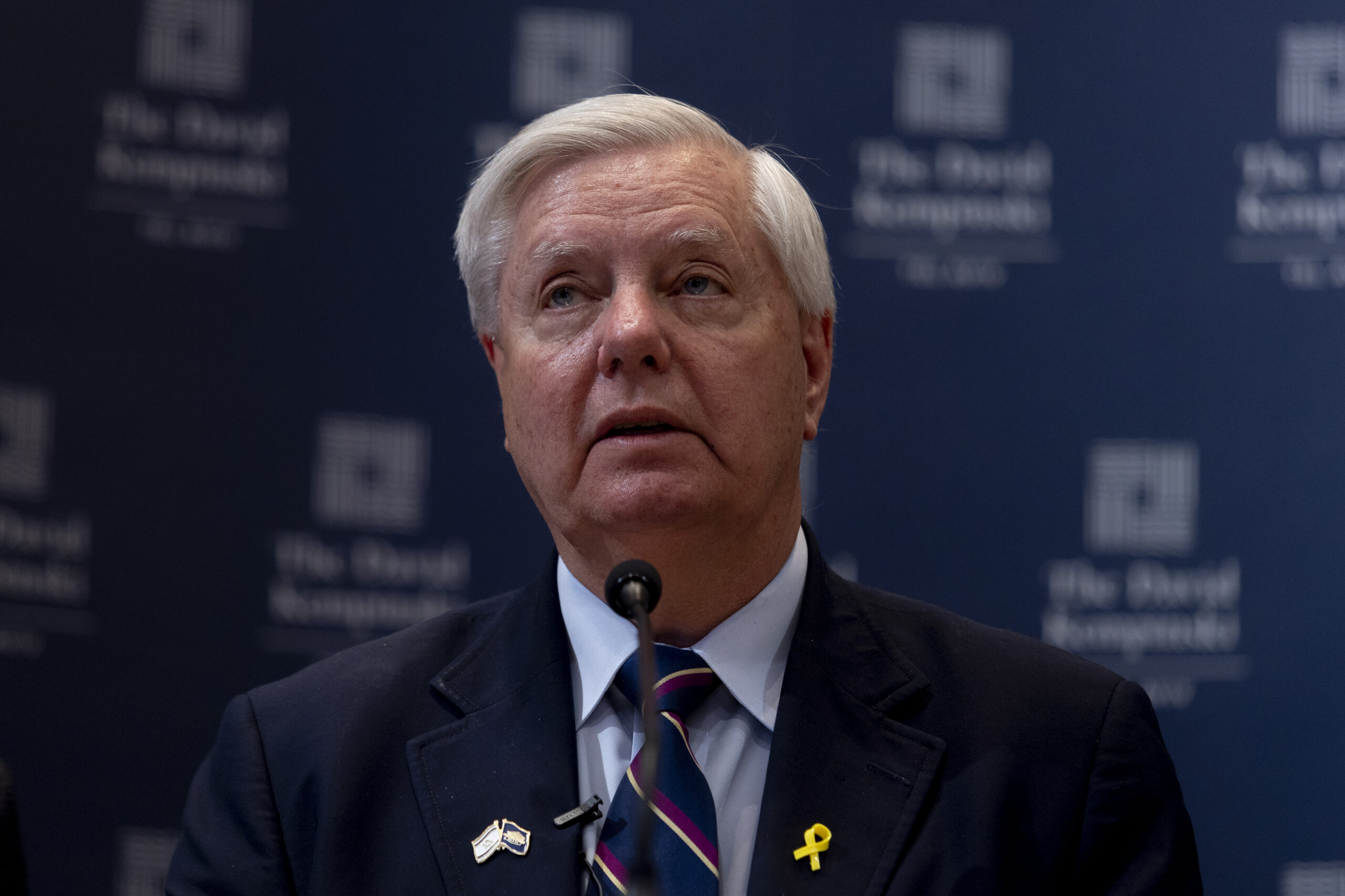
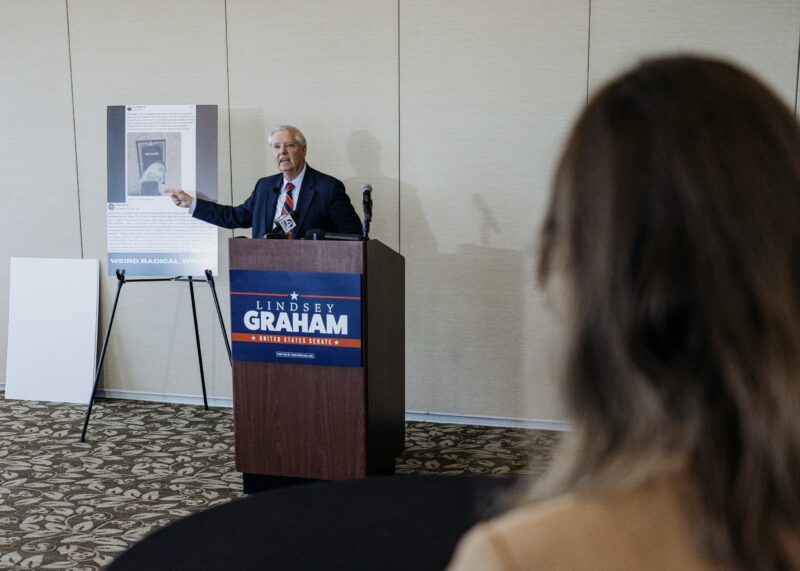
Sen. Lindsey Graham (R-SC) expressed skepticism on Monday that Hamas will comply with disarmament requirements in its U.S.-backed ceasefire agreement with Israel, saying that finishing off the terrorist group may require further confrontation from Israel, Jewish Insider’s Matthew Shea reports. “To expect Hamas to disarm without the threat of confrontation is unrealistic,” Graham wrote in a post on X. “Therefore, it is my growing belief that Hamas is not going to disarm but instead is in the process of consolidating power in Gaza by attacking those who oppose them.”
Graham’s take: Few Republican lawmakers have thus far questioned if President Donald Trump’s 20-point peace plan — which has brought all the living hostages back to Israel — will be sufficient to take Hamas out of power in Gaza. “Under the current approach, every day that goes by allows Hamas to get stronger and more lethal,” said Graham. “The world needs to understand that Israel cannot tolerate this outcome. If Israel feels it needs to reengage in Gaza to finish Hamas off, they have my full support.”
POSITION IN PERIl
Trump’s controversial Kuwait ambassador nominee faces mounting GOP opposition
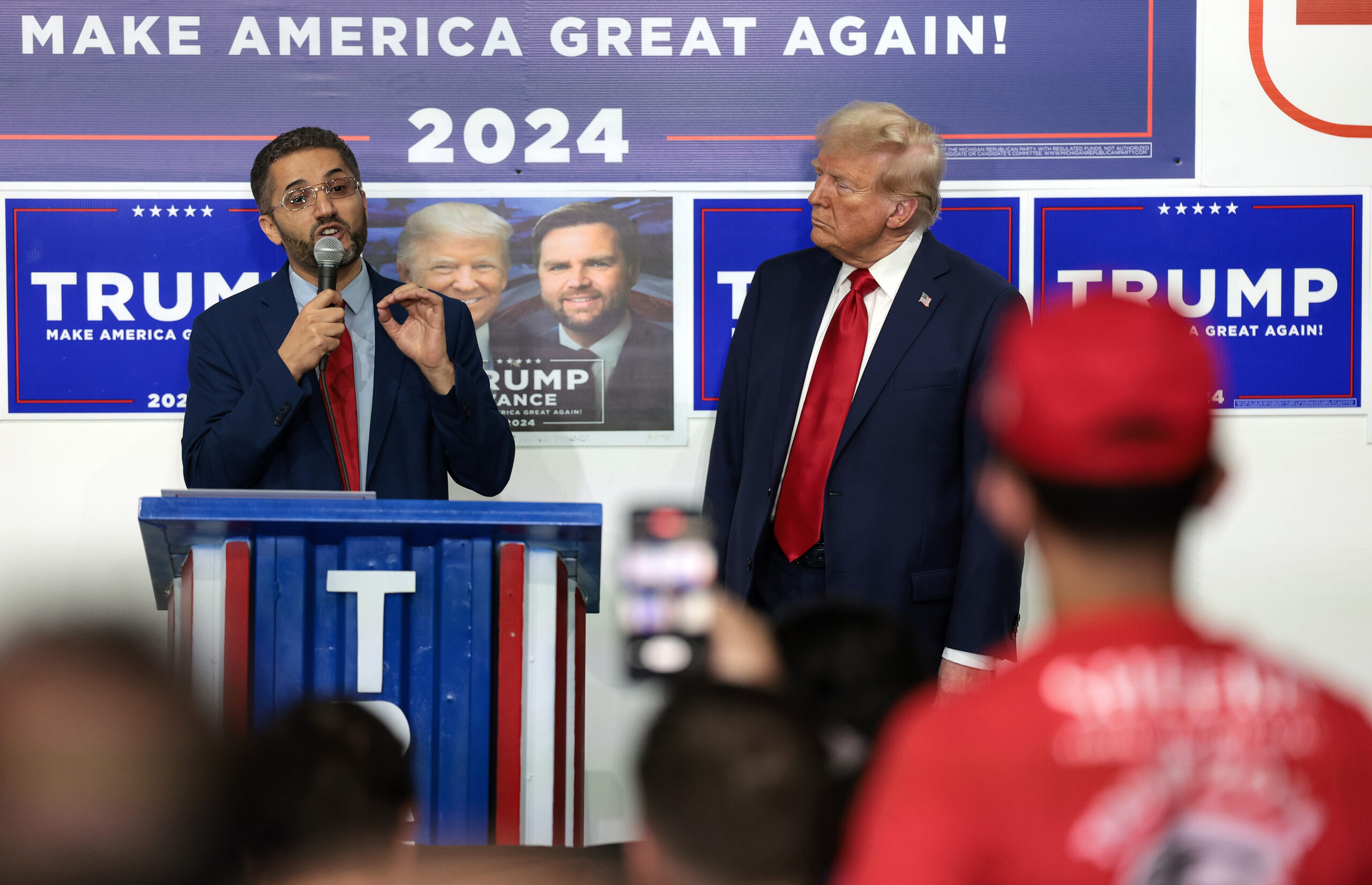
The nomination of Amer Ghalib, the mayor of Hamtramck, Mich., to be U.S. ambassador to Kuwait is facing what appear to be insurmountable odds as opposition to his confirmation grows among Senate Republicans. No Republican or Democratic senators have come to Ghalib’s defense after his performance at his confirmation hearing before the Senate Foreign Relations Committee last week, when he faced a bipartisan grilling over his long record of promoting antisemitic ideas and his embrace of anti-Israel positions as an elected official, Jewish Insider’s Emily Jacobs reports.
Expressing opposition: Senators on both sides of the aisle had privately expressed reservations about Ghalib’s nomination prior to the hearing, but his attempts to evade responsibility for his record while under oath prompted several Republicans on the committee to go public. Sen. Ted Cruz (R-TX) announced at the end of Ghalib’s hearing last Thursday that he would not be able to support moving his nomination out of committee to the Senate floor. Sens. John Curtis (R-UT), John Cornyn (R-TX) and Dave McCormick (R-PA) have since followed suit. Others on the panel, including Sen. Pete Ricketts (R-NE), have said they plan to raise their concerns about Ghalib with the committee chairman, Sen. Jim Risch (R-ID), and the White House.
TIKTOK TALK
Jewish leaders, tech experts hopeful, but realistic about TikTok deal’s impact on online antisemitism

As a deal to split off TikTok’s U.S. business is set to be finalized between President Donald Trump and Chinese President Xi Jinping on Thursday, antisemitism experts were divided over how likely the agreement will be in transforming the social media platform’s approach when it comes to combating the spread of antisemitism in its algorithm. Among the expected new owners of TikTok is technology company Oracle, which has Jewish ownership and has consistently expressed support for Israel. “We are optimistic about this moment,” Eric Fingerhut, CEO of the Jewish Federations of North America, said while moderating a panel discussion on Tuesday about the deal, hosted at the organization’s headquarters in Washington, Jewish Insider’s Haley Cohen reports.
Weighing in: The panel featured Sarah O’Quinn, U.S. director of public affairs at the Center for Countering Digital Hate; Daniel Kelley, director of the Anti-Defamation League’s Center for Technology and Society; and Yair Rosenberg, a staff writer at The Atlantic. “When people ask, ‘Why would the Jewish Federations of North America be involved in an issue like the TikTok bill?’ our answer was simple,” said Fingerhut. “The No. 1 issue we’re hearing from our communities is the responsibility to address the rise of antisemitism, particularly that’s being directed at our young people, and there’s no way you can do that without tackling the problem on social media, and TikTok was the largest and worst offender.” Rosenberg and Kelley remained skeptical about the deal’s ability to mitigate online hate — stressing the virality algorithms on TikTok and other platforms have demonstrated when showing antisemitic or anti-Israel content.
JUSTICE, JUSTICE HE PURSUES
New U.S. Attorney in Minnesota Daniel Rosen sees history of antisemitism repeating itself
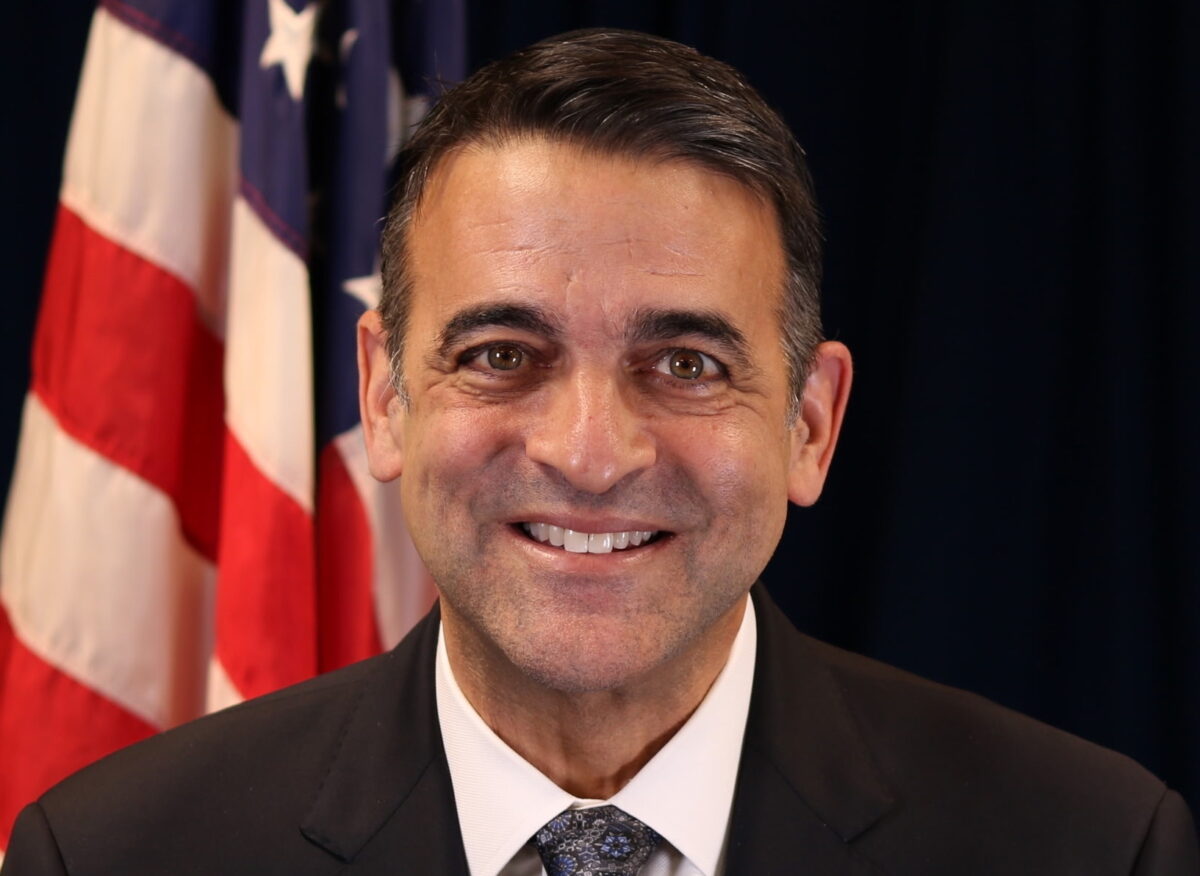
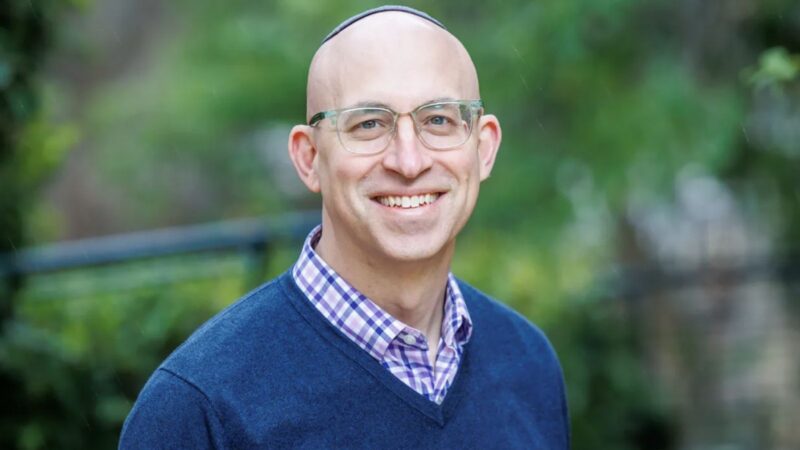
Daniel Rosen earned a unique distinction when he was confirmed by the U.S. Senate early this month to be Minnesota’s top federal prosecutor. The 60-year-old lawyer and Orthodox Jewish community activist is one of the few Orthodox Jews to serve as U.S. attorney. And he is almost certainly the only chief federal law enforcement officer in the county who regularly studies the Talmud, a text, he says, that shares a “phenomenal” range of common principles with the American legal tradition. “The more you study the Talmud, the more you see how rooted in our [Jewish] traditions American law, and the British law from which it emerged, really is,” Rosen explained in an interview on Tuesday with Jewish Insider’s Matthew Kassel.
Tackling antisemitism: As he acclimates to his new role, Rosen, who had previously worked in private practice, said that one of his “primary motivations” for seeking the position was the “rapid escalation of violent antisemitism” in the United States, calling the “prosecution of violent hate crimes” a top priority for his office. “Jewish history tells us that Jews fare poorly in societies that turn polarized,” he said, arguing that Jewish Americans, in particular, “have a profound and immediate interest in reversing the direction of the violent hatred that’s being expressed in many directions.”
SAUDI SUMMIT
Ackman sees Gaza truce easing Saudi path to Abraham Accords

Milling among the investors crowding the gilded hallways of the Future Investment Initiative conference in Riyadh, Saudi Arabia, hedge fund manager Bill Ackman expressed confidence that the Gulf nation is moving closer to establishing formal links with Israel. Ackman, founder of New York-based Pershing Square Capital Management, told The Circuit’s Jonathan H. Ferziger on Tuesday that he sees the current ceasefire in Gaza easing concerns in the Middle East about joining the 2020 Abraham Accords that normalized Israel’s ties with the UAE, Bahrain and Morocco.
High expectations: “I think it’ll be in the relative short term,” Ackman said in an interview at the King Abdulaziz International Conference Center, where some 9,000 registrants are attending the conference. “I think there’s going to be a major peace dividend coming out of recent positive developments in the resolution of the Israeli-Gaza situation.” Ackman, 59, whose personal fortune is estimated by Bloomberg at $8.4 billion, bought a nearly 5% stake in the Tel Aviv Stock Exchange last year with his wife, Neri Oxman. He said he has also invested in Israeli venture capital funds for the last seven years or so.
Read the full interview here and sign up for The Daily Circuit newsletter here.
BUILDING BRIDGES
Asian Jewish students celebrate intersecting identities, gather for landmark Shabbaton at Yale

The table setting at the inaugural Asian Jewish Shabbaton at Yale University Hillel last Friday night — challah and chopsticks — straddled more than just culinary worlds. It also served as a tangible bridge linking the intersecting identities of the 450 students from 15 universities in attendance. The two-day inaugural Asian Jewish Shabbaton, organized by Yale’s Asian Jewish Union, provided students a place to connect over the challenges around balancing both Asian and Jewish identities — and the associated stereotypes. It also gave participants a chance to explore the natural allyship the two groups share, with an emphasis on their mutual values — such as community and education, Jewish Insider’s Haley Cohen reports for eJewishPhilanthropy.
Coming together: “Before this weekend I had met a handful of Asian Jews my entire life,” Aasia Gabbour, a senior at New York University studying global public health and nutrition and food studies, told eJP. “This feels special because it’s something I never got to experience. I’ve always been able to find my community within the Jewish community, but [Asian Jews] are such a niche group that getting the chance to learn there are a lot of us is a unique experience. The groups are natural allies and I especially saw that this weekend,” continued Gabbour. “We all naturally gravitate towards each other. We got to know each other on a deeper level with semi-facilitated discussions.” Those discussions addressed issues relevant to both communities, including a surge in antisemitism and anti-Asian hate seen in recent years. Students asked each other questions, including, “How do you balance your Asian identity with your Jewish identity? What was your experience like growing up? Did you deal with stereotypes?”
Read the full story here and sign up for eJewishPhilanthropy’s Your Daily Phil newsletter here.
Worthy Reads
Eye on Iraq: The Atlantic’s Robert Worth looks at how Iraq is managing its relationships with both the U.S. and Iran as Iranian-backed companies and groups gain footholds in the once war-torn country. “Iran has taken a beating from both the United States and Israel over the past year, and its vaunted ‘Axis of Resistance’ lies in ruins. Iraq finds itself in the uncomfortable position of being the Islamic Republic’s last major ally in the region and an economic lifeline for its cash-starved regime. President Donald Trump has said nothing about this relationship, even as he’s continued to try to choke off Iran’s economy with sanctions. … Recent American presidents have reluctantly accepted the limits of Iraq’s political system, pressing Iraqi leaders to distance themselves from Tehran but avoiding the kinds of measures that would tilt the country back into open conflict. Trump, who is not known for his patience with diplomatic compromise, may take a different approach.” [TheAtlantic]
Ink Stain: The New York Times’ Tressie McMillan Cottom weighs in on the willingness of some Democratic officials’ to overlook concerns about Maine Senate candidate Graham Platner’s tattoo of a Nazi symbol. “I don’t particularly care about the symbols people use to signal their membership in a group. Maybe you do need a terrifying tattoo to be a real Marine. And maybe sometimes that terrifying tattoo might resemble Nazi iconography. If you are willing to accept that from a distance, as many Democrats say they are, a person may not be able to tell the real symbol of hate from its doppelgänger, that is for you to live with. But, I do care about the political trade-offs we will ask people to make in the name of pragmatism. If the Democratic future requires us to exchange our discomfort with casual Nazism to advance a political agenda, I am not interested.” [NYTimes]
Erdogan’s Ambitions: In Foreign Policy, the Foundation for Defense of Democracies’ Sinan Ciddi and William Doran explore Turkey’s role as a major arms supplier across Africa. “Alongside its diplomatic surge, Turkey has emerged as a major arms supplier. Turkish drone and small-arms exports have surged, while its military footprint — both through the Turkish Armed Forces and Turkish private military companies — has expanded rapidly. These arms exports exacerbate instability in African states facing civil wars, routinely violating international sanctions and ending up in the hands of malicious regional actors. [Turkish President Recep Tayyip] Erdogan views Africa as an arena where Turkey can meet regional security demands while enhancing its diplomatic standing, military prestige, and market access. Arms sales form the backbone of this ambition.” [ForeignPolicy]
Word on the Street
Rep. Claudia Tenney (R-NY) will introduce a resolution this week affirming Israel’s sovereignty over the Temple Mount, a sacred site for Jews, Christians and Muslims, and demanding equal freedom of worship for all, Jewish Insider’s Emily Jacobs has learned…
Rep. Elise Stefanik (R-NY), who is mulling a bid for governor of New York, is releasing a book that does a deep dive into what she describes as “far-left indoctrination, division, and moral rot” in higher education; Poisoned Ivies, which was born out of Stefanik’s now-viral grilling of university presidents during a December 2023 Capitol Hill hearing, will be published in April 2026…
Tarek Bazrouk, an anti-Israel activist who attacked Jews at Israel demonstrations in New York City on three separate occasions over the last two years, was sentenced to 17 months in prison…
Authorities in Alabama arrested a man who had issued threats against Jewish institutions in the state; officials said Jeremy Wayne Shoemaker had been stockpiling ammunition, body armor and “other items related to the plans of violence”…
Several members of the Muslim Student Association at a Fairfax County, Va., high school were suspended following an outcry over the group’s posting of videos of students imitating hostage-taking…
Violinist Itzhak Perlman will appear as the featured guest on the next episode of The Food Network’s “Be My Guest with Ina Garten,” airing this weekend…
The New York Times reviews Barak Goodman’s new two-part documentary “Kissinger,” about former Secretary of State Henry Kissinger’s life and career, which debuted this week on PBS…
Ben & Jerry’s co-founder Ben Cohen said that the ice cream company’s parent Unilever prevented the ice cream maker from creating a “flavor for Palestine” and that he would make his own watermelon-flavored ice cream instead…
British Chief Rabbi Sir Ephraim Mirvis spoke to Pope Leo XIV on Tuesday outside of the Vatican as the Holy See marked the 60th anniversary of the Nostra Aetate that reshaped Catholic-Jewish relations…
The children of a Jewish-German couple that fled Nazi Germany in 1936 and was unable to recoup the proceeds of the sale of their art collection, which was forfeited to the Nazis, are suing the Metropolitan Museum of Art and a Greek museum over Vincent Van Gogh’s 1889 “Olive Picking,” which had belonged to their parents and is now on display at the Goulandris Museum of Contemporary Art in Athens…
More than 150 Hamas terrorists who were recently released as part of the Israel-Hamas ceasefire were reportedly moved from the luxury resort in Cairo in which they were staying, following a report earlier this week that the released prisoners were being housed in a hotel alongside tourists…
Writer Barbara Gips, who crafted the taglines for dozens of movies including “Alien” and “Fatal Attraction,” died at 89…
Pic of the Day

Israeli President Isaac Herzog addressed the 39th World Zionist Congress, at the International Conference Center in Jerusalem, last night.
Birthdays
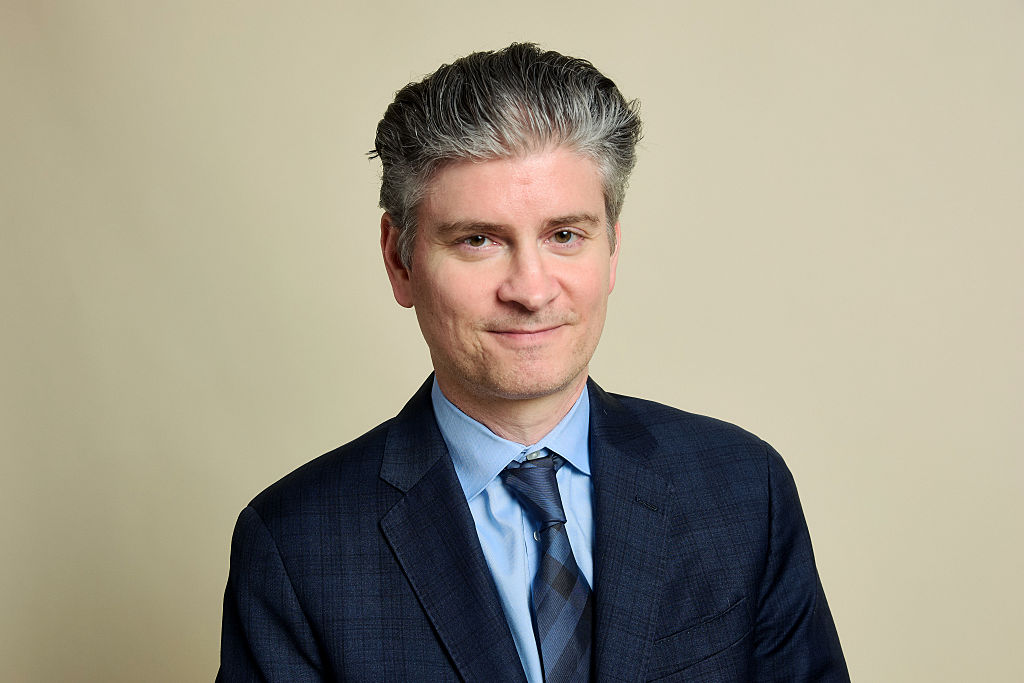
Emmy Award-winning television producer, writer and actor, best known for NBC’s “The Office” and “Parks and Recreation,” Michael Schur turns 50…
Haifa, Israel-born director and screenwriter of animated and live-action films including “The Lord of the Rings,” Ralph Bakshi turns 87… Dean emeritus of the Yale School of Management, he has served in the Nixon, Ford, Carter and Clinton administrations, Jeffrey E. Garten turns 79… Academy Award-winning actor, who played Yoni Netanyahu in the 1976 film “Victory at Entebbe,” Richard Dreyfuss turns 78… Retired CEO of the Center for the National Interest and publisher of its namesake foreign policy magazine, The National Interest, Dimitri Simes turns 78… Former director of the social justice organizing program at the Reconstructionist Rabbinical College, Mordechai Eliyahu Liebling turns 77… Pulitzer Prize-winning author and editor of The New Yorker since 1998, David Remnick turns 67… Bernard Greenberg… Rabbi of Temple Beth Shalom in Phoenix, Dana Evan Kaplan turns 65… Author, satirist and public speaker, Evan Sayet turns 65… Classical pianist, Susan Merdinger turns 63… Sports agent who has negotiated over $10 billion of player contracts, Drew Rosenhaus turns 59… Actor who appeared in 612 episodes of daytime soap opera “As the World Turns,” his mother, Rina Plotnik, served in the IDF, Grayson McCouch turns 57… Screenwriter and film director based in Halifax, Nova Scotia, Andrea Dorfman turns 57… Mathematician, cryptologist and computer scientist, Daniel J. Bernstein turns 54… Israeli collaborative artist, designer and photographer, Moshe Hacmon turns 48… VP for strategic communications and business development at Anchorage-based Northern Compass Group, Rachel Barinbaum… Jockey who has won more than 1,740 races with earnings of more than $67.6 million, David Cohen turns 41… Marketing director for Fox Lifestyle Hospitality Group, Leigh Shirvan Helfenbein… Senior product manager at Audible, Samantha Zeldin… Former national spokesperson for the Harris Walz campaign, now an AVP for public affairs at the NYC Economic Development Corporation, Seth Schuster… Ph.D. candidate in Russian and East European history at Harvard, Leora Eisenberg… Booking producer at NBC Universal’s “The Beat with Ari Melber,” David Siegel…
The Brooklynites headed to the Blue Ridge Mountains
Carina Johansen/Bloomberg via Getty Images
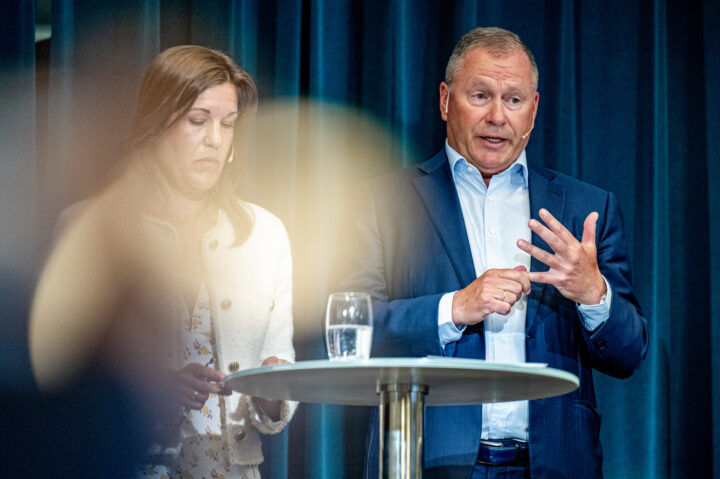
Marthe Skaar, chief communications and external relations officer for Norges Bank Investment Management, left, and Nicolai Tangen, chief executive officer of Norges Bank Investment Management, during the presentation of the sovereign wealth fund's half-year earnings at the Arendalsuka conference in Arendal, Norway, on Tuesday, Aug. 12, 2025.
Good Tuesday morning.
In today’s Daily Kickoff, we cover concerns from a bipartisan group of legislators that the Trump administration is withholding information about Nonprofit Security Grant Program allocations, and report on the decision by Norway’s sovereign wealth fund to divest from nearly a dozen Israeli companies even as it continues to court top American pro-Israel executives. We cover the University of Washington’s pursuit of criminal charges against anti-Israel student vandals on the campus, and spotlight an initiative to create a new thriving Orthodox Jewish community in North Carolina’s Blue Ridge Mountains. Also in today’s Daily Kickoff: Eric Goldstein, Larry Ellison and Tzvika Mor.
What We’re Watching
- A delegation of freshman House Democrats are in Israel this week with the AIPAC-affiliated American Israel Education Foundation while the House is in August recess. Read more on the trip from Jewish Insider’s Marc Rod here.
- Iranian senior security official Ali Larijani is in Lebanon today as part of his first trip abroad since being named head of Iran’s Supreme National Security Council earlier this month. Larijani traveled to Beirut after a stop in Iraq. He’s spending three days in Lebanon as the government in Beirut pushes for the disarmament of Iranian proxy Hezbollah.
What You Should Know
A QUICK WORD WITH JI’S GABBY DEUTCH
Seven months into the second Trump term, it’s clear that many of the country’s top universities are scared of President Donald Trump.
The schools rely on federal funding to power much of the research that has made them into academic powerhouses, so if that funding dries up — a punishment, the Trump administration says, for universities’ failure to deal with antisemitism — their work will be imperiled.
As a result, some universities have taken proactive steps to address antisemitism in the hopes of fending off the ire of the Trump administration. But the White House does not view these actions as good-faith gestures. Instead, the administration is increasingly taking advantage of schools’ acknowledgments of past failings as an admission of guilt — and it is responding in a correspondingly punitive way.
The new chancellor of UCLA took office this year with the stated mission of fighting antisemitism and improving the campus climate following the disastrous 2023-2024 school year that saw violent clashes on the campus. Last month, the university agreed to pay $6 million to settle a lawsuit filed by Jewish students and faculty members who alleged that UCLA permitted antisemitic conduct during the spring 2024 anti-Israel encampment. The chair of the University of California Board of Regents said the settlement was an important step toward fostering “a safe, secure and inclusive environment.”
Yet on the same day UCLA announced the settlement, the Justice Department found UCLA to be in violation of federal civil rights law, stating the school “failed to adequately respond to complaints of severe, pervasive, and objectively offensive harassment and abuse” by Jewish and Israeli students after the Oct. 7, 2023, Hamas terror attacks. And last week, the Trump administration reportedly demanded that UCLA pay an eye-popping $1 billion to settle federal investigations into its handling of antisemitism, race-based admissions policies and transgender issues.
Dividends and Divisions
Norway’s sovereign wealth fund cuts Israeli holdings, while courting top American pro-Israel execs
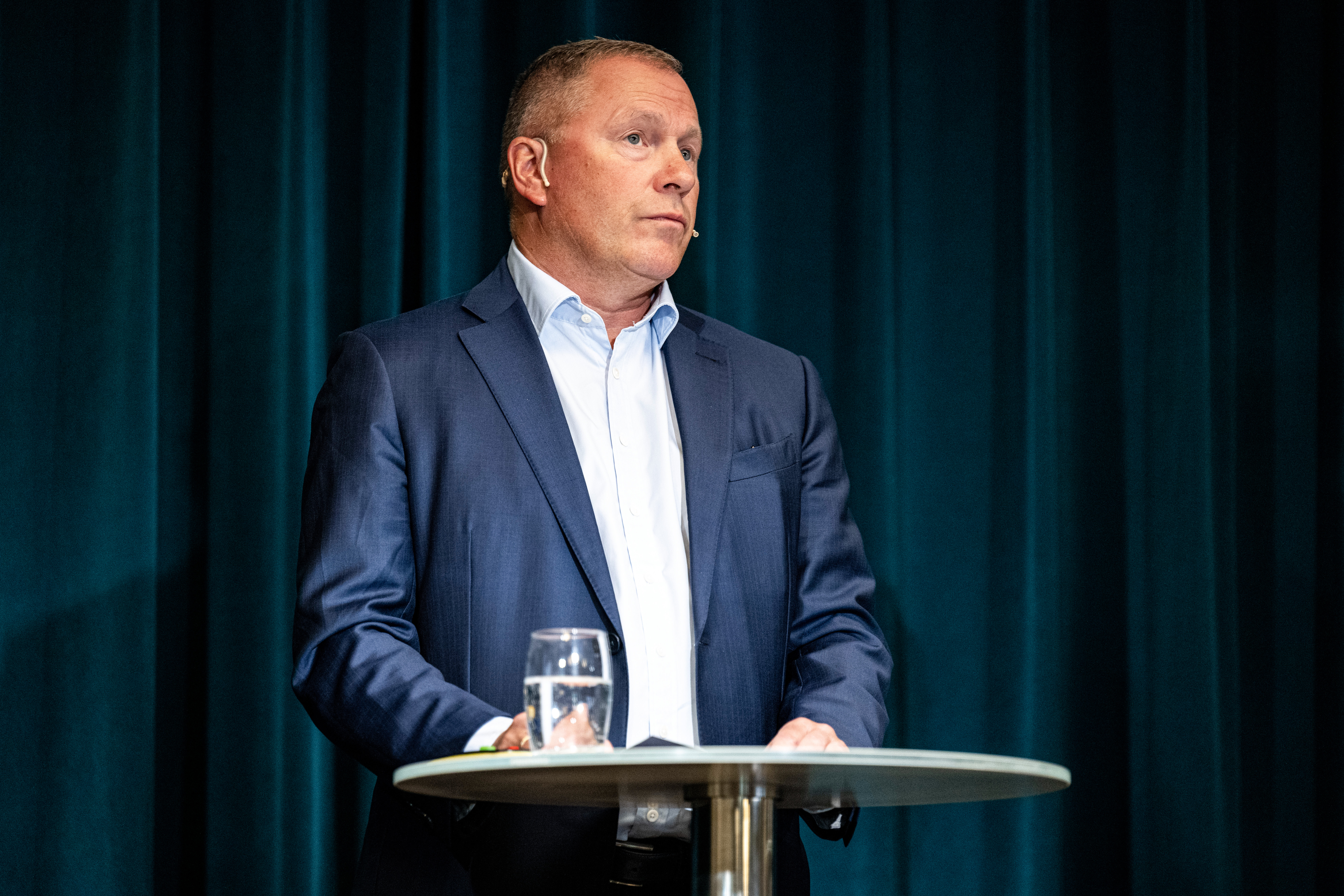
Norway’s sovereign wealth fund said on Monday that it was divesting from 11 Israeli companies and had terminated its contracts with external fund managers in Israel over concerns regarding the humanitarian crisis in Gaza and the West Bank, Jewish Insider’s Matthew Kassel reports.
Background: The decision follows a review initiated last week by Norway’s finance minister amid media reports that the fund had in recent years increased its holdings in an Israeli jet engine company that provides services to the Israeli military. Nicolai Tangen, CEO of Norges Bank Investment Management, which manages the Norwegian Sovereign Wealth Fund, has worked to build relationships with American business leaders who are supportive of Israel whom he has hosted on his podcast in recent years, including Michael Dell of Dell Technologies and Jonathan Gray of Blackstone — who among others have prominently engaged in philanthropic efforts to support Israel following the Oct. 7 attacks.
Blue Ridge Bayit
Mountain minyan: An unorthodox experiment in North Carolina’s Blue Ridge Mountains

Yudi Gross is the CEO of Shefa Living, a company that is developing a 350-home gated community catering toward religious Jews. He knows his pitch is somewhat unorthodox: Move to the mountains. In North Carolina. To a tiny town with no synagogue and few other Jews for miles. But what he’s pitching is a radical vision of what observant Judaism could look like if not bound to the geographical constraints that have kept Orthodox communities from rural living. Jewish Insider’s Gabby Deutch reports on the effort to build a brand-new Orthodox community from the ground up, in a Bible Belt town 90 miles from the nearest airport.
No limits: Glossy marketing materials on Shefa Living’s website call it a “new Torah-centric community in the Blue Ridge Mountains.” Buyers have put down deposits on 60 homes, Gross said. Starting in September, they’ll choose their lots, and work with developers on selecting upgrades and finishes in the new homes. More than 150 people have visited North Carolina to tour the site. “This is not just 25-30 people who want to have a nice place in the summer. This is a dream for so many people,” Gross said. “I hope this transforms the way Orthodox families can choose to live geographically.”
campus beat
University of Washington pursues criminal charges for anti-Israel student vandals

More than 30 anti-Israel demonstrators who occupied a University of Washington engineering building at the end of the spring semester — causing more than $1 million worth of damage — are now being investigated by the university and local attorney’s office for potential criminal charges, Jewish Insider’s Haley Cohen has learned.
Terror ties: The investigation comes after a recent report put a spotlight on a link between the radical student group that led the takeover and the U.S. designated terrorist group Popular Front for the Liberation of Palestine. “We have taken this incident very seriously, including having issued emergency suspensions for all students who were arrested in the building and working with the King County Prosecuting Attorney’s Office on potential criminal charges,” a University of Washington spokesperson told JI on Wednesday, referring to the demonstration in May in which masked demonstrators blocked entrances and exits to the building and ignited fires in two dumpsters on a street outside.
Massachusetts move: Jewish leaders in Massachusetts praised a new report and set of recommendations by a state body that called for K-12 schools to implement the International Holocaust Remembrance Alliance’s working definition of antisemitism.
on the hilL
House lawmakers say administration is withholding information about security grant allocations

A bipartisan group of more than 70 House lawmakers pressed the Trump administration last week about the supplemental round of Nonprofit Security Grant Program funding awarded to more than 500 Jewish groups in June, saying that the administration is withholding information from Congress about which institutions are receiving funding, Jewish Insider’s Marc Rod reports. Some nonprofits that applied for grants have not, themselves, been told whether their applications have been accepted either, two sources familiar with the situation told JI, complicating their efforts to submit complete and accurate applications for 2025 funding.
State of play: The lawmakers said they have “sincere concern” that they have not been provided with the list of institutions receiving funding under the $94 million funding round, as has been standard practice — with the administration allegedly citing an unspecified “security concern.” They added that the absence of that information could impact institutions’ ability to apply for funding from the 2025 NSGP allocation. A Senate aide told JI that at least some lawmakers in the upper chamber have similarly been left in the dark about the grant awards, as have some of the applicant institutions themselves.
DIVERGENT VOICE
Hostage families protest Gaza offensive — but this father says it doesn’t go far enough

The day after Israel’s Security Cabinet voted to seize control of Gaza City, the Hostages Families Forum organized a major protest in Tel Aviv against the decision, warning it would put their loved ones’ lives in danger. But Tzvika Mor, father of hostage Eitan Mor, has been speaking out against the Cabinet decision for a different reason — he thinks the IDF should be pushing even more aggressively to take over the rest of Gaza. Since his son was kidnapped from the Nova festival on Oct. 7, 2023, Mor has not wavered from his position that defeating Hamas must be Israel’s top priority in the war in Gaza. As chairman of the Tikvah Forum, a hawkish minority group of hostage families, Mor and several other hostages’ relatives argue that only sustained military pressure will bring all of the hostages home. Mor spoke out against the Israeli Security Cabinet’s recent decision in an interview with Jewish Insider’s Lahav Harkov on Sunday.
Mor’s mindset: “The question isn’t what they’re going to do, but what is the goal. If the goal is to lead Hamas to negotiate, it will fail, just like in Gideon’s Chariots, which took five months and didn’t bring back the hostages and didn’t destroy Hamas,” Mor said, referring to the IDF operation that began earlier this year. “The goal cannot be to bring [Hamas] to talks; it must be to destroy them.” Hamas, he said, is not motivated to return the hostages, because they have the food, fuel and water that they need to survive, but if they feared for their survival, the situation would be different.
Worthy Reads
A Performer’s Plea: In The Atlantic, singer Bono makes a plea for a ceasefire between Israel and Hamas in which he criticizes the Oct. 7, 2023, Hamas attacks as well as the actions of Israeli Prime Minister Benjamin Netanyahu’s government. “Yahya Sinwar didn’t mind if he lost the battle or even the war if he could destroy Israel as both a moral and an economic force. Over the months that followed, as Israel’s revenge for the Hamas attack appeared more and more disproportionate and disinterested in the equally innocent civilian lives in Gaza, I felt as nauseous as anyone but reminded myself that Hamas had deliberately positioned itself under civilian targets, having tunneled its way from school to mosque to hospital. When did a just war to defend the country turn into an unjust land grab? I hoped Israel would return to reason. I was making excuses for a people seared and shaped by the experience of Holocaust, who understood the threat of extermination not simply as a fear but as a fact. I reread Hamas’s charter of 1988; it’s an evil read. (Article Seven!)” [TheAtlantic]
Addressing Aid: In The Wall Street Journal, Hebrew University law professor Netta Barak-Corren calls on the U.S. and other global aid donors to commit to condition future humanitarian assistance on recipient countries hitting established benchmarks meant to address aid diversion. “Against the immediate risk of human suffering, donors must consider that allowing aid diversion could extend that risk for years. A cross-country analysis of 621 leaders in 123 countries from 1960 to 1999 showed that large, unconditional aid inflows help autocrats survive. World Bank data show that unconditional aid correlates with higher corruption and weaker rule of law. Nothing obligates donors to bankroll the fighters causing the suffering. Setting conditions on aid to prevent diversion aligns humanitarian spending with humanitarian intent.” [WSJ]
School Strategist: The New York Times’ Michael Bender spotlights May Mailman, who as the Trump administration’s senior adviser for special projects is “the most important, least-known person behind the administration’s relentless pursuit” of the country’s top universities. “She is credited as an animating force behind a strategy that has intimidated independent institutions and undercut years of medical and scientific research. … ‘There are a lot of good ideas floating around this building, but somebody has to capture those ideas, make sure that the right people are involved and that there is a process to put them into action,’ Ms. Mailman said in a recent interview at the White House. ‘So I’m the catcher of floating ideas.’” [NYTimes]
Word on the Street
Sen. Chris Van Hollen (D-MD), one of the most strident critics of the Israeli government in the Senate, is set to deliver the keynote speech next month at an Iowa Democratic Party fundraiser that’s a frequent stop for high-profile Democrats and presidential hopefuls; should Van Hollen make a presidential bid in 2028, such a campaign would give him a larger platform for his views, Jewish Insider’s Marc Rod reports…
President Donald Trump told Axios that Hamas “can’t stay” in Gaza in the long term, but stopped short of backing Israel’s plans to take over portions of the enclave…
Sen. Ted Cruz (R-TX), responding to Tucker Carlson’s criticism of himself and U.S. Ambassador to Israel Mike Huckabee over their positions on Israel, said that the former Fox News host “now routinely attacks Trump, shills for Iran & doesn’t bother to hide his all-consuming hatred for Israel”…
xAI’s Grok chatbot posted that it was temporarily suspended after accusing Israel of genocide, weeks after the feature came under fire for a series of antisemitic and violent postings…
Virginia state Del. Sam Rasoul dismissed recent concerns over his social media posts that referred to Zionism as “evil” as being part of “silly season” politics…
City & State NY put out its annual Manhattan Power 100 list; Manhattan Borough President Mark Levine tops the list, which also includes NYPD Commissioner Jessica Tisch, Reps. Jerry Nadler (D-NY) and Dan Goldman (D-NY), ADL CEO Jonathan Greenblatt, Sid Davidoff, Steven Rubenstein, James Tisch and Merryl Tisch, Brad Tusk, Nancy Cantor, Seth Pinsky, Eva Moskowitz and Columbia University President Claire Shipman…
The Israeli-American Council said its Los Angeles headquarters were vandalized with swastikas and other Nazi symbols over the weekend…
eJewishPhilanthropy’s Judah Ari Gross interviews IsraAid CEO Yotam Polizer about the humanitarian group’s previously under-the-radar work to assist in Gaza aid distribution efforts…
UJA-Federation of New York pledged $1 million to IsraAid’s Gaza effort; UJA CEO Eric Goldstein said, “We must hold tight to what has always anchored the Jewish people: the belief that all human life is sacred”…
The New York Times looks at how Oracle cofounder Larry Ellison — the second richest person in the world — is working to create a self-funded, profitable research institute to focus on his philanthropist interest areas, including climate change and global health…
Authorities in Montreal arrested a man in connection with a weekend attack on an Orthodox Jewish man in the city’s Villeray–Saint-Michel–Parc-Extension neighborhood…
The New York Times reviews Giaime Alonge’s novel The Feeling of Iron, about two Holocaust survivors who track down their Nazi tormentor decades after the Holocaust…
Australian Prime Minister Anthony Albanese said that Israeli Prime Minister Benjamin Netanyahu was “in denial about the consequences that are occurring” as a result of the humanitarian situation in the enclave; the two spoke on Thursday, when the Australian leader informed Netanyahu of Canberra’s intention to unilaterally recognize a Palestinian state…
Israeli Strategic Affairs Minister Ron Dermer is reportedly considering resigning from the Israeli government in the coming months…
Bloomberg looks at the challenge facing Lebanon’s new government and its president, Joseph Aoun, as Beirut faces American and Gulf pressure to force Hezbollah to disarm, while the Iran-backed terror group refuses to acquiesce to the government’s effort…
Pic of the Day
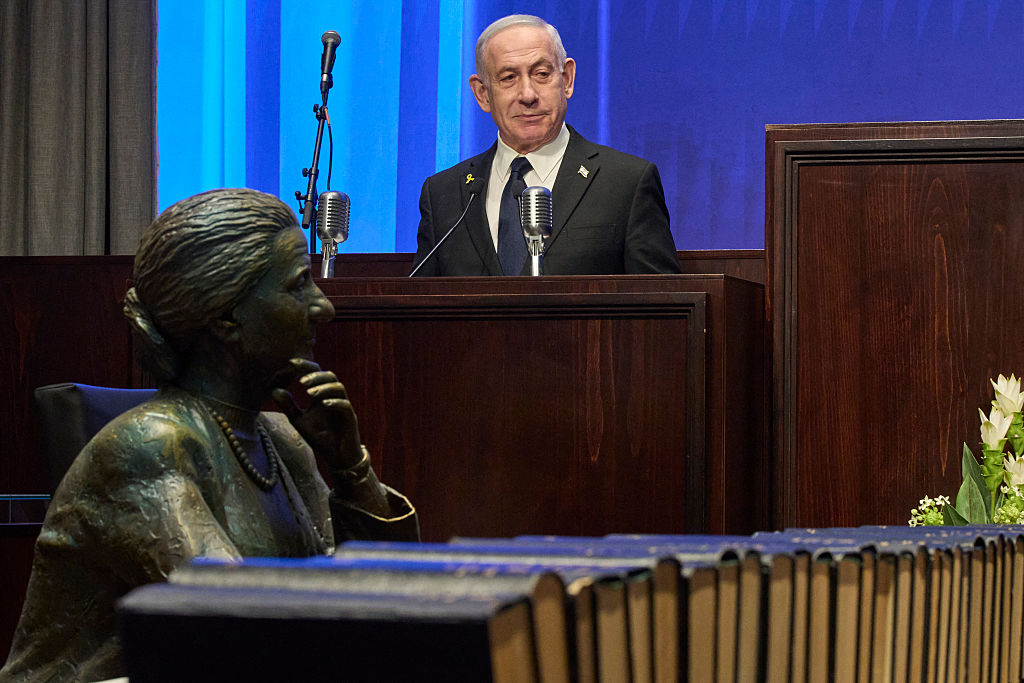
Israeli Prime Minister Benjamin Netanyahu spoke on Monday at the opening ceremony of the Knesset Museum in Jerusalem.
Birthdays
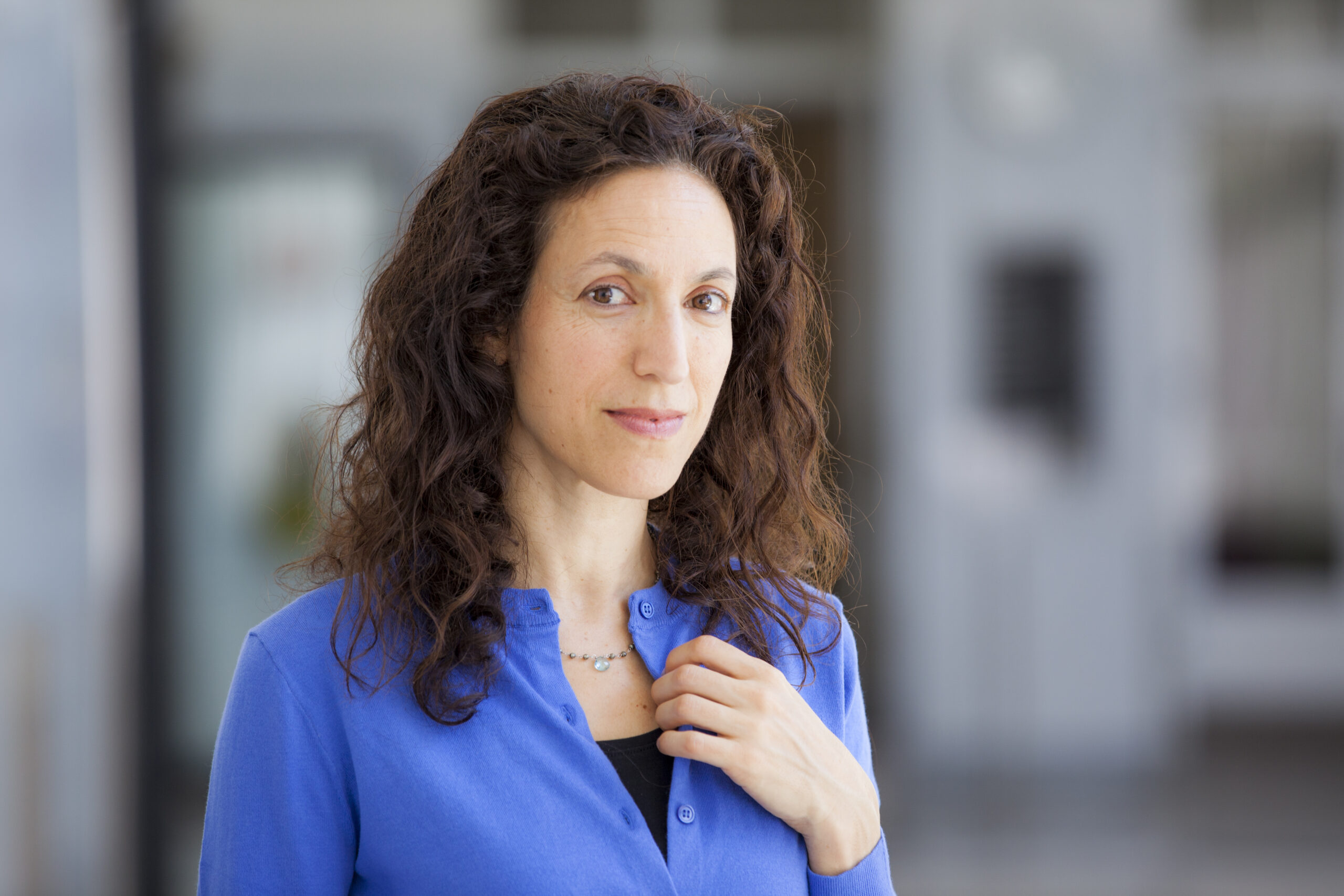
Award-winning writer of fiction and non-fiction and the author of several novels and a novella, Rachel Kadish turns 56…
Hungarian-American investor, currency trader and political activist, born György Schwartz, George Soros turns 95… Retired Beverly Hills attorney, Sheldon Stanford Ellis… Emmy Award-winning television screenwriter, television producer and author, Gail Parent turns 85… Professor of psychology at the University of Pennsylvania and author of many self-help books, Martin Elias Peter Seligman turns 83… Attorney in Ontario, Canada, who served as president of the Canadian Jewish Congress, Lester Scheininger turns 78… Co-founder and chairman of the film and television company Beacon Pictures, Barry “Armyan” Bernstein turns 78… U.S. diplomat, Karyn Allison Posner-Mullen turns 74… Trustee at Houston’s Congregation Emanu El, she worked for more than 40 years at the University of Texas Health Science Center at Houston, Fredi Bleeker Franks… Sales manager of Illi Commercial Real Estate in Sherman Oaks, Calif., Stuart Steinberg… Israel’s former ambassador to Uzbekistan, Bulgaria, Kenya, Uganda, Tanzania and Albania, Noah Gal Gendler turns 68… Former member of Knesset from the Yesh Atid party, Haim Jelin turns 67… Founding editor of The Times of Israel, David Horovitz turns 63… Chairman of Goldman Sachs International, Sir Bradley Fried turns 60… Senior rabbi at Brookline’s Temple Beth Zion, Claudia Kreiman… Chief strategy officer at NYC’s Educational Alliance, Anya Hoerburger… Scottsdale-based real estate Investor, Jay Chernikoff… Co-founder at Understory, David Fine… CEO and co-founder of Forsight, a prop tech AI and machine learning company, Ariel Applbaum…
Please log in if you already have a subscription, or subscribe to access the latest updates.
 Continue with Google
 Continue with Apple