

































Sherman, a stalwart pro-Israel Democrat, is facing several politically connected Democratic challengers in next year’s primary

Paul Morigi
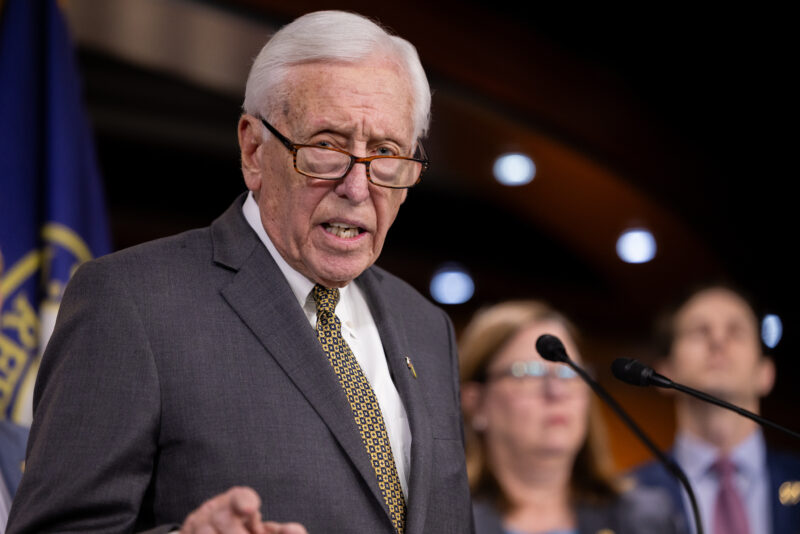
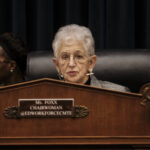
Rep. Brad Sherman (D-CA) speaks at a Brookings Institution panel discussion.


 Add JewishInsider on Google
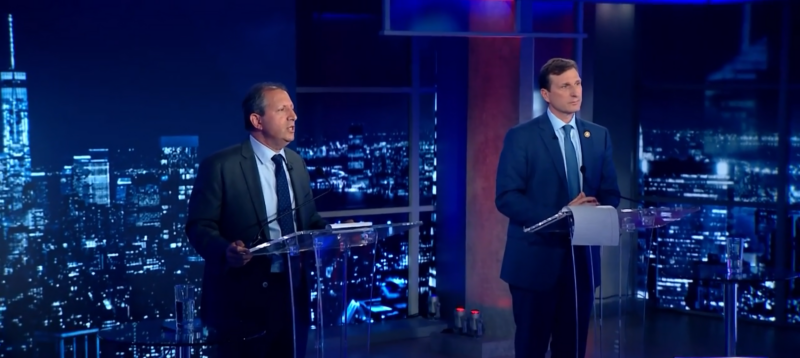
When Rep. Brad Sherman (D-CA) was first elected to Congress in 1996, his two opponents in the current race, Democrats Jake Rakov and Jake Levine, were 8 and 12 years old, respectively.
Both candidates are making a generational appeal: They argue that California’s 32nd Congressional District, which encompasses several tony neighborhoods on the west side of Los Angeles, including Malibu and the Pacific Palisades, as well as much of the San Fernando Valley, needs bold new representation to respond to the challenges of the moment.
Neither Rakov, 37, nor Levine, 41, has held elected office before, and both have spent the past several years away from Los Angeles — Levine as a senior climate advisor in the Biden administration, and Rakov as a roving campaign staffer in Connecticut, Texas and New York. They will each face a tough, drawn-out fight if they hope to have a chance against a battle-tested incumbent in a primary election that’s still more than nine months away.
The San Fernando Valley district is solidly blue, but it’s also an affluent constituency that isn’t all that enamored with the progressive wing of the Democratic Party. That doesn’t mean Sherman, who is 70, is automatically safe from an upstart candidate who might excite the base in his district.
“At this point, he’s pretty much become background noise. There’s no animosity against him. His constituents are perfectly content to continue sending him back to Congress, and most of them believe that he does a perfectly serviceable job,” said Dan Schnur, a political analyst in L.A. who teaches at both the University of Southern California and the University of California, Berkeley. “But that’s exactly the type of incumbent that’s vulnerable to a generational challenge in this landscape.”
Sherman enters the campaign cycle with a healthy fundraising advantage, with $4 million on hand at the end of June. He has raised $477,000 so far this year. Rakov has raised $82,000 in three months. Levine’s campaign said he raised $250,000 in the first 24 hours after announcing his candidacy.
One Democratic political official in the Valley, who requested anonymity to speak candidly about a race in which they know all three candidates, said Sherman would be wise to take the challengers seriously — but that neither entered the race with any momentum.
“I don’t think anybody in the San Fernando Valley knows who the two guys are. And what I’ve seen from most of the insiders is sort of a collective shrug about both of them, to the extent that they’ve heard that they’re running,” said the Valley politico. “This is a part of a national phenomenon, and voters are obviously cranky about a lot of different things. But Brad Sherman works really hard. He is absolutely everywhere. And he’s been very present in this district for a long time.”
The district is heavily Jewish, and Sherman, who has been endorsed by AIPAC, told Jewish Insider on Monday that he intends to make his pro-Israel bona fides a selling point for him as the race picks up.
“I think that the main thing is going to be, ‘What did you do last year or the year before?’ I don’t think that you can come in and say, ‘I’ve done nothing. I’ve said nothing when Israel faced the greatest attack ever. But I’m young and energetic, so count on [me] — and I’ve now adopted the positions that my pollster tells me to adopt, so vote for me,’” Sherman said in an interview. “If you weren’t there on Oct. 7 of 2023, who’s going to be there for you in November?”
Rakov told JI in an interview in April that while he thinks Sherman is out of touch with what voters want, he is generally aligned with Sherman on Middle East policy. “I’m a strong supporter of the U.S.-Israel relationship,” said Rakov, a onetime staffer for Sherman whose campaign experience includes communications roles with Connecticut Gov. Ned Lamont, a Democrat, and 2020 Democratic presidential candidate Tom Steyer. Rakov is not Jewish, but his husband is.
Levine, who did not respond to requests for comment from JI, served as the senior director for climate and energy at the National Security Council until the end of last year. Before that, as the chief climate officer at the U.S. International Development Finance Corporation, Levine was responsible for investing federal funds in the Palestinian private sector through the Middle East Partnership for Peace Act, a widely supported 2020 bill that appropriated money to build grassroots ties between Israelis and Palestinians.
Otherwise, Levine, who is Jewish, has publicly said little about Israel. His father, Mel Levine, served in Congress from 1983 to 1993, and his stepmother is New Yorker staff writer Connie Bruck.
So far, Rakov and Levine have shared little in the way of policy proposals. Levine’s pitch is more optimistic, while Rakov is taking direct aim at Sherman.
“The politicians running Washington are burning it all down, but here in L.A., we understand that what’s much harder and much more important is the work of building something new,” Levine said in a two-minute launch video. “To solve today’s problems, we need more, not less. More housing, more energy, more leaders who will actually show up when it counts.”
One question mark hanging over the race is California Gov. Gavin Newsom’s redistricting play, which could affect the boundaries of the seat. But barring any major changes, the main question is whether two first-time candidates will be able to find the momentum needed to credibly take on Sherman — and if one of them drops out before the June 2026 primary. It’s possible that Sherman and another Democrat both advance to the general election. (In California, the top two finishers in the primary election, regardless of party, move on to face each other in the general election.)
“The best thing for Brad Sherman would be no millennial opponents. The next best thing for him is two,” said Schnur. “If either of the two Jakes were running one-on-one against Sherman, they very well could have the same type of opportunity that a lot of other young Democrats have tapped into around the country over the last few election cycles. But the best thing for Sherman is it appears that they could end up cannibalizing each other.”
Rakov, 37, told JI that the Democratic Party needs ‘a new generation to step up if we want to get anything done in Washington’

Jake for Congress campaign
Jake Rakov
Jake Rakov, a former congressional staffer for Rep. Brad Sherman (D-CA) who is now challenging Sherman for his Los Angeles-area congressional seat, has plenty of criticism aimed at his old boss. But one issue on which they appear largely in step is support for the U.S.-Israel relationship.
Rakov, 37, told Jewish Insider that the Democratic Party needs “a new generation to step up if we want to get anything done in Washington.” He’s one of a series of young insurgent candidates delivering a similar message as they challenge longtime Democratic incumbents whom they characterize as complacent and disconnected.
The former Sherman staffer worked for the California congressman for a year in 2017 as his deputy communications director. He said that he feels Sherman, who has served in the House since 1997, has failed to adapt his talking points and approach to the second Trump term, adding that he doesn’t feel Sherman is bringing the “energy” needed to challenge President Donald Trump and is not responsive, accessible or accountable to constituents.
Rakov’s campaign pitch is light on policy specifics, centered around a pledge to push for 10-year term limits for members of Congress, to not take corporate PAC funding and to hold monthly in-person town halls. But he told JI his focus areas would include science and technology policy, cybersecurity, transportation and infrastructure issues.
Sherman’s campaign is indicating he’s not particularly worried about the challenge.
“Congressman Brad Sherman typically has half a dozen challengers every two years. Democrats, Republicans and others,” a Sherman campaign spokesperson said. “Mr. Rakov may be the first who apparently has never voted in Sherman’s district prior to announcing his candidacy. We welcome his entry into the race. Rakov has not identified any single one of Congressman Sherman’s thousands of votes that he disagrees with. So, at least there is an important aspect of the job that he believes Sherman has performed flawlessly.”
Sherman, who is Jewish, represents one of the most Jewish districts in the country and is a vocal and relatively hawkish supporter of Israel. Rakov, whose husband is Jewish, did not indicate any significant breaks with his former boss on that issue.
“I’m a strong supporter of the U.S.-Israel relationship. I understand the need to maintain that relationship and I would also be a proactive advocate in Congress for continuing to strengthen the vital allyship between our two countries,” Rakov said. “I see the need of that, especially in the state of the Middle East right now, for having such a close ally in the region.”
He said that he supports continued U.S. aid to Israel, explaining Israel “has the right to defend itself against terrorists and those who want to attack it.”
Rakov traveled to Israel with his husband shortly before the Oct. 7, 2023, Hamas terror attacks to visit his husband’s family. Rakov described it as an “absolutely amazing experience” seeing how “diverse” and “engaged” the Israeli people are.
“It was just amazing to see the culture and the Old City [of Jerusalem], all the history there, and everything was very awe-inspiring,” Rakov said.
Rakov said he was also struck by the conversations Israelis were having among themselves about the Israeli government and the country.
Rakov said he wants to see a path forward to reach peace and a negotiated two-state solution, and said the U.S. should play a central role in driving toward that goal.
Rakov’s support for Israel separates him from some of the other prominent challengers going after longtime Democratic incumbents, several of whom have carved out positions to the incumbents’ left on Israel policy.
Rakov also said that it’s in the U.S.’ interest to ensure Iran cannot develop nuclear weapons. He said he doesn’t have the expertise to discuss the possibility of military intervention, but said that he supports diplomatic overtures and providing support for the Iranian people to achieve democracy and a “functioning government that supports their rights.”
The district also has a significant Iranian-American diaspora population.
At home in the U.S., Rakov said that he wants to see better education and dialogue to combat antisemitism, especially on college campuses, instead of the punitive measures that the Trump administration has pursued, such as cutting off funding to schools. He said the administration should instead be focusing on “adding resources to educate students about antisemitism and discrimination in all forms.”
“If there are bad actors and if they violate the law, that’s very obviously not a peaceful protest or a First Amendment protected thing,” Rakov said. “I disagree with the idea of defunding universities or cutting back funding. I think this doesn’t solve the problem at hand.”
Please log in if you already have a subscription, or subscribe to access the latest updates.
 Continue with Google
 Continue with Apple