

















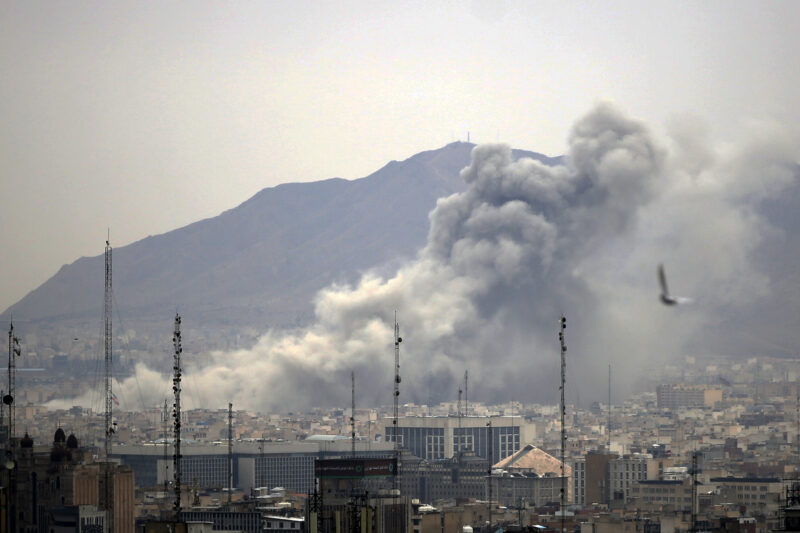
















Also Wednesday, an Israeli F-35I fighter jet shot down an Iranian YAK-130 fighter jet over Tehran, marking the first time an F-35 jet shot down a manned fighter aircraft, IDF says
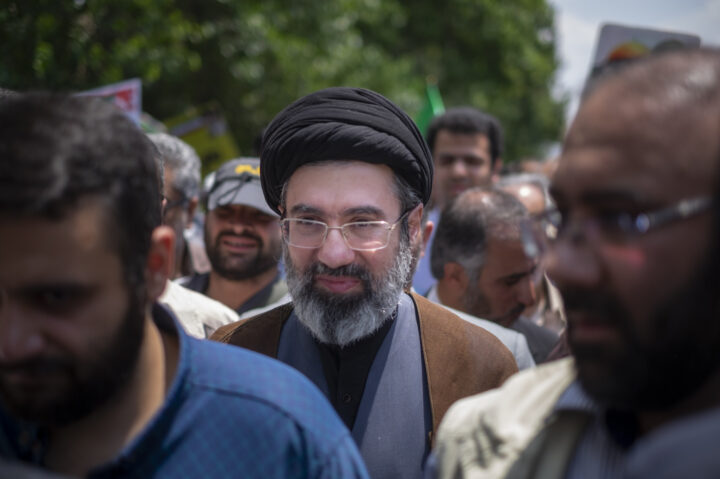
Morteza Nikoubazl/NurPhoto via Getty Images
Son of Iran's Supreme Leader Ayatollah Ali Khamenei, Mojtaba Khamenei, attends a demonstration to mark Jerusalem day in Tehran on May 31, 2019.


 Add JewishInsider on Google
Any replacement selected to replace Iranian Supreme Leader Ayatollah Ali Khamenei, who was killed by Israel on the first day of the war with Iran on Saturday, will be in Israel’s crosshairs, Israeli Defense Minister Israel Katz warned on Wednesday.
“Any leader appointed by the Iranian terror regime will be a clear target for elimination,” Katz said. “The prime minister and I instructed the IDF to prepare and act by all means to accomplish the mission … We will continue acting with full force, together with our American partners, crush the regime’s abilities and create the conditions for the Iranian people to topple and replace it.”
Katz’s remarks came after widespread reports that the slain supreme leader’s son, Mojtaba Khamenei, is his likely successor.
Israel struck the building housing the Assembly of Experts, made up of senior clerics who would choose the new supreme leader. Initial reports stated officials counting the votes were killed.
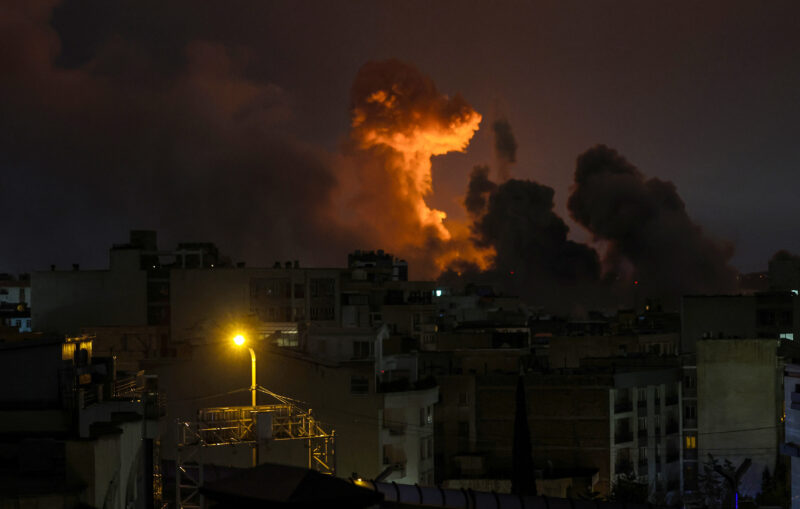
Israel continued to strike the Iranian regime’s centers of power, including command centers of the Basij paramilitary force and internal security “used by the Iranian regime to maintain control throughout Iran and maintain the regime’s situational assessments,” the IDF stated.
The CIA is reportedly acting to destabilize the regime by arming Kurdish forces, according to CNN and Reuters, with the Trump administration said to be in talks with Kurdish leaders in Iraq, in addition to Iranian opposition leaders, to try to foment an armed uprising. The Islamic Revolutionary Guard Corps have repeatedly attacked Kurdish groups since war broke out over the weekend.
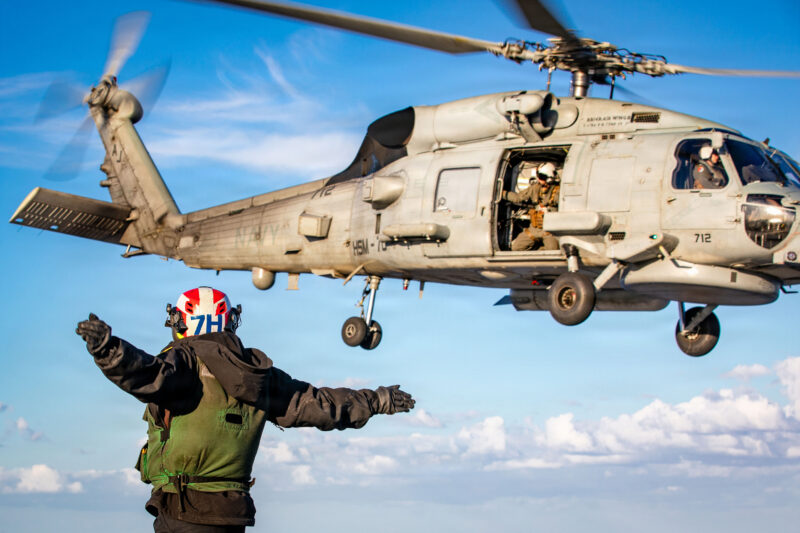
Also Wednesday, an Israeli Air Force F-35I fighter jet shot down an Iranian Air Force YAK-130 fighter jet over Tehran, marking the first time an F-35 jet shot down a manned fighter aircraft, the IDF stated.
The IDF also continued to hunt missile launchers to degrade Iran’s ability to shoot large barrages around the region, striking a facility used to launch, produce and store ballistic missiles in Isfahan.
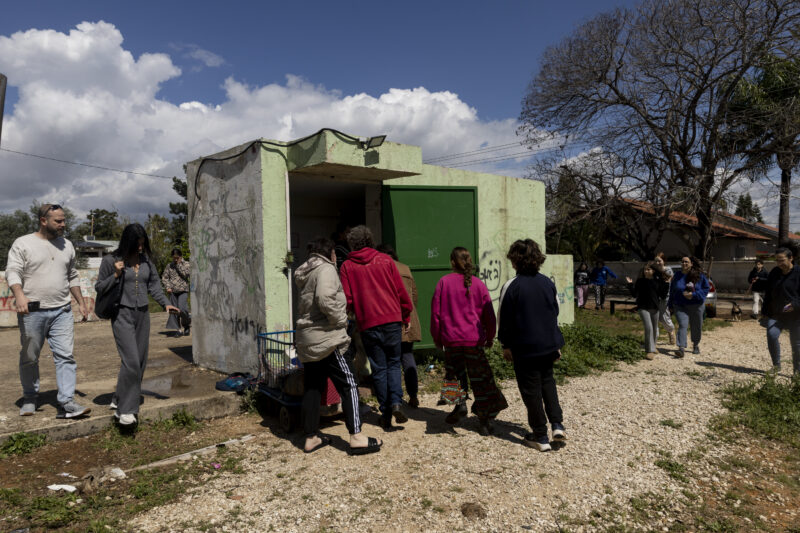
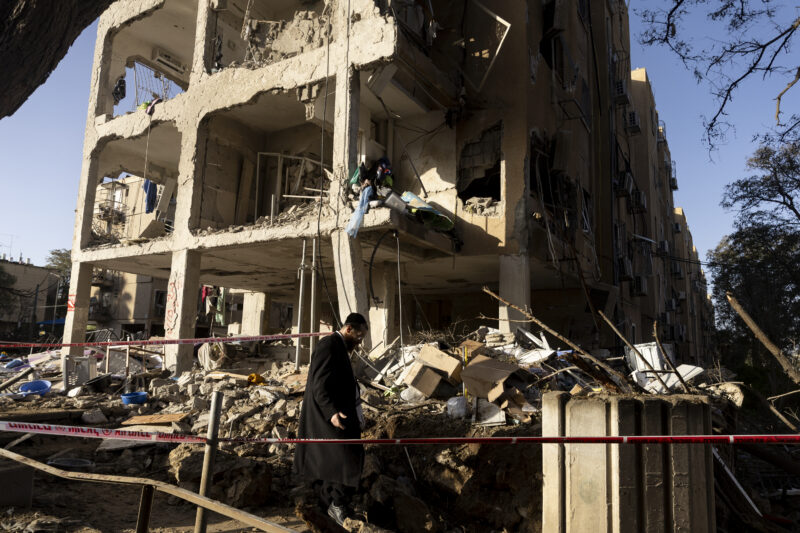
Iranian missile attacks on Israel injured 45 on Tuesday, according to the Magen David Adom emergency service. From the start of the war with Iran, there have been 12 fatalities and 404 additional casualties in Israel, including two severely injured and 288 who were injured making their way to shelters.
The Iranian regime has made increasing use of civilian structures as shields, the Foundation for Defense of Democracies found, noting that Iranian Foreign Ministry spokesperson Ismail Baghaei held a press conference in a school on Tuesday, and police and other security forces used schools as bases of operations.
The IDF sent emergency evacuation warnings to residents of over a dozen villages and towns in Lebanon ahead of continued strikes against Hezbollah terrorists and facilities on Wednesday.
The president predicted a four to five week timeline for the military campaign against Iran in several interviews over the weekend
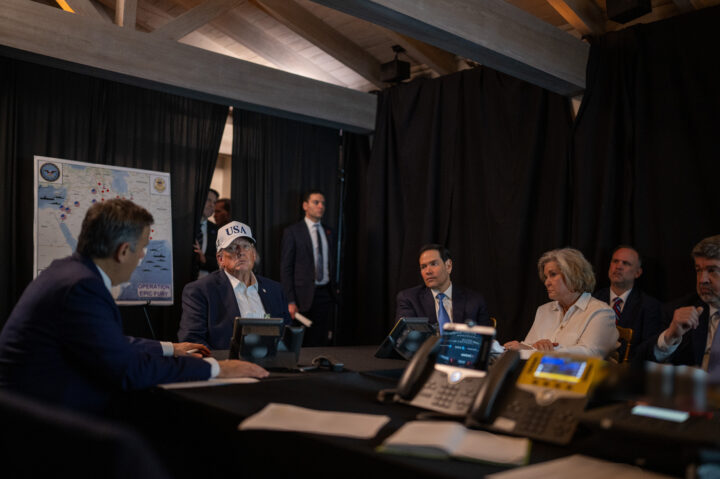
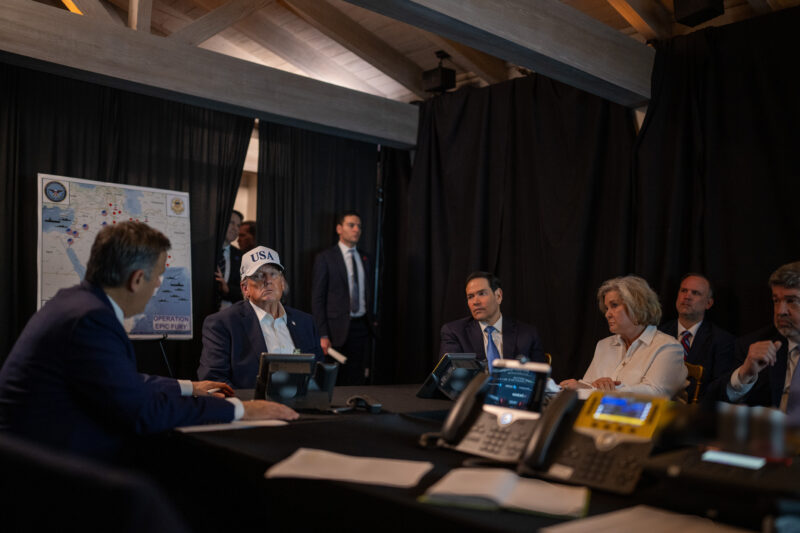
Daniel Torok/White House via Getty Images
President Donald Trump oversees "Operation Epic Fury" at Mar-a-Lago on February 28, 2026 in Palm Beach, Florida.
President Donald Trump said over the weekend that Iran’s new leadership has made overtures to restart diplomatic negotiations with the U.S. — which he plans to accept — after Iranian Supreme Leader Ayatollah Ali Khamenei was killed during Israeli and U.S. strikes in the country.
Still, the president warned that strikes would continue until their objectives had been achieved.
Trump made the comments while speaking to The Atlantic on Sunday morning, one of a series of interviews he gave after launching a joint military operation against Iran alongside Israel on Saturday. The president has been touting Operation Epic Fury to journalists as an immediate success, arguing that the removal of Khamenei and 47 others in senior Iranian leadership has provided a window for diplomacy as the U.S. military operation swiftly advances.
“They want to talk, and I have agreed to talk, so I will be talking to them,” Trump told The Atlantic. “They should have done it sooner. They should have given what was very practical and easy to do sooner. They waited too long.”
The commander-in-chief declined to say when he plans to begin engaging with the Iranians, instead noting that most of the Iranians involved in past negotiations with the U.S. are now deceased.
“Most of those people are gone. Some of the people we were dealing with are gone, because that was a big — that was a big hit,” Trump said. “They should have done it sooner. They could have made a deal. They should’ve done it sooner. They played too cute.”
Asked if he was willing to extend the bombing campaign in order to support a popular uprising in Iran, should it unfold, the president was similarly coy, telling the outlet: “I have to look at the situation at the time it happens … You can’t give an answer to that question.”
In a video posted to his Truth Social platform on Sunday afternoon, however, Trump spoke directly to the protesters, calling upon “all Iranian patriots who yearn for freedom to seize this moment, to be brave, be bold, be heroic and take back your country. America is with you. I made a promise to you, and I fulfilled that promise. The rest will be up to you, but we’ll be there to help.”
Further illuminating his thinking, Trump wrote on Truth Social on Saturday shortly after the killing of Khamenei, “We are hearing that many of their IRGC, Military, and other Security and Police Forces, no longer want to fight, and are looking for Immunity from us … Hopefully, the IRGC and Police will peacefully merge with the Iranian Patriots, and work together as a unit to bring back the Country to the Greatness it deserves. That process should soon be starting.”
“The heavy and pinpoint bombing, however, will continue, uninterrupted throughout the week or, as long as necessary to achieve our objective” of world peace, he wrote.
In an interview on Saturday evening with CBS News’ Robert Costa, Trump said he believes that the joint U.S.-Israeli attacks on Iran that killed Khamenei made diplomacy “much easier now than it was a day ago, obviously, because they are getting beat up badly.”
As for the military operation itself, Trump suggested in subsequent conversations on Sunday with The Daily Mail and The New York Times that the U.S. could be involved for another four to five weeks.
“It’s always been a four-week process. We figured it will be four weeks or so,” Trump told the U.K. tabloid. “It’s always been about a four week process so — as strong as it is, it’s a big country, it’ll take four weeks or less.”
He repeated the four to five week timeline in interviews with Axios’ Barak Ravid on Saturday and The New York Times on Sunday.
“I can go long and take over the whole thing,” Trump told Ravid by phone, “or end it in two or three days and tell the Iranians: ‘See you again in a few years if you start rebuilding [your nuclear and missile programs].’”
Trump later predicted to Ravid that, “In any case, it will take them several years to recover from this attack.”
Senate Intelligence Committee Chairman Tom Cotton (R-AR) echoed the president’s predictions, telling CBS’ “Face the Nation” on Sunday that Trump has “no plan for any kind of large-scale ground force inside Iran.”
“The president has been clear that what we should expect to see is an extended air and naval campaign that’s designed not only to continue to set back Iran’s nuclear ambitions, but most importantly, to destroy its vast missile arsenal, many more missiles than the United States and Israel have air defenses combined, as well as the missile launchers and its missile manufacturing capability,” said Cotton, one of the president’s more hawkish GOP allies on Capitol Hill.
“Now obviously one risk of that kind of campaign is that an aircraft could be shot down, and the president would never leave a pilot behind,” he continued. “So no doubt we have combat search and rescue assets in the region that are prepared to go in and extract any downed pilot. But barring that kind of unusual circumstance, the president has no plan for any kind of large-scale ground force inside of Iran.”
Ahead of nuclear negotiations, the president said the U.S. discovered Iranian officials were ‘thinking about starting a new site in a different part of the country’
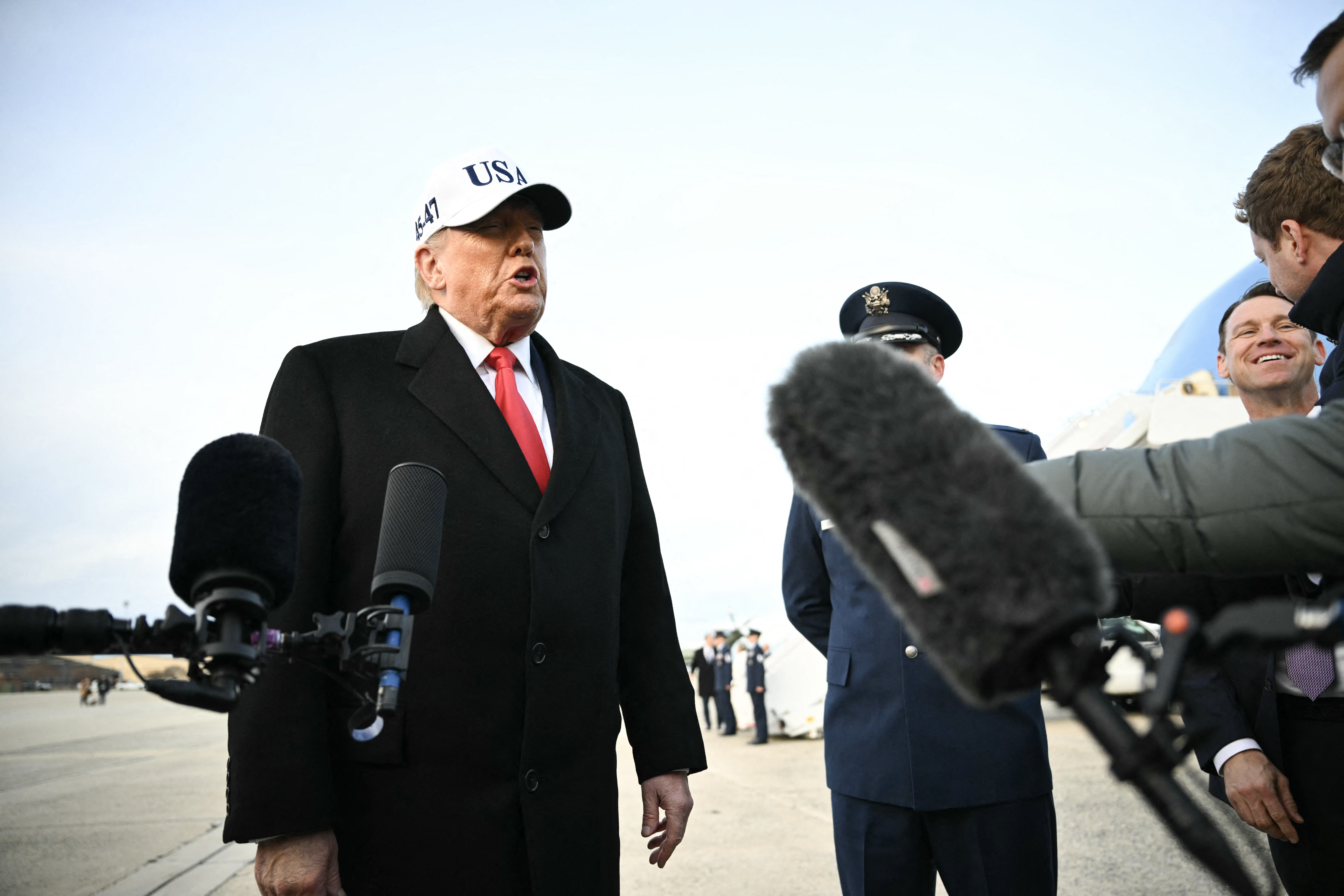
Mandel NGAN / AFP via Getty Images
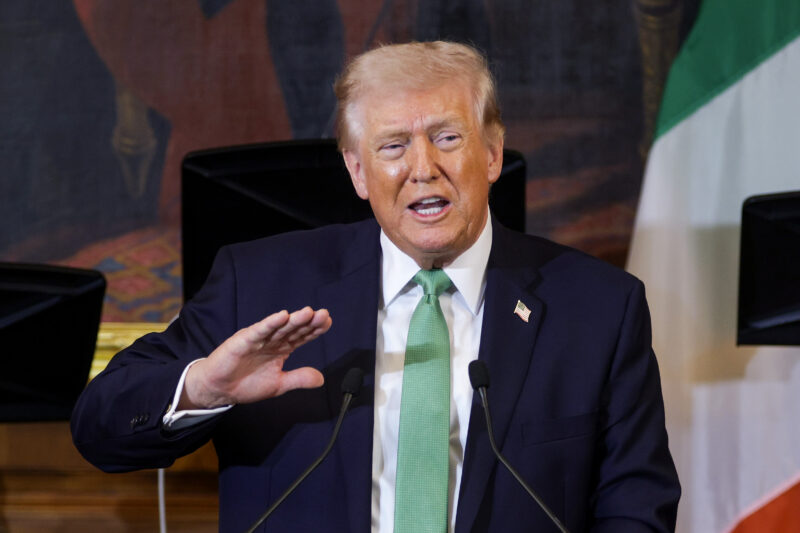
President Donald Trump speaks to the press upon returning to Joint Base Andrews in Maryland on January 13, 2026.
President Donald Trump on Wednesday warned Iranian Supreme Leader Ayatollah Ali Khamenei that he should be “very worried” ahead of planned nuclear talks, as the president weighs military action amid rising tensions and signs Tehran may be trying to revive its nuclear program.
“I would say he should be very worried, yeah, he should be,” Trump told NBC News when asked whether Khamenei should be concerned. “As you know, they are negotiating with us.”
U.S. and Iranian officials are slated to meet Friday in Oman, which Iranian Foreign Minister Abbas Araghchi confirmed Wednesday. Iran pushed for the discussions to be moved from Turkey and has insisted they remain limited to its nuclear program. The United States has sought to broaden the agenda to include Tehran’s ballistic missile capabilities and support for regional proxy groups.
Experts told Jewish Insider that despite upcoming discussions, military intervention remains on the table. On Tuesday a U.S. F-35 fighter jet shot down an Iranian drone near the USS Abraham Lincoln in the Arabian Sea. Later that day, Iran’s Islamic Revolutionary Guard Corps attempted to stop and board a U.S.-flagged commercial tanker in the Strait of Hormuz before a U.S. destroyer intervened and escorted the vessel to safety.
During an interview on the Megyn Kelly Show, Vice President JD Vance said Wednesday that Trump “will try to achieve what he can through non-military means, but if he feels that the military option is the only option, he is going to choose that option.”
Several Arab and Muslim leaders reportedly lobbied the Trump administration not to walk away from the discussions after Iran demanded to change the venue and format. The administration “told the Arabs we will do the meeting if they insist,” one U.S. official told Axios, but added that they are “very skeptical.”
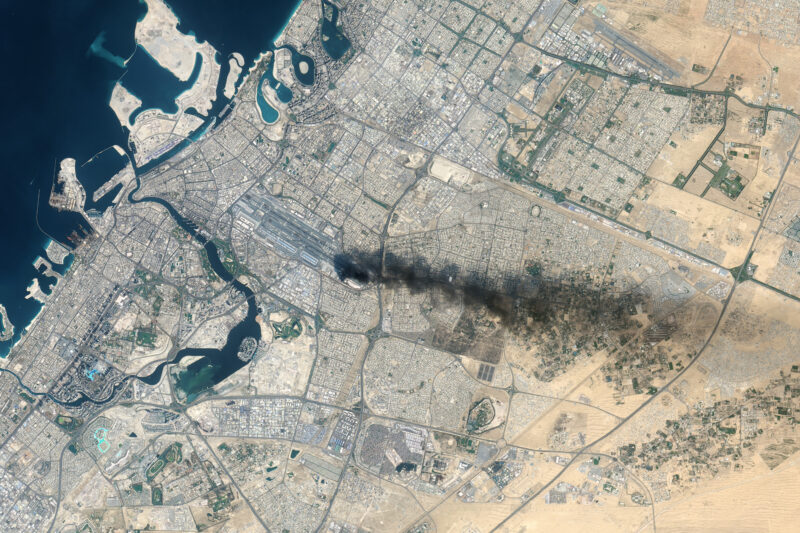
Satellite images released last week by Planet Labs PBC have also fueled speculation over whether Iran intends to restart its nuclear program after U.S. strikes on several sites in June. Trump confirmed that Iran was “thinking about starting a new site in a different part of the country,” but said the U.S. “found out about it.”
“I said, ‘You do that, we’re going to do very bad things to you,’” Trump warned, stating that in the event Iran continued to pursue its nuclear ambitions, the U.S. would respond as it did before. “If they do, we’re going to send” B-2 bombers “right back and do the job again.”
Last month the president had cancelled meetings with Iranian officials and vowed on social media that Tehran would “pay a big price” for its violent crackdown on protesters in early January, stating that “help is on its way.”
When pressed on whether the U.S. continues to back Iranian protesters, Trump said the administration’s position has not changed.
“We’ve had their backs,” said Trump. “If we didn’t take out” Iran’s nuclear sites, “we wouldn’t have peace in the Middle East, because the Arab countries could have never done that.”
Please log in if you already have a subscription, or subscribe to access the latest updates.
 Continue with Google
 Continue with Apple