


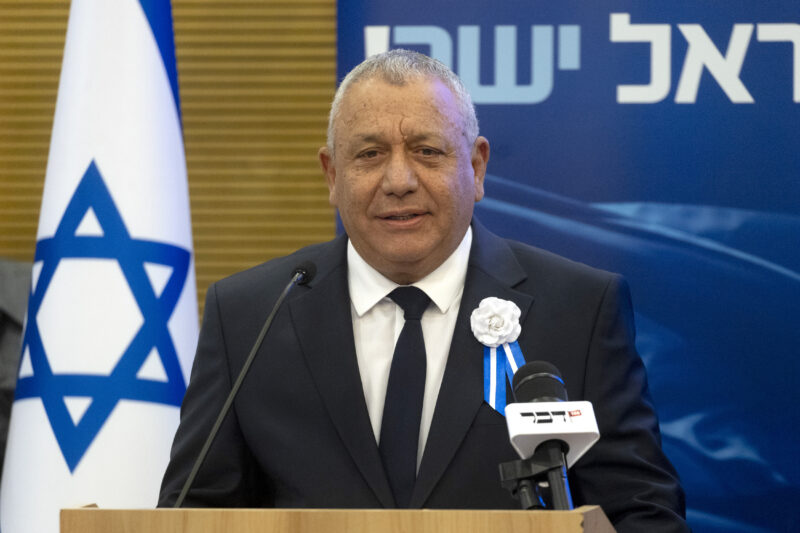







































































Rep. Debbie Wasserman Schultz said that Steve Witkoff denied that Iran had received any sanctions relief, and ended the call when pressed

Samuel Corum/Getty Images
Rep. Brian Mast (R-FL) speaks during a House Committee on Foreign Affairs hearing on Capitol Hill on January 11, 2024 in Washington, DC.


 Add JewishInsider on Google
Rep. Brian Mast (R-FL), the chair of the House Foreign Affairs Committee, suggested following both unclassified and classified briefings from the Trump administration on Iran on Monday that talks with the regime for a final agreement could continue past the 60-day timeline laid out in the U.S.-Iran memorandum of understanding finalized earlier this month.
“I think [the] 60-day window … is probably more of a fluid thing, just like you think about some of the stuff that went on with the Gaza-Israel [negotiations and the] Board of Peace, right?” Mast said.
“You get to some things, you don’t necessarily get to everything … over a 60-day window,” Mast said. “I think you get to some, I don’t think you get to everything. I don’t think that it just ends after 60 days by any means.”
He said that the briefings didn’t specifically touch on whether there had been any reassurances that a final deal would be reached.
“There are reassurances that people want in specific sectors,” Mast said, including that Iran will not return to pursuing nuclear weapons. “That would be important to have inked.”
Talks over and efforts to implement the ceasefire plan in Gaza have continued long beyond their original timeline, particularly efforts to disarm Hamas — which the group continues to resist — and to deploy an international military force to stabilize the territory, both of which are lynchpins to moving the peace process forward.
Some in Washington have worried about similar stagnation in the U.S.-Iran talks, and that the MOU might become the new status quo.
The administration held an unclassified briefing open to all House members on the phone on Monday afternoon, which included Secretary of State Marco Rubio and White House Special Envoy Steve Witkoff. Immediately after, the top lawmakers on key House committees, including Mast, received a classified briefing from Deputy National Security Advisor Andy Baker.
Senate lawmakers, who are in recess, also participated in a separate phone briefing on Monday afternoon.
Rep. Debbie Wasserman Schultz (D-FL) told Jewish Insider she pressed Witkoff at the end of the unclassified phone briefing about comments he had made earlier in the briefing claiming that no waivers had been used to allow Iran to sell oil.
Wasserman Schultz pointed out to Witkoff that the Treasury Department issued a license last week to allow the sale and importation of Iranian oil and petrochemical products, and said Witkoff “really was taken aback and [he] had difficulty answering.”
She said Witkoff had initially denied that any sanctions had been waived or any oil sales had been permitted since the MOU was signed. But when confronted about the waiver, she said Witkoff “acted like he wasn’t aware of it.” She said that Witkoff said he would follow up with her and officials subsequently “turned tail and cut off the call.”
“What was clear to me was that Mr. Witkoff either, disturbingly, had no idea that what he was saying was not true, or he did know what he was saying wasn’t true,” she said. “I don’t know which it was. … We’ll see if they actually get back to me …. But really it’s part of a larger pattern with this administration of misleading Congress on Iran. They’re constantly moving the ball.”
Rep. Greg Meeks (D-NY), the ranking member of the House Foreign Affairs Committee, offered a similar account of confusion among administration officials over the sanctions relief, and said Rubio told lawmakers Iran would not receive any money if it did not comply with the MOU, something he said was out of step with the actual terms of the MOU.
“The secretary of state indicated that there was no money going to Iran, but when you look at the MOU, it says money would start going to Iran at the implementation of the MOU,” Meeks said. “The Iranians are claiming they are receiving some funds now. … The Treasury Department has made ways for money to go to Iran, and unfortunately I think that Mr. Witkoff in the [unclassified] briefing did not realize that.”
Both Meeks and Wasserman Schultz said the call indicated that Witkoff and others involved in the talks are not qualified to handle the negotiations.
Mast called the MOU a “work in progress” and said there are “reasons to be hopeful and reasons to be skeptical” about the deal. Chief among the reasons for skepticism, he said, is that Iran is untrustworthy and does not act in good faith.
But he said that the damage done through U.S. operations against Iran — burying Iran’s nuclear program and doing hundreds of billions of dollars of damage to the country and critical industries — provides reasons for optimism.
Asked about the sanctions relief already provided to Iran, and the potential additional financial benefits Iran stands to gain, Mast told JI it’s a question of “math” — he estimated that the U.S. did half a trillion dollars in damage to Iran, and said that any reconstruction funding or investments from other countries or released frozen assets “subtracts from that math.”
Mast also argued that reconstruction funding would be going to companies involved in the effort, including potentially American companies, rather than the regime, but acknowledged that money is fungible and “it affects the math equation.” He also argued that any release of frozen assets would be based on a “behavior change.”
Pressed on whether he thought Iran’s behavior to this point merited the oil sanctions waiver, Mast said that depends on the timeline of Iranian behavior examined — Iran’s pace of attacks on commercial shipping has slowed from its peak during the war, but its behavior now is “very similar” to “what was a year, or three years ago.”
“I think [the Iranians are] doing everything to prove they are who they are,” Mast said. “They will lie about everything and, you know, say they agree to something and then not [follow through]. It’s a very good reason to be skeptical of anything about them, but again, it’s a different world post-[Operation] Epic Fury.”
Rep. Adam Smith (D-WA), the ranking member of the House Armed Services Committee, emerged from the classified session pessimistic that the administration is in a position to achieve the goals it has set out for the talks.
“We know where they want to go, what they want to negotiate. The evidence that they’re progressing towards that outcome isn’t great,” Smith said. “They’re hoping to get the Strait [of Hormuz] open and reach some sort of economic deal with Iran and negotiate on the nuclear program, which they sort of outlined, and they said they’re optimistic about it. I don’t see as much cause for optimism personally.”
He said that the information provided in the classified briefing was not substantially different from that which was shared on the unclassified call.
Meeks said he left the classified briefing with “some of the same questions I had before I went in.” He said that he thinks the U.S. is in a worse position after the war, and said he wants to have additional briefings.
“I can’t tell you that I got information that says you’ve done anything or made any great progress subsequent to the war that had not already been accomplished before the war, and much of what they have talked about has been or was in the JCPOA,” Meeks said, referring to the 2015 Iran nuclear deal.
Mast said he does not plan to call any public hearings with administration officials on Iran in the Foreign Affairs Committee, but wants to hear in a classified setting from senior administration officials. He also said that administration officials said they would convey lawmakers’ desire for additional briefings.
Wasserman Schultz criticized the administration for calling the open briefing in the late afternoon on a day when many members are traveling to Washington, and holding it in an unclassified setting where they would be unable to discuss many substantive details.
Plus, Albania blames Iran for stoking Kushner-unrest
Roy Rochlin/Getty Images
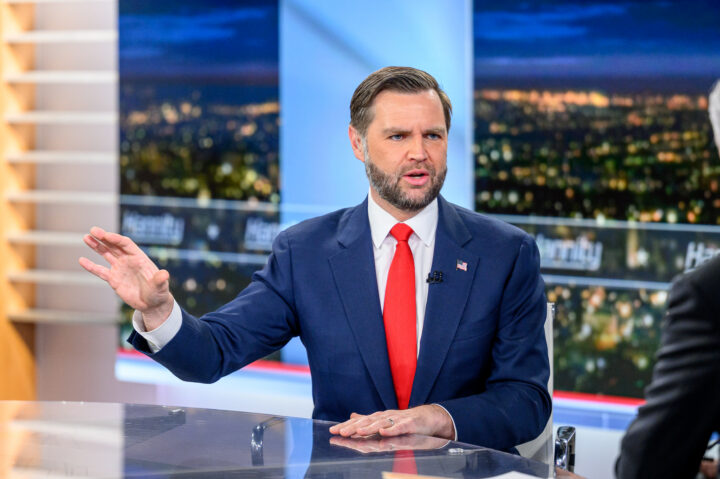
Vice President JD Vance
Good Thursday afternoon.
This P.M. briefing is reserved for our premium subscribers like you — offering a forward-focused read on what we’re tracking now and what’s coming next.
Today’s Daily Overtime was curated by Senior National Correspondent Gabby Deutch.
📡On Our Radar
Notable developments and interesting tidbits we’re tracking
As the White House continues to promote the memorandum of understanding that will end the war with Iran and start negotiations between Washington and Tehran, Vice President JD Vance is out with a message that sounds strikingly familiar — at least to anyone who followed former President Barack Obama’s pitch on the 2015 nuclear deal with Iran, Jewish Insider’s Gabby Deutch reports.
“If you think this is a bad deal, what is your alternative?” Vance said in an interview this week with New York Times columnist Ross Douthat.
Obama used nearly identical phrasing at a 2015 White House press conference: “I’m hearing a lot of talking points being repeated about ‘this is a bad deal,’” he said. “What I haven’t heard is, what is your preferred alternative?”
Watch a side-by-side look at Vance and Obama here…
Vance also delivered a tough message to Israeli officials who have criticized the MOU, telling reporters on Thursday that Israel’s government should be careful not to alienate the only friend it has left: President Donald Trump, JI’s Emily Jacobs reports.
“Donald J. Trump is the only head of state in the entire world who is sympathetic to the nation of Israel at this moment in time and he happens to be the head of state of the world’s superpower. If I was in the Cabinet of the Israeli government, I might not be attacking the only powerful ally that I have anywhere left in the entire world,” said Vance…
Trump also had a word of caution for Israeli Prime Minister Benjamin Netanyahu, two days after he said Netanyahu was too “vicious” in his approach to fighting Hezbollah in Lebanon. Asked by a reporter for Israel’s Kan News if he will support Netanyahu in this year’s Israeli elections, Trump said he most likely would, but did not commit.
“I’ll have to look at who’s running, but I like Bibi very much. I would be most likely to endorse him,” said Trump. “He’s doing a very good job, he’s got to be a little bit more rational”…
United Against Nuclear Iran, an advocacy group that rallied opposition to the 2015 Joint Comprehensive Plan of Action, said on Thursday that it “cannot endorse the MoU in its current form”…
AIPAC released a policy memo on Thursday that said the MOU “raises significant questions,” and called on Congress to “play a critical role in ensuring a final deal meets President Trump’s stated objectives for the war”…
In a Thursday speech at the FII Priority summit in Rome, Albanian Prime Minister Edi Rama blamed Iran for “ruthless” cyberattacks against the country, claiming that Tehran has sought to sow unrest about a preliminarily approved luxury development project in the country from Ivanka Trump and Jared Kushner, Trump’s daughter and son-in-law, JI’s Matthew Shea reports…
Janeese Lewis George defeated Kenyan McDuffie in the Democratic primary for mayor of Washington, D.C., with the Associated Press calling the race on Thursday afternoon. Democratic socialist Lewis George leads McDuffie 53% to 36%…
American Priorities, a super PAC created as a progressive counterweight to AIPAC, has received $250,000 from a tech executive whose firm is developing AI data centers in New York State — while boosting two democratic socialist House candidates who oppose efforts to expand data centers, JI’s Matthew Kassel reports…
Rep. Tom Kean Jr. (R-NJ), who has been absent from Congress since March due to an unexplained personal health issue, plans to return to Washington on June 30…
Israel and Syria are expected to resume direct talks soon due to pressure from the U.S., the Israeli network Kan reports…
The FBI announced that it charged San Diego resident Reda Mazen Rida Sabassi with conspiring to provide material support to Hamas after he allegedly raised approximately $600,000 through fraudulent charitable campaigns and funneled a portion to the terrorist organization…
Former Presidents Joe Biden, George W. Bush and Bill Clinton attended the grand opening of the Obama Presidential Center in Chicago on Thursday afternoon.
Guests included a litany of ex-Obama administration staffers, including former White House liaison to the Jewish community Matt Nosanchuk and former U.S. Ambassador to Israel Dan Shapiro, who was spotted chatting with Obama…
⏩ Tomorrow’s Agenda, Today
An early look at tomorrow’s storylines and schedule to keep you a step ahead
Keep an eye on Jewish Insider for a look at how Jewish Republicans are feeling about the U.S.-Iran memorandum of understanding that was signed this week.
Vice President JD Vance plans to travel to Switzerland this weekend for talks with Iran, though the plans are not yet finalized, he told reporters on Thursday.
Bill Pulte, the director of the Federal Housing Finance Agency, will become the acting director of national intelligence on Friday after the confirmation of DNI nominee Jay Clayton was delayed this week at President Donald Trump’s request.
We’ll be monitoring the final days of the heated congressional primary campaigns in New York, where Israel and Gaza remain hot topics for progressive candidates.
We’ll be back in your inbox with the Daily Overtime on Monday. Shabbat Shalom!
Transferring responsibilities
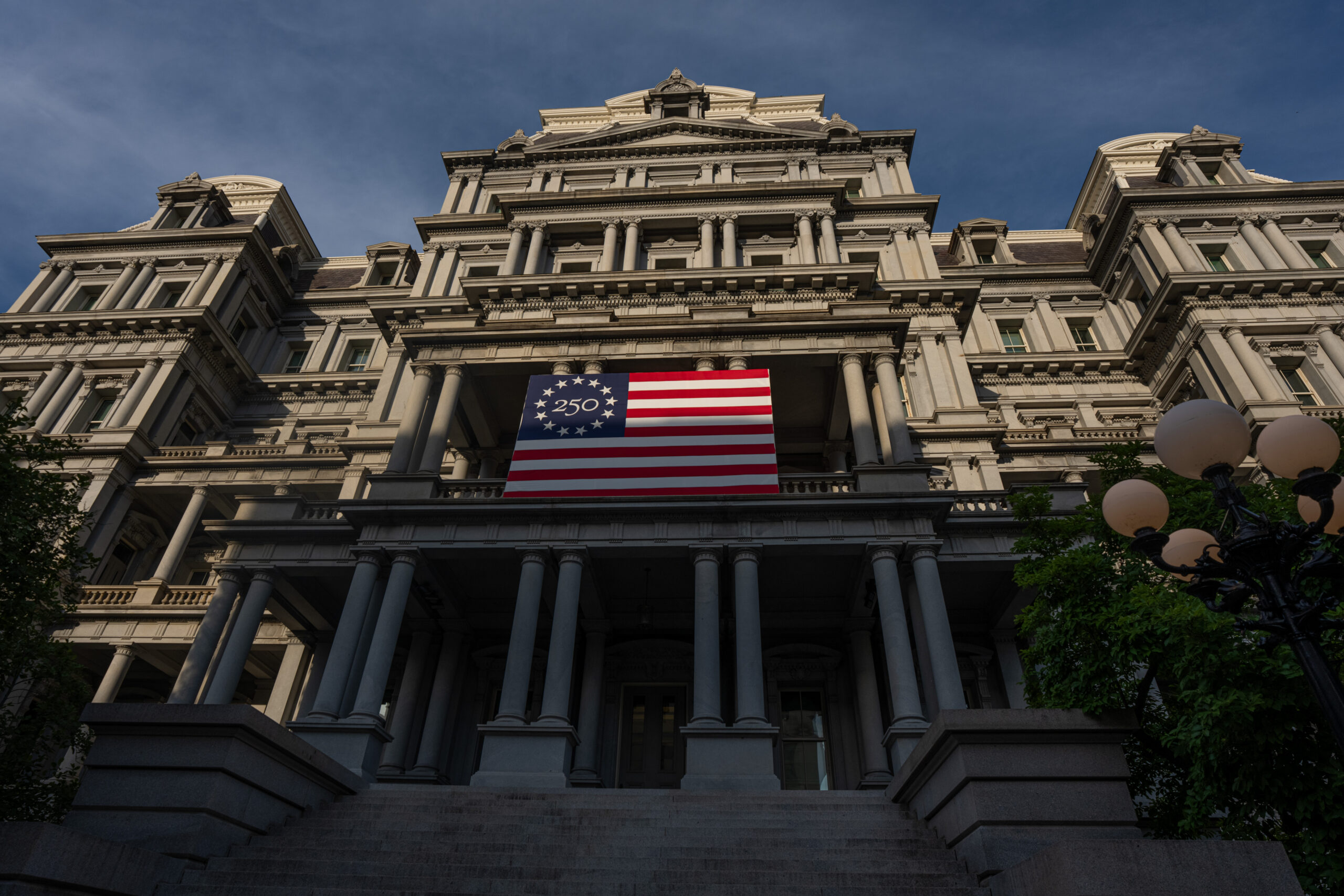
The letter urges American Jews to ‘double down’ on civic values as the country marks its 250th
BEHIND THE CURTAIN

Multiple sources identified Scott Stringer as a driving force behind two PACs spending to beat Mayor Zohran Mamdani’s House candidates
Vance borrows from the Obama playbook to argue there is no viable alternative to agreement with Iran
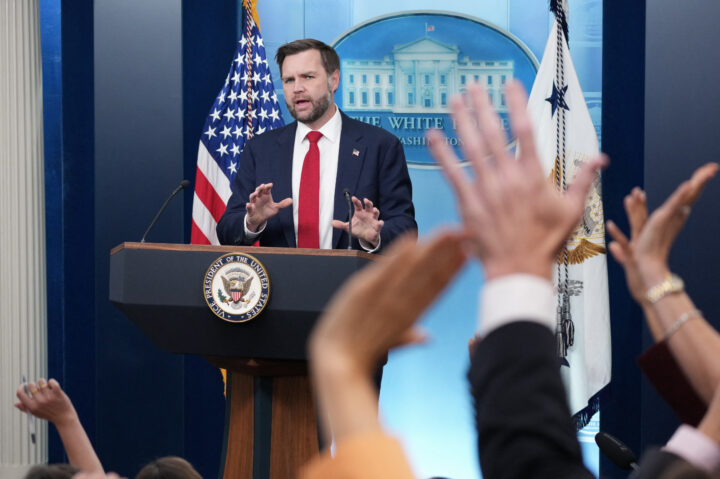
Photo by Ken Cedeno / AFP via Getty Images
Vice President JD Vance takes questions from reporters during a press briefing in the Brady Briefing Room of the White House in Washington, DC, on June 18, 2026.
As Vice President JD Vance takes on the role of chief defender of the U.S.-Iran memorandum of understanding and forthcoming talks, he has begun to sound a lot like someone whom the Trump administration has lately spent a lot of time attacking: former President Barack Obama.
Vance and President Donald Trump have both, in recent days, made clear that they view the MOU — which is set to deliver sanctions relief to Iran as nuclear negotiations get underway — as fundamentally different from, and better than, the 2015 Joint Comprehensive Plan of Action, the nuclear deal signed by Obama. But as the White House faces criticism from hawkish members of the Republican Party, the language Vance is using to defend the burgeoning deal closely resembles the arguments made by Obama 11 years ago.
“If you think this is a bad deal, what is your alternative?” Vance said in an interview this week with New York Times columnist Ross Douthat.
Flashback to a 2015 press conference at the White House soon after the JCPOA was announced.
“I’m hearing a lot of talking points being repeated about ‘this is a bad deal,’” Obama said. “What I haven’t heard is, what is your preferred alternative?”
Both Vance in 2026 and Obama in 2015 argued that the deals negotiated by their respective administrations were better than using military force — or in the case of the Trump deal, continuing to use military force — and that they would lead to a safer world.
“We could drop more bombs. We could destroy more of their country. We could kill the current iteration of their leadership. We know where all of them are. All of those things could happen,” Vance said. “But does that make the American people safer or more prosperous? The president of the United States and I think: No.”
Obama frequently argued similarly.
“If the alternative is that we should bring Iran to heel through military force, then those critics should say so,” he said at the 2015 press conference. “We’ve got a historic chance to pursue a safer and more secure world, an opportunity that may not come again in our lifetimes.”
“None of them have presented to me, or the American people, a better alternative.” -Obama, 2015
— Jewish Insider (@jewishinsider) June 18, 2026
“It’s not just whether this is good or bad, it’s what is the alternative.” -Vance, 2026
As Vice President JD Vance takes on the role of chief defender of the U.S.-Iran MOU and the… pic.twitter.com/TB5bvxINM5
There are substantive differences between the agreements notched by the Obama and Trump administrations, though both share the core assertion that they will not allow Iran to obtain a nuclear weapon.
“The Obama-Iran deal allowed them to generate a stockpile of enriched uranium,” Vance claimed, although the JCPOA required Iran to limit the level to which it enriched uranium, cut its stockpile by 98% and ship the rest of its enriched uranium out of the country. “Our deal ensures that stockpile is destroyed and eliminated, so that’s a very, very big difference, a very important difference for the American people,” Vance said this week. (The text of the 14-point MOU says only that the uranium will be discussed during the forthcoming negotiations.)
But both Vance and Obama, in their roles as salesmen of their administrations’ respective deals, argued that critics simply misunderstand the agreements.
“I just don’t think that people who are criticizing this, one, they’re not actually dealing with the reality of what’s in it, and No. 2, they don’t have an alternative,” Vance said in a podcast interview with Megyn Kelly this week.
Obama told NPR’s Steve Inskeep in 2015 that critics of his deal get the facts wrong.
“I’ve listened to the critics, some of them who announced their opposition before they had even read the bill, or read the agreement. And that is that they will put forward arguments that after a few minutes can be shown as illogical or based on the wrong facts,” said Obama.
Vance challenged critics to come up with a better alternative beyond more fighting.
“What is it that they wanted us to do besides put 300,000 ground troops in Iranian soil, which we were never going to do?” he said to Kelly. “If your alternative is just to drop bombs without any clear goal or any clear American interest implicated, then you’re not making wise decisions on behalf of the American people.”
Former Secretary of State John Kerry argued something similar before Congress in 2015.
“So what’s your plan?” he asked. “Totally go to war?”
Plus, Qatar complicates Israel-VW deal
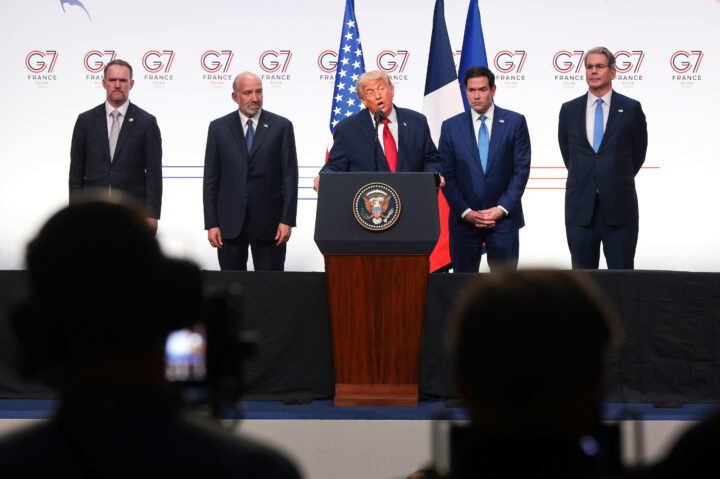
Photo by Anna Moneymaker/Getty Images
U.S. President Donald Trump is joined by (L-R) U.S. Trade Representative Jamieson Greer, U.S. Commerce Secretary Howard Lutnick, U.S. Secretary of State Marco Rubio and U.S. Treasury Secretary Scott Bessent as he speaks at a press conference during the G7 Leaders' Summit on June 17, 2026 in Evian-les-Bains, France.
Good Wednesday afternoon.
This P.M. briefing is reserved for our premium subscribers like you — offering a forward-focused read on what we’re tracking now and what’s coming next.
Today’s Daily Overtime was curated by Senior National Correspondent Gabby Deutch.
📡On Our Radar
Notable developments and interesting tidbits we’re tracking
After days in which President Donald Trump, Vice President JD Vance and other senior officials boosted the U.S.-Iran memorandum of understanding — and amid calls from Capitol Hill and beyond to make public the agreement’s details — the White House on Wednesday shared the text of the document that the Trump administration said will end the war against Tehran. Jewish Insider’s Emily Jacobs obtained the text of the MOU, which was read aloud to reporters during a call with a senior administration official.
The MOU states that the two nations “and their respective allies in the current war” will permanently end military operations — including against Lebanon, a stipulation that suggests the deal is meant to suspend Israel’s retaliatory strikes against Hezbollah, a provision for which Israel has not yet expressed approval. Iran “reaffirms” in the MOU that it will not “procure or develop nuclear weapons”…
The MOU text also reveals that the U.S. plans to issue a sanctions waiver to Iran so that it can sell oil, a major policy shift away from Trump’s use of sanctions against Iran. If a final deal is reached, the U.S. committed to ending all sanctions on Iran. Trump said earlier in the day at the G7 summit in France that the U.S. will not invest in Iran but would not stop other countries from doing so, JI’s Matthew Shea reports.
One new piece of information Trump shared on Wednesday that was not directly addressed in the MOU: a nuclear deal between Washington and Tehran would not prohibit the Iranians from possessing ballistic missiles, JI’s Matthew Shea reports. “I mean, they have to have some, because other people have some … It doesn’t work that way. And missiles aren’t the problem,” Trump said at the G7.
The agreement does not address Iran’s ballistic missiles or support for terrorist proxies. At the beginning of the war, the Trump administration said eliminating the ballistic missile threat from Iran was a key war aim…
The MOU asserts that a final deal will be negotiated within 60 days, unless both countries agree to extend the deadline. Iran’s naval blockade on the Strait of Hormuz must be lifted within 30 days.
When talking to reporters after landing in Paris this afternoon, Trump said he does not view the 60-day deadline as a hard deadline. “Just as long as they’re behaving, I really don’t care that much,” Trump said.
Vance, not Trump, will be signing the MOU in Switzerland on Friday. “This way if it works out, I’m going to take the credit. If it doesn’t work out, I’m blaming JD,” Trump said during the G7…
Some Republican senators criticized the MOU, with retiring Sen. Bill Cassidy (R-LA) calling it “the worst foreign policy blunder in decades,” JI’s Marc Rod reports…
Dario Amodei and Sam Altman, the CEOs, respectively, of Anthropic and OpenAI, joined Trump and the other G7 leaders for lunch on Wednesday, along with Salesforce CEO Marc Benioff and Google DeepMind CEO Demis Hassabis…
The planned Senate confirmation hearing for Jay Clayton, Trump’s nominee to serve as director of national intelligence, was scuttled on Wednesday morning after a last-minute Truth Social post from the president saying that the hearing would be canceled, prompting frustration from both Republican and Democratic lawmakers, JI’s Marc Rod reports…
As a major shareholder in Volkswagen, Qatar’s sovereign wealth fund is complicating talks between the German automaker and the Israeli state-owned defense company Rafael over Rafael’s intention to buy a plant from Volkswagen to manufacture components for Israel’s Iron Dome missile-defense systems…
The anti-Israel advocacy group TrackAIPAC, which attacks lawmakers who have received support from pro-Israel groups and donors who have supported Israel-related causes, endorsed Rep. Ro Khanna (D-CA), who once was targeted by TrackAIPAC before moving sharply to the left on Israel in recent months…
After eight people were indicted last week for allegedly threatening University of Michigan leaders and their families as part of an anti-Israel pressure campaign, former Michigan Democratic Party Chair Lon Johnson called on the party’s current leadership to review the actions of five of the suspects who were members of the Michigan Democratic Party…
The Department of Health and Human Services’ Office for Civil Rights announced on Wednesday that it is opening an antisemitism investigation into the American Psychological Association, the nation’s largest professional organization for mental health professionals. JI’s Gabby Deutch reported on the APA’s handling of antisemitism last summer…
⏩ Tomorrow’s Agenda, Today
An early look at tomorrow’s storylines and schedule to keep you a step ahead
Keep an eye out in Jewish Insider for a look at how some of the country’s most prominent Jewish communal leaders are marking America’s 250th birthday this July Fourth.
Sen. Joni Ernst (R-IA) will be speaking in the morning at a fireside chat at the Hudson Institute focused on “diplomacy, defense and debt.”
We’ll be monitoring the results of Tuesday’s mayoral primary election in Washington, D.C., which still has not been called, even as Janeese Lewis George leads Kenyan McDuffie 53% to 37%, with 68% of the vote counted.
Transferring responsibilities
The move marks a major step in the White House’s efforts to dismantle the Education Department and significantly reduce or distribute its work
TRUST ISSUES

Senators on both sides of the aisle say they’re eager to see the text of the agreement, but the administration has not yet made plans to brief Congress
Please log in if you already have a subscription, or subscribe to access the latest updates.
 Continue with Google

 Continue with Apple