

































Fairfax County, Berkeley and Philadelphia schools face congressional investigations over alleged failures to protect Jewish students as complaints over classroom materials, walkouts and staff conduct mount

Bill Clark/CQ-Roll Call, Inc via Getty Images
Chairman Tim Walberg (R-MI) attends the House Education and Workforce Committee hearing on "The State of American Education" in the Ryaburn House Office Building on Wednesday, February 5, 2025.


 Add JewishInsider on Google
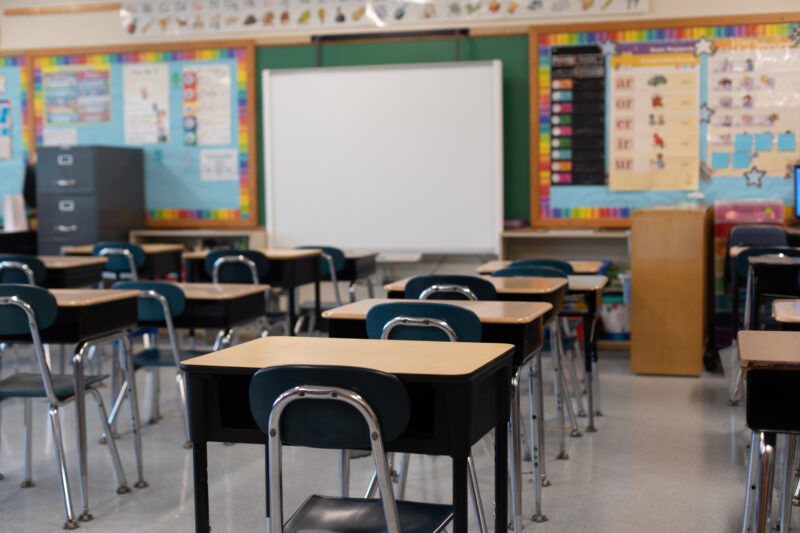
The public school systems in Fairfax County, Va.; Berkeley, Calif.; and Philadelphia became the latest targets of the federal government’s crackdown on antisemitism in the classroom when the House Committee on Education and the Workforce announced on Monday it would open investigations into the districts.
Jewish leaders and parents in all three cities welcomed the probes with cautious optimism and said that they were long overdue, referencing high-profile incidents that have roiled each district, especially in the aftermath of the Oct. 7, 2023, terrorist attacks in Israel and the ensuing war in Gaza. While much of the federal government’s attention has been on the historic levels of antisemitism on college campuses, focus has recently shifted to addressing anti-Israel sentiments creeping into the classrooms at some public K-12 schools.
All three districts under investigation have ties to the “Teaching Palestine” curriculum, which was created by textbook publisher Rethinking Schools. “There are fair-minded ways to look at complicated problems in the Middle East. Rethinking Schools materials aren’t that,” said Clifford Smith, government affairs director of the North American Values Institute, which published a report exposing anti-Israel bias within Rethinking Schools. “They are propaganda masquerading as educational resources,” Smith told Jewish Insider. He called on Congress to “take a hard look at the role groups like Rethinking Schools are playing in the recent explosion of antisemitism.”
Letters to the three school districts from the House committee’s chairman, Rep. Tim Walberg (R-MI), warned that failing to “end any harassment, eliminate any hostile environment and its effects, and prevent any harassment from recurring” against Jewish students and staff would violate Title VI of the 1964 Civil Rights Act and could jeopardize their federal funding. The committee requested “an anonymized chart of all complaints” of antisemitic incidents, along with any documents, communications, or contracts related to “Jews, Judaism, Israel, Palestine, Zionism, or antisemitism” to be sent to the government by Dec. 8.
Fairfax County Public Schools, which is located outside of Washington and serves over 180,000 students, most recently faced scrutiny after two of its high schools’ Muslim Student Association chapters last month published social media videos that imitate hostage-taking and depict violence as part of a recruitment pitch to attract participants to their programming. Several of the participating students were suspended. Guila Franklin Siegel, the COO of the Jewish Community Relations Council of Greater Washington, told JI at the time that the school system’s response to several recent antisemitic incidents was “slow and nontransparent,” and urged FCPS to “do more to properly address such behavior.”
The district has also faced anti-Israel walkouts on campuses. Several FCPS MSA chapters planned “Keffiyeh Week” protests timed to the second anniversary of the Oct. 7 attacks, in which students encouraged classmates to wear the scarf associated with the Palestinian movement. The House committee’s letter also references incidents in the district that occurred before the Oct. 7 attacks, alleging that one school “for years allegedly refused to remove a hallway display that included painted tiles, 40 percent of which featured swastikas and Nazi flags [and that] just prior to the October 7th attacks, one high school’s Muslim Student Association hosted a speaker who had made grotesque antisemitic statements. For example, he had tweeted, ‘I’m not racist I love everyone. Except the yahood [Jews],’ and ‘Never met a Jew who didn’t have a huge nose.'”
“Members of Congress are in a unique position to not just condemn antisemitism, but also to provide schools with the necessary resources and support to fight it,” Franklin Siegel told JI on Tuesday.
“That’s the approach JCRC has taken in our yearslong effort to push Fairfax County officials to confront their long and troubling history of school-based antisemitism. We have partnered with FCPS on extensive teacher trainings, Holocaust speaker events and opportunities for Jewish students to share their personal stories with their school communities,” continued Franklin Siegel. “FCPS’ recent swift response to a series of disturbing videos made by students on school property demonstrates their ongoing commitment to getting this right. If FCPS continues building on these meaningful strides, all Jewish children will ultimately have the safe learning environment they need to thrive.”
A spokesperson for FCPS told JI that it “has received a letter from Congressman Walberg requesting information about potential antisemitic incidents occurring within FCPS schools since 2022. FCPS intends to fully cooperate with Congressman Walberg’s inquiry. FCPS continues to partner with all families to provide a safe, supportive, and inclusive school environment for all students and staff members.”
The Berkeley Unified School District in California, which has 9,400 students, has already previously been placed under federal investigation for an alleged failure to address antisemitism. The House committee wrote on Monday that “since October 7th, BUSD teachers, staff, and administrators have allegedly urged students to join walkouts and demonstrations during school hours that isolate and alienate Jewish students. At one such walkout, students were allegedly chanting ‘Kill the Jews.’ Antisemitism has also infected the classroom, with a teacher at Berkeley High School displaying an image of a fist destroying the Star of David and allegedly describing it as ‘standing up for social justice.'”
In February 2024, the Brandeis Center for Human Rights Under Law and the Anti-Defamation League jointly filed a Title VI complaint with the Office for Civil Rights that states Berkeley administrators have ignored parent reports, including a letter signed by 1,370 Berkeley community members to the Berkeley superintendent and Board of Education, while knowingly allowing its public schools to become hostile environments for Jewish and Israeli students.
A spokesperson for BUSD told JI that Monday’s letter from the House committee “concerns allegations raised almost 18 months ago, which our superintendent addressed when she appeared before Congress in May of 2024. The information sought in the current letter from the committee concerns those old allegations. The district will, of course, respond appropriately to the committee’s letter.”
“I feel gratified that this is getting proper attention,” Yossi Fendel, the parent of an 11th grader in the BUSD who is currently suing the school district over antisemitism in classroom materials, told JI.
“It shouldn’t be surprising that Congress is taking steps to intervene,” Fendel continued. “When Superintendent [Enikia] Ford Morthel got up before Congress, she was the only one there who was unwilling to acknowledge the depth of the problem. Other superintendents acknowledged they have a problem.”
In the House committee’s letter to the School District of Philadelphia, which has nearly 200,000 students, lawmakers said the district employs “numerous educators who allegedly promote antisemitic content in their classrooms.”
“SDP employs a senior administrator — its director of social studies curriculum — who has been widely condemned by Jewish advocacy groups in light of his ‘pattern of denying the Jewish connection to the Land of Israel, refusing to speak about peace or coexistence, and downplaying the lived experiences of Jewish people in the face of violence,’” the letter states. “In a recent example, after the murder of two Israeli embassy workers and the antisemitic firebombing attack in Colorado, the senior administrator wrote, ‘The groups who align themselves with American savageness should not be surprised when the savageness is turned on you[.]'”
In addition to “failing to exercise oversight of antisemitic materials in the classroom,” the letter continues, “SDP’s partnerships with external organizations raise concerns about whether antisemitic ideology is being taught in Philadelphia schools.”
“For example, in August, the Council on American Islamic Relations’ (CAIR) Philadelphia chapter announced that it would be partnering with Philadelphia schools. CAIR Philadelphia’s website promoted a workshop that invoked the antisemitic trope of Jewish ‘political power,’ promising to study ‘the controversial topic if [sic] Jewish political power in the U.S,’” the letter states.
The ADL also filed a Title VI complaint against SDP in 2024, which was settled in December. SDP agreed to undertake a series of initiatives to ensure its compliance with Title VI when responding to allegations of harassment based on shared ancestry.
“Since Oct. 7, 2023, the Jewish Federation of Greater Philadelphia has received numerous reports indicating that the School District of Philadelphia may have allowed conditions that create a hostile environment for Jewish students and educators,” Jason Holtzman, chief of the Jewish Community Relations Council of the Jewish Federation of Greater Philadelphia, told JI.
“These reports include, but are not limited to, antisemitic bullying of Jewish students; drawings of swastikas and other hateful graffiti; and public social media posts by staff that appear to justify the violence of Oct. 7 or promote antisemitic rhetoric,” Holtzman continued. “For nearly two years, the Jewish federation and its partners have engaged the district in good faith, offering education, resources and clear recommendations. Despite this outreach, meaningful action has largely not materialized.”
Holtzman expressed hope that the House investigation “will prompt the district to take immediate, concrete steps to ensure Jewish students and educators are protected, that all incidents are addressed with transparency, and that staff who espouse violence or extremist views are held fully accountable.”
SDP did not respond to a request for comment from JI.
On Tuesday, the ADL called the House committee investigations “an important step in exposing and confronting the rising tide of antisemitic harassment, intimidation and exclusion that Jewish students face in our nation’s classrooms.”
Michael Schill said no Northwestern students have been disciplined for anti-Israel behavior

Valerie Plesch for The Washington Post via Getty Images
Michael Schill, president of Northwestern University, before a House Committee on Education and the Workforce hearing, "Calling for Accountability: Stopping Antisemitic College Chaos" on Capitol Hill on May 23, 2024.
Michael Schill, the Northwestern University president who announced his resignation last week amid widespread controversy over his tenure, appeared unfazed to hear that a Palestinian professor he hired as part of a deal with encampment protestors had once met with the late Hamas leader Yahya Sinwar, an interview with the House Committee on Education and Workforce, released on Thursday, reveals.
In the Aug. 5 interview, which was released as a response to Schill’s resignation announcement on Thursday, House investigators pressed Schill on the hiring of Mkhaimar Abusada as a visiting associate professor of political science.
Abusada, who Schill described as “someone who is regularly quoted as an authority on Palestine governance and politics,” published a piece in Haaretz last year about his 2018 meeting with Sinwar.
“Hypothetically, if somebody, you know, 4 years, 5 years before Oct. 7 has met with someone who — and, I mean, I’m not sure — my guess is — I’ve never been to Gaza, but it’s a pretty small place, and that you are going to meet people and talk to people,” said Schill, who claimed to not be aware of that meeting when he hired Abusada but noted in the interview that the professor’s position had been extended to August 2026. “I don’t know whether a seasoned professor who is doing the politics of Gaza could avoid getting to know some of these people, or whether that would be not doing his job right.”
Schill, who will remain as president in an interim role until his successor is chosen, oversaw a period of antisemitic turmoil on the Chicago-area campus after the Oct. 7, 2023, terrorist attacks and was accused of failing to respond in an adequate manner, leading some lawmakers to call for his resignation.
The 135-page interview transcript provides new, detailed information on Schill’s response to years of campus turbulence, including his controversial handling of a violent anti-Israel encampment in spring 2024 and the university’s close ties to Hamas-allied Qatar.
The interview comes as Northwestern is in talks with the Trump administration to restore $790 million in funding for the university that was pulled by the federal government over an alleged failure to protect Jewish students.
Jewish alumni expressed optimism that Schill’s resignation, and the interview being made public, would lead to Northwestern leaders making necessary reforms.
“Northwestern’s board needs to take control of the situation in a way they have declined to until now [and] clear out all other administrators who have been part of this culture of enabling antisemitism on campus,” Rich Goldberg, a senior advisor at Foundation for Defense of Democracies who holds bachelor’s and master’s degrees from Northwestern, told Jewish Insider.
“Those who are negotiating on behalf of the Trump administration, now seeing this transcript, will need to review any additional information that’s come to light, additional questions that they might have for the university, see if this changes anything that’s been under negotiation to date, and with Schill stepping down, hopefully signaling the board of the university wanting to see real changes made,” Goldberg continued.
Michael Teplitsky, president of the Coalition Against Antisemitism At Northwestern, said that Abusada “should never have been at Northwestern.”
“There must be a massive turnaround and restructuring at the university and they have to make meaningful changes,” said Teplitsky.
When anti-Israel encampments emerged on college campuses across the country in spring 2024, Schill, who is Jewish, became the first university president to strike a deal with demonstrators. The deal included no disciplinary action taken against students and acceded to several demands of the protesters, which drew strong condemnation from many Jewish leaders. Among other concessions, Schill committed to hire two Palestinian professors, which would include Abusada, and offer full scholarships to five students from Gaza.
Schill acknowledged in the interview that — despite telling Congress that “discipline has been meted out to many of those students” who participated in the encampment and other antisemitic incidents on campus — no students had actually faced disciplinary action for anti-Israel activity on campus. Schill said that the university had reason to believe some demonstrators could be armed and claimed that university leadership had no option but to negotiate with the encampment organizers because they were dangerous. The university was afraid to send in the police to remove them, he said.
“We didn’t think our students were armed, but we didn’t know,” Schill told the House committee. “There was a suspicious tent off to the side, and we knew that our students were trying to avoid the people in that tent, and we didn’t know what was inside the tent. And so we were concerned about that.”
The released testimony also puts a spotlight on Northwestern Provost Kathleen Hagerty’s support for the encampment and BDS activism on campus, which Schill argued she may have viewed as a “teachable moment.”
In a series of exposed text messages, Hagerty wrote that “if the students really cared about actual divestment, then they need the patience to do the work to actually make it happen.”
In an April 27 text exchange with a professor, Hagerty wrote that for Northwestern to boycott Sabra, an Israeli hummus company that is sold at the university, it would “probably be pretty easy,” adding that she is “all for making a deal.”
Schill responded to the text messages by highlighting his support for the Jewish state. “I view Israel as our number one strategic partner in the world,” he said.
“I don’t think [Schill] is the only administrator that needs to go,” said Goldberg. “Clearly the provost needs to follow him out the door as someone who is also chiefly responsible for the culture of enabling antisemitism at the university and implementing the encampment appeasement.”
The interview also raised new questions around Northwestern’s relationship with Qatar. Schill said that students on Northwestern’s Qatar campus are exempted from completing the university’s mandatory antisemitism training and acknowledged several examples of professors on the Qatar campus engaging in extreme pro-terrorism and antisemitic activism and speech on social media.
He said that Northwestern’s contract with Qatar prevents it or its affiliates from criticizing the country. “NU, NU-Q, and their respective employees, students, faculty, families, contractors and agents, shall be subject to the applicable laws and regulations of the State of Qatar, and shall respect the cultural, religious and social customs of the State of Qatar,” said Schill. He said that Qatar has given Northwestern $737 million since 2008.
“The initial deal to put a campus out in Qatar was put together, it was in the era after 9/11,” Teplitsky told JI. “I think people had hopes and ambitions to build bridges in the Middle East, in Qatar. It had wonderful intentions. I think now looking back and looking at it specifically through the lens of Northwestern University… looking at it from a perspective of … values that Northwestern lists on its website, that relationship has not been a good one. It’s been one of failure.
Teplitsky continued, “Should Northwestern be registered, as long as they continue to have this campus, with the Department of Justice as a foreign agent? I believe that they should have to register as a foreign agent if they choose to continue to have this campus.”
Jewish Insider Senior Congressional Correspondent Marc Rod contributed reporting.
Committee Chairman Tim Walberg sent letters to the three schools requesting materials on complaints of antisemitism and discussion of the issue among DEI staff

Bill Clark/CQ-Roll Call, Inc via Getty Images
Rep. Tim Walberg (R-MI) speaks during the House Republicans' news conference in the Capitol on Wednesday, Dec. 6, 2023.
The House Committee on Education and the Workforce will investigate three medical schools over their “failures to address antisemitism,” Rep. Tim Walberg (R-MI), the chair of the committee, announced on Monday.
The three schools targeted in the probe are the University of Illinois College of Medicine (UICOM), University of California, San Francisco and University of California, Los Angeles Geffen School of Medicine.
The investigations come as medical schools and the medical profession have faced increasing scrutiny over rising antisemitism since the Oct. 7, 2023, Hamas attacks.
In letters sent to the leaders of each institution, Walberg requested that the administrators send a lengthy list of documents to the committee, including materials related to complaints of antisemitism, any discussion of antisemitism among DEI staff after Oct. 7 and all guidelines for antisemitism training and investigations that are utilized on campus.
“The Committee has become aware that Jewish students, faculty, and patients have been experiencing hostility and fear at the university, and it has not been demonstrated that the university has meaningfully responded to address and mitigate this problem,” Walberg wrote to each institution, followed by a list detailing alleged incidents of antisemitism.
The allegations at UCLA date back to 2021, when UCLA’s medical school reportedly instituted a mandatory first-year seminar about “structural racism and health equity” that described Jews as “white” and showed them alongside images of “oppressors” and “capitalists” with “long hooked noses.” Other incidents include a student writing in the UCLA Class of 2025 group chat that Hamas’ actions on Oct. 7 were akin to a “slave rebellion” and a professor in the mandatory equity class requiring students to chant “free Palestine” with her.
Last year, the House Energy and Commerce Committee warned UCSF that its federal funding could be at risk if it didn’t do more to address antisemitic harassment. In June, UCSF fired a medical school professor who had posted antisemitic content online and targeted a Jewish faculty member — more than a year after she first made the posts.
Jewish students at UCSF have hidden parts of their Jewish identity, “including removing identifiers on social media,” and the Jewish patients have done the same, according to the letter from Walberg. It also lists several instances of UCSF faculty and staff expressing support for Hamas.
The allegations at UICOM include the removal of Oct. 7 hostage posters from campus, a student group hosting a lecture with a speaker who expressed support for Hamas and a UICOM surgeon comparing Israel to the Islamic State and to Nazis in social media posts. In a Slack channel, which is used to share information about campus events, multiple posts reportedly rejected the claim that Hamas terrorists raped Israeli women on Oct. 7. Walberg also said the medical school staff member tasked with addressing antisemitism is “not suited” to help the school deal with the problem, because he has “made light of the rise [of] antisemitism on college campuses.”
Dr. Yael Halaas, a plastic surgeon in New York and the founder and president of the American Jewish Medical Association, praised the investigations.
“We are physicians and healthcare professionals because we believe in healing the sick and helping the vulnerable. Hate has no place in healthcare,” Halaas told Jewish Insider. “Equally, as educators, we know that indoctrination — whether political, antisemitic, or any ideology of hate — has no place in medicine. The practice and teaching of medicine must be grounded in science, compassion, and respect for human dignity.”
The letters request the universities to submit relevant documents to the committee by Sept. 8.
The texts from Claire Shipman, published in a letter by the House Education Committee, call a Jewish board member a ‘mole’ and ‘extremely unhelpful’

Alex Wong/Getty Images
Acting Columbia University President Claire Shipman testifies before the House Committee on Education & the Workforce at Rayburn House Office Building on April 17, 2024 in Washington, DC.
Text messages obtained by the House Committee on Education and Workforce published in a letter on Tuesday revealed that Claire Shipman, acting president of Columbia University, suggested that a Jewish trustee should be removed over her pro-Israel advocacy and called for an “Arab on our board,” amid antisemitic unrest that roiled the university’s campus last year.
“We need to get somebody from the middle east [sic] or who is Arab on our board,” Shipman, then the co-chair of Columbia’s Board of Trustees, wrote in a message to the board’s vice chair on Jan. 17, 2024. “Quickly I think. Somehow.”
Shipman said in a follow-up message days later that Shoshana Shendelman, a Jewish board member who frequently condemned campus antisemitism, had been “extraordinarily unhelpful” and said, “I just don’t think she should be on the board.”
In another communication on April 22, 2024, according to the texts obtained by the committee, Wanda Greene, vice chair of the board of trustees, asked Shipman — referring to Shendelman — “do you believe that she is a mole? A fox in the henhouse?” Shipman agreed, stating, “I do.” Greene added, “I am tired of her.” Shipman agreed, “so, so tired.”
The messages were referenced in the letter, first obtained by Free Beacon, sent to Columbia on Tuesday by the committee’s chairman, Tim Walberg (R-MI), and Rep. Elise Stefanik (R-NY) as part of the committee’s ongoing investigation into whether the school is violating Title VI of the Civil Rights Act of 1964 by allowing harassment of Jewish students.
The lawmakers wrote in the letter, which was addressed to Shipman, “These exchanges raise the question of why you appeared to be in favor of removing one of the board’s most outspoken Jewish advocates at a time when Columbia students were facing a shocking level of fear and hostility.”
Columbia responded to the letter, in a statement to Free Beacon, claiming that the text messages were taken out of context.
“These communications were provided to the Committee in the fall of 2024 and reflect communications from more than a year ago,” the university said. “They are now being published out of context and reflect a particularly difficult moment in time for the University when leaders across Columbia were intensely focused on addressing significant challenges.”
Shipman, a former ABC News reporter, stepped into the role in March after interim President Katrina Armstrong’s abrupt resignation. At the time, Stefanik called the choice of Shipman “untenable.” On campus, the news of Shipman’s hiring was met with cautious optimism from pro-Israel student leaders.
Last April, Shipman testified at a congressional hearing regarding antisemitism at Columbia alongside then-Columbia President Minouche Shafik, who resigned from her post in August, and board co-chair David Greenwald. Shipman told members of the House Committee at the time that she knew Columbia had “significant and important work to do to address antisemitism and to ensure that our Jewish community is safe and welcome.”
Students from nine top schools from around the country offered strikingly similar accounts of the explosion of antisemitism on their campuses and their administrations’ failure to respond

Frank Schulenburg
Stanford University
For two hours on Wednesday, lawmakers heard from a parade of Jewish students, each delivering the same message: They do not feel safe on their college campuses.
Speaking to a roundtable organized by the House Committee on Education & the Workforce, Jewish students from Harvard, the University of Pennsylvania, Massachusetts Institute of Technology, Columbia, Rutgers, Stanford, Tulane, Cooper Union and University of California, Berkeley spoke about about the harassment, threats and violence they’ve faced on their campuses since the Oct. 7 attack on Israel.
The students’ accounts were all remarkably similar, despite coming from a range of locations and school types, including openly antisemitic taunts and harassment, angry mobs rampaging through campus and overtaking campus buildings, vandalism and in some cases threats of or actual incidents of violence, all going largely or completely unaddressed by university administrators and campus police, despite repeated and sustained pleas from the students for help and support.
In some cases, the students said professors and administrators were complicit or actively involved in the antisemitic activity. Students said that they feared for their safety and even their lives.
The students, saying they felt abandoned by their universities and had no faith in them to act to protect them, pleaded for action from Congress. They said that they hoped their testimony could serve as a wakeup call to both Congress and the American public.
“As my friends from Harvard and UPenn can tell you, it doesn’t end simply because presidents are replaced. Systemic change is needed,” Kevin Feigelis, a Stanford student, said. “Universities have proven they have no intention of fixing themselves. It must be you, and it must be now.”
Shabbos Kestenbaum — a Harvard student who said he’d contacted the school’s antisemitism task force more than 40 times without a response and had been threatened in a video with a machete by a still-employed Harvard staff member — called Congress and the courts the students’ “last hope.”
Multiple students and lawmakers said that the current events on campus carry echoes of 1930s Germany or the pogroms in Russia.
Some suggested potential courses of action that Congress and other federal branches could take, including leveraging U.S. taxpayer funding or the schools’ tax-exempt statuses, placing third-party monitors on campus and enforcing diversity requirements in Middle East studies departments requiring them to include pro-Israel views.
Students from Harvard, Penn and MIT all said that little has changed on their campuses since last year’s blockbuster congressional hearing on campus antisemitism, which prompted the ouster of Harvard and Penn’s presidents.
Rep. Virginia Foxx (R-NC), the committee’s chair, vowed that she and her colleagues would not stop their efforts to tackle antisemitism on campus.
“I was very emotional,” Foxx told Jewish Insider, “I’m a mother and a grandmother. I have one grandchild who went to college and I’m not sure what I would have done if he had come home to say he felt threatened on his campus like these students feel threatened. No student on a college campus, in this country, in the year 2024, should feel threatened.”
Foxx said that the committee’s antisemitism investigation is proceeding deliberately, but that the schools will be held to account. The committee has already requested documents from Harvard, Penn and Columbia and has now subpoenaed Harvard. Foxx suggested that other schools whose students had appeared Thursday could be next.
Please log in if you already have a subscription, or subscribe to access the latest updates.
 Continue with Google
 Continue with Apple