



























Altfield succeeds Maury Litwack, who founded the coalition to advocate for government funding of Jewish schools

Courtesy
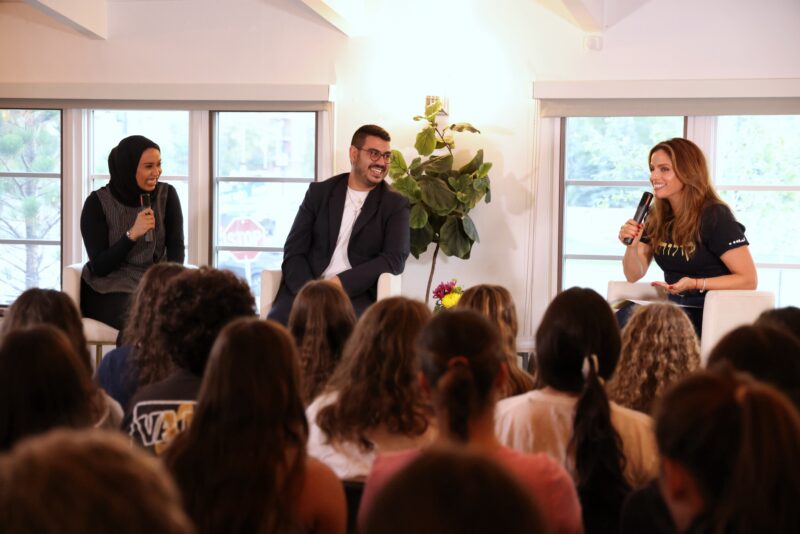
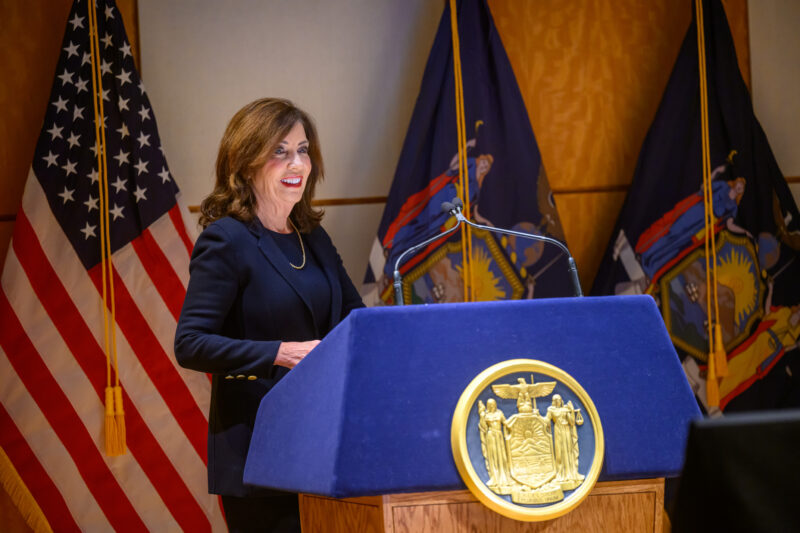
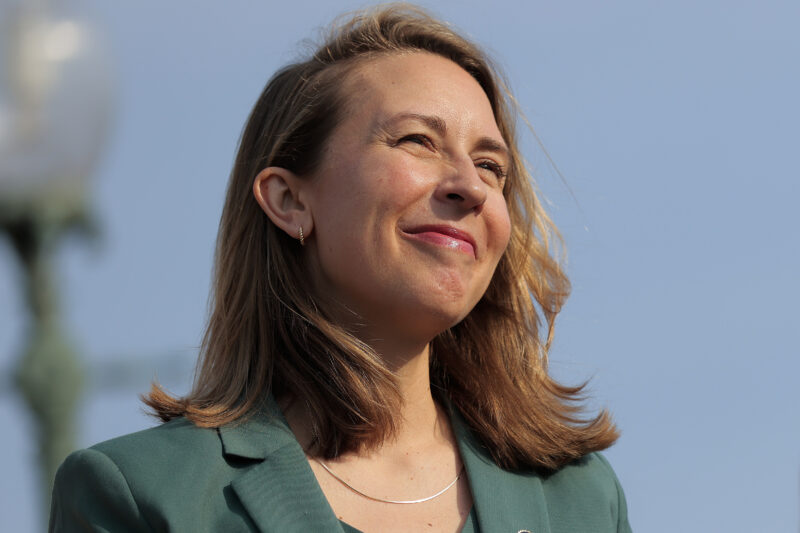
Sydney Altfield (left), Director of State Operations of New York State Kathryn Garcia and New York Gov. Kathy Hochul.


 Add JewishInsider on Google
Sydney Altfield, a champion of STEM education, has been tapped as national director of Teach Coalition, an Orthodox Union-run organization that advocates for government funding and resources for yeshivas and Jewish day schools, Jewish Insider has learned. She succeeds Maury Litwack, who founded the coalition in 2013 and served as its national director since.
Altfield, who has held various roles with Teach Coalition for the past seven years, most recently served as executive director of its New York state chapter. In that position, she spearheaded STEM funding for private schools in the state and helped establish state security funding programs — two areas she intends to expand on a national level in the new role, which encompasses seven states: New York, New Jersey, Maryland, Florida, Pennsylvania, California and Nevada.
“We’re at a very pivotal moment in Jewish day schools where the continuity of the Jewish people relies on Jewish education and having access to such. That also has to come at a quality education,” Altfield told JI in her first interview since being selected for the position. “It’s so important to understand that it’s not just about STEM but it’s about the entire Jewish education being high quality, something that’s accessible for everyone.”
Amid rising concerns about security in Jewish schools, Altfield said she looks forward to taking “the wins we’ve had in places like Florida,” referring to universal tax credit scholarships, to ensure that funds are effectively used to protect Jewish students and staff.
Soon after the Oct. 7, 2023, terrorist attacks, Teach Coalition launched Project Protect to write and implement federal- and state-level security grants.
“A lot of people thought that after Oct. 7 the rise in hate crimes and antisemitism, and specifically the rise in security threats, would go down but we’re seeing just the opposite,” Altfield said. “It’s very important for us to realize what is ahead and what is needed … to ensure that the financial burden of an antisemitism tax is halted as soon as possible.”
According to a Teach Coalition survey published in April, security spending among 63 of the coalition’s member schools in New York, New Jersey, Pennsylvania and Florida increased a staggering 84% for the 2024-2025 school year, with these schools now spending $360 per student more on security than before Oct. 7. The costs ultimately get passed on to families in the form of security fees or increased tuition.
Altfield credits herself with building “very strong” multifaith coalitions while overseeing the New York chapter.
“I feel that New York is just scratching the surface,” she told JI. “I really do believe that our struggles as a Jewish community in ensuring a quality Jewish education is the same when it comes to Islamic education or Catholic schools, and if we have a united voice we can work together and move the needle faster. It makes our voice that much louder.”
Under Litwack’s leadership, Teach Coalition ran several successful voter mobilization initiatives in Westchester and Long Island elections. Altfield said that while she plans to work with Litwack on some initiatives, “Teach will be going back to the basics of quality, affordable education.”
Meanwhile, “there’s a new wave of needing a Jewish voting voice across the nation,” Altfield said, noting that the transition will allow Litwack to continue that effort in a separate organization he has formed, Jewish Voters Unite.
“It has been a privilege founding and building Teach Coalition into the powerhouse organization that it is today,” Litwack told JI. “I’ve had the privilege of working alongside Sydney for years — someone whose vision, integrity, and dedication have helped shape what the organization has become.”
“The Orthodox Union community — along with other faith communities — is committed to educate its students in our day schools and yeshiva, where their faith and values are nurtured while they receive a well-rounded education. Especially as our community faces record antisemitism, that high-quality Jewish education needs to be made more accessible,” Rabbi Moshe Hauer, executive vice president of the Orthodox Union, said in a statement, adding that Altfield’s promotion “represents the redoubling of our commitment to helping Jewish Day School and Yeshiva families and those that aspire to attend these schools.”
New York Gov. Kathy Hochul and New York City Mayor Eric Adams also took note of the work Altfield has done locally. “Governor Hochul has forged a close partnership with Teach NYS throughout years of advocacy and collaboration, continuing this administration’s ironclad commitment to fighting antisemitism and supporting Jewish New Yorkers,” a spokesperson for Hochul said in a statement.
“Sydney is a true bridge-builder and her leadership at Teach NYS helped deliver real results for our families,” Adams said.
Altfield said she takes the helm of the organization at a time when it is “becoming even more important and more visible” than ever.
On a federal level, for instance, “it’s very interesting to see where the Trump administration is going when it comes to education funding,” she said.
“They are very supportive of educational freedom and choice and that’s what we’re about so we’re very excited to see the changes that are coming, whether that be through the administration or even through a federal tax credit program that’s currently being discussed in Congress,” Altfield continued.
Last week, the topic of Jewish education was brought to an international stage when podcast host and author Dan Senor said that Jewish day schools are one of the strongest contributors of a strong Jewish identity — one that provides the tools that are needed at this precarious moment to “rebuild American Jewish life” — as he delivered the 45th annual State of World Jewry address at the 92NY.
“I’ve been saying this for so long and Dan gets the credit for it — as he should,” Altfield said with a laugh.
“People always ask me why I do what I do,” she continued. “Even before Oct. 7, I said I believe that the continuity of the Jewish people lies within Jewish education. You cannot stress that any more than what has been seen after Oct. 7.”
Altfield pointed to increased enrollment in Jewish day schools nationwide. “A lot of what the Jewish community is going through is under a microscope,” she said. “Now that microscope is blowing up the understanding that Jewish education is basically the savior of what’s going to help us through these next few years.”
The New York congressman sparred with Mayor Eric Adams, who said he had no authority to cancel the performance

Gilbert Flores/Variety via Getty Images
Kehlani at the Fashion Trust U.S Awards 2025 held at The Lot at Formosa on April 08, 2025 in Los Angeles, California.
Rep. Ritchie Torres (D-NY) is calling on New York City officials to cancel a Central Park performance at a city-sponsored event by Kehlani, a performer who has called for the destruction of Israel and Zionism.
Kehlani is set to perform in June at a Pride event sponsored by the City Parks Foundation, an independent nonprofit that receives city funding to promote arts, sports, education and other programming in city parks. But Mayor Eric Adams has disputed whether the mayor’s office has any ability to cancel the performance or withhold funds.
Kehlani has posted repeatedly on her Instagram stories calling to “DISMANTLE ISRAEL. ERADICATE ZIONISM,” and calling Zionists “the scum of the Earth.” The performer has also reposted content expressing support for “resistance in all of its forms,” describing Zionists as “evil,” saying that “no one should feel comfortable or safe until Zionism is extinguished” and characterizing all Israelis as settlers.
Other reposts have featured the slogans, “There is only one solution Intifada revolution” and “Long live Palestine, from the river to the sea.”
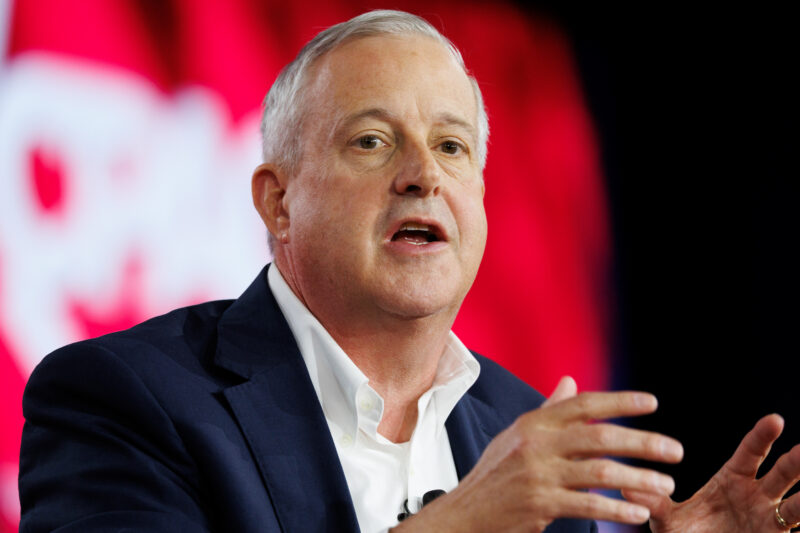
Torres highlighted Kehlani’s anti-Israel rhetoric in a letter to Mayor Eric Adams, City Parks Foundation Executive Director Heather Lubov and Live Nation Entertainment CEO Michael Rapino, saying, “Our public institutions have a duty to ensure that taxpayer dollars are never misspent on subsidizing or sanitizing antisemitism — especially under the banner of a Pride Event.”
He called on them to cancel the event, adding “her rhetoric flatly contradicts the spirit of Pride Month, which is and must remain a celebration of love and inclusion — not hate and exclusion.”
Torres has also traded messages with Adams about the event on X.
Adams said that the Parks Department “does not select, contract, or pay the artists, and does not fund the City Parks Foundation at all” and that the only city funding it receives is allocated by city council members, not by the mayor or divisions under his supervision.
“Your letter should be addressed to Speaker Adams and her councilmembers who have control over their own discretionary funding,” Adams wrote. “Our administration will not fund organizations that promote antisemitism or any other form of hate.”
He noted that, as a councilmember, Torres himself allocated funding for the City Parks Foundation.
Torres shot back, “The City Charter grants the Mayor the authority to impound city funds. You unquestionably have the power to withhold city funding from any organization or event that provides a platform for antisemitism,” adding, “I find it hard to believe that the most powerful elected official in New York City is powerless to act on a city matter involving city funds.”
The Parks Department, which falls under the mayor’s supervision, also has a contract with the City Parks Foundation to permit festival operations in Central Park.
Torres said he also planned to reach out to Capitol One, a corporate sponsor for the event.
The meeting came as a result of several antisemitic incidents CUNY students have faced just weeks into the new academic year

Haley Cohen
Mayor Eric Adams and Rep. Ritchie Torres (D-NY) met with CUNY Jewish students at City Hall to discuss antisemitism on campus, Sept. 23, 2024
Jewish student leaders from the City University of New York shared firsthand accounts of campus antisemitism with Rep. Ritchie Torres (D-NY) and New York City Mayor Eric Adams at a roundtable inside City Hall on Monday.
The meeting came as a result of several antisemitic incidents CUNY students have faced just weeks into the new academic year. Many of the students in attendance said that antisemitism is more intense on campus than it was last year. They shared that they were met with loud protests outside of a recent event intending to welcome new Jewish students to campus.
On Sep. 3, some CUNY Jewish students were followed to a kosher restaurant in midtown Manhattan, where pro-Palestinian student demonstrators blockaded the entrance and shouted threats at Jewish customers.
Also this month, CUNY’s Baruch College tried to cancel an annual campus Rosh Hashanah celebration over safety concerns. Baruch’s president, Szu-yung David Wu, initially told students that he could not “guarantee their security.” The decision was later reversed on the condition that Hillel’s name would not be on the Sept. 26 event due to fears of anti-Israel protests.
“We’ve been fighting for almost a year now with all of the antisemitism going on both on campus and in the city,” Maya Gavriel, a third-year student studying accounting at Baruch, told Jewish Insider at the event. “Being able to speak with leaders who can actually make change, and they’re listening to what’s happening, feels like I’m finally getting an opportunity to be proud about being Jewish. I’m under the impression that [Adams and Torres] care about wanting to give us the resources to make a change, but it will only come with time and a lot of pressure.”
Gavriel noted that she’s particularly appreciative of Torres for meeting with Baruch Jewish students immediately after the Rosh Hashanah event cancellation. “He set up the meeting with Mayor Adams and the NYPD,” she said. “He listened and gave us resources and that’s how I know things are happening. That’s why we keep showing up to tell our stories and we’re not stopping this fight.”
Students expressed that the NYPD did not move fast enough last year to break up demonstrations.
Adams told the group of about a dozen students that “we need action from you guys to ask them to go onto campus.”
“Our lawyers made it clear you don’t have the authority to go on those college campuses without the permission of the individuals of the schools, the presidents and the faculties,” the mayor said after listening to students’ concerns and experiences.
“Whatever the law allows me to do, I am going to do it to ensure New Yorkers are safe,” Adams said.
“Free expression is vital to a free society,” said Torres. “But there is a difference between free expression and harassment [and] intimidation. What we’re seeing in our colleges and universities is the creation of a hostile environment in violation of Title VI [of the Civil Rights Act of 1964].”
Several Jewish members of Adams’ team also addressed students’ concerns at the roundtable, including Menashe Shapiro, deputy chief of staff and senior advisor to the mayor; Richie Taylor, deputy chief of the NYPD and Fabien Levy, deputy mayor for communications.
New York City councilmember is vying to become the next Brooklyn borough president

Matthew Kassel
Robert Cornegy
With his towering 6-foot-10 frame topped by a bundle of impressive dreadlocks, Robert Cornegy, Jr., a New York City councilmember who until recently claimed the title of tallest politician in the world, was hard to miss as he sauntered into Basquiat’s Bottle, a trendy bar and restaurant on a commercial drag in the Brooklyn neighborhood of Bedford-Stuyvesant.
“This is one of the restaurants that’s kind of central to the community,” Cornegy, 55, told Jewish Insider on a recent Sunday afternoon, settling in at a table in the back while contemplating an order of shrimp and grits.
Cornegy, whose district includes Bedford-Stuyvesant as well as Crown Heights, is now competing for the more high-profile role of Brooklyn borough president — and he has been savoring the opportunity to step away from Zoom, hit the pavement and make a more personal impression on potential voters with just weeks remaining until the June 22 Democratic primary.
“Because I’m such an attraction, I’m used to meeting people and engaging people,” said Cornegy, who wasn’t boasting so much as accurately characterizing his striking height. “I’m on the doors, I’m in the streets, I’m in bars, I’m in restaurants talking to people. When people generally get a chance to speak to me and know me, whether they’re with me or not, they walk away with a solid impression.”
But Cornegy is relying on more than just his memorable presence as he jockeys to succeed Eric Adams, the outgoing borough president and mayoral hopeful. In recent months, Cornegy has established himself as a leading contender in the crowded field of more than a dozen candidates, tying for first place in one poll alongside fellow city councilmember Antonio Reynoso, with Assemblymember Jo Anne Simon, who leads in fundraising, not far behind.

Robert Cornegy in Coney Island (Courtesy)
While Reynoso has pulled in support from a number of leading progressives, Cornegy is carving out a center-left lane, having earned endorsements from several prominent Jewish community leaders as well as influential celebrities including Tracy Morgan and Spike Lee.
Facing term limits in the City Council, where he has served since 2014, Cornegy believes that he is best qualified to usher his home borough into a post-pandemic era, citing his current role leading the housing and buildings committee as well as his prior experience chairing the small business committee.
“During the pandemic, it became incredibly evident to me that whoever was going to lead this borough had to have a solid understanding for the recovery process of small business and job creation and responsible development,” said Cornegy, who is also chairman of the council’s Democratic Conference. “While we try to fight for affordability in an ever-increasing, unaffordable borough, the person couldn’t be just a ‘no, no, no’ person. It had to be somebody who was willing to fight the hard fight around affordability and who had some acumen within that.”
The borough presidency is largely ceremonial, holding some substantive duties like community board appointments and zoning and land use recommendations. But Cornegy says he is excited by the role because it nevertheless represents a powerful platform.
“We have the largest bully pulpit probably in the state outside of the mayor of New York and the governor,” he argued, indicating that the primary pillars of his campaign are job growth, affordable housing and public safety — perhaps the issue on which he is most passionate.
The city councilman was an active presence last summer at social justice demonstrations in his district, where a Black Lives Matter mural was painted in bright yellow letters onto a block-length stretch of Fulton Street he helped turn into a pedestrian plaza. But while Cornegy advocates for increased policy accountability, he has distanced himself from efforts to defund or abolish the police.
“I don’t think it’s mutually exclusive to demand reform and accountability in the criminal justice system — I’m a Black man in America — while still supporting a platform for solid public safety,” said Cornegy. “I don’t think you have to abandon one for the other.”
He says his constituents are largely in agreement with his views. “My community, the community of Bedford-Stuyvesant and northern Crown Heights, has never demanded abolishing or defunding the police,” said Cornegy, who believes that police officers should live in the neighborhoods they work in and advocates for the establishment of a mental health emergency response unit. “They’ve demanded policing in their communities that didn’t violate their civil and human rights, and I think most people would agree with that as a narrative.”

Henry Butler and City Councilman Robert Cornegy speak during “The Last O.G. Season 2” Garden Party For Good at the Hattie Carthan Community Garden in Brooklyn on March 28, 2019 in New York City. 547100 (Credit: Mike Coppola/Getty Images for TBS)
Still, Cornegy has found himself at odds with progressives who support more sweeping reforms. “He’s trying to signal that he understands policing is a problem, but almost every elected official is saying that,” said Alex Vitale, a professor of sociology at Brooklyn College and the author of The End of Policing. “He does support some small investments in non-police public safety strategies, but those proposals are very small in scale and don’t reduce the burden of policing.”
Cornegy took issue with such criticism, noting that he is deeply engaged in reform efforts, pointing to his sponsorship of a chokehold criminalization bill as well as his support for ending qualified immunity, which has long protected police officers from wrongdoing.
“I can go all the way back where we’ve been witnessing this regularly in our communities and trying to find a substantive way for long-term, substantial change, and have been working towards that,” he told JI. “I think that there was a little bit of a disregard for that hard work that some of us have put in.”
Others have appreciated his approach. “Security is a major issue, especially considering all the anitsmeitic incidents,” said Leon Goldenberg, a prominent Orthodox Jewish real estate executive and talk radio host in Midwood who, as a member of the Flatbush Jewish Community Coalition, recently endorsed Cornegy.
If elected, Cornegy said he will use the borough president’s office as a “sanctuary” for victims of hate crimes while working to assemble a task force for attacks within Brooklyn. “In order to get a hate crime designation, it takes almost an act of god,” said Cornegy, who adds that he will encourage Brooklyn’s district attorney to act more forcefully on such designations. “This kind of hatred, unchecked, only escalates.”
Cornegy has longstanding ties with Brooklyn’s Orthodox Jewish community thanks in part, he said, to his support for causes like security funding of yeshivas. “My agenda for public safety certainly encompasses the Orthodox community and my narrative around public safety,” he said.
Such relationships, he says, have only accrued over time. “I celebrate the fact that, yes, while I’ve gotten Orthodox support,” Cornegy said, “it has come out of hard work together.”

Robert Cornegy in Cobble Hill, Brooklyn (Courtesy)
“I’ve worked on behalf of an issue that was germane to a particular demographic, and so that demographic now feels confident that, as a Black man, I could still have Jewish issues or Hispanic issues or Polish issues. I have a Polish contingency,” Cornegy told JI. “But those are all forged out of doing work that positively impacted those communities. So there’s this kind of feeling that, ‘OK, he’s Black, but he has a larger view of what the needs of public communities outside of his own are, and potentially can advocate on our behalf as well.’”
“I would say his claim to fame is he’s really a consensus builder,” said David Greenfield, the CEO of the Met Council and a former city councilman who served alongside Cornegy. “In Brooklyn, which is a big, complicated, complex borough, he’s done a good job bringing people together.”
The son of a Southern Baptist minister who grew up in Bedford-Stuyvesant, Cornegy — now a father of six — played basketball at St. John’s University, went to the Final Four and then played professionally overseas for 15 years. He spent some of that time playing in Israel in the early ’90s — while also living briefly on a kibbutz because he wanted to immerse himself in the culture — an experience he describes as formative. “I played on teams where they were professional athletes and still served in the military,” he recalled. “When I would ask why, there was a level of patriotism that existed that I didn’t even think existed in the United States.”
“I’m a patriot,” Cornegy said. “I love the United States of America. But I hadn’t seen that before.”
Cornegy described the recent violence between Israel and Hamas as “incredibly disturbing,” adding: “I was there, and I understand protecting your homeland from people who really have to do that on a consistent basis.”
“Because we’re such a diverse borough, it is always on my mind how to bring peace here, at least, because you’ll see that there are conflicts that are happening on our homeland because of what’s happening there,” Cornegy told JI. “That disturbs me a lot, because for the most part, here in the borough, we kind of live cohesively together, and I’m always thinking about what can I do as the Brooklyn borough president to alleviate some of that pressure that people are experiencing.”

Robert Cornegy at a rally
That impulse was on display, on a smaller scale, at Basquiat’s Bottle in Bedford-Stuyvesant the other day, when a kitchen worker approached Cornegy to thank him for providing a free suit for his graduation not long ago. And although the city councilman only had a glass of water, he still bought a round of drinks for the wait staff — he abstained — rather than leaving the restaurant without having ordered anything.
It was clear that Cornegy was enjoying his status as a kind of community fixture as he campaigns for the opportunity to expand his web of connections.
Cornegy gained some prominence outside of Brooklyn when, having undergone a rigorous vetting process, Guinness World Records deemed him the world’s tallest politician a couple of years ago. But he lost his crown after an insurance commissioner in North Dakota beat him by a centimeter. “A centimeter,” Cornegy emphasized, sounding a note of amused annoyance, “and some obscure elective role that I’ve never even heard of before.”
He didn’t seem too bothered by it, though. “I’m still the people’s champ here in New York,” he said. “I’ll take that.”
The housing expert and all-around policy wonk is hoping his 'campaign of ideas' will set him apart in a crowded field

Courtesy
Shaun Donovan
On paper, Shaun Donovan seems to stand out as an eminently qualified candidate for New York City mayor. The 55-year-old housing and urban development expert with two master’s degrees is a policy wonk who held top jobs in the Obama White House and Bloomberg mayoral administration, and in conversation, he projects an air of academic forbearance reminiscent of his former bosses.
In his 200-page campaign policy book, released last month, Donovan lays out his painstakingly detailed and rather creatively rendered plan for New York City as it emerges from the ravages of the pandemic, calling for equity bonds of $1,000 for every child and envisioning a plan to engineer a series of “15-minute neighborhoods” in which “a great public school, fresh food, rapid transportation, a beautiful park and a chance to get ahead” are all within walking distance.
On Tuesday, Donovan announced a new initiative, “70 Plans in 70 Days,” in which he will lay out one new policy proposal every day until the Democratic primary on June 22 — a meticulous approach he is hoping will set his candidacy apart from the crowded field as a “campaign of ideas.”
“The plan for New York City is the best expression of that, and I really do have the boldest, most comprehensive ideas about the future of this city,” Donovan boasted in a recent interview with Jewish Insider. “But I also have the deepest experience in government to be able to ensure that those ideas can make a real difference in people’s lives.”
Donovan’s proposals have, appropriately enough, earned plaudits from serious policy experts in New York.
“I’ve been impressed with Shaun Donovan’s focus on getting New Yorkers back to work,” said Eli Dvorkin, editorial and policy director for the Center for an Urban Future. “He has identified a number of strong models that New York City can build on — from apprenticeship programs to nonprofit tech training — and made it clear that he would invest heavily in skills-building infrastructure. That’s what the city will need to rebound from the current crisis and build a more equitable economy in the future.”
But it remains to be seen if Donovan has the wherewithal to pull off an upset. Several analysts who spoke with JI described the mayoral hopeful as a “talented” individual, while also observing that, despite his policy chops, voters don’t seem to be rallying behind him.

Shaun Donovan, secretary of the Department of Housing and Urban Development, testifies at a Senate Homeland Security and Governmental Affairs subcommittee hearing on Nov. 6, 2013. (J. Scott Applewhite/AP)
“Shaun Donovan is a tremendously talented public servant,” said David Greenfield, the CEO of the Met Council and a former city council member. “The challenge that he faces is that he’s always sort of been in the background and therefore doesn’t have the same political profile as some of the more active and better-known political candidates, many of whom have either held office or run for higher-profile office before.”
Polling suggests as much. Donovan seems to be lagging significantly behind the apparent frontrunners in the race, including Andrew Yang, the charismatic former presidential candidate; Eric Adams, the brash Brooklyn borough president; and Scott Stringer, the seasoned city comptroller.
But Donovan remains uncowed, citing another set of statistics that he claims supports his case. “I wouldn’t trade my place in this race with anyone,” he said. “I think it’s reflected in polling that New Yorkers want change and they want experience at this moment, and I really believe I’m the only candidate that represents both of those in the sense that nearly every other candidate is, in some way, part of the status quo.”
Donovan, of course, isn’t exactly a fresh face in New York City government, though it has been some time since he was on the scene enacting what experts characterized as meaningful change.
From 2004 to 2009, he served as former Mayor Michael Bloomberg’s housing commissioner, creating the city’s first inclusionary housing program offering “density bonuses to developers who agree to set aside units as affordable,” according to Ingrid Ellen, a professor at New York University who specializes in housing.
“He left a legacy of improving the lives of so many people who don’t have the means to get habitable housing,” said Rabbi David Niederman, president and executive director of the United Jewish Organizations of Williamsburg, who worked with Donovan on issues of affordable housing back in the aughts.
“I worked extremely closely with mayors across the country and saw, again and again, that particularly at a time when our national politics could be divisive and dysfunctional, mayors really touch people’s lives.”
Following his tenure in city government, Donovan accepted an appointment from former President Barack Obama to helm the Department of Housing and Urban Development, during which time he helped lead a revitalization task force in the wake of Hurricane Sandy, among other things.
“I worked extremely closely with mayors across the country and saw, again and again, that particularly at a time when our national politics could be divisive and dysfunctional, mayors really touch people’s lives,” said Donovan, who went on to lead the Office of Management and Budget under Obama. “They are close to the ground. They are the leaders that can make the most difference in the day-to-day lives of New Yorkers and people in their communities.”
In conversation with JI, Donovan, who was raised on the Upper East Side, emphasized his family’s own personal connection to New York as an explanation for why he is now mounting a mayoral bid.
His father, Michael Donovan, an advertising executive, had Jewish, Catholic and Protestant grandparents, and was “beaten up as a child because of that,” Donovan said. Michael, who was born in Panama and grew up in Costa Rica, “had a deep connection to his Irish roots, but also a sense of being an outsider,” Donovan added. “He came to the U.S. to go to school like so many immigrants, and then came to New York to find opportunity, and found it.”
“I would say my entire family owes everything to New York in a fundamental way,” Donovan elaborated. “But at the same time, I also grew up in New York in the 1970s and ’80s. I saw homelessness exploding on the streets. I saw the South Bronx and so many other communities around the city struggling, even burning to the ground, and that really lit a fire in me to go to work on behalf of this city that I love.”

Shaun Donovan
“My platform is really about repairing and rebuilding the city but also about reimagining it as a city that works for everyone,” said Donovan, who advocates for investments in bus rapid transit as well as keeping libraries open 24 hours a day, seven days a week, so New Yorkers will have increased access to broadband.
But getting elected and implementing such policies is in many ways a more challenging task than earning an appointment to public office, particularly in New York, where many prominent figures have tried and failed to do so, including Joe Lhota, Richard Ravitch and Daniel Patrick Moynihan.
“This is a longstanding challenge,” said Mitchell Moss, a professor of urban policy and planning who directs the Rudin Center for Transportation Policy and Management at New York University. “It’s not unusual that people who succeed in appointed life can’t make it in New York City politics.”
Donovan seems intent on proving that he will be an exception to the rule. In the first TV ad of the race, released in February, he painted himself as a veteran of the Obama administration with ties to the current president, Joe Biden — though such appeals appear largely to have gone unnoticed as other candidates gain traction.
“I would say my entire family owes everything to New York in a fundamental way.”
“Donovan’s going to have to do something creative over the next couple of months to be able to catch people’s attention and be, if not their number one choice, their second or third,” said Jake Dilemani, a managing director in Mercury’s New York office.
Donovan is now mounting an aggressive TV ad blitz as he seeks to earn name recognition in the new ranked-choice voting system, buoyed by $2 million in independent expenditures from his father. “I am following the law,” Donovan said of his father’s super PAC contributions in an interview with WNYC host Brian Lehrer on Tuesday. “There are dozens of these groups supporting many different candidates who are running, and I don’t coordinate with any of them.”
In the end, Donovan, who has staked out a position, for better or worse, as one of the brainiest candidates in the race, wants to focus on the ideas. “I think, especially in this moment of crisis, New Yorkers are really hungry for a mayor who has the boldest ideas about how we rebuild our health and our economy, how we make this a more equitable city.”
“Shaun Donovan is very smart, very capable and very knowledgeable about New York City,” Moss acknowledged. But in the highly competitive mayoral race, he said, “It’s not enough to be smart.”
By Jacob Kornbluh & JI Staff
DEEP DIVE: “How To Lose $1 Billion: Yeshiva University Blows Its Future on Loser Hedge Funds” by Steven I. Weiss in TakePart: “What they couldn’t have known… a decade ago was that the real danger in Yeshiva’s new leadership was not to the school’s spiritual welfare but to its very existence. Over the years to come, the new leadership at Yeshiva would ramp up risk in the school’s investment portfolio, vastly increase spending, and do little to insure against a rainy day. When rainy days did arrive, with the global financial meltdown of 2008, Yeshiva was heavily exposed. Today, its finances are overwhelmed by a sea of red ink. According to a recent announcement by credit ratings agency Moody’s, the school will run out of cash next year. (more…)
Please log in if you already have a subscription, or subscribe to access the latest updates.
 Continue with Google
 Continue with Apple