














































































Jewish leaders said they confronted the British foreign secretary over Israel sanctions and rhetoric they warned put Jewish communities at risk
Wiktor Szymanowicz/Future Publishing via Getty Images
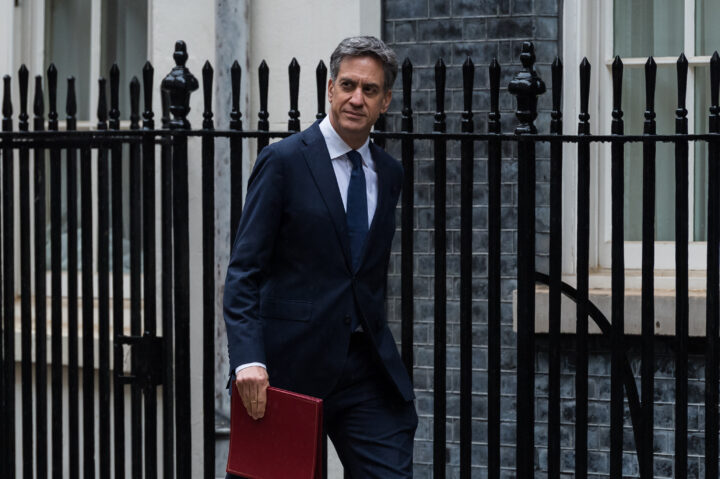
U.K. Foreign Secretary Ed Miliband arrives in Downing Street to attend weekly Cabinet meeting in London, U.K. on Sept. 8, 2026.


 Add JewishInsider on Google
British Foreign Secretary Ed Miliband agreed on Monday to host a meeting of ministers from seven countries to coordinate efforts against antisemitism, following talks in London with Jewish leaders who criticized the British government’s policies and rhetoric toward Israel.
Representatives of the J7 Task Force Against Antisemitism — a body of major Jewish organizations representing diaspora communities in the United States, United Kingdom, Canada, France, Germany, Argentina and Australia — said they expressed to Miliband their “serious concern” about recent British government measures and rhetoric targeting Israel, including new U.K. sanctions on Israeli settlements, and warned of their detrimental impact on global Jewish communities.
William Daroff and Betsy Berns Korn, respectively CEO and chair of the Conference of Presidents of Major American Jewish Organizations, told Jewish Insider their discussion with Miliband was “frank and direct.”
“We called him to task for the U.K. government’s sanctions against Israel and its rhetoric, which exacerbate antisemitism and increase the risks Jewish communities face. We made clear that these consequences cannot be brushed aside,” they said.
Jonathan Greenblatt, CEO of the Anti-Defamation League, told JI the conversation was “direct and productive.”
“While there are areas of strong disagreement, we identified some common concerns including our shared view on the bigoted antizionism of the Green Party; the need to curb the wave of vicious harassment and hostile rhetoric directed at the British Jewish community; and the necessity of mitigating the expanding threat of online antisemitism enabled by AI and social media. But this was just the first conversation. We intend to keep pushing for action and demanding accountability,” he continued.
The J7 representatives also raised concerns about the sharp rise in global antisemitism, threats posed by the Iranian regime and its proxies, the proliferation of online hate and what the group described as the continued demonization of Israel by elected officials and public figures.
The group said in a statement that it welcomed Miliband’s “abhorrence” of a recent Green Party motion describing Zionism as racism, along with his affirmation of the importance of the International Holocaust Remembrance Alliance’s working definition of antisemitism.
Counterterrorism officials arrested several men in connection with suspected explosives found near a military base on the same day as a report that a former Hamas bodyguard plotted terror attacks after gaining U.K. asylum
Leon Neal/Getty Images
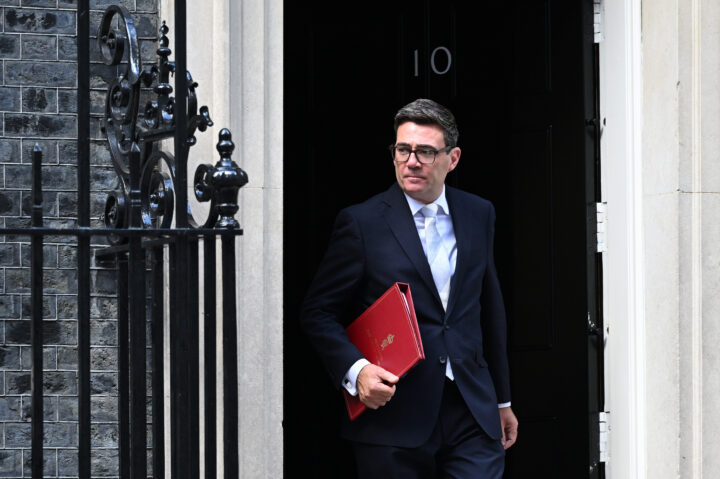
Prime Minister Andy Burnham departs 10 Downing Street to address the House of Commons on Sept. 1, 2026 in London, England.
Two security incidents that were reported in the U.K. over the weekend are presenting Prime Minister Andy Burnham with some of his new government’s first major tests since taking power over the summer: how to address domestic counterterror threats and mounting issues related to asylum seekers, while also responding to concerns by British Jews over their safety and security amid growing tensions between London and Jerusalem.
On Sunday, U.K. officials arrested several individuals near a military base in Gloucestershire used by the U.S. for operations against Iran. A police statement released about the incident said that an ordnance disposal team had been dispatched to the area and that properties in the vicinity had been evacuated.
The incident occurred hours after a report in the U.K.’s Times that a former bodyguard for Ismail Haniyeh, a Hamas leader who was killed by Israel in 2024, was granted asylum — and later citizenship — in the U.K., from which he plotted attacks across Europe. The man, identified as “Mr. X” due to a British court order protecting his anonymity, was arrested last year in connection with a plot to attack Jewish targets in Germany and Austria on the second anniversary of Hamas’ Oct. 7 attacks.
Ben Judah, who served as an advisor to former U.K. Foreign Secretary David Lammy, said that the Times story “confirms a deep fear of mine. That out of a mixture of carelessness, incompetence, indifference and denial the Home Office is rubber stamping terrorists, that would like to kill people like me and my family, access to the country.”
Judah’s comments underscore the degree to which decisions regarding U.K. government policy on visa vetting and counterterrorism efforts intersect with Jewish communal concerns over safety. In the British Jewish community, concerns about rising antisemitism — deepened by a series of recent arson attacks against Jewish institutions — have intensified in the last year, since two men were killed in a terror attack at a Manchester synagogue during Yom Kippur, marking the first deadly attack on a Jewish community in the country since World War II.
Adding to those concerns, a British national from Somalia pleaded not guilty on Friday to an April attack in which two identifiably Jewish men were injured in a knife attack in North London — one in a spate of antisemitic attacks that roiled the U.K. earlier this year. Read a first-person perspective on antisemitism in the U.K. from JI’s Tamara Zieve.
“If anyone doubted the specific terror threat facing the Jewish community, the last two weeks alone should have put paid to that,” Justin Cohen, the news editor and co-publisher of the London-based Jewish News, told JI on Monday. “A year after the first antisemitic murders of Jews in Britain in memory on Yom Kippur, another plot targeting the country’s Jewish community was disrupted. And now we discover that a bodyguard of the former Hamas leader was plotting to attack Jews in Europe after being given asylum in the U.K. It’s little wonder that the community is feeling increasingly vulnerable and fear it’s a question of when, not if, another attack gets through.”
Earlier this month, U.K. Foreign Secretary Ed Miliband rejected a claim by the U.K.’s chief rabbi, Rabbi Ephraim Mirvis, that London’s policies against West Bank settlements could endanger British Jews. The exchange highlighted the differing views between Jewish leaders and government officials over the effect that London’s decisions vis-a-vis Israel have on the local Jewish community.
Across the Atlantic on Friday, Miliband met with his Iranian counterpart, Foreign Minister Abbas Araghchi, on the sidelines of the U.N. General Assembly in New York, and told him that London would “not tolerate intimidation, threats or hostile activity on U.K. soil” — days after the U.K.’s cyber directorate accused Iran-linked actors of attempting phishing campaigns on Telegram and WhatsApp. The meeting was the first between the two since the U.K. in July designated Iran’s Islamic Revolutionary Guard Corps as a national security threat.
Alongside the designation of the IRGC, the U.K. also designated as a national security threat the Islamic Movement of the Companions of the Right, believed to be an Iran-linked group that has claimed responsibility for more than half a dozen attacks on Jewish and Israeli targets across the U.K.
This is the backdrop against which London will have to make determinations in the coming months regarding counterterrorism efforts, vetting of asylum seekers and the ongoing concerns from the Jewish community over its safety and security — and their overlap.
The move was roundly criticized by British Jewish leaders, along with the conservative opposition parties in Parliament
Wiktor Szymanowicz/Future Publishing via Getty Images
U.K. Foreign Secretary Ed Miliband arrives in Downing Street to attend weekly Cabinet meeting in London, U.K. on Sept. 8, 2026.
U.K. Foreign Secretary Ed Miliband announced a sweeping new sanctions regime targeting Israeli settlements in the West Bank on Tuesday, marking a major escalation in Britain’s diplomatic stance toward Israel.
Addressing the House of Commons, Miliband unveiled an import ban on goods produced in settlements alongside targeted sanctions against individuals and corporate entities involved in constructing, advertising or financing settlement expansion.
The secretary also announced a ban on real estate events in the U.K. promoting the purchase of homes in West Bank settlements. Miliband went further than any previous British official in accusing extremist Israeli settlers of carrying out “ethnic cleansing” of Palestinians in the West Bank and calling them “terrorists” with the tacit backing of the Israeli government.
“My parents came here as Jewish refugees and found sanctuary and a country that stood up for the law, freedom and self-determination,” said Miliband, describing himself as a proud British Jew. Expressing a “deep sense of shame” over the actions and policies of the Israeli government in Gaza, he insisted the policy is intended to target illegal settlements — not Israel or the Jewish community — and is distinct from the Boycott, Divestment and Sanctions movement.
“We absolutely oppose the BDS movement against Israel. This is about the Occupied Territories, settlements in the Occupied Territories,” Miliband said. “[It takes] six to nine months precisely so that we get this regime right so it does not affect, so it does not impinge, on Green Line Israel,” he continued, referring to the Israeli borders established in the aftermath of the 1948 war.
Miliband also announced that the U.K. would be reimposing strict economic sanctions on Iran, as well as sanctions on Al-Qard al-Hassan, a Hezbollah-run financial institution.
The measures, triggered in part by Israel’s plans to expand the contentious E1 settlement zone east of Jerusalem, were coordinated with France and Canada. Denmark, Finland, Iceland and Poland joined the countries in announcing they would enact similar sanctions in a joint statement alongside countries that have already taken similar measures — such as Ireland, Spain, Netherlands, Norway and Belgium.
The countries reaffirmed their commitment to a two-state solution, firmly opposing “actions tantamount to the annexation of Palestinian land and forcible displacement” while reiterating Israel’s legitimate security needs and condemning the Oct. 7, 2023, Hamas terrorist attacks.
Denouncing what he described as a “hostile sanctions package,” Israeli Foreign Minister Gideon Sa’ar announced on Tuesday that Israel would be taking swift retaliatory measures, such as closing the British Consulate in Jerusalem, expelling British representatives from the U.S.-backed International Gaza Support Center, terminating the British Support Team in Ramallah tasked with training members of the Palestinian Authority Security Forces and barring 12 British officials “involved in antisemitic and anti-Israel activity.”
U.S. Ambassador to Israel Mike Huckabee suggested that Britain will face “repercussions” and accused the U.K. of “discrimination against the Israeli government.” The U.S. is expected to release a statement about the sanctions later today.
Despite gaining support within the Labour Party the government’s announcement triggered immediate pushback from the political opposition and British Jewish organizations, who warned the policy could inflame tensions at home.
Speaking to Miliband in the House of Commons, Reform U.K. Deputy Leader Richard Tice condemned the sanctions as a “grave mistake” that risks fueling anti-Jewish hostility. The U.K. has seen a spate of violent attacks against its Jewish communities in recent months.
“We all deplore settler violence, but the simple reality is these sanctions are a grave mistake,” Tice said, questioning whether the policy would “embolden the scourge of antisemitism against British Jews on British streets.” He added that the move risks damaging relations with the U.S., harming U.K. security and inviting retaliatory sanctions from Israel.
Conservative leader Kemi Badenoch similarly criticized the measures, accusing the Labour Party of being driven by domestic political motives rather than Middle East diplomacy.
“Labour’s obsession with Israel is rooted in U.K. politics — it’s got less to do with peace in the Middle East and more to do with trying to keep the peace in the Labour Party,” Badenoch said, warning that British Jews should not have to watch politicians condemn antisemitism while ignoring the ideologies that drive it.
Jewish community groups also raised alarms over the diplomatic fallout. The Board of Deputies of British Jews, the leading representative body of British Jews, cautioned against prioritizing party politics over national interests, warning that eroding ties between London and Jerusalem could undermine economic security, damage national security ties and heighten community friction within the U.K.
“As we have told both governments over recent weeks, the deteriorating relationship between the U.K. and Israel has the potential to negatively impact the two countries’ security and their economies and further inflame community tensions here too,” the statement read.
Meanwhile, the Jewish Labour Movement, while acknowledging that curbing settlement expansion and opposing Israeli Prime Minister Benjamin Netanyahu’s policies were worthy goals, voiced serious misgivings regarding the government’s timing and execution of the policy.
“Action against settlement expansion and settler violence is absolutely necessary, as well as the increased opposition to Netanyahu’s ruinous ideology, but many in our community and our membership will hold questions and voice concerns about the timing and specifics of the policy.”
Plus, former Bernie bro bashes old boss
Michael M. Santiago/Getty Images
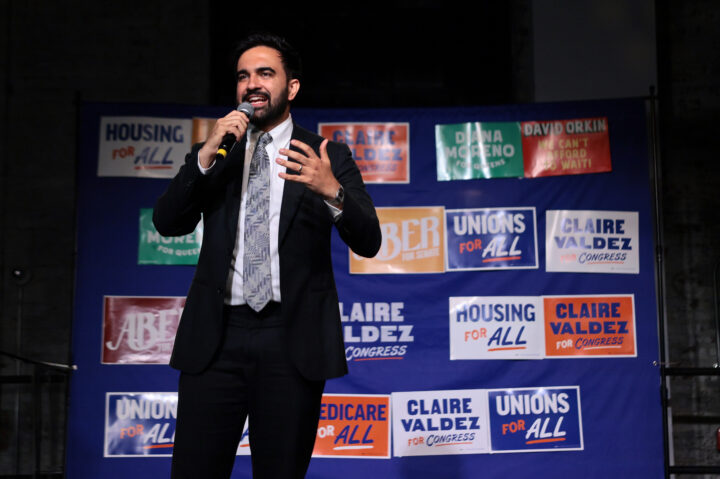
New York City Mayor Zohran Mamdani speaks during a primary-night watch party for NYC congressional candidate Claire Valdez on June 23, 2026.
Good Tuesday morning.
In today’s Daily Kickoff, we report on a fundraiser for Michigan Senate candidate Abdul El-Sayed that is being cohosted by a Democratic Party operative who praised her grandfather’s Nazi service, and spotlight Ed Miliband, who was announced as the U.K.’s foreign secretary on Monday. We talk to Jewish Democrats in Washington state who feel increasingly isolated in their own party, and interview Joel Rubin, a former Jewish liaison for Sen. Bernie Sanders, about his concerns that his one-time boss is promoting antisemitic candidates. Also in today’s Daily Kickoff: Micah Lasher, Ron Dermer and Khalil Al-Hayya.
We have also launched a new on-demand Live Briefing that you can access throughout the day via our new app (on Apple and Android) and on our website.
Today’s Daily Kickoff was curated by JI Executive Editor Melissa Weiss and Israel Editor Tamara Zieve, with assists from Danielle Cohen-Kanik and Marc Rod. Have a tip? Email us here.
What We’re Watching
- President Donald Trump is slated to meet today with Lebanese President Joseph Aoun at 11 a.m. ET. The meeting comes as Israel moves forward with its plan to withdraw from “pilot zones” in southern Lebanon where the Lebanese Armed Forces will move in and administer the area in accordance with the framework agreement established last month between Beirut and Jerusalem.
- The White House is reportedly mulling a proposal from Middle East mediators including Qatar, Egypt and Pakistan for a 10-day ceasefire to halt fighting between the U.S. and Iran. Earlier today, officials in Bahrain confirmed that sirens sounded in the Gulf state ahead of what was believed to have been another Iranian attack.
- Defense Secretary Pete Hegseth and Chairman of the Joint Chiefs of Staff Gen. Dan Caine are slated to appear before the Senate Appropriations Committee this morning to testify about the Trump administration’s $88 billion supplemental funding request for the Pentagon.
- The House Intelligence Committee is convening a hearing today on the next generation of terror threats, with former National Security Advisor H. R. McMaster set to testify.
- Arizona is holding its primaries today, with the GOP’s gubernatorial race between Reps. Andy Biggs (R-AZ) and Dave Schweikert (R-AZ) taking center billing. The winner will face Democratic Gov. Katie Hobbs in November.
- We’re also closely watching the primary results in Arizona’s 1st District, a swing district based in Scottsdale with a sizable Jewish population, which Schweikert is vacating to run for governor. The Democratic Congressional Campaign Committee is backing former TV news anchor Marlene Galan-Woods over former state Rep. Amish Shah, who was the party’s 2024 nominee. The GOP front-runner is former NFL kicker and CBS Sports sideline reporter Jay Feely.
- In New York, Jewish Women International is hosting a day-long workshop series focused on Jewish women in the workplace.
- More than a dozen Jewish and pro-Israel groups, including the Conference of Presidents of Major American Jewish Organizations, the Israeli-American Council, the Jewish Federations of North America and Christians United for Israel, are hosting a virtual tribute to Sen. Lindsey Graham (R-SC) tonight ahead of his funeral next week.
- The three-day Gulf Research Meeting kicks off today in Cambridge, U.K. Speakers include Saudi Foreign Minister Prince Faisal bin Farhan Al Saud; Qatari Foreign Ministry spokesperson Majed al-Ansari; Mohammed Ibrahim Al Dhaheri, the deputy director of the United Arab Emirates’ Anwar Gargash Diplomatic Academy; and Arab World Institute President Anne-Claire Legendre.
What You Should Know
A QUICK WORD WITH JI’S MELISSA WEISS
In recent weeks, following the collapse of the memorandum of understanding between Washington and Tehran and the closure of the Strait of Hormuz, Iran has fired dozens of times on Jordan, Saudi Arabia, Iraq, Bahrain, Kuwait, Qatar and the United Arab Emirates.
At the same time, it has sustained fire from the U.S., whose military bases across the region have been targeted by the Islamic Republic, with several service members killed. And all the while, Tehran has targeted commercial ships transiting through the strait.
But as focus on the conflict with Iran has shifted from addressing the Islamic Republic’s nuclear ambitions to the Strait of Hormuz, Israel has stayed out of the fighting — despite Iranian threats earlier this month to target the Jewish state if the U.S. attacks did not cease.
There is no upside for Israel to reenter the fight, especially when the issue of the Strait of Hormuz falls outside of the objectives set by Israel at the start of the war earlier this year. (This, despite the widespread sentiment among Israelis that this year’s war did not improve Israel’s security situation, according to polling last month from the Israel Democracy Institute.)
Key among the goals laid out by Israel was degrading Iran’s ballistic missile program and setting back elements of its nuclear program. Reopening Hormuz is an American objective, not an Israeli one. With Israel having made the calculus that the most immediate Iranian threats have been blunted — at least in the short term — the current mission has become an American one.
“Israel’s best move is to not move — yet,” Mark Dubowitz, the CEO of the Foundation for Defense of Democracies, told Jewish Insider this morning. “Washington does the striking. Israel keeps its fire and its threats in reserve, waiting for one of two triggers: a U.S. request to join, or an Iranian regime foolish enough to hit Israel and invite the reprisal that has been promised.”
Despite Iran’s threats to target Israel, such a move would likely be a strategic misstep for the Islamic Republic. Iran’s blockade of the strait and its attacks on Arab and Gulf states are an attempt to reassert its dominance over the region and demonstrate its ability to impact the global energy market. Tehran also appears to be betting that sustained attacks across the region will push Arab states to pressure the U.S. to accept an agreement to reopen the strait, handing the Islamic Republic a win.
BLUE STATE BLUES
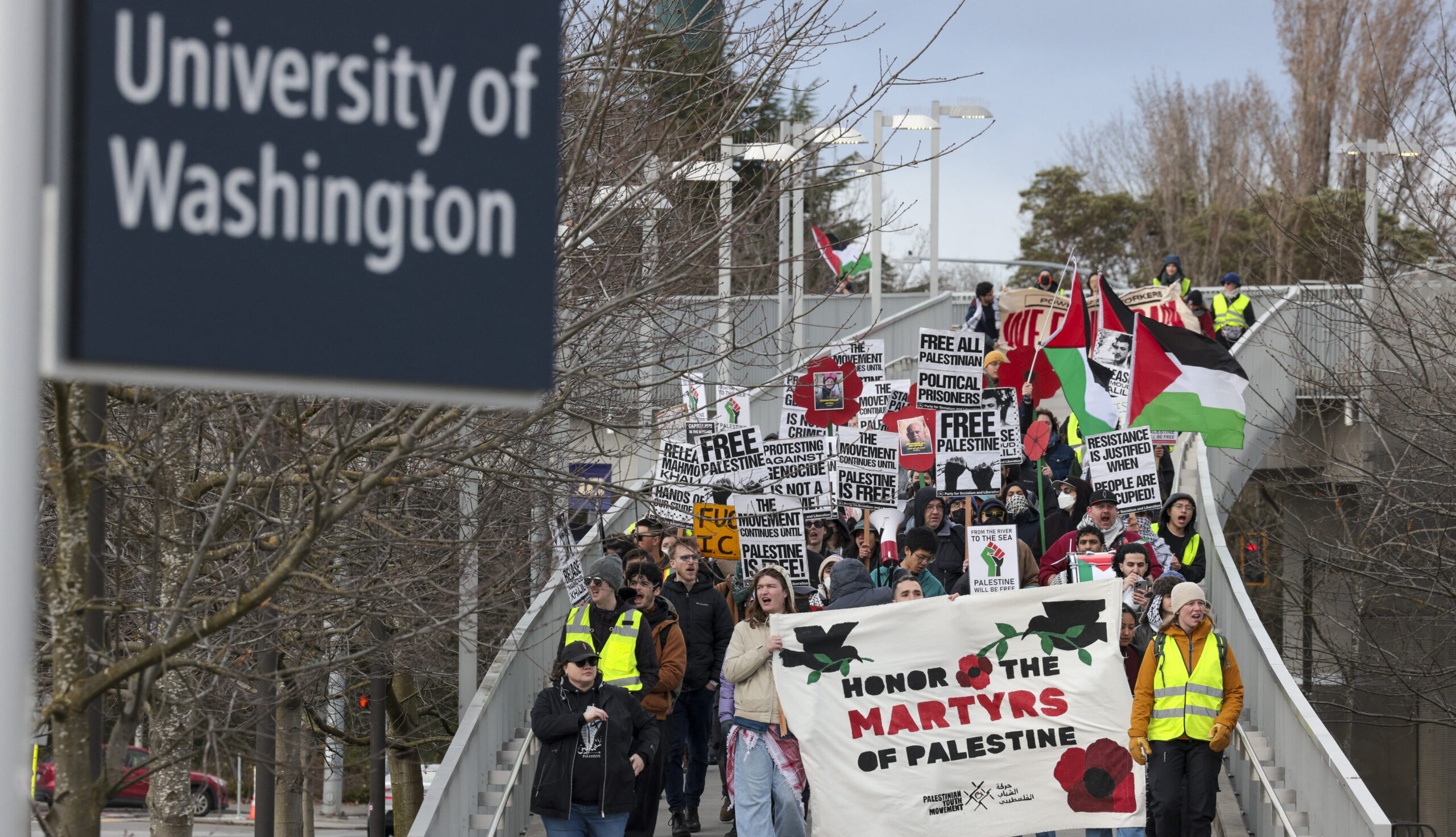
The past few years of rising tensions in the Democratic Party over Israel and antisemitism have been marked for many Jewish Democrats in Washington — one of the country’s bluest states, which has a Jewish population of about 90,000 — by disappointment, anger and a growing sense of isolation within a party they have spent decades supporting. But the answer, they say, is not to walk away; rather, it’s to try to reclaim influence from within, Jewish Insider’s Danielle Cohen-Kanik reports.
Rebuilding: That effort begins with rebuilding the party’s own Jewish infrastructure. The Washington State Democratic Party’s Jewish caucus has gone “by the wayside, because it takes a lot of organizing and energy to keep it up,” said Linda Clifton, a longtime member of the caucus. “It’s all volunteer [work], and people had other jobs and other things they had to pay attention to. I think we need to revive it, and there’s been some effort to do that … but I think people are so disheartened that that becomes very difficult,” she continued.
FRIENDLY FIRE
Joel Rubin, a former State Department official who led Jewish outreach for Sen. Bernie Sanders’ (I-VT) 2020 presidential campaign, is now excoriating his former boss and the movement he has built for elevating stridently anti-Israel candidates — most notably former Maine Senate candidate Graham Platner, Jewish Insider’s Marc Rod reports.
Notable quotable: “I think what Sanders and the Sanders operation have done is shove into our system the most categorically anti-Israel, antisemitic candidates that we’ve seen in a generation — if ever, certainly within the Democratic Party — and it’s by design,” Rubin said in an interview with JI last week at the Aspen Security Forum. “It’s not by accident, and it’s very disruptive intentionally. The goal is to undermine Democratic unity and even rationality on Israel at this stage.”
More Dem dynamics: Sen. John Fetterman (D-PA) said in an interview with JI’s Emily Jacobs on Monday that the votes by more than 100 House Democrats last week in favor of an effort to end all U.S. aid to Israel indicate the party is “flirting with” making opposition to Israel the official party stance, something he said would lead him to leave the caucus.
NOT SO FUNNY MONEY
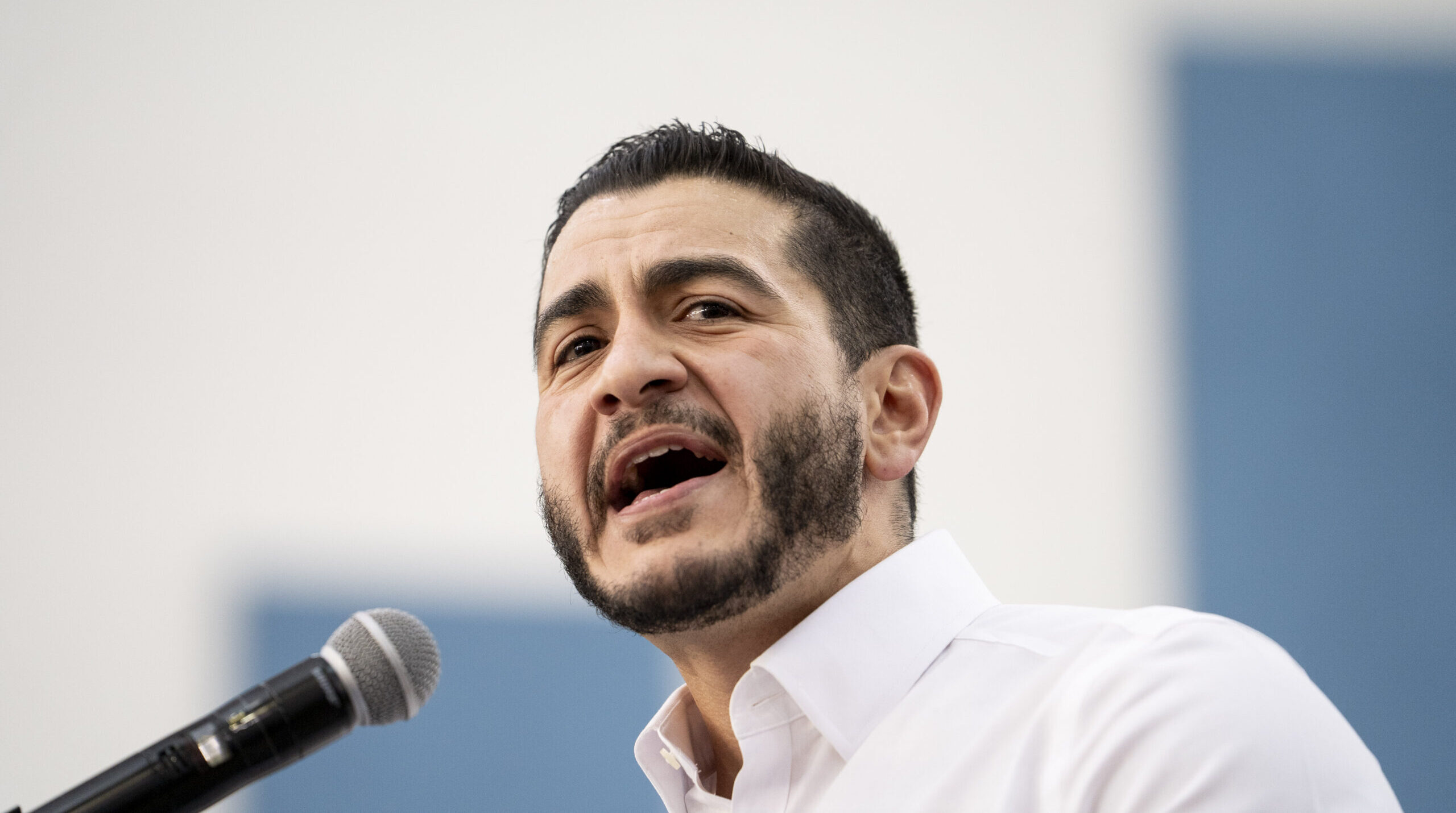
Michigan Senate candidate Abdul El-Sayed is slated to appear at a campaign fundraiser this weekend that is co-hosted by Kelly Neumann, a controversial Democratic fundraiser in Michigan who faced scrutiny earlier this year for a 2024 Facebook post on Veterans Day that praised her grandfather, who fought for the Nazis in World War II, Jewish Insider’s Gabby Deutch reports.
Pulled out: Sen. Elizabeth Warren (D-MA), who endorsed El-Sayed on Monday, was initially listed as a speaker at the Saturday event hosted by Neumann, though Neumann and the campaign removed Warren from their promotional materials after JI inquired about the senator’s role. Warren is speaking at a rally for El-Sayed later that day.
ACROSS THE POND
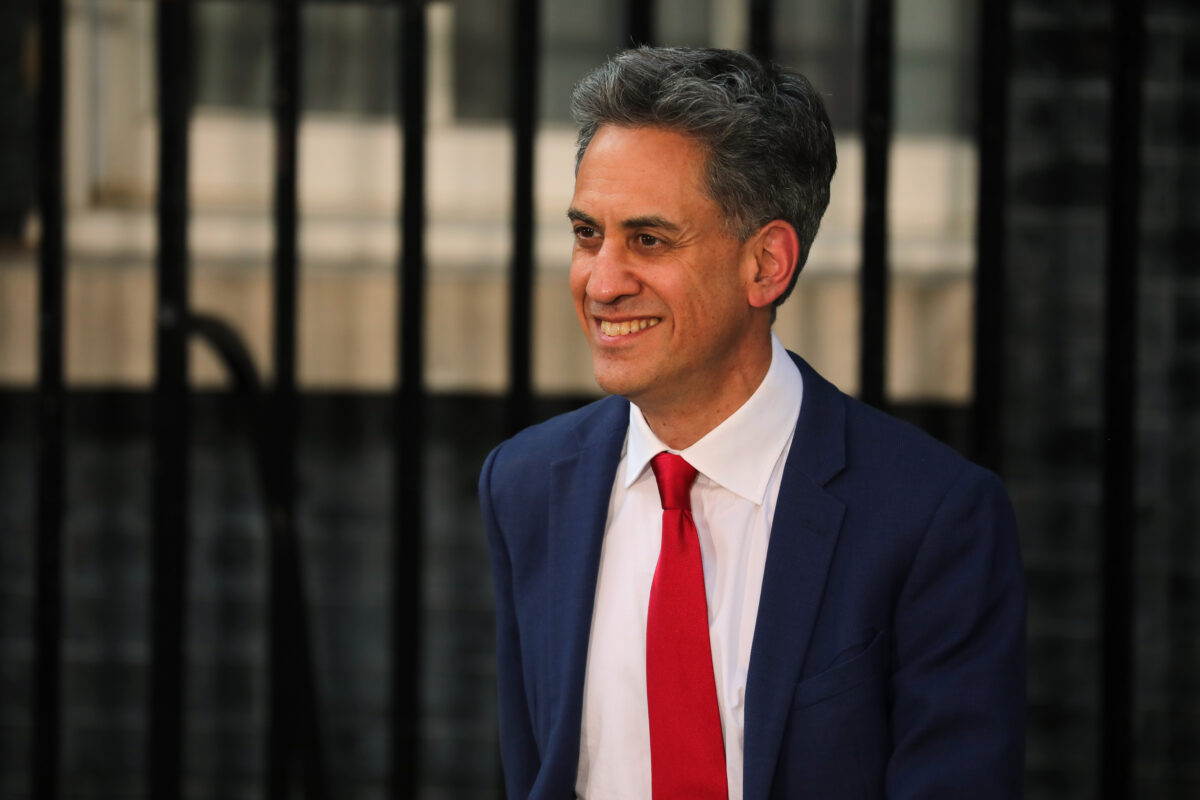
Ed Miliband’s appointment on Monday as U.K. foreign secretary is raising questions about how the former Labour chief will influence Israel and Middle East policy under Andy Burnham, the country’s new prime minister, Jewish Insider’s Matthew Kassel reports. As the first Jewish leader of the Labour party, which he helmed from 2010-2015, Miliband has long balanced his commitment to Israel’s security with vocal criticism of the Jewish state that has fueled some tensions with British Jewish leaders.
Israel approach: During his past tenure as Labour leader, Miliband “certainly wasn’t an instinctive supporter of Israel, but he also wasn’t as hostile as some expected given his background,” Arieh Kovler, a political analyst in Jerusalem who previously served as the director of policy and research for Britain’s Jewish Leadership Council, told JI. “But that was a decade ago. Attitudes to Israel have hardened across British politics and the Labour Party with it.”
BACKTRACK
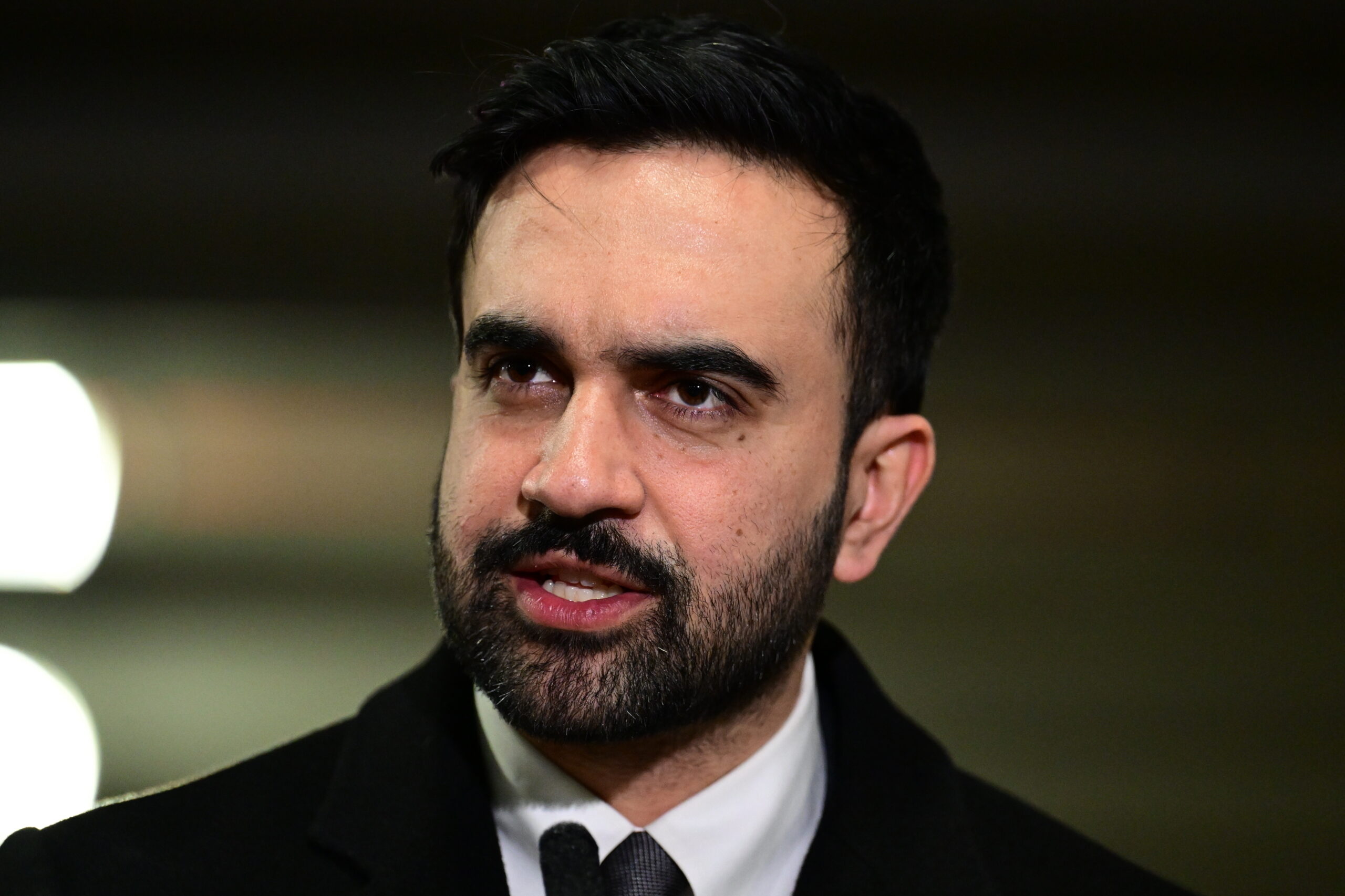
New York City Mayor Zohran Mamdani seemed to shy away on Monday from a campaign vow — referenced in an interview over the weekend — to arrest Israeli Prime Minister Benjamin Netanyahu, even as he continued to lob rhetorical fusillades at the leader of the Jewish state, Jewish Insider’s Will Bredderman reports.
What he said: Mamdani seemed to acknowledge on Monday that such a move might exceed his authority. “My administration will follow all applicable local laws, that is our commitment, that is something we will follow through on, when it comes to adherence to local laws,” the mayor told reporters after an unrelated event, stressing again when pressed: “We will follow our local laws.”
View from 1600 Pennsylvania Ave.: President Donald Trump posted on his Truth Social site that Netanyahu would not be arrested “in any way, shape, or form” while in the U.S.
SHE’S RUNNING
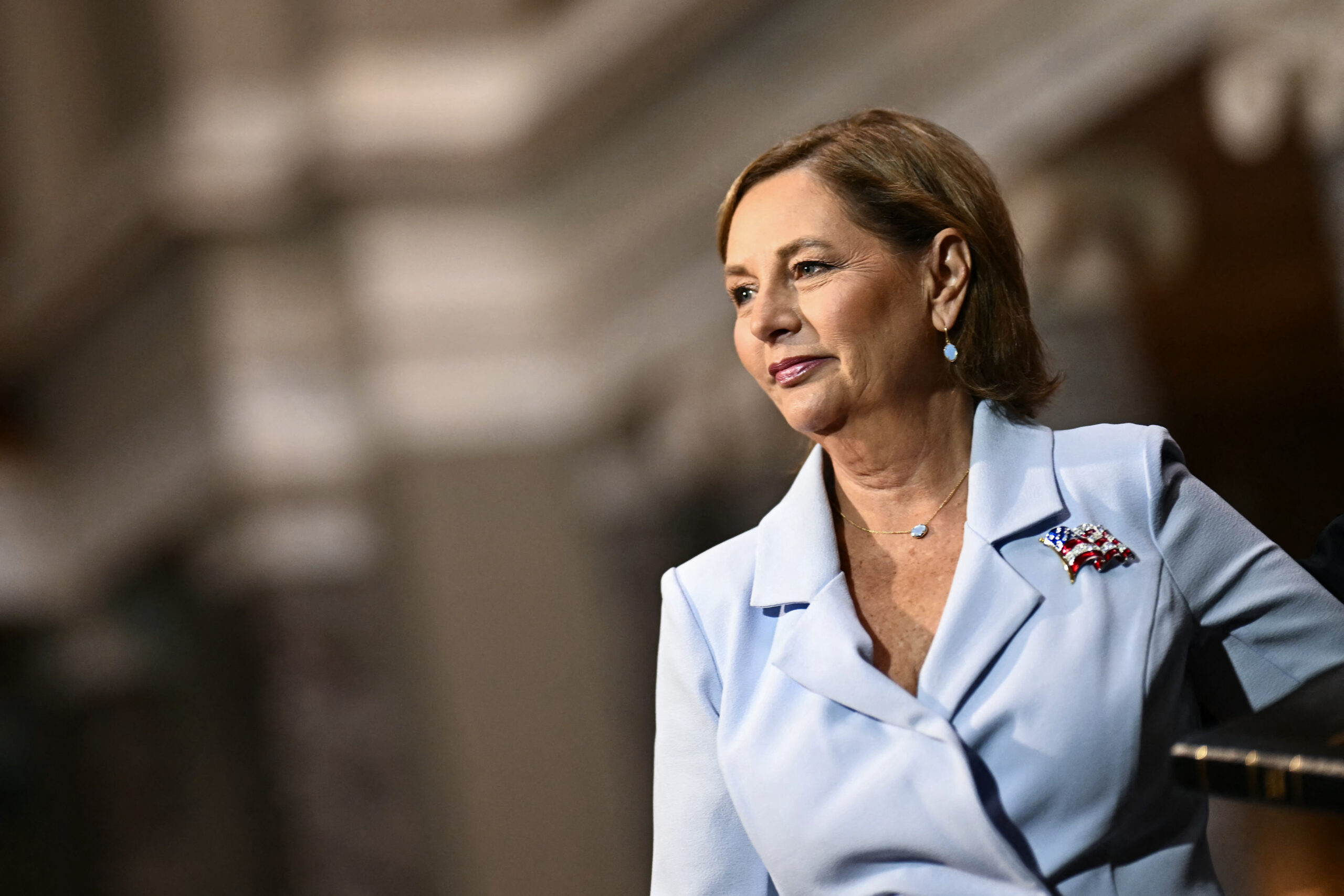
Sen. Darline Graham (R-SC) said that she will run in next month’s special election to replace her brother, the late Sen. Lindsey Graham (R-SC), on the ballot as the GOP nominee for Senate in November, Jewish Insider’s Emily Jacobs reports.
Mind made up: Graham, who was appointed last week to serve out the remainder of her brother’s term in the Senate, announced her decision to run for a full term in an interview with Fox News’ Sean Hannity on Monday. “I’ve made a decision,” Graham said. “I’m in.” Graham told Hannity, a friend of her late brother’s, that she had been “praying a lot” and “talking to my family” about the decision, which she acknowledged she needed to make at an expedited pace due to the week-long filing period for candidates beginning on Tuesday.
Worthy Reads
Eye on 2028: The Atlantic’s Mark Leibovich interviews Sen. Mark Kelly (D-AZ) and his wife, former Rep. Gabby Giffords (D-AZ), about Kelly’s presidential considerations, Giffords’ recovery after a 2011 shooting and Kelly’s shortlisting as former Vice President Kamala Harris vetted potential running mates. “Kelly told me that he’d only ‘read parts’ of Harris’s memoir. Presumably, these were the parts that corresponded to mentions of ‘Kelly, Mark.’ He smiled when I suggested this and did not deny it. When I brought up that Harris said she was concerned that he wasn’t tested as a national candidate, Kelly grew more openly annoyed than I might have expected, given how beside the point the topic is now. … He also noted, sarcastically, that some people apparently found it charming that Walz asked for Diet Mountain Dew to drink during his VP interview. ‘[Gov. Josh] Shapiro and I asked for water,’ he said, smirking.” [TheAtlantic]
Tehran’s Tactics: In The Wall Street Journal, Reuel Marc Gerecht and Ray Takeyh posit that Iran’s ability to withstand international economic pressure and U.S. strikes has given the Islamic Republic a “wartime advantage” over Washington. “Today’s conflict with the U.S. and Israel lets senior guard commanders, lowly IRGC foot soldiers and the rest of the theocracy’s security forces feel the fraternity of resistance against the regime’s enemies. For a dictatorship that lost most Iranians’ loyalty years ago, these wars were a boon. The zeal of the revolutionary faithful has baffled many Iranian expatriates and analysts, who see a morally, spiritually and financially bankrupt regime.” [WSJ]
Kuwait in the Crosshairs: The Financial Times’ Ahmed Al Omran looks at how the Iranian attacks across the Gulf have affected Kuwait, which has been targeted by more than 1,500 missiles and drones since the start of the war. “The sense of fear is particularly potent in Kuwait, which is still scarred by the trauma of the 1990 Iraqi invasion — a unique experience that sets it apart from other Gulf Arab states. Since the US-Israeli war against Iran started in February, Kuwait’s proximity to the Islamic republic and high concentration of American troops have made it an easy target for Tehran’s short-range missiles. … But the intensity and frequency of the attacks came as a surprise to some observers in Kuwait, which before the war enjoyed relatively cordial relations with Iran.” [FT]
A larger selection of Worthy Reads is available in our Live Briefing.
Word on the Street
Amid its escalating conflict with Iran, the White House’s social media feed posted a three-week-old poll on Monday from a right-wing polling firm indicating Americans support the U.S.-Iran memorandum of understanding established last month, JI’s Haley Cohen reports…
The Pentagon confirmed a New York Times report that nearly 100 American troops stationed in Jordan have been injured by Iranian attacks over the last two weeks as the Islamic Republic targets U.S. bases in the region; several of the strikes had not been made public prior to the Times’ reporting…
Israeli intelligence shared with the U.S. indicates that Iran moved thousands of centrifuges into its clandestine Pickaxe Mountain site last fall, following the 12-day war in June; read more about Pickaxe Mountain here…
The Wall Street Journal spotlights the “once-unthinkable” ideas being mulled by Washington, Beirut and Jerusalem to disarm Hezbollah in Lebanon…
The New Yorker‘s David Kirkpatrick talks to former Biden administration officials about the Biden White House’s policies toward Israel and Gaza at the height of the conflict between Israel and Hamas…
Rep. Mike Collins (R-GA), who is challenging Sen. Jon Ossoff (D-GA), removed from his campaign website family photos that featured his son-in-law, who was found to have promoted white nationalism and Nazi ideology online…
The Washington Post reports on the volatile temperament of Troy Jackson, who is expected to replace Graham Platner as the Democratic Senate candidate in Maine, during the time that Jackson served as the head of the state Senate…
Axios examines how Rep. Alexandria Ocasio-Cortez’s (D-NY) rhetoric as she campaigns for Democrats around the country resembles former President Barack Obama’s own early campaign rhetoric following the launch of his 2008 presidential bid…
Politico looks at how New York City Mayor Zohran Mamdani has alienated portions of the city’s electorate — including the Black, Jewish and Latino communities — that have traditionally had close ties with City Hall…
The New York Times interviews New York state Assemblymember Micah Lasher about his childhood hobby of performing magic; the New York Democrat, who won last month’s Democratic primary to succeed Rep. Jerry Nadler (D-NY), in 1996 published The Magic of Micah Lasher, and performed on national television as a child…
Adam Hamawy and Darializa Avila Chevalier, who won their respective Democratic congressional primaries against more moderate candidates in part by attacking Israel on the campaign trail, were announced as the keynote speakers at the Council on American-Islamic Relations’ annual gala in Washington…
Hungarian chess grandmaster Judit Polgar turned down Hungarian Prime Minister Péter Magyar’s offer to serve as the country’s interim president, saying she felt she lacked “the strength to take on the historic responsibility of uniting a divided nation” in the post-Viktor Orbán era…
The president of the Australian Association of Jewish Holocaust Survivors and Descendants testified before the country’s royal commission investigating antisemitism that increasing antisemitism in the country has “disturbing parallels” to Nazi Germany, but that he did not believe that the country was “becoming another Germany in the 1930s,” owing to Australia’s “democratic institutions, legal system and civilian civil society”…
OpenAI is reportedly starting a business development operation in Israel, having hired a senior Israeli executive from Amazon Web Services to lead the effort to develop relationships in the Israeli high-tech sector…
Air France paused its flights to and from Dubai until next week; the airline is also temporarily suspending its routes to Saudi Arabia until later this week…
Hamas announced Khalil Al-Hayya, the terror group’s top negotiator in Qatar, as its new leader; Al-Hayya succeeds Yahya Sinwar, who was killed by the IDF in October 2024…
Former Israeli Strategic Affairs Minister Ron Dermer is rejoining the Jewish Institute for National Security of America as a distinguished fellow, a position he previously held from 2021 to 2022…
Pic of the Day

Demonstrators from the Union of Jewish Students of France protested on Monday outside the Paris headquarters of French far-left party La France Insoumise following the interruption over the weekend of a Jewish DJ’s concert in Grenoble. La France Insoumise had for months been calling for a boycott of Barbara Butch’s show last Saturday, which was disrupted by anti-Israel activists.
Birthdays

Retired CEO of Sony/ATV, a large music publishing firm, he is a member of the Songwriters Hall of Fame, Martin Bandier turns 85…
President at Admar Group, Henry Dean Ostberg turns 98… Professor in the physics department at Bar-Ilan University, he won the Israel Prize in 2018, Shlomo Havlin turns 84… Director of the Center for the Political Future at USC, Robert Shrum turns 83… Criminal defense attorney, known for representing many politicians, celebrities and organized crime defendants, Benjamin Brafman turns 78… Former member of the U.K.’s House of Commons, now in the House of Lords, Baroness Susan Veronica Kramer turns 76… Senate majority whip (R-WY), John Barrasso turns 74… Chairman and CEO at Quantitative Financial Strategies, Sanford “Sandy” Jay Grossman turns 73… Endocrinologist and professor at Columbia University’s medical school, she is an honorary president of NYC’s Central Synagogue, Shonni Joy Silverberg, MD… Professor at Columbia Law School and daughter of the late Justice Ruth Bader Ginsburg, Jane Carol Ginsburg turns 71… Brooklyn resident, Irene Ostrovsky… Comedian and actor, best known for his five seasons on “Saturday Night Live” ending in 1990, Jon Lovitz turns 69… Former chief rabbi of Moscow, his opposition to the Ukraine war forced him to leave Russia, Rabbi Pinchas Goldschmidt turns 63… Literary agent at the William Morris Endeavor book department, Eric Matthew Simonoff turns 59… Actor and producer, Alysia Reiner turns 56… Professor of astronomy at MIT and winner of a 2013 MacArthur Genius Award, Sara Seager turns 55… Brazilian fashion designer best known for avant-garde designs and eclectic prints, Alexandre Herchcovitch turns 55… CEO of Fanatics, licensed sports merchandise and digital sports platform, Michael G. Rubin turns 54… Founder, president and CEO of Securing America’s Future Energy (SAFE) and the Electrification Coalition, Raphael “Robbie” Diamond… Rabbi of Congregation Bais Naftali in Los Angeles, his YouTube channel has over 4.6 million views, Rabbi Yoel Gold… Online media personality and director of product management at Electronic Arts (EA) in British Columbia, Veronica Belmont turns 44… CEO of Women of Reform Judaism since 2023, Rabbi Liz P.G. Hirsch… Clinical social worker, Aniko Gomory-Pink… Entrepreneur and political activist, she came to prominence as an African-American pro-Israel student activist at the U of New Orleans, Chloé Simone Valdary turns 33… Policy advisor at Brownstein Hyatt Farber Schreck, Zachary A. Marshall… Senior recruiter at Tines, Rachel Elizabeth Nieves… Attorney in Madrid and secretary general of the Federation of Jewish Communities of Spain until 2021, Elias Cohen…
The Jewish former Labour leader has supported Israel’s security but has declined to identify as a Zionist
Alishia Abodunde/Getty Images
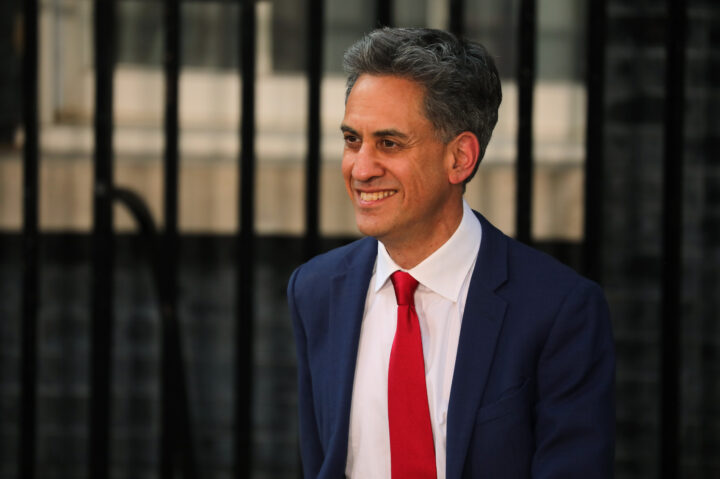
Newly appointed U.K. Foreign Secretary Ed Miliband departs Downing Street on July 20, 2026 in London, England.
Ed Miliband’s appointment on Monday as U.K. foreign secretary is raising questions about how the former Labour chief will influence Israel and Middle East policy under Andy Burnham, the country’s new prime minister.
Miliband, 56, had served as energy secretary under former Prime Minister Keir Starmer, who announced his resignation last month and officially departed 10 Downing St. on Monday. As the first Jewish leader of the Labour party, which he helmed from 2010-2015, Miliband has long balanced his commitment to Israel’s security with vocal criticism of the Jewish state that has fueled some tensions with British Jewish leaders.
The naming of Miliband to lead the Foreign Office has been seen as a sign that Burnham plans to adopt a tougher stance toward Israel as prime minister than his predecessor — who had already sought to cut off some arms sales to Israel while imposing sanctions on far-right Israeli ministers and recognizing a Palestinian state in a series of moves that soured ties between the U.K. and Israel.
In the days before his recent election as Labour leader, Burnham, the former mayor of Manchester, apologized for his party’s initial response to Israel’s military campaign in Gaza after the Hamas attacks of Oct. 7, 2023, saying that it had been “too slow to call for a ceasefire,” and suggested he would implement further sanctions on Israel and its government along with a possible trade ban on settlements in the West Bank.
For his part, Miliband, in a statement on Monday, spoke more broadly about his approach to the Middle East, vowing the new government would “seek to end the conflict in Iran,” while “working tirelessly to seek a sustainable peace in Palestine and Israel, including an end to the terrible suffering of the people of Gaza and security for the people of Israel.”
During his past tenure as Labour leader, Miliband “certainly wasn’t an instinctive supporter of Israel, but he also wasn’t as hostile as some expected given his background,” Arieh Kovler, a political analyst in Jerusalem who previously served as the director of policy and research for Britain’s Jewish Leadership Council, told Jewish Insider. “But that was a decade ago. Attitudes to Israel have hardened across British politics and the Labour Party with it.”
Kovler added that he would expect “the Burnham government to be tougher on Israel, and for Ed Miliband as foreign secretary to be quite comfortable moving forward an agenda of, for example, sanctions on settlements and broader arms embargoes while still publicly affirming that Israel’s an ally with a right to defend itself.”
In 2014, Miliband joined most of his party’s lawmakers in what was viewed as a largely symbolic vote calling to unilaterally recognize a Palestinian state — a position formally adopted by the U.K. last September.
Prior to that vote, Miliband had publicly rebuked then-Prime Minister David Cameron, a Conservative, during Israel’s Operation Protective Edge in Gaza, for his “silence on the killing of innocent Palestinian civilians caused by Israel’s military action,” which he called “wrong and unjustifiable.”
Despite his critical stances, Miliband — who drew some praise from the British far left on Monday — has defended Israel’s right to self-defense and said that “there is no place in politics for those who question” the country’s existence, underscoring his personal ties to Israel, where his grandmother took refuge after surviving the Holocaust.
“My relationship with my Jewishness is complex,” he wrote in a 2014 essay. “But whose isn’t?”
While Miliband has called Israel “a homeland for the Jewish people,” he has expressed ambivalence about referring to himself as a Zionist, declining to identify explicitly as such.
“I want you to know that if I become prime minister in less than a year’s time, I will be proud to do so as a friend of Israel, a Jew and, most of all, someone who feels so proud to be part of the community gathered here,” he said in a 2014 speech to Labour Friends of Israel, after he had returned from a trip to Israel.
In his statement posted to social media on Monday, Miliband invoked his family history, noting that his parents “came to Britain as Jewish refugees from the Nazis.” His father, Ralph Miliband, was a renowned Marxist theorist, and his mother, Marion Kozak, who died in May, was a Holocaust survivor who became a staunch supporter of Palestinian rights. His brother, David, was foreign secretary from 2007-2010 under former Prime Minister Gordon Brown.
Miliband’s new role as foreign secretary provoked barbed reactions from some British Jewish leaders before he was even officially named to the position, replacing Yvette Cooper in part of a broader Cabinet shakeup led by Burnham, who on Monday rose to the prime ministership.
Stephen Pollard, the former longtime editor of The Jewish Chronicle, said in a lengthy post that Miliband’s appointment was the “most nauseating political appointment of my lifetime.” He harshly criticized Miliband for leading the Labour party in a 2013 vote against U.K. military action to oppose former Syrian dictator Bashar Al-Assad after he had used chemical weapons on his own people, calling it a “disgraceful” effort that emboldened Russian President Vladimir Putin to invade and annex Crimea the following year.
Edmund Fitton-Brown, a former British diplomat who is now a senior fellow with the Foundation for Defense of Democracies think tank in Washington, said that Miliband’s “record on Syria suggests that he will be a skeptic on any new military engagements in the region, and that he and Burnham will therefore be even less inclined than” Starmer and Cooper “to join the U.S. in its current campaign against Iran.”
In gauging Miliband’s “leanings regarding Israel, Gaza, Palestine and the Middle East relative to his colleagues and former colleagues,” Fitton-Brown told JI that “he is much less rabid than Jeremy Corbyn,” the former Labour leader who had faced accusations of antisemitism, “but more anti-Israel than either of his predecessors,” including Cooper and David Lammy.
“This may suggest that Andy Burnham, who may be described as left of Keir Starmer on this issue, will shift the U.K. government into a slightly more anti-Israel position than Starmer allowed, although he will want to avoid accusations of being soft on antisemitism,” Fitton-Brown explained.
Jonathan Freedland, a Guardian columnist in London who co-hosts the “Unholy” podcast, which covers Israel and Jewish life, told JI that Miliband “has deep personal and family ties to Israel, and when he was Labour leader more than a decade ago he said those ties informed his view of the region.”
“Clearly,” Freedland said on Monday, “the context now is very different — opinions have hardened against the current Israeli government and I would expect Ed Miliband to reflect that change and to do so trenchantly.”
Please log in if you already have a subscription, or subscribe to access the latest updates.
 Continue with Google

 Continue with Apple