































Paul Sancya/AP
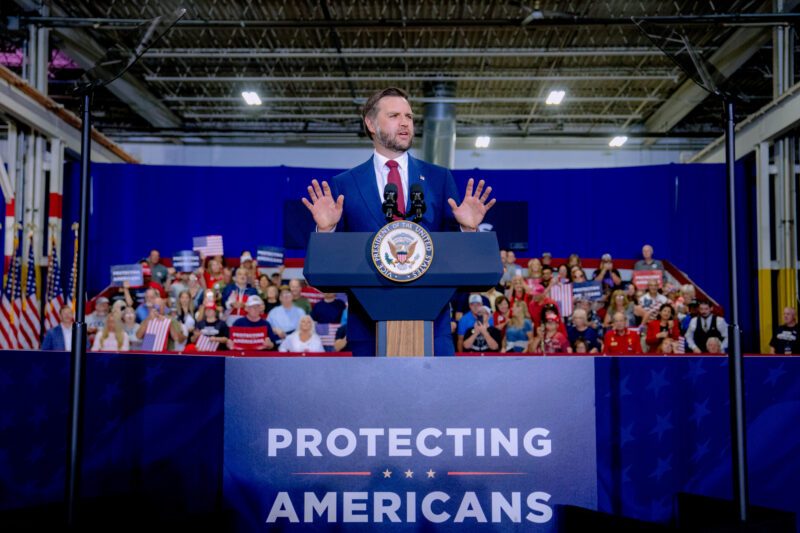
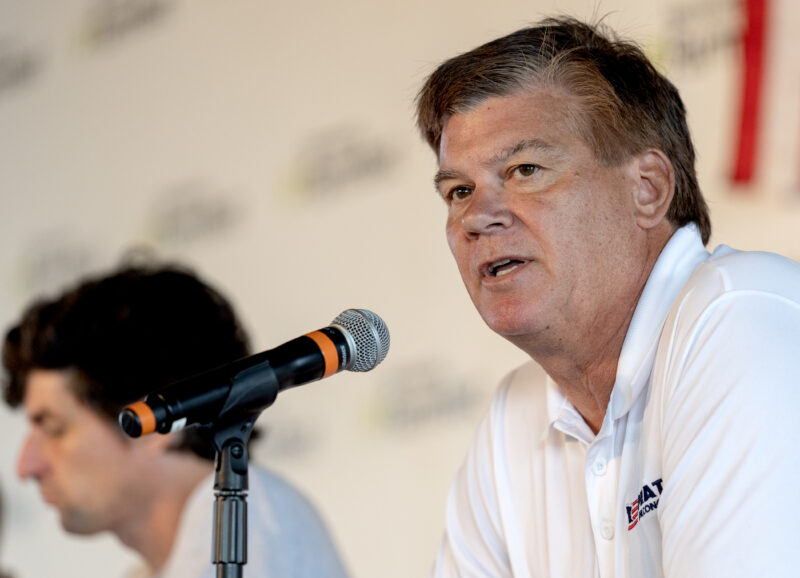
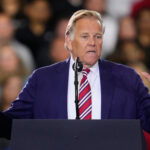
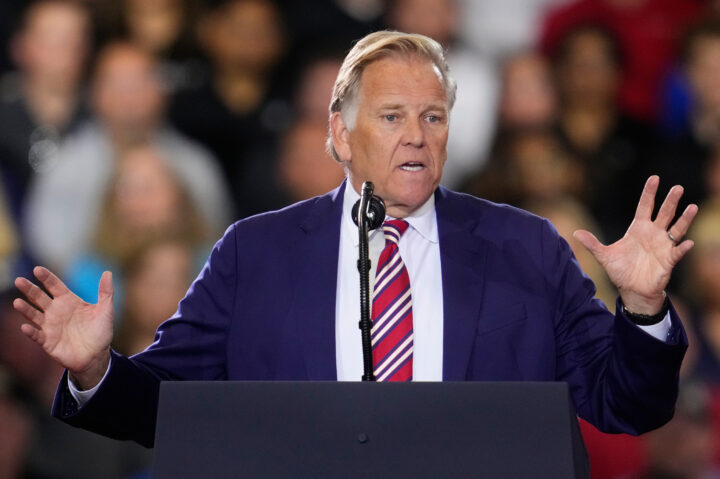
Republican Senate candidate Mike Rogers speaks before President Donald Trump at an event at the General Motors Proving Ground Monday, July 27, 2026, in Milford, Mich.


 Add JewishInsider on Google
The debate over AIPAC’s involvement in the high-stakes Michigan Senate race is drawing renewed attention after an Axios report outlined a request from allies of former Rep. Mike Rogers (R-MI) for the pro-Israel group’s super PAC to lay low for the general election. The Rogers campaign advisors suggested instead that the group transfer money for the race to a separate pro-Rogers entity so as not to make its outside spending a major issue in the contest.
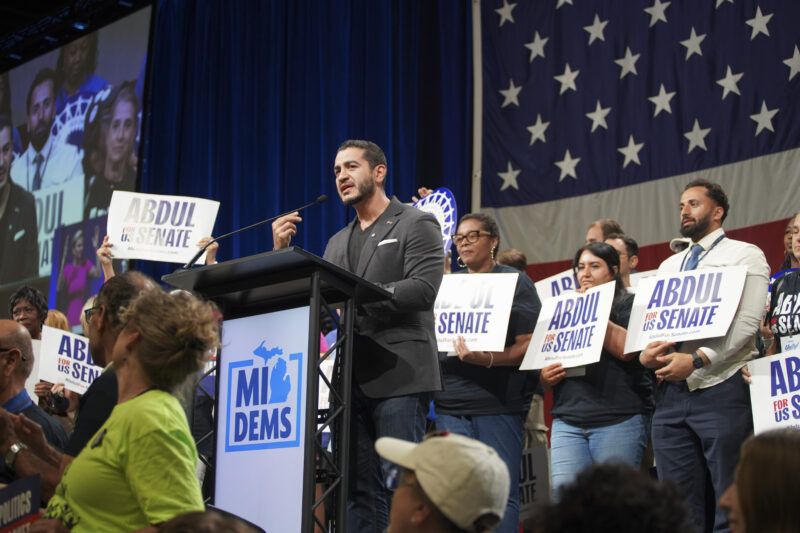
The episode has touched a lot of raw nerves in both the pro-Israel world and the Republican political landscape. Rogers, a longtime supporter of the U.S.-Israel relationship, is highlighting his relationships with Michigan’s Jewish community, and has made attacking Democratic nominee Abdul El-Sayed’s anti-Israel virulence and his relationship with antisemitic figures like Hasan Piker a central element of his campaign message.
AIPAC’s super PAC, United Democracy Project, spent about $32 million in the Democratic primary to try to defeat El-Sayed, and there’s little doubt its money — in the absence of any moderate group willing to spend similar resources to stop a far-left candidate like El-Sayed from winning — made the race more competitive than it otherwise would have been. But it also gave El-Sayed a talking point in attacking outside money in the race that diluted the impact of the aggressive advertising campaign, especially at a time when support for Israel itself is diminishing within the Democratic Party.
Both the Rogers campaign and AIPAC see El-Sayed as uniquely vulnerable, with polls showing the race statistically tied despite the overall favorable environment for Democrats in the swing state. But beyond focusing on winning the race, both sides have slightly different tactical imperatives: AIPAC, after coming close to defeating El-Sayed in the primary, wants credit for helping finish the job in the general election. Rogers, meanwhile, is trying to turn the tables on El-Sayed, using his endless primary campaign attacks on Israel as a way to underscore he’s more obsessed about the Middle East than the issues critical to Michigan voters.
On one hand, support for Israel is decidedly higher among the general electorate than it was among primary voters — and likely is a winning issue for Rogers, especially given El-Sayed’s radicalism on the subject. But populist concerns about foreign aid and engagement abroad still resonate across party lines, with 44% of Michigan voters in a recent Fox News survey saying they favor continued military aid to Israel, while 55% oppose such aid.
The Rogers campaign believes that making the race about Middle East policy would be shortsighted, especially given that El-Sayed’s record and background makes him vulnerable to the charge that he’s the candidate more consumed with international affairs than improving the lives of Michiganders.
Furthermore, unlike in the Democratic primary, there will be no shortage of money available for the Rogers campaign and its allies in the general election. Rogers has been a solid fundraiser, and the deep pockets of both the Senate Leadership Fund GOP super PAC and a separate pro-Rogers super PAC should offer more than enough resources to run a full-fledged campaign. Rogers’ campaign would prefer donations get directed — and spent — under the Republican Party umbrella.
There’s a reason AIPAC’s super PAC hardly ever spends in general elections — most competitive races are already saturated with cash, so its involvement (or that of any outside nonpartisan super PAC) wouldn’t make much of a difference anyway.
AIPAC’s concerns are understandable as well, and I have heard them echoed by several senior GOP strategists involved with the race. El-Sayed’s ties to extremists and inability to forthrightly condemn antisemitism in his home state is a major reason why he’s vulnerable in the first place. Diluting or downplaying that argument takes one of the campaign’s strongest angles off the table.
It’s one thing to debate about whether advertisements would be best aired under the GOP banner or the UDP banner. It’s another issue to be concerned that the Rogers’ campaign, in its desire to universalize the race, isn’t taking full advantage of winning over the many Democratic-friendly Jewish voters who view El-Sayed’s record as intolerable. Asking AIPAC’s chair to stand down its ad campaign, as reported in the Axios story, might have been a tactical dispute, but it risks coming across as downplaying the importance of the pro-Israel and Jewish communities in the state.
Ultimately, the goals of the two sides are the same: winning the race. If the differences between the Rogers’ campaign and AIPAC are tactical, that’s understandable in a lengthy campaign. But if it’s a dispute about who gets credit for taking down El-Sayed, the argument seems a bit frivolous when the stakes in the race are so high.
Jewish conservatives voiced their concerns about the fundraiser on social media as the invitation surfaced online Thursday
Fabrice Coffrini / POOL / AFP via Getty Images
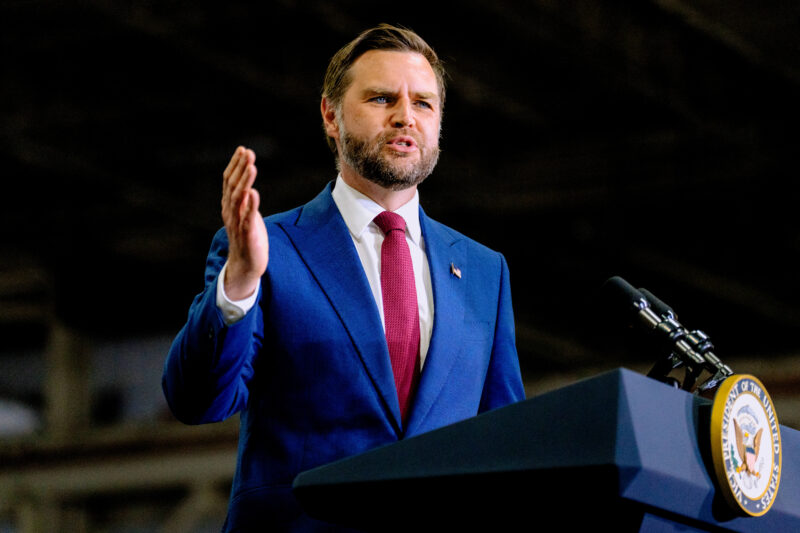
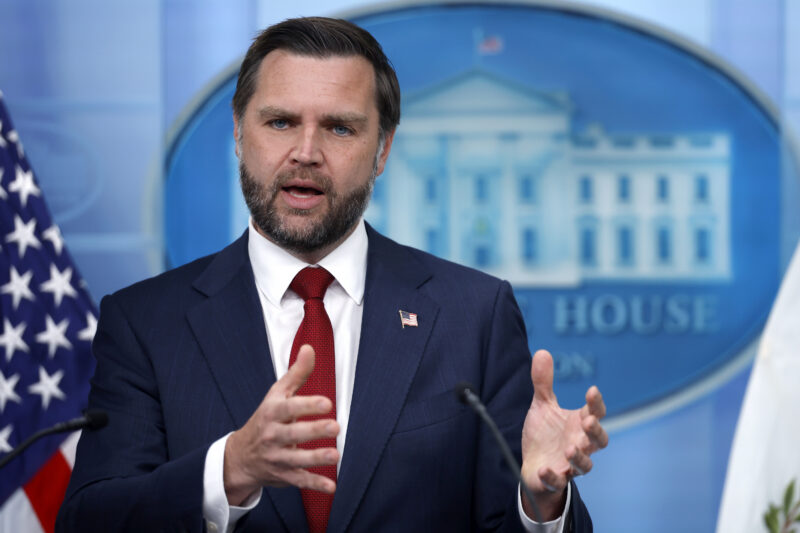
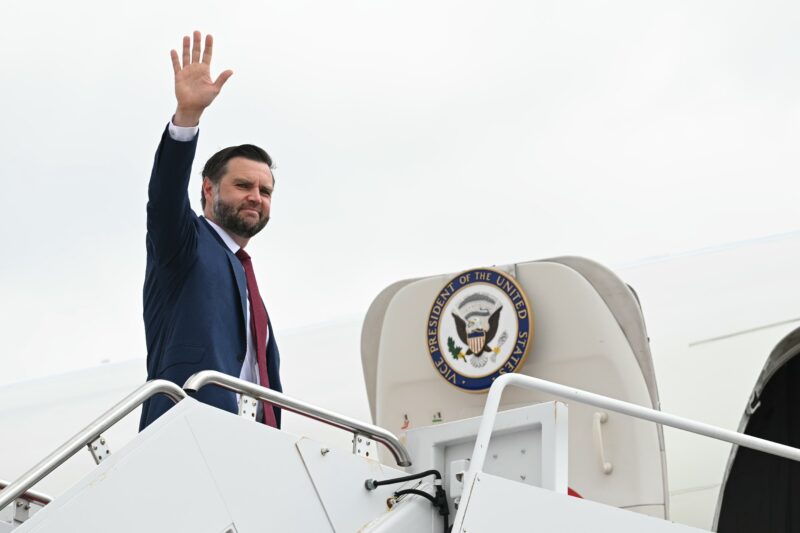
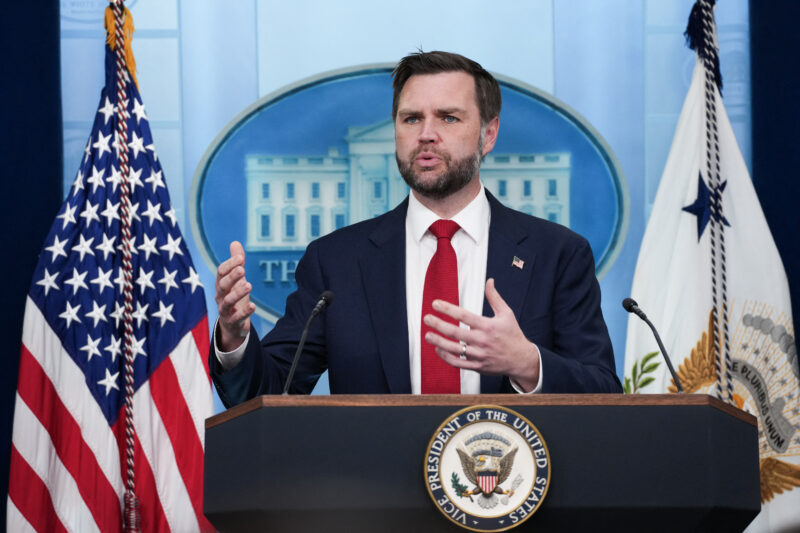
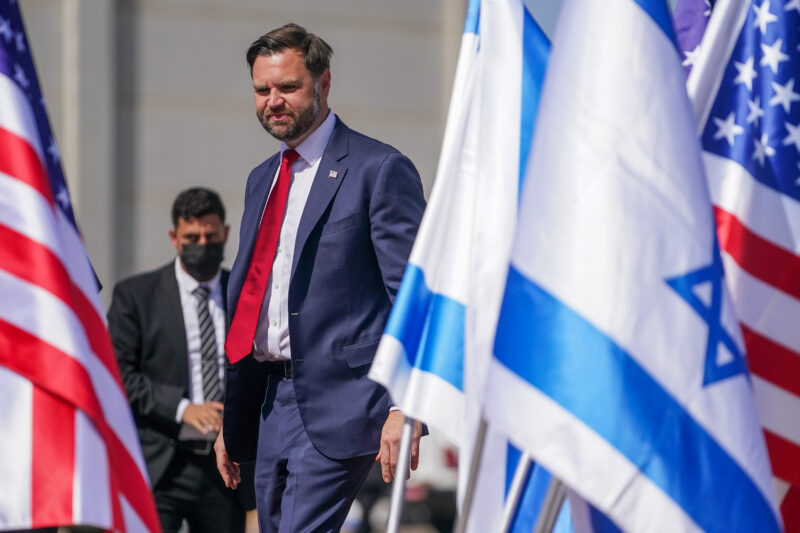
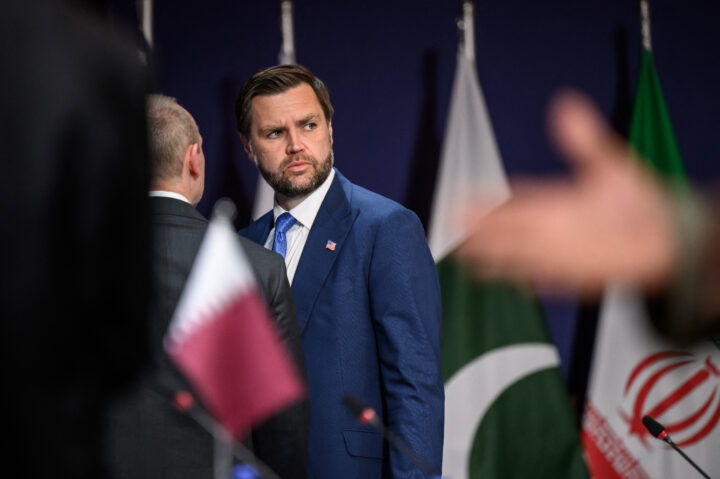
Vice President JD Vance looks on prior to a quadrilateral meeting between the United States, Iran, Pakistan and Qatar at the Burgenstock luxury hotel complex overlooking Lake Lucerne, Switzerland, on June 21, 2026, as part of high-level talks aimed at advancing a deal to end the Middle East conflict.
A fundraiser hosted by Vice President JD Vance in the Hamptons on Wednesday is raising red flags among some Jewish Republicans who continue to harbor concerns over his likely intention to run for president in 2028.
The event, first reported by Axios, was notably held in the home of Omeed Malik, the Iranian American investor who was an important early backer of Tucker Carlson’s media company. The fundraiser highlights Vance’s ongoing ties to Carlson’s network — even as the far-right commentator has faced backlash for his regular promotion of antisemitic conspiracy theories about Jews and Israel.
Carlson also recently pledged to help start a third political party after breaking with President Donald Trump over the war with Iran, which Vance himself has reportedly privately opposed.
As Vance mulls a presidential bid, the fundraiser — where he reportedly raised $5 million — shows how he is building a coalition of younger donors from the populist right who are poised to meaningfully shape the upcoming campaign to define a post-Trump era.
In addition to Malik, the fundraiser also reportedly included Donald Trump Jr., a close ally of Vance as well as Carlson. Malik is a business partner of Trump Jr. in their investment firm 1789 Capital, which raised significant funding from Middle East and other foreign investors and has done business with the Qatar Investment Authority. In January, Malik appeared with Trump Jr. and Carlson at the Doha Forum in Qatar, following the May 2025 Qatar Economic Forum where Trump Jr. and Malik spoke on a joint panel session titled “Investing in America.”
The event underscores the anxieties among some traditional Republicans who are skeptical of Vance’s indulgence of antisemitic forces on the far right and commitment to a strong relationship with Israel that has long been a key GOP value but is now waning among the party’s younger voters.
Jewish conservatives voiced their concerns about the fundraiser on social media as the invitation surfaced online Thursday.
A senior Republican official defended Vance’s appearance at the fundraiser, saying it was a function of the vice president’s role as finance chairman of the Republican National Committee.
“As RNC Finance Chairman, it’s the vice president’s job to raise money for the Republican Party, and that’s exactly what he did at this event,” the official told Jewish Insider. “The vice president has raised tens of millions of dollars not for himself, but for the RNC’s efforts to hold the House and Senate. All of the hosts for the event were strong supporters of President Trump’s 2024 campaign and we’re happy that they’re continuing that support for Republicans in the midterms.”
Vance has in recent months stepped up his criticism of Israel — alleging Israeli influence campaigns have been “manipulating” U.S. opinion of the Iran war, for instance, while publicly rebuking Israeli officials over disagreements regarding negotiations with Tehran.
Many Jewish Republican donors remain wary of Vance as speculation mounts over who will run for president in 2028 and whether he would be the front-runner.
While the vice president has made some overtures to Jewish Republicans, the Wednesday night fundraiser indicates he is embracing a potential route that could increasingly alienate the pro-Israel community.
Plus, Josh Kushner and Bob Iger ball out
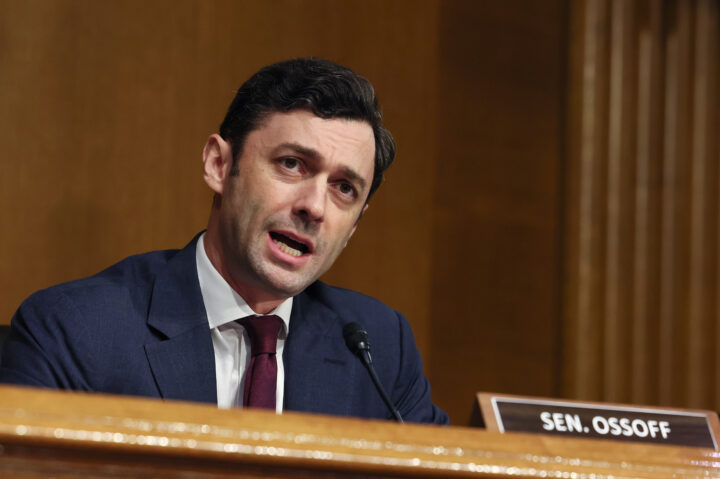
Jemal Countess/Getty Images for Breakthrough T1D)
Sen. Jon Ossoff (D-GA) questions witnesses during a hearing held to examine a future without Type 1 Diabetes with a focus on accelerating breakthroughs and creating hope at the Dirksen Senate Office Building on July 09, 2025 in Washington, DC.
Good Wednesday afternoon.
This P.M. briefing is reserved for our premium subscribers like you — offering a forward-focused read on what we’re tracking now and what’s coming next.
Today’s Daily Overtime was curated by JI U.S. Editor Danielle Cohen-Kanik.
📡On Our Radar
Notable developments and interesting tidbits we’re tracking
A State Department official pushed back on Israeli Defense Minister Israel Katz’s comments in southern Lebanon today, where he said the IDF would remain deployed in a security zone, contrary to the agreement signed between Washington, Jerusalem and Beirut.
“The United States expects all parties to act in a manner consistent with the Framework they agreed to, and Israel clearly stated that it has no territorial ambitions in Lebanon. A permanent military presence in South Lebanon is not consistent with the commitments made in the Framework, or the long-term peace and security of both states,” the official told Axios…
Sources told Reuters that Israel and Lebanon have agreed that countries including Britain, Italy, Switzerland and Indonesia could contribute troops to an international force meant to oversee Hezbollah’s disarmament; an Israeli official denied any decisions had been made on the issue…
President Donald Trump continued to boast about the success of the U.S. campaign against Iran, stating again in a post on Truth Social today that the U.S. “has total control over the Strait of Hormuz” and that the Islamic Revolutionary Guard Corps is “decimated and fleeing.”
Meanwhile, out of the 166 ships that have transited the strait so far this month — a significant decrease from the average before the war — only two are known to have used the U.S.- and Oman-backed route, according to The Wall Street Journal…
In a rare interview with Western media, top IRGC advisor Mohammad Reza Naqdi told “PBS News Hour” that Iran is prepared to continue hostilities through the end of Trump’s term and accused the U.S. of waging a “war without strategy”…
The New York Times documents the efforts being made by Gulf countries to construct routes to move oil out of the region that do not rely on the Strait of Hormuz…
Board of Peace head Nickolay Mladenov denied in a post in Hebrew today that there is any financial agreement between the board and Hamas, refuting a report by Israeli public broadcaster Kan that the board would cover Hamas’ debts up to $400 million.
The disarmament roadmap states that the new Palestinian technocratic government will “assess the legitimate commitments to suppliers, contractors and other parties — up to a total amount of no more than $400M — and address them”; Mladenov said in his post that such processes “are not channeled through Hamas” and that “all accounts are open to full scrutiny by the donor governments”…
The publisher of the Atlanta Jewish Times, Michael Morris, penned an open letter to Sen. Jon Ossoff (D-GA) today pressing the senator over his repeated votes to block U.S. military sales to Israel, Jewish Insider’s Marc Rod reports.
“I apologize for being blunt, but please, stop lying to me and your constituents. I hear you claim, over and over again, that you support Israel — that your support is ‘ironclad.’ It is not,” Morris wrote…
Rep. Haley Stevens (D-MI) denied today that the more than $30 million of support she received from AIPAC’s super PAC in her failed run for U.S. Senate backfired, saying on CNN that those who criticize AIPAC “maybe don’t understand what the group is” and that she’s “proud of the friendships and the relationships I have there [and] the really good Americans” who make up its membership…
White House Press Secretary Karoline Leavitt is stepping away from her role at the end of the month, Trump announced today, in order to spend more time with her family. The president said Leavitt will now serve as “one of my top outside advisors”…
Josh Kushner, managing partner of the venture capital firm Thrive Capital, and former Disney CEO Bob Iger have agreed to purchase a controlling interest in the Los Angeles Lakers for a record-breaking price of $12.5 billion, JI’s Matthew Shea reports…
⏩ Tomorrow’s Agenda, Today
An early look at tomorrow’s storylines and schedule to keep you a step ahead
Keep an eye on Jewish Insider for a look at local Jewish political organizing efforts in major cities across the country.
The Hudson Institute will hold an event examining the state of the ongoing conflicts in the Gulf with the Foundation for Defense of Democracies’ Behnam Ben Taleblu and Hudson’s Michael Doran, Ludo Hood and Zineb Riboua.
Stories You May Have Missed
TRUST, BUT VERIFY
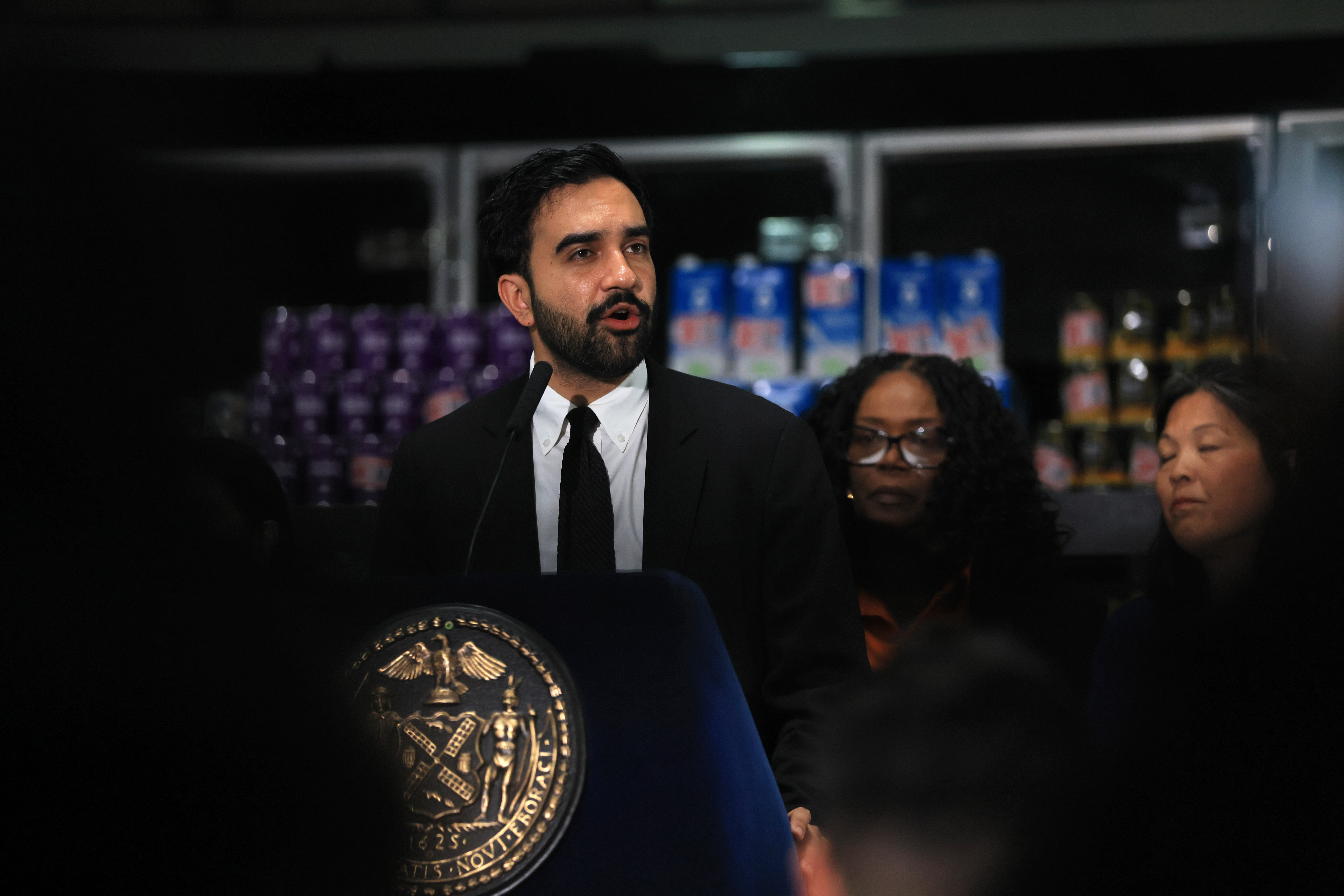
Mamdani’s antisemitism czar invited a cross-section of rabbis and Jewish leaders broadly sympathetic to the mayor for the candid conversation
BALLIN’ OUT
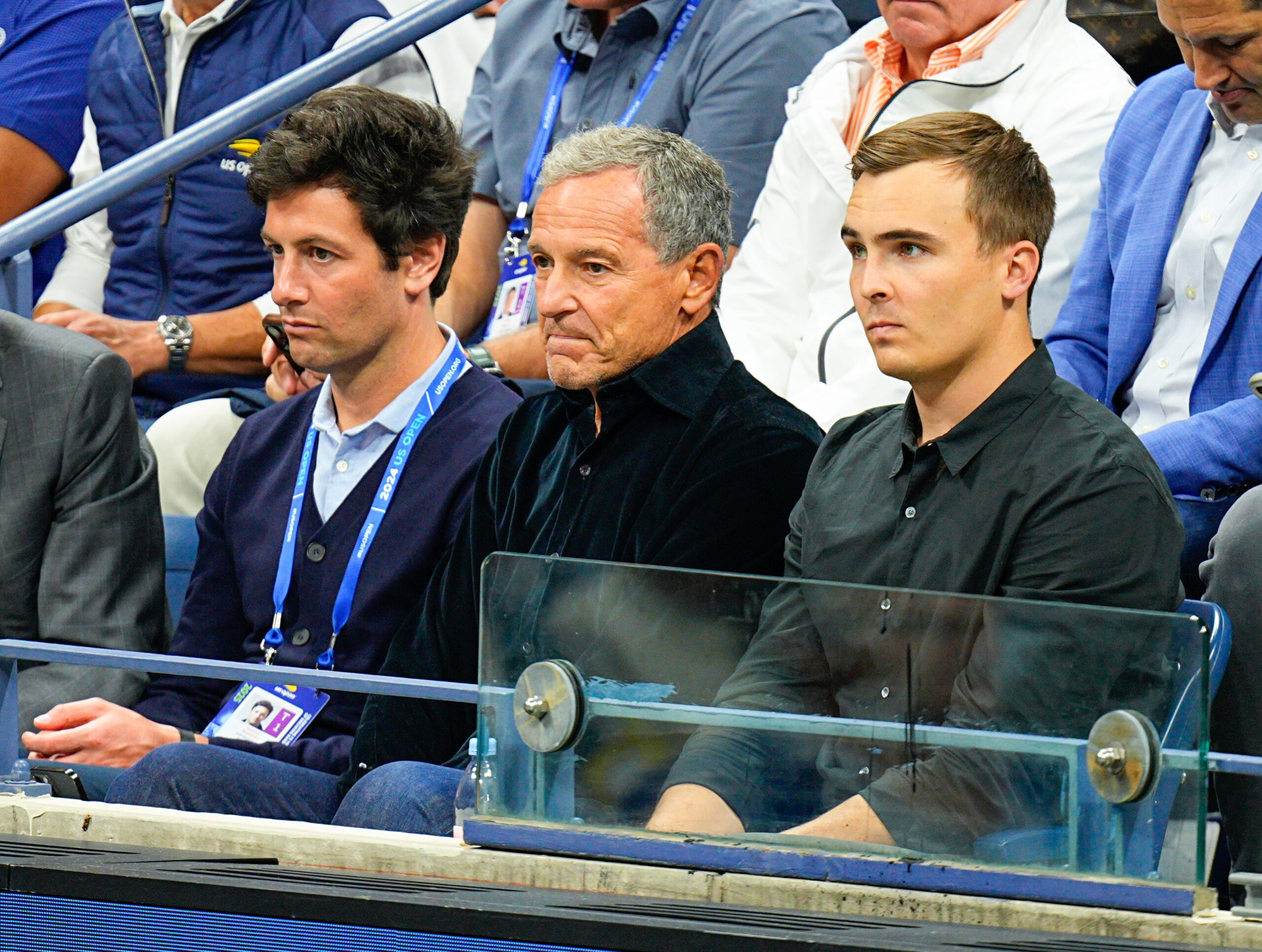
The sale is the largest purchase price for any sports team in American history
Rep. Katherine Clark is the highest-ranking Democrat to have used the term, even as only a small number of other lawmakers have done so
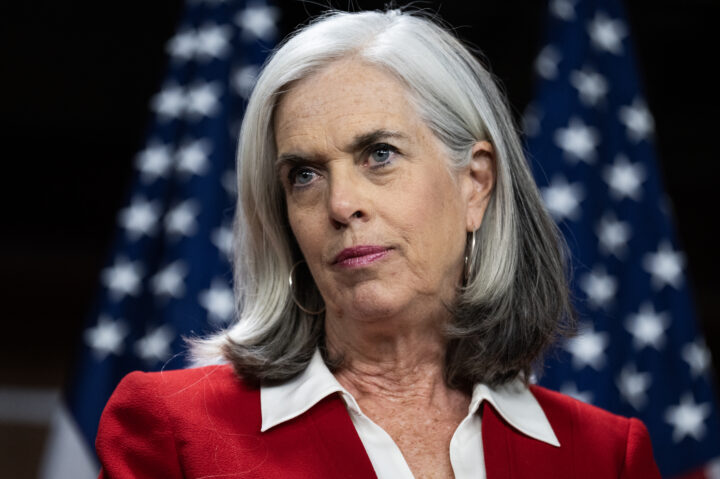
Tom Williams/CQ-Roll Call, Inc via Getty Images
House Minority Whip Katherine Clark (D-MA) conducts a news conference in the Capitol Visitor Center on Wednesday, July 23, 2025.
Rep. Katherine Clark (D-MA), who serves as the House Democratic whip, the No. 2 Democratic leader in the chamber, described the war in Gaza as a “genocide” in an event this week, based on video of the event that has been shared online.
“We each have to continue to have an open heart about how we do this, how we do it effectively, and how we take action in time to make a difference, whether that is stopping the starvation and genocide and destruction of Gaza, or whether that means we are working together to stop the redistricting that is going on, taking away the vote from people in order to retain power,” Clark said in a brief clip from an event that was first reported by Axios.
Clark spokesperson Joy Lee has said in a statement provided to multiple outlets that Clark’s “position on the war has not changed,” including that she supports a permanent ceasefire, the return of all hostages and an increase of aid to Gaza.
“It should not be controversial to say that Israeli children did not deserve to be kidnapped and murdered by Hamas, nor should it be controversial to say that Palestinian children, who bear no responsibility for Hamas’ atrocities, do not deserve to be killed by war or starvation,” Lee’s statement reads. “A secure future for Israeli and Palestinian children demands a real two-state solution and a permanent end to efforts to deny their rights to exist.”
Clark’s office did not respond to a request for comment seeking further clarity.
Lee told The Boston Globe that Clark’s comments came in response to protesters at the event. The brief clip shared online does not include the context of Clark’s remarks.
Only a small number of far-left and far-right lawmakers have described the situation in Gaza as a genocide, and none who serve in leadership roles in Congress.
Clark was speaking at an event organized by the Friends Committee on National Legislation, a lobbying group of the Quaker movement, which has been heavily critical of Israel and supported efforts in the Senate to block arms sales to Israel.
Clark’s office did not respond to a question about whether she supports efforts to block some or all weapons sales.
The group’s criticism of Israel predates the war in Gaza, and it lobbied in favor of the Iran nuclear deal. It also advocates more broadly against militarization generally, including pushing for shrinking military spending.
Clark has been endorsed by AIPAC and is featured alongside each of the other top House leaders on the group’s PAC website.
Please log in if you already have a subscription, or subscribe to access the latest updates.
 Continue with Google
 Continue with Apple