













































Syrian textbooks under al-Sharaa deny Israel’s right to exist and promote antisemitism, report finds
A review of 130 textbooks by IMPACT-se found antisemitic depictions of Jews and glorified violence, despite al-Sharaa casting himself as a pragmatic statesman
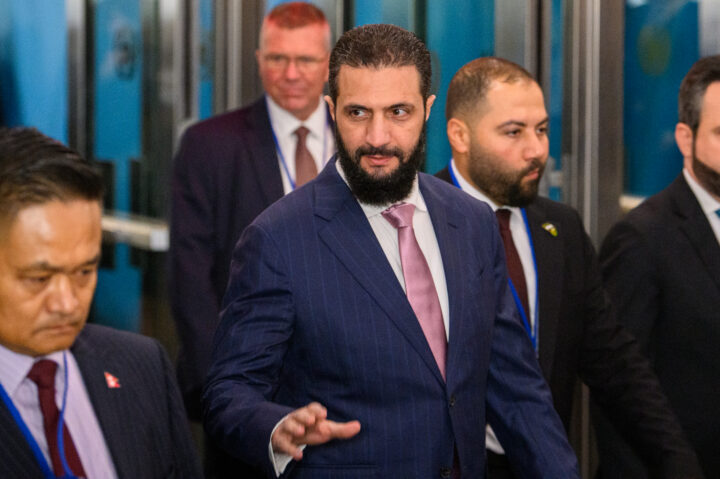
Alexi J. Rosenfeld/Getty Images
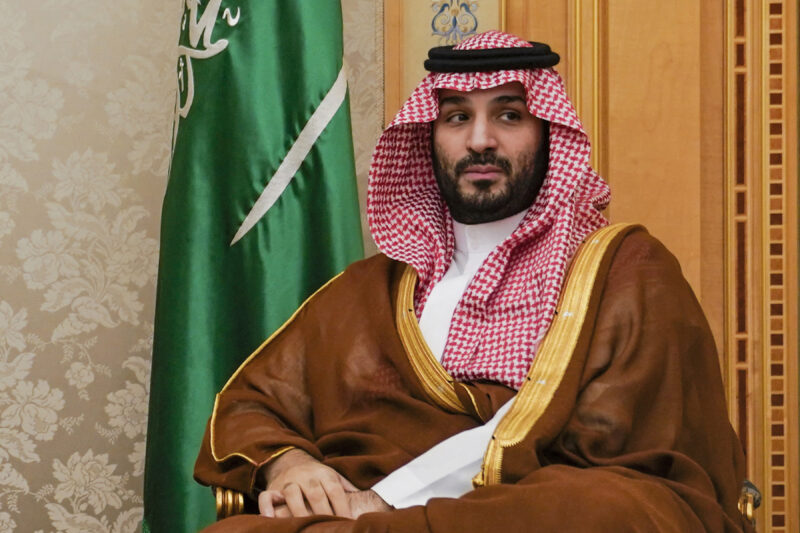
Syrian President Ahmad al-Sharaa arrives during the 81st session of the United Nations General Assembly at U.N. Headquarters on September 22, 2026 in New York City.


 Add JewishInsider on Google
Syria’s national school curriculum under President Ahmed al-Sharaa promotes antisemitic depictions of Jews, denies Israel’s right to exist and glorifies violent struggle against the Jewish state, despite the Syrian leader positioning himself as a pragmatic statesman with no hostility toward Jerusalem, according to a new review of the country’s textbooks following the fall of former Syrian President Bashar al-Assad.
The study, titled: “The New Syria: Education Under al-Sharaa Review of Syria’s National School Curriculum, 2025-2026,” published by the Institute for Monitoring Peace and Cultural Tolerance in School Education (IMPACT-se), evaluated 130 textbooks across grades 1-12 in Syria’s 2025-2026 national curriculum. It marks the first full analysis of instructional materials issued under President Ahmad al-Sharaa’s administration following Assad’s ouster in December 2024.
Researchers Matan Perchikov, Itam Shalev and Dr. Yonatan Negev compared the post-overthrow materials with their Assad-era predecessors. They concluded that while the new government has replaced Ba’athist-era secular nationalism with Sunni Islamist ideology, longstanding hostility toward Israel and Jews remains deeply entrenched.
“The post-Assad era presents Syria with a rare opportunity to create an education system based on inclusion and tolerance,” said Marcus Sheff, CEO of IMPACT-se. “Instead, these textbooks show a very concerning shift from one damaging ideological framework to another … This report should raise serious concerns among international leaders who hope to see Syria emerge as a partner in building a peaceful Middle East.”
The findings come as al-Sharaa, a former commander in al-Qaida’s Syrian affiliate who later led Hay’at Tahrir al-Sham (HTS), has sought to build diplomatic ties with Western and regional powers to secure international aid and sanction relief. His government has also repeatedly insisted that it seeks to make peace with Israel, claiming Jerusalem has been obstinate in negotiations.
The report concludes that the persistent indoctrination against Israel and Jews in Syrian classrooms starkly contrasts with al-Sharaa’s public rhetoric of political pragmatism, presenting a key test for international diplomats engaging the post-Assad government.
According to the report, Israel’s legitimacy is rejected outright across all grade levels in Syrian textbooks. Maps omit the State of Israel, labeling the entire territory as “Palestine” or “Occupied Palestine,” while text lessons refer to Israel as the “enemy,” “thieving,” “filth” and a “terrorist entity.”
In a sixth-grade social studies textbook, Israel is described as the “thieving Zionist Entity” and students are asked to analyze why the “terrorist entity” lacks the core characteristics of a legitimate state.
A 12th-grade history textbook challenges Jewish national identity, characterizing Jews as a “hodgepodge of peoples” rather than a single nation. “The Zionists lack most features of nationhood: they do not belong to shared roots, nor speak a single language, nor belong to one geographical environment or one history,” the textbook asserts, according to the report.
In Islamic education and social studies units, anti-Jewish stereotyping extends to early Islamic history, depicting “treachery, backstabbing, disloyalty and hostility as inherent and enduring characteristics of Jews.”
Furthermore, the curriculum systematically replaces the standard Arabic name for Jerusalem (al-Quds) with the Islamic term Bayt al-Maqdis.
According to the study, anti-Israel sentiment was also a cornerstone of education under the Assad regime, pointing to previous reports that identified a “denial of Israel’s legitimacy as a Jewish nation-state” in Assad-era textbooks. The 2026 study reveals that under al-Sharaa’s government, the curriculum not only retained its hostility toward Israel, but also expanded beyond the Assad-era into explicit religious antisemitism, with certain lessons from the Assad-era “carried over unchanged.”
Palestinian violence against Israel — including suicide bombings — is also explicitly justified or glorified. A ninth-grade history textbook describes Second Intifada suicide bombings as “martyrdom operations” that embarrassed Israel and forced its complete withdrawal from the Gaza Strip.
A fifth-grade Arabic textbook includes a poem dedicated to Dalal al-Mughrabi, a Palestinian terrorist who led the 1978 Coastal Road Massacre that killed 38 Israeli civilians, including 12 children. The text idolizes al-Mughrabi as a “sword,” a “flame” and the “voice of a raging earthquake” who “raised the banner of liberation.”
High school history textbooks similarly celebrate Izz al-Din al-Qassam — a Syrian-born Muslim preacher who led armed revolts and became the namesake of Hamas’ military wing — describing him as “one of the first martyrs of the revolt.”
Armed struggle is generally lauded: A 12th-grade Islamic education textbook defines jihad as an individual religious obligation whenever Muslim lands or holy sites are threatened, explicitly categorizing Palestinian and Syrian military struggles over Israeli-controlled territory as acts of religious jihad.
The broader ideological changes also extend to Syria’s treatment of religious minorities. The report found that lessons emphasizing religious tolerance and equality had been removed or revised, while Sunni Muslim identity was increasingly presented as central to Syrian national identity. Christians remain acknowledged in the curriculum, but other communities, including Druze and Kurds, receive little recognition, according to the researchers.
The report also identified changes in Syria’s portrayal of regional powers. Iran and Hezbollah, both allies of the former Assad regime, are now depicted negatively, while Turkey and the Ottoman Empire receive more favorable treatment.
More Stories

HISTORY LESSON
Brett McGurk’s fact check of former Harris advisor Phil Gordon on hostage negotiations
Daily Kickoff
Wikipedia’s edit scandal, unedited

CANCEL CALLS
Democratic push grows for Ilhan Omar, Fateh to cancel Hasan Piker event
FOLLOW THE MONEY
Brandeis Center, FDD urge federal court to allow disclosure of campus foreign funding data
COMINGS AND GOINGS
Heritage Foundation taps critic of U.S. involvement in Middle East as distinguished fellow

Daily Overtime
Hillel disputes fired rabbi’s claim
Please log in if you already have a subscription, or subscribe to access the latest updates.
 Continue with Google

 Continue with Apple