









































































Senate again rejects resolution calling for end to Iran war
Three Republican senators joined with nearly all Democrats, but the measure won only 48 votes

Photo by Andrew Harnik/Getty Images
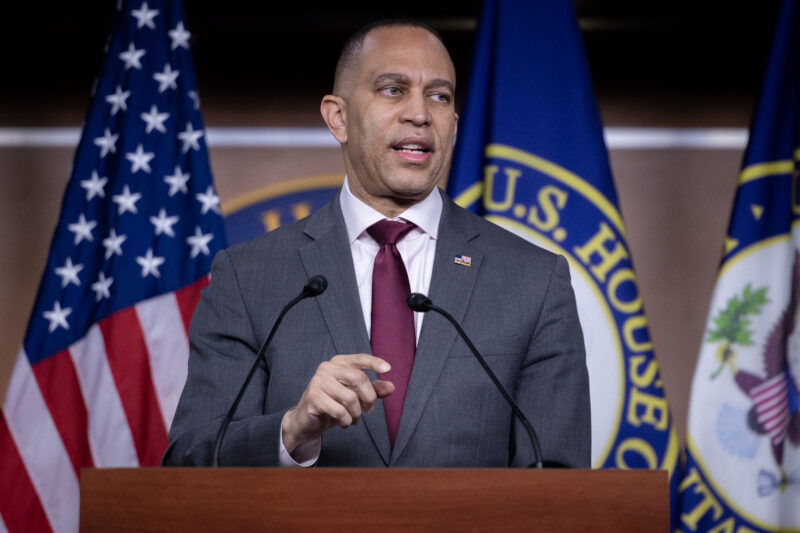
Sen. Thom Tillis (R-NC) speaks to reporters as he walks into the Senate Chamber of the U.S. Capitol Building on April 15, 2026 in Washington, D.C. Tillis was one of three Republicans to cross party lines in Thursday's war powers resolution.


 Add JewishInsider on Google
The Senate blocked another war powers resolution on Thursday demanding an end to the U.S. war in Iran, rejecting the first attempt to force an end to the conflict since Republicans saw sweeping losses in the midterm elections.
Three Republicans — Sens. Susan Collins (R-ME), who lost her reelection bid, Lisa Murkowski (R-AK) and Rand Paul (R-KY) — voted with nearly all Democrats to support the measure, which failed 51-48.
Sen. John Fetterman (D-PA) was the sole Democrat to vote against the measure.
Sens. Bill Cassidy (R-LA) and John Cornyn (R-TX), who were defeated by Trump-backed challengers in GOP primaries, opposed the resolution, as did Sen. Thom Tillis (R-NC), who is retiring.
Cassidy voted for a war powers resolution on the war after his primary defeat in May, a decision he later reversed, and Tillis supported a war powers resolution for the conflict in September. Both voted against all other resolutions brought up since the war began in February.
Sen. Todd Young (R-IN), who has worked with Sen. Tim Kaine (D-VA) for years on bipartisan efforts to update and enforce Congress’ war-making powers, also voted no.
Lawmakers have forced multiple war powers votes in the House and the Senate since the conflict began in February. The House has approved multiple resolutions to end the war, most recently with a September vote that saw a record seven Republicans cross party lines and vote with Democrats in support of the measure. The Senate rejected that resolution.
The Senate advanced a House-passed war powers resolution on the Iran war in June, though the White House largely ignored that measure because it came in the form of a concurrent resolution, which is not submitted to the president and, based on past court precedent, is not seen as carrying the force of law.
Several Senate Democrats have suggested that, after taking control of Congress next January, they plan to use federal funding authorities to force the Trump administration to negotiate with the Iranian regime and end the war.
More Stories

PRETORIA PROBLEMS
After political defeat and loss of U.S. trade perks, South Africa’s ANC shows no sign of shifting on Israel

CAMPUS CONTROVERSY
Penn State’s Jewish studies program draws friendly fire over lecture on Holocaust museums

Daily Kickoff
Mamdani’s disband-aid

MOMENT OF TRUTH
Harmeet Dhillon calls out bigotry, antisemitism within MAGA movement

PROMISES KEPT
Tisch assures NYC ‘nothing would change’ in deal with Mamdani to dissolve NYPD protest unit

FIRST-WEEK PRIORITY
Jeffries says House will pass Iran war powers resolution in first week of new session
Please log in if you already have a subscription, or subscribe to access the latest updates.
 Continue with Google

 Continue with Apple