


























Amb. Tom Barrack: It’s ‘not America’s job’ to combat Iran-backed threats in the Middle East
Speaking in Doha, Barrack said Washington’s efforts at regime change have failed and the U.S. should move into a supporting capacity in the region
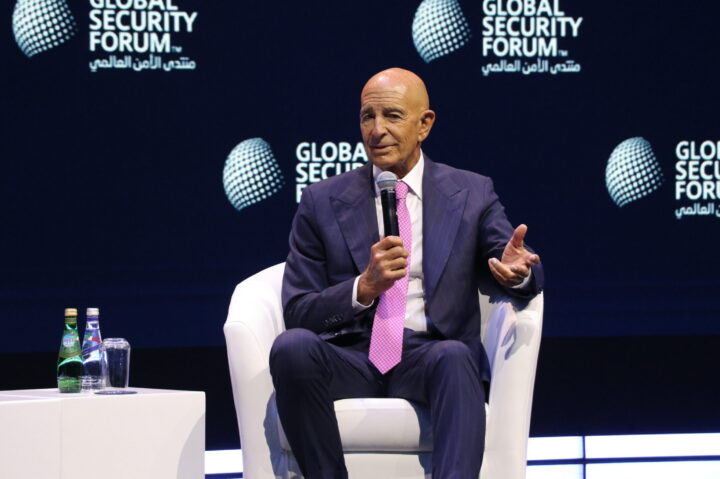
Ali Altunkaya/Anadolu via Getty Images
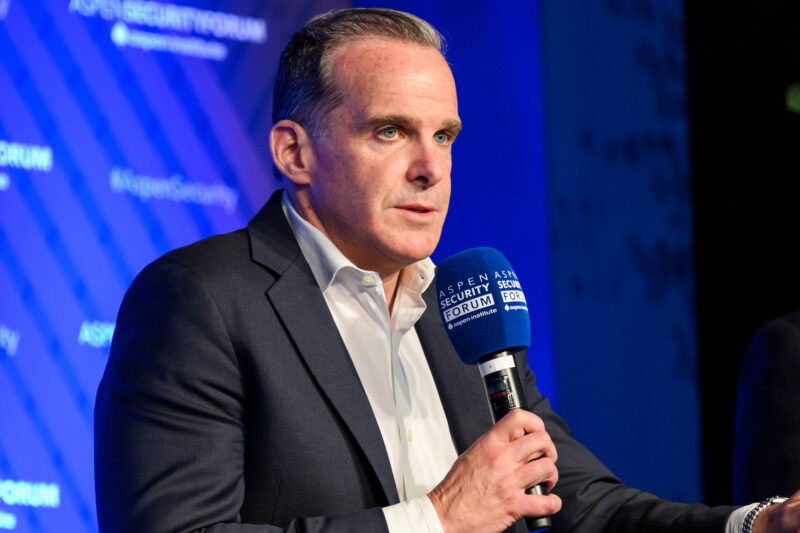
U.S. Ambassador to Turkey Tom Barrack delivers a speech during the 8th Global Security Forum, held under the theme 'The Future of Alliances,' in Doha, Qatar, on October 20, 2026.


 Add JewishInsider on Google
U.S. Ambassador to Turkey Tom Barrack said Tuesday that it is “not America’s job” to resolve the threats posed by Iranian-backed terror groups and militias across the Middle East, arguing that regional governments must take greater responsibility for their own security rather than relying on U.S. military intervention.
Speaking with Al Jazeera diplomatic editor James Bays at the Global Security Forum in Doha, Qatar, Barrack said the “answer” to Yemen’s struggle with the Houthis, Lebanon’s attempt to demilitarize Hezbollah and Iraq’s battle with Iran-funded militias “has to be that there becomes no purpose for those militias or those intermediaries, that the state or the nation state or the regime itself takes responsibility. So there’s no function for those militias. That’s not America’s job.”
Barrack said that while Saudi Arabia is in a “difficult position” as the Houthis repeatedly strike the kingdom, he expressed skepticism about the prospect of direct American military intervention.
“I think the president has been clear that he supports Saudi Arabia and the backing that they need logistically. He will supply, but America getting involved in a ground kinetic battle somewhere else seems fruitless,” he said.
Barrack argued generally that the United States should maintain its presence in the Middle East while moving away from efforts to control political outcomes.
“We’ve had 23 regime changes; none of them have worked,” he said. “Every time we try and intervene and change the person or the regime, it seems to have been a mistake.”
“The bargain is not to own, not to control, but to tend, not to leave. We’re not leaving,” Barrack said. “But what everybody’s doing is saying, ‘OK, I can’t rely on America to solve all my problems anymore.'”
Asked whether he was advocating an American “overwatch” role in the region, he agreed, arguing that regional governments must develop their own security arrangements with Washington serving in a supporting capacity.
Barrack also declined to say whether American military involvement in the war with Iran had been a “mistake,” instead warning that the conflict has resulted in “unintended consequences.”
“So I think when we say, ‘Is it a mistake?’ I don’t know whether it’s a mistake or not,” Barrack said. “It’s something that certainly none of us want to see, including this administration does not want to see proliferation of these unintended consequences of what’s happening in the region, or to the Iranian people, or to the Israeli people, or what’s happening in Europe.”
Barrack said that while he was deeply concerned about the conflict’s effects, he maintained that Trump’s original objective had been to prevent a nuclear threat rather than overthrow Iran’s government, despite President Donald Trump at times suggesting he supported regime change.
He argued that a negotiated settlement, rather than continued military escalation, offered the most viable path forward, pointing to the lack of trust between Washington and Iran’s Islamic Revolutionary Guard Corps as a central obstacle.
“The IRGC has become an adversary. The IRGC, in its adversarial role with Israel, has been a problem,” Barrack said. “It’s, ‘How do we have not an event but a process in which everybody has relevancy, respect, and continues on without this dramatic threat to all of us?’”
Despite identifying the IRGC as an adversary, Barrack rejected describing the Iranian regime as “evil,” saying its religious tradition was deserving of respect.
“It’s a theocracy. It’s not an evil regime and that has nothing to do with it,” Barrack said. “That’s a religious content and practice that we all respect.”
He said a process toward a negotiated agreement with Tehran should include a ceasefire, opening international waterways and easing the hardship facing Iranian civilians, arguing that greater prosperity in the country could help bring change over time.
Barrack also addressed Israel’s relations with its neighbors, acknowledging Israel’s security concerns about Syrian President Ahmad al-Sharaa’s government while expressing confidence that Damascus was seeking a more peaceful relationship.
“Israel made it clear from the beginning that they weren’t sure of Al-Sharaa. By the way, they’re entitled to that opinion,” Barrack said. “They were entitled to wait and see, is this going to be predatory or is it calm?”
But he argued that Al-Sharaa had demonstrated a willingness to pursue normalization with Israel.
“Al-Sharaa, I think, has done a very good job under very difficult situations to say, ‘I’m not predatory. I have no problem with Israel. I want a normalization with Israel,'” Barrack said.
Asked about increasingly hostile rhetoric between Israel and Turkey, Barrack downplayed the prospect of a direct confrontation between the two countries, while warning about the possibility of an accidental escalation.
“My belief is Israel is way too smart to actually pick a real fight with Turkey, and Turkey is way too smart to accede to the verbosity of these threats,” Barrack said. “This is politics.”
“I don’t believe Israel wants that. I know Turkey does not want that,” he added. “But the sensitivities in the region are so high that what we need to do is, in baby steps, is lower the temperature and increase the respect for everybody.”
More Stories
analysis
Is Israel’s anti-Netanyahu bloc fracturing?
meeting minutes
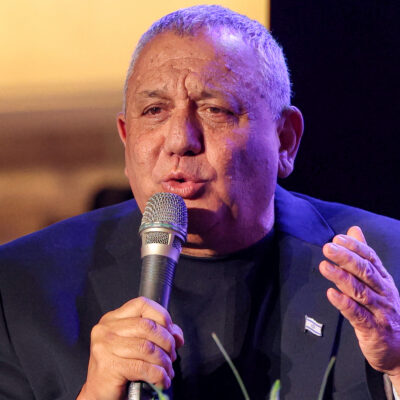
Huckabee met secretly with Netanyahu’s top rival, Gadi Eisenkot
MAIL FAIL
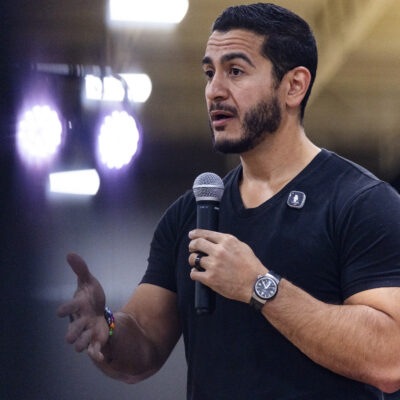
El-Sayed letter to Jewish community on antisemitism fails to reassure skeptics
DRAWING A LINE
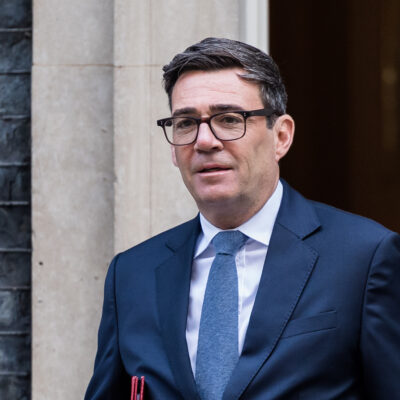
British PM rules out partnership with Greens over ‘Zionism is racism’ motion
SEEKING ANSWERS
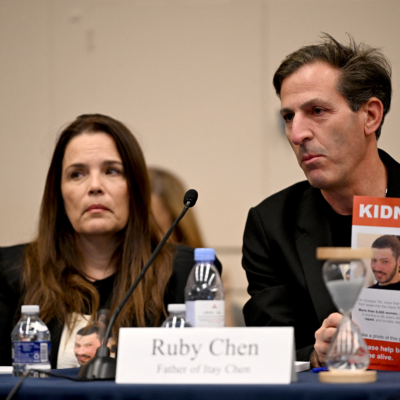
After State Department memorial, families of Oct. 7’s American victims call for U.S.-led probe
AID ARGUMENTS
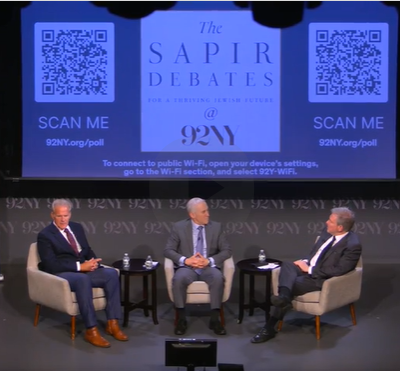
Michael Oren, Jonathan Schanzer split over when Israel should move past U.S. aid
Please log in if you already have a subscription, or subscribe to access the latest updates.
 Continue with Google

 Continue with Apple